1. Introduction
Electro-hydraulic systems are widely used in industrial automation and manufacturing, as well as in actuating mechanisms for machines and equipment operating in harsh environments with high levels of dust, humidity, chemical exposure, and radiation. The advantages of this type of actuators have been repeatedly emphasized in the literature, including their high power-to-weight ratio, self-lubricating properties, good controllability, reliability, and low positioning error.
This type of actuating systems also poses significant challenges to control and automation engineers. Factors such as fluid compressibility, temperature dependence, and pressure-flow characteristics introduce strong nonlinearities, while the presence of hysteresis due to piston friction and dead zones further complicate system behavior. These are just some of the difficulties that modern control systems have to deal with.
Consequently, the modern trend in controlling such systems is based on a combined control approach that integrates more than one type of control law. These hybrid structures aim to achieve improved dynamic performance and enhanced robustness of the control system.
Within the broad category of intelligent control methods [
1,
2,
3,
4,
5], a significant portion includes controllers based on fuzzy logic. Fuzzy controllers, as well as their hybrid forms with classical linear control laws, fulfill the conceptual criteria for designing controllers in electro-hydraulic systems and are essential to consider when evaluating tracking performance. Although, at first glance, controlling systems with unstructured parametric uncertainties may not appear to be the primary domain of fuzzy logic controllers, they have demonstrated potential in enhancing both the robustness and the overall performance of closed-loop systems.
In the contemporary overview of electro-hydraulic system control using fuzzy regulators, several key directions can be identified, each addressing the specific challenges associated with this class of systems.
Based on conducted analyses [
6] regarding the characteristics of electro-hydraulic systems, the improved techniques for PID control, in terms of tuning, can be classified as: parametric tuning of PID controllers, online PID tuning, and combined strategies. In the presented modifications implementing standard FPID [
7,
8], HFPID [
9], and FPID(BLT) [
10], the application of fuzzy logic aims to compensate for the disadvantages of linear PID controllers, achieving high accuracy, robustness, and fast response.
Depending on the type of membership functions, fuzzy PID controllers are classified as type-1 and type-2. In relation to electro-hydraulic systems, ref. [
11] presents a study in which IT2FPID provides better results under highly noisy signals.
The combination of fuzzy logic and PID controllers also enables the implementation of another type of hybrid controllers, known as adaptive Fuzzy-PID or self-tuning Fuzzy-PID [
12,
13,
14]. In these controllers, by using various algorithms (primarily the “centroid” defuzzification method), fuzzy logic modifies the coefficients of the linear controller, thus realizing the property of adaptiveness, which is of great benefit in the control of electro-hydraulic systems.
Due to its stability and ability to effectively suppress disturbances, the sliding mode control approach (SMC) is often combined with fuzzy logic [
15,
16]. Fuzzy logic complements SMC control ideally by addressing the issues of uncertainties and the need for an accurate model of the controlled system, while also allowing the use of various optimization mechanisms [
17,
18]. FLSMCPID controllers demonstrate increased accuracy in tracking systems and high robustness across different trajectories.
Fuzzy PID controllers are also successfully combined with other methods used in control system design, such as system identification [
19], ontological/semantic representation [
20], artificial neural networks [
21], prediction [
22], and fault diagnosis [
23].
In the current paper, a fuzzy PID controller with parallel structure and coefficient transfer is proposed for the control of an electro-hydraulic servo system. The approach to implementing this type of control device follows the conceptual requirement for the use of intelligent control methods within the overall structure of the control system, aiming to achieve improved performance. The designed controller is implemented and tested in real time on a laboratory electro-hydraulic test bench.
2. Materials and Methods
The control configuration is introduced, along with the general structure of the proposed control approach, the tuning methodology, and the stability analysis.
2.1. Influence of Some Key Factors
In practice, it is necessary to take into account the actual capabilities and characteristics of control systems. Due to manufacturing limitations and imperfections in real components, industrial control systems exhibit behaviors and performance that differ from those obtained through simulation. In electro-hydraulic systems, this discrepancy is primarily caused by three key factors: the influence of the dead zone, the influence of friction and backlash, and the influence of saturation.
Influence of the dead zone—In real systems, a dead zone typically appears due to the actuator or the control element. In the electro-hydraulic systems under consideration, this factor arises in the servo valve. This insensitivity introduces a fundamental change in the behavior of the control system, manifesting at low input signal levels and leading to significant steady-state errors. This means that the control characteristic will not be linear but will generally be bounded by curved lines. The magnitude describing this phenomenon is referred to as the degree of insensitivity and depends on the arithmetic mean of the minimum and maximum values of the limiting curves.
Influence of friction and backlash—Many components used in automation exhibit friction and backlash, which significantly affect the control behavior. Friction and backlash often introduce a dead zone, meaning these factors are interrelated. As a result, the system’s characteristics become non-unique, since frictional forces oppose the motion forces. Consequently, the characteristic of the controlled object will not pass through zero, because a minimum force is required to initiate movement. From here, the formation of the dead zone is also evident. The clearances will also have a similar influence, and then the dead zone will be determined by them.
Influence of saturation—The effect of saturation can lead to undesirable outcomes and, in almost all cases, degrades control quality by increasing dynamic errors and regulation time. It is important that the structural design of the controller accounts for the possibility of reaching the saturation zone and considers the potential consequences of this condition.
2.2. Control Configuration
The issues described above, along with the presence of strong nonlinearities and parametric uncertainties in the controlled object, lead to the conclusion that the use of a fuzzy structure within the control configuration would result in improved performance.
Control devices based on fuzzy logic have emerged as one of the most extensively studied areas within fuzzy set theory and have been successfully applied to the control of complex technological systems. The methodology of fuzzy controllers is based on expressing the control actions of the system not through mathematical equations, but by means of linguistic rules. The situation is defined as a combination of the values of all inputs, while the action involves generating an output response based on the predefined rules.
A conventional fuzzy controller typically operates using the input signals of the system error and its instantaneous change , while the output variable is the control signal (the signal to the servo valve).
On the other hand, in the classical PID control law, the output of the controller
can be defined by the following expression:
where
is the error,
is the proportional gain,
is the integral gain, and
is the derivative gain.
In the case under consideration, where the electro-hydraulic system has a complex mathematical model and is subject to all the aforementioned challenges, it is necessary to design a feedforward control strategy consisting of a linear and a fuzzy controller integrated within a unified structure.
A key task is how exactly to transfer the coefficients of the PID controller to the linear fuzzy controller. When implementing a fuzzy PID controller, three main types of structures are possible: fuzzy PD + I control, fuzzy PI + D control, and fuzzy PI + fuzzy PD controller. Each of these three structures has its own advantages and disadvantages, and it is important to note that there is no analytical tuning method available for any of them.
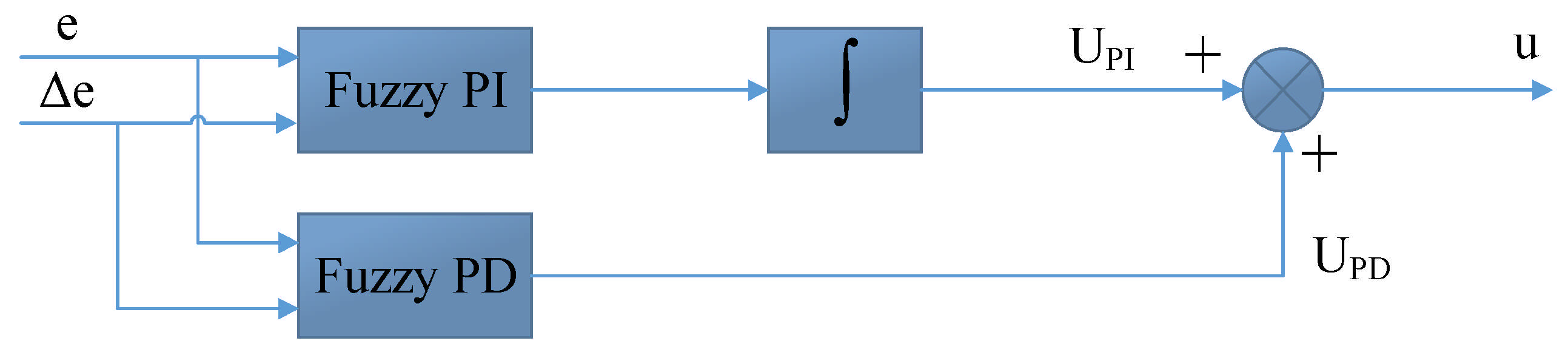
The third structural type is selected, namely fuzzy PI control with parallel fuzzy PD control. An advantage of this structure is that it does not rely on conventional elements and allows for the avoidance of complex design of logical rules and membership functions. It is particularly beneficial in terms of design that both the PI and PD components use the same set of logical rules and membership functions. The final control action is obtained as the sum of the output signals from both controllers:
The main structural diagram of this type of control is shown in
Figure 1.
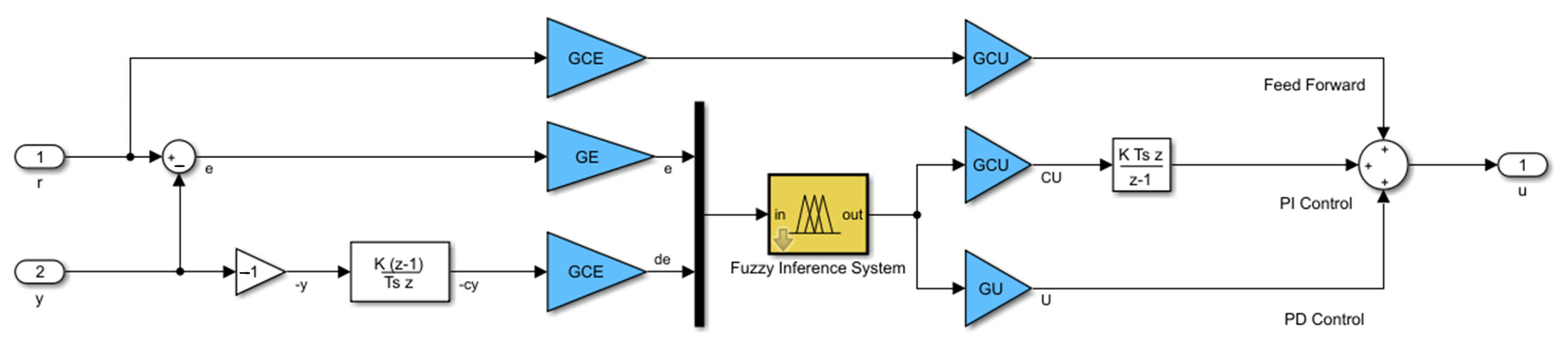
Figure 2 presents its implemented equivalent in the MATLAB/Simulink environment.
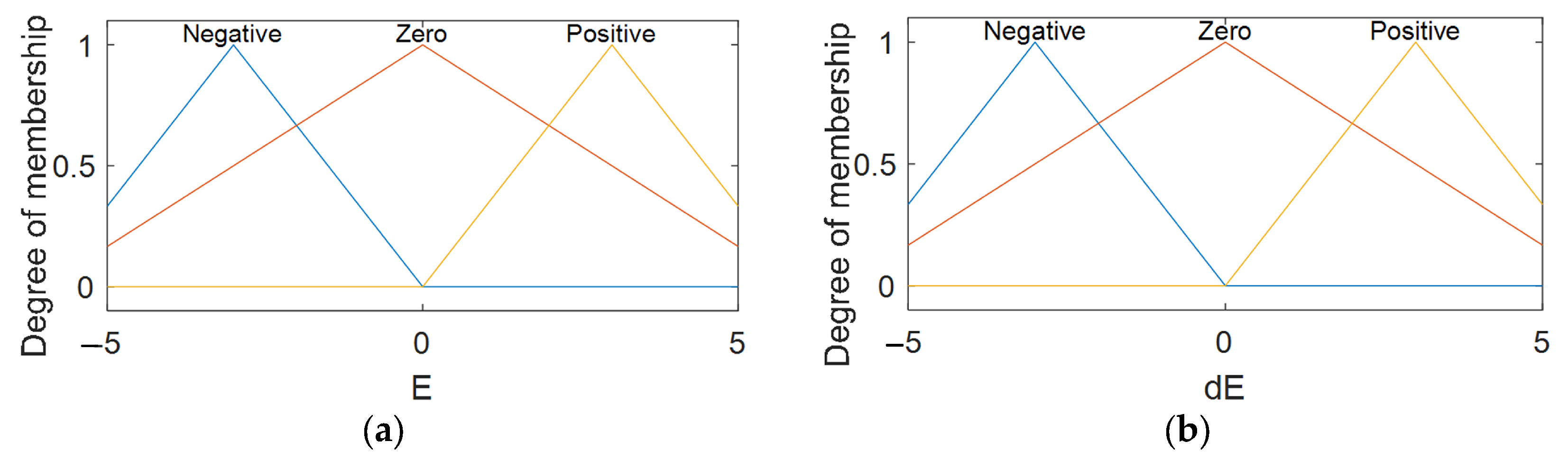
In the implementation of the fuzzy PID controller, an FIS structure is used, based on the Sugeno model with a fuzzy implication method that relies on scaling the consequent membership function using the previous output value.
Figure 3 shows the membership functions for the two outputs, while
Table 1 presents the logical rules that form the fuzzy FIS structure.
In the rule aggregation method, the defined fuzzy sets are summed sequentially. For the defuzzification block, the real values are obtained using one of the well-known methods for the Sugeno model—specifically, the weighted average of all rule outputs.
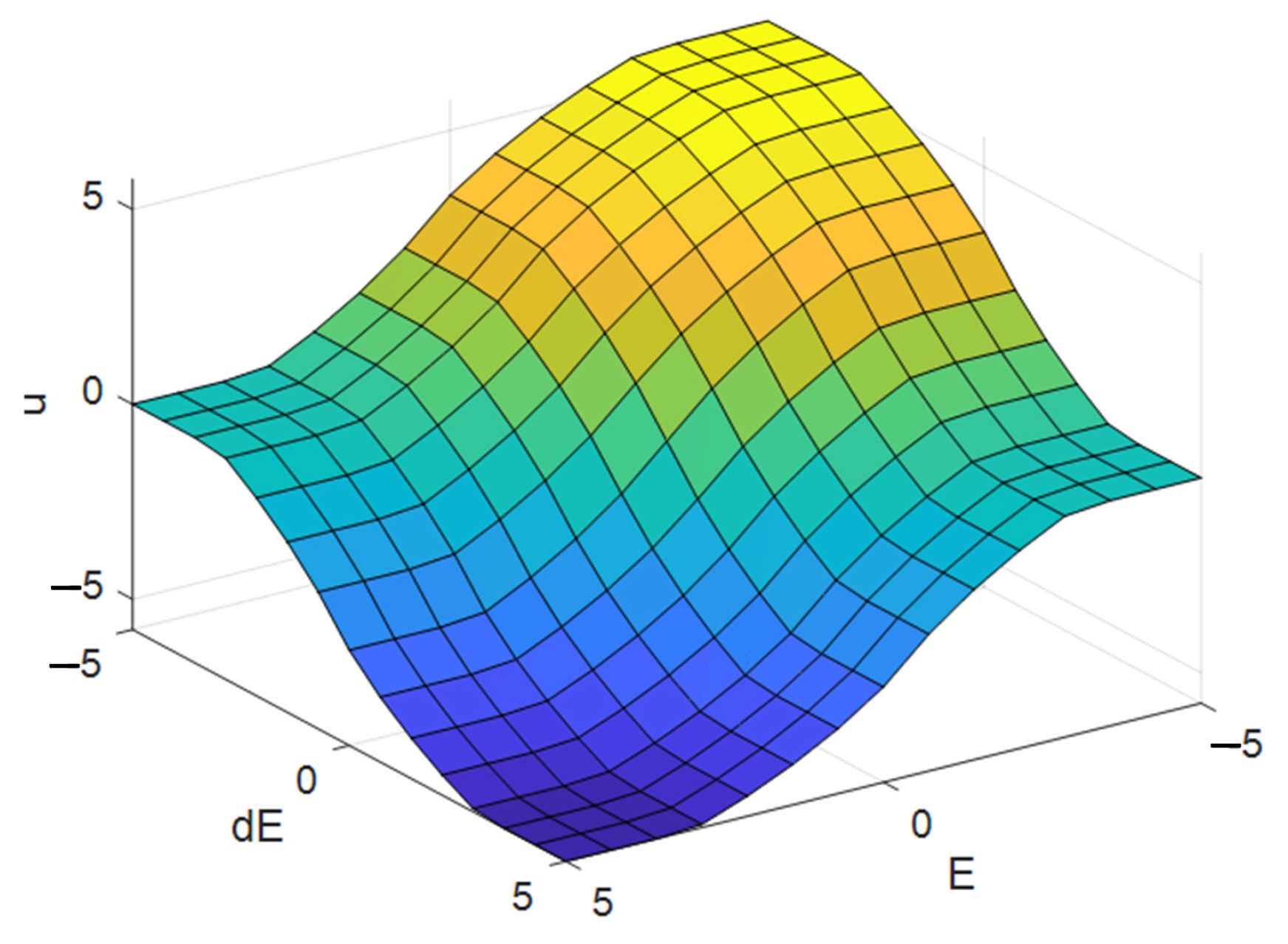
Figure 4 presents a three-dimensional control surface plot, illustrating the relationship between the two inputs—the error
and the change in error
—on the one hand, and the output of the fuzzy structure u on the other, for a set of 9 logical rules.
The inputs are described by the terms Negative, Zero, and Positive, while the output is characterized by the terms LN (Large Negative), SN (Small Negative), Z (Zero), SP (Small Positive), and LP (Large Positive).
Table 1 provides information about the set of logical rules used.
In the presented block diagram, the change in measurement (
) is used instead of the change in error (
) as the second input signal to the fuzzy structure. In this way, step changes in the reference signal—caused by the direct action of the derivative block—are avoided. However, this modification also requires changes in the controller’s structure in order to preserve its functional behavior. The three main coefficients (proportional, integral, and derivative) of the conventional PID controller are transformed into four new coefficients denoted as
,
,
, and
. This approach is known as coefficient transfer of the PID controller and is described in detail in [
24]. To ensure that the error
is fully utilized, the two gain coefficients
and
are added in the feedforward path. The values of the new coefficients are functionally dependent on the standard ones and can be calculated using the following formulas:
When calculating the new coefficients, only is defined in advance and depends on the predefined limits of the error input to the fuzzy structure. For example, if the input error range is [−6;6], then is first set to 6, and the remaining coefficients—, , and —are calculated using the formulas described above.
2.3. Tunnig of Controller
The presented parallel structure of the fuzzy PID controller has several advantages, one of which is the tuning process. The coefficient transfer approach allows the implementation of the fuzzy FIS structure to occur after the linear controller has already been tuned, or even to build upon an existing PID controller. Thus, the tuning procedure for this type of controller follows these steps:
Tuning the PID controller—most commonly, the Ziegler–Nichols method is used. In the current implementation, the method is applied experimentally.
Design of the linear fuzzy controller—a linear control surface is designed.
Coefficient transfer—the standard PID controller coefficients are replaced with gain coefficients using the relationships defined in (3).
Modification of the fuzzy structure into a nonlinear one—typically achieved by altering the shape of the surface and selecting appropriate linguistic rules, as in most cases, heuristic approaches are used.
Fine tuning—once the fuzzy structure has been modified into a nonlinear one, the adjustment of the coefficients is traditionally based on experience and intuition.
Overall, the tuning process is essentially the design procedure itself, and the simplest approach is to begin with designing a PID or even a P controller to stabilize the system, and then to add the fuzzy structure afterward.
2.4. BIBO Stability of the Fuzzy Control System
When controlling a nonlinear system with a nonlinear controller, it is essential to evaluate the global stability of the system. This also contributes to the investigation of the quantitative relationship between the conventional PID controller and the fuzzy structure.
To achieve this, the so-called BIBO stability of the system is examined. When analyzing the interconnection of two nonlinear systems, BIBO stability generally implies that a bounded input results in a bounded output, which is also the case in the scenario under consideration. A suitable tool for this analysis is the application of the Small-Gain Theorem [
25] and the theorem presented in [
26], according to which a sufficient condition for stability is that the product of the gain coefficients of the two systems is less than 1. When implementing control using a fuzzy PID controller, this condition is expressed as:
where
are the parameters of the fuzzy PID controller, and
denotes the gain of the nonlinear system under consideration.
To compute the first part of condition (4), by converting the time constants into gain coefficients for the PID controller, Equations (3) are transformed into:
Using (5), the gain coefficient of the fuzzy PID controller is obtained as:
With the selected coefficients after tuning, , the gain coefficient of the proposed controller is calculated to be 0.5306.
The gain coefficient of the system is typically defined as:
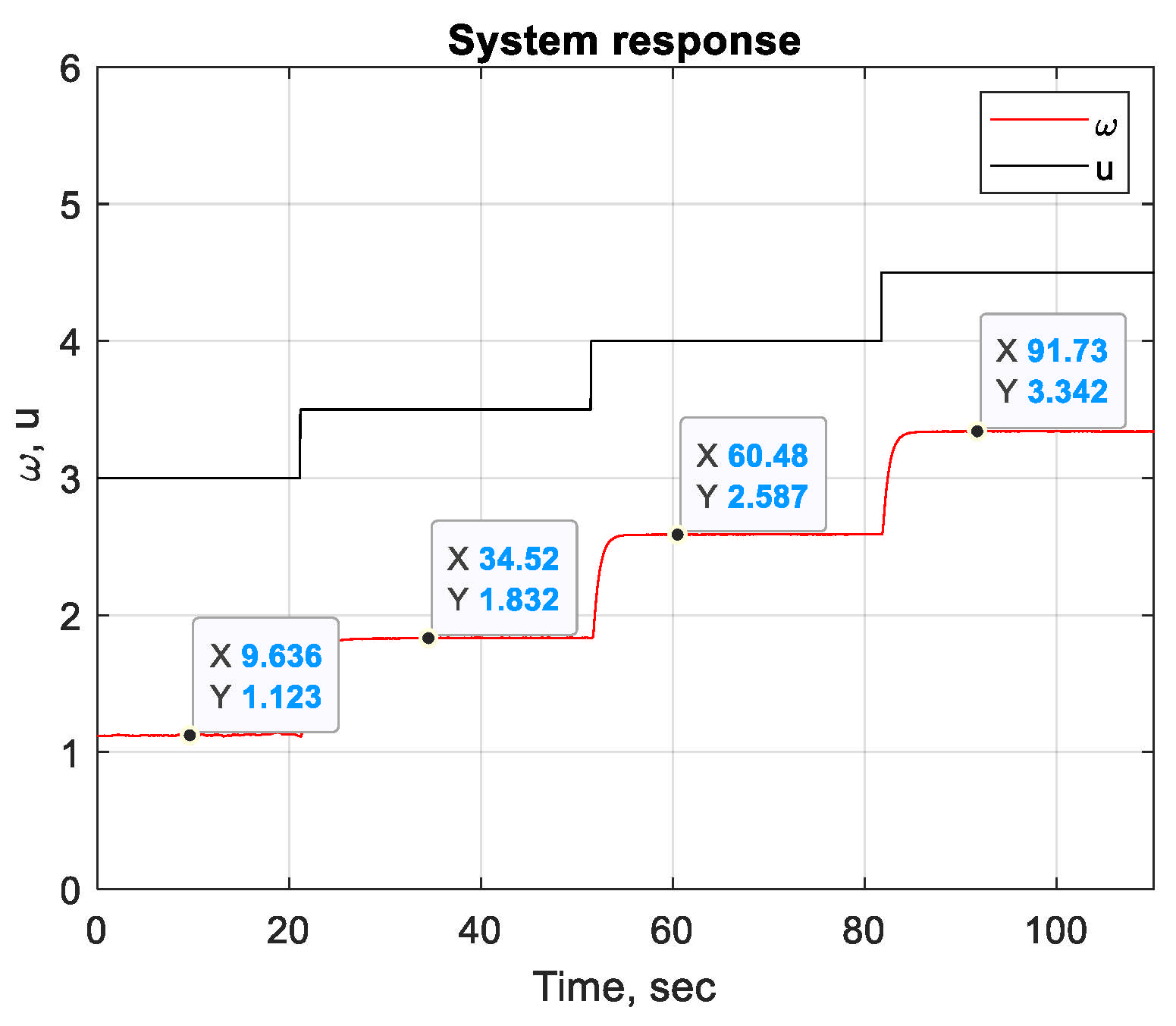
This value is determined experimentally. According to definition (7), two output values are recorded for two different input values after the transient responses have settled. For the electro-hydraulic system under consideration, data from the open-loop response is recorded by applying input commands ranging from 3 V to 4.5 V. The resulting output values of the variable
are shown in
Figure 5. Based on Equation (7), the largest observed gain
is calculated to be 1.51 over the entire operating range.
According to the calculations presented above, condition (4) is satisfied, and the closed-loop system is BIBO stable. If the nonlinear system is stably controlled by a conventional PID controller, then, according to (4), the linear control can always be replaced by a fuzzy PID controller that ensures the same stability margin. Moreover, since the stability condition (6) is independent of the weighting coefficients of the error and its change, the use of this parallel fuzzy PID structure provides additional freedom in the design process, allowing for improved performance without affecting system stability.
3. Experimental Results and Analysis
The system under study has been extensively examined in other authors publications as well [
27,
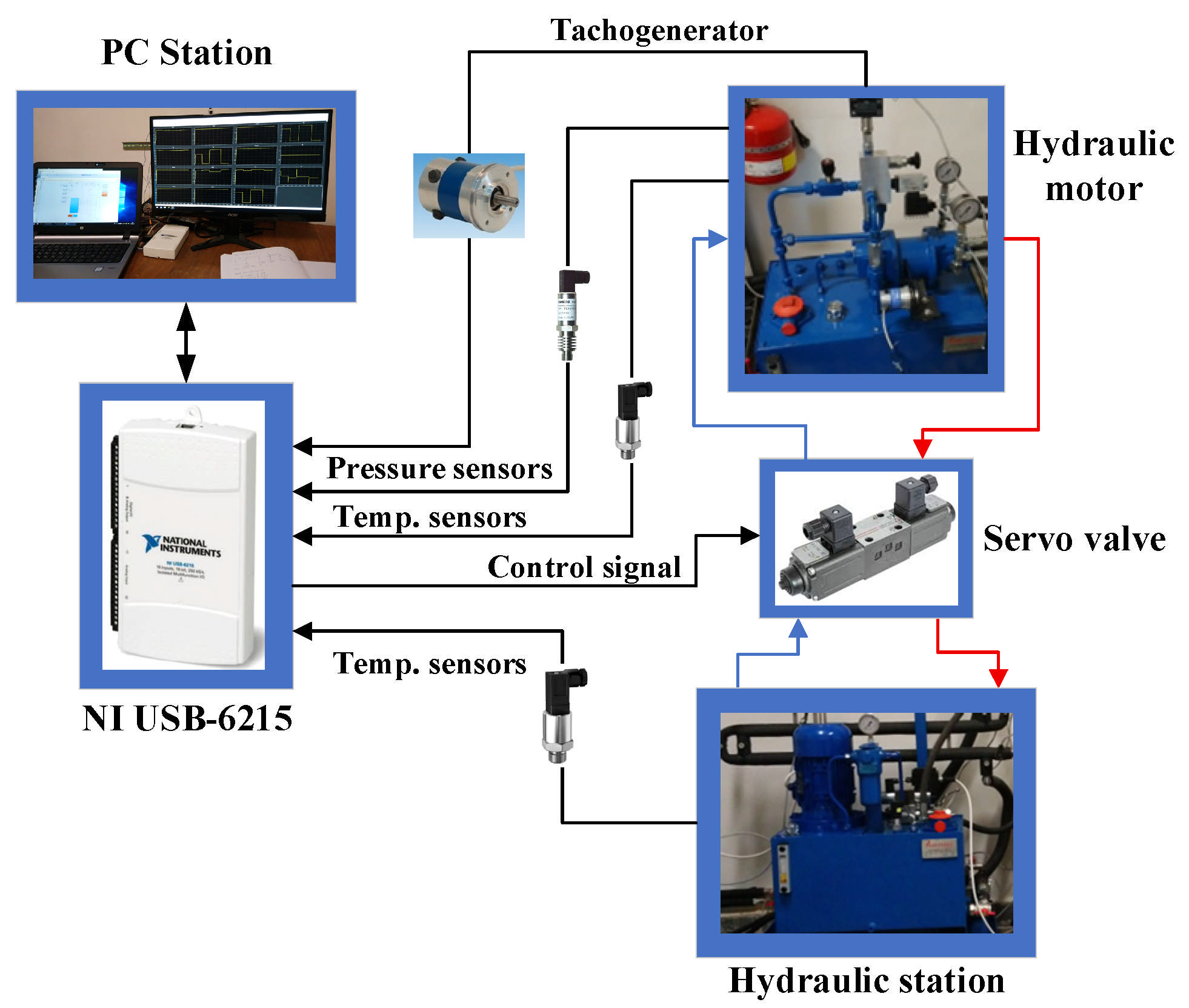
28] and is presented with the generalized block diagram shown in
Figure 6, while the key parameters of the system are provided in [
29]. The controlled variable is the rotational speed (
) of the hydraulic motor shaft, while the movement of the servo-valve plunger (
is the system input.
The system under consideration is a laboratory test bench consisting of several main modules: a hydraulic station, an NI measurement module USB-6215, a PC station with specialized software operating in the MATLAB/Simulink environment, and an electro-hydraulic module. Thanks to the presence of multiple sensors for temperature, pressure, and a sensor measuring the rotational speed of the hydraulic motor, the PC-based system allows for the implementation and analysis of various control schemes within the MATLAB/Simulink environment.
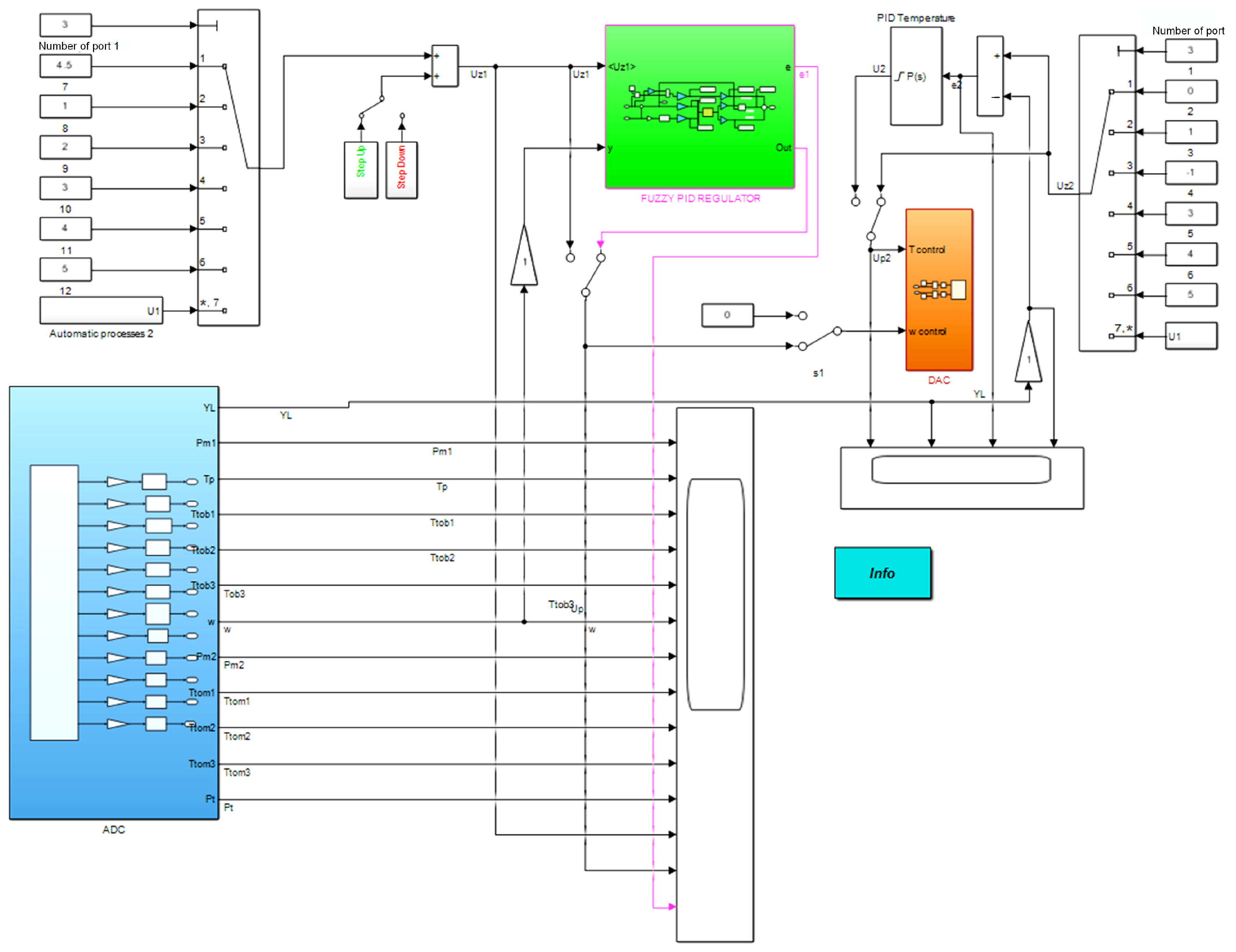
To test the system, a model representing an integrated control system was developed in the MATLAB/Simulink environment. The model includes a complete functional chain for data acquisition, filtering, digital processing, control, and real-time visualization.
The architecture of the software system is based on a hierarchical principle and consists of five main subsystems:
ADC (Analog-to-Digital Conversion)—conversion and filtering of analog input signals;
Automatic Processes 1 and 2—generators of test signals in the form of step functions;
FuzzyPID Regulator—the investigated controller combining PID and fuzzy logic;
PID Temperature—a classical PID controller for the temperature channel;
DAC (Digital-to-Analog Conversion)—generation and transmission of analog control outputs.
Additional subsystems, such as Step Up Signal, Step Down Signal, and RTFM, perform auxiliary functions related to system testing and tuning.
Figure 7 shows the Simulink model of the system, which serves as a software platform for measurement and control. The system is suitable for both scientific experiments and for training and demonstration of adaptive and intelligent control methods.”.
The ADC subsystem implements the interface between the external hardware and the Simulink model. The Analog Input (Single Sample) block is used, configured to operate with the NI USB-6215 device, which provides up to 12 analog input channels. Each channel passes through an individual low-pass Butterworth filter, implemented using Analog Filter Design blocks 1–12 (State-Space realization, order N = 1). The filters provide frequency selectivity with a lower cutoff frequency of 0.04–0.06 Hz and a high-frequency attenuation of 50 dB, ensuring noise suppression and elimination of parasitic signals.
After filtering, the signals are scaled using Gain blocks (Gain1–Gain12), enabling normalization to a suitable range for digital processing. The combination of filters and amplifiers forms a reliable real-time data acquisition and preprocessing module.
The task modeling for the system is implemented through the subsystems Automatic Processes 1 and Automatic Processes 2. Each contains multiple Step blocks that generate sequences of step changes in the input variables. In this way, the model can simulate typical changes in the reference input or process disturbances.
The additional subsystems Step Up Signal and Step Down Signal enable independent control of the rising and falling transitions of the signal, which are used for analyzing transient characteristics and system stability.
The PID Temperature subsystem represents a continuous-time PID controller (Form = Parallel) with parameters P = 1, I = 0.04, and D = 0. The controller is configured with output limits between 0 and 6 V and includes an anti-windup mechanism (AntiWindupMode = back-calculation). This module is designed to control the thermal regime of the test stand, where smooth response and protection against saturation are required.
The DAC subsystem performs the digital-to-analog conversion using the Analog Output (Single Sample) block connected to the NI USB-6251 device. This block provides two analog output channels through which the computed control signals are delivered to external actuators. The DAC inputs pass through Saturation blocks that limit the voltage within permissible ranges and Sum blocks that adjust the control components. This approach prevents signal saturation and ensures proper reproduction of the analog outputs.
The model also contains multiple Display and Scope blocks, enabling real-time monitoring of the time dependencies of the main variables: reference value, output, error, and control signal. The inclusion of Manual Switch and Multiport Switch blocks allows switching between different control modes (e.g., manual, PID, or Fuzzy).
During system operation, data are recorded at a sampling rate of 50 Hz. The following measurements are collected: reference input—u, rotational speed—ω, control error—ε, controller output—
, oil pressure in the pump—
, pressure before the proportional distributor—
, pressure after the proportional distributor—
, and oil temperature in the tank—
. Measuring parameters such as fluid temperature and pressure is essential for analyzing the performance of hydraulic systems [
29].
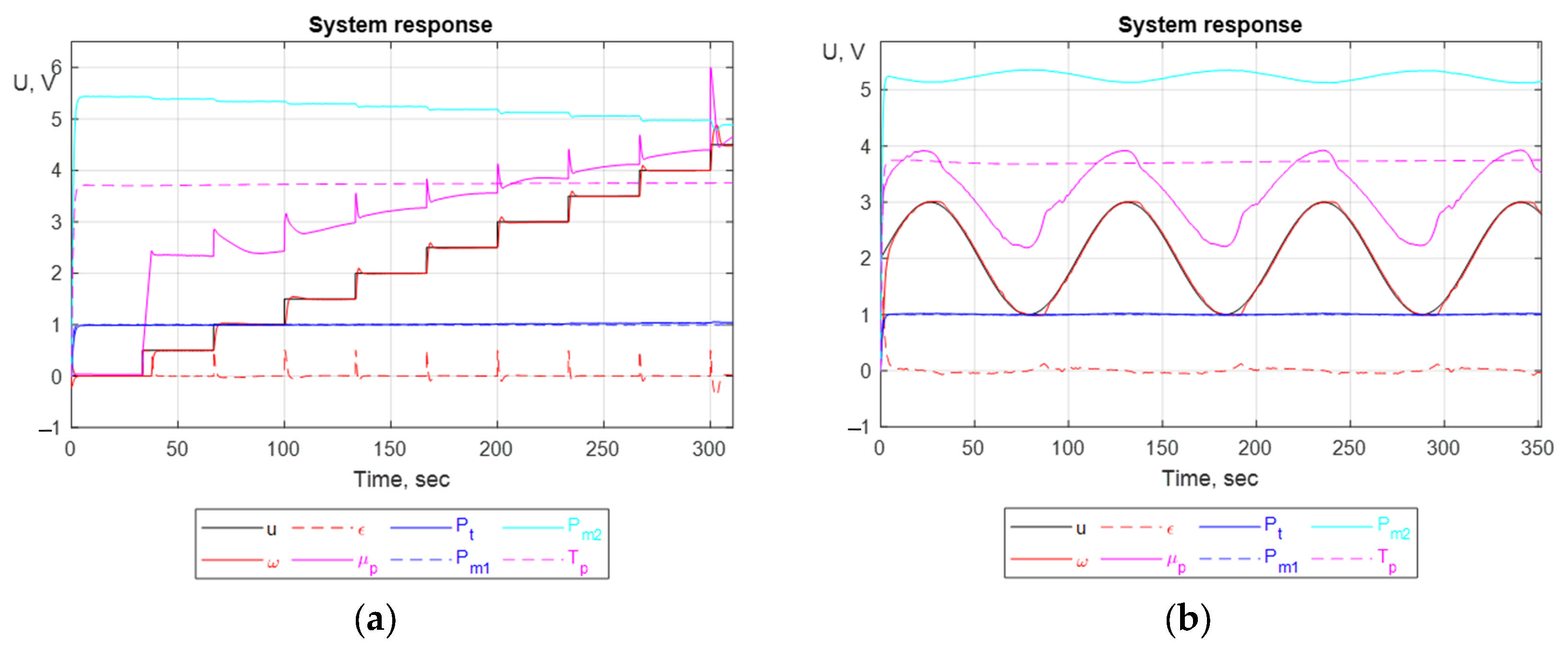
When studying the designed fuzzy controller, data was recorded under sinusoidal variation in the reference signal and under increasing step changes. The graphical results are presented in
Figure 8.
In
Figure 8a, under stepwise changes in the reference signal, i.e., transitioning through multiple target positions or tracking multi-step signals, the closed-loop system demonstrates very good technical performance. The amplitude of the reference signal varies from 1 to 5.5 in increments of 0.5 every 30 s. No steady-state error is observed, the settling time does not exceed 3.5 s, and the overshoot remains below 10% across the entire range of variation. The small error and fast settling time indicate that the controller is well-tuned.
Figure 8b presents the graphical results of system performance in dynamic mode for the main variables during the tracking of a periodic (sinusoidal) reference signal. The control signal and output variable exhibit a stable periodic regime with constant amplitude and period, without signs of saturation or distortion. The error oscillates around zero with a small amplitude throughout the interval, indicating effective tracking and a well-tuned control loop. Slight peak values are observed when the reference signal reaches its lower levels, which is due to the system entering the dead zone of the control element. Practically no phase shift is observed between the reference and the system output. The control signal remains within technically acceptable limits, with no indication of saturation.
Table 2 presents a comparison between the studied fuzzy controller and a conventional PI, PID controller. From the data, it can be seen that the fuzzy controller shows better results. Despite the good results and well-tuned controller, the use of electro-hydraulic components in automation leads to a deterioration in control quality within the dead zone of the proportional valve, which spans approximately 10% of the lower end of the operating range. Additionally, a saturation zone is observed beyond a reference input of 4.5 V, where the steady-state error increases.
The use of a fuzzy PID controller with a parallel structure is a very effective option for implementing a compensation mechanism to eliminate this system deficiency. The designed controller enables the realization of an additional level of adaptability by incorporating supplementary fuzzy structures or neuro-fuzzy structures, which can be easily integrated into the overall controller architecture. The coefficient transfer approach would also be beneficial when applying more conventional methods such as functional or scaling compensators. Addressing this issue remains a subject for future research.



 ,
,