1. Introduction
In recent decades, drought and climate change have significantly affected the availability of water resources across Europe, simultaneously transforming the perspective on water losses in distribution systems from both economic and environmental standpoints [
1]. In response to the increasing pressure to manage water more efficiently, the European Union launched a campaign in February 2025 aimed at ensuring sufficient water reserves for the future [
2].
One of the key strategies for the protection of water resources involves reducing water losses within distribution networks. Reliable data on water losses are crucial for planning the rehabilitation and modernization of water infrastructure, with the goal of minimizing such losses [
3,
4].
Numerous studies have reported substantial disparities in water loss levels among member states of the European Union (EU). For instance, a 2021 report [
5] indicates that the lowest average share of Non-Revenue Water (NRW) is observed in the Netherlands (~5%), Germany (~6%), and Denmark (~8%). In contrast, other countries report significantly higher values—France (~20%), Belgium (~21%), Poland (~25%), Slovakia (~32%), Italy (~41%), Romania (~42%), and Bulgaria up to 60% [
6].
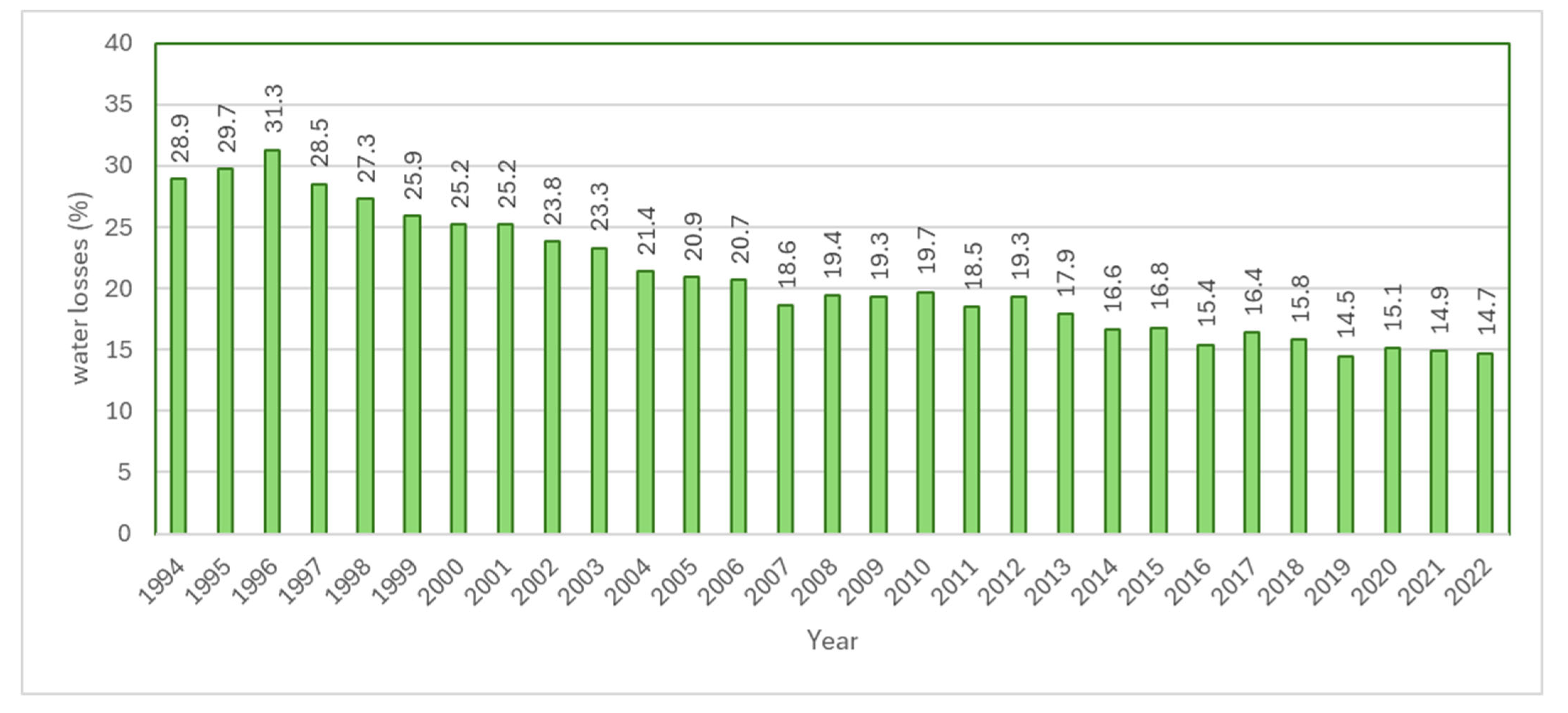
In the Czech Republic, reducing water losses and maintaining low levels has been a long-term priority for water utilities. Due to aging and degraded infrastructure, approximately 15% of drinking water is lost, on average. For comparison, losses in the 1990s reached up to 35% (see
Figure 1). The gradual decline in water losses has contributed not only to the stability of water supply but also to the pricing of drinking water [
7].
However, water losses differ not only between countries but also between water supply systems within individual EU member states [
6]. A report by EurEau (2021) confirms the high variability of NRW percentages, which complicates comprehensive cross-country comparisons of water management efficiency within Europe [
9].
To address this challenge, the revised EU Drinking Water Directive (EU 2020/2184) requires member states to report official data on water losses by January 2026. To ensure comparability, a unified methodology is to be used, with the directive recommending the use of the Infrastructure Leakage Index (ILI) or another standardized assessment method [
10]. Subsequently, the European Commission is expected to issue a supplementary legal act by 12 January 2028, which will define a threshold value for acceptable water loss levels based on data submitted by member states and an analysis of average loss rates across the EU [
10].
Monitoring water distribution systems through regular observation and evaluation of data—particularly flow and pressure—is essential to reducing losses to economically acceptable levels [
11,
12].
Water network monitoring based on continuous collection and evaluation of flow and pressure data is a fundamental tool for water loss management. Minimizing night flows (Q
min) enables the effective identification of deviations from standard hydraulic behavior, which are statistically associated with leakage. This approach improves leak detection accuracy and shortens the average duration of water losses, thereby directly enhancing both the economic and environmental performance of operations. Moreover, it provides a foundation for long-term infrastructure renewal planning based on quantitative indicators and trend analysis [
11,
12].
The aim of this study is to analyze the impact of implementing a software-based tool for managing and monitoring water losses on the operational efficiency of the water distribution network operated by Severomoravské vodovody a kanalizace Ostrava a.s. (SmVaK). The research focuses on the Frýdek-Místek water supply system (WSS Frýdek-Místek) during the period 2019–2024. The development of Non-Revenue Water (NRW) volumes was assessed, and the study seeks to quantify the benefits of the implemented leak management system in relation to the long-term optimization of water supply infrastructure operations.
2. Materials and Methods
2.1. Assessment of Water Losses in the Distribution System
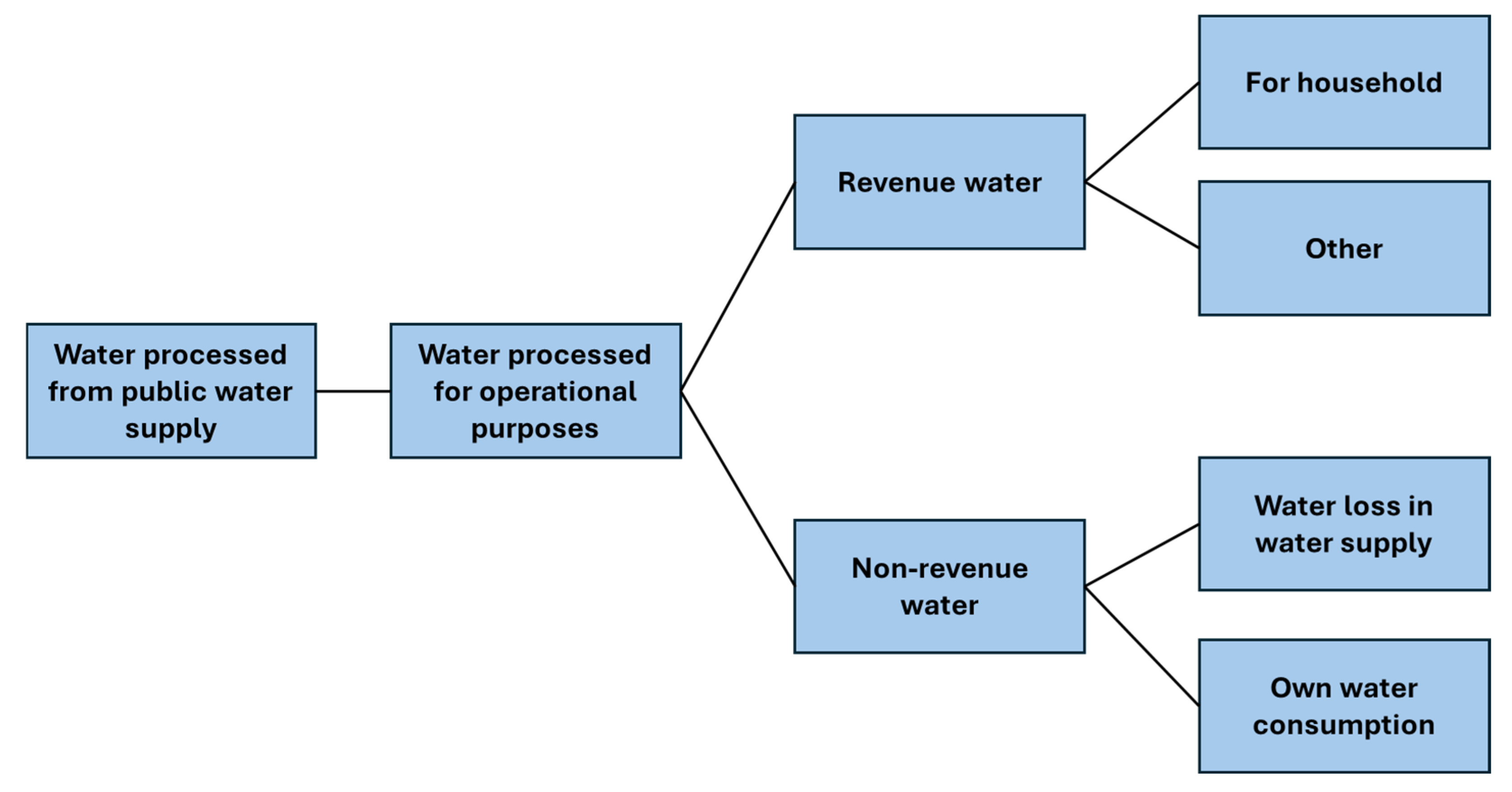
One of the fundamental indicators of the operational efficiency of a water distribution network is water loss, defined as the difference between the volume of water entering the system (produced water) and the volume of billed water delivered to end users [
13] (
Figure 2).
This difference includes both visible failures (e.g., water leaks at the surface) and hidden leaks (e.g., pipe seepage), as well as unregistered withdrawals from the system (e.g., fire department usage or unauthorized connections) and losses due to meter inaccuracies. Water losses are a key indicator of the technical condition of infrastructure and the effectiveness of operational management [
8,
13].
For quantitative assessment, the water balance structure in accordance with the Czech technical standard ČSN 75 5020:2023 [
14] “Reporting of drinking water losses from water supply systems” was used, supplemented by methodological guidelines based on the International water association (IWA) framework [
14]. According to this approach, the produced water is considered as 100% of the initial volume for evaluating losses. Transfers between water systems and withdrawals outside the distribution network are excluded from the calculation [
7]. The following indicators were applied:
This expresses the ratio of non-revenue water to the total produced water volume. It is one of the most widely used indicators of water losses [
14,
15].
NRW (%)—Non-Revenue Water percentage;
NRW volume (m3)—Volume of Non-Revenue Water;
VVR—System Input Volume (m3);
VF—Billed Authorized Consumption (m3)
This indicator expresses the volume of non-revenue water recalculated per year per kilometer of water supply network. It allows for comparison of the operational efficiency of different systems and identification of problematic areas.
S-NRW represents the NRW volume recalculated per 1 km of the standardized pipeline length (converted to DN 150 profile). The recalculated length takes into account pipe diameters (DN) to ensure comparability between differently structured systems [
13,
14,
15].
Lpřep—recalculated pipe length [km] to a standardized DN 150 profile;
Li—actual length of network with the same DN;
Ki—conversion coefficient for length adjustment;
DN—Diameter Nominal.
2.2. Instrumentation and Leak Detection Methods
The study was conducted in the water distribution system operated by SmVaK in the Frýdek-Místek area. This area was selected due to its extensive infrastructure and complex terrain and network configuration. It serves as a representative example of a medium-sized Czech distribution system suitable for evaluating water losses.
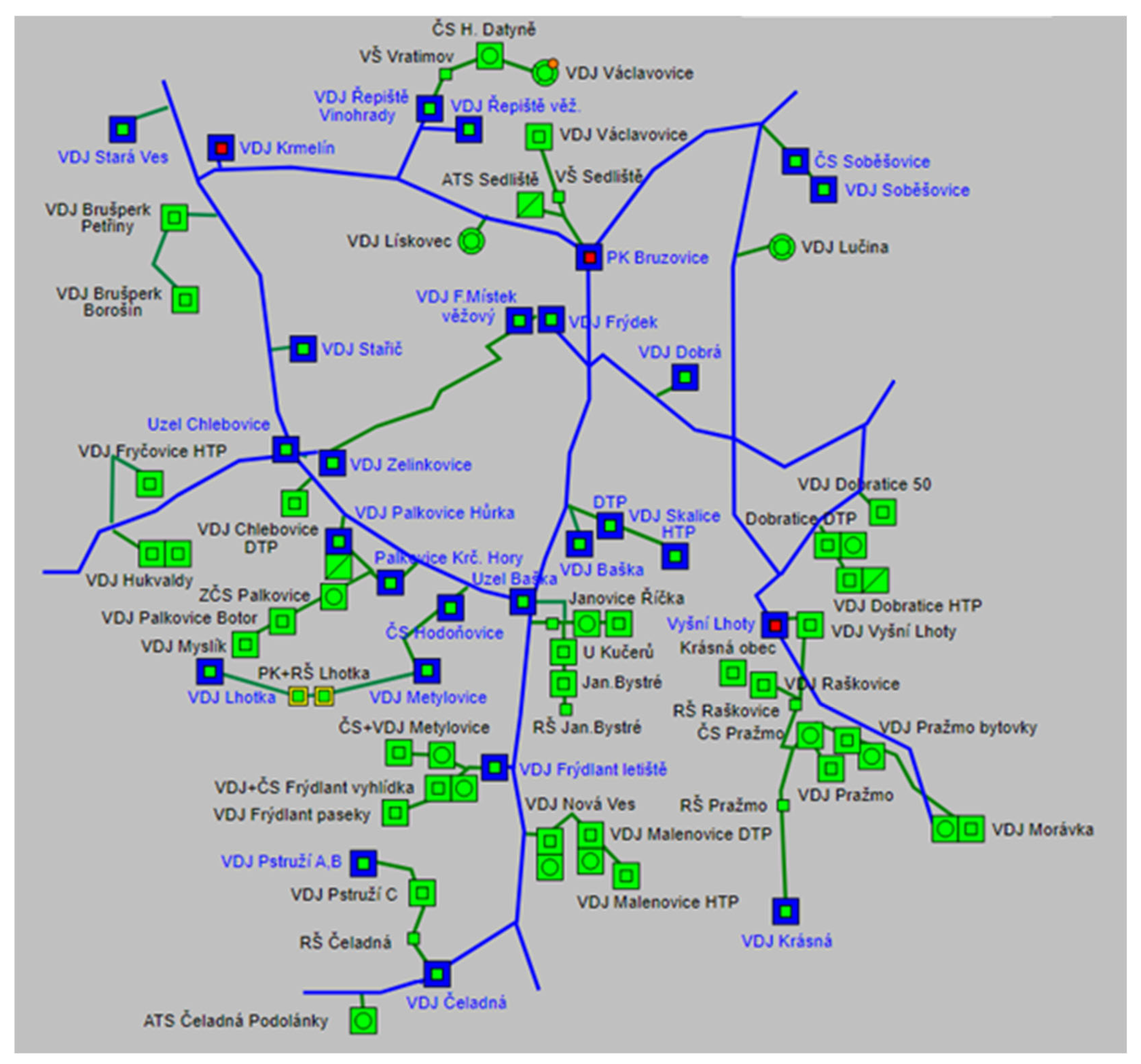
The Frýdek-Místek distribution system serves 59 municipalities. The supply system is a combination of gravity-fed sections, pumping stations, and pressure regulation through valves (
Figure 3) [
13].
The total length of the water network is approximately 1024.4 km. The infrastructure includes 37 reservoirs with a total capacity of 4493 m
3, 45 pumping stations, and more than 32,594 service connections with a total length of 171 km [
13].
To effectively detect and reduce water losses, a comprehensive system for monitoring minimum night flows (Q
min) was implemented in the Frýdek-Místek area, based on the “Leak monitor” software tool. Development of the system began in 2018 in cooperation with the Danish company DHI. After successful testing, the system was rolled out in all SmVaK operational areas from 2019, replacing an older system that no longer met rapid leak detection requirements. The system enables automated data collection, transmission, and analysis of flow data in selected network sections to identify anomalies linked to probable leaks [
11,
12,
16].
The basic methodology is based on monitoring minimum flows during night hours, when normal consumption is negligible. Persistently elevated night flows are considered indicative of continuous leakage. Flows are measured at selected points equipped with sensors connected to remote data transmission systems (CODEA spol., s.r.o.—Ostrava, Czech Republic; technology using GSM—Global System for Mobile Communications, GPRS—General Packet Radio Service, and LTE—Long Term Evolution). The data are automatically evaluated, and deviations trigger alerts for field inspections [
11,
16].
Leak localization is carried out using modern diagnostic devices capable of detecting leaks even in densely built-up areas. The tools used include:
- -
Magnetic locators for identifying buried valves and covers;
- -
Ground microphones and acoustic rods (“electronic ears”) for surface-level leak detection;
- -
Correlators for precise leak localization using sound propagation delay analysis;
- -
Noise loggers for continuous night-time acoustic measurements.
Localization is guided by software analysis and narrows down the problematic sections quickly.
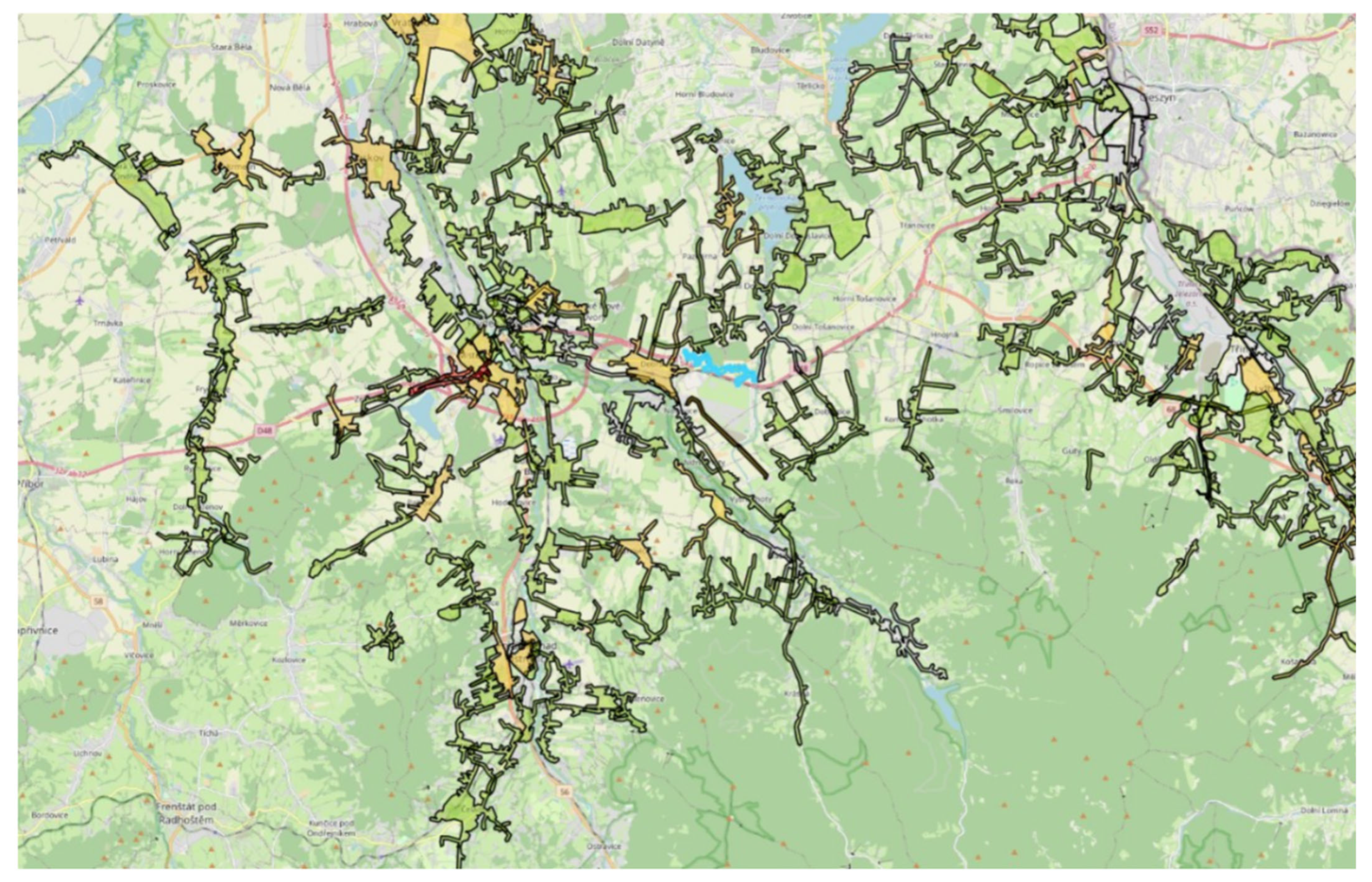
The entire process operates within district metered areas (DMAs) (
Figure 4), which were identified as the most efficient operational model. The network is divided into smaller hydraulically isolated units, enabling high-precision water balance assessment and targeted interventions. Monitoring point selection was based on accessibility, representativeness, and availability of historical operational data [
16].
The system logs and regularly evaluates the frequency of leaks, detection times, duration, and development of NRW and S-NRW indicators across different DMAs. These results are used to optimize interventions, support long-term infrastructure planning, and evaluate the economic effectiveness of leak reduction measures [
16].
Core functions of the system include:
- -
Automated data collection and alert generation;
- -
Timely leak localization in critical areas;
- -
Use of remote data transmission (GSM, GRS, LTE);
- -
Detailed leak analysis by area;
- -
Automated export to Microsoft Excel;
- -
Economic evaluation of detected leaks;
- -
Historical data storage in a database;
- -
Streamlined event tracking and standardized processes [
16].
3. Results and Discussion
The implementation of the “Leakage monitor” system by SmVaK in 2019 has significantly improved water loss management, particularly within the WSS Frýdek-Místek. The system utilizes data from Supervisory Control and Data Acquisition system (SCADA) and automated control and regulation systems (ASŘTP) to continuously evaluate night-time flows, enabling the early and efficient identification of potential leaks and their prompt localization using acoustic methods.
Among the most frequently affected pipelines identified by the system are old cast iron and asbestos cement pipes, which are especially prone to mechanical damage and material degradation [
17].
A key feature of the system is the continuous monitoring and real-time evaluation of leakage levels across individual pressure zones. Based on predefined sensitivity parameters, the system distinguishes between short-term consumption fluctuations and actual leaks. Confirmed anomalies are logged into a central database and immediately reported to the operator. The system also automatically evaluates key performance indicators (KPIs), such as:
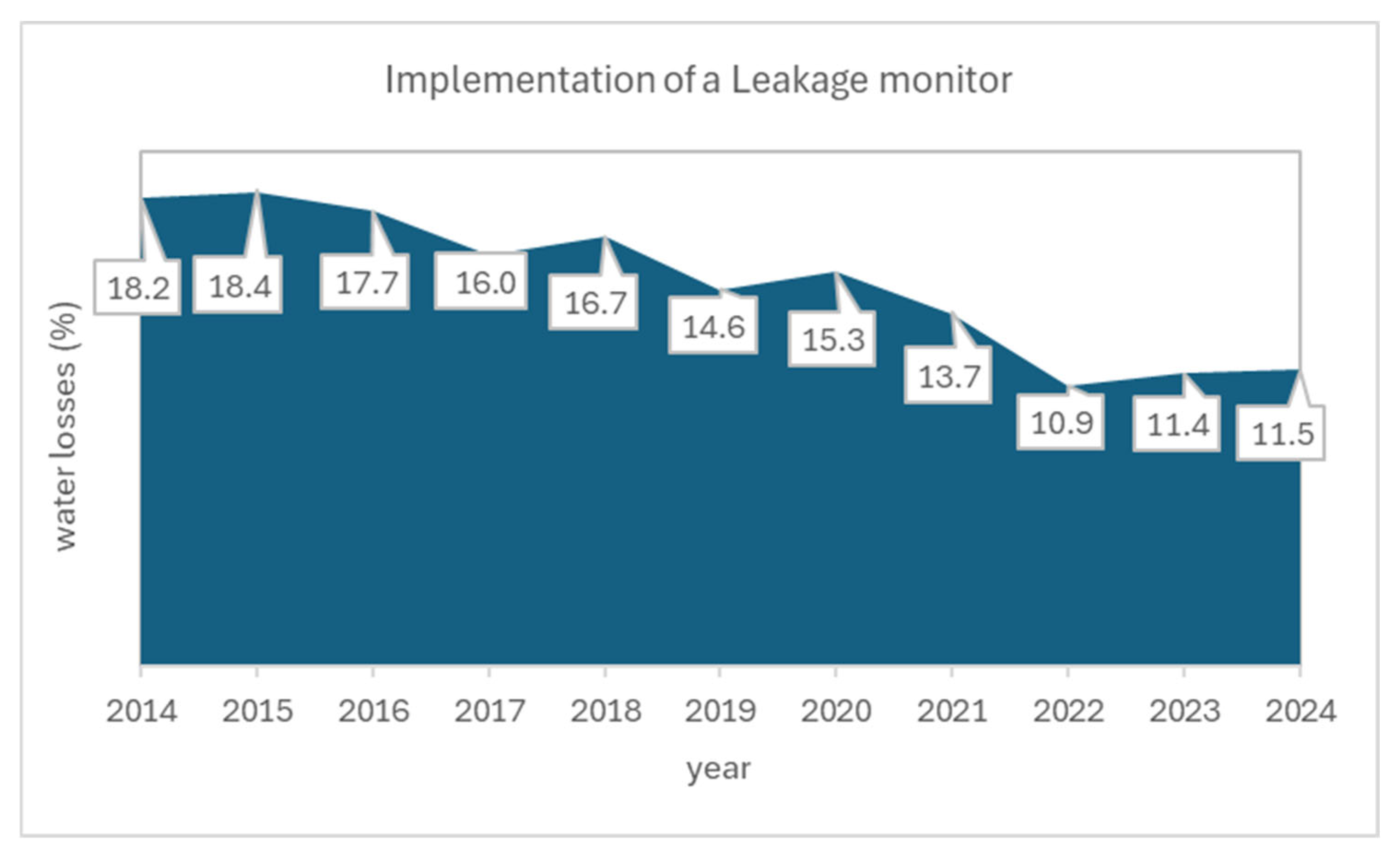
As a result of the system’s deployment, a clear and measurable decrease in NRW was observed in the monitored area (see
Figure 5), which includes 59 municipalities, 1024.4 km of water supply network, and 32,594 service connections with a total length of 171 km [
13].
Between 2019 and 2024, water losses in the network were reduced from 14.6% to 11.5%, representing a significant improvement in the efficiency of water resource management.
Simultaneously, a network zoning strategy was implemented, enabling efficient and targeted management of pressure zones within the water distribution system. This approach has led not only to a reduction in water losses, but also to their long-term stabilization, thereby confirming the technical effectiveness of the measures adopted. Regular evaluation of pressure zones supports the optimization of operational conditions and enables a rapid response to deviations from standard network behavior.
The economic efficiency of the approach has been demonstrated primarily through savings in produced water volumes, resulting directly from the reduction in leaks. In addition, all interventions are subject to detailed economic evaluation, which allows for cost optimization and strategic decision-making based on measurable benefits.
The results clearly emphasize the importance of continuous monitoring, targeted pressure management, and automated data evaluation in ensuring the technical and financial sustainability of water distribution system operations, particularly in medium-sized urban agglomerations.
4. Conclusions
The findings of this study confirm that a systematic approach to water distribution network monitoring, based on minimum night flow measurements and the deployment of the advanced software tool “Leak monitor”, represents an effective and practically validated method for managing water losses in urban and peri-urban supply systems. The implemented system enables early detection of network anomalies, accurate localization of hidden leaks, and their economic assessment, significantly contributing to the reduction in Non-Revenue Water (NRW) volumes.
The implementation of a district-based operational model for supply zones, along with the expansion of monitoring points and the targeted use of acoustic and correlating leak detection devices, has led to a statistically significant improvement in spatial resolution of water loss identification and a reduction in leak detection time. Experience from the Frýdek-Místek region demonstrates that the transition to sectional (district-level) management delivers not only operational but also strategic benefits—including improved infrastructure renewal planning, pressure regime optimization, and enhanced investment decision-making.
Key success factors include the integration of a modern software platform, reliable field data, and the expertise of operational staff. This integrated approach has not only reduced operational water losses but also contributed to greater overall efficiency and transparency in the management of the distribution network.
Further system development—particularly in the direction of finer network segmentation, expansion of remote data collection, and automation of evaluation algorithms—offers potential for even more accurate leak identification, along with additional economic and environmental benefits.
Author Contributions
Conceptualization, S.D. and P.Č.; methodology, P.Č.; software, P.Č.; validation and formal analysis, S.D., P.M. and P.Č.; investigation, S.D. and P.M.; resources, P.Č.; data curation, P.Č.; writing—original preparation, S.D. and P.M.; writing—review and editing, S.D. and P.M.; visualization and supervision, S.D. and P.Č.; project administration, S.D. All authors have read and agreed to the published version of the manuscript.
Funding
This research received no external funding.
Institutional Review Board Statement
Not applicable.
Informed Consent Statement
Not applicable.
Data Availability Statement
Data sets are contained within the article. Further data and materials requests should be addressed to the corresponding author.
Acknowledgments
The authors would like to thank the Department of Environmental Engineering, Faculty of Mining and Geology for technical and material support.
Conflicts of Interest
Petr Černoch was employed by the company Severomoravské vodovody a kanalizace Ostrava a.s. The remaining authors declare that the research was conducted in the absence of any commercial or financial relationships that could be construed as a potential conflict of interest.
References
- Kyncl, M.; Heviánková, S.; Nguyen, T.L.C. Study of Supply of Drinking Water in Dry Seasons in the Czech Republic. IOP Conf. Ser. Earth Environ. Sci. 2017, 92, 012036. [Google Scholar] [CrossRef]
- ČT24. EU Countries Are to Map Water Leaks from Pipes, with Greece Reporting Acute Problems. [Země EU Mají Zmapovat Únik Vody z Potrubí, Akutní Problémy Hlásí Řecko.] Czech Television. Available online: https://ct24.ceskatelevize.cz/clanek/svet/zeme-eu-maji-zmapovat-unik-vody-z-potrubi-akutni-problemy-hlasi-recko-358301 (accessed on 2 April 2025).
- Moslehi, M.I.; Jalili-Ghazizadeh, M.; Yousefi-Khoshqalb, E. Developing a Framework for Leakage Target Setting in Water Distribution Networks from an Economic Perspective. Struct. Infrastruct. Eng. 2021, 17, 821–837. [Google Scholar] [CrossRef]
- Haider, H.; Al-Salamah, I.S.; Ghazaw, Y.M.; Abdel-Maguid, R.H.; Shafiquzzaman, M.; Ghumman, A.R. Framework to Establish Economic Level of Leakage for Intermittent Water Supplies in Arid Environments. J. Water Resour. Plan. Manag. 2018, 145, 05018018. [Google Scholar] [CrossRef]
- EurEau. Europe’s Water in Figures: An Overview of the European Drinking Water and Waste Water Sectors; EurEau: Brussels, Belgium, 2021; Available online: https://www.eureau.org/resources/publications/eureau-publications/5824-europe-s-water-in-figures-2021/file (accessed on 25 August 2023).
- NIK. Gospodarowanie Zasobami Wodnymi Przez Przedsiębiorstwa Wodociągowe w Gminach Wiejskich (Management of Water Resources by Water Supply Companies in Rural Communes); Report no. 197/2021/P/21/102/LZG; Supreme Audit Office: Warsaw, Poland, 2021. Available online: https://www.nik.gov.pl/kontrole/P/21/102/ (accessed on 22 June 2023).
- Paul, J. Water Losses in the European Context [Ztráty Vody v Evropském Kontextu]. TZB-Info. Available online: https://voda.tzb-info.cz/provoz-a-udrzba-voda-kanalizace/26378-ztraty-vody-v-evropskem-kontextu (accessed on 2 April 2025).
- SOVAK ČR. Water Losses in the Pipe Network in the Czech Republic Between 1994 and 2022 [Ztráty Vody v Trubní Síti v Letech 1994–2022 v ČR]. SOVAK ČR. 2025. Available online: https://www.sovak.cz/node/17339 (accessed on 2 April 2025).
- Ociepa-Kubicka, A.; Deska, I.; Ociepa, E. Issues in Implementation of EU Regulations in Terms of Evaluation of Water Losses: Towards Energy Efficiency Optimization in Water Supply Systems. Energies 2024, 17, 633. [Google Scholar] [CrossRef]
- European Parliament and Council. Directive (EU) 2020/2184 of 16 December 2020 on the Quality of Water Intended for Human Consumption (Recast). EUR-Lex. Available online: https://eur-lex.europa.eu/legal-content/CS/TXT/?uri=CELEX%3A32020L2184 (accessed on 2 April 2025).
- SMVAK Ostrava a.s. Efficient and Rapid Troubleshooting in the Water Supply Network [Efektivní a Rychlé Odstraňování Poruch ve Vodovodní Síti]. SmVaK Ostrava. 2024. Available online: https://www.smvak.cz/media/aktuality/detail/29_7322-smvak-ostrava-efektivni-a-rychle-odstranovani-poruch-ve-vodovodni-siti (accessed on 2 April 2025).
- Municipal Ecology. Online Application Monitoring Leaks in SmVaK Ostrava: Drinking Water Losses in the Network at an All-Time Low and Award in the Smart Cities Competition [Online Aplikace Monitoring Úniků v SmVaK Ostrava: Ztráty Pitné Vody v Síti na Historickém Minimu a Ocenění v Soutěži Chytrá Města]. Municipal Ecology. 2025. Available online: https://www.komunalniekologie.cz/info/online-aplikace-monitoring-uniku-v-smvak-ostrava-ztraty-pitne-vody-v-siti-na-historickem-minimu-a-oceneni-v-soutezi-chytra-mesta (accessed on 8 April 2025).
- SmVaK Ostrava a.s. Set of Internal Resources [Soubor Interních Zdrojů]; SmVaK Ostrava: Ostrava, Czech Republic, 2020. [Google Scholar]
- ČSN 75 5020:2023; Reporting of Drinking Water Losses from Water Supply Systems [Vykazování Ztrát Pitné Vody z Vodovodů]. Czech Standardization Institute: Prague, Czech Republic, 2023.
- Tuhovčák, L. (Faculty of civil engineering, Institute of Municipal water managemewnt, Brno University of Technology, Brno, Czech Republic). Water Losses: Specific Technical Training [Ztráty Vody: Specifická Technická Školení]. Personal communication, 2011.
- DHI. Leakage Monitor: Comprehensive Solution for Water Leaks and Optimization of Non-Revenue Water [Monitor Úniků: Komplexní Řešení Úniků Vody a Optimalizace Vody Nefakturované]. DHI. 2023. Available online: https://leakagemonitor.com/pdf/Leakage_Monitor_flyer_CZ.pdf (accessed on 2 April 2025).
- Coufal, M.; Václavík, V.; Dvorský, T.; Bendová, M. Rehabilitation of Asbestos Cement Water Mains for Potable Water in the Czech Republic. In Hydrology and Water Resources, Volume I, Proceedings of the 14th International Multidisciplinary Scientific Geoconference (SGEM 2014), Albena, Bulgaria, 17–26 June 2014; STEF92 Technology Ltd.: Sofia, Bulgaria, 2014; pp. 579–586. ISBN 978-619-7105-13-1. [Google Scholar]
| Disclaimer/Publisher’s Note: The statements, opinions and data contained in all publications are solely those of the individual author(s) and contributor(s) and not of MDPI and/or the editor(s). MDPI and/or the editor(s) disclaim responsibility for any injury to people or property resulting from any ideas, methods, instructions or products referred to in the content. |
© 2026 by the authors. Licensee MDPI, Basel, Switzerland. This article is an open access article distributed under the terms and conditions of the Creative Commons Attribution (CC BY) license (https://creativecommons.org/licenses/by/4.0/).