1. Introduction
Globally, over 80 million people are affected by natural and human-induced disasters each year [
1], with over 770,000 disaster-related deaths recorded between 2006 and 2016 alone [
2]. This intensifying trend has placed pressure on governments and planners to develop effective mitigation strategies [
3].
In Turkey, floods are among the most frequent and destructive natural hazards, driven by rapid urbanization, inadequate infrastructure, and climate change [
4,
5]. Between 1970 and 2021, the country recorded 758 flood-related fatalities and
$2.8 billion in losses. In 2022 alone, over 450 flood events were reported [
6], largely concentrated in urban areas with unplanned development, complex topography, and shifting rainfall patterns [
7].
Despite the existence of national disaster frameworks, Turkey lacks a cohesive flood governance system that integrates spatial planning, real-time monitoring, and community-based resilience [
8]. Major cities like Istanbul, İzmir, and Samsun remain highly exposed due to dense populations and inadequate infrastructure. This study addresses critical gaps through a multi-method approach combining expert surveys, policy analysis, and spatial modelling using QGIS 3.40 version and remote sensing. QGIS, an open-source GIS platform, enables the integration of raster and vector data to produce reliable, low-cost hazard maps [
9,
10]. Unlike previous case-based studies, this research adopts a national perspective—mapping flood-prone zones and evaluating the institutional and technological readiness for integrating AI and GIS into flood risk governance. The findings offer a foundation for scaling adaptive planning and strengthening flood resilience in Turkey. The research addresses critical gaps in the existing literature on flood risk and climate resilience:
First, there is a lack of integration between Artificial Intelligence (AI), Geographic Information Systems (GIS), and hydrological models to support early warning systems—an area that remains largely underdeveloped in the Turkish context [
11];
Second, current studies offer limited evaluation of the real-world performance and effectiveness of national and municipal flood management policies, leaving a significant gap in understanding policy implementation and impact [
8];
Finally, the socio-economic dimensions of flood vulnerability, particularly in relation to marginalized and disadvantaged communities, are insufficiently explored in existing research [
7].
This study aims to bridge these gaps by adopting an interdisciplinary approach that combines spatial analysis, policy evaluation, and community-level assessment, thereby contributing to more adaptive and inclusive flood resilience strategies in Turkey. In addition, this study will develop a data-driven framework that combines spatial analysis, policy evaluation, and expert consultation. It aims to strengthen Turkey’s climate resilience through more effective, inclusive, and technology-enhanced flood risk strategies.
2. Research Aim and Objectives
This study aims to create a comprehensive flood risk assessment framework that enhances Turkey’s climate resilience by integrating spatial analysis, expert consultation, and governance evaluation, examining how geographic, socio-economic, and institutional factors influence flood vulnerability and adaptive capacity across Turkey. To achieve this aim, the study sets out the following specific objectives:
Identify flood-prone areas in Turkey using GIS, remote sensing, and hydrological indicators such as the Topographic Wetness Index (TWI), slope, and rainfall intensity.
To evaluate the effectiveness of existing flood governance frameworks, particularly in integrating climate adaptation and spatial planning at national and local levels.
To assess stakeholder perceptions and technological readiness, focusing on the role of AI-based early warning systems and GIS in disaster preparedness.
To propose a scalable flood resilience framework grounded in empirical findings to support evidence-based planning and decision-making. This set of objectives guides the interdisciplinary approach adopted in the study, linking geospatial analysis with policy review and participatory insights to address the multifaceted nature of flood risk in Turkey.
3. Methods and Materials
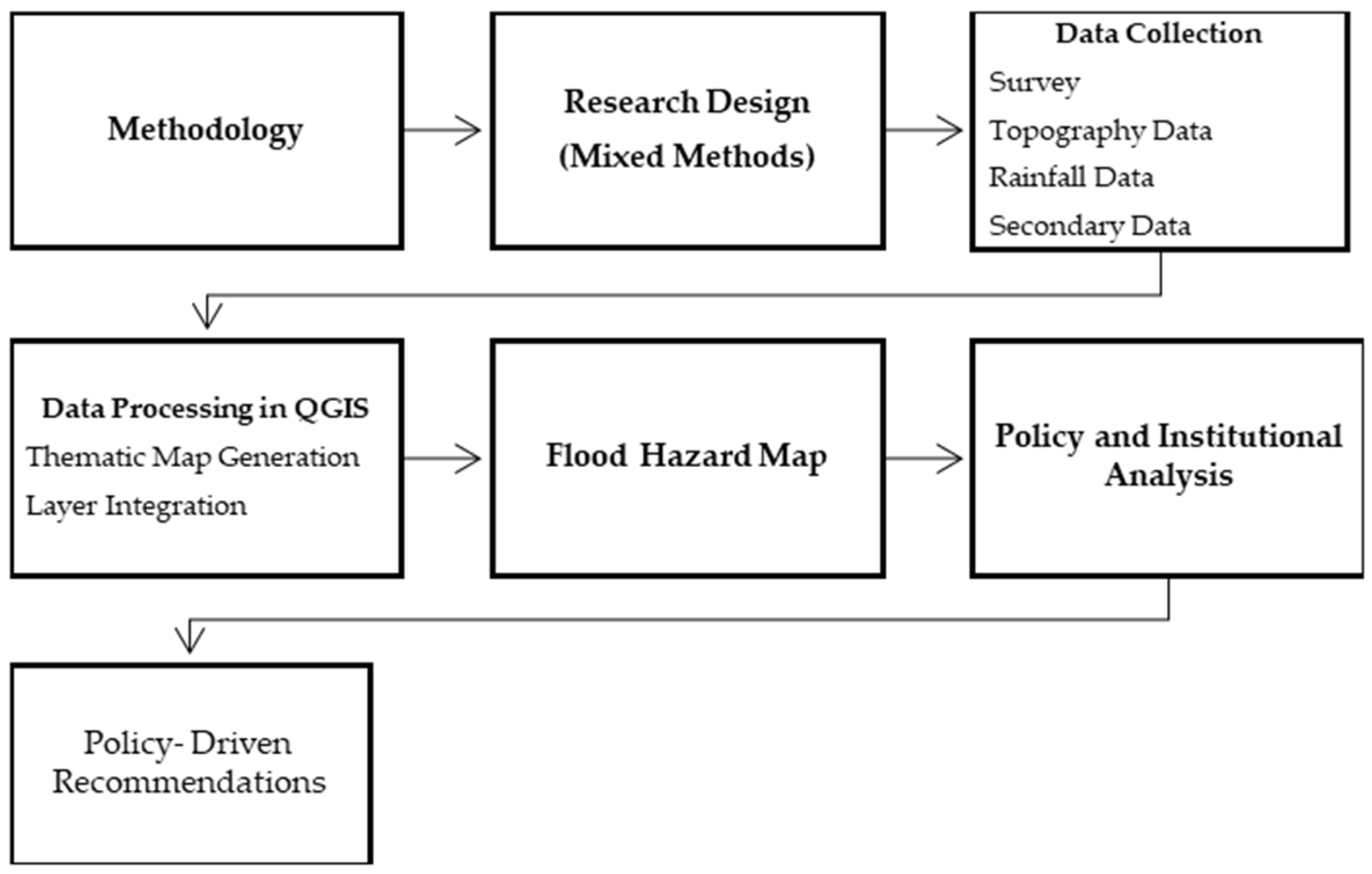
This study employed a mixed-methods research design to comprehensively assess flood risk in Turkey. The methodology integrates spatial data analysis, institutional review, and expert consultation to provide a multilayered understanding of climate-related flood hazards (see
Figure 1).
The study collected primary and secondary data from experts in climate policy, disaster risk management, and urban planning, as well as from institutions like AFAD, DSİ, and MGM, academic literature, urban development reports, and GIS topographic and meteorological data, including Digital Elevation Models.
3.1. The Survey
A structured survey was conducted to capture expert perceptions of flood risk and climate resilience in Turkey. Respondents were professionals in climate adaptation, urban planning, hydrology, and disaster risk management. Participants were identified via institutional directories, departmental websites, and professional networks, and were affiliated with organizations such as the State Hydraulic Works (DSİ), the General Directorate of Meteorology (MGM), municipal authorities, the Ministry of Environment, academic institutions, and environmental NGOs. A total of 52 valid responses were collected. The questionnaire covered six thematic areas, including stakeholder views on climate change impacts, flood governance, and the role of GIS and emerging technologies in risk reduction.
The survey, administered online via Microsoft Forms, was designed to enable quantitative analysis and nuanced interpretation of perceptions. The instrument was developed in English and pre-tested for clarity. Data collection took place between 18 and 26 March 2025. The final sample of 52 respondents, drawn from diverse institutions and geographic regions, provided a comprehensive assessment of stakeholder perspectives on flood risk management and climate resilience in Turkey. Participants received personalized invitations and a statement ensuring voluntary, anonymous participation.
3.2. Quantum Geographic Information System (QGIS)
The collected data were processed using QGIS software. Key steps included:
Layer integration of spatial datasets (e.g., DEM, TWI, land-use, population).
Thematic map generation to visualize flood-prone zones across selected provinces.
The Topographic Wetness Index (TWI) was used to identify areas with high flood potential.
The research uses spatial analysis, policy review, and qualitative assessment to assess flood resilience in Turkey. A flood hazard map was developed to identify high-risk areas like Istanbul, Samsun, Antalya, and Izmir. A critical review of national and local flood governance frameworks was conducted, evaluating legal documents, strategic action plans, and coordination mechanisms. The analysis used publicly available spatial and meteorological datasets. The list of layers used for mapping is given in
Table 1.
4. Key Findings
This study uses expert survey findings, secondary data on institutional frameworks, and spatial flood mapping using QGIS to analyze Turkey’s flood risk profile and resilience challenges. It assesses perceptions on climate-related flood risks, the effectiveness of current flood management policies, and the potential for integrating advanced technologies like GIS and AI-based early warning systems.
4.1. Survey Key Findings
4.1.1. Response Rate and Participants Background
A survey of 52 experts from seven regions of Turkey, including government officials, university researchers, consultants, and NGO representatives, was conducted to gather data on flood risk perceptions, policy efficacy, and technology readiness among stakeholders.
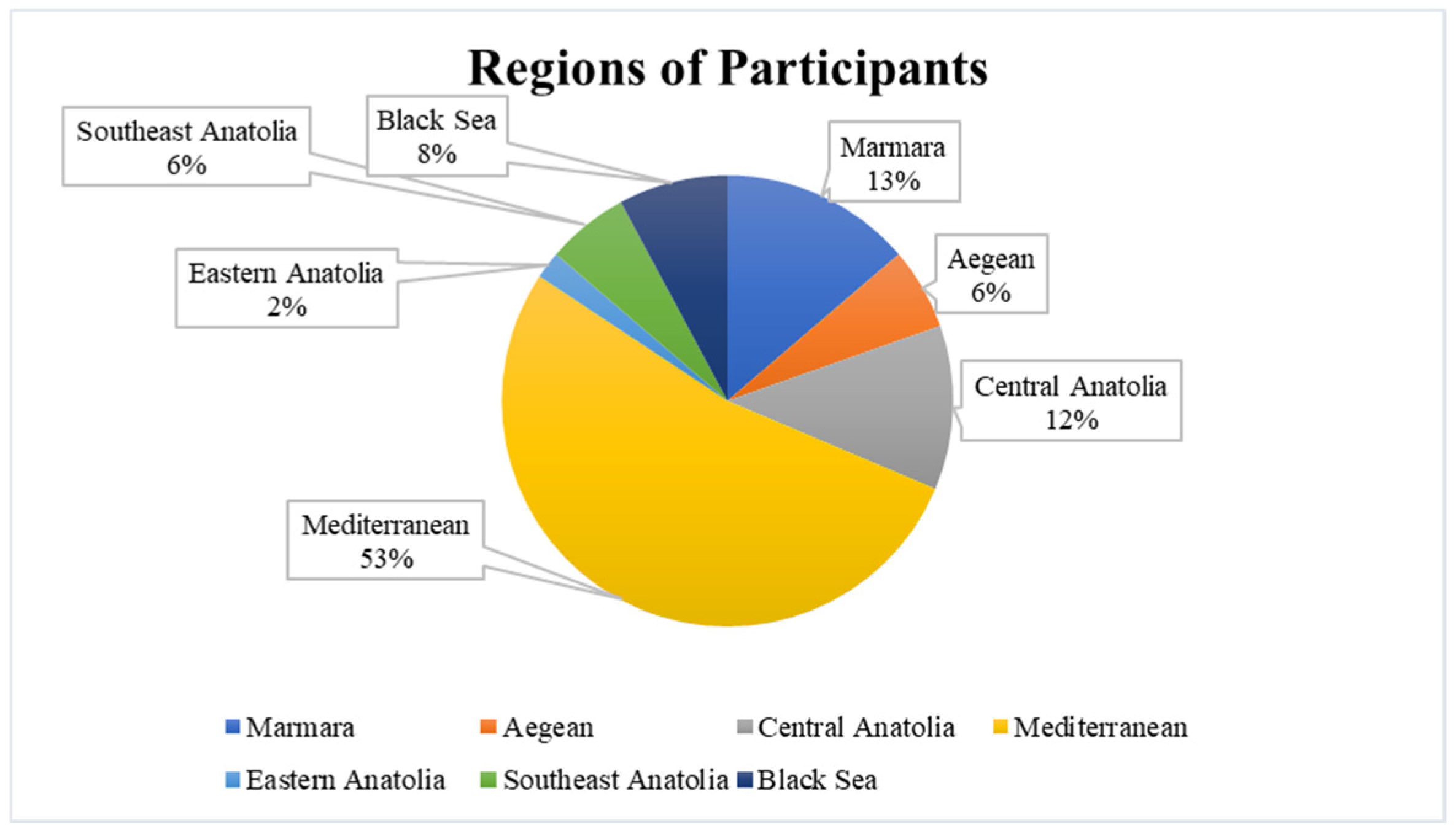
Participants represented various sectors, including urban planning (11.5%), environmental governance (21.15%), academic research (30.8%), private consultancy (11.5%), environmental NGO representative (5.8%), and other (19.23%). The geographical distribution of the 52 respondents who returned by sending e-mails to institutions and organizations interested in climate change and flood risk assessment in 7 regions of Turkey is shown in
Figure 2.
The study found that flood experiences vary across regions in Turkey. In the Mediterranean, 8 respondents reported no flood encounters, while 20 experienced at least one. However, all respondents from Marmara, Black Sea, and Southeastern Anatolia regions reported flooding, indicating a high level of flood exposure. This suggests that certain regions, particularly Marmara and the Black Sea, face persistent and recurrent flood threats. This highlights the need for targeted flood risk assessments and resilience planning.
4.1.2. Barriers to Technological Integration in Flood Risk Management
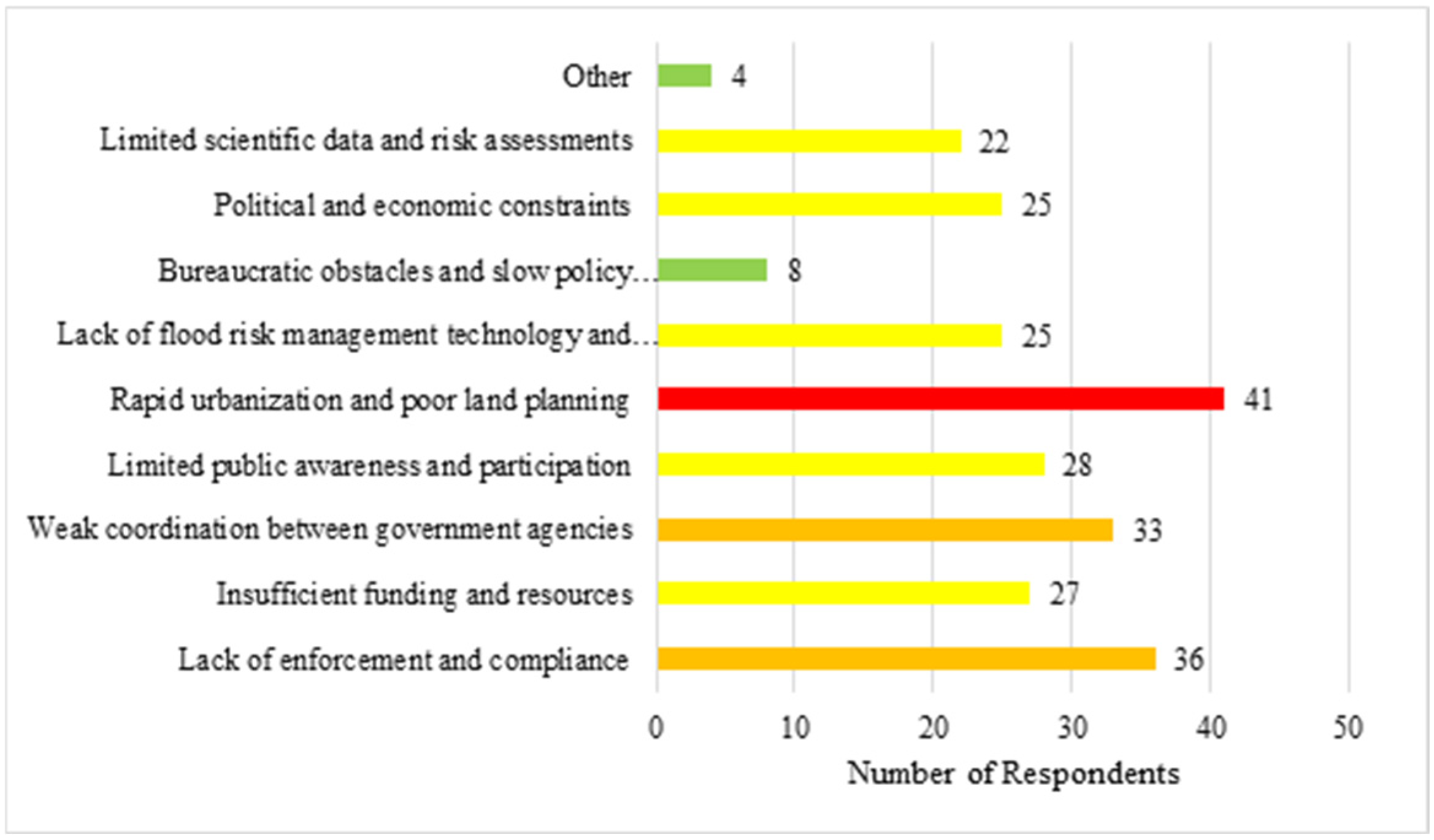
When asked to evaluate Turkey’s current flood risk management frameworks, over 60% of respondents rated them as “slightly effective” or “not effective at all.” The most cited issues included weak enforcement, fragmented institutions, and limited local implementation capacity. Participants also identified key barriers to flood and climate adaptation, including rapid urbanization, inadequate land-use planning, insufficient funding, and poor inter-agency coordination (see
Figure 3).
According to respondents’ responses, the most frequently cited barriers were rapid urbanization and poor land planning (41%), followed by a lack of enforcement and compliance (36%), indicating that institutional challenges and financial constraints are the most critical barriers to improving flood resilience. Qualitative responses reinforced these findings, with participants noting systemic governance failures, lack of public awareness, and the need to protect riverbeds and redesign urban drainage systems.
4.1.3. Perceptions and Readiness for Smart Technologies in Flood Preparedness
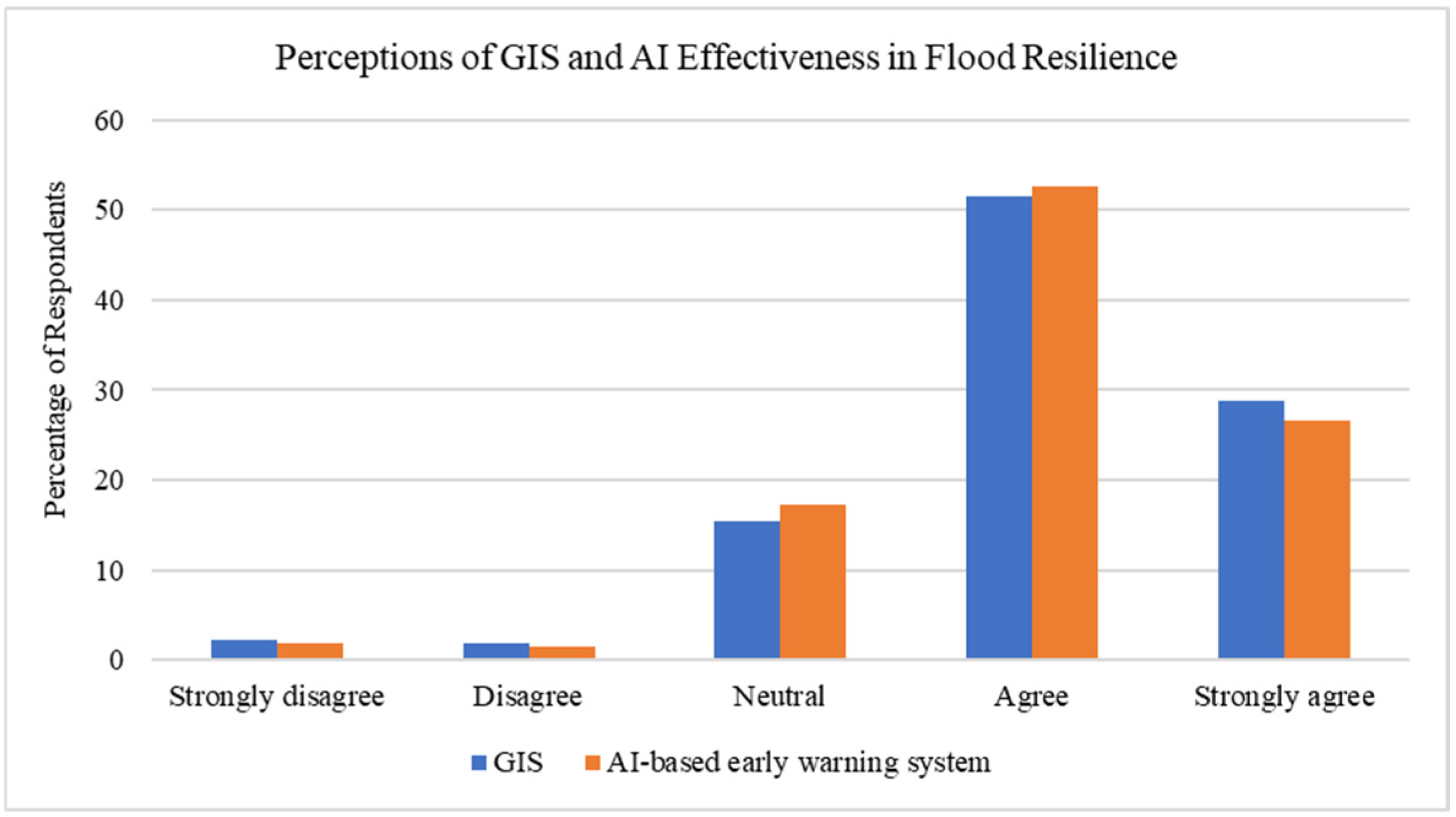
Survey results show that 75% of respondents were familiar with GIS and AI-based early warning systems, and over 79% believed these technologies could improve flood forecasting and emergency response. Additionally, 80.4% agreed that GIS could enhance national flood resilience (see
Figure 4).
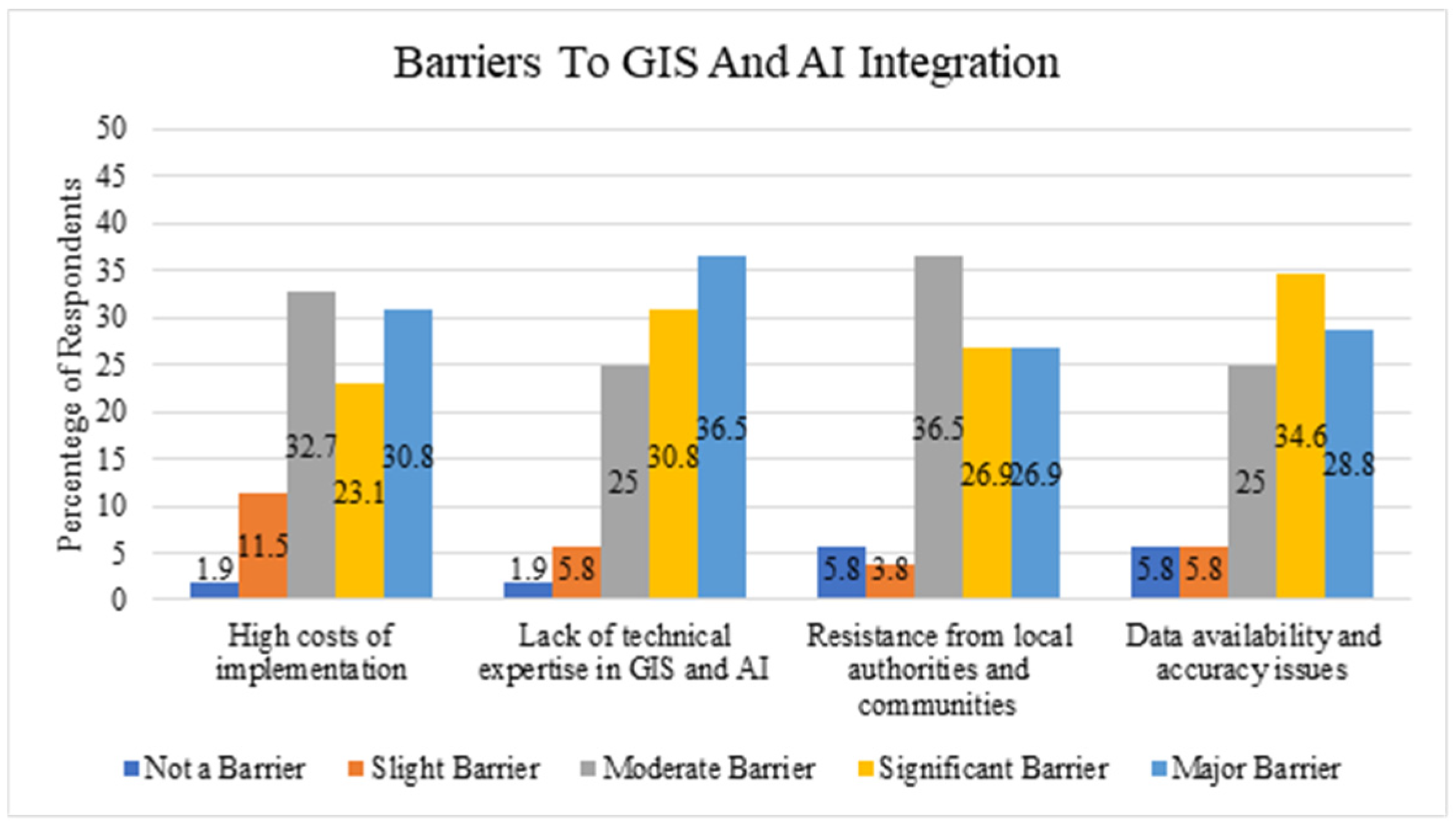
Key implementation barriers include limited technical expertise, data quality concerns, and high costs. Specifically, 36.5% cited a lack of skilled personnel as a major barrier, while 63% identified financial constraints as moderate to major challenges. Data reliability was also noted, with 34.6% pointing to issues in spatial and meteorological datasets (see
Figure 5).
The adoption of GIS and AI technologies in flood risk assessment in Turkey faces four key barriers: financial constraints, lack of technical expertise, weak data infrastructure, and insufficient institutional training. Financial limitations were most frequently cited, with a significant share of respondents rating funding as a major or moderate barrier. Similarly, over 67% identified limited technological expertise—particularly at the municipal level—as a critical challenge. Data infrastructure weaknesses, including poor access to reliable spatial and meteorological data, were reported by 34.6% of participants. The absence of continuous professional development opportunities further hinders system sustainability and capacity building. These findings underscore the need for strategic investment in both human and technical resources to enable effective, technology-driven flood governance in Turkey.
4.2. Secondary Data Analysis
The study uses secondary data sources like national flood records, climate reports, and policy documents to analyze Turkey’s flood trends, identify high-risk areas, and evaluate flood control infrastructure performance, providing a quantitative understanding of climate change and urbanization.
4.2.1. Trends in Flood Frequency and Severity
Flood frequency and intensity in Turkey have significantly increased in recent decades. AFAD reports that floods accounted for 38% of all natural disasters in 2023, slightly decreasing to 35% in 2024. Flood incidents surged from 177 in 2020 to 2028 in 2023, particularly affecting the Black Sea, Marmara, and Eastern Anatolia regions due to their topography and precipitation [
12,
13]. Historically, 3250 flood events were recorded between 1955 and 2020, with damage concentrated in the Black Sea, Eastern Anatolia, and Mediterranean areas [
14]. The World Bank states that floods represented 28.9% of Turkey’s disasters between 1980 and 2020, with an estimated economic impact exceeding
$2.79 billion [
15]. In 2024, heavy rainfall in Antalya flooded 3862 buildings and damaged 1200 acres of greenhouses [
16]. Additionally, EM-DAT data show sharp fluctuations in flood-related fatalities, with 73 deaths in 2021, the highest figure within the past decade highlighting the human cost of extreme events.
4.2.2. High Risk Flood Zones in Turkey
GIS-based flood assessments identify the Black Sea region as Turkey’s most flood-prone area due to intense rainfall and steep terrain [
17]. Major cities like Istanbul, Ankara, and Izmir also face high flood risk, linked to impermeable surfaces and unplanned urbanization [
12]. Recent DSİ and MGM maps reveal flood-prone zones expanding into Central and Southeastern Anatolia. Flash floods now increasingly affect cities such as Konya, Eskişehir, and Şanlıurfa, indicating a spatial shift driven by climate variability. Between 2010 and 2023, annual flood maps illustrate a steady rise in affected areas. Regions like Samsun, Ordu, Antalya, and Izmir consistently exhibit high flood recurrence. In 2023, some locations recorded over 20 flood events in a single year, reinforcing the urgency of adaptive planning [
12,
13].
4.2.3. Effectiveness of Existing Infrastructure
Turkey has made significant investments in flood infrastructure. In 2023, DSİ completed 284 flood control structures, including drainage systems, levees, and retention basins [
17]. While these efforts have mitigated risks in several regions, challenges remain—especially in major cities where drainage systems are outdated or insufficient for current rainfall intensities. AFAD’s 2023 disaster report emphasizes that while physical infrastructure has improved, institutional response and maintenance capacity have not kept pace with rising risks [
12]. Recent strategic plans advocate for the use of AI-integrated hydrological models to improve real-time forecasting and emphasize nature-based solutions such as wetland restoration to complement grey infrastructure [
16,
18].
4.3. GIS-Based Flood Risk Modelling
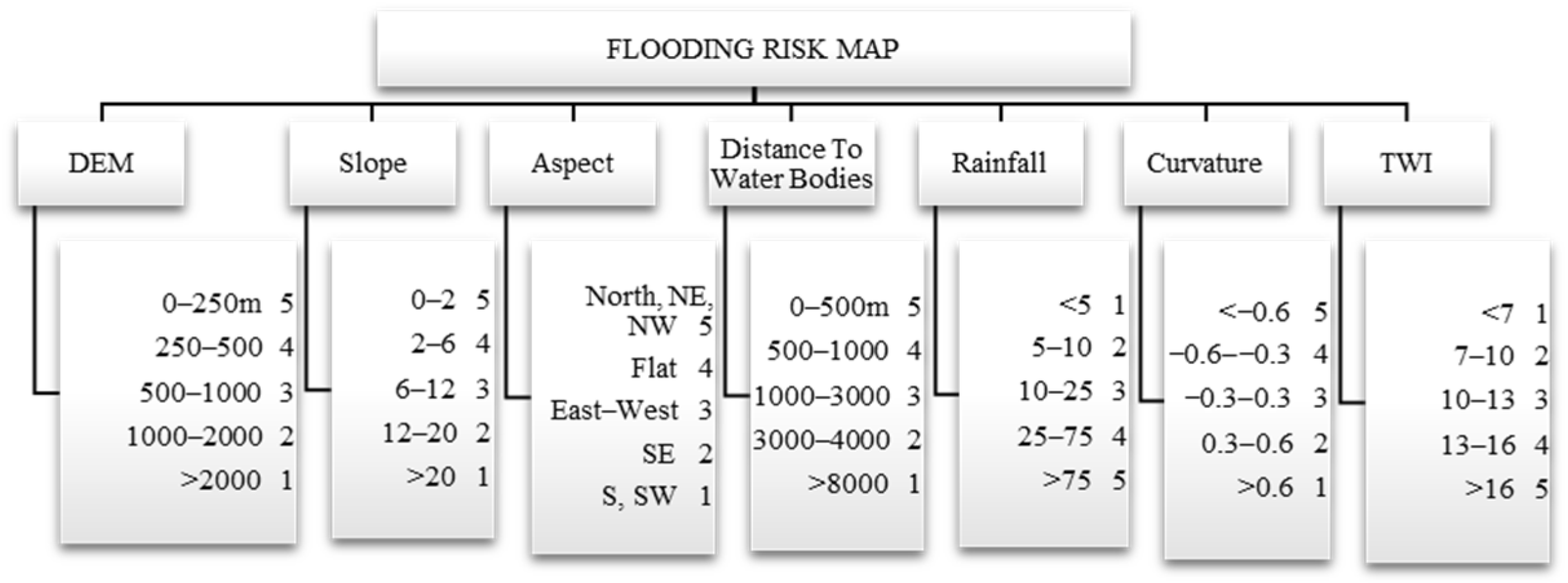
This study employed GIS to identify flood-prone areas in Turkey using key climatic and topographic indicators, including rainfall, elevation (DEM), slope, proximity to water bodies, topographic wetness index (TWI), curvature, and aspect. Spatial modelling was conducted using environmental data from 2020 to 2023, integrating satellite elevation models, meteorological datasets, and hydrological layers.
Based on previous research [
19], relative weights were assigned to each factor according to their influence on flood susceptibility: rainfall (22%), elevation (20%), slope and proximity to water bodies (15% each), TWI and curvature (10% each), and aspect (8%). High rainfall and low elevation increase runoff accumulation, while concave curvature and high TWI signal higher soil saturation. Proximity to water and gentle slopes further elevates risk, whereas aspect influence evaporation and water retention. This weighted overlay analysis produced composite flood risk maps to inform disaster preparedness and climate adaptation strategies.
Oğuz et al. [
20] identified five flood risk categories. Based on this method, the detected criteria were combined to classify regions as very low, low, medium, high, and very high-risk zones (see
Figure 6).
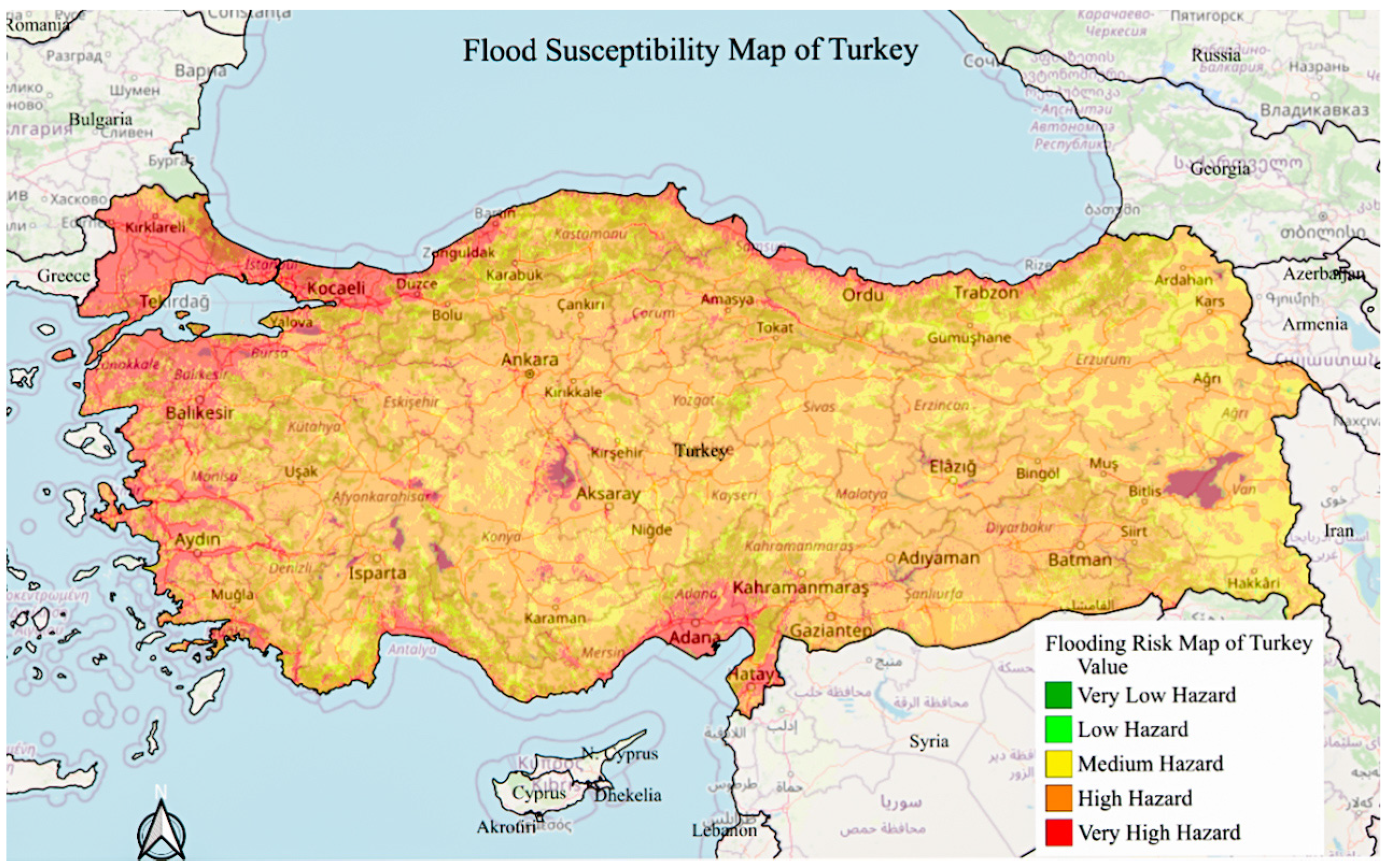
The GIS-based flood risk modelling yielded several key findings (see
Figure 7). High-risk zones were predominantly concentrated in the Black Sea region (including Samsun, Ordu, and Giresun), the Marmara region (notably Istanbul and Kocaeli), and parts of the Mediterranean region (such as Antalya, Adana, Muğla, and Osmaniye).
These areas exhibit elevated flood vulnerability due to a combination of topographical, meteorological, and urban development factors. In metropolitan areas like Istanbul and Izmir, the risk is further intensified by high population density, widespread impermeable surfaces, and aging or inadequate drainage infrastructure, which significantly reduce the capacity to absorb and redirect stormwater. Additionally, the modelling indicates a growing frequency of flood events in Central and Southeastern Anatolia, driven by shifting precipitation patterns attributed to climate change. These spatial disparities underscore the urgent need for regionally tailored flood mitigation strategies and adaptive urban planning interventions.
GIS modelling proved to be an effective tool for spatial flood risk evaluation. It enables decision-makers to pinpoint critical intervention zones, thereby improving the allocation of resources and guiding long-term urban and environmental planning.
5. Analysis and Discussion
This section combines findings from GIS-based modelling, expert surveys, and secondary data to assess the success of Turkey’s present flood risk management system. It examines the consequences for urban planning, infrastructure development, and policy reform in the context of climate change adaptation.
5.1. Comparative Analysis
To provide for a fair comparison of modelled and perceived flood risk, expert-reported flood experiences were standardized by region. The percentage of respondents who had been in floods more than five times was estimated relative to the total number of participants in each region (see
Table 2). Risk levels were classified using a simple risk matrix technique, which is often used in sustainability risk management and combines hazard exposure (from GIS) and experience frequency (from survey) and was influenced by Khaddour’s Life-Cycle Sustainability Risk Management (LCSRM) model [
21].
While GIS maps showed the Mediterranean, Black Sea and Marmara regions as high-risk zones, survey data suggested that Southeast Anatolia (66.7%) and the Black Sea (50%) had the most high-frequency flooding. These findings indicate significant regional discrepancies between estimated danger and lived reality, as seen by the alignment analysis (see
Table 3). These findings highlight the importance of integrating multi-stakeholder views with geospatial models, as underlined by Khaddour and Deng’s (2023) [
22] multi-criteria framework.
5.2. Key Challenges in Flood Management and the Role of Technology
Both qualitative and quantitative findings reveal persistent weaknesses in Turkey’s flood management. Experts cite poor enforcement, institutional fragmentation, and limited technical capacity—confirmed by AFAD data showing a surge in flood incidents from 177 (2020) to 2028 (2023), particularly in urbanizing regions like Istanbul and the Black Sea coast.
Over 80% of participants endorsed GIS and AI technologies for risk mapping and early warning systems. High-risk zones identified include Samsun, Giresun, and Istanbul. Despite DSİ’s 284 new flood control structures in 2023, drainage in metropolitan areas remains inadequate. These findings call for integrated planning, targeted infrastructure investment, and improved land-use regulation.
5.3. Regional Disparities in Vulnerability
Flood exposure varies significantly across regions. The Black Sea sees frequent events, while Central and Southeastern Anatolia face rising risk due to changing precipitation. Many areas lack adaptive capacity, increasing vulnerability.
Overlaying flood data with socio-economic indicators highlights high-risk, high-inequality zones—particularly in Antalya, Muğla, Hatay, and Samsun. Rapid urban growth in cities like Istanbul and İzmir further exacerbates risk. Localized adaptation strategies are needed to address these dual challenges.
5.4. Stakeholder Awareness and Technological Capacity
Around 75% of respondents reported moderate to high familiarity with GIS and AI tools, with over 79% recognizing their potential in flood resilience. However, barriers remain: 67.3% cited limited technical skills, and 63.4% identified data reliability and access as key concerns. Strengthening training, inter-agency collaboration, and data infrastructure is crucial for technological integration.
5.5. Towards a Scalable Resilience Framework
Unregulated urbanization in floodplains, particularly in İzmir, Muğla, and Samsun, increases exposure. In 2024, extreme rainfall in Antalya inundated over 3800 homes and 1200 acres of farmland. Survey feedback stressed the need for stricter planning, climate-resilient construction, and enforcement of zoning codes.
GIS analysis highlights cities where impermeable surfaces and ageing infrastructure worsen impacts. A scalable framework should integrate spatial tools, infrastructure upgrades, regulation, and community engagement.
5.6. Policy Implications and Recommendations
Institutional fragmentation remains a barrier to effective governance. Experts advocate stronger coordination, legal enforcement of zoning, and wider use of GIS and AI tools. While uptake is slow, national agencies plan AI integration by 2028.
Recommendations include infrastructure upgrades, nature-based solutions, stricter land-use controls, and public awareness campaigns. These align with the SDGs and the European Green Deal, pointing to the need for a coordinated, tech-enabled strategy for future urban resilience.
6. Conclusions
This study examined Turkey’s growing flood vulnerability and proposed data-driven strategies to enhance climate resilience. Through GIS analysis, expert surveys, and policy review, it identified key risk drivers, including rapid urbanization, infrastructure deficits, and fragmented governance. Flood incidents have increased sharply, from 177 in 2020 to over 2000 in 2023, disproportionately affecting major urban centres such as Istanbul, Izmir, Samsun, and Antalya. Over 70% of surveyed experts rated current flood governance as ineffective or only moderately effective, highlighting enforcement gaps, weak coordination, and limited funding.
Based on empirical evidence, the study recommends a comprehensive approach: mandatory GIS-based risk assessments, stricter land-use regulations in flood-prone areas, and the creation of a centralized flood management body supported by interoperable, real-time data platforms. Strengthening institutional capacity through targeted training, infrastructure upgrades, and environmental impact assessments is also critical. Nature-based solutions, like green roofs, urban wetlands, and permeable surfaces, should be prioritized in vulnerable areas. Technological tools such as AI-driven hydrological models and sensor-based early warning systems offer strong potential but require institutional support and capacity building for effective deployment.
While Turkey has made notable progress in policy and infrastructure, this study underscores that true resilience requires overcoming persistent governance and capacity challenges. Long-term success depends on coordinated, cross-sectoral action and sustained investment. Future research should focus on real-time climate modelling, the effectiveness of ecosystem-based adaptation, and the integration of equity in flood risk governance.
Author Contributions
Conceptualization, L.A.K. and C.K.; methodology, C.K.; software, C.K.; validation, L.A.K. and I.E.; formal analysis, C.K.; investigation, C.K., L.A.K. and I.E.; resources, L.A.K. and C.K.; data curation, C.K.; writing—original draft preparation, C.K.; writing—review and editing, C.K., L.A.K. and I.E.; visualization, C.K.; supervision, L.A.K.; project administration, L.A.K. All authors have read and agreed to the published version of the manuscript.
Funding
This research received no external funding.
Institutional Review Board Statement
Not applicable.
Informed Consent Statement
Not applicable.
Data Availability Statement
The data supporting the findings of this study are publicly available from the websites of AFAD, TÜİK, and MGM. Details of the datasets and data sources are provided in the manuscript.
Conflicts of Interest
The authors declare no conflict of interest.
References
- Eltaweel, A.; Saint, R.; D’Amico, B.; Pomponi, F. A Parametric Thermal Analysis of Refugees’ Shelters Using Incremental Design and Affordable Construction Material. Energy Build. 2023, 290, 113110. [Google Scholar] [CrossRef]
- Singh, Z. Disasters: Implications, Mitigation, and Preparedness. Indian J. Public Health 2020, 64, 1–3. [Google Scholar] [CrossRef]
- United Nations Office for Disaster Risk Reduction (UNISDR). Build Back Better in Recovery, Rehabilitation and Reconstruction; UNISDR: Geneva, Switzerland, 2017. [Google Scholar]
- Koç, G.; Petrow, T.; Thieken, A.H. Analysis of the Most Severe Flood Events in Turkey (1960–2014): Which Triggering Mechanisms and Aggravating Pathways Can Be Identified? Water 2020, 12, 1562. [Google Scholar] [CrossRef]
- Derse, O.; Göçmen Polat, E. Assessment of Urban Flood Risks of the Cities Using Entropy-VIKOR Methods in Türkiye. Konya J. Eng. Sci. 2024, 162–176. [Google Scholar] [CrossRef]
- Climate Change Adaptation Strategy and Action Plan 2024–2030. 2023. Available online: https://iklim.gov.tr/db/turkce/icerikler/files/Uyum.pdf (accessed on 15 February 2025).
- Tuğaç, Ç. Evaluation of Urban Infrastructure Policies in Turkey for Climate Resilience and Adaptation. Sustain. Resil. Infrastruct. 2023, 8 (Suppl. 1), 190–202. [Google Scholar] [CrossRef]
- Yönten Balaban, A.; Akman, K. Climate Change Adaptation Policies of Metropolitan Municipalities in Turkey. Süleyman Demirel Univ. Vis. J. 2022, 13, 1132–1149. [Google Scholar] [CrossRef]
- Soni, S.; Prasad, A.D. Detection of Flood Hazard Using QGIS. In Recent Trends in Civil Engineering: Select Proceedings of ICRTICE 2019; Prasad, A.D., Ed.; Springer: Singapore, 2021; pp. 201–209. [Google Scholar]
- Ali, K.; Bajracharya, R.M.; Koirala, H.L. A Review of Flood Risk Assessment. Int. J. Environ. Agric. Biotechnol. 2016, 1, 1065–1077. [Google Scholar] [CrossRef]
- Aydin, M.C.; Birincioğlu, E.S. Flood risk analysis using GIS-based analytical hierarchy process: A case study of Bitlis Province. Appl. Water Sci. 2022, 12, 6. [Google Scholar] [CrossRef]
- Afet ve Acil Durum Yönetimi Başkanlığı (AFAD). 2023 İdare Faaliyet Raporu; AFAD: Ankara, Türkiye, 2023. Available online: https://www.afad.gov.tr/kurumlar/afad.gov.tr/e_Kutuphane/Kurumsal-Raporlar/2023--AFAD-faaliyet-rapor/2023-idare-faaliyet-raporu_son_web.pdf (accessed on 10 January 2025).
- Meteoroloji Genel Müdürlüğü (MGM). 2023 İklim Raporu; MGM: Ankara, Türkiye, 2023. Available online: https://www.mgm.gov.tr/FILES/iklim/yillikiklim/2023-iklim-raporu.pdf (accessed on 10 January 2025).
- Aydın, O.; Raja, N.B. Using Artificial Neural Networks for Predicting Flood Events in Artvin, Türkiye. Turk. J. Eng. 2025, 9, 189–201. [Google Scholar] [CrossRef]
- World Bank Climate Change Knowledge Portal. Available online: https://climateknowledgeportal.worldbank.org/country/turkiye/vulnerability (accessed on 10 January 2025).
- Meteoroloji Genel Müdürlüğü. 2024 Yılı İklim Değerlendirmesi Türkiye Cumhuriyeti Çevre, Şehircilik ve İklim Değişikliği Bakanlığı Meteoroloji Genel Müdürlüğü; MGM: Ankara, Türkiye, 2025. Available online: https://www.mgm.gov.tr/FILES/iklim/yillikiklim/2024-iklim-raporu.pdf (accessed on 10 January 2025).
- Devlet Su İşleri Genel Müdürlüğü (DSİ). DSİ 2023 Yılı Faaliyet Raporu; DSİ: Ankara, Türkiye, 2023. Available online: https://cdniys.tarimorman.gov.tr/api/File/GetFile/425/Sayfa/759/1107/DosyaGaleri/dsi_2023_yili_faaliyet_raporu.pdf (accessed on 10 January 2025).
- Çevre, Şehircilik ve İklim Değişikliği Bakanlığı (ÇŞİDB). İklim Değişikliği Azaltım Stratejisi ve Eylem Planı (2024–2030); ÇŞİDB: Ankara, Türkiye, 2024. Available online: https://iklim.gov.tr/db/turkce/icerikler/files/%C4%B0klim%20De%C4%9Fi%C5%9Fikli%C4%9Fi%20Azalt%C4%B1m%20Stratejisi%20ve%20Eylem%20Plan%C4%B1%20(2024-2030).pdf (accessed on 20 January 2025).
- Ekmekçioğlu, Ö. CBS Tabanlı Melez Makine Öğrenmesi Uygulamalarının Ani Sel Duyarlılık Haritalamasında Kullanımı. Iğdır Univ. J. Inst. Sci. Technol. 2023, 13, 1067–1084. [Google Scholar] [CrossRef]
- Oğuz, K.; Oguz, E.; Coşkun, M. Coğrafi Bilgi Sistemleri ile Taşkın Risk Alanlarının Belirlenmesi: Artvin İli Örneği. 2016. Available online: https://www.mgm.gov.tr/FILES/genel/makale/cbs-taskin.pdf (accessed on 15 January 2025).
- Khaddour, L. Life-Cycle Sustainability Risk Management a Multi-Stakeholder Approach: The Case of Damascus Post-War Residential Projects. Environ. Dev. Sustain. 2021, 24, 12756–12786. [Google Scholar] [CrossRef]
- Khaddour, L.A.; Deng, W. Multi-Criteria Sustainability Risk Management for Post-War Residential Reconstruction Projects: The Case of Damascus. Hous. Built Environ. 2023, 38, 1939–1982. [Google Scholar] [CrossRef]
| Disclaimer/Publisher’s Note: The statements, opinions and data contained in all publications are solely those of the individual author(s) and contributor(s) and not of MDPI and/or the editor(s). MDPI and/or the editor(s) disclaim responsibility for any injury to people or property resulting from any ideas, methods, instructions or products referred to in the content. |
© 2025 by the authors. Licensee MDPI, Basel, Switzerland. This article is an open access article distributed under the terms and conditions of the Creative Commons Attribution (CC BY) license (https://creativecommons.org/licenses/by/4.0/).