


Abstract
In recent decades, environmental requirements for reducing the toxic components emitted from vehicle exhausts have decreased drastically. Technologies for after-treatment of diesel vehicle emissions are being improved continuously in order to meet increasingly stringent regulations. Passenger cars are a significant source of air pollution, especially in urban areas. The EU has decided to phase out internal combustion engines. Stricter Real Driving Emissions (RDE) testing procedures have also been introduced, aiming to assess the emissions of nitrogen oxides (NOx) and particle number (PN). The present work investigates the interaction between performance and smoke emissions of a diesel vehicle on a pre-established route in an urban environment with an everyday (normal) driving style. The results showed that when the vehicle is technically sound and meets its technical specifications, smoke emissions are within normal limits.
1. Introduction
Increasing levels of motorization worldwide are inevitable, which in turn leads to heavier traffic, congestion and problems in traffic management, organization and safety. The increase in traffic has a number of negative effects: a decrease in the efficiency of the transport process and loss of time for all road users [1] (drivers and passengers) and for freight users [2], and as a result we have greater financial and economic damage [3], as well as problems related to road traffic injuries, the environment and climate change on Earth [4,5,6,7]. Congestion leads to increased fuel costs and increases emissions of toxic products due to increased idling, acceleration and braking [8,9,10]. As a result of idling, frequent acceleration and braking, we have increased wear and tear and a reduction in the service life of vehicles, as well as more frequent repairs and replacement of elements and parts of vehicles. The development of technical operations as a subsystem of road transport is determined by its rapid development, the need to save fuel, labor and materials, and the need to ensure reliable operation of vehicles [11]. The requirements for vehicle reliability are increasing in connection with the increase in the intensity and speed of movement and the increase in their power and environmental performance [12,13]. The increase in the number of vehicles and their aging significantly complicates the problems of maintaining the vehicle fleet. In order to solve the main tasks of technical operation, it is necessary to study the patterns of changes in the technical condition of the vehicle under the influence of various factors in the process of operation [13]. Knowledge of these patterns makes it possible to develop scientific methods for maintaining vehicles in good technical condition [14]. These methods are based on the use of mathematical statistics, probability theory, reliability theory and diagnostics [15].
The aim of this study was to investigate and analyze the parameters of a car with a diesel internal combustion engine in real operating conditions, paying particular attention to the smoke emissions. The study was conducted on a pre-established route in an urban environment with a daily (normal) driving style. In the study, we used an 18-year-old passenger car with a mileage of 151,000 km, environmental standard Euro 4. The results of the study showed that in terms of smoke emission in the exhaust gases, the car meets the standard for which it was approved. Of fundamental importance for this was the correct technical maintenance, service, storage and repair of the car.
2. Materials and Methods
The ever-increasing intensity of automobile traffic worsens the overall environmental performance of cars and their impact on the environment, traffic safety and quality of life in urban areas with intensive traffic [16,17,18,19]. In these areas, there is a lot of starting and stopping of vehicles, which increases the share of harmful substances released into the environment [20,21,22]. Studies show that air pollution causes many diseases, which leads to a deterioration in the quality of life of people and visitors to developed megacities, which is also expressed in increased healthcare costs and reduced productivity [23,24,25,26]. Emissions of pollutants from motor vehicles arise from the vehicle itself—fine particulate matter [27,28,29]—and from the combustion of fuel in the engine, which is subsequently released into the atmosphere through the exhaust pipe’s CO, CO2, HC, NOx and PM [29,30]. Under optimal combustion conditions, oxygen reacts with the hydrocarbon fuel to produce CO2 and H2O [31,32]. However, incomplete combustion occurs when there is not enough oxygen, leading to the generation of products such as carbon monoxide (CO) and hydrocarbon (HC), also precursors of PM [33]. In addition, the air in the combustion process is not pure oxygen, but contains some nitrogen (N2). Nitrogen is oxidized at high temperatures, forming thermal NOx [34], mainly from nitric oxide (NO) [35], with a small amount of nitrogen dioxide (NO2) [36,37]. Thus, this study focuses on the real-time interaction between the performance and smoke emissions of a diesel vehicle. Their establishment was achieved by integrating modern methods and tools for determining, controlling and regulating exhaust emissions and monitoring some of the main parameters of the internal combustion engine. The application of this approach allowed us to assess the interaction between the performance and smoke emissions of a diesel vehicle. The analysis of this information will serve as a basis for making important management decisions related to improving the environmental performance of vehicles.
3. Results and Discussion
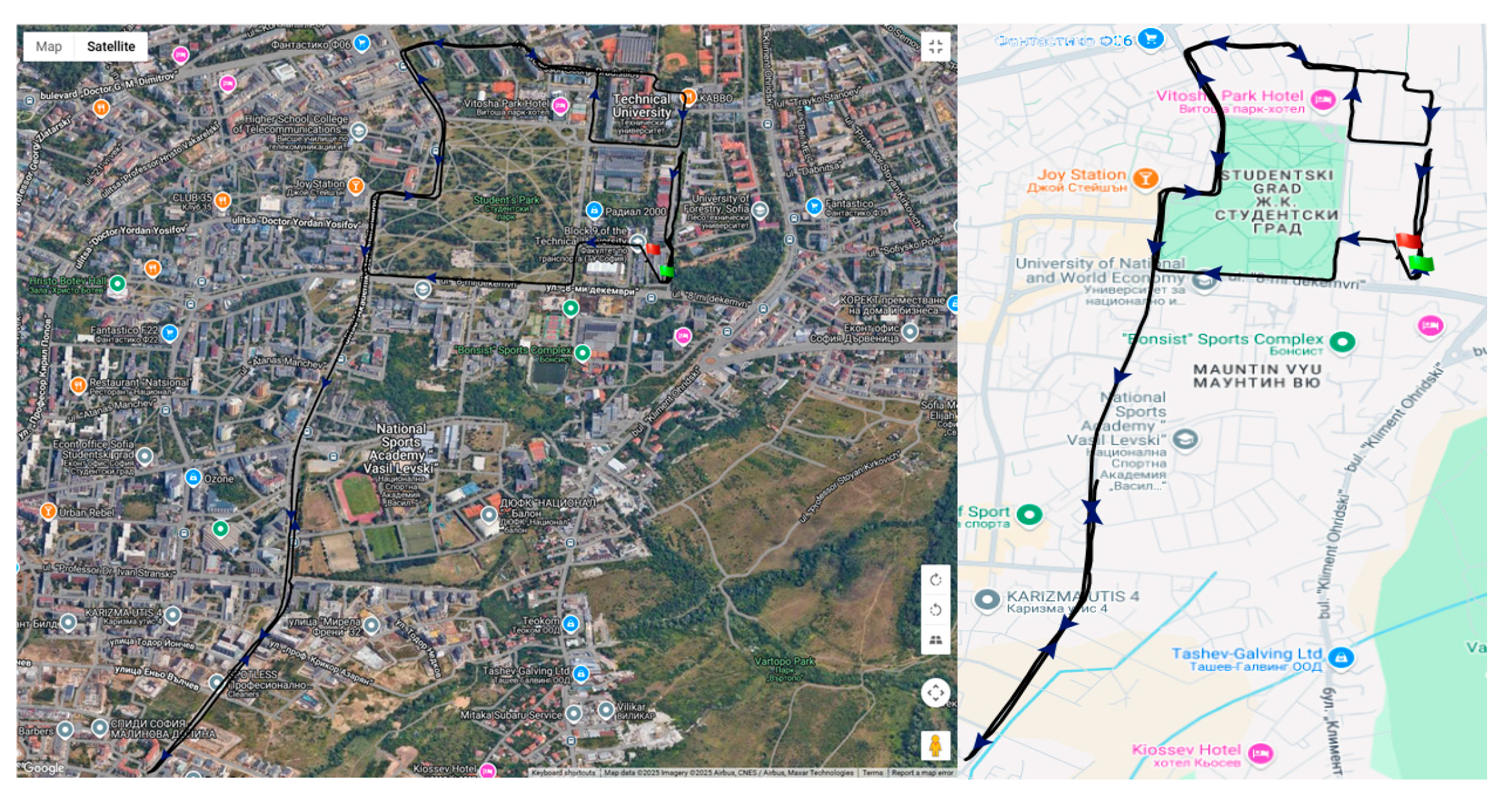
The study was conducted along a predetermined route (Figure 1) in an urban environment with a daily relaxed (normal) driving style, with normal traffic intensity. The distance traveled during the study was 8 km, observing all regulatory restrictions regarding the movement of cars in an urban environment, and the time for which the study was conducted was 15 min.
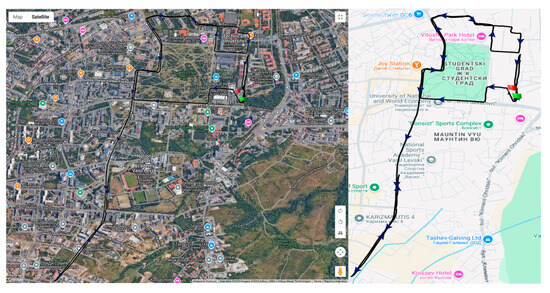
Figure 1.
Research route.
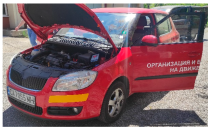
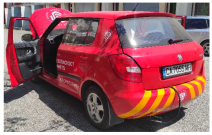
To test the interaction between the performance and smoke emissions of a diesel vehicle, a Skoda Fabia passenger car with a mileage of 151,000 km that is 18 years old was used. The technical characteristics of the car are presented in Table 1 [38]. The vehicle is a laboratory vehicle of the “Organization and Management of Road Transport” at the Technical University of Sofia, serviced, maintained, repaired and stored only according to the manufacturer’s instructions, with the relevant spare parts and fuels and lubricants. The vehicle is equipped with specialized equipment, including GPS position tracking and a system for monitoring acceleration, speed and distance traveled.

Table 1.
Vehicle technical data [38].
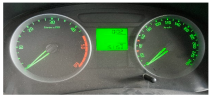
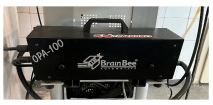
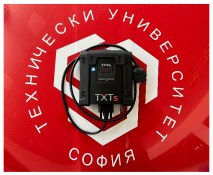
To measure the smoke content in the exhaust gases, a smoke meter from the company BrainBee [39] was used. For the reliability of the measurement results, the smoke meter passed a control test by an accredited service for conducting metrological measurements. The equipment used is designed to conduct measurements in stationary and mobile conditions. For monitoring and control of the main parameters of the diesel engine operating mode, diagnostic equipment from the company Texa Navigator [40] was used. Table 2 presents the technical characteristics of the equipment used during the study.
Table 2.
Research equipment [39,40].
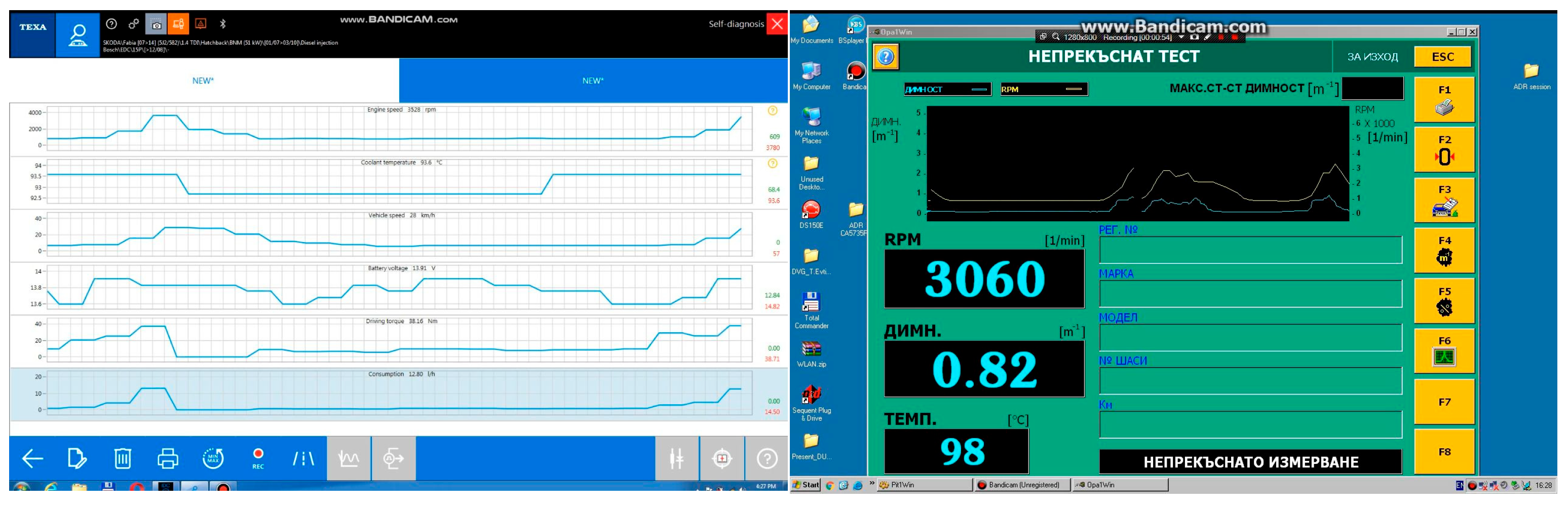
The indicators that were monitored with the smoke meter were engine speed, oil temperature, and percentage of smoke in the exhaust gases. The diagnostic equipment for monitoring engine operating modes measured speed, coolant temperature, engine fuel consumption and driving torque. The battery voltage was monitored but was not taken into account, since the health of the alternator and battery was previously determined. Figure 2 presents information on the monitored engine parameters and smoke.
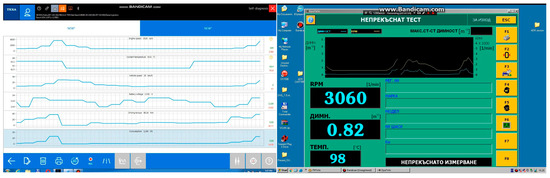
Figure 2.
Visualization of the measured values by the equipment.
A short sample of the parameters of the vehicle, the diagnostic equipment and the opacimeter tested is presented in Table 3. The tested indicators have a small shift due to the specificity of the information and the frequency of measurement of the equipment used.
Table 3.
Research indicators of diesel internal combustion engines.
One of the most commonly used methods for determining the relationship between variables influencing each other is the statistical method, which uses information obtained from observing certain parameters in real conditions. The main disadvantage of the statistical method is the collection of reliable information. With the correct methodology of data collection and information processing, reliable models for the interacting variables are obtained. To check the covariance of the studied variables, the statistical software Statgraphics Centurion 18, Version 18.1.12 was used.
The aim of the study was to establish patterns of interrelationships and to determine the influence between the performance and smoke emissions of a passenger car with a diesel engine. Initially, a multivariate statistical analysis (MVA) was performed covering seven observed variables simultaneously in order to study and measure relationships between the variables. In total, 895 complete cases were used in the analysis for use in the calculations, and this procedure aimed to calculate various statistics, including correlations, covariance and partial correlations, in order to reveal the most appropriate procedure for building a statistical model of our data. Summary statistics from the input data in the statistical product are presented in Table 4. This table shows summary statistics for each of the selected data variables. This includes measures of central tendency, measures of variability and measures of shape. Of particular interest here are the standardized skewness and standardized kurtosis, which can be used to determine whether the sample comes from a normal distribution.
Table 4.
Summary statistics of the studied data variables.
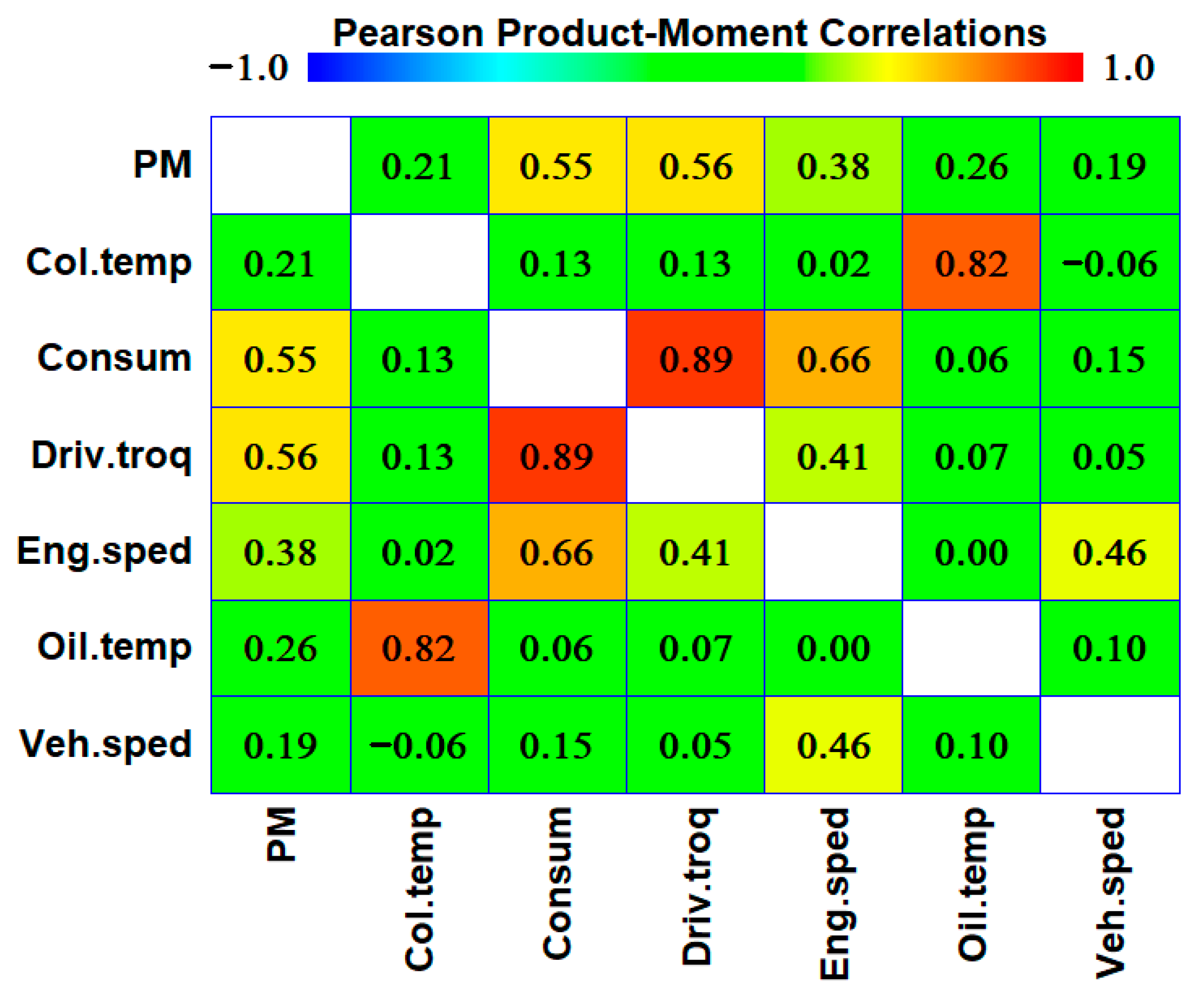
The next step in data analysis was to perform a correlation analysis of the data in order to determine the statistical relationship between the variables. Table 5 shows the Pearson product moment correlations between each pair of variables. These correlation coefficients range from −1 to +1 and measure the strength of the linear relationship between the variables. Also shown in parentheses is the number of pairs of data values used to calculate each coefficient. The third number in each place in the table is a p-value that tests the statistical significance of the calculated correlations. p-values below 0.05 indicate statistically significant non-zero correlations at the 95.0% confidence level. The table presents the correlation coefficient, number of variables, and p-value, respectively. The main variables for us here were the variables regarding PM and diesel engine performance—we will only consider them. The following pairs of variables have p-values below 0.05: PM and Consum; PM and Driv.troq; PM and Eng.sped; PM and Veh.sped. Figure 3 graphically shows the most widely used index of linear dependence or Pearson correlation coefficient. This correlation coefficient depends on the purpose of the study. It should be interpreted meaningfully. For the purposes of our study, we will assume the ordinal correlation coefficient where 0.9 < R < 1—very high correlation; 0.7 < R < 0.9—high correlation; 0.5 < R < 0.7—significant correlation; 0.3 < R < 0.5—moderate correlation; 0 < R < 0.3—weak correlation. When determining the relationship between the variables, a perfect or very strong correlation naturally occurs between fuel consumption and drive torque. The variable of interest for the study is PM, which significantly correlates mainly with the amount of fuel consumption and drive torque and has a moderate correlation with engine speed. We could continue with the statistical analysis, but we will stop here and make general conclusions at the end of the publication.
Table 5.
Correlations.
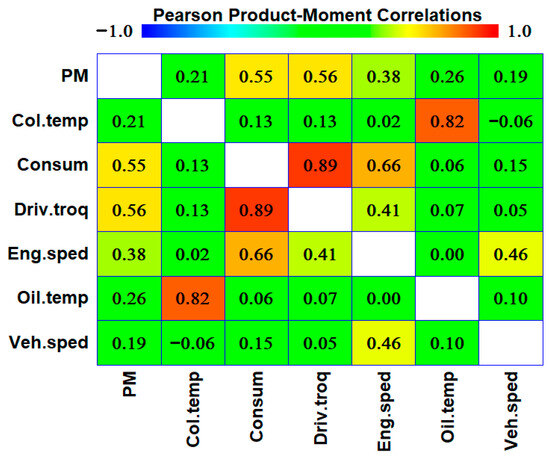
Figure 3.
Pearson correlations.
4. Conclusions
- -
- In conclusion, we can say the following:
- -
- The highest correlation between PM and drive torque is 0.56. This means that it is necessary to pay attention to environmental and economical training for vehicle drivers.
- -
- The correlation coefficient between PM in terms of fuel consumption is 0.55, which does not describe a large part of the variables from which PM is generated in diesel engines. This requires research into the sources of PM produced by vehicles, as well as the quality of fuels used in diesel vehicles.
- -
- Of particular importance is the technical condition of transport vehicles, including their service, repair and storage, by appropriately trained specialists using high-quality spare parts and fuel and lubricants.
Author Contributions
Conceptualization, I.D., R.M. and T.I.V.; methodology, I.D., R.M. and T.I.V.; software, I.D., R.M. and T.I.V.; validation, I.D., R.M. and T.I.V.; formal analysis, I.D., R.M. and T.I.V.; investigation, I.D., R.M. and T.I.V.; resources, I.D., R.M. and T.I.V.; data curation, I.D., R.M. and T.I.V.; writing—original draft preparation, I.D., R.M. and T.I.V.; writing—review and editing, I.D., R.M. and T.I.V.; visualization, I.D., R.M. and T.I.V.; supervision, I.D., R.M. and T.I.V.; project administration, I.D. All authors have read and agreed to the published version of the manuscript.
Funding
This research received no external funding.
Institutional Review Board Statement
Not applicable.
Informed Consent Statement
Not applicable.
Data Availability Statement
The data is contained within the article.
Acknowledgments
The authors would like to thank the Research and Development Sector at the Technical University of Sofia for the financial support.
Conflicts of Interest
The authors declare no conflicts of interest.
References
- Linke, R.; Öztürk, Ö.; Kassens-Noor, E. Analysis of Technical and Operational Requirements of Alternative Drive Systems by Transport Companies: The Case of the Overhead Contact Line Truck. Sustainability 2024, 16, 3276. [Google Scholar] [CrossRef]
- Kim, K.; Park, J.; Lee, J. Fuel Economy Improvement of Urban Buses with Development of an Eco-Drive Scoring Algorithm Using Machine Learning. Energies 2021, 14, 4471. [Google Scholar] [CrossRef]
- Huang, Y.; Ng, E.; Zhou, J.; Surawski, N.; Chan, E.; Hong, G. Eco-driving technology for sustainable road transport: A review. Renew. Sustain. Energy Rev. 2018, 93, 596–609. [Google Scholar] [CrossRef]
- Zhang, K.; Batterman, S. Air pollution and health risks due to vehicle traffic. Sci. Total Environ. 2013, 450–451, 307–316. [Google Scholar] [CrossRef]
- Karapetkov, S.; Lubomir, L.; Uzunov, H.; Dechkova, S. Examination of vehicle impact against stationary roadside objects. In IOP Conference Materials Science and Engineering; Proceedings of the IRMES 2019, Kragujevac, Serbia, 5–7 September 2019; IOP Publishing: Bristol, UK, 2019. [Google Scholar] [CrossRef]
- Mladenov, G.D. Application of methodology for the organization of a roundabout to increase the capacity of a conventional intersection of Sofia. Part I: Geometric characteristics. In AIP Conference Proceedings; AIP Publishing: Melville, NY, USA, 2024. [Google Scholar] [CrossRef]
- Hlebarski, D.; Savova-Mratsenkova, M. Algorithm for expert analysis of the mechanism of the occurrence of a traffic accident involving a car and a pedestrian. In AIP Conference Proceedings; AIP Publishing: Melville, NY, USA, 2025. [Google Scholar] [CrossRef]
- Saliev, D. Clearance speed study for intergreen time determination, In IOP Conference Series: Materials Science and Engineering, Proceedings of the 9th International Scientific Conference “TechSys 2020”, Plovdiv, Bulgaria, 14–16 May 2020; IOP Publishing: Bristol, UK, 2020. [Google Scholar] [CrossRef]
- Grozev, D.; Beloev, I. Methodology for Using Unmanned Aircraft Devices for Photographing and Subsequent Analysis of Road Junctions. AIP Conf. Proc. 2024, 3129, 070003. [Google Scholar] [CrossRef]
- Mladenov, G.D.; Stoyanov, S.P. Application of methodology for the organization of a roundabout to increase the capacity of a conventional intersection of Sofia. Part II: Road traffic loading. In AIP Conference Proceedings; AIP Publishing: Melville, NY, USA, 2024. [Google Scholar] [CrossRef]
- Grozev, D.; Georgiev, I.; Beloev, I.; Milchev, M. Optimizing the distribution of work in the automotive workshop according to the criteria of minimum delay time. In AIP Conference Proceedings; AIP Publishing: Melville, NY, USA, 2024. [Google Scholar] [CrossRef]
- Jereb, B.; Kumperščak, S.; Bratina, T. The impact of traffic flow on fuel consumption increase in the urban environment. FME Trans. 2018, 46, 278–284. [Google Scholar] [CrossRef]
- Zhilevski, M.; Hristov, V. Design of an Automated Car Washing System with Verilog HDL. In Proceedings of the 2021 3rd International Congress on Human-Computer Interaction, (HORA), Ankara, Turkey, 11–13 June 2021. [Google Scholar] [CrossRef]
- Pandian, S.; Gokhale, S.; Ghoshal, A. Evaluating effects of traffic and vehicle characteristics on vehicular emissions near traffic intersections. Transp. Res. Part D Transp. Environ. 2009, 14, 180–196. [Google Scholar] [CrossRef]
- Zotova, V.; Tikhonova, N.; Feofanova, T. The technical condition of the vehicles and its changes during operation. Int. J. Adv. Stud. 2021, 11, 76–82. [Google Scholar] [CrossRef]
- Dobromirov, V.; Verkhorubov, V.; Chernyaev, I. Systematizing the factors that determine ways of developing the vehicle maintenance system and providing vehicle safety. Transp. Res. Procedia 2018, 36, 114–121. [Google Scholar] [CrossRef]
- Martyushev, N.; Malozyomov, B.; Sorokova, S.; Efremenkov, E.; Valuev, D.; Qi, M. Review Models and Methods for Determining and Predicting the Reliability of Technical Systems and Transport. Mathematics 2023, 11, 3317. [Google Scholar] [CrossRef]
- Ajayi, S.; Adams, C.; Dumedah, G.; Adebanji, A.; Ackaah, W. The impact of traffic mobility measures on vehicle emissions for heterogeneous traffic in Lagos City. Sci. Afr. 2023, 21, e01822. [Google Scholar] [CrossRef]
- Uzunov, H.; Dechkova, S.; Uzunov, V. Critical Speed in Pedestrians’ Relative Motion Regarding Limited Visibility Zone From Driver Seat. Proc. Eng. Sci. 2023, 5, 781–792. [Google Scholar] [CrossRef]
- Savova-Mratsenkova, M. Graph-Analytic Analysis of a Road Traffic Accident Involving an Automobile and a Bicycle. AIP Conf. Proc. 2024, 2980, 050004. [Google Scholar] [CrossRef]
- Mladenov, G.D.; Saliev, D.N.; Abdurahman, H. Integrated brake disc temperature measurement system. AIP Conf. Proc. 2022, 2449, 050008. [Google Scholar] [CrossRef]
- Mansour, A.I.; Aljamil, H.A. Investigating the Effect of Traffic Flow on Pollution, Noise for Urban Road Network. IOP Conf. Ser. Earth Environ. Sci. 2022, 961, 012067. [Google Scholar] [CrossRef]
- Müller, A.; Österlund, H.; Marsalek, J.; Viklander, M. The pollution conveyed by urban runoff: A review of sources. Sci. Total Environ. 2020, 709, 136125. [Google Scholar] [CrossRef]
- Manisalidis, I.; Stavropoulou, E.; Stavropoulos, A.; Bezirtzoglou, E. Environmental and Health Impacts of Air Pollution: A Review. Front. Public Health 2020, 8, 14. [Google Scholar] [CrossRef]
- Chen, F.; Zhang, W.; Mfarrej, M.; Saleem, M.; Khan, K.; Ma, J.; Raposo, A.; Han, H. Breathing in danger: Understanding the multifaceted impact of air pollution on health impacts. Ecotoxicol. Environ. Saf. 2024, 280, 116532. [Google Scholar] [CrossRef]
- Piracha, A.; Chaudhary, M.T. Urban Air Pollution, Urban Heat Island and Human Health: A Review of the Literature. Sustainability 2022, 14, 9234. [Google Scholar] [CrossRef]
- Zhou, D.; Yang, Y.; Zhao, Z.; Zhou, K.; Zhang, D.; Tang, W.; Zhou, M. Air pollution-related disease and economic burden in China, 1990–2050: A modelling study based on Global burden of disease. Environ. Int. 2025, 196, 109300. [Google Scholar] [CrossRef]
- Li, L.; Du, T.; Zhang, C. The Impact of Air Pollution on Healthcare Expenditure for Respiratory Diseases: Evidence from the People’s Republic of China. Risk Manag. Health Policy 2020, 13, 1723–1738. [Google Scholar] [CrossRef] [PubMed]
- Krasimir Ambarev, Stiliyana Taneva, Stanimir Penchev; Study of the thermal behavior of disc brake of a passenger car. AIP Conf. Proc. 2024, 3078, 050002. [CrossRef]
- Dimova, B.; Tsonev, V.; Nenova, M. On the Stress Calculation of the Uniform Strength Rotating Disks of Variable Thicknesses. In Proceedings of the 2024 59th International Scientific Conference on Information, (ICEST), Sozopol, Bulgaria, 1–3 July 2024. [Google Scholar] [CrossRef]
- Sitnik, L.; Wrobel, R.; Dimitrov, R.; Ivanov, Z.; Mihaylov, V.; Ivanov, D. CO2 emissions in long-term operation of vehicles and unconventional possibility of its lowering. In AIP Conference Proceedings; AIP Publishing: Melville, NY, USA, 2024. [Google Scholar] [CrossRef]
- Dimitrov, E.; Peychev, M.; Tashev, A. Study of the hydrogen influence on the combustion parameters of diesel engin. Int. J. Hydrog. Energy 2025, 123, 219–230. [Google Scholar] [CrossRef]
- Ambarev, K.; Nikolov, V. System for measuring the pressure at work and construction of indicator diagram of diesel engine. In Proceedings of the TECHSYS 2017, Plovdiv, Bulgaria, 18–20 May 2017; pp. 269–274, ISSN 2535-0048. [Google Scholar]
- Tashev, A.; Dimitrov, E. Design and construction of test benches for gas-diesel cycle engines. J. Environ. Prot. Ecol. 2024, 25, 2725–2732. [Google Scholar]
- Ambarev, K.; Nikolov, V. Experimental study of toxic components in the exhaust gases during the operation of a car engine with gasoline and LPG. ETR 2024, 3, 20–23. [Google Scholar] [CrossRef]
- Punov, P.; Evtimov, T.; Chiriac, R.; Clenci, A.; Danel, Q.; Descombes, G. Progress in High Performances, Low Emissions, and Exergy Recovery in Internal Combustion Engines. In Exergy for A Better Environment and Improved Sustainability 1. Green Energy and Technology; Aloui, F., Dincer, I., Eds.; Springer: Cham, Switzerland, 2018. [Google Scholar] [CrossRef]
- Petrova, T.; Naydenova, I.; Ferreira, R.; Atanasova-Vladimirova, S.; Ranguelov, B. Char Formed during Biomass Combustion and Gasification. In Proceedings of the 2021 6th International Symposium on Environment-Friendly Energies and Applications (EFEA), Sofia, Bulgaria, 24–26 March 2021; pp. 1–5. [Google Scholar] [CrossRef]
- Skoda Fabia II 1.4 TDI (69 hp)—Technical Specifications, Fuel Consumption, Dimensions. Available online: https://www.auto-data.net/bg/skoda-fabia-ii-1.4-tdi-69hp-14132 (accessed on 23 April 2025).
- BRAIN BEE—OPA-100. Available online: https://www.brainbee.mahle.com/brainbee/en/product-lines/emission/opa-100/ (accessed on 23 April 2025).
- A Complete Range of Products for Vehicle Diagnostics—TEXA S.p.A. Available online: https://www.texa.com/solutions/car/ (accessed on 23 April 2025).
Disclaimer/Publisher’s Note: The statements, opinions and data contained in all publications are solely those of the individual author(s) and contributor(s) and not of MDPI and/or the editor(s). MDPI and/or the editor(s) disclaim responsibility for any injury to people or property resulting from any ideas, methods, instructions or products referred to in the content. |
© 2025 by the authors. Licensee MDPI, Basel, Switzerland. This article is an open access article distributed under the terms and conditions of the Creative Commons Attribution (CC BY) license (https://creativecommons.org/licenses/by/4.0/).