
Synthesis of New Water-Soluble Bunte Salts Bearing Thieno[2,3-b]Pyridine-3-yl Substituents †
 ,
,
Abstract
:1. Introduction
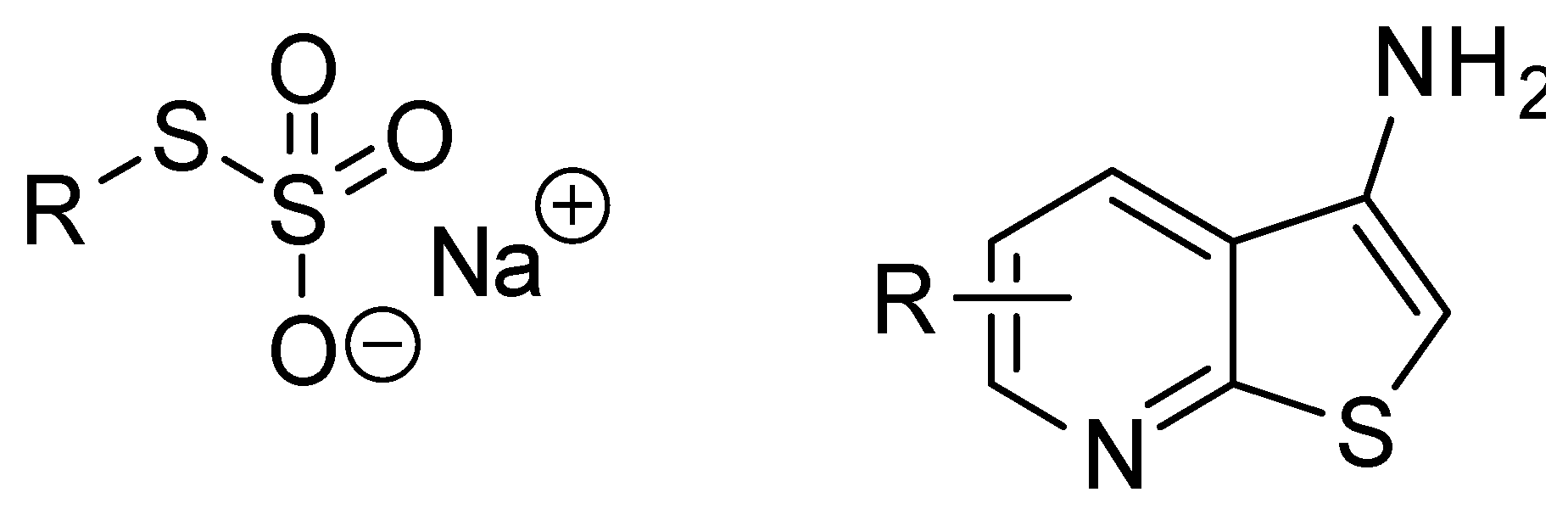
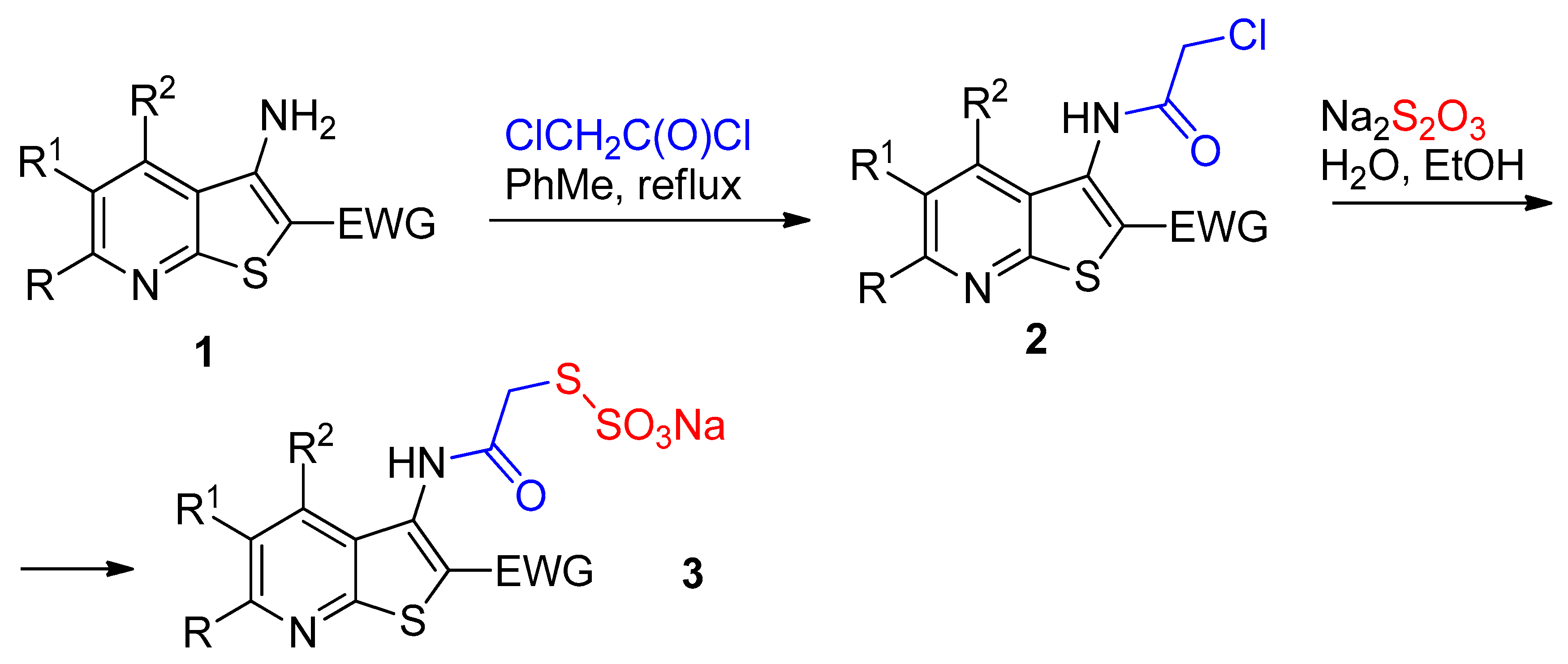
2. Results and Discussion
3. Experimental Methods
3.1. General Procedure for the Synthesis of α-Chloro-N-(thienopyridine-3-yl)acetamides 2
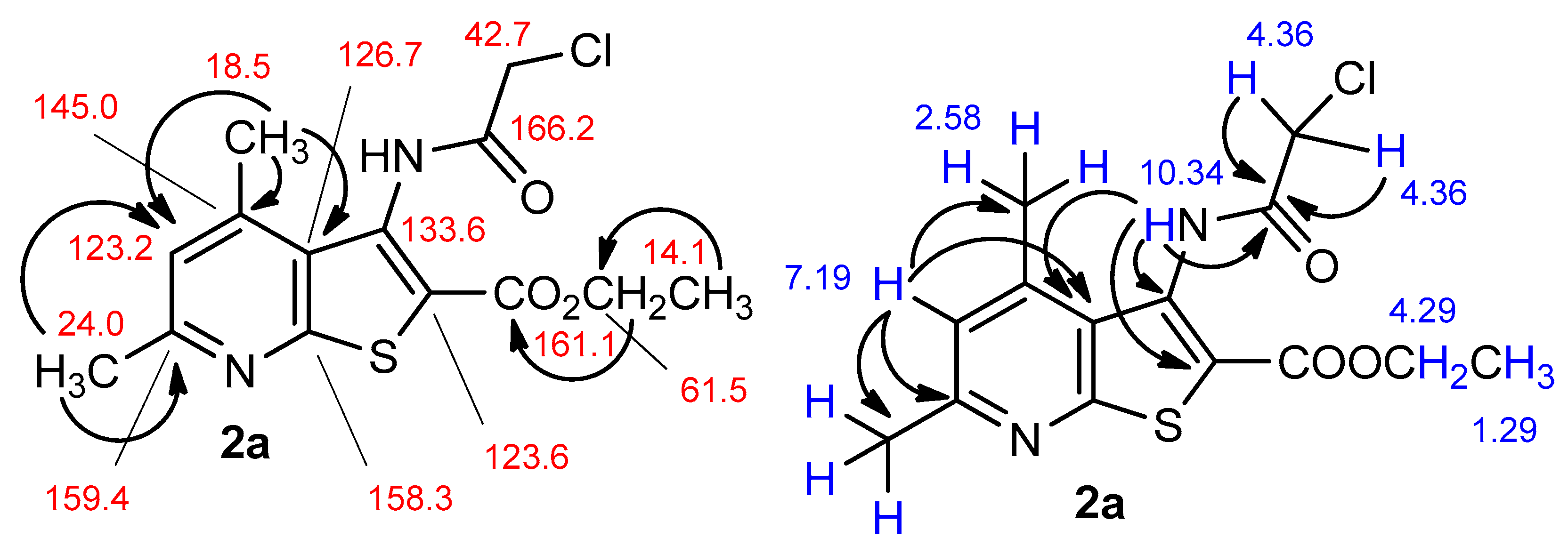
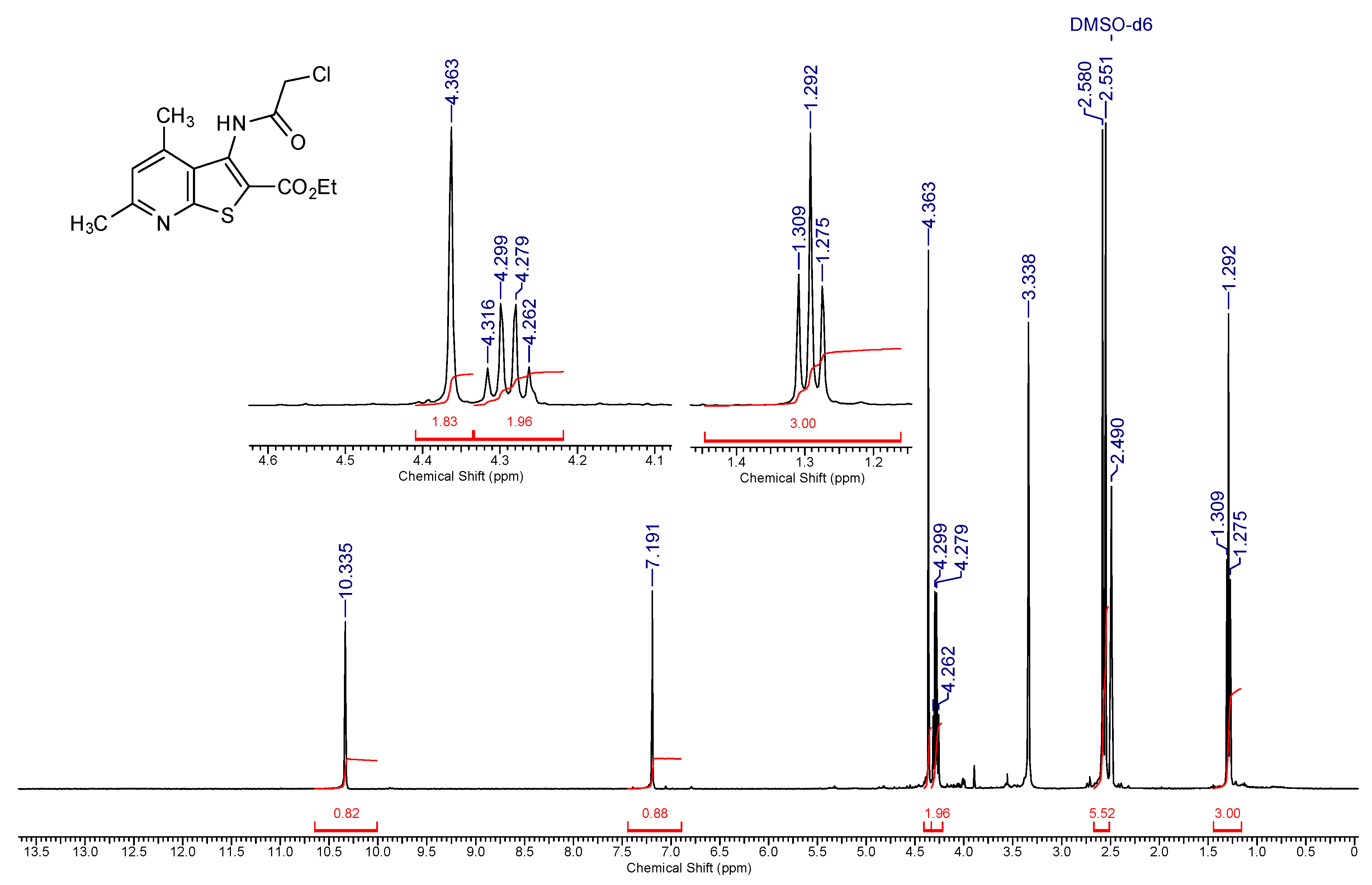
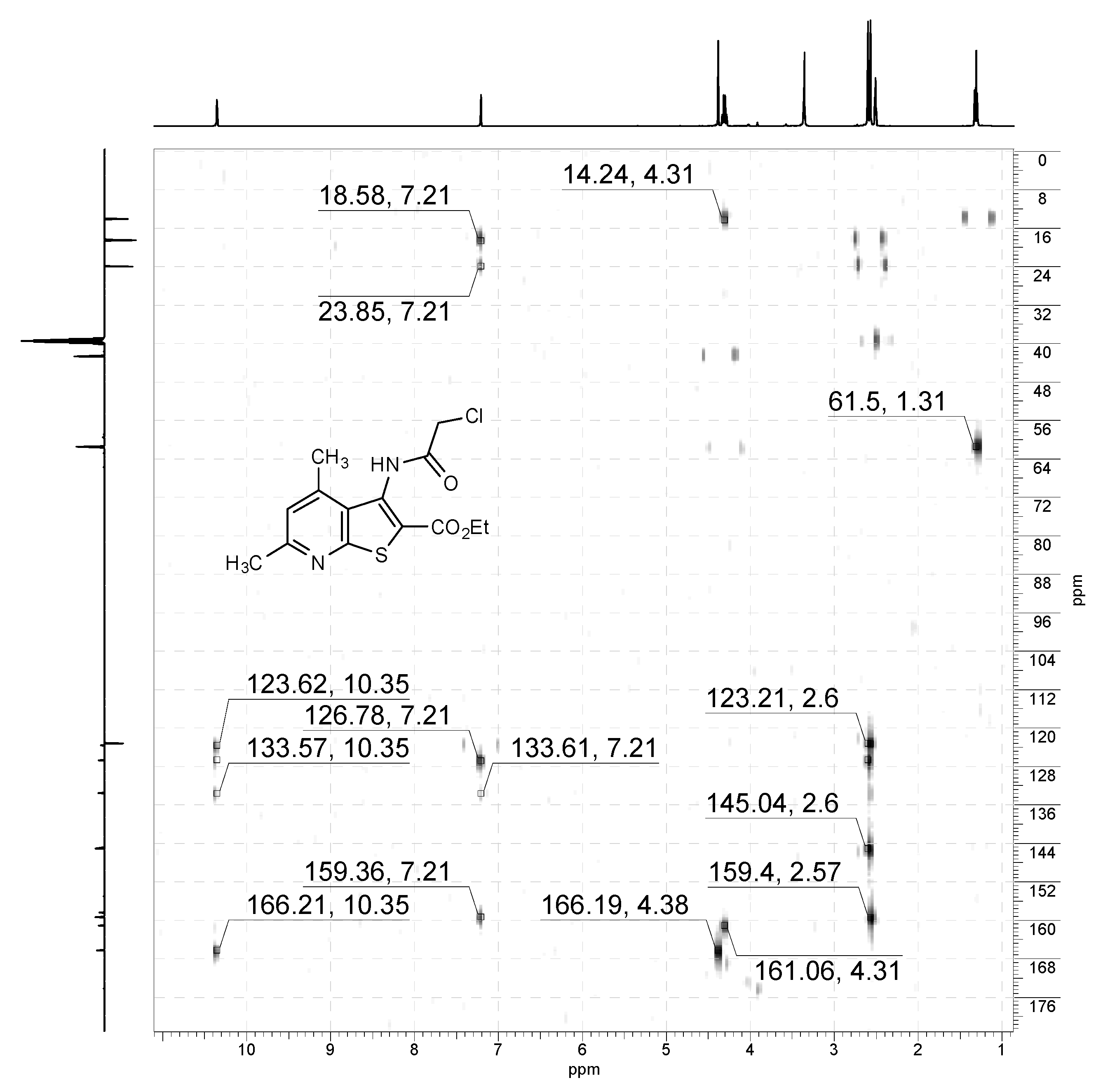
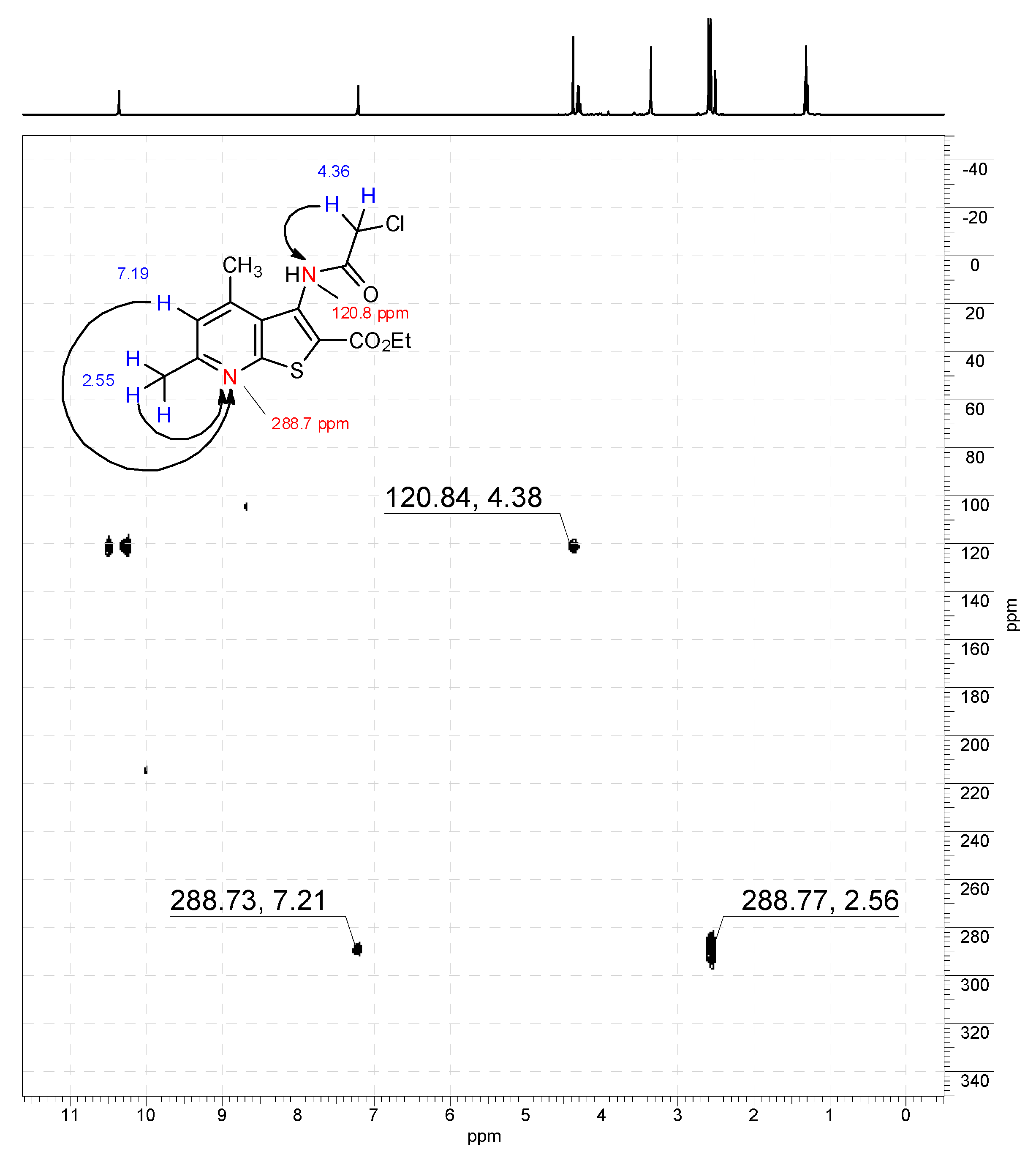
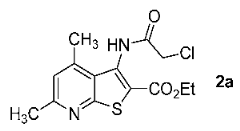
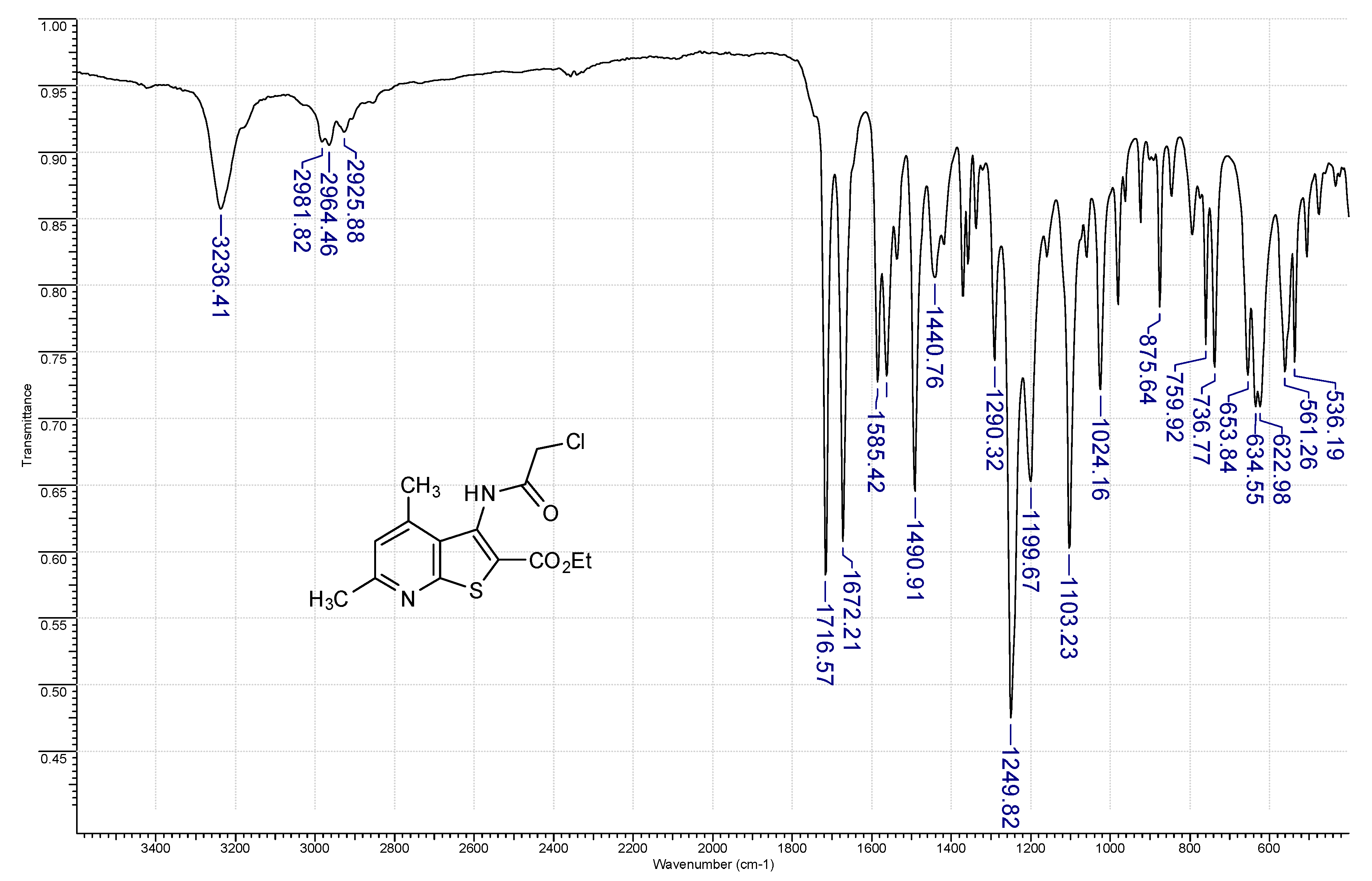
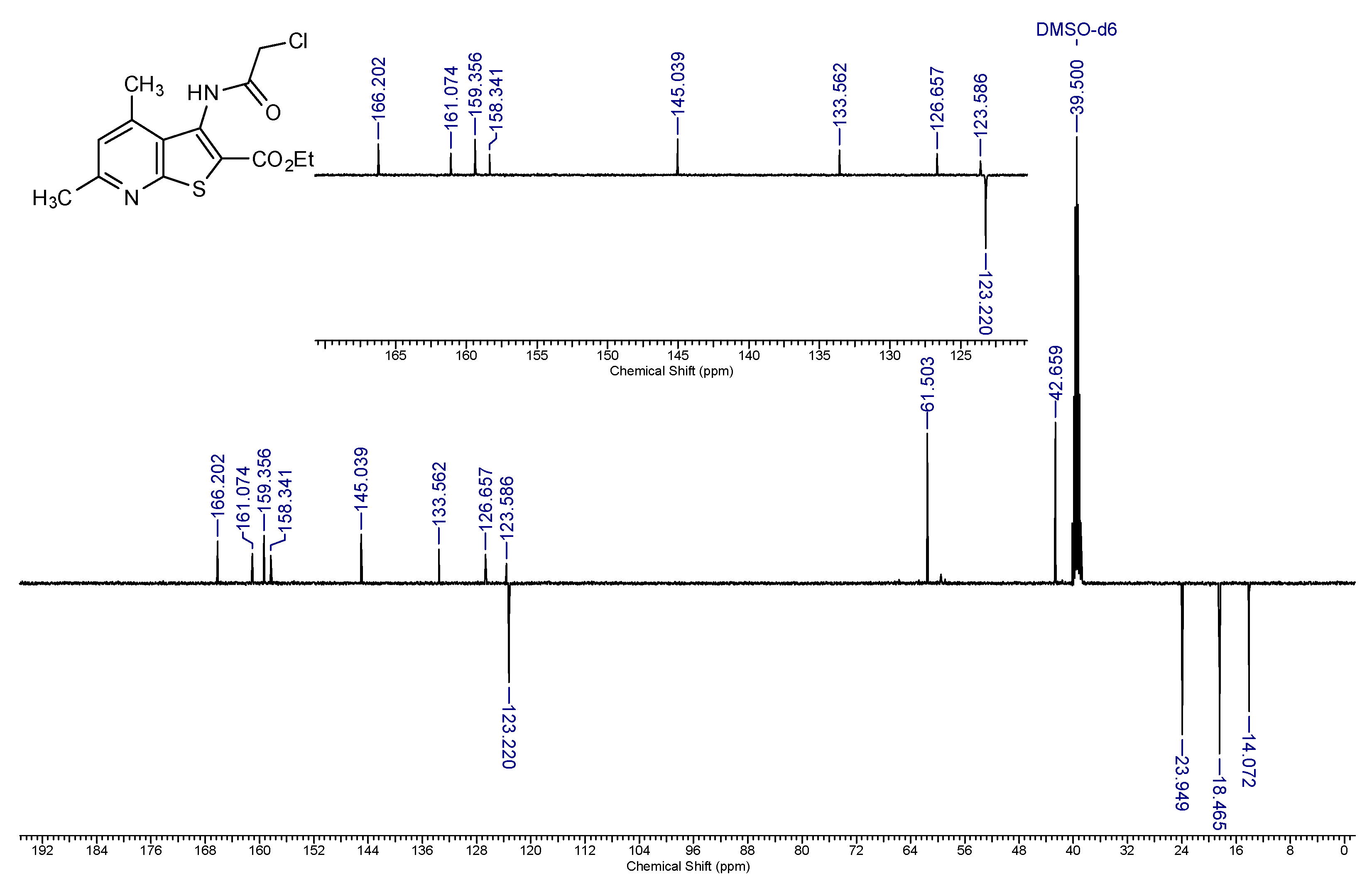
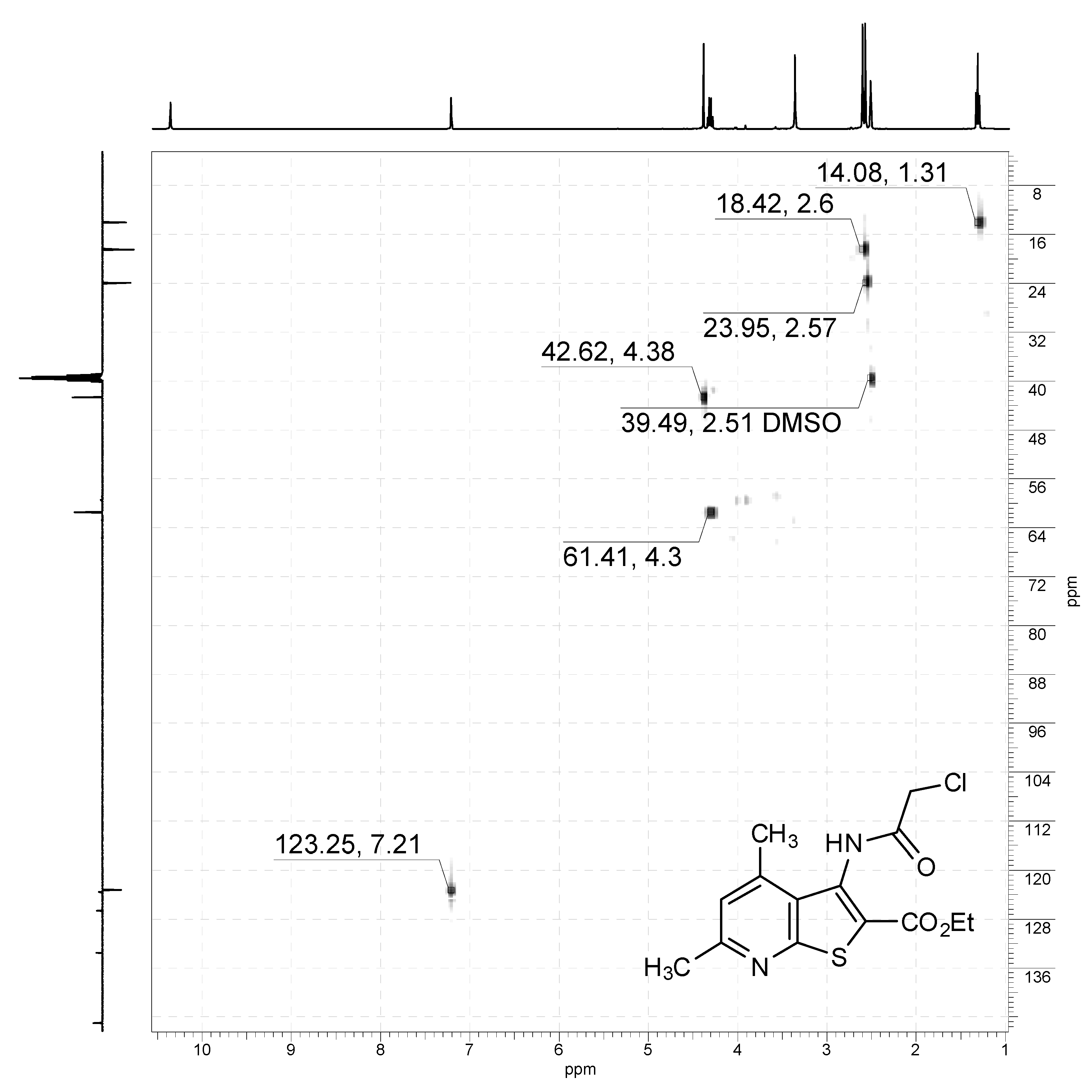
3.2. Ethyl 3-(2-Chloroacetamido)-4,6-dimethylthieno[2,3-b]pyridine-2-carboxylate (2a) (EWG = COOEt, R = R2 = Me, R1 = H)
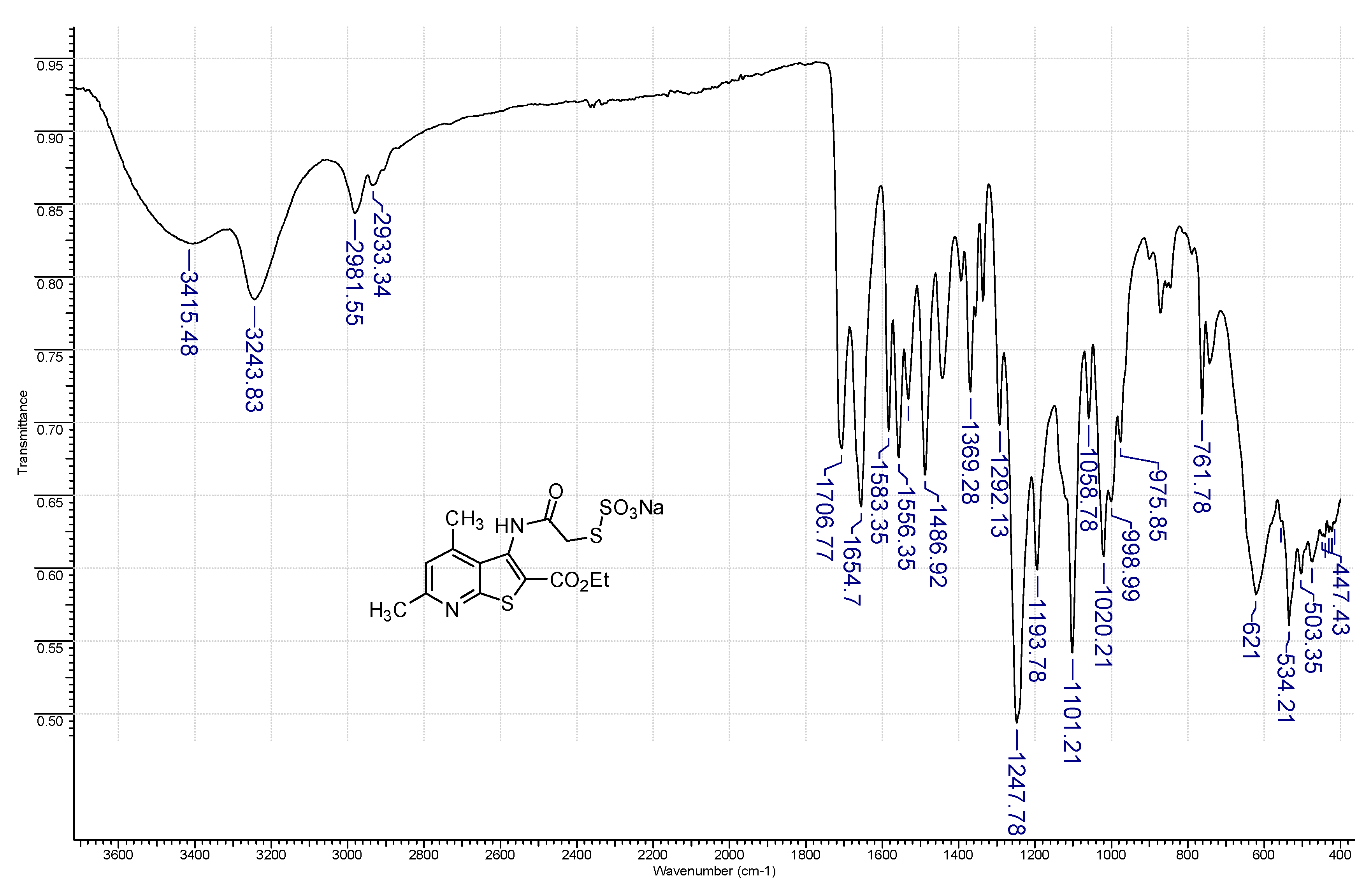
3.3. Preparation of Compound 3a (EWG = COOEt, R = R2 = Me, R1 = H)

Funding
References
- Jiang, X.; Li, Y.; Wang, M. Recent Advances in Sulfuration Chemistry Enabled by Bunte Salts. Aldrichimica Acta J. 2020, 53, 19–25. [Google Scholar]
- Westlake, H.E.; Dougherty, G. The Use of Bunte Salts in Synthesis. I. The Preparation of Mercaptals. J. Am. Chem. Soc. 1941, 63, 658–659. [Google Scholar] [CrossRef]
- Reeves, J.T.; Camara, K.; Han, Z.S.; Xu, Y.; Lee, H.; Busacca, C.A.; Senanayake, C.H. The Reaction of Grignard Reagents with Bunte Salts: A Thiol-Free Synthesis of Sulfides. Org. Lett. 2014, 16, 1196–1199. [Google Scholar] [CrossRef] [PubMed]
- Lin, Y.M.; Lu, G.P.; Cai, C.; Yi, W.B. An odorless thia-Michael addition using Bunte salts as thiol surrogates. RSC Adv. 2015, 5, 27107–27111. [Google Scholar] [CrossRef]
- Lukkari, J.; Meretoja, M.; Kartio, I.; Laajalehto, K.; Rajamäki, M.; Lindström, M.; Kankare, J. Organic Thiosulfates (Bunte Salts): Novel Surface-Active Sulfur Compounds for the Preparation of Self-Assembled Monolayers on Gold. Langmuir 1999, 15, 3529–3537. [Google Scholar] [CrossRef]
- Shon, Y.; Cutler, E. Aqueous Synthesis of Alkanethiolate-Protected Ag Nanoparticles Using Bunte Salts. Langmuir 2004, 20, 6626–6630. [Google Scholar] [CrossRef] [PubMed]
- Lohse, S.E.; Dahl, J.A.; Hutchison, J.E. Direct Synthesis of Large Water-Soluble Functionalized Gold Nanoparticles Using Bunte Salts as Ligand Precursors. Langmuir 2010, 26, 7504–7511. [Google Scholar] [CrossRef] [PubMed]
- Shon, Y.S.; Gross, S.M.; Dawson, B.; Porter, M.; Murray, R.W. Alkanethiolate-Protected Gold Clusters Generated from Sodium S-Dodecylthiosulfate (Bunte Salts). Langmuir 2000, 16, 6555–6561. [Google Scholar] [CrossRef]
- Shon, Y.S.; Wuelfing, W.P.; Murray, R.W. Water-Soluble, Sulfonic Acid-Functionalized, Monolayer-Protected Nanoparticles and an Ionically Conductive Molten Salt Containing Them. Langmuir 2001, 17, 1255–1261. [Google Scholar] [CrossRef]
- Stefańska, J.Z.; Starościak, B.J.; Orzeszko, A.; Kazimierczuk, Z. Antimicrobial activity of organic thiosulfates (Bunte salts). Die Pharm. 1998, 53, 190–192. [Google Scholar]
- Biswas, K.; Basu, B. Bunte Salts and Congeners as Efficient Sulfur Surrogates: Recent Advances. Curr. Organocatalysis 2018, 5, 182–195. [Google Scholar] [CrossRef]
- Bunte, H. Zur Constitution der unterschwefligen Säure. Ber. Deutsch. Chem. Ges. 1874, 7, 646–648. [Google Scholar] [CrossRef]
- Distler, H. The chemistry of Bunte salts. Angew. Chem. Int. Ed. 1967, 6, 544–553. [Google Scholar] [CrossRef]
- Litvinov, V.P.; Dotsenko, V.V.; Krivokolysko, S.G. Thienopyridines: Synthesis, properties, and biological activity. Russ. Chem. Bull. 2005, 54, 864–904. [Google Scholar] [CrossRef]
- Litvinov, V.P.; Dotsenko, V.V.; Krivokolysko, S.G. Chemistry of Thienopyridines and Related Systems; Russian Academy of Sciences: Moscow, Russia, 2006. (In Russian) [Google Scholar]
- Litvinov, V.P.; Dotsenko, V.V.; Krivokolysko, S.G. The chemistry of thienopyridines. Adv. Heterocycl. Chem. 2007, 93, 117. [Google Scholar]
- Dotsenko, V.V.; Buryi, D.S.; Lukina, D.Y.; Krivokolysko, S.G. Recent advances in the chemistry of thieno[2,3-b]pyridines 1. Methods of synthesis of thieno[2,3-b]pyridines. Russ. Chem. Bull. 2020, 69, 1829–1858. [Google Scholar] [CrossRef]
- Dotsenko, V.V.; Buryi, D.S.; Lukina, D.Y.; Stolyarova, A.N.; Aksenov, N.A.; Aksenova, I.V.; Strelkov, V.D.; Dyadyuchenko, L.V. Dyadyuchenko, Substituted N-(thieno[2,3-b]pyridine-3-yl)acetamides: Synthesis, reactions, and biological activity. Mon. Für Chem. 2019, 150, 1973–1985. [Google Scholar] [CrossRef]





| N. | Compound | R | R1 | R2 | Yield, % |
|---|---|---|---|---|---|
| 1 | 2a | Me | Me | OEt | 93 |
| 2 | 2b | Me | Me | NHPh | 84 |
| 3 | 2c | Me | Me | 2,4-Me2C6H3NH | 77 |
| 4 | 2d | Me | Me | 5-Cl-2-MeC6H3NH | 78 |
| 5 | 2e | Me | Me | 4-Cl-2-MeC6H3NH | 82 |
| 6 | 2f | Me | Me | 4-BrC6H4NH | 83 |
| 7 | 2g | Ph | Ph | NHPh | 93 |
| 8 | 2h | Ph | 4-MeOC6H4 | NHPh | 67 |
Publisher’s Note: MDPI stays neutral with regard to jurisdictional claims in published maps and institutional affiliations. |
© 2020 by the authors. Licensee MDPI, Basel, Switzerland. This article is an open access article distributed under the terms and conditions of the Creative Commons Attribution (CC BY) license (https://creativecommons.org/licenses/by/4.0/).
Share and Cite
Lukina, D.Y.; Drazhin, M.O.; Dotsenko, V.V.; Aksenov, N.A.; Aksenova, I.V. Synthesis of New Water-Soluble Bunte Salts Bearing Thieno[2,3-b]Pyridine-3-yl Substituents. Chem. Proc. 2021, 3, 24. https://doi.org/10.3390/ecsoc-24-08397
Lukina DY, Drazhin MO, Dotsenko VV, Aksenov NA, Aksenova IV. Synthesis of New Water-Soluble Bunte Salts Bearing Thieno[2,3-b]Pyridine-3-yl Substituents. Chemistry Proceedings. 2021; 3(1):24. https://doi.org/10.3390/ecsoc-24-08397
Chicago/Turabian StyleLukina, Darya Yu., Maksim O. Drazhin, Victor V. Dotsenko, Nicolai A. Aksenov, and Inna V. Aksenova. 2021. "Synthesis of New Water-Soluble Bunte Salts Bearing Thieno[2,3-b]Pyridine-3-yl Substituents" Chemistry Proceedings 3, no. 1: 24. https://doi.org/10.3390/ecsoc-24-08397
APA StyleLukina, D. Y., Drazhin, M. O., Dotsenko, V. V., Aksenov, N. A., & Aksenova, I. V. (2021). Synthesis of New Water-Soluble Bunte Salts Bearing Thieno[2,3-b]Pyridine-3-yl Substituents. Chemistry Proceedings, 3(1), 24. https://doi.org/10.3390/ecsoc-24-08397