
Abstract
Cancer remains a significant challenge, prompting the exploration of new therapies. Breast cancer is the most prevalent among women, and current medications often have serious side effects. Additionally, there is limited research on natural resources that have historically provided bioactive compounds with potential anti-cancer properties. This study examines two such resources—Cannabis sativa and Datura metel L.—both known for their pharmacological diversity and traditional medicinal use. Cannabis sativa, with its major constituents Δ9-tetrahydrocannabinol (THC) and cannabidiol (CBD), has garnered considerable interest. Datura metel L., despite its toxicity, contains alkaloids like scopolamine and withametelin, which have shown cytotoxic properties against cancer cells. This study selected five breast cancer-related receptors, docking them against various phytoconstituents in both plants to identify potent cytotoxic entities. Target proteins were extracted from the PDB database, and docking studies were performed using AutoDock software. The docking scores of the phytochemicals were then compared with one another. The docking studies on Cannabis sativa revealed that apigenin (−8.15), β-caryophyllene oxide (−8.35), THCA (−8.84), epicatechin (−8.18), and vitexin (−9.58) showed good interaction with the PARP receptor (PDB ID: 5DS3), while cannabidiol (−8.38) and cannabichromene (−8.36) showed strong interactions with CDK4/6 (PDB ID: 6GS7). Additionally, strychnine (−9.99), naringin (−9.19), and luteolin (−8) demonstrated good interactions with the estrogen receptor (PDB ID: 3ERT). In the case of Datura metel L., withametelin (−10.69) and dinoxin B (−10.72) showed good interactions with the estrogen receptor (PDB ID: 3ERT), and scopolamine (−8.24) with CDK4/6 (PDB ID: 6GS7). These findings suggest that these phytoconstituents possess anti-cancer activities.
1. Introduction
The most widespread disease in the 21st century is cancer, persistently leading ahead of its competitors, in spite of therapeutical advancements. It is associated with genes that lose their capability to control cell proliferation, metabolism, DNA repair, and death, while undergoing mutational changes. In addition to the cancer cell, the microenvironment enveloping it stimulates the initiation and progression of tumors, whose growth affects healthy cells both physically and biochemically [1]. Every year, cancer accounts for 1/6th of all global deaths, with 10 million people dying and more than 19 million diagnosed annually [2]. There are currently more than 30 types of cancer reported, among which breast cancer stands out as one of the most widespread. According to epidemiological data, around 2,308,897 new cases and 665,684 deaths due to female breast cancer were reported in the year 2022, placing second and fourth in terms of incidence and mortality rates, respectively [3]. The major determinants linked with breast cancer are female gender, older age, early menarche, late menopause, lack of breastfeeding, genetic factors, nulliparity, hormonal status, dense breast tissue, exposure to ionizing radiation, and economic development of the country in which one resides [4,5].
Over the years, chemotherapy has been the predominant option for treating cancer patients: for instance, tamoxifen is one of the most commonly used medications for treating breast cancer. However, these drugs are associated with adverse effects, which consequently deteriorate patient heath, despite lessening the impact of cancer. In such a context, the unexplored arena of natural resources whose anti-cancer properties have long been reported in Ayurveda should be meticulously explored. There are several secondary metabolites like vinca alkaloids, taxane diterpenoids, etc., that can be extracted from plant sources and employed in treating cancer [6]. Among these natural sources, Cannabis sativa and Datura metel L. are two medicinal plants rich in phytochemicals that could be potential anti-cancer agents. Cannabis sativa, an annual plant of the Cannabaceae family, is widely associated to the treatment of various medical conditions. It houses more than 150 phytocannabinoids, as well as numerous flavonoids and terpenes, namely ∆9-tetrahydrocannabinol (THC/THCA), cannabidiol (CBD), etc. [7]. Meanwhile, Datura metel L., a perennial herbaceous member of the Solanaceae family, contains multiple alkaloids, tannins, phenols, sterols, and saponins, among which constituents like withametelin, scopolamine, etc., carry medicinal properties [8].
2. Method
2.1. Studying Molecular Docking
Molecular docking is a computational technique that is commonly used in drug discovery and design. It involves predicting the binding mode and affinity of a small molecular ligand to a protein target. This is achieved through the calculation of the energy and geometry of the interaction between the ligand and the protein. This powerful tool is important for understanding the mechanism of action of a drug and optimizing its efficacy and safety.
2.2. Selecting Proteins
The atypical expression of various proteins is the sole reason behind the unbridled proliferation of cancer cells. The development of breast cancer is stimulated by several factors such as the upregulation of IGF1R’s overexpression of the MYC (myelocytomatosis) oncogene, the activation of the tyrosine kinase receptor along with EGFR1 (epidermal growth factor receptor 1) or HER2 (human epidermal growth factor receptor 1), which, in turn, induces signaling pathways like Ras/MAPK/ERK or PI3K/AKT/mTOR, the upregulation of IGF1R (insulin-like growth factor 1 receptor), and the lack of expression of tumor suppressor genes like BRCA1/2 (breast cancer) [9]. PARP (Poly (ADP-ribose) polymerase) proteins, when inhibited, target the DNA damage response in BRCA1/2-mutated breast cancer [10]. Moreover, TP53 (tumor protein p53) mutation and the loss of expression of PTEN (phosphatase and tensin homolog) diminish their anti-proliferative action against cancer cells. The androgen receptor (AR) also has an active role in the stimulation and expansion of both ER (estrogen receptor)-positive and -negative breast cancer cells [9]. The ER-cyclin D-CDK4/6 (cyclin-dependent kinases) pathway is another potential site whose inhibition can prevent ER-positive breast cancer [11]. Keeping in mind such information, this study employed five receptors, namely ER (PDB IDs—3ERT, 1A52), PI3K (PDB ID—6B1O), CDK4/6 (PDB ID—6GS7), PARP (PDB ID—5DS3), and EGFR (PDB ID—1M17), to carry out experiments.
2.3. Selecting Phytoconstituents
After screening the phytoconstituents present in the plants under study, 25 and 6 main components were selected for Cannabis sativa and Datura metel L., respectively, listed in Table 1 and Table 2.
Table 1.
Docking score (list of phytoconstituents in Cannabis sativa).
Table 2.
Docking score (list of phytoconstituents in Datura metel L.).
2.4. Docking
Docking studies were carried out using AutoDock 4.2.1, installed on a machine running a 2.4 GHz Intel Core 2 Duo processor with a 4GB RAM, a 160 GB hard disk, and Linux as the operating system. The accuracy of the docking technique was evaluated by calculating how closely the lowest energy value aligned with the docking score (lowest binding energy). To verify the AutoDock docking process, the co-crystallized ligand was removed from each protein’s binding site and then re-docked. There was a high degree of concordance between the inhibitor’s docking location and the crystal structure. Image analyses and interaction studies were conducted using Discovery Studio.
2.5. Comparing the Docking Scores of the Selected Receptors to the Phytoconstituents
Comparing the scores from the docking studies revealed the extent to which the receptors and the phytoconstituents interacted with one another. This, in turn, suggested the appropriate targets and associated ligands to treat breast cancer.
3. Results and Discussion
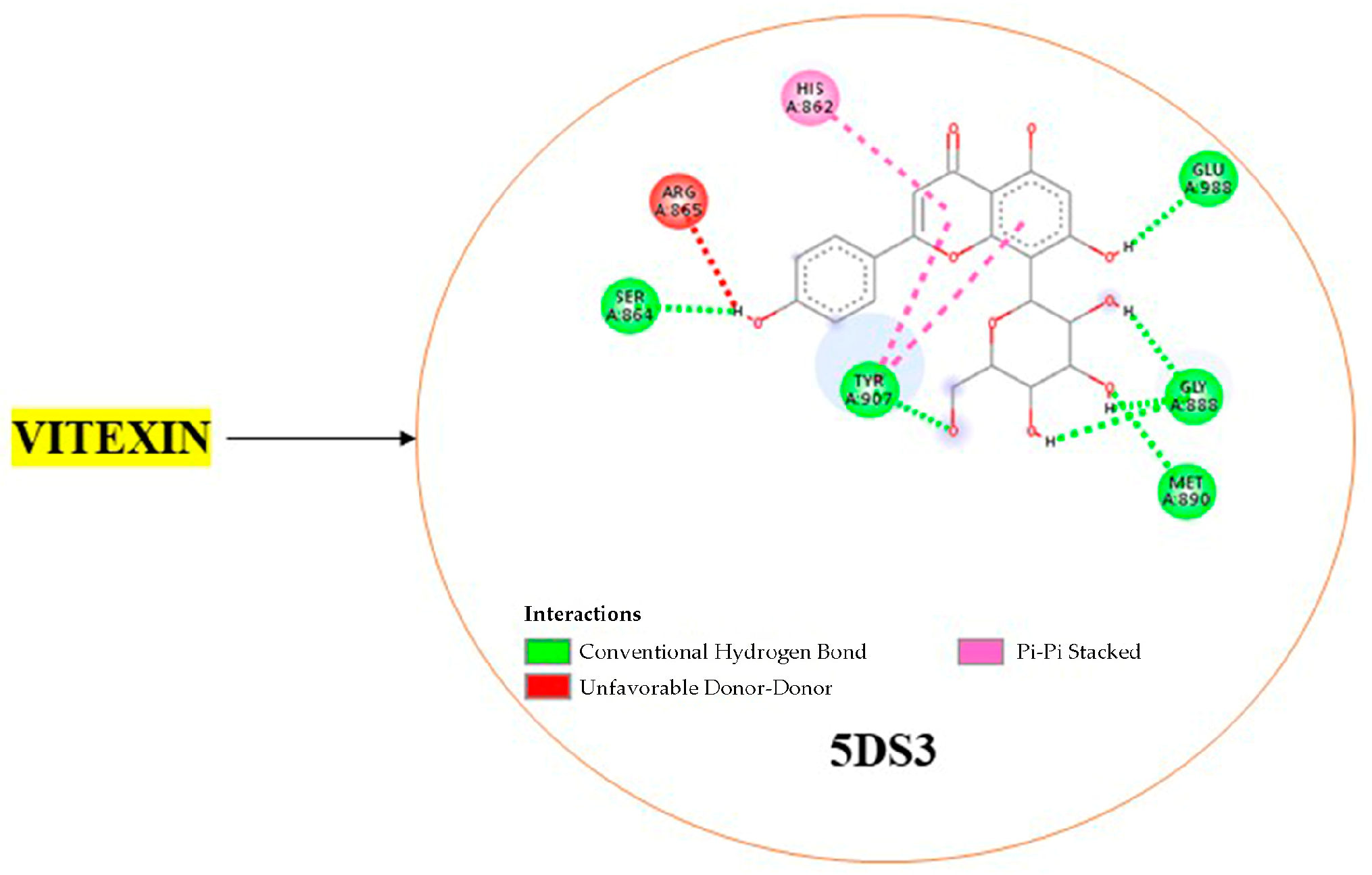
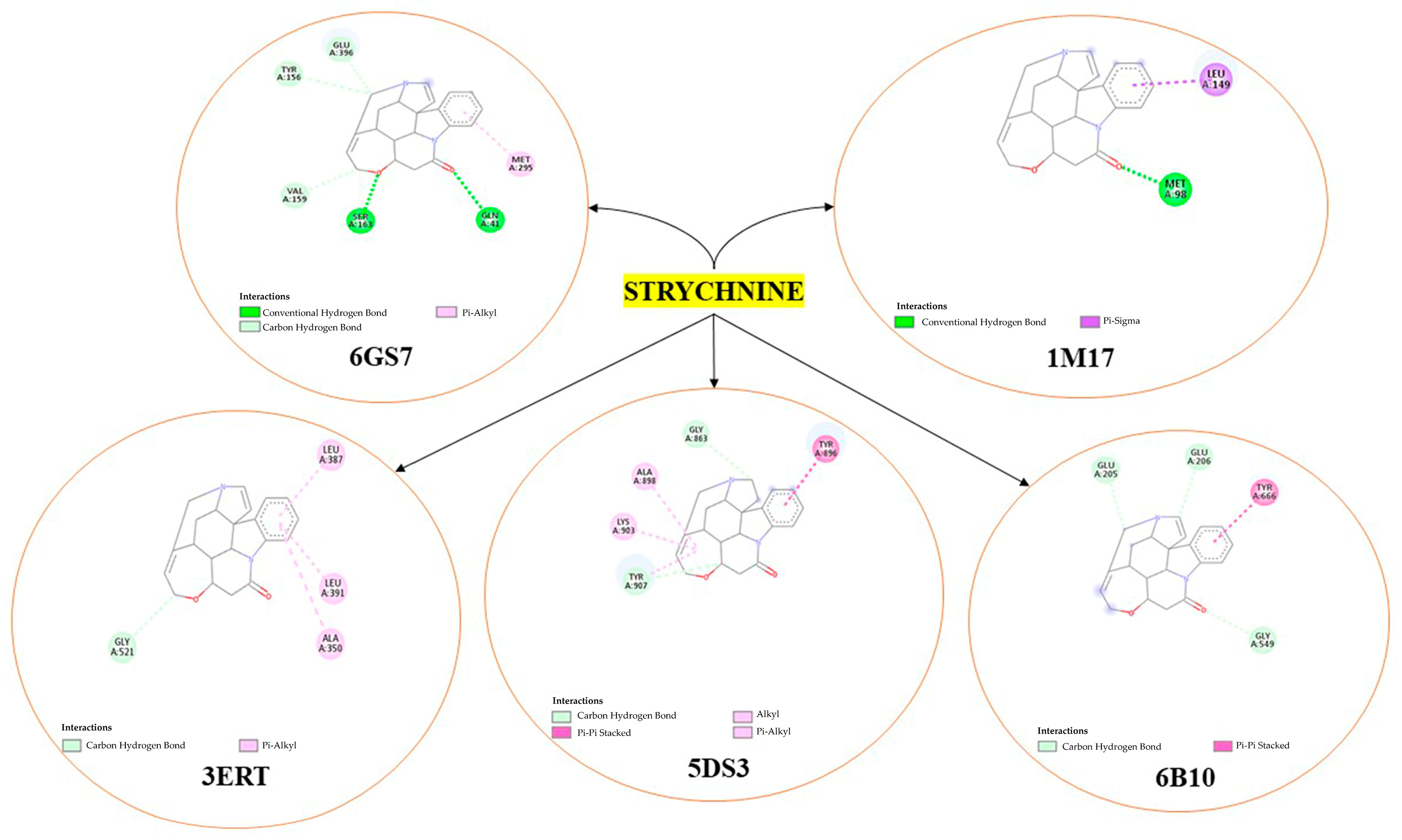
In the case of Cannabis sativa, the scores related to docking with the phytoconstituents revealed strong interactions of THCA with EGFR (PDB ID:1M17) and PARP (PDB ID:5DS3), naringin with EGFR (PDB ID:1M17) and estrogen (PDB ID:3ERT), and vitexin with PARP (PDB ID:5DS3), while strychnine interacted well with all the selected receptors.
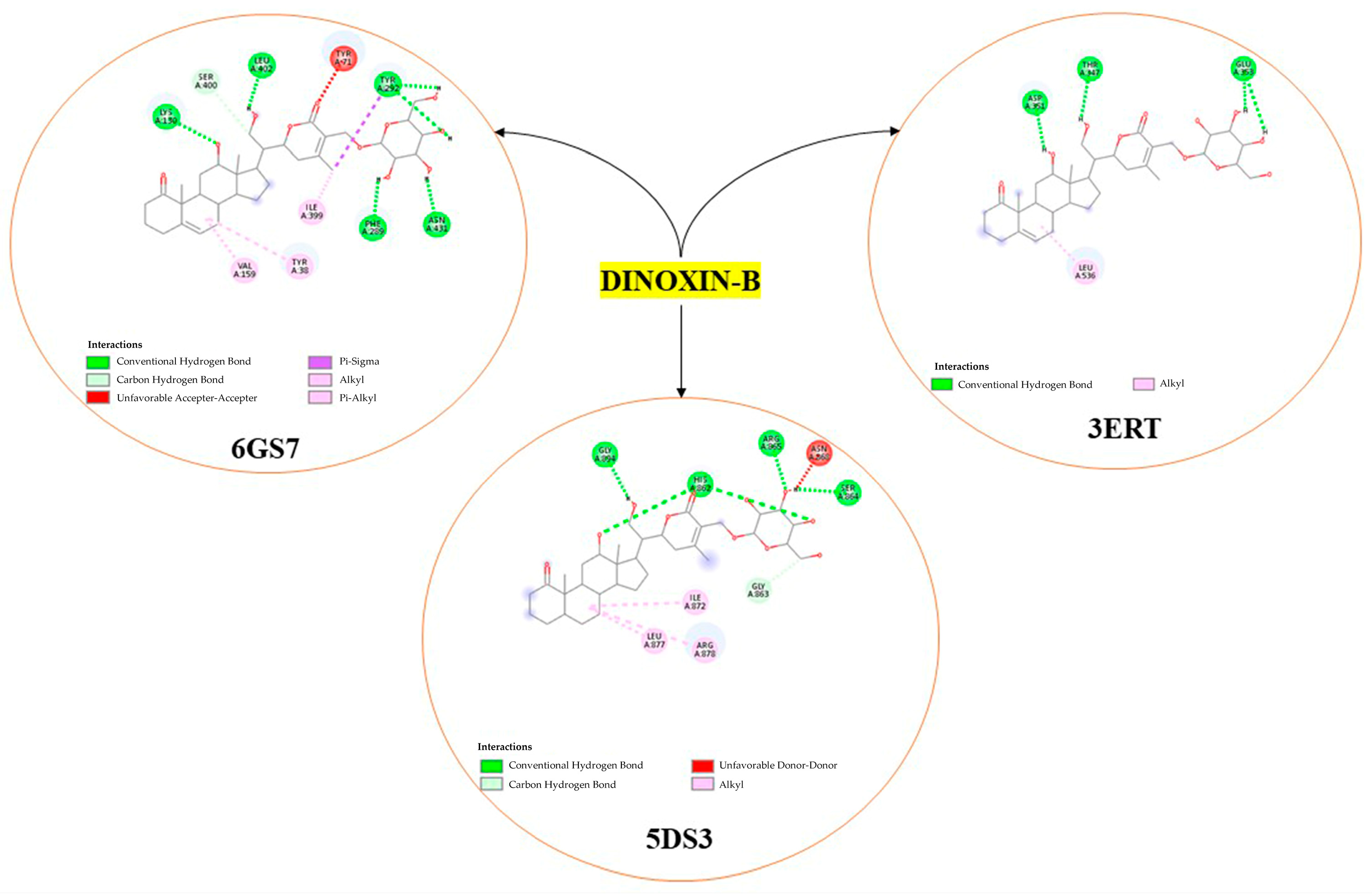
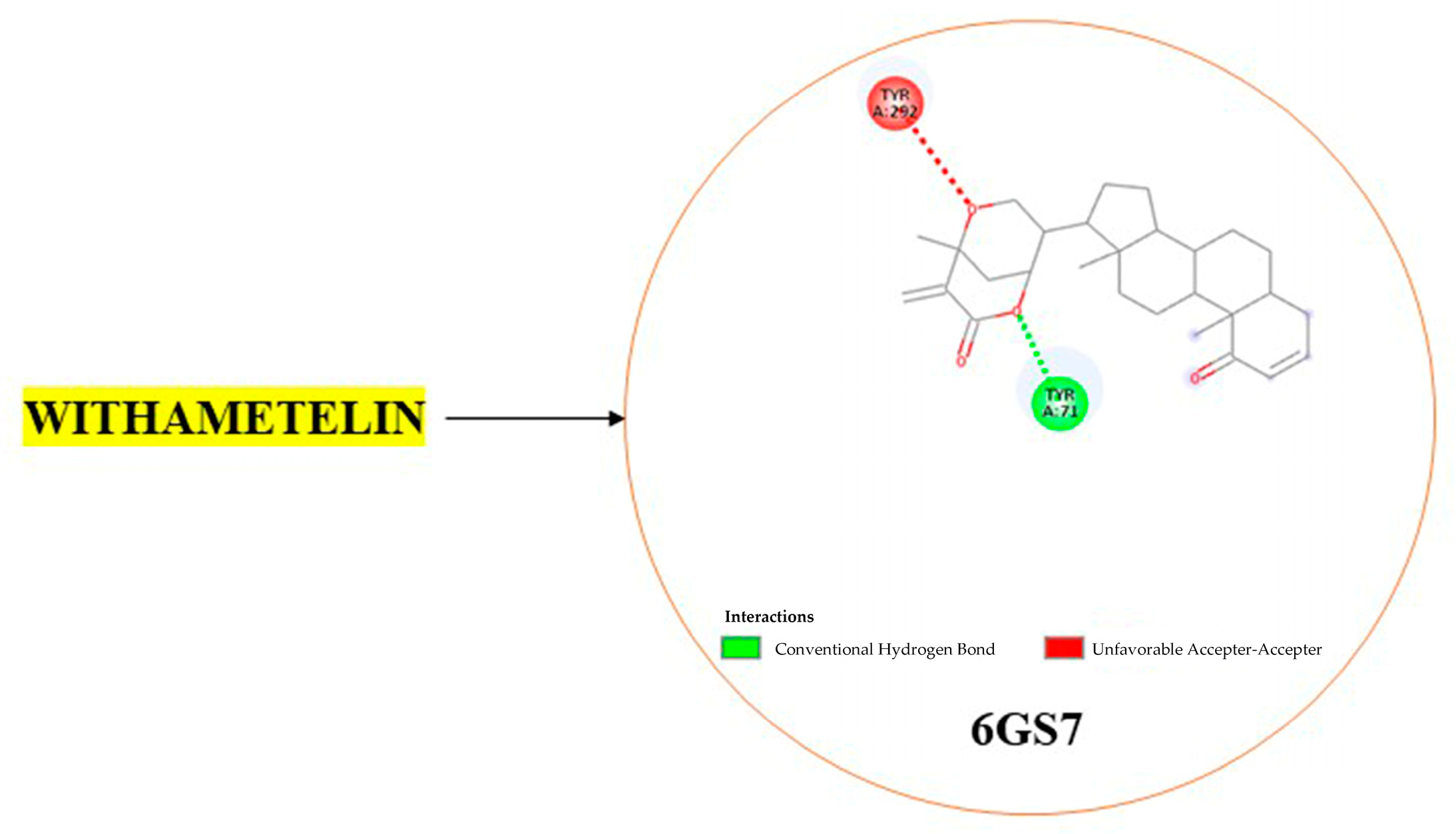
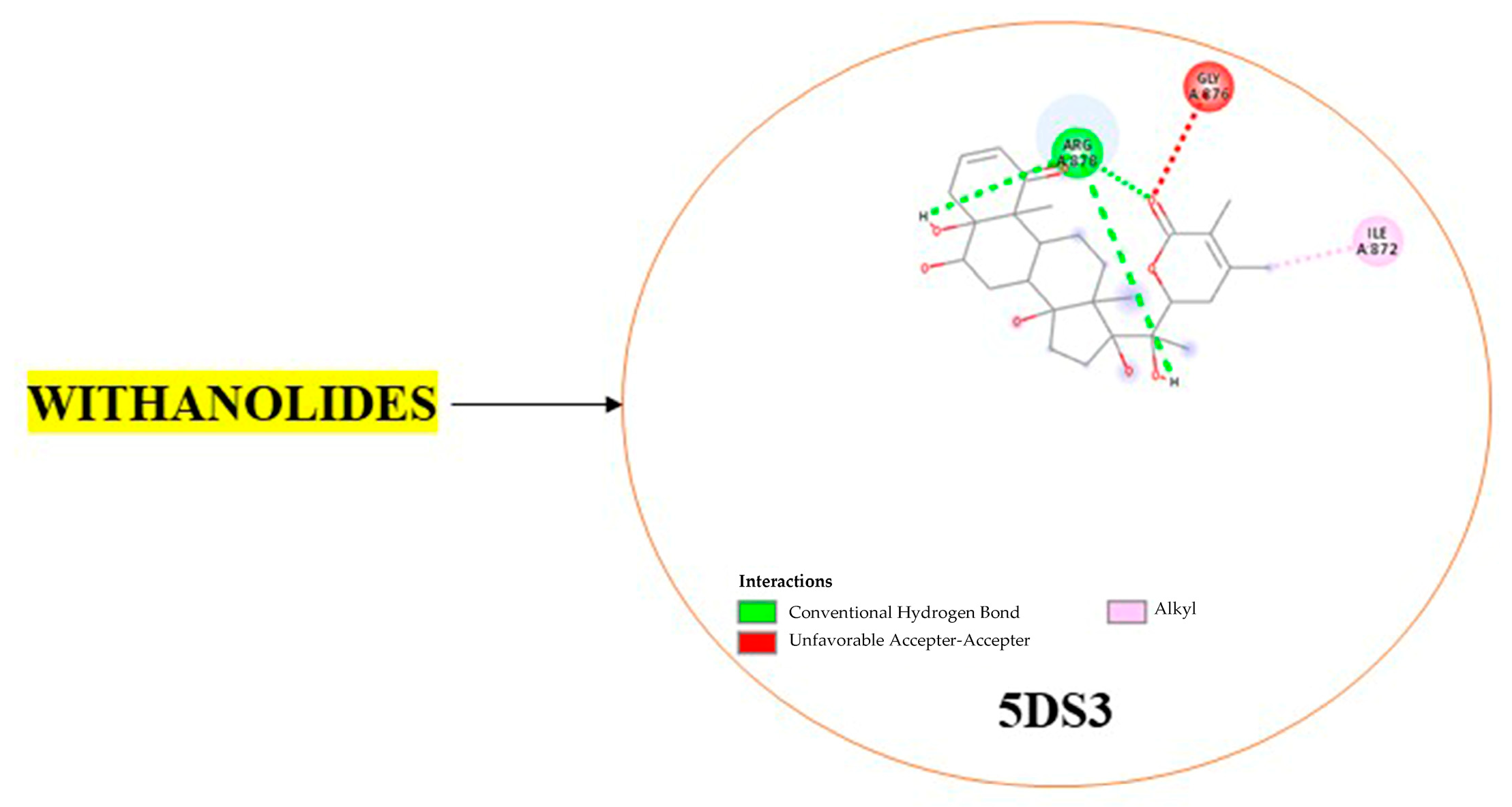
In the case of Datura metel L., dinoxin B and withanolides showed better interactions with CDK4/6 (PDB ID:6GS7), estrogen (PDB ID:3ERT), and PARP (PDB ID:5DS3), while withametelin interacted well with all the selected receptors.
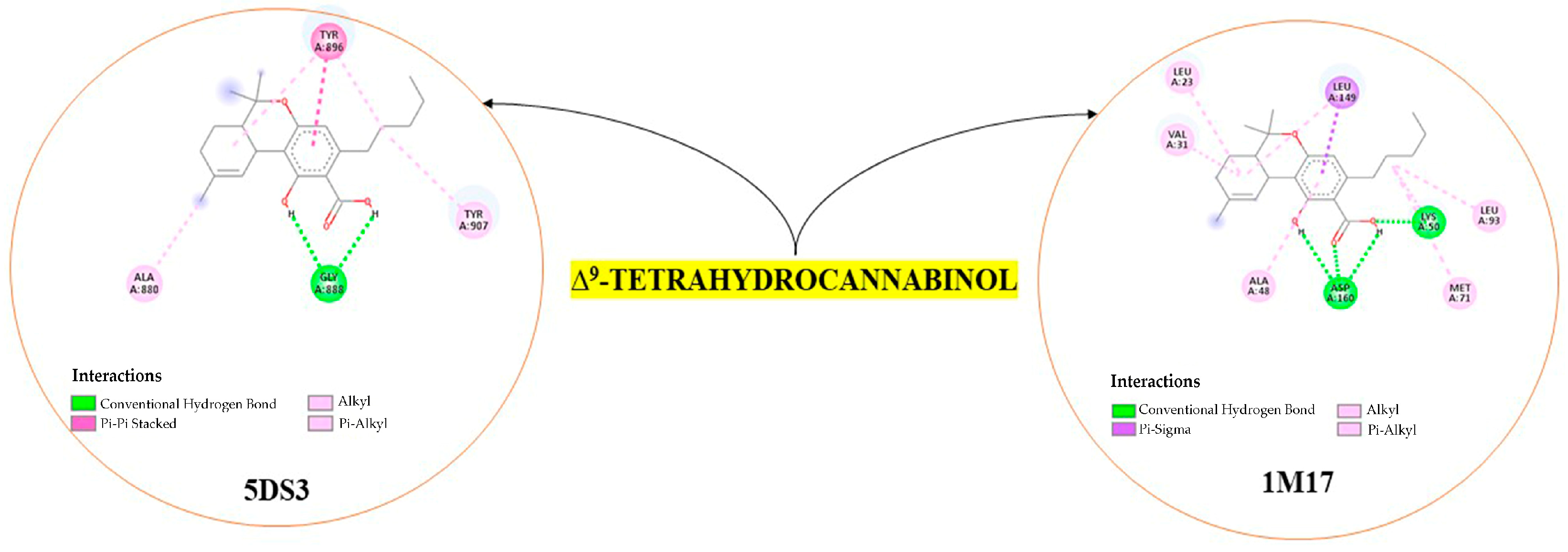
Visual representations of some of the interactions between the receptors and the phytoconstituents are shown in Figure 1, Figure 2, Figure 3, Figure 4, Figure 5 and Figure 6.
Figure 1.
Two-dimensional view of the interaction between ∆9-tetrahydrocannabinol and the receptors.
Figure 2.
Two-dimensional view of the interaction between vitexin and the 5DS3 receptor.
Figure 3.
Two-dimensional view of the interaction between strychnine and the receptors.
Figure 4.
Two-dimensional view of the interaction between dinoxin B and the receptors.
Figure 5.
Two-dimensional view of the interaction between withametelin and the 6GS7 receptor.
Figure 6.
Two-dimensional view of the interaction between withanolides and the 5DS3 receptor.
4. Conclusions
Cancer is currently among the deadliest diseases, with breast cancer being one of its most prominent types. It is the most frequently diagnosed cancer and a major cause of death in female patients. It can be treated via chemotherapy, surgery, and radiotherapy, among others. However, the synthetic medications used have unsolicited effects alongside the desired ones. To find alternative solutions, we explored a few natural resources, including the bioactive phytoconstituents of Cannabis sativa and Datura metel L.
Our computational studies highlighted good interactions of the phytochemicals present in Cannabis sativa and receptors like THCA with EGFR (PDB ID:1M17) and PARP (PDB ID:5DS3), naringin with EGFR (PDB ID:1M17) and estrogen (PDB ID:3ERT), and vitexin with PARP (PDB ID:5DS3). Meanwhile, strychnine interacted well with all the selected receptors. Moreover, considering the phytoconstituents within Datura metel L., good interactions were also shown by dinoxin B and withanolides with CDK4/6 (PDB ID:6GS7), estrogen (PDB ID:3ERT), and PARP (PDB ID:5DS3), while withametelin interacted well with all the selected receptors. Hence, this study underlines the importance of employing green chemistry in drug development, especially for two such sources with the potential to act as anti-cancer agents.
Author Contributions
Conceptualization, M.G.; methodology, M.G. and P.K.; software, M.G.; validation, M.G. and P.K.; formal analysis, M.G.; investigation, M.G.; resources, M.G.; data curation, M.G., P.K. and S.C.; writing—original draft preparation, S.C.; writing—review and editing, S.C. and M.G.; visualization, M.G.; supervision, M.G.; and project administration, M.G. All authors have read and agreed to the published version of the manuscript.
Funding
This research received no external funding.
Institutional Review Board Statement
Not applicable.
Informed Consent Statement
Not applicable.
Data Availability Statement
Data are contained within the article.
Conflicts of Interest
The authors declare no conflicts of interest.
References
- Nia, H.T.; Munn, L.L.; Jain, R.K. Physical traits of cancer. Science 2020, 370, eaaz0868. [Google Scholar] [CrossRef]
- Jassim, A.; Rahrmann, E.P.; Simons, B.D.; Gilbertson, R.J. Cancers make their own luck: Theories of cancer origins. Nat. Rev. Cancer 2023, 23, 710–724. [Google Scholar] [CrossRef] [PubMed]
- Bray, F.; Laversanne, M.; Sung, H.; Ferlay, J.; Siegel, R.L.; Soerjomataram, I.; Jemal, A. Global cancer statistics 2022: GLOBOCAN estimates of incidence and mortality worldwide for 36 cancers in 185 countries. CA A Cancer J. Clin. 2024, 74, 229–263. [Google Scholar] [CrossRef] [PubMed]
- Trayes, K.P.; Cokenakes, S.E. Breast cancer treatment. Am. Fam. Physician 2021, 104, 171–178. [Google Scholar] [PubMed]
- Smolarz, B.; Nowak, A.Z.; Romanowicz, H. Breast cancer—Epidemiology, classification, pathogenesis and treatment (review of literature). Cancers 2022, 14, 2569. [Google Scholar] [CrossRef] [PubMed]
- Nirmala, M.J.; Samundeeswari, A.; Sankar, P.D. Natural plant resources in anti-cancer therapy—A review. Res. Plant Biol. 2011, 1, 1–14. [Google Scholar]
- Koltai, H.; Shalev, N. Anti-cancer activity of cannabis sativa phytocannabinoids: Molecular mechanisms and potential in the fight against ovarian cancer and stem cells. Cancers 2022, 14, 4299. [Google Scholar] [CrossRef] [PubMed]
- Katoch, R.; Verma, S.P.; Agrawal, I.; Vyas, M.; Sahu, S.K. Exploring the Potential of Chemical Constituents of Datura metel in Breast Cancer from Molecular Docking Studies. BIO Web Conf. 2024, 86, 01042. [Google Scholar] [CrossRef]
- Clusan, L.; Ferrière, F.; Flouriot, G.; Pakdel, F. A Basic Review on Estrogen Receptor Signaling Pathways in Breast Cancer. Int. J. Mol. Sci. 2023, 24, 6834. [Google Scholar] [CrossRef] [PubMed]
- Rose, M.; Burgess, J.T.; O’Byrne, K.; Richard, D.J.; Bolderson, E. PARP inhibitors: Clinical relevance, mechanisms of action and tumor resistance. Front. Cell Dev. Biol. 2020, 8, 564601. [Google Scholar] [CrossRef] [PubMed]
- Wang, X.; Zhao, S.; Xin, Q.; Zhang, Y.; Wang, K.; Li, M. Recent progress of CDK4/6 inhibitors’ current practice in breast cancer. Cancer Gene Ther. 2024, 31, 1283–1291. [Google Scholar] [CrossRef] [PubMed]
Disclaimer/Publisher’s Note: The statements, opinions and data contained in all publications are solely those of the individual author(s) and contributor(s) and not of MDPI and/or the editor(s). MDPI and/or the editor(s) disclaim responsibility for any injury to people or property resulting from any ideas, methods, instructions or products referred to in the content. |
© 2024 by the authors. Licensee MDPI, Basel, Switzerland. This article is an open access article distributed under the terms and conditions of the Creative Commons Attribution (CC BY) license (https://creativecommons.org/licenses/by/4.0/).