
New Models for the Properties of Warm Mix Asphalt with Sasobit
 , ,
, ,
Abstract
:1. Introduction
2. Materials and Samples
2.1. Materials
2.2. Sample Preparation and Mixing Temperatures
3. Experimental Methods
3.1. Resilient Modulus
3.2. Indirect Tensile Strength (ITS) and Moisture Sensitivity
3.3. Dynamic Modulus
3.4. Fatigue Test
3.5. Wheel Track Test
4. Results and Discussions
4.1. Resilient Modulus
4.2. Indirect Tensile Strength (ITS)
4.3. Dynamic Modulus
4.4. Flexural Stiffness
4.5. Rutting
5. Conclusions
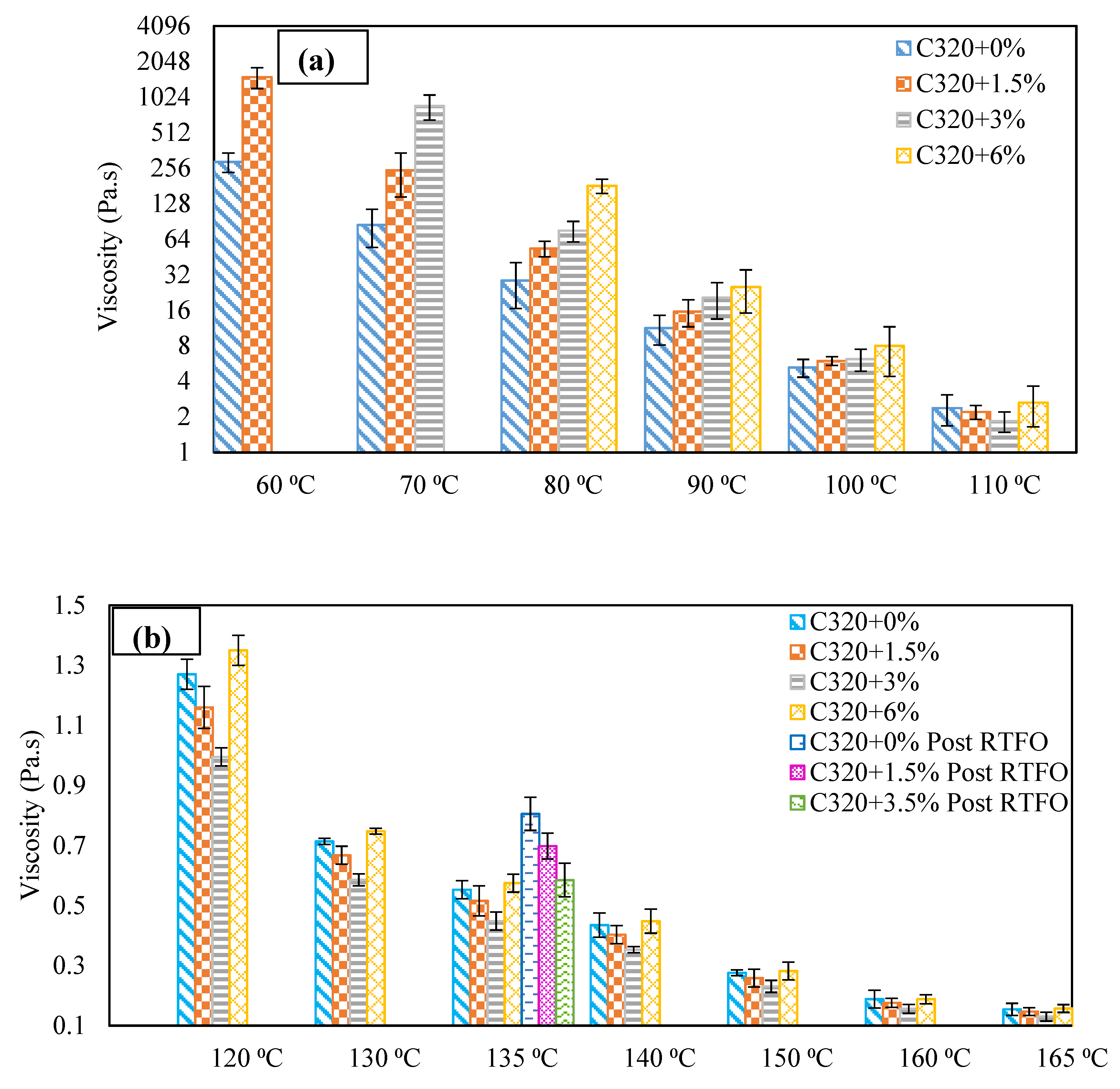
- Increasing the percentage of Sasobit increased the softening point of bitumen and viscosity and decreased the penetration point.
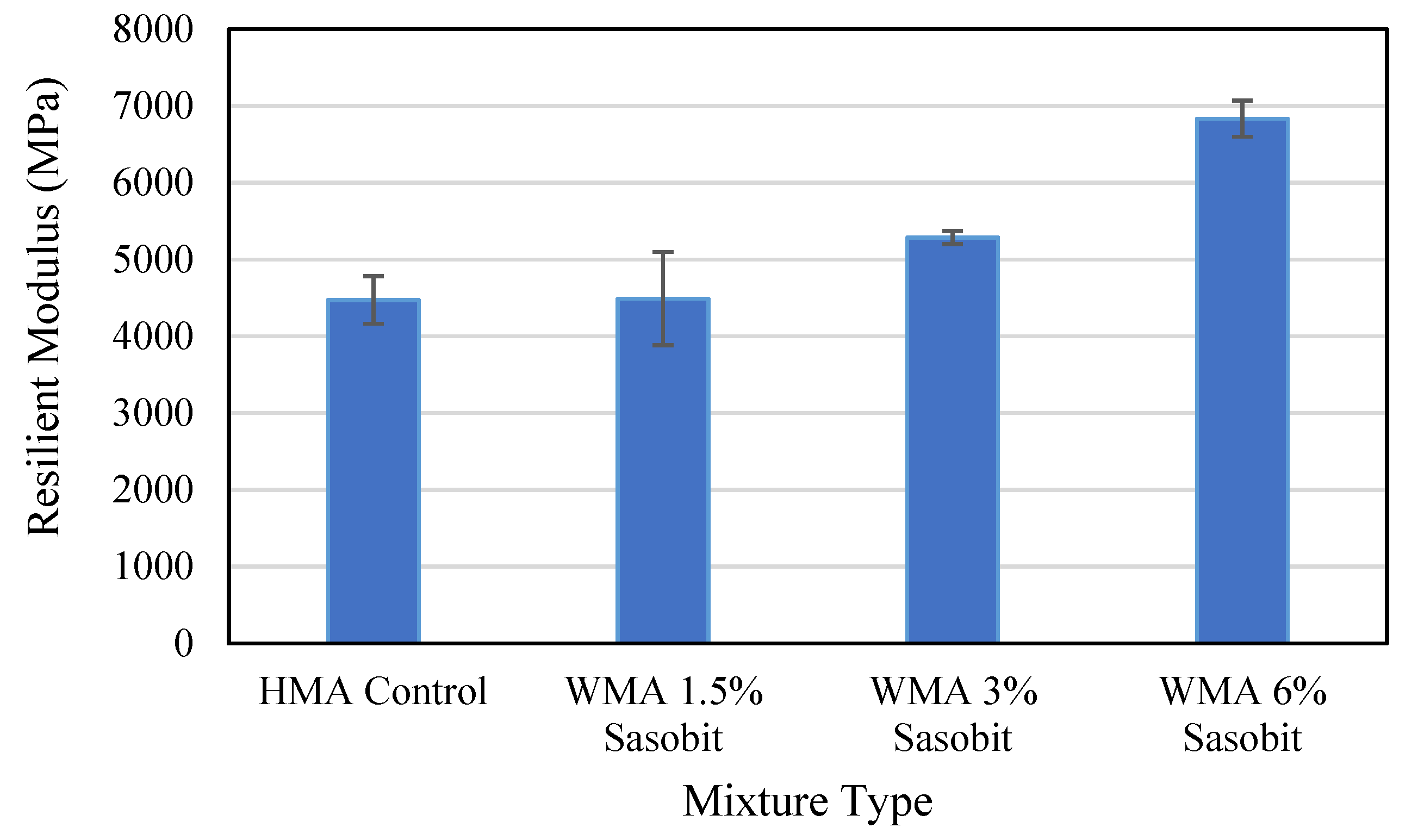
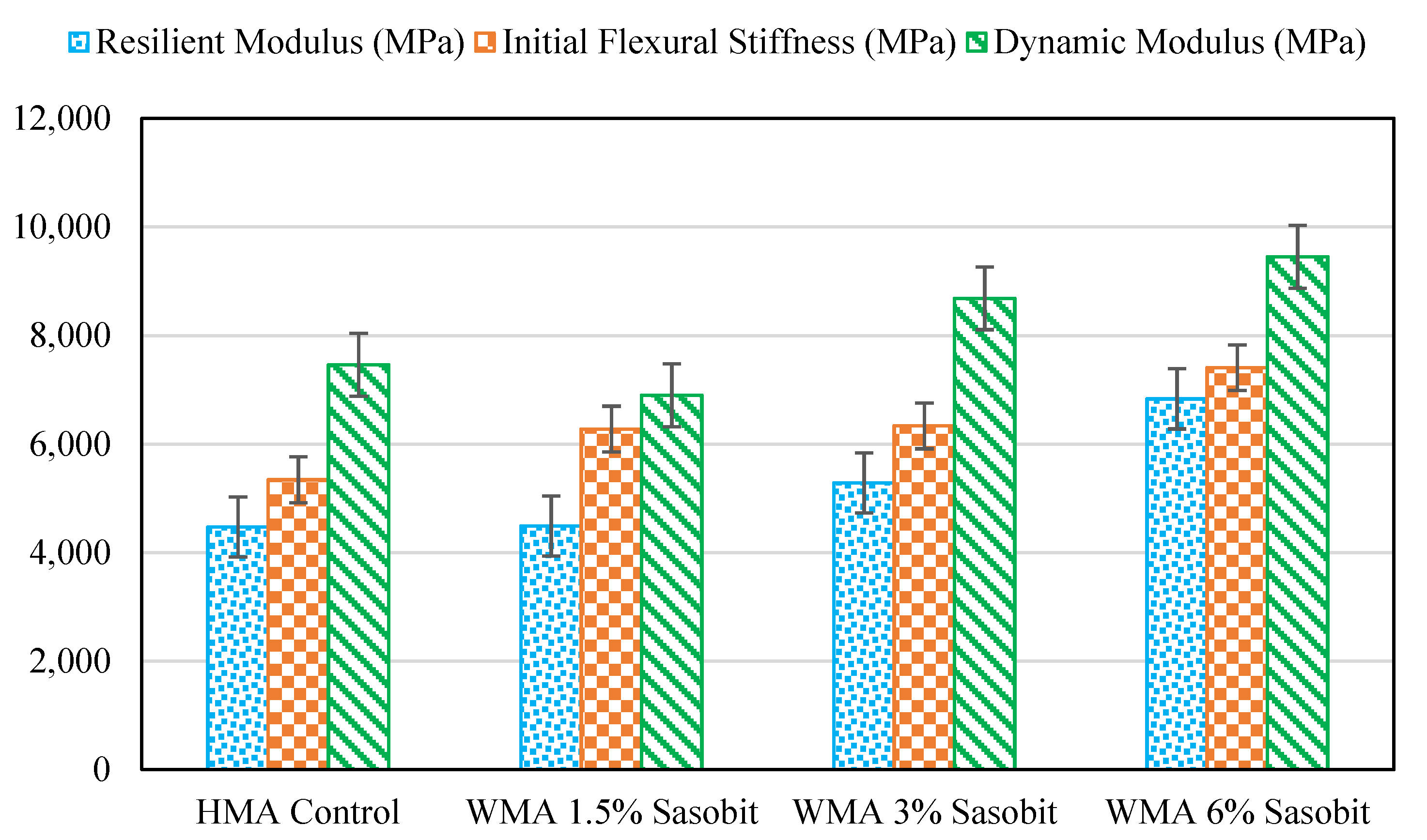
- The resilient modulus value for WMA is higher than the HMA control sample. The modulus of elasticity values increases by 0.4%, 18%, and 53% by adding 1.5, 3, and 6% of Sasobit to mixtures, respectively.
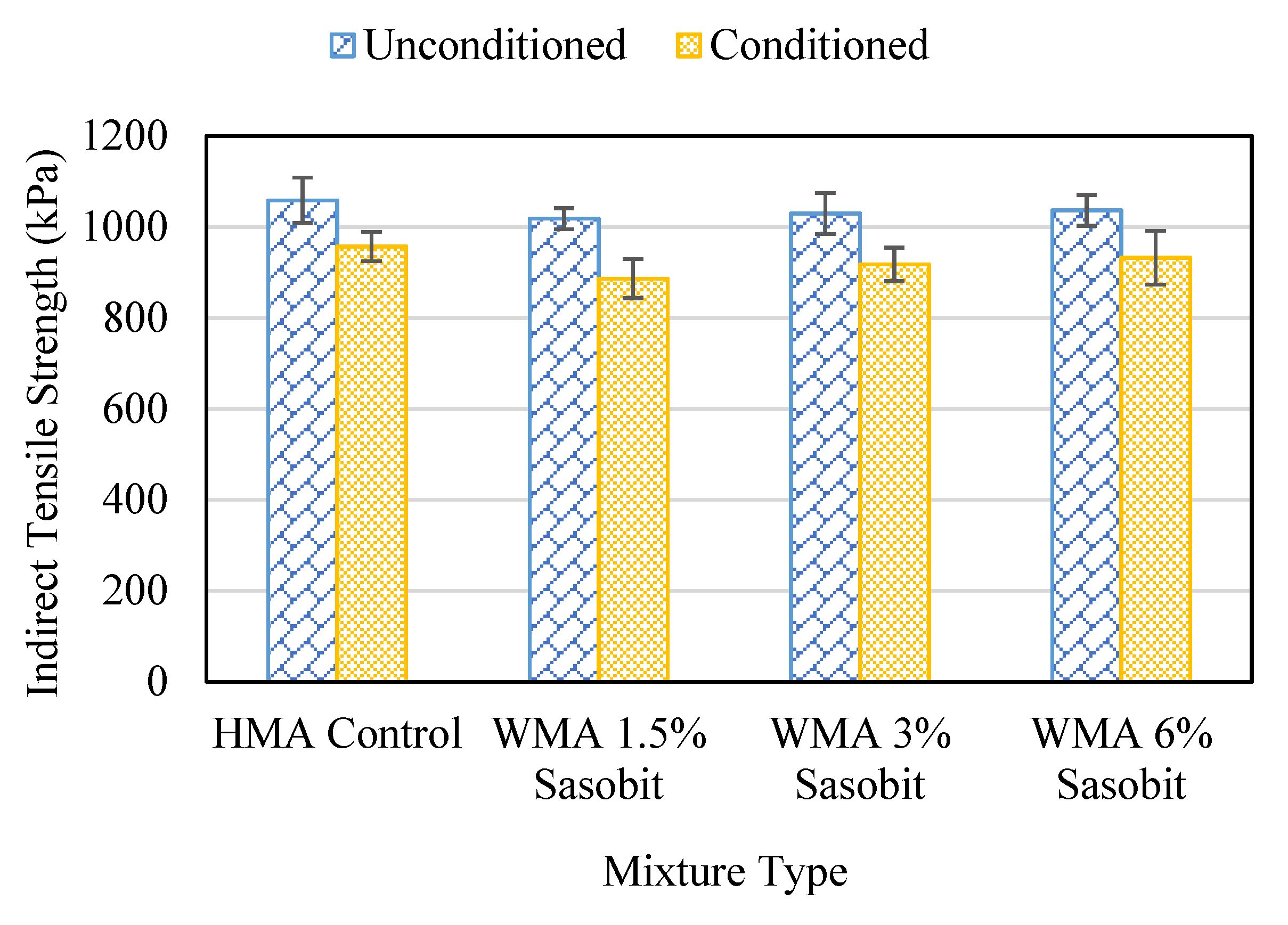
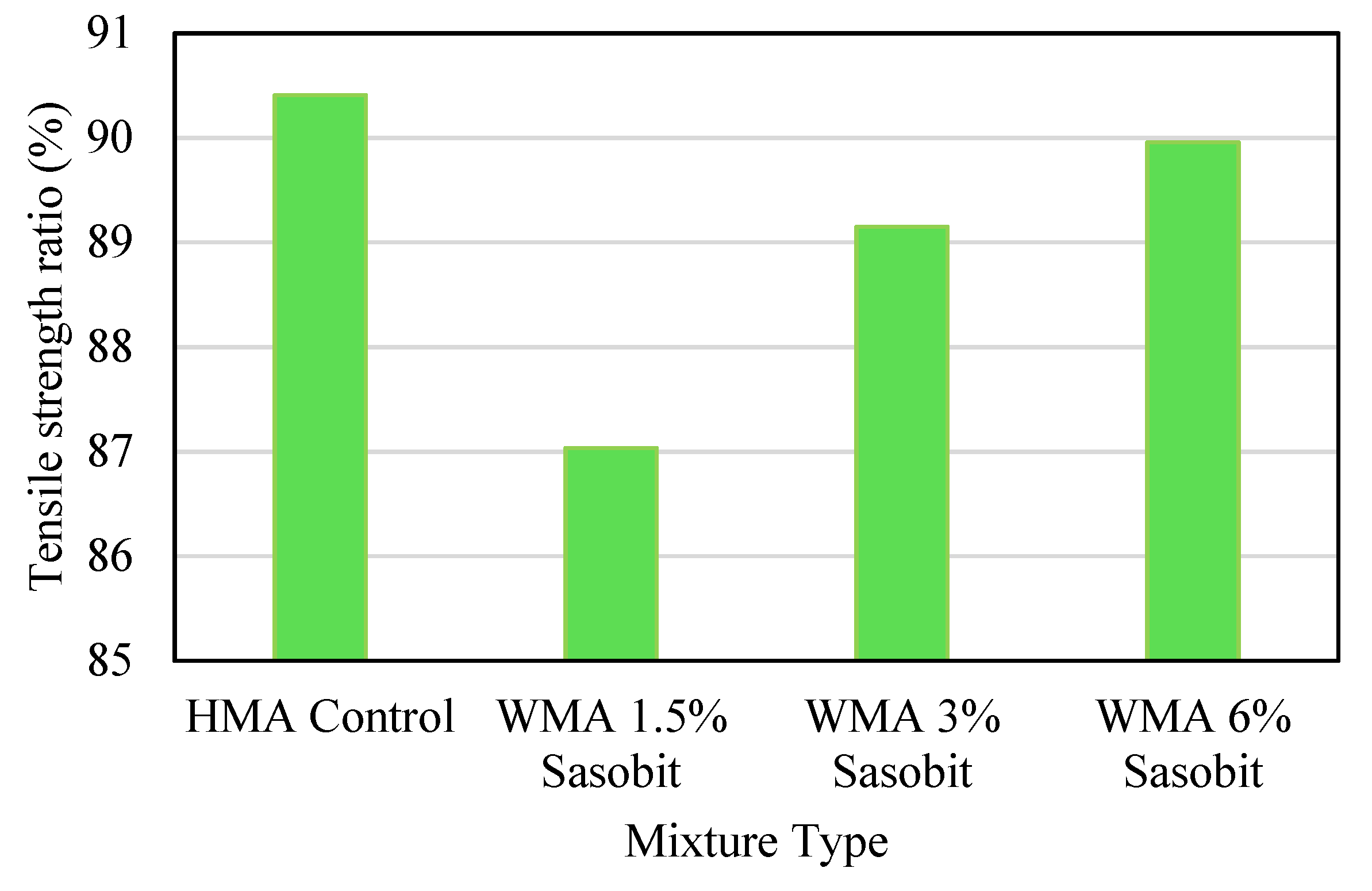
- TSR values were significantly lower in mixtures containing modified Sasobit bitumen than HMA. Adding 1.5–6% of Sasobit in WMA reduces the ITS values for the unconditional and conditional samples by about 2.6–4.7% and 2.8–3.1%, respectively.
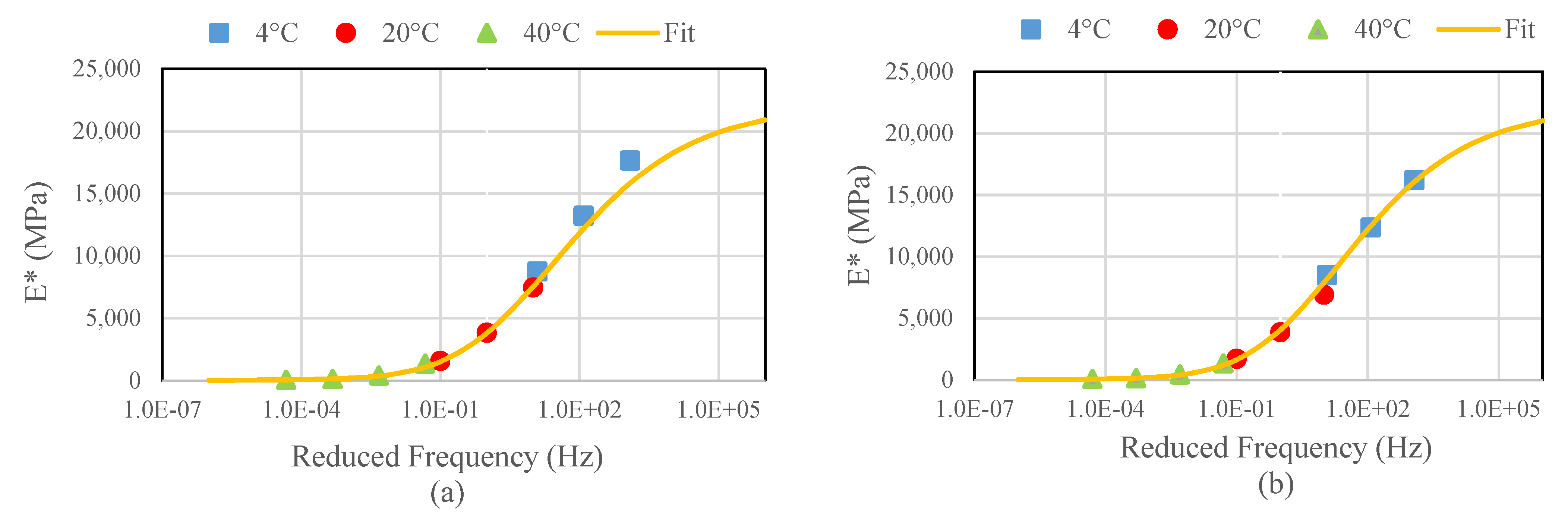
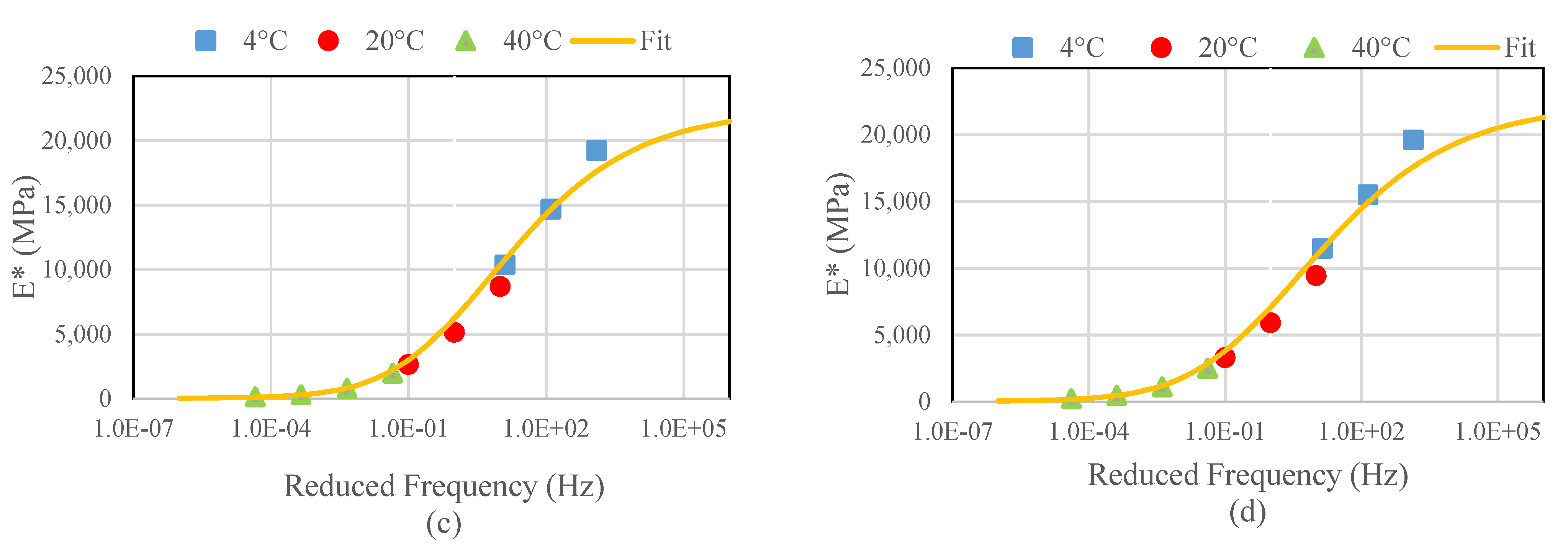
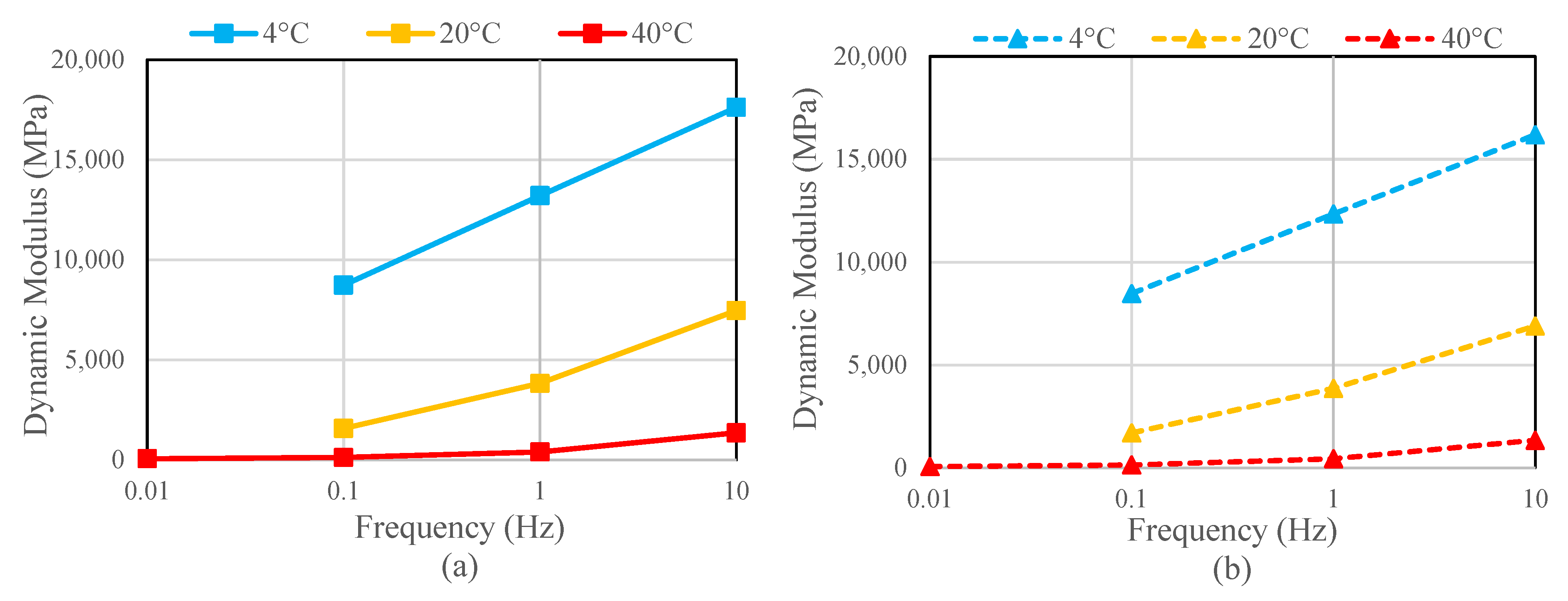
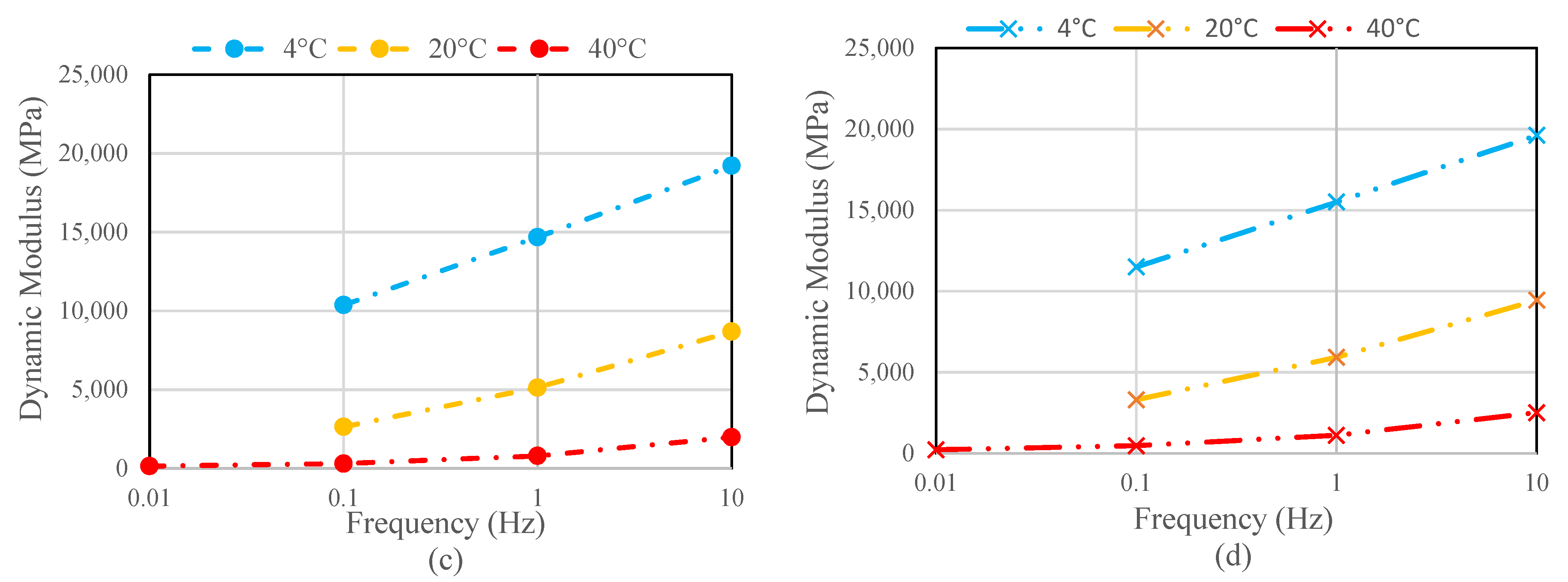
- The dynamic modulus values decrease significantly with increasing temperature, while increasing frequency improves dynamic modulus. At low temperatures, regardless of the frequency level, the dynamic modulus has the highest value in WMA with 6% Sasobit.
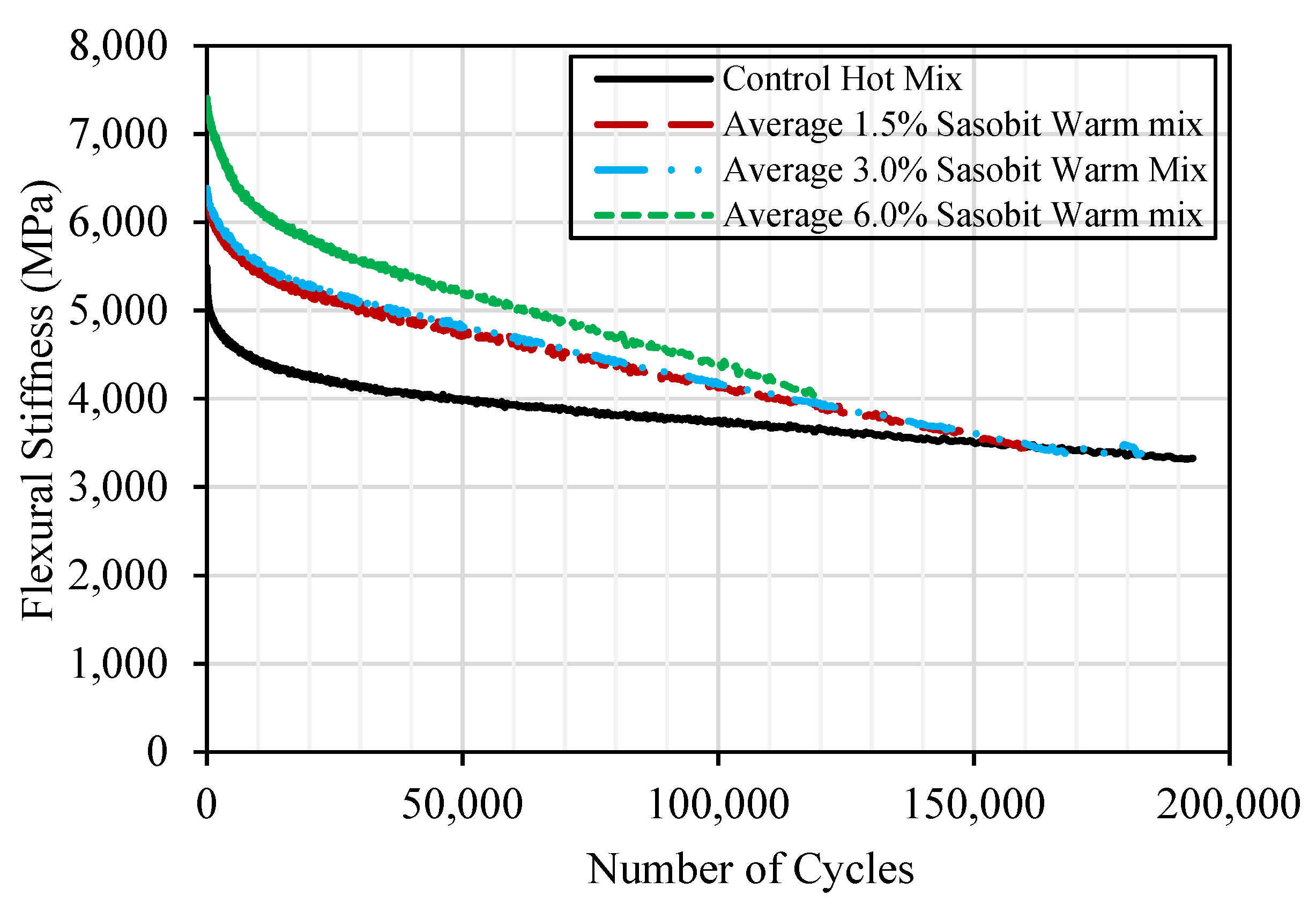
- HMA control and WMA with 1.5% Sasobit had the best fatigue-resistance performance. Increasing the percentage of Sasobit in WMA increases the flexural stiffness but reduces the number of cycles due to fatigue. Initial bending stiffness values were obtained by adding 1.5, 3, and 6% of Sasobit in WMA mixtures to increase flexural stiffness 18, 19, and 39%, respectively, compared to the control HMA.
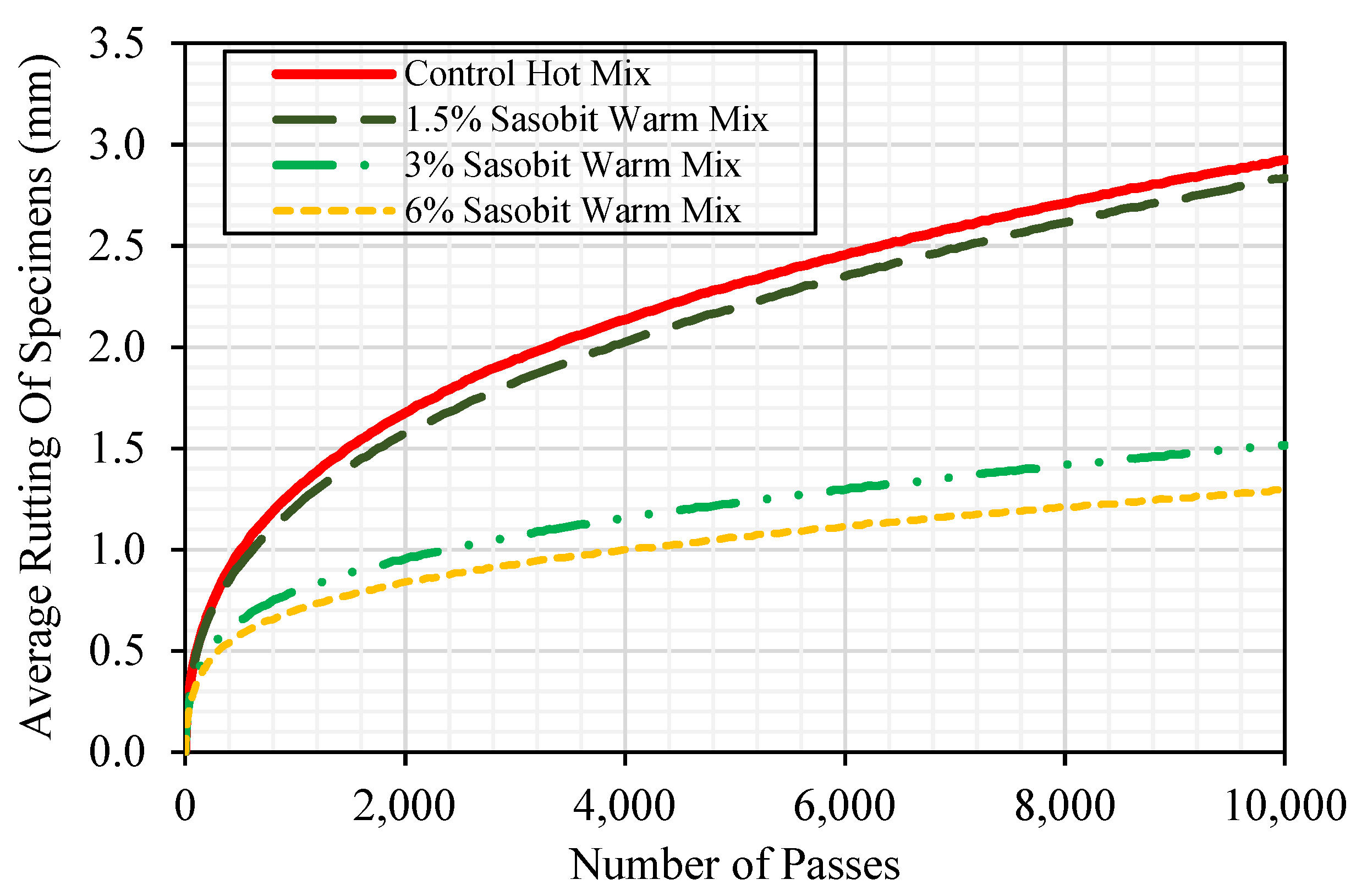
- For rutting, the addition of Sasobit up to 1.5% does not have a considerable impact. However, higher Sasobit for 6% causes a significant rutting improvement due to formation of a lattice structure inside asphalt matrix.
Author Contributions
Funding
Data Availability Statement
Conflicts of Interest
References
- Jamshidi, A.; Hamzah, M.O.; You, Z. Performance of Warm Mix Asphalt containing Sasobit®: State-of-the-art. Constr. Build. Mater. 2013, 38, 530–553. [Google Scholar] [CrossRef]
- Man, J.; Yan, K.; Miao, Y.; Liu, Y.; Yang, X.; Diab, A.; You, L. 3D Spectral element model with a space-decoupling technique for the response of transversely isotropic pavements to moving vehicular loading. Road Mater. Pavement Des. 2021. [Google Scholar] [CrossRef]
- Li, L.; Zhang, Z.; Wang, Z.; Wu, Y.; Dong, M.; Zhang, Y. Coupled thermo-hydro-mechanical response of saturated asphalt pavement. Constr. Build. Mater. 2021, 283, 122771. [Google Scholar] [CrossRef]
- Kheradmand, B.; Muniandy, R.; Hua, L.T.; Yunus, R.; Solouki, A. An overview of the emerging warm mix asphalt technology. Int. J. Pavement Eng. 2012, 15, 79–94. [Google Scholar] [CrossRef]
- Ayazi, M.J.; Moniri, A.; Barghabany, P. Moisture susceptibility of warm mixed-reclaimed asphalt pavement containing Sasobit and Zycotherm additives. Pet. Sci. Technol. 2017, 35, 890–895. [Google Scholar] [CrossRef]
- Cheraghian, G.; Falchetto, A.C.; You, Z.; Chen, S.; Kim, Y.S.; Westerhoff, J.; Moon, K.H.; Wistuba, M.P. Warm mix asphalt technology: An up to date review. J. Clean. Prod. 2020, 268, 122128. [Google Scholar] [CrossRef]
- Caputo, P.; Abe, A.A.; Loise, V.; Porto, M.; Calandra, P.; Angelico, R.; Rossi, C.O. The Role of Additives in Warm Mix Asphalt Technology: An Insight into Their Mechanisms of Improving an Emerging Technology. Nanomaterials 2020, 10, 1202. [Google Scholar] [CrossRef]
- Damm, K.L. Asphalt flow improvers—A new technology for reducing mixing temperature of asphalt concrete mixes with high restistance against permanent deformation. In Proceedings of the Sixth International RILEM Symposium on Performance Testing and Evaluation of Bituminous Materials, Zurich, Switzerland, 14–16 April 2003; p. 520. [Google Scholar]
- Wasiuddin, N.; Saltibus, N.; Mohammad, L. Effects of a Wax-Based Warm Mix Additive on Cohesive Strengths of Asphalt Binders. In Proceedings of the Transportation and Development Institute Congress 2011, Chicago, IL, USA, 13–16 March 2011; pp. 528–537. [Google Scholar]
- Rubio, M.C.; Martínez, G.; Baena, L.; Moreno, F. Warm mix asphalt: An overview. J. Clean. Prod. 2012, 24, 76–84. [Google Scholar] [CrossRef]
- Zhang, J.; Yang, F.; Pei, J.; Xu, S.; An, F. Viscosity-temperature characteristics of warm mix asphalt binder with Sasobit®. Constr. Build. Mater. 2015, 78, 34–39. [Google Scholar] [CrossRef]
- Hurley, G. Evaluation of New Technologies for Use in Warm Mix Asphalt. Doctoral Dissertation, Auburn University, Auburn, AL, USA, 2006. [Google Scholar]
- Hurley, G.C.; Prowell, B.D. Evaluation of Sasobit for use in warm mix asphalt. NCAT Rep. 2005, 5, 1–27. [Google Scholar]
- Zhao, G.-J.; Guo, P. Workability of Sasobit Warm Mixture Asphalt. Energy Procedia 2012, 16, 1230–1236. [Google Scholar] [CrossRef] [Green Version]
- Liu, J.; Li, P. Low Temperature Performance of Sasobit-Modified Warm-Mix Asphalt. J. Mater. Civ. Eng. 2012, 24, 57–63. [Google Scholar] [CrossRef]
- Liu, J.; Saboundjian, S.; Li, P.; Connor, B.; Brunette, B. Laboratory Evaluation of Sasobit-Modified Warm-Mix Asphalt for Alaskan Conditions. J. Mater. Civ. Eng. 2011, 23, 1498–1505. [Google Scholar] [CrossRef]
- Raveesh, J.; Dhumagond, R.; Bijjur, S. Experimental Study of WMA by Using Sasobit Additive. Int. J. Appl. Eng. Res. 2018, 13, 163–165. [Google Scholar]
- Sobhi, S.; Yousefi, A.; Behnood, A. The effects of Gilsonite and Sasobit on the mechanical properties and durability of asphalt mixtures. Constr. Build. Mater. 2020, 238, 117676. [Google Scholar] [CrossRef]
- Main Roads Western Australia. Sampling procedures for Aggregates. Test Method WA 732. Document No. 71/04/733. 2012. Available online: http://www.mainroads.wa.gov.au (accessed on 24 March 2022).
- Jones, D. Warm-Mix Asphalt Study: Field Test Performance Evaluation. 2013. Available online: https://escholarship.org/uc/item/4bp7602f (accessed on 24 March 2022).
- Shell, B. The Shell Bitumen Handbook; Thomas Telford Publishing: London, UK, 2003. [Google Scholar]
- Austroads. Guide to Pavement Technology: Part 4F: Bituminous Binders. Publication No AGPT04F/08. 2008. Available online: https://austroads.com.au/publications/pavement/agpt04f-08 (accessed on 24 March 2022).
- Australian Standards. Methods of Sampling and Testing Asphalt—Determination of the Resilient Modulus of Asphalt—Indirect Tensile Method. 1995. Available online: https://www.saiglobal.com/PDFTemp/Previews/OSH/As/as2000/2800/2891131.PDF (accessed on 24 March 2022).
- Australian Standard 2891: Methods of Sampling and Testing Asphalt: AS 2891.9 Determination of Bulk Density of Compacted Asphalt: AS 2891.9.2-1993 Presaturation Method. Available online: https://infostore.saiglobal.com/en-au/standards/as-2891-9-2-1993-123539_saig_as_as_259566/ (accessed on 1 March 2022).
- Amini, A.; Goli, A.; Ziari, H. The influence of nanoclay on the performance properties and moisture susceptibility of rubberized asphalt mixture. Pet. Sci. Technol. 2017, 35, 175–182. [Google Scholar] [CrossRef]
- American Association of State Highway and Transportation Officials. “Determining Dynamic Modulus of Hot Mix Asphalt” (HMA) TP 62-AASHTO Provisional Standards. 2003. Available online: https://downloads.transportation.org/hm-33tableofcontents.pdf (accessed on 20 March 2022).
- Mohajerani, A.; Tanriverdi, Y.; Nguyen, B.T.; Wong, K.K.; Dissanayake, H.N.; Johnson, L.; Whitfield, D.; Thomson, G.; Alqattan, E.; Rezaei, A. Physico-mechanical properties of asphalt concrete incorporated with encapsulated cigarette butts. Constr. Build. Mater. 2017, 153, 69–80. [Google Scholar] [CrossRef]
- R. Group. Commentary to Ag: Pt/T233—Fatigue Life of Compacted Bituminous Mixes Subject to Repeated Flexural Bending Sample Preparation—Fatigue Life of Compacted Bituminous Mixes Subject to Repeated Flexural Bending. 2006, pp. 1–17. Available online: https://www.yumpu.com/en/document/read/34206978/commentary-to-agpt-t233-fatigue-life-of-compacted-austroads (accessed on 24 March 2022).
- Asphalt, A.; Asphalt, N.; Pavement, A.; R. Group. Commentary to Ag: Pt/T231—Deformation Resistance of Asphalt Mixtures by the Wheel Tracking Test Deformation Resistance of Asphalt Mixtures by the Weel Tracking Test. 2006, pp. 1–11. Available online: https://docplayer.net/43395669-Commentary-to-ag-pt-t231-deformation-resistance-of-asphalt-mixtures-by-the-wheel-tracking-test.html (accessed on 15 February 2022).
- Austroads. Guide to Pavement Technology Part 2: Pavement Structural Design. Austroads Technical Report No. AGPT02—Sydney, NSW, Australia. 2012. Available online: https://www.researchgate.net/profile/Atousa-Khazaie-2/post/How_to_use_of_empirical_design_charts_for_granular_pavement_design/attachment/616d8de6f5675b211b09ce60/AS%3A1080277778595924%401634569701564/download/AGPT02-17_Guide_to_Pavement_Technology_Part_2_Pavement_Structural_Design.pdf (accessed on 24 March 2022).
- Gong, J.; Liu, Y.; Wang, Q.; Xi, Z.; Cai, J.; Ding, G.; Xie, H. Performance evaluation of warm mix asphalt additive modified epoxy asphalt rubbers. Constr. Build. Mater. 2019, 204, 288–295. [Google Scholar] [CrossRef]
- Behroozikhah, A.; Morafa, S.H.; Aflaki, S. Investigation of fatigue cracks on RAP mixtures containing Sasobit and crumb rubber based on fracture energy. Constr. Build. Mater. 2017, 141, 526–532. [Google Scholar] [CrossRef]
- Ghuzlan, K.A.; Ar’Ar, O.S. Performance of warm asphalt mixtures using Sasobit. Pet. Sci. Technol. 2016, 34, 1263–1271. [Google Scholar] [CrossRef]
- Behbahani, H.; Ayazi, M.J.; Moniri, A. Laboratory investigation of rutting performance of warm mix asphalt containing high content of reclaimed asphalt pavement. Pet. Sci. Technol. 2017, 35, 1556–1561. [Google Scholar] [CrossRef]
- Amelian, S.; Manian, M.; Abtahi, S.M.; Goli, A. Moisture sensitivity and mechanical performance assessment of warm mix asphalt containing by-product steel slag. J. Clean. Prod. 2018, 176, 329–337. [Google Scholar] [CrossRef]
- Fakhri, M.; Ghanizadeh, A.R.; Omrani, H. Comparison of Fatigue Resistance of HMA and WMA Mixtures Modified by SBS. Procedia-Soc. Behav. Sci. 2013, 104, 168–177. [Google Scholar] [CrossRef] [Green Version]
- Goh, S.W.; You, Z. Warm Mix Asphalt Using Sasobit in Cold Region. In Cold Regions Engineering 2009; American Society of Civil Engineers: Reston, VA, USA, 2009; pp. 288–298. [Google Scholar]
- Zelelew, H.; Paugh, C.; Corrigan, M.; Belagutti, S.; Ramakrishnareddy, J. Laboratory evaluation of the mechanical properties of plant-produced warm-mix asphalt mixtures. Road Mater. Pavement Des. 2012, 14, 49–70. [Google Scholar] [CrossRef]
- Alinezhad, M.; Sahaf, A. Investigation of the fatigue characteristics of warm stone matrix asphalt (WSMA) containing electric arc furnace (EAF) steel slag as coarse aggregate and Sasobit as warm mix additive. Case Stud. Constr. Mater. 2019, 11, e00265. [Google Scholar] [CrossRef]
- Mashaan, N.S.; Chegenizadeh, A.; Nikraz, H.; Rezagholilou, A. Investigating the engineering properties of asphalt binder modified with waste plastic polymer. Ain Shams Eng. J. 2021, 12, 1569–1574. [Google Scholar] [CrossRef]
- Mashaan, N.S.; Rezagholilou, A.; Nikraz, H. Waste Plastic as Additive in Asphalt Pavement Reinforcement: A review. In Proceedings of the 18th AAPA International Flexible Pavements Conference & Exhibition, Sydney, NSW, Australia, 18–21 August 2019. [Google Scholar]
- Rigabadi, A.; Herozi, M.R.Z.; Rezagholilou, A. An attempt for development of pavements temperature prediction models based on remote sensing data and artificial neural network. Int. J. Pavement Eng. 2021. [Google Scholar] [CrossRef]
- Mabrouk, G.M.; Elbagalati, O.S.; Dessouky, S.; Fuentes, L.; Walubita, L.F. 3D-finite element pavement structural model for using with traffic speed deflectometers. Int. J. Pavement Eng. 2021. [Google Scholar] [CrossRef]
- Rezagholilou, A.; Nikraz, H. Main Cause of Deterioration in Wet–Dry Test Method on Base Course Material. J. Mater. Civ. Eng. 2020, 32, 06020001. [Google Scholar] [CrossRef]
- Rezagholilou, A.; Papadakis, V.G.; Nikraz, H. Rate of carbonation in cement modified base course material. Constr. Build. Mater. 2017, 150, 646–652. [Google Scholar] [CrossRef]





| Test Description | Value | Test Standard |
|---|---|---|
| Los Angeles abrasion: granite and other rock types Basalt | 35% Maximum 25% Maximum | WA 220.1-2012 |
| Flakiness index | 35% Maximum | WA 216.1-2016 |
| Water absorption | 2% Maximum | AS 1141.6.1 |
| Wet strength | 100 kN minimum | AS 1141.22 |
| Wet/Dry strength variation | 35% Maximum | AS 1141.22 |
| Stripping test value | 10% Maximum | AS 1141.50 |
| Degradation factor | 50 minimum | AS1141.25.2 |
| Secondary mineral content | 25% maximum | AS 1141.26 |
| Petrographic examination | Statement of suitability for use as an asphalt aggregate | - |
| Test Description | Min | Max | Test Standard |
|---|---|---|---|
| Viscosity at 60 °C, Pa.s | 260 | 380 | AS 2341.2 AS 2341.3 |
| Viscosity at 135 °C, Pa.s | 0.4 | 0.65 | AS 2341.2 AS 2341.3 AS 2341.4 |
| Penetration at 25 °C, (100 g, 5 s), pu (1 pu = 0.1 mm) | 40 | - | AS 2341.12 |
| Density at 15 °C, kg/m3 | 1000 | - | AS 2341.7 |
| Flash Point, °C | 250 | - | AS 2341.14 |
| Matter insoluble in toluene, percent | - | 1 | AS 2341.8 |
| Bitumen Type | C320 | C320 Modified 1.5% Sasobit | C320 Modified 3% Sasobit | C320 Modified 6% Sasobit | |
|---|---|---|---|---|---|
| Test Discerption | Test Standard | Values | |||
| Dynamic viscosity at 60 °C () | AS 2341.2 | 289 | 1510 | - | - |
| Kinematic viscosity at 135 °C (/s) | AS2341.2 AS 2341.4 | 0.553 | 0.516 | 0.4483 | 0.575 |
| Softening point (°C) | AS 2341.18–1992 | 56.1 | 65.7 | 82.15 | 92.75 |
| Test Description | Min | Max | Test Standard |
|---|---|---|---|
| Viscosity of residue at 60 °C as percentage of original | - | 300 | AS 2341.2 AS 2341.3 |
| Ductility at 15 °C, mm | N/A | AS 2341.11 | |
| Durability value | N/A | AS/NZS 2341.13 WA 716.1 |
| Mixes Type | Specimen N | Average Rise Time (ms) | Average Force (N) | Average of Five Pulses (MPa) | Standard Deviation (MPa) | Average Resilient Modulus (MPa) | Sasobit Effects Compared to HMA Mix |
|---|---|---|---|---|---|---|---|
| HMA Control | 1 | 24 | 1822 | 4397 | 310.9 | 4472 | - |
| 2 | 37 | 2068 | 4814 | ||||
| 3 | 39 | 1784 | 4206 | ||||
| WMA 1.5% Sasobit | 1 | 18 | 1984 | 4061 | 606.7 | 4490 | 0.4% |
| 2 | 31 | 2102 | 4919 | ||||
| WMA 3% Sasobit | 1 | 37 | 2436 | 5370 | 84.5 | 5286 | 18.2% |
| 2 | 43 | 2467 | 5286 | ||||
| 3 | 42 | 2425 | 5201 | ||||
| WMA 6% Sasobit | 1 | 37 | 3364 | 6611 | 235.8 | 6835 | 52.8% |
| 2 | 41 | 3231 | 6812 | ||||
| 3 | 36 | 348 | 7081 |
| Binder Type | 10 mm | 14 mm | 20 mm | |||
|---|---|---|---|---|---|---|
| Range | Typical | Range | Typical | Range | Typical | |
| Class 170 | 2000–6000 | 3500 | 2500–4000 | 3700 | 2000–4500 | 3300 |
| Class 320 | 300–6000 | 4500 | 2000–7000 | 5000 | 3000–7500 | 5200 |
| Class 600 | 3300–5000 | 6000 | 4000–9000 | 6500 | 4000–9500 | 7000 |
| Multigrade | 1500–5000 | 4500 | 3000–7000 | 5000 | 4000–7000 | 5500 |
| SBS | 1500–4000 | 2200 | 2000–4500 | 2500 | 3000–7000 | 3000 |
| EVA | – | – | 3000–6000 | 5600 | – | – |
| Test Method Used | HMA Control | WMA 1.5% Sasobit | WMA 3.0% Sasobit | WMA 6.0% Sasobit | Specification |
|---|---|---|---|---|---|
| Dry set air voids (%) (Average of 3 tests) | 8.1 | 8 | 7.9 | 8.1 | - |
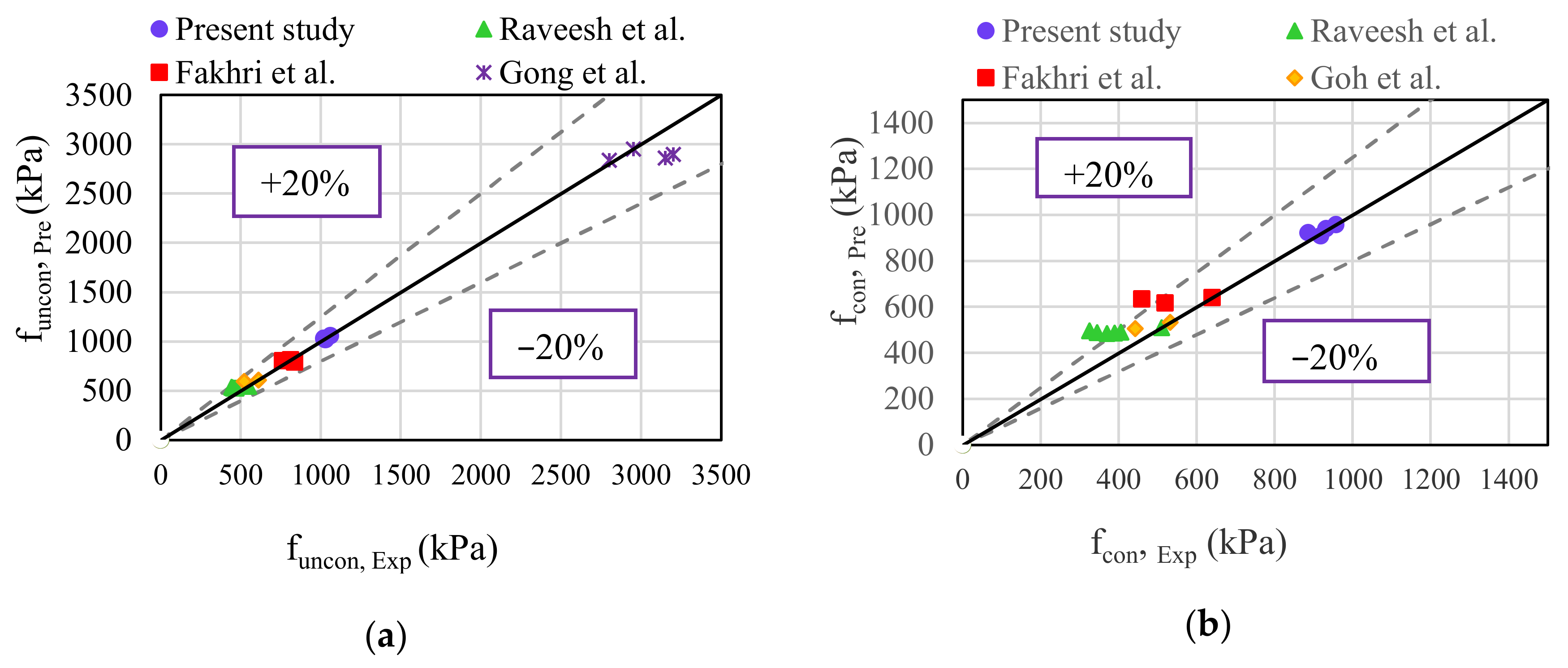
| Dry tensile strength at 25 °C (kPa) (Average of 3 tests) | 1058.3 | 1018.2 | 1029.3 | 1036.5 | 850 |
| Standard deviation (kPa) | 50 | 23 | 45 | 34 | |
| Wet set air voids (%) (Average of 3 tests) | 7.9 | 8.2 | 8 | 8.1 | - |
| Wet tensile strength at 25 °C (kPa) (Average of 3 tests) | 956.8 | 886.2 | 917.6 | 932.4 | 750 |
| Standard deviation (kPa) | 32 | 43 | 37 | 59 | |
| Tensile Strength ratio (%) | 90.4 | 87.0 | 89.1 | 90 | 80.0 |
| Mixes Type | δ | ||||||||||
|---|---|---|---|---|---|---|---|---|---|---|---|
| HMA Control | 2.71 | 1.66 | −2.68 | −0.03 | 0.12 | 0.0073 | 20 | 4 | 10 | −0.50432 | −0.05 |
| WMA 1.5% Sasobit | 2.71 | 1.66 | −2.68 | −0.03 | 0.12 | 0.0073 | 20 | 4 | 10 | −0.50432 | −0.05 |
| WMA 3.0% Sasobit | 3.08 | 1.46 | −1.58 | −0.0051 | 0.12 | 0.0073 | 20 | 4 | 10 | −0.50432 | −0.05 |
| WMA 6.0% Sasobit | 3.08 | 1.46 | −1.58 | −0.0051 | 0.12 | 0.0073 | 20 | 4 | 10 | −0.50432 | −0.05 |
| Mixes Type | Temperature (˚C) | Dynamic Modulus (MPa) | ||
|---|---|---|---|---|
| 0.1 (Hz) | 1 (Hz) | 10 (Hz) | ||
| HMA Control | 4 | 8732.7 | 13,208.6 | 17,621.9 |
| 20 | 1572.9 | 3829.4 | 7464.2 | |
| 40 | 125.6 | 399.9 | 1356.1 | |
| WMA 1.5% Sasobit | 4 | 8478.8 | 12,346.2 | 16,191.5 |
| 20 | 1701 | 3866.3 | 6898.9 | |
| 40 | 144.8 | 447.9 | 1347.7 | |
| WMA 3.0% Sasobit | 4 | 10,375.8 | 14,687.5 | 19,214.1 |
| 20 | 2646.5 | 5138.8 | 8687 | |
| 40 | 312.7 | 803.7 | 1990.6 | |
| WMA 6.0% Sasobit | 4 | 11,495.4 | 15,499.7 | 19,611.2 |
| 20 | 3311.7 | 5923.2 | 9451.2 | |
| 40 | 474.7 | 1119.2 | 2516.9 | |
| Mixes | Beam N | Air Voids (%) | Initial Flexural Stiffness (MPa) | Termination Stiffness (50% of the Initial Stiffness (MPa)) | Cycle Count of 1,000,000 |
|---|---|---|---|---|---|
| HMA Control | 1 | 5.2 | 5296 | 2648 | 220,990 |
| HMA Control | 2 | 5.3 | 5115 | 2557 | 473,310 |
| HMA Control | 3 | 4.9 | 5617 | 2809 | 457,630 |
| Average | 5 | 5343 | 2671 | 383,977 | |
| Standard deviation | 0.2 | 254.2 | 127.6 | 141,368.2 | |
| WMA Sasobit (1.5%) | 1 | 5 | 6474 | 3237 | 192,270 |
| WMA Sasobit (1.5%) | 2 | 4.8 | 6220 | 3110 | 151,940 |
| WMA Sasobit (1.5%) | 3 | 4.9 | 6138 | 3069 | 196,700 |
| Average | 5 | 6277 | 3139 | 180,303 | |
| Standard deviation | 0.1 | 175.2 | 87.6 | 24,663 | |
| WMA Sasobit (3.0%) | 1 | 5.1 | 6228 | 3114 | 182,210 |
| WMA Sasobit (3.0%) | 2 | 5.2 | 6369 | 3185 | 130,870 |
| WMA Sasobit (3.0%) | 3 | 5.1 | 6411 | 3205 | 180,400 |
| Average | 5 | 6336 | 3168 | 164,493 | |
| Standard deviation | 0.1 | 95.9 | 47.8 | 29,132.7 | |
| WMA Sasobit (6.0%) | 1 | 5 | 7825 | 3913 | 145,340 |
| WMA Sasobit (6.0%) | 2 | 4.9 | 7565 | 3783 | 106,080 |
| WMA Sasobit (6.0%) | 3 | 4.9 | 6834 | 3813 | 77,000 |
| Average | 5 | 7408 | 3836 | 109,473 | |
| Standard deviation | 0.1 | 513.8 | 68.1 | 34,296.1 | |
Publisher’s Note: MDPI stays neutral with regard to jurisdictional claims in published maps and institutional affiliations. |
© 2022 by the authors. Licensee MDPI, Basel, Switzerland. This article is an open access article distributed under the terms and conditions of the Creative Commons Attribution (CC BY) license (https://creativecommons.org/licenses/by/4.0/).
Share and Cite
Rezaeizadeh Herozi, M.; Valenzuela, W.; Rezagholilou, A.; Rigabadi, A.; Nikraz, H. New Models for the Properties of Warm Mix Asphalt with Sasobit. CivilEng 2022, 3, 347-364. https://doi.org/10.3390/civileng3020021
Rezaeizadeh Herozi M, Valenzuela W, Rezagholilou A, Rigabadi A, Nikraz H. New Models for the Properties of Warm Mix Asphalt with Sasobit. CivilEng. 2022; 3(2):347-364. https://doi.org/10.3390/civileng3020021
Chicago/Turabian StyleRezaeizadeh Herozi, Morteza, Wilfredo Valenzuela, Alireza Rezagholilou, Ali Rigabadi, and Hamid Nikraz. 2022. "New Models for the Properties of Warm Mix Asphalt with Sasobit" CivilEng 3, no. 2: 347-364. https://doi.org/10.3390/civileng3020021
APA StyleRezaeizadeh Herozi, M., Valenzuela, W., Rezagholilou, A., Rigabadi, A., & Nikraz, H. (2022). New Models for the Properties of Warm Mix Asphalt with Sasobit. CivilEng, 3(2), 347-364. https://doi.org/10.3390/civileng3020021