


Abstract
Public green spaces play a critical role in fostering social cohesion in rapidly industrializing cities. However, empirical research on how urban residents in non-Western contexts perceive, evaluate and use these spaces remains limited, particularly in Islamic industrial cities with distinct cultural practices and urban development patterns. This study examines determinants of visitor satisfaction in Coastal Park, Asaluyeh, a rapidly industrializing Persian Gulf city. The city’s industrial character, marked by acute green space scarcity and demographic imbalances due to workforce migration, provides a distinctive context for examining urban park dynamics in Iran’s petrochemical industrial zones. Using structured questionnaires and systematic field observations, we assess factors influencing park satisfaction and the role of the park in facilitating community bonds. Results reveal that vegetation quality shows the strongest association with visitor satisfaction (r = 0.45, p < 0.001), surpassing demographic characteristics in explanatory power. The park predominantly serves group-based activities, with family gatherings representing the dominant form of social interaction, reflecting cultural preferences for communal recreation. Significant disparities emerge across men and women in satisfaction levels and usage patterns. Temporal concentration during weekend evenings is driven by extreme daytime heat, while transportation barriers limit equitable access. Statistical analyses indicate weak correlations between demographic variables and satisfaction, underscoring the primacy of experiential factors in shaping visitor perceptions. The findings provide evidence-based recommendations for culturally sensitive park design in industrial Islamic cities, emphasizing the need for infrastructure, amenities, and improved public transport connectivity to ensure equitable access across diverse demographic groups.
1. Introduction
1.1. Background
Industrial activities in the oil and gas sectors, including extraction, processing, and distribution, are pivotal to global economies but often impose significant environmental and social costs on host urban areas [1]. In industrial cities, national economic priorities frequently overshadow local needs, leading to challenges such as population displacement, reduced social welfare, limited economic diversity, rapid urban expansion, pollution, public health issues, land value inflation, and resident dissatisfaction [2]. Amid these pressures, green spaces and urban parks emerge as vital urban assets, serving not only environmental but also social functions, fostering balanced urban development and enhancing residents’ quality of life [3].
The role of urban green spaces in mitigating the adverse effects of industrialization has gained increasing scholarly attention over the past decade [4,5], and indirect benefits via ecosystem services such as air quality regulation and thermal comfort [6]. International research has established that green spaces function as more than decorative or recreational features; they represent essential elements of sustainable urban development [7]. Recent studies in Middle Eastern industrial cities confirm that green spaces are critical for mitigating pollution, reducing urban heat island effects, and providing essential venues for community building in migrant-heavy populations [8,9]. Kaplan’s Restorative Environment Theory (1995) provides a theoretical foundation for understanding these benefits, emphasizing that natural landscapes facilitate mental restoration by offering calming sensory stimuli, thereby reducing stress and promoting psychological well-being [10]. Regular access to such environments encourages physical activity and social interaction, which in turn enhances social cohesion and community resilience [11,12,13]. In rapidly industrializing contexts, these benefits become particularly critical as green spaces can counteract adverse urbanization effects such as air pollution, urban heat islands, and social fragmentation [14,15].
Research has also demonstrated that the effectiveness of urban green spaces depends significantly on design quality, accessibility, and perceived safety [16,17]. Factors such as vegetation layout, spatial openness, pathway connectivity, and maintenance standards influence user satisfaction and frequency of use [7,18]. However, despite this growing body of evidence, most studies have concentrated on Western urban contexts, with limited attention to rapidly developing industrial cities in the Middle East and South Asia. Furthermore, existing research has predominantly focused on the physical presence and spatial distribution of green spaces rather than on subjective user perceptions and social experiences [19,20]. Recent systematic reviews underscore the need for studies exploring how urban residents perceive, evaluate, and utilize green spaces, particularly in non-Western settings where cultural practices and urban development patterns differ markedly from those in Europe and North America [21].
In the Iranian context, this research gap becomes particularly pronounced and consequential for planning. Iran’s industrial cities, such as Asaluyeh, have experienced rapid urbanization driven primarily by energy sector development, often with minimal consideration for environmental amenities and social infrastructure. The scarcity of research addressing green space provision in Iranian industrial cities represents a significant knowledge gap with direct planning implications. Asaluyeh exemplifies these challenges: it suffers from an acute green space deficit (≈0.44 m2 per capita, far below Iran’s national standard of 7–12 m2), an extreme coastal climate with summer temperatures exceeding 45 °C, and a highly imbalanced demographic profile dominated by a transient male workforce (≈76% male). These combined conditions, environmental harshness, social fragmentation due to labor migration, and severe recreational scarcity—create a distinctive context where urban parks are not merely amenities but critical infrastructure for social cohesion, psychological respite, and public health. While motivations for park visits (e.g., connecting with nature, relaxation, socializing) show cross-contextual consistency [19,20], their manifestation in Islamic industrial cities undergoing rapid socio-economic and environmental transformation remains underexplored. This study directly addresses this gap by investigating which park characteristics most strongly influence user satisfaction and social interaction in such a demanding setting, where municipal resources are limited and evidence-based planning is urgently needed. In this context, Iranian parks, reflecting Islamic concepts of paradise with water features and greenery, play distinct cultural and social infrastructure roles [22,23].
1.2. Research Questions and Objectives
The critical gap addressed by this study is the absence of empirical, context-specific evidence on how urban parks in industrial Islamic cities support user satisfaction and everyday social interaction under challenging climatic, cultural, and demographic conditions. Consequently, this study investigates user satisfaction and social interactions in Coastal Park, Asaluyeh’s primary public green space. Unlike conventional urban parks developed within established residential neighbourhoods, Coastal Park serves a population shaped by industrial employment patterns and a predominantly transient workforce, making it a valuable case for understanding public green space use in resource-dependent cities. The research examines two interconnected dimensions of park performance. First, it assesses how residents perceive and evaluate their satisfaction with the park’s design features, accessibility, vegetation, and recreational amenities. Second, it explores how the park facilitates everyday social interactions and social connections within Asaluyeh’s unique industrial and cultural context, with implications for socially responsive urban planning in similar industrial settings. Asaluyeh’s severe green space deficit (mentioned in Section 2.1) poses a critical planning challenge: with limited municipal budgets, planners lack empirical evidence on which park characteristics most strongly influence user satisfaction in industrial Islamic urban contexts. Without understanding what drives positive park experiences among demographically diverse users facing extreme climatic conditions (as mentioned in Section 2.1, with a 76% male transient workforce), resource allocation decisions remain speculative. This study addresses this evidence gap by examining determinants of satisfaction and social interaction patterns in Asaluyeh’s existing parks. Specifically, this study seeks to address the following research questions:
- How do residents perceive and evaluate their satisfaction with urban green spaces in terms of design quality, accessibility, and recreational amenities in industrial city contexts?
- How do urban green spaces facilitate social connections in rapidly industrializing cities with diverse populations?
The primary objective of this research is to evaluate visitor satisfaction and assess the social functions of urban green spaces in an industrial city context. This paper specifically examines how experiential factors and user perceptions of environmental conditions influence park usage patterns and facilitate community interactions. By analyzing the relationships between park design features (such as vegetation quality or activities), accessibility conditions, demographic characteristics, and visitor satisfaction levels, this study aims to understand what drives positive park experiences in resource-dependent cities with unique population structures and cultural norms. The findings are expected to offer practical insights for urban planners and policymakers working to balance industrial development priorities with livability considerations in resource-dependent cities across Iran.
This article comprises four main sections followed by a conclusion. Following this introduction, Section 2 outlines the research methodology, data collection procedures, and analytical techniques. Section 3 presents empirical findings on park usage patterns, user satisfaction, and social interactions. Section 4 discusses these findings in relation to existing literature and explores implications for urban design practice and practical contributions. The conclusion offers key insights and actionable recommendations for urban green space planning in industrial urban contexts.
2. Materials and Methods
2.1. Study Area and Contextual Background
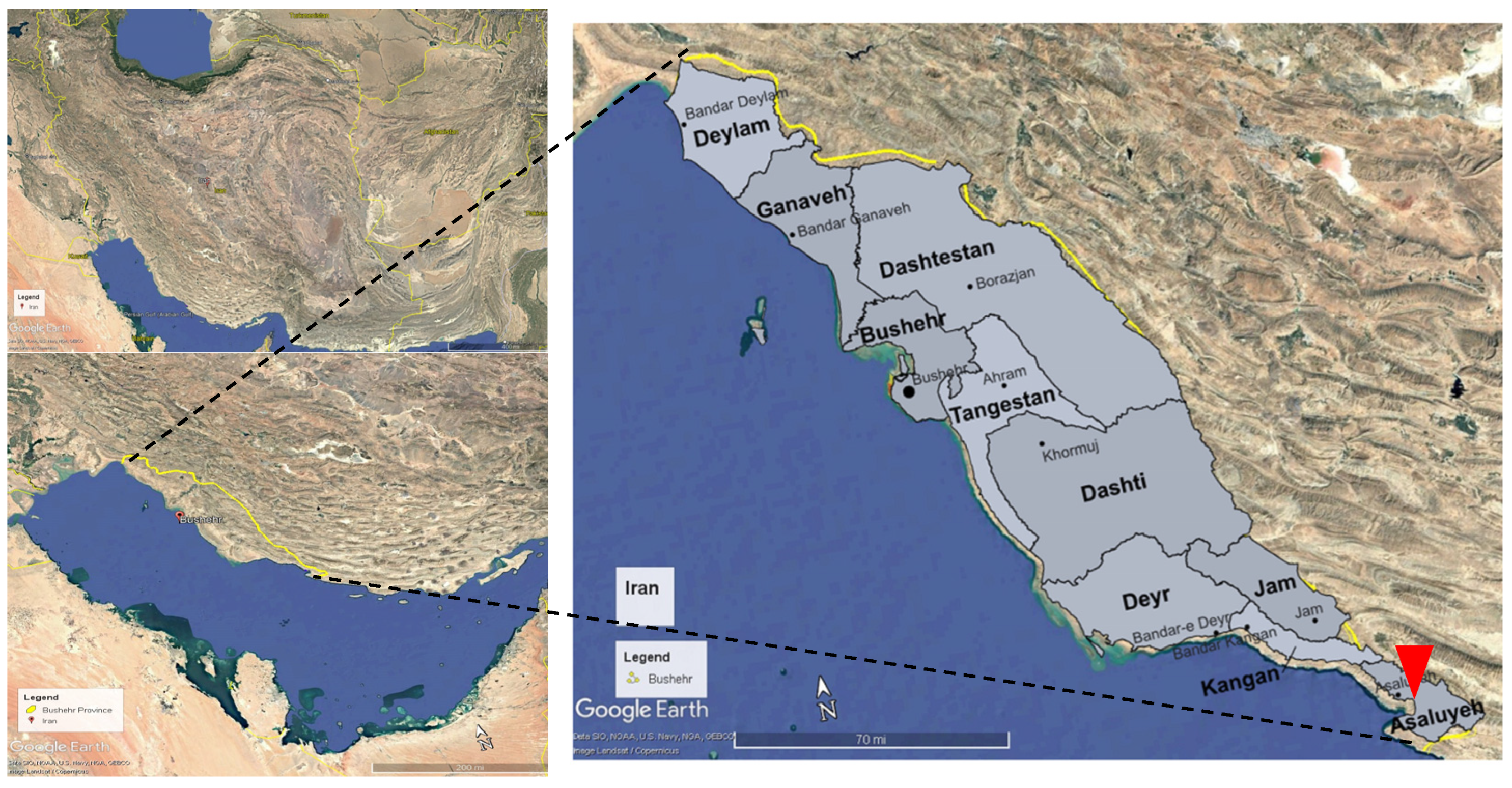
Asaluyeh is situated in Bushehr Province on Iran’s southern coast (approximately 27°28′ N, 52°37′ E) and serves as Iran’s foremost petrochemical and natural gas processing center, where industrial imperatives have fundamentally shaped urban development patterns since the late 1990s [21] (Figure 1). Its unique characteristics include an extreme coastal climate, a predominantly transient male workforce (approximately 76% male demographics), and minimal traditional urban infrastructure, making it an important case for understanding how industrial urbanization affects public space provision.
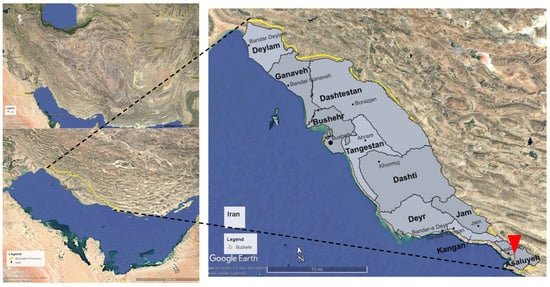
Figure 1.
(Left up) Location of Islamic Republic of Iran; (Left down) Location of Bushehr Province (yellow polygon) and (Right) Asaluyeh City (red triangle). Source: Satellite image © 2025 Google Earth.
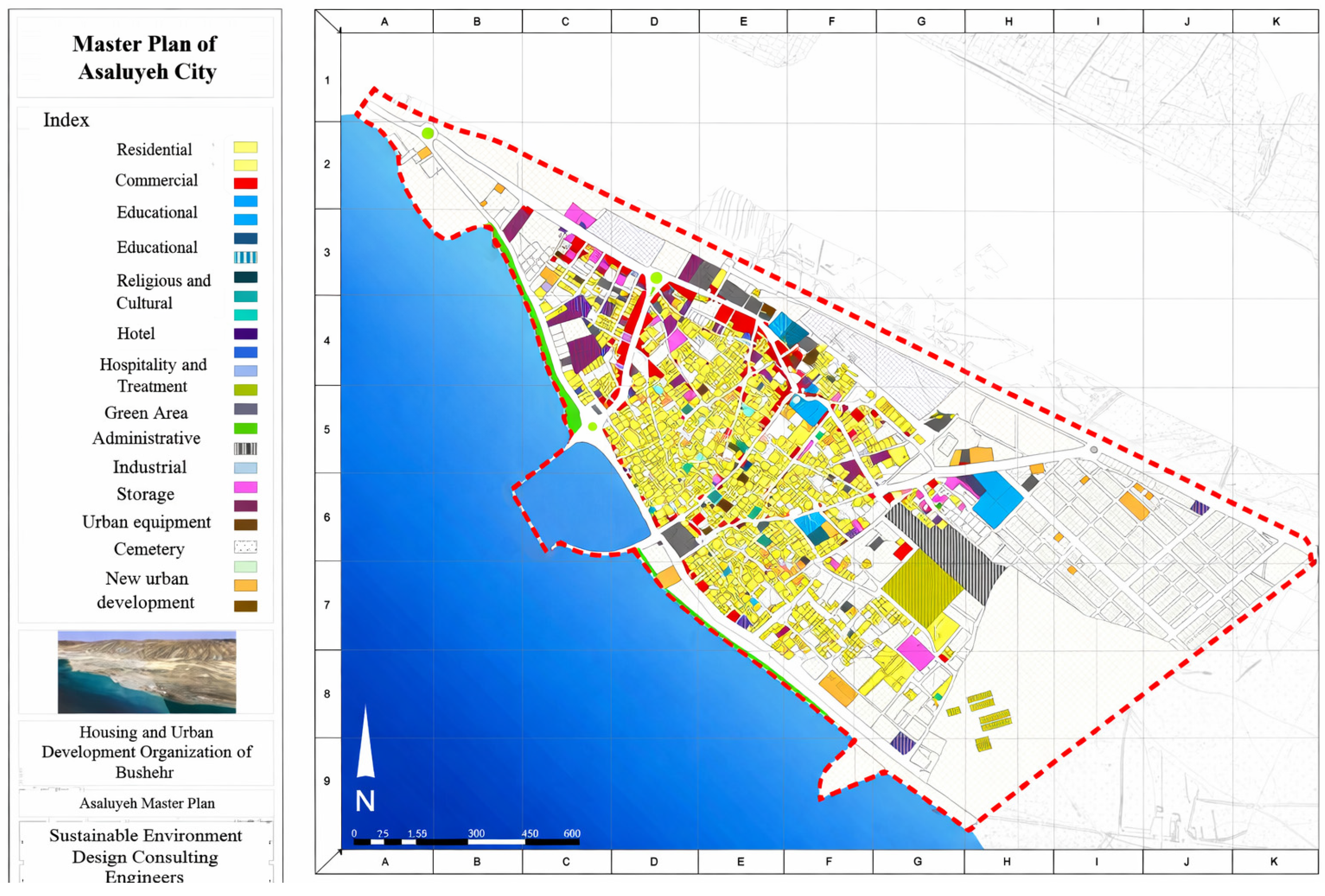
Analysis of the city’s master plan reveals a land use distribution dominated by residential functions within the urban core (Figure 2). Residential areas occupy approximately 65–75% of developed land creating a dense, compact urban fabric concentrated primarily in the central and southern coastal zones. Commercial land uses account for an estimated 10–15% of urban area, positioned near port facilities and main roads to serve both maritime logistics and local populations. However, the most striking characteristic of Asaluyeh’s land use pattern is the severe scarcity of green and recreational spaces. Urban green space accounts for only about 0.0068 km2 (6800 m2), representing approximately 0.14% of the estimated 5 km2 urban area. This minimal provision translates to an estimated per capita green space allocation of less than 3 m2 per resident, a figure that falls dramatically short of Iran’s national urban planning standard of 7–12 m2 per capita [24,25] and international guidelines recommending 9–15 m2 per capita [26]. This pronounced deficit in urban green spaces highlights the subordination of environmental amenities to residential and industrial land uses, a pattern characteristic of resource-dependent urban development contexts where economic imperatives overshadow quality of life considerations [27].
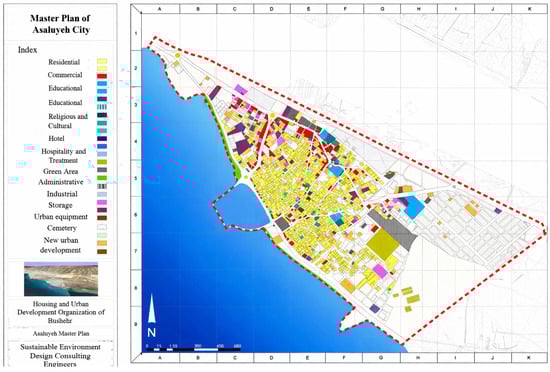
Figure 2.
Land Use Distribution in Asaluyeh City. Base map: Master Plan, Housing and Urban Development Organization of Bushehr Province (2025). Red dots indicate the urban area of the study region. Green space analysis: Authors’ calculations based on municipal planning documents (2025).
This constrained urban environment is further shaped by challenging climatic conditions and distinctive demographic characteristics that underscore the critical need for accessible green spaces. Climatically, Asaluyeh experiences extreme seasonal variation, with mild winters averaging approximately 14 °C and intensely hot summers during which temperatures regularly exceed 40 °C and occasionally reach 45–50 °C. Relative humidity remains consistently high throughout the year, typically ranging from 50% to 71% [28]. These combined conditions of extreme heat and high humidity create particularly challenging thermal environments for outdoor activities. This makes urban green spaces essential not merely for recreational amenities but for basic livability and public health.
2.2. Research Design and Timeline
This research adopts a mixed-methods approach, incorporating fieldwork, a questionnaire, and statistical analysis. The fieldwork was conducted from 6 to 16 October 2023, while the questionnaires were administered from 6 to 24 April 2024. In the first phase, a comprehensive fieldwork campaign was carried out to identify and characterize the existing urban green spaces in Asaluyeh. The objective, in addition to obtaining relevant information about the green areas, was to select the park or parks in which to conduct the interviews. The second phase involved designing and administering a structured questionnaire to assess user satisfaction and social functionality of the selected park.
2.2.1. Park Typology and Case Study Selection
Urban Park typologies typically classify green spaces by size and service radius. Established frameworks distinguish neighborhood parks (0.5–2 hectares), district parks (2–20 hectares), city parks (20–100 hectares), and metropolitan parks (exceeding 100 hectares) [29]. Research emphasizes the importance of such classifications in understanding how park characteristics influence usage patterns and accessibility [21]. However, such Western-derived frameworks do not fully accommodate spatial practices in Islamic cultural contexts, where park use is shaped not only by size and service radius but also by sociocultural norms governing privacy, gender relations, and family life.
In Islamic urban contexts, public space usage reflects distinct cultural norms that influence park design and usage patterns. Key characteristics include family-oriented recreation as the primary leisure form; concentrated evening/weekend usage aligned with family schedules and thermal comfort; and heightened significance of verdant spaces reflecting Islamic paradise garden concepts. These norms are particularly salient in industrial cities like Asaluyeh, where parks serve as primary venues for social cohesion amid disrupted traditional structures due to labor migration. In these settings, gender-segregated spaces and family-oriented facilities reflect distinct social and religious norms. This research applied a modified functional classification comprising three categories: Local Parks (small-scale green spaces embedded within residential neighborhoods, serving primarily nearby residents for daily recreational activities); City Parks (larger facilities offering diverse amenities and attracting users from across the urban area); and Specific Parks (gender-segregated spaces exclusively for women or mothers with young children, designed to accommodate Islamic privacy norms while providing recreational opportunities).
When assessing the role of public green spaces, two essential yet distinct dimensions, density and diversity, must be considered. Density refers to the number of users concentrated within a specific location, often indicating its attractiveness or popularity. In contrast, diversity reflects the range of social interactions and the variety of user experiences within these environments [30]. Scholars [22,31,32,33,34,35,36] emphasize park accessibility for diverse populations to fulfill their inclusive and social objectives. Accordingly, parks were classified using an adapted typology (City, Local, and Specific Parks) for the purpose of case selection. Subsequently, eligibility criteria were applied to guide the selection of the study case or cases. Accessibility: the park must be accessible to the general public and have a navigable layout; Inclusivity: the park must accommodate diverse user groups (age, gender, and cultural background); Popularity: the park must function as an active public space for social interaction and recreation.
Each identified site was evaluated against these criteria to determine its suitability as the main study location. Parks that did not meet all three criteria were excluded from further analysis.
2.2.2. Inventory and Characterization of Municipal Parks
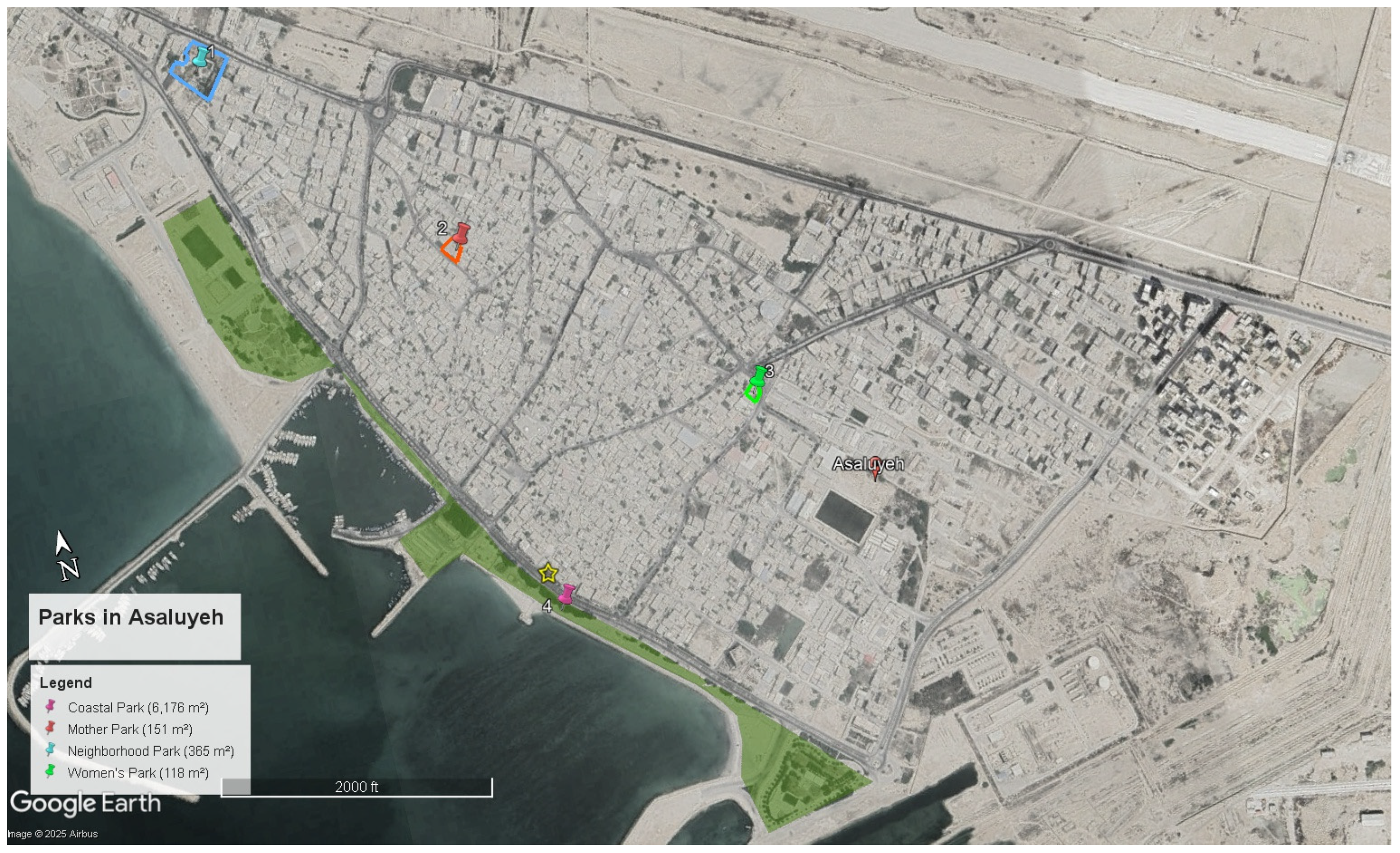
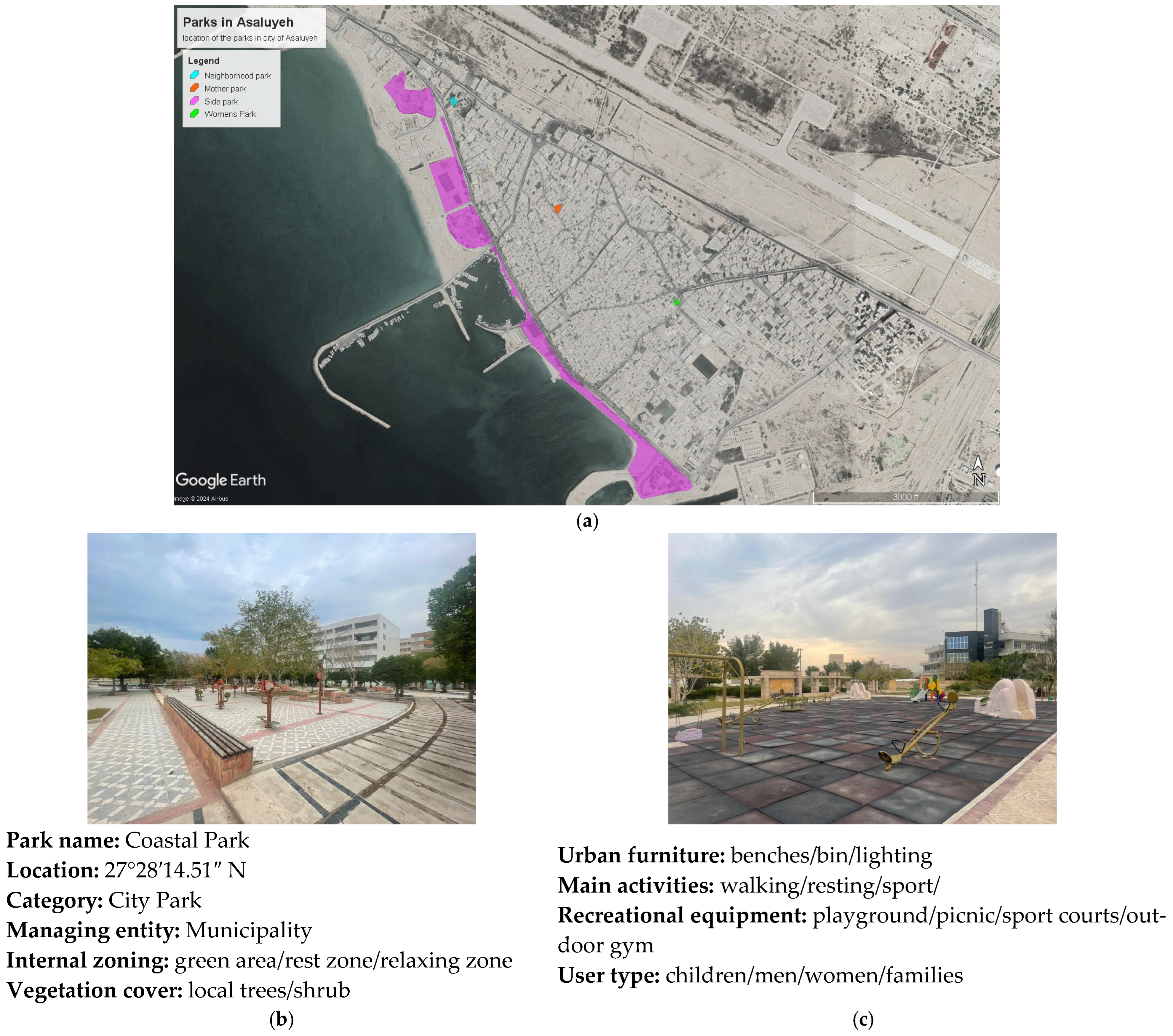
Systematic analysis of satellite imagery, Google Earth Pro (2024), combined with municipal cartographic data and field reconnaissance identified four discrete public green spaces within Asaluyeh’s urban boundary (Figure 3). These facilities collectively constitute the city’s entire public park infrastructure. Mother Park (151 m2) serves as a specialized facility for early childhood recreation. Located within a central residential district, this compact park targets toddlers and young children under eight years of age. Women’s Park (118 m2) functions as a gender-segregated facility accommodating Islamic cultural norms. Situated in a peripheral location to enhance privacy, this park provides a designated environment where women can engage in outdoor recreation. Neighborhood Park (365 m2) represents the most recently developed municipal facility, located within the northwestern residential zone. This local-scale park serves adjacent residential blocks. Coastal Park (6176 m2) constitutes Asaluyeh’s primary multifunctional recreational facility. As the city’s largest park, representing 91% of total municipal park area, and the only waterfront green space, Coastal Park offers diverse activity zones.
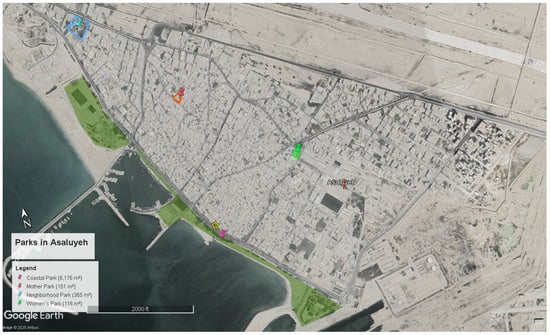
Figure 3.
Spatial Distribution of Public Green Spaces in Asaluyeh. The yellow star indicates the Coastal Park (6178 m2) in Asaluyeh. Base imagery: © 2024 Google Earth Pro (accessed 30 April 2025).
The spatial analysis of public green spaces in Asaluyeh provides critical insights into their distribution and accessibility within the city’s constrained urban landscape. The total green space ratio is approximately 0.14% of the estimated 5 km2 urban area, derived from the combined area of the four identified parks, totalling roughly 6800 m2. This results in a per capita park space of about 0.44 m2 per person for Asaluyeh’s 2020 population of 15,346, significantly below international standards such as the World Health Organization’s recommendation of 9 m2 per capita for urban green spaces.
Brief evaluations of the four identified parks in Asaluyeh highlight their distinct characteristics.
Mother Park
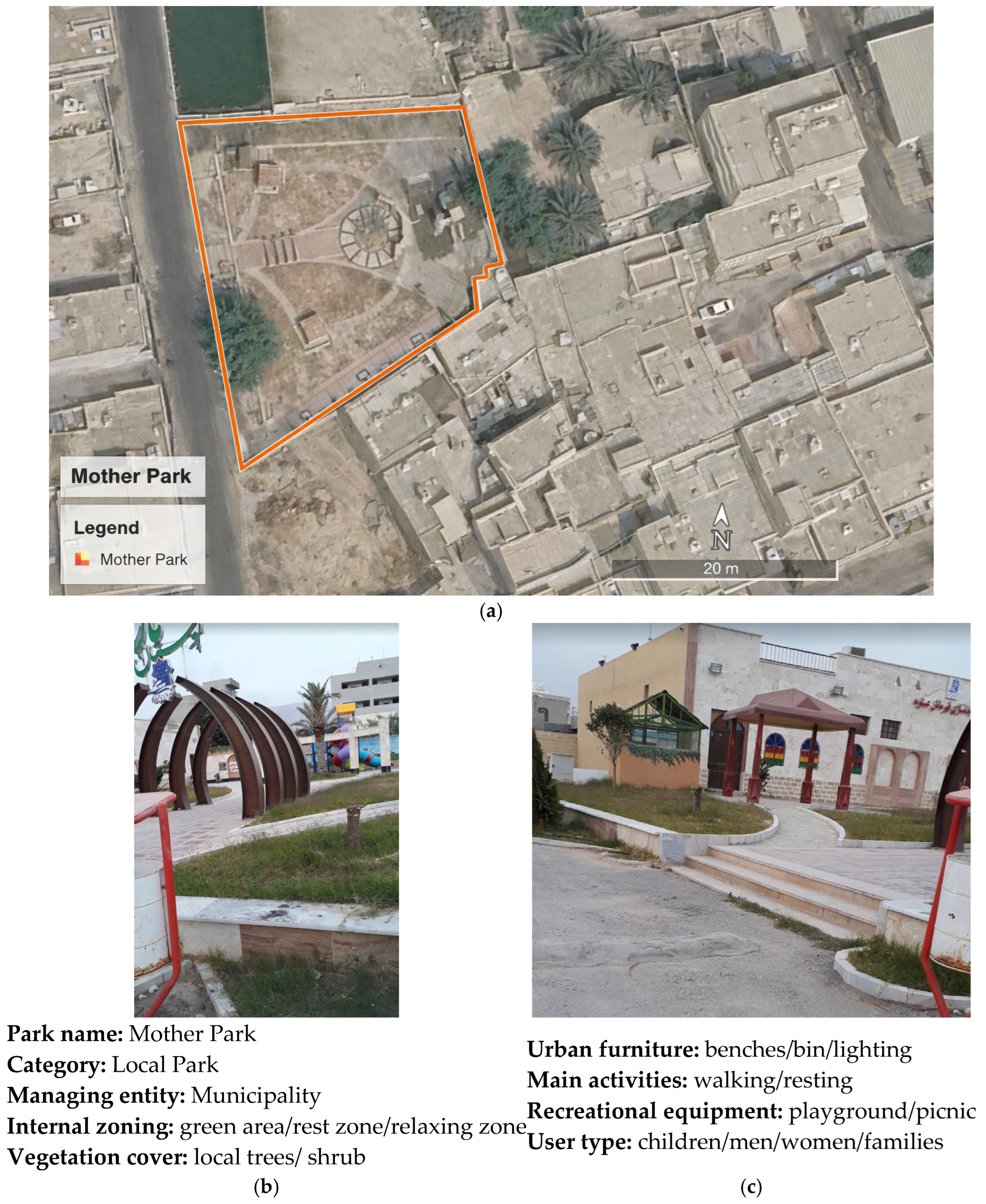
Mother Park (Figure 4) is a neighborhood park covering 151 m2. The park serves as a specialized recreational facility exclusively designed for early childhood development, targeting toddlers and young children under 8 years of age, accompanied by guardians. The compact, child-centric design features a perimeter configuration bordered by shrubs and a limited number of ornamental and local trees, creating a visually enclosed and secure environment. Benches strategically positioned around the perimeter to facilitate parental supervision, complemented by basic lighting fixtures and waste disposal units. The vegetation framework relies on a combination of low-height shrubs forming protective boundaries and sparsely distributed ornamental trees offering minimal canopy coverage. Ground treatment consists of stone paving integrated with grass patches, providing textural variation suitable for diverse play activities. The park lacks designed shade structures, such as pergolas, and depends entirely on the limited natural shade from the existing tree canopy. As for equipment, the playground is age-specific, featuring structures, swings, and play elements designed exclusively for children under 8 years, incorporating contemporary safety standards and protective features appropriate for toddler use. Usage duration in typical visit durations of 30–45 min, primarily accommodating short-term family recreational activities. At the time of fieldwork, the park exhibited adequate maintenance standards, with functional equipment and acceptable cleanliness levels.
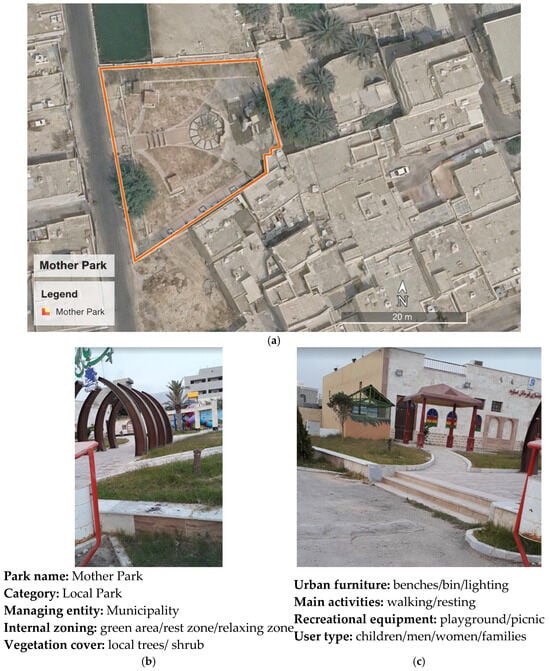
Figure 4.
Mother Park. (a) Location Map, (b,c) general view of the park; Photo credit: author, 15 April 2025.
Women Park
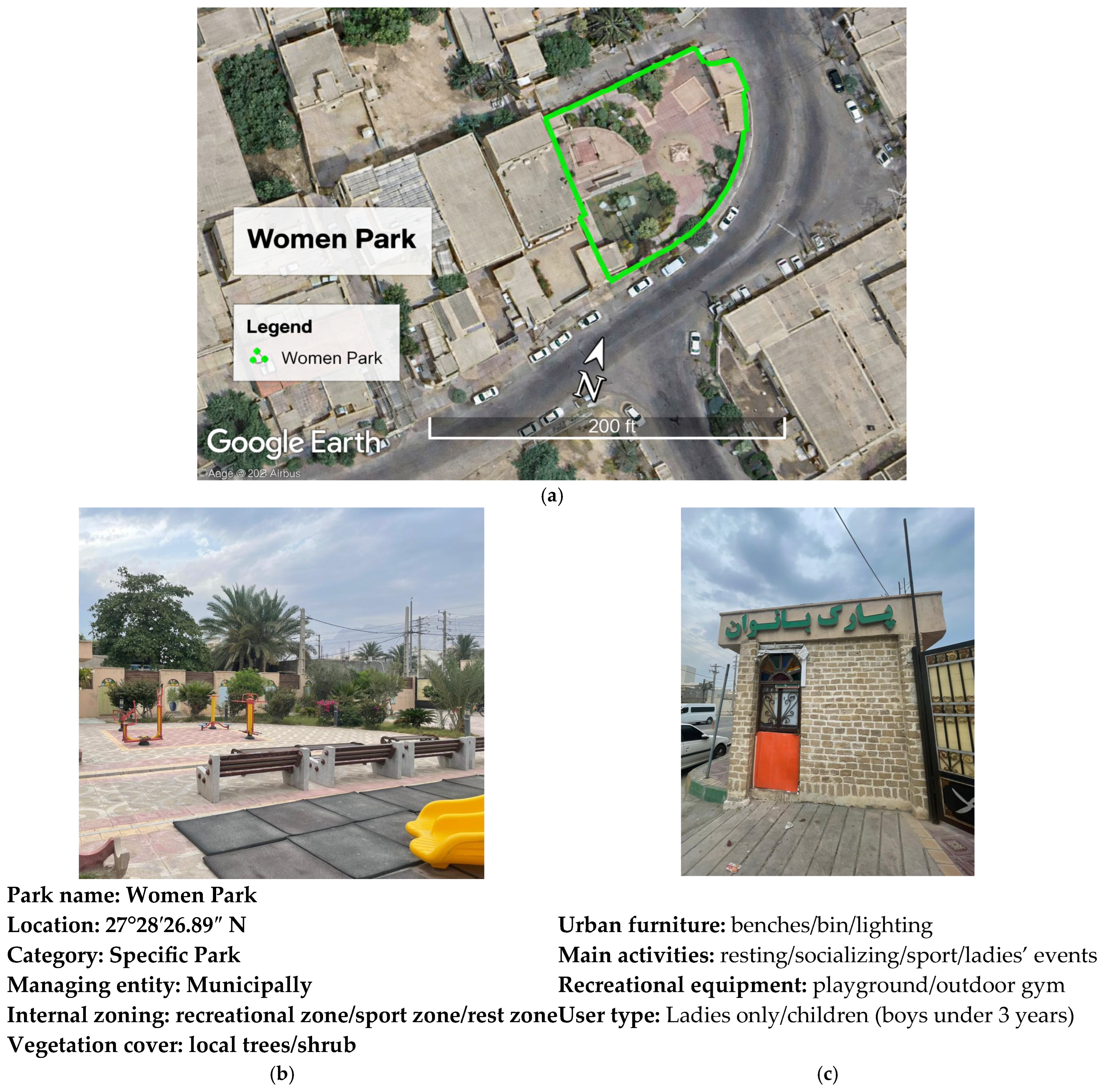
Women’s Park (Figure 5), a gender-exclusive facility covering 118 m2, is a dedicated recreational and social space for women, with provisions for accompanying young boy children under 3 years old. Unlike Mother Park, which serves primarily as a supervised children’s playground, Women’s Park is explicitly designed for women’s leisure, social interaction, and physical activity in a culturally appropriate, private setting. The facility serves as a social and wellness hub rather than a childcare-focused recreational stop, reflecting Islamic urban cultural norms in which gender-segregated recreational spaces allow women to participate in public leisure activities while respecting privacy preferences. The spatial configuration is distinguished by high perimeter walls that provide complete visual privacy from external views, as well as controlled access managed by dedicated security personnel who regulate entry to maintain the gender-exclusive policy. This architectural enclosure creates a private space, allowing for unrestricted social and recreational activities. The physical amenities include numerous benches distributed throughout the space to support extended social gatherings and rest periods. The vegetation framework is made up of palm trees and native species, which provide limited natural shade coverage. Ground surfacing is made up of mosaic tiles paving interspersed with grass areas, providing a variety of surface textures for various activities. Despite its enclosed setting, the park lacks permanent shade structures such as pergolas or shelters, which may limit its usability during peak heat hours. The park has outdoor sports facilities dedicated to women’s fitness and recreational activities. To accommodate mothers with toddlers, play equipment suitable for young children is provided, but these provisions serve as an ancillary function rather than the primary programmatic focus. The amenity configuration puts adult women’s social and recreational needs ahead of childcare supervision. The emphasis on women’s social and recreational needs, combined with the secure private environment and comprehensive amenity provision, allows for significantly longer visit durations of 1–2 h, far exceeding the 30–45 min visits typical of child-focused facilities. These temporal patterns emphasize the park’s function as a destination social space rather than a quick recreational stop.
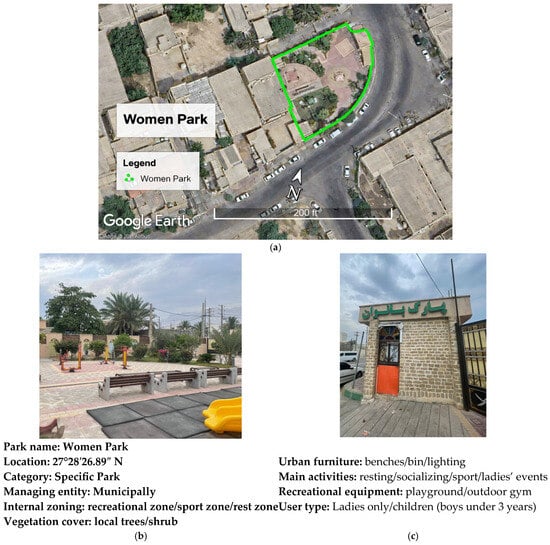
Figure 5.
Women Park. (a) Location Map, (b) General View, (c) Entrance Gate, The Persian text visible in the figure displays the park’s name (Women’s Park) on its entrance gates; Photo credit: author, 15 April 2024.
Neighborhood Park
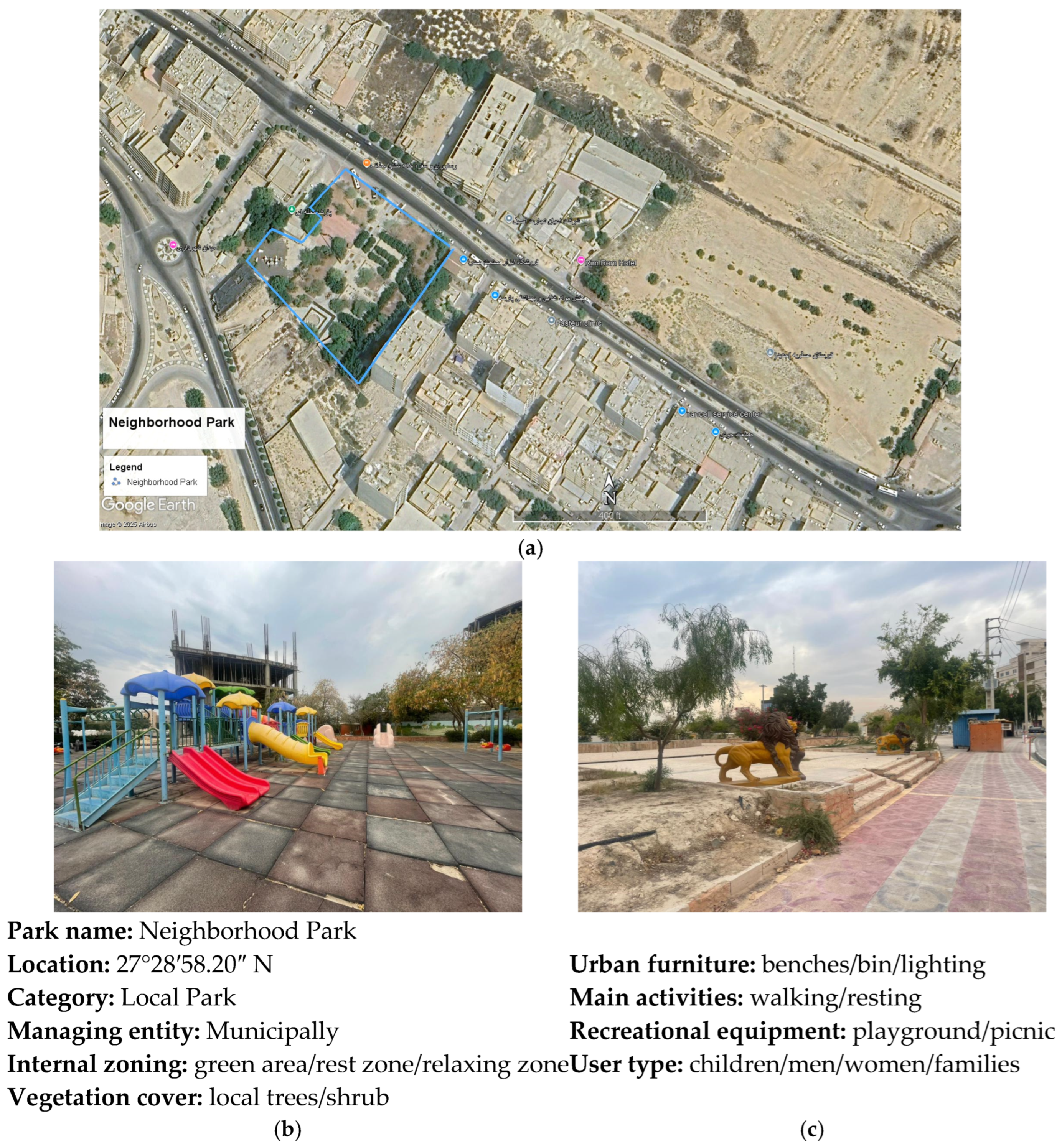
Neighborhood Park (Figure 6), spanning 365 m2, serves as a local recreational facility within emerging residential zones. The park functions primarily as a neighborhood-scale children’s playground serving immediate residential catchments, targeting families with children aged 3–8 years. It operates as a quick-access play space rather than a destination recreational facility. The spatial configuration features a utilitarian layout with basic structural elements. A flagpole occupies a prominent position within the park space, serving as a symbolic civic landmark. Physical infrastructure remains underdeveloped, with notably scarce bench provision that constrains opportunities for guardian supervision and family congregation. All basic lighting fixtures and waste disposal units are present, though minimal in distribution and capacity. The landscape framework exhibits characteristics typical of newly constructed facilities where vegetation establishment remains incomplete. Regional tree species are planted predominantly along the perimeter. Ground surfacing consists primarily of stone and concrete paving with minimal grass coverage, creating a hard, utilitarian landscape character. The absence of permanent shade structures, such as pergolas or shelters, combined with limited mature tree canopy, significantly restricts usability during daylight hours, particularly under Asaluyeh’s extreme thermal conditions. Playground equipment includes standard elements such as swings and slides, offering a greater variety compared to the Mother Park and accommodating the specific developmental needs of children aged 3–8 years. However, amenities supporting extended-stay users are absent. A combination of infrastructural limitations, particularly inadequate seating, minimal shade provision, and absence of comfort-enhancing amenities, results in notably brief visit durations averaging only 10 min, substantially shorter than Mother Park (30–45 min) or Women’s Park (1–2 h). These temporal patterns reflect the park’s functional role as an immediate-access play space rather than a prolonged recreational destination.
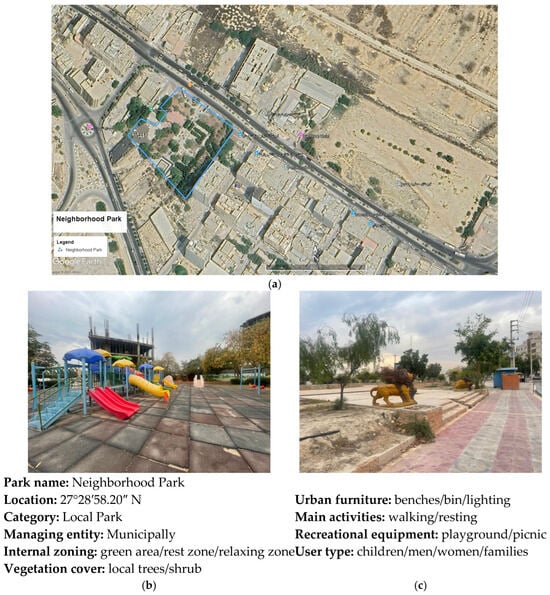
Figure 6.
Neighborhood Park. (a) Location Map, (b,c) general view of the park; Photo credit: author, 15 April 2024.
Coastal Park
Coastal Park (Figure 7), encompassing 6176 m2, constitutes the city’s largest public green space and principal recreational facility. Coastal Park operates as a city-level destination serving diverse demographic groups across extended temporal periods. The park’s multifunctional character accommodates varied recreational activities, supporting its role as the primary communal gathering space within Asaluyeh’s limited public realm. Coastal Park’s positioning along the shoreline enhances both physical accessibility and environmental amenity, providing visual connectivity to marine landscapes that distinguish this facility from inland neighborhood parks. The spatial organization integrates multiple programmatic zones, including some football courts, dedicated children’s play areas, and pedestrian circulation networks, facilitating simultaneous use by diverse user groups.
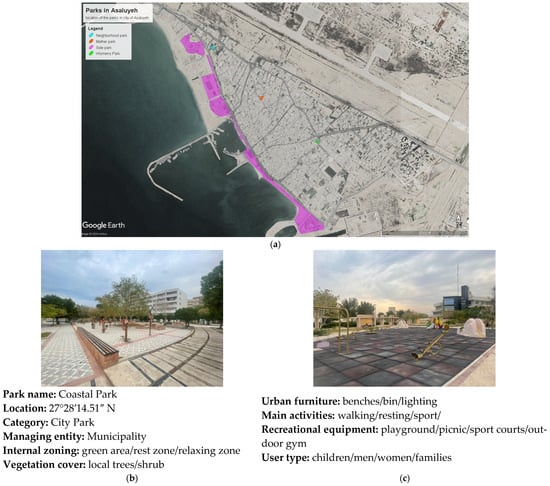
Figure 7.
Coastal Park. (a) Location Map, (b,c) left and right; general view of Coastal Park; Photo credit: author, 15 April 2024.
The evaluation based on inclusivity, accessibility, and popularity led to the exclusion of three parks (Table 1). The Women’s Park was discarded because it is exclusively for women. Similarly, Mother Park was not considered due to its limited accessibility, being primarily designed for parents with children. Neighborhood Park was excluded because of its peripheral location and small size, which reduces its attractiveness to a broader population.

Table 1.
Comparative Assessment of Four Parks in Asaluyeh Based on Accessibility, Inclusivity, and Popularity (✔ = Criteria met; ✘ = Criteria not met).
Coastal Park was selected based on criteria including accessibility, inclusivity, size, and available facilities. As Asaluyeh’s primary urban park, it provides suitable conditions for assessing user satisfaction and social interactions. Its physical characteristics and amenities are detailed in the following section.
Nevertheless, within Asaluyeh’s constrained context, Coastal Park represents the most developed and socially significant public green space, making it the optimal site for investigating user satisfaction, social interactions, and the role of urban parks in industrial urban environments. A comprehensive description of Coastal Park’s physical characteristics and landscape design elements equips it as the focal site for the questionnaire-based assessment of user satisfaction and social interaction patterns.
2.3. Questionnaire and Data Analysis
This inventory informed the decision to concentrate detailed investigation on Coastal Park for three reasons. First, its dominant scale (91% of total park area) means that experiences within Coastal Park disproportionately shape overall public perceptions. Second, the multi-functional design enables examination of diverse satisfaction dimensions. Third, the broader demographic accessibility permits analysis of satisfaction variation across demographic groups.
2.3.1. Questionnaire Design and Structure
Questionnaires were administered 6–24 April 2024. To maximize inclusivity while respecting local cultural norms, data collection was scheduled during the hours of 10:00–12:00 and 18:00–22:00, particularly all day on weekends. April was selected for survey administration due to its moderate climatic conditions, representing a transitional period between winter and extreme summer heat. This timing allows park use patterns and user satisfaction to be assessed under representative thermal conditions rather than seasonal extremes. Consequently, visitor evaluations primarily reflect perceptions of permanent park features. Although preliminary observations were conducted during a different season, they focused exclusively on stable physical characteristics that remain unchanged throughout the year. While future longitudinal studies could further examine seasonal variation, the key relationships identified in this research reflect fundamental park attributes rather than seasonal effects.
The questionnaire comprised 16 questions and was designed to capture multidimensional aspects of park usage and satisfaction through three interconnected sections:
Section 1: Demographics and Personal Context. This section collected foundational data, including age, gender, educational attainment, income levels, and residence type (apartment vs. detached housing). These variables were essential for profiling diverse user groups and understanding behavioural patterns within the specific sociocultural context of Islamic urban settings, where demographic factors significantly influence public space utilization.
Section 2: Park Usage Patterns. This section examined visitation frequency, preferred times of visit, modes of transportation, and primary activities undertaken within the park. Activities were systematically categorized into five distinct types: (1) physical/recreational exercise, (2) social interactions, (3) leisure/passive recreation, (4) alternative activities, and (5) landscape orientation. This categorization enabled a nuanced analysis of how different user groups engage with the park environment.
Section 3: Satisfaction and Preferences. The final section assessed overall satisfaction levels, identified reasons for seeking alternative recreational spaces, and gathered opinions on infrastructure adequacy, including the availability and quality of shade structures, fencing, playground equipment, and other amenities.
Variables were classified according to their measurement scale to facilitate appropriate statistical analysis. Categorical variables included gender (male/female), residence type (apartment/detached housing), and occupation types (homemakers, entrepreneurs, government employees, private sector employees, and others). Ordinal variables captured satisfaction levels using a five-point scale. Likert scale ranging from 1 (very dissatisfied) to 5 (very satisfied). Binary coding (0/1) was applied to indicate the presence or absence of specific attributes. The inclusion of housing typology as a variable was particularly significant, as it reflects sociocultural influences on the preference for public versus private space usage in the study context. The inclusion of housing typology as a variable was particularly significant, as it reflects sociocultural influences on the preference for public versus private space usage in the study context.
Operationalized Environmental and Experiential Factors
This study operationalizes visitor experience through five key factors derived from the questionnaire and field observations: (1) Perceived Vegetation Quality (shade, greenery, maintenance); (2) Accessibility & Transportation (mode of transport, travel convenience); (3) Temporal Usage Patterns (time of day and week for visits); (4) Social Interaction Types (family, friends, community events); and (5) Overall Satisfaction with the park’s environment and amenities. These factors emphasize users’ subjective perceptions and self-reported behaviors rather than objective physical measurements (e.g., microclimatic data or architectural audits), thereby capturing the lived experience of park users within the defined study’s scope.
2.3.2. Sampling Framework and Strategy
A stratified convenience sampling approach was employed to capture Asaluyeh’s diverse demographic composition. Given the city’s industrial character, with a high proportion of male workers (~76%) and substantial population mobility due to rotational employment, the strategy deliberately targeted multiple user groups. Survey distribution was stratified to capture peak usage periods, with most administered during weekend evenings when visitor attendance is highest (questions 9; Appendix A). Sampling was conducted across all functional zones of Coastal Park to include visitors from different residential areas and minimize neighborhood bias. To account for socioeconomic and housing diversity, respondents were drawn from a range of income levels and residential types. Surveys were administered during morning (10:00–12:00) and evening (18:00–22:00) periods on weekdays and weekends to accommodate standard and non-standard work schedules typical of industrial cities. Gender distribution broadly reflected the city’s male-dominated population structure, with deliberate oversampling of women to support gender-based analyses.
2.3.3. Data Analysis: Reliability and Validity
Questionnaire data were analyzed using SPSS Statistics software-27, selected for its capacity to handle mixed data types, including categorical, ordinal, and continuous variables. SPSS facilitated descriptive statistics (frequency distributions, cross-tabulations) and inferential tests (correlation analysis, chi-square tests) to examine relationships between demographic characteristics, usage patterns, and satisfaction levels. Its widespread acceptance in urban planning research and robust handling of complex questionnaire data made it appropriate for this study’s analytical requirements. The complete questionnaire instrument, including all 16 questions and response categories, is provided in Appendix A.
To ensure the methodological rigor of the survey, reliability and validity tests were conducted. Reliability was assessed using Cronbach’s alpha coefficient for the overall questionnaire and its subscales. Validity was evaluated through content validity and construct validity. Content validity was confirmed through expert review by three urban planning specialists. Construct validity was assessed via exploratory factor analysis (EFA) using principal component analysis with varimax rotation. The Kaiser-Meyer-Olkin (KMO) measure and Bartlett’s test of sphericity were used to verify the suitability of the data for factor analysis.
Ethical considerations were addressed in accordance with national research ethics guidelines. The study involved anonymous, non-interventional questionnaire-based data collection, and participation was voluntary with verbal informed consent obtained from all participants.
3. Results
3.1. Park Characteristics and Observed Usage Patterns
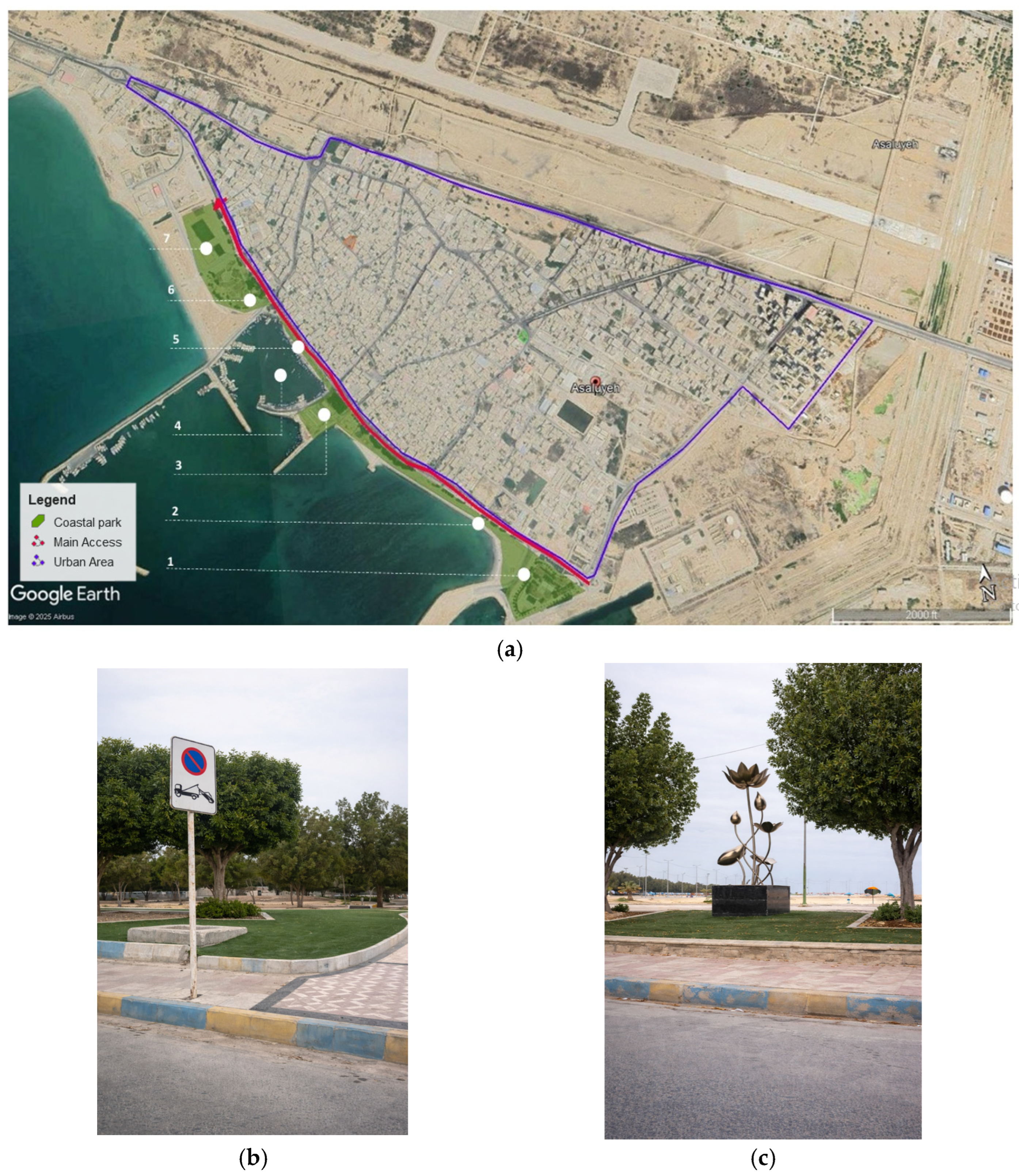
Situated at the southern edge of Asaluyeh, Coastal Park extends approximately three kilometers along one of the city’s primary urban axes and occupies reclaimed land directly adjacent to the Persian Gulf (Figure 8). This elongated park integrates diverse functional elements, recreational, commercial, and maritime, into a cohesive, continuous urban space. The park’s spatial organization is defined by a network of local vegetated pedestrian pathways that connect different zones while providing shade through climate-adapted vegetation, thereby facilitating smooth circulation and encouraging interaction among diverse user groups.
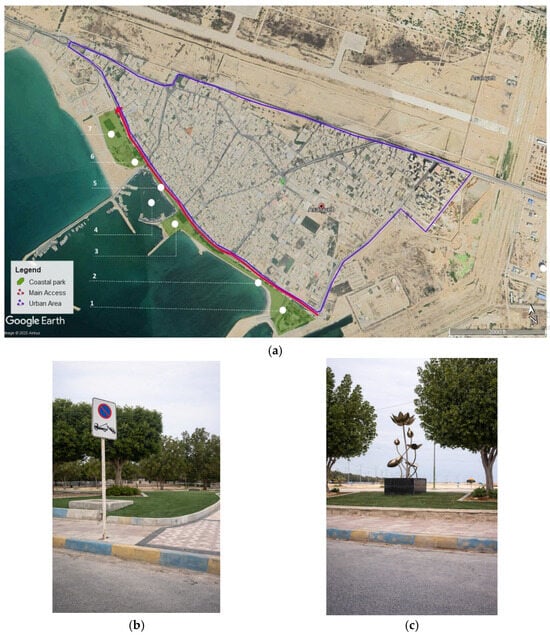
Figure 8.
(a) Functional zoning and functional distribution of the Coastal Park; (b,c) vegetation cover in the Coastal Park. Numbers 1–7 indicate the functional zones of Coastal Park, as detailed in Table 2. (Author, 2025).
For analytical purposes, Coastal Park has been systematically divided into seven distinct functional zones, each characterized by unique spatial attributes and programmatic functions while collectively contributing to the park’s multifunctional character (Table 2). This zoning framework allows for a nuanced examination of how different spatial configurations influence patterns of use, social interaction, and user satisfaction across varying demographic groups within the industrial urban context of Asaluyeh. Central to understanding these zone-specific usage patterns is the distribution and functional role of vegetation across the park’s spatial configuration. Field observations identified three main vegetation categories in Coastal Park, each fulfilling distinct functional roles under extreme coastal climatic conditions. (a) Native drought-tolerant species include date palms (Phoenix dactylifera), culturally significant but providing limited functional shade due to narrow vertical growth, and Ghaf trees (Prosopis cineraria), offering moderate shade in scattered locations. (b) Native shrubs and grasses contribute to ground-level greenery but offer minimal thermal protection. (c) Ornamental broad-canopy species, primarily Ficus and Conocarpus erectus, play a more substantial role in creating thermally comfortable microenvironments. These species concentrate in Zones 2, 5, and 7, where dense canopy structures provide effective shade, attracting extended stays by visitors during daylight hours.
Table 2.
Functional zoning of Coastal Park.
Visual assessments during midday hours indicate that approximately 35–40% of the total park area receives tree shade, though distribution varies considerably across zones. Densely vegetated areas (Zones 2, 5, and 7) provide relatively continuous shaded corridors, whereas minimally planted zones (Zones 1, 3, 4, and 6) offer limited thermal relief, explaining lower daytime usage patterns. The observed positive correlation between vegetation satisfaction and overall park experience (r = 0.45, p < 0.001) likely reflects this critical thermal comfort function, further evidenced by concentrated evening usage (76% of visits during 18:00–22:00) when thermal conditions moderate.
3.2. Reliability and Validity Analysis
The overall Cronbach’s alpha was 0.856, indicating good internal consistency (values above 0.70 are considered acceptable). Subscale alphas ranged from 0.721 (for demographics) to 0.883 (for satisfaction and preferences), supporting the questionnaire’s reliability.
Content validity was confirmed by expert review from three urban planning specialists, who rated the items on a 4-point scale (Content Validity Ratio, CVR = 0.82 overall, with all items exceeding the threshold of 0.70). Construct validity was assessed via exploratory factor analysis (EFA) using principal component analysis with varimax rotation. The Kaiser-Meyer-Olkin (KMO) measure was 0.76, and Bartlett’s test of sphericity was significant (p < 0.001), confirming the data’s suitability for factor analysis. The analysis extracted four factors explaining 68% of the total variance, aligning with the questionnaire’s theoretical structure.
3.3. Demographic Profile of Respondents
A total of 100 respondents aged 18–60 years participated in the questionnaire through on-site systematic sampling conducted over. The sample comprised 63 males and 37 females. Notably, while Asaluyeh’s population exhibits a pronounced gender imbalance (approximately a 1:3 female-to-male ratio shown in Table 1) due to its male-dominated industrial workforce, the study achieved proportionally higher female representation (37%) through deliberate sampling strategies. Additionally, the sample predominantly comprised middle-aged adults (31–50 years). Most respondents held post-secondary education and were employed in the government sector. Income levels were generally medium to high, and the majority resided in flats. A strong preference for public green spaces over private gardens (79%) is notable, despite access to private gardens (43% with detached homes). This preference underscores the park’s irreplaceable social function in this industrial context. Private gardens were observed across the sample (Table 3).
Table 3.
Demographic Characteristics of Survey Respondents (N = 100).
3.4. Park Usage Patterns
Usage patterns of Coastal Park are presented in Table 4, based on responses to questionnaire questions 8–11 (Appendix A). The majority of visits were group-based rather than individual, with a marked concentration during weekend evenings. Physical and recreational exercise constituted the most common activity, followed by leisure and passive recreation. Private cars were the dominant mode of transportation to the park.
Table 4.
Usage Patterns of Coastal Park (N = 100).
3.5. Visitor Satisfaction and Preferences
Visitor satisfaction levels and preferences are summarized in Table 5, based on questionnaire questions 12–14 (Appendix A). Overall satisfaction with Coastal Park was predominantly medium to high across respondents. Among those who occasionally used alternative parks, proximity was cited as the primary motivating factor. Satisfaction with plants and vegetation received notably high ratings compared to overall park satisfaction.
Table 5.
Visitor Satisfaction and Preferences for Coastal Park (N = 100).
3.6. Social Interactions and Functions
Social interaction patterns and functions are summarized in Table 6, derived from questionnaire responses (questions 8, 15, and 16; Appendix A) and field observations conducted during park visit hours. Group visits predominated over individual visits. Family gatherings constituted the most common type of social interaction, followed by friend-based activities. Observational data revealed that group conversations represented the primary observed social activity, particularly in shaded areas and near recreational facilities.
Table 6.
Social Interaction Patterns and Functions of Coastal Park (N = 100).
3.7. Inferential Findings
Inferential statistical analyses were conducted to examine relationships between user characteristics, park usage patterns, or visitor satisfaction levels. Results are presented in Table 7. Positive correlations were identified between income and overall satisfaction with Coastal Park (r = 0.32, p = 0.017), between age and visit frequency (r = 0.28, p = 0.031), and between vegetation satisfaction and overall satisfaction (r = 0.45, p < 0.001). Vegetation satisfaction showed the strongest correlation with overall park satisfaction, highlighting vegetation as a key factor in users’ assessment of the park. Significant differences in satisfaction levels were observed between genders (t = 2.15, p = 0.045). Education level showed significant associations with social interaction activities (F = 3.24, p = 0.022).
Table 7.
Inferential Statistical Analysis Results for Coastal Park Usage and Satisfaction (N = 100).
4. Discussion
4.1. Methodological Considerations
This study deliberately prioritizes visitor perception and satisfaction rather than detailed physical-environmental characterization. While vegetation and thermal comfort could be investigated through environmental monitoring, urban park quality is fundamentally a socially constructed phenomenon dependent on user experience. The strong association between perceived vegetation quality and overall satisfaction suggests that perception-based assessment can meaningfully capture functional park characteristics, including visitors accurately sensing thermal comfort through direct experience.
This approach addresses questions that environmental measurements alone cannot answer, such as gender disparities, mobility constraints, and temporal usage concentration. These findings critically inform planning interventions but remain invisible to purely botanical or physical assessment. Moreover, surveys are particularly important in industrial Islamic urban contexts, where sociocultural norms significantly influence the use of public space.
This study focuses on active users of the city’s primary public green space. While this approach allows for an in-depth understanding of user perceptions in an industrial urban context, it may underrepresent short-term workers and non-users of public parks. Future research should expand sampling across multiple sites and incorporate longitudinal approaches to capture a broader spectrum of urban experiences.
Although comprehensive microclimatic monitoring requires specialized equipment that exceeds the scope of this exploratory research, this limitation does not compromise methodological rigour. Exploratory studies play a key role in establishing fundamental relationships that adequately precede detailed characterization. Methodological validity is supported through theoretical groundings, expert reviews, pilot tests, and statistical rigour.
Survey Design Limitations: The questionnaire prioritized breadth of coverage (demographics, usage patterns, satisfaction levels) over detailed probing of specific preferences such as vegetation types, playground equipment characteristics, or cultural programming interests. While this approach successfully identified key satisfaction determinants (vegetation quality r = 0.45, gender disparities p = 0.045, transportation barriers), the trade-off between survey length and field completion rates in field conditions limited such detailed preference inquiries in this exploratory study.
Limitation
This study has several limitations that should inform the interpretation of its findings and future research. First, the use of stratified convenience sampling, while practical for the field context, limits the generalizability of the results compared to random sampling. Second, the focus on active park users means the perspectives of non-users or those unable to access parks are not captured, potentially overlooking significant barriers to park access. Third, the assessment of environmental factors like vegetation quality and thermal comfort relied on user perceptions rather than objective biophysical measurements (e.g., canopy cover index, wet-bulb globe temperature), which would provide a more precise understanding of person-environment interactions. Fourth, data collection occurred primarily in April (a moderate season); thus, the findings may not fully reflect usage patterns and satisfaction during extreme summer or winter months. Future studies would benefit from longitudinal designs, objective environmental monitoring, and targeted sampling of underrepresented groups, including non-users and short-term migrant workers.
4.2. Vegetation Quality as Primary Satisfaction Determinant
The findings highlight Coastal Park’s critical role as Asaluyeh’s primary public green space, with visitor satisfaction primarily driven by perceived vegetation quality, the strongest correlate among our operationalized experiential factors (r = 0.45, p < 0.001). With 79% of respondents preferring public over private green spaces despite 43% having access to detached homes, the Coastal Park serves as a vital hub for recreation, relaxation, and social cohesion, counteracting the pollution and fragmentation driven by the city’s large industrial complex [37]. This preference underscores the park’s role in fulfilling social interaction needs that private spaces cannot adequately address, particularly in an industrial city where traditional urban social infrastructure is absent. These findings align with literature emphasizing urban green spaces as essential for mitigating industrialization’s adverse effects and fostering community well-being in high-density, polluted environments [38]. These findings align with patterns in Al-Harbi (2024) in similar Gulf industrial cities; in Jubail, Saudi Arabia, park satisfaction similarly correlated with vegetation quality, while Doha’s industrial zones show comparable evening-use concentration due to extreme heat [39]. However, Asaluyeh’s gender disparity appears more pronounced, possibly reflecting its transient workforce composition versus established urban centers.
4.3. Gender Disparities and Sociocultural Dimensions
The demographic profile reveals patterns significant to understanding park usage in Asaluyeh’s industrial context. The predominance of middle-aged users (75% aged 31–50) reflects the working-age population structure typical of petrochemical zones. The gender distribution (63% male, 37% female) aligns with Asaluyeh’s overall 3:1 ratio (approximately one woman for every three men), indicating representative sampling. This distribution also reflects labor migration patterns and sociocultural norms regarding women’s public space usage. Males reported higher satisfaction (M = 3.9) compared to females (M = 3.5; t = 2.15, p = 0.045) and engaged more in physical activities (43% of total activities), while females favored passive leisure and social interactions. These differences may reflect limitations in amenities specifically serving women’s recreational needs and constraints related to broader sociocultural factors affecting women’s comfort in public spaces. Cloyes et al. (2022) note similar barriers for Muslim women in accessing nature, cultural expectations, and safety concerns, which in Asaluyeh are compounded by accompaniment requirements and the male-dominated population structure [26]. Yet, the park’s open design successfully supports family-oriented activities, with 52% of interactions being family gatherings, aligning with research showing that Iranian park users prioritize spaces for familial bonding, enhancing social ties across traditional and modern designs [30].
Social interaction patterns reveal the park’s critical role in facilitating community bonds. The pattern of group visits (79%) underscores the park’s function as a communal social space, aligning with cultural norms in Islamic societies where family-centered recreation predominates. Observational data showed group conversations (63%) concentrated in shaded areas, reflecting both climatic necessity and social preferences for intimate gathering spaces. The relatively limited interaction with strangers (11%) suggests the park operates primarily as a venue for reinforcing existing social ties rather than fostering new community connections, though community events (15%) indicate capacity for diverse social functions. In an industrial city characterized by transient labor populations and limited traditional social infrastructure, Coastal Park serves as a crucial venue for maintaining social cohesion and providing opportunities for community building among residents.
4.4. Temporal Use Patterns and Social Function
The overwhelming concentration of visits during weekend nights (76%) reflects converging factors. These include relief from harsh daytime temperatures characteristic of Persian Gulf coastal regions, work schedules, constraints of the petrochemical workforce, and cultural preferences for evening social gatherings. The negligible weekend daytime usage (2%) confirms that extreme heat effectively precludes outdoor recreation during daylight hours, corroborating Rao et al. (2024) on thermal comfort’s crucial role in green space appeal [34]. Activity patterns demonstrate the park’s multifunctional character. Physical and recreational exercise (43%) indicates successful fulfillment of active recreation needs in a city with limited sports infrastructure, while substantial engagement in passive recreation (26%) and social interaction (20%) confirms the park’s role as a vital social venue. The park’s diverse functional zones, including pathways, markets, and sports facilities, support these varied activities, fostering cohesion in a migrant-heavy population (76% male). Hatta et al. (2024) link such spaces to Islamic principles of stewardship (e.g., Quran, Surah Al-Hijr 15:20), promoting community health and harmony in urban settings [40].
4.5. Comparative Insights from Asaluyeh’s Park System
While Coastal Park served as the primary case study due to its size and inclusivity, the initial inventory of all four municipal parks reveals a complementary system catering to distinct user needs under shared constraints. Mother Park and Neighborhood Park function as hyper-local, child-focused spaces with very short visit durations (10–45 min), indicating their role for brief, convenient recreation rather than extended social gathering. Their limited shade and amenities restrict use during peak heat. Women’s Park, though excluded from the main survey due to its gender-exclusive design, is critical for providing a culturally appropriate space for women’s recreation and socializing, supporting longer visits (1–2 h) in a secure, enclosed environment. This pattern highlights a clear demand for gender-specific recreational facilities within the local sociocultural context. Coastal Park, in contrast, acts as the city-scale, multi-functional hub, accommodating longer evening visits and diverse group activities. Collectively, these parks illustrate a stratified approach to green space provision in a resource-scarce industrial city: specialized small parks address specific demographic needs (young children, women), while the major Coastal Park serves the broader community’s need for large-scale social interaction and varied recreation. This system, however, remains insufficient in terms of per capita area and equitable spatial distribution.
4.6. Transportation Barriers and Urban Planning Implications
The heavy reliance on private cars (84%) versus public transportation (16%) reveals transportation infrastructure limitations typical of rapidly developed industrial cities, with implications for park accessibility among lower-income groups and females. This car dependency echoes research emphasizing that green spaces enhance social sustainability when supported by adequate transport infrastructure [41]. The finding that 42% do not use alternative parks reinforces Coastal Park’s role as the primary recreational destination in Asaluyeh. Meanwhile, 43% cite proximity as the reason for occasionally visiting other parks. This indicates that spatial convenience drives alternative usage rather than dissatisfaction with Coastal Park. This observation reflects the need for distributed green infrastructure to enhance spatial equity across the city. The significant effect of education on social interaction activities (F = 3.24, p = 0.022) suggests that educational attainment influences engagement patterns, with higher-educated visitors demonstrating greater propensity for social activities, possibly reflecting the specialized workforce of the petrochemical industry where 58% are government employees and 74% hold post-secondary education.
Landscape features, including indigenous vegetation adapted to arid conditions and coastal views offering visual connections to natural elements such as sunrises and sunsets, contribute to the park’s emotional and social significance [15,26]. These findings advocate for inclusive, culturally sensitive designs incorporating enhanced thermal comfort through expanded shade structures, gender-specific amenities addressing women’s recreational needs, and improved public transport connectivity to address Asaluyeh’s unique challenges. Al-Harbi et al. (2024) further confirm that green spaces in Saudi cities foster inclusive interactions, though access disparities persist in arid, industrial contexts [42]. The park’s multifunctional design, aligned with Islamic principles of environmental stewardship, promotes community health and harmony. In conclusion, Coastal Park exemplifies how targeted public green spaces can elevate quality of life in Islamic industrial cities, supporting sustainable urban development through enhanced social and ecological resilience [40,41,43].
5. Conclusions
This study provides the first systematic empirical evidence on park usage in Iran’s industrial cities, revealing that visitor satisfaction is driven primarily by vegetation quality rather than demographic characteristics, with vegetation satisfaction showing the strongest correlation with overall park experience (r = 0.45, p < 0.001). This finding underscores the restorative power of natural elements in arid industrial environments and provides empirical support for prioritizing landscape quality in park development. The pronounced preference for public over private green spaces (79%), even among residents with private gardens, demonstrates the irreplaceable role of communal environments in fostering social cohesion where traditional urban infrastructure is limited. The dominance of group-based activities, particularly family gatherings, reflects cultural norms in Islamic contexts and confirms that well-designed parks can successfully accommodate sociocultural practices while serving diverse recreational needs. The study also reveals that Asaluyeh’s smaller, specialized parks (Mother Park, Women’s Park, and Neighborhood Park) serve important niche functions for specific groups, underscoring the need for a diverse portfolio of green spaces, ranging from inclusive city-scale parks to targeted local facilities, to meet the varied needs of a demographically complex industrial population.
However, significant barriers to equitable access persist. Gender disparities in satisfaction (males M = 3.9 vs. females M = 3.5, p = 0.045), concentrated temporal use during weekend nights (76%), and heavy reliance on private transportation (84%) reveal systemic inequities shaped by infrastructural limitations and sociocultural constraints. These findings advocate for policy interventions incorporating amenities, enhanced thermal comfort strategies through expanded shade infrastructure, and improved public transport connectivity. The finding that proximity drives alternative park usage among nearly half of visitors indicates the need for distributed neighborhood-level green spaces to complement centralized parks and ensure spatial equity.
The study offers actionable insights for sustainable urban development in industrial Islamic cities, demonstrating that strategically designed green infrastructure can simultaneously address environmental degradation, social fragmentation, and cultural needs. The multifunctional design approach exemplified by Coastal Park, which integrates diverse activity zones while respecting Islamic principles of communal space, provides a replicable model for similar contexts. Future research should employ longitudinal approaches to examine seasonal usage variations and utilize GIS mapping to optimize green space distribution, ensuring that planning decisions reflect both spatial equity and demographic diversity in rapidly industrializing urban environments. Methodologically, future research would benefit from detailed preference surveys examining vegetation choices, amenity priorities, and cultural program interest, alongside participatory design processes that engage residents in shaping park improvements tailored to local needs.
Author Contributions
Conceptualization, F.B., R.M.-J. and Y.P.-A.; methodology, F.B. and Y.P.-A.; validation, F.B. and Y.P.-A.; formal analysis, F.B.; investigation, F.B.; resources, F.B.; data curation, F.B.; writing—original draft preparation, F.B.; writing—review and editing, F.B. and Y.P.-A.; supervision, Y.P.-A.; funding acquisition, Y.P.-A. All authors have read and agreed to the published version of the manuscript.
Funding
This research is part of (1) the R&D and Innovation project PID2020-114363GB-I00, funded by MICIU/AEI/10.13039/501100011033; (2) the GRATET Research Group, which is funded by the Catalan Government under code 2021-SGR-00657.
Institutional Review Board Statement
According to the national research ethics regulations issued by the National Committee for Ethics in Research of Iran, this study, being a minimal-risk, non-interventional social research using anonymous questionnaire-based data collection, was classified as exempt from full institutional ethical review.
Informed Consent Statement
Verbal informed consent was obtained from all participants prior to their involvement in the study. Before administering the questionnaire, each participant received a clear verbal explanation of the study objectives, procedures, and their rights, including voluntary participation, anonymity, and the right to withdraw at any time. Consent was indicated by participants’ agreement to proceed with the questionnaire. No personally identifiable information was collected.
Data Availability Statement
The data presented in this study are available on request from the corresponding author.
Acknowledgments
Universitat Rovira i Virgili, Faculty of Tourism and Geography is a leading institution in the creation and transmission of knowledge in the fields of Tourism and Hospitality and Geography, Territorial Analysis, and Sustainability.
Conflicts of Interest
The authors declare no conflicts of interest.
Appendix A. Questionnaire Parts and Corresponding Questions (All 16 Questions)
| Part | Field | No. | Questions | Categories |
| One | Visitor’s profile | 1 | Age | (18–30) |
| (31–40) | ||||
| (41–50) | ||||
| (51–60) | ||||
| 2 | Gender | Male | ||
| Female | ||||
| Other | ||||
| 3 | Level of education | Pre-diploma | ||
| High school diploma | ||||
| Associate degree | ||||
| Bachelor’s degree | ||||
| Master’s degree | ||||
| 4 | Job | Homemakers | ||
| Entrepreneurs and Self- Employed Individuals | ||||
| Government Employee | ||||
| Private Sector Employees | ||||
| Other Professions | ||||
| 5 | Average income | Very low | ||
| Low | ||||
| Medium | ||||
| High | ||||
| Very high | ||||
| 6 | Kind of house | Flat | ||
| Detached home | ||||
| 7 | Preferred places | Own green space | ||
| Public green space | ||||
| Two | Frequency and functionality of Coastal Park | 8 | Park visiting mode. | With a Group |
| Alone | ||||
| 9 | Time frequency for visiting park | Part of the day: day/night | ||
| Day of the week: normal day/weekend | ||||
| 10 | Activities in Coastal Park | Physical and Recreational Exercise | ||
| Leisure and Passive Recreation | ||||
| Social Interaction Activities | ||||
| Landscape Orientation | ||||
| Alternative Recreational Activities | ||||
| 11 | Means of transport | Public transportation | ||
| Private car | ||||
| Three | Visitor satisfaction | 12 | Satisfaction with Coastal Park | Nonsatisfaction |
| low | ||||
| Medium | ||||
| High | ||||
| Very High | ||||
| 13 | Why use another park, say the name | Different design | ||
| Facilities | ||||
| Nearest | ||||
| Safety | ||||
| 14 | Satisfaction with plants and vegetation | Very low | ||
| Low | ||||
| Medium | ||||
| High | ||||
| Very high | ||||
| Four | Social Interaction Activities | 15 | Type of Social Interaction | Family Gatherings |
| Friends | ||||
| Strangers/Community Events | ||||
| None (No Interaction) | ||||
| 16 | Observed Social Activities | Group Conversations | ||
| Shared Recreational Activities | ||||
| Community Events |
References
- Zand, M. The economy of Oil and Gas Industry: A comprehensive Study. In Proceedings of the International Conference of New Technologies in Oil, Gas and Petrochemical Engineering, Tehran, Iran, 22–23 October 2024. [Google Scholar]
- Lynn Karl, T. Oil-Led Development: Social, Political, and Economic Consequences. In Encyclopedia of Energy; Elsevier: Amsterdam, The Netherlands, 2004; pp. 661–672. Available online: https://linkinghub.elsevier.com/retrieve/pii/B012176480X005507 (accessed on 29 January 2025).
- Anbari, M.; Malaki, A. Investigating the social effects of industrial growth poles on local sustainable development (A case study of Asalouye Industrial Growth Pole). J. Community Dev. (Rural-Urban) 2019, 3, 87–106. [Google Scholar]
- Grilli, G.; Mohan, G.; Curtis, J. Public Park attributes, park visits, and associated health status. Landsc. Urban Plan. 2020, 199, 103814. [Google Scholar] [CrossRef]
- Paul, S.; Nagendra, H. Factors Influencing Perceptions and Use of Urban Nature: Surveys of Park Visitors in Delhi. Land 2017, 6, 27. [Google Scholar] [CrossRef]
- Dade, M.C.; Mitchell, M.G.E.; Brown, G.; Rhodes, J.R. The effects of urban greenspace characteristics and socio-demographics vary among cultural ecosystem services. Urban For. Urban Green. 2020, 49, 126641. [Google Scholar] [CrossRef]
- Plunz, R.; Zhou, Y.; Carrasco Vintimilla, M.; McKeown, K.; Yu, T.; Uguccioni, L.; Sutto, M.P. Twitter sentiment in New York City parks as measure of well-being. Landsc. Urban Plan. 2019, 189, 235–246. [Google Scholar] [CrossRef]
- Alabbas, W.; Polat, A. Comparative Analysis of Park User Preferences in Konya (Turkey) and Kirkuk (Iraq). Cities 2019, 9, 1128–1143. [Google Scholar]
- Liu, Q.; Ullah, H.; Wan, W.; Peng, Z.; Hou, L.; Rizvi, S.S.; Haidery, S.A.; Qu, T.; Muzahid, A.A.M. Categorization of Green Spaces for a Sustainable Environment and Smart City Architecture by Utilizing Big Data. Electronics 2020, 9, 1028. [Google Scholar] [CrossRef]
- Kaplan, S. The restorative benefits of nature: Toward an integrative framework. J. Environ. Psychol. 1995, 15, 169–182. [Google Scholar] [CrossRef]
- Liu, R.; Xiao, J. Factors Affecting Users’ Satisfaction with Urban Parks through Online Comments Data: Evidence from Shenzhen, China. Int. J. Environ. Res. Public Health 2021, 18, 253. [Google Scholar] [CrossRef]
- Alshehri, R.M.; Alzenifeer, B.M.; Alqahtany, A.M.; Alrawaf, T.; Alsayed, A.H.; Afify, H.M.N.; Elmoghazy, Z.A.A.; Alshammari, M.S. Impact of Urban Green Spaces on Social Interaction and Sustainability: A Case Study in Jubail, Saudi Arabia. Sustainability 2025, 17, 4467. [Google Scholar] [CrossRef]
- Yuan, S.; Li, F.; Hallo, J.; Nicolette, M.; Browning, M.H.E.M. Solitude, nature, and parallel shared experiences: Varied impacts of human presence on urban park functions. Urban For. Urban Green. 2025, 113, 129064. [Google Scholar] [CrossRef]
- Larson, K.L.; Pittson, H.; Corley, E.A.; Lara-Valencia, F.; Haight, J.D. Recognitional and distributive justice in urban park access: The importance of subjective views. Urban For. Urban Green. 2025, 112, 128875. [Google Scholar] [CrossRef]
- Hu, J.; Wu, J.; Sun, Y.; Zhao, X.; Hu, G. Spatiotemporal Influence of Urban Park Landscape Features on Visitor Behavior. Sustainability 2023, 15, 5248. [Google Scholar] [CrossRef]
- Hegetschweiler, K.T.; de Vries, S.; Arnberger, A.; Bell, S.; Brennan, M.; Siter, N.; Olafsson, A.S.; Voigt, A.; Hunziker, M. Linking demand and supply factors in identifying cultural ecosystem services of urban green infrastructures: A review of European studies. Urban For. Urban Green. 2017, 21, 48–59. [Google Scholar] [CrossRef]
- Zhang, W.; Yang, B.; Wang, R.; Guo, X. An analysis of the effects of different urban park space environment construction on national health. Front. Environ. Sci. 2024, 12, 24. [Google Scholar] [CrossRef]
- Zhao, R.; Yang, S.; Shuying, G.; Zipeng, G.; Xiwei, S. Unraveling the relationships between urban park characteristics and visit durations: A longitudinal smartphone behavior survey in Austin. Urban For. Urban Green. 2025, 105, 128706. [Google Scholar] [CrossRef]
- Maruthaveeran, S. Exploring the urban park use, preference and behaviours among the residents of Kuala Lumpur, Malaysia. Urban For. Urban Green. 2017, 25, 85–93. [Google Scholar] [CrossRef]
- McCormack, G.R.; Rock, M.; Toohey, A.M.; Hignell, D. Characteristics of urban parks associated with park use and physical activity: A review of qualitative research. Health Place 2010, 16, 712–726. [Google Scholar] [CrossRef]
- Hosseinzadeh, M.M.; Moridsadat, P.; Khaleghi, S.; Hosseinzadeh, M. Assessment of Geotourism and Industrial Tourism Development: A Case Study of Pars Special Economic Energy Zone, Iran. E-Rev. Tour. Res. 2020, 18, 45. [Google Scholar]
- Bahriny, F. Traditional versus Modern? Perceptions and Preferences of Urban Park Users in Iran. Sustainability 2021, 13, 2036. [Google Scholar] [CrossRef]
- Edwards, R.C.; Larson, B.M.; Burdsey, D. What limits Muslim communities’ access to nature? Barriers and opportunities in the United Kingdom. Environ. Plan. E Nat. Space 2022, 6, 880–900. [Google Scholar] [CrossRef]
- Behfar, F.; Perez Alberth, M.Y.; Miralles Jori, R. A Comparative Investigation of The Social Stability and Sociability of Public Green Space in Social Housing in Niayesh District of Bushehr Province. Int. J. Archit. Eng. & Urban Plan. 2025, 35, 1. [Google Scholar] [CrossRef]
- Ministry of Roads and Urban Development. Law on Preservation and Development of Green Spaces in Cities; Ministry of Roads and Urban Development: Tehran, Iran. Available online: https://www.mrud.ir/شهرسازی-و-معماری/قوانین-و-مقررات-شهرسازی-و-معماری/قوانین/لایحه-قانونی-حفظ-و-گسترش-فضای-سبز-در-شهرها (accessed on 20 February 2025). (In Persian)
- Mostafa, A.M.; Alshahrani, A. Humanizing sustainable development through green spaces: A case study of Saudi cities. Front. Sustain. Cities 2024, 6, 21, Correction in Front. Sustain. Cities 2025, 7, 1542464. https://doi.org/10.3389/frsc.2025.1542464. [Google Scholar] [CrossRef]
- Tarh Mohit Paydar Consulting Engineers. Asaluyeh Comprehensive Plan; General Directorate of Housing and Urban Development, Ministry of Roads and Urban Development: Bushehr, Iran, 2020. (In Persian)
- Bushehr Meteorological Organization. Climate of Bushehr Province; Bushehr Meteorological Organization: Bushehr, Iran, 2024. Available online: https://www.bushehrmet.ir/st/10 (accessed on 26 February 2024). (In Persian)
- Feng, S.; Chen, L.; Sun, R.; Feng, Z.; Li, J.; Khan, M.S.; Jing, Y. The Distribution and Accessibility of Urban Parks in Beijing, China: Implications of Social Equity. Int. J. Environ. Res. Public Health 2019, 16, 4894. [Google Scholar] [CrossRef]
- Tao, Z.; Guo, J.; Chen, J.; Wu, W.; Chen, D. Exploring the Relationship between Urban Park Greenery at Different Levels and Physical Activity: A Study Using the Hierarchical Linear Model. Land 2023, 12, 1712. [Google Scholar] [CrossRef]
- Bustamante Picón, E.; García Martín, F.M.; Pérez Albert, M.Y.; Alberich González, J. Accessibility to urban green spaces in the city of Cartagena (Spain). In Proceedings of the 2nd International Conference on Future Challenges in Sustainable Urban Planning & Territorial Management: SUPTM 2024, Cartagena, Spain, 29–31 January 2024; Available online: http://hdl.handle.net/10317/13582 (accessed on 12 July 2024).
- Rigolon, A. Parks and young people: An environmental justice study of park proximity, acreage, and quality in Denver, Colorado. Landsc. Urban Plan. 2017, 165, 73–83. [Google Scholar] [CrossRef]
- Rigolon, A.; Flohr, T.L. Access to Parks for Youth as an Environmental Justice Issue: Access Inequalities and Possible Solutions. Buildings 2014, 4, 69–94. [Google Scholar] [CrossRef]
- Durán-Pérez, A.M.; Núñez, J.M.; Gómez Gámez, C. Spatial Equity in Access to Urban Parks via Public Transit: A Centrality-Driven Assessment of Mexico City. Land 2025, 14, 1773. [Google Scholar] [CrossRef]
- Abouhassan, M.; Anwar, R.; Elkhateeb, S. Humanizing Public Open Spaces in Jeddah: The Case of Prince Majid Park. Sustainability 2025, 17, 2551. [Google Scholar] [CrossRef]
- Tabrizi, N.; Lak, A. MoussaviASMR Green space and the health of the older adult during pandemics: A narrative review on the experience of COVID-19. Front. Public Health 2023, 11, 1218091. [Google Scholar] [CrossRef] [PubMed]
- Salbitano, F.; Borelli, S.; Conigliaro, M.; Chen, Y. Guidelines on Urban and Peri-Urban Forestry; FAO forestry paper; Food and Agriculture Organization of the United Nations: Rome, Italy, 2016; 158p. [Google Scholar]
- Alizadeh, H.; Bork-Hüffer, T.; Kohlbacher, J.; Mohammed-Amin, R.K.; Naimi, K. The contribution of urban public space to the social interactions and empowerment of women. J. Urban Aff. 2024, 46, 717–740. [Google Scholar] [CrossRef]
- Reichenbach, A. Gender, Nationality and Public Space: The Case of Emirati Women in Dubai. In Proceedings of the International Conference on Knowledge and Politics in Gender and Women’s Studies, Ankara, Turkey, 9–11 October 2015. [Google Scholar]
- Hatta, A.; Abd Jalil, N.A.; Jimi Sham, R.; Mohd, H. Urban Green Spaces: Social Cohesion, Human Health, and Islamic Green City. Built Environ. J. 2024, 21, 402–409. [Google Scholar] [CrossRef]
- Nosratpour, D. Evaluation of Traditional Iranian Houses and Match it with Modern Housing. 2012. Available online: https://www.semanticscholar.org/paper/Evaluation-of-Traditional-Iranian-Houses-and-Match-Nosratpour/f1671ffdf9aa94326d981bd57debe7937af3cc54 (accessed on 23 July 2024).
- Kong, L.; Liu, Z.; Pan, X.; Wang, Y.; Guo, X.; Wu, J. How do different types and landscape attributes of urban parks affect visitors’ positive emotions? Landsc. Urban Plan. 2022, 226, 104482. [Google Scholar] [CrossRef]
- Abedrabboh, O.; Fountoukis, C.; Al-Ansari, T.; Alfarra, M.R. Simulating microclimate adaptation: Evaluating heat mitigation strategies for Doha, Qatar, under current and future climate conditions. Sustain. Cities Soc. 2025, 132, 106777. [Google Scholar] [CrossRef]
Disclaimer/Publisher’s Note: The statements, opinions and data contained in all publications are solely those of the individual author(s) and contributor(s) and not of MDPI and/or the editor(s). MDPI and/or the editor(s) disclaim responsibility for any injury to people or property resulting from any ideas, methods, instructions or products referred to in the content. |
© 2026 by the authors. Licensee MDPI, Basel, Switzerland. This article is an open access article distributed under the terms and conditions of the Creative Commons Attribution (CC BY) license.