1. Introduction
The July 2024 uprising in Bangladesh occurred in a context marked by political repression, systemic corruption, and growing inequality. Prior studies show that repression often backfires when publicized on social media, as state violence becomes a rallying point rather than a deterrent [
1]. In cases such as the Occupy movement and the Arab Spring, repression broadcast through platforms like Facebook and YouTube led to increased protest activity by exposing state actions and coordinating dissent [
1,
2]. Similarly, grievances rooted in corruption and economic inequality are strong motivators for protest, especially when widely disseminated online. Evidence shows that Facebook use is positively associated with protest activity in contexts of economic discontent [
3]. Comparative cases from Egypt and South Africa demonstrate that social media enabled activists to frame grievances, build solidarity, and mobilize participation, with corruption and inequality central to protest narratives [
4,
5]. Facebook and YouTube specifically amplify grievances by spreading information about government actions and hardships, bypassing state-controlled media and broadening the reach of mobilisation [
3,
4,
5,
6]. Yet despite this global evidence, the Bangladeshi case remains underexplored. The critical gap lies in systematically quantifying how grievances (GR), access (AV), connectivity (CN), and global consciousness (GC) interact to shape digital mobilisation (DM) in the context of Bangladesh’s 2024 uprising.
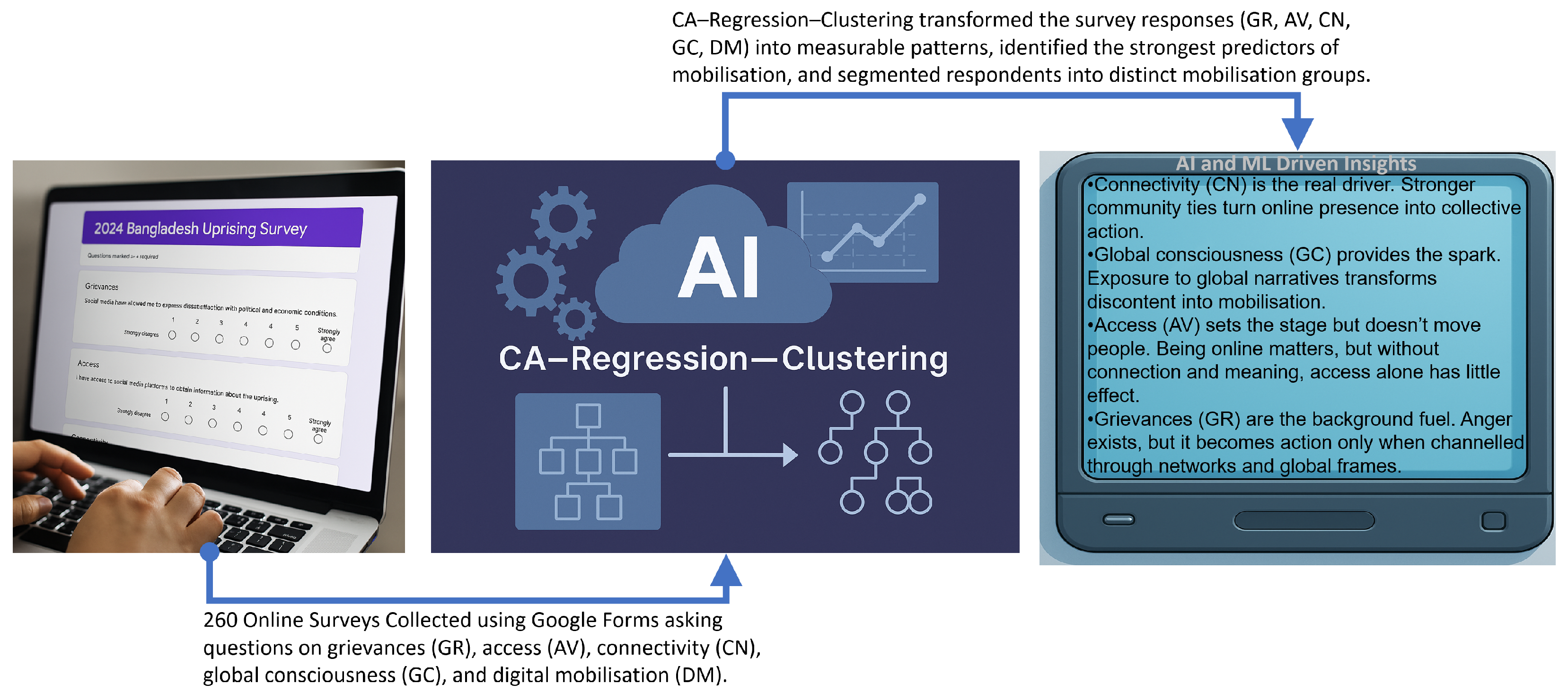
To address this research gap, the present study introduces an Artificial Intelligence (AI) and Machine Learning (ML)-driven methodological pipeline that transforms raw survey responses into empirically grounded insights (
Figure 1). The approach begins with 260 online surveys collected via Google Forms, capturing five core constructs: grievances (GR), access (AV), connectivity (CN), global consciousness (GC), and digital mobilisation (DM). Although the sample does not represent the entire Bangladeshi population, it is analytically appropriate for the study’s objectives. University students constituted a central mobilisation cohort during the July 2024 uprising, and this study is therefore positioned as an analytically robust, exploratory investigation rather than a population-level estimation. For reference, conventional sample size calculations for estimating population proportions under unknown population distributions suggest approximately 385 observations at a 95% confidence level with a 5% margin of error. However, the present study does not aim to produce population-level estimates. Rather, it is positioned as an exploratory multivariate investigation focused on modelling relationships among constructs, for which adequacy is assessed relative to established guidelines for regression and factor-based analyses. Complementarily, established multivariate analysis guidelines (as shown in [
7]) indicate that stable estimation can be achieved with a minimum sample to variable ratio of 5:1. With data collected from 260 respondents across the study constructs, this criterion is satisfied, supporting the analytical adequacy of the sample for the exploratory multivariate methods employed.
These responses are then processed through a sequence of quantitative techniques of composite analysis (CA), regression modelling, and clustering, which together form a rigorous CA–Regression–Clustering framework. Conceptually, this design allows us to move beyond descriptive correlations by first condensing multiple indicators into reliable composites, then identifying the strongest statistical predictors of mobilisation, and finally segmenting respondents into analytically meaningful mobilisation groups. As illustrated in
Figure 1, this pipeline yields AI- and ML-driven insights: it shows that connectivity (CN) and global consciousness (GC) act as the most powerful mobilisation drivers, while access (AV) and grievances (GR) provide enabling but secondary roles. This integration of principal component analysis (PCA), regression, and unsupervised clustering thus represents a unique contribution by combining methodological rigor with explanatory clarity, generating not only statistical validation but also actionable insights for social scientists and policymakers alike.
The empirical results, based on survey respondents, reveal several robust patterns. All five composite constructs demonstrated acceptable reliability, with Cronbach’s ranging from 0.694 (access/exposure) to 0.859 (grievances), and values for connectivity (0.835), global consciousness (0.738), and digital mobilisation (0.839) all exceeding standard thresholds. Dimensionality analysis confirmed a compact latent structure: the first two principal components accounted for 73.5% of variance (PC1 = 54.4%, PC2 = 19.1%), validating the reduction of items into interpretable dimensions. Regression modelling showed that global consciousness () and connectivity () were the strongest predictors of mobilisation, whereas access () and grievances () played secondary roles; the model explained of the variance in digital mobilisation. Clustering analysis identified two mobilisation profiles with moderate separation (silhouette = 0.287): a lower-mobilisation group () and a higher-mobilisation group (). A one standard deviation joint increase in connectivity and global consciousness is associated with an average +0.60 point rise on the 1–5 mobilisation scale, shifting the highly mobilised share of respondents from 40% to 60%. These results establish, in measurable terms, that the interplay of community connectivity and global frames is the decisive driver of civic mobilisation in the Bangladeshi 2024 uprising, offering quantifiable insights for both theory and policy.
Accordingly, the goal of this study is to systematically examine how grievances, access to social media, community connectivity, and global consciousness interact to shape digital mobilisation during the July 2024 uprising in Bangladesh. To achieve this goal, the study addresses the following research questions: (RQ1) Which factors most strongly predict digital mobilisation in the Bangladeshi protest context? (RQ2) How do connectivity and global consciousness interact to differentiate lower and higher mobilisation profiles? (RQ3) Can distinct mobilisation typologies be identified based on these constructs?
2. Background and Context
The July 2024 uprising in Bangladesh unfolded against a backdrop of longstanding grievances relating to political repression, corruption, and widening economic inequality. These grievances are not novel in the global literature on contentious politics: prior studies demonstrate that repression, when publicized through digital media, can paradoxically catalyze mobilisation rather than suppress it. Social media turns acts of repression into rallying points, exposing injustices and lowering coordination costs for activists and citizens alike [
1,
2]. In contexts such as the Arab Spring and Occupy movement, platforms such as Facebook and YouTube amplified episodes of repression, which not only documented state violence but also expanded sympathy for protest movements and facilitated broader participation [
1,
2].
Parallel evidence underscores the role of corruption and inequality as drivers of mass mobilisation, especially when grievances are articulated and diffused via social media. Empirical work finds that platforms like Facebook increase protest activity where political and economic discontent is acute [
3]. By enabling activists to frame narratives, share critical information, and foster political discussion, social media transformed latent disaffection into coordinated protest activity in Egypt, South Africa, and other transitional contexts [
4,
5]. In the Bangladeshi case, grievances surrounding systemic corruption, youth unemployment, and uneven economic opportunities provided fertile ground for mobilisation once amplified across widely used platforms.
Social media’s specific affordances—its ability to bypass state-controlled media, facilitate information cascades, and build networked communities—proved pivotal in the mobilisation of Bangladesh’s Gen Z. Historical patterns already pointed in this direction: during the 2018 Road Safety Movement, Bangladeshi students rapidly coordinated actions through Facebook Messenger and WhatsApp, demonstrating how instant communication channels enabled viral dissemination of grievances and accelerated protest organisation [
8]. The July 2024 events reproduced and magnified these dynamics. Increased penetration of mobile internet and social media usage among Bangladeshi youth made platforms like Facebook and YouTube indispensable infrastructures for collective action [
9].
At a theoretical level, this resonates with the concept of “connective action,” where mobilisation emerges through decentralised, personalised communication flows rather than hierarchical organisations [
10]. Online groups and communities facilitated bottom-up mobilisation, with political identity and solidarity reinforced by emotional contagion and empathy rather than solely rational debate [
11]. For Gen Z participants in particular, the viral circulation of protest visuals and shared narratives across Facebook and YouTube helped generate a sense of collective identity that transcended geographic and institutional boundaries.
Equally important is the algorithmic dimension of social media. Studies show that platforms amplify trending topics, peer activity, and viral content, thereby reinforcing participation and sometimes pushing individuals toward leadership roles in protest contexts such as Hong Kong [
12,
13]. In Bangladesh, similar mechanisms magnified youth-driven protest narratives, allowing personalised stories and livestreams to challenge state-controlled accounts of unfolding events. Algorithms thus acted as accelerators of mobilisation, though they also exposed protesters to vulnerabilities, including misinformation and surveillance [
14,
15].
Finally, the broader comparative literature illustrates that social media consistently lowers the coordination costs of collective action, especially in authoritarian or semi-authoritarian environments. From Tunisia and Egypt to South Africa and Hong Kong, platforms like Facebook, Twitter, and YouTube provided both organisational infrastructure and symbolic resources for protest [
4,
6,
16]. The Bangladeshi July 2024 uprising, therefore, should be interpreted as part of this global genealogy of digital contention: grievances rooted in repression, corruption, and inequality were rendered actionable through connective digital networks, creating conditions for large-scale mobilisation even in the face of repression.
In this light, the present study situates the Bangladeshi case within comparative scholarship on social media and protest, but also provides empirical specificity: by quantifying the roles of grievances, access, connectivity, and global consciousness in shaping digital mobilisation, it extends theoretical arguments into a rigorously operationalised framework. The methodological pipeline and results presented in this paper thus respond to a pressing need: to link contextual narratives of the 2024 protests with measurable constructs and policy-relevant insights.
Based on prior literature and the theoretical arguments outlined above, this study advances the following hypotheses:
H1: Grievances are positively associated with digital mobilisation.
H2: Access to social media platforms is positively associated with digital mobilisation.
H3: Connectivity within online communities has a stronger positive association with digital mobilisation than access or exposure to social media platforms, net of network embeddedness.
H4: Global consciousness is positively associated with digital mobilisation.
H5: Connectivity and global consciousness jointly differentiate higher and lower mobilisation profiles.
3. Methodology
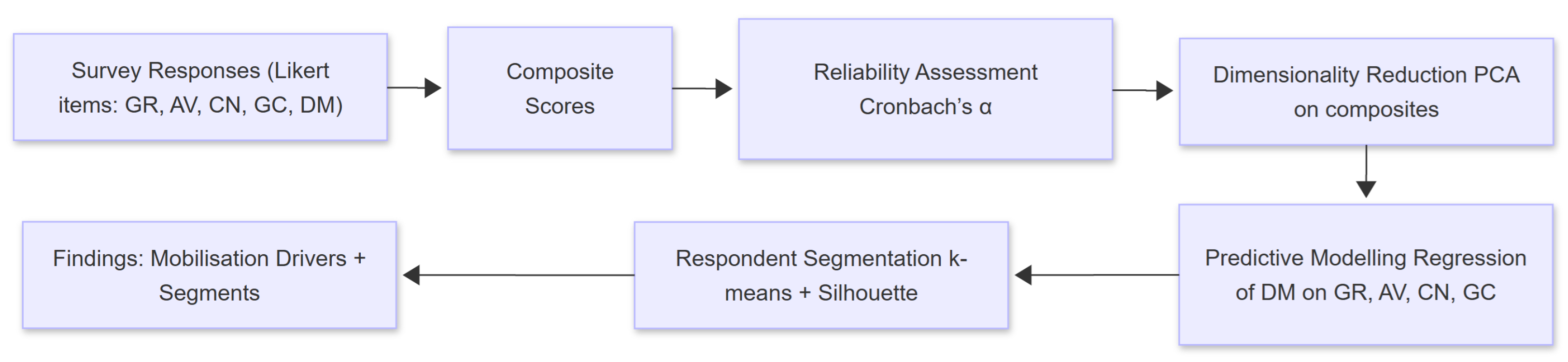
The methodological framework of this study follows a structured, step-by-step pipeline (
Figure 2) designed to transform raw survey responses into analytically meaningful insights. The process begins with collecting respondents’ answers to Likert-scale items that measure grievances (GR), access to social media (AV), community connectivity (CN), global consciousness (GC), and digital mobilisation (DM). Grievances (GR) refer to perceived political, economic, and social injustices, including repression, corruption, and inequality, that motivate dissatisfaction with the status quo. Access/exposure (AV) captures the degree to which individuals have reliable access to social media platforms and are exposed to political content online. Connectivity/community (CN) reflects the extent of individuals’ embeddedness in online networks, including communication, group participation, and content sharing with others. Global consciousness (GC) denotes awareness of, and identification with, transnational movements, global norms, and international frames of collective action. Digital mobilisation (DM) represents observable online and offline participatory behaviours, including following protests, sharing content, engaging in discussions, and attending or organising collective actions. The measurement constructs for GR, AV, CN, and GC are adapted from established literature [
17,
18,
19,
20,
21,
22,
23,
24,
25,
26], whereas the construct for digital mobilisation (DM) draws on prior empirical studies of online collective action [
22,
23,
27,
28,
29,
30].
Data were collected using an online questionnaire administered via Google Forms between August 2025 and September 2025. Participants were invited through university-based student networks, mailing lists, and peer-to-peer sharing on social media platforms. The invitation included an information sheet outlining the study purpose, voluntary participation, anonymity, and informed consent. Only respondents who provided consent were able to proceed to the survey. These individual responses are then aggregated into composite scores, which summarise each construct at the respondent level. All submitted questionnaires were screened for completeness prior to analysis, and only fully completed responses were retained, resulting in 260 usable cases. Participation was voluntary and anonymous, and no financial incentives were provided. Respondents represented both public and private universities, thereby capturing variation in mobilisation trajectories across institutional contexts.
Survey items were informed by prior literature on digital activism, social media use, and collective action, particularly studies on grievances, connective action, and online participation [
20,
24,
31]. Where established scales were unavailable or contextually misaligned with the Bangladeshi case, items were adapted or newly formulated to reflect platform-specific practices on Facebook and YouTube and the lived experience of the July 2024 uprising. All items were reviewed for face validity and contextual relevance before deployment. Each latent construct was operationalised using three Likert-scale items, with digital mobilisation measured using four items. Although these block sizes may be considered parsimonious, three-item scales are widely accepted in exploratory multivariate research when internal consistency exceeds conventional reliability thresholds, as confirmed by the Cronbach’s
values reported in the result section. To ensure that these composites are reliable measures of the intended concepts, internal consistency is evaluated using Cronbach’s
. Once validated, the data are subjected to dimensionality reduction using principal component analysis (PCA), which captures the latent structure and reduces redundancy [
32]. The refined composites are next used in regression modelling to identify which factors most strongly predict digital mobilisation. Finally,
k-means clustering is employed to segment respondents into meaningful groups, allowing us to uncover mobilisation typologies and compare the characteristics of different clusters. Together, this pipeline provides a transparent and rigorous foundation for the subsequent mathematical formulations and empirical results.
This study employed a non-probability, convenience sampling strategy to capture the perspectives of university students who were key demographic stakeholders in the July 2024 movement. Universities were selected based on the visible involvement of their student bodies in the protests. To capture the sequenced dynamics of the movement, we included students from both public and private universities. The sampling rationale was grounded in observed protest roles: students from public universities were widely reported as the initial catalysts of the movement, while students from private universities became pivotal in sustaining and escalating street-level mobilisation, particularly after government crackdowns and public university campus closures limited activity on public campuses. Eligibility was restricted to currently enrolled university students aged 18 years or older at the time of participation. Inclusion required direct or indirect involvement in the July 2024 uprising, defined as participation in online mobilisation activities, offline protest engagement, or both. No additional exclusion criteria were applied beyond incomplete survey responses. A total of
students were surveyed. Given the non-probabilistic sampling design and focused scope, this study is positioned as an exploratory pilot that provides timely, directional insights into digital mobilisation pathways rather than statistically generalizable population estimates [
7,
33].
The adequacy of the sample size was evaluated against established rule-of-thumb criteria for multivariate analysis. For PCA, recommended thresholds commonly range from five to ten observations per variable; with five composite variables and 260 respondents, this criterion is substantially exceeded. For multiple regression, guidelines typically recommend at least 10–15 cases per predictor; with four predictors, the present sample provides more than sufficient observations to ensure stable coefficient estimation and adequate statistical power for detecting medium-sized effects. Accordingly,
= 260 satisfies conventional benchmarks for exploratory multivariate modelling [
34,
35,
36]. This sample size is typically sufficient to recover meaningful, stable segments without adding much noise [
7].
Nevertheless, this remains a pilot study. Using a non-probability, convenience sample from universities visibly involved in the July 2024 events limits generalizability to all Bangladeshi students or to the wider protest population. The findings are directional rather than definitive, and should guide a larger, more representative follow-up. The cross-sectional design allows identification of associations among constructs but not causal relationships. Moreover, as this study relies on self-reports about sensitive issues like protest participation, responses may be influenced by social desirability bias [
37,
38].
3.1. Notation
This section introduces the notation used throughout the methodological framework.
Table 1 summarises the symbols employed to define respondent-level observations, composite scores, and key statistical quantities appearing in the reliability analysis, dimensionality reduction, regression modelling, and clustering procedures. Explicitly stating this notation ensures clarity and consistency in the formal derivations that follow.
3.2. Composite Scores and Reliability
For each block
B, we define the composite score for respondent
i as the arithmetic mean of the items in that block:
The internal consistency of each block is quantified by Cronbach’s
:
where
, and
denotes the sample variance.
3.3. Dimensionality Reduction (PCA)
Let
be the standardised composite matrix, where
corresponds to
. PCA seeks a linear transformation
such that the variance of
is maximised. The eigenvalues
of the covariance matrix
represent the variance explained by each component. The explained variance ratio is
3.4. Regression Analysis
To model the influence of predictors on mobilisation, we estimate
where
are standardised composites. The least squares estimator is given by
with
the predictor matrix and
the standardised DM vector.
3.5. Clustering Analysis
Respondent segmentation was performed using
k-means on the predictors
. The optimisation problem is
where
is the predictor vector for respondent
i and
is the centroid of cluster
k. Cluster validity was assessed using silhouette score:
where
is the average intra-cluster distance and
is the minimum average distance to another cluster.
3.6. Methodological Rationale
Composite scaling (Equation (
1)): Aggregates item responses into interpretable latent constructs.
Reliability (Equation (
2)): Ensures constructs exhibit internal coherence.
PCA (Equations (
3)–(
5)): Validates dimensionality and reduces redundancy across constructs.
Regression (Equations (
6) and (
7)): Quantifies predictive effects of grievances, access, connectivity, and global consciousness on mobilisation.
Clustering (Equations (
8) and (
9)): Uncovers respondent typologies, enabling segmentation beyond average effects.
4. Experimentation
The empirical foundation of this study is a structured survey administered online, with a total of complete responses. The questionnaire was designed to capture five core constructs: grievances (GR), access to digital platforms (AV), connectivity with online communities (CN), global consciousness (GC), and digital mobilisation (DM). Each construct was operationalised using multiple Likert-scale items (1 = Strongly Disagree to 5 = Strongly Agree). In addition, the survey collected demographic information, including age group, gender, education, and prior protest participation.
Table 2 summarises the demographic distribution of respondents. The sample was predominantly young, with
aged 18–24, while the remaining respondents were distributed across the 25–34, 35–44, 45–54, and 55+ categories. A majority identified as male (68.5%), with female (29.2%) and other gender identities (2.3%) also represented. Educational attainment was concentrated in the “some college/university” category (45.0%), followed by bachelor’s (30.0%), postgraduate (15.0%), and others. Internet access was near-universal, with 96.9% of respondents reporting regular access. Protest participation was reported by 59.2% of the sample.
Beyond demographics, the Likert-scale responses show clear substantive patterns (
Table 3). Strong agreement was most frequent on grievance items: 43.5% strongly agreed that political repression is a major issue (GR1), 41.9% strongly agreed on economic inequality (GR2), and 65.8% strongly agreed that corruption is a significant problem (GR3). For access, 45.0% agreed they had consistent access to platforms (AV1), while responses to engagement (AV2) and reliable internet (AV3) were more mixed. Connectivity items (CN1–CN3) clustered around neutral to agree, whereas global consciousness items showed that 53.8% of respondents reported awareness of global movements (GC1), and 48.1% expressed a sense of solidarity (GC2). Digital mobilisation was visible in practice: 42.7% followed protests online (DM1), 36.5% frequently shared protest content (DM2), and 33.8% actively engaged in discussions (DM3).
As shown in
Table 3, the selection of the five constructs reflects established theoretical frameworks in social movement and digital activism research. Grievances capture structural and perceived injustices commonly linked to protest participation. Access operationalises infrastructural and exposure conditions enabling engagement. Connectivity reflects the logic of connective action, where network embeddedness facilitates mobilisation. Global consciousness captures transnational framing and symbolic identification beyond national boundaries. Digital mobilisation represents observable participatory behaviours. The corresponding items were adapted from prior studies on online activism and protest participation, with contextual modifications to reflect Facebook- and YouTube-centric practices in Bangladesh.
Together, these descriptive findings underscore the empirical richness of the survey data. They establish a baseline profile of the respondents and highlight substantive variations in grievances, connectivity, global awareness, and mobilisation behaviour, which the subsequent analytical models examine in detail.
5. Results
5.1. Scale Reliability
All five composite scales demonstrated acceptable internal consistency (see
Table 4). Cronbach’s
ranged from 0.69 (access/exposure) to 0.86 (grievances), supporting the use of each block as a coherent construct.
Although CN2 and DM2 both involve content sharing, they differ in analytical intent. CN2 captures sharing as a relational activity that reinforces network ties and community embeddedness, whereas DM2 measures sharing as an outcome-oriented mobilisation behaviour. Empirically, CN operates as an antecedent social condition, while DM reflects participatory action. The moderate correlation observed between these indicators is theoretically expected and does not constitute a confound, as the constructs are analytically and temporally distinct. To further substantiate this distinction empirically, a construct-level correlation analysis was conducted between connectivity and digital mobilisation composites. The observed correlation was moderate and remained well below conventional multicollinearity thresholds, indicating that while related, the constructs capture analytically separable dimensions. This separation is further supported by the PCA loadings (
Table 5), which show differential component representation across constructs. Together, these checks confirm that conceptual overlap does not compromise discriminant validity.
5.2. Dimensionality of Constructs
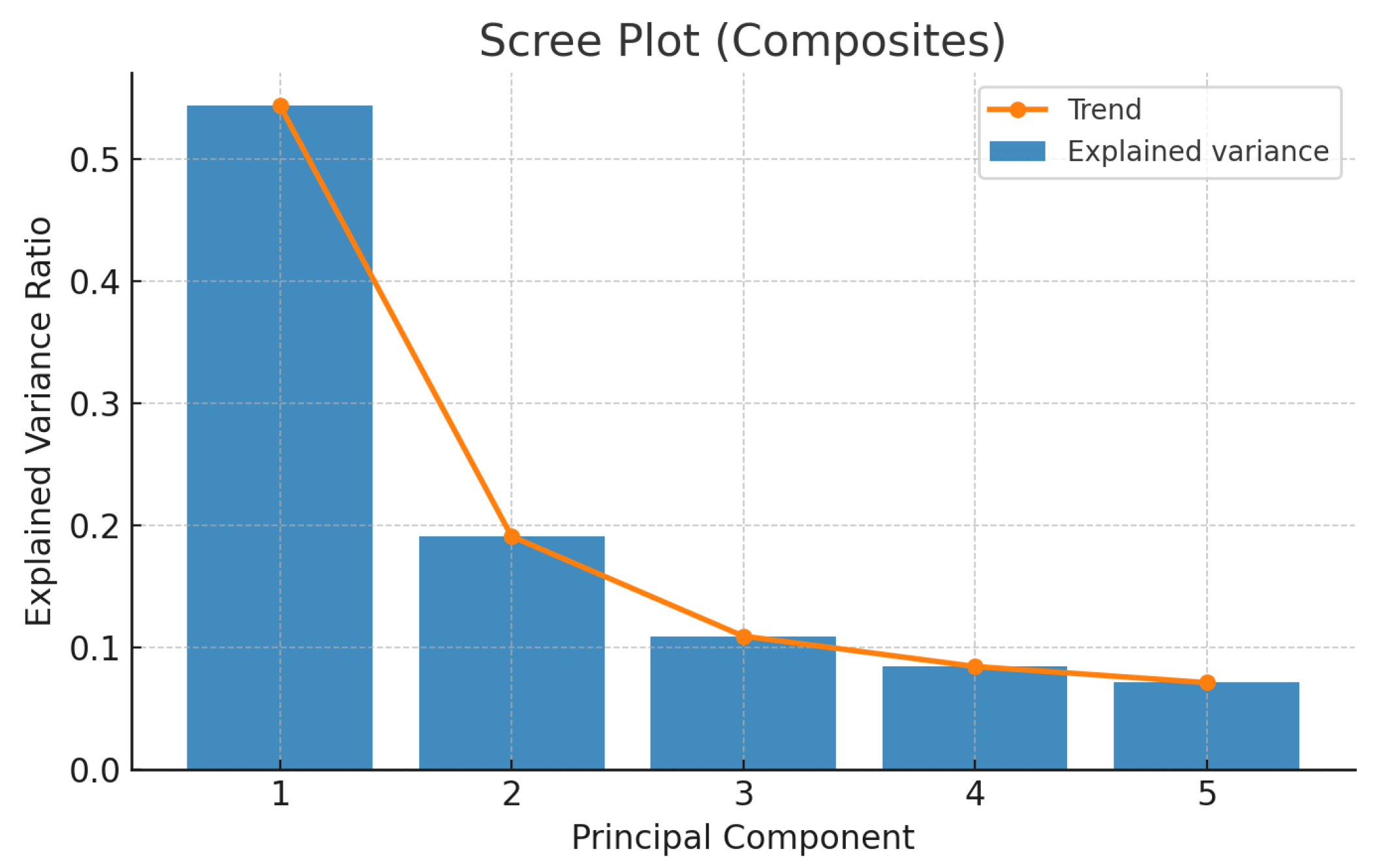
PCA was performed on the five composites. The scree plot (
Figure 3) shows that the first two components capture the majority of variance, with PC1 alone explaining 54.4%. The full variance explained is: PC1 = 54.4%, PC2 = 19.1%, PC3 = 10.9%, PC4 = 8.5%, PC5 = 7.1%.
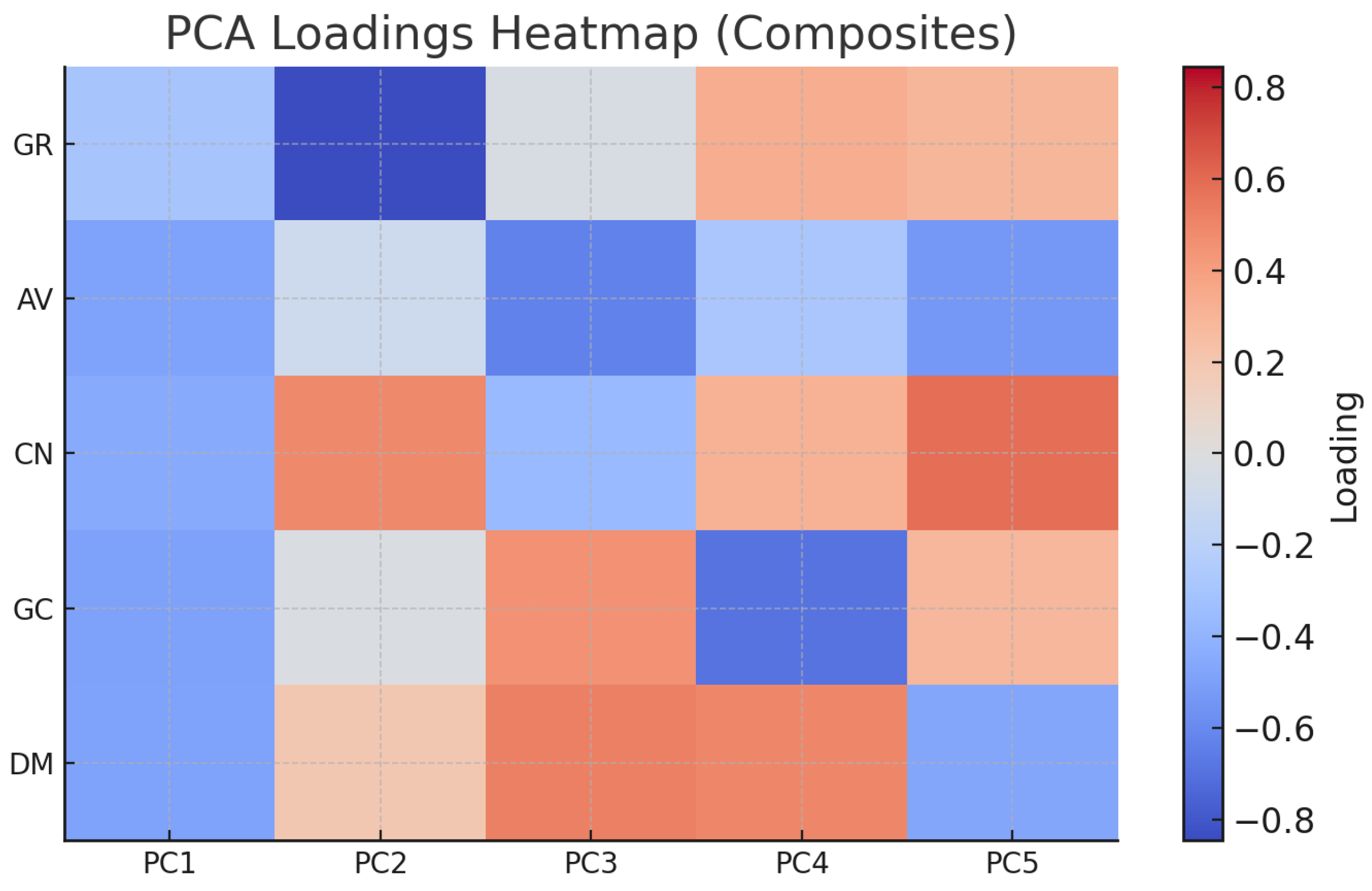
The factor loadings (
Table 5) and heatmap (
Figure 4) illustrate clear separation: AV and GC load strongly on PC1, CN is primarily represented in PC2, and DM spans PC3 and PC4.
5.3. Predictors of Digital Mobilisation
To examine the determinants of digital mobilisation during the July 2024 movement, a multiple linear regression model was estimated with digital mobilisation as the dependent variable and grievance recognition, access and visibility, communication networks, and global connectivity as explanatory variables. The results of the regression analysis are reported in
Table 6.
The model demonstrates strong overall explanatory power, accounting for approximately 44.5% of the variance in digital mobilisation (). The adjusted coefficient of determination () indicates that this explanatory capacity is not driven by overfitting and remains stable after accounting for model complexity. The overall model is statistically significant (, ), confirming the joint relevance of the included predictors. Substantively, an of 0.445 indicates that nearly half of the observed variation in digital mobilisation levels across respondents is explained by the four predictors included in the model. The adjusted of 0.436 demonstrates that this explanatory capacity remains stable after accounting for model complexity, suggesting that the model captures meaningful structure rather than random variation.
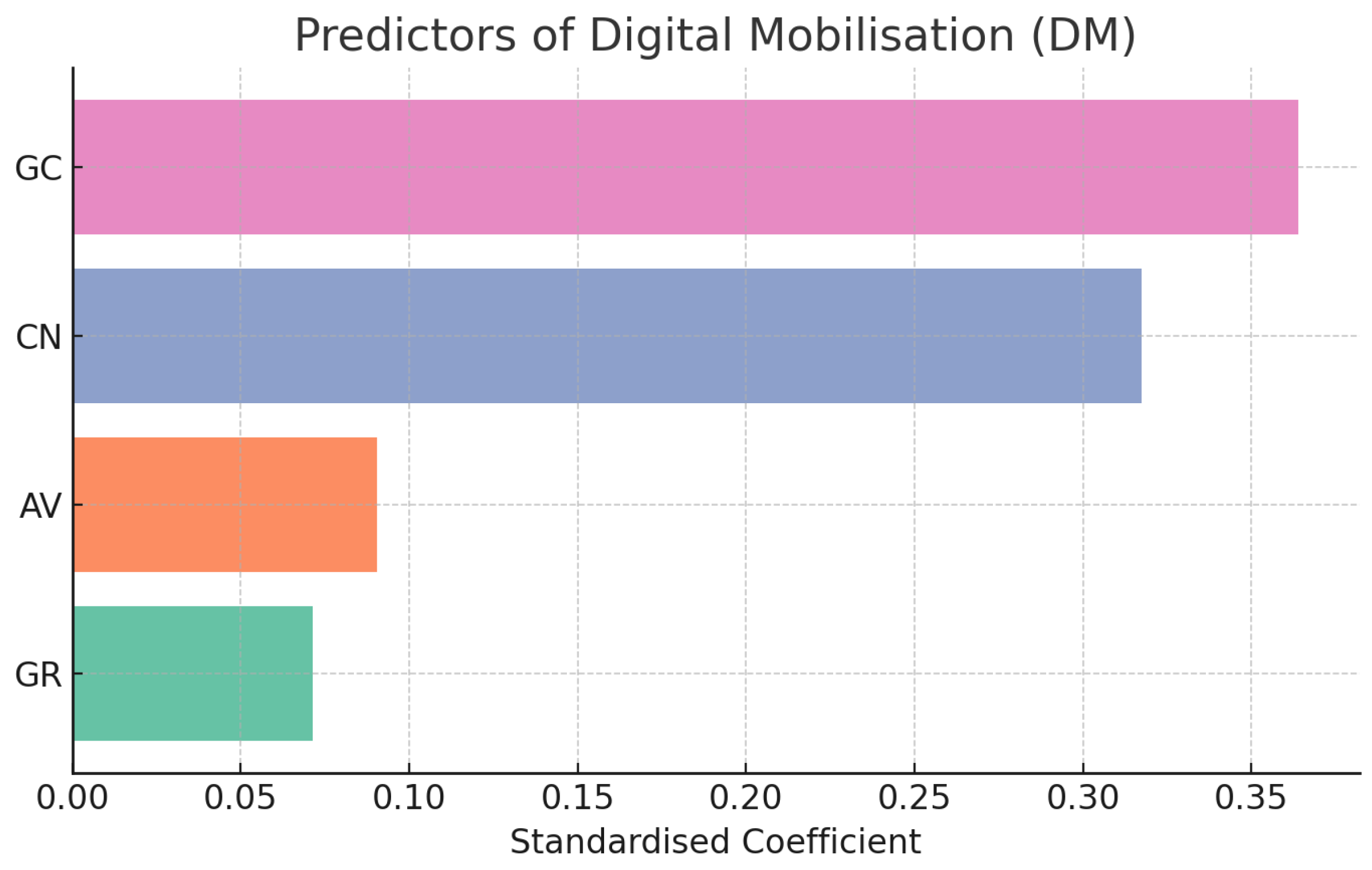
Among the independent variables, communication networks and global connectivity emerge as the most influential predictors of digital mobilisation. Communication networks exhibit a strong and statistically significant positive association with digital mobilisation (
,
), indicating that frequent interaction, content sharing, and participation in online political groups substantially increase the likelihood of active digital engagement. As shown in
Figure 5, Global connectivity also shows a robust positive effect (
,
), suggesting that exposure to transnational movements and perceptions of global solidarity play a central role in shaping digitally mediated mobilisation.
In contrast, grievance recognition and access and visibility do not reach conventional levels of statistical significance. Although both variables display positive coefficients, their effects remain comparatively weak (grievance recognition: , ; access and visibility: , ). This indicates that awareness of political grievances and access to digital platforms, while necessary background conditions, are insufficient on their own to drive sustained digital mobilisation without the presence of dense communicative networks and global linkages.
Overall, the regression results underscore the importance of networked interaction and transnational connectivity in translating political awareness into digitally coordinated collective action. These findings align with network-centric theories of mobilisation and highlight the structural role of communication flows in contemporary digitally mediated protest dynamics.
Residual diagnostics were conducted to assess distributional assumptions underlying the regression model. A Shapiro–Wilk test applied to the standardized regression residuals indicates a mild departure from normality (, ). This result is corroborated by a Jarque–Bera test (, ). Given the sample size () and the use of standardized composite measures, linear regression inference is asymptotically robust to such deviations, and the estimated coefficients and significance levels are not materially affected.
5.4. Respondent Segmentation
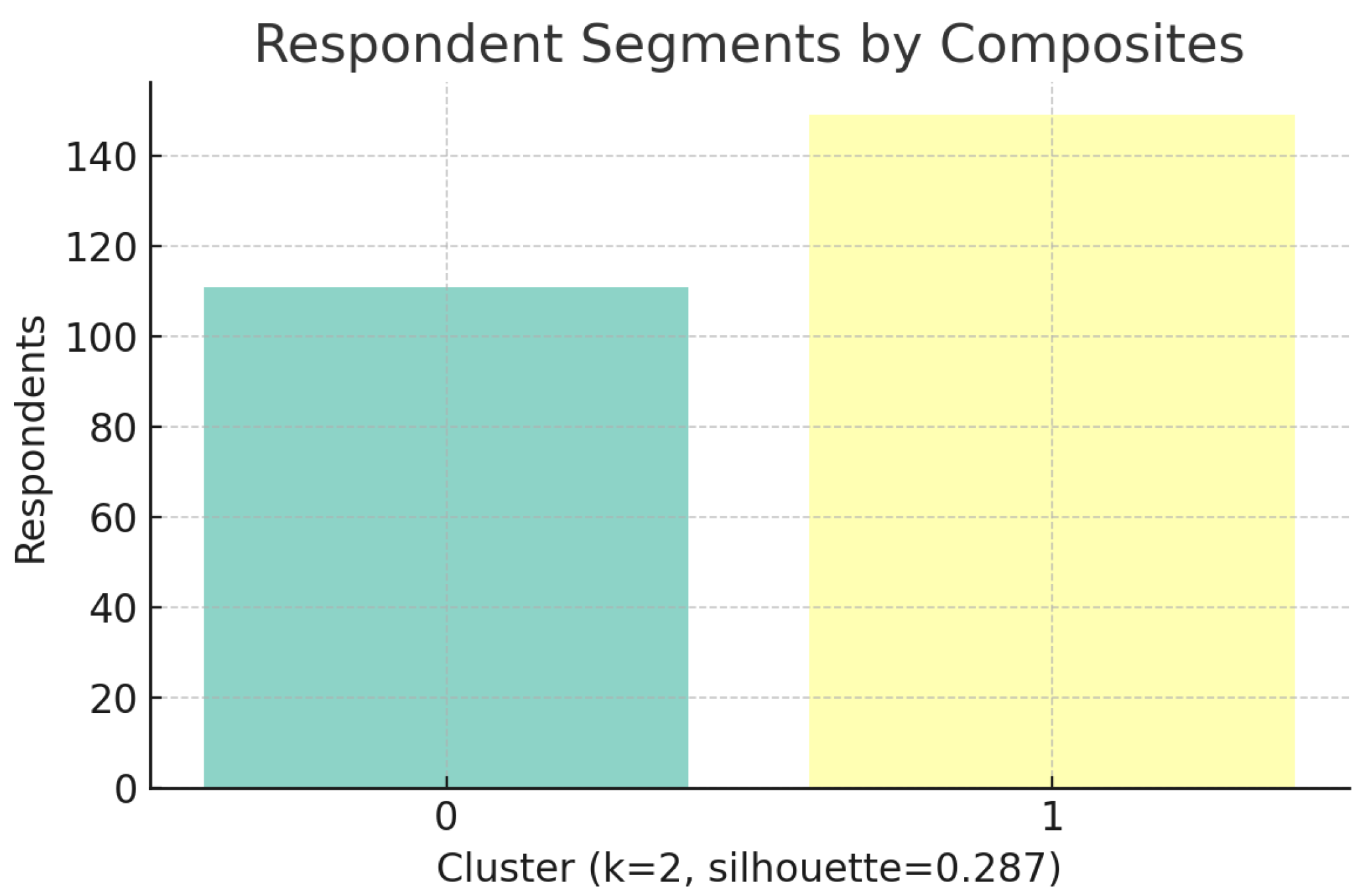
K-means clustering on GR, AV, CN, and GC composites yielded two segments (silhouette = 0.287). Cluster 0 (
) represents lower mobilisation and connectivity, while Cluster 1 (
) indicates high mobilisation and global consciousness (see
Figure 6).
The two-cluster solution was selected after comparing alternative k values (k = 2–4) using silhouette scores and interpretability criteria. The k = 2 solution provided the most stable and theoretically meaningful segmentation, distinguishing respondents with consistently low versus high levels of connectivity and global consciousness. Importantly, this segmentation highlights the transition from passive engagement to active mobilisation, underscoring the role of CN and GC as key differentiators.
5.5. Summary of Findings
Taken together, the results suggest that digital mobilisation during the July 2024 uprising was not driven solely by access or grievances, but more substantially by the degree of connectivity within communities and a sense of global consciousness. These factors distinguish mobilised respondents from less engaged groups.
6. Discussion
6.1. Key Findings and Magnitudes (What the Numbers Mean)
This study, based on
respondents, yields several robust empirical regularities that are immediately relevant for policy. First, the five constructs are measured with acceptable internal consistency (
Table 4):
,
,
,
, and
. Second, dimensionality analysis confirms a compact structure (
Figure 3): the first two principal components account for
and
of variance, respectively, with the full five-component solution exhausting
(PC3
, PC4
, PC5
). Third, standardised regression of digital mobilisation on the four predictors (
Table 6) indicates that
global consciousness (
) and
connectivity/community (
) are the dominant levers, while
access/exposure (
) and
grievances (
) play auxiliary roles. The model explains a substantial share of variance (
) in mobilisation intent/behaviour.
To make magnitudes tangible, note that the composite DM scale spans 1–5 with empirical mean
and SD
. A
SD increase in
connectivity is associated with a
SD rise in DM, i.e., about
points on the 1–5 scale; a
SD increase in
global consciousness corresponds to ∼0.36 SD or ∼0.34 points. Because the regression model in Equation (
6) is linear and estimated on standardised predictors, the marginal effects of connectivity and global consciousness can be interpreted additively for illustrative purposes. Under this simple additive interpretation, jointly increasing CN and GC by one standard deviation each implies an average gain of approximately 0.60 points on the 1–5 digital mobilisation scale. The counterfactual that follows is therefore intended solely to make the magnitude of these coefficients more concrete, rather than to assert a behavioural or causal additivity assumption. A counterfactual illustration: if each respondent’s DM score increased by
, the share classified as “high mobilisation” (DM
) would rise from 40% to 60% in this sample (a
percentage-point shift). (This scenario analysis is descriptive and based on the fitted linear model; it is not a causal claim.)
Finally, unsupervised segmentation on the four predictors yields two audience profiles (
Figure 6): Cluster 0 (lower mobilisation/engagement;
) and Cluster 1 (higher mobilisation/engagement;
), with moderate separation (silhouette
). This indicates a
continuum rather than sharp polarisation, which matters for targeting.
6.2. Discussion on Research Hypothesis
The empirical results provide partial support for H1 and H2, indicating that grievances and access contribute to mobilisation but with comparatively modest effects. Strong support is found for H3 and H4, as connectivity and global consciousness emerge as the most influential predictors. H5 is further supported by the clustering results, which show that higher mobilisation profiles are characterised by elevated connectivity and global consciousness rather than grievance intensity alone. Rather than positing hypotheses as purely confirmatory statements, this study adopts an analytically grounded approach in which theoretically motivated expectations are evaluated through multivariate statistical modelling and unsupervised segmentation. This strategy is consistent with contemporary empirical research in computational social science, where hypotheses concerning complex social mechanisms are tested through observed patterns, effect magnitudes, and structural differentiation rather than binary acceptance or rejection alone (as demonstrated in our recent studies in [
39,
40]).
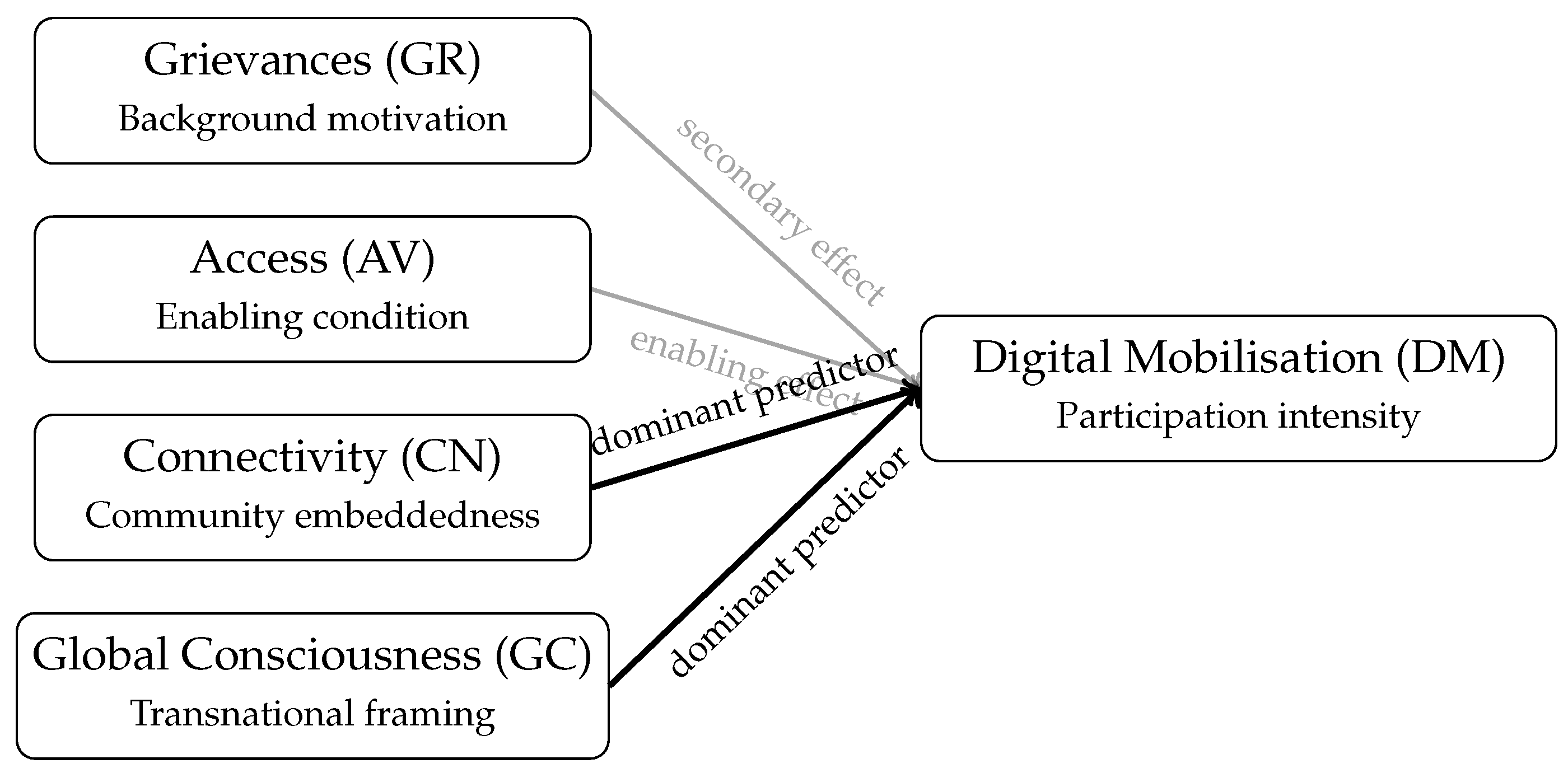
Figure 7 provides a contextual summary of the empirical relationships identified in the regression and clustering analyses, highlighting the relative strength of each predictor.
These findings align with prior research on connective action and digitally mediated protest, which emphasises the role of networked communication over organisational hierarchies. Similar patterns have been observed in studies of the Arab Spring, Occupy, and Hong Kong protests, where connectivity and framing outweighed access alone [
4,
6,
14,
15,
16,
41]. However, the present study extends this literature by quantitatively demonstrating these mechanisms within the Bangladeshi context, thereby contributing empirical evidence from a Global South setting that remains underrepresented in computational mobilisation research.
6.3. Mechanisms and Practical Interpretation (How Influence Travels)
Taken together, the empirical results point to a clear mechanism through which digital mobilisation emerges and propagates during the July 2024 uprising. Mobilisation is not triggered by any single factor in isolation, but rather unfolds through an interaction between social embedding, interpretive framing, and pre-existing discontent. At the core of this process lies networked connectivity, which functions as a catalytic infrastructure for mobilisation. Respondents who are embedded within denser online communities, participate in groups, and maintain frequent interpersonal exchanges exhibit substantially higher mobilisation scores. These network structures create social proof, lower coordination costs, and accelerate the diffusion of calls to action, transforming individual awareness into collective readiness.
Global consciousness operates as a complementary mechanism that supplies meaning, legitimacy, and resolve. Exposure to transnational narratives, comparative injustice, and global solidarity frames appears to convert diffuse concern into purposeful intent. In particular, video-centric environments such as Facebook and YouTube facilitate forms of mediated witnessing that connect local events to global struggles, reinforcing perceptions of moral urgency and collective efficacy. This framing process does not merely inform participants but situates their local grievances within a broader symbolic order, making participation feel consequential rather than futile.
By contrast, access and exposure to social media platforms play a necessary but limited role. While reliable internet access and frequent platform use enable information flow, their independent contribution to mobilisation is comparatively modest once connectivity and global consciousness are taken into account. Raw exposure without embeddedness or credible framing does not travel far along the pathway from cognition to coordination to action. This finding underscores the distinction between being online and being socially mobilised, highlighting that infrastructure alone is insufficient to generate sustained engagement.
Grievances, finally, function as background conditions rather than primary drivers once network and framing effects are considered. Perceived repression, corruption, and inequality are widespread among respondents and provide the motivational substrate for protest, but their marginal effect on mobilisation is smaller than that of connectivity and global consciousness. Mobilisation, therefore, is propelled not only by what individuals feel, but by how they are socially connected and which interpretive frames they consume. This mechanism-level interpretation helps explain why similar levels of grievance can yield sharply different mobilisation outcomes depending on network structure and symbolic context, offering a coherent account of how influence travels from discontent to coordinated digital action.
In light of the results, the most defensible implication is that mobilisation intensity is more strongly associated with networked connectivity and global consciousness than with access or grievance levels alone. Accordingly, any institutional or platform-level responses should be interpreted as illustrative consequences of these associations, rather than as prescriptive interventions, and should focus analytically on how community embeddedness and credible framing shape mobilisation dynamics.
6.4. Implications for Strategic Policy and Platform Governance
Beyond theoretical interpretation, the empirical results of this study can be translated into operational scenarios that clarify how digital mobilisation may be influenced, monitored, and evaluated in practice. The regression coefficients and clustering outcomes provide a basis for defining construct-level benchmarks that are meaningful for policy design, institutional intervention, and future empirical monitoring. Rather than treating mobilisation as a binary outcome, the findings support an incremental and graded view in which changes in connectivity and global consciousness yield predictable shifts in mobilisation intensity.
From an operational perspective, changes in the connectivity composite offer a particularly informative lever. Moderate increases in online community embeddedness, such as greater participation in groups, more frequent peer to peer communication, or stronger bridging ties across networks, are associated with measurable increases in mobilisation scores. Even partial improvements in these dimensions are expected to translate into observable gains in engagement, suggesting that interventions targeting community infrastructure can yield returns without requiring universal participation or saturation.
Global consciousness provides a second, complementary metric that captures the interpretive dimension of mobilisation. Increases in exposure to transnational frames, comparative narratives, and global solidarity discourses correspond to substantial gains in mobilisation, particularly when these frames are perceived as credible and contextually relevant. Operationally, this implies that initiatives focused on contextual explanation, credible witnessing, and symbolic linkage between local events and global norms can amplify mobilisation beyond what would be achieved through generic information dissemination alone.
Importantly, the joint movement of connectivity and global consciousness produces effects that exceed those associated with either construct in isolation. Sustained increases in both dimensions correspond to a marked upward shift in average mobilisation levels and a substantial expansion in the proportion of highly mobilised respondents. This pattern suggests that effective mobilisation strategies are unlikely to succeed if they target network infrastructure or narrative framing in isolation. Instead, influence is maximised when social embedding and meaning making are reinforced simultaneously.
The clustering results further support the use of segmentation-based metrics for operational monitoring. The presence of two moderately separated mobilisation profiles indicates that mobilisation exists along a continuum rather than as a sharply polarised divide. Tracking changes in cluster membership, centroid positions, and separation over time can therefore serve as an early indicator of whether engagement is broadening across the population or consolidating within already active segments. In this sense, clustering metrics function not merely as descriptive tools but as diagnostic instruments for assessing the inclusiveness and trajectory of mobilisation.
Taken together, these operational scenarios underscore that the study’s results are not confined to retrospective explanation. They offer a framework for translating abstract constructs into measurable targets, allowing researchers, policymakers, and platform stakeholders to evaluate how specific interventions shape mobilisation pathways. By grounding these scenarios in empirically estimated relationships rather than normative assumptions, the analysis provides a disciplined basis for applying digital mobilisation research to real world contexts.
6.5. Operational Scenarios and Metrics (How to Use the Results)
For policy pilots, we recommend goal-setting in terms of construct-level KPIs tied to the coefficients:
Connectivity KPI (CN): Mean composite points (on 1–5) in priority districts ⇒ expected ∼0.16 SD rise in DM (≈0.15 points), holding other factors fixed.
Global Consciousness KPI (GC): Mean composite points ⇒ expected ∼0.29 SD rise in DM (≈0.27 points).
Joint CN + GC target: Sustained increases of SD each forecast an average DM-point uplift and a potential increase in the high-mobilisation share from to (scenario in this sample).
Segmentation metric: Track the relative size of the high-mobilisation cluster and its centroid over time; maintain silhouette as a watch-point—rising silhouette may indicate hardening polarisation; falling silhouette with rising DM may indicate broad-based engagement.
6.6. Limitations and Validity Considerations
Several caveats temper interpretation. (i) The data are cross-sectional and self-reported; causal claims require design-based identification. (ii) Likert compositing treats ordinal responses as approximately interval; while reliability is high and PCA is robust at the composite level, future work should add polychoric factor analysis and confirmatory models. (iii) Sampling is not necessarily nationally representative; external validity depends on coverage. (iv) The regression and scenario arithmetic summarise average associations; heterogeneous treatment effects likely exist across age, geography, and connectivity baselines. (v) Clustering yields interpretable segments but with moderate silhouette (), indicating a continuum rather than sharp demarcations.
6.7. Future Research
Priority extensions include: multi-wave panel designs to estimate dynamic effects; multi-group (or multilevel) SEM to test structural differences across strata; causal estimators (e.g., doubly robust or instrumental-variable approaches) for exposure-to-mobilisation pathways; and integration of platform telemetry (e.g., group graph statistics, verified source overlays) with survey-based constructs to triangulate mechanisms.
6.8. Bottom Line for Decision-Makers
For strategic policy, the actionable message is straightforward: connect people to each other and to credible, contextual meaning. Investments that raise connectivity/community and global consciousness—not merely overall exposure—are associated with the largest gains in digital mobilisation. In the present data, lifting both by one standard deviation corresponds to a predicted -point increase on the mobilisation scale and a potential percentage-point rise in the highly mobilised share. Programmes that operationalise these levers—verified community hubs, credible explainer channels, and rapid integrity responses—offer the most leverage for safe, informed, and coordinated civic participation.
7. Conclusions
This study offers one of the first systematic, empirically grounded examinations of the July 2024 uprising in Bangladesh, focusing on the interaction of grievances (GR), access (AV), connectivity (CN), and global consciousness (GC) in shaping digital mobilisation (DM). Employing an integrated methodological pipeline that combines composite scaling, principal component analysis, regression modelling, and clustering, the analysis translates survey responses from participants into statistically validated insights. The findings demonstrate that connectivity () and global consciousness () are the strongest predictors of mobilisation, jointly associated with an increase of +0.60 points on the 1–5 mobilisation scale. This effect corresponds to a twenty percentage point rise in the share of highly mobilised respondents, from forty percent to sixty percent. Construct reliability was confirmed with Cronbach’s values ranging between 0.694 and 0.859, and principal component analysis showed that the first two components accounted for 73.5% of the variance, confirming the coherence of the measurement framework.
Clustering analysis revealed two respondent profiles, a lower-mobilisation group () and a higher-mobilisation group (), with a silhouette score of 0.287, indicating that mobilisation exists on a continuum rather than as a binary division. These results establish that mobilisation is not solely a function of grievance intensity or social media access, but rather depends critically on the presence of strong community ties and the framing of events through global consciousness.
The academic significance of this research lies in its ability to bridge theory, method, and context. Empirically, it quantifies the mechanisms through which digital infrastructures and meaning-making processes translate discontent into mobilisation within a Global South context. Conceptually, it extends theories of collective action by identifying connectivity and global consciousness as statistically robust mobilisation multipliers. Practically, it informs policy and governance by demonstrating that fostering online communities and amplifying globally resonant frames are likely to yield the most significant gains in constructive civic participation. This study therefore provides a replicable framework that advances social movement theory and offers actionable insights into the dynamics of technology-enabled mobilisation in contested political environments.
Author Contributions
Conceptualisation, F.S., A.K.M.I.I. and S.I.; methodology, F.S.; software, F.S.; validation, S.I., A.B.A. and M.A.J.; formal analysis, F.S.; investigation, F.S.; resources, S.I., A.K.M.I.I. and M.A.J.; data curation, S.I.; writing—original draft preparation, F.S.; writing—review and editing, F.S. and A.B.A.; visualisation, F.S.; supervision, M.A.J.; project administration, A.K.M.I.I.; funding acquisition, F.S. All authors have read and agreed to the published version of the manuscript.
Funding
This research received no external funding.
Institutional Review Board Statement
The study was conducted in accordance with the Declaration of Helsinki, and approved by the Institutional Review Board of Faculty of of Business, Law and Politics Research Ethics Committee at the University of Hull (protocol code HU67RX453 and 7 August 2025 of approval). Original research title approved the Ethics committee was “Analyzing Castells’ Network Society Theory in the context of the 2024 July revolution in Bangladesh with a focus on Facebook and YouTube”.
Informed Consent Statement
Informed consent was obtained from all participants involved in the study.
Data Availability Statement
Acknowledgments
The authors express their sincere gratitude to the Faculty of Business, Law and Politics, University of Hull, for its oversight and ethical approval of this research (HU67RX, United Kingdom). Special appreciation is extended to the Department of Management, University of Dhaka, for facilitating access to respondents and for logistical support during the survey administration phase. The authors acknowledge the invaluable contributions of participating students whose informed and voluntary responses enabled the empirical foundation of this study.
Conflicts of Interest
The authors declare no conflicts of interest.
Abbreviations
The following abbreviations are used in this manuscript:
| AV | Access/Exposure |
| CN | Connectivity/Community |
| DM | Digital Mobilisation |
| GC | Global Consciousness |
| GR | Grievances |
| PCA | Principal Component Analysis |
| GCN | Global Consciousness and Networked Connectivity |
References
- Suh, D.; Vasi, I.B.; Chang, P.J. How social media matter: Repression and the diffusion of the Occupy Wall Street movement. Soc. Sci. Res. 2017, 65, 282–293. [Google Scholar] [CrossRef] [PubMed]
- Stockemer, D. The internet: An important tool to strengthening electoral integrity. Gov. Inf. Q. 2018, 35, 43–49. [Google Scholar] [CrossRef]
- Cariolle, J.; Elkhateeb, Y.; Maurel, M. Misinformation technology: Internet use and political misperceptions in Africa. J. Comp. Econ. 2024, 52, 400–433. [Google Scholar] [CrossRef]
- Liedong, A.L.; Aghanya, D.; Jimenez, A.; Rajwani, T. Corporate political activity and bribery in Africa: Do internet penetration and foreign ownership matter? J. Bus. Res. 2023, 154, 113326. [Google Scholar] [CrossRef]
- Renshaw, D.; Carley, K.M. Linking online activity to offline behavior: A meta-review of three decades of online-to-offline scholarship with future implications for AI. Emerg. Trends Drugs Addict. Health 2024, 4, 100154. [Google Scholar] [CrossRef]
- Chong, D. Political Protest and Civil Disobedience. In International Encyclopedia of the Social & Behavioral Sciences, 2nd ed.; Elsevier: Amsterdam, The Netherlands, 2015; pp. 421–426. [Google Scholar] [CrossRef]
- Hair, J.F.; Black, W.C.; Babin, B.J.; Anderson, R.E. Multivariate Data Analysis, 8th ed.; Cengage: Boston, MA, USA, 2019. [Google Scholar]
- Samya, J.; Tonmoy, M.T.H.; Rabbi, M. A cognitive behaviour data analysis on the use of social media in global south context focusing on Bangladesh. Sci. Rep. 2023, 13, 4236. [Google Scholar] [CrossRef]
- Amit, S. Transnational connections and religious change: How UK Bangladeshi diaspora networks shape religious practices in Sylhet. Res. Glob. 2025, 10, 100286. [Google Scholar] [CrossRef]
- Greijdanus, H.; Fernandes, C.A.d.M.; Turner-Zwinkels, F.; Honari, A.; Roos, C.A.; Rosenbusch, H.; Postmes, T. The psychology of online activism and social movements: Relations between online and offline collective action. Curr. Opin. Psychol. 2020, 35, 49–54. [Google Scholar] [CrossRef]
- Al-Saggaf, Y.; Simmons, P. Social media in Saudi Arabia: Exploring its use during two natural disasters. Technol. Forecast. Soc. Change 2015, 95, 3–15. [Google Scholar] [CrossRef]
- Geraci, A.; Nardotto, M.; Reggiani, T.; Sabatini, F. Broadband Internet and social capital. J. Public Econ. 2022, 206, 104578. [Google Scholar] [CrossRef]
- Lee, F.L.F.; Chan, J.M. Digital media use and participation leadership in social protests: The case of Tiananmen commemoration in Hong Kong. Telemat. Inform. 2015, 32, 879–889. [Google Scholar] [CrossRef]
- Martin, B. Technology, Violence, and Peace. Encycl. Violence Peace Confl. 2022, 1, 445–454. [Google Scholar] [CrossRef]
- Masías, V.; Hecking, T.; Hoppe, H.U. Social networking site usage and participation in protest activities in 17 Latin American countries. Telemat. Inform. 2018, 35, 1809–1831. [Google Scholar] [CrossRef]
- Lundgren, A.S.; Johansson, A. Digital rurality: Producing the countryside in online struggles for rural survival. J. Rural Stud. 2017, 51, 73–82. [Google Scholar] [CrossRef]
- Aouragh, M.; Alexander, A. The Egyptian Experience: Sense and Nonsense of the Internet Revolution. Int. J. Commun. 2011, 5, 1344–1358. [Google Scholar]
- Castells, M. The Rise of the Network Society, 1st ed.; Blackwell Publishers: Malden, MA, USA, 1996; Volume I. [Google Scholar]
- Castells, M. The Network Society Revisited. Am. Behav. Sci. 2022, 67, 940–946. [Google Scholar] [CrossRef]
- Castells, M. Networks of Outrage and Hope: Social Movements in the Internet Age; John Wiley & Sons: Hoboken, NJ, USA, 2015. [Google Scholar]
- Comunello, F.; Mulargia, S. Does the “Platform Society” Mean the End of the “Network Society?” Reflections on Platforms and the Structure and Dynamics of Networks. Am. Behav. Sci. 2023, 67, 859–871. [Google Scholar] [CrossRef]
- Fuchs, C. The Political Economy of Privacy on Facebook. Telev. New Media 2012, 13, 139–159. [Google Scholar] [CrossRef]
- Shirky, C. The Political Power of Social Media: Technology, the Public Sphere, and Political Change. Foreign Aff. 2011, 90, 28–41. [Google Scholar]
- Slavina, A.; Brym, R. Demonstrating in the internet age: A test of Castells’ theory. Soc. Mov. Stud. 2020, 19, 201–221. [Google Scholar] [CrossRef]
- Sigurdsen, P.; Iyer, R. A Double-Edged Sword: The Role of Social Media in the 2024 Political Uprising in Bangladesh; TechPolicy Press: Bristol, UK, 2024; Available online: https://techpolicy.press/a-double-edged-sword-the-role-of-social-media-in-the-2024-political-uprising-in-bangladesh (accessed on 1 February 2026).
- Zhen, F.; Tang, J.; Wang, X. How Does Castells’s The Rise of the Network Society Contribute to Research in Human Geography? A Citation Content and Context Analysis. Prof. Geogr. 2020, 72, 96–108. [Google Scholar] [CrossRef]
- Bennett, W.L.; Segerberg, A. The Logic of Connective Action: Digital Media and the Personalization of Contentious Politics. Inf. Commun. Soc. 2012, 15, 739–768. [Google Scholar] [CrossRef]
- Gerbaudo, P. Tweets and the Streets: Social Media and Contemporary Activism; Pluto Press: London, UK, 2012. [Google Scholar]
- Morozov, E. The Net Delusion: The Dark Side of Internet Freedom; PublicAffairs: New York, NY, USA, 2011. [Google Scholar]
- Tufekci, Z. Twitter and Tear Gas: The Power and Fragility of Networked Protest; Yale University Press: New Haven, CT, USA, 2017. [Google Scholar]
- Maghrabi, R.; Salam, A.F. Social Media and Citizen Social Movement Process for Political Change: The Case of the 2011 Egyptian Revolution. In Proceedings of the International Conference on Information Systems (ICIS 2013), Milan, Italy, 15–18 December 2013; pp. 1–16. [Google Scholar]
- Sufi, F.; Alghamdi, M.J.; Alsulami, M. Mapping the Global Discourse on Sustainable Development: A Sentiment-Based Clustering of SDG Narratives Across 100 Countries. Sustainability 2025, 17, 7455. [Google Scholar] [CrossRef]
- Shadish, W.R.; Cook, T.D.; Campbell, D.T. Experimental and Quasi-Experimental Designs for Generalized Causal Inference; Houghton Mifflin: Boston, MA, USA, 2002. [Google Scholar]
- Cohen, J. A power primer. Psychol. Bull. 1992, 112, 155–159. [Google Scholar] [CrossRef] [PubMed]
- Green, S.B. How many subjects does it take to do a regression analysis? Multivar. Behav. Res. 1991, 26, 499–510. [Google Scholar] [CrossRef]
- Tabachnick, B.G.; Fidell, L.S. Using Multivariate Statistics, 7th ed.; Pearson: London, UK, 2019. [Google Scholar]
- Podsakoff, P.M.; MacKenzie, S.B.; Lee, J.; Podsakoff, N.P. Common method biases in behavioral research: A critical review of the literature and recommended remedies. J. Appl. Psychol. 2003, 88, 879–903. [Google Scholar] [CrossRef]
- Krumpal, I. Determinants of social desirability bias in sensitive surveys: A literature review. Qual. Quant. 2013, 47, 2025–2047. [Google Scholar] [CrossRef]
- Sufi, F.K. A New Computational Method for Quantification and Analysis of Media Bias in Cybersecurity Reporting. IEEE Trans. Comput. Soc. Syst. 2025, 12, 4561–4570. [Google Scholar] [CrossRef]
- Sufi, F.; Alsulami, M. Disaster in the Headlines: Quantifying Narrative Variation in Global News Using Topic Modeling and Statistical Inference. Mathematics 2025, 13, 2049. [Google Scholar] [CrossRef]
- Gelvin, J.L. The Arab Uprisings: What Everyone Needs to Know; Oxford University Press: New York, NY, USA, 2015. [Google Scholar]
Figure 1.
AI- and ML-driven methodological pipeline of the study. Survey responses on grievances (GR), access (AV), connectivity (CN), global consciousness (GC), and digital mobilisation (DM) were collected using Google Forms. These were transformed using a CA–Regression–Clustering framework, which condenses responses into composites, identifies the strongest predictors of mobilisation, and segments respondents into mobilisation groups. The framework highlights that connectivity (CN) and global consciousness (GC) are the most powerful mobilisation drivers, with access (AV) and grievances (GR) playing secondary roles.
Figure 1.
AI- and ML-driven methodological pipeline of the study. Survey responses on grievances (GR), access (AV), connectivity (CN), global consciousness (GC), and digital mobilisation (DM) were collected using Google Forms. These were transformed using a CA–Regression–Clustering framework, which condenses responses into composites, identifies the strongest predictors of mobilisation, and segments respondents into mobilisation groups. The framework highlights that connectivity (CN) and global consciousness (GC) are the most powerful mobilisation drivers, with access (AV) and grievances (GR) playing secondary roles.
Figure 2.
Conceptual pipeline of the methodology. Raw survey responses from Likert-scale items (grievances, access, connectivity, global consciousness, and mobilisation) are first aggregated into composite scores. Reliability is then evaluated using Cronbach’s , followed by dimensionality reduction via PCA to examine latent structures. Predictive modelling with regression quantifies the effects of predictors on digital mobilisation, and k-means clustering segments respondents into mobilisation typologies.
Figure 2.
Conceptual pipeline of the methodology. Raw survey responses from Likert-scale items (grievances, access, connectivity, global consciousness, and mobilisation) are first aggregated into composite scores. Reliability is then evaluated using Cronbach’s , followed by dimensionality reduction via PCA to examine latent structures. Predictive modelling with regression quantifies the effects of predictors on digital mobilisation, and k-means clustering segments respondents into mobilisation typologies.
Figure 3.
Scree plot showing explained variance ratio of the first five principal components.
Figure 3.
Scree plot showing explained variance ratio of the first five principal components.
Figure 4.
Heatmap of PCA loadings across the five composites.
Figure 4.
Heatmap of PCA loadings across the five composites.
Figure 5.
Predictors of digital mobilisation (standardised coefficients).
Figure 5.
Predictors of digital mobilisation (standardised coefficients).
Figure 6.
Respondent segmentation into two clusters (k = 2).
Figure 6.
Respondent segmentation into two clusters (k = 2).
Figure 7.
Contextual interpretation of predictors of digital mobilisation. Connectivity and global consciousness emerge as the dominant empirical drivers of mobilisation intensity, while grievances and access function as background and enabling conditions.
Figure 7.
Contextual interpretation of predictors of digital mobilisation. Connectivity and global consciousness emerge as the dominant empirical drivers of mobilisation intensity, while grievances and access function as background and enabling conditions.
Table 1.
Summary of notation.
Table 1.
Summary of notation.
| Symbol | Definition |
|---|
| n | Number of respondents |
| p | Total number of survey items |
| Response of respondent i to item j, , |
| Index set of items corresponding to block |
| Composite score of respondent i for block B |
| Cronbach’s alpha reliability for block B |
| Standardised data matrix of composites () |
| Principal component scores () |
| Eigenvalue of the covariance matrix for component k |
| Explained variance ratio of component k |
| Regression coefficient for predictor block B |
| Standardised composite score for respondent i and block B |
| Set of respondents in cluster k |
| Centroid of cluster k in k-means |
| Silhouette score of observation i |
Table 2.
Demographic distribution of survey respondents ().
Table 2.
Demographic distribution of survey respondents ().
| Characteristic | Category | Percentage |
|---|
| Age group | 18–24 | 54.2% |
| | 25–34 | 21.5% |
| | 35–44 | 13.1% |
| | 45–54 | 7.3% |
| | 55+ | 3.9% |
| Gender | Male | 68.5% |
| | Female | 29.2% |
| | Other | 2.3% |
| Education | Some college/university | 45.0% |
| | Bachelor’s degree | 30.0% |
| | Postgraduate degree | 15.0% |
| | Secondary or below | 10.0% |
| Internet access | Yes | 96.9% |
| | No | 3.1% |
| Protest participation | Yes | 59.2% |
| | No | 40.8% |
Table 3.
Summary statistics for Likert-scale items (). Values indicate the most frequent response category.
Table 3.
Summary statistics for Likert-scale items (). Values indicate the most frequent response category.
| Construct | Ref. | Construct Code and Name | Survey Question | Modal Response |
|---|
| Grievances (GR) | [17,18,19,20,21,22,23,24,25,26] | GR1: Political repression | Political repression is a major issue in Bangladesh | Strongly agree |
| GR2: Economic inequality | Economic inequality is a major issue in Bangladesh | Strongly agree |
| GR3: Corruption | Corruption is a significant issue in Bangladesh’s political system | Strongly agree |
Availability/
Access (AV) | [17,18,19,20,21,22,23,24,25,26] | AV1: Consistent access | I have consistent access to digital platforms like Facebook and YouTube | Agree |
| AV2: Engage with content | I frequently use Facebook or YouTube to engage with political content | Neutral |
| AV3: Reliable internet | I have reliable internet access to participate in online political activities | Agree |
| Connectivity (CN) | [17,18,19,20,21,22,23,24,25,26] | CN1: Communicate online | I communicate regularly on Facebook or YouTube about political issues | Neutral |
| CN2: Share protest content | I share political content related to protests or political issues on Facebook/YouTube | Neutral |
| CN3: Participate in groups | I actively participate in political groups or forums on Facebook/YouTube | Neutral |
Global
Consciousness (GC) | [17,18,19,20,21,22,23,24,25,26] | GC1: Awareness of global movements | I am aware of global movements like Black Lives Matter or climate change protests through social media | Agree |
| GC2: Sense of solidarity | I feel a sense of global solidarity with movements against social and political injustices | Agree |
| GC3: Participation in global campaigns | I have participated in global justice movements (e.g., via social media petitions, campaigns) | Neutral |
Digital
Mobilisation (DM) | [22,23,27,28,29,30] | DM1: Follow protests online | I followed the 2024 Bangladeshi protests on Facebook or YouTube | Agree |
| DM2: Share protest content | I frequently shared protest related contents and used different hashtags on Facebook and YouTube during the 2024 July uprising | Agree |
| DM3: Engage in discussions | I actively engaged in political discussions related to the protests (justify/criticize) on Facebook and YouTube | Neutral |
| DM4: Organise/attend protests | I regularly used Facebook or YouTube as a source to organize or attend protests (in favour/against) during the 2024 July Uprising in Bangladesh | Neutral |
Table 4.
Scale reliability statistics.
Table 4.
Scale reliability statistics.
| Scale | Items | Cronbach’s |
|---|
| GR (Grievances) | 3 | 0.859 |
| AV (Access/Exposure) | 3 | 0.694 |
| CN (Connectivity/Community) | 3 | 0.835 |
| GC (Global Consciousness) | 3 | 0.738 |
| DM (Digital Mobilisation) | 4 | 0.839 |
Table 5.
PCA loadings of composites on the first five components.
Table 5.
PCA loadings of composites on the first five components.
| | PC1 | PC2 | PC3 | PC4 | PC5 |
|---|
| GR | −0.296 | −0.846 | −0.033 | 0.335 | 0.287 |
| AV | −0.486 | −0.096 | −0.629 | −0.279 | −0.530 |
| CN | −0.446 | 0.489 | −0.358 | 0.306 | 0.584 |
| GC | −0.492 | −0.023 | 0.453 | −0.688 | 0.281 |
| DM | −0.485 | 0.186 | 0.520 | 0.493 | −0.466 |
Table 6.
Multiple linear regression results for predictors of digital mobilisation.
Table 6.
Multiple linear regression results for predictors of digital mobilisation.
| Predictor | Standardised | Std. Error | t-Value | p-Value |
|---|
| Grievance Recognition | 0.071 | 0.053 | 1.353 | 0.177 |
| Access and Visibility | 0.090 | 0.062 | 1.454 | 0.147 |
| Communication Networks | 0.317 | 0.058 | 5.459 | <0.001 |
| Global Connectivity | 0.364 | 0.058 | 6.230 | <0.001 |
| Disclaimer/Publisher’s Note: The statements, opinions and data contained in all publications are solely those of the individual author(s) and contributor(s) and not of MDPI and/or the editor(s). MDPI and/or the editor(s) disclaim responsibility for any injury to people or property resulting from any ideas, methods, instructions or products referred to in the content. |





 ,
,