1. Introduction
The acceleration of economic growth over recent decades, combined with the intensification of industrial activity and the increased consumption of natural resources, has generated significant environmental pressures, with consequences that threaten both ecological balance and the sustainability of future generations. In response to these challenges, international organisations and governments have placed sustainability at the centre of their agendas, as reflected in initiatives such as the United Nations Sustainable Development Goals [
1,
2]. Within this context, organisations are increasingly required to reassess their strategies and operational models by integrating environmental, social, and governance (ESG) criteria into the core of their activities [
3,
4,
5].
Environmental performance is now widely recognised as a critical dimension of overall organisational performance, as it is associated not only with regulatory compliance but also with competitive advantage, corporate reputation, and stakeholder trust [
6,
7,
8]. Contemporary organisations therefore move beyond isolated or technocratic environmental interventions and increasingly pursue integrated sustainability strategies aimed at reducing their ecological footprint while embedding environmental considerations across organisational functions and processes.
Although early organisational approaches to environmental management primarily focused on areas such as production, supply chain management, marketing, and research and development, the literature of recent decades has increasingly highlighted the pivotal role of the human factor in the formulation and implementation of sustainability strategies [
9,
10,
11]. Human Resource Management (HRM) constitutes a horizontal and strategically significant organisational function, as it is frequently examined in relation to employees’ attitudes, values, and, crucially, their pro-environmental behaviours, which are directly linked to organisational environmental performance [
12,
13]. Employees thus operate as the key micro-level mechanism through which organisational sustainability strategies are translated into tangible environmental outcomes.
The growing interest in the human dimension of environmental sustainability has also been accompanied by the use of diverse theoretical lenses. Research on Green Human Resource Management and employees’ green behavior has drawn on frameworks such as the Ability-Motivation-Opportunity (AMO) theory, which explains how HR practices enable and motivate employees to engage in discretionary behaviors, the Resource-Based View (RBV), which links human capital and organizational capabilities to sustainable competitive advantage, and the Conservation of Resources (COR) theory, which highlights how supportive organizational environments foster employees’ engagement in extra-role pro-environmental actions. However, these theoretical perspectives are often applied in isolation, and the field lacks an integrated overview of how such lenses collectively shape the conceptualization of GHRM, employees’ green behavior, and environmental performance.
Within this framework, Green Human Resource Management (GHRM) has emerged as a distinct and rapidly expanding field of research and practice. GHRM refers to the set of HR policies and practices that incorporate environmental objectives into recruitment, training and development, performance appraisal, and reward systems, with the aim of supporting organisational sustainability [
14,
15,
16,
17]. Through these practices, organisations seek not only to comply with environmental standards but also to strengthen the alignment between individual employee behaviour and organisational environmental goals [
18,
19].
The contemporary literature further emphasises that GHRM practices function as mechanisms for transmitting environmental values and signals to employees, indicating the degree of managerial commitment to environmental protection. Green-oriented HR practices—such as environmentally conscious recruitment, green training and development, and reward systems for pro-environmental behaviour—have been shown to significantly influence employees’ attitudes, perceptions, and day-to-day behaviours [
20,
21,
22]. In this way, HRM evolves from a primarily administrative support function into a strategic lever for sustainable development and enhanced environmental performance [
23].
A central concept in the discussion of the relationship between GHRM and environmental performance is employees’ green behaviour. Green behaviour encompasses both environmentally responsible actions performed within formal job requirements and voluntary behaviours that extend beyond prescribed roles, contributing to the reduction in an organisation’s environmental footprint [
24,
25]. Employees’ green behaviour is frequently conceptualised as a key mediating mechanism through which GHRM practices are linked to environmental performance.
Despite the growing body of research on Green Human Resource Management, the mechanisms through which HR practices shape employees’ green behaviour and influence environmental performance remain fragmented and insufficiently synthesised. In particular, there is a lack of a comprehensive and quantitatively grounded overview of the longitudinal development of the literature, the dominant thematic streams, and the research gaps that continue to characterise the field.
Bibliometric analysis provides a robust methodological approach for the systematic mapping of a research domain, enabling the quantitative assessment of scientific output, collaboration networks, thematic clusters, and research trends. Compared to narrative literature reviews, bibliometric reviews offer enhanced transparency, reproducibility, and objectivity, thereby facilitating the identification of structural patterns and knowledge gaps within a research field.
Although research on Green Human Resource Management, employees’ green behaviour, and environmental performance has expanded rapidly, existing studies have largely examined organisational practices, behavioural outcomes, or performance indicators in isolation. A comprehensive bibliometric mapping that captures the intersection of HRM practices, employee-level green behaviour, and organisational environmental performance over time remains absent.
In response to this gap, the purpose of this study is to conduct a systematic bibliometric analysis of the international literature examining the role of Human Resource Management in shaping employees’ green behaviour and its relationship with environmental performance. The analysis focuses on the temporal evolution of research output, the identification of core thematic clusters, and the dominant research axes linking GHRM, employees’ green behaviour, and environmental performance. By doing so, the study aims to contribute to the theoretical consolidation of the field and to inform future research directions in the area of organisational sustainability.
This study contributes to the literature by providing a comprehensive bibliometric mapping of the research linking Human Resource Management, employees’ green behaviour, and organisational environmental performance, thereby offering a structured overview of a rapidly expanding and multidisciplinary field. By analysing publication trends, collaboration networks, and thematic clusters, the study identifies the intellectual structure and developmental trajectory of this research domain. In doing so, it highlights dominant research streams, underexplored themes, and emerging directions that shape the evolution of the field. These insights support a more integrated understanding of how GHRM, employee-level green behaviour, and environmental performance have been studied over time and provide guidance for future research.
Accordingly, the article addresses the following research questions:
RQ1:
How has scientific research examining the role of Human Resource Management in shaping employees’ green behaviour and its link to organisational environmental performance evolved over time?
RQ2:
What are the dominant thematic streams that structure the research field of Green Human Resource Management and environmental performance, and how are they conceptually organised?
RQ3:
How has the thematic emphasis of the literature changed over time, and which research axes have emerged or intensified in recent years?
RQ4:
Which topics within the field can be characterised as mature, core, emerging, or specialised, based on their thematic centrality and density?
RQ5:
What is the structure of scientific production and collaboration networks in the field, and which authors or research groups play a central role?
RQ6:
Which research areas and thematic combinations remain underrepresented or peripheral in the international literature, indicating existing research gaps?
2. Theoretical and Conceptual Background
Green Human Resource Management (GHRM) refers to the integration of environmental objectives into core HR practices such as recruitment, training, performance appraisal, and reward systems [
26,
27,
28]. Rather than focusing solely on regulatory compliance, GHRM aims to embed environmental values within organisational culture and employee management systems [
29,
30]. The concept is operationalised in the literature through bundles of practices that promote environmental awareness, green skills development, and behavioural alignment with sustainability goals. As noted in the Introduction, GHRM has been examined through multiple theoretical lenses, but conceptually it represents the organisational-level system designed to influence employees’ environmental conduct.
Employees’ green behaviour describes environmentally responsible actions undertaken by employees in the workplace that contribute to reducing an organisation’s environmental impact [
31,
32]. The literature commonly distinguishes between in-role green behaviour (environmentally responsible actions formally required as part of job duties) and extra-role green behaviour (voluntary actions that go beyond formal requirements) [
33,
34].
This construct represents the key behavioural mechanism through which organisational policies and HR systems are translated into environmental outcomes. It is typically measured through self-reported pro-environmental workplace actions, participation in green initiatives, and voluntary environmental engagement [
35,
36].
Environmental performance refers to the outcomes of organisational efforts to reduce environmental harm, including reductions in emissions, waste, energy use, and resource consumption [
37,
38]. It is widely treated as a key dimension of sustainability performance and increasingly integrated into ESG evaluation frameworks [
39,
40]. Importantly, environmental performance is not solely a function of technology and operational systems, but also depends on employees’ everyday practices and behavioural engagement with environmental objectives [
41,
42].
Together, GHRM, employees’ green behaviour, and environmental performance form a multi-level framework connecting organisational systems, individual behaviour, and sustainability outcomes. While the theoretical foundations of these links have been discussed earlier, the literature remains conceptually dispersed, with studies often focusing on isolated relationships or specific constructs.
This fragmentation underscores the need for a structured mapping of how these concepts have evolved, interacted, and clustered within the scientific literature—a task particularly suited to bibliometric analysis.
3. Methodology
The review process followed a modified and adapted PRISMA framework (Preferred Reporting Items for Systematic Reviews and Meta-Analyses), which constitutes an internationally recognised standard for ensuring transparency, systematic rigor, and methodological validity in systematic reviews and is widely applied in bibliometric mapping studies [
43,
44].
3.1. Data Source and Search Strategy
Scopus was selected as the primary data source due to its extensive coverage of high-quality international peer-reviewed journals, as well as the completeness and consistency of the bibliographic metadata required for robust bibliometric analysis. The database covers a wide range of scientific disciplines, particularly in the fields of management, sustainability, and the social sciences, rendering it especially suitable for the objectives of the present study. The exclusion of the Web of Science (WoS) database may influence the composition of the sample, as certain journals and research communities are indexed differently across databases. Nevertheless, the use of a single, unified data source reduces the risk of duplicate records, inconsistencies in metadata, and variations in indexing practices, thereby enhancing methodological coherence and ensuring the reproducibility of the analysis. It is acknowledged, however, that the combined use of multiple databases could potentially expand the dataset and capture additional research streams.
The literature search was conducted in December 2025 in order to include the most recent publications available at the time of data collection and to ensure the timeliness and replicability of the study. The search was applied to article titles, abstracts, and keywords (Article Title, Abstract, Keywords) using logical operators (AND), based on the following query:
“HUMAN RESOURCES” AND “ENVIRONMENTAL PERFORMANCE” AND “BEHAVIOUR”
The selection of these terms aimed to systematically capture studies examining the interrelationships between the human factor, employees’ pro-environmental behaviour, and environmental performance, regardless of whether the term Green Human Resource Management (GHRM) was explicitly employed. Although the query uses a limited set of core terms, this was an intentional design choice aimed at capturing the functional relationship between human resource practices, employee behaviour, and environmental performance, rather than relying on specific evolving labels (e.g., “green HRM”, “sustainable HRM”). Pilot searches with broader term combinations were conducted and revealed substantial thematic noise and dilution of the HRM–behaviour–performance nexus, justifying the use of a more focused conceptual query. This approach avoids over-reliance on a single evolving label (e.g., “GHRM”) and instead captures the functional linkage between HR practices, employee behavior, and environmental outcomes, which reflects the conceptual structure of the field.
To further ensure the conceptual adequacy of the dataset, a validation step was conducted to verify that widely cited foundational studies in the fields of Green Human Resource Management and employees’ green behavior were included in the final sample. This additional check increases confidence that the dataset reflects the core intellectual structure of the field rather than artefacts of keyword selection.
3.2. Inclusion and Exclusion Criteria
For the construction of a coherent, comparable, and methodologically robust dataset, the following inclusion and exclusion criteria were applied (
Table 1).
The exclusion of non-English publications was applied to ensure consistency in metadata, reduce translation-related ambiguity, and maintain comparability in keyword and citation analyses. While this may limit the inclusion of certain regional research streams, it enhances the reliability and replicability of the bibliometric mapping.
After data extraction, the dataset was screened for duplicates and inconsistencies. Variants of keywords, including differences in British and American spelling (e.g., behaviour/behavior), were harmonised to ensure consistency in the co-occurrence and thematic analyses. No restrictions were applied regarding the year of publication, country, or funding source, in order to avoid artificially truncating research streams and introducing systematic bias in capturing the longitudinal evolution of the research field.
3.3. Selection Process and Final Sample
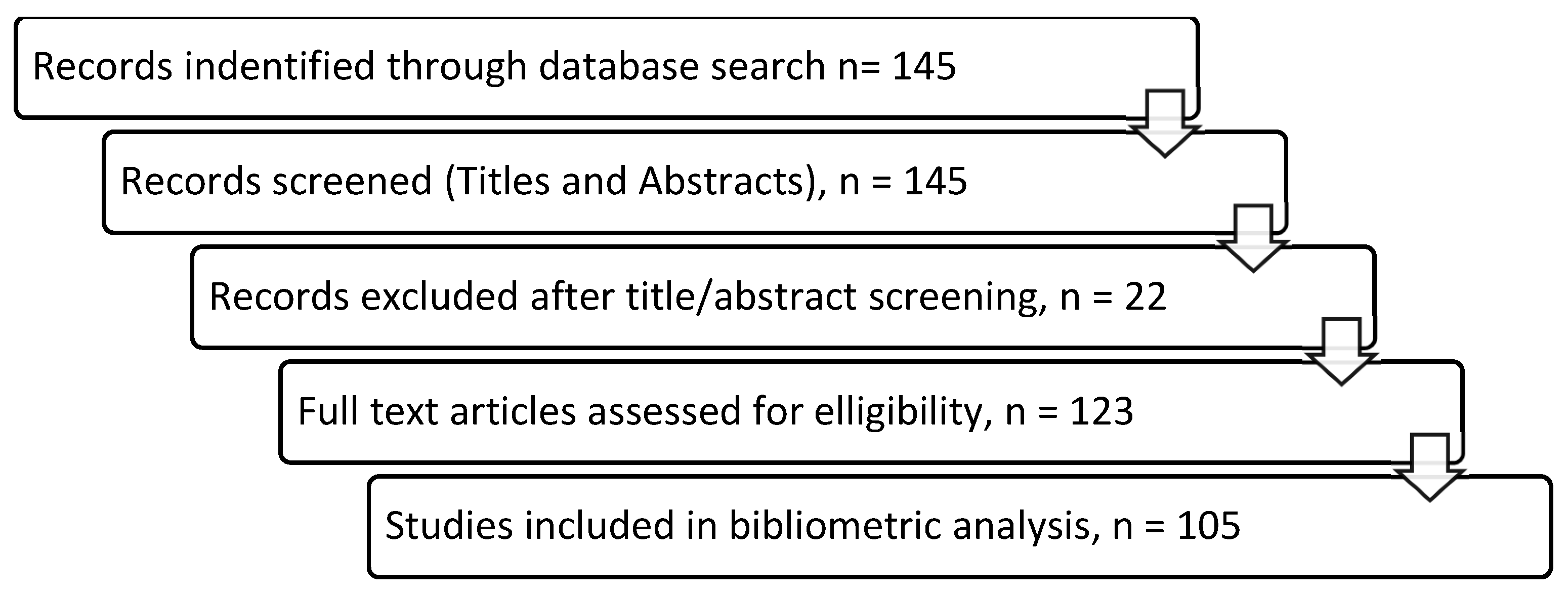
The selection process followed the four stages of the PRISMA framework: identification, screening, eligibility, and final inclusion. After the initial identification of records, titles and abstracts were screened to exclude non-relevant studies. This was followed by a full-text assessment based on theoretical and thematic relevance to the research objectives.
Upon completion of the inclusion and exclusion process, the final sample comprised 105 publications, which constituted the basis for the subsequent bibliometric analysis. Although bibliometric samples are inherently sensitive to search design, the combination of a concept-based query and dataset validation supports the representativeness of the final corpus for mapping the intellectual development of the field.
While the final sample size may appear modest, bibliometric analyses in emerging and interdisciplinary domains often rely on similarly sized corpora when strict conceptual filters are applied. The aim of the study is not exhaustive coverage but structural mapping of the core intellectual domain. The validation step, ensuring the inclusion of seminal and highly cited works, further supports the representativeness of the dataset. The detailed study selection process is presented in the PRISMA flow diagram (
Figure 1). The initial database search returned 145 records. As the dataset was retrieved from a single database and exported in a unified format, no duplicate records were identified at this stage. All 145 records were screened based on titles and abstracts, leading to the exclusion of 22 records that did not meet the conceptual criteria of the study. The remaining 123 full-text articles were assessed for eligibility. During this stage, studies were excluded if they did not explicitly examine the relationship between human resource practices, employee behaviour, and environmental performance outcomes. Following full-text assessment, 105 publications met all inclusion criteria and were retained for the bibliometric analysis.
3.4. Bibliometric Analysis Methods and Tools
For data analysis and visualisation, the software tools VOSviewer (v1.6.20) and Bibliometrix were employed, with Microsoft Excel used in a complementary manner for data preprocessing, cleaning, and organisation. These tools enable the quantitative assessment of scientific output and the analysis of knowledge structures through network-based techniques, including co-authorship analysis, keyword co-occurrence analysis, and citation-based analyses such as co-citation and bibliographic coupling.
Through the application of these techniques, the present study aims to identify the dominant thematic clusters, research trends, key contributors, and existing research gaps within the field. Overall, this approach provides a systematic and transparent bibliometric mapping framework
4. Results and Discussion
No temporal restriction (timespan) was applied during the search in the Scopus database. The earliest publication retrieved by the search query dates back to 2009, which therefore defines the starting point of the dataset. The temporal coverage of the analysis spans from 2009 to December 2025, when data collection was conducted.
This period coincides with a phase during which sustainability and organisational environmental performance emerged as central pillars of the international policy and business agenda. Indicatively, the United Nations Climate Change Conference in Copenhagen [
45], although it did not result in a binding agreement, marked a turning point in the internationalisation of the discourse on climate change and its linkage to organisational strategies and management practices.
The inclusion of the most recent publications available at the time of data collection enhances both the timeliness and the interpretative value of the bibliometric analysis, allowing for a comprehensive depiction of the longitudinal evolution of the research field.
4.1. Evolution over Time and Research Trends
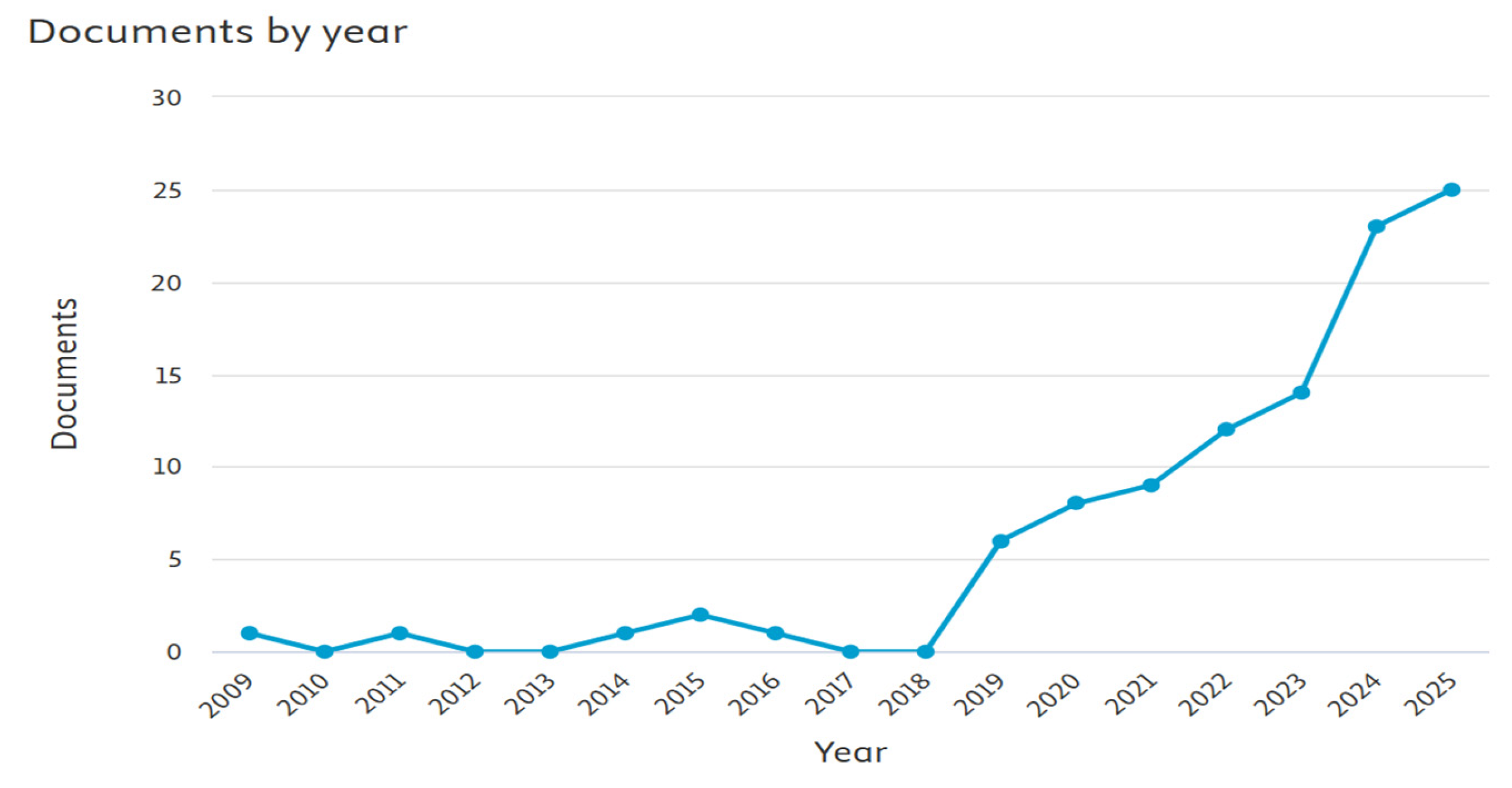
The analysis of the temporal evolution of scientific output indicates a growing research interest in the examined topic. The first publication included in the dataset appeared in 2009. During the period 2009–2018, research activity remained limited, with no substantial increase in the number of publications. From 2019 onwards, a clear intensification of scientific production is observed. Specifically, 6 publications were identified in Scopus in 2019, 8 in 2020, 9 in 2021, 12 in 2022, 14 in 2023, 23 in 2024, and 25 publications in 2025. This temporal evolution is illustrated in
Figure 2.
During the examined period 2009–2025, the evolution of scientific output is characterised by an initial phase of relative stagnation until the late 2010s, followed by a clear acceleration of research activity in more recent years. The average annual growth rate of publications across the entire period amounts to 19.62%, reflecting the dynamic expansion of the research field. The average age of the documents (2.56 years) indicates that the majority of publications are highly recent, further underscoring the relevance and timeliness of the present bibliometric analysis.
Overall, the final dataset comprised 105 documents (journal articles, book chapters, and books). The research output was produced by 482 authors, highlighting broad scholarly engagement within the field. Most publications resulted from collaborative research, as only 15 documents were single-authored. The average number of authors per document is 3.57, while 42.76% of the publications stem from international co-authorships, indicating a high degree of cross-national research collaboration.
The average number of citations per document is 64.44, indicating a relatively high citation level within the dataset. Of the total sample, 86.2% consists of journal articles. These results were obtained through the application of the Bibliometrix package within the RStudio (version 4.4.1) environment, following appropriate preprocessing and analysis of the bibliographic metadata.
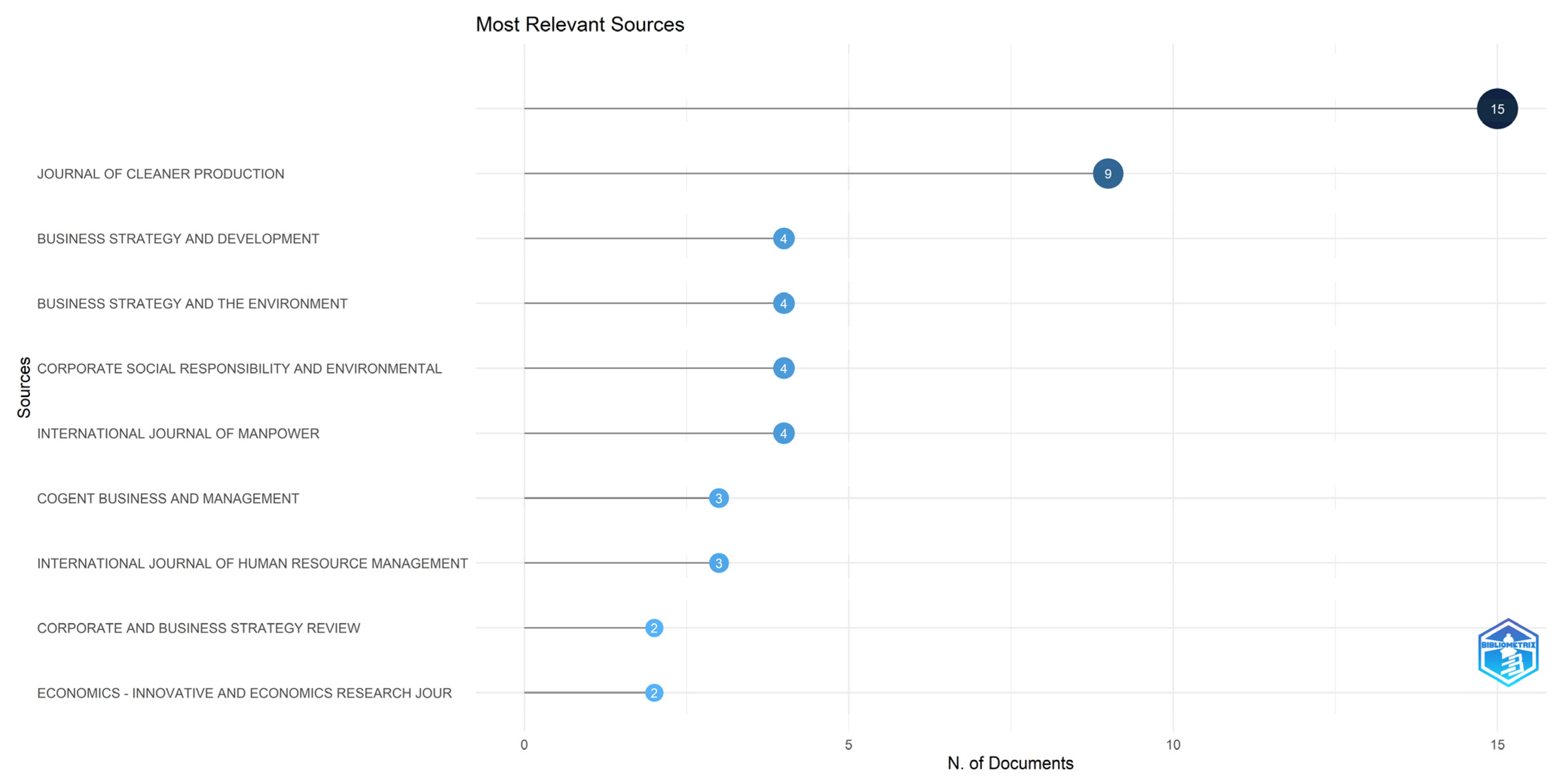
Publications are primarily concentrated in high-impact journals within the domains of sustainable management and environmental performance, including the Journal of Cleaner Production, Sustainability (Switzerland), Corporate Social Responsibility and Environmental Management, and Business Strategy and the Environment, as illustrated in
Figure 3.
4.2. Citation Analysis
According to the data presented in
Table 2, during the early development phase of the field (2009–2017), research output remains particularly limited, with one publication per year in most cases. Within this context, the exceptionally high values of the MeanTCperArt indicator—especially in 2011 (287), 2014 (776), and 2016 (390)—reflect the influence of individual, theoretically seminal publications. According to bibliometric theory, such articles function as foundational papers, shaping the conceptual underpinnings and core research trajectories of a scientific field [
46,
47]. However, due to the extremely small number of publications (
n = 1), these values cannot be considered statistically representative of the overall scientific activity of the respective years but instead capture citation concentration effects.
From 2019 onwards, a clear structural shift in the dynamics of the field can be observed. The number of publications increases steadily—from 6 in 2019 to 25 in 2025—indicating a transition from a phase of conceptual formation to a phase of rapid scientific expansion and thematic diversification. At the same time, the values of the MeanTCperYear indicator remain particularly high during the period 2019–2021 (36.00 in 2019, 29.16 in 2020, and 20.87 in 2021), despite the limited number of citable years available to these articles. This finding suggests a high level of immediate scientific impact and is associated with the increased research visibility and thematic relevance of the field [
48].
The gradual decline in the values of MeanTCperArt and MeanTCperYear observed during 2022–2025 should not be interpreted as evidence of diminishing scientific quality. On the contrary, in accordance with the citation aging effect, more recent publications systematically exhibit lower absolute citation counts due to the limited time elapsed between their publication and the data collection point [
49,
50]. The simultaneous increase in the number of publications indicates that the field has entered a normalisation phase, in which scientific influence is distributed across a larger number of articles rather than being concentrated in a small set of landmark studies.
Annual citation analysis enables the depiction of the longitudinal evolution of the field’s scientific impact. Nevertheless, for a more comprehensive understanding of the internal structure of scientific influence and the relative dynamics between older and more recent publications, a complementary analysis at the individual article level is required, which is presented in the following subsection.
Most Influential Articles (Document-Level Citation Analysis)
Table 3 presents the most influential articles in the sample for the period 2009–2025. The results reveal a clear differentiation between older, foundational studies and more recent publications with strong relative impact. In particular, articles published prior to 2020 exhibit high levels of total citations, reflecting their long-term influence on shaping the research field. A representative example identified in the bibliometric dataset is the article by Kim et al. (2019) [
51], which has accumulated 906 total citations and 129.43 citations per year, confirming its role as a key reference in the relevant literature.
Of particular interest, however, is the group of recent publications from 2023 to 2025, which, despite the limited time elapsed since their publication, record exceptionally high values of TC per Year and Normalized TC. An indicative example identified in the bibliometric dataset is an article published in 2023 by Aftab’s in
Business Strategy and the Environment [
52], which exhibits 96.67 citations per year and a normalized citation score of 9.57, substantially exceeding the average for its year of publication. Similarly, publications from 2024 and 2025 display normalized citation values above unity, indicating their rapid integration into the international literature.
The simultaneous presence of highly cited earlier works and recent papers with strong relative citation performance suggests that the corpus contains both enduring reference points and newer contributions that are gaining attention quickly. It should be noted that low or zero total citations for some articles published in 2025 are expected given the short citation window and should not be interpreted as evidence of low scholarly relevance. Overall, this pattern is consistent with a field that is expanding in volume while also producing recent publications that achieve notable early visibility.
Table 3.
Most Influential Articles in the Sample Based on Citation Analysis. Source: Bibliometrix (R/Biblioshiny), Scopus database-author’s elaboration.
Table 3.
Most Influential Articles in the Sample Based on Citation Analysis. Source: Bibliometrix (R/Biblioshiny), Scopus database-author’s elaboration.
| Paper | DOI | Total
Citations | TC
per Year | Normalized TC |
|---|
| SAHAN, 2025, INT J ENERGY SECT MANAGE [53] | 10.1108/IJESM-01-2024-0013 | 30 | 30.00 | 10.69 |
| AFTAB, 2023, BUS STRATEGY ENVIRON [51] | 10.1002/bse.3219 | 290 | 96.67 | 9.57 |
| AFTAB, 2024, BUS STRATEGY ENVIRON [54] | 10.1002/bse.3508 | 70 | 35.00 | 4.94 |
| RANA, 2024, FORESIGHT [55] | 10.1108/FS-04-2021-0094 | 68 | 34.00 | 4.80 |
| NISAR, 2024, J QUAL ASSUR HOSP TOUR [56] | 10.1080/1528008X.2022.2109235 | 65 | 32.50 | 4.59 |
| VU, 2025, J HOSP TOUR INSIGHT [57] | 10.1108/JHTI-09-2024-0912 | 12 | 12.00 | 4.28 |
| KIM, 2019, INT J HOSP MANAGE [51] | 10.1016/j.ijhm.2018.04.007 | 906 | 129.43 | 3.22 |
| LIU, 2025, J ORGAN CHANGE MANAGE [58] | 10.1108/JOCM-03-2024-0160 | 9 | 9.00 | 3.21 |
| AL-SWIDI, 2021, J CLEAN PROD [59] | 10.1016/j.jclepro.2021.128112 | 353 | 70.60 | 2.89 |
| ZAMAN, 2025, J HOSP TOUR INSIGHT [60] | 10.1108/JHTI-02-2024-0146 | 8 | 8.00 | 2.85 |
| LI, 2025, SUSTAINABILITY [61] | 10.3390/su17062411 | 8 | 8.00 | 2.85 |
| GAZI, 2025, ENVIRON RES COMMUN [62] | 10.1088/2515-7620/ada676 | 8 | 8.00 | 2.85 |
| NISAR, 2021, J CLEAN PROD [63] | 10.1016/j.jclepro.2021.127504 | 317 | 63.40 | 2.60 |
4.3. Publication Productivity and Scientific Collaboration Structures
This subsection examines the structure of the research field at the author level, with an emphasis on productivity and the nature of scientific collaboration. The analysis is based both on the absolute number of publications per author (Articles) and on fractionalized productivity (Articles Fractionalized), where each publication is allocated proportionally according to the number of co-authors. The latter indicator is considered particularly critical in fields with a high degree of collaboration, as it more accurately captures each author’s relative contribution and reduces bias in favor of large multi-authored teams.
4.3.1. Author-Level Structure and Productivity
The results presented in
Table 4 indicate that authorship productivity i exhibits a low degree of concentration. No author exceeds three publications, while the majority of authors contribute one or two papers. This finding suggests distributed scientific participation rather than a highly concentrated production structure dominated by a small number of prolific authors.
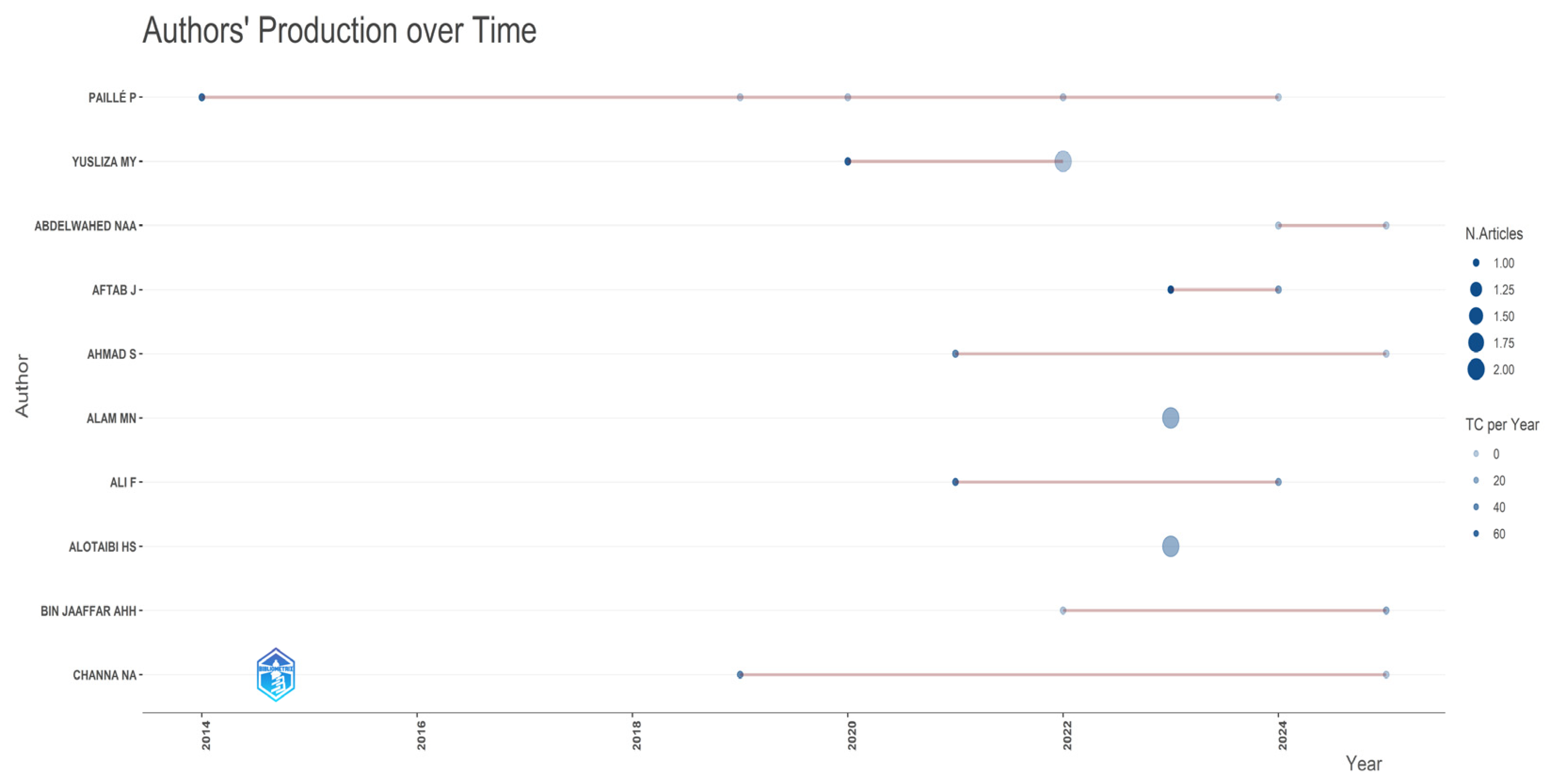
Indicatively, Paillé, Pascal appears as the most productive author with three articles. However, his fractionalized productivity (1.08) suggests that these publications arise from collaborative arrangements involving multiple co-authors, which limits the relative individual contribution per article. By contrast, authors such as Genty, Kabiru Ishola (2 articles–2.00 fractionalized), Mishra, Sarthak (2–1.00), and Rath, Namita (2–1.00) display a higher ‘net’ authorship contribution, suggesting participation in smaller collaboration teams or publications with fewer co-authors.
Figure 4 adds a temporal dimension by showing that the activity of the most active authors is concentrated mainly in the more recent period. This pattern aligns with the broader acceleration of scientific output after 2019 and indicates that new contributors have entered the field during its expansion phase, while a stable and highly dominant author core has not yet clearly formed.
4.3.2. Co-Authorship Network
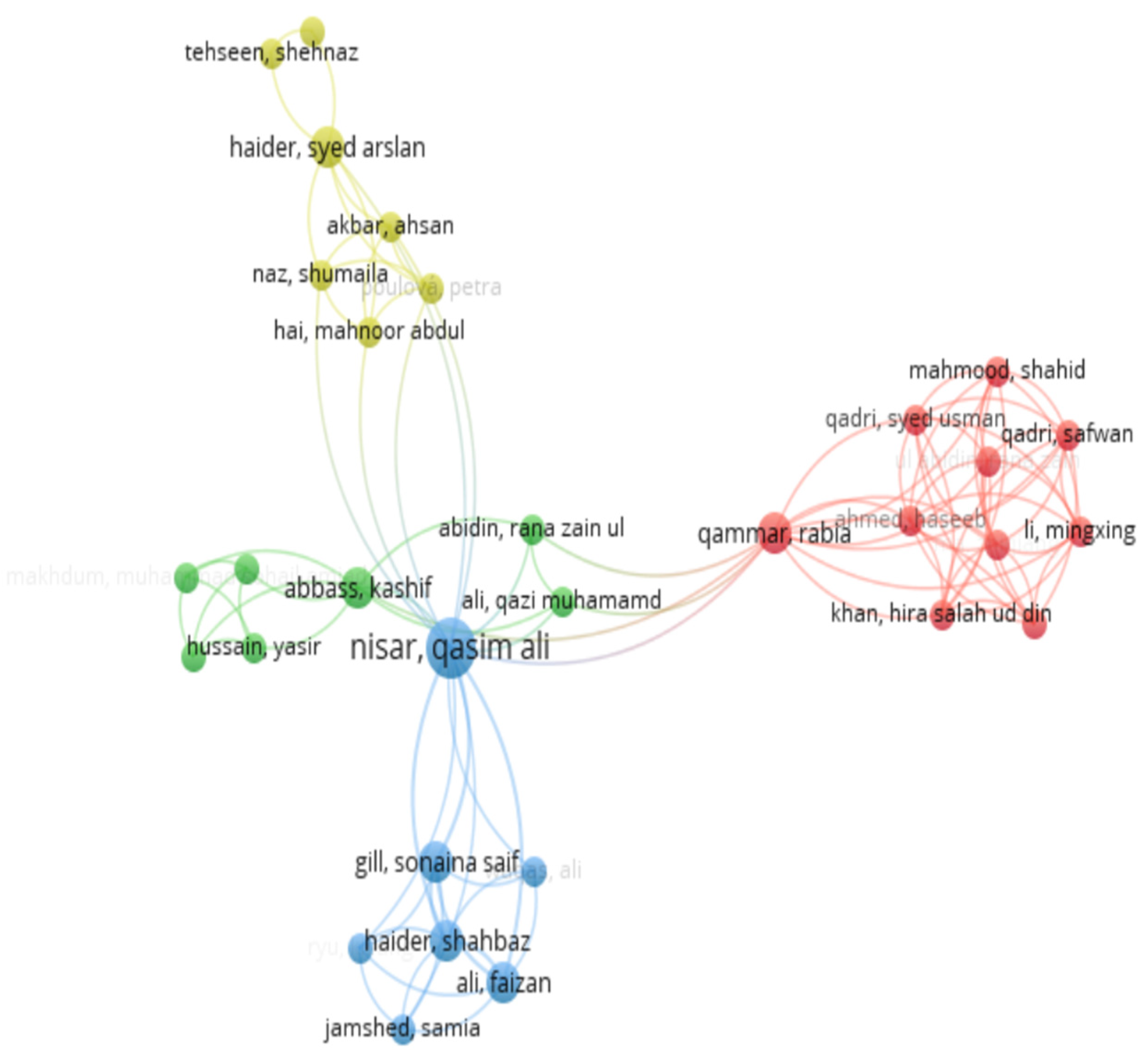
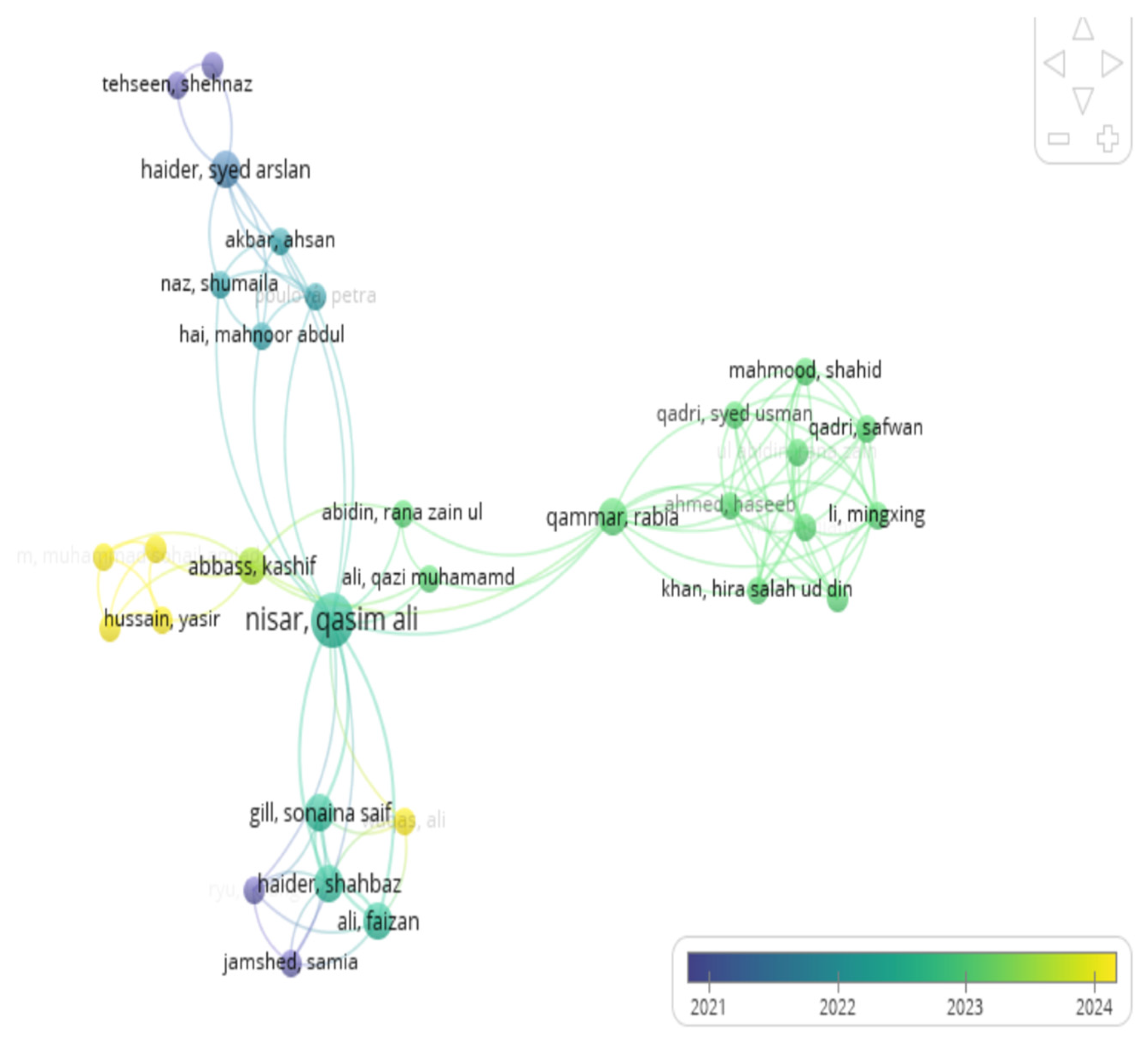
Figure 5 (co-authorship map, VOSviewer) highlights specific and clearly identifiable patterns of scientific collaboration. The network is characterized by a limited number of central nodes, around which distinct clusters of authors are organized, indicating that scientific production is not evenly distributed but is instead structured around focal points of collaboration.
A dominant finding of the analysis is the high centrality of Nisar, Qasim Ali, who functions as a primary hub for collaborative activity. This position within the network indicates extensive participation in multi-authored publications and an active role in connecting different research groups.
An equally important finding concerns the role of Qammar, Rabia as a bridging node. Her presence links individual clusters that would otherwise remain isolated, thereby increasing the overall cohesion of the network. This bridging function facilitates the transfer of theoretical approaches and methodological practices across groups, strengthening internal connectivity and enhancing the internationalization of research within the field.
The overlay visualization (
Figure 6) reveals that the most active and central collaborations are largely recent. Nodes with a more intense yellow coloration are concentrated around the main axes of collaboration, indicating that the current development of the field is driven by new or renewed collaborative networks.
Scientific influence is not concentrated in a limited number of ‘dominant’ researchers, but is dynamically distributed through interconnected groups, a feature that points to a mature yet still evolving research ecosystem.
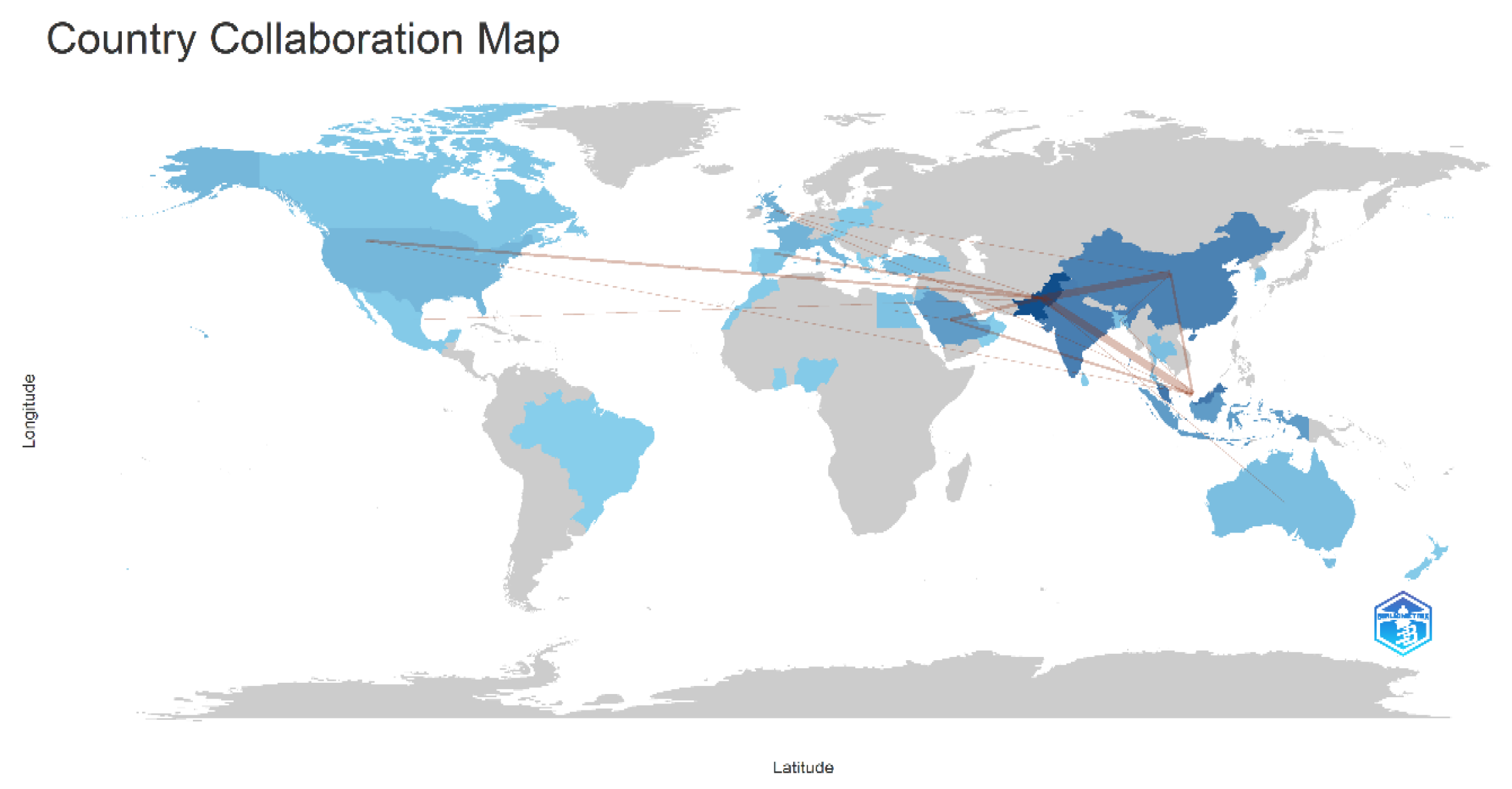
This network structure is directly linked to the geographical distribution of scientific production and international collaborations presented in
Figure 7.
The results reveal a clear geographical concentration of research activity in Asia, with China, India, Malaysia, and Indonesia emerging as the dominant hubs of knowledge production in the field. At the same time, collaboration networks are observed with institutions in Europe, North America, and Australia, whereas the participation of countries from Africa and South America appears limited.
The concentration of research in Asia may be associated with social, economic, and institutional factors. First, many of these countries are experiencing rapid economic growth and industrialization—processes that are accompanied by increased environmental pressures and, consequently, heightened research interest in sustainable development practices and environmental management. In addition, universities and research institutions in the region have been integrated into targeted national or institutional programs aimed at strengthening scientific output, often linked to incentives for publishing in high-impact international journals.
At the same time, many Asian governments have adopted green growth policies, incorporating environmental objectives into their national development strategies. Within this context, GHRM emerges as a critical link between management and environmental governance, functioning as a key instrument for implementing such policies at the organizational level, particularly in sectors with a significant environmental footprint, such as tourism, hospitality, and manufacturing.
4.4. Visualization of Keyword Co-Occurrence and Mapping of Research Trends
A keyword co-occurrence analysis was conducted with the aim of mapping the conceptual structure and the dynamic evolution of the research field. Two complementary visualization approaches were applied: (a) network visualization, aimed at highlighting the thematic structure and conceptual clusters of the field, and (b) overlay visualization to indicate the average publication year associated with each keyword.
4.4.1. Thematic Structure and Conceptual Clusters (Network Visualization)
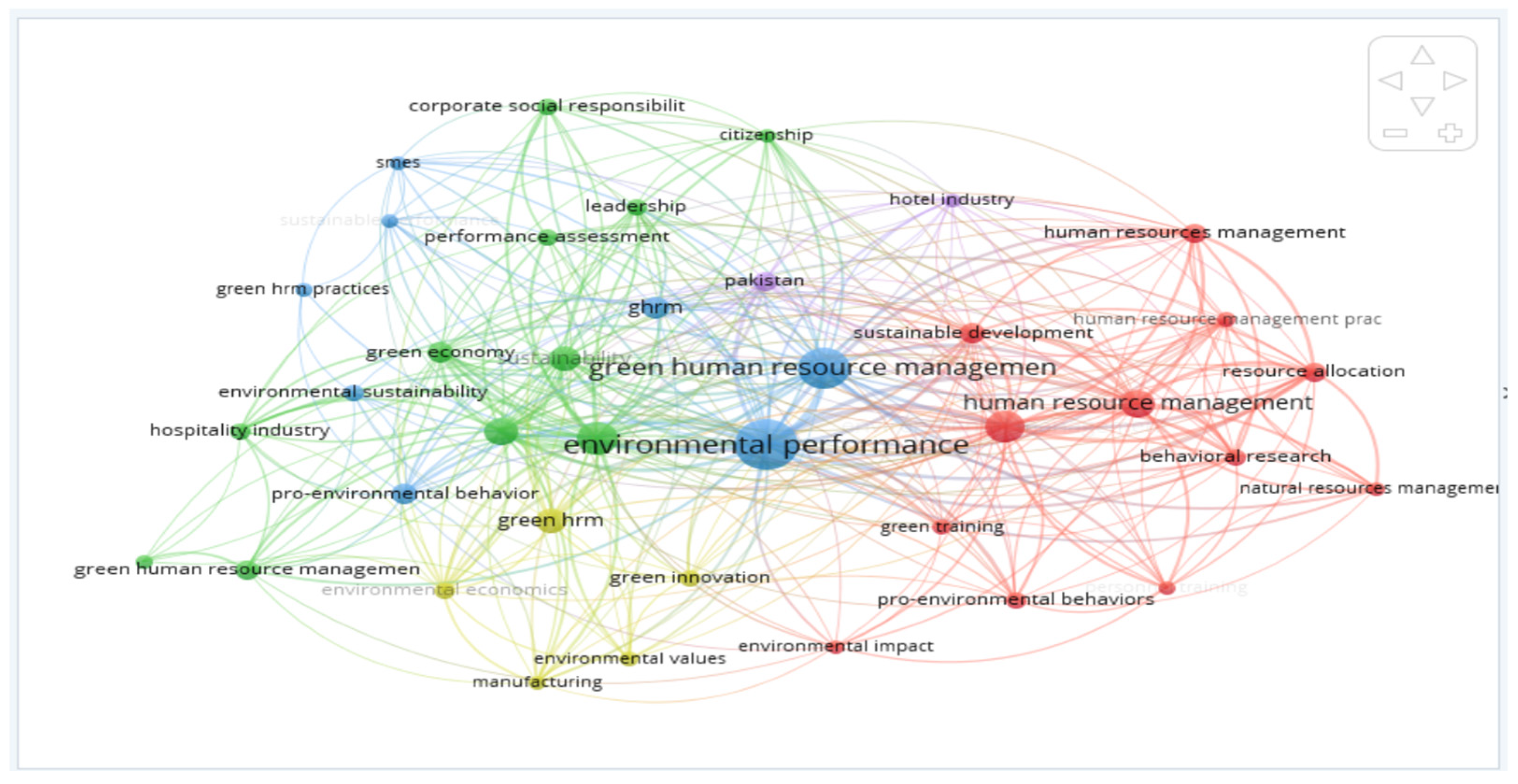
In
Figure 8 node size reflects keyword frequency, links represent co-occurrence within the same documents, and colours indicate clusters produced by the clustering algorithm.
The map includes 38 keywords, organized into five distinct thematic clusters, with a high overall degree of connectivity. Two concepts emerge as the dominant conceptual cores of the network: environmental performance and green human resource management. Their central spatial positioning and the large number of connections indicate that the literature is primarily organized around the investigation of the relationship between GHRM practices and organizations’ environmental performance.
Around this core axis, one cluster focuses on the operational and administrative dimensions of Human Resource Management, including terms such as human resource management, human resource management practices, resource allocation, and natural resources management, which are directly linked to behavioural outcomes such as pro-environmental behaviours and green training. This cluster highlights the importance of organizational mechanisms through which HR practices are translated into tangible environmental outcomes.
A second cluster includes broader sustainability and strategy concepts (e.g., corporate social responsibility, leadership, environmental sustainability) and sectoral contexts (e.g., hospitality industry, SMEs), suggesting that a portion of the literature frames GHRM within wider sustainability strategy narratives. A further cluster includes green innovation and environmental values, indicating co-occurrence patterns that link value- and innovation-related terms with environmental performance discussions in the dataset.
Overall, the network visualization depicts a field with a strong central backbone and complementary thematic directions, ranging from operational HRM practices to strategic, social, and innovation-related dimensions of sustainability. This structure suggests that research on GHRM has evolved into a multi-level and interdisciplinary field, in which individual themes do not operate in isolation but are closely interconnected.
4.4.2. Temporal Dimension of Thematic Terms (Overlay Visualization)
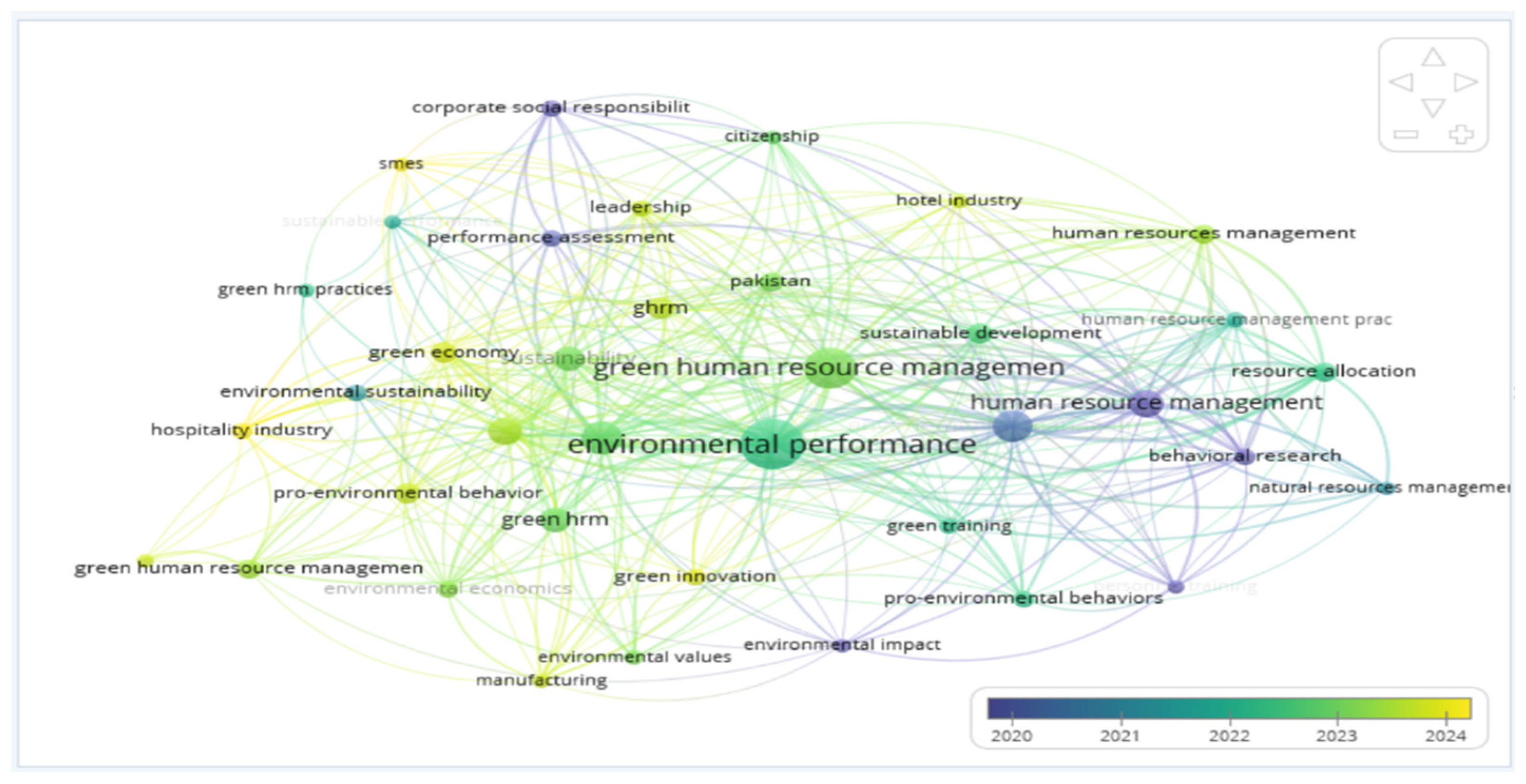
According to the overlay visualization (
Figure 9) the term
environmental performance occupies a central position in the map and is associated with an earlier color indicator, suggesting its long-standing and stable presence in the literature. Its high level of connectivity confirms its role as a core conceptual axis around which the field is structured.
In contrast, terms such as green behaviour, green innovation, corporate social responsibility, and performance assessment appear with more recent colour indicators, indicating a strengthening of their presence in the more recent literature. Importantly, these terms do not emerge in isolation but are structurally connected to well-established concepts, demonstrating an expansion and enrichment of the research field.
The emergence of corporate social responsibility in conjunction with environmental performance suggests a clear trend toward the integration of environmental and social dimensions within a broader sustainability strategy. Overall, the overlay visualization reveals a shift in thematic emphasis from macro-level approaches to environmental management toward more behavioural, strategic, and human-centered perspectives, with GHRM and employees’ green behaviour functioning as critical linking mechanisms between sustainability strategy and organizational performance.
4.5. Thematic Structure and Maturation of the Research Field (Thematic Map)
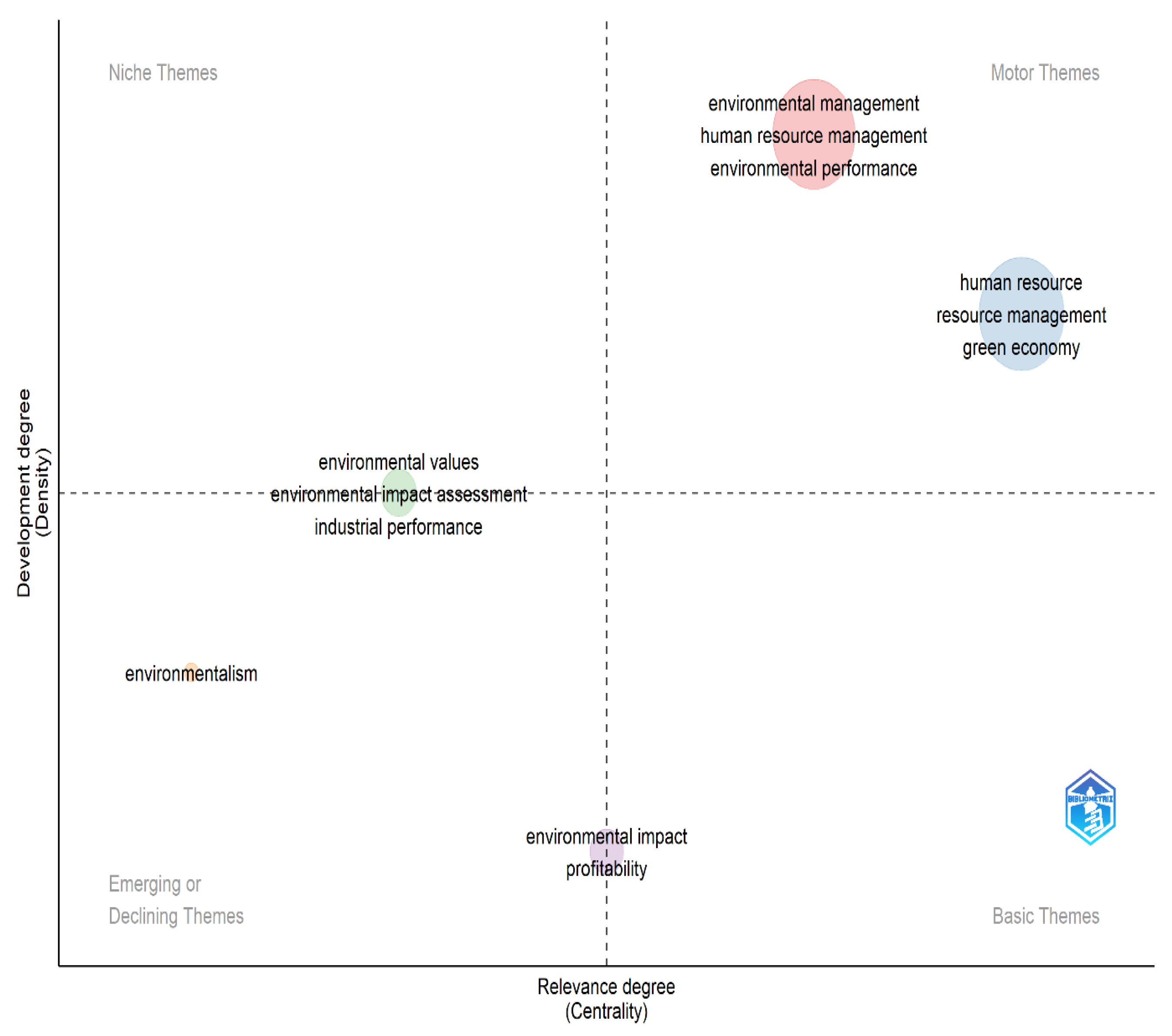
Figure 10 presents the thematic architecture of the field using a centrality–density framework.
(a) Motor themes: Clusters related to environmental management, human resource management, and environmental performance are located in the motor themes quadrant, indicating that they constitute the stable and theoretically consolidated core of the research field. This finding suggests that the literature no longer treats the link between HRM and environmental outcomes as a peripheral or auxiliary topic, but rather as a central research axis characterized by high internal coherence and a clearly delineated scope. In other words, the field has moved beyond the phase of merely “establishing the existence of a relationship” and has entered a stage of maturation, in which these associations form the accepted foundation upon which more complex interpretations and analytical frameworks are developed.
(b) Basic themes: A second thematic cluster emerges around terms such as human resource, resource management, and green economy, which functions as a basic theme. This cluster provides a broad foundational base linking human resource management to wider organizational and developmental contexts. The presence of green economy indicates that the literature increasingly situates GHRM and environmental performance not only at the level of organizational outcomes, but also within broader frameworks of sustainable development and transitions toward greener productive and institutional models. This finding reinforces RQ2, as it demonstrates that the field is structured around a central core while simultaneously developing horizontal linkages with economic and institutional environments.
(c) Transitional and bridging concepts: Themes located near the transitional center of the map, such as environmental values, environmental impact assessment, and industrial performance, appear as bridging concepts between value/strategy-oriented terms and operational performance/measurement terms. Their position suggests increasing attention to how concepts are connected across levels of analysis within the corpus.
The thematic map does not merely depict the existence of themes, but also signals a research trajectory toward mechanism-based explanations, directly addressing RQ3 (how the emphasis of the field evolves and which analytical axes are being strengthened).
(d) Peripheral and isolated themes: Themes such as environmental impact and profitability appear more isolated or less central. This pattern suggests that economic or financial outcomes (e.g., profitability) are less integrated into the dominant conceptual core in the current sample.
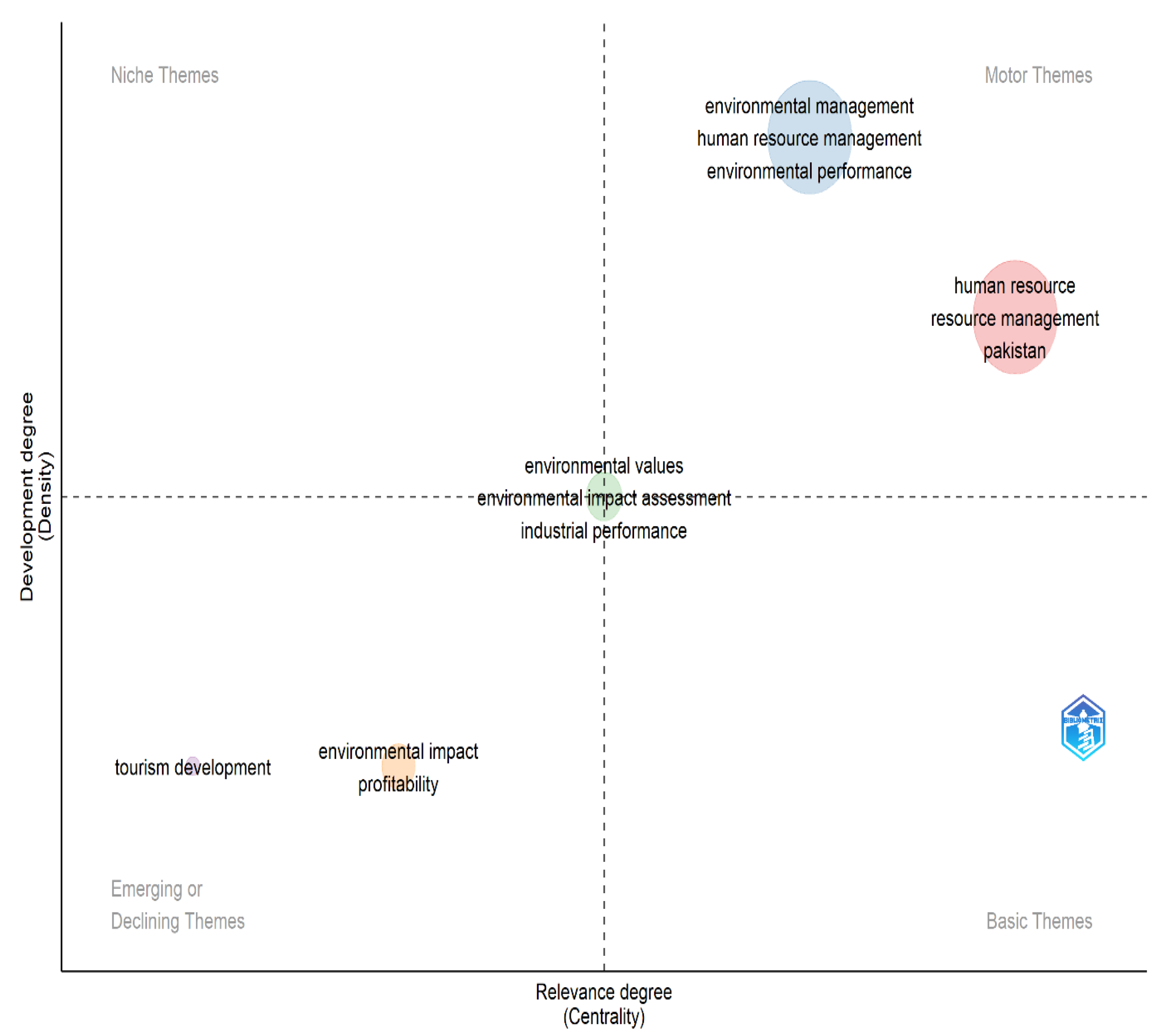
Figure 11 presents the centrality–density thematic map of the research field, focusing on the maturation of themes in conjunction with their spatial and empirical specialization.
Within the motor themes quadrant, the concepts environmental management, human resource management, and environmental performance are clearly identified, confirming the stable theoretical maturation of the field. At the same time, the emergence of the human resource management–Pakistan cluster indicates that the literature has entered a phase of intensive empirical deepening within specific national contexts, particularly in emerging economies.
At the transitional center of the map, the concepts environmental values, environmental impact assessment, and industrial performance operate as bridges between theory and application, signaling a research shift toward the investigation of mechanisms and outcomes.
In contrast, themes such as tourism development, profitability, and environmental impact appear in the emerging or declining themes quadrant, suggesting that sectoral and economic implications of GHRM remain fragmentarily explored and have not yet been fully incorporated into the central theoretical backbone.
Finally,
Table 5 indicates that performance assessment shows an earlier Q1 (2018) and sustained activity through 2024 (Q3), suggesting stable attention over time. Behavioural research shows intensified attention around 2020 and continued activity through 2023. Emerging terms such as resource management and green economy show Q1 values in 2023, indicating recent prominence and an ongoing growth phase into 2024. Human resource appears as the most frequent term (23 occurrences), with continued relevance through 2024.
Themes with comparatively earlier peaks and lower recent activity include natural resources management (Q3 in 2022) and personnel training (Q3 in 2023), suggesting more specialised or less sustained attention relative to the current growth areas. Overall, the dataset indicates increasing emphasis on human resource management, environmental management, and green economy themes, while certain links to economic outcomes (e.g., profitability) remain peripheral and represent plausible directions for further research.
Overall, the thematic evolution confirms the consolidation of HRM-driven sustainability research, with behavioural and organisational mechanisms gaining prominence over time.
5. Conclusions, Theoretical and Practical Implications, and Future Research Directions
The present study provided a systematic bibliometric mapping of the research field related to Human Resource Management, employees’ green behaviour, and organizational environmental performance. Through the combined use of the Bibliometrix and VOSviewer tools, the structural, thematic, and temporal dynamics of the literature for the period 2009–2025 were analyzed, allowing for the identification of both mature theoretical cores and emerging research directions.
The results indicate a clear and accelerating increase in scientific output after 2019, reflecting a shift in the international research agenda toward human-centered approaches to sustainability. Keyword co-occurrence analysis, thematic networks, and centrality–density maps suggest that Green Human Resource Management (GHRM) and environmental performance have become firmly established as central pillars of the field, while employees’ green behaviour is frequently positioned as a critical linking mechanism connecting organizational practices with environmental outcomes.
5.1. Theoretical Contributions
The study offers four main theoretical contributions by interpreting the intellectual structure and thematic evolution of the field.
First, it highlights Human Resource Management (HRM) as a core organizational mechanism through which sustainability strategies are translated into operational and behavioural outcomes. The centrality of HRM in thematic networks and keyword co-occurrence maps indicates that HR practices no longer function in a merely supportive capacity but instead constitute the primary conduit linking strategic objectives with environmental outcomes.
Second, the bibliometric findings position employees’ green behaviour not as a simple outcome but as an intermediate theoretical mechanism. Its systematic role as a “bridge” between HRM and environmental performance is consistent with a shift from linear HRM–performance models toward process-oriented frameworks, in which employees’ behaviours, values, and attitudes represent the critical connecting link.
Third, the thematic evolution of the field documents a clear structural shift from macro-level approaches to environmental management (e.g., regulations, systems, technologies) toward micro- and meso-level human-centered mechanisms. The increasing prominence of terms such as behavioural research, leadership, green skills, and training suggests the gradual consolidation of a behavioural sustainability paradigm.
Fourth, the bibliometric mapping reveals persistent theoretical gaps, including limited causal theorization, pronounced sectoral concentration (primarily in tourism and hospitality), and geographical bias toward Asian economies. These patterns raise important questions regarding generalizability and underscore the need for deeper theoretical development beyond context-specific empirical settings.
Despite the growing maturity of the domain, the synthesis points to several unresolved theoretical tensions. The co-existence of micro-level behavioural perspectives, often linked to motivational and ability-related constructs, and macro-level strategic views of organisational capabilities appears only loosely integrated within the literature. Likewise, although resource-related perspectives are frequently invoked in studies of employee engagement, their connection to measurable environmental performance outcomes remains less visible in the thematic structure of the field. Overall, the literature still lacks a clearly articulated multilevel framework that systematically links HR systems, employee behaviour, and organisational performance.
Building on these bibliometric insights, the study advances an integrative interpretative perspective in which HRM practices are understood as shaping employee behavioural engagement, which in turn is associated with the development of organisational environmental capabilities and performance outcomes. While this perspective is not empirically tested in the present study, it offers a conceptual bridge that may guide future theory-driven and multilevel empirical research in the area of organisational sustainability.
5.2. Practical and Policy Implications
The bibliometric structure of the field allows for the derivation of evidence-informed practical and policy implications without the introduction of new empirical data.
First, there are implications for Human Resource Management. The increasing centrality of HRM indicates that human resource functions have become a key driver of environmental performance. The integration of environmental objectives into recruitment, training, performance appraisal, and reward systems aligns with the dominant research core and can no longer be regarded as a fragmented or ad hoc innovation. The emphasis on the behavioural dimension suggests that the effectiveness of HR policies depends on the systematic cultivation of values and everyday practices, rather than solely on formal compliance mechanisms.
Second, there are implications for ESG strategy. The convergence of HRM, environmental performance, and corporate social responsibility suggests that the environmental dimension of ESG strategy is primarily strengthened through human-centered mechanisms. Organizations seeking substantive and credible ESG performance need to embed GHRM at the core of their strategic agenda, linking environmental objectives with organizational culture and human capital development.
Third, there are implications for public policy and green skills. The bibliometric analysis reveals a shift in research focus from exclusively regulatory interventions toward policies that emphasize behaviour, education, and green skills. For policymakers, this implies the need to develop integrated training and lifelong learning frameworks that connect environmental objectives with organizational and behavioural capabilities.
Based on the maturity of research streams, practitioners may prioritise three areas: (1) integrating environmental criteria into recruitment and training, which constitutes the most established practice domain; (2) fostering organisational cultures that support extra-role green behaviour; and (3) linking HR sustainability practices with environmental performance measurement systems, which remains strategically critical.
5.3. Study Limitations and Future Research Agenda
Despite its contributions, the present study is subject to several limitations. The exclusive use of the Scopus database introduces potential database bias, while language-related criteria may limit the representation of non-English-language research. In addition, the nature of bibliometric analysis does not allow direct inference regarding causal relationships between HRM practices, employee behaviour, and environmental performance.
Building on the findings, future research is encouraged to focus on four key directions:
First, the combined use of multiple bibliographic databases (e.g., Scopus and Web of Science) would enhance the comprehensiveness of future bibliometric and systematic reviews. As database-specific indexing policies influence journal coverage and regional representation, integrating multiple sources may provide a more balanced view of the global knowledge structure.
Second, further empirical research is needed in under-researched sectors and geographical contexts. The current literature shows strong concentration in specific industries and regions, which limits the generalisability of findings and suggests the importance of extending investigations to diverse organisational, cultural, and institutional environments.
Third, there is a need for the development and empirical testing of causal and multilevel models that move beyond descriptive associations. In particular, future studies could examine employees’ green behaviour as a mediating or linking mechanism through which HRM practices influence organisational environmental performance.
Fourth, future research should explore the integration of Green Human Resource Management with broader economic and social performance outcomes within comprehensive sustainability and ESG-oriented strategies. Such an approach would help position GHRM not only as an environmental tool but as part of a wider framework of organisational value creation and responsible management.