


Abstract
This paper addresses the optimization of electric vehicle (EV) charging facility configuration on highways by proposing a collaborative planning method that integrates driver anxiety psychology, mixed traffic flow dynamics, and service area queuing characteristics. By abstracting the road travel and service area replenishment processes into an integrated queuing network, a system analysis framework is constructed to characterize the coupling relationship of “facility supply, traffic assignment, and state feedback.” On this basis, a bi-level optimization model is established with the objective of minimizing the generalized total social cost. The upper level makes decisions on the coordinated quantities of fixed charging piles and mobile charging vehicles, while the lower level describes the stochastic user equilibrium behavior of drivers under the influence of real-time congestion and anxiety. To tackle the high-dimensional nonlinear nature of the model, an efficient solution algorithm based on simultaneous perturbation stochastic approximation (SPSA) is designed. A case study of the Nei-Yi Expressway demonstrates that compared with the traditional peak demand proportional allocation method, the proposed approach can better balance construction costs, operation and dispatching costs, and user travel experience under limited investment, significantly reducing waiting times and psychological anxiety costs. It provides theoretical methods and decision support for planning a resilient energy replenishment network that achieves “fixed facilities ensuring base load and mobile resources responding to peak demands.”
1. Introduction
The development of electric vehicles (EVs) is a crucial pathway for ensuring energy security and promoting green mobility [1,2]. China has placed significant emphasis on the growth of new energy vehicles, including EVs, and has maintained the world’s largest fleet of electric vehicles since 2015 [3]. It was projected that by 2025, new energy vehicles would have accounted for 20% of total vehicle sales [4,5]. However, the widespread adoption of EVs still faces considerable challenges, primarily due to limited driving range, insufficient charging convenience, and relatively slow charging speeds [6,7]. These issues are particularly pronounced on highways and other long-distance travel routes, where charging difficulties significantly hinder the use of EVs for intercity journeys. In response, relevant policies have explicitly called for “building intercity fast-charging networks by fully utilizing parking spaces in highway service areas to establish intercity fast-charging stations” [8,9]. Against this backdrop, this paper focuses on the optimization of energy replenishment facility configuration for EVs on highways.
Compared with urban areas, the lower density of charging infrastructure along highways intensifies the mismatch between energy supply and EV travel demand [10], making the rational allocation of energy replenishment facilities along highway networks particularly important. Currently, fixed charging stations in highway service areas serve as the primary means of EV energy supply [11,12]. However, the efficiency of fixed charging facilities remains suboptimal, as they struggle to adapt to the dynamic and stochastic nature of highway traffic demand and are inadequate for handling emergencies such as vehicle breakdowns [13]. The emergence of mobile charging solutions, such as mobile charging vehicles and portable charging piles, offers the potential to address these shortcomings [14]. Nevertheless, how to effectively coordinate the deployment of fixed and mobile charging facilities remains an open question. With the increasing intelligence and connectivity of highways, it has become feasible to acquire real-time traffic flow information and pre-deploy a certain number of mobile charging units [15]. This approach can enable rapid responses to emergency charging needs, enhance the stability and reliability of highway operations, and further alleviate drivers’ range anxiety. Therefore, the energy replenishment facilities considered in this study encompass both fixed and mobile charging solutions.
From a scientific perspective, there exists a clear interdependence among EV route choice, highway network operational conditions, and the configuration of energy supply facilities [16]. Specifically, the operational state of the highway network and the layout of charging infrastructure directly influence EV drivers’ route decisions [17]. Given the limited range of EVs, the availability of charging facilities is especially critical. When the remaining battery level is low, drivers tend to adjust their routes to access charging points as soon as possible. Under smart and connected highway conditions, real-time information on the usage of charging facilities in service areas can be communicated to EV drivers, thereby guiding their route choices [18,19]. Moreover, traffic congestion can increase energy consumption, further affecting route selection. Thus, EV route choice behavior serves as an important basis for optimizing the configuration of energy supply facilities. To avoid resource waste and improve facility utilization, the planning of such infrastructure must take into account the travel demand of EVs [20]. Macroscopic EV travel demand essentially aggregates the route choices made by individual drivers at the microscopic level [21]. Consequently, accurately modeling the interaction mechanism among EV route choice, highway network characteristics, and energy supply facilities is key to addressing the configuration optimization problem for EV energy replenishment facilities on highways.
It should also be noted that until EVs achieve full market penetration, traffic flow on highways will consist of a mix of electric and conventional fuel vehicles [22]. Due to differences in performance, EVs and fuel vehicles exhibit distinct driving behaviors, and their interactions on the road further increase system complexity. This implies that the configuration of EV energy supply facilities must also account for the influence of mixed traffic flow, adding a layer of challenge to the theoretical research undertaken in this paper. In summary, this paper proposes a queuing-theory-based optimization model for EV charging station configuration in highway service areas. The aim is to develop optimization models and methodologies for the deployment of energy supply facilities, taking into consideration mixed traffic flow conditions, highway network operational characteristics, and EV-specific attributes. By rationally planning fixed charging stations in service areas and deploying mobile charging resources, this research study seeks to provide more efficient and reliable energy replenishment services for EVs on highways. The findings are expected to offer significant theoretical insights and practical value for guiding the scientific planning and deployment of EV energy replenishment infrastructure on highways. Therefore, the main contributions of this paper are as follows:
- (1)
- It proposes an EV route choice behavior model that considers driver range anxiety psychology, explicitly incorporating psychological costs into traffic equilibrium analysis, thereby enhancing the realism of behavioral modeling.
- (2)
- It develops an integrated highway queuing network combining road segments and service areas, providing a unified characterization of the dynamic interaction between vehicle movement and energy replenishment processes and offering a new framework for system performance analysis.
- (3)
- It establishes a bi-level optimization model for the collaborative configuration of fixed and mobile charging facilities, achieving multi-level coupled optimization of facility planning, operation dispatching, and user behavior.
- (4)
- It designs an SPSA solution algorithm suitable for high-dimensional nonlinear simulation optimization problems and validates the feasibility and superiority of the model and algorithm through a practical case study.
The remainder of this paper is structured as follows: Section 2 reviews related work. Section 3 presents the problem statement, definitions, and modeling preparation. Section 4 proposes the optimization model and designs a solution algorithm. Section 5 presents numerical experimental results and analyses. Section 6 summarizes the findings and outlines directions for future work.
2. Literature Review
2.1. Mixed Traffic Flow Equilibrium
Before the full adoption of electric vehicles (EVs), highway networks will feature a prolonged period of mixed traffic flow comprising both conventional fuel vehicles and electric vehicles. As previously mentioned, the charging behavior of EVs directly influences their route choices, thereby altering traffic flow distribution across the network. Therefore, studying the traffic assignment problem involving a mixture of internal combustion engine vehicles and EVs is crucial to understanding network performance. The core of hybrid traffic flow equilibrium assignment lies in allocating travel demand to various paths in the network according to specific route choice behavioral rules.
The theory of traffic flow equilibrium assignment originated with Wardrop’s pioneering work, which established the foundational principles of user equilibrium (UE) and system optimal (SO). The UE principle describes the selfish decision-making psychology of travelers in reality, aiming to minimize individual travel time, and is the most widely applied behavioral model. The SO principle, from a planner’s perspective, allocates traffic flow to minimize the total travel time of the network. Although these two principles are profound, their mathematical models were difficult to solve in the early stages, hindering development. Beckmann [23] built upon this to propose an equivalent mathematical programming model, making precise solutions feasible and laying the cornerstone for subsequent research. Scholars have since continuously introduced new real-world factors to expand and refine these models. For example, Maher et al. [24] considered random errors in drivers’ perception of travel time and proposed the stochastic user equilibrium model. Gartner et al. [25] developed a stochastic system optimal model, while Aashtiani et al. [26] studied traffic assignment under elastic demand. Jiang et al. [27] provided a systematic review of early traffic equilibrium theories.
In recent years, the rapid development of EVs has spurred a new wave of research in traffic assignment models. Limited by battery capacity and driving range, EVs require more frequent energy replenishment, a characteristic that significantly influences driving behavior and imposes new constraints on their route choices. To model this behavior, Wang et al. [28] proposed a user equilibrium model considering EV driving distance limits. Addressing the long-term context of mixed traffic, Jiang et al. [29] constructed a hybrid traffic flow user equilibrium model and designed a solution algorithm. Further, Jiang et al. [30] developed a more refined hybrid traffic flow equilibrium model by comprehensively considering EV range limitations, energy consumption characteristics, parking needs of fuel vehicles, and origin–destination and path constraints for various vehicle types. He et al. [31] designed three complex user equilibrium models based on different assumptions regarding battery state of charge, charging time, and traffic flow.
The aforementioned studies indicate that accurately capturing the distribution characteristics of hybrid traffic flow is a prerequisite for optimizing the layout of highway energy supply facilities. As EVs differ from fuel vehicles in route choice and travel characteristics, the refined modeling of equilibrium assignment for mixed traffic flow is particularly necessary. However, most existing research describes EV route choice based on the user equilibrium or stochastic user equilibrium principle, which somewhat neglects the trend towards intelligent and connected vehicle development. With enhanced communication capabilities among vehicles and between vehicles and infrastructure, system-wide collaborative optimization becomes possible. In the context of future intelligent and connected environments, employing a system-optimal or collaborative decision-making framework to describe the collective behavior of EVs may be more appropriate, representing a direction for future in-depth research.
2.2. Charging Facility Configuration and Optimization
2.2.1. Configuration Optimization of Fixed Charging Facilities
The siting and capacity configuration problem for charging facilities is essentially a specific type of service facility location problem based on traffic flow capture. During intercity travel, EVs often require multiple mid-journey charges due to range limitations, a behavior pattern similar to conventional fuel vehicles seeking gas stations. The most classic modeling framework is the flow-capturing location model (FCLM) [32]. Within this framework, Wang et al. [33] developed a variational inequality model by introducing an approximate queuing time function to simultaneously capture the equilibrium route choice and charging behavior of EVs. They studied the charging facility siting and sizing problem under a fixed-budget constraint.
However, the standard FCLM does not consider vehicle range constraints, limiting its applicability in EV scenarios. To address this, Kuby et al. [34] incorporated range limitations into the model, proposing the flow refueling location model (FRLM). However, the number of feasible refueling solutions in this model grows exponentially with the number of charging stations, posing computational challenges. Consequently, Kuby et al. [35] further designed heuristic solution algorithms. To reduce computational complexity, Capar et al. [36] proposed the arc cover–path cover model, avoiding the complex process of traffic assignment. Lin et al. [37] proposed a “refueling-travel-return” solution method by extending the FRLM.
It is important to note that both the FCLM and the FRLM were initially designed for fuel vehicles, assuming negligible refueling time and unlimited service station capacity. These assumptions clearly do not align with the characteristics of EV charging, which involves longer charging times and potential queuing. To account for charging duration and capacity constraints, Upchurch et al. [38] proposed a Capacitated Flow Refueling Model. The interdependence between EV charging choices and network traffic flow makes this problem highly complex. For simplification, related studies often assume that network traffic assignment can be determined by a top-level decision maker, which contradicts the reality of individual user decision making. Some scholars optimize from the perspective of system cost. For instance, Ghamam et al. [39] aimed to minimize the sum of infrastructure investment, battery cost, and user cost, applying a generalized corridor model to optimize charging infrastructure layout while considering delays caused by charging congestion. Erdoğan et al. [40] prioritized locating charging stations along designated EV corridors. Chen et al. [41] proposed a bi-level programming model considering the balance between user route choice and charging waiting time to determine the location and capacity of charging stations. Additionally, some research focuses on planning charging networks within urban areas, constructing optimization models that consider factors like distribution network losses, construction costs, and voltage regulation [42,43] or using clustering methods to partition urban road networks for siting [44].
In summary, research on the siting and sizing of fixed charging facilities has established a foundation. However, constructing refined models that accurately describe the interaction between charging choice behavior and traffic flow and using these as a basis for facility configuration remain a key focus and challenge in current research.
2.2.2. Configuration Optimization of Mobile Charging Facilities
Fixed charging facilities follow the operational model of traditional gas stations, requiring vehicles to reach fixed points, making them less adaptable to the dynamic and stochastic nature of charging demand. The emergence of mobile charging facilities offers new potential to address these shortcomings. Currently, mobile charging is mainly categorized into mobile charging vehicles (MCVs), mobile charging piles/devices, and wireless charging dedicated lanes. The first two are relatively mature technologies with existing application cases, while wireless charging technology is still under continuous development.
- (1)
- Mobile Charging Vehicles
Mobile charging vehicles (MCVs) are mobile power sources equipped with batteries and charging equipment, capable of responding flexibly to the emergency charging needs of EVs. Existing research mainly focuses on the scheduling and routing problems of MCVs. Tang et al. [45] proposed a bi-level simulation model, optimizing MCV fleet scheduling at the operational level for efficiency and optimizing station layout, fleet size, and battery scale at the planning level. Huang et al. [46] studied the MCV routing problem based on numerical simulation and proposed a “nearest-job-next” dispatching strategy. Cui et al. [47] modeled the MCV allocation problem as a vehicle routing problem with time windows. Atmaja et al. [48] studied scheduling strategies for using MCVs to provide temporary capacity enhancement for overloaded charging stations. Cui et al. [49,50] further investigated the joint optimization of MCV “location routing” and the combined scheduling of MCVs with different charging rates. Ressi et al. [51] and Qin et al. [52] studied the cooperative routing problems between MCVs and passenger EVs and between MCVs and unmanned aerial vehicles, respectively.
- (2)
- Mobile Charging Piles
Mobile charging piles possess a certain battery capacity and can also connect to external power sources, offering high flexibility. They are often used to supplement the capacity of fixed charging stations or provide mobile charging services within parking areas. The industry has introduced various automated solutions, such as Volkswagen’s mobile charging robot, the “Mobi” autonomous charging robot developed by Sprint and Adaptive Motion Group, and the soft robotic charging arm by ROCSYS. Academic research primarily focuses on the operational management benefits. For example, Yang et al. [53] designed a mobile charging equipment information management system to reduce queuing time; Li et al. [54] analyzed the impact of the number of mobile charging stations and the vehicle-to-pile ratio in highway service areas on service reliability; Zhang et al. [55] compared fixed and mobile charging piles from the perspectives of user convenience, time savings, and land cost; Chauhan et al. [56] studied how to dispatch mobile charging piles to temporarily enhance the service capacity of fixed stations, modeling it as an NP-hard problem and proposing heuristic solution algorithms.
- (3)
- Wireless Charging Technology
Wireless charging technology allows EVs to receive energy contactlessly via electromagnetic induction while driving, enabling “charging while driving.” Lee et al. [57] experimentally validated the feasibility of a power transfer model for EV wireless charging. Zhang et al. [58] proposed a fault-tolerant dual-transmitter system to ensure efficient charging under weak coupling conditions. Hwang et al. [59] and Zhang et al. [60] established EV charging path optimization models in environments with dynamic wireless charging, with the latter demonstrating through simulation that wireless charging can effectively support EVs with low initial charge to travel longer distances. Tran et al. [61] proposed a wireless charging lane (WCL) location optimization model for urban traffic grids, considering dynamic traffic flow and multiple vehicle classes.
In summary, research on mobile charging facilities is burgeoning. The deep integration of wireless charging technology with transportation systems, in particular, brings new research directions for charging path optimization. Future research needs to more comprehensively consider the interests of multiple stakeholders, including EV users, charging operators, and the power grid, to provide users with personalized and efficient travel solutions under dynamic energy consumption constraints and supported by advanced charging technologies.
3. Problem Statement, Definitions, and Modeling Preparation
3.1. Queuing System for the Highway Service Network
3.1.1. Topology of the Queuing-Theory-Based Model
To accurately characterize the state changes of electric vehicles (EVs) throughout their journey on a highway, this section abstracts the highway service network as an integrated queuing network coupled by a road segment queuing subsystem and a service area queuing subsystem.
The topology of this network is illustrated in Figure 1. The two subsystems fulfill the following core functions:
Figure 1.
Schematic diagram of the highway service network (queuing system). (Created using Microsoft PowerPoint 2016).
- Road Segment Queuing Subsystem: It realizes the spatial displacement of vehicles. A highway segment can be modeled as an M(t)/G(x)/C/C feedback queuing system with time-varying arrival rates, state-dependent service rates, and finite capacity.
- Service Area Queuing Subsystem: It provides energy replenishment services for vehicles. A highway service area can be modeled as an M(t)/G(x)/K/C feedback queuing system with time-varying arrival rates, deterministic service rates, and finite capacity.
The key advantage of uniformly representing the highway network as this queuing network is that regardless of whether a vehicle is on a segment or in a service area, its state evolution follows the law of fluid conservation: the rate of change in the number of vehicles within a system always equals the difference between its inflow rate and outflow rate. Given that both segments and service areas are constructed using a consistent queuing-theory framework in this paper, with their primary difference lying in the service rate settings, they can be integrated into a unified integrated queuing system for the highway service network. This enables the holistic optimization of the EV travel and energy replenishment process.
The mathematical foundation and formal construction of the proposed queuing-theory-based model are based on existing research [62,63]. For both road segments and service areas, the first-come–first-served (FCFS) service discipline is adopted to characterize vehicle movements and charging processes. The specific waiting-time estimation formulas, essential to calculating user travel costs, have been rigorously derived and validated in [62,64,65]. Furthermore, the capacity constraints and the associated blocking feedback mechanisms, which describe how downstream saturation influences upstream flow, follow the modeling frameworks specified in [62,63]. As the primary focus of this paper is the optimal configuration of facilities, we leverage these established fluid queuing models as the underlying traffic flow engine.
Regarding the characterization of mixed traffic flow consisting of EVs and conventional fuel vehicles, the interactions between these heterogeneous classes are explicitly captured through the analytical encapsulation of macroscopic parameters. Specifically, the state-dependent service rate and the blocking feedback are derived from the weighted mixture of vehicle-specific headways and penetration rates. Following the foundational modeling process established in existing research [62], these parameters are analytically approximated and encapsulated to reflect how the microscopic interactions of different vehicle types aggregate into system-level performance functions (as detailed in Equations (20)–(30) of [62]). This ensures that the macroscopic fluid evolution is mathematically consistent with the underlying dynamics of a mixed vehicle fleet. The waiting time is derived from the expected queue length under the FCFS discipline using Little’s Law, following the fluid approximation in [62]. The blocking probability is defined as the likelihood that an arriving vehicle finds the service area at capacity, modeled via a state-dependent saturation function as validated in [63].
3.1.2. System State Equations with Node–Segment Coupling
- (1)
- System state and unified evolution equation
For a highway service network comprising segments and service areas, the system state vector of the entire network at time is defined as the combination of vehicle counts on all segments and in all service areas:
In the queuing-theory model framework, all segments and service areas can be uniformly indexed as “service units,” allowing for a unified description of their kinetic evolution.
For any service unit in the network (which can be a segment or a service area), the core fluid queuing equation describing its state evolution can be expressed as:
where is the effective arrival rate at service unit at time and is the effective departure rate at service unit at time . Specifically, the departure rate is endogenously governed by state-dependent service rate mechanisms and current congestion levels following the modeling processes established in existing research [62]. This dependency ensures that the macroscopic fluid evolution is grounded in micro-level queuing behavior.
- (2)
- Traffic flow divergence and convergence mechanisms
Treating each road segment and service area as a node in the integrated queuing network, the vehicle inflow and outflow relationships are depicted in Figure 2. These patterns reflect the dynamic divergence and convergence of traffic flow across nodes and segments, which explicitly incorporate physical blocking feedback mechanisms as formally defined in existing research [62]. Such mechanisms regulate upstream inflow based on the saturation state of downstream units, ensuring the mathematical consistency of the coupled system.
Figure 2.
Schematic diagram of traffic flow divergence and convergence at a node in the highway service network.
For service unit , its vehicle arrival rate originates from the outflow of all upstream units and can be expressed as:
where is the effective departure rate of upstream unit ; is the traffic flow turning ratio from upstream unit to the current unit at time , a parameter that can be estimated from historical traffic survey data; and is the blocking feedback probability caused by the saturation of downstream service area .
After vehicles leave service unit , they enter the downstream units directly connected to it. Therefore, its total effective output rate equals the sum of the flow rates to all downstream units :
Correspondingly, the turning ratio satisfies the following relationship:
Within this integrated queuing system, two critical feedback mechanisms exist:
- Physical feedback (congestion propagation): When a service area node reaches its saturation capacity , it generates a blocking probability . This inversely suppresses the vehicle inflow from upstream segments, causing queue formation on the mainline, reflecting the physical bottleneck effect of the facility.
- Informational feedback (demand regulation): The queuing waiting time at service areas is fed back in real time to drivers in upstream segments via information release systems, influencing their route choice decisions (by modifying the generalized travel cost), thereby dynamically adjusting the network-wide traffic flow distribution. This reflects behavioral responses guided by information.
Based on the constructed integrated queuing system for the highway service network, the state of any node within the system at any time can be accurately obtained. This lays the modeling foundation for the subsequent co-optimization of energy replenishment facility configuration.
3.2. Definitions
To clearly formulate the subsequent optimization model, the main sets, variables, and parameters are defined in Table 1. The empirical basis and selection criteria for specific parameter values are detailed in Section 5.3.
Table 1.
Sets, variables, and parameters.
3.3. Modeling Preparation
To facilitate clear model formulation and solution, the following basic assumptions are made:
- (1)
- Service homogeneity: Although mobile charging vehicles offer flexibility, when performing charging services, they are assumed to have the same rated power as fixed charging piles, i.e., providing a homogeneous charging service rate .
- (2)
- Intra-zone dispatching for mobile facilities: Mobile charging vehicles are affiliated with specific service areas or service area clusters during the planning horizon. They are dispatched for use only during peak charging demand periods and are parked at standby stations within the service areas during idle periods.
- (3)
- Rigid budget constraint: The total investment cost for charging facility construction is subject to a strict budget cap, which is predetermined by the planner.
4. Model and Algorithm
4.1. Upper-Level Model
The upper-level model aims to determine the optimal configuration of fixed and mobile charging facilities across the highway service area network from the perspective of facility planners and managers, to minimize the system’s generalized total cost.
4.1.1. Decision Variables
The decision variables of the model are the number of facilities configured at each service area :
- Number of fixed charging piles: .
- Number of mobile charging vehicles (MCVs): .
4.1.2. Objective Function
The objective is to minimize the generalized total social cost over the planning horizon, which consists of three components:
- (1)
- Facility investment cost ()
The initial construction cost is amortized to a daily basis using the equivalent annual cost method. Given the different service lives of fixed piles and MCVs, their respective capital recovery factors (, ) are calculated separately:
where is the social discount rate.
- (2)
- System operation and dispatching cost ()
This includes the basic maintenance cost of fixed facilities and the dynamic dispatching cost of MCVs. The dispatching cost of MCVs is related to their deployment frequency and travel distance in response to fluctuating demand.
where is the number of MCVs actually deployed at time (). Specifically, denotes the daily operation and maintenance cost per mobile unit, which covers the basic equipment upkeep and labor for each vehicle in active service. The dynamic dispatching cost function reflects the incremental energy consumption and management expenses specifically incurred during movement to respond to peak demand. To optimize resource allocation, is endogenously determined by a state-triggered mechanism: MCVs are activated to provide supplementary capacity only when the real-time vehicle backlog at service area exceeds its physical capacity . This strategy ensures that mobile units are deployed precisely when needed to prevent queuing spillovers from impacting the highway mainline, while minimizing unnecessary operational expenditures. Formally, the activation condition is if and only if . The dispatching cost is modeled as a linear function of the distance traveled and the number of activated units, capturing energy and labor costs incurred during peak response periods.
- (3)
- User generalized travel cost ()
This cost component is the key link connecting upper-level configuration decisions with lower-level user behavior. It includes time cost, psychological anxiety cost, and service failure penalty cost:
where the following apply:
- (1)
- Time cost: is the state-dependent queuing waiting time derived from the fluid queuing model, and is the average charging service time. Specifically, is endogenously calculated based on Little’s Law, which characterizes the relationship between vehicle accumulation and expected delay following the validated methodologies in existing research [62,63].
- (2)
- Psychological anxiety cost: is the cumulative range anxiety of vehicles before arriving at service area , obtained by integrating the anxiety function along the travel path. It reflects the impact of facility layout on drivers’ psychological burden. In the upper-level objective function, the total anxiety cost serves as a social welfare metric, representing the aggregate psychological burden of all drivers that the planner aims to minimize through facility configuration. This ensures that the system-level optimization targets the overall resilience and user satisfaction of the energy replenishment network.
- (3)
- Service failure penalty cost: is the real-time blocking probability at service area . This probability increases sharply when vehicle accumulation approaches capacity, representing the severe consequences of “service denial” (e.g., the risk of vehicle breakdown). It is determined by a fitting formula derived from the queuing characteristics of highway service systems as specified in existing methodologies [63].
4.1.3. Constraints
To ensure the economic, technical, and operational feasibility of the configuration plan, the upper-level model must satisfy the following constraints:
- (4)
- Investment budget constraint
The total investment must not exceed the predefined budget cap .
- (5)
- Facility-scale coordination ratio constraint
The number of MCVs must not exceed times the number of fixed charging piles (). This embodies the configuration principle of “fixed facilities as the mainstay, mobile facilities as a supplement.”
- (6)
- Dynamic service level constraint
During peak periods , the real-time blocking probability at each service area must remain below a preset threshold to guarantee basic service reliability.
- (7)
- Non-negative integer decision variables
4.1.4. Upper-Level Model Summary
Integrating the objective and constraints above, the upper-level planning model can be formulated as the following mixed-integer nonlinear programming (MINLP) problem:
4.2. Lower-Level Model
The lower-level model aims to characterize the dynamic route choice and queuing behavior of EVs on the network under a given upper-level facility configuration plan (). Its essence is a dynamic random stochastic user equilibrium (DRSUE) process that considers drivers’ range anxiety psychology and real-time queuing status feedback. Specifically, this DRSUE state is formally defined as a dynamic balance where no individual driver can further reduce their perceived generalized cost—which integrates queuing time, psychological anxiety, and service failure risk as defined in Equation (16)—by unilaterally changing their routing or charging decisions. Within the proposed integrated framework, the iterative simulation process serves as the formal mechanism to implement this equilibrium. This ensures that the time-varying flow distribution across the highway service network converges to a stable state that is mathematically consistent with the principle of perceived cost minimization. Formally, the DRSUE corresponds to a stochastic fixed-point condition in which the perceived generalized cost for each feasible choice satisfies the logit-based probability distribution in Equation (18) and the resulting flow pattern is consistent with the network loading dynamics in Equation (19). The equilibrium is approximated via iterative simulation until convergence is achieved.
Furthermore, to clarify the role of range anxiety within this bi-level structure, it is treated as an individual behavioral driver in the lower-level model that characterizes how drivers adjust their routing and charging choices. This psychological factor is combined with the integrated queuing-theory framework to determine the dynamic traffic distribution and the effective vehicle arrival rates at service units. While the upper-level model aims to minimize the aggregate anxiety level as a systemic optimization objective (social welfare), the lower-level focus remains on the specific behavioral responses of individual agents. By differentiating these roles, the model effectively avoids redundant calculations while accurately reflecting how psychological factors shape both individual actions and network-wide performance.
4.2.1. Decision Variables
The decision makers in the lower-level model are the drivers. Their collective behavior is reflected through the following endogenous variables:
- Split decision variable (): The proportion of vehicles arriving at the decision point of service area at time that choose to enter for charging.
- Instantaneous flow rate vector (): The effective arrival rates at all nodes (service areas and segments) in the network.
- System state vector (): It includes the vehicle backlog at each service area and the state of each segment, which are endogenously determined by the lower-level dynamic equations.
4.2.2. Objective Function
Drivers make decisions based on their individually perceived generalized travel cost. The generalized impedance for choosing the service area is defined as
where the following apply:
- Queuing time cost : Calculated from the queuing model, it depends on the current backlog and the service capacity determined by the facility configuration .
- Psychological anxiety costs : It invokes the range anxiety function, which depends on the vehicle’s remaining range and the expected waiting time and blocking probability at the target service area.
- Service failure risk cost : It reflects the risk of needing to detour or facing a breakdown due to service area saturation.
4.2.3. Constraints
The operation of the lower-level model is constrained by traffic flow physics and driver behavioral rules:
- (1)
- Flow conservation and topological constraints
This equation links upstream flow, drivers’ split decisions, and downstream blocking feedback.
- (2)
- Random choice behavior constraint based on the logit model
Assuming random errors in drivers’ perception of impedance, individual choices follow the multinomial logit model. From a mesoscopic aggregated perspective, the probability of traffic flow choosing service area is
where is the perception parameter and is the set of available service areas.
- (3)
- System dynamics evolution constraint
The evolution of the system state (vehicle backlog) must follow the core differential equation of the integrated queuing network:
- (4)
- Boundary and non-negativity constraint
4.3. Solution Algorithm
This model constitutes a complex bi-level “configuration-state-feedback” optimization problem. The objective function has no explicit analytical expression with respect to the decision vector ; its value must be obtained by running the lower-level time-varying fluid dynamics simulation (i.e., the evaluation operator ). To solve this simulation-based optimization problem, the simultaneous perturbation stochastic approximation (SPSA) algorithm is employed. The selection of SPSA is specifically motivated by the simulation-based nature of the proposed bi-level framework. While metaheuristic approaches such as iterated local search (ILS) and large neighborhood search (LNS) have demonstrated high efficacy in solving combinatorial charging location problems—particularly for electric bus systems where discrete station placement is the primary focus [66,67]—their application to our integrated “configuration-state-feedback” model presents significant computational challenges. In our study, the objective function is endogenously derived from a time-varying fluid dynamics simulation, which lacks an explicit analytical form and is computationally intensive. Metaheuristics typically require a large number of function evaluations (e.g., population-based searches or extensive neighborhood moves) to achieve convergence, which can be prohibitively expensive when each evaluation involves a full dynamic equilibrium simulation. In contrast, SPSA provides a robust gradient estimation with only two simulation runs per iteration regardless of the decision vector’s dimension, maintaining a computational complexity of O(1). This makes SPSA more suitable for high-dimensional parameter optimization within our coupled queuing network, offering a favorable trade-off between solution quality and computational burden compared with traditional metaheuristics.
4.3.1. Simultaneous Perturbation Stochastic Approximation (SPSA)
The core of the SPSA algorithm lies in efficiently estimating the true gradient using random perturbations.
- (1)
- Random perturbation vector generation
In iteration , a random perturbation vector is generated, following a Bernoulli distribution, each with 50% probability.
- (2)
- Two-sided evaluation and gradient estimation
- Set the perturbation step size , and apply positive and negative perturbations to the current solution .
- Invoke the evaluation operator to compute the corresponding objective function values:
- The estimated gradient for the -th component of the gradient vector is:
This method requires only two simulation runs to estimate the gradient across all dimensions, with a computational complexity of O(1).
4.3.2. Iteration and Constraint Handling
- (1)
- Iterative update: The decision variables are updated as follows:
- (2)
- Feasible region projection: Since the decision variables must satisfy integer, budget, ratio, and other constraints, the continuous solution is
The projection operation includes: linear scaling under the budget constraint, rounding to integers, non-negativity check, and enforcement of the ratio constraint. Regarding the implications of integer projection, while rounding operations introduce local discontinuities in the search space, the inherent simultaneous perturbation mechanism of SPSA facilitates global exploration. By performing perturbations in the continuous domain before projecting onto the discrete feasible region, the algorithm effectively navigates through non-convexities, ensuring that the converged solutions remain robust and are not trapped in local optima caused by the discrete nature of the decision variables.
4.3.3. Algorithm Implementation Steps
- (1)
- Initialization: Set the initial configuration and algorithm parameters.
- (2)
- Iterative Loop (for ):a. Generate the random perturbation vector .b. Perform two-sided simulation evaluations to compute and .c. Estimate the stochastic gradient.d. Update the solution and obtain the feasible integer solution via the projection operator.
- (3)
- Convergence criterion: Stop the iteration when the relative change in the objective function value is or the maximum number of iterations is reached. Output the optimal configuration .
5. Numerical Experiments
5.1. Study Object and Background
This study selects the Neijiang–Yibin Expressway (referred to as the “Nei-Yi Expressway”) in Sichuan Province as an empirical case. This route is a key component of National Expressway Network G85 (Yinchuan–Kunming Expressway). It starts from the Sujiaqiao Interchange in Neijiang City in the north and ends at the Guanying Toll Station in Yibin City in the south, with a total length of approximately 135 km. It is a four-lane, dual-carriageway expressway with a design speed of 100–120 km/h. Its geographical location and the distribution of service facilities along the route are shown in Figure 3.
Figure 3.
Schematic diagram of the Nei-Yi Expressway location and service areas.
The Nei-Yi Expressway is a vital transportation corridor connecting the cities of Neijiang, Zigong, and Yibin, carrying significant daily traffic with an average annual daily traffic (AADT) of 17,642 pcu/d. However, the current deployment of charging infrastructure along this route is severely inadequate, presenting a notable “charging difficulty” problem. For instance, service areas such as Zigong North and Guanying have not yet installed any charging piles, while the Yibin East Service Area is equipped with only four DC fast-charging piles (eight charging guns in total), far from meeting the growing charging demands of electric vehicles. The shortage of charging facilities, coupled with pronounced tidal traffic patterns, makes this route an ideal subject for studying the collaborative configuration optimization of expressway charging facilities.
To analyze the traffic network precisely, this study abstracts origin, destination, major toll stations, and interchanges along the route as traffic analysis zones (TAZs). Their specific distribution and mileage information are detailed in Table 2.
Table 2.
Distribution of TAZs along the Nei-Yi Expressway.
5.2. Traffic Demand Analysis
This study focuses on the Neijiang-to-Yibin direction, which experiences higher traffic volumes. According to survey data, the daily traffic volume in this direction is 9843 pcu/d. To build a refined model, the nodes listed in Table 2 (numbered 2–17), along with the origin and destination points of the studied route (numbered 1 and 18), are taken as a total of 18 origin–destination (OD) points. Based on field surveys, the OD matrix for the evening peak hour (17:00–18:00) was obtained, as shown in Table 3.
Table 3.
Traffic demand OD for the peak hour (17:00–18:00) of the study route (unit: pcu/h).
According to this OD matrix, the total peak hour traffic demand in the Neijiang-to-Yibin direction of the study route is 1571 pcu/h, representing the actual demand for the studied direction only. Among them, TAZ 1 represents all traffic flows entering the study route from upstream, TAZ 18 represents all flows exiting the study route, and TAZs 2 to 17 correspond to the specific toll stations or interchanges listed in Table 2.
5.3. Model Parameter Settings
The main parameters involved in the optimization model include cost parameters, service system parameters, algorithm parameters, and electric vehicle behavior parameters. Their settings and values are as follows.
5.3.1. Cost Parameters
Cost parameters are primarily determined with reference to industry reports, market research, and relevant academic studies. Specific values and their justifications are summarized in Table 4.
Table 4.
Settings of key cost parameters for the model.
The rationality of the parameter values in Table 4 is explained as follows:
- Regarding the unit construction cost of fixed charging piles, since highway service areas primarily deploy DC fast-charging piles, the cost per pile (including equipment, power capacity expansion, and construction) typically ranges between 150,000 and 200,000 CNY, as reported by the China Electric Vehicle Charging Infrastructure Promotion Alliance (EVCIPA) and industry research. This study adopts the median value of 175,000 CNY per pile as the unit construction cost for fixed charging piles.
- As for the unit procurement cost of mobile charging vehicles, it mainly comprises an electric truck chassis, a high-capacity battery pack, an onboard charging unit, and an integrated control system. Referring to the market prices of medium-sized pure electric logistics vehicles (such as the BYD T5 series, priced around 300,000–400,000 CNY) and the additional cost of a mobile energy storage and charging system with a rated capacity of over 200 kWh (market price of approximately 300,000–400,000 CNY), this study adopts a comprehensive value of 700,000 CNY per vehicle.
- The user time value coefficient reflects the monetary valuation of a driver’s unit travel time. Based on per capita disposable income data released by the National Bureau of Statistics, this study sets the time value coefficient for highway travel scenarios at 25 CNY per hour. This value is slightly higher than the national average hourly wage to reflect the typically higher time sensitivity of medium- and long-distance travelers.
- The user anxiety cost coefficient quantifies the economic cost corresponding to the psychological burden induced by range anxiety. Since anxiety is a subjective psychological state, direct monetization is challenging. This study assumes that drivers are willing to pay an additional cost to alleviate anxiety, which exceeds the pure time cost. Therefore, the anxiety cost coefficient is set to 1.5 times the time value coefficient, i.e., 37.5 CNY per anxiety unit per hour.
- The service failure penalty coefficient aims to simulate the extreme negative experience and economic loss caused by an inability to access a fully occupied service area or vehicle battery depletion. In the optimization model, this coefficient must be assigned a sufficiently large value to guide the algorithm in prioritizing the avoidance of such high-risk situations. With reference to emergency rescue costs and significant time loss expenses, this study sets it to 500 CNY per occurrence.
- The mobile charging vehicle dispatching cost coefficient covers the unit-distance energy consumption, depreciation, and labor costs incurred during dispatch tasks. Based on typical operational cost data for electric logistics vehicles, this coefficient is set to 3 CNY per kilometer.
- The social discount rate is used to convert future costs and benefits into present value for life-cycle economic comparisons. Following the recommendations for transportation projects in the “Methods and Parameters for Economic Evaluation of Construction Projects” issued by the National Development and Reform Commission, this study adopts 8% as the social discount rate.
- Regarding the service life of the facilities, fixed charging piles and mobile charging vehicles differ in economic lifespan due to their technical characteristics and usage intensity. Based on industry experience, the design service life of fixed charging piles is set to 8 years, while mobile charging vehicles, equipped with power batteries and frequently operated on the move, are assigned an effective economic lifespan of 5 years.
- For the total investment budget constraint, to effectively reflect resource limitations and test the configuration capability of the optimization model in the case study, the total investment available for charging facility construction is assumed to be 10 million CNY. This constraint will make the cost–benefit differences among various configuration schemes more pronounced.
5.3.2. Service System Parameters
It is assumed that all charging facilities (fixed piles and MCVs) provide a homogeneous 160 kW DC fast-charging service. The average service time per vehicle is set to 20 min, so the service rate for a single charging unit is vehicles/hour. The model allows for the configuration of charging facilities in all service areas and parking areas.
5.3.3. Algorithm Parameters
Key parameters for the SPSA algorithm are set with reference to the classical literature [68,69,70]: gain sequence decay coefficients ; stability coefficient ; perturbation step size coefficient .
5.3.4. Electric Vehicle Behavior Parameters
To more realistically reflect driving behavior, it is assumed that the state of charge (SOC) of vehicles arriving at a service area requesting charging follows a truncated normal distribution, SOC_arr ~ , limited between 10% and 50%. This assumption is based on relevant empirical studies [71,72], reflecting the psychology of drivers who tend to recharge in advance when the battery level is moderate to avoid deep discharge.
5.4. Result Analysis and Discussion
To verify the effectiveness of the proposed collaborative configuration optimization model, its optimization results are compared with a traditional configuration scheme developed using a “Peak Demand Proportional Method.” The specific configurations for each service area under the two schemes are shown in Table 5.
Table 5.
Comparison of charging facility configuration schemes by different methods.
Key performance indicators for the two schemes are compared in Table 6.
Table 6.
Comparison of performance indicators for optimization results.
Discussion of results:
- (1)
- Cost–Benefit Analysis: Although the average daily construction cost of the optimized scheme proposed in this study increased by 55.1% due to the introduction of MCVs, its average daily operation cost decreased by 7.0%. More importantly, the user anxiety cost decreased significantly by 24.1%. This resulted in the average daily total system cost ultimately decreasing slightly by 1.8%, achieving essentially the same total cost level.
- (2)
- Service Efficiency Improvement: Under the optimized scheme, the average waiting time for charging vehicles was significantly reduced by 25.1%, from 7.32 min to 5.48 min. This directly enhances the user charging experience and facility service efficiency.
- (3)
- Model Advantages Demonstrated: The results indicate that the proposed collaborative configuration model can significantly improve service levels (reducing waiting times) and effectively alleviate user range anxiety through a flexible configuration strategy of “fixed facilities as the mainstay, supplemented by mobile facilities,” all while strictly controlling the total budget and system-wide cost. This verifies the model’s effectiveness in balancing multi-dimensional objectives of investment, operation, and user psychology.
5.5. Synthesis and Comparison
The experimental results obtained from the case study underscore the necessity of transitioning from static to dynamic modeling in highway energy replenishment planning. A key observation is that the integration of a queuing-feedback mechanism within a bi-level framework significantly enhances the accuracy of congestion assessment. While conventional models often overlook the stochastic nature of vehicle arrivals, our results suggest that accounting for finite-queue constraints [73] and service rate variability [74] is critical to avoiding the systematic underestimation of waiting times. By endogenizing charging demand as a consequence of drivers’ route choices and real-time network equilibrium, this methodology provides a high-fidelity representation of highway traffic dynamics under tidal conditions, moving beyond the theoretical abstractions of static flow-capturing models.
Furthermore, the efficacy of the “fixed-base, mobile-peak” hybrid strategy demonstrates a viable solution to the spatial–temporal mismatch of charging resources. Given the extreme demand fluctuations inherent to expressway corridors, hybrid configurations circumvent the capital inefficiencies and low utilization rates often associated with purely fixed infrastructure expansion. Although mobile charging services have predominantly been analyzed in urban contexts [46,75], this study reveals their unique potency for intercity networks where hierarchical resource allocation [76] is required. This approach not only optimizes operational efficiency but also offers a pragmatic alternative to intensive power grid upgrades in distribution–transportation nexus planning [77].
Finally, the 24.1% reduction in anxiety costs highlights the profound impact of incorporating user psychology into infrastructure optimization. Current research increasingly recognizes that user equilibrium and dynamic traffic assignment are decisive factors in system-wide performance [78,79]. By quantifying “range stress” as a core component of the objective function, this study bridges the gap between behavioral psychology and engineering optimization. These findings imply that anxiety mitigation is not merely a secondary byproduct but a primary driver of system efficiency and EV adoption. Consequently, this human-centric perspective provides actionable decision support for planners to transition from facility-oriented designs to service-oriented energy networks that balance operational stability with user satisfaction.
6. Conclusions and Future Work
6.1. Conclusions
This paper addressed the complex problem of collaborative configuration optimization for electric vehicle (EV) energy replenishment facilities on highways, conducting a series of systematic investigations. The main conclusions are as follows:
- (1)
- Driver range anxiety is a key psychological factor influencing EV travel and energy replenishment decisions. The generalized travel impedance function incorporating range anxiety cost constructed in this study can more realistically characterize the route and service area choice behavior of EV drivers. This provides a more realistic psychobehavioral model foundation for user equilibrium-based traffic assignment.
- (2)
- The integrated “road segment–service area” queuing network is an effective analytical framework for characterizing the dynamics of highway systems. By abstracting both vehicle movement and replenishment services as queuing processes, this framework seamlessly integrates the physical conservation of traffic flow with the queuing effects of service facilities. It clearly elucidates the dynamic coupling and feedback mechanisms among “traffic demand, facility supply, and queuing status,” providing a powerful tool for system performance analysis.
- (3)
- The synergistic configuration of fixed and mobile charging facilities can significantly enhance system economy and service levels. The constructed bi-level optimization model, aiming to minimize the generalized total social cost, demonstrates that compared with static methods relying solely on fixed facilities, a coordinated strategy of “fixed facilities ensuring the base load, mobile resources responding to peak demands” involves higher initial construction investment. However, it can significantly reduce user waiting times and anxiety costs through flexible operational scheduling. Under the condition of essentially maintaining the overall social cost, it substantially improves the user travel experience and service reliability. The case study of the Nei-Yi Expressway validates the effectiveness and superiority of the proposed model and solution algorithm.
- (4)
- The SPSA algorithm is an effective tool for solving high-dimensional nonlinear simulation optimization problems. To address the characteristics of the model, which lacks an explicit analytical form and high computational cost, the simultaneous perturbation stochastic approximation (SPSA) algorithm was employed. It enables gradient estimation and decision optimization with only a limited number of simulation evaluations, providing an efficient and practical computational approach to solving such complex “planning-operation-behavior” coupled problems.
In summary, the theoretical model, analytical framework, and solution algorithm proposed in this study collectively constitute a systematic methodology for planning resilient EV energy replenishment networks on highways. It holds significant theoretical importance and practical reference value for balancing infrastructure investment, operational efficiency, and user satisfaction under limited resources.
6.2. Future Work
Although this study has achieved certain progress, several directions warrant further in-depth exploration in the future:
- (1)
- Further Relaxation of Model Assumptions and Incorporation of Real-World Complexity: Future research could consider incorporating more real-world factors, such as heterogeneity of charging facilities (different power levels), the impact of dynamic electricity pricing mechanisms on demand, power grid capacity constraints, more complex road network topologies (involving multiple route choices and network effects), and more detailed behavioral models of interactions between fuel vehicles and EVs.
- (2)
- Refined Modeling of Operational Strategies: This study employed a relatively simplified cost function for dispatching mobile charging vehicles. Future work could delve deeper into their dynamic dispatching strategies (e.g., real-time responsive dispatching and predictive dispatching), coordination rules with fixed facilities (e.g., reservation mechanisms and priority service rules), and the energy management of the mobile facilities themselves (e.g., when and where to recharge), among other operational-level optimization problems.
- (3)
- Integration with Emerging Transportation Technologies: With the rapid development of vehicle-to-everything (V2X) communication and autonomous driving technologies, future charging infrastructure planning should fully consider the transformations brought by these technologies, for instance, researching optimal energy replenishment strategies under conditions of complete information sharing or coordination of autonomous vehicle fleets or exploring the planning of advanced infrastructure forms based on dynamic wireless charging lanes.
- (4)
- Further Enhancement and Comparison of Algorithm Performance: Exploring the hybridization of the SPSA algorithm with other metaheuristic algorithms (e.g., improved genetic algorithms and simulation optimization) or conducting comparative studies could further enhance solution efficiency and stability for large-scale complex networks. Simultaneously, developing more efficient equilibrium simulation algorithms for the lower-level problem is also key to improving overall computational performance.
- (5)
- Multi-Objective and Uncertainty Optimization: This study focused on a single cost minimization objective. Future work could expand to a multi-objective optimization framework, simultaneously balancing economic cost, environmental benefits, social equity, etc. Furthermore, considering the uncertainty of key parameters such as traffic demand, EV penetration rate, and renewable energy output and introducing robust optimization or stochastic programming methods could enhance the robustness of configuration schemes.
Author Contributions
Conceptualization, H.L. and Y.J.; methodology, H.L.; software, B.Z.; validation, H.L., Y.J. and B.Z.; formal analysis, B.Z.; investigation, Y.J.; resources, Y.J.; data curation, H.L.; writing—original draft preparation, H.L.; writing—review and editing, H.L. and Z.Y.; visualization, H.L.; supervision, Y.J. and Z.Y.; project administration, H.L.; funding acquisition, B.Z. All authors have read and agreed to the published version of the manuscript.
Funding
This research study was funded by (1) Natural Science Foundation of Sichuan Province, grant number 2025NSFSC2000; (2) Intelligent Policing Key Laboratory of Sichuan Province, grant number ZNJW2024KFQN010; and (3) Science and Technology Project of Sichuan Provincial Department of Transport, grant number 2025-Z-019.
Data Availability Statement
The original contributions presented in this study are included in the article. Further inquiries can be directed to the corresponding author.
Acknowledgments
During the preparation of this work, the authors used DeepSeek (an AI-assisted tool) to improve language clarity and readability. After using this tool, the authors reviewed and edited the content as needed and take full responsibility for the content of the published article.
Conflicts of Interest
The authors declare no conflicts of interest.
References
- Tilly, N.; Yigitcanlar, T.; Degirmenci, K.; Paz, A. How Sustainable Is Electric Vehicle Adoption? Insights from a PRISMA Review. Sustain. Cities Soc. 2024, 117, 105950. [Google Scholar] [CrossRef] [Scilit]
- Singh, A.R.; Vishnuram, P.; Alagarsamy, S.; Bajaj, M.; Blazek, V.; Damaj, I.; Rathore, R.S.; Al-Wesabi, F.N.; Othman, K.M. Electric Vehicle Charging Technologies, Infrastructure Expansion, Grid Integration Strategies, and Their Role in Promoting Sustainable e-Mobility. Alex. Eng. J. 2024, 105, 300–330. [Google Scholar] [CrossRef] [Scilit]
- Zhao, X.; Li, X.; Jiao, D.; Mao, Y.; Sun, J.; Liu, G. Policy Incentives and Electric Vehicle Adoption in China: From a Perspective of Policy Mixes. Transp. Res. Part A Policy Pract. 2024, 190, 104235. [Google Scholar] [CrossRef] [Scilit]
- Huo, H.; Wang, M. Modeling Future Vehicle Sales and Stock in China. Energy Policy 2012, 43, 17–29. [Google Scholar] [CrossRef] [Scilit]
- Daly, H.E.; Gallachóir, B.P.Ó. Modelling Future Private Car Energy Demand in Ireland. Energy Policy 2011, 39, 7815–7824. [Google Scholar] [CrossRef] [Scilit]
- Qadir, S.A.; Ahmad, F.; Al-Wahedi, A.M.A.B.; Iqbal, A.; Ali, A. Navigating the Complex Realities of Electric Vehicle Adoption: A Comprehensive Study of Government Strategies, Policies, and Incentives. Energy Strategy Rev. 2024, 53, 101379. [Google Scholar] [CrossRef] [Scilit]
- Alanazi, F. Electric Vehicles: Benefits, Challenges, and Potential Solutions for Widespread Adaptation. Appl. Sci. 2023, 13, 6016. [Google Scholar] [CrossRef] [Scilit]
- Bayram, I.S.; Michailidis, G.; Devetsikiotis, M.; Granelli, F. Electric Power Allocation in a Network of Fast Charging Stations. IEEE J. Sel. Areas Commun. 2013, 31, 1235–1246. [Google Scholar] [CrossRef] [Scilit]
- Suarez, C.; Martinez, W. Fast and Ultra-Fast Charging for Battery Electric Vehicles—A Review. In Proceedings of the 2019 IEEE Energy Conversion Congress and Exposition (ECCE), Baltimore, MD, USA, 29 September–3 October 2019; pp. 569–575. [Google Scholar]
- Zhou, J.; Xiang, Y.; Zhang, X.; Sun, Z.; Liu, X.; Liu, J. Optimal Self-Consumption Scheduling of Highway Electric Vehicle Charging Station Based on Multi-Agent Deep Reinforcement Learning. Renew. Energy 2025, 238, 121982. [Google Scholar] [CrossRef] [Scilit]
- Hammam, A.H.; Nayel, M.A.; Mohamed, M.A. Optimal Design of Sizing and Allocations for Highway Electric Vehicle Charging Stations Based on a PV System. Appl. Energy 2024, 376, 124284. [Google Scholar] [CrossRef] [Scilit]
- Wang, Y.; Shi, J.; Wang, R.; Liu, Z.; Wang, L. Siting and Sizing of Fast Charging Stations in Highway Network with Budget Constraint. Appl. Energy 2018, 228, 1255–1271. [Google Scholar] [CrossRef] [Scilit]
- Wang, C.; Lin, X.; He, F.; Shen, M.Z.; Li, M. Hybrid of Fixed and Mobile Charging Systems for Electric Vehicles: System Design and Analysis. Transp. Res. Part C Emerg. Technol. 2021, 126, 103068. [Google Scholar] [CrossRef] [Scilit]
- Zhang, X.; Cao, Y.; Peng, L.; Li, J.; Ahmad, N.; Yu, S. Mobile Charging as a Service: A Reservation-Based Approach. IEEE Trans. Autom. Sci. Eng. 2020, 17, 1976–1988. [Google Scholar] [CrossRef] [Scilit]
- He, L.; Kong, L.; Gu, Y.; Pan, J.; Zhu, T. Evaluating the On-Demand Mobile Charging in Wireless Sensor Networks. IEEE Trans. Mob. Comput. 2015, 14, 1861–1875. [Google Scholar] [CrossRef] [Scilit]
- Jawad, S.; Liu, J. Electrical Vehicle Charging Services Planning and Operation with Interdependent Power Networks and Transportation Networks: A Review of the Current Scenario and Future Trends. Energies 2020, 13, 3371. [Google Scholar] [CrossRef] [Scilit]
- Yang, Y.; Yao, E.; Yang, Z.; Zhang, R. Modeling the Charging and Route Choice Behavior of BEV Drivers. Transp. Res. Part C Emerg. Technol. 2016, 65, 190–204. [Google Scholar] [CrossRef] [Scilit]
- Wang, Z.; Yao, E.; Yang, Y. An Analysis of EV Charging and Route Choice Behavior Considering the Effects of Planning Ability, Risk Aversion and Confidence in Battery in Long-Distance Travel. Transp. Res. Part F Traffic Psychol. Behav. 2024, 104, 186–200. [Google Scholar] [CrossRef] [Scilit]
- Ashkrof, P.; de Almeida Correia, G.H.; Van Arem, B. Analysis of the Effect of Charging Needs on Battery Electric Vehicle Drivers’ Route Choice Behaviour: A Case Study in the Netherlands. Transp. Res. Part D Transp. Environ. 2020, 78, 102206. [Google Scholar] [CrossRef] [Scilit]
- Deb, S.; Tammi, K.; Kalita, K.; Mahanta, P. Review of Recent Trends in Charging Infrastructure Planning for Electric Vehicles. Wiley Interdiscip. Rev. Energy Environ. 2018, 7, e306. [Google Scholar] [CrossRef] [Scilit]
- Bian, H.; Ren, Q.; Guo, Z.; Zhou, C.; Zhang, Z.; Wang, X. Predictive Model for EV Charging Load Incorporating Multimodal Travel Behavior and Microscopic Traffic Simulation. Energies 2024, 17, 2606. [Google Scholar] [CrossRef] [Scilit]
- Mamarikas, S.; Doulgeris, S.; Samaras, Z.; Ntziachristos, L. Traffic Impacts on Energy Consumption of Electric and Conventional Vehicles. Transp. Res. Part D Transp. Environ. 2022, 105, 103231. [Google Scholar] [CrossRef] [Scilit]
- Beckmann, M.; McGuire, C.B.; Winsten, C.B. Studies in the Economics of Transportation; Yale University Press: New Haven, CT, USA, 1956. [Google Scholar]
- Maher, M.; Stewart, K.; Rosa, A. Stochastic Social Optimum Traffic Assignment. Transp. Res. Part B Methodol. 2005, 39, 753–767. [Google Scholar] [CrossRef] [Scilit]
- Gartner, N.H. Optimal Traffic Assignment with Elastic Demands: A Review Part Ii. Algorithmic Approaches. Transp. Sci. 1980, 14, 192–208. [Google Scholar] [CrossRef] [Scilit]
- Aashtiani, H.Z.; Magnanti, T.L. Equilibria on a Congested Transportation Network. SIAM J. Algebr. Discret. Methods 1981, 2, 213–226. [Google Scholar] [CrossRef] [Scilit]
- Jiang, N.; Xie, C.; Waller, S.T. Path-Constrained Traffic Assignment: Model and Algorithm. Transp. Res. Rec. 2012, 2283, 25–33. [Google Scholar] [CrossRef] [Scilit]
- Wang, T.-G.; Xie, C.; Xie, J.; Waller, T. Path-Constrained Traffic Assignment: A Trip Chain Analysis under Range Anxiety. Transp. Res. Part C Emerg. Technol. 2016, 68, 447–461. [Google Scholar] [CrossRef] [Scilit]
- Jiang, N.; Xie, C. Computing and Analyzing Mixed Equilibrium Network Flows with Gasoline and Electric Vehicles. Comput.-Aided Civ. Infrastruct. Eng. 2014, 29, 626–641. [Google Scholar] [CrossRef] [Scilit]
- Jiang, N.; Xie, C.; Duthie, J.C.; Waller, S.T. A Network Equilibrium Analysis on Destination, Route and Parking Choices with Mixed Gasoline and Electric Vehicular Flows. EURO J. Transp. Logist. 2014, 3, 55–92. [Google Scholar] [CrossRef] [Scilit]
- He, F.; Yin, Y.; Lawphongpanich, S. Network Equilibrium Models with Battery Electric Vehicles. Transp. Res. Part B Methodol. 2014, 67, 306–319. [Google Scholar] [CrossRef] [Scilit]
- Hodgson, M.J. A Flow-Capturing Location-Allocation Model. Geogr. Anal. 1990, 22, 270–279. [Google Scholar] [CrossRef] [Scilit]
- Wang, C.; He, F.; Lin, X.; Shen, Z.; Li, M. Designing Locations and Capacities for Charging Stations to Support Intercity Travel of Electric Vehicles: An Expanded Network Approach. Transp. Res. Part C Emerg. Technol. 2019, 102, 210–232. [Google Scholar] [CrossRef] [Scilit]
- Kuby, M.; Lim, S. The Flow-Refueling Location Problem for Alternative-Fuel Vehicles. Socioecon. Plan. Sci. 2005, 39, 125–145. [Google Scholar] [CrossRef] [Scilit]
- Kuby, M.; Lines, L.; Schultz, R.; Xie, Z.; Kim, J.G.; Lim, S. Optimization of Hydrogen Stations in Florida Using the Flow-Refueling Location Model. Int. J. Hydrogen Energy 2009, 34, 6045–6064. [Google Scholar] [CrossRef] [Scilit]
- Capar, I.; Kuby, M.; Leon, V.J.; Tsai, Y.J. An Arc Cover–Path-Cover Formulation and Strategic Analysis of Alternative-Fuel Station Locations. Eur. J. Oper. Res. 2013, 227, 142–151. [Google Scholar] [CrossRef] [Scilit]
- Lin, Z.; Ogden, J.; Fan, Y.; Chen, C.W. The Fuel-Travel-Back Approach to Hydrogen Station Siting. Int. J. Hydrogen Energy 2008, 33, 3096–3101. [Google Scholar] [CrossRef] [Scilit]
- Upchurch, C.; Kuby, M.; Lim, S. A Model for Location of Capacitated Alternative-Fuel Stations. Geogr. Anal. 2009, 41, 85–106. [Google Scholar] [CrossRef] [Scilit]
- Ghamami, M.; Zockaie, A.; Nie, Y.M. A General Corridor Model for Designing Plug-in Electric Vehicle Charging Infrastructure to Support Intercity Travel. Transp. Res. Part C Emerg. Technol. 2016, 68, 389–402. [Google Scholar] [CrossRef] [Scilit]
- Erdoan, S.; Apar, S.; Apar, B.; Nejad, M.M. Establishing a Statewide Electric Vehicle Charging Station Network in Maryland: A Corridor-Based Station Location Problem. Socioecon. Plan. Sci. 2022, 79, 101127. [Google Scholar] [CrossRef] [Scilit]
- Chen, R.; Qian, X.; Miao, L.; Ukkusuri, S.V. Optimal Charging Facility Location and Capacity for Electric Vehicles Considering Route Choice and Charging Time Equilibrium. Comput. Oper. Res. 2020, 113, 104776. [Google Scholar] [CrossRef] [Scilit]
- Cui, Q.; Weng, Y.; Tan, C.W. Electric Vehicle Charging Station Placement Method for Urban Areas. IEEE Trans. Smart Grid 2019, 10, 6552–6565. [Google Scholar] [CrossRef] [Scilit]
- Sadeghi-Barzani, P.; Rajabi-Ghahnavieh, A.; Kazemi-Karegar, H. Optimal Fast Charging Station Placing and Sizing. Appl. Energy 2014, 125, 289–299. [Google Scholar] [CrossRef] [Scilit]
- Andrenacci, N.; Ragona, R.; Valenti, G. A Demand-Side Approach to the Optimal Deployment of Electric Vehicle Charging Stations in Metropolitan Areas. Appl. Energy 2016, 182, 39–46. [Google Scholar] [CrossRef] [Scilit]
- Tang, P.; He, F.; Lin, X.; Li, M. Online-to-Offline Mobile Charging System for Electric Vehicles: Strategic Planning and Online Operation. Transp. Res. Part D Transp. Environ. 2020, 87, 102522. [Google Scholar] [CrossRef] [Scilit]
- Huang, S.; He, L.; Gu, Y.; Wood, K.; Benjaafar, S. Design of a Mobile Charging Service for Electric Vehicles in an Urban Environment. IEEE Trans. Intell. Transp. Syst. 2014, 16, 787–798. [Google Scholar] [CrossRef] [Scilit]
- Cui, S.; Zhao, H.; Chen, H.; Zhang, C. The Mobile Charging Vehicle Routing Problem with Time Windows and Recharging Services. Comput. Intell. Neurosci. 2018, 2018, 5075916. [Google Scholar] [CrossRef] [Scilit]
- Atmaja, T.D.; Mirdanies, M. Electric Vehicle Mobile Charging Station Dispatch Algorithm. Energy Procedia 2015, 68, 326–335. [Google Scholar] [CrossRef] [Scilit]
- Cui, S.; Zhao, H.; Zhang, C. Multiple Types of Plug-In Charging Facilities’ Location-Routing Problem with Time Windows for Mobile Charging Vehicles. Sustainability 2018, 10, 2855. [Google Scholar] [CrossRef] [Scilit]
- Cui, S.; Yao, B.; Chen, G.; Zhu, C.; Yu, B. The Multi-Mode Mobile Charging Service Based on Electric Vehicle Spatiotemporal Distribution. Energy 2020, 198, 117302. [Google Scholar] [CrossRef] [Scilit]
- Raeesi, R.; Zografos, K.G. The Electric Vehicle Routing Problem with Time Windows and Synchronised Mobile Battery Swapping. Transp. Res. Part B Methodol. 2020, 140, 101–129. [Google Scholar] [CrossRef] [Scilit]
- Qin, W.; Shi, Z.; Li, W.; Li, K.; Zhang, T.; Wang, R. Multiobjective Routing Optimization of Mobile Charging Vehicles for UAV Power Supply Guarantees. Comput. Ind. Eng. 2021, 162, 107714. [Google Scholar] [CrossRef] [Scilit]
- Yang, S.-N.; Wang, H.-W.; Gan, C.-H.; Lin, Y.-B. Mobile Charging Information Management for Smart Grid Networks. Int. J. Inf. Manag. 2013, 33, 245–251. [Google Scholar] [CrossRef] [Scilit]
- Li, Z.; Sahinoglu, Z.; Tao, Z.; Teo, K.H. Electric Vehicles Network with Nomadic Portable Charging Stations. In Proceedings of the 2010 IEEE 72nd Vehicular Technology Conference—Fall, Ottawa, ON, Canada, 6–9 September 2010; IEEE: Piscataway, NJ, USA, 2010; pp. 1–5. [Google Scholar]
- Zhang, Y.; Liu, X.; Wei, W.; Peng, T.; Hong, G.; Meng, C. Mobile Charging: A Novel Charging System for Electric Vehicles in Urban Areas. Appl. Energy 2020, 278, 115648. [Google Scholar] [CrossRef] [Scilit]
- Chauhan, V.; Gupta, A. Scheduling Mobile Charging Stations for Electric Vehicle Charging. In Proceedings of the 2018 14th International Conference on Wireless and Mobile Computing, Networking and Communications (WiMob), Limassol, Cyprus, 15–17 October 2018; IEEE: Piscataway, NJ, USA, 2018; pp. 131–136. [Google Scholar]
- Lee, S.-H.; Lorenz, R.D. Development and Validation of Model for 95%-Efficiency 220-W Wireless Power Transfer Over a 30-cm Air Gap. IEEE Trans. Ind. Appl. 2011, 47, 2495–2504. [Google Scholar] [CrossRef] [Scilit]
- Zhang, Y.; Pan, W.; Wang, H.; Shen, Z.; Wu, Y.; Dong, J.; Mao, X. Misalignment-Tolerant Dual-Transmitter Electric Vehicle Wireless Charging System With Reconfigurable Topologies. IEEE Trans. Power Electron. 2022, 37, 8816–8819. [Google Scholar] [CrossRef] [Scilit]
- Hwang, I.; Jang, Y.J.; Ko, Y.D.; Lee, M.S. System Optimization for Dynamic Wireless Charging Electric Vehicles Operating in a Multiple-Route Environment. IEEE Trans. Intell. Transp. Syst. 2018, 19, 1709–1726. [Google Scholar] [CrossRef] [Scilit]
- Zhang, Y.; Zhou, S.; Rao, X.; Zhou, Y. EV-Road-Grid: Enabling Optimal Electric Vehicle Charging Path Considering Wireless Charging and Dynamic Energy Consumption. In Proceedings of the 2021 IEEE 94th Vehicular Technology Conference (VTC2021-Fall), Norman, OK, USA, 27–30 September 2021; IEEE: Piscataway, NJ, USA, 2021; pp. 1–5. [Google Scholar]
- Tran, C.Q.; Keyvan-Ekbatani, M.; Ngoduy, D.; Watling, D. Dynamic Wireless Charging Lanes Location Model in Urban Networks Considering Route Choices. Transp. Res. Part C Emerg. Technol. 2022, 139, 103652. [Google Scholar] [CrossRef] [Scilit]
- Li, H.; Jiang, Y.; Zhao, B. Signal Timing Optimization Method for Intersections Under Mixed Traffic Conditions. Algorithms 2026, 19, 71. [Google Scholar] [CrossRef] [Scilit]
- Hu, L.; Zhao, B.; Zhu, J.; Jiang, Y. Two Time-Varying and State-Dependent Fluid Queuing Models for Traffic Circulation Systems. Eur. J. Oper. Res. 2019, 275, 997–1019. [Google Scholar] [CrossRef] [Scilit]
- Xu, K.; Tipmongkonsilp, S.; Tipper, D.; Krishnamurthy, P.; Qian, Y. A Time Dependent Performance Model for Multihop Wireless Networks with CBR Traffic. In Proceedings of the International Performance Computing and Communications Conference, Albuquerque, NM, USA, 9–11 December 2010; pp. 271–280. [Google Scholar]
- Xu, K.; Tipper, D.; Qian, Y.; Krishnamurthy, P. Time-Dependent Performance Analysis of IEEE 802.11p Vehicular Networks. IEEE Trans. Veh. Technol. 2016, 65, 5637–5651. [Google Scholar] [CrossRef] [Scilit]
- Loaiza Quintana, C.; Climent, L.; Arbelaez, A. Iterated Local Search for the eBuses Charging Location Problem. In Parallel Problem Solving from Nature—PPSN XVII; Rudolph, G., Kononova, A.V., Aguirre, H., Kerschke, P., Ochoa, G., Tušar, T., Eds.; Lecture Notes in Computer Science; Springer International Publishing: Cham, Switzerland, 2022; Volume 13399, pp. 338–351. ISBN 978-3-031-14720-3. [Google Scholar]
- Loaiza Quintana, C.; Arbelaez, A.; Climent, L. Robust eBuses Charging Location Problem. IEEE Open J. Intell. Transp. Syst. 2022, 3, 856–871. [Google Scholar] [CrossRef] [Scilit]
- Spall, J.C. Implementation of the Simultaneous Perturbation Algorithm for Stochastic Optimization. IEEE Trans. Aerosp. Electron. Syst. 1998, 34, 817–823. [Google Scholar] [CrossRef] [Scilit]
- Cipriani, E.; Gori, S.; Petrelli, M. Transit Network Design: A Procedure and an Application to a Large Urban Area. Transp. Res. Part C Emerg. Technol. 2012, 20, 3–14. [Google Scholar] [CrossRef] [Scilit]
- Tympakianaki, A.; Koutsopoulos, H.N.; Jenelius, E. C-SPSA: Cluster-Wise Simultaneous Perturbation Stochastic Approximation Algorithm for Dynamic Origin-Destination Demand Estimation. Transp. Res. Part C Emerg. Technol. 2015, 55, 192–205. [Google Scholar] [CrossRef] [Scilit]
- Hasan, K.N.; Preece, R.; Milanović, J.V. Probabilistic Modelling of Electric Vehicle Charging Demand Based on Charging Station Data. In Proceedings of the 2022 17th International Conference on Probabilistic Methods Applied to Power Systems (PMAPS), Manchester, UK, 12–15 June 2022; pp. 1–6. [Google Scholar]
- Bae, S.; Kwasinski, A. Spatial and Temporal Model of Electric Vehicle Charging Demand. IEEE Trans. Smart Grid 2012, 3, 394–403. [Google Scholar] [CrossRef] [Scilit]
- Xiao, D.; An, S.; Cai, H.; Wang, J.; Cai, H. An Optimization Model for Electric Vehicle Charging Infrastructure Planning Considering Queuing Behavior with Finite Queue Length. J. Energy Storage 2020, 29, 101317. [Google Scholar] [CrossRef] [Scilit]
- Pourvaziri, H.; Sarhadi, H.; Azad, N.; Afshari, H.; Taghavi, M. Planning of Electric Vehicle Charging Stations: An Integrated Deep Learning and Queueing Theory Approach. Transp. Res. Part E Logist. Transp. Rev. 2024, 186, 103568. [Google Scholar] [CrossRef] [Scilit]
- Zhou, Z.; Liu, Z.; Su, H.; Zhang, L. Planning of Static and Dynamic Charging Facilities for Electric Vehicles in Electrified Transportation Networks. Energy 2023, 263, 126073. [Google Scholar] [CrossRef] [Scilit]
- Kong, C.; Jovanovic, R.; Bayram, I.; Devetsikiotis, M. A Hierarchical Optimization Model for a Network of Electric Vehicle Charging Stations. Energies 2017, 10, 675. [Google Scholar] [CrossRef] [Scilit]
- Li, H.; He, Y.; Fu, W.; Li, X. Bi-Level Planning of Electric Vehicle Charging Station in Coupled Distribution-Transportation Networks. Electr. Power Syst. Res. 2024, 232, 110442. [Google Scholar] [CrossRef] [Scilit]
- Wang, W.; Liu, Y.; Wei, W.; Wu, L. A Bilevel EV Charging Station and DC Fast Charger Planning Model for Highway Network Considering Dynamic Traffic Demand and User Equilibrium. IEEE Trans. Smart Grid 2024, 15, 714–728. [Google Scholar] [CrossRef] [Scilit]
- Graf, L.; Harks, T.; Palkar, P. Dynamic Traffic Assignment for Electric Vehicles. SSRN Electron. J. 2022, 195, 103207. [Google Scholar] [CrossRef] [Scilit]
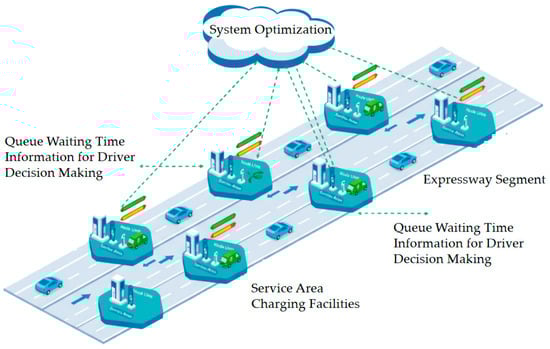
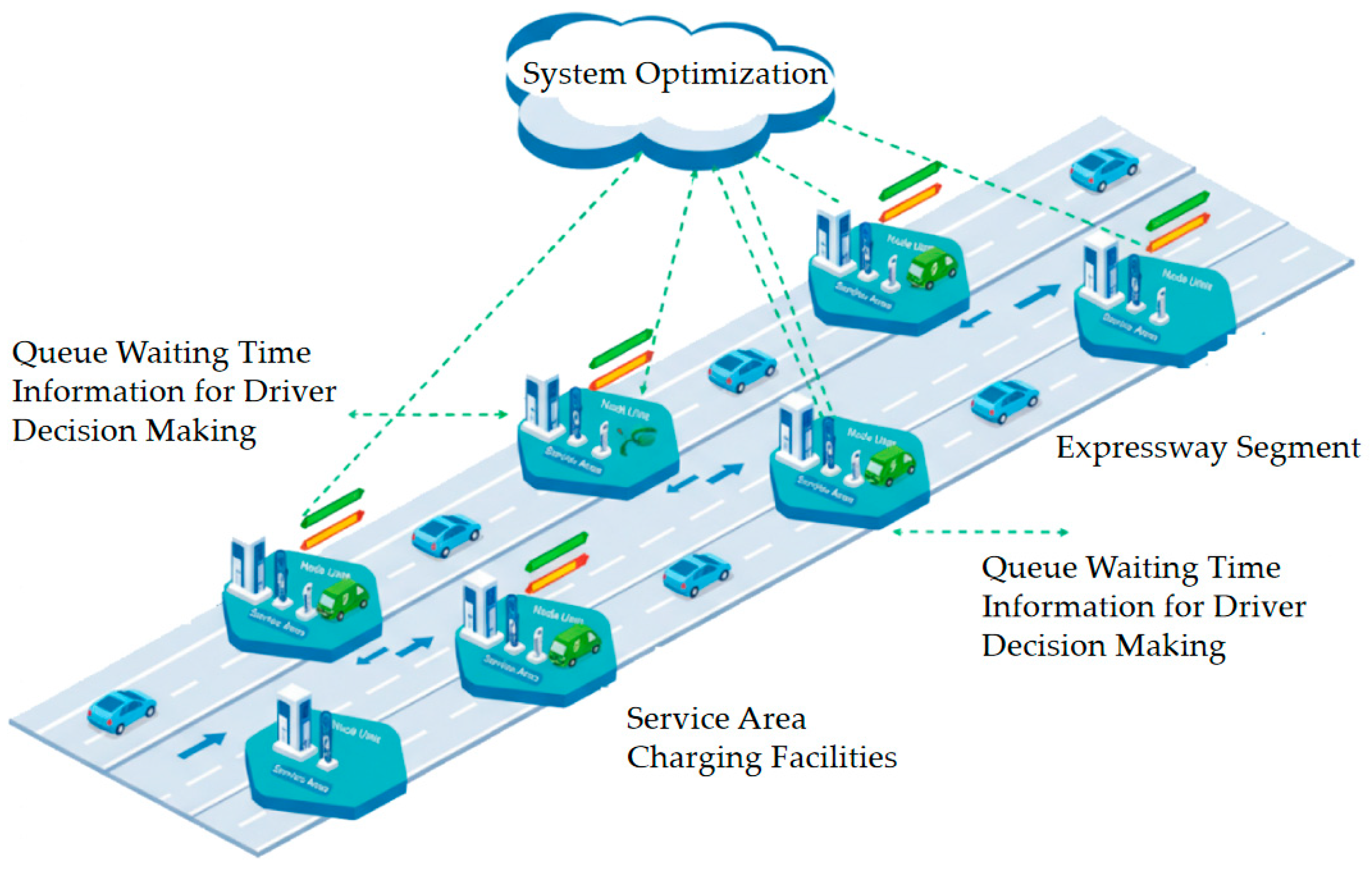
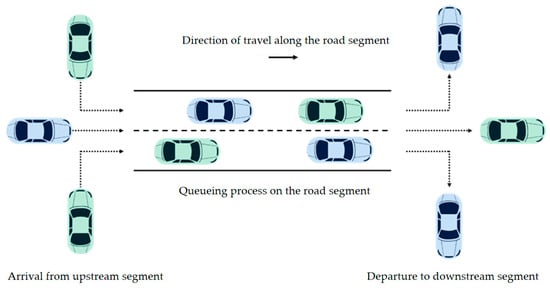
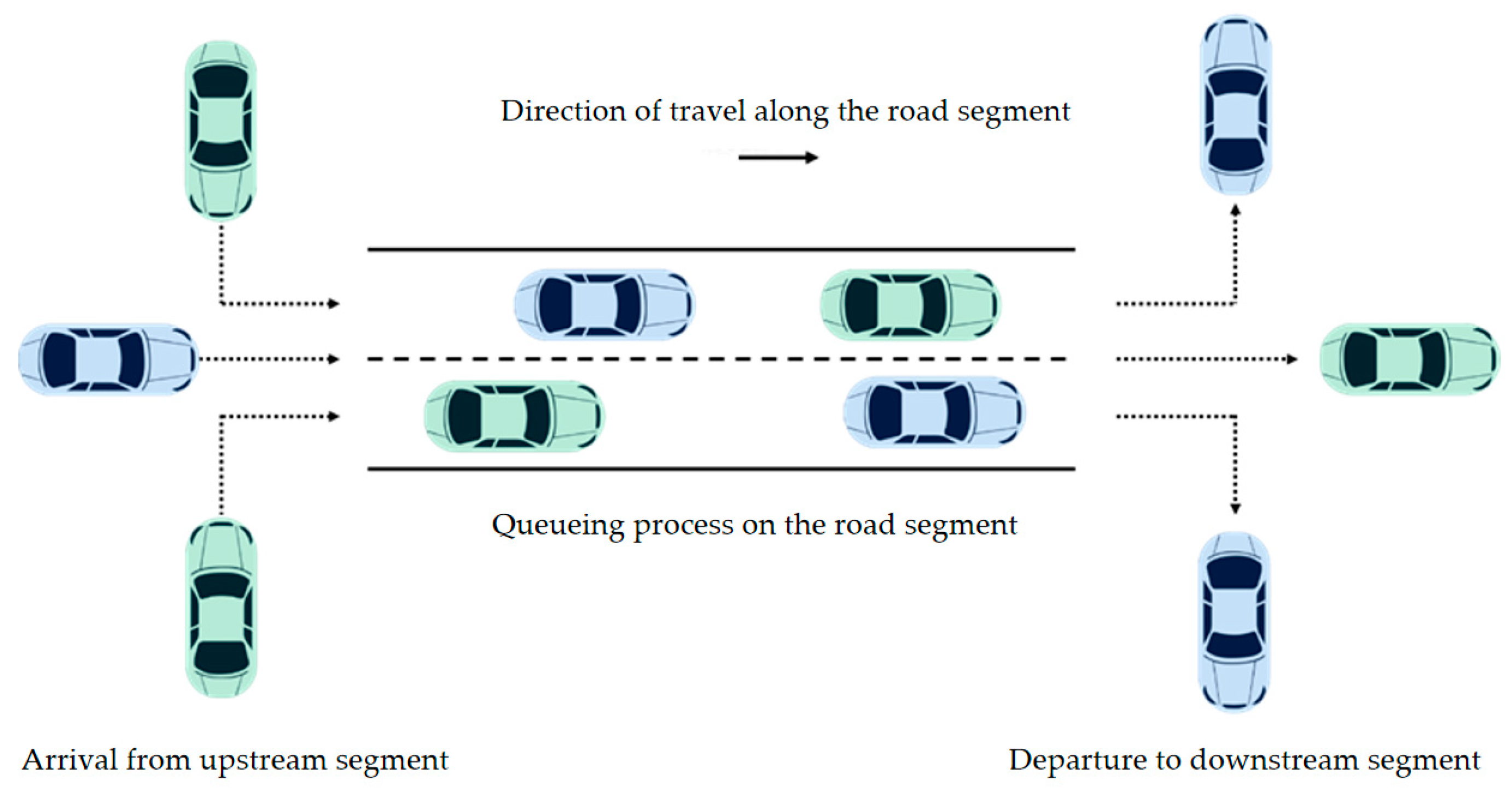
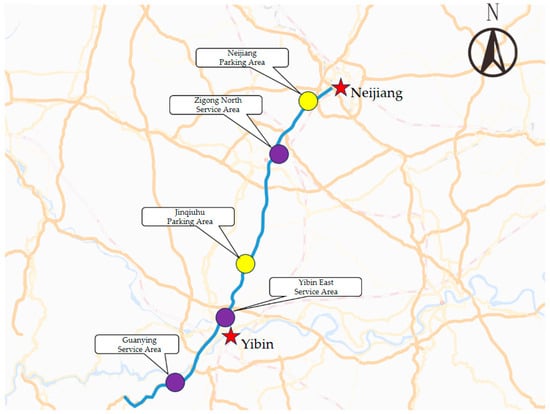
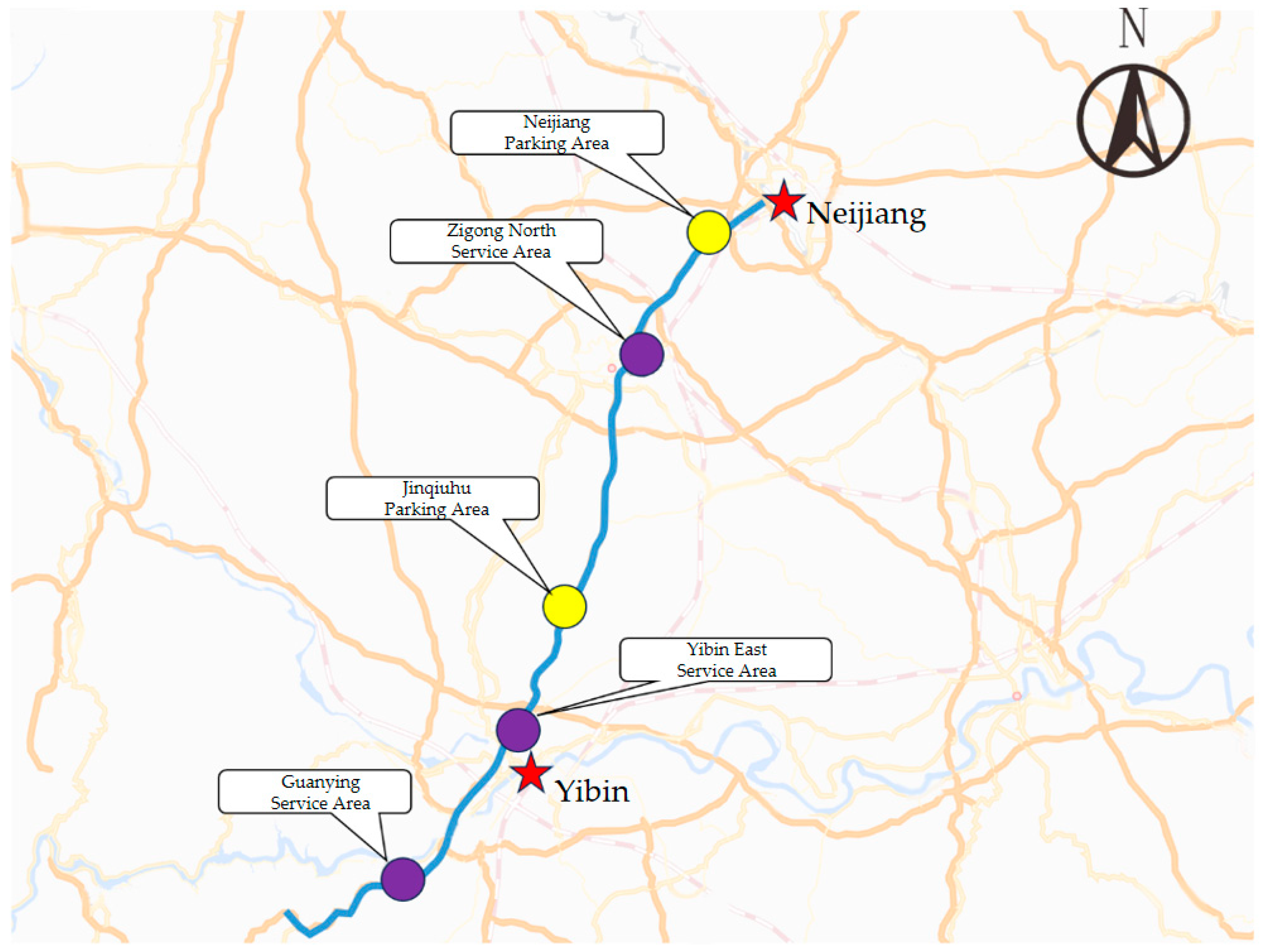

Disclaimer/Publisher’s Note: The statements, opinions and data contained in all publications are solely those of the individual author(s) and contributor(s) and not of MDPI and/or the editor(s). MDPI and/or the editor(s) disclaim responsibility for any injury to people or property resulting from any ideas, methods, instructions or products referred to in the content. |
© 2026 by the authors. Licensee MDPI, Basel, Switzerland. This article is an open access article distributed under the terms and conditions of the Creative Commons Attribution (CC BY) license.