


Highlights
What are the main findings?
- A multi-source workflow (archaeological inventory + remote sensing + USPED erosion modelling + hazard layers) produces a spatially explicit multi-risk map for medieval rural settlements in Basilicata.
- Long-term rainfall analysis (CHIRPS, 1984–2024) indicates a rising frequency of extreme precipitation, strengthening the linkage between climate-driven hydro-geomorphic processes (erosion/deposition, floods, landslides) and heritage exposure.
- The multi-risk map functions as an updateable decision-support tool to prioritise monitoring and preventive conservation actions for the most exposed heritage clusters.
- The approach is replicable using open-access datasets and GIS/Earth Observation methods, enabling transfer to other Mediterranean or mountainous regions to support climate-adaptation strategies for cultural heritage.
Abstract
Climate change has among its effects the increasing frequency and intensity of natural disasters, such as landslides, floods, erosion and fires, with clear implications on both natural and anthropic hazards and risks. These natural phenomena pose a growing threat to archaeological heritage through increased rates of soil erosion, flooding, and landslides. This study presents a multidisciplinary approach to assess the erosion risk affecting medieval rural settlements in the Basilicata Region of Southern Italy. This area is characterised by high-impact natural phenomena that have influenced settlement patterns in the past. The focus is on rural settlements that arose during the Middle Ages, some of which were abandoned as early as the late Middle Ages. This study has the dual objective of analysing the natural causes that may have led to the abandonment of many sites in ancient times and producing a predictive multi-risk map of the possible loss of cultural heritage sites. By integrating archaeological data, remote sensing, historical sources, and geospatial modelling, a multi-risk map was developed to identify areas at the highest risk. The results demonstrate the urgent need for proactive conservation strategies in the face of ongoing climatic change.
1. Introduction
Climate change poses significant and escalating threats to cultural heritage worldwide, impacting both tangible and intangible assets through gradual environmental changes and extreme events. Remote sensing and geomatics technologies have emerged as essential tools for monitoring, assessing, and safeguarding cultural heritage sites against these risks. Recent literature highlights the integration of advanced remote sensing methods, including satellite imagery, LiDAR, UAVs, and AI-driven analytics, for non-invasive, large-scale, and continuous monitoring of heritage sites, enabling early detection of deterioration and informed decision-making for preservation strategies [1,2,3,4]. The growth and spread of remote sensing applications, especially in the field of archaeology, has been evident since 2000, peaking between 2021 and 2022, to the extent that we can now talk about a new era of “remote sensing archaeology” and its direct heir, aerial photography and landscape archaeology, which until now have been carried out through field surveys [5,6]. Research also identifies notable gaps and challenges in data integration, and the need for interdisciplinary collaboration and policy development [3,7,8]. This field is rapidly evolving, with increasing attention given to AI, machine learning, and the development of predictive models for risk assessment and adaptive management. Initially, in the field of cultural heritage, interest in applying AI and machine learning has been focused from the outset on architectural artefacts and works of art, with the aim of launching appropriate restoration campaigns [9,10]. Only later did the need to protect and document cultural heritage, particularly archaeological assets, lead to the spread of these practices. However today, the progression of these practices is limited by geographic imbalances [11].
Recent studies have shown that the integration of machine learning (ML) and deep learning (DL) has been useful not only for identifying archaeological features but also for estimating the probable extent of archaeological structures and sites [12]. Although the use of DL is still based on a few case studies, the current trend is shifting towards the reconstruction of archaeological landscapes (settlement networks, land use, resource analysis) and also towards the monitoring of sites in order to mitigate risks due to urbanisation and land use [13], illegal excavations, armed conflicts and climate change [3].
Archaeological landscapes in particular are increasingly vulnerable to the impacts of climate change. Soil erosion, flooding, seismic risk [14] and landslides represent major threats to the integrity of cultural heritage sites. Soil erosion models, including the Universal Soil Loss Equation (USPED), play a crucial role in environmental science, agriculture, and land management. These models are designed to predict, analyse, and mitigate the effects of soil erosion, providing valuable information applicable to various types of landscapes, including agricultural fields, forests, and, in particular, archaeological sites. The application of the USPED model in archaeological contexts often involves integrating it with other methods to evaluate the vulnerabilities faced by specific archaeological sites. For example, in the study conducted by Németová and Kohnová, the authors validated the USPED empirical model within a broader scope of sediment loss and environmental changes [15]. This model was compared with physically based models to ascertain its effectiveness in different contexts, revealing how environmental factors directly influence preservation and conservation strategies for archaeological sites. Minervino Amodio et al. [16] investigate the risk of soil erosion and its effects on the archaeological heritage of the Sinni Valley (Basilicata, Southern Italy). By integrating the USPED model with spatial analysis techniques such as Kernel Density Estimation (KDE), the researchers compared erosion patterns from the past (1990–2023) with a future scenario shaped by climate change. The results highlight that simulated extreme rainfall events lead to a 20% increase in areas vulnerable to high erosion and deposition, potentially endangering sites currently considered stable. Gouma et al. [17] analysed how soil erosion and deposition affect the distribution of archaeological surface finds on the island of Zakynthos. By comparing two geomorphological models (USPED and RUSLE), they found that high artefact densities typically correspond to stable surfaces, while eroded areas show lower densities.
The Basilicata Region in Southern Italy, characterised by numerous medieval rural settlements, offers a significant case study due to its geomorphological variability and exposure to climatic hazards. This paper aims to assess the erosion risks to medieval rural sites by combining historical research, remote sensing, climate data analysis, and geospatial modelling. The integration of these datasets allows for a comprehensive understanding of site vulnerability and provides a framework for heritage risk management.
In recent years, the intensification of extreme weather events, including heavy rainfall and prolonged droughts, has exacerbated geomorphological instability across Mediterranean landscapes. The consequences of these processes are particularly acute in regions like Basilicata, where steep slopes, fragile soils, and historical land-use practices have long shaped a dynamic and erosion-prone environment [16,18,19]. In this context, medieval rural settlements such as villages (villae, casali in Latin), often established on steep slopes or near water resources, are now increasingly exposed to degradation and acceleration of geomorphological processes driven by climatic shifts [3,20,21,22].
This study contributes to the growing field of heritage risk assessment under climate change scenarios by presenting an integrative methodology that couples high-resolution environmental data with detailed archaeological inventories. Drawing on the Unit Stream Power-Based Erosion Deposition (USPED) model, long-term precipitation records from the CHIRPS dataset, and hazard inventories from regional and national sources, we develop a multi-risk framework to identify the most vulnerable areas. The approach is grounded in both historical and spatial analyses, combining qualitative archival data with quantitative geospatial techniques to assess the exposure and vulnerability degree of archaeological sites.
2. Materials and Methods
2.1. Study Area
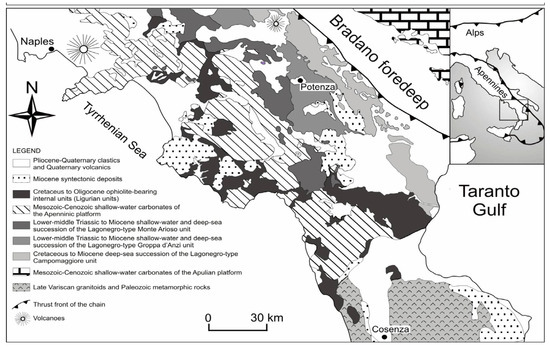
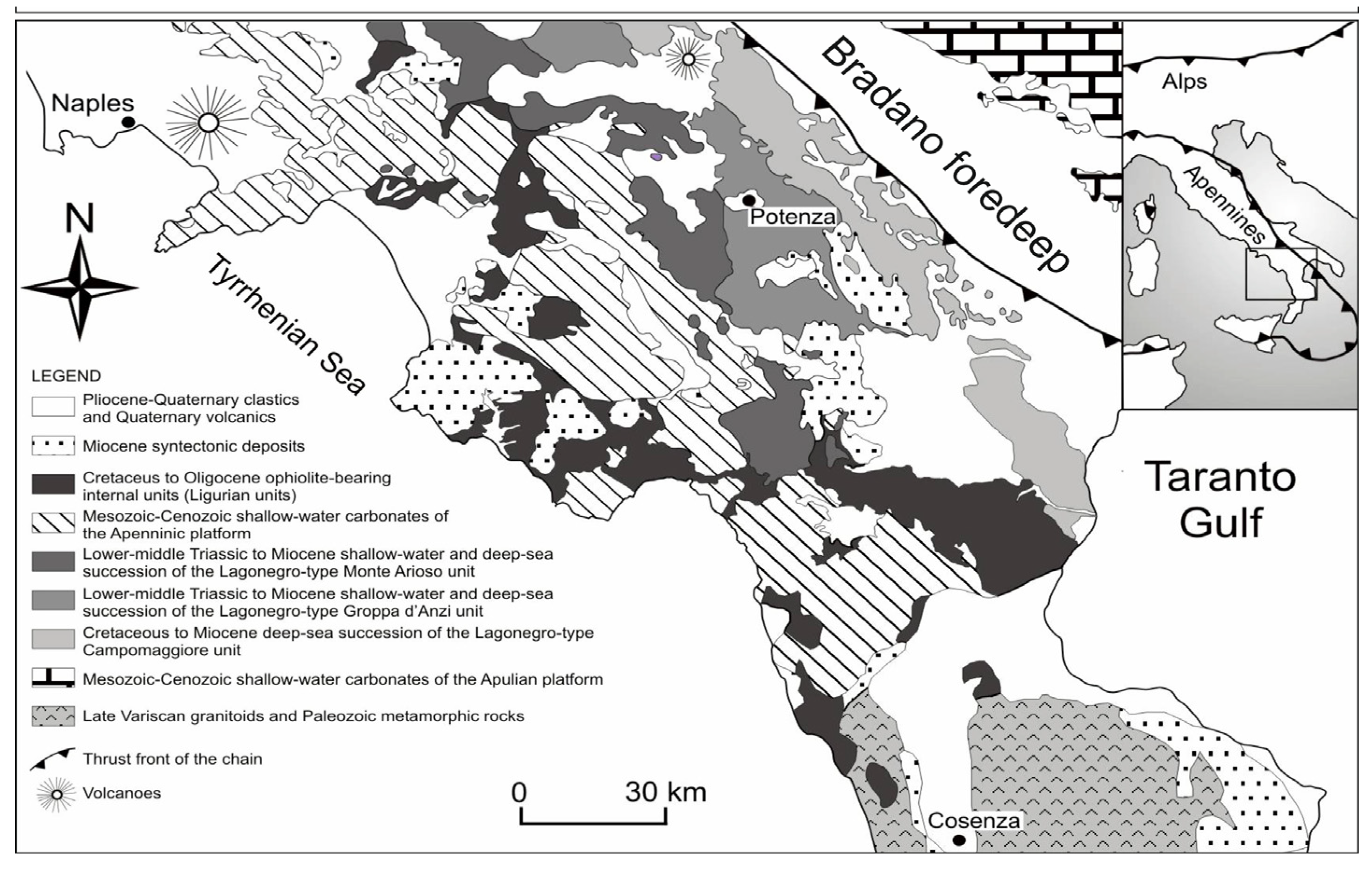
The study area is located in a large sector of the Southern Apennine chain, an NE-verging fold-and-thrust belt that was created by the Neogene deformation of the African palaeomargin [23]. This belt is primarily composed of Mesozoic–Cenozoic shallow-water and deep-sea sedimentary rocks and Miocene syntectonic deposits, which was diachronically included in the contractional structure from SW to NE [16,17]. The highest altitude sector (i.e., the axial zone) of the southern Apennines frequently reaches 2000 m above sea level (a.s.l.) and is widely considered as a transient and tectonically controlled landscape. This sector has undergone an extensive and multistage tectonic evolution, although the youngest (i.e., Quaternary) stage of tectonic uplift at a regional average of 0.6–0.7 mm/yr has strongly controlled the present-day landscape [24]. As a result of this complex morphotectonic evolution, the landscape is dominated by mountain ridges and tectonic basins, which are aligned and elongated according to the NW-SE axis of the belt, especially in its SE sectors. Main geomorphic features of these sectors of the study area include mountain ridges with steep slopes, falt-topped tectonic basins, and deep and V-shaped valleys. The outer belt and foredeep areas (i.e., north-eastern sector), such as the Ionian coastal plain, have a gentler topography, which is mainly carved in low-relief thrust sheets or hilly landforms in the foredeep areas. The foredeep also features badlands and terraced surfaces of marine and alluvial origin, dating from the Middle Pleistocene to the Holocene (Figure 1).
Figure 1.
Geological sketch map of the Campania-Lucania Apennine and northern Calabria (modified by the authors from [16]).
The study focuses on the Basilicata Region in southern Italy, a historically complex and environmentally diverse territory. Characterised by hilly and mountainous landscapes, deeply incised river valleys, and a Mediterranean climate, the region has historically supported a dispersed rural settlement system. Since the early Middle Ages, the landscape of Basilicata has been characterised by small rural centres, groups of dwellings and individual buildings resulting from a long tradition of agricultural exploitation of the land. Between the 9th and 10th centuries, the bishops (e.g., of the dioceses of Acerenza and Tursi) and the byzantine monastic communities and the benedictine ones of Montecassino, San Vincenzo al Volturno and S. Sofia of Benevento favoured the birth of numerous rural settlements to manage the land for cultivation. Between the end of the 13th and the first half of the 14th century, there was a crisis of the rural system (and, consequently in the network of casali), which culminated in the Aragones period (15th–early 16th century) [25,26]. The causes of the disappearance of these centres are numerous: economic crisis, epidemics, and natural events. The middle of the 13th century represents a watershed for the population. Some historiographers provide reports of rivers flooding. In 1243, according to the news reported by Tanzi in 1259, the Bradano river was exhumed in the area near the borders of S. Salvatore, opening a new course after abandoning the previous one [27]. The consequences of these natural phenomena must have particularly affected the final stretch of the river, to the extent that a coastal landing place that had previously replaced the pre-existing port of Metaponto was abandoned [25].
2.2. Input Data
2.2.1. Rational and Used Dataset
This paper aims to (i) identify the natural causes that led to the abandonment of sites from the Middle Ages to the present day, by integrating different sources and data; (ii) study landscape transformations over time; (iii) delineate areas subject to natural hazards (landslides, floods, soil erosion) and analyse interactions with cultural heritage; (iv) propose innovative procedures based on Earth Observation, Artificial Intelligence (AI) and GIS, to monitor the current effects of climate change and the impact of natural phenomena on cultural heritage; and (v) develop a predictive map of the risk of loss of these assets due to climate change.
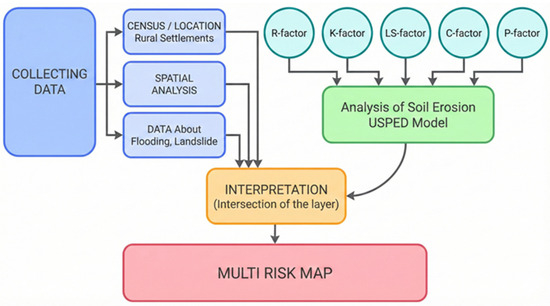
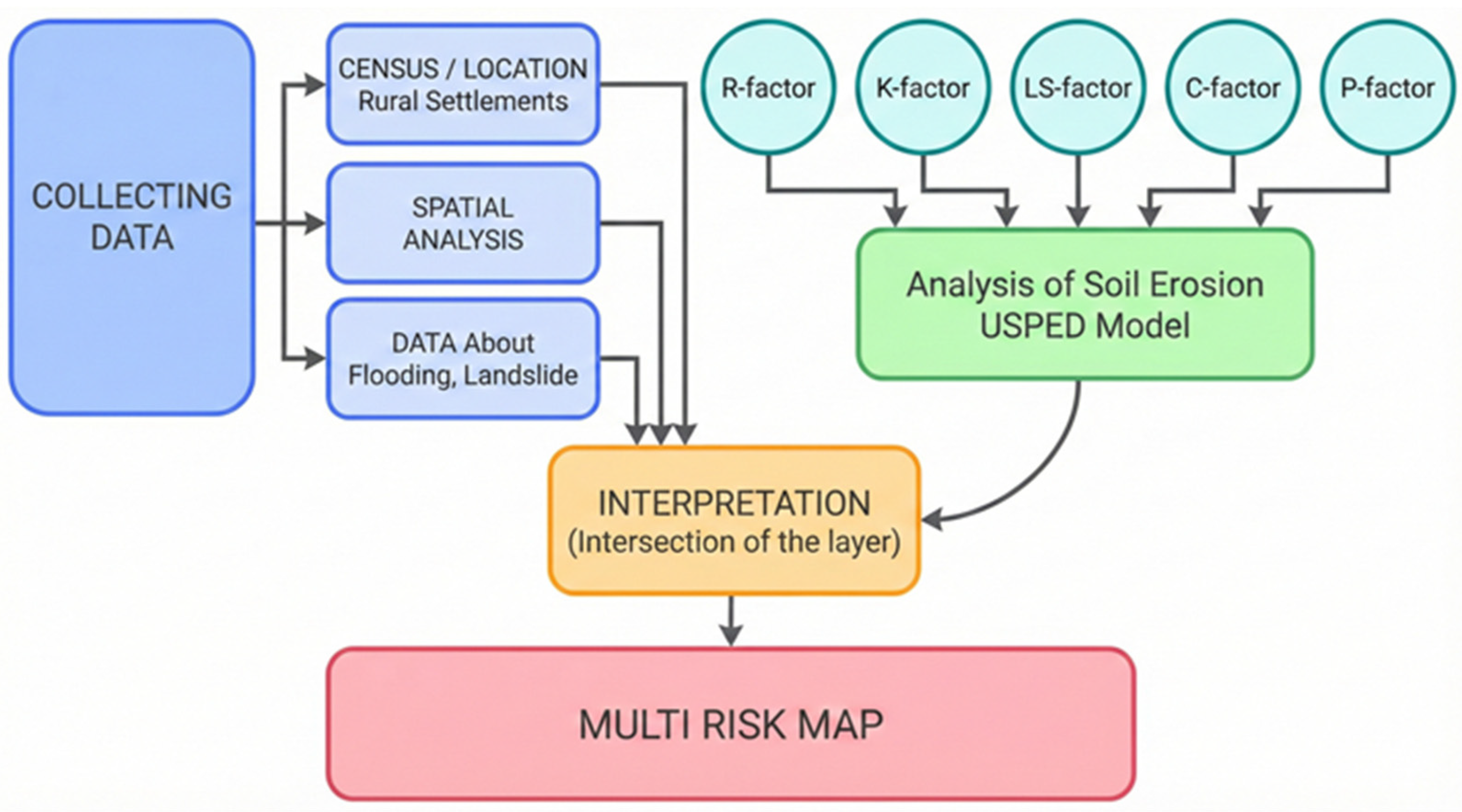
The work involved the following steps. (i) Collecting data: the census and location of rural settlements known from written and cartographic sources since the early Middle Ages, including spatial analysis to calculate the potential number of existing settlements beyond those physically identified data about flooding and landslide; (ii) analysis of soil erosion factors using the USPED model; (iii) visual and statistical interpretation of the multilayer dataset; and (iv) development of a predictive multi-risk map (Figure 2) (Table 1).
Figure 2.
Flowchart of the project.
Table 1.
Summary of the data used during the processing period, described in detail below.
2.2.2. Archaeological Data
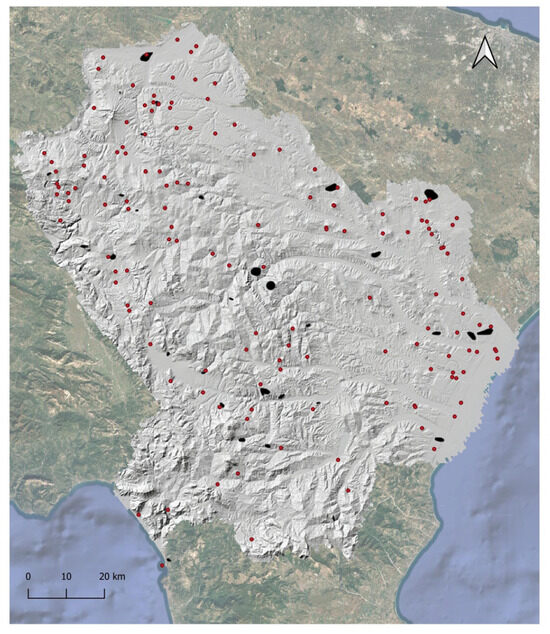
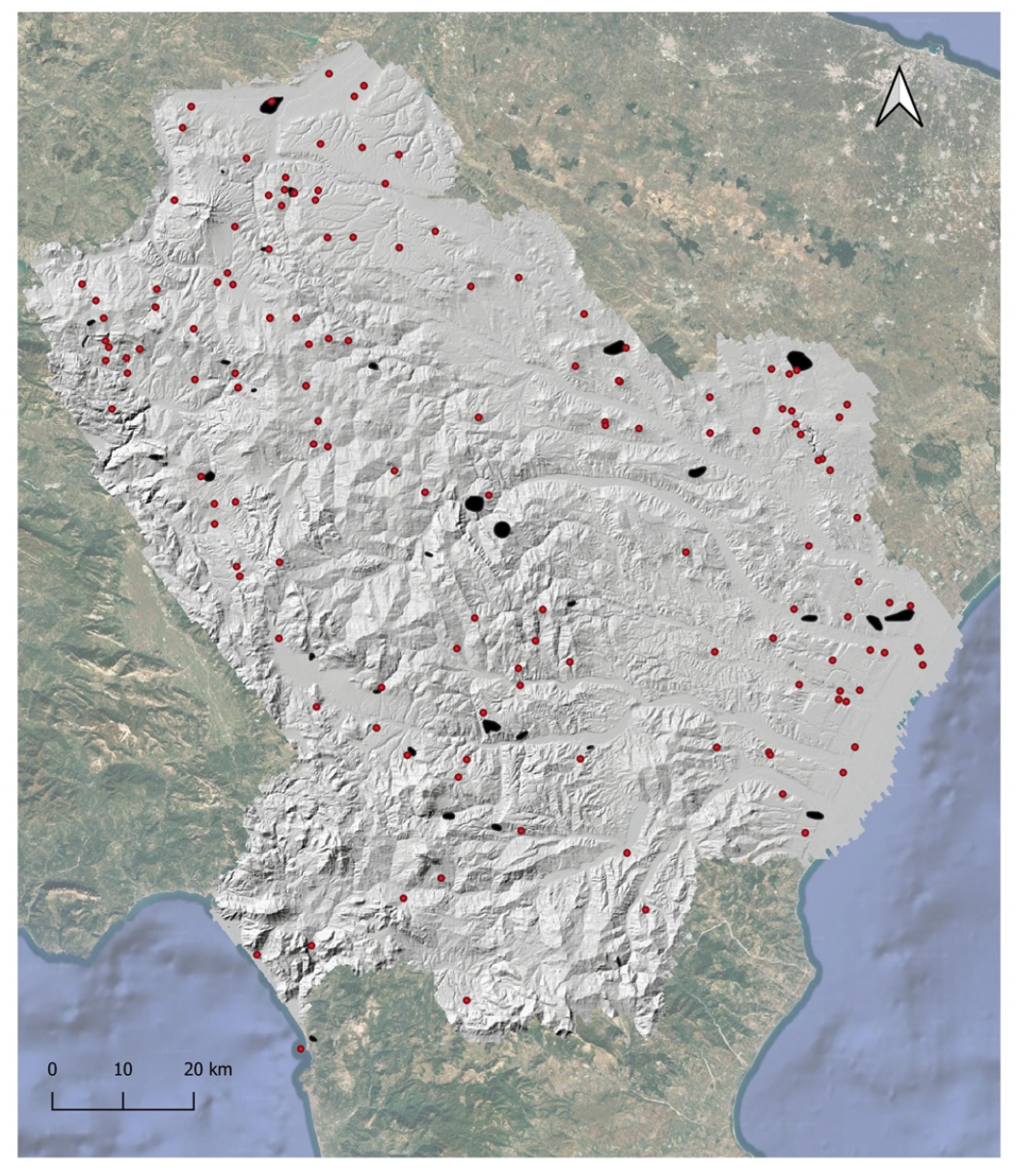
The research undertook a systematic census of medieval rural settlements, integrating archaeological, historical, and spatial data. The comparison with place names extracted from historical maps dating back to the 17th century and data from the bibliography produced to date has led to the creation of a database with continuously updated site records, which has been transferred to a GIS platform using topographic maps and a 5 m DEM provided by the Basilicata Region. A total of 140 settlements were identified based on documented existence in historical sources, supported by cartographic evidence and archaeological remains. Additionally, 34 areas were identified as probable locations of lost settlements, where indirect evidence such as toponyms, features identified through remote sensing, or historical mentions suggest the past presence of built-up sites (Figure 3).
Figure 3.
DEM of the Basilicata Region with location of rural sites (red dots) and probable areas where other settlements are located (in black).
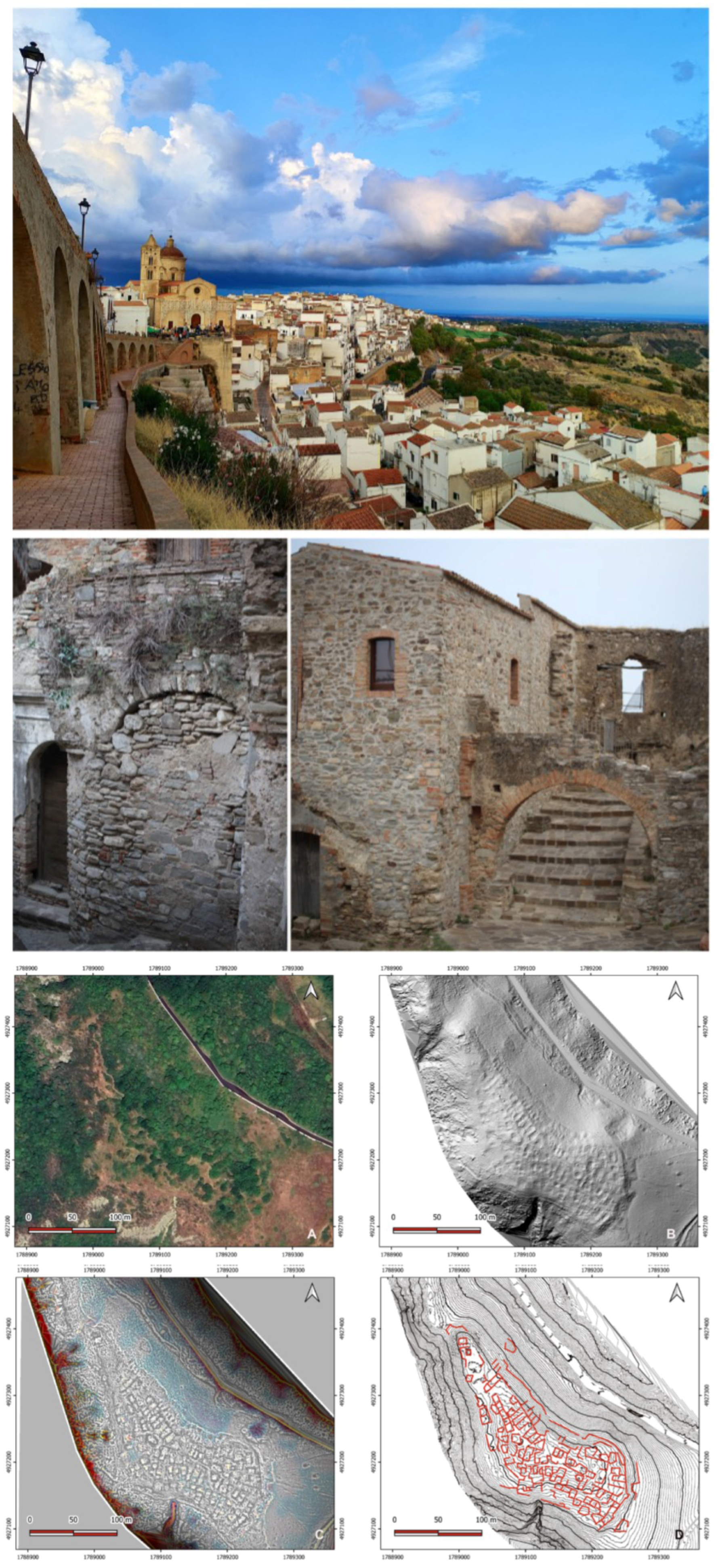
The state-of-the-art technology is used in very different situations: there are villages that grew out of ancient rural sites and are still inhabited, and sites in a state of ruin and settlements whose traces have only been identified thanks to remote sensing technologies (Figure 4). This lack of uniformity clearly leads to significant differences in the levels of risk to which settlements are exposed.
Figure 4.
Application of state-of-the-art: some examples of settlements analysed. Theimage shows some sites in Basilicata, such as the village of Pisticci (top), the site of Rabata di Tursi (middle), the medieval village of Perticara (bottom), the latter analysed using ground-based true colour photos and LiDAR data from drones.
Historical cartography, including post-medieval maps, provided an essential spatial framework for locating settlements [28,29]. These maps, although often schematic or symbolic in representation, offered critical insights into the distribution of population centres, land ownership patterns, and the historical road and river networks that conditioned settlement placement. Particular attention was paid to 16th–19th century cadastral and topographic maps, which often preserve traces of earlier, no-longer-inhabited sites [29,30].
Archival documents and monastic chronicles that record feudal jurisdictions, ecclesiastical possessions, and tax records [31] were systematically analysed to recover administrative, ecclesiastical, and fiscal references to settlements. Sources included feudal surveys, ecclesiastical inventories, tax registers, and legal records documenting land tenure or disputes. These textual sources helped to determine the existence and hierarchical status of settlements (e.g., casale, villa, castrum), their chronological range, and their association with specific land uses or institutional powers.
Archaeological field surveys aimed at identifying surface remains and material culture traces. They were carried out to validate the location of settlements on the ground [32,33]. These involved systematic and opportunistic surface reconnaissance aimed at identifying visible architectural remains, building materials, ceramic scatters, and anthropogenic landscape features such as artificial terraces or ancient roads. The surveys were instrumental in confirming site locations, refining their extent, and assessing preservation conditions.
Remote sensing data, including high-resolution satellite imagery, historical aerial photographs, and digital terrain models, were used to identify and analyse subtle landscape traces indicative of human occupation. These included crop marks, soil discolorations, shadow patterns, and micro topographical anomalies. In many cases, remote sensing allows for the detection of settlement features in areas that are now cultivated, forested, or otherwise inaccessible, complementing ground survey data and enhancing wider spatial coverage [34].
This methodology enabled the reconstruction of a broad and spatially continued picture of medieval rural occupation in Basilicata, providing the foundation for subsequent spatial analyses and erosion risk assessment. The convergence of these diverse data sources enabled the creation of a georeferenced and temporally annotated inventory of medieval rural settlements. This inventory serves as a critical input for spatial analyses and risk modelling, linking cultural heritage to geomorphological and climatic processes in a rigorous and reproducible manner.
2.2.3. Remote Sensing Data
In order to refine the predictive model of erosion and thus the multi-risk map, CHIRPS (Climate Hazards Centre InfraRed Precipitation with Station data, Version 2.0 Final) data were also considered. CHIRPS is a 40+ year quasi-global rainfall dataset, which incorporates 0.05° resolution (5.5 km approx.) satellite imagery with in situ station data to create gridded rainfall time series for trend analysis and seasonal drought monitoring. The CHIRPS data were utilised via the Google Earth Engine (GEE) platform, which provides access to large datasets free of charge, using a JavaScript. The data used considered the period from 1984 to 2024. The data thus acquired were subsequently analysed with the following aims: (i) identifying the occurrence of “anomalous” events, i.e., above the 99th percentile and (ii) understanding long-term trends and anomalies (1984/2024) in seasonal averages. Extreme events were considered to be those events with a 99th percentile (Pk) value (1):
where
- Pk is the k-th percentile you are trying to determine.
- X is the data ordered from least to greatest.
- n is the total number of observations in the data.
- k is the desired percentile (e.g., 90, 95, 99).
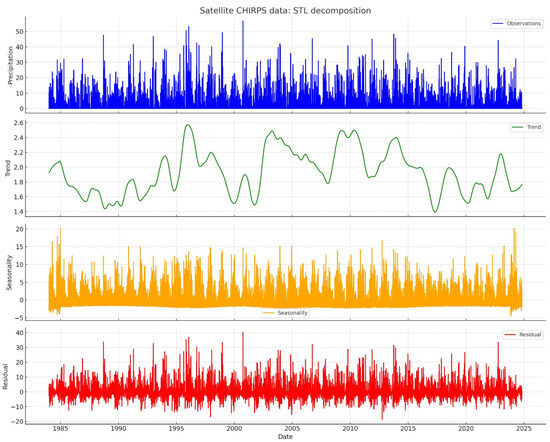
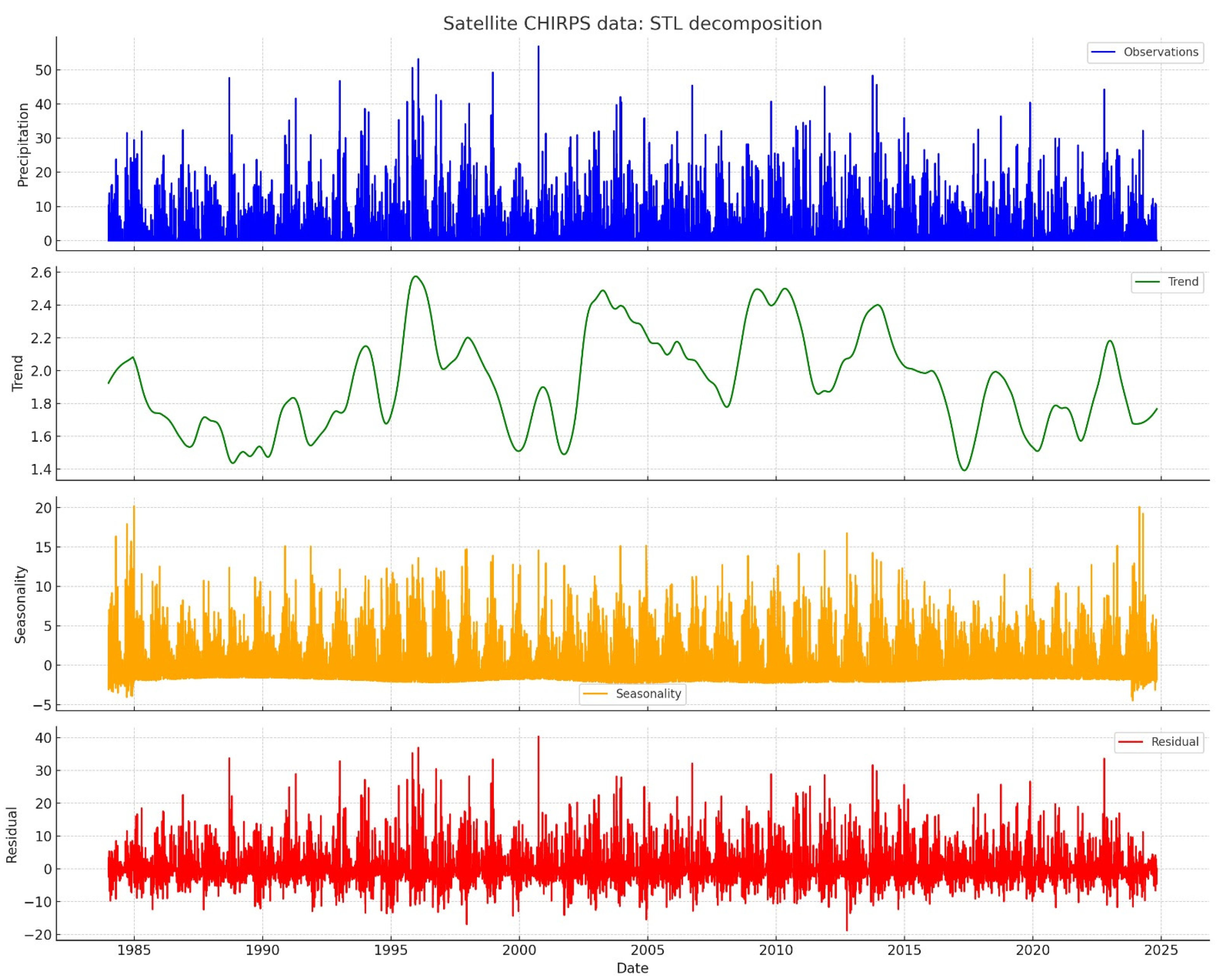
The temporal evolution of precipitation in the study area was evaluated using a Seasonal and Trend Decomposition using Loess (STL) function (Figure 5).
Figure 5.
STL decomposition on CHIRPS (1985–2025).
The STL algorithm is a robust technique for decomposing time series that allows the components of a series to be separated into trends, seasonality, and residuals. This method is particularly useful for analysing time series that show seasonal patterns and trends over the long term, providing a detailed understanding of each component. These components can be described as follows. (i) Trend: identifies and isolates the long-term trend in the time series, showing the direction and speed of change in the data over time, beyond seasonal or irregular fluctuations. (ii) Seasonality: extracts the seasonal component, which represents regular and predictable variations that occur at specific intervals, such as daily, monthly, and yearly. (iii) Residual: includes fluctuations in the data that cannot be explained by either trends or seasonality, offering insight into anomalies or shocks that were not expected.
2.2.4. Ancillary Data
Several data from the open-data database were used as input data for the USPED model:
- (i)
- The geolithological map is part of the technical documentation of the Draft Regional Landscape Plan (PPR) approved in 2023. These data were useful when elaborating upon a Flood Risk Map;
- (ii)
- IFFI is the national and official database on landslides [35]. It is produced by ISPRA (Higher Institute for Environmental Protection & Reserve) and in collaboration with the Regions and Autonomous Provinces (Art. 6 paragraph g of Law 132/2016). The need to create a National Landslide Inventory in Italy emerged more strongly following the disastrous event of 5 May 1998, which seriously affected the municipalities of Sarno, Siano, Quindici, Bracigliano and S. Felice a Cancello, in the provinces of Salerno, Avellino and Caserta (in the Campania Region). These data were useful to create a Landslide Map. Both input data provided in shape file format were transformed into raster. In this way it was possible to assign values of 0 and 1 to each pixel.
- (iii)
- Data provided by Regione Basilicata (Digital Elevation Model at 5 m/pixel, slope, Land Use Cover).
2.2.5. Spatial Analysis
After the census, the first action is the definition of a settlement intensity map. To better understand the spatial distribution and landscape dynamics of medieval rural settlements in Basilicata, a combination of geostatistical techniques and GIS-based spatial analyses was employed. This twofold approach provided both descriptive and predictive insights into the settlement pattern and its environmental context. The first step is to define the shape and size of the area in question (cf. Kernel Density Estimation, KDE). Kernel Density Estimation is defined as a moving three-dimensional function that weights events (points) depending on their mutual relationship and their intensity [36], as shown in the following expression (2):
where k is the kernel, that is the shape of the weighting function (in this work, the Epanechnikov’s kernel, [37]); s is the point intensity or a quantity identifying the event; τ or bandwidth is the most important parameter in KDE [38] and defines the width of the weighting function and consequently also how many events are weighted together. If bandwidth is too small, the resulting density or regression estimate is too rough and contains spurious features that are artefacts of the sampling process; when it is too great, important features of the underlying structure are smoothed away [39]. There are different types of functions in the Kernel Density model. We have just used the local function. It assumes that the distribution of settlements was not random, but also considers the characteristics of the landscape: slope of the land, soil fertility, distance from watercourses. The site location may have determined its proximity to another site or otherwise; however, when even this second level is not random, one concludes that some process of attraction has determined the clusters [40].
Notably, Kernel Density Estimation (KDE) and map algebra and Raster-Based Spatial Functions have been used. The KDE analysis was performed to visualise the intensity and clustering of settlements across the study area. KDE is a non-parametric method used to estimate the probability density function of a spatial variable [36]: in this case, the location of documented settlements. By transforming discrete point data into a continuous surface, KDE helps to identify zones of higher settlement concentration and potential areas of interaction or resource competition [41,42,43,44,45]. In this study, the bandwidth of the kernel function—critical in determining the level of smoothing—was calculated using the third order nearest neighbour distance, the bandwidth value we calculated is 9742 m, ensuring that the local density patterns were preserved without overgeneralizing isolated points. The bandwidth value is the average distance from all settlement points to their third-nearest neighbours. This method has been used in archaeological landscape studies of similar scales, and effectively reveals the expected settlement cluster size in this region. The Epanechnikov’s Kernel, known for its computational efficiency and optimal properties, was applied [37]. The result was a density surface revealing clear clusters of medieval habitation, which often corresponds to environmentally favourable locations such as water sources, arable land, and historic communication routes [46].
Beyond KDE, a suite of map algebra operations [43,44] was employed to integrate multiple raster layers and derive complex spatial relationships relevant to erosion risk. These operations included:
- (i)
- Local functions, where each cell of the output raster is calculated based solely on the values of the corresponding cells in the input raster. This was used, for instance, in overlay map operations to combine land use, slope, and precipitation data.
- (ii)
- Focal functions, which compute each output cell value as a function of its neighbourhood, were applied to derive smoothed representations of terrain attributes and to assess localised variability in erosion-related parameters.
- (iii)
- Zonal functions, where raster or vector-defined zones are used to calculate statistical summaries (e.g., mean erosion values) within defined areas, such as catchments or administrative units.
- (iv)
- Global functions, which consider all input cells for each output cell, were especially useful in surface modelling and distance calculations.
Among the global functions, weighted distance functions were used to assess the relative exposure of settlements to environmental hazards, while surface analysis methods such as slope and curvature computations allowed for refined modelling of geomorphological risk.
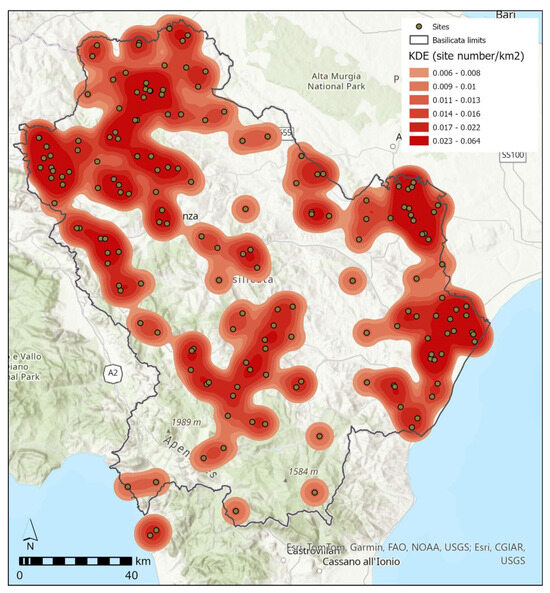
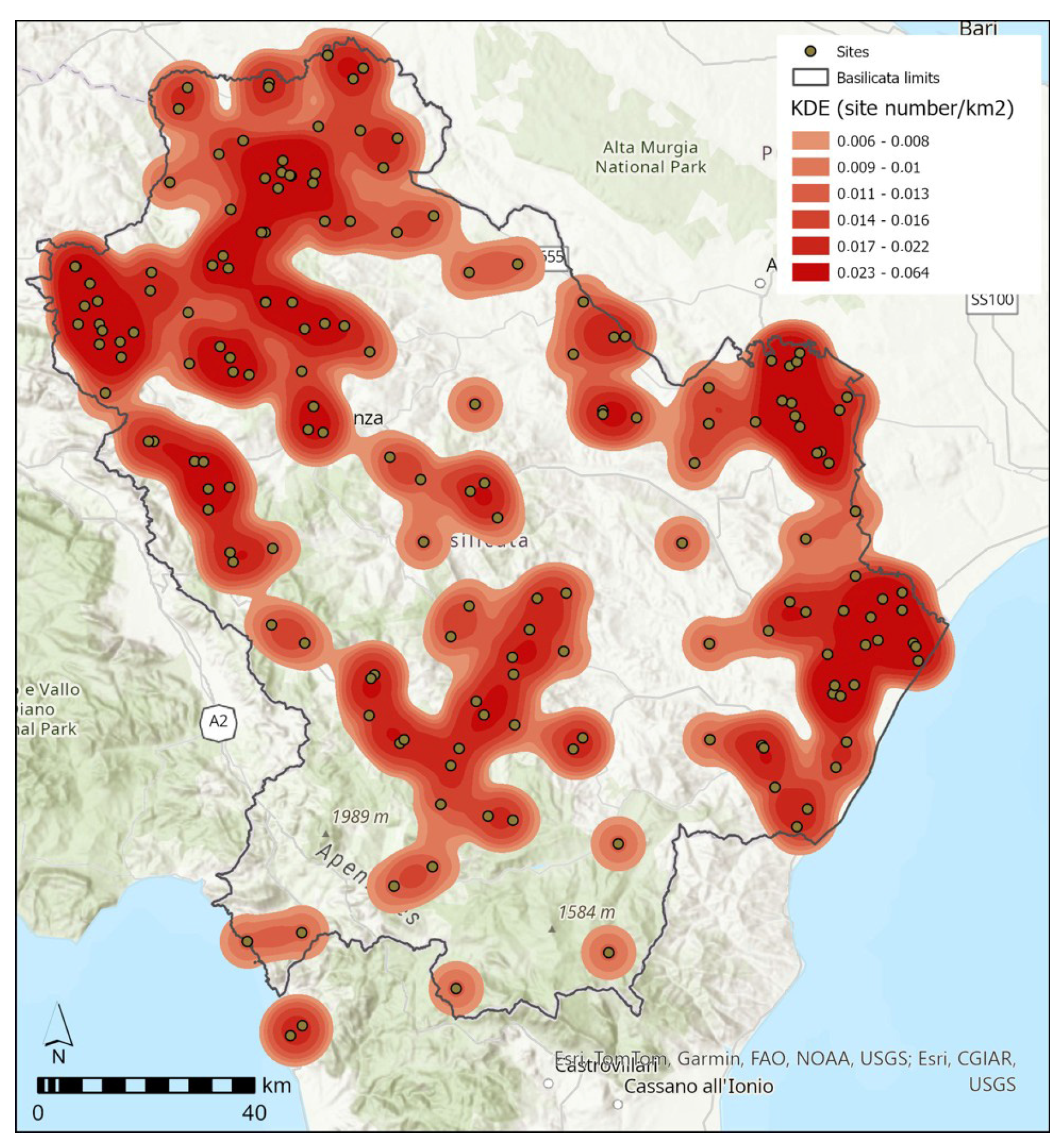
This integrated spatial analysis framework was essential for identifying critical overlaps between settlement density and environmental hazards, thus informing the subsequent risk assessment phase (Figure 6).
Figure 6.
Overlay between rural sites (green dots) and the results of KDE.
2.3. USPED Model Implementation and Erosion Risk Model
USPED combines the Universal Soil Loss Equation (USLE) parameters and upslope contributing area to estimate sediment flow and then erosion and deposition rates are computed as change in sediment flow in the direction of the steepest slope, according to this Equation (3):
where
A = R·K·LS·C·P
A is the annual average soil loss;
R is the rainfall intensity factor;
K is the soil erodibility factor;
L is the slope length factor;
S is the slope steepness factor;
C is the land cover factor;
P is the soil conservation or prevention practice factors.
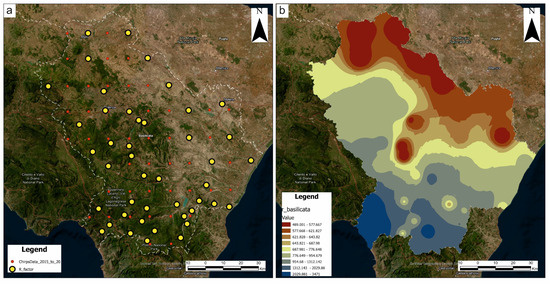
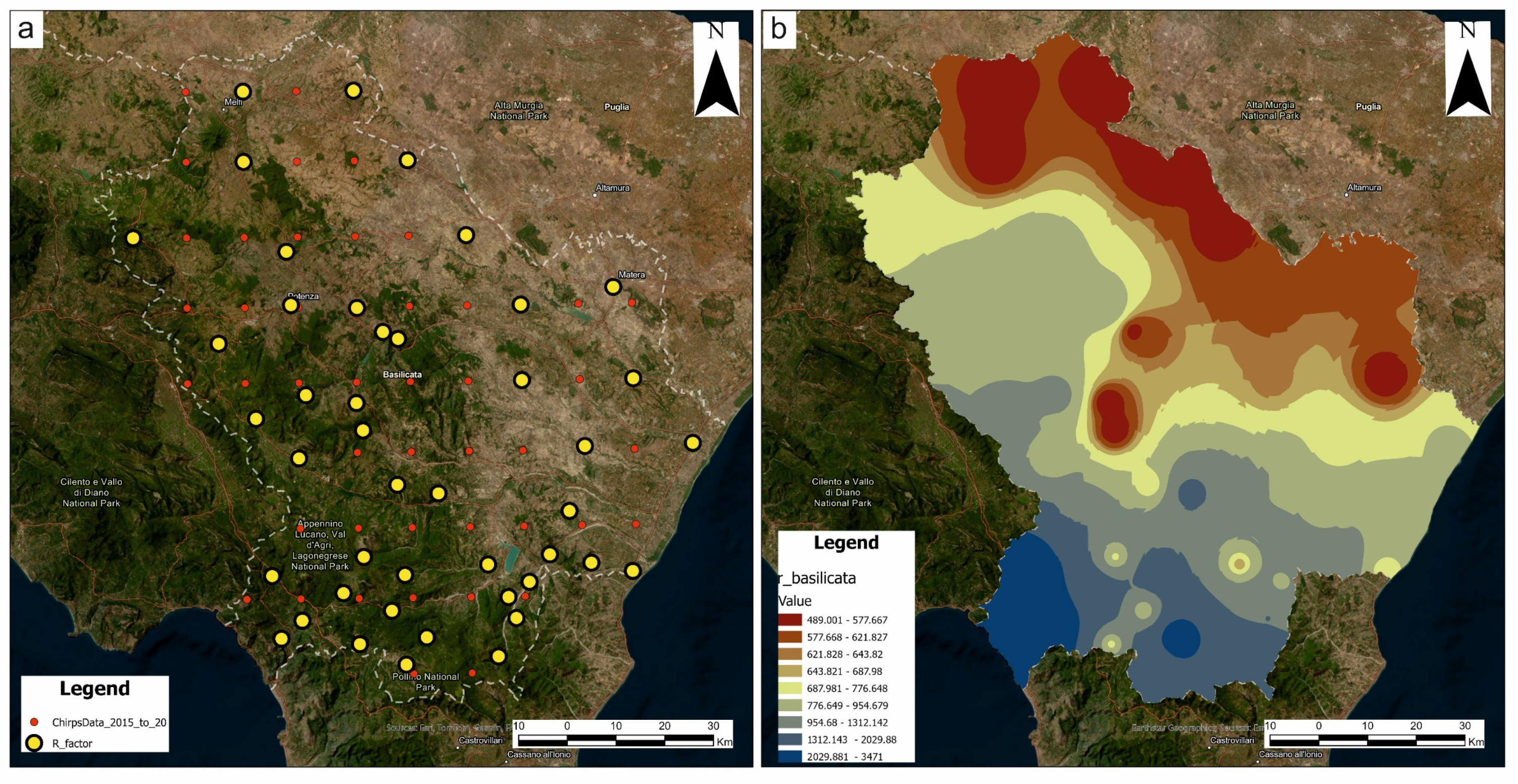
In particular, the R-factor represents the erosive potential of rainfall. It quantifies the combined effect of precipitation duration, intensity, and frequency on soil detachment. The R-factor is fundamentally determined by the geographic location and altitude of the study area, as these dictate local weather patterns. Traditionally, it is calculated by multiplying two specific components of a storm event: total Kinetic Energy (E), or the force with which raindrops hit the soil surface, and Maximum 30 min Intensity (I30), which indicates the peak intensity recorded during a half-hour period of the storm. In this study the R-factor was estimated using a power-law equation suggested by the authors of [45].In our case, when calculating the R-factor, we used two types of rainfall data: (i) daily rainfall data from ground stations provided by Civil Defence and (ii) daily rainfall data obtained using CHIRPS satellite data. The integration of these two sets of rainfall data (yellow and red points in Figure 7a) allowed for the estimation of the R-factor at each location. These values were then interpolated to generate the final R-factor map (Figure 7b).
Figure 7.
(a) Map with rain gauge data represented by yellow points and CHIRPS data (red points); (b) Rainfall Erosivity in the Basilicata Region (R-factor).
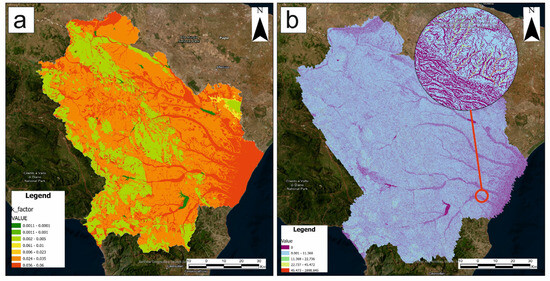
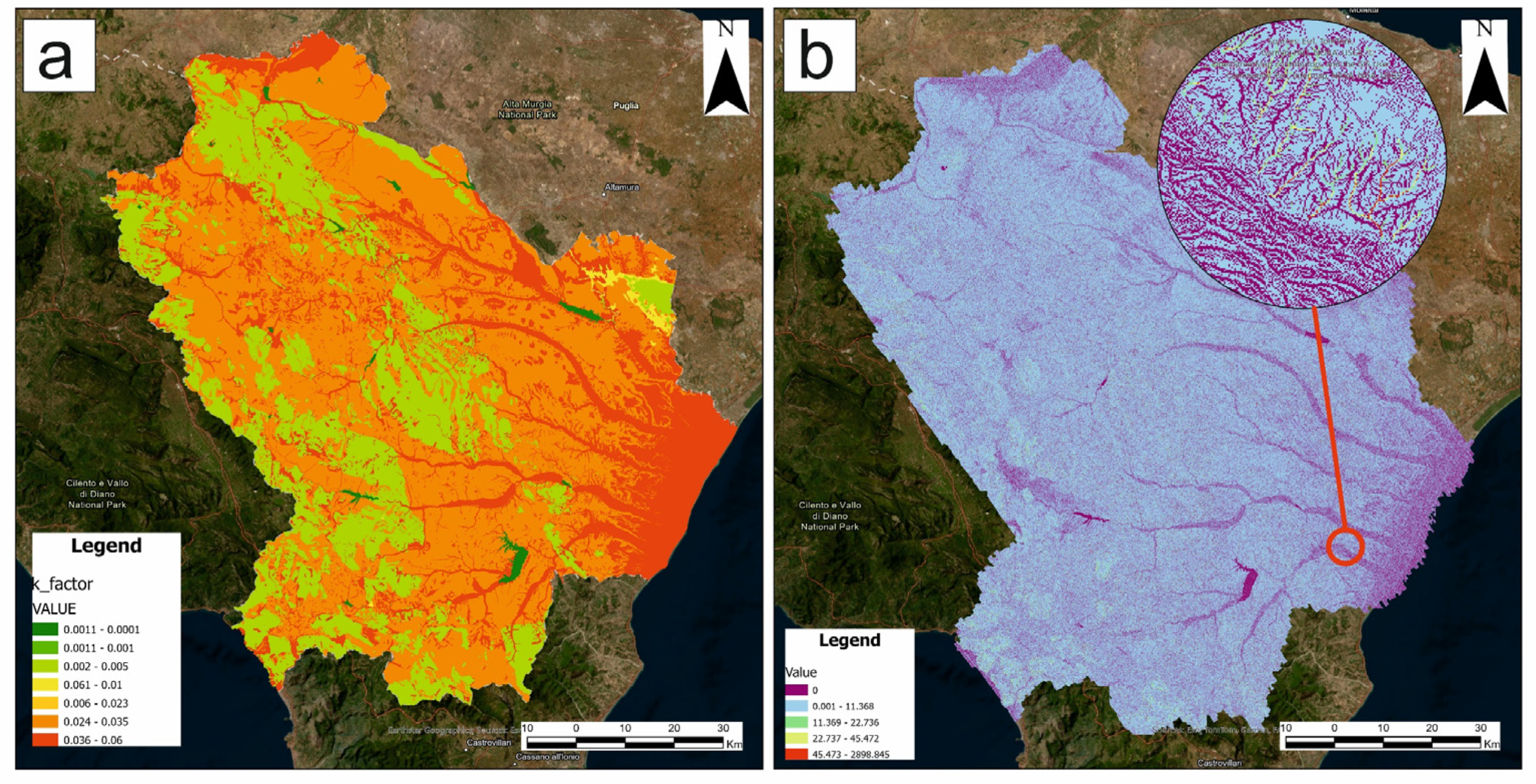
The K-factor measures the inherent susceptibility of soil particles to detachment and transport by rainfall and runoff. Formally, it is defined as the rate of soil loss per rainfall erosion index unit. It represents how a specific soil profile responds to the erosive power (erosivity) of precipitation. Under the SI metric system, it is expressed in Mg h MJ−1 mm−1 (as estimated on a standard Wischmeier erosion plot [46]) A higher K value indicates soil that detaches more easily. More specifically, K-factor depends on the texture, structure, and permeability. These data were obtained from previous work in the foredeep area of the southern Apennine chain [47,48]. To estimate the K-factor map, data was extrapolated from the geolithological map; subsequently, the Wischmeier nomogram [49] was applied to calculate the specific K-values and generate the final map (Figure 8a).
Figure 8.
(a) K-factor map; (b) LS factor map. The zoomed-in area in the circle shows how the map is made (to make the data visible, a visualisation method with 5 classes at quantile intervals was used).
LS stands for the Topographic Factor, which combines the effects of slope length (L) and slope steepness (S). It is considered one of the most critical parameters in erosion modelling because topography primarily determines the energy of the surface runoff. The LS factor was calculated from the Digital Elevation Model, considering a resolution of each pixel of 5 m provided by the open access platform of “RSDI—Geoportale della Basilicata” (Figure 8b).
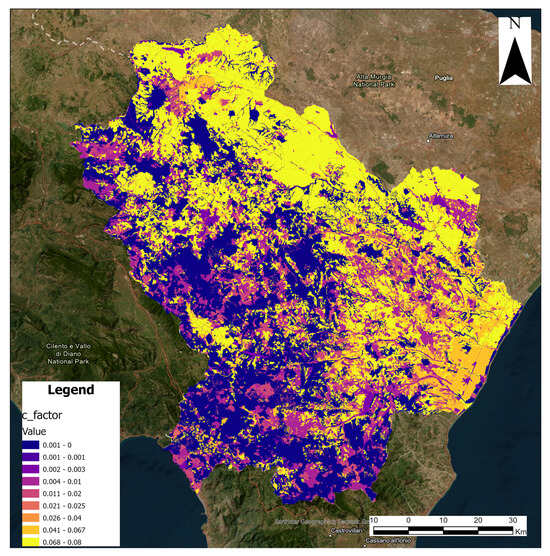
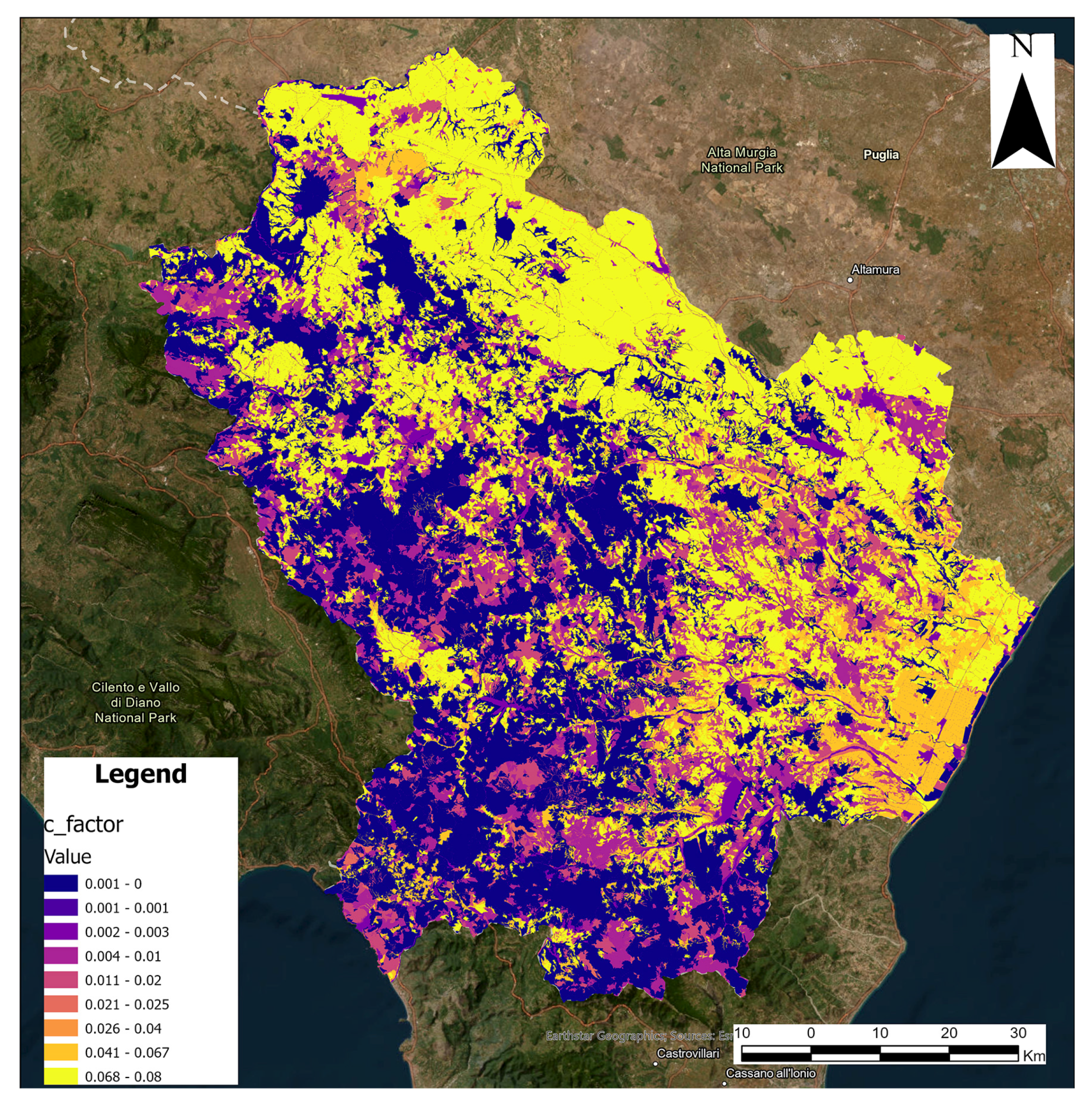
The C-factor is the ratio of soil loss from land cropped under specific conditions to the corresponding loss from clean-tilled, continuous fallow (bare soil). In simpler terms, it measures how effective the vegetation and land management are at preventing erosion compared to the “worst-case scenario” of bare soil. The C-factor is a dimensionless value that typically ranges between 0 and 1: (i) C = 0.1 (Maximum Erosion) represents bare, tilled soil with no vegetation. The soil is fully exposed to rain and runoff. (ii) C = 0 (Minimum Erosion) represents very dense vegetation, such as a thick forest or heavy grass cover. The closer the value is to 0, the better the land is protected. In our case, the C-factor is extracted from data provided by the open access platform of Geoportale Basilicata (Figure 9).
Figure 9.
C-factor map. Low values (0.0001–0.003) correspond to artificial surfaces and dense forests due to high soil protection. Intermediate values (0.020–0.067) are assigned to permanent crops (e.g., vineyards and olive groves), while the highest values (0.080) identify arable land, reflecting its greater erosion sensitivity.
2.4. Multi-Risk Map Construction
According to the following map algebra process, a multi-risk map was developed First of all, a synthetic raster map was created, combining hazard layers for floods, landslides, and erosion according to the following expression:
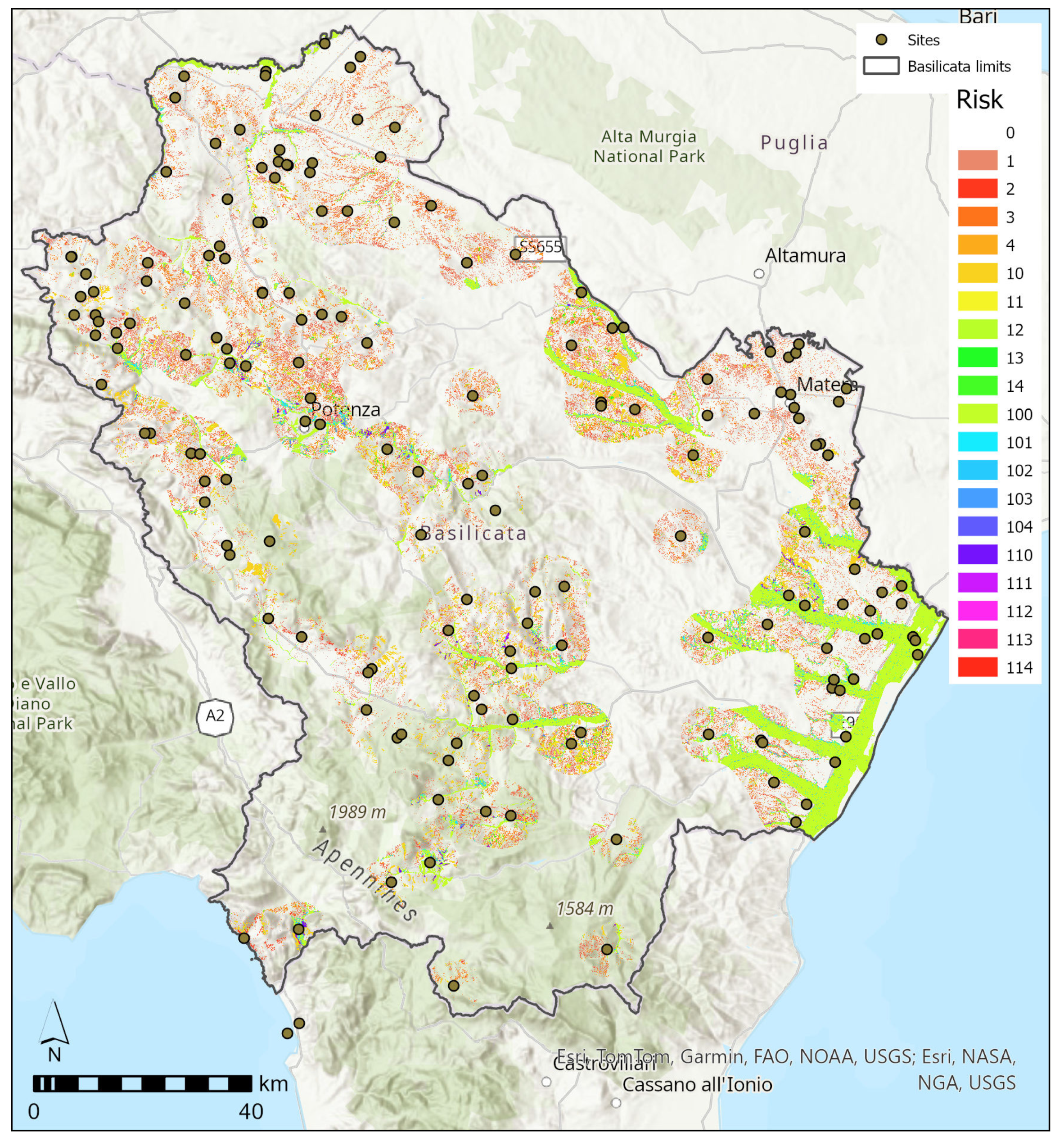
where F is the flood presence, ranging from 0 to 1; L is landslides, varying from 0 to 1; and E is the erosion intensity, scaled from 0 to 4. The result was then overlayed with the KDE map. The result is a raster corresponding only to areas with positive KDE and characterised by a three-digit number that allows us to understand which hazard affects that pixel. If for example, a cell is characterised by the number 104, it means that it is affected by floods (1), landslides did not occur (0) and deposition is included in the high class (4). The multi-risk map therefore allows us to understand, at a glance, the types and intensity of hazards at each point in the area characterised by the presence of settlements.
F • 100 + L • 10 + E
This integration allowed the highlighting of zones where the overlay of hazards can affect ancient settlements.
3. Results
Results of the work can be summarised as follows:
(i) First census of rural settlements; (ii) verification of the state-of-the-art technology used at the located sites; (iii) identification of probable areas where further settlements that have now disappeared may be located; (iv) verification of the type and degree of risk to which the settlements are exposed; (v) production of a multi-risk map that can be continuously updated and provide useful data for preventing the loss of cultural heritage as a result of climate change
The integration of archaeological, geomorphological, and ancillary data (i, ii, iii) led to the production of a comprehensive and spatially explicit framework for assessing erosion and multi-hazard risk across medieval rural settlements in Basilicata. The analysis resulted in the first complete census of 140 documented medieval rural sites, complemented by the identification of 34 additional potential settlement areas inferred from toponymic evidence, historical maps, and remote sensing anomalies. This has also made it possible to highlight the condition of the sites and understand the relationships that link them to the geological characteristics of the territory in which they are located. The combination of field surveys, archival sources, and satellite data provided a consistent basis for evaluating both the preservation state and the environmental exposure of each site.
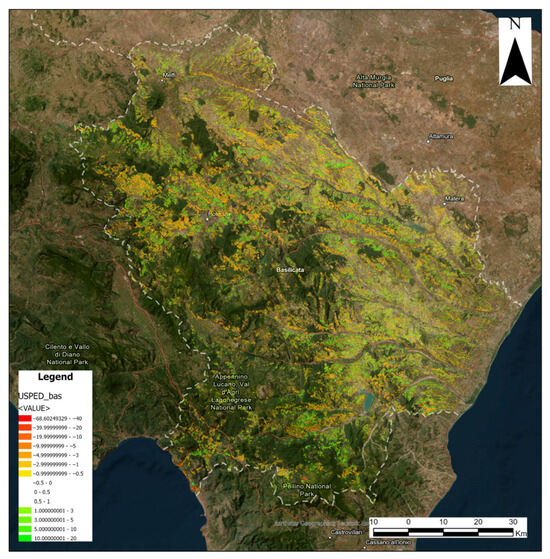
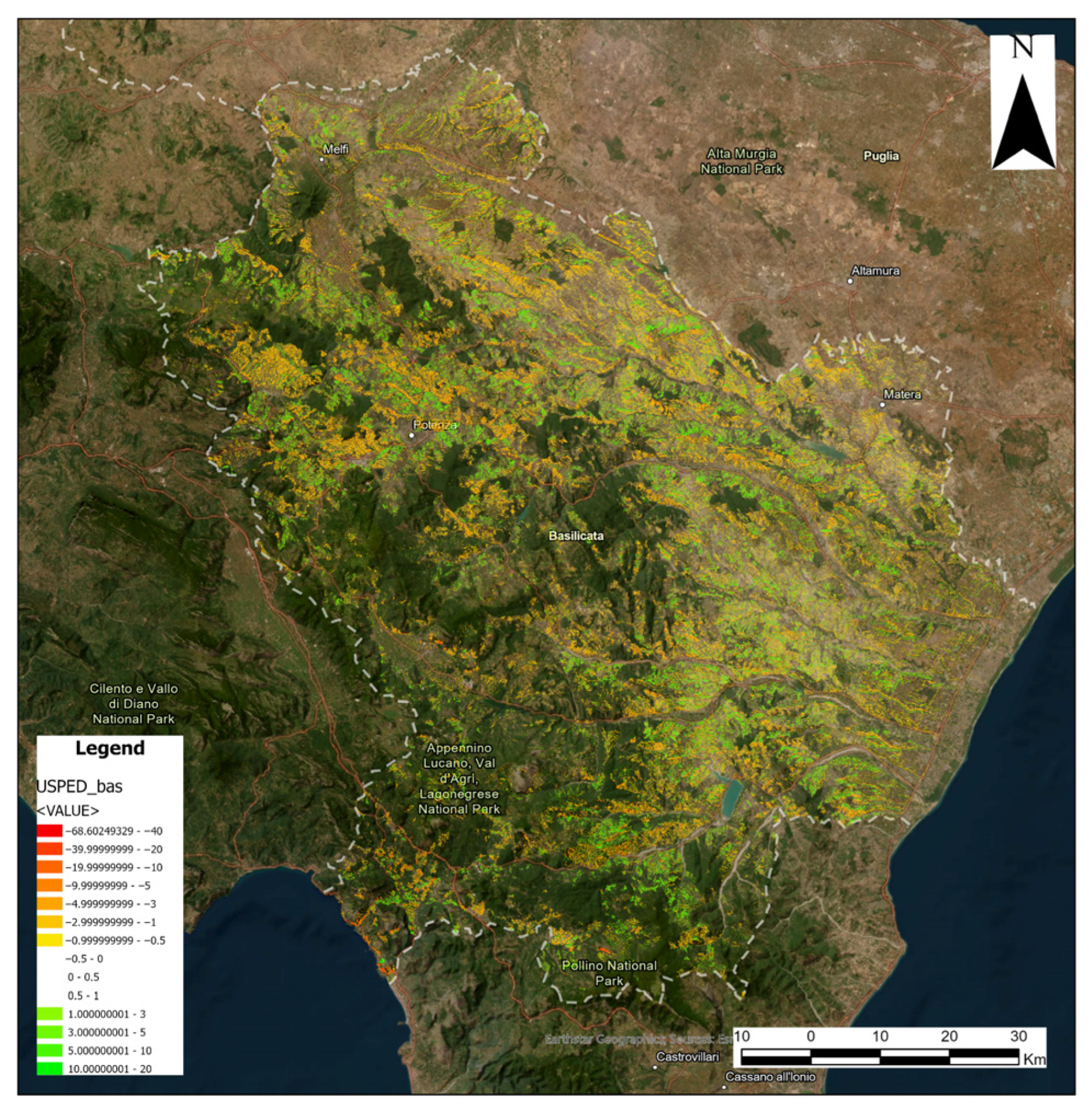
The USPED model outputs (iv) revealed distinct spatial patterns of erosion and deposition across the study area. High erosion rates were concentrated along steep slopes, clay-rich lithologies, and areas subjected to intense rainfall. In contrast, depositional zones corresponded mainly to valley bottoms and terraced areas, where sediment accumulation processes dominate. The CHIRPS dataset (1984–2024) highlighted a statistically significant increase in extreme precipitation events, particularly during the summer months, whereas autumn and winter precipitation showed a decreasing trend. This seasonal redistribution of rainfall confirms the growing hydrological instability linked to climate change, directly influencing soil loss dynamics and slope processes (Figure 10).
Figure 10.
Mean annual soil erosion within the study area as estimated by the USPED model. Areas in red, orange, and yellow represent soil loss (erosion), while green areas indicate sediment accumulation (deposition).
The environmental risk mapping (v) delineated three primary hazard categories:
- (1)
- Flood Risk: River valleys and low-lying areas exhibited high flood susceptibility, often overlapping with archaeological sites.
- (2)
- Landslide Risk: Hilly areas with clay-rich substrates showed strong landslide susceptibility, threatening numerous settlements.
- (3)
- Erosion Risk: USPED model outputs identified zones with significant soil loss potential, correlating to steep slopes, erodible soils, and increased rainfall intensities.
CHIRPS rainfall analysis demonstrated a rise in extreme precipitation events over the past two decades, confirming climate change’s ongoing impact on the region’s hydrology and geomorphology. Analysis of data and seasonal trends suggests that extraordinary events have a greater effect on the landscape mainly because they occur after long periods of drought. In addition, it has been shown that autumn and winter have tended to have lower rainfall levels over the last twenty years. In contrast, the rainfall increases during the summer months [50].
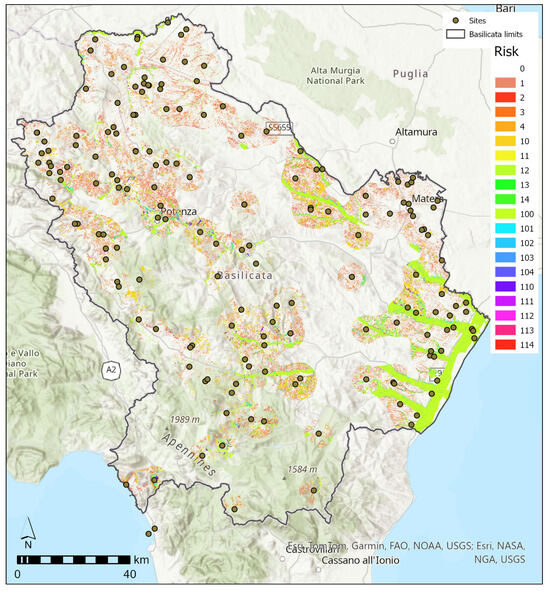
By overlaying the multi-risk map with the Kernel Density Estimation (KDE) of settlements, (Figure 11), it was possible to identify clusters of medieval occupation coinciding with zones of cumulative hazards. The most recurrent risk categories were low and high deposition (classes 1 and 4), landslides (class 10), and floods (class 100). These findings indicate that hydrological and slope-related hazards represent the dominant threats to archaeological heritage in Basilicata.
Figure 11.
Multi-risk map of Basilicata Region with intersection of data from: census of settlements (dots), CHIRPS data, spatial analysis, flood risk, landslide risk. The column on the right side summarises the values of the different types of risk affecting the sites.
Overall, the results demonstrate the efficacy of integrating remote sensing data, geomorphological modelling, and archaeological evidence to map and quantify climate-induced risks. The multi-risk map provides a dynamic and updateable decision-support tool for heritage managers, allowing for targeted conservation strategies and predictive monitoring of vulnerable sites.
4. Discussion
The results underline the necessity of considering multiple environmental factors when assessing the vulnerability of cultural heritage. Historical settlement patterns, optimised for medieval needs (defensibility, proximity to resources), now intersect dangerously with modern climate-driven hazards. However, it was only possible to distinguish between natural causes of abandonment (due to significant climatic events) and socio-economic and political causes, for some settlements for which more information was available from ancient sources. The intersection of archaeological data, information from remote sensing and rainfall over the last 40 years, as well as the use of the USPED model, has made it possible to develop a solid database confirming the effectiveness of integrated geospatial approaches for heritage risk assessment [51]. Intersection of data with the map developed through spatial analysis allowed us to produce a multi-risk map, which has never been done before, providing an overview of the risks to which the identified settlements are potentially exposed and the buffer areas around them, which in turn suggest the presence of additional sites of archaeological interest.
Over 50 medieval sites fall within areas currently affected by active geomorphological processes, including 27 in floodplains and 25 within landslide-prone zones. These figures highlight the scale of vulnerability and the urgency of implementing preventive conservation measures.
To date, this type of analysis has never been carried out on a regional scale, so the results achieved provide an excellent basis for monitoring cultural heritage. The results confirm that the greatest concentration of risks corresponds to the hazard categories weighted as 1 (low deposition), 4 (high deposition), 10 (landslide), and 100 (flood). The dominance of hydrological and slope-related risks suggests that both the intensity and frequency of rainfall events are reshaping the region’s archaeological landscape. The most interesting values are those represented by the columns 1- 4- 10 and 100. Therefore, we can conclude that the major number of sites are affected by the following kinds of risk, in ascending order:
10: landslide; 4: high deposition; 1: low deposition; and 100: flood.
The application of the USPED model, integrated with CHIRPS rainfall data and geomorphological inputs, provides quantitative evidence of how climate change has amplified existing geomorphic instability. The detection of a growing frequency of extreme precipitation events over the last two decades suggests that erosion and landslide processes are no longer episodic but increasingly structural features of the landscape. This finding is consistent with regional observations across the Mediterranean basin, where climate change intensifies hydrogeological risk and accelerates soil loss.
From an archaeological perspective, the convergence of natural hazards poses critical challenges for the preservation and documentation of heritage. Many of the sites identified—especially those classified as abandoned or only detectable through remote sensing—are in areas where cumulative hazards overlap. The multi-risk map thus becomes not only a diagnostic instrument but also a predictive and management tool. It allows decision-makers and conservation specialists to prioritise interventions, such as preventive monitoring, slope stabilisation, and digital preservation of at-risk sites.
Moreover, the integration of geospatial and historical datasets demonstrates the potential of combining Earth Observation and archaeological research, a methodological approach increasingly adopted in international heritage risk studies [4]. This interdisciplinary approach enhances the interpretative depth of spatial patterns, enabling a better understanding of how environmental pressures have influenced settlement dynamics from the Middle Ages to the present day. In this sense, the study offers a replicable model for other regions facing similar geomorphological and climatic challenges.
The combination of high-resolution DEMs, remote sensing, archaeological evidence, and historical analysis enabled fine-scale risk assessments, offering an effective decision-support tool for cultural heritage management and land-use planning.
Future research will focus on exploring the possible links between climate change and the risk of cultural heritage loss. In this regard, thanks to the integration of available data, numerous areas have already been identified that will be investigated using remote sensing in order to locate disappeared settlements and understand their physical and topographical characteristics. This will make it possible to develop a typological classification of the sites and understand how they interacted with the territory and with climate change recorded both in the past and in recent times.
5. Conclusions
This research demonstrates that climate-driven geomorphological processes—particularly erosion, landslides, and flooding—represent an immediate and growing threat to the archaeological heritage of Basilicata. The multi-risk map developed through the integration of USPED modelling, CHIRPS precipitation data, and settlement distribution provides a detailed visualisation of zones of high exposure.
In conclusion, the study emphasises three key points, as follows.
Interdisciplinary Integration—The combination of historical, archaeological, and geospatial data provides a robust framework for assessing climate-related risks to cultural heritage.
Predictive Capacity—The multi-risk mapping approach offers a scalable and transferable methodology applicable to other Mediterranean and mountainous contexts.
Policy Implications—The outputs of this research can inform regional planning instruments and heritage management policies, ensuring that cultural heritage protection is integrated into climate adaptation strategies.
This integrated approach, using open source remote sensing and archaeological data, although valid in identifying and mapping erosion risk, nevertheless has several limitations. In particular, the limitations of this approach lie in (i) the large amount of archaeological data needed to successfully replicate the method; (ii) the amount of ancillary data (e.g., geological maps) needed to replicate the models; (iii) the scale at which it works, particularly with regard to satellite rainfall data, as it has a very low resolution (5–7 km pixels) and therefore does not take into account possible extremely localised phenomena of very high intensity (e.g., downbursts).
Future developments should focus on refining temporal modelling, integrating AI-based predictive systems, and establishing long-term monitoring protocols through remote sensing. Only through continuous observation and proactive planning can the archaeological heritage of regions like Basilicata be preserved in the face of accelerating climate change.
Author Contributions
Conceptualization, A.F., N.A., A.M.A. and D.G.; methodology, A.F., A.M.A., D.G. and M.D.; software, A.F., N.A. and A.M.A.; validation, A.F., N.A., D.G. and G.C. (Gabriele Ciccone); formal analysis, A.F., N.A., A.M.A. and G.C. (Giuseppe Corrado) and M.D.; investigation, A.F., A.M.A. and M.D.; resources, A.F., N.A., A.M.A., D.G. and G.C. (Giuseppe Corrado); data curation, A.F. and A.M.A.; writing—original draft preparation, A.F., N.A. and A.M.A.; writing—review and editing, A.F., N.A., A.M.A. and G.C.; visualisation, N.A.; supervision, A.F., N.A., A.M.A., D.G. and N.M.; project administration, N.M.; funding acquisition, N.M. All authors have read and agreed to the published version of the manuscript.
Funding
This research was funded by The Project of Research: PNRR PE00000020 “Cultural Heritage Active Innovation for Sustainable Society” CHANGES—Spoke 5—CUP B53C22003890006.
Data Availability Statement
The raw data supporting the conclusions of this article will be made available by the authors upon request.
Conflicts of Interest
The authors declare no conflict of interest.
References
- Barrile, V.; Gattuso, C.; Genovese, E. Review of Geomatics Solutions for Protecting Cultural Heritage in Response to Climate Change. Heritage 2024, 7, 7031–7049. [Google Scholar] [CrossRef] [Scilit]
- Nastou, M.; Zerefos, S. Effects of Climate Change on Open Air Heritage: A Review and the Situation in the Region of Mediterranean. Herit. Sci. 2024, 12, 367. [Google Scholar] [CrossRef] [Scilit]
- Sesana, E.; Gagnon, A.S.; Ciantelli, C.; Cassar, J.; Hughes, J.J. Climate Change Impacts on Cultural Heritage: A Literature Review. WIREs Clim. Change 2021, 12, e710. [Google Scholar] [CrossRef] [Scilit]
- Chen, F.; Ma, P.; Chen, S.; Hu, Q.; Guo, H. Remote Sensing for Cultural Heritage: A Systematic Review. Int. J. Appl. Earth Obs. Geoinf. 2026, 146, 105039. [Google Scholar] [CrossRef] [Scilit]
- Argyrou, A.; Agapiou, A. A Review of Artificial Intelligence and Remote Sensing for Archaeological Research. Remote Sens. 2022, 14, 6000. [Google Scholar] [CrossRef] [Scilit]
- Tapete, D. Remote Sensing and Geosciences for Archaeology. Geosciences 2018, 8, 41. [Google Scholar] [CrossRef] [Scilit]
- Cuca, B. The Contribution of Earth Observation Technologies to Monitoring Strategies of Cultural Landscapes and Sites. Int. Arch. Photogramm. Remote Sens. Spat. Inf. Sci. 2017, 42, 135–140. [Google Scholar] [CrossRef] [Scilit]
- Cuca, B.; Zaina, F.; Tapete, D. Monitoring of Damages to Cultural Heritage across Europe Using Remote Sensing and Earth Observation: Assessment of Scientific and Grey Literature. Remote Sens. 2023, 15, 3748. [Google Scholar] [CrossRef] [Scilit]
- Mishra, M.; Lourenço, P. Artificial Intelligence-Assisted Visual Inspection for Cultural Heritage: State-of-the-Art Review. J. Cult. Herit. 2024, 66, 536–550. [Google Scholar] [CrossRef] [Scilit]
- Patel, Y.; Suthar, K.; Patel, M.; Chaudhary, H. AI-Based Prediction of Cultural Heritage Artifact Deterioration due to Weather Conditions in India. ShodhKosh J. Vis. Perform. Arts 2024, 5, 4. [Google Scholar] [CrossRef] [Scilit]
- Davis, D.S. Geographic Disparity in Machine Intelligence Approaches for Archaeological Remote Sensing Research. Remote Sens. 2020, 12, 921. [Google Scholar] [CrossRef] [Scilit]
- Davis, D.S.; Gaspari, G.; Lipo, C.P.; Sanger, M.C. Deep Learning Reveals Extent of Archaic Native American Shell-Ring Building. Practices. Archaeoogical Sci. 2021, 132, 105433. [Google Scholar] [CrossRef] [Scilit]
- Xie, H.; Hu, X. Landscape Protection and Intelligent Application Based on AI Technology. Discov. Artif. Intell. 2025, 5, 306. [Google Scholar] [CrossRef] [Scilit]
- Bloise, L.; Sfacteria, M.; Capozzoli, L.; Casella, V.; Corrado, G.; Martino, G.D.; Gioia, D.; Laurita, S.; Amodio, A.M.; Muto, F.; et al. Human Occupation and Abandonment of a Fluvio-Lacustrine Environment: A Multidisciplinary Analysis of the Archaeological Site of Santa Gada (Pollino Geopark, Southern Italy). Quat. Int. 2025, 749, 110021. [Google Scholar] [CrossRef] [Scilit]
- Nemetova, Z.; Kohnova, S. Comparison of Sediment Loss Modelling by Using the Physically-Based Erosion-3d Model and The USPED Empirical Model: A Case Study of the Svacenicky Creek Catchment (Slovakia). WMCAUS 2019, 603, 022082. [Google Scholar] [CrossRef] [Scilit]
- Amodio Minervino, A.; Danese, M.; Gioia, D. Past, Present and Climate Change Scenarios: Investigating Erosion Risk on Archaeological Heritage in the Sinni Valley (Basilicata, Italy). In Proceedings of the Computational Science and Its Applications—ICCSA 2024 Workshops, Hanoi, Vietnam, 1–4 July 2024; pp. 412–428. [Google Scholar] [CrossRef] [Scilit]
- Gouma, M.; van Wijngaarden, G.J.; Soetens, S. Assessing the Effects of Geomorphological Processes on Archaeological Densities: A GIS Case Study on Zakynthos Island, Greece. J. Archaeol. Sci. 2011, 38, 2714–2725. [Google Scholar] [CrossRef] [Scilit]
- Sole, A.; Samela, C.; Cantisani, A.; Giuzio, L.; Manfreda, S. Stima Delle Aree Inondabili Mediante Metodi Geomorfologic e Modellazione Idraulica Mono e Bidimensionale: Applicazione al Fiume Bradano. In Tecniche per la Difesa dall’Inquinamento; Frega, G., Ed.; IRIS: Cosenza, Italy; pp. 13–28.
- Manfreda, S.; Sole, A.; De Costanzo, G. Le Precipitazioni Estreme in Basilicata; Universosud Società Cooperativa: Potenza, Italy, 2015. [Google Scholar]
- Ashtari, M.N.; Della Ventura, G.; Correia, M. From Drought to Deluge: The Complex Impacts of Climate Change on Earthen Heritage. J. Cult. Herit. Manag. Sustain. Dev. 2025. [Google Scholar] [CrossRef] [Scilit]
- Bonazza, A.; Sardella, A. Climate Change and Cultural Heritage: Methods and Approaches for Damage and Risk Assessment Addressed to a Practical Application. Heritage 2023, 6, 3578–3589. [Google Scholar] [CrossRef] [Scilit]
- Haugen, A.; Mattsson, J. Preparations for Climate Change’s Influences on Cultural Heritage. Int. J. Clim. Change Strateg. Manag. 2011, 3, 386–401. [Google Scholar] [CrossRef] [Scilit]
- Patacca, E.; Scandone, P. Geology of the Southern Apennines. Boll. Soc. Geol. Ital. 2007, 7, 75–119. [Google Scholar]
- Schiattarella, M.; Giano, S.I.; Gioia, S. Long-Term Geomorphological Evolution of the Axial Zone of the Campania-Lucania Apennine, Southern Italy: A Review. Geol. Carpathica 2017, 68, 57–67. [Google Scholar] [CrossRef] [Scilit]
- Dalena, P. Quadri Ambientali, Viabilità e Popolamento. In Storia della Basilicata. 2. Il Medioevo; Fonseca, C.D., Ed.; IRIS: Laterza, Italy, 2021; pp. 5–48. [Google Scholar]
- Fonseca, C.D. Storia Della Basilicata. 2. Il Medioevo; IRIS: Laterza, Italy, 2021. [Google Scholar]
- Tanzi, S. Historia Cronologica Monasterii S. Michaelis Archangeli Monti Caveosi; Typografia Abbatiana: Napoli, Italy, 1746. [Google Scholar]
- Divisione Artistica dell’ IGM. Carta d’Italia—Foglio 199—Potenza (SE001004) Carte e Stampe Antiche: Riproduzione Digitale a 300 DPI 1911; Istituto Geografico Militare: Florence, Italy, 1911. [Google Scholar]
- Lazzari, M.; Grano, M.C. Cartographic Sources for Analysis of the Fluvial Landscape and Watermills in Basilicata: A Critical Review of the Hydrographic Map of the Italian Kingdom; EUT Edizioni Università di Trieste: Trieste, Italy, 2016; pp. 4–18. [Google Scholar] [CrossRef]
- Angelini, G. Il Disegno Del Territorio in Età Moderna. In Il Disegno del Territorio. Istituzioni e Cartografia in Basilicata, 1500–1800; Laterza: Bari-Rome, Italy, 1988. [Google Scholar]
- Sogliani, F. Paesaggi monastici della Basilicata altomedievale. Capitale Cult. Stud. Value Cult. Herit. 2015, 12, 421–452. [Google Scholar] [CrossRef] [Scilit]
- Giardino, M.J. A History of NASA Remote Sensing Contributions to Archaeology. J. Archaeol. Sci. 2011, 38, 2003–2009. [Google Scholar] [CrossRef] [Scilit]
- Campana, S.; Sordini, M.; Berlioz, S.; Vidale, M.; Al-Lyla, R.; Abbo al-Araj, A.; Bianchi, A. Remote Sensing and Ground Survey of Archaeological Damage and Destruction at Nineveh during the ISIS Occupation. Antiquity 2022, 96, 436–454. [Google Scholar] [CrossRef] [Scilit]
- Masini, N.; Abate, N.; Gizzi, F.T.; Vitale, V.; Minervino Amodio, A.; Sileo, M.; Biscione, M.; Lasaponara, R.; Bentivenga, M.; Cavalcante, F. UAV LiDAR Based Approach for the Detection and Interpretation of Archaeological Micro Topography under Canopy—The Rediscovery of Perticara (Basilicata, Italy). Remote Sens. 2022, 14, 6074. [Google Scholar] [CrossRef] [Scilit]
- Lazzari, M.; Gioia, D.; Anzidei, B. Landslide Inventory of the Basilicata Region (Southern Italy). J. Maps 2018, 14, 348–356. [Google Scholar] [CrossRef] [Scilit]
- Bailey, T.C.; Gatrell, A.C.; Palmer, M.W. Interactive Spatial Data Analysis; Longman Higher Education: Harlow, UK, 1996. [Google Scholar]
- Epanechnikov, V.A. Nonparametric Estimation of a Multivariate Probability Density. Theory Probab. Appl. 1969, 14, 153–158. [Google Scholar] [CrossRef] [Scilit]
- Jones, M.C.; Marron, J.S.; Sheather, S.J. A Brief Survey of Bandwidth Selection for Density Estimation. J. Am. Stat. Assoc. 1996, 91, 401–407. [Google Scholar] [CrossRef]
- Danese, M.; Lazzari, M.; Murgante, B. Kernel Density Estimation Methods for a Geostatistical Approach in Seismic Risk Analysis: The Case Study of Potenza Hilltop Town (Southern Italy). In Proceedings of the 2008 International Conference on Computational Science and Its Applications, Perugi, Italy, 30 June–3 July 2008; pp. 415–429. [Google Scholar]
- Bevan, A. A Stored-Products Revolution in the 1st Millennium BC. Archaeol. Int. 2020, 22, 127–144. [Google Scholar] [CrossRef] [Scilit]
- Danese, M.; Masini, N.; Biscione, M.; Lasaponara, R. Predictive Modeling for Preventive Archaeology: Overview and Case Study. Cent. Eur. J. Geosci. 2014, 6, 42–55. [Google Scholar] [CrossRef] [Scilit]
- Di Leo, P.; Bavusi, M.; Corrado, G.; Danese, M.; Giammatteo, T.; Gioia, D.; Schiattarella, M. Ancient Settlement Dynamics and Predictive Archaeological Models for the Metapontum Coastal Area in Basilicata, Southern Itlay: From Geomorphological Survey to Spatial Analysis. J. Coast. Conserv. 2017, 22, 865–877. [Google Scholar] [CrossRef] [Scilit]
- DeMers, M.N. GIS Modeling in Raster; John Wiley & Sons: New York, NY, USA, 2002. [Google Scholar]
- Tomlin, C.D. Geographic Information Systems and Cartographic Modeling; Prentice-Hall: Englewood Cliffs, NJ, USA, 1990. [Google Scholar]
- Capolongo, D.; Diodato, N.; Mannaerts, C.M.; Piccarreta, M.; Strobl, R.O. Analyzing Temporal Changes in Climate Erosivity Using a Simplified Rainfall Erosivity Model in Basilicata (Southern Italy). J. Hydrol. 2008, 356, 119–130. [Google Scholar] [CrossRef] [Scilit]
- Renard, K.G.; Foster, G.R.; Weesies, G.A.; McCool, D.K.; Yoder, D.C. Predicting Soil Erosion by Water: A Guide to Conservation Planning with the Revised Universal Soil Loss Equation (RUSLE); Handbook n.703; United States Department of Agriculture, Agricultural Research Service (USDA-ARS): Washington, DC, USA, 1997.
- Robinson, D.A.; Phillips, C.P. Crust Development in Relation to Vegetation and Agricultural Practice on Erosion Susceptible, Dispersive Clay Soils from Central and Southern Italy. Soil. Tillage Res. 2001, 60, 1–9. [Google Scholar] [CrossRef] [Scilit]
- Panagos, P.; Meusburger, K.; Ballabio, C.; Borrelli, P.; Alewell, C. Soil Erodibility in Europe: A High-Resolution Dataset Based on LUCAS. Sci. Total Environ. 2014, 479–480, 189–200. [Google Scholar] [CrossRef] [Scilit]
- Wischmeier, W.H.; Smith, D.D. Predicting Rainfall Erosion Losses: A Guide to Conservation Planning; Department of Agriculture, Science and Education Administration: Washington, DC, USA, 1978.
- Visone, F.; Abate, N.; Sileo, M.; Masini, N. Assessing Stone Material Recession of Cultural Heritage: New Approach Based on Satellite-Based Rainfall Data and Dose-Response Functions—Case of UNESCO Site of Matera. Remote Sens. 2025, 17, 1443. [Google Scholar] [CrossRef] [Scilit]
- Polykretis, C.; Alexakis, D.D.; Grillakis, M.G.; Agapiou, A.; Cuca, B.; Papadopoulos, N.; Sarris, A. Assessment of Water-Induced Soil Erosion as a Threat to Cultural Heritage Sites: The Case of Chania Prefecture, Crete Island, Greece. Big Earth Data 2022, 6, 561–579. [Google Scholar] [CrossRef] [Scilit]

Disclaimer/Publisher’s Note: The statements, opinions and data contained in all publications are solely those of the individual author(s) and contributor(s) and not of MDPI and/or the editor(s). MDPI and/or the editor(s) disclaim responsibility for any injury to people or property resulting from any ideas, methods, instructions or products referred to in the content. |
© 2026 by the authors. Licensee MDPI, Basel, Switzerland. This article is an open access article distributed under the terms and conditions of the Creative Commons Attribution (CC BY) license.