
Abstract
Hyperspectral imaging has emerged as a promising analytical method of artwork due to its potential in combining non-invasive analytical capabilities and imaging allowing the survey of the entire (or of a large area of the) surface of an artwork, which is a highly significant application for historic tapestries. This project deployed a high-resolution ClydeHSI Art Scanner, which was used with both a push-broom visible to very-near infrared (VNIR; 400–1000 nm) and near infrared (NIR; 900–1700 nm) hyperspectral cameras. Initial testing focused on the characterisation and mapping of the different materials used on historic tapestries (wool, silk, metal threads). To facilitate the dye characterisation, a collection of wool and silk samples dyed with recipes based on medieval practices was used. The samples measured using the system and the data collected formed an external reference library including the type of the natural dyes and mordants used during their production. The outcomes of the on-site deployment of this analytical instrumentation for the characterisation and analysis of 16th century tapestries on display at Hampton Court Palace will be discussed.
1. Introduction
Historic tapestry collections have been considered among the most significant forms of art from the 15th to 18th century in Europe. Historic Royal Palaces (HRP) is the custodian of Hampton Court Palace in London, UK, and its important tapestry collection, developed primarily by Cardinal Wolsey (1475–1530) and Henry VIII (1509–1547), which is part of the Royal Collection [1]. The characterisation of tapestry materials is crucial for assessing the condition and formulating suitable conservation treatment strategies for these nationally significant large-scale textiles.
Tapestry is a ‘weft-faced’ woven textile where the coloured weft threads carry the pictorial intricate design while contributing to the physical weave structure of the textile. Materials used for the weft are primarily wool and silk dyed in a wide range of colours with natural sources (plants and insects). In the most expensive tapestries, metal threads, comprising gold, silver or silver gilt wrapped around a silk core, were also used.
Micro destructive chromatographic methods have been commonly used for dye analysis as they allow the different molecular components to be separated and then characterised. High-performance liquid chromatography (HPLC) has enabled the identification of a large number of dyes used in textiles [2,3]. However, this requires sampling usually from the reverse of the tapestry, which is not always feasible and the results are limited to the sampled area [4]. The development of non-invasive analytical approaches for the identification of tapestry materials or the analysis of the natural dyestuffs has progressed over the last few years, including Fourier-transform infrared spectroscopy (FTIR) and fibre optics reflectance spectroscopy (FORS) [5,6,7,8]. Raman spectroscopy is another method which can be deployed for the analysis of dyes in particular surface-enhanced Raman spectroscopy (SERS); however, it requires a small sample (approximately 80 µg); therefore, it is a micro invasive technique [9]. X-ray fluorescence spectroscopy is also useful for analysing metallic mordants [10,11]. However, these non-invasive analytical techniques also provide limited information on the spot analysed.
Hyperspectral imaging (HSI) has emerged as a promising analytical method for works of art [12,13]. The systems used in cultural heritage are usually operated in reflectance mode and cover the visible (Vis), near infrared (NIR) and short-wave infrared (SWIR) spectral regions depending on the type of sensor their cameras have [14]. This technique produces high-quality optical spectral signatures in reflectance at each image pixel position, providing the ability to identify the materials used for the artwork and map their spatial distribution over the object surface. The method has been used primarily in paintings [15,16,17] and manuscripts [18,19]. Other applications include prints [20], ethnographic collections [21,22], murals [23], photographs [14] and archaeological objects [24].
During the deployment of this method, spectral data are acquired at each spatial position across a measurement line and the spectral cameras are scanned to create a data cube that can be formed into x, y and spectral axes. The processing of these large data sets has been an active area of research particularly for the identification of pigments, lakes and other materials used in the construction of paintings such as binders [16,17,18,25,26,27,28,29,30,31]. Another application of automated classification techniques is related to the authentication of artworks [32].
HSI has also been applied to the examination and analysis of textiles [33]. Zhao looked into the use of a portable spectroradiometer with a range from 2500 nm to identify and characterise textile fibres [34], while another interesting application successfully deployed HSI combined with FORS in the visible to very near infrared range (VNIR 400–1000 nm) for the characterisation of twelve dyestuffs and three mordants [35]. Finally, Vermeulen was successfully deployed a range of non-invasive analytical techniques including HSI to characterize organic colorants used in 20th-century traditional textiles from Mexico [36].
HSI allows the survey of the entire (or of a large area of the) surface of an artwork, which is beneficial for the analysis of historic tapestries; however, there are limited studies related to this application. Delaney deployed an hyperspectral camera (NIR 967–1680 nm) combined with FORS to map the different materials (wool, silk and metal threads) on a 16th century tapestry using the spectral regions between 1500 and 1600 nm and 2100 and 2400 nm [37]. De la Codre investigated the materials used in three 18th century Royal tapestry manufactories Abusson, Gobelins and Beauvais using HSI (400–2500 nm). In this research, dyed samples were used as reference materials and two different classification methods were compared for data processing and material identification [38]. Furthermore, the characterisation of yellow dyes in the tapestries and the influence of the composition and degradation on analysis were also studied [39]. This research has also been included as a case study in a paper exploring the applications of a small hyperspectral camera operating in the visible–near infrared range (VNIR) [24].
This collaborative research considers the advantages and potential limitations of HSI applied to the study of historic tapestries deploying a high-resolution ClydeHSI Art Scanner. Initial testing focused on the characterisation and mapping of the different materials used on historic tapestries (wool, silk, metal threads). To facilitate the dye characterisation, a collection of wool and silk samples were used which had been dyed during the Monitoring of Damage in Historic Tapestries (MODHT) EU research project using recipes based on medieval practices [40]. The samples were measured using the system and the data collected formed an external reference library, including the type of the natural dyes and mordants used during their production. Finally, the analytical instrumentation was deployed on site for the characterisation and analysis of several 16th century tapestries on display at Hampton Court Palace.
2. Materials and Methods
2.1. Historic Tapestries
The Story of Abraham is a set of ten Flemish tapestries depicting scenes from the Old Testament. The tapestries, each measuring approximately eight meters across by five meters high, were constructed from dyed wool and silk yarns, while large areas were decorated with precious gold and silver metal threads. The Story of Abraham is considered the most artistically and historically significant set of tapestries in the UK’s Royal Collection, and have hung in their original location in the Great Hall at Hampton Court Palace since the early 1800s (Campbell 2007). The tapestries are likely to have been commissioned by King Henry VIII, their design is attributed to Pieter Coecke van Aelst and they were constructed in the workshop of Willem de Kempeneer in Brussels (c.a. 1541-43) [41].
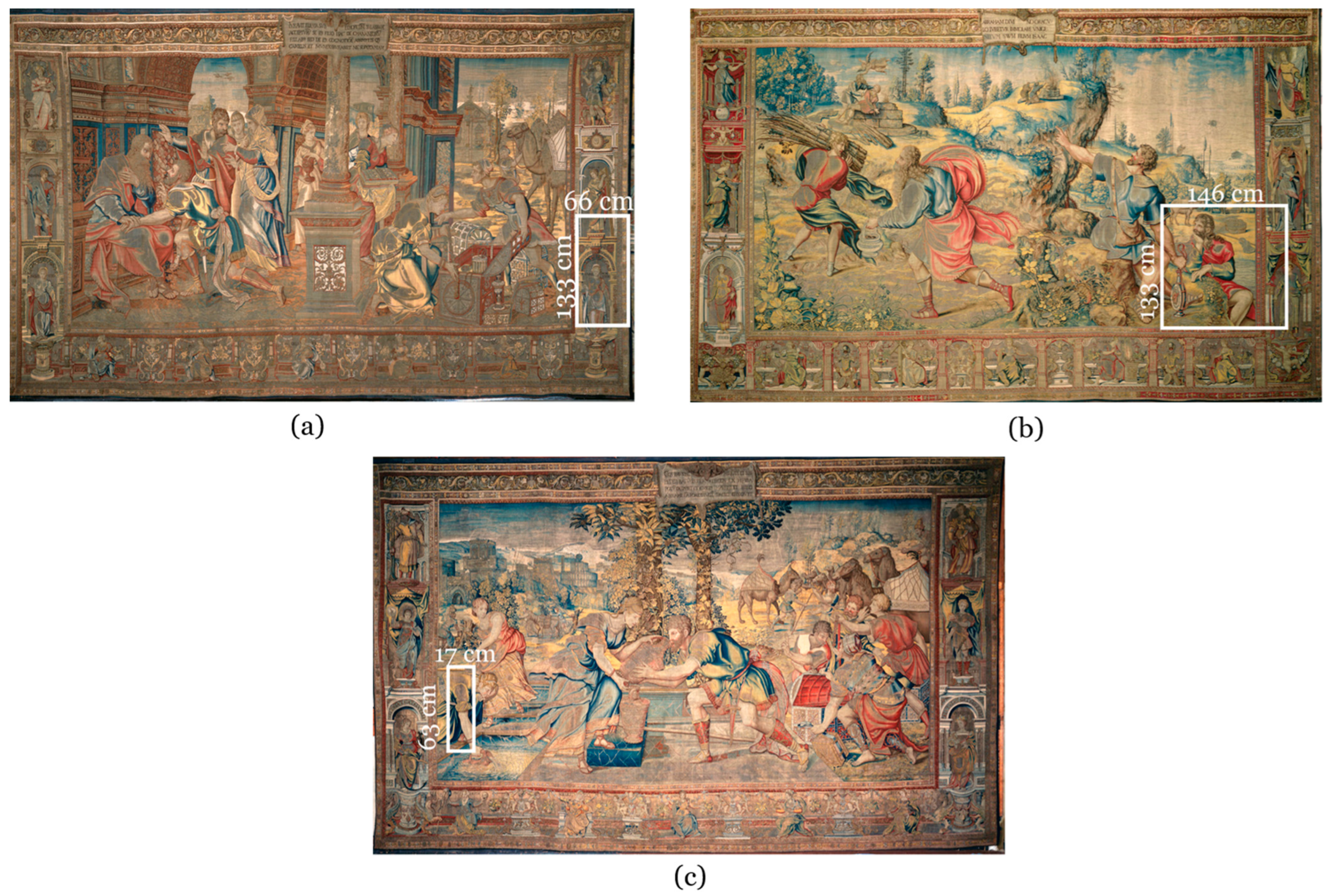
In this study, three tapestries of the Story of Abraham set were analysed (Figure 1). Details of the tapestries and the size of the areas scanned are listed in Table 1.
Figure 1.
The three tapestries from the Story of Abraham set analysed in this project: Oath and Departure of Eliezer (a), Sacrifice of Isaac (b) and Eliezer and Rebekah at the Well (c). The white rectangles indicate the areas scanned on each tapestry (Royal Collection Trust/© His Majesty King Charles III 2022).
Table 1.
Details of the Abraham tapestries and the areas of investigation.
This research builds on the Henry VIII’s Tapestries Revealed project, which focused on virtual restoration of the original colour palette of the Oath and Departure of Eliezer tapestry. As part of this research, spectral imaging technology was used for the first time to accurately assess the impact of fading, and develop a model which, when projected on the tapestry, produced the recoloured effect [42].
2.2. Reference Samples
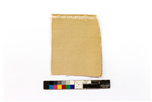
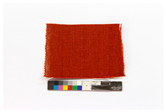
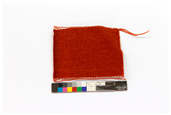
Tapestry samples created during the European Commission-funded project Monitoring of Damage in Historic Tapestries (MODHT) were used in this research [40]. The samples were woven from wool and silk yarns representative of historic tapestry materials and dyed using medieval natural colourant formulations that would have been used in 16th century tapestry weaving [43].
Dye analysis of European tapestries showed that a limited number of dyes from natural sources such as plants and insects were used to create a wide palette of colours. This was achieved by deploying different mordants (inorganic salts for bonding the dye to the fibre), adding chemicals, or overdyeing a colour with another one (yellow with blue for green) [4,40,43]. Table 2 summarizes the information on the materials, dyestuff and mordant combinations used for the production of the MODHT model tapestry samples. Details of the actual recipes and the testing of the samples are available in publications developed as outputs of the MODHT project [40,43]. In this paper, the same abbreviation codes are used.
Table 2.
MODHT samples material, dye and mordant information.
2.3. Hyperspectral Imaging
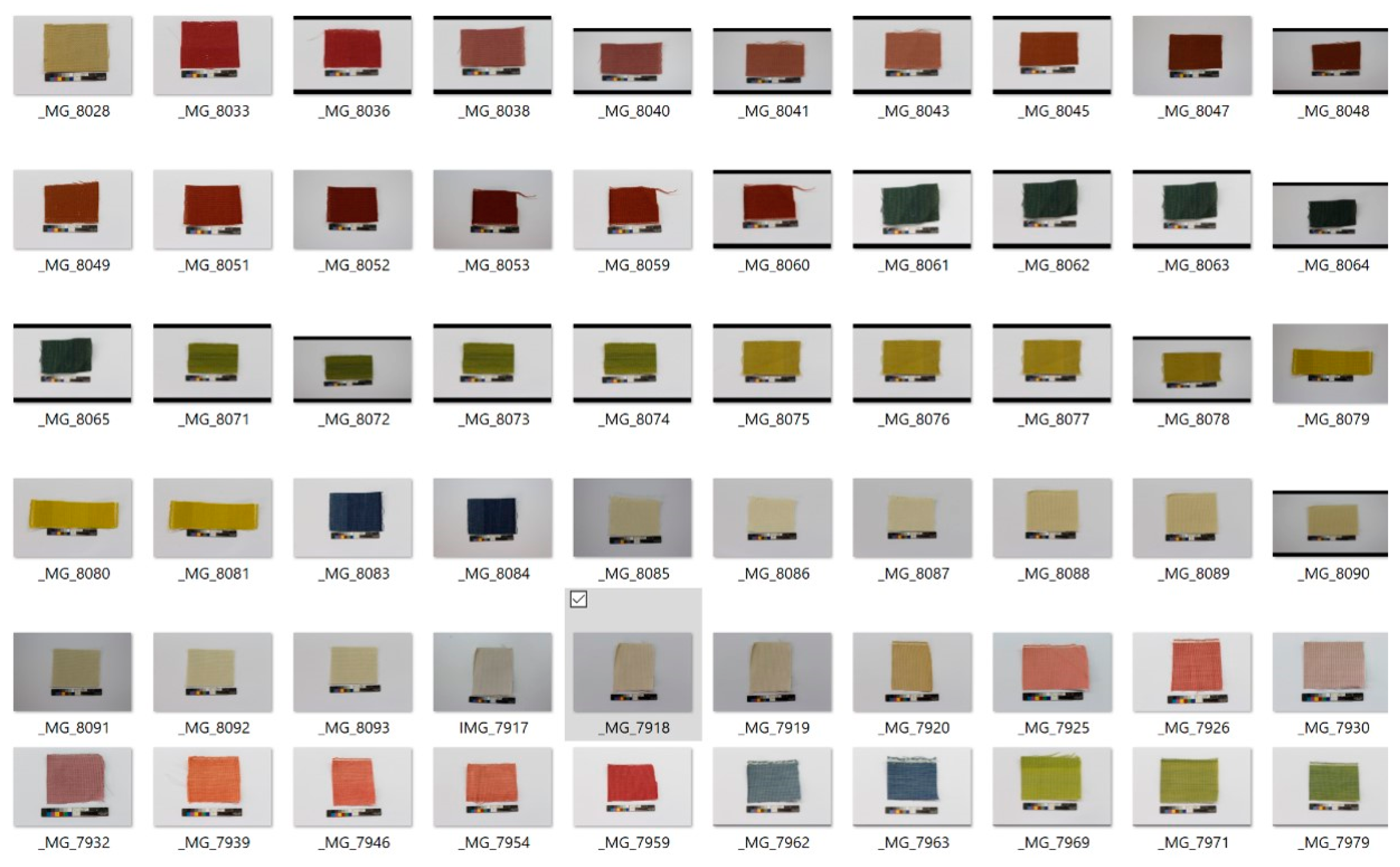
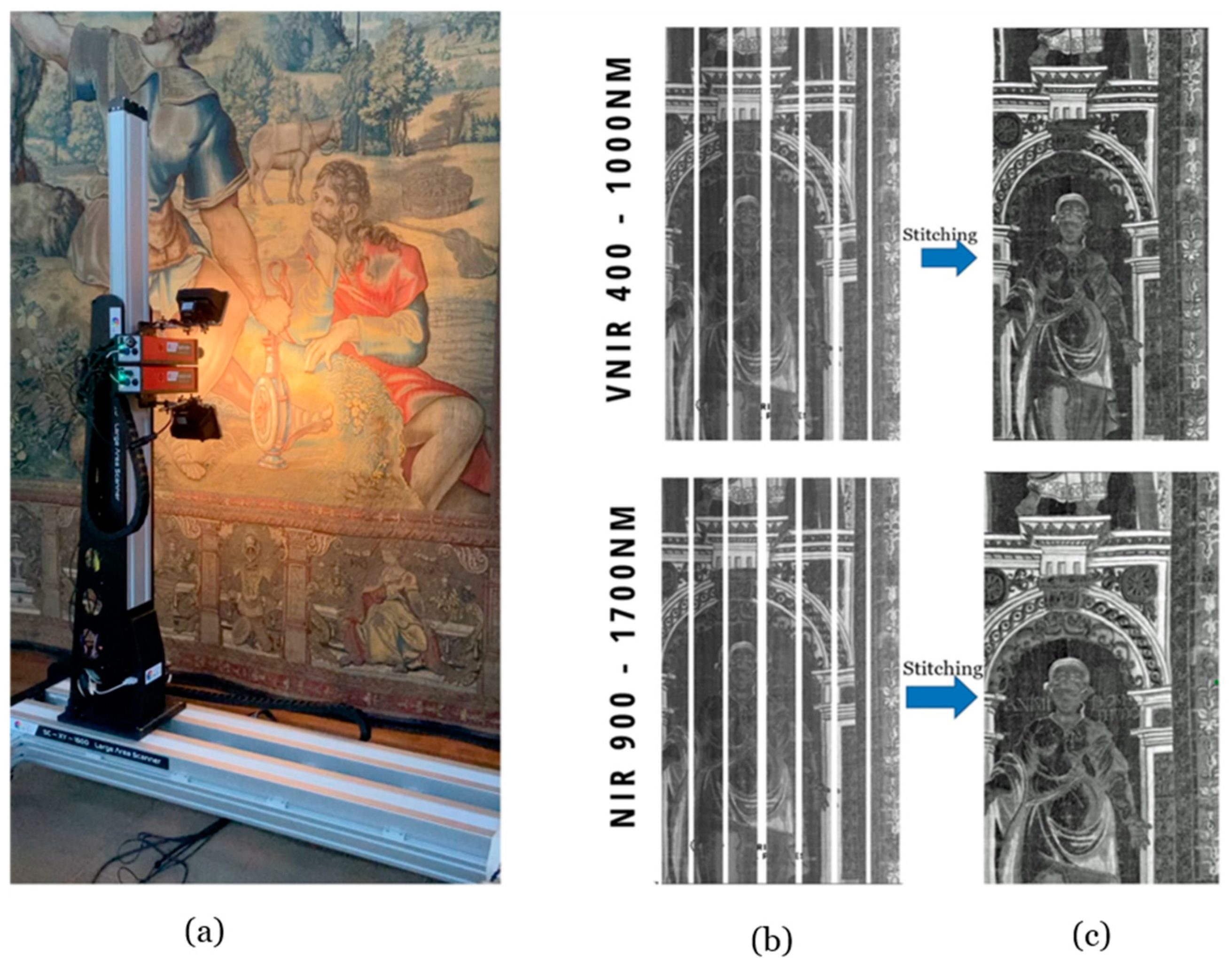
The hyperspectral imaging system deployed in this research was a high-resolution ClydeHSI Art Scanner, with both a push-broom visible to very near-infrared (VNIR; 400–1000 nm) and near infrared (NIR 900–1700 nm) hyperspectral cameras. The cameras were mounted on a stage providing the capability for the instrument to scan large areas of 1.5 × 1.5 m. Tapestry fragments from the Historic Tapestry Fragments Collection housed at the HRP Heritage Science Laboratory were initially tested using the scanner to define the operational conditions to ensure the best signal to noise ratio and initial analytical protocol. The instrument was then carried into the Great Hall where, over a period of one day, areas on three Abraham tapestries were analysed (Figure 2). A line scan, push-broom, spectral camera creates a two-dimensional image by scanning its field of view across a measurement line and then moving the camera to create additional lines in the scan direction. This gives a field of view in the across track direction, the measurement line, and an image in the along track which forms a data hypercube. There is a trade-off between field of view and spatial resolution. This means that for high resolution scanning, the field of view is narrow and in order to image large areas in high resolution, multiple image strips need to be measured. These strips are measured with a spatial overlap so that they can be stitched together using feature mapped procedures. Table 3 summarises the number and size of the individual image strips as well as information on the resulting composite images for each tapestry. The initial tapestry analysed was the Oath and Departure of Eliezer, where an area of approximately 1 m2 was scanned in seven strips. The largest area was captured on the Sacrifice of Isaac tapestry, which was about 2 m2 and consisted of 17 strips. On the final tapestry, Eliezer and Rebekah at the Well, due to time limitations, only one strip was captured, measuring 0.1 m2.
Figure 2.
The MODHT samples representing a wide range of natural dyes used in the manufacture of 16th century historic tapestries.
Table 3.
Specifications of the hyperspectral analysis on the tapestries.
The tapestries were scanned vertically; the acquisition time for one strip was 15 s with a spatial resolution of 0.25 mm/pixel. Two halogen light sources positioned at 45° with respect to the cameras were used for illumination of the scanned area; the light exposure level in the visible spectrum was ca. 2000 lx. This illumination level was measured under static conditions and, as a result, when line scanned measurements are performed, the speed of acquisition means the illumination of a measurement area occurs for a fraction of a second. The estimated light dose of exposure for one second is 0.5 lux hours, a minor contribution to the 150,000 lux hours threshold adopted as an acceptable annual dose in the course of usual display. The system was set up to allow an overlap of 15% between consecutive strips to facilitate the stitching at the post-processing phase and to combine them into one composite hyperspectral image (Figure 3c, Table 3). At the start and end of each scan, a reflective white Polytetrafluoroethylene block was measured to record the instrument spectral/spatial response function to provide the reference for converting the raw data of the composite hyperspectral image signal into reflectance data. The reflection data were calculated from the measurement of the instrument response using a white tile reference and a dark noise reference with the camera shutter closed. Further details on the hyperspectral cameras specifications and the scan parameters are indicated in Table 4.
Figure 3.
The hyperspectral imaging scanner set up in front of the Sacrifice of Isaac tapestry in the Great Hall, Hampton Court Palace, UK (a) The hyperspectral image strips from the VNIR and NIR cameras (b) The composite hyperspectral images in VNIR (top) and NIR (bottom) (c).
Table 4.
Hyperspectral camera specifications and scan parameters.
For the operation of the cameras and spectra acquisition, as well as the processing of the hyperspectral data, the SpectraSENS Clyde HSI software was used. The composite hyperspectral reflectance image was initially processed with an unweighted smoothing average before using principal components analysis (PCA) and spectral angle mapping (SAM) algorithm to achieve the distributions of the material across the tapestry areas analysed and identify the dyes used for their manufacture.
PCA is a statistical tool that represents data using uncorrelated variables named principal components (PC). PCA is used to reduce variables, detect general patterns in the data and identify outliers. As a result, the hyperspectral cube is reduced in dimension and the clustering is taking place according to a number of components. In unsupervised deployment, the clustering algorithm automatically detects patterns which are useful for initial processing of the data [14,27,32]. PCA was performed independently on the VNIR and NIR data sets to identify spectral outliers and reduce the number of dimensions in the hyperspectral cubes to less than 10 PC dimensions. The resulting false colour images from this processing indicated the mapping of the different dyes across the area of analysis based on their spectral responses.
SAM is a classification algorithm commonly used in the processing of hyperspectral imaging data. This algorithm assesses the angle between each spectrum at each pixel with the spectra of a reference library (endmembers) [25,26,29,35,38]. In this project, an external library was used with spectra acquired from the MODHT tapestry model tapestries where the dyes and mordants are known (Appendix A Table A1). The SAM algorithm then proceeds in the classification of each pixel of the reflectance hyperspectral image and produces an endmember classification map showing the distribution of each dye on the area of analysis. The map is associated with a list of the identified endmembers and shows their distribution on the area under investigation.
3. Results
3.1. PCA Analysis
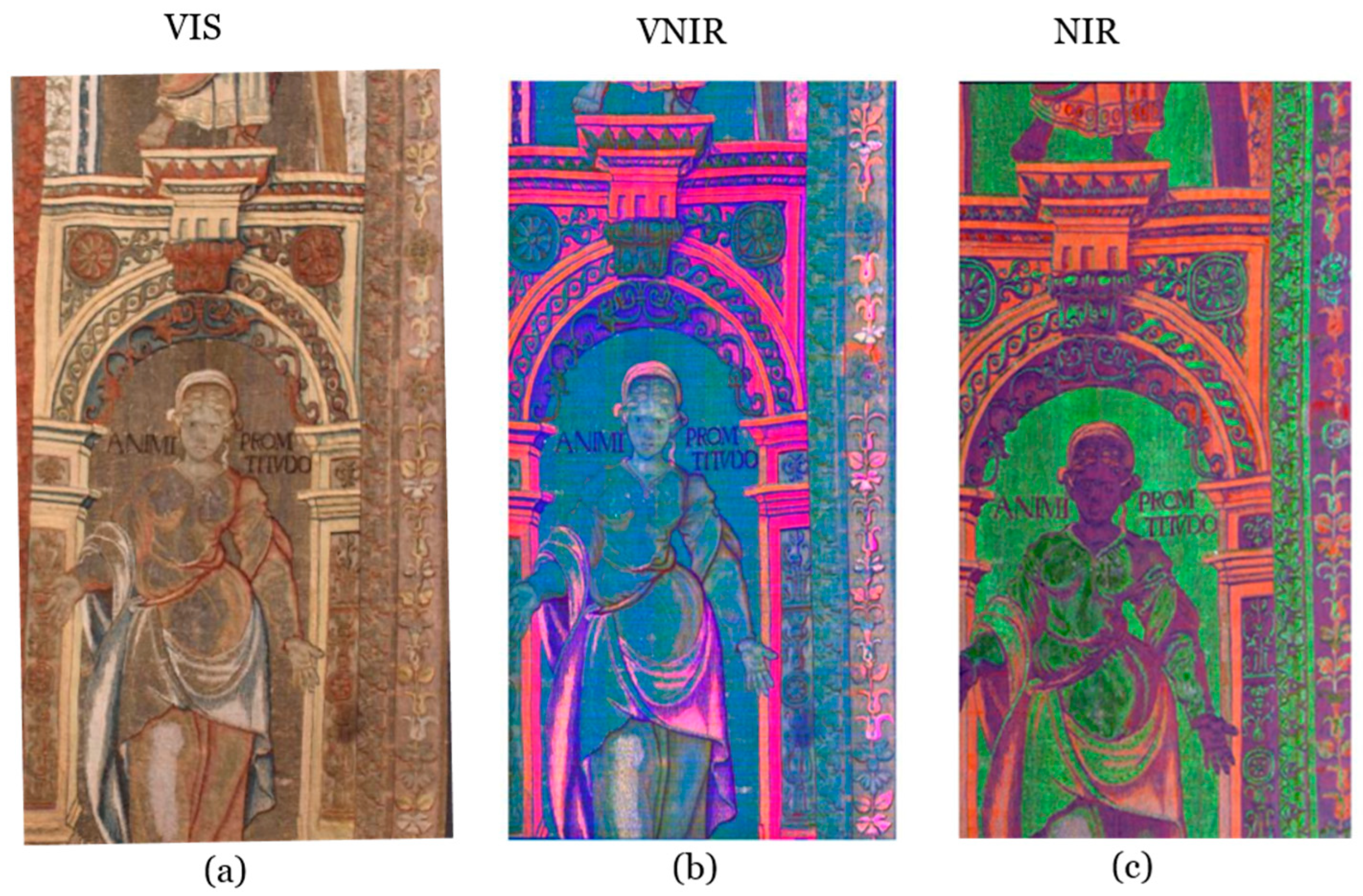
PCA was applied to the VNIR and NIR reflectance hyperspectral cubes of the tapestries. The results produced detailed mapping of the dyes based on their spectral responses where the design of the tapestry was reproduced in high resolution but in false colour. Figure 4 shows the Oath and Departure of Eliezer tapestry area analysed with HSI (Figure 4a) and the false colour images following PCA analysis of the VNIR (Figure 4b) and NIR (Figure 4c) hyperspectral cubes.
Figure 4.
The Oath and Departure of Eliezer tapestry area analysed with HSI. (a) False colour images following PCA analysis of VNIR (b) and NIR (c) reflectance hyperspectral cubes.
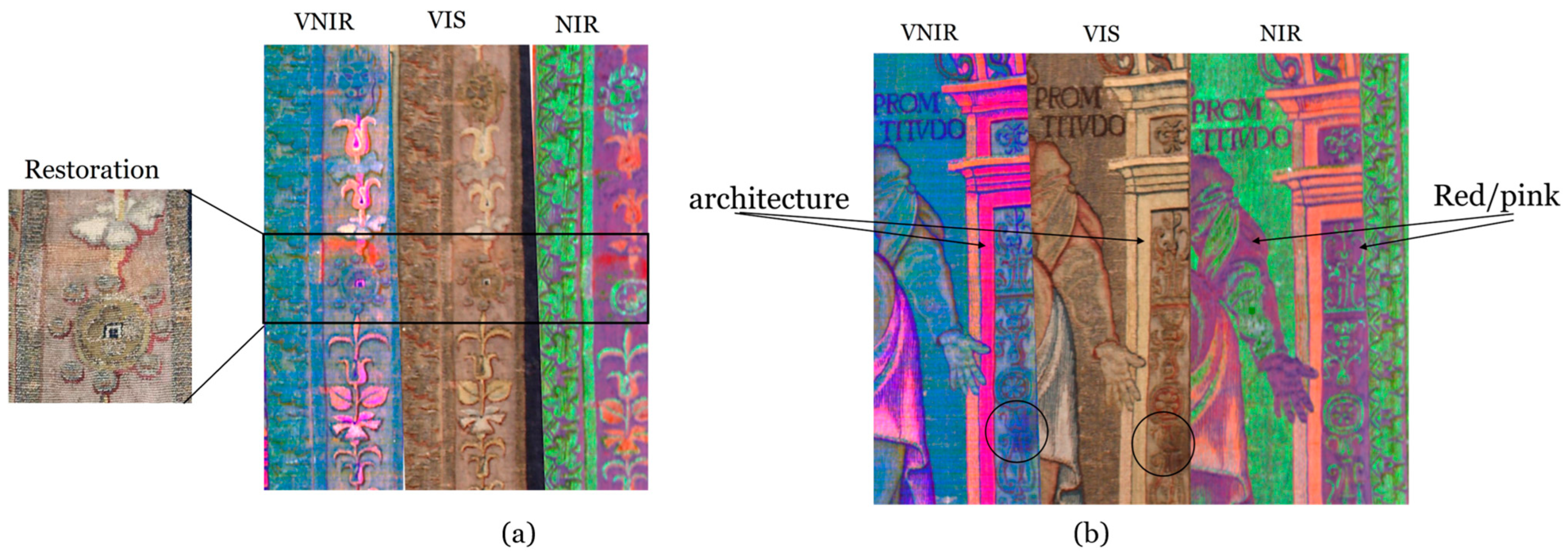
Following closer interrogation of the PCA images, some interesting observations could be reported. For example, on the section of the border of the Oath and Departure of Eliezer tapestry, which seems relatively uniform under visible light, the PCA false colour images highlighted an area of restoration with a bright orange/red colour (Figure 5a). Furthermore, on the architecture, although the visible image has the same beige colour, the mapping of the dyes in the VNIR PCA image suggests the use of different dyes (Figure 5b). Moreover, the PCA NIR image shows that the dye highlighted in purple has most likely been used on the sleeve of the figure as well as the design of the architecture (Figure 5b).
Figure 5.
(a) Section of the border of the Oath and Departure of Eliezer tapestry area analysed with HSI. Following PCA analysis. the mapping of the dyes revealed a restored area. (b) The PCA VNIR mapping indicates the use of different dyes.
3.2. SAM Analysis
The SAM algorithm was applied in the processing of the VNIR reflectance data cubes of the three Abraham tapestries for the identification and mapping of the dyes used in their manufacturing. The non-invasive classification of the dyes was achieved with the use of a spectral reference library based on the HSI analysis of the MODHT model tapestry samples. The spectra range used for this analysis was between 500 and 920 nm in order to reduce poor noise to signal ratios. Furthermore, a high tolerance angle of 1.5 rad was applied to facilitate the characterisation of dyes. Previous research has suggested that SAM analysis using high tolerance angle (2.56 to 1.81 rad) resulted in the identification of four yellow dyes (weld, safflower, chamomile and turmeric), while these were not able to be characterised using their reflectance spectra [35].
3.2.1. MODHT Samples Analysis and Compilation of Endmember Library
Forty-two MODHT samples were analysed with HSI VNIR (400–900 nm) and NIR (900–1700 nm) cameras, and the resulting reflectance spectra were used as the spectral reference library for performing SAM analysis on the HSI data collected from the Abraham tapestries.
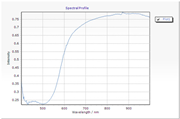
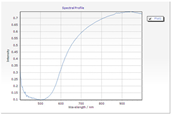
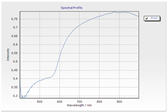
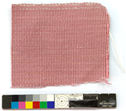
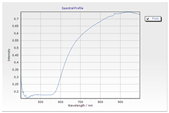
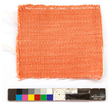
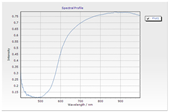
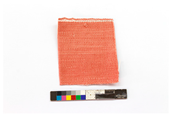
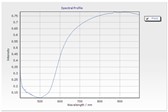
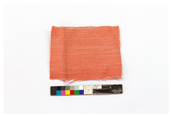
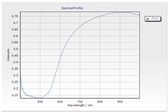
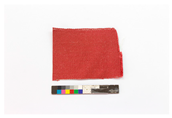
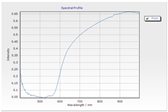
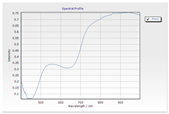
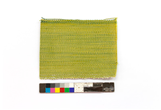
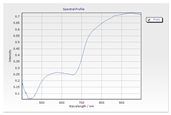
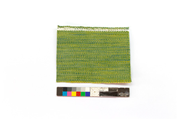
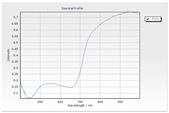
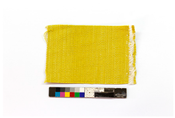
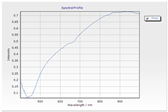
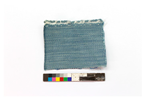
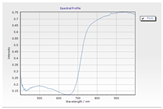
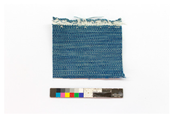
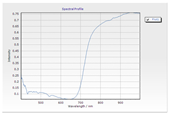
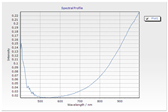
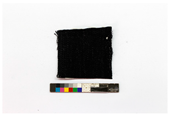
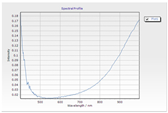
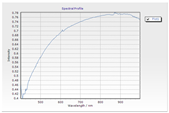
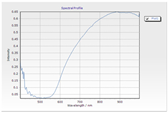
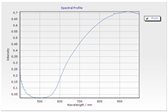
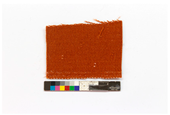
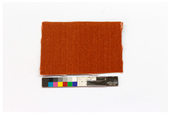
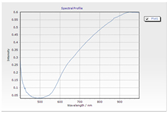
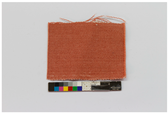
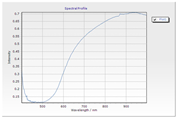
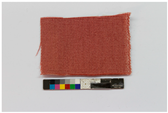
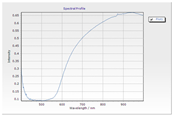
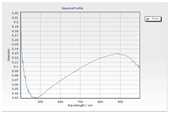
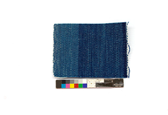
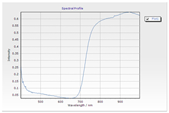
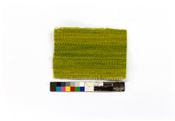
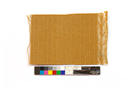
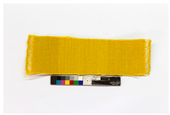
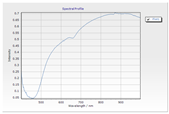
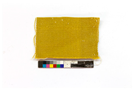
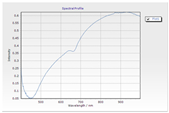
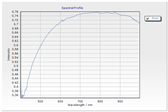
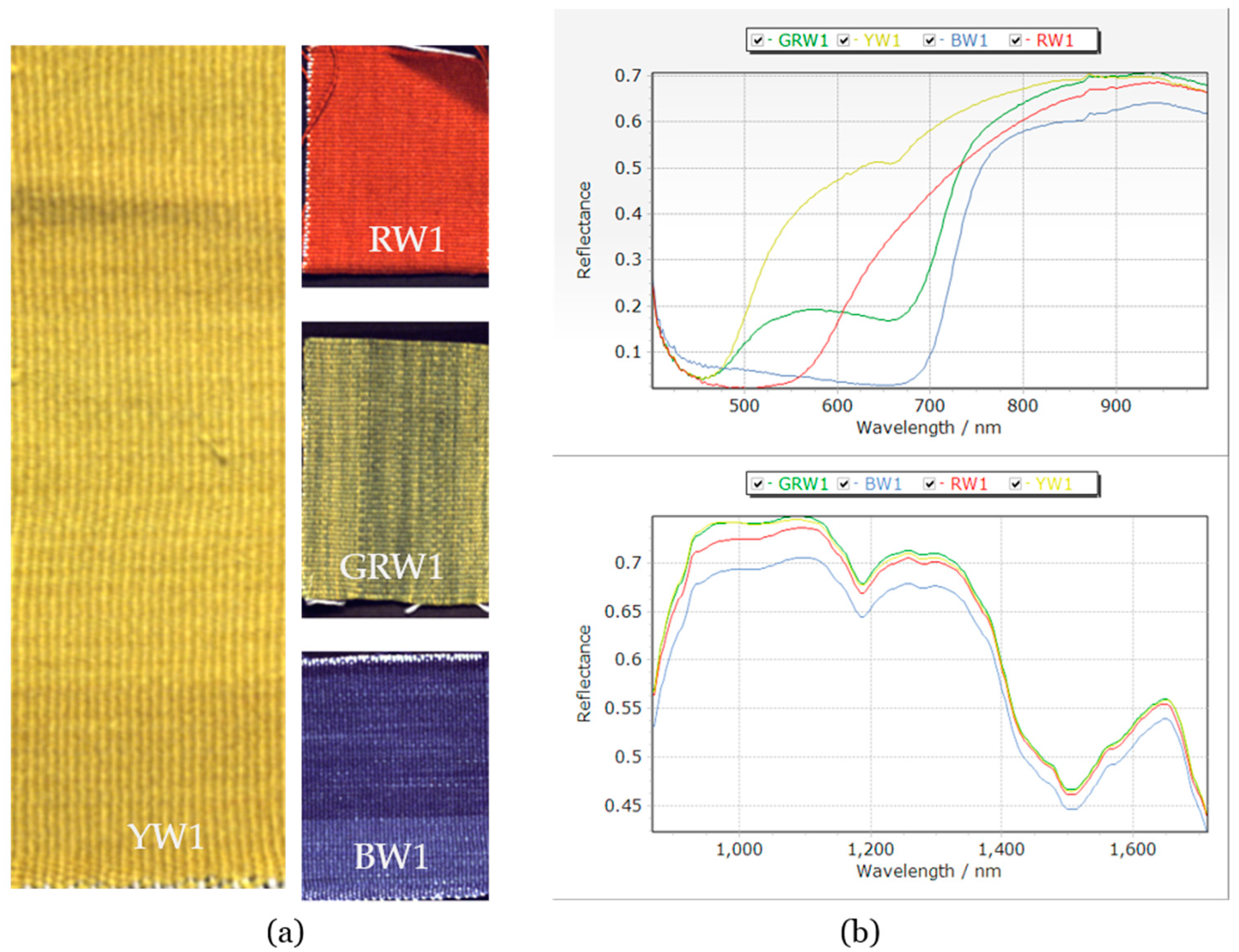
Figure 6 shows four MODHT replica tapestry samples representing yellow (YW1), red (RW1), green (GRW1) and blue (BW1) colours (Figure 6a) and their respective reflectance spectra in VNIR and NIR (Figure 6b). Details of the endmember library are summarized in Appendix A Table A1, including the dyestuff, mordants, visible images and reflectance spectra for forty-two MODHT samples. This table also includes the colours attributed to the endmembers in the SAM classification. These digital colours were selected as an approximation of the original colour group of the MODHT sample such as pink, red, light and dark green, light and dark blue, brown, beige and black, while grey indicated metal threads.
Figure 6.
MODHT replica tapestry samples (a) and their respective reflectance spectra in VNIR (top) and NIR (bottom) graphs (b).
3.2.2. The Oath and Departure of Eliezer
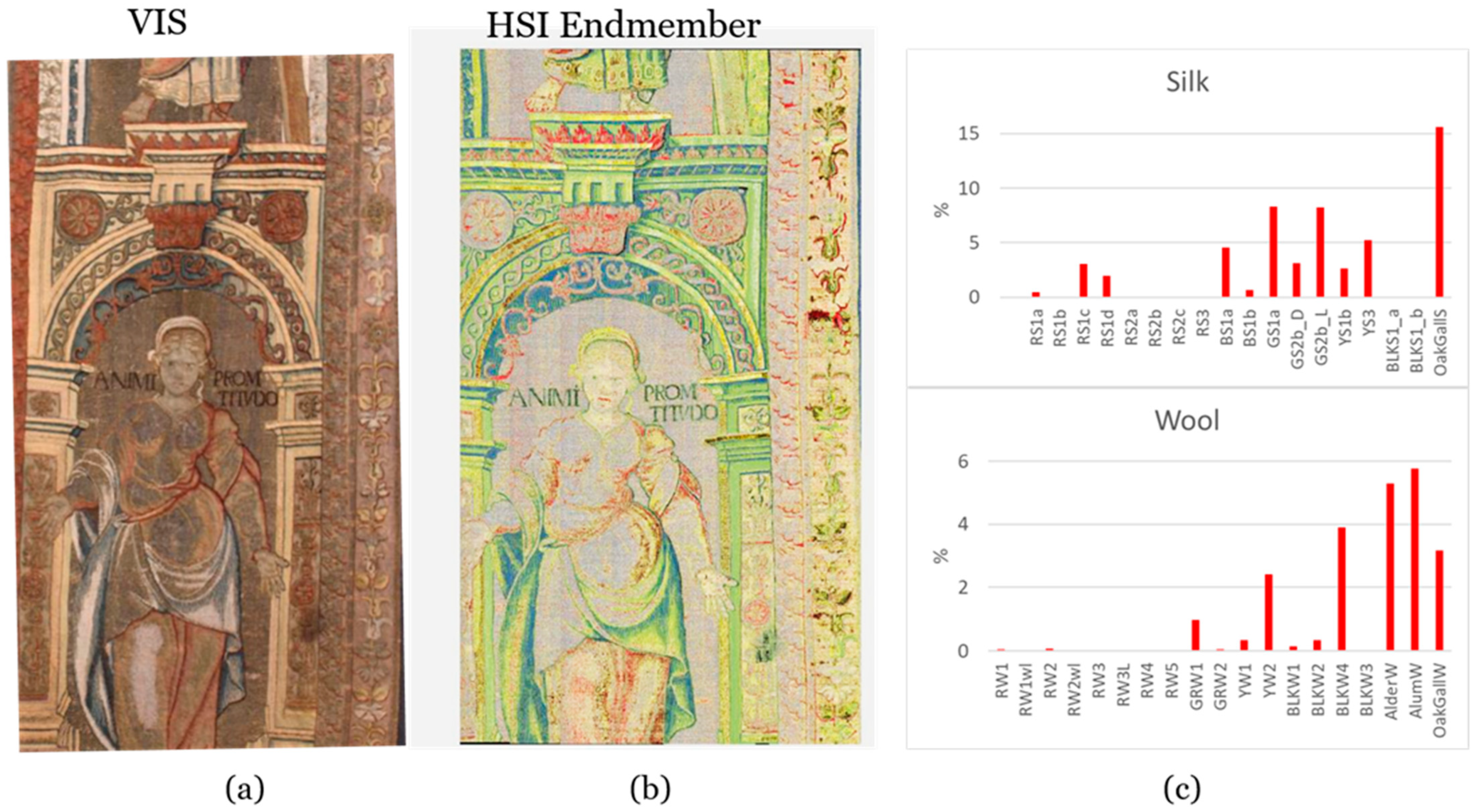
The scanned area from the Oath and Departure of Eliezer measuring about 1 m2 located at the border of the tapestry shows a female representation of a virtue positioned under an architectural structure. This area is embellished with a large quantity of metal threads, while, on the right, there is a decorative border with flowers. The results from the SAM analysis shown in Figure 7b provide an estimate of the original colour palette of the tapestry which due to long exposure to light, it has suffered from fading, and the metal threads have tarnished (Figure 7a).
Figure 7.
The Oath and Departure of Eliezer tapestry area analysed. (a) The SAM analysis with the identified endmember mapping. (b) The graphs summarize the silk (top) and wool (bottom) dyes identified after SAM analysis (c).
The SAM classification endmembers identified in the area of analysis are presented in the Figure 7c graphs showing the dyes on silk at the top and the dyes on wool at the bottom. The data present the percentage of area coverage following the spectral matching to the endmember reference library (Appendix A, Table A1).
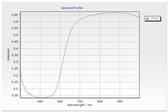
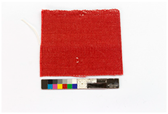
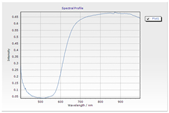
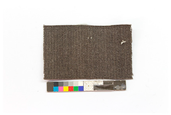
The classification of the dyes used in this section of the Oath and Departure of Eliezer tapestry indicated the use of brazilwood with lye treatment for the pink (RS1c) or dark pink, brown/red (RS1d) silk areas, while there is also a smaller amount of the brazilwood dye RS1a. In wool, the only red dye identified was madder (RW2); however, this was in traces. The blue areas were dyed with woad (BS1a), while a darker shade (BS1b) was produced with a longer dyeing time. The yellow silk areas were dyed with both greenweed (YS3) and weld (S1b); however, for wool, greenweed (YW2) was primarily used, while weld (YW1) had a much lower quantification value. Green in the silk areas was produced with threads dyed first with weld and then with woad (GS1a); however, threads which were dyed first with woad and then with weld (GS2b) were also identified in two different shades, light and dark. On the wool green areas, only threads dyed first with weld and then woad (GW1) were identified. Oak gall was classified in silk and wool areas, while Alder bark and Alum mordanted threads were identified only in wool. Black was limited to wool threads and was produced primarily with BLKW4, which was produced with a combination of iron sulphate and copper sulphate mordant.
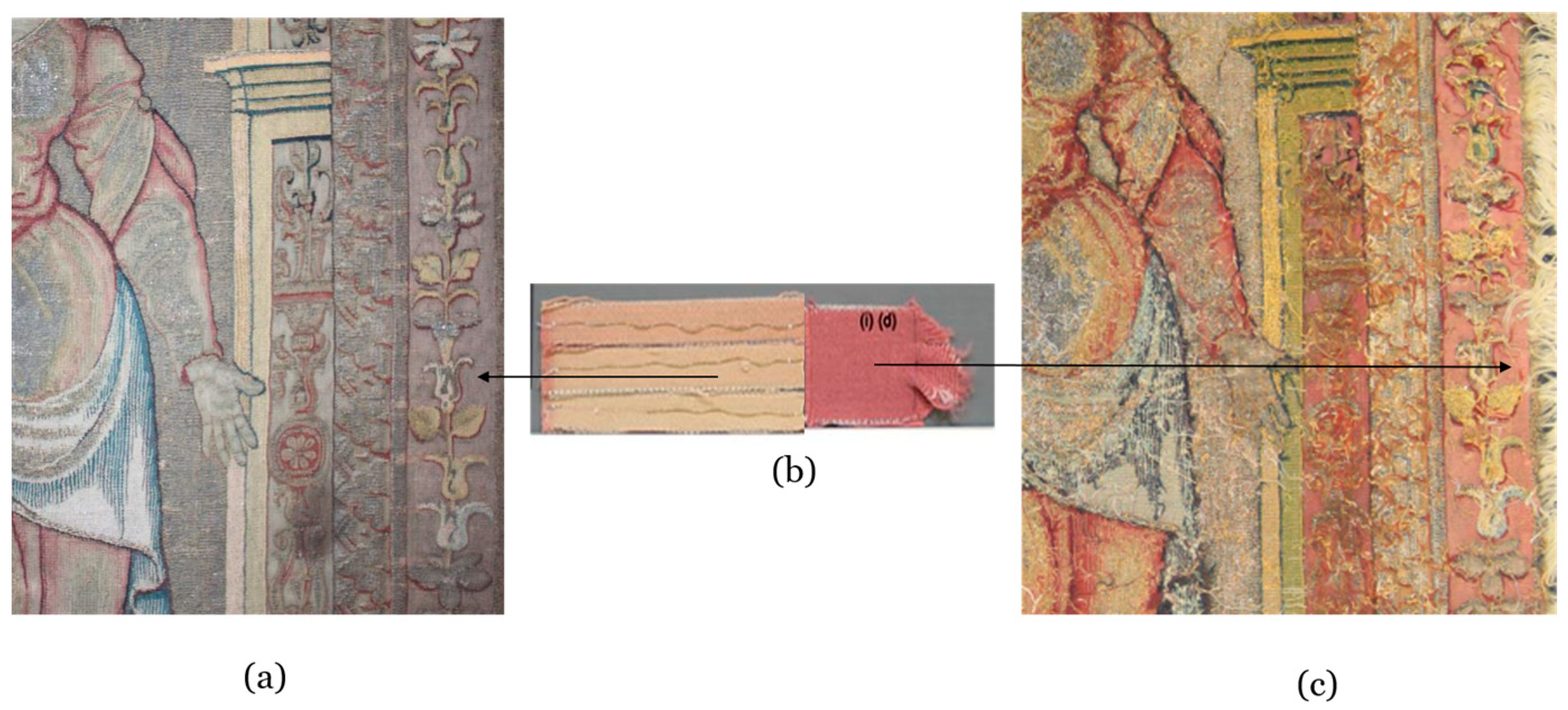
The Oath and Departure of Eliezer as part of previous research was recorded in high-resolution imaging in both obverse and reverse [42]. Figure 8a shows the detail of the area analysed with HSI, while Figure 8c shows the same area in reverse where the tapestry was protected from light exposure and the original colour palette has been preserved. Visual examination of the reverse image confirmed the use of green and yellow dyed yarns on the architecture. However, most significantly, the use of brazilwood was also indicated in the background of the border following a comparison with the brazilwood dyed sample (Figure 8b). During this research project, samples were exposed to a xenon arc lamp in an accelerated light ageing chamber (Xenotest 150S) with an IR and UV filter system intended to replicate sunlight through window glass and following the conditions set in BS EN ISO 105-B02. The relative humidity was controlled by the apparatus to 65 ± 2%, and the temperature was 20 ± 2 °C. Trial samples showed that a total exposure of 60 Mlx h (megalux hours) was a suitable dose, producing a significant and measurable difference in physical properties, and approximating the light exposure which may have been received by a 400-year-old tapestry, based on archival research and current illumination levels. These accelerating ageing experiments confirmed that brazilwood is one of the most fugitive dyes [42].
Figure 8.
The Oath and Departure of Eliezer tapestry obverse (a) and reverse (c) The brazilwood dyed sample in the middle before (right) and after (left) light ageing (b).
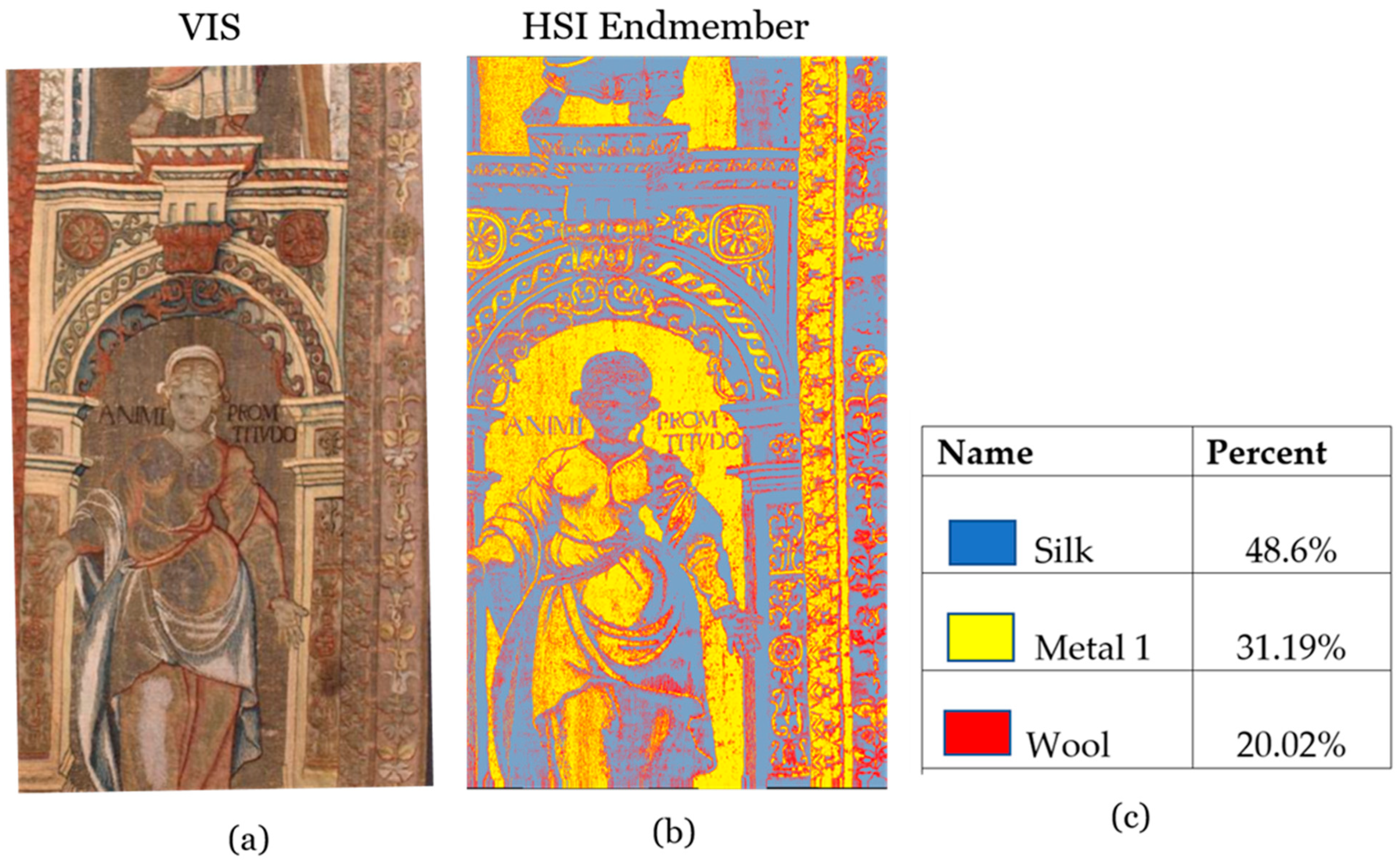
The Oath and Departure of Eliezer was also used in this research to map the different materials used for the weaving of the tapestry, wool, silk and metal threads. For this purpose, the SAM algorithm was applied in the processing of the NIR reflectance data cube of the tapestry and the endmember library included the undyed silk and wool MODHT samples spectra.1500 to 1600 nm of the wool and silk reflectance spectra can be used in reflectance imaging spectroscopy to map these fibres [37] therefore, the spectral range used for this analysis was between 1497 and 1567 nm. Furthermore, a high tolerance angle of 1.5 rad was applied. The results are shown in Figure 9b, while the percentage of area coverage for each endmember is presented in Figure 9c. This analysis reproduced the design of the tapestry in high resolution, providing a clear understanding of the distribution of the materials. In almost 50% of this area, the weft threads used silk in the head and parts of the dress of the figure, as well as the architecture and the border. Wool yarns covered approximately 20% of this area and they were deployed in specific areas of the design. Finally, about 30% of the area was covered by metal threads; this included part of the figure’s dress as well as the background of the architecture and the decorative border.
Figure 9.
The Oath and Departure of Eliezer tapestry area analysed. (a) The NIR SAM analysis with the identified endmembers mapping (b) SAM analysis results (c).
3.2.3. Sacrifice of Isaac
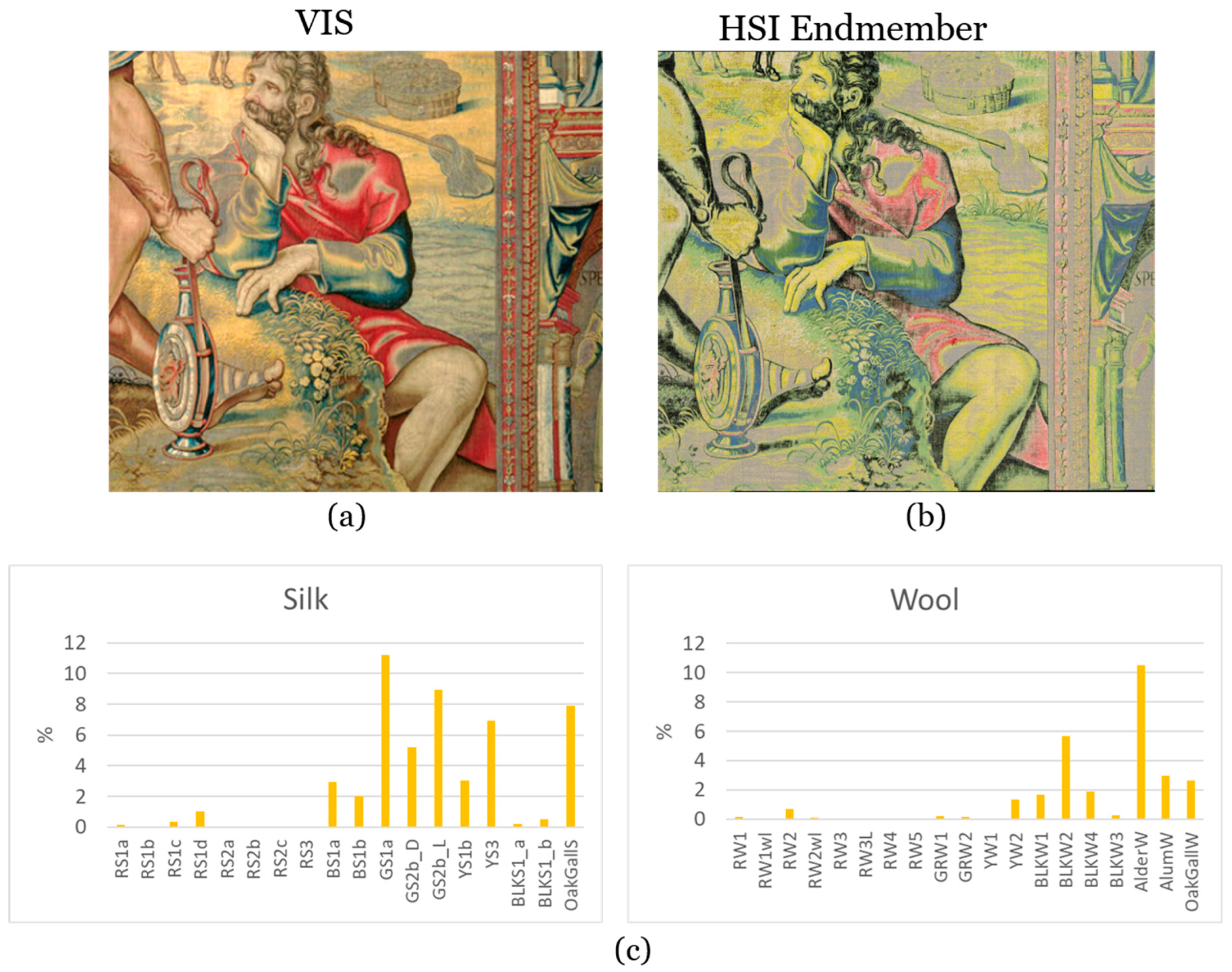
The scanned area from the Sacrifice of Isaac, measuring about 2 m2 and located at the bottom viewing right of the tapestry, shows a male figure; on the right of the scanned area, a section of the border is also included. The results from the SAM analysis shown in Figure 10b provide an estimate of the original colour palette of the tapestry, which has faded due to long exposure to light. Significant changes are observed in the yellow and green areas. Furthermore, the metal threads used primarily on the male figure’s clothing, the border on the right and the basket in the background have tarnished (Figure 10a).
Figure 10.
The Sacrifice of Isaac tapestry area analysed (a). The SAM analysis with the identified endmembers mapping (b). The graphs summarize the silk (left) and wool (right) dyes identified after HSI SAM analysis (c).
The SAM classification endmembers identified in the area of analysis are presented in Figure 10c graphs which show the dyes on silk on the left and the dyes on wool on the right. These graphs show the percentage of area coverage following the spectral matching to the endmember reference library (Appendix A, Table A1).
The analysis results indicated that the blue areas were dyed with woad (BS1a), while a darker shade (BS1b) was produced with a longer dyeing time. On the yellow silk areas, greenweed (YS3) was primarily used, while a fewer yarns were dyed with weld (YS1b). However, for the yellow wool yarns, only greenweed (YW2) was used. Green was primarily produced with silk yarns dyed either first with weld and then with woad (GS1a), or threads which were dyed first with woad and then with weld (GS2b) in two different shades, light and dark. For the silk red tones, the use of brazilwood with lye treatment (RS1d and RS1c) was identified, as well as a smaller amount of the brazilwood dye RS1a. Red wool yarns were dyed with madder (RW2 and RW1). Oak gall was identified in silk and wool threads, while Alder and Alum mordanted threads were identified only in wool. Black was identified primarily in wool and was produced with three different recipes (BLKW1, BLKW2 and BLKW4). It is interesting to note that for some of the brown areas on the tapestry, the SAM simulation presents them as black, for example, on the flesh at the two legs of the unseen figure on the left. This might have been due to the use of a black dye with another one to produce the brown colour. However, only the black element was revealed in the analysis.
3.2.4. Eliezer and Rebekah at the Well
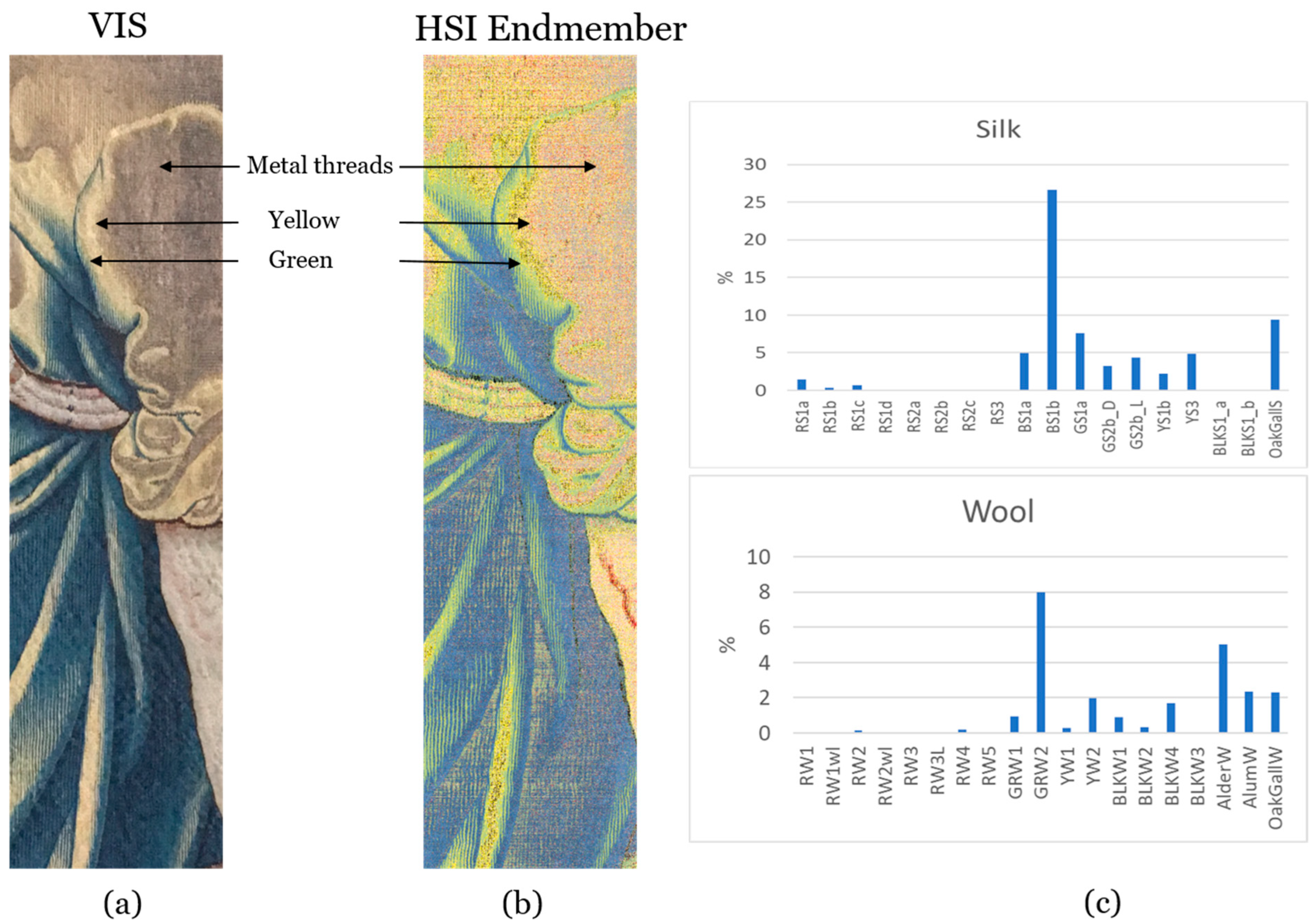
The scanned area from the Eliezer and Rebekah at the Well tapestry was much smaller than the previous two areas, measuring 0.1 m2. Nevertheless, the analysis of this area provided the opportunity to study how the tapestry weavers deployed dyes in different tones to deliver the design of the tapestry, which, in this case, is a detail of a woman with a blue dress (Figure 11a). The results from the SAM analysis shown in Figure 11b indicated that the pleats on the dress were originally highlighted with green- and yellow-coloured threads to add volume and texture into the design of the fabric. Furthermore, large areas of the shoulder and the sleeve of the figure were constructed with metal threads. It is interesting to note that for the areas across the metal threads, yellow-coloured threads were used to match their golden colour. The SAM classification mapping image provides an estimate of the original colour palette of the tapestry (Figure 11b) as the present condition of the tapestry, following long exposure to light, has suffered from fading, and the metal threads have tarnished and blackened (Figure 11a). Accelerated ageing studies have confirmed that the yellow dyes (mostly weld) are highly fugitive [42]. Therefore, the yellow highlights on the dress are currently neutral, while the green-coloured areas originally made with yellow and blue dyes are primarily blue, as indicated in Figure 11a,b.
Figure 11.
The Eliezer and Rebekah at the Well tapestry area analysed (a). The SAM simulation with the identified endmembers mapping. The arrows indicate areas of colour fading (b). The graphs summarize the silk (top) and wool (bottom) dyes identified after HSI SAM analysis (c).
The SAM classification endmembers identified in the area of analysis are presented in the Figure 11c graphs, showing the dyes on silk at the top and the dyes on wool at the bottom. The data show the percentage of area coverage following the spectral matching to the endmember reference library (Appendix A, Table A1).
The blue areas were dyed with woad (BS1a), while a darker shade (BS1b) was produced with a longer dyeing time. The yellow silk areas were dyed with both greenweed (YS3) and weld (S1b), whereas for wool, greenweed (YW2) was primarily used, while weld (YW1) was used less frequently. Green in the silk areas was produced with threads dyed first with weld and then with woad (GS1a); however, threads which were dyed first with woad and then with weld (GS2b) were also identified in two different shades, light and dark. On the green wool areas, only threads dyed first with woad and then weld (GRW2) were identified. Oak gall was identified in silk and wool threads, while Alder and Alum mordanted threads were identified only in wool. Black was identified in wool and was produced with three different recipes (BLKW1, BLKW2 and BLKW4). Finally, small areas of threads dyed with brazilwood were identified. As the area analysed did not have red/pink areas, brazilwood might have been used in the flesh. Alternatively, the areas consisting of metal threads also have a red hue in the SAM mapping, which might be related to the use of brazilwood for the dyeing of the silk cores in combination with young fustic [4,9]. In wool, there was also a small amount of cochineal (RW4) and madder (RW2) identified, which might have been used in the blue colour.
4. Discussion
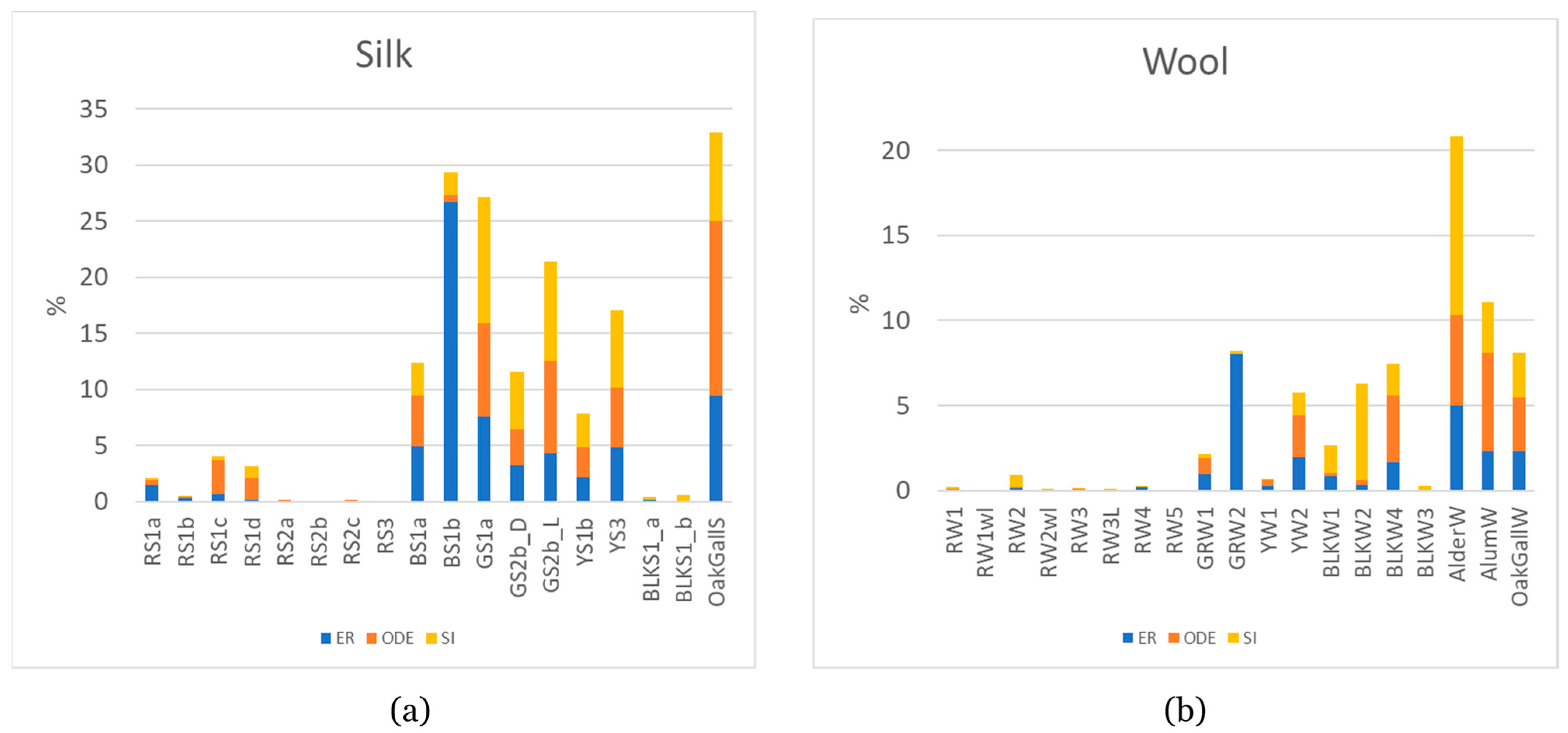
The SAM classification endmembers identified in the areas analysed on the three Abraham tapestries are presented in Figure 12, showing the dyes on silk (a) and the dyes on wool (b). The compilation of the results on the dyes identified are also summarized in Table 5.
Figure 12.
The graphs summaries the silk (a) and wool (b) dyes identified after HSI SAM analysis on the three Abraham tapestries: Eliezer and Rebekah at the Well (ER), The Oath and Departure of Eliezer (ODE) and Sacrifice of Isaac (SI).
Table 5.
Compilation of SAM analysis endmember matching results for the three Abraham tapestries.
The classification of the dyes used in the Abraham tapestries indicated the use of similar materials for their production, confirming that they are part of one set and were made in the same workshop.
The use of brazilwood as the main dye for silk red, pink and dark pink yarns is consistent across all three tapestries analysed, particularly brazilwood with lye treatment (RS1c and d) but also with no lye (RS1a and b). In wool, madder (RW2) was used primarily; however, brazilwood (RW1) and cochineal (RW4) were also traced in small quantities. The fugacious nature of brazilwood has been well-documented for a long time and to characterise its aged form on historic textiles has been challenging. It is only recently that the full characterisation took place [44], while a non-invasive methodology using SERS has also been demonstrated [9]. Furthermore, HSI has been used successfully to identify brazilwood lake pigments [31]. The use of brazilwood in The Oath and Departure of Eliezer tapestry was also indicated though the visual examination of the reverse side, which was protected from light exposure and the colour of the yarns had not faded (Figure 9). However, future research should focus on the characterisation of the red dyes with HSI and the impact of degradation to the analytical results.
The blue areas on the Abraham tapestries were dyed with woad (BS1a), which also had a darker shade (BS1b) which was produced with a longer dyeing time.
Although difficulties have been reported in the identification of yellow dyes [39], the data from the HSI analysis of the Abraham tapestries suggested that this method might be used to characterise the yellow yarns. The results indicated that the silk areas were dyed with greenweed (YS3) or weld (S1b), whereas for wool, greenweed (YW2) was primarily used. Further analytical work using an established analytical method such as HPLC could be deployed for validation as these results differed from the outcomes of the yellow yarns analysis in the MODHT project, which indicated that for the tapestries included in that study, greenweed was used mostly for silk and weld for wool [40]. Furthermore, for the MODHT historic samples, this trend appeared to be most evident in the combination dyed yarns for the production of green or orange colours and not exclusively on the yellow yarns. Additionally, there was a disparity between the number of wool and silk yarns analysed, which might have also influenced this outcome [4].
The results indicated consistency across the three tapestries for the production of the dyes in the green yarns. In the silk areas, green was produced with threads dyed first with weld and then with woad (GS1a); however, threads which were dyed first with woad and then with weld (GS2b) were also detected in two different shades, light and dark. On the wool green areas only, threads dyed first with weld and then woad (GW1) were detected.
In all of the tapestries, oak gall was classified in silk and wool areas, while Alder bark and Alum mordanted threads were detected only in wool.
Black was limited to wool threads and was dyed primarily with BLKW4, which was produced with a combination of iron sulphate and copper sulphate mordant.
The SAM analysis of the HSI images provided accurate mapping of the dyes, reproducing the design of the tapestry in high resolution. Furthermore, the mapping of the dyes potentially revealed information on the original colours of the tapestries. However, on the Sacrifice of Isaac, the brown areas were presented as black after the SAM simulation, an effect which requires further investigation.
Finally, the SAM NIR analysis successfully mapped the different materials used to produce the tapestry and provided an estimate of the percentage area coverage for each of them. This method could be deployed for assessing the quality of historic tapestries and possibly provide a tool to monitor changes in their condition over time.
5. Conclusions
This project explored the deployment of HSI in the characterisation and analysis of historic tapestries. A high-resolution ClydeHSI Art Scanner with both a push-broom visible to very near-infrared (VNIR; 400–1000 nm) and near infrared (NIR 900–1700 nm) hyperspectral cameras was used to analyse three of the 16th century Abraham series tapestries in the Great Hall, Hampton Court Palace. The areas analysed on the tapestries ranged from 0.1 m2 to approximately 2 m2 and consisted of wool and silk dyed in a range of colours with metal threads also used in large sections. The tapestries were scanned vertically with an overlap of 15% between consecutive strips to facilitate the stitching at the post-processing phase.
The composite hyperspectral reflectance images were initially processed with an unweighted smoothing average before using principal components analysis (PCA) based on their spectral responses, and the design of the tapestry was reproduced in a high-resolution false colour image. Interrogation of these images revealed information on the use of different dyes in faded areas and identified areas of restoration.
Spectral angle mapping (SAM) algorithm was successfully deployed for processing the data further to study the distribution of the materials across the tapestry areas analysed and identify the dyes used for their manufacture. An external library was produced with spectra acquired from the MODHT tapestry model tapestries, (with known dyes and mordants) and used as endmember reference for the spectral matching and characterisation (Appendix A Table A1).
Future work for this ongoing research project will include the development of the mapping of individual dyes and assessing the impact of degradation on the HSI analysis. Furthermore, the deployment of complementary analytical techniques such as HPLC could provide further evidence on the HSI results with a particular focus on the characterisation of the yellow dyestuffs and the identification of brazilwood. Finally, the deployment of XRF analysis could also confirm the mordants used for the dyeing.
Author Contributions
Conceptualisation, C.V.-M.; methodology, C.V.-M., J.R.G. and J.D.; data curation, C.V.-M. writing—original draft preparation, C.V.-M.; writing—review and editing, C.V.-M., K.H. and J.R.G.; visualisation, C.V.-M. All authors have read and agreed to the published version of the manuscript.
Funding
The purchase of the Clyde HSI Hyperspectral Imaging Scanner was funded by the UK’s ARTS AND HUMANITIES RESEARCH COUNCIL (AHRC) Historic Royal Palaces Heritage Science Laboratory Upgrade award, grant number AH/V012487/1.
Data Availability Statement
The data presented in this study can be requested by the corresponding author.
Acknowledgments
We would like to acknowledge our colleagues at Historic Royal Palaces for their support during the onsite work, in particular Magda Iwanicka and Gareth James. We are also grateful to Matthew Sheppard and Douglas Gourlay at ClydeHSI for their help and discussion on signal processing.
Conflicts of Interest
The authors declare no conflict of interest.
Appendix A. End Member Library
Table A1.
MODHT samples images and associated HSI spectra.
Table A1.
MODHT samples images and associated HSI spectra.
| Weft Fiber | Abbreviation | Dyestuff | Mordant | Endmember | Image | HSI |
|---|---|---|---|---|---|---|
| Silk | RS1a | Brazil wood | Alum | ![]() | ![]() | ![]() |
| Silk | RS1b | Brazil wood | Alum | ![]() | ![]() | ![]() |
| Silk | RS1c | Brazil wood | Alum | ![]() | ![]() | ![]() |
| Silk | RS1d | Brazil wood | Alum | ![]() | ![]() | ![]() |
| Silk | RS2a | Madder | Alum | ![]() | ![]() | ![]() |
| Silk | RS2b | Madder | Alum | ![]() | ![]() | ![]() |
| Silk | RS2c | Madder | Alum | ![]() | ![]() | ![]() |
| Silk | RS3 | Cochineal | Alum | ![]() | ![]() | ![]() |
| Silk | GS1b | Woad/weld | Alum | ![]() | ![]() | ![]() |
| Silk | GS2b_L | Weld/woad | Alum | ![]() | ![]() | ![]() |
| Silk | GS2b_D | Weld/woad | Alum | ![]() | ![]() | ![]() |
| Silk | YS1b | weld | Alum | ![]() | ![]() | ![]() |
| Silk | YS3 | Greenweed | Alum | ![]() | ![]() | ![]() |
| Silk | BS1_a | Woad | - | ![]() | ![]() | ![]() |
| Silk | B1_b | Woad | - | ![]() | ![]() | ![]() |
| Silk | Black S1a | FeSO4 | Oak g all | ![]() | ![]() | ![]() |
| Silk | Black S1b | FeSO4 | Oak gall | ![]() | ![]() | ![]() |
| Silk | CON S | - | - | ![]() | ![]() | ![]() |
| Silk | Oak gall S | - | Oak gall | ![]() | ![]() | ![]() |
| Wool | RW1_wl | Madder | Alum | ![]() | ![]() | ![]() |
| Wool | RW1 | Madder | Alum | ![]() | ![]() | ![]() |
| Wool | RW2 | Madder | Oak gall/alum | ![]() | ![]() | ![]() |
| Wool | RW2_wl | Madder | Oak gall/alum | ![]() | ![]() | ![]() |
| Wool | RW3 | Brazil wood | Alum | ![]() | ![]() | ![]() |
| Wool | RW3L | Brazil wood | Alum | ![]() | ![]() | ![]() |
| Wool | RW4 | Cochineal | alum | ![]() | ![]() | ![]() |
| Wool | RW5 | Cochineal | alum | ![]() | ![]() | ![]() |
| Wool | BLKW1 | FeSO4 | Oak gall | ![]() | ![]() | ![]() |
| Wool | BLKW2 | FeSO4 | Oak gall | ![]() | ![]() | ![]() |
| Wool | BLKW3 | FeSO4 | Alder bark | ![]() | ![]() | ![]() |
| Wool | BLKW4 | FeSO4/CuSO4 | Oak gall | ![]() | ![]() | ![]() |
| Wool | BW1 | Woad | - | ![]() | ![]() | ![]() |
| Wool | GRW1 | Weld/woad | Alum | ![]() | ![]() | ![]() |
| Wool | GRW2 | Woad/weld | Alum | ![]() | ![]() | ![]() |
| Wool | Alder W | - | Alder bark | ![]() | ![]() | ![]() |
| Wool | YW1 | Weld | Alum | ![]() | ![]() | ![]() |
| Wool | YW2 | Greenweed | alum | ![]() | ![]() | ![]() |
| Wool | Alum W | - | Alum | ![]() | ![]() | ![]() |
| Wool | Oak gall W | - | Oak gall | ![]() | ![]() | ![]() |
| Wool | Wool blank dyed with lye | ![]() | ![]() | ![]() | ||
| Wool | CON W | ![]() | ![]() | ![]() |
References
- The Story of Abraham Series 1540-43. Available online: https://www.rct.uk/collection/1046/the-story-of-abraham-series (accessed on 7 December 2022).
- Degano, I.; Ribechini, E.; Modugno, F.; Colombini, M.P. Analytical Methods for the Characterization of Organic Dyes in Artworks and in Historical Textiles. Appl. Spectrosc. Rev. 2009, 44, 363–410. [Google Scholar] [CrossRef]
- Rosenberg, E. Characterisation of historical organic dyestuffs by liquid chromatography—Mass spectrometry. Anal. Bioanal. Chem. 2008, 391, 33–57. [Google Scholar] [CrossRef] [PubMed]
- Peggie, D.A. Development and Application of Analytical Methods for the Identification of Dyes on Historical Textiles. Ph.D. Thesis, The University of Edinburgh, Edinburgh, UK, 2006. [Google Scholar]
- Bacci, M. UV-VIS-NIR, FT-IR and FORS Spectroscopies. In Modern Analytical Methods in Art and Archaeology, Chemical Analysis Series; Wiley: New York, NY, USA, 2000; Volume 155, pp. 321–361, Chapter 12. [Google Scholar]
- Tamburini, D.; Dyer, J. Fibre optic reflectance spectroscopy and multispectral imaging for the non-invasive investigation of Asian colourants in Chinese textiles from Dunhuang (7th–10th century AD). Dye. Pigment. 2019, 162, 494–511. [Google Scholar] [CrossRef]
- Tamburini, D.; Dyer, J.; Heady, T.; Derham, A.; Kim-Marandet, M.; Pullan, M.; Luk, Y.-P.; Ramos, I. Bordering on Asian Paintings: Dye Analysis of Textile Borders and Mount Elements to Complement Research on Asian Pictorial Art. Heritage 2021, 4, 4344–4365. [Google Scholar] [CrossRef]
- Dal Fovo, A.; Striova, J.; Pampaloni, E.; Fedele, A.; Morita, M.M.; Amaya, D.; Grazzi, F.; Cimò, M.; Cirrincione, C.; Fontana, R. Rubens’ painting as inspiration of a later tapestry: Non-invasive analyses provide insight into artworks’ history. Microchem. J. 2020, 153, 104472. [Google Scholar] [CrossRef]
- Doherty, B.; Degano, I.; Romani, A.; Higgitt, C.; Peggie, D.; Colombini, M.P.; Miliani, C. Identifying Brazilwood’s Marker Component, Urolithin C, in Historical Textiles by Surface-Enhanced Raman Spectroscopy. Heritage 2021, 4, 1415–1428. [Google Scholar] [CrossRef]
- Pozzi, F.; Poldi, G.; Bruni, S.; De Luca, E.; Guglielmi, V. Multi-technique characterization of dyes in ancient Kaitag textiles from Caucasus. Archaeol. Anthropol. Sci. 2012, 4, 185–197. [Google Scholar] [CrossRef]
- Festa, G.; Christiansen, T.; Turina, V.; Borla, M.; Kelleher, J.; Arcidiacono, L.; Cartechini, L.; Ponterio, R.C.; Scatigno, C.; Senesi, R.; et al. Egyptian metallic inks on textiles from the 15th century BCE unravelled by non-invasive techniques and chemometric analysis. Sci. Rep. 2019, 9, 7310. [Google Scholar] [CrossRef]
- Verhoeven, G. Multispectral and Hyperspectral Imaging. In The Encyclopedia of Archaeological Sciences; John Wiley & Sons: New York, NY, USA, 2018; pp. 1–4. [Google Scholar]
- Liang, H. Advances in multispectral and hyperspectral imaging for archaeology and art conservation. Appl. Phys. A 2012, 106, 309–323. [Google Scholar] [CrossRef]
- Picollo, M.; Cucci, C.; Casini, A.; Stefani, L. Hyper-Spectral Imaging Technique in the Cultural Heritage Field: New Possible Scenarios. Sensors 2020, 20, 2843. [Google Scholar] [CrossRef]
- Cucci, C.; Delaney, J.K.; Picollo, M. Reflectance Hyperspectral Imaging for Investigation of Works of Art: Old Master Paintings and Illuminated Manuscripts. Acc. Chem. Res. 2016, 49, 2070–2079. [Google Scholar] [CrossRef]
- Cucci, C.; Webb, E.K.; Casini, A.; Ginanni, M.; Prandi, E.; Stefani, L.; Vitorino, T.; Picollo, M. Short-wave infrared reflectance hyperspectral imaging for painting investigations: A methodological study. J. Am. Inst. Conserv. 2019, 58, 16–36. [Google Scholar] [CrossRef]
- Delaney, J.K.; Zeibel, J.G.; Thoury, M.; Littleton, R.; Palmer, M.; Morales, K.M.; de la Rie, E.R.; Hoenigswald, A. Visible and Infrared Imaging Spectroscopy of Picasso’s Harlequin Musician: Mapping and Identification of Artist Materials in Situ. Appl. Spectrosc. 2010, 64, 584–594. [Google Scholar] [CrossRef] [PubMed]
- Ricciardi, P.; Delaney, J.K.; Glinsman, L.D.; Thoury, M.; Facini, M.; de la Rie, E.R. Use of visible and infrared reflectance and luminescence imaging spectroscopy to study illuminated manuscripts: Pigment identification and visualization of underdrawings. Opt. Metrol. 2009, 7391, 739106-5. [Google Scholar]
- Mounier, A.; Le Bourdon, G.; Aupetit, C.; Belin, C.; Servant, L.; Lazare, S.; Lefrais, Y.; Daniel, F. Hyperspectral imaging, spectrofluorimetry, FORS and XRF for the non-invasive study of medieval miniatures materials. Herit. Sci. 2014, 2, 24. [Google Scholar] [CrossRef]
- Dill, O.; Vermeulen, M.; McGeachy, A.; Walton, M. Multi-Modal, Non-Invasive Investigation of Modern Colorants on Three Early Modern Prints by Maria Sibylla Merian. Heritage 2021, 4, 1590–1604. [Google Scholar] [CrossRef]
- Retko, K.; Kavčič, M.; Legan, L.; Ropret, P.; Škafar, B.R.; Gao, Y.; Gilchrist, J.; Strlič, M.; Cigić, I.K. Material characterisation of a painted beehive panel by advanced spectroscopic and chromatographic techniques in combination with hyperspectral imaging. Herit. Sci. 2020, 8, 120. [Google Scholar] [CrossRef]
- Sandak, J.; Sandak, A.; Legan, L.; Retko, K.; Kavčič, M.; Kosel, J.; Poohphajai, F.; Diaz, R.H.; Ponnuchamy, V.; Sajinčič, N.; et al. Nondestructive Evaluation of Heritage Object Coatings with Four Hyperspectral Imaging Systems. Coatings 2021, 11, 244. [Google Scholar] [CrossRef]
- Sun, M.; Zhang, D.; Wang, Z.; Ren, J.; Chai, B.; Sun, J. What’s Wrong with the Murals at the Mogao Grottoes: A Near-Infrared Hyperspectral Imaging Method. Sci. Rep. 2015, 5, 14371. [Google Scholar] [CrossRef]
- Sciuto, C.; Cantini, F.; Chapoulie, R.; Cou, C.; De la Codre, H.; Gattiglia, G.; Granier, X.; Mounier, A.; Palleschi, V.; Sorrentino, G.; et al. What Lies Beyond Sight? Applications of Ultraportable Hyperspectral Imaging (VIS-NIR) for Archaeological Fieldwork. J. Field Archaeol. 2022, 47, 522–535. [Google Scholar] [CrossRef]
- De Viguerie, L.; Pladevall, N.O.; Lotz, H.; Freni, V.; Fauquet, N.; Mestre, M.; Walter, P.; Verdaguer, M. Mapping pigments and binders in 15th century Gothic works of art using a combination of visible and near infrared hyperspectral imaging. Microchem. J. 2020, 155, 104674. [Google Scholar] [CrossRef]
- Delaney, J.K.; Conover, D.M.; Dooley, K.A.; Glinsman, L.; Janssens, K.; Loew, M. Integrated X-ray fluorescence and diffuse visible-to-near-infrared reflectance scanner for standoff elemental and molecular spectroscopic imaging of paints and works on paper. Herit. Sci. 2018, 6, 31. [Google Scholar] [CrossRef]
- Grabowski, B.; Masarczyk, W.; Głomb, P.; Mendys, A. Automatic pigment identification from hyperspectral data. J. Cult. Herit. 2018, 31, 1–12. [Google Scholar] [CrossRef]
- Grillini, F.; Thomas, J.-B.; George, S. Comparison of Imaging Models for Spectral Unmixing in Oil Painting. Sensors 2021, 21, 2471. [Google Scholar] [CrossRef] [PubMed]
- Kleynhans, T.; Messinger, D.W.; Delaney, J.K. Towards automatic classification of diffuse reflectance image cubes from paintings collected with hyperspectral cameras. Microchem. J. 2020, 157, 104934. [Google Scholar] [CrossRef]
- Kogou, S.; Shahtahmassebi, G.; Lucian, A.; Liang, H.; Shui, B.; Zhang, W.; Su, B.; van Schaik, S. From remote sensing and machine learning to the history of the Silk Road: Large scale material identification on wall paintings. Sci. Rep. 2020, 10, 19312. [Google Scholar] [CrossRef]
- Vitorino, T.; Casini, A.; Cucci, C.; Melo, M.J.; Picollo, M.; Stefani, L. Non-invasive identification of traditional red lake pigments in fourteenth to sixteenth centuries paintings through the use of hyperspectral imaging technique. Appl. Phys. A 2015, 121, 891–901. [Google Scholar] [CrossRef]
- Polak, A.; Kelman, T.; Murray, P.; Marshall, S.; Stothard, D.J.M.; Eastaugh, N.; Eastaugh, F. Hyperspectral imaging combined with data classification techniques as an aid for artwork authentication. J. Cult. Herit. 2017, 26, 1–11. [Google Scholar] [CrossRef]
- Webb, E.K.; Summerour, R.; Giaccai, J. A case study using multiband & hyperspectral imaging for the identification & characterization of materials on archaeological Andean painted textiles. In Textile Group Postprints; American Institute for Conservation of Historic and Artistic Works: Washington, DC, USA, 2014. [Google Scholar]
- Zhao, H.; Wang, Y.; Liu, S.; Li, K.; Gao, W. Spectral reflectance characterization and fiber type discrimination for common natural textile materials using a portable spectroradiometer. J. Archaeol. Sci. 2019, 111, 105026. [Google Scholar] [CrossRef]
- Peruzzi, G.; Cucci, C.; Picollo, M.; Quercioli, F.; Stefani, L. Non-invasive identification of dyed textiles by using VIS-NIR FORS and hyperspectral imaging techniques. Cult. Sci. Color.-Color Cult. Sci. 2021, 13, 61–69. [Google Scholar]
- Vermeulen, M.; Tamburini, D.; McGeachy, A.C.; Meyers, R.D.; Walton, M.S. Multiscale characterization of shellfish purple and other organic colorants in 20th-century traditional enredos from Oaxaca, Mexico. Dye. Pigment. 2022, 206, 110663. [Google Scholar] [CrossRef]
- Delaney, J.K.; Ricciardi, P.; Glinsman, L.; Palmer, M.; Burke, J. Use of near infrared reflectance imaging spectroscopy to map wool and silk fibres in historic tapestries. Anal. Methods 2016, 8, 7886–7890. [Google Scholar] [CrossRef]
- De La Codre, H.; Daniel, F.; Chapoulie, R.; Servant, L.; Mounier, A. Investigating the materials used in eighteenth-century tapestries from the three French Royal Manufactories: Inputs of hyperspectral approaches. Eur. Phys. J. Plus 2021, 136, 1193. [Google Scholar] [CrossRef]
- De La Codre, H.; Marembert, C.; Claisse, P.; Daniel, F.; Chapoulie, R.; Servant, L.; Mounier, A. Non-invasive characterization of yellow dyes in tapestries of the 18th century: Influence of composition on degradation. Color Res. Appl. 2021, 46, 613–622. [Google Scholar] [CrossRef]
- Quye, A.; Hallett, K.; Carretero, H. Wrought in gold and silk. In Preserving the Art of Historic Tapestries; National Museums Scotland Enterprises Limited.: Edinburgh, UK, 2009. [Google Scholar]
- Campbell, T.P. Henry VIII and the Art of Majesty:Tapestries at the Tudor Court; Yale University Press: Newhaven, Victoria, 2007. [Google Scholar]
- Perkins, R.; Owen, H.; Carr, C.; Hallett, K.; Gibb, I.; Frame, K. Henry VIII’s tapestries revealed. In Proceedings of the ICOM Committee for Conservation, ICOM-CC: 16th Triennial Meeting, ICOM Committee for Conservation, Lisbon, Portugal, 19–23 September 2011; Critério Artes Gráficas: Sao Paolo, Brazil, 2011. [Google Scholar]
- Hacke, A.M. Investigation into the Nature and Ageing of Tapestry Materials. Ph.D. Thesis, University of Manchester, Manchester, UK, 2006. [Google Scholar]
- Peggie, D.A.; Kirby, J.; Poulin, J.; Genuit, W.; Romanuka, J.; Wills, D.F.; De Simone, A.; Hulme, A.N. Historical mystery solved: A multi-analytical approach to the identification of a key marker for the historical use of brazilwood (Caesalpinia spp.) in paintings and textiles. Anal. Methods 2018, 10, 617–623. [Google Scholar] [CrossRef]
Disclaimer/Publisher’s Note: The statements, opinions and data contained in all publications are solely those of the individual author(s) and contributor(s) and not of MDPI and/or the editor(s). MDPI and/or the editor(s) disclaim responsibility for any injury to people or property resulting from any ideas, methods, instructions or products referred to in the content. |
© 2023 by the authors. Licensee MDPI, Basel, Switzerland. This article is an open access article distributed under the terms and conditions of the Creative Commons Attribution (CC BY) license (https://creativecommons.org/licenses/by/4.0/).