Review

How the Vestibular Labyrinth Encodes Air-Conducted Sound: From Pressure Waves to Jerk-Sensitive Afferent Pathways


MSA ENT Academy Center, Via Tommaso Piano 16, 03043 Cassino, Italy
J. Otorhinolaryngol. Hear. Balance Med. 2026, 7(1), 5; https://doi.org/10.3390/ohbm7010005
Submission received: 17 December 2025 / Revised: 4 January 2026 / Accepted: 12 January 2026 / Published: 14 January 2026
(This article belongs to the Section Otology and Neurotology)

Abstract

Background/Objectives: The vestibular labyrinth is classically viewed as a sensor of low-frequency head motion—linear acceleration for the otoliths and angular velocity/acceleration for the semicircular canals. However, there is now substantial evidence that air-conducted sound (ACS) can also activate vestibular receptors and afferents in mammals and other vertebrates. This sound sensitivity underlies sound-evoked vestibular-evoked myogenic potentials (VEMPs), sound-induced eye movements, and several clinical phenomena in third-window pathologies. The cellular and biophysical mechanisms by which a pressure wave in the cochlear fluids is transformed into a vestibular neural signal remain incompletely integrated into a single framework. This study aimed to provide a narrative synthesis of how ACS activates the vestibular labyrinth, with emphasis on (1) the anatomical and biophysical specializations of the maculae and cristae, (2) the dual-channel organization of vestibular hair cells and afferents, and (3) the encoding of fast, jerk-rich acoustic transients by irregular, striolar/central afferents. Methods: We integrate experimental evidence from single-unit recordings in animals, in vitro hair cell and calyx physiology, anatomical studies of macular structure, and human clinical data on sound-evoked VEMPs and sound-induced eye movements. Key concepts from vestibular cellular neurophysiology and from the physics of sinusoidal motion (displacement, velocity, acceleration, jerk) are combined into a unified interpretative scheme. Results: ACS transmitted through the middle ear generates pressure waves in the perilymph and endolymph not only in the cochlea but also in vestibular compartments. These waves produce local fluid particle motions and pressure gradients that can deflect hair bundles in selected regions of the otolith maculae and canal cristae. Irregular afferents innervating type I hair cells in the striola (maculae) and central zones (cristae) exhibit phase locking to ACS up to at least 1–2 kHz, with much lower thresholds than regular afferents. Cellular and synaptic specializations—transducer adaptation, low-voltage-activated K+ conductances (KLV), fast quantal and non-quantal transmission, and afferent spike-generator properties—implement effective high-pass filtering and phase lead, making these pathways particularly sensitive to rapid changes in acceleration, i.e., mechanical jerk, rather than to slowly varying displacement or acceleration. Clinically, short-rise-time ACS stimuli (clicks and brief tone bursts) elicit robust cervical and ocular VEMPs with clear thresholds and input–output relationships, reflecting the recruitment of these jerk-sensitive utricular and saccular pathways. Sound-induced eye movements and nystagmus in third-window syndromes similarly reflect abnormally enhanced access of ACS-generated pressure waves to canal and otolith receptors. Conclusions: The vestibular labyrinth does not merely “tolerate” air-conducted sound as a spill-over from cochlear mechanics; it contains a dedicated high-frequency, transient-sensitive channel—dominated by type I hair cells and irregular afferents—that is well suited to encoding jerk-rich acoustic events. We propose that ACS-evoked vestibular responses, including VEMPs, are best interpreted within a dual-channel framework in which (1) regular, extrastriolar/peripheral pathways encode sustained head motion and low-frequency acceleration, while (2) irregular, striolar/central pathways encode fast, sound-driven transients distinguished by high jerk, steep onset, and precise spike timing.

1. Introduction

This review begins with a simple question: does an intense acoustic stimulus contain “jerk”? In mechanics, jerk is the rate of change of acceleration—the feature that captures how abruptly a stimulus starts, stops, or reverses. Intuitively, it reflects the *smoothness* (or lack of smoothness) of acceleration: a click or very-short-rise-time tone burst has a much larger jerk content than a slowly ramped tone, even if their overall energy is similar.
v ( t ) = d x ( t ) d t ,     a ( t ) d 2 x d t 2 ,     j ( t ) d 3 x d t 3 d a ( t ) d t
For a sinusoidal particle displacement x(t) = Xsin (ωt), the amplitudes of velocity, acceleration and jerk scale with frequency as ω, ω2 and ω3, respectively. Thus, at fixed displacement, higher-frequency and steeper-onset stimuli are disproportionately “jerk-rich”. Because air-conducted sound (ACS) produces time-varying fluid particle motion in cochlear and vestibular fluids, its pressure waveform necessarily entails associated velocity, acceleration and jerk, and abrupt onsets introduce additional high-frequency components that further increase effective jerk.
x(t) = X0 sin (ωt)
A sound is a pressure wave that makes the particles of a medium (air, perilymph, endolymph) oscillate. At the microscopic level, an air-conducted sound (ACS) is therefore not only a pressure fluctuation; it is a time-varying displacement of fluid particles with associated velocity, acceleration and jerk. In acoustics, we usually describe a stimulus in terms of sound pressure level, frequency and spectrum, and rarely, if ever, in terms of jerk. Jerk is more familiar in engineering and biomechanics (vehicle comfort, robotic movement, limb kinematics) than in auditory or vestibular physiology. Nevertheless, from the point of view of the inner ear as a mechanical system, every intense sound, especially with a steep onset or offset, is a jerk-rich stimulus: it produces rapid changes in fluid acceleration and in the motion of sensory epithelia and hair bundles.
The central claim of this review is that this simple mechanical observation is highly relevant to the vestibular labyrinth. Over recent decades, experimental work has shown that intense ACS, at audio frequencies up to and beyond 1–2 kHz, can activate a subset of vestibular receptors and primary afferents in a wide range of species [1,2,3,4,5,6,7]. These sound-responsive units are largely irregular afferents originating from type I hair cells in the striola of the otolith maculae and in the central zones of canal cristae [2,8,9,10]. They exhibit phase-locked firing to ACS with thresholds far below those of regular afferents, and with a frequency range extending deep into the kilohertz band [1,2,3,4,5,11]. In humans, intense ACS evokes short-latency vestibular-evoked myogenic potentials (VEMPs) and, in third-window disorders such as superior semicircular canal dehiscence (SSCD), sound-induced eye movements and nystagmus [7,12,13,14,15].
At the same time, evidence supports a robust dual-channel organization of vestibular epithelia. Central/striolar zones, enriched in type I hair cells and calyx-bearing irregular afferents, form a phasic, higher-bandwidth channel with pronounced phase lead; peripheral/extrastriolar zones, enriched in type II hair cells and bouton-bearing regular afferents, form a more tonic channel optimized for sustained head motion [8,9,10,16,17]. This division reflects combined differences in (i) hair-bundle/otoconial-membrane coupling and regional microanatomy [7,17,18,19]; (ii) hair-cell and afferent membrane conductances, including KLV and GK,L [8,16,20]; (iii) synaptic specializations at type I–calyx endings [16,21,22]; and (iv) spike-generator filtering in irregular afferents [8,9,10,17].
When an intense sound is delivered to the ear, its jerk-rich pressure waveform is transmitted via the ossicular chain and oval window into the cochlear and vestibular fluids, where it generates local fluid particle motions and pressure gradients around maculae and cristae [1,2,7,18,21]. The striolar type I–calyx system, with its short, stiff bundles, specialized coupling to the otoconial membrane, and fast, high-pass biophysics, is ideally placed to convert these rapid changes in fluid acceleration into precisely timed neural discharges [1,8,15,17,22]. In this context, ACS is not just an accidental cochlear “spill-over”, but an efficient probe of a vestibular transient channel that is naturally tuned to encode rapid changes in acceleration—that is, mechanical jerk [2,3,5,8,11,15,23].
In this narrative review, we therefore use the opening question—does a high-intensity stimulus contain jerk?—as a conceptual entry point to explain why and how air-conducted sound can be used to stimulate vestibular cells. We first outline the anatomical and cellular substrates that confer high-frequency, transient sensitivity on striolar and central vestibular pathways. We then describe how ACS-induced pressure waves act on these structures and summarize single-unit evidence for sound-responsive vestibular afferents. Finally, we integrate the physics of jerk, the dual-channel organization of vestibular epithelia, and clinical observations from ACS-evoked VEMPs and sound-induced eye movements, to propose a jerk-centered framework for understanding acoustic activation of the vestibular labyrinth.

2. Anatomical and Cellular Substrate for Acoustic Vestibular Sensitivity

2.1. Zonal Organization: Striola and Extrastriola

The maculae of the utricle and saccule are divided into a central striolar zone and a broader surrounding extrastriolar zone. Similarly, canal cristae display a distinction between central and peripheral zones. These zones differ in hair cell types, afferent terminal morphology, and afferent firing regularity [8,9,10,16,17].
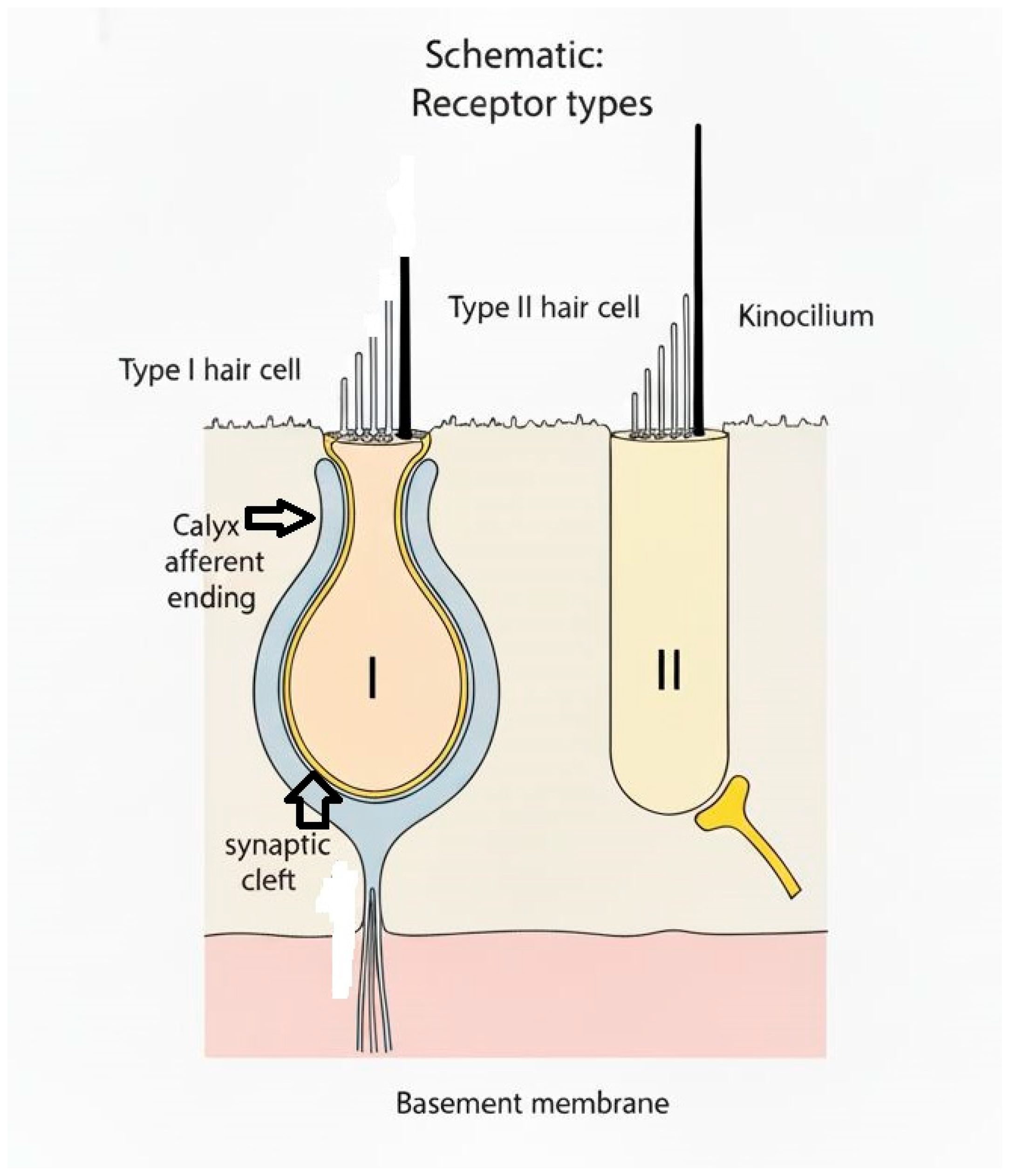
  • Type I hair cells are flask-shaped receptors predominantly located in the striola and central crista, enveloped by large calyceal endings [8,9,17] (Figure 1).
  • Type II hair cells are more cylindrical, contacted by bouton terminals, and are more abundant in extrastriolar and peripheral regions [8,9,17,19] (Figure 1).
Primary afferents can be morphologically classified as calyx-only, bouton-only, or dimorphic. Calyx-only and many dimorphic afferents preferentially innervate type I cells in striolar/central zones and exhibit irregular spontaneous discharge. Bouton-only afferents predominantly innervate type II cells in extrastriolar/peripheral zones and exhibit regular firing [8,9,10,16]. This morphological–physiological correlation is robust across species and forms the basis of the “two-channel” concept: a striolar/central, type I–calyx–irregular channel and an extrastriolar/peripheral, type II–bouton–regular channel [8,9,10,16,17].

2.2. Hair Bundle–Otoconial Membrane Coupling

The otolith maculae are covered by an otoconial layer: a gel matrix with embedded calcium carbonate crystals. Classical models emphasize a low-frequency “mass–spring” system in which otoconia shear the gel relative to the sensory epithelium during linear acceleration, deflecting the hair bundles [18]. However, detailed ultrastructural and micro-CT studies have revealed regional differences in the attachment and compliance of the maculae and their overlying membranes [18,19].
In particular, striolar hair bundles tend to be shorter, stiffer, and associated with pores or discontinuities in the otoconial membrane, so that they are less rigidly embedded in the mass of otoconia [17,18]. The macular epithelium shows complex three-dimensional attachment to the temporal bone, allowing local deformations and fluid spaces where pressure gradients can develop [18]. These features make the striola particularly well positioned to sense local fluid pressure and velocity changes produced by air-conducted sound (ACS), rather than relying solely on bulk shear of the otoconial layer [1,2,7].
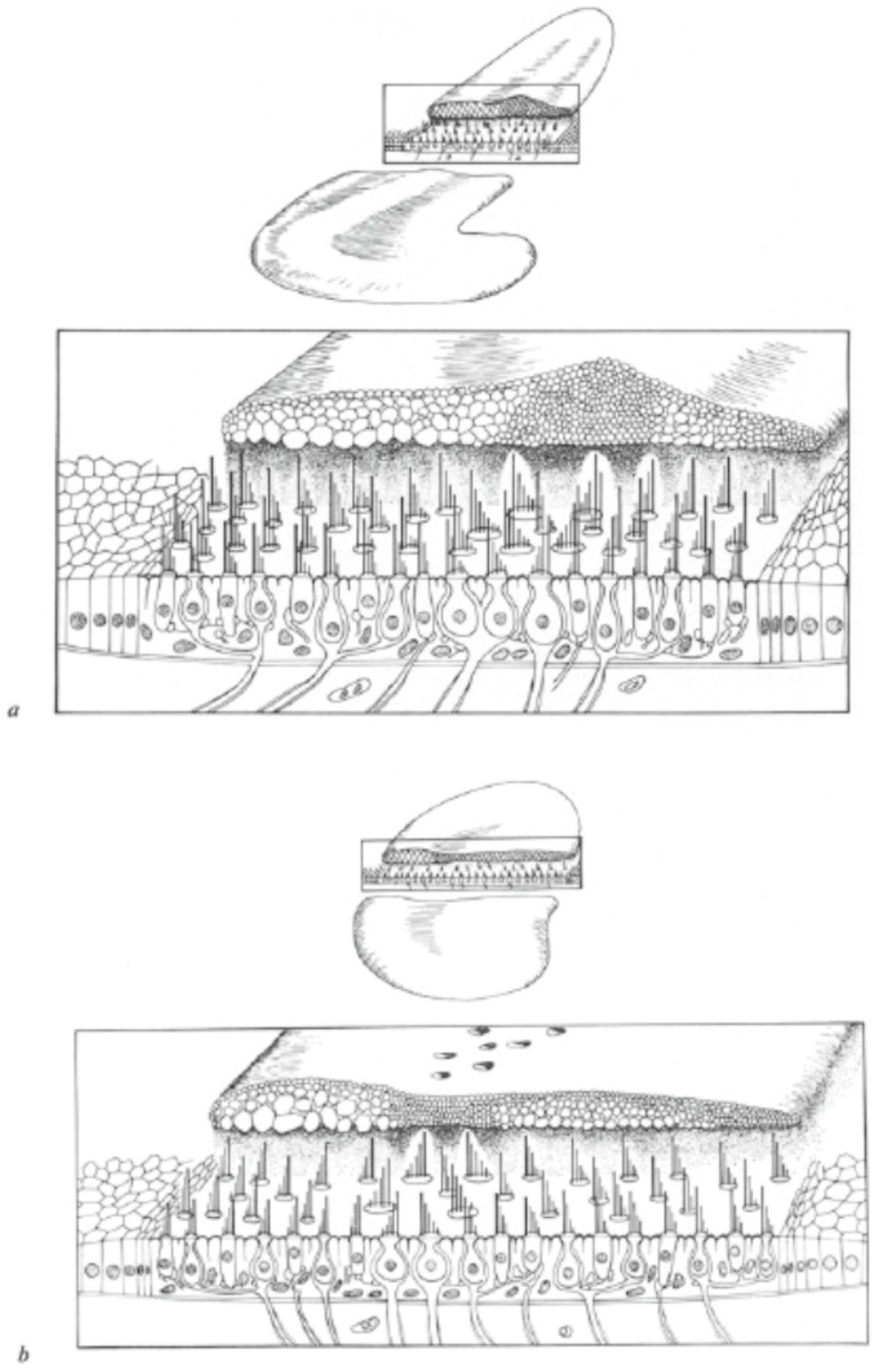
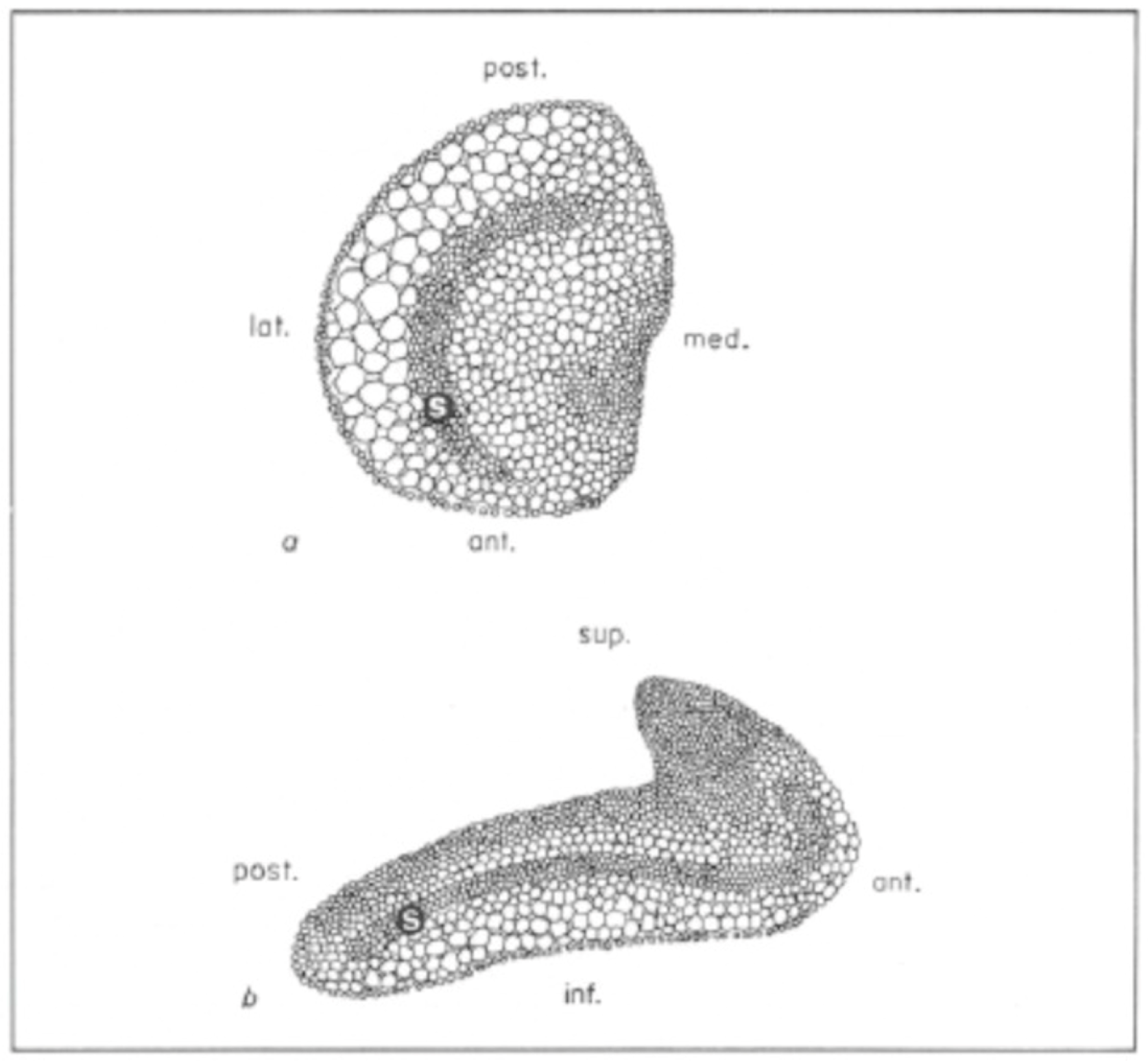
Classic ultrastructure shows that, in the striola, the otoconial (statoconial) membrane is not a uniform solid slab but contains broad clearings/pores and regionally differentiated gel architecture, so that striolar type I bundles can be comparatively less embedded and more weakly coupled to the otoconial mass (see Figure 2 and Figure 3) [23]. In the high-frequency (‘seismometer’) operating range relevant to sound/vibration, the otoconial layer tends to remain relatively inertial while the neuroepithelium moves; the resulting local micro-flow and pressure/velocity gradients can therefore deflect these weakly coupled striolar bundles and preferentially recruit the type I–calyx irregular pathway [24,25].
In the same work, the striola was highlighted as a region with marked cyto-neural specialization, including an excess of Type I hair cells (approximately twice as many Type I as Type II) and innervation by the thickest (myelinated) vestibular nerve fibers [23].
Together, these observations support the idea that striolar type I hair bundles are mechanically and anatomically predisposed to interact with local fluid micro-motion and pressure/velocity gradients, rather than relying exclusively on bulk shearing of the otoconial mass.
A mechanistic framework that directly links these anatomical specializations to high-frequency stimulation comes from the “accelerometer-to-seismometer” model of otolith mechanics. Grant and Curthoys showed that above the otolith’s undamped natural frequency the otoconial layer tends to remain essentially inertial (near stationary), while the neuroepithelium moves with small displacements; in this seismometer operating range (typical of sound/vibration frequencies), the relative motion between the neuroepithelium and otoconial layer is therefore driven by rapid neuroepithelial motion and associated endolymph/gel-layer micro-flow [25].
Critically, they explicitly propose that in the striola the bundles of type I hair cells are “free standing or weakly attached” to the otoconial layer, so that fluid-flow motion generated by neuroepithelial and gel-layer movement at high frequency can selectively deflect these bundles, whereas extrastriolar bundles rigidly attached to the otoconial layer are relatively less stimulated by the small relative displacements available at these frequencies [26].
This provides a concrete anatomical–mechanical rationale for why striolar Type I–calyx pathways are preferentially recruited by high-frequency, steep-onset (high-jerk) stimuli such as air-conducted sound.
Hair-bundle geometry further amplifies this striolar bias toward transient (jerk-rich) inputs. Spoon and colleagues quantified that striolar bundles are, overall, stiffer than extrastriolar bundles and that bundle heights (kinocilium and tallest stereocilia) are key determinants of stiffness and dynamic range [24].
In their mechanical model (their Figure 9), shortening kinocilium height increases bundle rotation for a given otoconial-membrane displacement (higher I/X gain), at the cost of a reduced operating range [24].
Such geometry is consistent with a functional role of the striola in emphasizing rapid-onset mechanics and high-pass response dynamics, which dovetails with the known phasic, irregular afferent physiology and supports the present interpretation of acoustic vestibular activation as preferentially engaging a jerk-sensitive striolar/central channel.
Beyond these structural differences, physiological and developmental data support the idea that the otolith striola is the dominant generator of short-latency vestibular potentials. Work on vestibular short-latency potentials such as the vestibular evoked potential (VsEP) indicates that striolar type I hair cells and their complex calyces, with broad, stiff bundles, low kinocilium-to-stereocilium height ratios, and high densities of low-voltage-activated K+ channels, are particularly effective at encoding brief, high-acceleration transients [8,15,17]. Genetic disruption of TMC1-dependent mechanotransducer channels markedly attenuates VsEPs, underscoring the importance of fast, well-synchronized striolar transduction for representing jerk-rich head motion [17]. By analogy, intense ACS that couples efficiently to the otoliths is likely to recruit the same striolar type I–calyx units that generate VsEPs, again emphasizing the importance of jerk and rise-time rather than RMS level per se in determining vestibular acoustic activation [1,8,15,22].

2.3. Intrinsic Membrane Properties of Hair Cells and Afferents

Type I and type II hair cells exhibit distinct complements of ion channels that shape their receptor potential. Type I hair cells express large low-voltage-activated K+ conductances (KLV) that are active near resting potential; this creates a low input resistance and rapid, strongly attenuated voltage responses to sustained depolarizations. Type II cells express more conventional delayed-rectifier K+ channels (K_V) with higher activation thresholds [8,16,17].
These differences produce:
  • Band-pass tuning and phase lead in type I hair cell receptor potentials, emphasizing higher frequencies and fast transients.
  • More low-frequency, integrative responses in type II cells [8,16,17].
Afferent cell bodies also differ. Irregular afferents express KLV channels that contribute to their phasic, high-pass firing behavior, higher gain at higher frequencies, and greater phase lead relative to motion, compared with regular afferents [8,9,10,15,16,22].
Together, the zonal anatomy and intrinsic cellular properties create a substrate in which striolar type I hair cells and their irregular afferents are predisposed to encode fast, high-frequency mechanical events, such as those generated by ACS [2,3,5,8,11,17].

3. How Air-Conducted Sound Reaches the Vestibular Labyrinth

3.1. Middle and Inner Ear Transmission of ACS

Air-conducted sound reaching the tympanic membrane is transmitted via the ossicular chain to the oval window, where stapes footplate motion generates pressure waves in the perilymph of the vestibule and scala vestibuli. While most of this energy is normally directed along the cochlear partition, the vestibular labyrinth shares the same fluid spaces, and ACS inevitably generates pressure gradients in the vestibular compartments as well [1,2,7,13,21].
These pressure waves propagate through compliant boundaries (oval window, round window) and along complex fluid pathways around the utricular and saccular maculae and the cristae. Their exact distribution depends on the detailed anatomy and mechanical impedance of these structures, as shown by experimental and modeling work in animal inner ears [1,2,7,13,21].

3.2. Fluid Particle Motion and Local Pressure Gradients

At the scale of individual hair bundles, the relevant mechanical stimulus is not sound pressure per se, but relative motion between the hair bundle and the surrounding fluid and/or overlying structures. ACS-induced pressure waves produce:
  • Local oscillatory particle displacement and velocity of endolymph and perilymph.
  • Pressure gradients across the otoconial membrane and macular surface.
  • Small cyclic deformations of the membranous labyrinth [1,2,7,13,18].
Because type I hair bundles in the striola are less solidly coupled to the otoconial mass and more exposed to fluid spaces, they can be deflected directly by these local fluid and pressure fields, even when the net displacement of the otoconial layer is small, as is the case at high acoustic frequencies [1,2,7,13,18]. Thus, ACS can be conceptualized as generating high-frequency, small-amplitude oscillations of fluid velocity and pressure near the striola, providing an adequate stimulus for transduction in type I hair cells and activation of irregular afferents [3,4,5,8,10,11,13,18].

4. Single-Unit Evidence for Sound-Responsive Vestibular Afferents

4.1. Squirrel Monkey

Young et al. recorded from peripheral vestibular neurons in anesthetized squirrel monkeys and examined responses to both head vibration and air-borne sound in the 50–4000 Hz range [10]. They quantified responses in terms of phase locking and firing rate changes. Key findings relevant to ACS were:
  • A subset of vestibular afferents exhibited phase-locked firing to ACS, with lowest sound thresholds around 120–130 dB SPL (minimum ~76 dB SPL).
  • Rate-change thresholds were typically 10–30 dB above phase-locking thresholds, indicating that timing measures are more sensitive than firing-rate measures for detecting ACS-evoked vestibular activation.
  • Irregularly discharging neurons were more sensitive than regularly discharging units.
  • The sacculus did not show a unique superiority for ACS; saccular units were not dramatically more sensitive than units from other vestibular end-organs, challenging early views of a “pure acoustic sacculus” in mammals [10].
These data support the notion that ACS can drive vestibular afferents predominantly through irregular pathways and that the primary signature is precise spike timing rather than large average rate changes [1,2,3,4,5,11].

4.2. Cat

McCue and Guinan systematically studied acoustically responsive fibers in the vestibular nerve of the cat [5,27]. Across several studies, they reported:
  • Fibers with spontaneous activity and clear frequency selectivity to ACS;
  • Phase-locked responses to tones and clicks;
  • Thresholds and tuning curves distinct from those of auditory nerve fibers;
  • Correlation between acoustic responsiveness and irregular firing patterns [5,26].
These results reinforce the idea that vestibular afferents can be directly and specifically driven by ACS, and that the relevant units tend to be irregular and likely originate from striolar/central regions [1,2,4,9,26].

4.3. Rat

Zhu and colleagues recorded from vestibular afferents in rats and investigated responses to air-conducted clicks [2,3]. They found that:
  • Many irregular otolithic afferents responded to clicks with short-latency, phase-locked bursts of spikes.
  • Input–output functions for click level were steep, with rapid growth of response probability and timing precision once threshold was exceeded.
  • Response latencies and jitter decreased as click level increased, consistent with a strong sensitivity to stimulus onset dynamics [2,3].
These findings emphasize the importance of onset transients—and therefore of mechanical jerk—in determining vestibular responses to ACS [1,2,3,5,11].

4.4. Guinea Pig

Curthoys et al. recorded single primary otolithic afferents from Scarpa’s ganglion in anesthetized guinea pigs and systematically quantified their responses to bone-conducted vibration (BCV) and air-conducted sound (ACS) across a wide frequency range, with histological verification of end-organ origin by neurobiotin labeling (Curthoys et al., 2016) [27].
Their focus was on irregular utricular and saccular afferents, which were preferentially activated by brief bursts of 500 Hz BCV and often had very low or even absent resting discharge, especially for utricular units [27].
Key findings relevant to ACS-driven vestibular activation were:
  • Selectivity for irregular otolithic afferents. Regular otolithic afferents and most semicircular canal afferents showed no detectable rate increase even at high stimulus levels (up to ~3 g for BCV and ~140 dB SPL for ACS), whereas irregular otolithic afferents were robustly activated [28].
  • BCV thresholds and bandwidth. For BCV, utricular and saccular irregular afferents showed similarly low thresholds (on the order of ~0.02 g on average) for frequencies roughly between 100 and 750 Hz, followed by a steep rise in thresholds above ~750 Hz, indicating reduced effectiveness of very-high-frequency BCV at the skull [27].
  • ACS tuning and relative utricle–saccule sensitivity. For ACS, both utricular and saccular irregular afferents could be activated at high intensities across approximately 250–3000 Hz, with broadly flattened U-shaped tuning curves and lowest thresholds around 1–2 kHz. Across frequencies, saccular afferents were ~10–15 dB more sensitive (lower thresholds) than utricular afferents to the same ACS stimuli [28].
  • Phase locking to high-frequency stimulation. A hallmark of these neurons was strong phase locking: responses could remain cycle-locked to at least ~1500 Hz for BCV and up to ~3000 Hz for ACS. At low frequencies, phase locking also implies an apparent ceiling on firing rate (often ~one spike per stimulus cycle), so timing measures can be more informative than mean-rate measures [27].
  • Anatomical substrate: striolar type I–calyx/dimorphic units. Neurobiotin labeling showed that recorded afferents typically originated from the striolar region of the utricular or saccular macula and commonly made calyceal contacts with type I hair cells, often with additional bouton contacts on nearby type II cells (i.e., many were dimorphic rather than pure calyx-only) [27].
Importantly, Curthoys et al. interpreted these findings as supporting a cycle-by-cycle effective stimulus: each cycle of ACS or BCV produces inner-ear fluid displacement/pressure gradients sufficient to deflect the short, stiff bundles of striolar type I hair cells, thereby triggering a precisely timed, phase-locked discharge in irregular otolithic afferents.
This interpretation dovetails with the present review’s jerk-centered framework: stimuli with steep onsets and strong high-frequency components (and thus high jerk content) are particularly effective at recruiting the striolar irregular channel and generating highly synchronous vestibular outputs measurable at the population level (e.g., VEMPs) [27].

4.5. Other Vertebrates

Work in pigeons, fish, and other species has shown that otolithic afferents can encode both sound pressure and acoustic particle motion over various frequency ranges, with distinct contributions of utricular versus saccular fibers depending on species-specific ear anatomy [1,2,6,7]. Collectively, these data confirm that ACS-driven vestibular activation via otolithic and canal receptors is a conserved feature across vertebrates, not a mammalian peculiarity [1,2,5,6,7,10].

5. From Hair Cell to Afferent: Mechanisms for Encoding Fast Acoustic Transients

5.1. Transduction and Adaptation in Vestibular Hair Cells

Mechano-electrical transduction channels at the tips of stereocilia open within tens of microseconds following hair bundle deflection, a negligible delay on the time scale of acoustic cycles [8,16,18]. However, the resulting transduction currents adapt with at least two time constants (fast and slow), narrowing the effective temporal window of the receptor current and contributing band-pass characteristics to the receptor potential [8,11,16,18].
In type I and type II vestibular hair cells, step deflections produce receptor potentials with:
  • A rapid onset, shaped by membrane capacitance and channel kinetics;
  • Partial decay (adaptation) that is more pronounced in some cells;
  • Frequency-dependent amplitude and phase that can be summarized as a low-pass or band-pass filter depending on the balance of currents [8,16,17].
These properties mean that rapidly changing stimuli—such as the fast rise of an ACS click—produce disproportionately large receptor currents and potentials compared with slowly varying stimuli of the same RMS energy [1,3,5,8,11,16,17].

5.2. Type I Hair Cells, KLV, and High-Frequency Tuning

Songer and Eatock examined type I hair cells and calyces in the rat saccular striola, using step and sinusoidal bundle displacements (0.5–500 Hz) and recording at both room and body temperature [16]. They showed that:
  • Transducer adaptation and membrane charging produce band-pass tuning of the receptor potential with best frequencies ~10–30 Hz and significant phase lead below 10 Hz.
  • During maturation, type I cells acquire low-voltage-activated K+ channels (KLV) that further sharpen tuning and shorten receptor potential rise times.
  • These KLV channels are already active near resting potential, effectively “clamping” the membrane and preferentially transmitting high-frequency, transient components [16,17].
Thus, type I hair cells implement intrinsic high-pass or band-pass filtering, making them better suited to encoding fast transients—such as the rapid onset of an ACS burst—than sustained, low-frequency accelerations [2,3,5,8,11,15,17].

5.3. Synaptic Transmission: Quantal, Non-Quantal, and Timing

At the type I–calyx synapse, multiple modes of transmission contribute to timing and tuning. Quantal transmission via glutamatergic ribbon synapses produces fast excitatory postsynaptic currents with synaptic delays on the order of a few milliseconds that can themselves be level-dependent [13,16]. Non-quantal transmission, probably mediated in part by K+ accumulation in the synaptic cleft, can generate depolarization of the calyx with minimal synaptic delay [7,16,28]. Experimental dual recordings in turtle and mammalian preparations confirm that quantal and non-quantal modes can co-exist and interact at the same synapse [15,28]. These mechanisms allow the synapses to preserve or even enhance the precise timing of fast inputs, a prerequisite for phase locking to high-frequency ACS [5,8,13,15].
Recent paired recordings across the type I–calyx synapse have refined this picture by identifying three complementary transmission modes: classical quantal glutamatergic transmission, slower nonquantal transmission driven by K+ accumulation in the synaptic cleft, and ultra-fast bidirectional resistive coupling through cleft-facing K+ channels in both pre- and postsynaptic membranes [15,28]. In turtle posterior canal crista, Contini and colleagues showed that sustained depolarization of the type I hair cell raises [K+] in the restricted synaptic cleft, shifts E K for both hair cell and calyx conductances, and thereby depolarizes the calyx toward the spike threshold without requiring vesicular release [28]. Similar dual recordings in mouse semicircular canal cristae have confirmed that these mechanisms are conserved in mammals and that voltage changes can be transmitted across the cleft with sub-millisecond latency and high temporal fidelity, in the absence of gap junctions [15]. Together with the band-pass receptor potentials of type I hair cells [16,18], these synaptic mechanisms provide the biophysical substrate by which very rapid hair-cell receptor potentials—including those evoked by high-jerk acoustic transients—can be converted into precisely timed calyceal spikes [1,3,15,16,28].
The large low-voltage-activated K+ conductance (GK,L) of type I hair cells and the prominent KLV and HCN conductances of calyx afferents minimize the membrane time constants of both elements and favor phasic over tonic responses [8,15,16,17]. In the context of air-conducted sound, this architecture predicts that stimuli with identical RMS level but shorter rise-times (and therefore higher jerk) will drive larger and faster presynaptic voltage excursions, greater K+ accumulation in the cleft, and a more synchronous volley of calyceal spikes than smoother, low-jerk stimuli [1,3,5,11,15,16,28].
Curthoys et al. [3] have argued that the remarkable phase-locking of irregular vestibular afferents to high-frequency ACS and vibration, which can exceed that of auditory nerve fibers in the same species (their Figure 6), cannot be explained simply by differences in anesthetic regimen or recording conditions, but instead reflects the unique biophysics of the type I–calyx synapse [3,29]. Building on earlier work showing that intercellular K+ accumulation in the synaptic cleft depolarizes both hair cell and calyx into the activation range of voltage-gated conductances [22], more recent studies have clarified that at least three transmission modes coexist at this synapse:
(1)
A relatively slow but powerful nonquantal component driven by K+ build-up in the cleft;
(2)
Conventional glutamatergic quantal transmission on the millisecond timescale; and
(3)
An ultra-fast bidirectional “resistive” (or ephaptic) coupling mediated by cleft-facing low-voltage-activated K+ channels that are open at rest [17,20,28,30,31] Nonquantal postsynaptic potentials recorded in type I–calyx pairs are smoother, less noisy, and extend to higher frequencies than EPSPs, providing a more faithful representation of rapid bundle motion, while resistive coupling can transmit voltage changes across the cleft within tens of microseconds. Together, these mechanisms offer a concrete biophysical explanation for why vestibular type I–calyx synapses can sustain phase-locked firing to high-frequency, jerk-rich ACS with timing precision that rivals, and in some regimes surpasses, that of cochlear inner hair cell–auditory nerve synapses.
Recent in vivo work in rodents has provided strong functional support for this view. Using conditional deletion of vesicular glutamate transporters and pharmacological block of ionotropic glutamate receptors, it was shown that vestibular short-latency potentials (VsEPs) and the angular vestibulo-ocular reflex (aVOR) remain largely preserved even when quantal glutamatergic transmission is abolished, whereas behavioral measures of static gravity perception are severely impaired [32]. These findings indicate that nonquantal transmission at type I hair cell–calyx synapses is necessary and sufficient to generate responses to rapid head movements and to support normal VsEP and VOR responses, while peripheral quantal transmission is required for accurate encoding of slower or tonic stimuli such as gravity [32]. This division of labor dovetails with the idea that the type I–calyx pathway forms a fast, transient “jerk channel”, whereas classical glutamatergic ribbon synapses, particularly onto type II hair cells and bouton afferents, are preferentially involved in tonic, low-frequency signaling.

5.4. Afferent Spike Generation and High-Pass Filtering

Irregular afferents are characterized by:
  • Large-diameter axons, high conduction velocities, and higher spike thresholds;
  • Prominent expression of KLV channels at the soma and initial segment, promoting phasic responses;
  • Greater high-pass filtering and phase lead compared with regular afferents, whose firing is more tonic and better suited to low-frequency encoding [8,9,10,15,16,22].
Spike generation in irregular afferents can sharpen tuning by rejecting subthreshold, slowly varying inputs while transmitting fast, high-amplitude EPSPs. This “spike-generator filter” further biases the system toward encoding rapid changes of input, not the slow envelope [8,9,10,15,16,22].
Taken together, transducer adaptation, KLV in type I hair cells and afferents, fast synaptic mechanisms, and spike-threshold properties create a cascade of time-differentiating processes that collectively transform ACS-induced fluid motion into an afferent signal emphasizing d(velocity)/dt and d(acceleration)/dt, i.e., jerk [1,3,5,8,11,15,17,28].

5.5. Developmental Aspects Relevant to Acoustic Stimulation

In altricial mammals such as the mouse, vestibular hair cells and afferents continue to differentiate over several postnatal weeks, and this maturation is tightly linked to the emergence of fast, high-bandwidth signaling in the striolar/central pathway [22]. Type I hair cells are generated earlier than many type II cells and progressively acquire large low-voltage-activated K+ conductances (GK,L) and calyceal innervation, whereas many postnatally born hair cells in extrastriolar zones remain type II [8,16,17]. As type I–calyx synapses mature, nonquantal transmission emerges in parallel with the expression of cleft-facing K+ channels in the hair cell and the calyx, and with the upregulation of KLV, HCN and fast Na+ currents in afferents [17,28]. These changes reduce membrane time constants, increase phase lead, and promote irregular, phasic firing patterns in central/striolar afferents [8,16,17,28].
Functionally, this developmental program transforms the immature vestibular epithelium into a dual-channel system in which the mature striolar type I–calyx units are optimized to encode brief, high-intensity transients, while extrastriolar type II–bouton units retain more tonic, low-frequency encoding properties [8,15,17]. Once hearing and vestibular reflexes are fully functional, intense air-conducted sound will therefore be expected to recruit predominantly the mature striolar type I–calyx pathway, using its fast nonquantal and resistive coupling mechanisms to transmit jerk-rich acoustic events with high temporal precision [1,2,3,17,28]. In adult humans, this implies that the vestibular response to sound depends not only on stimulus level but also on jerk and rise-time, and on the integrity of the type I–calyx machinery whose differentiation has been characterized in animal models [1,8,17,28,33].

6. Physics of Air-Conducted Sound and the Concept of Jerk

6.1. From Displacement to Jerk

For sinusoidal motion, jerk grows with frequency more steeply than displacement or acceleration (∝ω3), and abrupt onsets/offsets (clicks, short-rise-time tone bursts) add high-frequency envelope components that further increase jerk content. Accordingly, two stimuli with a similar RMS level can differ substantially in the peak acceleration and jerk delivered to vestibular end organs.

6.2. Why Rise-Time Matters at Constant RMS

Two ACS stimuli can have the same RMS pressure but very different envelope shapes:
  • A short-rise-time click or burst concentrates energy into a brief onset, producing large instantaneous changes in pressure and fluid acceleration (high jerk).
  • A long-rise-time tone burst spreads the same total energy over a longer interval, reducing peak acceleration and jerk.
Because the vestibular irregular pathway behaves as a high-pass, transient-sensitive system, its response is dominated by these rapid changes rather than by the integrated RMS over the stimulus window [1,3,5,8,11,15,22]. In practice, this means:
  • For the same RMS level, ACS stimuli with shorter rise times produce larger, more synchronized afferent responses, with shorter latencies and greater phase locking [3,4,5,10,11,15].
  • Longer rise-time stimuli may elicit similar total spike counts but spread over a longer interval, reducing the amplitude of summed potentials (e.g., VEMPs) that depend on temporal synchrony [12,14,15,34].
Thus, from the vestibular perspective, “same RMS” does not mean “same stimulus”: the jerk content of the envelope is a critical determinant of neural response [2,3,5,8,11,15,22].

6.3. Jerk as a Functional Descriptor

We do not propose that vestibular hair cells or afferents explicitly compute the third derivative of position. Rather, we suggest that:
  • The combination of mechanical high-frequency sensitivity (striola, fluid pressure fields),
  • Transducer adaptation and KLV-dominated membrane dynamics, and
  • Phasic spike-generation in irregular afferents.
This means that this pathway preferentially encodes fast changes in acceleration, for which jerk is a convenient physical descriptor [2,3,5,8,11,15,22].
In this sense, ACS—particularly when delivered as high-frequency, short-rise-time bursts—can be regarded as a jerk-rich vestibular stimulus, optimally suited to engage the striolar/central irregular channel [2,3,5,8,11,15,22].

7. Clinical Correlates: Sound-Evoked VEMPs and Sound-Induced Ocular Responses

7.1. Cervical and Ocular VEMPs to ACS

ACS-evoked VEMPs are now standard tests of otolith function [7,12,14,15,34]:
  • cVEMP: a short-latency inhibitory potential recorded from the ipsilateral sternocleidomastoid muscle in response to intense ACS, reflecting predominantly saccular–vestibulocollic pathways [7,12,14].
  • oVEMP: a short-latency negative potential (n10) recorded from extraocular muscles contralateral to ACS, reflecting predominantly utricular–vestibulo-ocular pathways [12,14,15,34,35].
Experimental and clinical studies indicate that:
  • ACS VEMPs have high thresholds (typically ≥90 dB SPL for short bursts at ~500 Hz) and show steep input–output relations once threshold is crossed, consistent with the behavior of irregular otolithic afferents [5,7,9,11,14,15,34,36].
  • The latencies and amplitudes of ACS-evoked VEMPs are strongly influenced by stimulus frequency and envelope; short-rise-time 500 Hz tone bursts and clicks are particularly effective, reflecting the importance of jerk [7,12,14,15,34].
  • Lesion patterns (e.g., inferior vs. superior vestibular nerve involvement) produce predictable dissociations between cVEMP and oVEMP, supporting their attribution to saccular and utricular pathways, respectively [14,15,34,37].
In this framework, ACS VEMPs can be viewed as population readouts of jerk-sensitive irregular otolithic afferents, with the electromyographic signal reflecting downstream vestibulo-collic and vestibulo-ocular circuitry [5,7,9,11,12,14,15,34,36].

7.2. Sound-Induced Eye Movements and Nystagmus

In conditions such as superior semicircular canal dehiscence (SCD), ACS can evoke eye movements aligned with the plane of the dehiscent canal [17,18,19,22,30]. These responses arise because the third window opening alters the impedance of the labyrinth, allowing ACS-generated pressure waves to produce abnormally large fluid motions in the affected canal and adjacent otolith regions [7,13,14,21,33].
Key features:
  • Low ACS thresholds for eliciting torsional and vertical eye movements;
  • Alignment of slow-phase eye velocity with the anatomical plane of the dehiscent canal;
  • Strong sound-induced vestibular symptoms (Tullio phenomenon) [13,14].
Here again, the irregular, central-zone afferents are likely critical for translating ACS-induced jerk-rich fluid motions into rapid vestibulo-ocular responses [2,3,4,8,13,14].

7.3. High-Frequency (4 kHz) ACS VEMPs as a Specific Functional Test for SSCD

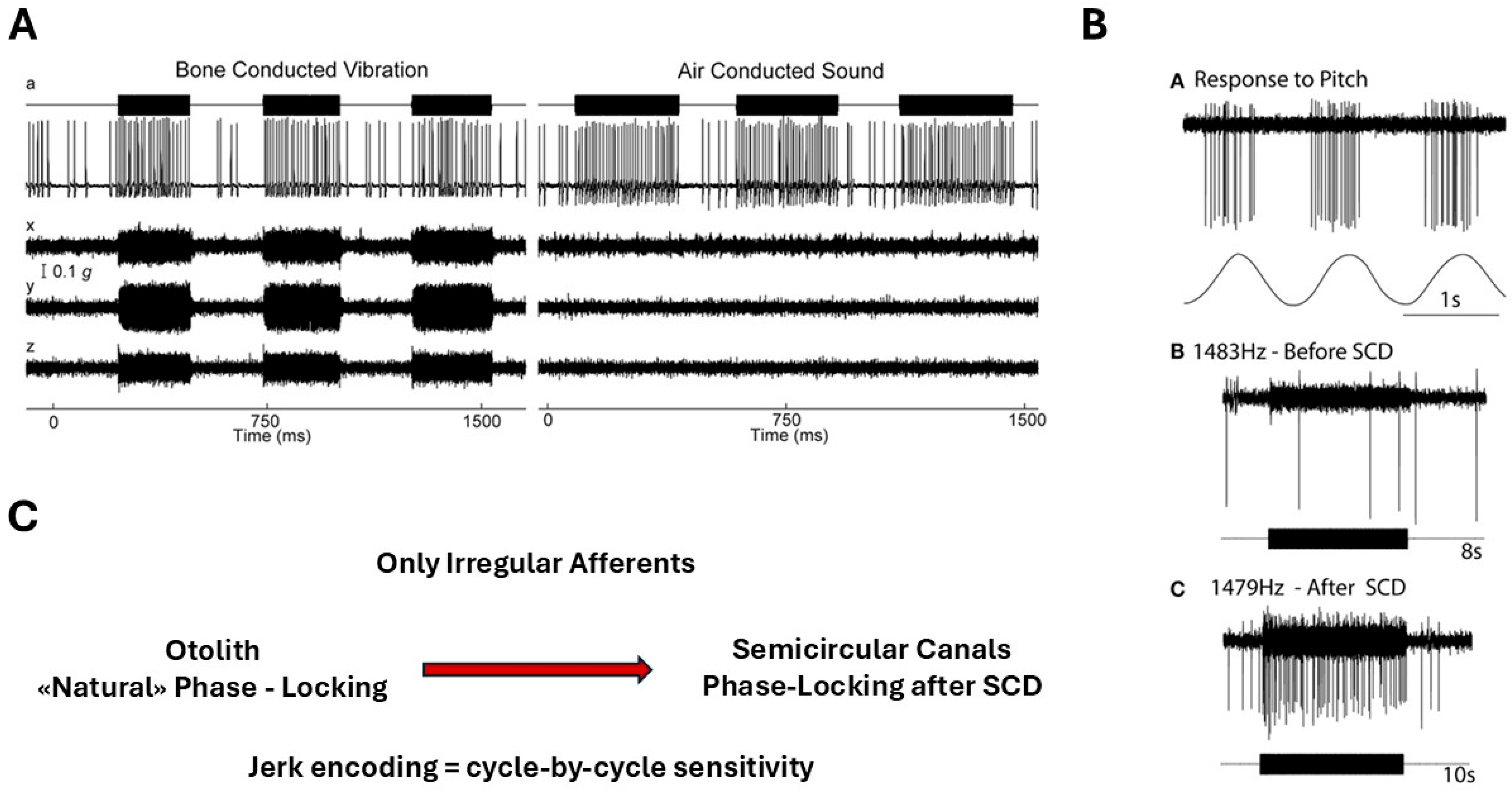
Brief high-frequency (4 kHz) ACS tone bursts can provide a rapid and highly specific functional probe for superior semicircular canal dehiscence (SSCD) [14,34], see Figure 4. In CT-confirmed unilateral SSCD, short 4 kHz bursts reliably evoke large oVEMPs (and often enhanced VEMPs more generally), whereas responses are typically absent in healthy controls at comparable stimulus levels [14,34]. The proposed mechanism is a ‘third-window’ reduction in labyrinthine impedance, which enhances acoustic–vestibular mechanical coupling so that high-frequency, steep-onset (jerk-rich) stimuli can drive irregular canal and otolithic pathways more effectively than in the intact labyrinth [1,2,13,21,33]. Clinically, 4 kHz oVEMPs can complement conventional 500 Hz VEMP protocols to help distinguish third-window physiology from other causes of VEMP enhancement [14,34].

8. A Dual-Channel, Jerk-Centered Framework for Acoustic Vestibular Coding

Putting these strands together, we propose the following conceptual framework for ACS-evoked vestibular responses.
  • Mechanical input. Intense ACS generates pressure waves in the vestibular fluids. Because of anatomical and mechanical specializations, these waves produce local high-frequency fluid velocity and pressure gradients that preferentially deflect hair bundles in the striola and central cristae [1,2,7,18,19,20].
  • Transduction by type I hair cells. In the striola, type I hair cells transduce these fast bundle deflections via rapidly adapting transducer currents and KLV-dominated membranes, emphasizing high-frequency, jerk-rich aspects of the motion [8,14,16,17].
  • Synaptic and afferent filtering. Quantal and non-quantal transmission, combined with phasic spike generation in irregular afferents, further sharpen temporal precision and high-pass characteristics, enabling phase-locked firing to ACS up to kHz frequencies [1,3,5,11,16,22,28].
  • Central processing and reflexes. These irregular afferent signals project to central vestibular neurons that drive short-latency vestibulo-ocular and vestibulo-collic responses, which can be read out as ACS-evoked VEMPs and sound-induced eye movements [5,10,12,14,15,34,36].
In parallel, the regular, extrastriolar/peripheral channel continues to encode sustained head motion and low-frequency acceleration, contributing little to ACS-evoked responses because of its low-pass tuning and lack of strong phase locking at audio frequencies [6,8,10,15,16,17].
Within this dual-channel framework:
ACS is not simply a “cochlear artifact” but a physiologically meaningful vestibular stimulus, particularly for the irregular channel [1,2,3,4,5,11,14,34].
The concept of jerk provides a compact way to capture the essence of what this channel encodes: rapid changes in acceleration arising from high-frequency pressure waves and steep onsets [2,3,5,8,11,15,17,22].

9. Conclusions and Perspectives

Taken together, these data suggest an evolutionary and functional specialization of the two vestibular pathways. In amniotes, type I hair cells paired with calyceal afferents, operating largely through nonquantal and resistive mechanisms, appear optimized for encoding rapid, high-frequency head motion and for generating short-latency reflexes such as the VOR and VsEPs, even in the absence of conventional vesicular release [32]. In contrast, bouton synapses from type II hair cells, relying on quantal glutamatergic transmission, are particularly important for representing slow or tonic components of motion, including the detection of gravity [32]. This framework aligns closely with our dual-channel, jerk-centered view: a striolar/central type I–calyx–irregular pathway acting as a transient, jerk-sensitive channel, running in parallel with an extrastriolar/peripheral type II–regular pathway that preferentially encodes sustained acceleration and static head orientation.
Air-conducted sound can robustly activate the vestibular labyrinth, particularly the otolith organs and, in pathological conditions, the semicircular canals [1,2,3,4,5,6,7,13,14]. This activation is mediated by a highly specialized pathway centered on type I hair cells and irregular afferents in the striola and central cristae. Their biophysical properties—transducer adaptation, KLV-dominated membrane dynamics, fast synaptic transmission, and phasic spike generation—convert ACS-induced fluid pressure waves into precisely timed, high-frequency neural signals [1,3,5,8,11,15,22].
We argue that ACS-evoked vestibular responses are best understood as the output of a jerk-sensitive transient channel running in parallel with the classical low-frequency acceleration channel [2,3,4,5,6,7,8,15,17]. This perspective helps to explain: (i) the prominence of phase locking over rate changes in single-unit responses to ACS [3,4,5,11]; (ii) the sensitivity of VEMP amplitudes/latencies to stimulus frequency and rise-time [5,7,9,11,12,14,15,34,36]; (iii) dramatic sound-evoked ocular responses in third-window syndromes [13,33]; and (iv) the partial dissociation between ACS-evoked tests (VEMPs, sound-induced nystagmus) and low-frequency vestibular tests in clinical practice [1,2,7,14,33].
Future work should aim to quantify how waveform parameters (including rise-time/jerk proxies) map onto afferent timing and threshold across species; refine fluid–structure interaction models for ACS and third-window conditions; clarify central integration of cochlear and vestibular acoustic inputs; and translate these insights into optimized, patient-tolerable stimulus protocols for VEMPs and related tests.

Funding

This research received no external funding.

Institutional Review Board Statement

Not applicable.

Informed Consent Statement

Not applicable.

Data Availability Statement

No new data were created or analyzed in this study. Data sharing is not applicable to this article.

Conflicts of Interest

The author declares no conflicts of interest.

References

  1. Curthoys, I.S.; Grant, J.W. How does high-frequency sound or vibration activate vestibular receptors? Exp. Brain Res. 2015, 233, 691–699. [Google Scholar] [CrossRef]
  2. Curthoys, I.S. The new vestibular stimuli: Sound and vibration—Anatomical, physiological and clinical evidence. Exp. Brain Res. 2017, 235, 957–972. [Google Scholar] [CrossRef]
  3. Curthoys, I.S.; Burgess, A.M.; Goonetilleke, S.C. Phase-locking of irregular guinea pig primary vestibular afferents to high frequency (>250 Hz) sound and vibration. Hear. Res. 2019, 373, 59–70. [Google Scholar] [CrossRef] [PubMed]
  4. McCue, M.P.; Guinan, J.J., Jr. Acoustically responsive fibers in the vestibular nerve of the cat. J. Neurosci. 1994, 14, 6058–6070. [Google Scholar] [CrossRef] [PubMed]
  5. Zhu, H.; Tang, X.; Wei, W.; Mustain, W.; Xu, Y.; Zhou, W. Click-evoked responses in vestibular afferents in rats. J. Neurophysiol. 2011, 106, 754–763. [Google Scholar] [CrossRef] [PubMed]
  6. Lu, Z.; Xu, Z.; Buchser, W.J. Coding of acoustic particle motion by utricular afferents of the sleeper goby, Dormitator latifrons. J. Comp. Physiol. A 2004, 190, 923–938. [Google Scholar]
  7. Curthoys, I.S.; Vulovic, V.; Burgess, A.M.; Cornell, E.D.; Mezey, L.E.; MacDougall, H.G.; Manzari, L. The skull vibration-induced nystagmus test of unilateral vestibular loss. Ann. N. Y. Acad. Sci. 2011, 1233, 231–241. [Google Scholar] [CrossRef]
  8. Eatock, R.A.; Songer, J.E. Vestibular hair cells and afferents: Two channels for head motion signals. Annu. Rev. Neurosci. 2011, 34, 501–534. [Google Scholar] [CrossRef]
  9. Curthoys, I.S.; Vulovic, V.; Sokolic, L.; Pogson, J.; Burgess, A.M. Irregular primary otolithic and canal vestibular neurons show low thresholds to bone-conducted vibration and to air-conducted sound. Brain Res. Bull. 2012, 89, 16–21. [Google Scholar] [CrossRef]
  10. Young, E.D.; Fernandez, C.; Goldberg, J.M. Responses of squirrel monkey vestibular neurons to audio-frequency sound and head vibration. Acta Oto-Laryngol. 1977, 84, 352–360. [Google Scholar] [CrossRef]
  11. Zhu, H.; Tang, X.; Wei, W.; Maklad, A.; Mustain, W.; Rabbitt, R.; Highstein, S.; Allison, J.; Zhou, W. Inputs from semicircular canals to the otolith organs via bone-conducted clicks in rats. J. Assoc. Res. Otolaryngol. 2014, 15, 73–86. [Google Scholar] [CrossRef] [PubMed]
  12. Todd, N.P.M.; Rosengren, S.M.; Aw, S.T.; Colebatch, J.G. Ocular vestibular evoked myogenic potentials (OVEMPS) produced by air- and bone-conducted sound. Clin. Neurophysiol. 2007, 118, 381–390. [Google Scholar] [CrossRef] [PubMed]
  13. Songer, J.E.; Rosowski, J.J. The effect of superior canal dehiscence on cochlear potential in response to air-conducted stimuli in chinchilla. Hear. Res. 2005, 210, 53–62. [Google Scholar] [CrossRef] [PubMed]
  14. Noij, K.S.; Rauch, S.D. Vestibular evoked myogenic potential (VEMP) testing for diagnosis of superior semicircular canal dehiscence. Front. Neurol. 2020, 11, 695. [Google Scholar] [CrossRef]
  15. Jones, S.M.; Subramanian, G.; Avniel, W.; Guo, Y.; Burkard, R.F.; Jones, T.A. Intracellular responses of vestibular afferents to air-conducted sound and vibration and their relation to vestibular evoked potentials. J. Neurosci. Methods. 2002, 118, 23–31. [Google Scholar] [CrossRef]
  16. Songer, J.E.; Eatock, R.A. Tuning and timing in mammalian type I hair cells and calyceal synapses. J. Neurosci. 2013, 33, 3706–3724. [Google Scholar] [CrossRef]
  17. Contini, D.; Holstein, G.R.; Art, J.J. Simultaneous dual recordings from vestibular hair cells and their calyx afferents demonstrate multiple modes of transmission at these specialized endings. Front. Neurol. 2022, 13, 891536. [Google Scholar] [CrossRef]
  18. Uzun-Coruhlu, H.; Curthoys, I.S.; Jones, A.S. Attachment of the utricular and saccular maculae to the temporal bone in humans. Hear. Res. 2007, 233, 77–85. [Google Scholar] [CrossRef]
  19. Xue, J.B.; Peterson, E.H. Hair bundle heights in the utricle: Differences between macular locations and hair cell types. J. Neurophysiol. 2006, 95, 171–186. [Google Scholar] [CrossRef][Green Version]
  20. Pastras, C.J.; Curthoys, I.S.; Asadnia, M.; McAlpine, D.; Rabbitt, R.D.; Brown, D.J. Evidence that ultrafast nonquantal transmission underlies synchronized vestibular action potential generation. J. Neurosci. 2023, 43, 7149–7157. [Google Scholar] [CrossRef]
  21. Songer, J.E.; Rosowski, J.J. The effect of superior canal opening on middle-ear input admittance and stapes velocity in chinchilla. J. Acoust. Soc. Am. 2006, 120, 258–269. [Google Scholar] [CrossRef]
  22. Contini, D.; Price, S.D.; Art, J.J. Accumulation of K⁺ in the synaptic cleft modulates activity by influencing both vestibular hair cell and calyx afferent in the turtle. J. Physiol. 2017, 595, 777–803. [Google Scholar] [CrossRef] [PubMed]
  23. Lindemann, H.H. Anatomy of the Otolith Organs. Adv. Oto-Rhino-Laryngol. 1973, 20, 405–434. [Google Scholar]
  24. Spoon, C.; Moravec, W.J.; Rowe, M.H.; Grant, J.W.; Peterson, E.H. Steady-state stiffness of utricular hair cells depends on macular location and hair bundle structure. J. Neurophysiol. 2011, 106, 2950–2963. [Google Scholar] [CrossRef] [PubMed]
  25. Grant, W.; Curthoys, I. Otoliths—Accelerometer and seismometer; Implications in Vestibular Evoked Myogenic Potential (VEMP). Hear. Res. 2017, 353, 26–35. [Google Scholar] [CrossRef]
  26. McCue, M.P.; Guinan, J.J., Jr. Sound-evoked activity in primary afferents of a mammalian vestibular system. Am. J. Otol. 1997, 18, 355–360. [Google Scholar]
  27. Curthoys, I.S.; Vulovic, V.; Burgess, A.M.; Sokolic, L.; Goonetilleke, S.C. The response of guinea pig primary utricular and saccular irregular neurons to bone-conducted vibration (BCV) and air-conducted sound (ACS). Hear. Res. 2016, 331, 131–143. [Google Scholar] [CrossRef]
  28. Contini, D.; Holstein, G.R.; Art, J.J. Synaptic cleft microenvironment influences potassium permeation and synaptic transmission in hair cells surrounded by calyx afferents in the turtle. J. Physiol. 2020, 598, 853–889. [Google Scholar] [CrossRef]
  29. Palmer, A.R.; Russell, I.J. Phase-locking in the cochlear nerve of the guinea-pig and its relation to the receptor potential of inner hair-cells. Hear. Res. 1986, 24, 1–15. [Google Scholar] [CrossRef]
  30. Contini, D.; Holstein, G.R.; Art, J.J. Simultaneous recordings from vestibular Type I hair cells and their calyceal afferents in mice. Front. Neurol. 2024, 15, 1434026. [Google Scholar] [CrossRef]
  31. Eatock, R.A. Functional development and differentiation of mammalian vestibular hair cells and their synapses. Curr. Top. Dev. Biol. 2025, 165, 235–306. [Google Scholar] [CrossRef] [PubMed]
  32. Zhou, D.; Yu, Z.; Kodama, T.; Schoo, W.; du Lac, S.; Glowatzki, E.; Sadeghi, S.G. Functional contributions of quantal and non-quantal hair cell synaptic transmission in the vestibular periphery. bioRxiv 2025. [Google Scholar] [CrossRef]
  33. Curthoys, I.S.; Manzari, L. A simple specific functional test for SCD: VEMPs to high frequency (4000 Hz) stimuli—Their origin and explanation. Front. Neurol. 2020, 11, 612075. [Google Scholar] [CrossRef]
  34. Manzari, L.; Burgess, A.M.; McGarvie, L.A.; Curthoys, I.S. An indicator of probable semicircular canal dehiscence: Sustained torsional nystagmus elicited by bone-conducted vibration or by loud sound at high frequencies. Otolaryngol. Head Neck Surg. 2013, 149, 142–145. [Google Scholar] [CrossRef]
  35. Weber, K.P.; Rosengren, S.M.; Michels, R.; Sturm, V.; Straumann, D.; Landau, K. Single motor unit activity in human extraocular muscles during the vestibulo-ocular reflex. J. Physiol. 2012, 590, 3091–3101. [Google Scholar] [CrossRef]
  36. Curthoys, I.S.; Grant, J.W.; Burgess, A.M.; Pastras, C.J.; Brown, D.J.; Manzari, L. Otoliths as accelerometers and seismometers: A review. Front. Neurol. 2018, 9, 366. [Google Scholar]
  37. Suzuki, J.I.; Tokumasu, K.; Goto, K. Eye movements from single utricular nerve stimulation in the cat. Acta Oto-Laryngol. 1969, 68, 350–362. [Google Scholar] [CrossRef]
Figure 1. Dual-receptor organization of vestibular sensory epithelia: type I versus type II hair cells. Schematic comparison of the two vestibular hair-cell phenotypes and their primary afferent terminals. Type I hair cells (left) are flask-shaped receptors typically enveloped by a large calyx afferent ending, creating a restricted synaptic cleft that supports rapid signaling via combined quantal and non-quantal mechanisms and is characteristic of striolar/central, irregular pathways. Type II hair cells (right) are more cylindrical receptors contacted predominantly by bouton terminals, forming the main substrate of extrastriolar/peripheral, regular pathways optimized for sustained, low-frequency head-motion encoding. Hair bundles (stereocilia with the kinocilium) project into endolymph at the apical surface; both cell types sit on the basement membrane.
Ohbm 07 00005 g001
Figure 2. Regional specialization of the otolith maculae and the striola (schematic). (a) Macula sacculi and (b) macula utriculi illustrating the marked zonal heterogeneity of the otolith organs. Across each macula, Lindeman depicts regional differences in: thickness of the statoconial (otoconial) crystal layer, statoconia size, organization of the gelatinous component, hair-bundle morphology, size/density of sensory cells, distribution of type I versus type II hair cells, nuclear positioning within the epithelium, and caliber of afferent fibers. A key feature is the striolar specialization, including the polarity reversal across the striola and distinctive hair-bundle/gelatinous architecture, with channel-like clearings in the gelatinous layer around bundles—features that may facilitate direct local fluid/pressure-driven bundle deflection and thereby support the high-pass, transient (jerk-rich) sensitivity of striolar type I–calyx pathways. Adapted with permission from Lindeman (1973) [23].
Ohbm 07 00005 g002
Figure 3. Regional distribution of the otoconial layer and the striolar zone in the human otolith maculae (schematic). (a) Utricular macula showing the regional distribution of the otoconial layer and the location of the striolar zone (S) relative to surrounding extrastriolar regions (orientation: ant., post., lat., med.). (b) Saccular macula showing the regional distribution of the otoconial layer and the location of the striolar zone (S) relative to surrounding extrastriolar regions (orientation: sup., inf., ant., post.). In both maculae, the striola represents a distinct central zone compared with extrastriolar areas, consistent with regional differences in mechanical coupling of hair bundles to the otoconial membrane and a substrate for transient/high-frequency sensitivity. Adapted with permission from Lindemann (1973) [23].
Ohbm 07 00005 g003
Figure 4. Phase locking of irregular vestibular afferents during high-frequency stimulation and restoration after a third-window lesion. (A) Utricular irregular afferent: example response of a utricular irregular neuron to 500 Hz bone-conducted vibration (BCV). The neuron does not fire on every stimulus cycle, but spikes occur within a narrow band of phase angles, demonstrating highly precise phase locking. (B) Anterior semicircular canal irregular afferent after superior canal dehiscence (SCD): before SCD, the afferent shows no response to high-frequency air-conducted sound (ACS); after SCD, the same neuron exhibits strong cycle-by-cycle phase-locked firing, consistent with enhanced mechanical coupling between acoustic stimulation and canal mechanics. (C) Schematic summary comparing phase locking in irregular otolith versus canal afferents: otolith irregular afferents naturally phase-lock to high-frequency BCV, whereas canal afferents typically require a third-window mechanism (e.g., SCD) to show comparable phase locking to ACS. Together, these behaviors support the concept that irregular vestibular afferents function as high-speed detectors of jerk-rich transients with millisecond temporal precision. Adapted from Curthoys and colleagues, with permission.
Ohbm 07 00005 g004
Disclaimer/Publisher’s Note: The statements, opinions and data contained in all publications are solely those of the individual author(s) and contributor(s) and not of MDPI and/or the editor(s). MDPI and/or the editor(s) disclaim responsibility for any injury to people or property resulting from any ideas, methods, instructions or products referred to in the content.