You are currently viewing a new version of our website. To view the old version click .
Urban Science
  • Article
  • Open Access

9 December 2025

“Anti-Gravity Tourism Planning”: An Analytical Approach to Manage Tourism Congestion, Seasonality and Overtourism


and
Department of Engineering, University of Basilicata, 85100 Potenza, Italy
*
Author to whom correspondence should be addressed.

Abstract

Tourism today represents a strategic engine of economic growth, contributing substantially to GDP, employment, and export revenues. Accounting for approximately 10% of global GDP, the sector plays a significant role in tourism-intensive countries. Tourism has shown remarkable resilience and recovery capacity in the post-COVID era, reaffirming its status not only as an economic sector but also as a spatial phenomenon. Due to its inherent place-based nature, tourism cannot be outsourced: it relies on the unique cultural, environmental, and territorial assets of specific locations. While this makes tourism a powerful driver of local development, it also presents challenges related to environmental stress, cultural commodification, and social tensions, especially in over-visited destinations such as Venice, Barcelona, or Lisbon. This paper introduces the concept of “anti-gravity tourism”, a novel framework inspired by physics, to describe planning strategies aimed at counteracting the gravitational pull exerted by mass tourism hotspots. Using the STESY model, the study applies spatial analysis to four case study areas, identifying Destination Areas (DAs) through clustering techniques and developing spatial design proposals aligned with the principles of the New Urban Agenda (NUA). The results highlight how “anti-gravity” strategies can be operationalized through context-sensitive planning tools to mitigate overtourism, support territorial equity, and maximize positive externalities. Ultimately, the paper argues for a paradigm shift towards tourism policies that ensure long-term sustainability by balancing economic growth with social inclusion and environmental stewardship.

1. Introduction

Today, tourism stands as a pivotal engine of economic growth in many countries, contributing significantly to gross domestic product (GDP), employment, and export revenues. Recent data analyzed by the World Travel & Tourism Council [1] show that the travel and tourism sector accounts for about 10% of global GDP and supports roughly one in ten jobs worldwide [2]. In Europe, analyses of multiple countries over several decades reveal a long-term cointegrated relationship between tourism growth and economic performance: during non-crisis periods, increases in tourist arrivals and tourism receipts stimulate national incomes and employment [3]. As an evidence, tourism functions not merely as a service industry, but as a strategic sector crucial to economic growth. Concerning crises periods, tourism faced dramatic disruption during the COVID-19 pandemic [4], along with nearly all other economic sectors [5,6]. In terms of recovery capacity, the sector distinguished itself by rebounding more rapidly, showing an unusual resilience and adaptation potentials [7]. Despite being highly labor-intensive and heavily impacted by travel restrictions, the sector recovered quickly (the paper shows that in the analyzed case studies arrivals and overnight stays approaching pre-COVID levels just three years after the breaking down), highlighting a critical role in supporting local economy and generating spatial transformations (land uses, urban functions, environmental/cultural values exploitation, etc. Tourism can be understood as a place-based economy. Unlike digital industries, it cannot be outsourced or delocalized, since its value is inherently tied to the uniqueness values of specific locations, their cultural heritage, and environmental resources [8]. This spatial anchoring makes tourism both a powerful driver of local development and a sector that requires careful management to balance growth with long-term sustainability. Therefore, we consider tourism as a spatial phenomenon in the perspective of urban studies approach. Affirming that it is an important factor in local socio-economic development, representing a key driver of socio-economic development in host destinations [9,10] we may refer to tourism externalities as positive multiscale effects on economic systems but also potential pressure on local environmental and anthropic systems. In facts, it generates business opportunities, income, and jobs, particularly when visitors rely on local accommodations, restaurants, and cafés [11] and it creates stronger links with the local economy and spreads its benefits more widely across the community [12]. Alongside direct jobs, the sector generates a wide range of indirect externalities, from investments in mobility infrastructure, to support the valorization of cultural heritage, stimulate local entrepreneurship, and create infrastructure that benefits both visitors and residents [9,13,14]. In several former industrial cities—such as Bilbao—tourism has been a key factor in economic regeneration [15] shaping brand new trajectories for urban development in post-industrial cities facing degrowth and crisis. It represents a lesson orienting policy maker across Europe to increasingly target urban development strategy towards tourism-based development actions [16]. Tourism inevitably is a driver for territorial transformations processes in a continuum under-the-surface process where huge transformations often require specific urban planning actions (localization agreement, urban regeneration plans, protection acts for sensible heritage, etc.) but micro ones (the majority of local effects defining local chains of tourism supply) mainly run unplanned and boosted by digital platform more than traditional systems. Such micro-scale interventions range from the generalized reuse and valorization of underexploited real estate to the overexploitation of cultural and environmental assets. What might appear as isolated adjustments could accumulate into significant structural change, altering the balance between local needs and global visitor demand. In this case a gravitational territorial effect emerges in concentrating tourism value chains on localized major destinations. Yet in destinations where mass tourism has expanded rapidly, like Barcelona or Lisbon, the downsides have become visible [17]. Here the lesson is simple: growth alone is not enough. Once visitor flows exceed tourism supply carrying capacity [18], the economic, social, and physical pressures on cities can outweigh the benefits, creating new challenges for local communities and stakeholders.
Overtourism has emerged as a critical challenge in contemporary tourism, referring to the excessive concentration of visitors in specific destinations [19,20]. This phenomenon often leads to environmental pressures, erosion of cultural authenticity, and social tensions. Cities such as Venice, Barcelona, and Dubrovnik illustrate these impacts, facing increased pollution, rising housing costs driven by short-term rentals, and growing friction between local residents and tourists [21,22]. Seasonality further amplifies the challenges of tourism by generating economic instability and placing excessive demand on infrastructure during peak periods, while leaving businesses and workers exposed during quieter months [23,24,25]. Seasonal fluctuations affect employment, overburden local resources and lead to inefficient use of urban infrastructure [26]. Addressing these issues requires sustainable management strategies that balance visitor flows with the long-term economic, social, and environmental health of destinations. The patterns highlight the spatial and temporal imbalances inherent in tourism systems, requiring specific planning tools and effective management approach to ensure that destinations remain both attractive and sustainable.
Against those (unplanned) gravitational processes, recent tourism development policies had been oriented to counterbalance tourism effects toward minor destinations and inner areas. We refer to those adopted in Portugal—where Porto authorities have restricted new short-term rentals to underutilized neighborhoods as part of urban regeneration efforts [27] or Italy’s PNRR attractiveness program (https://www.italiadomani.gov.it/it/Interventi/investimenti/attrattivita-dei-borghi.html (accessed on 1 February 2025)), which promotes small towns to improve attractiveness providing incentives to enhance the appeal of underdeveloped areas. The initiatives aim to relieve pressure on overcrowded tourist destinations by promoting lesser-known areas, thereby distributing visitor flows more evenly and supporting a more sustainable balance of tourism demand. In the view of this paper, we define this policymaking effort under the overall concept of anti-gravitation of tourism development. It represents a tentative concept derived from physics, allowing us to define operatively through robust methodology application (STESY) and case studies analysis a sustainable perspective to handle tourism planning in a specific tourism destination area.
The concept of “anti-gravity” in physics [28,29,30], which explores hypothetical forces capable of neutralizing or reversing the gravitational pull between matter and antimatter, offers an interesting metaphor to define the research for more sustainable tourism development trajectories in local policymaking [31]. In this context, the most crowded tourist areas generate a sort of “gravitational field” that attracts the majority of visitors, creating congestion, overexploitation, and pressure on local resources. The “anti-gravity tourism” approach acts as a counterforce, redistributing flows toward less-visited areas and rebalancing the tourism system. Similarly to physics experiments that research for unconventional components of gravity, spatial analysis allows us to identify high-density nodes and design targeted interventions to mitigate the negative effects of “tourist gravitation,” promoting more sustainable and widespread use of the territory
In this study, the “anti-gravity tourism” refers to strategies aimed at mitigating the excessive concentration of visitors in traditional hotspots by redistributing tourist flows across a destination. It seeks to “lift” tourism away from saturated areas, balancing visitor pressure, reducing congestion, and promoting underexplored sites, ultimately contributing to more sustainable and resilient tourism systems.
From a territorial perspective, we propose it as representative of a territorial system configuration expressing a balanced distribution of the tourism phenomenon, aimed at redistributing positive impacts and externalities while mitigating congestion effects across different territorial scales. This article is structured to present both the conceptual framework and the applied methodology of tourism spatial analysis using the STESY model and orienting territorial design proposal to New Urban Agenda (NUA) [32] compliance.
The analytical part of the paper describes the application of the STESY model to four distinct case study areas, with the aim of defining a spatial assessment of tourism ecosystems through a data-driven approach. After the identification of Destination Areas (DAs) through spatial clustering techniques obtaining the territorial articulation of tourism supply in each case study area. Thereafter we interpreted through the lens of the NUA principles the design phase in each case downscaling NUA design approach to translate global sustainability principles into context-specific strategies. In the result section, the comparison of these case studies allows us to operatively highlight the evidences of anti-gravity approach in planning tourism issues and identify potential design strategies grounded sustainable development vision. Conclusions propose a critical reflection on how anti-gravity concept could represents a way to classify a global effort in ensuring tourism sustainability through the definition of anti-gravitational tourism development strategies, designed to mitigate excessive tourism pressure and promote more balanced and sustainable local development trajectories.

2. Materials and Methods

The methodological framework of this study is based on the STESY framework methodology by Gatto et al. [33] oriented to define a spatial assessment of tourism ecosystems based on a data driven approach. We compared four case study areas in order to highlight main tourism issues and potential design strategies based on NUA principles.
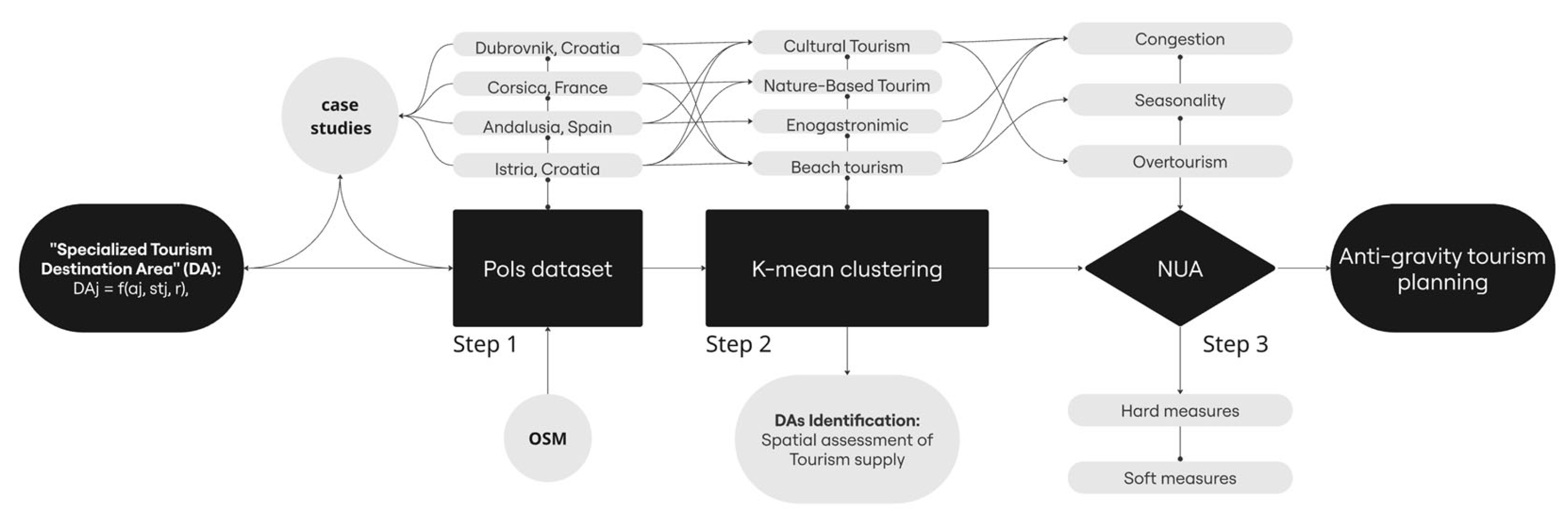
Figure 1 describes the methodological steps. In a first step, Points of Interest (PoIs) was selected according to STESY taxonomy and the specific tourism value chains recognized in the case studies area. Data were retrieved mainly from OpenStreetMap and open-source data services available in each case study area at national or local level, with a focus on services and facilities relevant to tourism, while tourist attractors were integrated from national and local sources such as heritage registers, cultural databases, and municipal inventories. To contextualize the individual case studies, complementary statistical information was collected from the national statistical office and local statistical portals.
Figure 1. Methodological workflow.
In a second step, the georeferenced dataset was organized and classified according to the STESY model, which provides a standardized framework to capture the specific value chains of tourism and ensures comparability across territorial contexts. This categorization allowed for a coherent interpretation of the functional role of services and attractors within the tourism system. Subsequently, the identification of Destination Areas (DAs) was carried out through spatial clustering techniques. Through K-mean clustering, local clusters of functionally interrelated PoIs based on Euclidian proximity were identified and validated as Destination Areas, thus reflecting the territorial articulation of tourism supply within each case study. Finally, the identified DAs were interpreted through the lens of the New Urban Agenda, applying a downscaling approach to translate global principles of sustainability into context-specific strategies. The results are reported in terms of local anti-gravitational tourism development strategies, aimed at mitigating excessive tourism pressure and promoting more balanced and sustainable local development trajectories.
Four case studies were selected representing different territories characterized by different tourism specializations: European coastal and island destinations with diverse yet comparable tourism characteristics Dubrovnik (Croatia) and Istria (Croatia), Corsica (France), and Andalusia (Spain). These destinations were selected as representative of different tourism systems where externalities, depending on gravitational effects of tourism flows, are coherent with major concerns remarked in tourism sustainable development debate: Congestion, Seasonality and Overtourism. Additionally, the tourism specializations are important both for the analytical phase of the research and for the design steps. The four case studies allowed to investigate: Nature based tourism, enogastronomic tourism, beach tourism and cultural tourism. This methodological framework allows to assess tourism supply in a spatial dimension that goes beyond administrative boundaries and official statistical unit focusing on local tourism territorial values and local tourism services facilities organization. The DA represents the finest unit of tourism supply in a territorial system. The STESY model provides a conceptual framework designed to examine specialized tourism phenomena, with particular attention to their spatial and territorial dimensions. It operates as a taxonomy that allows the systematic classification and organization of knowledge, thereby supporting the analytical process from the early stage of territorial mapping to the formulation of strategic decision-making tools. The model adopts a hierarchical perspective in which specialized tourism is structured into three analytical scales: the Specialized Tourism Ecosystem, the Specialized Tourism System, and the Specialized Destination Area (DAj). The latter constitutes the fundamental unit for interpreting the territorial organization of tourism supply. A DAj is defined by the functional and spatial configuration of the local tourism system. This implies that a single destination area may extend across several municipalities, while in other contexts multiple destination areas can coexist within the limits of one municipality. The analytical definition of a DAj rests on the interrelation between attractors, services, and reachability, expressed as:
DAj = f(aj, sj, r)
Attractors (aj) comprise the physical points of interest that generate flows, such as UNESCO World Heritage sites, historic settlements, or environmental resources recognized at national and international levels. Services (sj) refer to the facilities that sustain the tourism supply chain, including accommodation and catering establishments, each with specific locational attributes. Reachability (r) concerns the infrastructural and organizational systems that determine accessibility to the destination, such as transport hubs, mobility networks, or parking facilities. A distinctive feature of the STESY model is the introduction of the specialization parameter (j), which identifies the prevailing tourism orientation of a given destination, whether cultural, gastronomic, nature-based, or otherwise. This categorization makes it possible in deep understanding of the relationships among functional sub-regions, providing insights into how different territorial components interact within the broader tourism system.

2.1. Step 1: PoIs Dataset and Case Studies

The first step in the application of the STESY model consists of the systematic collection and classification of territorial data for each selected case study. This phase is crucial for identifying the structural components of the tourism supply system (attractors, services, and reachability), and for assessing their spatial distribution and interrelations within the destination area. The four case studies—Corsica, Andalusia, Istria, and Dubrovnik—were chosen because they represent distinct territorial contexts and tourism specializations, allowing for a comparative analysis across different spatial configurations. The data were obtained through the integration of official statistics, local tourism agency portal, OpenStreetMaps, and were organized according to the taxonomy proposed by the STESY framework. By structuring the information in this way, it is possible to highlight the specific features of each destination while maintaining a consistent analytical approach that facilitates cross-case comparison

2.1.1. Dubrovnik, Croatia

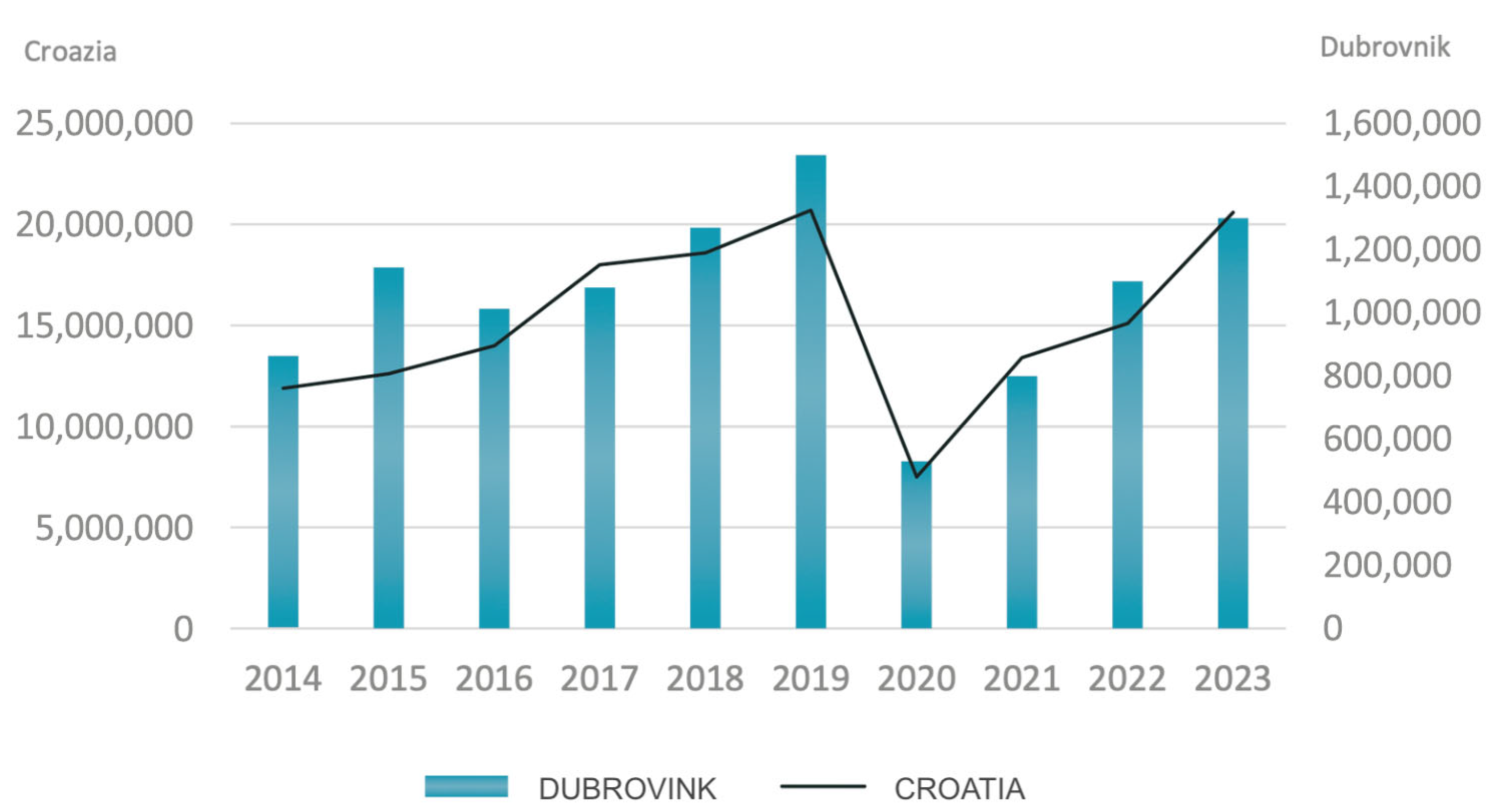
Dubrovnik is among Croatia’s most visited destinations, showing consistent growth in tourist arrivals until 2019, followed by a sharp decline in 2020 due to COVID-19 travel restrictions. Since 2021, visitor numbers have gradually increased, approaching pre-pandemic levels by 2022–2023, signaling a recovery of international appeal (Figure 2).
Figure 2. National and local (Dubrovnik) Tourism arrivals from 2014 to 2023. Elaboration of Croatia National Tourism Statistical data. Source data: https://www.htz.hr/en-GB/tourism-information/tourism-analysis/ (accessed on 1 February 2025).
Trends in overnight stays follow a similar pattern, with a strong expansion of hotel and other accommodation bookings before 2020 and a progressive recovery afterward (Figure 2). Tourism in Dubrovnik is highly seasonal: summer months (June–September) account for the majority of visits, while winter months (November–February) see minimal tourist presence, highlighting the city’s dependence on summer tourism. The analysis of accommodation facilities shows that the majority of type of stay, around 55%, is hotels. Apartments represent the second most common option with 35% of total accommodation availability. Campsites and hostels are smaller share of accommodation typology (7%), while only 3% are alternative forms of lodging. These data suggest that Dubrovnik’s tourism profile is largely oriented toward travelers seeking mid-to-high levels of comfort. When considering the typologies of tourism practiced, cultural tourism emerges as the predominant form, with approximately 40 percent of PoIs over the total amount of attractions. This is closely followed by beach tourism, around 35 percent, which highlights the strong maritime appeal of the city in addition to its cultural heritage. Overall, the city presents a tourism offer that integrates history, culture, and maritime resources. Cultural attractions such as historical sites, museums, monuments, castles, and religious buildings coexist with seaside tourism characterized by beaches and water-based recreational activities including kayaking, snorkeling, jet skiing, and coastal walks (https://croatia.hr/it-it, accessed on 1 February 2025).

2.1.2. Corsica, France

Tourism is a key economic sector for Corsica, an island renowned for its natural landscapes, beaches, and cultural heritage. Accommodation data show that campsites are more frequented than hotels and other collective facilities, reflecting a strong appeal of outdoor tourism. Passenger transport has steadily increased, with maritime traffic playing a significant role in supporting tourism growth.
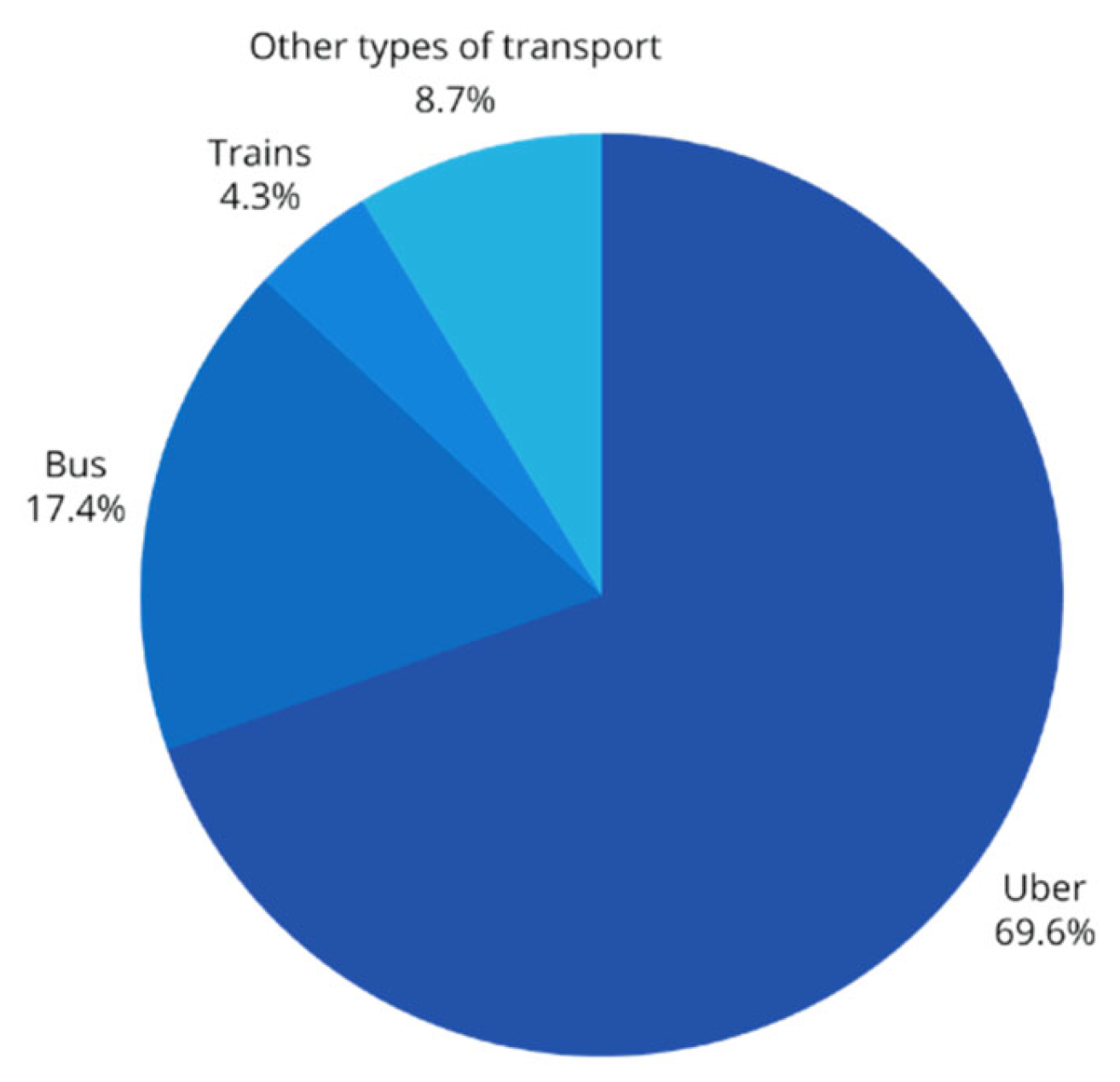
Tourist mobility relies heavily on ride-sharing services (60.6%) and buses (17.4%), with limited use of trains and other public transport, suggesting gaps in the public transport network (Figure 3). Accommodation demand peaks in summer months (June–August), underlining strong seasonality. The initial survey of the study area reveals that more than half of the identified attractors (54%) correspond to beaches. This confirms the predominance of seaside tourism over other forms of tourism, such as nature-based or inland attractions. The spatial distribution of POIs classified according to the STESY taxonomy highlights a strong concentration along the coastline, especially near beaches, forming a continuous line of tourism resources. In contrast, the inner of the island shows a more fragmented and uneven presence of points of interest, suggesting a weaker integration of inland areas within the overall tourism system.
Figure 3. Types of transport chosen by tourist. Personal elaboration of data INSEE of 2023 (Institut national de la statistique et des études économiques).

2.1.3. Andalusia, Spain

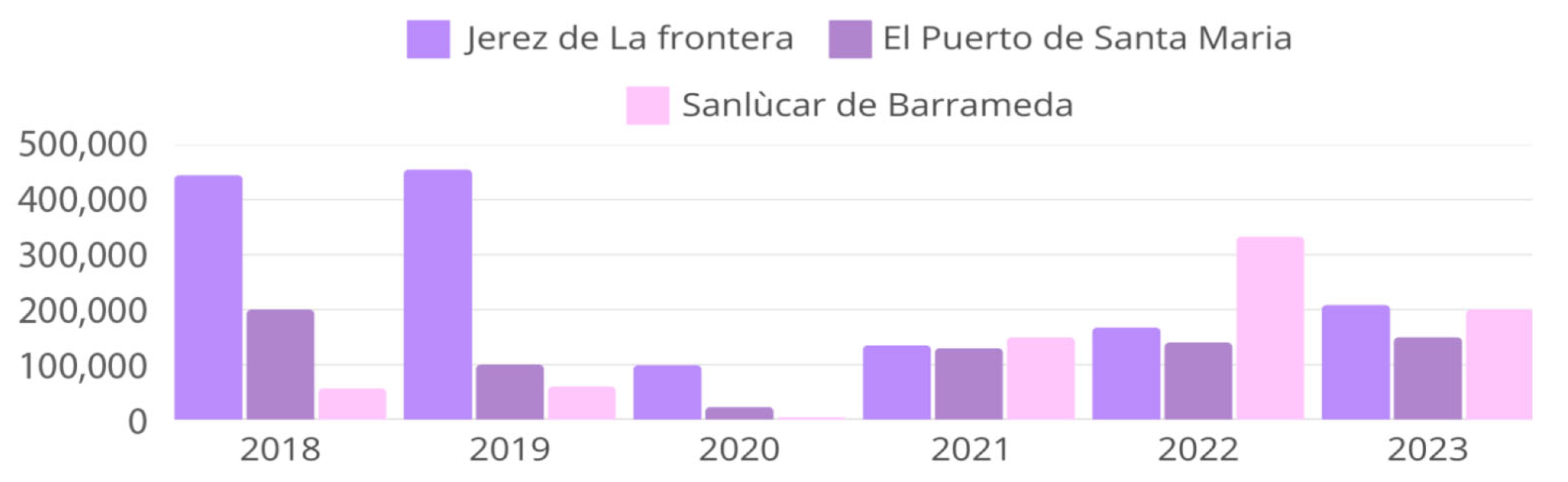
This case study examines the area encompassing cities of Jerez de la Frontera, El Puerto de Santa María, and Sanlúcar de Barrameda, in southern Spain. The study area is internationally recognized for its winemaking tradition, which plays a central role in the local economy and shapes a distinctive form of tourism. Collectively, the three cities account for 0.70% of the national tourism system, within the 3% contribution of the province of Cádiz and the 13% of Andalusia. Passenger flows through Jerez Airport have shown steady growth, reaching approximately 200,000 travelers (www.turismojerez.com, accessed on 20 March 2025). Nonetheless, air transport does not represent the main access mode, as road transport dominates: around 87% of visitors reach the area by car, confirming the importance of terrestrial mobility for regional connectivity. Accommodation capacity has also expanded in recent years, with Jerez providing nearly 40,000 available beds, which—together with facilities in El Puerto and Sanlúcar—contributes to more than 115,000 recorded overnight stays. Visitor numbers in Jerez alone exceeded 400,000 in 2018–2019, before declining sharply due to the COVID-19 crisis. Since 2021, demand has shown signs of recovery across the three cities, although the distribution of visitors has shifted. Sanlúcar now emerges as the leading destination, welcoming about 320,000 winery-related tourists in 2022, indicating a partial reconfiguration of flows within the area (Figure 4). The collection of data points out to a significant prevalence of services, representing 73 percent of the identified POIs. Among these, traditional bars and restaurants account for 79 percent, underlining the central role of eno-gastronomy in the local tourism experience. Cultural and religious heritage also play an important role within the category of attractors. Additionally, 46 percent of the main attractions are associated with wineries, confirming the strategic importance of wine production and enotourism for the region.
Figure 4. The figure shows the annual number of tourists visiting wine-related attractions (bodegas). Personal elaboration of municipal data. Sources: www.turismojerez.com, www.elpuertodesantamaria.es, https://sanlucarinformacion.es/, accessed on 1 February 2025.

2.1.4. Istria, Croatia

Croatia overall has experienced rapid tourist development, ranking among Europe’s top ten destinations in 2024. Coastal areas and islands, particularly the Dalmatian coast and Istrian peninsula, attract most visitors, combining natural and cultural attractions.
Tourism infrastructure and services are concentrated along these main coastal nodes, highlighting the spatial centrality of seaside areas.
This spatial pattern underscores the predominant role of coastal regions in structuring tourism facilities and transport systems. According to Eurostat statistics (https://ec.europa.eu/eurostat/data/database, accessed on 1 February 2025), the examination of overnight stays between 2020 and 2023 indicates a clear concentration of tourist flows during the summer months (June–August), with a marked reduction in activity throughout the winter period (November–February). The region’s heritage constitutes a major attractor, including archeological sites, historic towns, and natural landscapes that are central to its tourism identity. These are complemented by a dense network of services, ranging from accommodation and food establishments to transport facilities and experiential activities. The role of reachability is also crucial, as transport infrastructure determines the accessibility of the main POIs. Institutions such as museums and art galleries, alongside seaside resorts and archeological areas, emerge as pivotal in shaping both the tourism offer and the preservation of Istria’s cultural and natural identity.
According to data from the Croatian Bureau of Statistics, Istria accounted for nearly 30% of all overnight stays in Croatia in 2023, with approximately 29 million recorded visits and an average stay of 6.4 nights. Despite this robust performance, tourism in Istria remains highly seasonal over 70% of arrivals occur between June and August and inland areas face limited accessibility and service density.

2.2. Step 2: K-Mean Cluster Analysis

Using the GeoDa 1.22.0.10 software [34,35,36], a cluster analysis was conducted to identify the Destination Areas of the four case study areas. The resulting clusters can be interpreted as gravitational sub-areas, capturing the spatial concentration of tourism activities and the interactions among destinations. These sub-areas highlight localized intensity as well as functional linkages, providing insights into the spatial organization of tourism within each case study.

2.2.1. Dubrovnik, Croatia

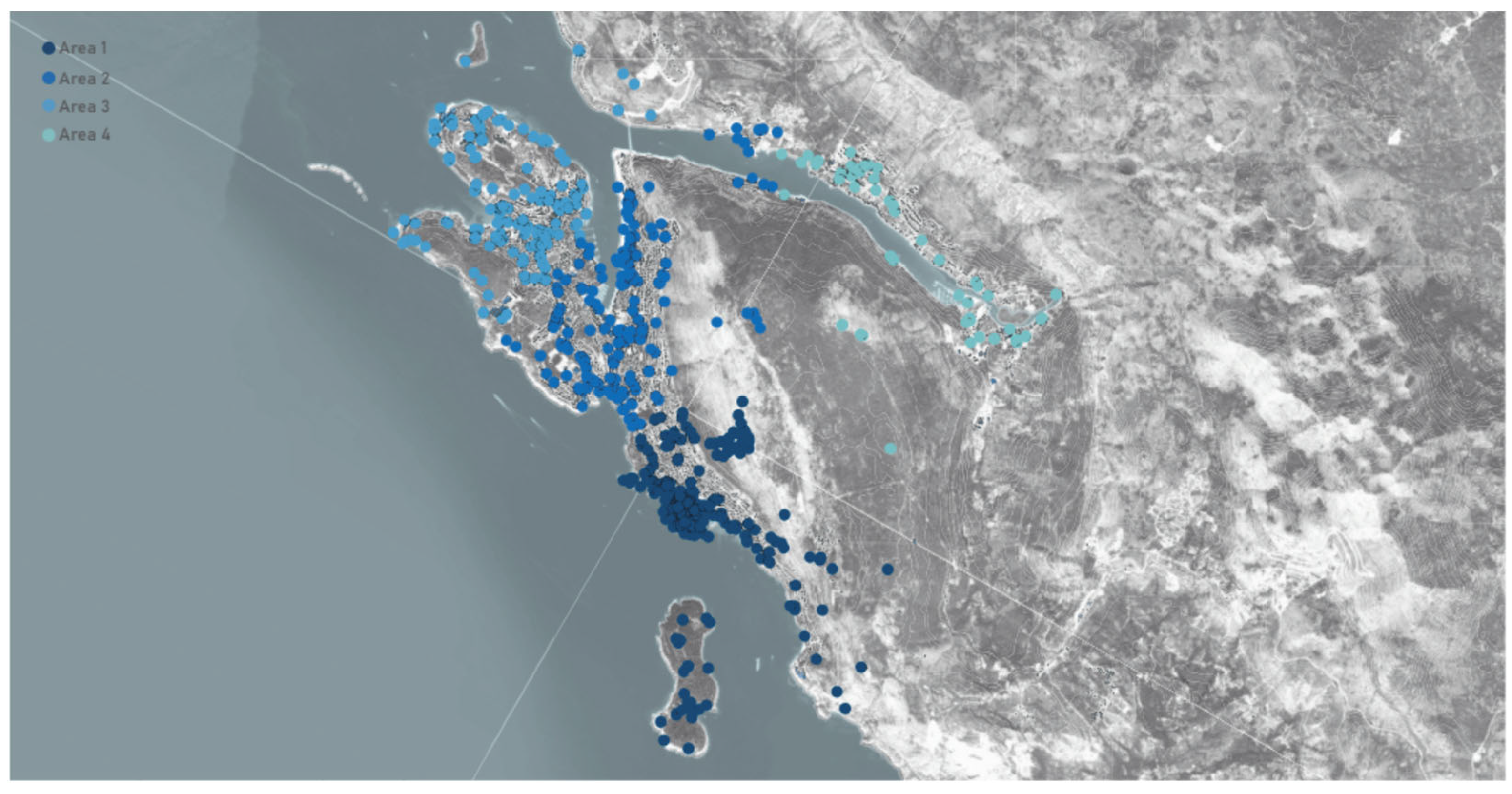
The analysis identified four Destination Areas (DAs) with distinct distributions of services, attractions, and accessibility (Figure 5). Area 1 DA is the core of Dubrovnik’s tourism, with the highest concentration of services (178) and attractions (91), including panoramic points, memorials, and beaches. Its dense distribution generates significant overcrowding during peak seasons. Area 2 DA offers a more balanced model, with 95 services and 26 attractions, supported by 74 infrastructure points, allowing for a less crowded, practical tourism experience. Area 3 DA combines 76 services and 38 attractions with 41 transport points, emphasizing natural and scenic appeal while maintaining moderate tourist density. Area 4 DA is the least developed, with only 18 services and 7 attractions; although reachability is adequate (26 infrastructure points), low element density limits tourist pressure and appeal. Overall, tourism impacts are closely linked to the density and distribution of services and attractions, with concentrated areas experiencing higher pressure and dispersed areas providing more balanced experiences.
Figure 5. Study area with Destination areas identification: Area 1, Area 2, Area 3, Area 4.

2.2.2. Corsica, France

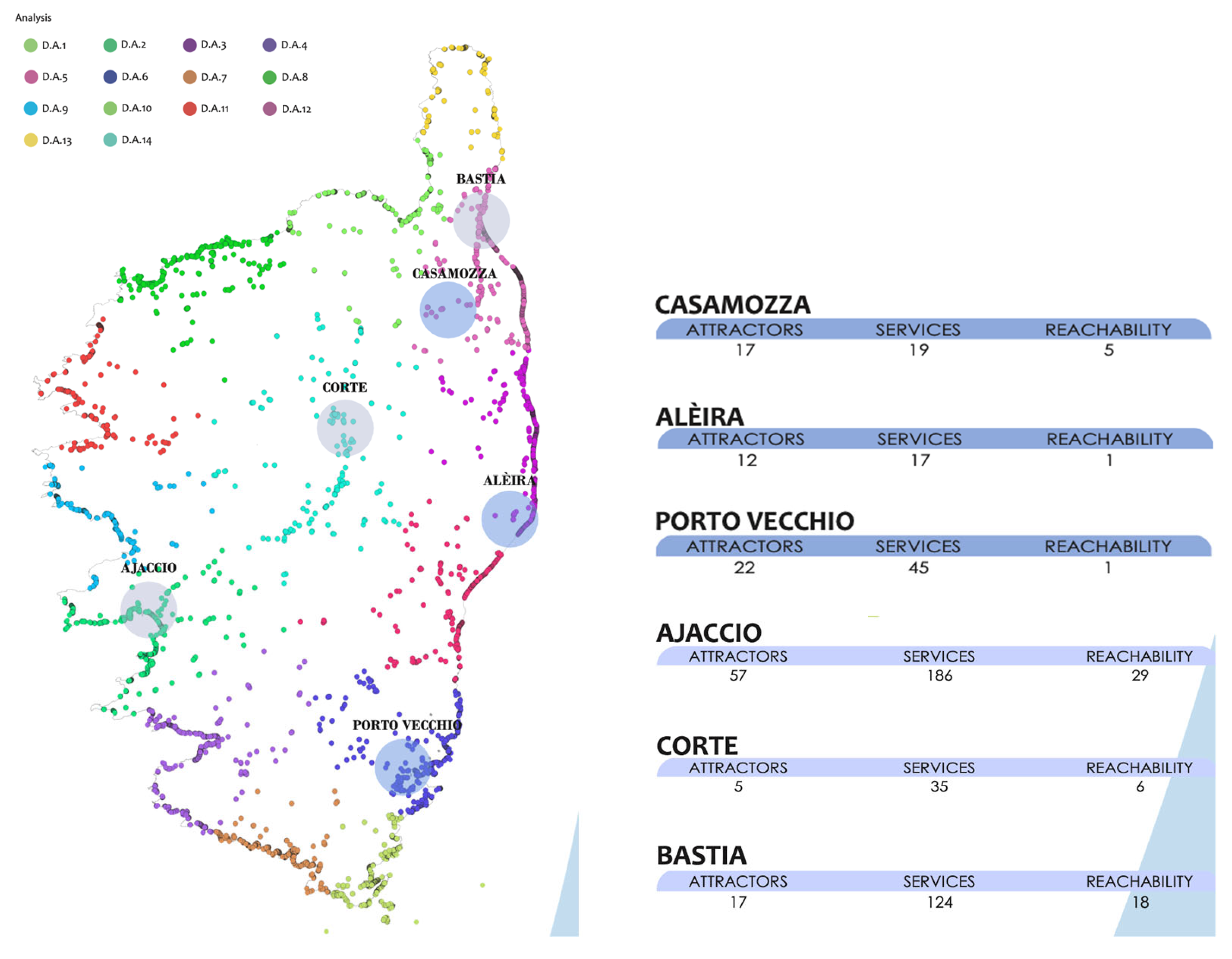
Among the 14 identified Destination Areas (Figure 6), a comparison was carried out focusing on structural weaknesses across the components of attractors, services, and reachability. It emerges that the communities of DA Aleira and DA Porto Vecchio exhibit the lowest levels of reachability, despite the cluster’s population size. In contrast, DA Ajaccio stands out for having the highest number of services and reachability points and attractors. In contrast, DA Bastia displays a well-developed structure of services and reachability relative to the number of attractors. Except for the DA of Corte, there is a clear and widespread tendency for the elements to be densely concentrated near the coast.
Figure 6. Study area with Destination areas identification and evaluation. Structural comparison of 14 Destination Areas based on attractors, services, and reachability.

2.2.3. Andalusia, Spain

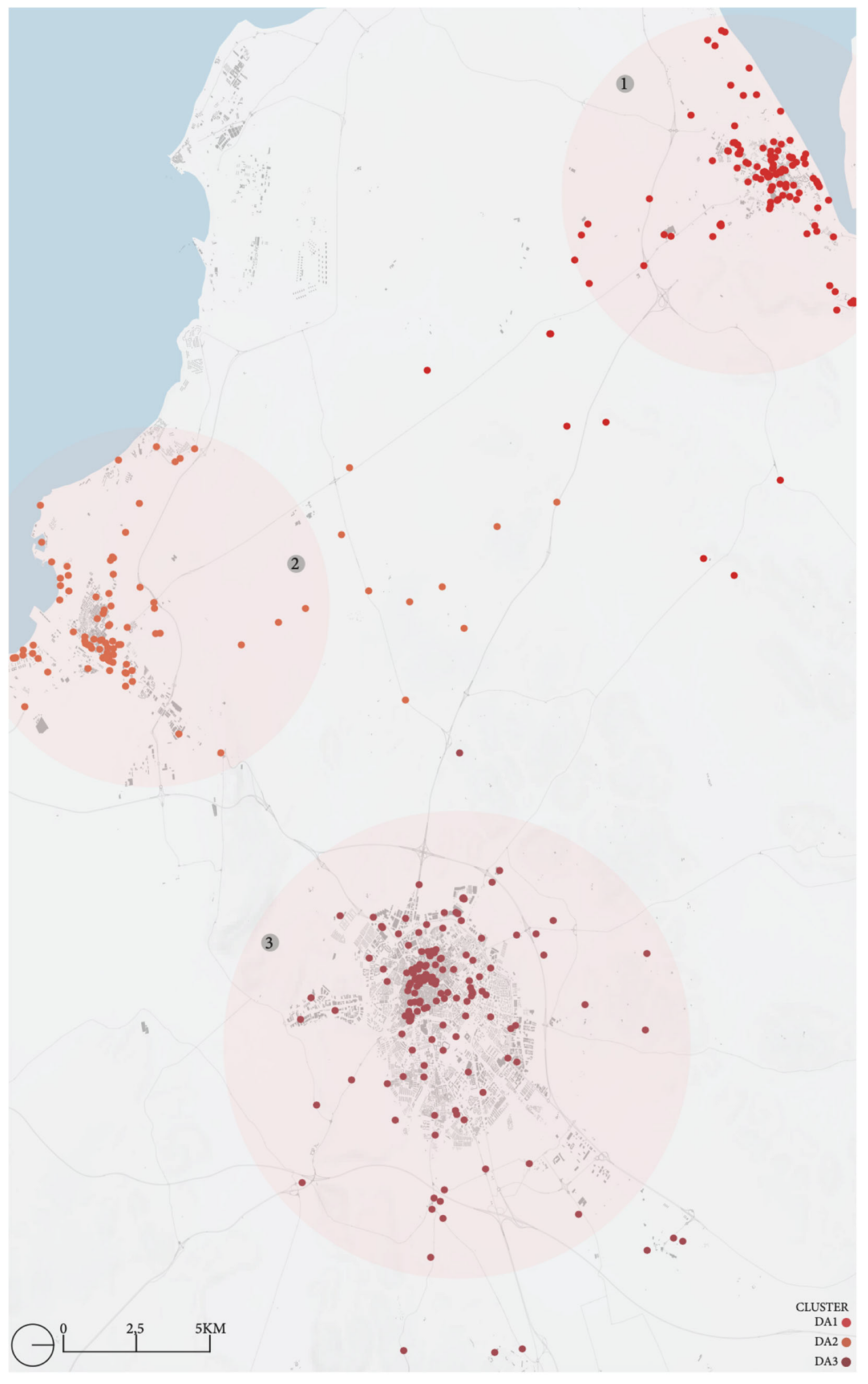
The analysis (Figure 7) identifies three distinct Destination Areas (DAs) with differentiated spatial and functional profiles. The DAs of Jerez de la Frontera and El Puerto de Santa María emerge as the most structured tourism spots, characterized by a dense concentration of services, cultural attractions, and efficient transport connectivity—supported, respectively, by the airport in Jerez and the port-railway system in El Puerto de Santa Maria. Conversely, the Sanlúcar de Barrameda DA exhibits clear structural weaknesses. Its limited accessibility, with few points of reachability to major routes, and the relative scarcity of tourism and cultural amenities, constrain its capacity to integrate into broader visitor circuits. Figure 7 illustrates the spatial distribution of the main categories of Points of Interest (POIs) used in the analysis. Tourist activity and service density are spatially clustered in the principal urban centers, gradually diminishing toward peripheral and inland areas, reflecting a strong coastal polarization and progressive territorial rarefaction.
Figure 7. Study area with Destination areas (1, 2, 3) identification and evaluation. The numbers indicate the IDs of the Destination Areas.

2.2.4. Istria, Croatia

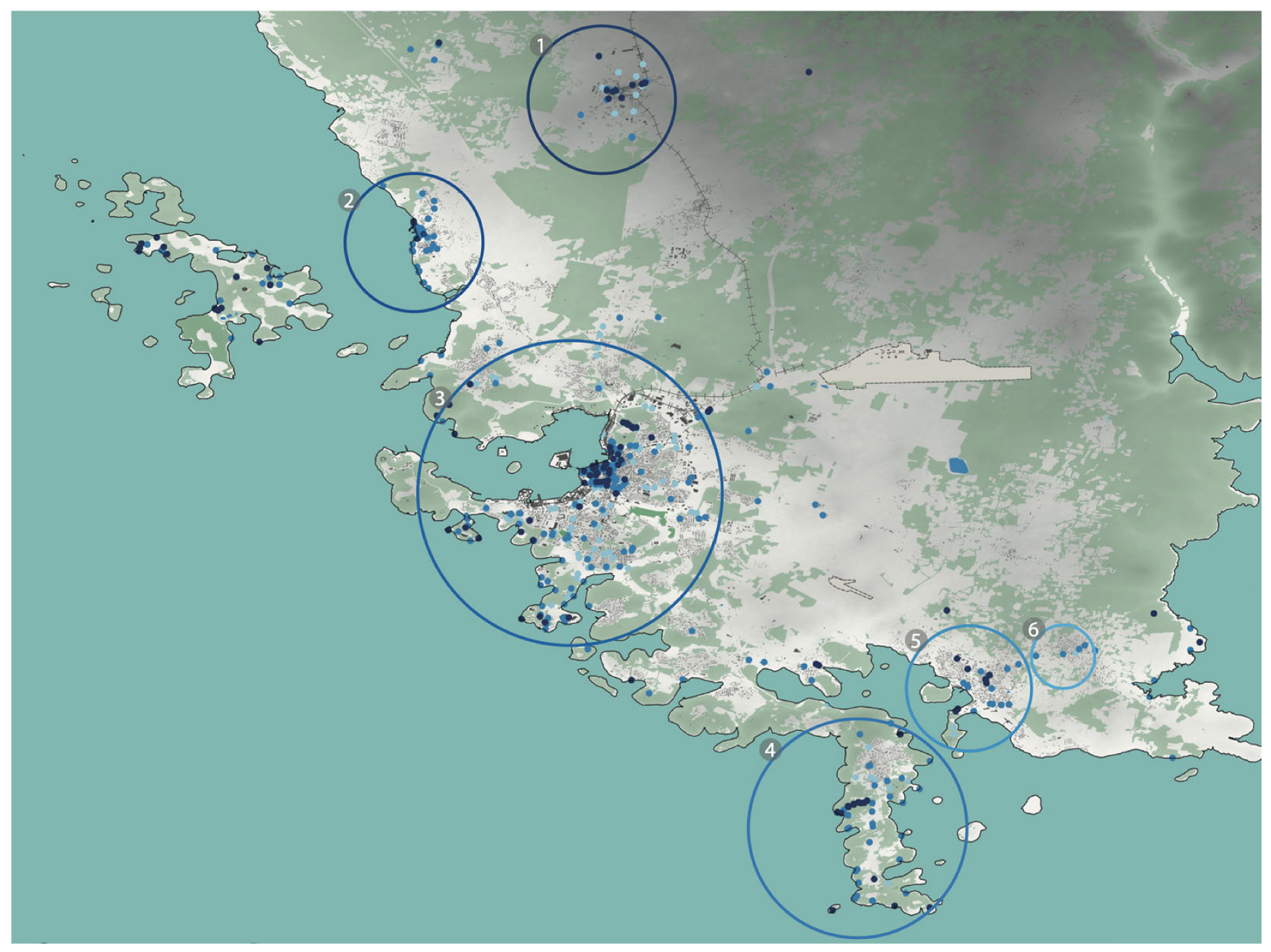
The cluster analysis of Istria’s tourism geography revealed six main areas of interest, organized into two functional categories. The first includes destinations with a consolidated tourism system, featuring dense infrastructure, diversified services, and mature market positioning. The second encompasses areas where tourism remains in an emerging phase, with underdeveloped facilities and untapped potential that call for targeted policy actions and investment programs. As illustrated in Figure 8, Croatia’s broader tourism framework still faces structural constraints that limit balanced territorial development—most notably, the strong seasonality of demand and the uneven accessibility of peripheral destinations. Despite Istria’s reputation as one of Croatia’s most iconic coastal regions, its visitation patterns remain highly concentrated in the summer, with a steep decline during the off-season. Meanwhile, localities belonging to the less consolidated clusters continue to struggle with infrastructural gaps and insufficient services, which restrict their capacity to sustain tourism activity throughout the year.
Figure 8. Study area with Destination areas (from 1 to 6) identification and evaluation. The blue dots represent Attractors, services, and reachability Points of Interest (PoIs).

2.3. Step 3: NUA Compliance

The methodological approach applied a downscaling of the New Urban Agenda (NUA), aiming to translate its international guidelines into operational tools at the local territorial scale. In this process, the most relevant principles of the NUA, particularly those concerning sustainable mobility, accessibility, and urban resilience, were identified and reformulated into targeted actions. The methodology had been tested also in a teaching laboratory asking Master Architectural Students to define strategic design in each case study area. The test succesfully demonstrate the effectiveness of the methodological approach easily transferable in technical and learning environment.

2.3.1. Dubrovnik, Croatia

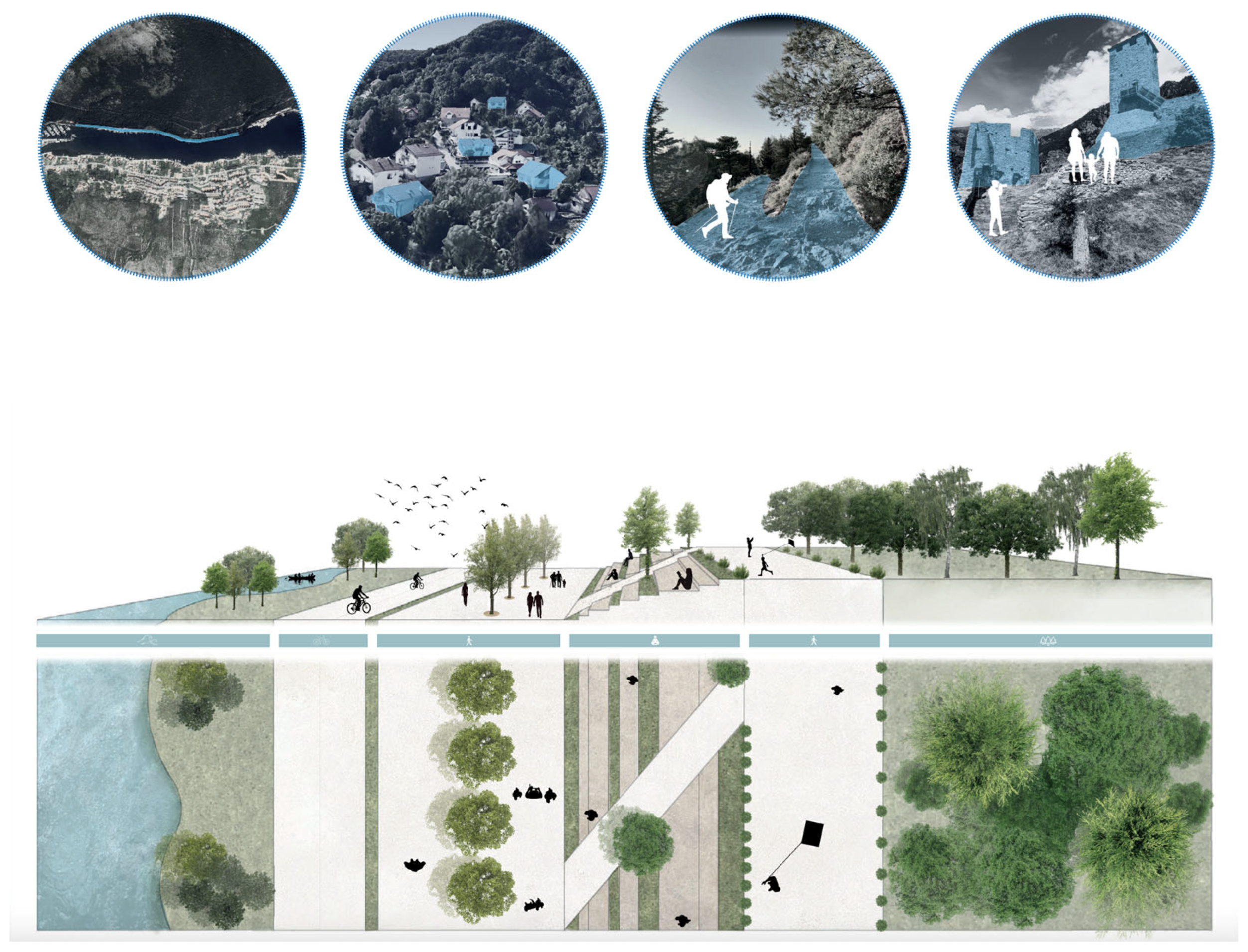
The comparative analysis of the Destination Areas identified Canal d’Ombla (Area 4) as a strategic zone with strong potential for multidimensional development. Its enhancement is conceived as an opportunity to rebalance visitor flows within the Dubrovnik region by creating new points of interest beyond the congested historic core and fostering a more equitable and sustainable tourism network.
The vision for this area focuses on sustainable mobility, adaptive reuse, and cultural valorization, combining environmental awareness with economic and social regeneration.
As illustrated in Figure 9, the intervention strategy is articulated into several coordinated actions:
Figure 9. Study area with selected Actions.
  • Design of a continuous pedestrian and cycling route along the Ombla River to connect natural and urban environments, expanding leisure and recreation spaces.
  • Conversion of vernacular houses and historic structures into eco-accommodations, supporting both heritage conservation and community-based tourism.
  • Restoration of historic fortifications to host cultural programs, artisan residencies, and immersive events that interpret local identity.
  • Improvement and safety upgrade of nature trails to encourage soft mobility and outdoor tourism experiences.
Aligned with the objectives of the New Urban Agenda and Sustainable development goals [37] the project promotes economic diversification, green transition, and social inclusion. By activating partnerships between public institutions and private stakeholders, Dubrovnik can consolidate a tourism model that preserves its environmental and cultural assets while enhancing residents’ quality of life.
By enhancing tourism experiences and implementing sustainable infrastructure, Dubrovnik mitigates the spatial and functional pressures concentrated in its historic core, fostering a more balanced and adaptive tourism model that ensures long-term resilience through the integration of heritage preservation, environmental sustainability, and community well-being.

2.3.2. Corsica, France

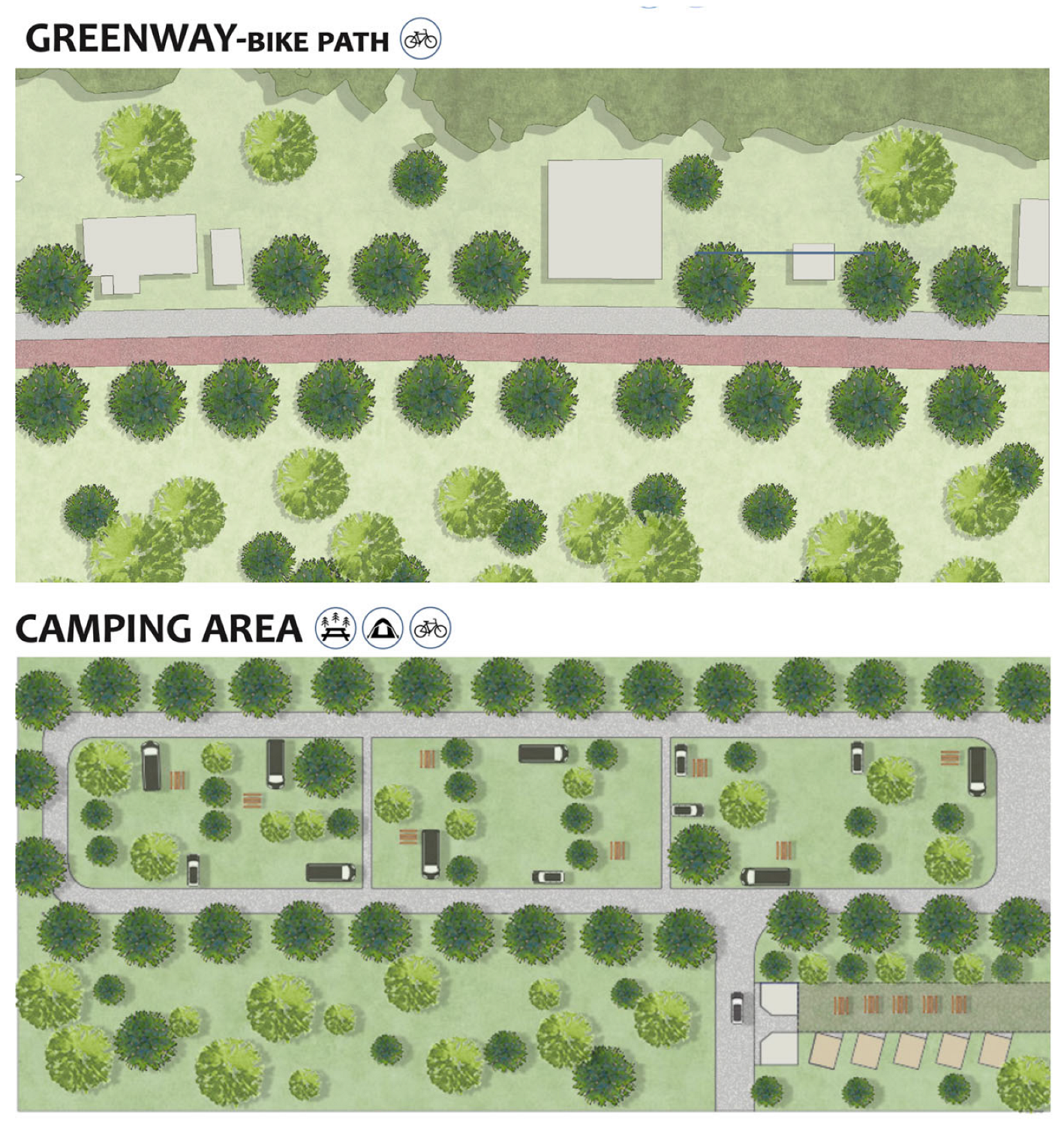
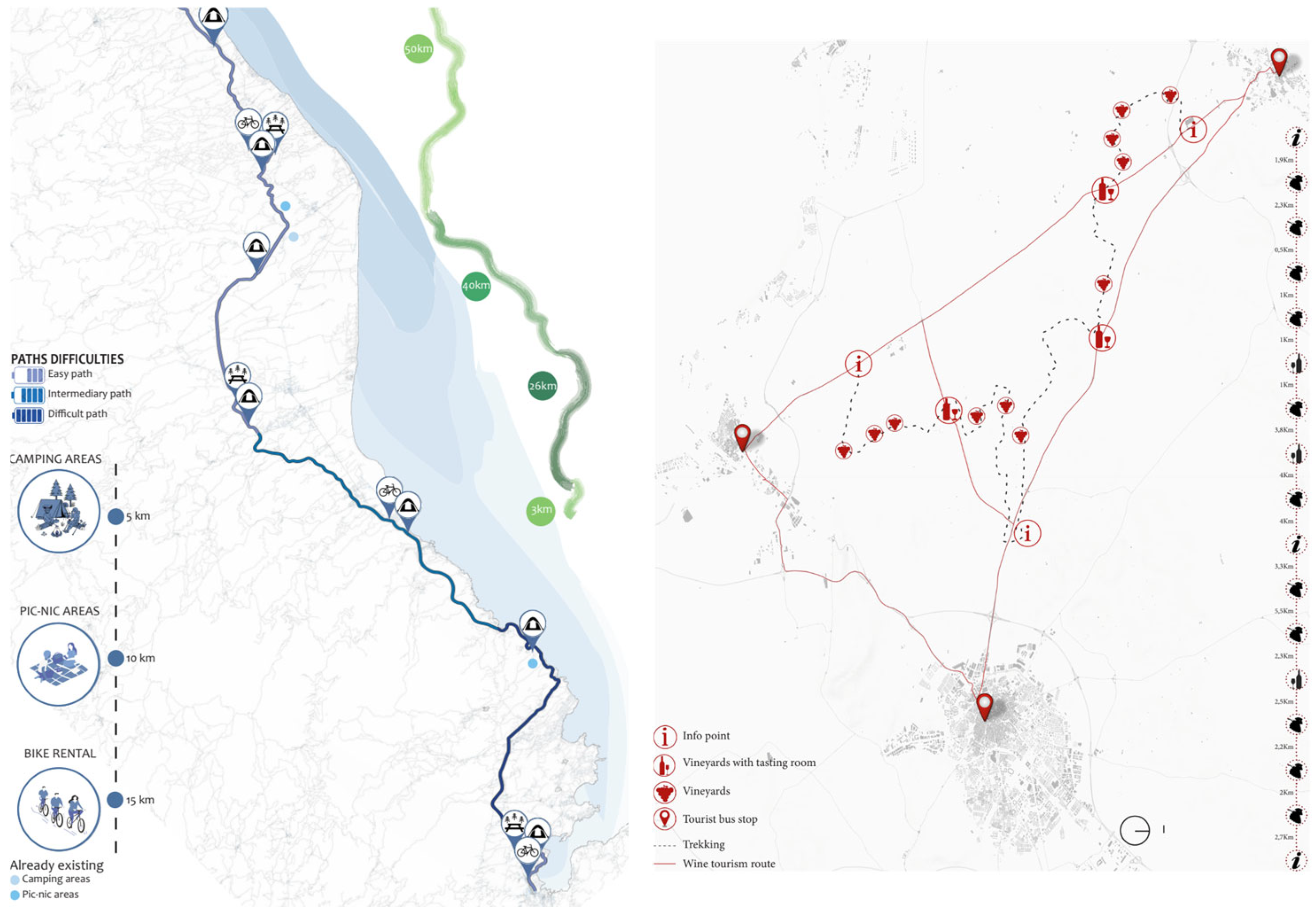
The intervention was, developed to overcome existing discontinuities in accessibility and mobility along the eastern corridor of Corsica. The decommissioned Bastia–Porto Vecchio railway line is reinterpreted as a multifunctional greenway, conceived to stimulate sustainable mobility practices and reduce reliance on motorized transport. Through the integration of cycling and pedestrian infrastructure, the project establishes a continuous ecological and recreational axis that reconnects fragmented coastal and inland landscapes.
Framed within the broader paradigm of slow and experiential tourism, the initiative redefines the island’s tourism model by diversifying its offer beyond traditional seaside destinations. It promotes a more immersive interaction with Corsica’s environmental, cultural, and rural heritage, positioning the territory as a laboratory for sustainable regional development.
Consistent with the guiding principles of the New Urban Agenda (NUA), the project emphasizes sustainable urban mobility, climate adaptation, and inclusive economic revitalization. Along the route, strategically distributed facilities—such as eco-camping areas, rest and picnic zones, and e-bike sharing points—contribute to the creation of a coherent visitor experience and support local entrepreneurship.
The greenway design (Figure 10) incorporates multiple gradients of difficulty, from accessible flat sections to more demanding mountainous stretches, enabling differentiated tourist experiences according to user profiles and mobility capacities. Estimated travel durations range from approximately 32–34 h on foot, 6–7 h by bicycle, and 3 h by car, underscoring the project’s capacity to accommodate diverse modes of slow and sustainable travel.
Figure 10. Proposed intervention schema.
Beyond its environmental and mobility implications, the initiative is projected to generate substantial economic and territorial benefits, particularly in mitigating the pronounced seasonality of tourism that characterizes Corsica’s current development model. The island’s visitor flows are heavily concentrated in the summer months, producing spatial and temporal imbalances that constrain local economies and strain infrastructure. By extending the range of tourism activities across seasons—through outdoor recreation, cultural itineraries, and low-impact mobility—the project contributes to the diversification of the regional tourism offer and supports the emergence of a more stable, year-round economic dynamic [38]. By establishing an all-season tourism corridor, the project is expected to stimulate local economic growth, generating new revenue streams for small enterprises and communities situated along the route. This continuous flow of visitors throughout the year strengthens the resilience of local economies, fosters entrepreneurship, and encourages the redistribution of tourism benefits beyond the traditional coastal hotspots.

2.3.3. Andalusia, Spain

To strengthen wine tourism and reinforce territorial connectivity among DA Jerez de la Frontera, DA El Puerto de Santa María, and DA Sanlúcar de Barrameda, a set of strategic actions has been formulated. These interventions are consistent with the objectives of the New Urban Agenda (NUA) and derive from a methodological framework that operationalizes and downscales NUA principles to the local context. The approach emphasizes integrated spatial planning, sustainable mobility, and the enhancement of cultural and productive landscapes as drivers for balanced regional development.
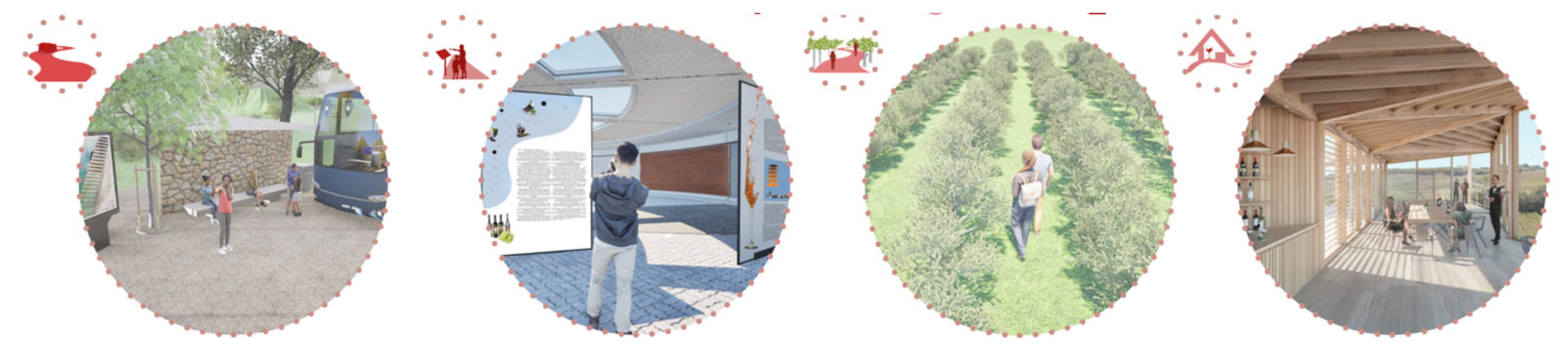
A key component of the proposed strategy concerns the strengthening of transport and mobility networks, with a particular emphasis on Sanlúcar de Barrameda, which currently suffers from limited accessibility and infrastructural gaps. Enhancing multimodal connectivity among Jerez de la Frontera, El Puerto de Santa María, and Sanlúcar is essential to reduce spatial disparities and foster a more integrated and equitable territorial system. This approach is consistent with the objectives of the New Urban Agenda [39] which promotes safe, sustainable, and universally accessible mobility systems as fundamental enablers of inclusive urban development. Complementing this infrastructural dimension, the strategy also envisions the creation of a pedestrian and experiential route crossing the region’s vineyard landscapes (Figure 11). Conceived as a form of slow tourism infrastructure, the route provides visitors with an immersive engagement with the territory’s cultural and environmental assets. Beyond its recreational purpose, the intervention contributes to the valorization of natural heritage and the expansion of inclusive public green spaces, reinforcing ecological connectivity while promoting sustainable and socially inclusive access to the rural landscape.
Figure 11. Illustrated actions of pedestrian and experiential route crossing the region’s vineyard landscapes.
To complement and consolidate the proposed network, the project envisions the establishment of three enotourism and tasting facilities strategically located along the itinerary. These spaces are designed as interpretive nodes where visitors can engage with local wine production, discover indigenous grape varieties, and gain insights into traditional and contemporary vinification practices. Beyond their experiential and educational value, such facilities are expected to stimulate local economies through job creation and the diversification of tourism-related activities. Moreover, the initiative contributes to the safeguarding and promotion of the region’s oenological and gastronomic heritage, reinforcing the interdependence between cultural identity, territorial development, and sustainability-oriented tourism.

2.3.4. Istria, Croatia

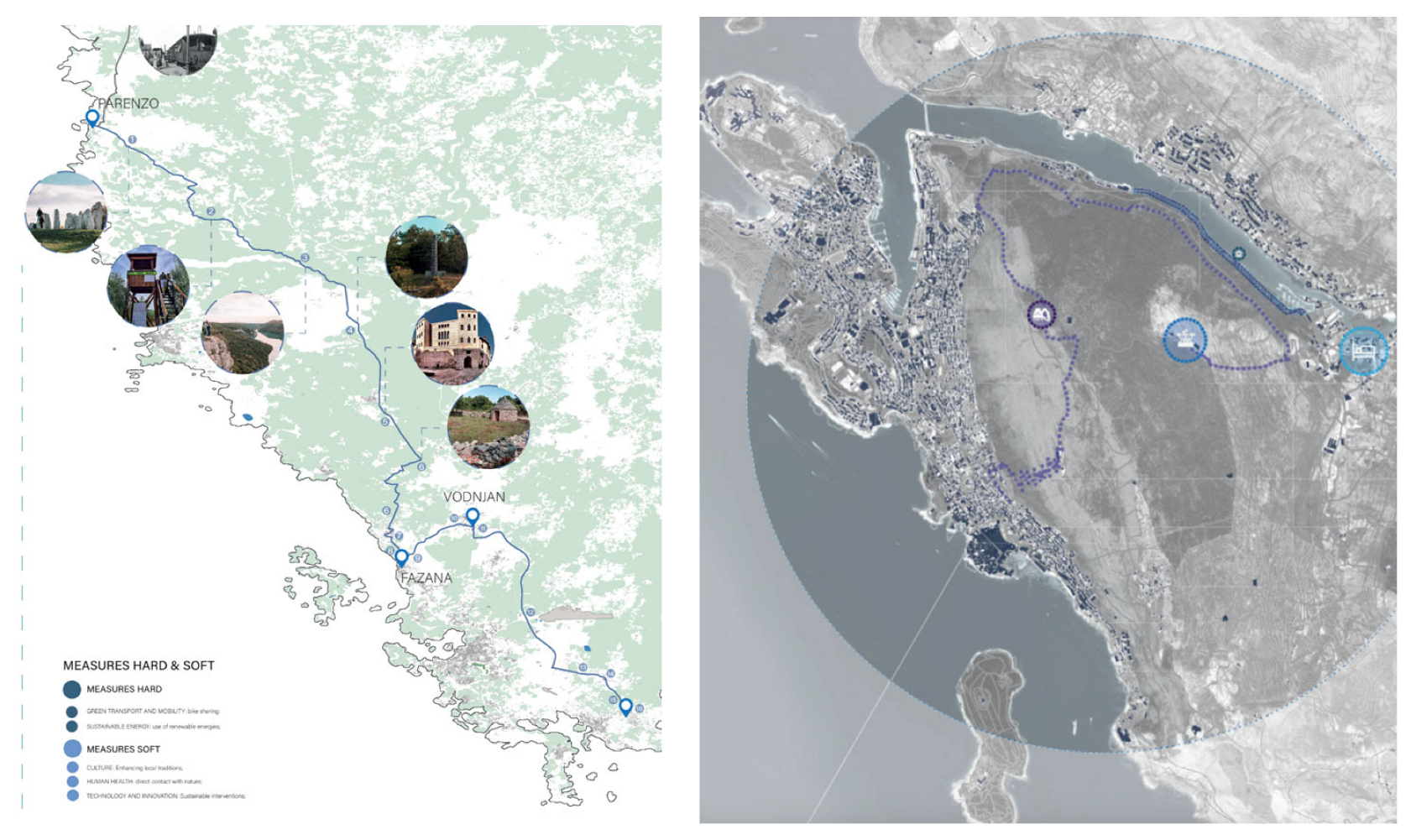
The project envisions a transformation of Croatia’s tourism framework toward a model that is spatially balanced, environmentally responsible, and resilient across all seasons. The proposal is articulated around three main strategic directions (Figure 12), designed to diversify the tourism economy and reinforce its territorial integration:
Figure 12. Illustrated actions of three main strategic actions.
-
Reducing seasonality: broadening the temporal scope of tourism by promoting year-round cultural programming. Initiatives such as a Winter Festival (November–February), music performances, and artistic events are intended to redistribute visitor flows, activate local economies during the low season, and foster continuous community engagement.
-
Enhancing connectivity and regional cohesion: improving transport and mobility infrastructure through the revitalization of the historic Parenzana cycle route (123 km linking Trieste and Poreč). This intervention reinterprets the former railway as a slow-mobility corridor connecting coastal and inland areas, thereby integrating less-developed destinations into the broader tourism network.
-
Encouraging innovative and sustainable hospitality models: advancing forms of tourism rooted in soft mobility and immersive experiences. The inclusion of eco-glamping units within natural landscapes targets cycling and nature-oriented visitors, offering high-comfort, low-impact accommodation equipped with wellness facilities and bike-support services.
Together, these strategies aim to establish Croatia as a regenerative and inclusive destination, aligning its tourism development pathways with European policy agendas on sustainability, territorial balance, and climate-conscious growth.

3. Discussions

The analytical process allowed to identify tourism externalities in the four case study areas. The selected cases, far to be emblematic of a specific tourism characteristic, are mainly representative of local conditions that a decision makers could identify practicing a planning process in the specific sector of tourism development. In this section of the paper, we intend to refer to the main findings in a comparative way, in order to defend the thesis based on the concept of anti-gravity approach in tourism decision-making.
The four cases produced four anti-gravity sustainable strategic designs characterized by a robust reference to NUA principles. Some common issues emerged: seasonality, overtourism and congestion. In order to overcome such criticalities, the NUA strategies pointed out a common generalized objective: to link fragmented areas shifting tourism from mayor poles to minor ones.
A recurring design theme within anti-gravitational strategies is the implementation of linear infrastructures that reconnect fragmented areas in local case studies marked by varying degrees of tourism-related development. These infrastructural interventions more than material ones, act as mediating elements between over-infrastructured and underdeveloped zones, facilitating both physical and functional integration. From the point of view of the conceptualization discussed in this work we shifted from gravity interpretation models towards anti-gravity ones.
Focusing on the strategic anti-gravity tourism design it is relevant to point out characterizing actions (Figure 13):
Figure 13. The four anti-gravity strategies.
  • The wine-tourism network in Andalusia (Spain) exemplifies this shift by strengthening transport connections between Jerez de la Frontera, El Puerto de Santa María, and Sanlúcar de Barrameda, while also enhancing slow mobility through vineyard routes and tasting facilities. This dual approach reduces territorial inequalities and reinforces the cultural value of the region’s landscape.
  • In Dubrovnik (Croatia), the decentralization project in the DA of Canal D’Ombra addresses the problem of congestion in the Old Town by promoting eco-sustainable accommodation, reusing historic buildings, and creating thematic cultural itineraries. The aim is to redistribute visitor flows and integrate peripheral areas into the main tourism circuit.
  • The Corsican greenway project converts the disused Bastia–Porto Vecchio railway into a sustainable mobility corridor, introducing cycling and pedestrian paths with rest areas and e-bike rentals. By diversifying the tourism offer beyond the summer peak and beach monoculture, the project creates an all-season attraction that supports local economies while encouraging slow tourism.
  • Finally, in Istria (Croatia), the upgrading of the Parenzana cycling route and the creation of innovative accommodation models such as glamping units contribute to de-seasonalization, promoting cultural events in the low season and offering high-quality services for cycling tourists. These actions strengthen regional connectivity and position Istria as a year-round tourism destination.
By bridging spatial discontinuities and re-establishing connectivity, such designs aim to promote a more balanced and sustainable territorial tourism value chain configuration, often challenging traditional hierarchies of concentration in major poles.
In each case study, a territorial framework is defined with the aim of mitigating the externalities associated with more traditional approaches to tourism management. These planning frameworks are based on the strategic localization of new functions and services in the edges and peripheral areas of each Destination Area. This approach challenges the conventional tourism development model, which tends to concentrate infrastructure and visitor flows within the historic or central cores, thereby intensifying issues such as overcrowding, spatial inequality, and the degradation of local quality of life.
From the perspective of urban and regional planning literature, this shift aligns with broader theoretical frameworks that advocate for polycentric development and the redistribution of urban functions (ref. [40,41]). The concept of anti-gravity is comparable with the decentralization of tourism-related activities, the proposed territorial frameworks support a more balanced spatial organization, reduce pressure on saturated tourism cores, and enhance the resilience and interconnections of peripheral zones.
Moreover, the proposed strategies resonate with the principles of ‘territorial justice’ and ‘just sustainability’, which emphasize the equitable distribution of both environmental burdens and socio-economic benefits across urban and regional spaces. The activation of inner areas as a network of minor tourist destination areas with specific supply and attraction potential due to local specializations, can foster more sustainable and diversified local economies, while also promoting spatial cohesion [42].

4. Conclusions

This paper investigated the spatial dimensions of tourism through the lens of territorial planning and urban studies, proposing the original concept of anti-gravity tourism as both a theoretical framework and a strategic planning approach. Building upon empirical evidence from four diverse case studies, the research has demonstrated how excessive concentration of tourism flows—what we refer to as “tourism gravitation”—produces externalities in the long-term sustainability of a place. In contrast, anti-gravity strategies aim to redistribute flows, promote peripheral areas, and rebalance territorial configurations in line with the principles of the New Urban Agenda and broader urban planning theories of polycentrism, territorial justice, and just sustainability.
The comparative analysis revealed recurring issues across the selected tourism destinations: seasonality, overtourism, and congestion. Despite their contextual differences, all four case studies converged around a common design logic: activating linear and connective infrastructures that bridge spatial discontinuities and redistribute tourism-related functions from saturated cores to underutilized peripheries. These interventions, both physical and functional, support the reconfiguration of tourism value chains and promote balanced territorial development, challenging the dominant logic of tourism centralization.
From a planning theory perspective, the findings reinforce the relevance of polycentric urban models. The anti-gravity approach aligns with recent efforts in urban regeneration (e.g., Porto, Italian “Borghi” programs) and represents a step toward more proactive, design-oriented approaches in spatial tourism planning.
In terms of results, the STESY model enabled a data-driven identification of Destination Areas (DAs) and provided a spatial typology for evaluating the distribution of tourism-related supply and services. The application of the model also allowed the formulation of strategic design proposals tailored to each context, highlighting the operational applicability of the anti-gravity concept aimed at mitigating tourism externalities.
In the discussion, we positioned anti-gravity tourism as a novel conceptual and operational tool capable of addressing some of the most pressing challenges in tourism planning today. The paper contributes to reframing tourism not as an isolated sector, but as a key driver of the spatial transformation of territories. Such an approach also reflects the evolution of planning paradigms toward more integrative and systemic models, where tourism is not treated as an isolated sector but embedded within broader strategies for urban regeneration, social inclusion, and ecological transition. Therefore, the design of these territorial frameworks represents not only a response to tourism-related challenges, but also a testing ground for contemporary urban policy principles that aim to reconfigure the relationship between center and periphery.
One limitation of the approach lies in not considering the temporal evolution of the tourism phenomenon, both in terms of demand and in the configuration of the supply system. Neglecting the temporal dimension means overlooking how tourism demand has diversified and fluctuated over time, responding to fast changing socio-economic, technological, and cultural conditions.
Future developments of the anti-gravity tourism framework open several promising topics for future research and policy experimentation:
  • It invites further testing across different geographical and governance contexts, to assess scalability and flexibility.
  • It offers a lens for integrating tourism planning into broader regional development policies also assessing effects of post pandemic recovery.
  • It encourages to deep tourism studies in a spatial planning perspective.
Ultimately, this paper advocates for a paradigm shift in the governance of tourism: moving from passive management of visitor flows toward spatially grounded, sustainability-oriented, and design-based planning approaches. The anti-gravity model represents not only a conceptual innovation but also a practical methodology for promoting tourism as key territorial development driver. Nevertheless, the effective implementation of anti-gravity tourism strategies may encounter several obstacles, including institutional resistance, fragmented governance structures, limited financial resources for infrastructure and diversification projects, and the influence of public perception on tourism redistribution. Addressing these challenges requires coordinated policy efforts, stakeholder participation, and long-term investment to ensure that the proposed spatial strategies translate into equitable and sustainable territorial outcomes.

Author Contributions

Conceptualization, R.V.G. and F.S.; methodology, R.V.G. and F.S.; formal analysis, R.V.G.; resources, R.V.G.; data curation, R.V.G.; writing—original draft preparation, R.V.G. and F.S.; writing—review and editing, R.V.G. and F.S.; visualization, R.V.G.; supervision, F.S. All authors have read and agreed to the published version of the manuscript.

Funding

This research received no external funding.

Institutional Review Board Statement

Not applicable.

Data Availability Statement

The elaborations discussed in the paper were based exclusively on open source spatial and statistical data.

Conflicts of Interest

The authors declare no conflict of interest.

References

  1. World Travel&Tourism Council. Travel & Tourism Economic Impact Research: Global Trends 2025; World Travel & Tourism Council: London, UK, 2025. [Google Scholar]
  2. Seraj, M.; Ike, O.C.; Ozdeser, H. The Contribution of Tourism on GDP Growth and Sustainable Tourism Development in Africa. Future Bus. J. 2025, 11, 115. [Google Scholar] [CrossRef]
  3. Portella-Carbó, F.; Pérez-Montiel, J.; Ozcelebi, O. Tourism-Led Economic Growth across the Business Cycle: Evidence from Europe (1995–2021). Econ. Anal. Policy 2023, 78, 1241–1253. [Google Scholar] [CrossRef]
  4. Casado-Aranda, L.A.; Sánchez-Fernández, J.; Bastidas-Manzano, A.B. Tourism Research after the COVID-19 Outbreak: Insights for More Sustainable, Local and Smart Cities. Sustain. Cities Soc. 2021, 73, 103126. [Google Scholar] [CrossRef] [PubMed]
  5. Duro, J.A.; Perez-Laborda, A.; Turrion-Prats, J.; Fernández-Fernández, M. COVID-19 and Tourism Vulnerability. Tour. Manag. Perspect. 2021, 38, 100819. [Google Scholar] [CrossRef] [PubMed]
  6. Haywood, K.M. A Post COVID-19 Future-Tourism Re-Imagined and Re-Enabled. Tour. Geogr. 2020, 22, 599–609. [Google Scholar] [CrossRef]
  7. Trono, A.; Schmude, J.; Duda, T. Introduction: The Future of Tourism After COVID-19. In Tourism Recovery from COVID-19; Managing Cultural Tourism: A Sustainability Approach; World Scientific: Singapore, 2022; Volume 2, pp. 3–13. ISBN 978-981-12-6023-0. [Google Scholar]
  8. Metaxas, T.; Gavriilidis, G. Marketing Policies in Public Museums of Greece: Empirical Evidence and Implications for Policy. Urban Sci. 2025, 9, 351. [Google Scholar] [CrossRef]
  9. Kowalczyk-Anioł, J. Rethinking Tourism-Driven Urban Transformation and Social Tourism Impact: A Scenario from a CEE City. Cities 2023, 134, 104178. [Google Scholar] [CrossRef]
  10. Mason, P. Tourism Impacts, Planning and Management; Routledge: London, UK, 2020; ISBN 0429273541. [Google Scholar]
  11. Rossello-Geli, J. Tourism-Related Gentrification: The Case of Sóller (Mallorca). Urban Sci. 2025, 9, 246. [Google Scholar] [CrossRef]
  12. Dorta-Preen, J.M.; Santana-Talavera, A. Shaping Places Together: The Role of Social Media Influencers in the Digital Co-Creation of Destination Image. Urban Sci. 2025, 9, 262. [Google Scholar] [CrossRef]
  13. Buckley, R. Sustainable Tourism: Research and Reality. Ann. Tour. Res. 2012, 39, 528–546. [Google Scholar] [CrossRef]
  14. Smith, M.; Ram, Y. Tourism, Landscapes and Cultural Ecosystem Services: A New Research Tool. Tour. Recreat. Res. 2017, 42, 113–119. [Google Scholar] [CrossRef]
  15. Raevskikh, E. Anticipating the “Bilbao Effect”: Transformations of the City of Arles before the Opening of the Luma Foundation. Cities 2018, 83, 92–107. [Google Scholar] [CrossRef]
  16. Brandano, M.G.; Crociata, A. Cohesion Policy, Tourism and Culture in Italy: A Regional Policy Evaluation. Reg. Stud. 2023, 57, 763–779. [Google Scholar] [CrossRef]
  17. Rebollo, J.F.V.; Baidal, J.A.I. Measuring Sustainability in a Mass Tourist Destination: Pressures, Perceptions and Policy Responses in Torrevieja, Spain. J. Sustain. Tour. 2003, 11, 181–203. [Google Scholar] [CrossRef]
  18. Herman, G.V.; Bucur, L.; Filimon, C.A.; Herman, M.L.; Nistor, S.; Tofan, G.-B.; Stupariu, M.; Bacter, R.V.; Caciora, T. Exploring the Relationships Between Bicycle Paths and Urban Services in Oradea, Romania. Urban Sci. 2025, 9, 373. [Google Scholar] [CrossRef]
  19. Dodds, R.; Butler, R. The Phenomena of Overtourism: A Review. Int. J. Tour. Cities 2019, 5, 519–528. [Google Scholar] [CrossRef]
  20. Buitrago, E.M.; Yñiguez, R. Measuring Overtourism: A Necessary Tool for Landscape Planning. Land 2021, 10, 889. [Google Scholar] [CrossRef]
  21. Pasquinelli, C.; Trunfio, M. Reframing Urban Overtourism through the Smart-City Lens. Cities 2020, 102, 102729. [Google Scholar] [CrossRef]
  22. Alonso-Almeida, M.-M.; Borrajo-Millán, F.; Yi, L. Are Social Media Data Pushing Overtourism? The Case of Barcelona and Chinese Tourists. Sustainability 2019, 11, 3356. [Google Scholar] [CrossRef]
  23. Duro, J.A.; Turrión-Prats, J. Tourism Seasonality Worldwide. Tour. Manag. Perspect. 2019, 31, 38–53. [Google Scholar] [CrossRef]
  24. Cannas, R. An Overview of Tourism Seasonality: Key Concepts and Policies. Almatourism—J. Tour. Cult. Territ. Dev. 2012, 3, 40–58. [Google Scholar]
  25. Stojčić, N.; Mikulić, J.; Vizek, M. High Season, Low Growth: The Impact of Tourism Seasonality and Vulnerability to Tourism on the Emergence of High-Growth Firms. Tour Manag. 2022, 89, 104455. [Google Scholar] [CrossRef]
  26. Espinet-Rius, J.M.; García-Sánchez, A.; Gassiot-Melian, A. Seasonality in the Cruise Industry: Activity, Prices and Regionality. Eur. J. Tour. Res. 2024, 38, 3810. [Google Scholar] [CrossRef]
  27. Bei, G.; Celata, F. Challenges and Effects of Short-Term Rentals Regulation: A Counterfactual Assessment of European Cities. Ann. Tour. Res. 2023, 101, 103605. [Google Scholar] [CrossRef]
  28. Scherk, J. Antigravity: A crazy idea? Phys. Lett. B 1979, 88, 265–267. [Google Scholar] [CrossRef]
  29. Nieto, M.M.; Goldman, T. The Arguments against “Antigravity” and the Gravitational Acceleration of Antimatter. Phys. Rep. 1991, 205, 221–281. [Google Scholar] [CrossRef]
  30. Chen, Y.; Zhang, F.; Qian, Y.; Zeng, J.; Li, X. A New Car-Following Model Considering the Driver’s Dynamic Reaction Time and Driving Visual Angle on the Slope. Phys. A Stat. Mech. Its Appl. 2025, 663, 130408. [Google Scholar] [CrossRef]
  31. Bars, I.; James, A. Physical interpretation of antigravity. Phys. Rev. D 2016, 93, 044029. [Google Scholar] [CrossRef]
  32. UNhabitat. The New Urban Agenda; Unhabitat: Nairobi, Kenya, 2016; ISBN 9789211328691. [Google Scholar]
  33. Gatto, R.V.; Corrado, S.; Scorza, F. Towards a Definition of Tourism Ecosystem. In Proceedings of the 18th International Forum on Knowledge Asset Dynamics (IFKAD)-Managing Knowledge for Sustainability, Matera, Italy, 16 June 2023; 2023. [Google Scholar]
  34. Anselin, L.; Syabri, I.; Kho, Y. GeoDa: An Introduction to Spatial Data Analysis. Geogr. Anal. 2006, 38, 5–22. [Google Scholar] [CrossRef]
  35. Anselin, L.; Syabri, I.; GeoDa, K.Y. An Introduction to Spatial Data Analysis. In Handbook of Applied Spatial Analysis: Software Tools, Methods and Applications; Fischer Manfred, M., Getis, A., Eds.; Springer: Berlin/Heidelberg, Germany, 2010; pp. 73–89. ISBN 978-3-642-03647-7. [Google Scholar]
  36. Anselin, L.; Li, X.; Koschinsky, J. GeoDa, From the Desktop to an Ecosystem for Exploring Spatial Data. Geogr. Anal. 2022, 54, 439–466. [Google Scholar] [CrossRef]
  37. Alcántara-Rubio, L.; Valderrama-Hernández, R.; Solís-Espallargas, C.; Ruiz-Morales, J. The implementation of the SDGs in universities: A systematic review. Environ. Educ. Res. 2022, 28, 1585–1615. [Google Scholar] [CrossRef]
  38. Huda, S.S.M.S. Potential of Neighborhood Tourism in New Normal: A Research Agenda. Sustain. Communities 2024, 1, 2371578. [Google Scholar] [CrossRef]
  39. Scorza, F.; Casas, G.L.; Murgante, B.; Las Casas, G.B.; Scorza, F.; Murgante, B.; Las Casas, G.; Murgante, B. Overcoming Interoperability Weaknesses in E-Government Processes: Organizing and Sharing Knowledge in Regional Development Programs Using Ontologies. In Organizational, Business, and Technological Aspects of the Knowledge Society; Springer: Berlin/Heidelberg, Germany, 2010; Volume 112, pp. 243–253. ISBN 3642163238. [Google Scholar]
  40. Hall, P.; Pain, K. The Polycentric Metropolis; Routledge: London, UK, 2012; ISBN 9781136547690. [Google Scholar]
  41. Meijers, E. Measuring Polycentricity and Its Promises. Eur. Plan. Stud. 2008, 16, 1313–1323. [Google Scholar] [CrossRef]
  42. Scorza, F.; Gatto, R.V. Identifying Territorial Values for Tourism Development: The Case Study of Calabrian Greek Area. Sustainability 2023, 15, 5501. [Google Scholar] [CrossRef]
Disclaimer/Publisher’s Note: The statements, opinions and data contained in all publications are solely those of the individual author(s) and contributor(s) and not of MDPI and/or the editor(s). MDPI and/or the editor(s) disclaim responsibility for any injury to people or property resulting from any ideas, methods, instructions or products referred to in the content.

Article Metrics

Citations

Article Access Statistics

Multiple requests from the same IP address are counted as one view.