Abstract
Urban railway systems are critical for the daily lives of citizens in cities. Considering that urban railways are a core infrastructure, it is important for urban and railway practitioners to operate and maintain urban railway systems effectively and to maximize user satisfaction. However, despite the importance of this topic, research on the factors that contribute to high levels of railway user satisfaction in the context of Southeast Asian developing countries remains limited. To address this gap, this study conducted an exploratory case study using the Jakarta Mass Rapid Transit (MRT). This study collected 406 valid responses regarding Jakarta MRT user satisfaction through a face-to-face questionnaire survey and analyzed them using regression analysis, fuzzy-set qualitative comparative analysis (fsQCA), and text-mining techniques, which have seldom been applied in previous research on factors influencing railway user satisfaction. The results indicate that high levels of satisfaction with railway fares and social considerations—particularly the combination of both—may be the simplest configuration associated with higher overall user satisfaction, while various other combinations of satisfaction dimensions could also lead to elevated satisfaction. The results also suggest that all dimensions may serve as necessary and/or sufficient conditions for high satisfaction, implying the importance of considering all dimensions. These findings are specific to this case study and may differ depending on the socio-cultural contexts. To advance the understanding of satisfaction factors, further comparative research on the Jakarta MRT and rail systems in other countries is warranted.
1. Introduction
Achieving high levels of user satisfaction in urban railway systems is a critical challenge in urban development and management, particularly for practitioners seeking to improve railway services. However, user satisfaction is shaped by multiple factors, including fares, connectivity, and comfort, making it difficult to identify a single solution. Moreover, the factors contributing to satisfaction may vary according to contextual conditions, such as country, region, and culture. For example, in Japan, where punctuality is highly valued, trains running on time are important contributors to satisfaction, whereas in other countries, punctuality may play a less significant role. Indeed, numerous studies have examined the factors affecting user satisfaction with urban railway systems in different countries, offering diverse insights [1,2,3].
Although identifying a single solution for improving user satisfaction with urban railway systems remains challenging, there is growing recognition of the need to analyze the factors that significantly influence satisfaction. These concerns are compounded by the introduction of the concept of sustainable infrastructure development, which emphasizes sustainability and inclusiveness [4,5]. Under this concept, advocates stress the importance of incorporating not only economic and operational sustainability—traditionally treated as key elements of infrastructure projects—but also social and environmental sustainability to realize a more holistic approach to infrastructure development [4]. Advocates also promote social perspectives, emphasizing the need to consider socially vulnerable groups in infrastructure projects, such as people with disabilities, pregnant women, the elderly, and small children [6,7,8].
This recent trend toward prioritizing holistic perspectives in urban infrastructure development calls for more practical research to determine which factors should be prioritized to achieve higher levels of railway user satisfaction. Although numerous studies have examined factors influencing railway user satisfaction, evidence implies that these factors vary across countries [9]. Therefore, it is important to accumulate research on the determinants of railway user satisfaction in diverse regions and countries. In Asia, there has been increasing research on railways in countries such as China and India (e.g., [10,11]); however, studies in Southeast Asian developing countries remain limited. This study therefore aims to conduct exploratory research on railway user satisfaction in the context of Southeast Asian developing countries, using the Jakarta Mass Rapid Transit (MRT)—the first and relatively new urban MRT system in Indonesia—as a case study. The focus on the Jakarta MRT enables an understanding of the key factors that shape user satisfaction in the context of Indonesia, a tropical developing country in Southeast Asia. Accordingly, the research question for this study is: “Which factors lead to high levels of user satisfaction with the Jakarta MRT?”
This research is significant because it obtains comprehensive primary data—both quantitative and qualitative—that previous research on the Jakarta MRT has not employed, through a face-to-face questionnaire survey of more than 400 Jakarta MRT users. Moreover, the research identified potential factors influencing user satisfaction by combining multiple analytical methods, including regression analysis, fuzzy-set qualitative comparative analysis (fsQCA), and text mining, which have seldom been applied in previous research on factors related to railway user satisfaction.
Admittedly, this research is exploratory and preliminary, focusing on the Jakarta MRT, and its findings cannot be automatically generalized to other contexts. Nevertheless, despite this limitation, the study remains significant as it provides referential insights for future research to identify similarities and differences in railway user satisfaction across diverse countries and regions.
2. Literature Review
2.1. Railway User Satisfaction
Research into service quality has been conducted since the 1800s and thus has a long history [12]. Although numerous studies have been carried out to date, the systematic model most frequently referenced is SERVQUAL, proposed by Parasuraman et al. in 1988 [13]. SERVQUAL comprises 22 questions designed to assess the level of service quality across five dimensions: tangibles, reliability, responsiveness, assurance, and empathy. Although SERVQUAL was originally developed to measure the quality of services in general, rather than specifically for railways, researchers regard it as suitable for assessing railway services because it has a more humanistic orientation than other models [14]. De Oña & De Oña evaluated SERVQUAL as one of basic models for measuring quality of service in public transport [15].
In 2007, Cavana et al. customized SERVQUAL for use with railway services (hereafter referred to as “customized SERVQUAL”), adding three new dimensions specific to the railway sector—namely comfort, connection, and convenience—based on previous studies [14,16]. The definitions of the dimensions applied in the customized SERVQUAL are presented in Table 1. Other methods have also been applied to assess service quality using alternative classification schemes, including reliability/functionality, information, courtesy/simplicity, and comfort [17,18]. However, these approaches differ only in their classification framework. In other words, if the classification of each factor is adjusted, most can be regarded as equivalent to or components of SERVQUAL. For example, customized SERVQUAL does not include an exclusive dimension for “information,” but questions related to information are incorporated within the dimensions of assurance, tangibles, and convenience.
Table 1.
Definitions of the dimensions in the customized SERVQUAL.
Numerous studies have assessed railway service quality using the SERVQUAL framework. For example, Miranda et al. [3] evaluated railway services in Portugal through a customized SERVQUAL model and analyzed factors influencing user satisfaction. Tumsekcali et al. [19] extended SERVQUAL in the context of the COVID-19 pandemic to assess public transportation in Istanbul. Similarly, Liu and Gao [20] proposed a simplified SERVQUAL-based evaluation model tailored to the conditions of China’s railway system. Ranjan et al. [21] examined the gap between user expectations and actual service quality in India’s railway using SERVQUAL. Overall, studies on railway service satisfaction using SERVQUAL have been conducted for more than three decades and continue to be widely adopted in the literature [11].
On the other hand, it should be noted that SERVQUAL basically does not have any questions/dimensions regarding train fares, though they are often regarded as an important factor affecting railway user satisfaction [1,22,23,24]. This could be because SERVQUAL and previous research using this method have focused primarily on service quality. In addition, a social inclusion perspective and consideration for the socially vulnerable, such as people with disabilities, were not included in the original SERVQUAL, although some researchers consider these factors essential [17,23]. Hence, these factors should be incorporated into the current research.
When it comes to factors influencing railway user satisfaction, previous research has tended to statistically analyze the collected data using regression analysis or structural equation modeling (SEM) [9,15]. The results of the analysis are diverse, and the factors that are important in determining satisfaction vary depending on the railways and study [1,9]. Recent literature reviews on satisfaction with public transportation suggest that although the results are diverse, most studies have reported that customers value cleanliness and comfort on trains, operators’ courteous and helpful behavior, safety, and punctuality, and frequency of the railway service [9].
There has also been an increasing amount of research on factors influencing railway user satisfaction in Asian countries. Among these, studies focusing on China and India are particularly prominent. For example, Wang et al. [10] identified functional and technical service quality, comfort and cleanliness, as well as service planning and reliability as critical determinants in the Chinese context, supporting findings from a series of previous studies on the actual situation of railways in the country. In the case of Indian railways, Gopal Vasanthi et al. [11] reviewed 19 prior studies on service quality across various railway systems in the country. They found that tangibility, reliability, responsiveness, and assurance are significantly associated with user satisfaction based on their own survey and analysis, corroborating results from previous related research. However, beyond these two countries, the number of studies in Asian nations remains limited, especially in developing countries in Southeast Asia, although some research has also been conducted in countries such as Thailand and Malaysia (e.g., [25,26,27,28,29]). This highlights the need for further investigations into factors affecting railway user satisfaction in a broader range of Southeast Asian developing countries. Such efforts would enable future research to validate findings through multiple cumulative studies across diverse contexts.
Regarding the analytical method, while regression and SEM analyses remain warranted, recent research has highlighted the need to apply qualitative comparative analysis (QCA) alongside conventional statistical methods [3,18]. This is because QCA can account for asymmetric relations between the independent and dependent variables—that is, multiple configurations of potential factors can result in high satisfaction through distinct pathways—whereas conventional statistical methods assume only symmetric relations, examining how individual factors independently influence satisfaction [3,30,31]. Research on customer satisfaction analysis has emphasized the importance of QCA alongside conventional statistical methods, as it enables more complex factor analysis [32]. However, research applying QCA to the railway sector remains limited [3,18]. Therefore, this study applies QCA in addition to conventional regression analysis to address this gap.
2.2. Research on the Jakarta MRT
The Jakarta MRT began operations in 2019 (see Appendix A for basic information). Despite its short history, several studies have examined user satisfaction with the system. Wardhani et al. reported that overall user satisfaction is generally high, although some areas still require improvement—particularly accessibility to and from stations, fare prices, and the convenience of pedestrian facilities [33]. Similarly, Purba and Widiyastuti highlighted the need to improve accessibility, even though overall user satisfaction remains high [34].
Regarding the factors influencing user satisfaction, regression analysis identified service quality and station facilities as important factors [35]. Sihombing et al., who also employed regression analysis, found that fares and ease of transaction at ticket gates are critical factors, in addition to service quality [36]. Further studies have applied structural equation modeling (SEM) for data analysis. Rahmanita et al. suggested that service quality, facilities, and perceived price positively affect user satisfaction, while high satisfaction significantly influences customer loyalty [37]. Several other studies using SEM found that corporate image is also a significant factor influencing user satisfaction [38,39].
Although an increasing number of studies on satisfaction with the Jakarta MRT have been conducted, further research is needed. First, no study to date has utilized comprehensive data based on the full range of questions specified in the SERVQUAL framework. Second, more detailed research is needed to identify which specific service factors contribute to high levels of user satisfaction. While previous studies have found that service quality affects satisfaction with the Jakarta MRT, limited research has examined which individual dimensions of service, such as tangibles and reliability, are most important. To determine which factors and combinations of configurational factors are associated with high satisfaction among Jakarta MRT users, QCA should be employed alongside conventional regression analysis, as no prior research has addressed this question using QCA. Third, few studies have investigated which elements are most significant within each dimension—for example, whether ease of access to the destinations and departure points or the availability of trains is more critical for the connection dimension. Therefore, more detailed research on critical components within each dimension using comprehensive data is essential.
Moreover, it is essential to adopt technical approaches that differ from those employed in previous studies. First, research using data from a face-to-face questionnaire survey with passengers should be undertaken, as previous studies have primarily relied on data collected through online surveys. While online surveys remain a valuable tool, face-to-face surveys can strengthen existing findings, because some studies suggest that online respondents may provide less thoughtful answers to minimize effort compared to face-to-face surveys [40,41]. Second, a more detailed evaluation scale could be employed in this study. Previous research on Jakarta MRT user satisfaction has often used five-point or smaller scales. However, such scales may fail to capture subtle differences in user perceptions, particularly given that earlier findings indicate generally high satisfaction levels. To address this, the present study adopts a seven-point Likert scale, which is widely used in social science research [42]. Third, this study aims to compare user satisfaction with the Jakarta MRT with that of other traditional railway systems in Indonesia, specifically commuter lines that operate both within and beyond the Greater Jakarta area. To the best of our knowledge, no prior research has addressed this comparison. Such comparisons will provide a deeper understanding and more objective evaluation of the Jakarta MRT in relation to other railways.
3. Research Methods
To investigate the factors that lead to high user satisfaction in the Jakarta MRT and address the above-mentioned research gaps, this study conducts regression analysis, QCA, and text mining using primary data collected through a face-to-face questionnaire survey. Details of the dataset and analysis are provided below. This study largely follows Miranda et al. [3] and Sukhov et al. [18] regarding its research design, particularly regarding the protocols for regression analysis and QCA.
3.1. Dataset
Prior to conducting the survey, a questionnaire comprising 42 questions was developed for Jakarta MRT users based on the customized SERVQUAL (see Appendix B for the English version of the questionnaire). It should be noted that the questionnaire differs slightly from the customized SERVQUAL in the following aspects. First, questions that were deemed too specific were merged to simplify the questionnaire. For example, the revised version includes only one question under the Empathy dimension—“Are railway staff kind and helpful when you make inquiries?”—instead of three slightly different questions used in the original SERVQUAL. Second, an overall rating question was added at the end of the questions for each dimension. For example, “Overall, do you feel any anxiety about using the railway system?”—even though the original SERVQUAL does not include this type of overarching question. The inclusion of overall questions enabled analysis of which specific elements (questions) had a greater influence on the overall ratings within each dimension. Third, we added questions regarding perceptions of the train fare and social considerations, based on needs identified in the literature review.
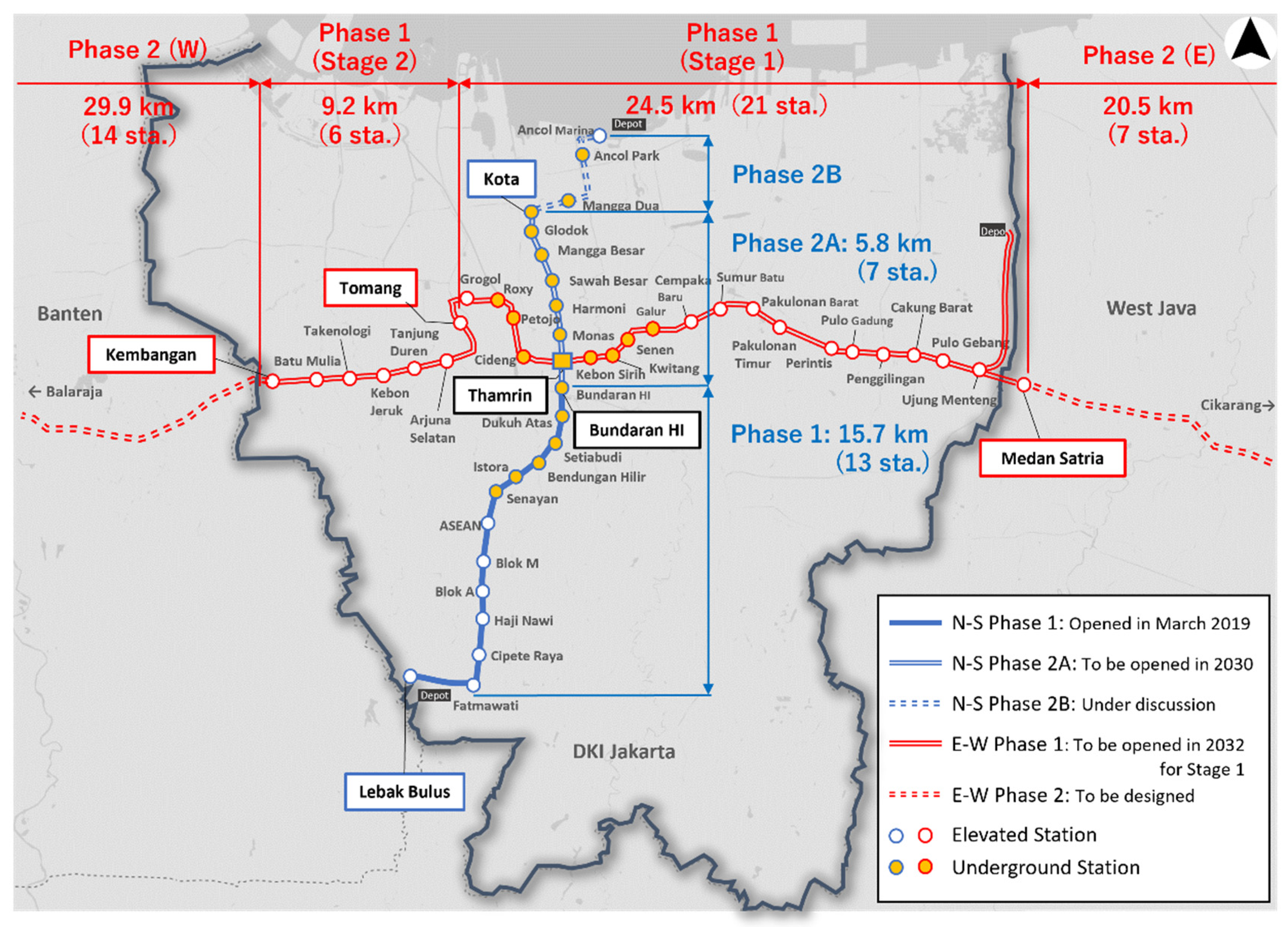
Using the developed questionnaire, the face-to-face survey was conducted with Jakarta MRT users at four major stations—Dukuh Atas, Istora, Senayan, and Blok M (see Appendix A for the locations)—during two periods: 20–24 January and 3–7 February 2025 (weekdays only). The survey was conducted from 08:30 to 17:30 at each station. A convenience sampling approach was employed, targeting Jakarta MRT users who voluntarily agreed to participate. Respondents were limited to Jakarta MRT users who had also used the traditional commuter train, as this information served as a reference.
Respondents were asked to evaluate 42 questions using a seven-point Likert scale (ranging from 1, “strongly disagree,” to 7, “strongly agree”), as well as an open-ended question that allowed them to provide written responses freely. For comparison, respondents were also asked to evaluate the traditional commuter train in Jakarta (traditional railway).
The survey yielded 406 valid responses containing complete information on the overall ratings for each dimension, with more than 37 of the 42 questions answered. According to Cochran’s sample size formula [43], a sample size of 385 respondents is sufficient to achieve a 95% confidence level with a ±5% margin of error, regardless of the population size. Therefore, a sample size of 406 used for this research can be considered statistically adequate. Socio-demographic breakdown of the respondents is presented in Table 2.
Table 2.
Socio-demographic breakdown of the respondents.
3.2. Regression Analysis
Multiple regression analysis was conducted by correlating the perceptions of service performance—the overall ratings for Assurance, Empathy, Reliability, Tangibles, Comfort, Connection, Convenience, Train fare, and Social consideration dimensions (Questions 7, 8, 14, 21, 29, 34, 38, 39, and 41)—with overall user satisfaction (Question 42). By doing so, the dimensions that have a statistically significant correlation with overall satisfaction were identified. The regression analysis was also conducted for the traditional railway to serve as a reference for the Jakarta MRT results.
This study also conducts multiple regression analyses between the individual elements (questions) within each dimension and the overall rating for that dimension. For example, the elements of the assurance dimension (Questions 1 to 6) were correlated with the overall assurance rating (Question 7).
3.3. Fuzzy-Set Qualitative Comparative Analysis (fsQCA)
QCA differs from conventional statistical analysis in that it assumes one or several causal configurations can lead to the same outcome [3,44]. QCA can be divided into two types: (i) Crisp set (cs) QCA, in which each case is either fully out of a set (value = 0) or fully in a set (value = 1) for a condition of an observation, and (ii) fuzzy set (fs) QCA, in which membership can take any value between fully out of a set and fully in a set [45,46,47]. This study applies fsQCA because both the conditions and outcomes have raw scores from 1 to 7 on the Likert scale, and must therefore be converted into fuzzy values.
In fsQCA, calibration of the raw scores of the conditions and outcomes to the value between 0 and 1 is critical [47,48]. To increase the robustness of the analysis, this study applies two calibration methods based on previous research [18,47]. The first method converted the Likert scale scores into four categories: a score of 7 was converted to 1 (full membership), score 6 to 0.67, score 5 to 0.33, and score 1–4 to 0 (non-membership). This approach assumes that scores 6 and 7 indicate high satisfaction. This calibration method is considered the most reasonable calibration method, as it clearly distinguishes between a score of 7 representing users who are “completely satisfied,” and a score of 6 where “users are to some extent highly satisfied.” Therefore, we use this calibration as our “basic calibration” (basic case). The second method utilizes three categories: converting a score of 7 to 1, 6 to 0.499, and 1–5 to 0, assuming that only a score of 7 represents high satisfaction. This calibration method assumes that a score of 6 is just barely “not satisfactory,” and focuses more on the conditions for producing a score of 7. Hence, we use this calibration as our “referential calibration” (referential case). It should be noted that there are various approaches to conducting the calibration and there is no single correct method. If the same or similar solutions are obtained even when the calibration method is changed, the results can be considered more robust.
Following calibration, analysis of both the necessary and sufficient conditions was conducted [47,48]. Through this process, it is possible to determine whether certain conditions are both necessary and sufficient, necessary but not sufficient, or sufficient but not necessary for the occurrence of higher satisfaction [18,44]. It is important to note that QCA does not allow for strong causal inference. Rather, QCA identifies “necessary” and “sufficient” conditions based solely on Boolean logic, and these findings require further rigorous investigation to establish causal validity [49].
For fsQCA, all nine dimensions were considered as potential causal factors, regardless of the results of the regression analysis, to see whether the insignificant factors in the regression analysis have complex impacts on the outcome [3,50].
3.4. Text Mining Analysis
The research also conducted text mining analysis using responses to the open-ended question—that is, users’ narrative perceptions of the Jakarta MRT. To identify the topics that receive greater attention and to understand how they are perceived by users, a co-occurrence network analysis was performed using KH Coder software (Version 3), which is designed for quantitative content analysis [51,52]. Through this analysis, we identified the words (topics) most frequently mentioned by the respondents and examined how these were interrelated. This allowed us to identify key topics raised by Jakarta MRT users and their perceptions of these topics.
KH Coder is a well-established software tool that has been widely utilized for research purposes; as of now, the number of studies employing KH Coder, including those published in indexed international journals, has reached 8383 [53]. The co-occurrence network generated by the software represents nodes (words), where node size corresponds to the frequency of word occurrence in the responses, and edges represent the strength of association between nodes [54]. The Jaccard coefficient (i.e., |A∩B|/|A∪B|, the size of the intersection divided by the size of the union) is calculated to measure the similarity between two words. A higher coefficient indicates that the two words frequently co-occur in the responses, resulting in thicker edges in the graph [54]. Words connected by edges belong to the same topic, represented by the same color (subgraph) in the network graph. For the analysis, we used all of the 149 responses to the open-ended question. As the responses were originally written in Indonesian, they were translated into English prior to conducting the analysis.
4. Results
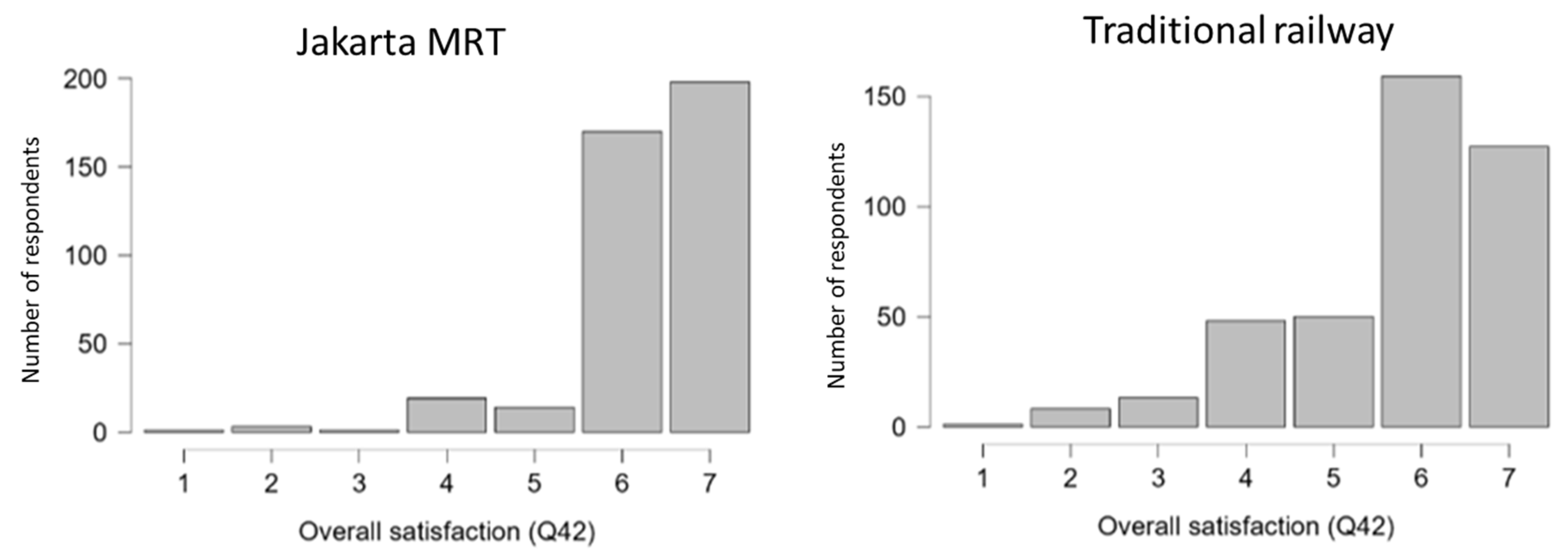
Through the questionnaire survey, we obtained 406 valid responses. The basic results of the survey are shown in Table 3. The table presents the results regarding overall ratings for each dimension (i.e., Questions 7, 8, 14, 21, 29, 34, 38, 39, and 41) and overall user satisfaction (i.e., Question 42). The distribution of the ratings for overall user satisfaction is shown in Figure 1.
Table 3.
Results of the survey.
Figure 1.
Ratings for overall user satisfaction (Source: Authors).
The survey results revealed that the majority of respondents were highly satisfied with the Jakarta MRT. The average score for overall satisfaction was 6.31, indicating a very high level of user satisfaction. The high level of satisfaction with the MRT is remarkable, even when compared to the traditional railway, which received an overall score of 5.77—also reflecting a relatively high satisfaction level. It is natural that the Jakarta MRT, having been developed only recently, would achieve a higher level of user satisfaction than the old railway. However, it is noteworthy that more than 90% of the respondents were satisfied with the overall service of the Jakarta MRT: 198 respondents indicated they were “strongly satisfied” (score = 7/7) and 170 indicated they were “satisfied” (score = 6/7) with the overall service. It should also be noted that overall user satisfaction with the Jakarta MRT is high despite relatively lower satisfaction with the fares, in contrast to the traditional railway.
The results of the regression analysis (Table 4) provide important insights into the factors influencing overall user satisfaction. First, all the dimensions except Assurance, Empathy, and Reliability showed statistically significant correlations with the overall satisfaction of Jakarta MRT users. It is somewhat surprising that Assurance, Empathy, and Reliability did not have significant correlations, as these also appear to be essential factors. However, it is not possible to determine from the analysis whether they are more or less important than the other dimensions. For the traditional railway, Comfort, Connection, Convenience, and Social Consideration had significant correlations. It is noteworthy that Assurance, Empathy, and Reliability were also not critical for the traditional railway, suggesting these three factors may be subordinate to other factors in the context of Indonesia’s railway system. In addition, the differing results regarding train fares between the Jakarta MRT and the traditional railway should be noted, as Train Fare was a critical factor for the Jakarta MRT but not for the traditional railway.
Table 4.
Results of the regression analyses on overall user satisfaction.
In addition, we conducted regression analyses between the overall rating of each dimension and its constituent elements, and the results presented in Table 5 provide useful insights into the specific factors that correlate with high overall ratings within each dimension. For instance, from an assurance perspective, safety on the train and the availability of information from the railway staff when users requested it emerged as the most important elements, suggesting that these two elements may represent key aspects of Assurance in both the national context and the Jakarta MRT. The same applies to other elements: the interpretation of each dimension may vary between countries and railway systems.
Table 5.
Results of the regression analyses on overall rating of each dimension (Jakarta MRT).
Based on these results, each dimension can be interpreted as follows. Assurance refers to safety on the trains and the staff’s spirit of service; Reliability reflects schedule punctuality, staff responsiveness and service spirit; Tangibles relate to the cleanliness of the train and the overall appearance of the railway system; Connection refers to the frequency and availability of trains; and Convenience denotes easy access to travel information, tickets, and shops. Regarding comfort, some elements could not be included in the analysis for technical reasons (see the Note under Table 5 for details); however, the quality of train facilities appears to be an important element. In addition, one or more of the factors—such as crowding on the train, noise levels, and journey times—are also likely to influence Comfort, considering that the adjusted R2 value for the comfort analysis is much lower than for the other dimensions.
Following the regression analysis, we conducted fsQCA to identify the causal configurations that are potentially associated with higher levels of user satisfaction. To enhance the robustness of the analysis, two different calibration methods were applied: basic calibration and referential calibration. The details of these methods are provided in the Section 3.
As the first step of the fsQCA, we conducted a necessary conditions analysis, and the results are presented in Table 6. Consistency refers to the proportion of cases that have a specific condition and display the expected outcome [18,55]. In short, it represents “the degree to which a condition is a necessary condition” [47]. Consistency is typically used to assess the model’s validity, and a general threshold is a value above 0.9 [18,47]. In contrast, coverage is defined as “the proportion of observations that exhibit the condition where the outcome is present” [47]. In general, a coverage threshold is a value above 0.6 [47]. Considering these thresholds, Assurance, Empathy, Tangibles, and Convenience are regarded as potential necessary conditions for high user satisfaction under the basic calibration, while only tangibles are a potential necessary condition under the reference calibration. These results indicate that tangibles can certainly be considered a potential necessary condition, as the consistency value is above 0.9 under both calibration methods. On the other hand, Assurance, Empathy, and Convenience may also qualify as necessary conditions.
Table 6.
Results of the analysis of necessary conditions.
Next, we conducted a sufficiency analysis, and the results are summarized in Table 7. In this analysis, we set 0.9 as a threshold for PRI (Proportional Reduction in Inconsistency) consistency, which is used “to avoid simultaneous subset relations of configurations in both the outcome and the absence of the outcome” [48]. As a rule of thumb, a PRI consistency threshold above around 0.75 is recommended [47]; however, this study adopted a higher threshold of 0.9 to increase the validity of the analysis. The results in Table 7 present a parsimonious solution calculated using the fs/QCA Software (Version 4.1), which provides a simplified solution highlighting the most important conditions [48]. As this study includes many assumed conditions, the parsimonious solution is particularly useful for simplifying the interpretation of the results.
Table 7.
Results of sufficiency analysis.
The sufficiency analysis shows that a configuration of Train Fare and Social Consideration (Configuration No. 1) serves as the simplest potential sufficient condition for high user satisfaction, as it involves only two satisfaction dimensions. This finding is supported by the results obtained under the referential calibration (Configuration No. R-1). Interestingly, however, a high user satisfaction outcome can also appear without high satisfaction in train fares and/or social considerations, provided that more than two satisfaction dimensions are present in such configurations. For instance, the configuration of Comfort, Convenience, and Train Fares (Configuration No. 2) also represents a potential sufficient condition, even without high satisfaction in Social Consideration. Similar configurations can be seen even in the results under the referential calibration (i.e., Configurations No. R–2 and R–3).
Similarly, satisfaction with train fares may be substituted by satisfaction with Social Consideration and other factors, as two configurations include the Social Consideration factor but not the Train Fare factor (Configurations No. 3 and 4). However, the factors that actually substitute for satisfaction with fares need to be carefully considered, as the results of the reference case suggest a more complex and slightly different solution (i.e., Configurations No. R–4 to R–7). Furthermore, the results show that even when satisfaction with both Train Fare and Social Consideration is low, a high overall satisfaction outcome can still appear under certain combination of other factors (Configurations No. 5 and R–8).
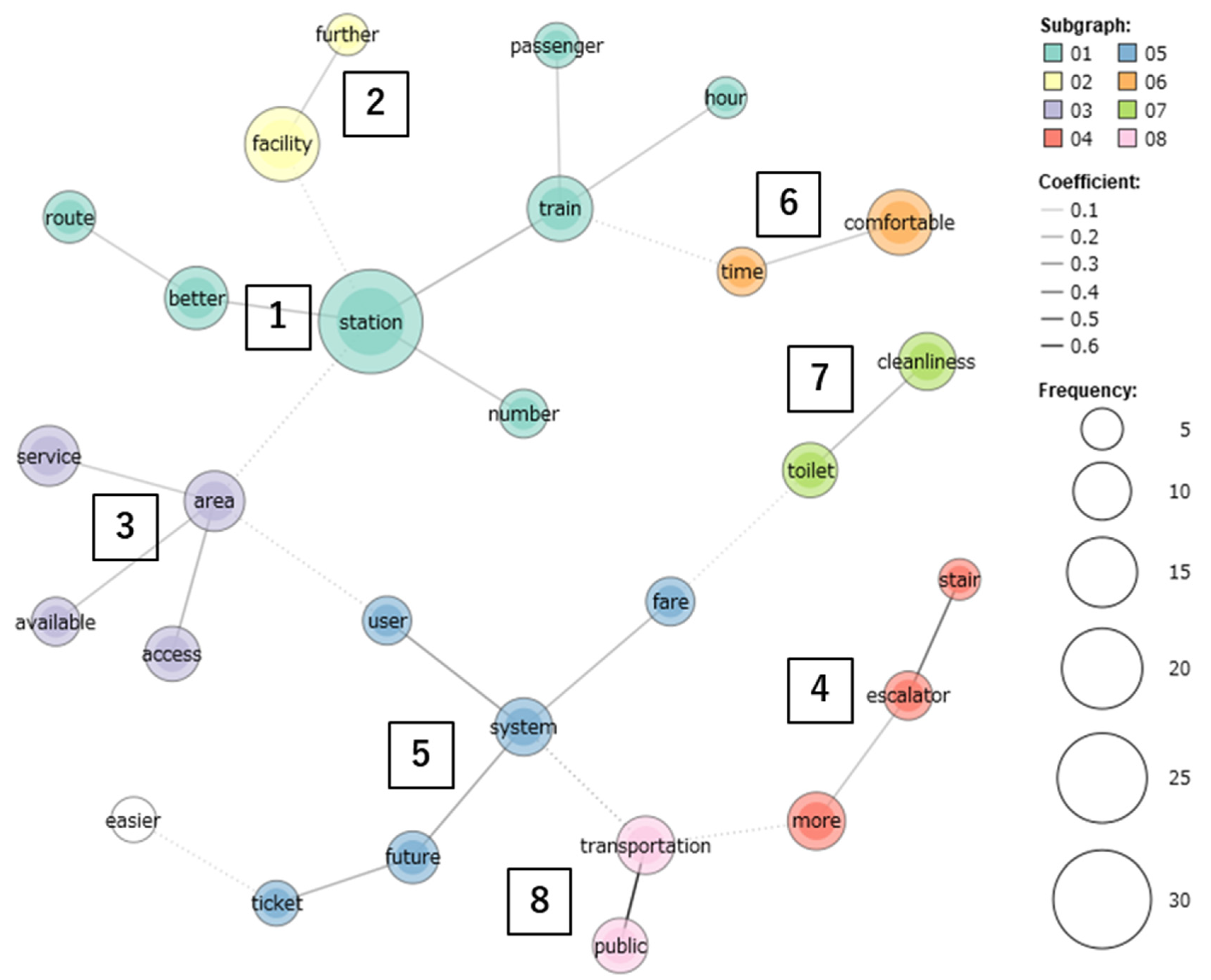
Finally, we conducted a text mining analysis of user responses to the open-ended question. The results of the co-occurrence network analysis are presented in Figure 2. The figure illustrates that words connected by lines tend to be used together in the respondents’ answers. KH-coder automatically detects and groups words that are relatively strongly associated with each other, and as a result, eight groups were identified (i.e., Groups 1 to 8), as shown in the figure. When looking at the original answers, we found that Groups 1 and 3 are related to similar comments, and the same applies to Groups 2 and 4. Groups 1 and 3 were related to connectivity, including comments about the limited number of stations and rail service areas, as well as the difficulty of transferring to or from other transport modes. Groups 2 and 4 are related to Social Consideration, and include comments calling for facilities that are easier for disabled people and the elderly to use (such as the need for more escalators and proper maintenance).
Figure 2.
Results of co-occurrence network analysis of responses; Groups 1 and 3: Comments regarding the limited number of stations and rail service areas, as well as the difficulty of transferring to or from other transport modes (connectivity); Groups 2 and 4: Comments calling for facilities that are easier for people with disabilities and the elderly to use, including the need for more escalators and proper maintenance (social consideration); Group 5: Comments related to high fares and the need for a more convenient and compatible ticket purchasing system, including apps (railway fares and convenience); Group 6: Comments praising MRT’s high comfort and on-time service (comfort and reliability); Group 7: Comments highlighting the need to improve toilet cleanliness (tangibles); Group 8: N/A, as “public transportation” is a compound word. Source: Authors.
Among all the groups, Groups 1 and 3, Groups 2 and 4, and Group 5 are notable for the amount of the mentioned and/or interconnected words. The majority of comments in these groups were requests for improvements related to connectivity, social consideration, convenience, and railway fares. This indicates that there is still room for improvement in these fields. However, it should be noted that the majority of MRT users rated the service highly, and there were many positive comments about the Jakarta MRT’s high-quality service, as Group 6 shows.
5. Discussion
5.1. Implications of the Findings
The results provide several important implications. First, the study confirms that the majority of users are highly satisfied with the services of the Jakarta MRT, aligning with the findings of previous research [33,34]. The results also suggest that users are generally satisfied across all service dimensions, although satisfaction with railway fares is lower than for the other dimensions.
The results of the regression analysis are also noteworthy. The findings indicate that the critical service dimensions associated with user satisfaction differ between the Jakarta MRT and the traditional railway, suggesting that practitioners need to understand the characteristics of each railway system and develop tailored strategies to enhance user satisfaction. When comparing the results for the Jakarta MRT with the traditional railway, the significance of satisfaction with the train fares is particularly notable: train fare satisfaction is critical for the Jakarta MRT but not for the traditional railway. This suggests that train fares are not always the most important factor and that other aspects of service quality may be more significant in some cases. While this may seem counterintuitive at first glance, it becomes reasonable when considering the extreme case of railways with very low fares but remarkably poor service. In such cases, users may say, “I don’t mind paying more, but I want better service.” In this sense, the Jakarta MRT appears to provide sufficiently high-quality service for fares to become a significant factor in shaping overall satisfaction.
Overlaying the regression analysis result with the fsQCA result provides additional insights. A combination of two dimensions—Railway Fare and Social Consideration—both of which had high coefficient values and were identified as particularly important in the regression analysis, was also found to be the simplest potential sufficient condition in the QCA. This indicates that railway fares and social considerations, particularly when combined, are significantly associated with overall user satisfaction with the Jakarta MRT, although the causal relationship should be further examined. Alternatively, the results suggest that even if achieving high satisfaction in railway fares and/or social considerations is difficult, overall satisfaction can still be enhanced through a combination of high satisfaction across other dimensions. However, it should be noted that high satisfaction across more than two dimensions is required in such cases (for instance, Configuration No. 2 requires three dimensions: Comfort, Convenience, and Train Fare).
The fsQCA also provides an important reminder that factors not considered significant in the regression analysis are not necessarily unimportant. In the regression analysis, Assurance, Empathy, and Reliability were not regarded as factors associated with high satisfaction. However, Reliability and Empathy appeared in the configurations of potential sufficient conditions, while Assurance and Empathy were potential necessary conditions for high satisfaction in the fsQCA (basic calibration case). These findings suggest that attention should be given to all service dimensions and that efforts to improve satisfaction should not be abandoned in any one dimension.
Also noteworthy here is that the definition of each service dimension may have specific meanings in the Indonesian context, as demonstrated in the Section 4. For instance, in the case of the connection dimension, users place less importance on access from the station to their destination or home, and more on whether they can board a train whenever they wish. However, the significance of improvements to accessibility should not be overlooked, as it is reasonable to assume that better accessibility will contribute to higher levels of satisfaction. What is required is more detailed and careful planning that considers the cost–benefit balance of improving accessibility to the level required to enhance user satisfaction.
Lastly, the results of the text mining analysis complemented and strengthened the findings of the regression analysis and fsQCA. Numerous words related to railway fares and social considerations were also identified through the co-occurrence analysis, further confirming their importance. While comments related to railway fares were somewhat expected, those concerning social considerations provided new insights. Interest in social considerations and universal design has been growing globally, including in developing countries [8,56], and Indonesia appears to be no exception. We are unsure what underlies this situation—whether the high level of satisfaction with other dimensions allows users to pay greater attention to social considerations, or whether Indonesian culture itself pays stronger emphasis on these areas. Regardless, to deepen understanding, it is essential to investigate why social considerations are considered so important in the Jakarta MRT or Indonesia, in future research.
5.2. Limitation and Necessary Future Works
Although this study followed established methodologies, several limitations should be acknowledged and addressed in future research. First, the analysis relied on limited data from the Jakarta MRT, based on interviews conducted during two specific periods: 20–24 January and 3–7 February 2025. As previous studies suggest, findings may vary depending on the railway system and the national context. Factors such as income levels, transport culture, and urban form are likely to contribute to these differences. Therefore, this research should be regarded as exploratory and preliminary, focusing specifically on the Jakarta MRT. In addition, high overall user satisfaction with the Jakarta MRT may have led to the lack of significant differences among independent variables, complicating interpretation. Future research should investigate satisfaction factors more comprehensively by collecting longitudinal data for the Jakarta MRT and conducting similar studies on urban rail systems in other Southeast Asian developing countries, such as Thailand and the Philippines. Comparative analyses of these follow-up studies are expected to provide a deeper understanding of the determinants of railway user satisfaction within the context of Southeast Asian developing countries.
Second, the regression analysis and QCA employed in this study cannot be used to infer causality. Regression analysis identifies correlations rather than causal links, and QCA provides potential “sufficient” or “necessary” conditions based solely on Boolean logic [49]. To robustly examine causality, future research should incorporate alternative analytical approaches capable of confirming causal mechanisms.
Third, although the questionnaire was primarily based on the SERVQUAL framework, further refinement would have improved its suitability for the Jakarta MRT context. For instance, terms such as “anxiety” were ambiguous and may have confused respondents. Additionally, many questions focused on interactions with railway staff; however, given the MRT’s adoption of modern information systems for ticketing and related services, such emphasis may have been unnecessary. Future surveys should refine the wording of questions, adjust items to better reflect the specific context of the case railway, and incorporate additional questions on social considerations, which emerged as potentially significant in this study.
6. Conclusions
This research aimed to answer the question: “Which factors lead to high levels of user satisfaction with the Jakarta MRT?” To address this question, this study collected primary data through a face-to-face questionnaire survey and analyzed it using regression analysis, fsQCA, and text mining analysis.
Through the analysis, some important findings were identified. First, the collected data showed that users were highly satisfied with the overall services of the Jakarta MRT, although satisfaction levels varied across all service dimensions—for example, satisfaction with railway fares was slightly lower than for other service dimensions. Second, regression analysis suggested that Tangibles, Comfort, Connection, Convenience, Train fares, and Social Consideration dimensions were significantly associated with high user satisfaction. The analysis also suggested that this trend is specific to the Jakarta MRT, presenting a comparison with the traditional railway as a reference.
Third, the regression analysis between the overall rating of each dimension and its elements revealed that some elements may have a greater influence on the satisfaction level of each service dimension, which could affect overall user satisfaction. Fourth, the fsQCA revealed that a combination of two dimensions—Railway Fare and Social Consideration—constitutes the simplest potential sufficient condition for high overall satisfaction, while various other combinations of satisfaction dimensions may also contribute to high levels of overall satisfaction. In addition, the fsQCA results suggested that maintaining high levels of satisfaction across all dimensions is important, as each dimension may be a necessary and/or sufficient condition for high satisfaction. Lastly, text mining analysis showed that users tend to be interested in topics related to social considerations, connectivity, convenience, and railway fares.
Although this study provides valuable insights, it is subject to several limitations arising from its narrow case scope and certain technical constraints, which should be addressed in future research. In particular, the exploratory and preliminary nature of this study—focused specifically on the Jakarta MRT—should be acknowledged. Scholars and practitioners should interpret these findings carefully before extending them to other railway systems. To deepen the understanding of factors influencing urban railway user satisfaction and to generalize the findings within the context of Southeast Asian developing countries, future research should encompass similar studies on urban rail systems across the region. Such efforts are essential for building a more comprehensive and generalizable knowledge base.
Author Contributions
Conceptualization, K.E. and Y.T.; Methodology, K.E.; Software, K.E.; Formal Analysis, K.E.; Investigation, K.E.; Data Curation, K.E.; Writing—Original Draft Preparation, K.E.; Writing—Review and Editing, K.E., Y.T. and T.K.; Funding Acquisition, K.E. All authors have read and agreed to the published version of the manuscript.
Funding
This research received no external funding.
Institutional Review Board Statement
Ethical review and approval were waived for this study due to the Research Ethics Guidelines of JICA Ogata Sadako Research Institute ((DI) No.202203310015 dated 31 March 2022). The guidelines do not require ethics approval of research applying a questionnaire survey that secures personal information and obtains informed consent from the participants in the survey, which was applied to this research.
Informed Consent Statement
Informed consent for participation was obtained from all subjects involved in the study.
Data Availability Statement
Data supporting the findings of this article may be available from the corresponding author upon reasonable request.
Acknowledgments
The authors thank three anonymous reviewers for their constructive comments, which helped improve the manuscript. During the preparation of this manuscript, the authors used Microsoft 365 Copilot for English editing of some portions. The use of the tool was limited to language editing and did not involve content generation. The authors have reviewed all edits and take full responsibility for them.
Conflicts of Interest
The authors declare no conflicts of interest.
Appendix A
Basic Information about the Jakarta MRT
Map
Figure A1.
Jakarta MRT Route Map. Source: JICA.
Specifications of the Jakarta MRT (N-S Phase 1)
Inauguration: March 2019
Operator: PT Mass Rapid Transit Jakarta (Perseroda)
Operating Distance: 15.7 km
Number of Stations: 13 (6 underground and 7 elevated)
Maximum Design Speed: 100 km/h (elevated), 80 km/h (underground)
Headway: 5 to 10 min
Punctuality of Arrival Time (2024): 99.94% *
Daily Ridership (2024): 111,534 persons *
(* Information source: MRT Jakarta Annual Report 2024)
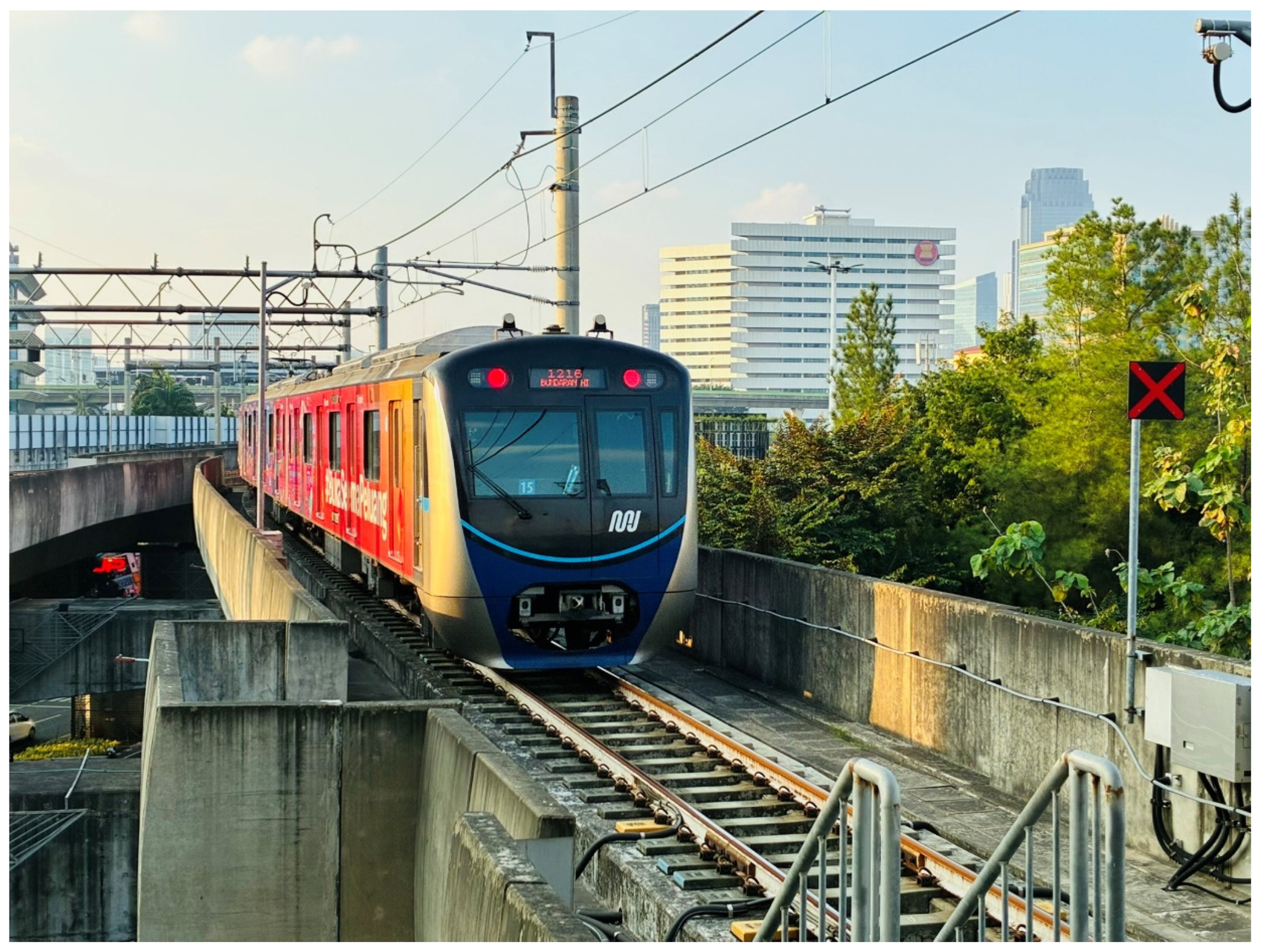
A picture of the Jakarta MRT (taken in August 2025)
Figure A2.
Jakarta MRT running through the city (August 2025). Source: Authors.
Appendix B
Table A1.
Questionnaire used for the survey in English.
Table A1.
Questionnaire used for the survey in English.
| Dimension | Information to Be Collected (Question) | Answer |
|---|---|---|
| Basic Information | Date, time, and place of the interview | e.g., 11:00 a.m., 11 October 2024 in front of Bundaran HI station |
| Verbal Informed consent | # Need to confirm “YES” prior to the interview | |
| Age | e.g., 25 years old | |
| Gender | e.g., male | |
| Occupation | Choose from the following options: Academic/Student, Employee (Private and Public), Self-employment, Housewife, Retired persons, Others/N/A | |
| Purpose of using the MRT Jakarta | Choose from the following options: Business, School, Travel, Social/Family, Others/N/A | |
| Frequency of use of the MRT Jakarta | Choose from the following options: Every day, 3 or more times a week, 1–2 times a week 1–2 times a month, 1–2 times a year, Others/N/A | |
| Assurance | 1. Courtesy—staff on train and platform Are staff on trains and the platform courteous? | Choose from the following options: 7-point scale (1, 2, 3, 4, 5, 6, and 7). Explanation of 7-point Likert scale 7: Strongly agree (highest) 6: Agree 5: Slightly agree 4: Neutral: Neither agree nor disagree 3: Slightly disagree 2: Disagree 1: Strongly disagree (lowest) |
| 2. Being informed if there are delays Are you informed if there are delays of trains? | ||
| 3. Personal safety at station Do you feel safe at stations? | ||
| 4. Personal safety on train Do you feel safe on trains? | ||
| 5. Courtesy—staff at ticket office Are staff in ticket offices courteous? | ||
| 6. Having the knowledge to answer your questions Can you get enough information from the railway staff when you ask questions? | ||
| 7. Overall perception on assurance Overall, do you have no anxiety for using the railway system? | ||
| Empathy | 8. Dealing with you in a caring fashion when you make inquiries Are railway staff kind and helpful when you make inquires? | |
| Reliability /Responsiveness | 9. Maintaining the frequency of trains as scheduled in timetables Do trains come on time (as scheduled in timetables)? | |
| 10. Providing on time train services Do trains reach destinations on time? | ||
| 11. Dependability in handling your service problems (1) Did staff handle your service problems (e.g., when buying ticket, when you were unable to climb up stairs, when you lost your belongings)? | ||
| 12. Dependability in handling your service problems (2) Do you think railway staff can handle your service problems when you have them in the future? (e.g., when buying ticket, when you are unable to climb up stairs, when you lose your belongings) | ||
| 13. Availability of staff in handling your requests Can you contact railway staff when you have problems? | ||
| 14. Overall perception on reliability Overall, can you trust the railway system (operation and service)? | ||
| Tangibles | 15. A neat, professional appearance of staff Do you feel staff maintain a neat and professional appearance? | |
| 16. Clarity of timetables Can you easily understand timetables (what time trains come)? | ||
| 17. Appearance/design of station Do you feel stations have a good appearance/design? | ||
| 18. Cleanliness of station Do you feel stations are clean? | ||
| 19. Appearance/design of train Do you feel trains have a good appearance/design? | ||
| 20. Cleanliness of train Do you feel trains are clean? | ||
| 21. Overall perception on tangibles Overall, do you feel the railway system has good appearance and cleanness? | ||
| Comfort | 22. Availability of seating–train Can you find available seats in trains? | |
| 23. Comfortable seats on train Do you think seats in trains are comfortable? | ||
| 24. Comfortable temperature on train Do you think temperature in train is comfortable? | ||
| 25. Smoothness of ride on train Do you feel trains run smoothly (without uncomfortable rocking motions of trains)? | ||
| 26. Crowd Do you feel trains are crowed when you use? | ||
| 27. Noise Do you feel trains are noisy when you use? | ||
| 28. Traveling time on train Do you feel traveling time to your destination is long? | ||
| 29. Overall perception on comfortability Overall, are you comfortable when you use trains? | ||
| Connection | 30. Ease of access to your home station Can you easily access to your home station (nearest station from your home)? | |
| 31. Ease of access to the nearest station at your working place/school Can you easily access to the nearest station at your working place/school? | ||
| 32. Frequency of trains that meet your needs Are you satisfied with current frequency of trains (satisfied with current waiting time for trains)? | ||
| 33. Trains running at suitable times so you can catch connecting transport services Do trains run when you want to use? | ||
| 34. Overall perception on connection Overall, are you satisfied with current connection of the railway system? | ||
| Convenience | 35. Ease of access to travel information Can you easily access to travel information (e.g., timetable and guide sign)? | |
| 36. Ease of buying tickets Can you easily buy tickets? | ||
| 37. Availability of shops in/around the stations Can you easily access to shops (e.g., convenience stores and food shops) in/around the stations? | ||
| 38. Overall perception on convenience Overall, do you feel current railway system is convenient for users? | ||
| Train fare | 39. Train fare Are you satisfied with current train fare (price of tickets)? | |
| Social Consideration | 40. Facilities for vulnerable people Do stations have enough facilities for vulnerable people (e.g., disability people and pregnant women), such as lifts and escalators? | |
| 41. Ease of using railway for vulnerable people Do you think socially vulnerable people (e.g., disability people and pregnant women) can use the railway easily? | ||
| Overall satisfaction | 42. Overall satisfaction Overall, are you satisfied with current railway system? | |
| Open question | Please write your comments (e.g., good points and points necessary for improvement), if any. | Free answer, if any. |
Note: The questionnaire used for the survey was translated into Indonesian before use.
References
- Ibrahim, A.N.H.; Borhan, M.N.; Yusoff, N.I.M.; Ismail, A. Rail-based Public Transport Service Quality and User Satisfaction: A Literature Review. Promet-Traffic Transp. 2020, 32, 423–435. [Google Scholar] [CrossRef]
- Eboli, L.; Mazzulla, G. Relationships Between Rail Passengers’ Satisfaction and Service Quality: A Framework for Identifying Key Service Factors. Public Transp. 2015, 7, 185–201. [Google Scholar] [CrossRef]
- Miranda, S.; Tavares, P.; Queiró, R. Perceived Service Quality and Customer Satisfaction: A Fuzzy Set QCA Approach in the Railway Sector. J. Bus. Res. 2018, 89, 371–377. [Google Scholar] [CrossRef]
- Endo, K.; Edelenbos, J.; Gianoli, A. Sustainable Infrastructure: A Systematic Literature Review on Finance Arrangements and Governance Modes. Public Work. Manag. Policy 2023, 28, 443–475. [Google Scholar] [CrossRef]
- Inter-American Development Bank (IDB). What is Sustainable Infrastructure? A Framework to Guide Sustainability Across the Project Cycle. 2018. Available online: https://publications.iadb.org/en/what-sustainable-infrastructure-framework-guide-sustainability-across-project-cycle (accessed on 1 December 2025).
- Levine, K.; Karner, A. Approaching Accessibility: Four Opportunities to Address the Needs of Disabled People in Transportation Planning in the United States. Transp. Policy 2023, 131, 66–74. [Google Scholar] [CrossRef]
- Jahangir, S.; Bailey, A.; Hasan, M.U.; Hossain, S. Inequalities in Accessing Public Transportation and Social Exclusion among Older Adults and People with Disabilities in Bangladesh: A Scoping Review. Transp. Res. Interdiscip. Perspect. 2024, 26, 101138. [Google Scholar] [CrossRef]
- Robles, L.R.; Gaspay, S.M. Examining Women’s Commuting Experience in Urban Philippines: A Photovoice Exercise on Human Security; Discussion Paper No. 20.; JICA Ogata Research Institute for Peace and Development: Tokyo, Japan, 2024.
- Van Lierop, D.; Badami, M.G.; El-Geneidy, A.M. What Influences Satisfaction and Loyalty in Public Transport? A Review of the Literature. Transp. Rev. 2018, 38, 52–72. [Google Scholar] [CrossRef]
- Wang, Y.; Zhang, Z.; Zhu, M.; Wang, H. The impact of service quality and customer satisfaction on reuse intention in urban rail transit in Tianjin, China. Sage Open 2020, 10, 2158244019898803. [Google Scholar] [CrossRef]
- Vasanthi, M.G.; Soundrarajan, V.; Nawaz, N.; Gajendran, V.; Parayitam, S. Passenger satisfaction with cleanliness and other service quality dimensions and gender as a moderator: Evidence from Indian Railways. Cogent Bus. Manag. 2023, 10, 2183568. [Google Scholar] [CrossRef]
- Nandan, S. Determinants of Customer Satisfaction on Service Quality: A Study of Railway Platforms in India. J. Public Transp. 2010, 13, 97–113. [Google Scholar] [CrossRef]
- Parasuraman, A.B.L.L.; Zeithaml, V.A.; Berry, L. SERVQUAL: A Multiple-Item Scale for Measuring Consumer Perceptions of Service Quality. J. Retail. 1988, 64, 12–40. [Google Scholar]
- Cavana, R.Y.; Corbett, L.M.; Lo, Y.L. Developing Zones of Tolerance for Managing Passenger Rail Service Quality. Int. J. Qual. Reliab. Manag. 2007, 24, 7–31. [Google Scholar] [CrossRef]
- de Oña, J.; De Oña, R. Quality of Service in Public Transport Based on Customer Satisfaction Surveys: A Review and Assessment of Methodological Approaches. Transp. Sci. 2015, 49, 605–622. [Google Scholar] [CrossRef]
- Silcock, D.T. Measures of Operational Performance for Urban Bus Services. Traffic Eng. Control. 1981, 22, 645–648. [Google Scholar]
- Lättman, K.; Friman, M.; Olsson, L.E. Perceived Accessibility of Public Transport as a Potential Indicator of Social Inclusion. Soc. Incl. 2016, 4, 36–45. [Google Scholar] [CrossRef]
- Sukhov, A.; Lättman, K.; Olsson, L.E.; Friman, M.; Fujii, S. Assessing Travel Satisfaction in Public Transport: A Configurational Approach. Transp. Res. Part D Transp. Environ. 2021, 93, 102732. [Google Scholar] [CrossRef]
- Tumsekcali, E.; Ayyildiz, E.; Taskin, A. Interval valued intuitionistic fuzzy AHP-WASPAS based public transportation service quality evaluation by a new extension of SERVQUAL Model: P-SERVQUAL 4.0. Expert Syst. Appl. 2021, 186, 115757. [Google Scholar] [CrossRef]
- Liu, J.; Gao, H. Study on railway transport service quality evaluation. In Proceedings of the 2007 International Conference on Wireless Communications, Networking and Mobile Computing, Shanghai, China, 21–25 September 2007; IEEE: New York, NY, USA, 2007; pp. 3313–3316. [Google Scholar]
- Ranjan, R.K.; Thapar, N.; Siddiqui, S.A.; Painoli, A.K. Assessing the Service Quality Attributes Affecting the Satisfaction of the Northern Railway Passengers: An Empirical Study. J. New Bus. Ventur. 2020, 1, 110–124. [Google Scholar] [CrossRef]
- De Oña, R.; Eboli, L.; Mazzulla, G. Key Factors Affecting Rail Service Quality in Northern Italy: A Decision Tree Approach. Transport 2014, 29, 75–83. [Google Scholar] [CrossRef]
- Choocharukul, K.; Sriroongvikrai. Multivariate Analysis of Customer Satisfaction: A Case Study of Bangkok’s Mass Rapid Transit (MRT) Passengers. J. East. Asia Soc. Transp. Stud. 2013, 10, 1258–1269. [Google Scholar]
- Fu, Y.; Eboli, L.; Mazzulla, G.; Zhang, Y. Railway Service Quality in Northern Italy: A Multilevel Synthetic Assessment. Adv. Mech. Eng. 2017, 9, 1687814016686317. [Google Scholar] [CrossRef]
- Jomnonkwao, S.; Champahom, T.; Ratanavaraha, V. Methodologies for determining the service quality of the intercity rail service based on users’ perceptions and expectations in Thailand. Sustainability 2020, 12, 4259. [Google Scholar] [CrossRef]
- Wonglakorn, N.; Ratanavaraha, V.; Karoonsoontawong, A.; Jomnonkwao, S. Exploring passenger loyalty and related factors for urban railways in Thailand. Sustainability 2021, 13, 5517. [Google Scholar] [CrossRef]
- Lieophairot, C.; Rojniruttikul, N. Factors affecting state railway of Thailand (SRT) passenger train service use decision: A structural equation model. Heliyon 2023, 9, e15660. [Google Scholar] [CrossRef]
- Ibrahim, A.N.H.; Borhan, M.N.; Osman, M.H.; Khairuddin, F.H.; Zakaria, N.M. An Empirical Study of Passengers’ Perceived Satisfaction with Monorail Service Quality: Case of Kuala Lumpur, Malaysia. Sustainability 2022, 14, 6496. [Google Scholar] [CrossRef]
- Ibrahim, A.N.H.; Borhan, M.N.; Mat Yazid, M.R.; Hassan, S.A.; Arham, A.F.; Hashim, S. Modelling of passenger satisfaction and reuse intention with monorail services in Kuala Lumpur, Malaysia: A hybrid SEM-ANN approach. Mathematics 2023, 11, 3361. [Google Scholar] [CrossRef]
- Woodside, A.G. Moving Beyond Multiple Regression Analysis to Algorithms: Calling for Adoption of a Paradigm Shift from Symmetric to Asymmetric Thinking in Data Analysis and Crafting Theory. J. Bus. Res. 2013, 66, 463–472. [Google Scholar] [CrossRef]
- Xu, X.; Tahir, S.H.; Khan, K.B.; Sajid, M.A.; Safdar, M.A. Beyond Regression: Unpacking Research of Human Complex Systems with Qualitative Comparative Analysis. Heliyon 2024, 10, e31457. [Google Scholar] [CrossRef]
- Gligor, D.; Bozkurt, S. FsQCA versus Regression: The Context of Customer Engagement. J. Retail. Consum. Serv. 2020, 52, 101929. [Google Scholar] [CrossRef]
- Wardhani, W.S.; Situmorang, R.; Levara, J.C.; Taki, H.M. Passengers Service Preferences on Jakarta MRT Phase i (Lebak Bulus to Hotel Indonesia). IOP Conf. Ser. Earth Environ. Sci. 2021, 737, 012055. [Google Scholar] [CrossRef]
- Purba, G.N.; Widiyastuti, D. First Mile and Last Mile Analysis Using Users’ Perceived Quality of Jakarta Mass Rapid Transit (MRT Jakarta) North-South Corridor Phase 1. IOP Conf. Ser. Earth Environ. Sci. 2024, 1313, 012021. [Google Scholar]
- Prasidi, A.; Fachrial, P.; Sabilla, M.F.; Maisarah, P.; Ratnasari, D.; Pahrudin, C. The Influence of Service Quality and Station Facilities on Mass Rapid Transit Jakarta Passengers’ Satisfaction. KnE Life Sci. 2023, 877, 877–886. [Google Scholar] [CrossRef]
- Sihombing, S.; Manik, P.; Anisya, L.R.; Nurcahayati, D.; Hidayat, M.; Yulihapsari, I.U. The Effect of Service Quality, Ticket Prices and Ease of Transaction on Customer Satisfaction of Mass Rapid Transit Jakarta. KnE Soc. Sci. 2023, 854, 854–868. [Google Scholar] [CrossRef]
- Rahmanita, P.P.; Suhud, U.; Krissanya, N. Analysis of Satisfaction and Loyalty Among Users of the Jakarta Mass Rapid Transit: What is the Role of Service Quality, Facilities, and Perceived Price? Int. J. Educ. Soc. Stud. Manag. (IJESSM) 2025, 5, 979–994. [Google Scholar] [CrossRef]
- Ahlina, A.H.N.; Ishak, D.P. Design of Mass Rapid Transit (MRT) Service Quality Through Analysis of Factors Affecting Passenger Behavior Intention Using PLS-SEM and QFD. In Proceedings of the 3rd African International Conference on Industrial Engineering and Operations Management, Nsukka, Nigeria, 5–7 April 2022. [Google Scholar]
- Natarina, C.; Rivai, A.K.R.; Febrillia, I. Analysis of Factors Affecting Consumer Loyalty: A Study on Consumers of MRT Jakarta Public Transportation Services. JRMSI-J. Ris. Manaj. Sains Indones. 2023, 14, 17–29. [Google Scholar] [CrossRef]
- Heerwegh, D.; Loosveldt, G. Face-to-face versus web surveying in a high-internet-coverage population: Differences in response quality. Public Opin. Q. 2008, 72, 836–846. [Google Scholar] [CrossRef]
- Hope, S.; Campanelli, P.; Nicolaas, G.; Lynn, P.; Jäckle, A. The Role of the Interviewer in Producing Mode Effects: Results from a Mixed Modes Experiment Comparing Face-to-Face, Telephone and Web Administration (No. 2014-20); ISER Working Paper Series; University of Essex: Colchester, UK, 2014. [Google Scholar]
- Kusmaryono, I.; Wijayanti, D.; Maharani, H.R. Number of response options, reliability, validity, and potential bias in the use of the likert scale education and social science research: A literature review. Int. J. Educ. Methodol. 2022, 8, 625–637. [Google Scholar] [CrossRef]
- Cochran, W.G. Sampling Techniques; John Wiley & Sons: Hoboken, NJ, USA, 1977. [Google Scholar]
- Ragin, C.C. Redesigning Social Inquiry: Fuzzy Sets and Beyond; University of Chicago Press: Chicago, IL, USA, 2009. [Google Scholar]
- Ragin, C.C. Fuzzy-Set Social Science; University of Chicago Press: Chicago, IL, USA, 2000. [Google Scholar]
- Ragin, C.C. The Comparative Method: Moving Beyond Qualitative and Quantitative Strategies; University of California Press: California, CA, USA, 2014. [Google Scholar]
- Mattke, J.; Maier, C.; Weitzel, T.; Gerow, J.E.; Thatcher, J.B. Qualitative Comparative Analysis (QCA) in Information Systems Research: Status Quo, Guidelines, and Future Directions. Commun. Assoc. Inf. Syst. 2022, 50, 8. [Google Scholar] [CrossRef]
- Pappas, I.O.; Woodside, A.G. Fuzzy-Set Qualitative Comparative Analysis (fsQCA): Guidelines for Research Practice in Information Systems and Marketing. Int. J. Inf. Manag. 2021, 58, 102310. [Google Scholar] [CrossRef]
- Baumgartner, M. Qualitative comparative analysis and robust sufficiency. Qual. Quant. 2022, 56, 1939–1963. [Google Scholar] [CrossRef]
- Amenta, E.; Poulsen, J.D. Where to Begin: A Survey of Five Approaches to Selecting Independent Variables for Qualitative Comparative Analysis. Sociol. Methods Res. 1994, 23, 22–53. [Google Scholar] [CrossRef]
- Higuchi, K. A Two-step Approach to Quantitative Content Analysis: KH Coder Tutorial Using Anne of Green Gables (Part I). Ritsumeikan Soc. Sci. Rev. 2016, 52, 77–91. [Google Scholar] [CrossRef]
- Higuchi, K. A Two-step Approach to Quantitative Content Analysis: KH Coder Tutorial Using Anne of Green Gables (Part II). Ritsumeikan Soc. Sci. Rev. 2017, 53, 137–147. [Google Scholar] [CrossRef]
- KH Coder Website. Available online: https://khcoder.net/en/ (accessed on 1 December 2025).
- Higuchi, K. KH Coder 3 Reference Manual; Ritsumeikan University: Kioto, Japan, 2016. [Google Scholar]
- Rihoux, B.; Ragin, C. (Eds.) Configurational Comparative Methods: Qualitative Comparative Analysis (QCA) and Related Techniques; Applied Social Research Methods Series; Sage: Thousand Oaks, CA, USA, 2009; Volume 51. [Google Scholar]
- Endo, K.; Edelenbos, J.; Gianoli, A. Finance Arrangements and Governance Modes toward Sustainable Infrastructure: The Case of Urban Railway Projects in Manila, the Philippines. Discov. Sustain. 2024, 5, 235. [Google Scholar] [CrossRef]
Disclaimer/Publisher’s Note: The statements, opinions and data contained in all publications are solely those of the individual author(s) and contributor(s) and not of MDPI and/or the editor(s). MDPI and/or the editor(s) disclaim responsibility for any injury to people or property resulting from any ideas, methods, instructions or products referred to in the content. |
© 2026 by the authors. Licensee MDPI, Basel, Switzerland. This article is an open access article distributed under the terms and conditions of the Creative Commons Attribution (CC BY) license.