Article

Effect of Bonding Characteristics on Rutting Resistance and Moisture Susceptibility of Rubberized Reclaimed Asphalt Pavement

1
College of Civil Engineering, Fuzhou University, Fuzhou 350116, China
2
Department of Civil, Environmental, and Geo-Engineering, University of Minnesota, Minneapolis, MN 55455, USA
3
Department of Civil, Building and Environmental Engineering, Sapienza University of Rome, Via Eudossiana 18, 00184 Rome, Italy
*
Author to whom correspondence should be addressed.
Infrastructures 2025, 10(12), 336; https://doi.org/10.3390/infrastructures10120336
Submission received: 20 October 2025 / Revised: 20 November 2025 / Accepted: 3 December 2025 / Published: 7 December 2025

Abstract

Asphalt pavements incorporating recycled and sustainable materials have become a widely adopted strategy in road construction, particularly with the use of reclaimed asphalt pavement (RAP) and crumb rubber (CR) derived from waste tires. However, the adhesion and cohesion characteristics of rubberized RAP mixtures remain insufficiently understood. This study investigates how interfacial bonding affects the rutting resistance and moisture susceptibility of rubberized RAP asphalt mixtures. Two RAP sources with different aging levels and two CR particle sizes (250 μm and 380 μm) were evaluated. Binder bond strength (BBS) tests showed that pull-off strength increased with the use of smaller CR particles and more highly aged RAP, while rotational viscosity and penetration tests confirmed the corresponding increase in binder stiffness. Hamburg wheel track (HWT) tests with high-temperature viscoplastic deformation analysis demonstrated improved rutting resistance in the tested mixtures. Furthermore, boiling tests supported by image analysis revealed reductions in stripping ratios, indicating enhanced moisture resistance. ANOVA results (p < 0.05) confirmed that CR content had a significant effect on bonding characteristics, whereas RAP aging and CR particle size jointly influenced rutting performance. Overall, mixtures incorporating 10% CR and 25% RAP achieved the best balance between adhesion, cohesion, and durability. These findings provide a quantitative understanding of how interfacial bonding governs the mechanical performance and moisture resistance of rubberized RAP mixtures.

1. Introduction

The increasing generation of waste materials from the automotive and construction industries, along with the depletion of natural resources, has intensified the search for sustainable alternatives in pavement engineering. Among the various strategies, the use of reclaimed asphalt pavement (RAP) and crumb rubber (CR) derived from end-of-life tires has gained significant attention as an environmentally friendly strategy to reduce material costs, minimize landfill disposal, and conserve virgin aggregates and binders [1,2]. Crumb rubber-modified asphalt mixtures have demonstrated improved elasticity, fatigue life, and resistance to permanent deformation [3,4]. Similarly, partially substituting virgin materials with RAP can increase mixture stiffness and rutting resistance due to the high viscosity of the aged binder [5,6,7,8]. However, excessive RAP content or inadequate blending may reduce fatigue resistance and increase moisture susceptibility [1,9,10]. Increasing RAP content generally enhances the resilient modulus regardless of CR content, and higher ambient CR and RAP levels improve the rutting resistance of modified mixtures [11]. Nonetheless, the addition of RAP can reduce fatigue life irrespective of CR type or mixing conditions [12]. A combination of 10% CR and 25% RAP has been shown to balance these properties, improving both rutting and fatigue resistance. The performance of CR-modified binders containing RAP is also temperature dependent, with 40% RAP increasing rutting resistance by up to 25% [13].
The application of Warm Mix Asphalt (WMA) technologies to mixtures containing RAP and CR has further demonstrated promising results [14,15]. Sasobit, an organic WMA additive, is typically incorporated at 4% and 5.5% by weight of the virgin binder to reduce binder viscosity. This reduction effectively mitigates stiffness associated with high RAP contents and offsets the negative effects related to CR modification. Except for the mixture containing 30% RAP and 4% additive, which performs similarly to the control, all modified mixtures exhibit enhanced moisture resistance and improved fatigue cracking resistance.
The incorporation of recycled materials such as RAP and CR has therefore become a widely adopted strategy in modern pavement construction [2]. However, asphalt mixtures containing these secondary materials remain susceptible to environmental degradation, including raveling, stripping, rutting, and pothole formation. Among these, moisture damage is particularly critical and represents a primary cause of premature failure in hot mix asphalt (HMA) pavements [16]. Moisture-induced deterioration is driven by loss of adhesion between the asphalt binder and aggregate surface, and loss of cohesion within the binder itself [17].
Variations in binder aging, rubber particle size, and aggregate surface energy significantly affect binder–aggregate interaction, yet the underlying physicochemical bonding behaviors are not fully clarified. Bond failures may arise from (1) cohesive failure within the binder, (2) loss of aggregate strength, and (3) adhesive failure at the binder–aggregate interface [18]. Additional contributing factors include poor surface treatment, surface contaminants (e.g., moisture, grease, oil, and dust), and improper mixing ratios, curing times, adhesive material temperatures, and substrate incompatibility issues [19,20].
Adhesion and cohesion properties of asphalt binders can be evaluated using various experimental and analytical techniques, including simulation methods, adhesion energy assessment, and pull-off testing [21]. Surface free energy (SFE), atomic force microscopy (AFM), pneumatic adhesion tensile testing, universal test machines, bonding tensile testing apparatuses (BTTA), and binder bond strength (BBS) tests have all gained widespread acceptance in recent years [22]. Through these methods, researchers have identified strong correlations between asphalt bond strength and material SFE characteristics [23]. Ensuring consistent asphalt binder thickness remains challenging and can influence failure mode and bon strength. Researchers investigated the adhesion properties of modified asphalt binder using BBS [24]. The study concluded that when the film thickness was thin, adhesive failure at the binder–aggregate might occur. When the binder film thickness was low, the presence of crumb rubber has a significant influence on the BBS result, and binder film thickness of 0.1 mm is recommended to be avoided. Other work shows that failure transitions from adhesive to cohesive as binder film increases [25].
Researchers have also examined the effects of binder aging, stiffness, aggregate type, and their interactions on bond strength under dry and wet conditions using BBS and SFE analyses, alongside mixture-level moisture susceptibility testing [23]. Under dry conditions, bond strength increases with binder aging, while aggregate type has only a minor effect. As aging progresses, the likelihood of cohesive failure decreases, indicating that aging-induced changes in SFE play a critical role in bonding potential and failure mode. Moisture conditioning significantly reduces bond strength, especially for basalt aggregates.
Additional studies have explored the influence of additives, aging, and conditioning on binder adhesion using pull-off testing and laboratory moisture conditioning [26]. These results indicate that aging increases adhesive failure, while chemical surfactant additives reduce it, improving the moisture resistance of WMA binders. In efforts to better understand the bonding behavior of rubberized asphalt, researchers have evaluated the effects of CR pre-treatment (e.g., pre-soaking) on bond strength [27,28]. The findings show cohesive failures dominate under both dry and wet conditions, with higher pull-off values in dry testing and no adverse moisture susceptibility. NaOH treatment of CR further increases pull-off strength.
Despite these advancements, the adhesion and cohesion mechanisms governing the performance of rubberized RAP mixtures remain poorly understood. This research therefore aims to systematically investigate how bonding characteristics influence rutting resistance and moisture susceptibility in rubberized RAP mixtures, guiding the asphalt mixture design for improving and extending the pavement service life. The findings provide an enhanced understanding of the surface interaction mechanisms in rubberized RAP binders, supporting the optimization of recycled asphalt pavement design.

2. Materials and Methods

2.1. Materials

2.1.1. Binder

A virgin binder with a penetration grade #70 was used. Two RAP sources (i.e., RA and RB) were obtained from a local contractor. The binders were extracted from the RAP materials using the centrifuge extraction method according to ASTM D2172 [29] and further purified using a rotary evaporator following ASTM D5404 [30]. Table 1 summarizes the basic physical properties of the virgin and RAP binders.

2.1.2. Crumb Rubber

Two types of CR (CR-A, 60 mesh, and CR-B, 40 mesh) were collected from recycled tires. The different particle sizes were used to evaluate the influence of rubber fineness on binder and mixture properties.

2.2. Sample Production

2.2.1. Rubberized RAP Binder

Rubberized asphalt binders were prepared by blending VB with CR at 10% and 15% by binder weight. The wet blending process was conducted at 170 °C and a mixing speed of 1000 rpm for 1 h [24,28]. The rubberized bitumen was then mixed with virgin aggregates and RAP to produce rubberized RAP mixtures. Following mixture preparation, the rubberized RAP bitumen was extracted and subsequently recovered according to ASTM D2172 and ASTM D5404, respectively. Figure 1 illustrates the preparation process for the rubberized RAP binder.

2.2.2. Rubberized RAP Mixture

According to Table 2, four types of rubberized RAP mixtures of AC-13 were evaluated using two RAP sources and two CR types. The gradation and binder content of RAP with different sizes are in Table 3. The RAP content was fixed at 25% by aggregate weight, and CR was incorporated at 10% of binder weight. The mixture compaction was carried out using the Superpave gyratory compactor and the Marshall compactor following standard mixing procedures. A control mixture without RAP or CR was prepared for comparison, with an asphalt content of 4.8%. Because asphalt mixtures containing RAP are designed by adjusting the synthetic gradation to achieve the target mixture proportions, incorporating RAP results in slight variations in the final asphalt content.

2.3. Experimental Design and Test Method

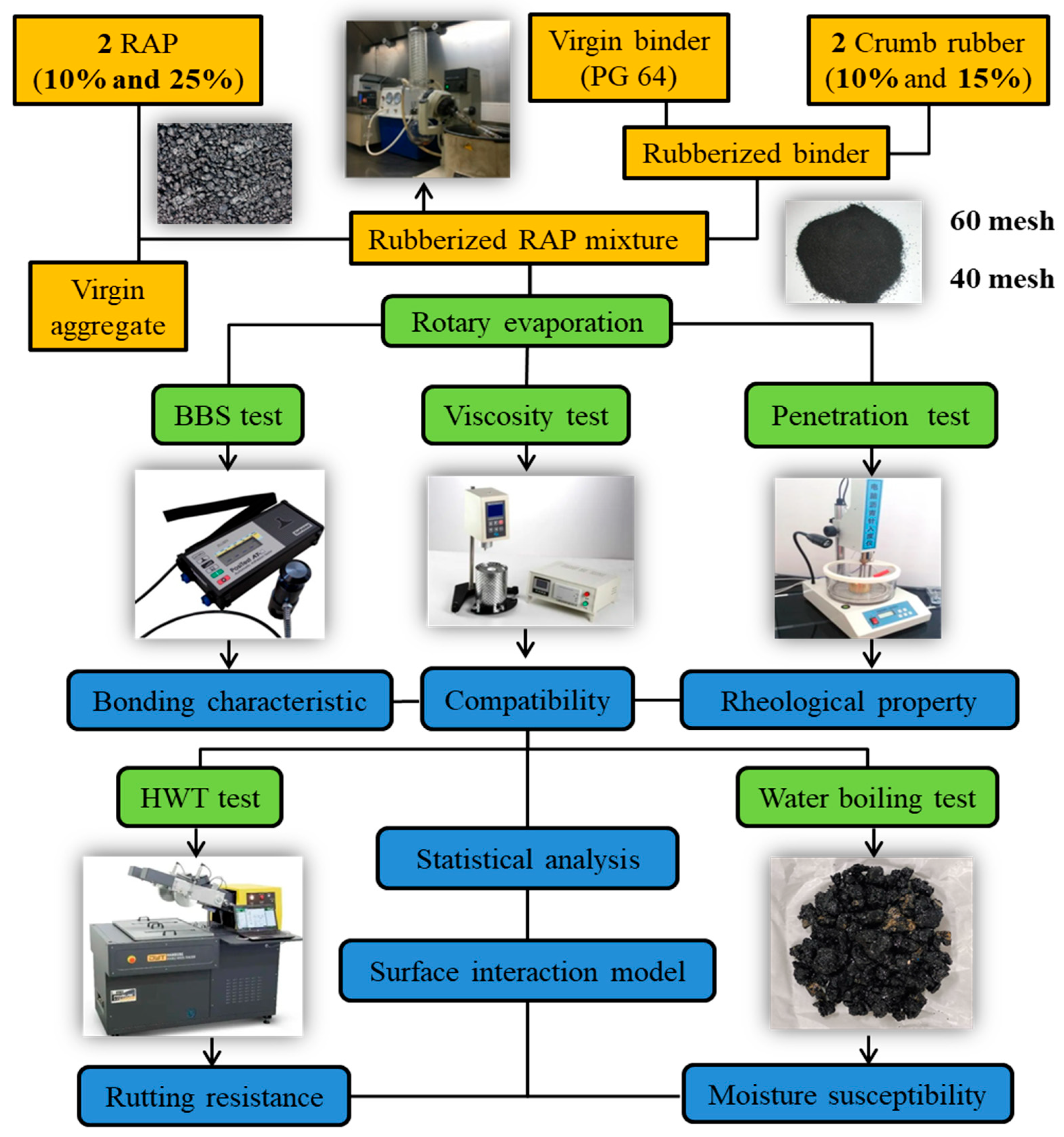
Figure 2 shows the flowchart of the experimental design adopted in this study. Two RAP sources with different aging levels and two CR types with varying particle sizes were examined. Comprehensive tests—including Binder Bond Strength (BBS), rotational viscosity, penetration, Hamburg wheel tracking (HWT), and water boiling analyses—were conducted to quantitatively correlate interfacial bonding with mechanical and moisture performance. Three replicate samples were prepared and tested for each asphalt binder type to minimize experimental variability.

2.3.1. Binder Bond Strength (BBS) Test

The BBS test according to ASTM D4541 [31] was used to evaluate the adhesive strength between bitumen and aggregates. Aggregate substrates (100 mm × 100 mm) and aluminum dollies (20 mm diameter) were used. A binder film thickness of 0.6~0.8 mm was applied, and samples were cured for 24 h at room temperature before testing. The pull-off test was performed at a constant loading rate of 0.7 MPa/s using a Positest AT-A device (DeFelsko Corporation, Ogdensburg, NY, USA), and the maximum pull-off stress was recorded as the bond strength.

2.3.2. Rotational Viscosity Test

The binder viscosity was measured according to AASHTO T316 [32] using a Brookfield rotational viscometer (AMETEK Brookfield, Middleborough, MA, USA) equipped with spindle #27 at 135 °C. Each 10 g sample was tested, and the average of three measurements was reported.

2.3.3. Penetration Test

Binder consistency was assessed following ASTM D5 [33]. The penetration depth was measured at 25 °C under a 100 g load for 5 s using a standard penetration needle. All samples were conditioned in a water bath prior to testing.

2.3.4. Hamburg Wheel Track (HWT) Test

The HWT test according to AASHTO T 324 [34] was used to evaluate rutting performance and moisture susceptibility. Cylindrical specimens (150 mm diameter, 63.5 mm height) with 7.0% air voids, compacted by the gyratory compactor, were tested under submerged conditions at 50 °C. A loaded steel wheel repeatedly traversed the specimen surface until reaching either a 20 mm rut depth or 20,000 load cycles.
AASHTO T 324 defines several performance-related parameters from HWT curves in terms of rutting slope (RS), maximum rut depth, stripping inflection point (SIP), and stripping slope (SS). The RS and maximum rut depth characterize the rutting resistance in Table 4, while SIP and SS predict the moisture susceptibility.
With regard to dynamic stability (i.e., the ratio of wheel loads and deformation within the specified time), this study proposed dynamic stability (DSHWT) to assess rutting resistance of rubberized RAP mixtures (Equation (1)).
D S H W T = 18000 L S 20000 L S 2000
where D S H W T is the dynamic stability; L S 20000 is the deformation depth after 20,000 passes; L S 2000 is the deformation depth after 2000 passes.
In this study, the Tseng-Lytton model was used to fit the measured data of HWT rutting curves (Equation (2)).
R D L C = λ · e ( φ L C ) μ
where R D L C is the deformation depth, mm; λ is the deformation coefficient, mm; φ is the coefficient of loading number; LC is the load cycles, and μ is the fitted curve shape coefficient.

2.3.5. Water Boiling Test

The boiling test according to ASTM D3625 [35] was used to evaluate bitumen-aggregate adhesion under moisture exposure. Approximately 250 g of loose asphalt mixture was boiled in distilled water for 10 min, after which any detached binder was removed from the water surface. Photographs of the samples were analyzed using Image-J software (1.54p) to quantify the stripping area and assess coating uniformity through statistical analysis.
Image processing was performed to extract texture features and differentiate stripped areas from intact regions based on homogeneity, color, and roughness. Accordingly, the mean ( R M e a n ), contrast ( R C o n t r a s t ), and entropy ( R E n t r o p y ) ratios for each image and color channel were calculated according to Equations (3)–(5). Rmean is the average intensity of color values in the image, and REntropy reflects image complexity and describes the amount of information contained within the image.
R M e a n = 1 N j j P ( j ) 1 N i i P ( i )
R C o n t r a s t = j j 2 P ( j ) i i 2 P ( i )
R E n t r o p y = j P j l o g 2 [ P j ] i P i l o g 2 [ P i ]
where i and j are the variables that represented a certain gray level before and after boiling, N is the total number of i or j, and P is the probability of the image taking this gray value.
Additionally, the first, second, and third order moment values in the image ( R μ , R σ , and R ξ , respectively) were assessed according to Equations (6)–(8). In the whole image, the higher gray level of pixels represented the larger values of order moment and higher energy, which reflected the distributing non-uniformity of the gray-scale image.
R μ = 1 N j = 1 N P ( j ) 1 N i = 1 N P ( i )
R σ = [ 1 N j = 1 N ( P ( j ) μ j ) 2 ] 1 / 2 [ 1 N i = 1 N ( P ( i ) μ i ) 2 ] 1 / 2
R ξ = [ 1 N j = 1 N ( P ( j ) μ j ) 3 ] 1 / 3 [ 1 N i = 1 N ( P ( i ) μ i ) 3 ] 1 / 3

3. Results and Discussions

3.1. Bonding Characteristics

Visual observations during the BBS test identified three types of bonding failure: adhesive failure at the bitumen-aggregate interface, cohesive failure within the binder, and mixed-mode failure. The BBS results are in Figure 3.
Figure 3 shows that the bonding performance varied significantly among the binders. Rubberized RAP binders incorporating CR-A exhibited higher bond strength than those with CR-B, confirming that finer rubber particles enhance binder–aggregate interaction through more complete swelling and better dispersion. The bond strength of RAP-B binders (more aged) was greater than RAP-A binders, indicating that oxidative aging increases cohesion within the binder. As a result, binders with higher aged-binder content demonstrated higher pull-off values and stronger interactions with aggregates. A similar trend was observed for most rubberized RAP binders containing 10% CR. However, when the CR content was increased to 15%, increasing the RAP content from 10% to 25% led to a reduction in bonding strength.
As shown in Figure 4 and Figure 5, the virgin asphalt primarily exhibited cohesive failure, whereas the rubberized asphalt showed adhesive failure at the bitumen–aggregate interface.
Luo et al. [36] reported that aging does not significantly reduce the free volume between molecules, meaning that cohesion strength within the aged binder does not necessarily increase. Instead, oxidation and volatilization during aging lead to higher stiffness and a harder binder texture, which negatively affect adhesion. Therefore, the adhesive failures observed in aged, brittle binders result more from reduced adhesion energy than from any increase in cohesion energy. Similarly, cohesive failure in rubberized asphalt is described in Figure 6.
Based on the pull-off results, increasing the CR content decreased the adhesion strength of the rubberized asphalt. This reduction occurs because crumb rubber absorbs light fractions and swells to form a gel-like structure, which weakens binder–aggregate interaction [18]. In addition, reduced molecular diffusion disrupts the binder’s colloidal structure, leading to lower cohesion strength. Consequently, rubberized asphalt with 15% CR exhibited the lowest bonding strength (Figure 3).
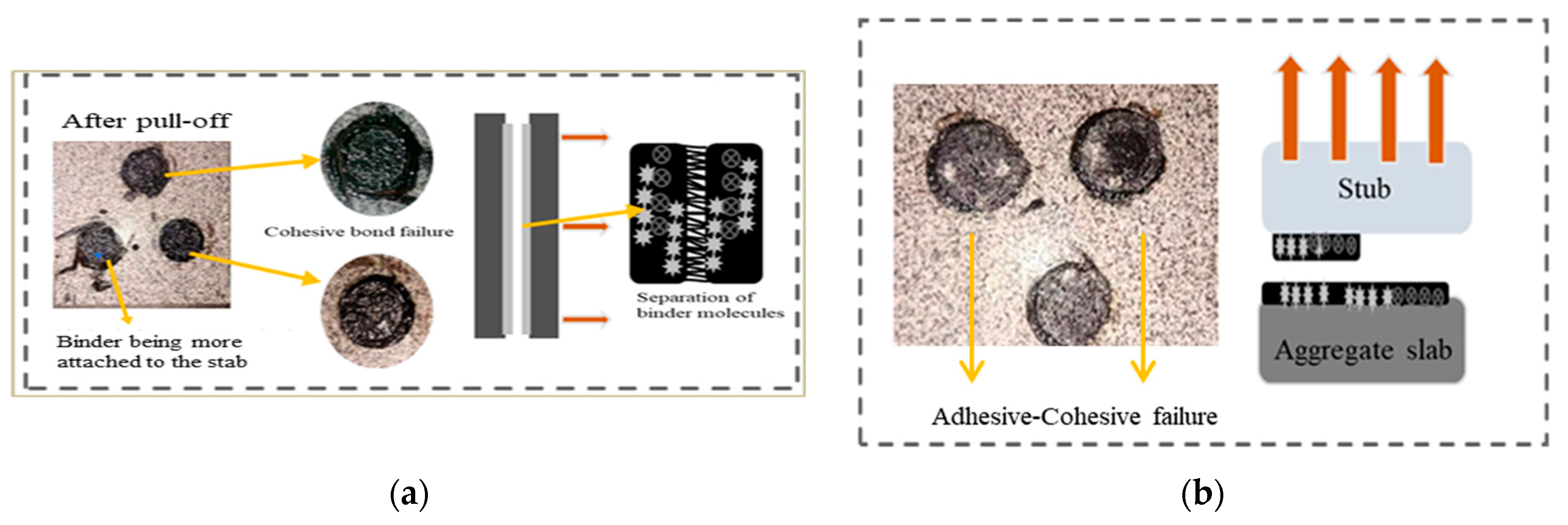
Bond failure patterns for the rubberized RAP binder are presented in Figure 7.
However, the effect of RAP addition on bonding strength depended on the CR content. The transition from cohesive (Figure 8a) to adhesive-cohesive failure (Figure 7b) corresponded to a decrease in bonding strength. This reduction occurs because the light components of the asphalt are trapped within the gel phase of CR, which exhibits the highest molecular mobility, thereby significantly limiting the diffusion of the rubberized asphalt toward the aggregate surface [37]. As a result, increasing CR content in the asphalt reduces bonding strength. Accordingly, the optimal CR content for rubberized RAP mixtures was 10%.

3.2. Compatibility Evaluation

Figure 8 shows the rotational viscosity results.
The addition of CR significantly increased the viscosity of asphalt binders while reducing their penetration. This is attributed to the absorption of light aromatic fractions from the asphalt, which causes the rubber particles to swell. Coarser CR particles resulted in higher viscosity due to limited swelling, whereas finer particles produced a more uniform and stable binder structure. Similarly, aged RAP binders further increased viscosity, consistent with their higher performance grades. These results confirm that incorporating CR and RAP improves binder consistency and enhances high-temperature performance.

3.3. Penetration Grade

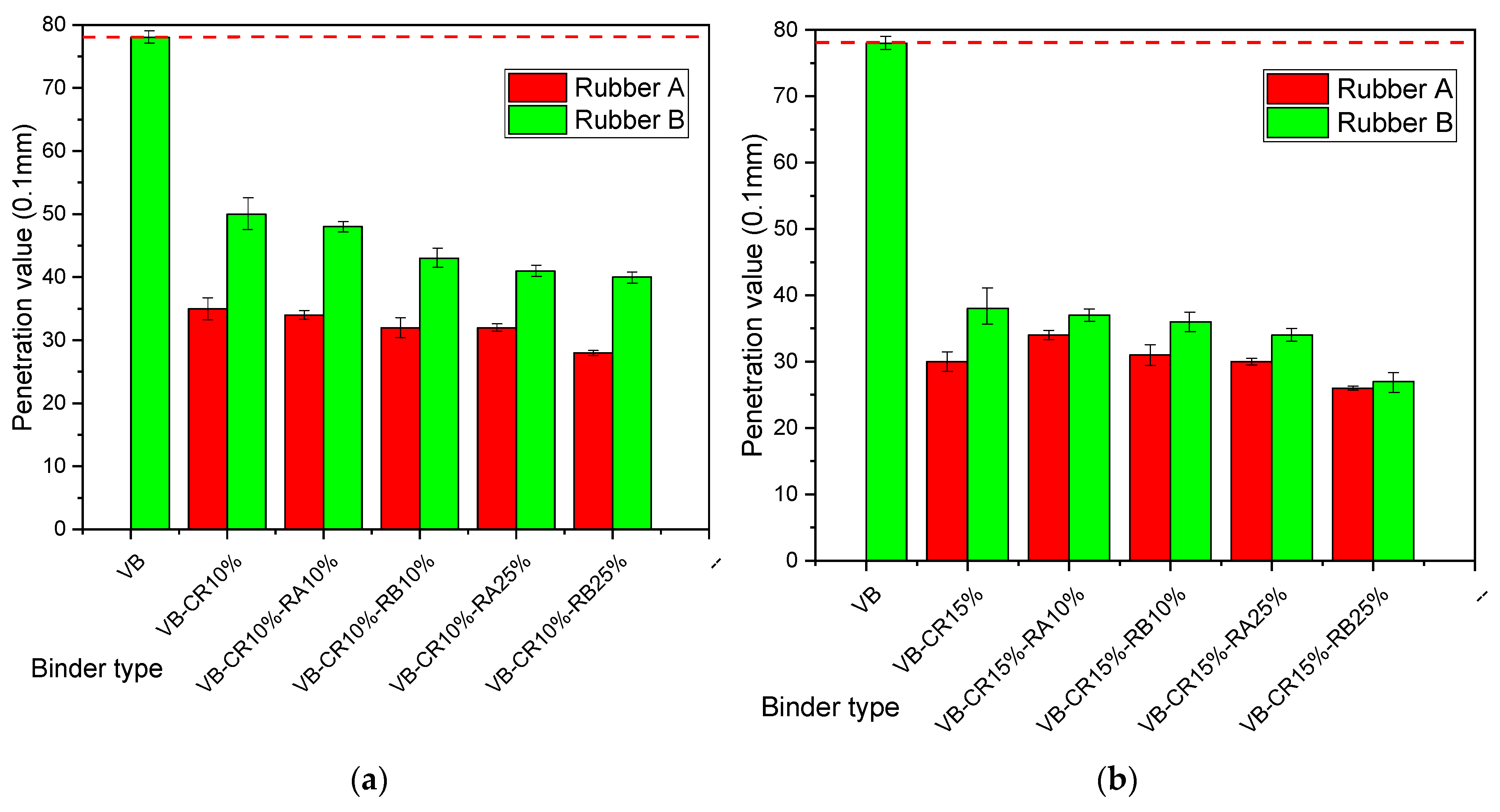
Figure 9 shows the penetration results.
According to Figure 9, rubberized RAP asphalt exhibited lower penetration values than rubberized and virgin binders. Penetration decreased significantly with increasing RAP and CR contents. Binders containing CR-B displayed performance comparable to those with CR-A, but with slightly lower penetration values. Additionally, binders with CR-A showed lower penetration than those with CR-B, indicating that finer rubber particles reduce the penetration grade of bitumen.

3.4. Rutting Resistance

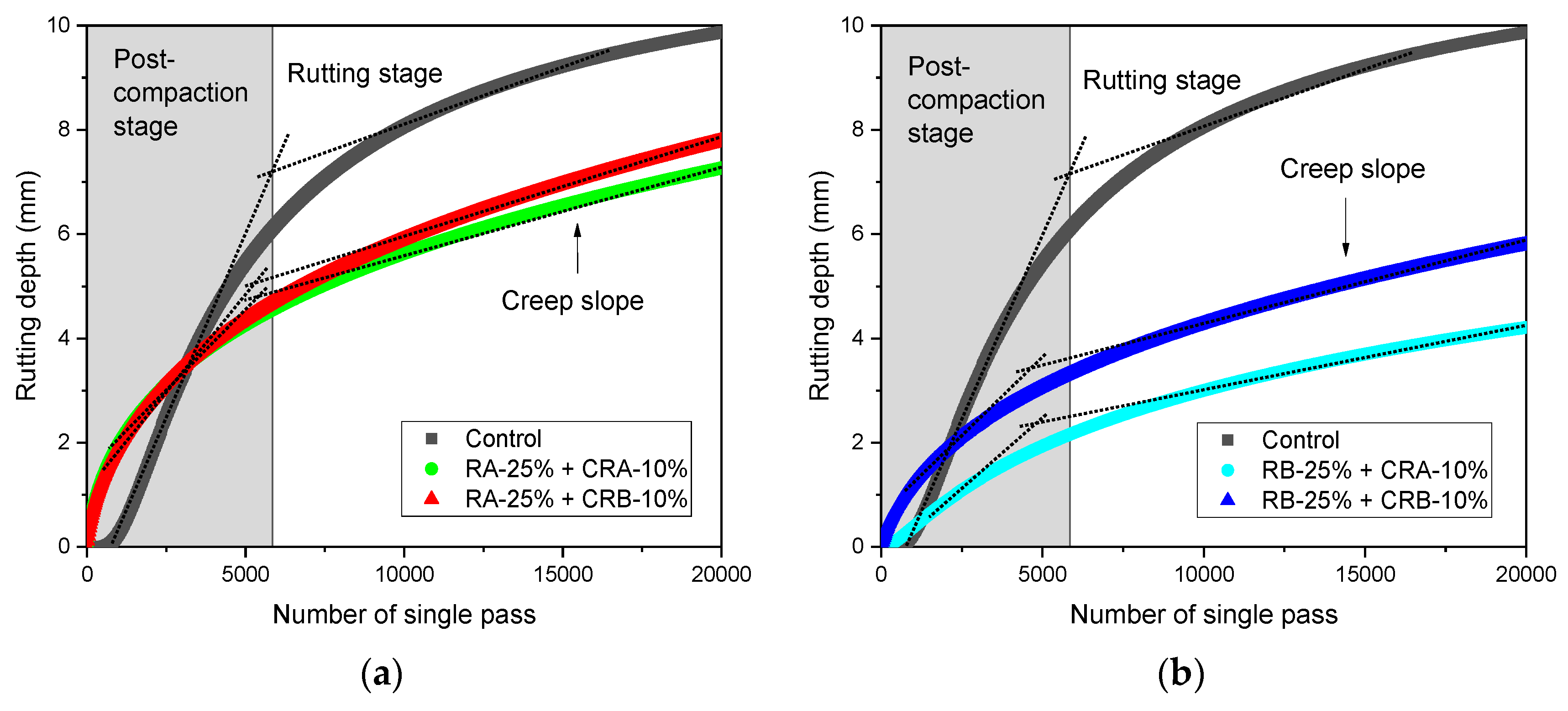
Figure 10 shows the HWT curves.
None of the mixtures in this study reached the third stage during the HWT test. This indicates that the CR and RAP contents used in the designed mixtures did not adversely affect the desired moisture resistance.
Figure 11 summarizes the HWT results. According to Figure 11a, the rut depths at the end of the post-compacted phase (approximately 2000 passes) were far below the specified criteria. Furthermore, the rutting slopes of mixtures containing CR-A were lower than those incorporating CR-B (Table 4). The smaller particle size of CR-A allowed it to swell more completely in the bitumen, thereby improving the mixture’s elastic properties. This rubber-induced supporting network increased binder stiffness and enhanced elastic recovery under loading. Consequently, the inclusion of RAP and CR in asphalt mixtures is feasible with respect to rutting and moisture resistance. In Figure 11b, DS increases with RAP and CR content due to the strengthened elastic component of asphalt viscoelasticity. Additionally, mixtures containing RAP-B tended to produce lower rut depths than those with RAP-A. The higher oxidation level of RAP-B contributes to increased stiffness, thereby restricting the movement of the asphalt film.
Moreover, the high-temperature resistance of asphalt mixtures is closely related to their deformation behavior in the creep zone. The incorporation of CR and RAP reduces the growth rate of high-temperature viscoplastic deformation, as reflected in the overall deformation trend of the rutting curve. Therefore, the high-temperature viscoplastic deformation curves provide an effective basis for analyzing the submerged HWT results. The R2 values of the fitted viscoplastic deformation curves, along with the corresponding root mean square error (RMSE) values, indicate that the Tseng Lytton model provides an excellent fit (Table 5).

3.5. Moisture Susceptibility

Moisture in asphalt mixtures affects the adhesion between bitumen and aggregates. The boiling test and image analysis were conducted to evaluate the influence of high-temperature and rainfall conditions on stripping, an area-based distress. Figure 12 shows the image-processing workflow and the statistical results of texture parameters after the boiling test.
The mean value ratios of the rubberized RAP mixture samples were higher than the control sample, which is attributed to the darker asphalt coating area. On the other hand, the contrast and entropy ratios of rubberized reclaimed mixtures were lower than the control one, confirming a more uniform asphalt coating on the aggregates after boiling. The higher-order moment values of the control sample revealed greater dispersion after boiling, reflecting increased texture complexity and non-uniformity. From sample A to D, the texture parameters of mixtures with larger CR particle sizes and higher RAP oxidation gradually approached the control sample.
Image processing using ImageJ v. 1.54p [38] was also employed to analyze the moisture susceptibility of rubberized RAP mixtures (Figure 13).
The rubberized RAP mixtures exhibited less stripping than the control one, although larger CR particle sizes and higher RAP oxidation tended to weaken this improvement. The observed increase in stripping was attributed to reduced adhesion between the binder and aggregates.

4. Statistical Analysis

ANOVA tests were conducted at a 5% significance level to evaluate differences in bonding strength among various the various rubberized RAP binders (Table 6). Regardless of CR particle size, the results showed that changes in CR content led to significant differences in bonding strength. In contrast, when the CR content was fixed at 10%, the aged binder contents from different RAP sources did not produce a significant difference in pull-off strength. However, when the CR content increased to 15%, the bonding strength values differed significantly, which can be attributed to the transition of the rubberized RAP asphalt from a cohesive failure mode to a mixed failure mode as the CR content increased.
Furthermore, the relationships between binder and mixture test results were examined to clarify the modification effects of RAP and CR. Correlation analyses were performed using the correlation coefficient (R2) to describe interdependencies among variables at a 5% significance level. Stronger interactions among CR, RAP, and binder components were associated with greater variations in the properties of the base asphalt. For rubberized RAP materials, a direct relationship was observed between the bonding strength, viscosity, and rutting resistance of the modified binders and mixtures (Figure 14).
High-temperature deformation resistance increased with higher cohesion values of the rubberized RAP binders. In addition, the strong correlation between the stripping index from the boiling test and the deformation coefficient from the HWT test supports the linkage between moisture susceptibility and viscoplastic deformation behavior in asphalt mixtures. The physicochemical differences associated with the colloidal structure were further considered to explain the surface bonding interactions of rubberized RAP materials.

5. Conclusions

This study evaluates the influence of bonding characteristics on the rutting resistance and moisture susceptibility of rubberized RAP mixtures. By integrating binder- and mixture-level tests with statistical analyses, the study elucidates the interfacial mechanisms governing adhesion, cohesion, and viscoplastic deformation in modified asphalt systems. The results highlight the combined effects of RAP aging and crumb rubber (CR) particle size on binder performance, providing a mechanistic understanding of rubberized RAP binders. Overall, the findings contribute to advancing the design framework for sustainable and high-performance recycled asphalt materials. The main conclusions are:
  • The predominant bonding failure mode of rubberized RAP binders is cohesive. The swelling of smaller CR particles in asphalt enhances adhesion, while RAP oxidation improves the binder’s cohesive properties.
  • Increasing CR content can shift rubberized RAP asphalt from a cohesive to a mixed failure mode, leading to a significant reduction in bonding strength. A CR content of 10% is therefore recommended for optimal performance.
  • Incorporating large CR particles and highly aged RAP increases the penetration and viscosity of asphalt binders, affecting their elastic deformation response and the uniformity of aggregate coating. For example, the rotational viscosity of control asphalt (i.e., 974 mPa s) increases to 1208 mPa s and 4892 mPa s after incorporating 10% Rubber A and Rubber B, respectively, while the penetration value decreases from 78 decreases to 28 and 40.
  • The combination of RAP and CR in asphalt mixtures enhances rutting and moisture resistance, largely due to the formation of a rubbery supporting network within the modified binder. Recycled asphalt with higher oxidation levels exhibits greater cohesion, restricting asphalt film movement. The maximum rut depth of the control mixture decreases from 9.873 mm to 4.212 mm with RAP and rubber addition, while the stripping degree value decreases from 11.9% to 3.6%.
Future work will expand the experimental framework by investigating the effects of rejuvenators and warm-mix additives on the bonding and durability of rubberized RAP mixtures. Additionally, microstructural characterization, including gel permeation chromatography (GPC) and Fourier transform infrared (FTIR) analyses, as well as molecular dynamics simulations, will be conducted to provide deeper insights into the interfacial mechanisms and long-term performance of recycled asphalt systems.

Author Contributions

Conceptualization, Z.Z. and Y.L.; methodology, Y.L.; software, Y.Y. and L.X.; validation, S.W., Y.Y. and Z.Z.; formal analysis, S.W. and Y.L.; investigation, J.L.; data curation, Z.Z. and L.M.; writing—original draft preparation, L.M. and L.X.; writing—review and editing, L.M. and G.L.; visualization, L.X. All authors have read and agreed to the published version of the manuscript.

Funding

This research received no external funding.

Data Availability Statement

The raw data supporting the conclusions of this article will be made available by the authors on request.

Conflicts of Interest

The authors declare no conflicts of interest.

References

  1. Antunes, V.; Freire, A.C.; Neves, J. A review on the effect of RAP recycling on bituminous mixtures properties and the viability of multi-recycling. Constr. Build. Mater. 2019, 211, 453–469. [Google Scholar] [CrossRef]
  2. Celauro, C.; Corriere, F.; Guerrieri, M.; Lo Casto, B.; Rizzo, A. Environmental analysis of different construction techniques and maintenance activities for a typical local road. J. Clean. Prod. 2017, 142, 3482–3489. [Google Scholar] [CrossRef]
  3. Yu, H.; Zhu, Z.; Leng, Z.; Wu, C.; Zhang, Z.; Wang, D.; Oeser, M. Effect of mixing sequence on asphalt mixtures containing waste tire rubber and warm mix surfactants. J. Clean. Prod. 2020, 246, 119008. [Google Scholar] [CrossRef]
  4. Eskandarsefat, S.; Sangiorgi, C.; Dondi, G.; Lamperti, R. Recycling asphalt pavement and tire rubber: A full laboratory and field scale study. Constr. Build. Mater. 2018, 176, 283–294. [Google Scholar] [CrossRef]
  5. Magar, S.; Xiao, F.; Singh, D.; Showkat, B. Applications of reclaimed asphalt pavement in India—A review. J. Clean. Prod. 2022, 335, 130221. [Google Scholar] [CrossRef]
  6. Zaumanis, M.; Mallick, R.B. Review of very high-content reclaimed asphalt use in plant-produced pavements: State of the art. Int. J. Pavement Eng. 2015, 16, 39–55. [Google Scholar] [CrossRef]
  7. Loprencipe, G.; Moretti, L.; Saltaren Daniel, M. Fatigue Resistance of RAP-Modified Asphalt Mixes Versus Conventional Mixes Using the Indirect Tensile Test: A Systematic Review. Designs 2025, 9, 104. [Google Scholar] [CrossRef]
  8. Piccone, G.; Loprencipe, G.; Almeida, A.; Fiore, N. Evaluation of the performance of a warm mix asphalt (Wma) considering aged and unaged specimens. Coatings 2020, 10, 1241. [Google Scholar] [CrossRef]
  9. Saed, S.A.; Kamboozia, N.; Ziari, H.; Hofko, B. Experimental assessment and modeling of fracture and fatigue resistance of aged stone matrix asphalt (SMA) mixtures containing RAP materials and warm-mix additive using ANFIS method. Mater. Struct. 2021, 54, 396. [Google Scholar] [CrossRef]
  10. Afshin, A.; Behnood, A. Prediction of moisture susceptibility of asphalt mixtures containing RAP materials using machine learning algorithms. Int. J. Pavement Eng. 2024, 25, 14. [Google Scholar] [CrossRef]
  11. Xiao, F.; Amirkhanian, S.; Putman, B.; Shen, J. Laboratory investigation of engineering properties of rubberized asphalt mixtures containing reclaimed asphalt pavement. Can. J. Civ. Eng. 2010, 37, 1414–1422. [Google Scholar] [CrossRef]
  12. Thives, L.P.; Pais, J.C.; Pereira, P.A.A.; Palha, C.A.O.F.; Trichês, G. Contribution of Asphalt Rubber Mixtures to Sustainable Pavements by Reducing Pavement Thickness. Materials 2022, 15, 8592. [Google Scholar] [CrossRef]
  13. Singh, D.; Sawant, D.; Xiao, F. High and intermediate temperature performance evaluation of crumb rubber modified binders with RAP. Transp. Geotech. 2017, 10, 13–21. [Google Scholar] [CrossRef]
  14. Fakhri, M.; Azami, A. Evaluation of warm mix asphalt mixtures containing reclaimed asphalt pavement and crumb rubber. J. Clean. Prod. 2017, 165, 1125–1132. [Google Scholar] [CrossRef]
  15. Sol-Sánchez, M.; Jiménez del Barco Carrión, A.; Hidalgo-Arroyo, A.; Moreno-Navarro, F.; Saiz, L.; Rubio-Gámez, M.d.C. Viability of producing sustainable asphalt mixtures with crumb rubber bitumen at reduced temperatures. Constr. Build. Mater. 2020, 265, 120154. [Google Scholar] [CrossRef]
  16. Ghabchi, R.; Singh, D.; Zaman, M. Evaluation of moisture susceptibility of asphalt mixes containing RAP and different types of aggregates and asphalt binders using the surface free energy method. Constr. Build. Mater. 2014, 73, 479–489. [Google Scholar] [CrossRef]
  17. Moretti, L.; Palozza, L.; D’Andrea, A. Causes of Asphalt Pavement Blistering: A Review. Appl. Sci. 2024, 14, 2189. [Google Scholar] [CrossRef]
  18. Kringos, N.; Scarpas, A. Physical and mechanical moisture susceptibility of asphaltic mixtures. Int. J. Solids Struct. 2008, 45, 2671–2685. [Google Scholar] [CrossRef]
  19. Cala, A.; Caro, S.; Lleras, M.; Rojas-Agramonte, Y. Impact of the chemical composition of aggregates on the adhesion quality and durability of asphalt-aggregate systems. Constr. Build. Mater. 2019, 216, 661–672. [Google Scholar] [CrossRef]
  20. Xu, L.; Li, X.; Zong, Q.; Xiao, F. Chemical, morphological and rheological investigations of SBR/SBS modified asphalt emulsions with waterborne acrylate and polyurethane. Constr. Build. Mater. 2021, 272, 121972. [Google Scholar] [CrossRef]
  21. Xu, G.; Wang, H.; Sun, W. Molecular dynamics study of rejuvenator effect on RAP binder: Diffusion behavior and molecular structure. Constr. Build. Mater. 2018, 158, 1046–1054. [Google Scholar] [CrossRef]
  22. Hossain, K.; Karakas, A.; Hossain, Z. Effects of Aging and Rejuvenation on Surface-Free Energy Measurements and Adhesion of Asphalt Mixtures. J. Mater. Civ. Eng. 2019, 31, 04019125. [Google Scholar] [CrossRef]
  23. Bionghi, R.; Shahraki, D.; Ameri, M.; Karimi, M.M. Correlation between bond strength and surface free energy parameters of asphalt binder-aggregate system. Constr. Build. Mater. 2021, 303, 124487. [Google Scholar] [CrossRef]
  24. Huang, W.; Lv, Q.; Xiao, F. Investigation of using binder bond strength test to evaluate adhesion and self-healing properties of modified asphalt binders. Constr. Build. Mater. 2016, 113, 49–56. [Google Scholar] [CrossRef]
  25. Abd, D.M.; Al-Khalid, H.; Akhtar, R. Adhesion properties of warm-modified bituminous binders (WMBBs) determined using pull-off tests and atomic force microscopy. Road Mater. Pavement Des. 2018, 19, 1926–1939. [Google Scholar] [CrossRef]
  26. Aguiar-Moya, J.P.; Salazar-Delgado, J.; Baldi-Sevilla, A.; Leiva-Villacorta, F.; Loria-Salazar, L. Effect of aging on adhesion properties of asphalt mixtures with the use of bitumen bond strength and surface energy measurement tests. Transp. Res. Rec. 2015, 2505, 57–65. [Google Scholar] [CrossRef]
  27. Badughaish, A.; Li, J.; Amirkhanian, S.; Xiao, F. Adhesion and segregation characteristics of crumb rubberized binders based on solution-soaked methods. J. Clean. Prod. 2022, 354, 131762. [Google Scholar] [CrossRef]
  28. Li, J.; Chen, Z.; Xiao, F.; Amirkhanian, S.N. Solution Soaking Pretreatments of Crumb Rubber for Improving Compatibility of Rubberized Asphalt. J. Mater. Civ. Eng. 2022, 34, 04021377. [Google Scholar] [CrossRef]
  29. ASTM D 2172; Standard Test Methods for Quantitative Extraction of Bitumen From Bituminous Paving Mixtures. ASTM International: West Conshohocken, PA, USA, 2011.
  30. ASTM D 5404; Standard Practice for Recovery of Asphalt Binder from Solution Using the Rotary Evaporator. ASTM International: West Conshohocken, PA, USA, 2024.
  31. ASTM D 4541-22; Standard Test Method for Pull-Off Strength of Coatings Using Portable Adhesion Testers. ASTM International: West Conshohocken, PA, USA, 2022.
  32. AASHTO T316; Standard Method of Test for Viscosity Determination of Asphalt Binder Using Rotational Viscometer. AASHTO: Washington, DC, USA, 2022.
  33. ASTM D5; Standard Test Method for Penetration of Bituminous Materials. American Society for Testing and Materials: West Conshohocken, PA, USA, 2020.
  34. AASHTO T324; Standard Method of Test for Hamburg Wheel-Track Testing of Compacted Asphalt Mixtures. AASHTO: Washington, DC, USA, 2022.
  35. ASTM D3625; Standard Practice for Effect of Water on Asphalt-Coated Aggregate Using Boiling Water. ASTM International: West Conshohocken, PA, USA, 2024.
  36. Luo, L.; Chu, L.; Fwa, T.F. Molecular dynamics analysis of oxidative aging effects on thermodynamic and interfacial bonding properties of asphalt mixtures. Constr. Build. Mater. 2021, 269, 121299. [Google Scholar] [CrossRef]
  37. Wang, L.; Zhang, L.; Liu, Y. Molecular Dynamics Study on the Effect of Mineral Composition on the Interface Interaction between Rubberized Asphalt and Aggregate. J. Mater. Civ. Eng. 2022, 34, 447. [Google Scholar] [CrossRef]
  38. Rueden, C.; Dietz, C.; Horn, M.; Schindelin, J.; Northan, B.; Berthold, M.; Eliceiri, K. ImageJ Ops. Software. 2021. Available online: https://imagej.net/Ops (accessed on 18 November 2025).
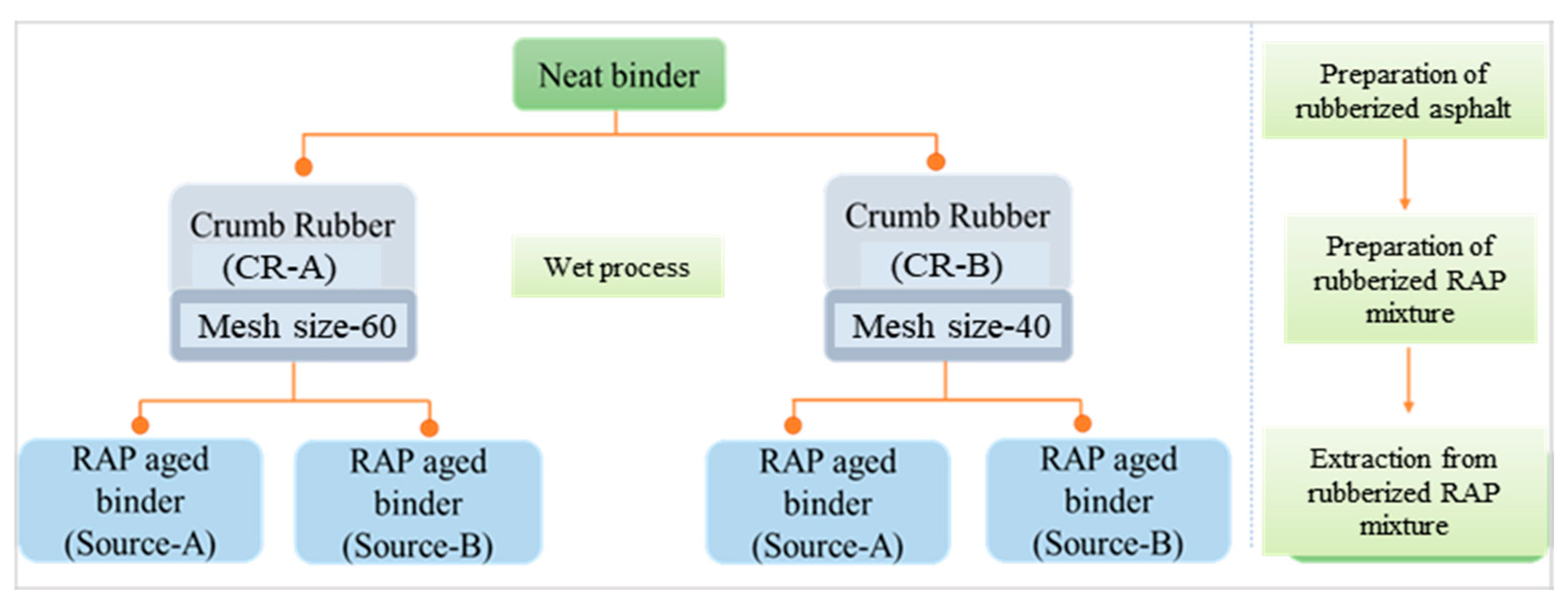
Figure 1. Preparation of rubberized RAP bitumen.
Infrastructures 10 00336 g001
Figure 2. Flowchart of experimental design.
Infrastructures 10 00336 g002
Figure 3. Bonding strength of binder samples: (a) 10% CR; (b) 15% CR.
Infrastructures 10 00336 g003
Figure 4. Cohesive failure for virgin binder after pull-off.
Infrastructures 10 00336 g004
Figure 5. Adhesive failure of rubberized asphalt: (a) RAP-A; (b) RAP-B.
Infrastructures 10 00336 g005
Figure 6. Cohesive failure of rubberized asphalt: (a) 10% rubber content; (b) 15% rubber content.
Infrastructures 10 00336 g006
Figure 7. (a) Cohesive failure for rubberized RAP binder, (b) Adhesive-Cohesive failure for rubberized RAP binder.
Infrastructures 10 00336 g007
Figure 8. Rotational viscosity. (a) 10% CR; (b) 15% CR.
Infrastructures 10 00336 g008
Figure 9. Penetration results. (a) 10% CR; (b) 15% CR.
Infrastructures 10 00336 g009
Figure 10. HWT tests results of various asphalt mixtures. (a) RA; (b) RB.
Infrastructures 10 00336 g010
Figure 11. Performance indexes of HWT testing curves. (a) DS; (b) Rutting slope.
Infrastructures 10 00336 g011
Figure 12. Image processing and texture parameters statistics after boiling test.
Infrastructures 10 00336 g012
Figure 13. Stripping values.
Infrastructures 10 00336 g013
Figure 14. Statistical analysis results of various performance indexes between binder tests and mixture tests: (a) bonding strength-rutting depth; (b) bonding strength-dynamic stability; (c) rutting slope-viscosity at 135 °C; (d) stripping-deformation coefficient λ .
Infrastructures 10 00336 g014
Table 1. Properties of virgin and RAP binders.
PropertyVirgin Bitumen (VB)RAP-A (RA)RAP-B (RB)
Penetration (0.1 mm)77.832.027.6
Performance gradePG 64PG 94PG 112
Softening point (°C)497273
Ductility (15 °C)443431
Solubility (Trichloroethylene) (%)99.397.396.8
Table 2. Materials contents and gradations of asphalt mixtures.
MaterialsControl SampleSample ASample BSample CSample D
RAP0RA-25%RA-25%RB-25%RB-25%
Crumb Rubber0CR-A-10%CR-B-10%CR-A-10%CR-B-10%
Sieve size (mm)Passing (%)
13.295.4894.5694.5696.4096.40
9.578.6275.1575.1582.7082.70
4.7555.0853.0553.0558.8058.80
2.3634.3532.4432.4435.2135.21
1.1823.3521.7121.7122.5822.58
0.615.9814.6014.6014.6614.66
0.310.609.469.469.409.40
0.158.507.507.507.527.52
0.0757.236.256.256.336.33
Table 3. Granulometry and binder content of RAP.
RAP Size (mm)Sieve Gradation of RAP—Passing at Sieve Size (mm)Bitumen Content (%)
0.0750.150.30.61.182.364.759.513.216
10–150.110.290.300.310.310.320.5228.5583.751003.12
5–100.290.430.490.510.530.557.2791.631001004.69
3–50.320.410.460.480.486.2999.821001001007.03
0–34.3811.3721.940.9764.9599.9410010010010010.73
Table 4. Rutting performances.
Mixture TypeVoid Content (%)Density (g/cm3)RS (×10−5/pass)2000 Passes (mm)Maximum Rut Depth (mm)
Control7.02.35418.771.7039.873
RAPA-25% + CRA-10%7.02.31218.582.8107.269
RAPA-25% + CRB-10%7.02.30317.212.7977.787
RAPB-25% + CRA-10%7.02.33416.730.8674.212
RAPB-25% + CRB-10%7.02.32712.511.8675.802
Table 5. Performance indexes of HWT.
Mixture TypeR2RMSE
Control0.9930.001
RAP-A-25% + CR-A-10%0.9630.004
RAP-A-25% + CR-B-10%0.9830.002
RAP-B-25% + CR-A-10%0.9900.001
RAP-B-25% + CR-B-10%0.9880.002
Table 6. ANOVA result of binder samples.
RAPCR ContentRAP ContentSignificance 1
RAP-AA-10%0%10%25%N
A-15%0%10%25%Y
RAP-BB-10%0%10%25%N
B-15%0%10%25%Y
CRAged binder contentCR contentSignificance 1
CR-AA-10%0%10%15%Y
A-25%0%10%15%Y
CR-BB-10%0%10%15%Y
B-25%0%10%15%Y
1 N indicates p-value > 0.05 (no significant difference), and Y indicates p-value < 0.05 (significant difference).
Disclaimer/Publisher’s Note: The statements, opinions and data contained in all publications are solely those of the individual author(s) and contributor(s) and not of MDPI and/or the editor(s). MDPI and/or the editor(s) disclaim responsibility for any injury to people or property resulting from any ideas, methods, instructions or products referred to in the content.