
Comparative Analysis of Robotic Assistive Devices on Paretic Knee Motion in Post-Stroke Patients: An IMU-Based Pilot Study



Abstract
1. Introduction
2. Materials and Methods
2.1. Participants
2.2. Robotic Devices
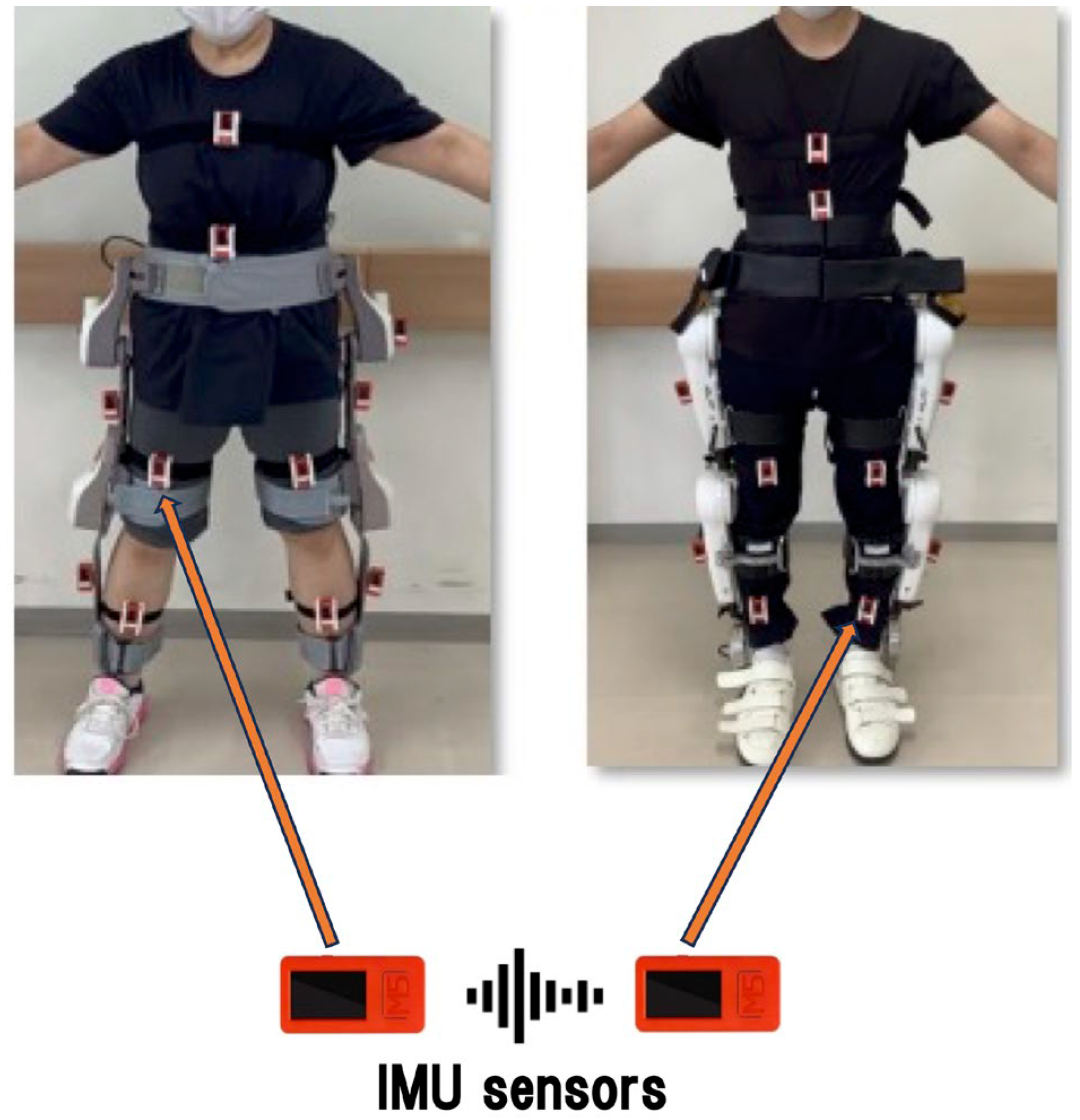
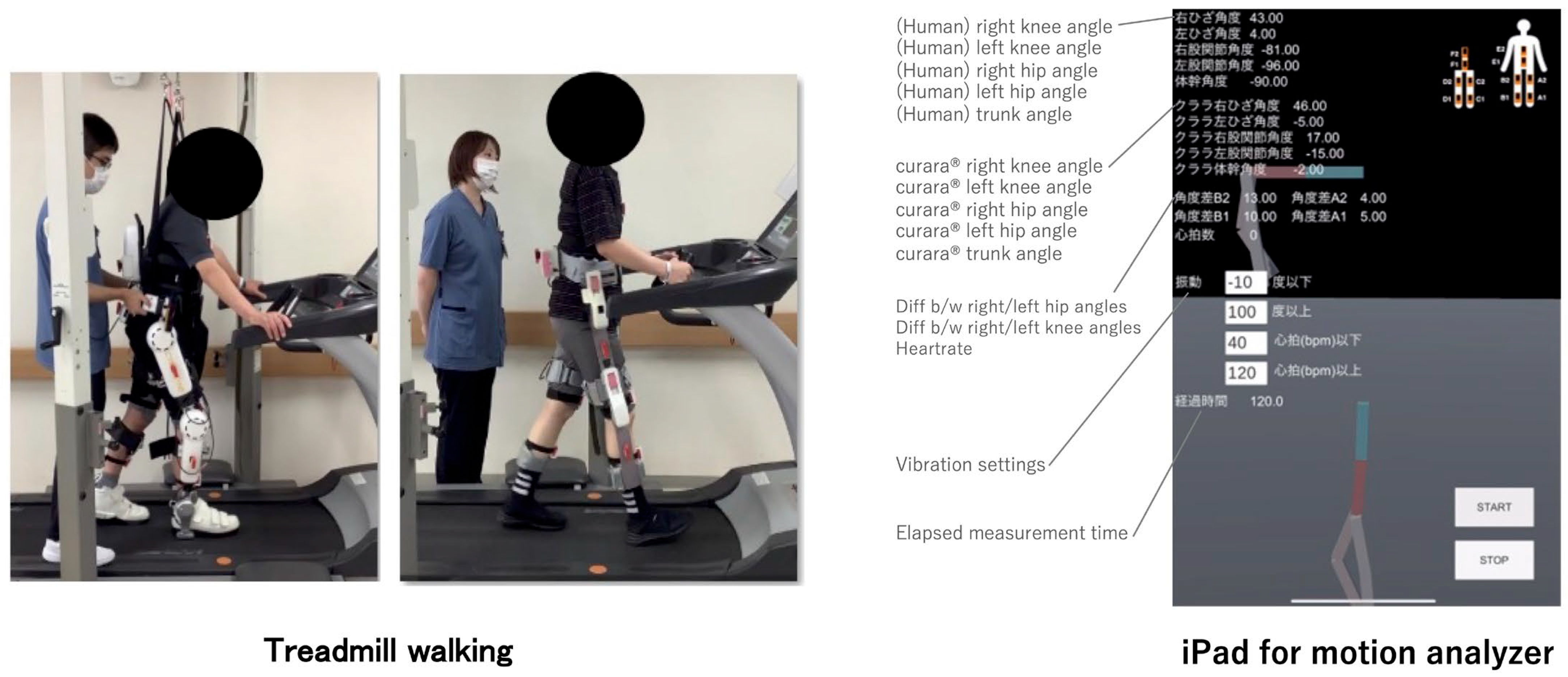
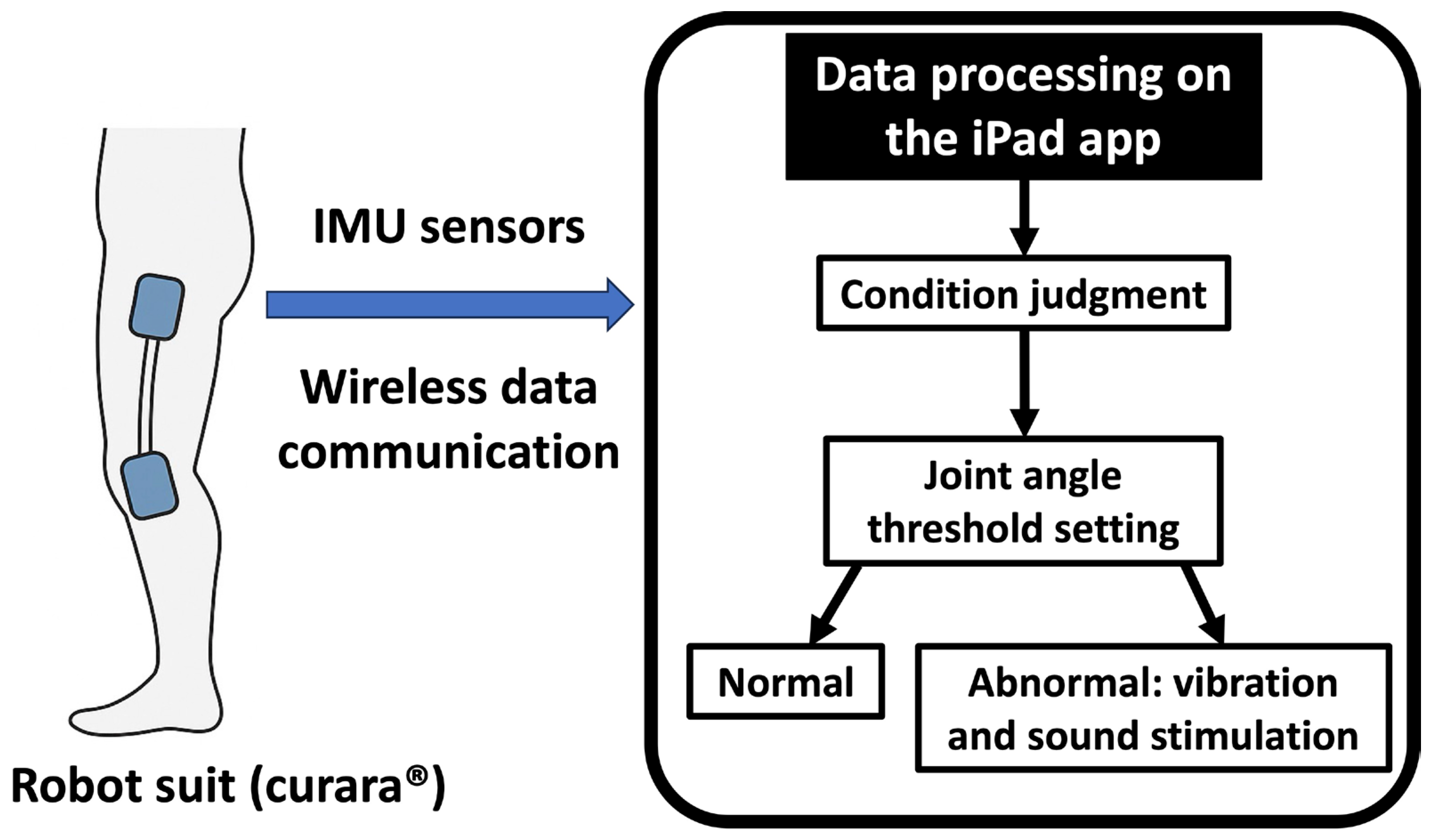
2.3. IMU Placement (Figure 1 and Figure 2)


2.4. Procedure (Figure 3)

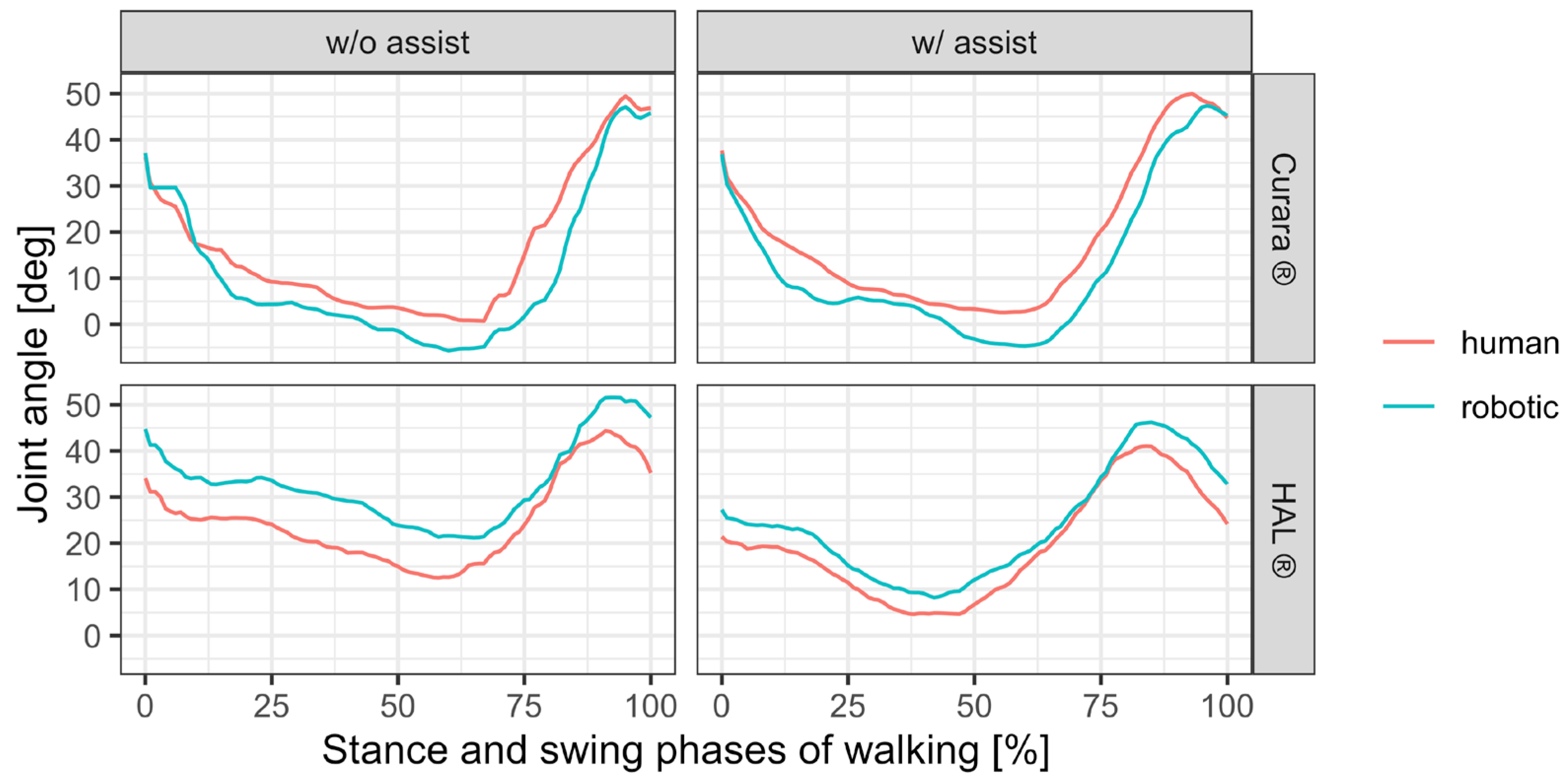
2.5. Data Analysis (Figure 3)
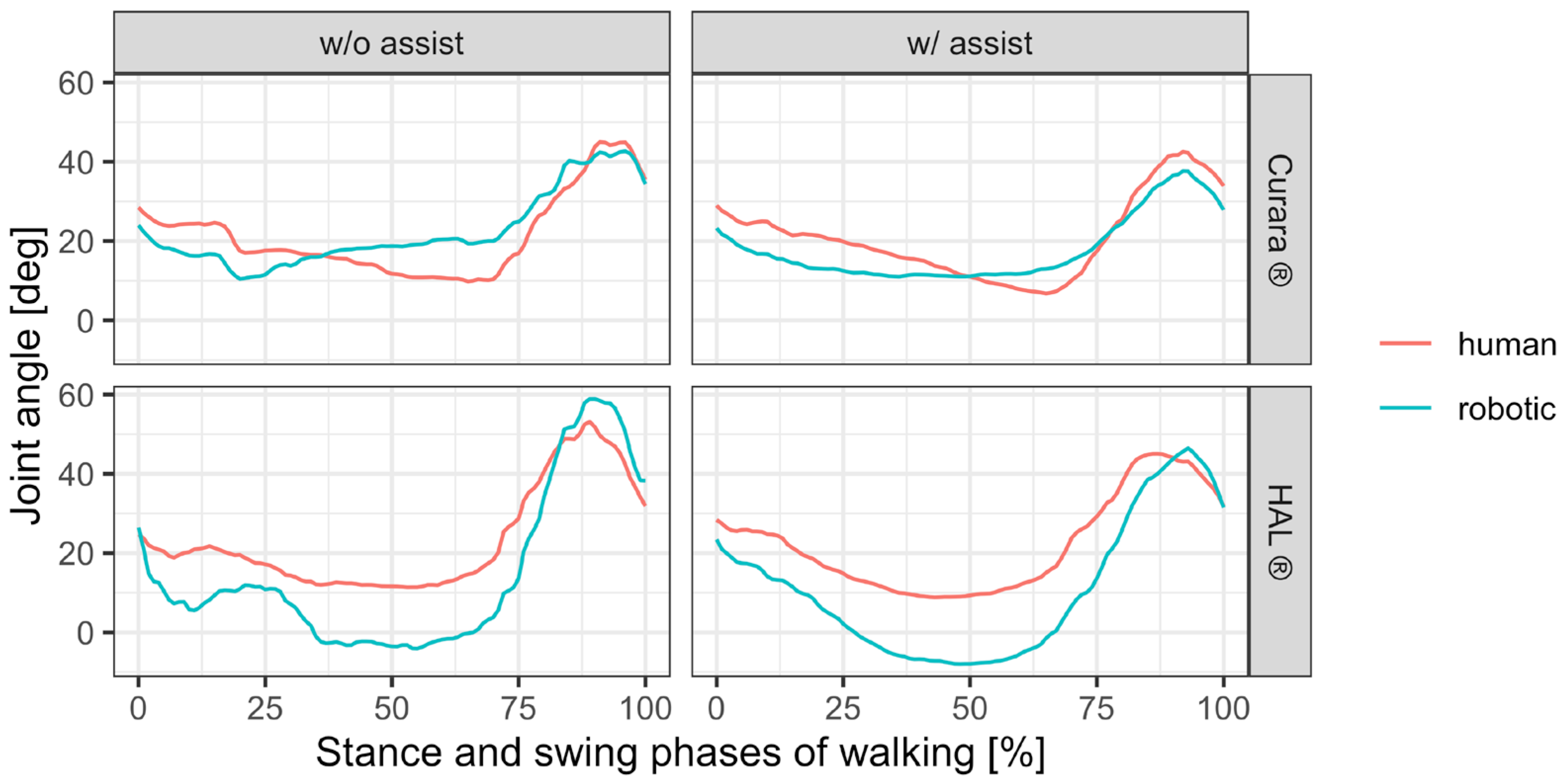
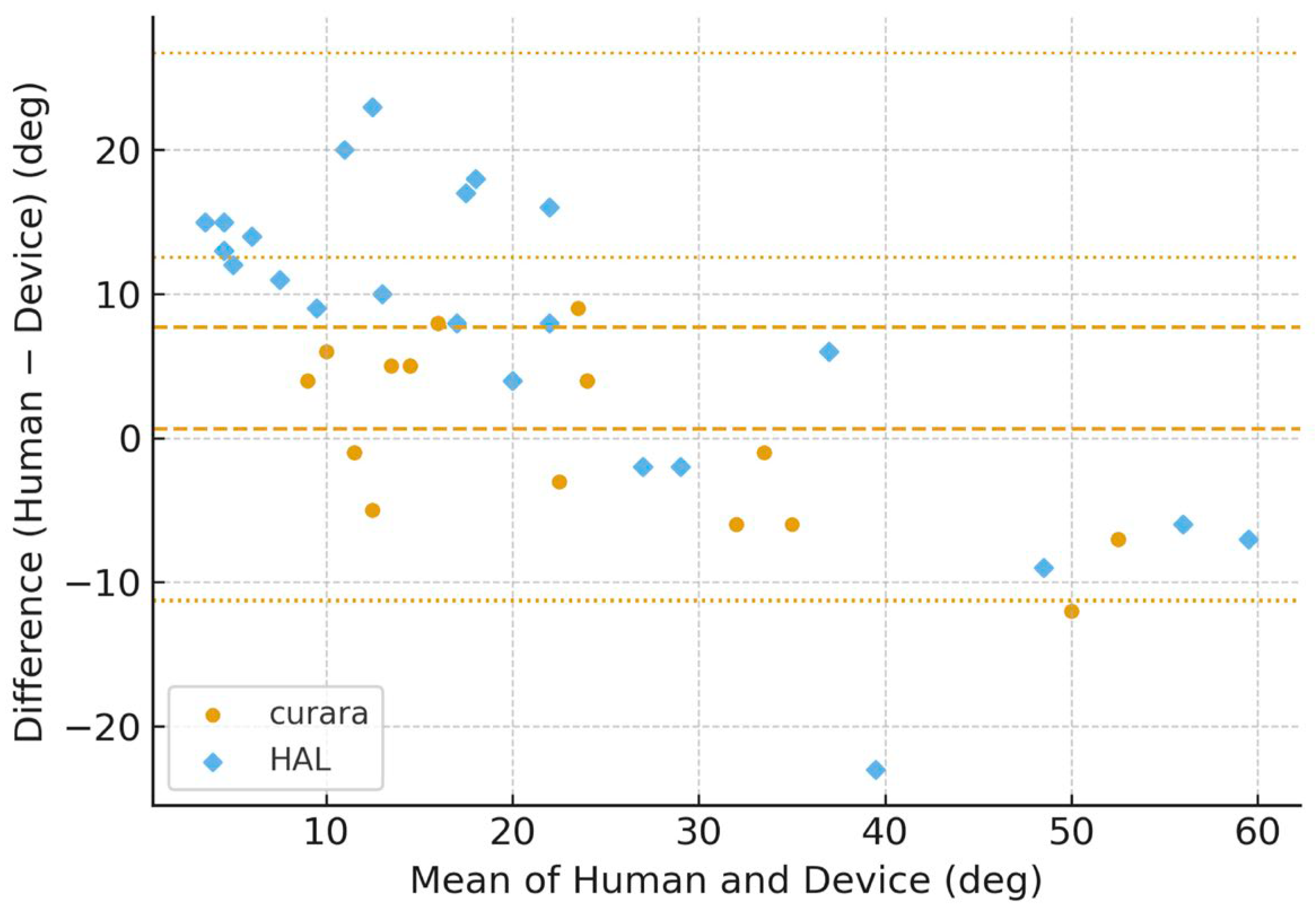
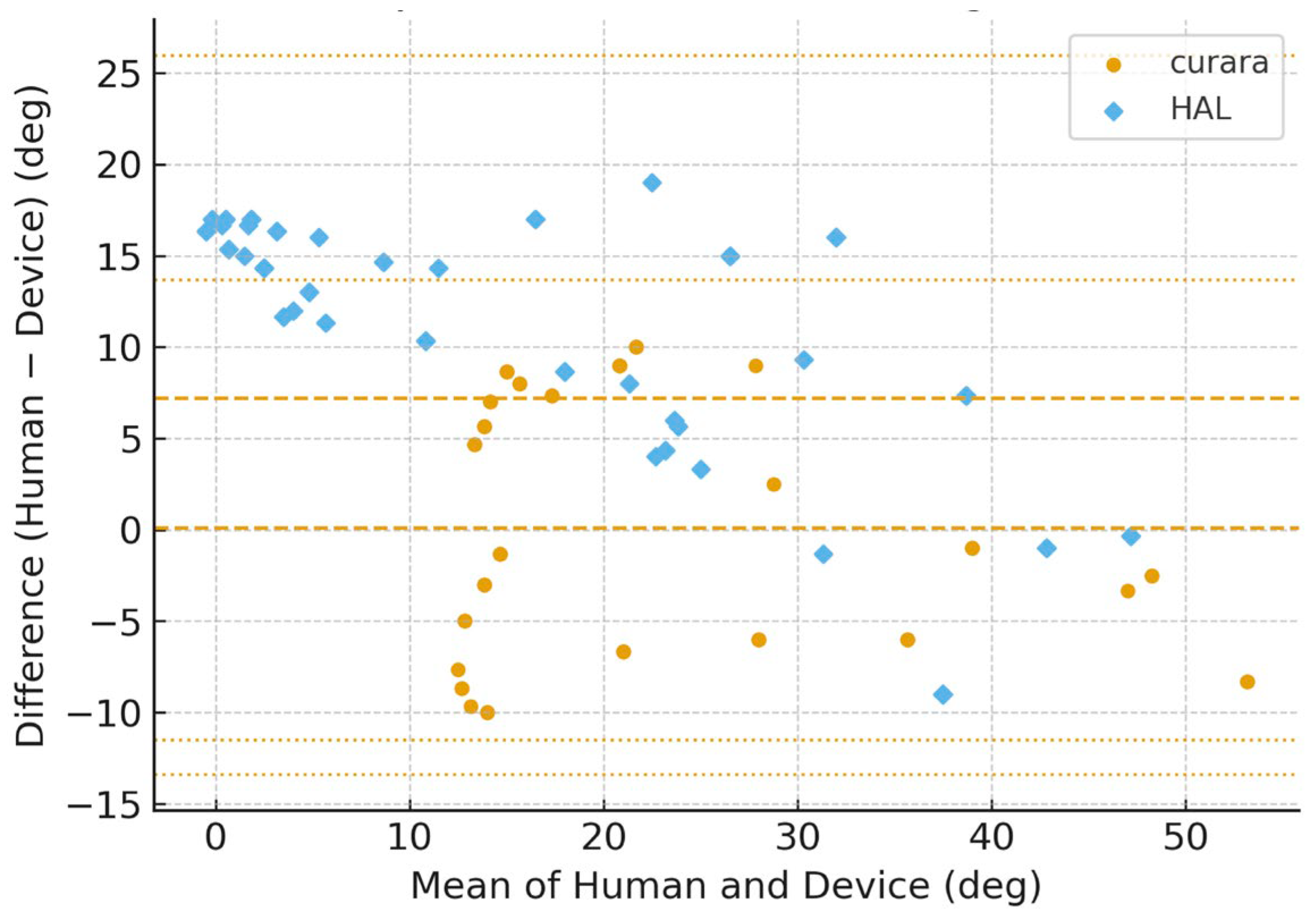
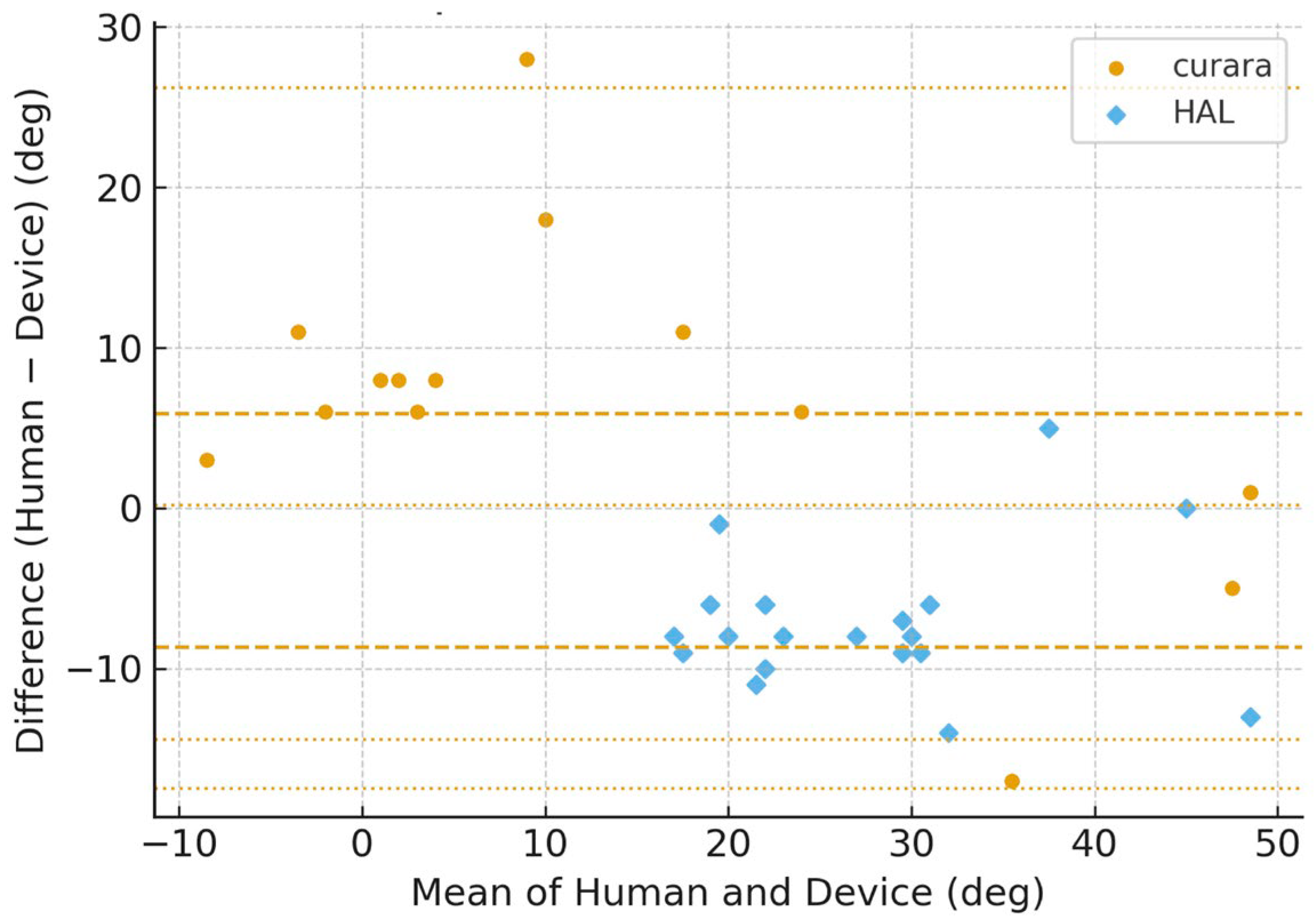
3. Results
4. Discussion
4.1. Quantitative Metrics of Synchronization (RMSE and MSJ)
4.2. Device Alignment and Clinical Implications
4.3. Limitations and Future Work
5. Conclusions
Author Contributions
Funding
Institutional Review Board Statement
Informed Consent Statement
Data Availability Statement
Conflicts of Interest
References
- Ministry of Health, Labour and Welfare (MHLW). Medical Device Insurance Coverage. 2022. Available online: https://www.mhlw.go.jp/content/12400000/000616253.pdf (accessed on 22 September 2025).
- Ministry of Health, Labour and Welfare (MHLW). Medical Fee Revision. 2022. Available online: https://www.mhlw.go.jp/stf/seisakunitsuite/bunya/0000196352_00001.html (accessed on 22 September 2025).
- Kawamoto, H.; Kamibayashi, K.; Nakata, Y.; Yamawaki, K.; Ariyasu, R.; Sankai, Y.; Sakane, M.; Eguchi, K.; Ochiai, N. Pilot study on motor function improvement using hybrid assistive limb in chronic stroke patients. BMC Neurol. 2013, 13, 141. [Google Scholar] [CrossRef] [PubMed]
- Kawamoto, H.; Stefan, T.; Hafid, N.; Hayashi, T.; Kamibayashi, K.; Eguchi, K.; Sankai, Y. Voluntary Motion Support Control of Robot Suit HAL Triggered by Bioelectric Signals for Hemiplegia. Annu. Int. Conf. IEEE Eng. Med. Biol. Soc. 2010, 2010, 462–466. [Google Scholar] [CrossRef] [PubMed]
- Kawamoto, H.; Sankai, Y. Power assist method based on phase sequence and muscle force condition for HAL. Adv. Robot. 2005, 19, 717–734. [Google Scholar] [CrossRef]
- Nilsson, A.; Vreede, K.S.; Häglund, V.; Kawamoto, H.; Sankai, Y.; Borg, J. Gait training early after stroke with a new exoskeleton—The hybrid assistive limb: A study of safety and feasibility. J. NeuroEng. Rehabil. 2014, 11, 92. [Google Scholar] [CrossRef]
- Won-Hyoek, C.; Yoon-Hee, K. Robot-assisted therapy in stroke rehabilitation. J. Stroke 2013, 15, 174–181. [Google Scholar] [CrossRef]
- Gassert, R.; Dietz, V. Rehabilitation robots for sensorimotor impairments: Neurophysiological perspectives. J. NeuroEng. Rehabil. 2018, 15, 46. [Google Scholar] [CrossRef]
- Wall, A.; Borg, J.; Palmcrantz, S. Clinical application of Hybrid Assistive Limb (HAL) for gait training—A systematic review. Front. Syst. Neurosci. 2015, 9, 48. [Google Scholar] [CrossRef]
- Mehrholz, J.; Thomas, S.; Kugler, J.; Pohl, M. Electromechanical-assisted training for walking after stroke. Cochrane Database Syst. Rev. 2017, 5, CD006185. [Google Scholar] [CrossRef]
- Buesing, C.; Fisch, G.; O’Donnell, M.; Shahidi, I.; Thomas, L.; Mummidisetty, C.K.; Williams, K.J.; Takahashi, H.; Rymer, W.Z.; Jayaraman, A. Effects of a wearable exoskeleton stride management assist system (SMA®) on spatiotemporal gait characteristics in individuals after stroke: A randomized controlled trial. J. Neuroeng. Rehabil. 2015, 12, 69. [Google Scholar] [CrossRef]
- Louie, D.R.; Eng, J.J. Powered robotic exoskeletons in post-stroke rehabilitation of gait: A scoping review. J. NeuroEng. Rehabil. 2016, 13, 53. [Google Scholar] [CrossRef] [PubMed]
- Awad, L.N.; Bae, J.; O’Donnell, K.; De Rossi, S.M.M.; Hendron, K.; Sloot, L.H.; Kudzia, P.; Allen, S.; Holt, K.G.; Ellis, T.D.; et al. A soft robotic exosuit improves walking in patients after stroke. Sci. Transl. Med. 2017, 9, eaai9084. [Google Scholar] [CrossRef]
- Tsukahara, A.; Yoshida, K.; Matsushima, A.; Ajima, K.; Kuroda, C.; Mizukami, N.; Hashimoto, M. Effects of gait support in patients with spinocerebellar degeneration by a wearable robot based on synchronization control. J. NeuroEng. Rehabil. 2018, 15, 84. [Google Scholar] [CrossRef] [PubMed]
- Mizukami, N.; Takeuchi, S.; Tetsuya, M.; Tsukahara, A.; Hashimoto, M.; Yoshida, K.; Sano, A. Effect of the synchronization-based control of a wearable robot having a non-exoskeletal structure on the hemiplegic gait of stroke patients. IEEE Trans. Neural Syst. Rehabil. Eng. 2018, 26, 1011–1016. [Google Scholar] [CrossRef] [PubMed]
- Matsushima, A.; Maruyama, Y.; Mizukami, N.; Tetsuya, M.; Hashimoto, M.; Yoshida, K. Gait training with a wearable curara® robot for cerebellar ataxia: A single-arm study. Biomed. Eng. Online 2021, 20, 90. [Google Scholar] [CrossRef]
- Leon, A.C.; Davis, L.L.; Kraemer, H.C. The role and interpretation of pilot studies in clinical research. J. Psychiatr. Res. 2011, 45, 626–629. [Google Scholar] [CrossRef]
- de Miguel-Fernández, J.; Lobo-Prat, J.; Prinsen, E.; Font-Llagunes, J.M.; Marchal-Crespo, L. Control strategies used in lower limb exoskeletons for gait rehabilitation after brain injury: A systematic review and analysis of clinical effectiveness. J. NeuroEng. Rehabil. 2023, 20, 23. [Google Scholar] [CrossRef]
- Weygers, I.; Kok, M.; Konings, M.; Hallez, H.; Spaepen, A.; Vanrumste, B. Inertial sensor-based lower limb joint kinematics: A methodological review. Sensors 2020, 20, 673. [Google Scholar] [CrossRef]
- Pollard, R.S.; Bass, S.M.; Schall, M.C., Jr.; Zabala, M.E. Evaluating the Performance of Joint Angle Estimation Algorithms on an Exoskeleton Mock-Up via a Modular Testing Approach. Sensors 2024, 24, 5673. [Google Scholar] [CrossRef]
- Ding, S.; Ouyang, X.; Liu, T.; Li, Z. Gait event detection of a lower extremity exoskeleton robot by an intelligent IMU. IEEE Sens. J. 2018, 18, 9728–9735. [Google Scholar] [CrossRef]
- Balasubramanian, S.; Meléndez-Calderón, A.; Roby-Brámi, A.; Burdet, E. On the analysis of movement smoothness. J. Neuroeng. Rehabil. 2015, 12, 112. [Google Scholar] [CrossRef] [PubMed]
- Kobsar, D.; Osis, S.T.; Hettinga, B.A.; Ferber, R. Gait biomechanics and patient-reported function as predictors of response to a hip strengthening exercise intervention in patients with knee osteoarthritis. PLoS ONE 2015, 10, e0139923. [Google Scholar] [CrossRef] [PubMed]
- Bland, J.M.; Altman, D.G. Statistical methods for assessing agreement between two methods of clinical measurement. Lancet 1986, 327, 307–310. [Google Scholar] [CrossRef]
- Bland, J.M.; Altman, D.G. Measuring agreement in method comparison studies. Stat. Methods Med. Res. 1999, 8, 135–160. [Google Scholar] [CrossRef]
- Giavarina, D. Understanding Bland–Altman analysis. Biochem. Med. 2015, 25, 141–151. [Google Scholar] [CrossRef]
- Krouwer, J.S. Why Bland–Altman plots should use X, not (Y+X)/2 when X is a reference method. Stat. Med. 2008, 27, 778–780. [Google Scholar] [CrossRef]
- MajidiRad, A.; Kasaei, M.; Younesian, D. The Effect of Lower Limb Exoskeleton Alignment on Knee Joint. J. Funct. Morphol. Kinesiol. 2022, 7, 61. [Google Scholar] [CrossRef]
- Bessler-Etten, J.; Schaake, L.; Prange-Lasonder, G.B.; Buurke, J.H. Assessing effects of exoskeleton misalignment on knee joint load during swing using an instrumented leg simulator. J. Neuroeng. Rehabil. 2022, 19, 13. [Google Scholar] [CrossRef]
- Rohrer, B.; Fasoli, S.; Krebs, H.I.; Hughes, R.; Volpe, B.; Frontera, W.R.; Stein, J.; Hogan, N. Movement Smoothness Changes during Stroke Recovery. J. Neurosci. 2002, 22, 8297–8304. [Google Scholar] [CrossRef]
- Tanaka, T.; Matsumura, R.; Miura, T. Influence of varied load assistance with exoskeleton-type robotic device on gait rehabilitation. Int. J. Environ. Res. Public Health 2022, 19, 9713. [Google Scholar] [CrossRef] [PubMed]
- Andrade, R.M.; Oliveira, A.S.; Silva, M.F.; Cestari, M. Human–Robot Joint Misalignment, Physical Interaction, and Gait Kinematic Assessment in Ankle-Foot Orthoses. Sensors 2024, 24, 246. [Google Scholar] [CrossRef]
- Jin, S.; Kim, S.; Lee, J. Design and analysis of a multi-DOF compliant gait exoskeleton to reduce joint misalignment. Mech. Based Des. Struct. Mach. 2023, 51, 2012–2027. [Google Scholar] [CrossRef]
- Wang, J.; Li, X.; Huang, T.H.; Yu, S.; Li, Y.; Chen, T.; Carriero, A.; Oh-Park, M.; Su, H. Comfort-Centered Design of a Lightweight and Backdrivable Knee Exoskeleton. IEEE Robot. Autom. Lett. 2018, 3, 4265–4272. [Google Scholar] [CrossRef]
- Spungen, A.M.; Dematt, E.J.; Biswas, K.; Harel, N.Y.; Bauman, W.A.; Asselin, P. Exoskeletal-Assisted Walking in Veterans With Paralysis: A Randomized Clinical Trial. JAMA Netw. Open 2024, 7, e2431501. [Google Scholar] [CrossRef]
- Calafiore, D.; Negrini, F.; Tottoli, N.; Ferraro, F.; Ozyemisci-Taskiran, O.; de Sire, A. Efficacy of robotic exoskeleton for gait rehabilitation in patients with subacute stroke: A systematic review. Eur. J. Phys. Rehabil. Med. 2022, 58, 1. [Google Scholar] [CrossRef] [PubMed]
- Leow, X.R.G.; Ng, S.L.A.; Ying Lau, Y. Overground Robotic Exoskeleton Training for Patients With Stroke on Walking-Related Outcomes: A Systematic Review and Meta-analysis of Randomized Controlled Trials. Arch. Phys. Med. Rehabil. 2023, 104, 1698–1710. [Google Scholar] [CrossRef]
- Tucker, M.R.; Olivier, J.; Pagel, A.; Bleuler, H.; Bouri, M.; Lambercy, O.; del Millán, J.R.; Riener, R.; Vallery, H.; Gassert, R. Control strategies for active lower extremity prosthetics and orthotics: A review. J. Neuroeng. Rehabil. 2015, 12, 1. [Google Scholar] [CrossRef] [PubMed]
- Lee, D.; Lee, S.; Young, A.J. AI-driven universal lower-limb exoskeleton system for community ambulation. Sci. Adv. 2024, 10, eadq0288. [Google Scholar] [CrossRef] [PubMed]



| Participant | Device | Condition | RMSE [°] | MSJ [°2/s6] |
|---|---|---|---|---|
| Patient A | HAL® | No-assist | 0.148 | 0.018 |
| Assist | 0.103 | 0.011 | ||
| curara® | No-assist | 0.136 | 0.017 | |
| Assist | 0.087 | 0.009 | ||
| Patient B | HAL® | No-assist | 0.162 | 0.02 |
| Assist | 0.112 | 0.013 | ||
| curara® | No-assist | 0.142 | 0.018 | |
| Assist | 0.098 | 0.01 |
Disclaimer/Publisher’s Note: The statements, opinions and data contained in all publications are solely those of the individual author(s) and contributor(s) and not of MDPI and/or the editor(s). MDPI and/or the editor(s) disclaim responsibility for any injury to people or property resulting from any ideas, methods, instructions or products referred to in the content. |
© 2025 by the authors. Licensee MDPI, Basel, Switzerland. This article is an open access article distributed under the terms and conditions of the Creative Commons Attribution (CC BY) license.
Share and Cite
Tanaka, T.; Sugihara, S.; Miura, T. Comparative Analysis of Robotic Assistive Devices on Paretic Knee Motion in Post-Stroke Patients: An IMU-Based Pilot Study. J. Funct. Morphol. Kinesiol. 2026, 11, 5. https://doi.org/10.3390/jfmk11010005
Tanaka T, Sugihara S, Miura T. Comparative Analysis of Robotic Assistive Devices on Paretic Knee Motion in Post-Stroke Patients: An IMU-Based Pilot Study. Journal of Functional Morphology and Kinesiology. 2026; 11(1):5. https://doi.org/10.3390/jfmk11010005
Chicago/Turabian StyleTanaka, Toshiaki, Shunichi Sugihara, and Takahiro Miura. 2026. "Comparative Analysis of Robotic Assistive Devices on Paretic Knee Motion in Post-Stroke Patients: An IMU-Based Pilot Study" Journal of Functional Morphology and Kinesiology 11, no. 1: 5. https://doi.org/10.3390/jfmk11010005
APA StyleTanaka, T., Sugihara, S., & Miura, T. (2026). Comparative Analysis of Robotic Assistive Devices on Paretic Knee Motion in Post-Stroke Patients: An IMU-Based Pilot Study. Journal of Functional Morphology and Kinesiology, 11(1), 5. https://doi.org/10.3390/jfmk11010005