1. Introduction
Goods in Europe are mostly transported by heavy trucks, and a large proportion of these are articulated, having a tractor and a trailer. Fuel consumption makes up a large amount of the costs related to daily transportation, and the resulting air pollution creates many environmental risks, e.g., human respiratory diseases and high CO
2 emissions, which ultimately increase the greenhouse effect [
1,
2,
3,
4]. Urban delivery trucks with a 4 × 2 axle configuration (4-UD) emit, on average, 307 g CO
2/t-km, which is over five times as much as long-haul tractor–trailers (5-LH), with emissions of 57 g CO
2/t-km [
5]. Therefore, the unit used, g CO
2/t-km, accounts for the high variation in the payload and distance travelled. The baseline CO
2 emissions (g/km) show greater variation, and the fuel consumption values across the different truck subgroups vary between 24 L/100 km and 33 L/100 km [
5].
A reduction in vehicle drag will most probably contribute to fuel saving and decreased air pollution, probably almost independent of vehicle purpose [
6]. This possibility encouraged us to study truck streamlining more closely.
In nature, many organisms have adapted to aquatic or aerial life, which involves fast swimming or flying, and their streamlined shape has been adapted and optimized over millions of years [
7,
8,
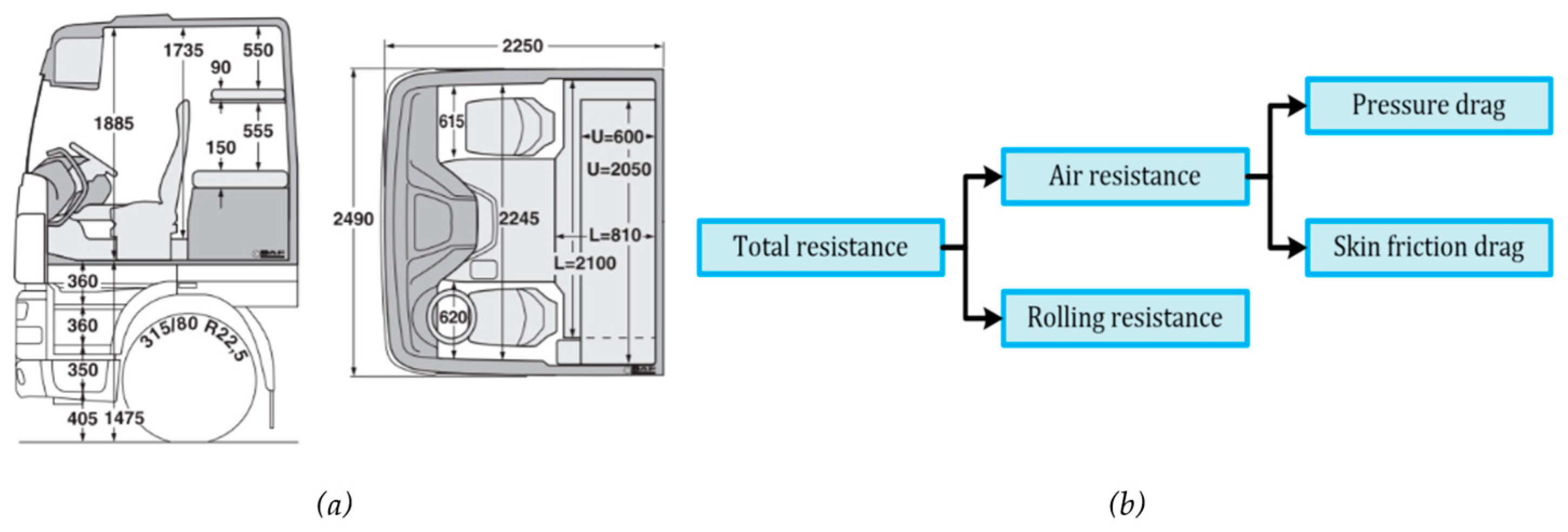
9]. This provides us with a catalog of possible ideas and solutions to pick from as role models. Next to that, undertaking ‘industrial espionage’ on biological role models (e.g., trout, shark, dolphin, etc.) can potentially save a serious amount of development time because it provides us with a workable starting point that only has to be translated to human technology. Although it may be difficult to see at first glance, a fish swimming in water has some similarities to a truck moving through air. Due to its streamlined shape, a trout reduces its drag force significantly, and it is not hard to imagine that its drag coefficient is much lower than that of the cubic box-like shape of a truck (see
Figure 1a). In fact, the ratio between the two is close to 10 [
10,
11,
12,
13,
14].
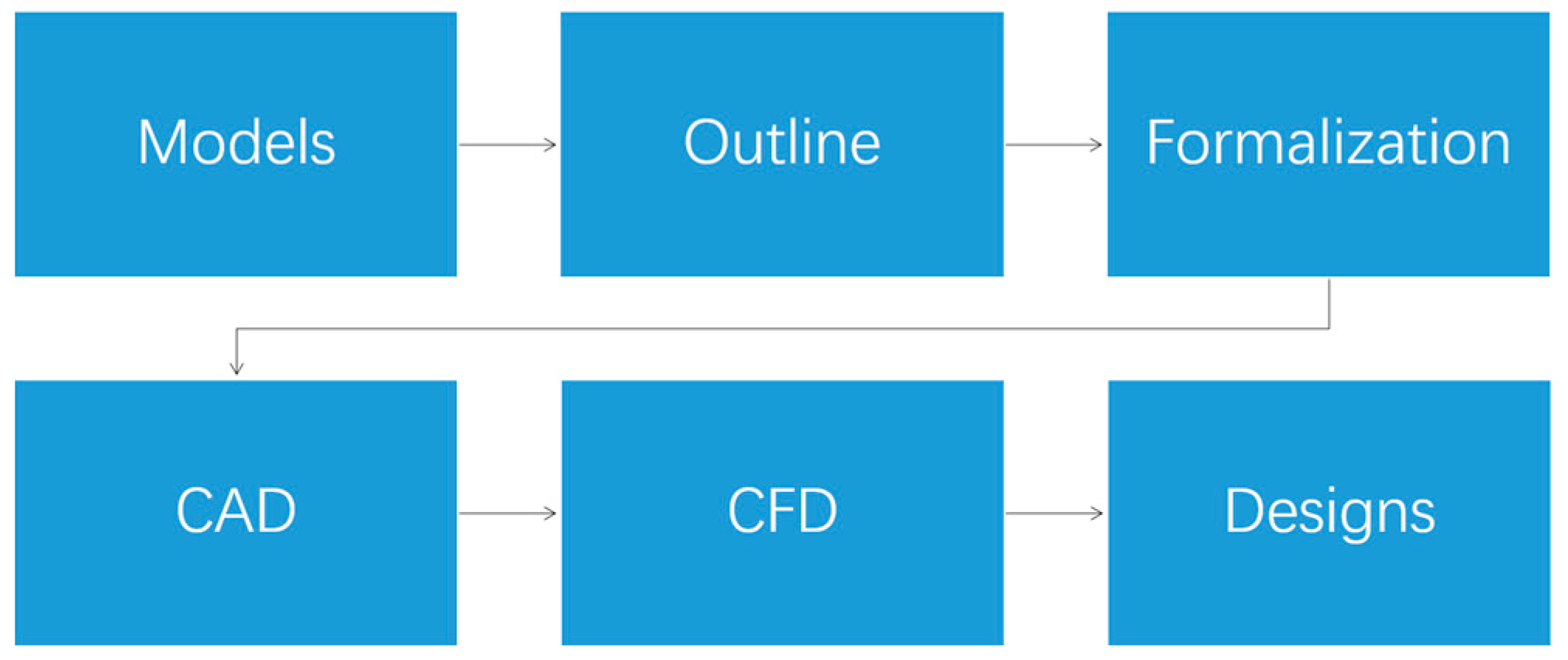
This encouraged us to follow a biomimetic optimization procedure for our truck streamlining study. We will use a formalized method to analyze the outline of a biological model. We derive a series of organism-inspired designs that will be tested using 3D computational fluid dynamics (CFD). In that way, we can use the elements or characteristics of biological streamlining to redesign the shape of the truck. Of course, we aim to improve the characteristics of the truck’s design with respect to drag.
The resistance of a truck moving through the air is composed of two parts: skin friction drag and pressure drag [
14] (see
Figure 1b). In this study, we concentrate on reducing pressure drag due to the fact that skin friction drag hardly varies in relation to the shape of the truck [
15]. The air resistance increases in importance at increased vehicle speed. Skin friction drag hardly changes during such speed changes, but pressure drag increases dramatically with speed [
15,
16,
17]. Therefore, when aiming to reduce fuel use, a reduction in pressure drag seems to be the most logical choice, with the highest likelihood of resulting in emission reductions.
Thus, many manufacturers of heavy commercial vehicles as well as energy research institutes, aim to increase transport efficiency by improving the truck’s aerodynamic design to improve engine fuel efficiency [
16]. In this paper, we present a novel truck aerodynamic design procedure for a truck shape that significantly reduces drag and thereby fuel consumption and exhaust emissions. At the same time, it should fit well within EU regulations and maintain the truck’s normal use and stability. Complementary to many studies so far, we plan to concentrate on reshaping the outline of the truck’s tractor and not the trailer [
2,
3,
5,
16,
18]. Our new tractor design will be inspired by biological shapes with a known high level of streamlining and low drag, e.g., the head of a trout, but also other model organisms. In a preliminary study with a rather coarse biomimetic modelling procedure, we achieved measured drag reductions of up to 40% at cruising speed, potentially resulting in fuel consumption reductions of up to 20% at cruising speed [
19].
In the Methods, as well as in the Discussion section, the biological model selection procedure, the design method using computer-aided design (CAD), the performance analysis using CFD and the planned experimental follow-ups are explained and evaluated. There, the unique points of a biomimetic pathway, as applied in this study, are indicated. The selection process ultimately assists us in finding the best-performing model(s) for the experimental work in follow-up studies. Such studies will not only allow us to verify the results of our CFD but can also provide experimental evidence supporting the present study. In the conclusion section, we summarize our findings with regard to the bio-inspired designs, the design method, the CFD simulations and the aerodynamic performance.
2. Materials and Methods
2.1. Models
- (i)
Rationale
A certain standardized pathway for the biomimetic design process was applied (see
Figure 2). The first step in this process relates to the selection of the biological model, but the question of ‘how to translate the biological shape to a technical variant’ already plays a role here. A streamlined design for large vehicles can, in principle, be inspired by a range of biological models because streamlining can be found in many animal taxa. Therefore, potential similarities between a cruising road vehicle and a streamlined organism have to be evaluated to discover which animals might be used for our biomimetic design process. First, all streamlined animals are sorted into two main groups: flying in air and swimming in water [
8,
20,
21]. Subsequently, several evaluation rules are used to sort the proper biological models based on the available data, which will eventually result in a final methodology for the bio-inspired process.
- (ii)
Streamlined animal
In nature, many animals have streamlined shapes adapted to their living environment [
7,
8,
9]. Such animals can live in air, water, or in both. Aerial animals cannot be used as a biomimetic model for our study because, in most cases, the beak is too prominent and only the body is streamlined [
8,
22,
23,
24,
25,
26]. Aquatic animals, particularly fish, are favored for our biomimetic study due to their often all-body streamlined shapes, including the beak/mouth. Fish can be characterized by the habitat they live in, grouping them as follows: pelagic fish, tuna; benthic fish, flounder; and demersal fish, trout [
7,
26,
27,
28,
29].
- (iii)
Model selection method
Aquatic animals living near the seabed (so-called demersal swimmers) show a high level of similarity to a truck driving over a road. In both cases, the object moves rather fast but close to a boundary below. Organisms that swim close to the bottom boundary can be assumed to have undergone an evolutionary optimization process that makes them suitable for such physical circumstances [
23,
24]. This fact skews the selection process toward the group of demersal swimmers, e.g., fish swimming close to the seabed or swimming close to a riverbed.
We tried to find a species that has a certain fluid mechanic similarity to the truck. We used the Reynolds Number () as the similarity parameter, aiming for a Re in the range of one million (106). Comparable Reynolds numbers result in comparable fluid flow conditions.
In the real world, the truck is moving relative to static air and a static road. A fish is moving relative to static water and a static seabed or relative to streaming water and a riverbed but keeping some distance between the body and the bottom. Therefore, the formalization/optimization process should test the designs under a similar relative motion. For example, a simulation that uses a static model truck should be performed with a static model and fluid passing by [
30].
In summary, the proper biological models will be selected and optimized via an evaluation based on the four similarities described below, which effectively come down to geometrical as well as Reynolds number similarity:
- (i)
the medium is fluid;
- (ii)
a gap exists between the object and the lower boundary;
- (iii)
similar kinetic conditions;
- (iv)
relative motion similarity.
2.2. Species Selection
Based on the rules set out in
Section 2.1, rainbow trout (
Oncorhynchus mykiss) was selected to be the first suitable biological model for our biomimetic pathway because it follows all of the criteria. Although there are definitely more demersal swimmers that follow the criteria, we decided to start with trout because our research group has substantial experience with trout. Adult stream-dwelling (fluvial) rainbow trout usually grow to between 30 and 50 cm in length and grow to a body mass between 0.5 and 2 kg, depending on various factors mostly related to habitat and genetics [
31]. The estimated overall average swimming speed for rainbow trout is around 0.84 m/s (SE = 0.02), with a 95% confidence interval of 0.79–0.89 m/s [
27]. Rainbow trout can reach speeds as high as 2.72 m/s.
The Reynolds number of trout with a potential top speed of 2.72 m/s is calculated with the following formula:
where
Re represents the Reynolds number,
is the density of the water,
is the velocity of the trout,
is the body length of the trout and
is the dynamical viscosity of the water, respectively.
For comparison, the Reynolds number of a truck on a highway at cruising speed is calculated with the following formula:
where
Re represents the Reynolds number,
is the density of the air,
is the velocity of the truck (25 m/s = 90 km/h, based on EU highway speed regulations [
32,
33]),
is the length of the tractor and
is the dynamical viscosity of the air, respectively. The calculations were performed with standard atmosphere and room temperature values.
From the above calculations, we can see that the trout has a similar but slightly lower Reynolds number compared to the truck; therefore, trout fit our criteria (i) to (iv) well enough to serve as the model for a streamlined truck design.
2.3. Formalization
2.3.1. EU Standards
Recent, EU regulations relating to the size constraints of an articulated truck–trailer configuration to allow for design changes aimed at reducing fuel consumption and emission levels [
16,
34,
35]. The new regulations allow for a length increase, which should not be designated for increased payload volume but to allow for design changes that result in decreased fuel usage and lower emissions. At the same time, the truck + trailer’s road behavior, especially on narrow roads, curves and roundabouts, should be the same as before [
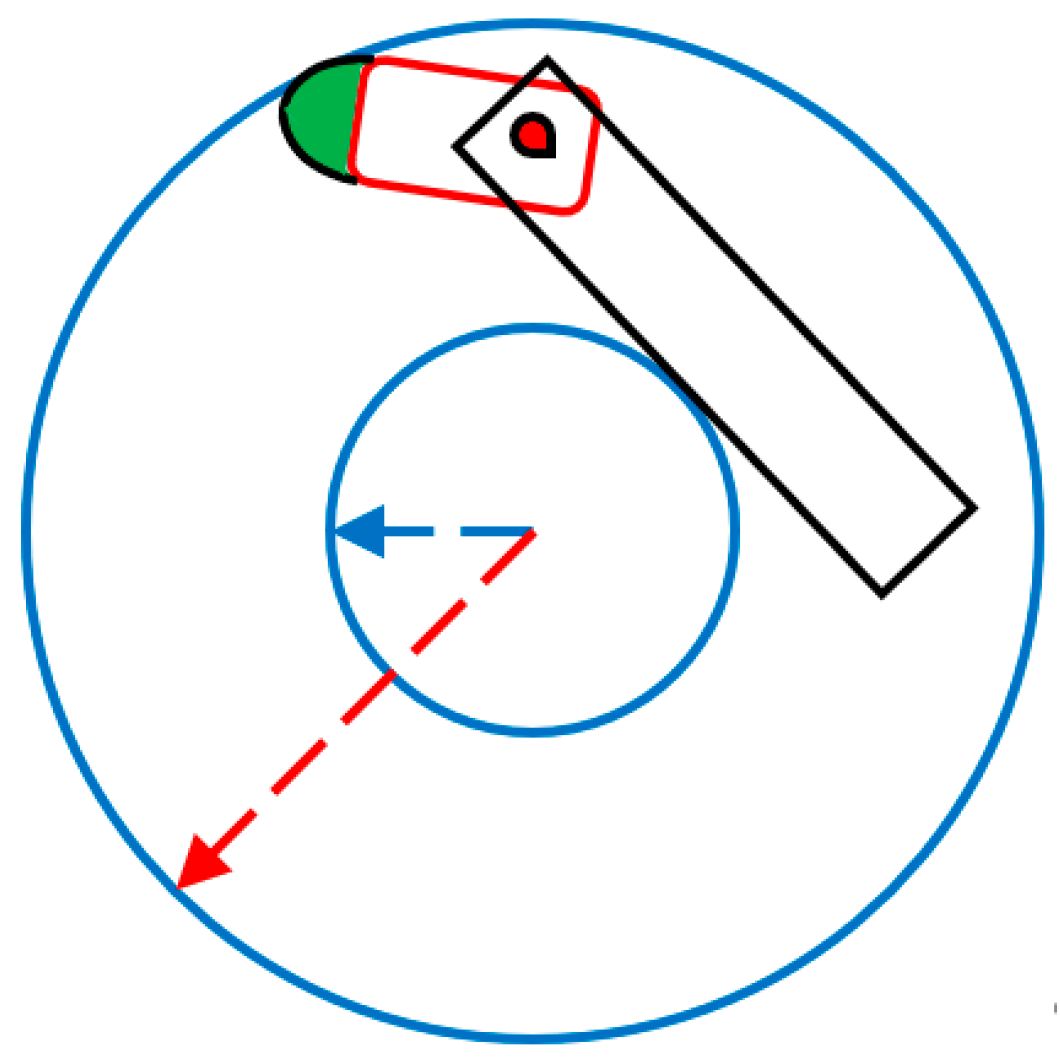
19]. Within these boundary conditions, we see many possibilities for serious design changes that will have the desired effects, e.g., no mirrors, extended truck noses, rounder corners, improved driver field of view, etc. As
Figure 3 shows, the outer (red radius) and inner (blue radius) circle of a minimal-size roundabout according to EU regulations are, respectively, 12.5 m and 5.3 m. The green region is the possible extension space for the new tractor design [
16]. The streamlined design will have to match or be smaller than the round, green-colored extension to stay within EU regulations [
16]. This yields about 1.5 m extra length when designed appropriately.
In the following sections,
Table 1 will be used as the outer limits of our bio-inspired designs and to maintain the uniformity of all of the geometrical transformations and CFD simulations [
34]. The numbers indicated in bold, i.e., the length and the length–width ratio of the new tractor, quantify the design space of any streamlined nose extension (see
Figure 3). The biological model is translated to human technology by applying CAD. Furthermore, the resulting designs are, in principle, flexible with regard to further shape changes due to the variable settings in the design process. After testing for a number of different variables, a series of tractor designs will be selected for subsequent CFD analysis, which results in comparative data related to their aerodynamic performance.
2.3.2. Scaling and Curve Fitting Method
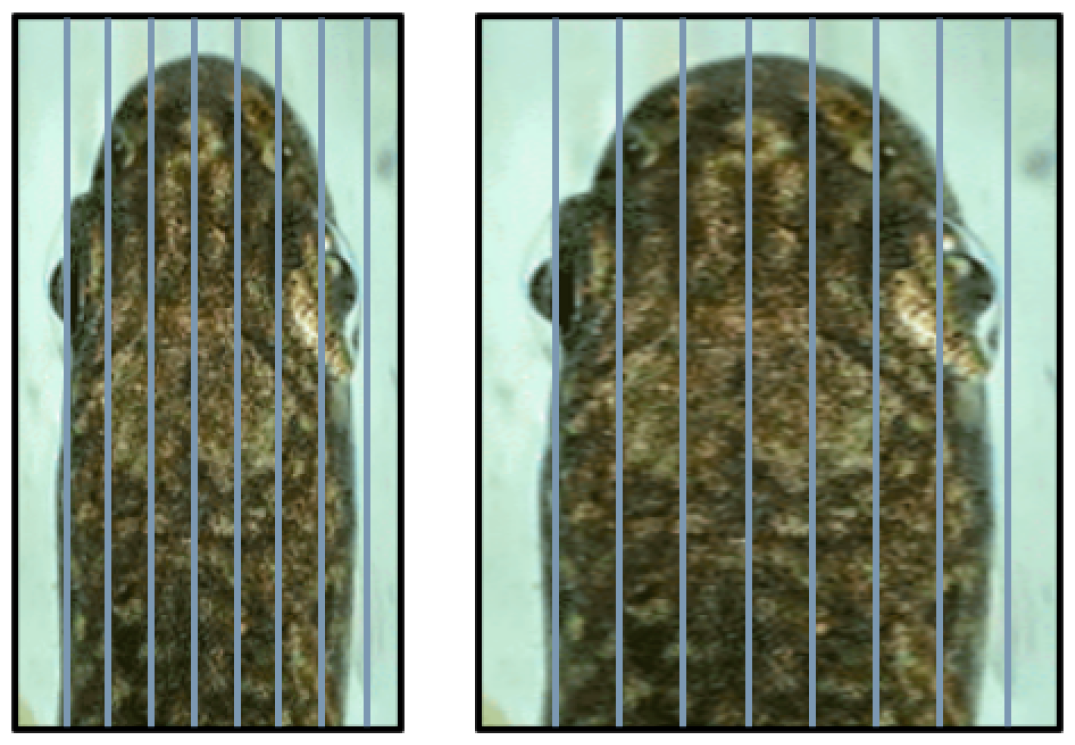
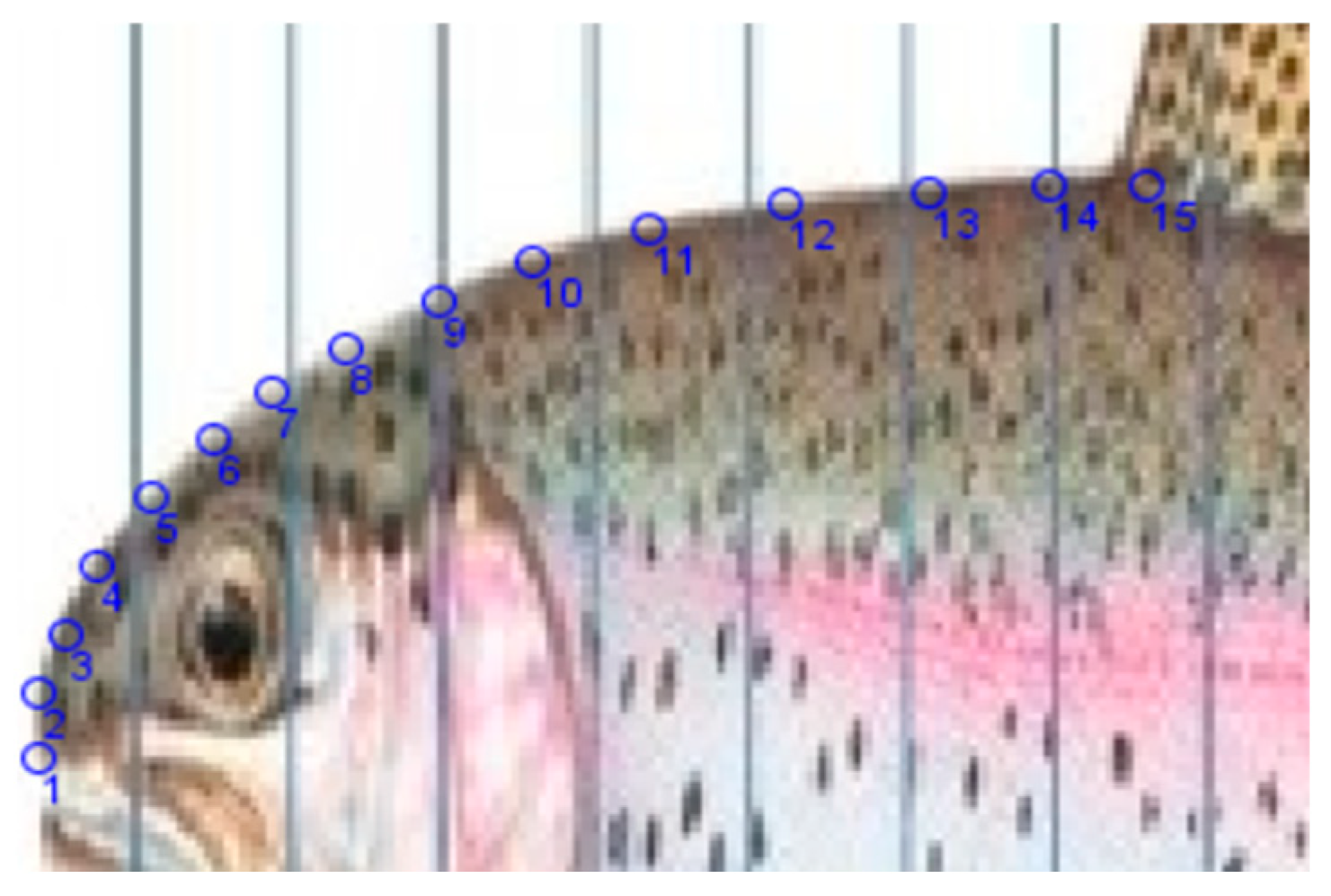
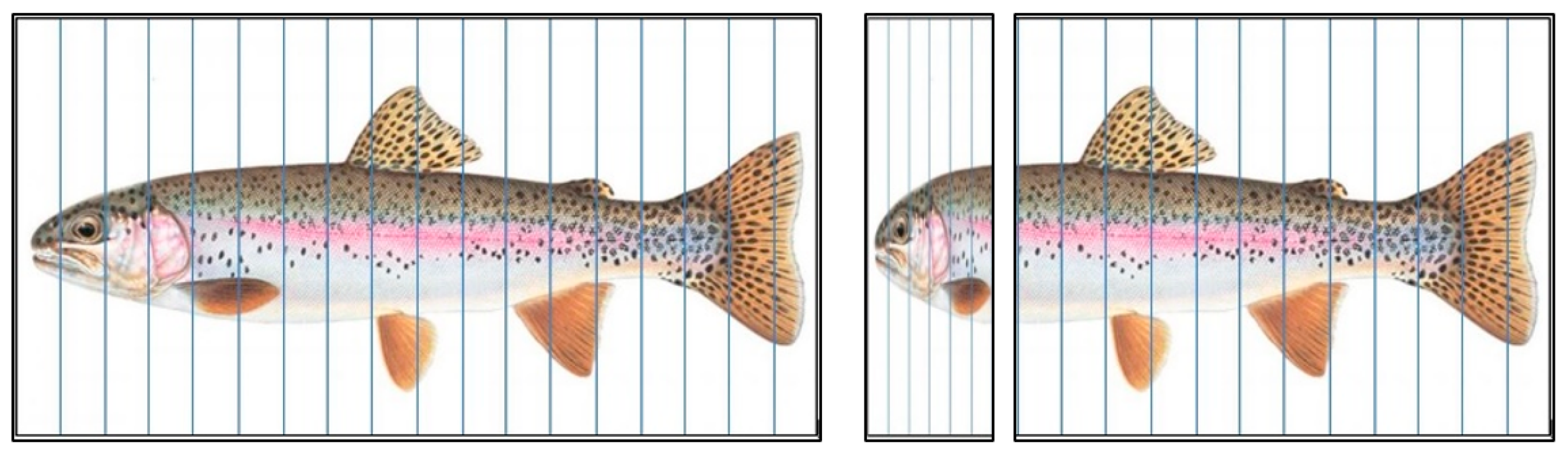
The design outline of the truck is inspired by the biological model. Because the actual dimensions or even actual dimension ratios of the redesign will not be the same as the biological model, a reshaping process is necessary for the formalization and potential application of the animal morphology. The shape of the head of the trout from the top view and lateral view is formalized to derive curvature data that obey our criteria extrapolated from the EU regulations. In this study, we use a digital camera to determine the outline of the trout. Furthermore, a deforming foreground grid is used to reshape the head of the tout toward the desired dimension ratio based on data in
Table 1 (see
Figure 4 and
Figure 5).
The rainbow trout’s body is meshed with a series of equidistant vertical lines that divide the body of the trout into sections with equal widths (
Figure 4 and
Figure 5). Subsequently, a deformation process is applied to the part of the trout that needs to be re-scaled, in this case, the front part from where the outline slope is horizontal (just in front of the dorsal fin) to where the outline slope is vertical (just above the mouth opening) (see
Figure 4 and
Figure 5). In this process, the lines in the deforming part are kept equidistant but at varying distances until the necessary re-scaling has been accomplished. Then, the morphometric information of the deformed biological model is analyzed and further processed into a smooth curve. The result is, in this case, a curve following the outline of the trout body in the target part but compressed along the X-axis. Finally, the data are fitted from the compressed outline to a mathematical function (ImageJ) that can be further used in the truck design process. In summary:
import the appropriately compressed picture of the fish into ‘ImageJ’;
manually track the curve and plot the tracked dots (see
Figure 6);
output the dot coordinates and other characterizing data;
use curve fitting to derive a mathematical function.
In
Figure 6, the blue circles marked on the head of the trout have been fitted to a Gamma function, as follows in Equation (1):
The same procedure is followed for (half of) the top view of the trout’s head (see
Figure 5), which results in a corresponding gamma function for the deformed top view outline.
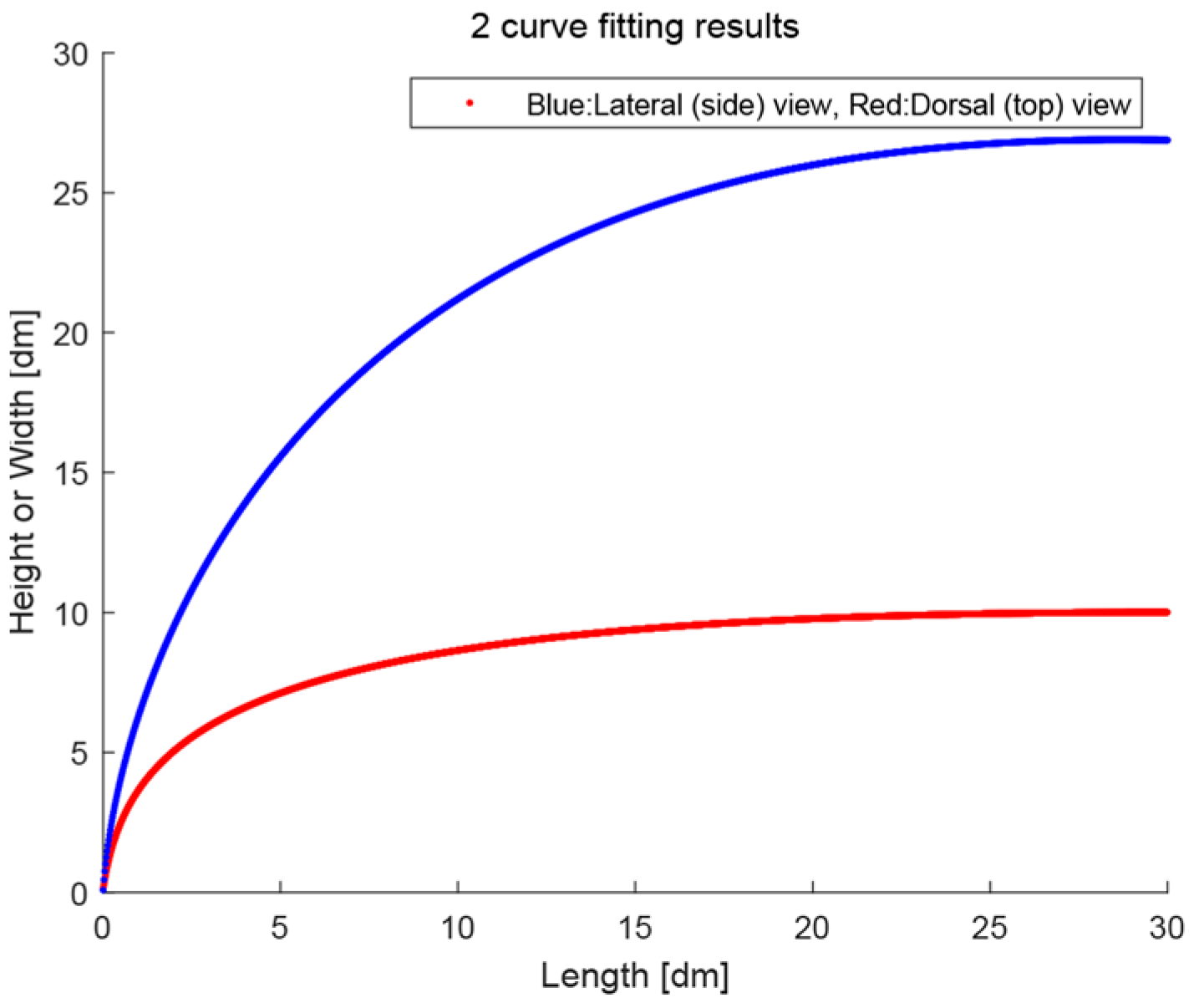
Figure 7 shows the fitted curves for the dorsal view (top view) and the lateral view (side view). The (example) parameters after curve fitting are given below, including their R-squared values (see
Table 2):
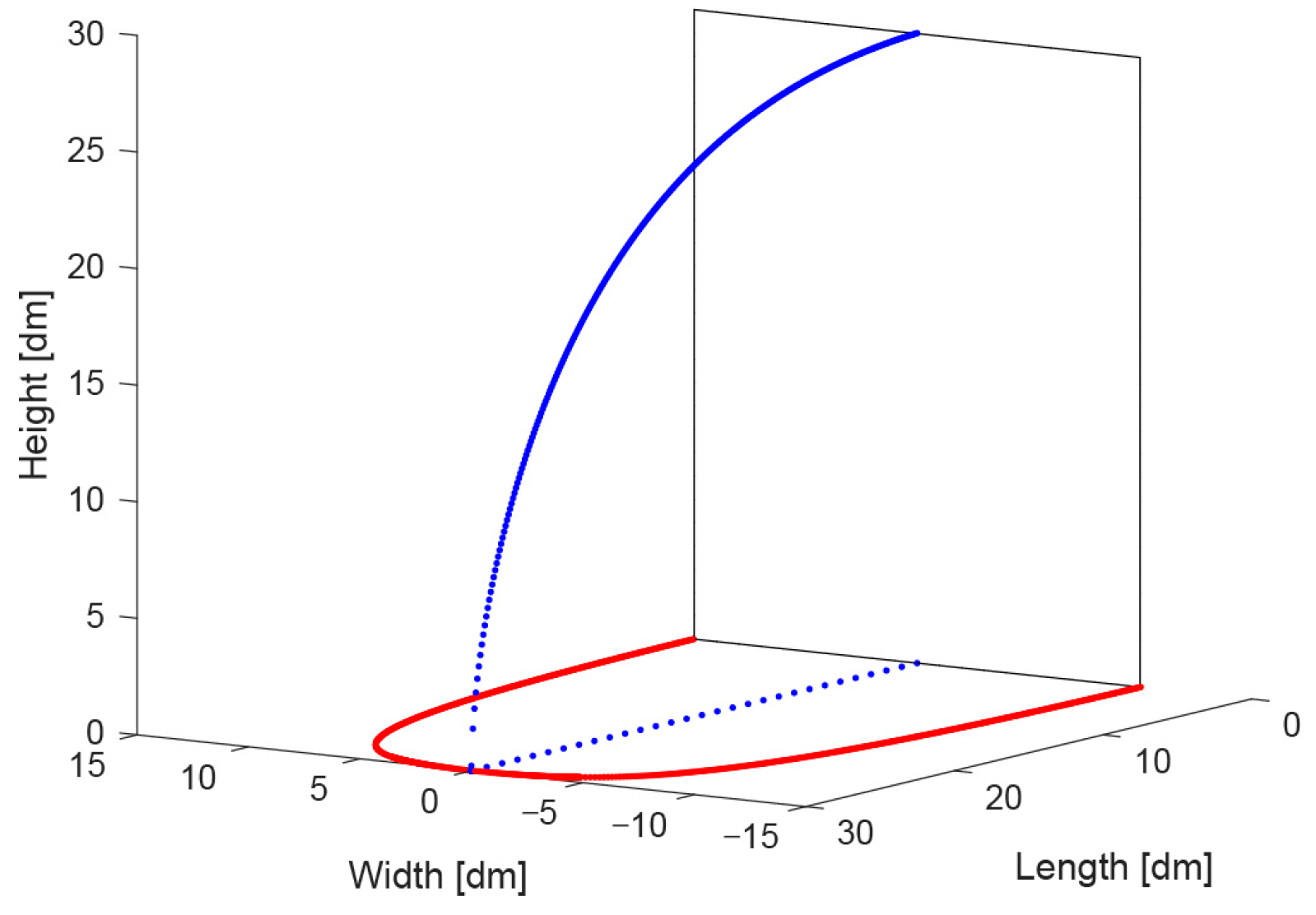
The two corresponding gamma functions are now used to construct the outline of the streamlined truck design. The side view outline will be constructed from the lateral curve fitting result, and the top view outline will be formed by a mirror flipping of the dorsal curve fitting result (see
Figure 8).
2.4. CAD Design Step
The final result of the curve fitting process will be input for a computer-aided design (CAD) process, with the two lines representing the outlines of the truck.
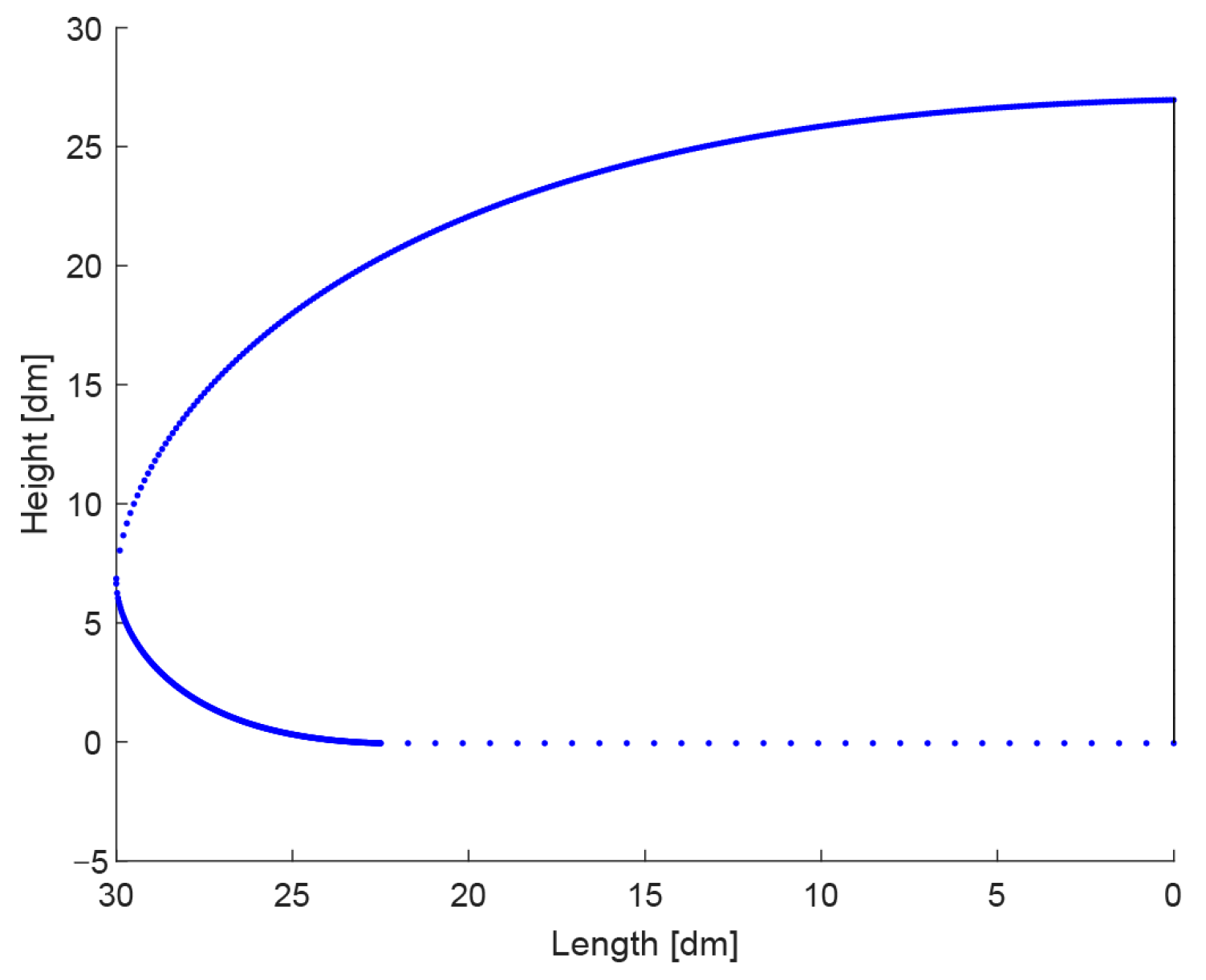
To accomplish this, all of the parameter values are imported into a 3D coordinate system: X, Y and Z. The X–Z plane represents the side view, and the X–Y plane represents the top view. Then, the corresponding functions are as follows:
Dorsal view (for +X and −X to represent the two halves):
These curves are visible in a 3D plot in
Figure 8 as a blue curve (side view outline, Equation (4)) and a ‘left’ and ‘right’ red curve, together forming the top view (Equations (5) and (6)).
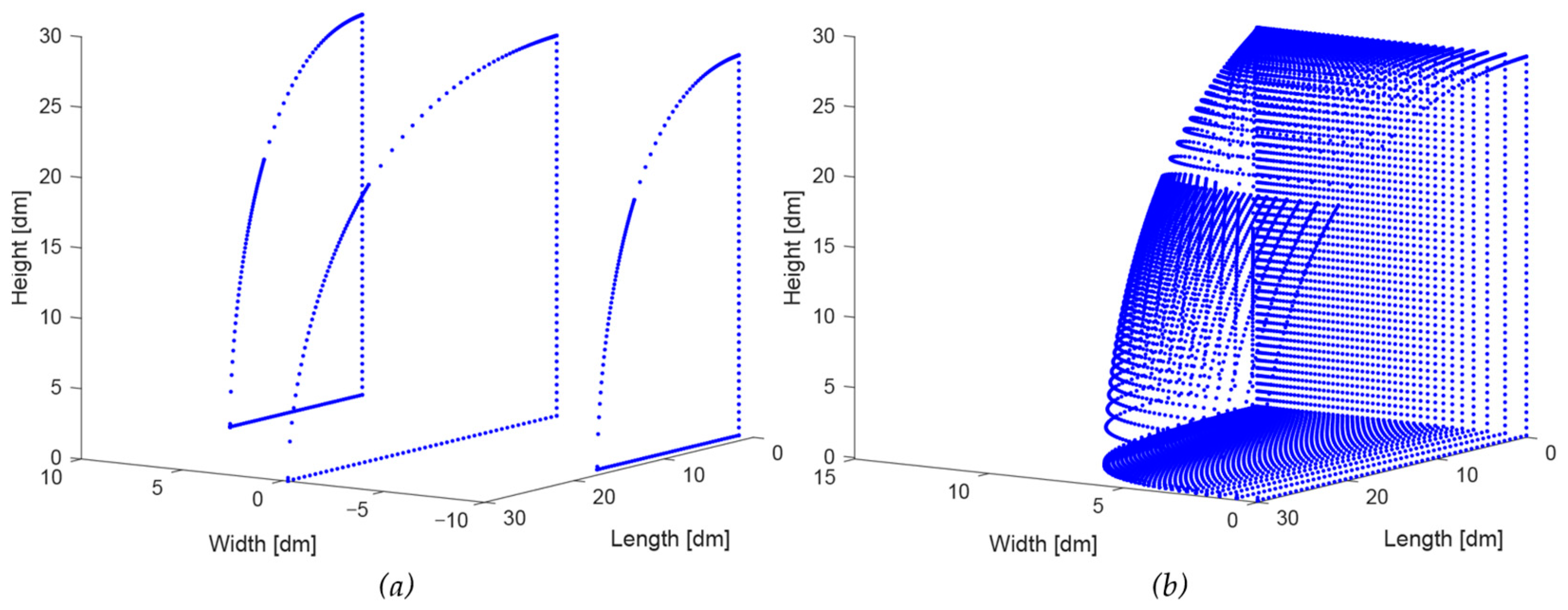
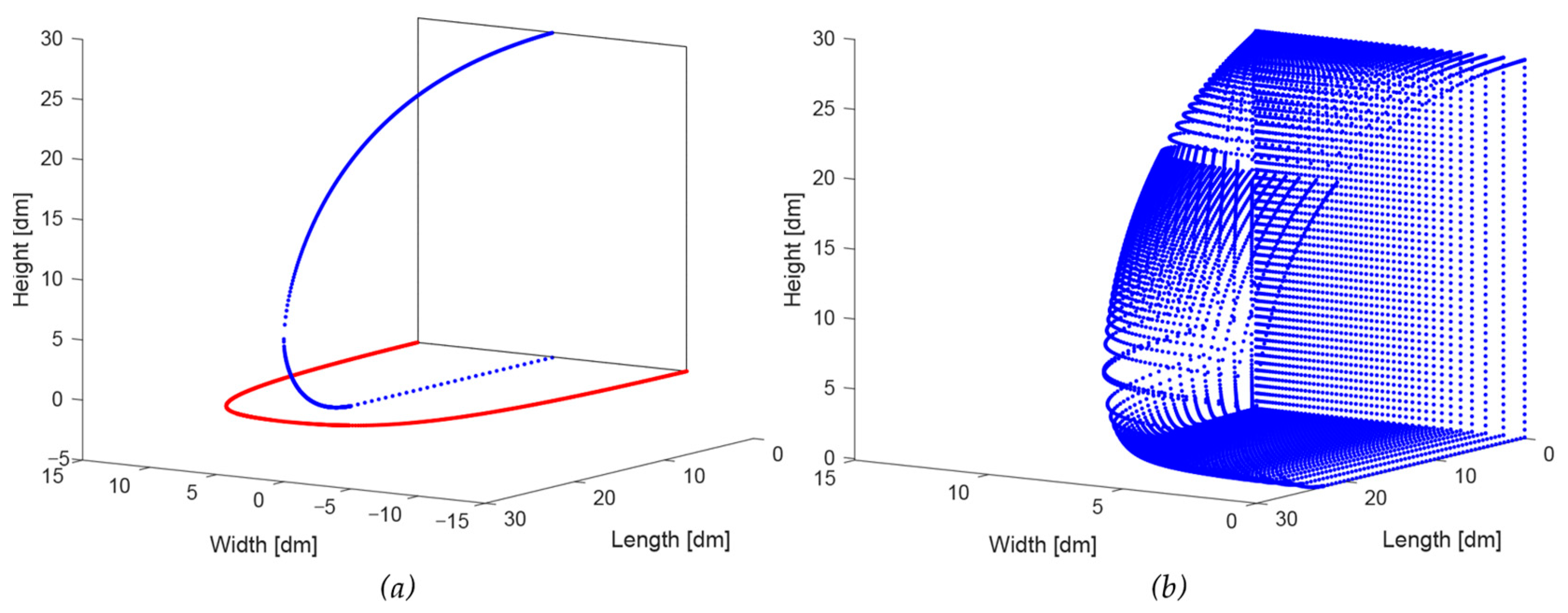
The two curves of the side view and top view are now expanded to a 3D volume by scaling the side view curve according to its position on the bottom curve.
Figure 9a shows the central side view curve as well as two intermediate curves to the left and to the right.
Figure 9b shows a whole series of curves on one side of the central curve, indicating one side of the 3D volume. Note that the rear side of the 3D volume is rectangular because the front side of a trailer is rectangular; the height–width ratio (H/W) of the rectangle is 1.35 (see
Table 1), similar to the trailer.
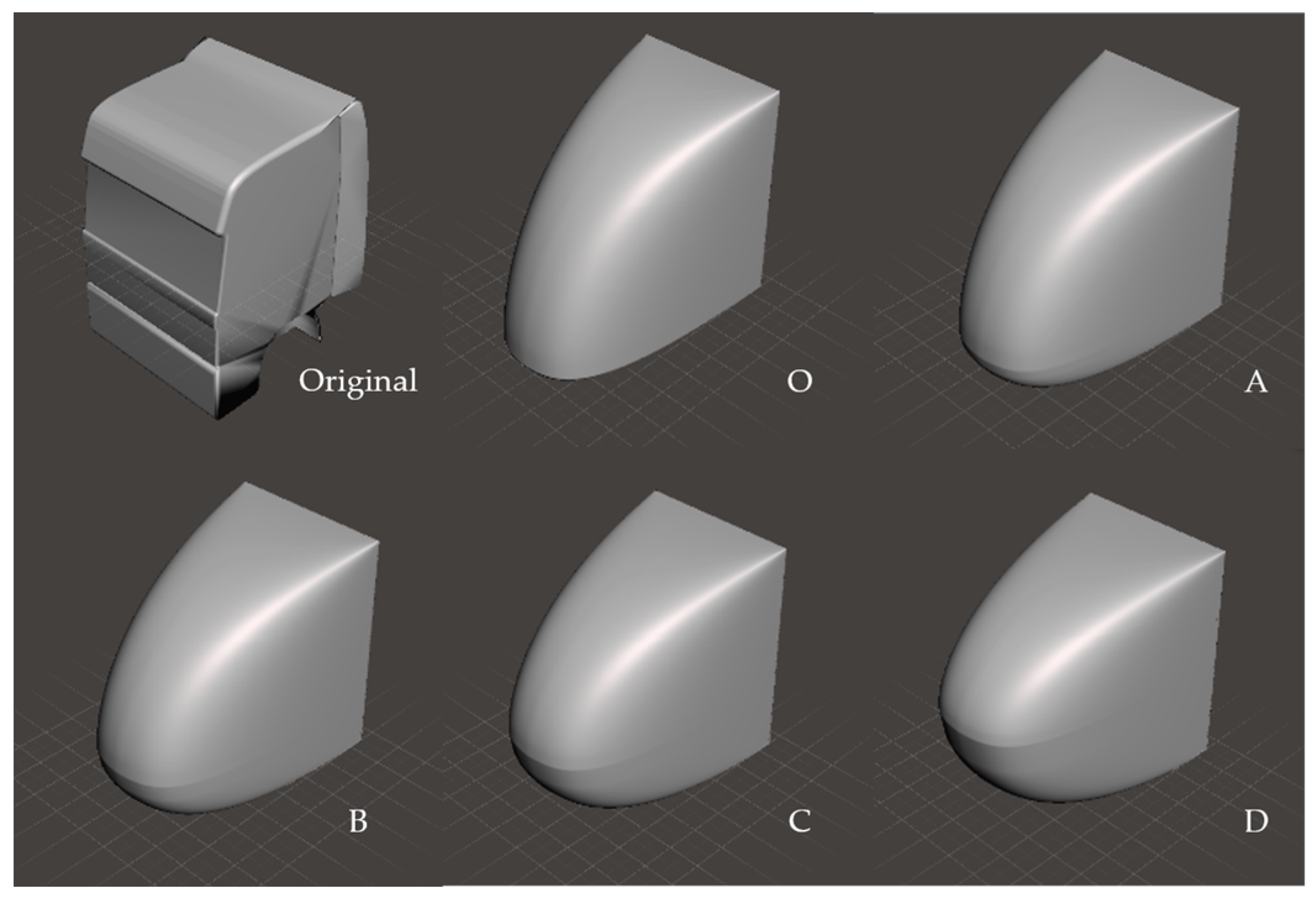
Following the above-described procedure directly results in a trout-shape-derived model named Model O. This model will also serve as the starting point for further design models. From here on, Model O can be modified, e.g., by rounding the bottom surface through the manipulation of additional parameters.
Figure 10 shows a round-nose design derived from Model O in side view after applying Equations (7) and (8). These equations effectively scale the Model O curve to a lower height but add an additional curve below, resulting in a rounded nose.
here
and
are functions of the middle plane’s outlines, which can be seen in
Figure 10.
is the scaling factor, which varies on an interval [0, 1].
is the gamma function from Equation (2).
is the height of the tractor.
As an example, when
in new model A, the middle plane’s outline results from scaling the gamma functions to
and
respectively, in the vertical direction.
Figure 11 shows the resulting curves for such a transformation.
Figure 11b shows the round-nose model from
Figure 10 represented as a side view curve. The nose-rounding procedure has been repeated for the scaling factors of 0.15, 0.25, 0.40 and 0.50 yielding four different round-nose models which will be tested using CFD simulations.
2.5. Computational Fluid Dynamics (CFD) Simulations
In this study, the essence of CFD is carrying out simulations in a virtual wind tunnel for all of the bio-inspired truck designs by using numerical calculation methods. CFD can simulate the flow patterns around any shape and thereby give an impression of the fluid dynamic performance of those shapes, in this case, a series of truck designs. Thereby, the truck models can be characterized by calculating their drag forces and evaluated and compared to one another as well as to real truck designs to quantify if emission reductions will indeed be accomplished. All of the CFD simulations have been performed using ‘COMSOL Multiphysics 5.5’ [
36].
2.5.1. Geometry and Materials
The CAD designs of a series of derived 3D shapes resulting from
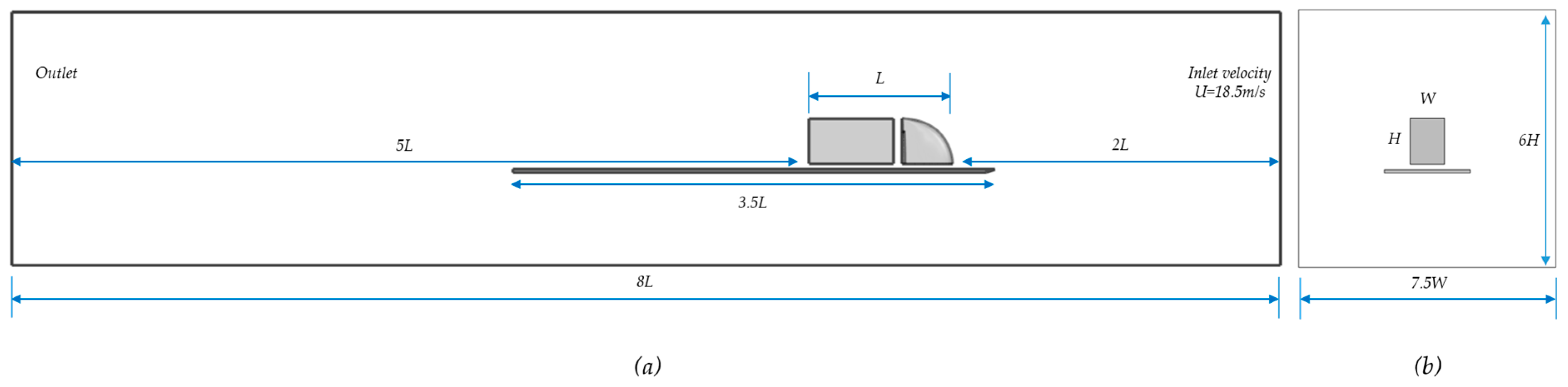
Section 2.4 have been visually compared, and five characteristically different designs standing for five bio-inspired truck designs have been selected for testing with CFD simulations. These five designs were imported into COMSOL and transformed into solid objects and introduced (one at a time) in a virtual/simulated wind tunnel. To simulate the road underneath the truck, a flow splitter is introduced upstream of the truck cockpit. The truck design is positioned just above the plane of the flow splitter with a suspension gap (SG) in between (see
Figure 12) (NB: mind you, the wheels are left out of all simulations). Here, the splitter could be replaced by a moving conveyer-belt-like floor, but for reasons of comparability to other experimental work, we applied a static splitter plate. The Results section also contains some data related to the models without a splitter plate for the sake of comparison.
The splitter plate should extend at least two times the length of the object upstream and five times its length downstream [
37]. With an L = 8.5 m truck, the upstream length is minimally 2 L and the downstream length is minimally 5 L. The total domain length being minimally 8 L (see
Figure 13) [
37]. In our CFD work, we chose a total length of 75 m (see
Table 3). The length of the trailer was taken as 5 m, which is relatively shorter than a normal truck. Because we concentrated on the tractor, a shorter trailer received less simulation time. The tractor–trailer gap is set to 0.5 m, again for reasons of reducing simulation time.
In order to confirm the simulation volume was sufficiently large to avoid artifacts, one simulation was completed where the volume was doubled, and which yielded the same results as the original volume.
2.5.2. Physics
Discretization Methods
For the CFD analysis, incompressible flow was simulated with a Reynolds-averaged Navier–Stokes (RANS) turbulence model at k-ε settings [
38,
39,
40,
41]. The initial condition is static (velocity = zero), with a uniform pressure comparing the inlet with the outlet. For comparison, a k-ω model was run in parallel, because some literature sources also use a k-ω model for large vehicle analysis [
42,
43,
44]. For our simulation, the k-ε model gave more reliable and more detailed results with regard to the aerodynamics.
Boundary Conditions, Inlet, Outlet and Turbulence Intensities
In COMSOL, the surfaces of the truck are non-slip, which simulates skin friction between the air and the truck. The inner surfaces of the virtual wind tunnel are set to slip walls, avoiding boundary layer effects and reducing the calculation time. The top surface of the air splitter is set as a sliding wall moving similar to a conveyor belt at the same speed as the incoming airflow [
42]. On the boundary, the turbulent intensity is 0.01 and the turbulence length is 0.1 m [
36,
42,
45], similar to Garry (1996) for a bluff body simulation [
46].
All simulations have air as the medium, the inlet oncoming flow velocity was set to 18.5 m/s (66.6 km/h), with all simulation parameters and settings as given in
Table 4 [
36,
42,
45]. The outlet setting is under uniform pressure compared to the initial conditions and with suppressed backflow. In a follow-up study all simulation outcomes will be verified experimentally during a wind tunnel study [
32,
47,
48].
2.5.3. Mesh Study
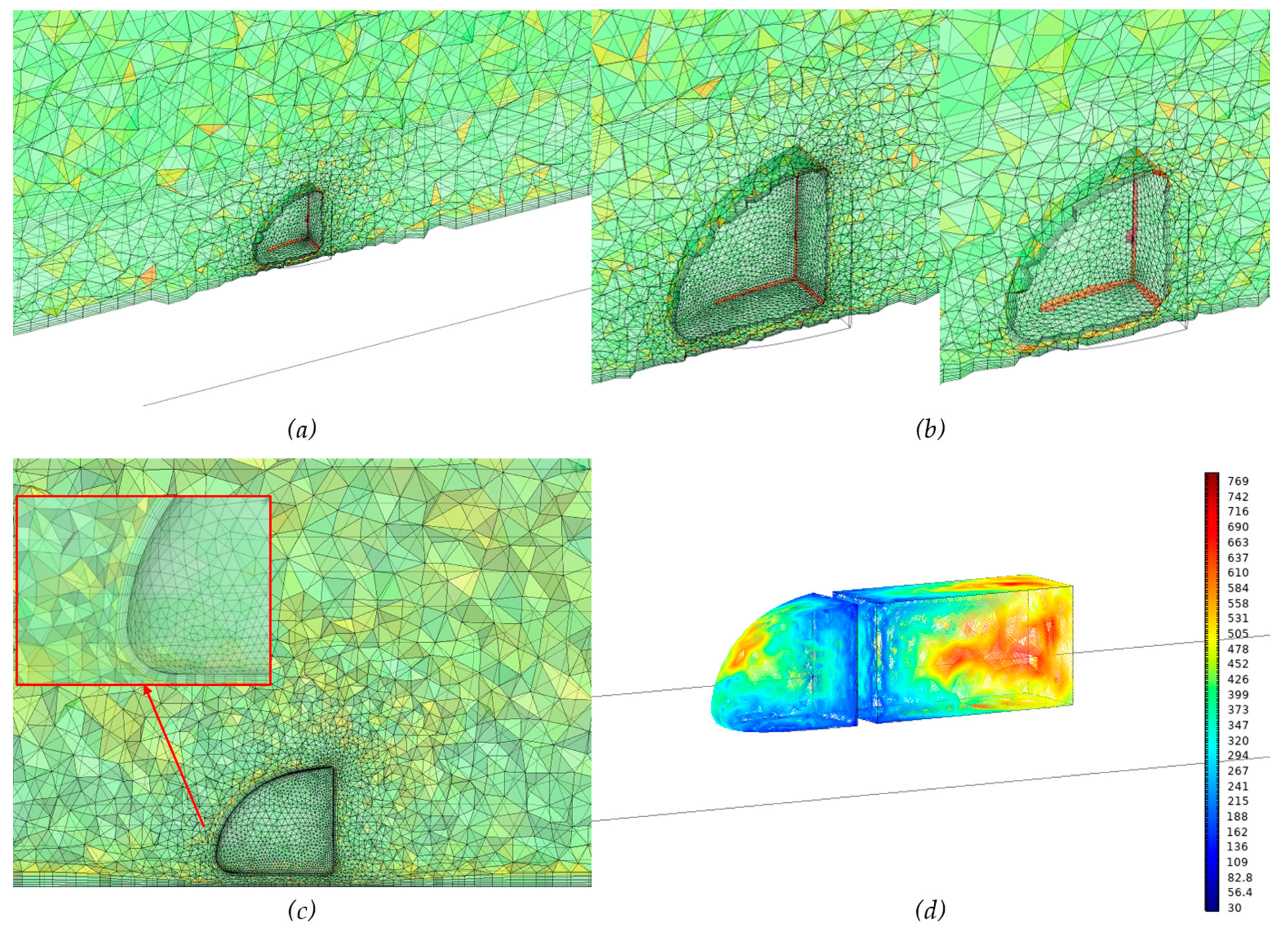
A ‘normal’ mesh was applied in our simulations. The type of mesh used was triangle elements on the surface of the truck and for the boundaries, and a tetrahedral mesh in the space between the truck and the boundaries (see
Figure 14a). These mesh settings have been used in several other studies to simulate a vehicle rolling over a ground surface [
38,
39,
40,
41,
43,
44,
49]. To test for mesh coarseness, simulations were performed using two different element sizes, comparing the truck’s total drag force and the net drag coefficient.
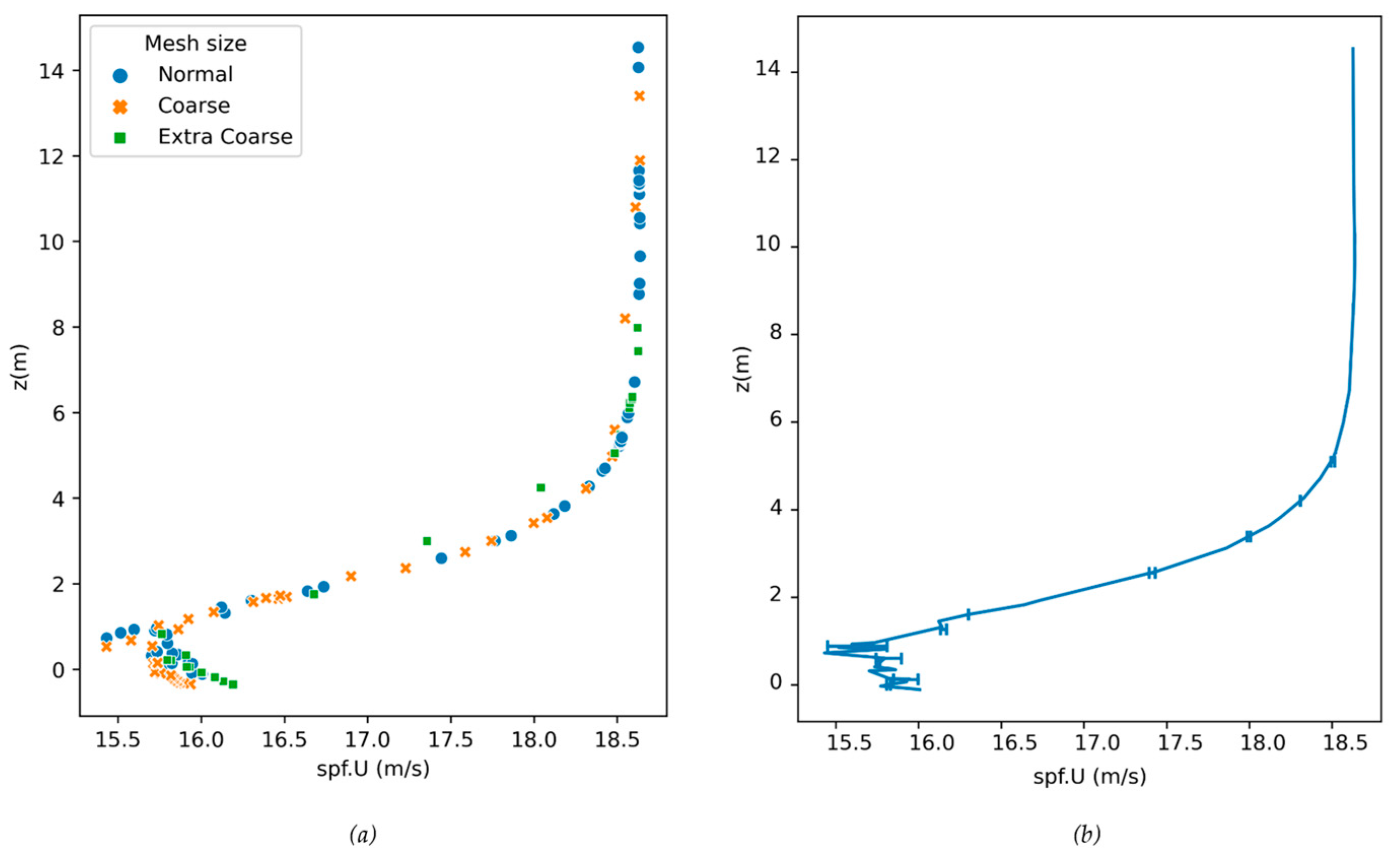
Figure 14b shows a ‘normal’ mesh with element sizes being minimally 0.000395 m and maximally 0.09125 m; the relative coarser mesh has elements ranging in size between 0.00058 m and 0.13615 m. The simulations with varying mesh coarseness to test grid dependency with respect to the calculated drag coefficient of the truck were performed on Model A [
44,
49]. Results of the grid dependency test appeared to be almost similar for all three mesh element sizes of 0.363 (fine mesh), 0.364 (normal mesh) and 0.372 (coarse mesh), with ‘coarse’ being a slightly coarser mesh than ‘normal’ and ‘fine’ being a slightly finer mesh than ‘normal’ [
42]. The number of elements for four mesh sizes are shown in
Table A3 (Appendix). The number of layers simulated in the boundary layer is 8. The Boundary layer stretching factor is 1.2. (here 1.2 means that the thickness increases by 20% from one layer to the next). The thickness of the first element layer was defined as 1/20 of the local domain element height [
42,
45] (see
Figure 14c). Increasing the number of layers to 12 in ‘normal’ mesh or 16 in ‘fine’ mesh did not significantly change the simulation results (see
Table A4). We used 8 layers in the boundary layer to maintain efficient calculation time. All simulations were solved for y+ values in the range of 30 - 800 (k-ε turbulence model); the y+ distribution graph of Model A is shown in
Figure 14d, indicating the minimum value is 39.58. Based on these results, the ‘normal’ mesh size is chosen because it is sufficiently accurate for all of the simulation cases but requires less calculation time.
2.5.4. Tractor Outline, Trailer, Nose Rounding
In this study, we looked at the effect of the direct derivation of a tractor outline from the trout bio-model. However, we were also looking at the additional effect of a rounded nose versus a sharp-edged nose. For the rounded nose models, a rounding was superimposed on the sharp-edged nose model, the rounding being a quarter circle with the radius being 15, 25, 40 and 50% of the truck cabin height, respectively.
2.5.5. Solver Algorithms and Iterative Convergence Criteria
Since stationary simulations were performed in all cases (uniform oncoming velocity without changes in time), the derived solutions were assumed to be time-independent. The linear system solver uses the restarted GMRES (generalized minimum residual) method. This is an iterative method for general linear systems of the form Ax = b. By using a discretization method, there is a segregated solver that iterates the velocity, pressure and turbulence variables until a 10
−5 deviation level is reached [
42].
2.5.6. Parameter Definition
The total drag force was calculated by using a surface integration for the tractor and/or trailer. The net force acting on the direction of oncoming flow is the drag force, which is the sum of pressure forces and skin friction forces, and any resulting vertical forces were indicated as downforce, which potentially contributes to the stability of the truck [
42]. The drag coefficient of Cd is derived from the drag force and the truck’s geometrical information and was calculated for comparison reasons.
The drag force is defined as indicated in Equation (9), and the derived drag coefficient as indicated in Equation (10):
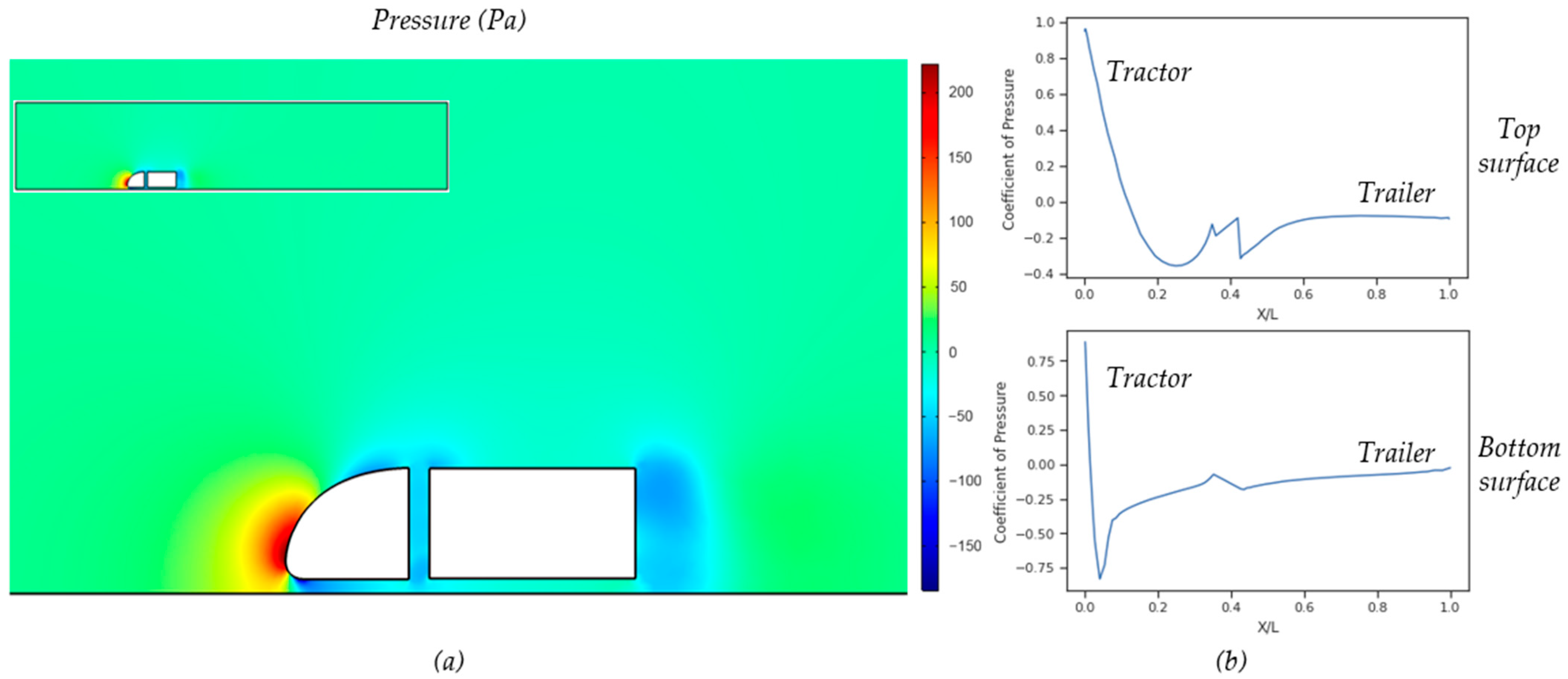
The coefficient of pressure indicates the scale of the total pressure on the surface of the truck. Here, the coefficient of pressure is defined in Equation (11) as follows:
where
is the cross-section area of the truck,
is the static pressure in the freestream and
is the freestream velocity of the fluid or the velocity of the body through the fluid [
50,
51,
52].
2.5.7. CFD Validation
The grid convergence method (GCM) is an accepted and a recommended method that is based on the Richardson extrapolation in CFD studies [
53,
54,
55]. The grid convergence index (GCI
21normal) values of several locations in the Model A simulation at the front of the truck model have been evaluated and found to never to surpass 2.02% (
Table A1).
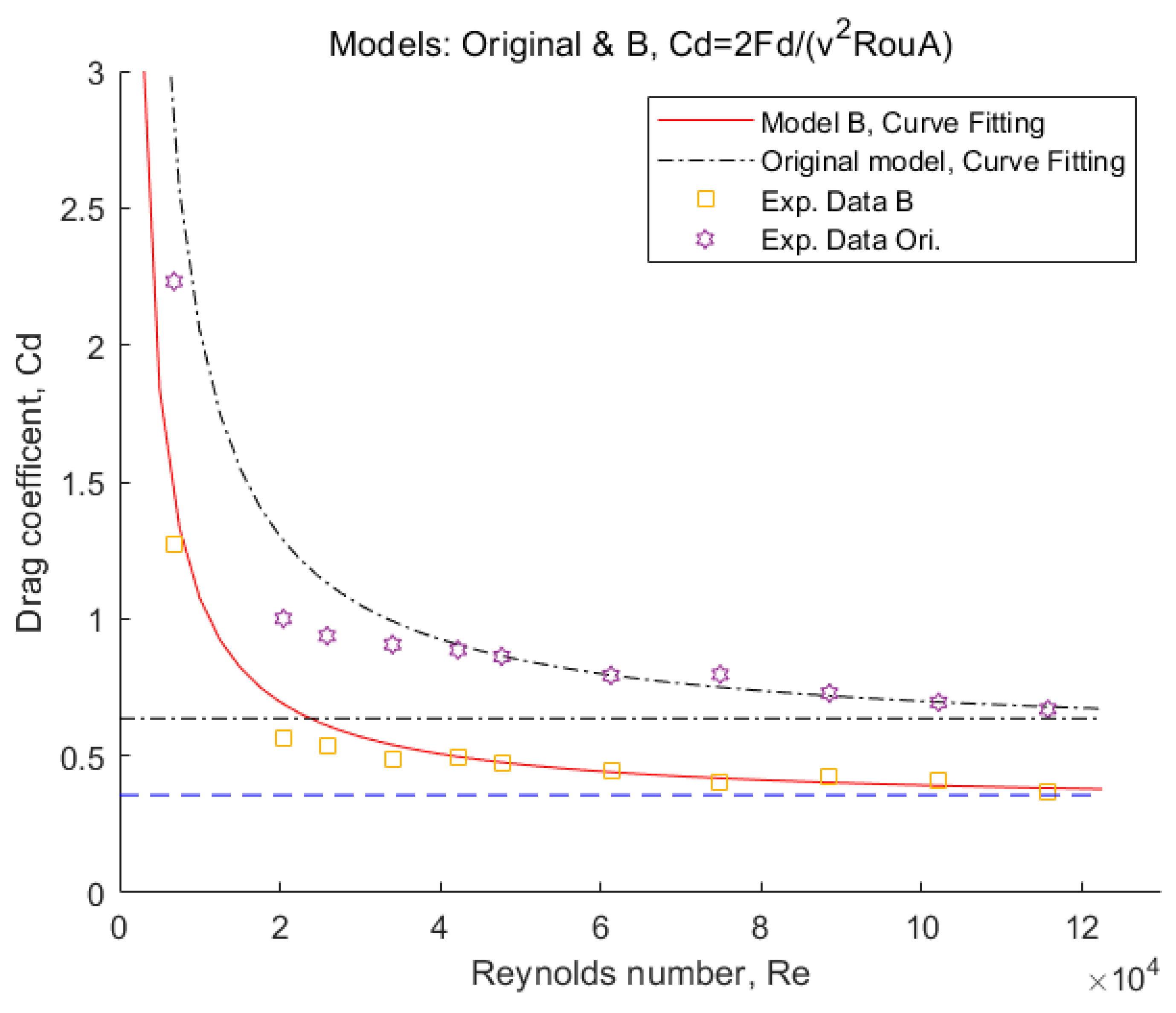
A validation and error analysis can be given here based on the results of a comparison of CFD with the experimental results of a truck model tested and simulated at the same Re as have been indicated in this paper. The difference is 5.36% maximally for the Original model and 5.56% in Model design B (see
Figure A1). We regard this as a good match. The physics, mesh and boundary setting also have been validated in several similar studies [
40,
41,
43,
44,
49]. In addition, the simulation results of different turbulence models, mesh sizes and boundary layers have also been validated by varying the CFD simulations settings (see
Table A4).
Our study was principally similar to other truck aerodynamics studies using CFD at varying CFD-parameters applied at Re = 10
6 [
38,
39,
40,
41,
43,
44,
49,
53,
54]. Our CFD study may additionally indicate potential benefits from the bio-inspired design process. In a future study, we plan to also experimentally analyze the original and the optimized truck models to compare to flow tank experiments as well as a wind tunnel study [
6,
32,
47,
48,
56,
57,
58] varying similar parameters as in this study.
4. Discussion
4.1. Model Selection Procedure
As indicated in the
Section 2, many groups of animals are potentially suitable for bio-inspired streamlining design, but so-called demersal fish (fish that live close to the sea floor) are the preferred group. This is mostly because they swim close to the seafloor, which shows similarity to a truck driving over a road. Other species that might be explored in follow-up studies for this purpose might be demersal sharks. In our model organism selection procedure, our predefined similarity parameters were useful and will also be applied in future model selections: medium, gap, kinetics and conformity. Using trout as a model provided significant drag reduction results, and, in that respect, this model was a successful choice. It is difficult to estimate if other model species might result in even higher reductions; more analyses will be necessary first.
4.2. Design Methodology
The design method indicates a formal process that starts with the selected animal and ends with a truck showing streamlining similarities with respect to the model organism. The outlines of, in this case, a trout were formalized, abstracted and projected to a truck. Additionally, four variants with respect to nose-rounding were designed and analyzed, showing that nose-rounding played role in further reducing drag. Although the original model organism outline had to be morphed to fit the truck design space, the streamlining characteristics are kept to a certain extent and can clearly provide advantages when applied to (in our case) redesigning a truck for drag reduction purposes.
4.3. Computational Fluid Dynamics
The approach of using CFD as a virtual instrument to analyze and verify the performance of our truck models appeared to be very suitable and successful. CFD in itself is a wonderful analysis tool but not easy to apply because it assumes that the users have thorough fluid mechanics and numeric knowledge when it comes to selecting the appropriate analysis method and the turbulence model, etc. The results can easily differ by a factor of two or three when not applying the right turbulence model. In our case, we performed an initial verification with a preliminary test in our flow tank facility and were glad to be able to conclude that the experimental test results were very similar to the numerical CFD results, supporting our conclusions.
To our surprise, the implementation of a road surface that has the same speed as the incoming airflow instead of a stationary road surface hardly affected the truck drag numbers. This, in a way, shows that future analyses can be performed on stationary road surfaces without over- of under-estimating truck drag. This might again save calculation power/time.
There are still a lot of additional factors and settings of those factors that can be analyzed, such as the trailer size and shape, the addition of wheels, suspension gap, tractor–trailer distance, etc. The simulation method also has a promising potential advantage compared to similar studies at similar Reynolds numbers, and which have a similar rigid body–fluid interaction with a stationary state, for which forces can be analyzed by integrating pressure over the surface area.
In our study, we analyzed the streamlining performance both in air (as the original truck) and in water, keeping Reynolds number similarity. The results from the simulations in water have not been reported here to avoid data doubling and confusion, but they effectively confirmed the results from analyses in air, and are a promising stepping stone for our follow-up experimental work with physical models in a flow tank.
The CFD software we used, COMSOL Multiphysics, appeared to be very capable of solving our rigid body–fluid interaction questions. The Reynolds numbers of all CFD simulations in this article are in a range of 105–106. Any further simulations with this range of Reynolds numbers can use the same turbulence model (k-ε) and a similar surface integration method in relation to the calculation of drag, lift, skin friction, etc.
4.4. Reduced Drag
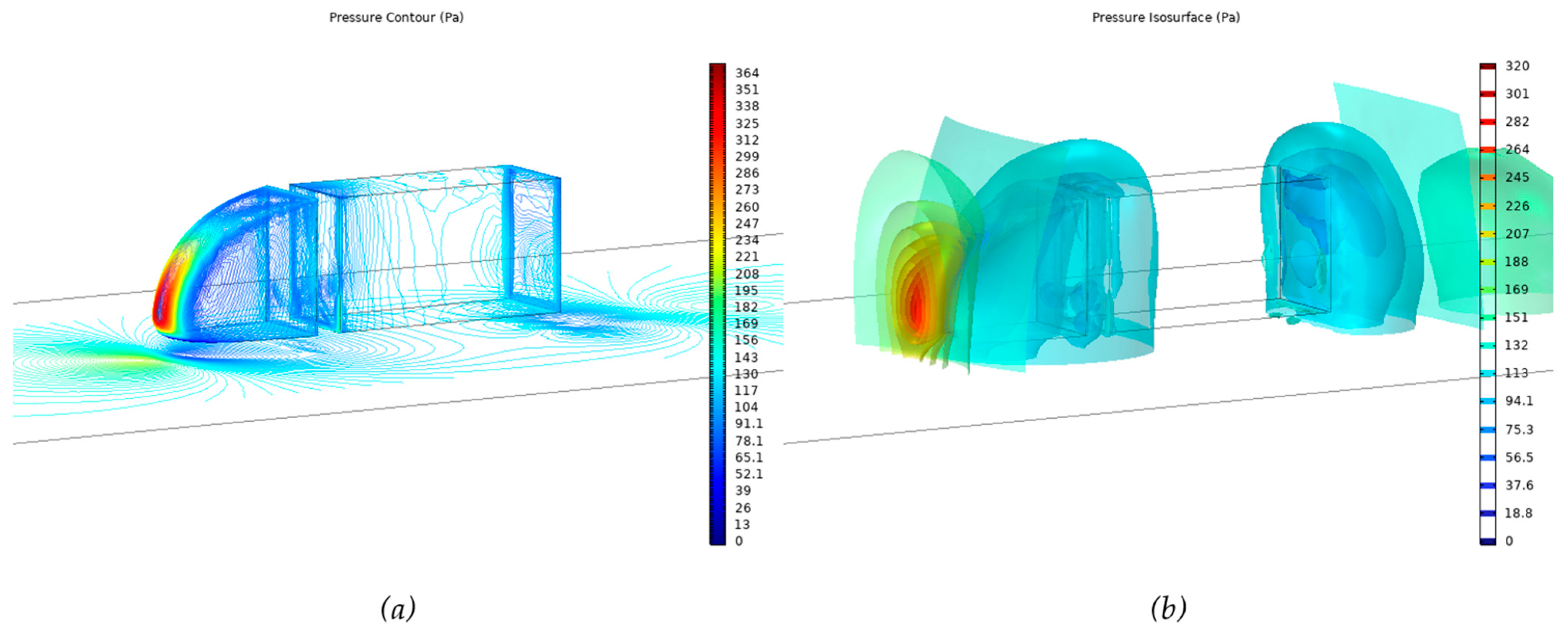
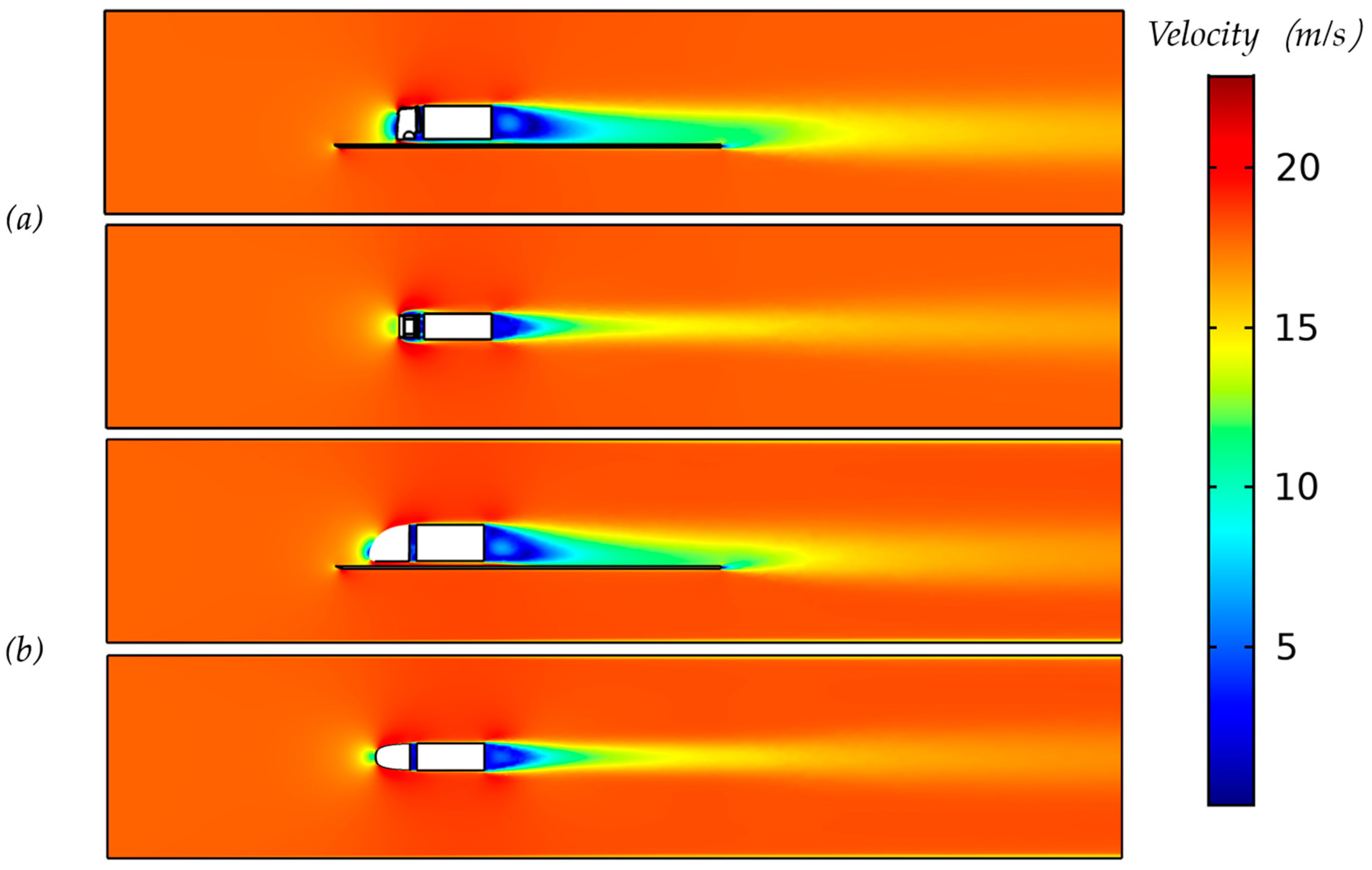
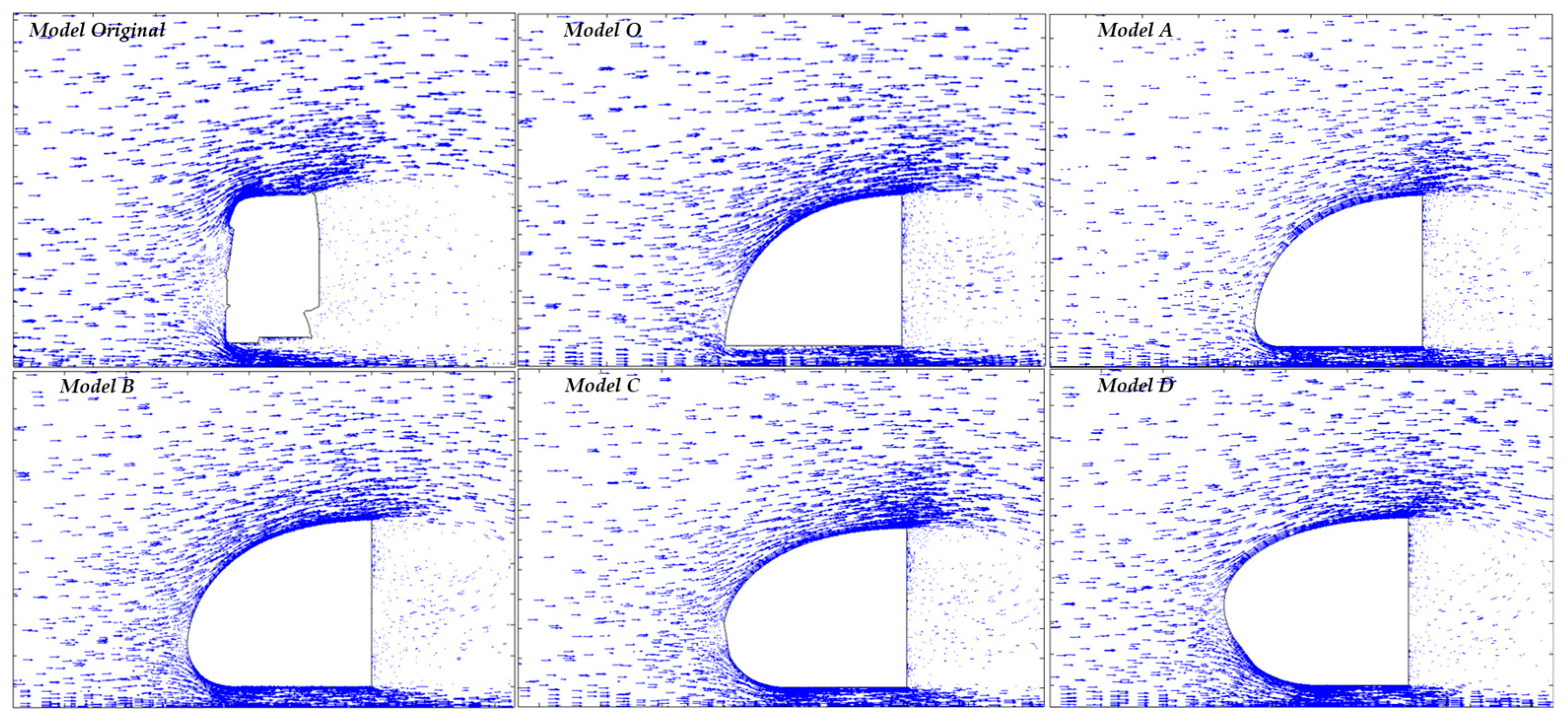
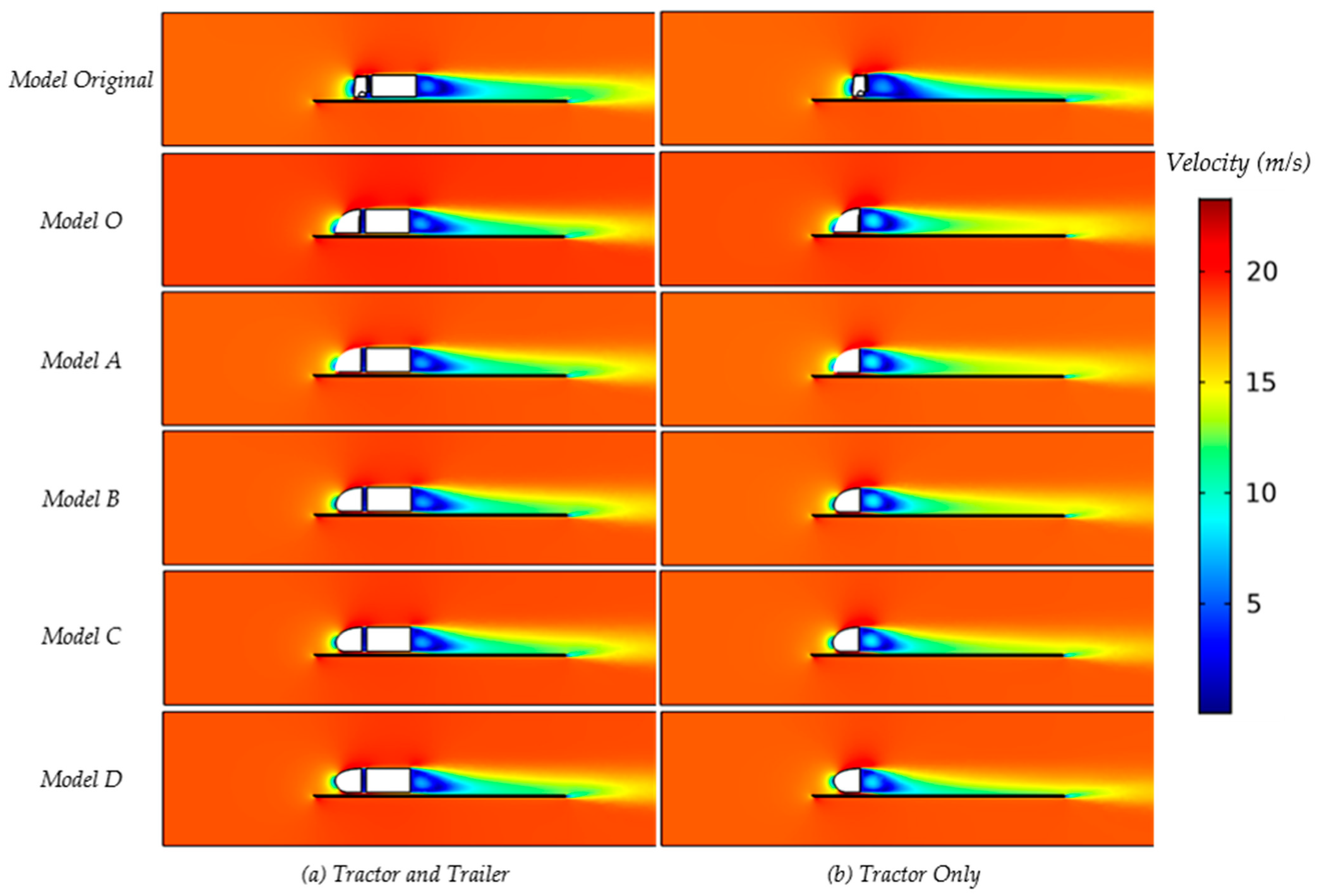
The bio-inspired design Model B was found to have the lowest drag compared to the other bio-inspired models and had about half the drag compared to the original truck design. Model B has a moderate level of nose-rounding compared to the other models. We interpret this performance as showing a balance between air going along the sides and the top of the model and air going in between the model and the floor (road) (see also
Figure 17 and
Figure 18).
4.5. Consequences of Drag Reduction in Trucks
This study illustrates that the design of long-distance trucks can be improved dramatically with regard to drag reduction. This drag reduction does result in again quite dramatic fuel use reductions and emission reductions. We found that the drag coefficients of the bio-inspired models are about half the value of the original truck design. Since at cruising velocity, about half of the power of the truck is being used to overcome rolling and other mechanical resistances and about half is being used to overcome aerodynamic drag [
16], reducing the drag in the order of magnitude of 50% will result in a potential fuel use reduction of maximally about 25 %, with a similar reduction in emissions. These are significant numbers when considering the number of truck kilometers that are now covered in Europe on a daily basis.
4.6. Outlook and Further Research
When considering future steps, the most logical ones for this study are: (1) selecting other animal models and testing if this can change the streamlining performance when the same morphometry and analysis methods are applied; (2) performing flow tank experiments with scale models of (at least) the six models used in this study, and (3) performing wind tunnel experiments with larger scale models (preferably keeping Re-similarity) and test whether the results from the study presented here can also be confirmed in an experimental aerial analysis.