1. Introduction
The demand for and production of lithium-ion batteries have been increasing exponentially in recent years, largely due to the expansion of global electric car sales [
1]. In 2023, global demand for lithium was estimated at 989,000 metric tons of lithium carbonate equivalent (LCE), while production was around 964,000 metric tons of LCE, resulting in a 3% shortfall [
2]. By 2028, global lithium demand is expected to double, surpassing two million metric tons of LCE, compared to the 2023 level.
The global distribution of lithium resources is highly uneven. Lithium-bearing minerals, including spodumene, lepidolite, and petalite, are primarily found in pegmatite formations [
3]. These hard-rock deposits are mostly concentrated in Australia, the world’s largest lithium producer, as well as in Canada, China, and parts of Africa [
4]. Lithium-containing brine from salt lakes and geothermal wells accounts for around 60% of total lithium reserves [
5]. The ‘Lithium Triangle,’ which is formed by Chile, Argentina, and Bolivia, holds the most significant global lithium reserves [
6]. Lithium concentration often varies widely among different salt lakes and geothermal wells, as well as within different regions of the same lakebed [
7]. For instance, Chile’s Salar de Atacama is known for its exceptionally high lithium concentration, averaging 1500 mg/L, though concentrations can fluctuate dramatically within different parts of the lakebed, ranging from 900 mg/L (0.13 M) to 8500 mg/L (1.2 M) [
8]. This variability underscores the need for research and development of lithium extraction methods that can provide high selectivity, efficiency, and cyclability across a wide range of concentrations.
Direct extraction of lithium compounds from brines accounts for a significant portion of the industrial lithium supply. The conventional evaporation/precipitation process typically involves purification, evaporation, and chemical conversion [
9,
10]. It has been widely used in large-scale production for decades due to its low energy consumption. However, major drawbacks include large-scale environmental contamination, high freshwater and chemical consumption, and long production times.
Membrane separation technology offers an alternative to conventional methods due to its simplicity, low energy cost, and eco-friendliness. Among membrane-based approaches, nanofiltration (NF) membranes have gained attention for their ability to achieve preferential Li
+ separation through steric hindrance and Donnan exclusion mechanisms [
11,
12,
13]. Wang et al. [
14] developed a copper-doped m-phenylenediamine NF membrane, which demonstrated both high water permeability and Li/Mg selectivity. To further improve selectivity, the NF membrane was incorporated with metal–organic frameworks (MOFs) featuring tailored pore sizes and functional groups [
15,
16]. NF membranes have also been integrated into electrodialysis systems to separate monovalent ions [
17,
18]. However, fouling issues and trade-offs between permeability and selectivity remain barriers to their widespread application [
19]. Ion-sieve membranes, which utilize intercalation-based adsorption, demonstrate excellent selectivity and high adsorption capacities [
20,
21,
22]. Their chemical stability and adsorption efficiency make them promising for high-salinity environments, though inorganic particle leakage poses significant challenges. In industrial applications, EnergyX commissioned its LiTAS pilot plant at Bolivia’s Salar de Uyuni in 2021, utilizing membrane separation technologies for lithium extraction [
23].
Ion-sieve oxides, acting as adsorbents, are derived from precursors that contain the target metal ions [
24]. The molecular structure of the precursors can be retained even after the target ions are stripped. Lithium manganese oxide (LMO)-based lithium-ion sieves (LISs) have gained significant attention due to their high lithium uptake capacities [
25,
26]. In the spinel structure of LMO, Li
+ ions transport through channels that connect octahedral sites (8a), tetrahedral sites (16d), and octahedral sites (8a). Lithium extraction is achieved by converting [LIS(H)] to [LIS(Li)] via Li-H ion exchange. However, the de-intercalation step requires a large amount of acid, which leads to degradation of the ion-sieve oxide. Moreover, acid recovery is a time-, freshwater-, and energy-consuming process. The ion-sieve process has already been implemented at the pilot scale by Lilac Solutions, a company actively involved in several lithium extraction projects worldwide, including the Great Salt Lake project in Utah, the Kachi project in Argentina, and the Atacama field pilot project in Chile [
27,
28].
Electrochemical lithium adsorption processes have been investigated for several decades. Lithium iron phosphate (LiFePO
4) has attracted significant attention due to its stability, reversibility, durability, and eco-friendliness [
29]. Liu et al. [
30] developed an “ionic pumping” system with a TiO
2-coated FePO
4 electrode for lithium extraction. The TiO
2 coating enhances the contact between the electrode and seawater without compromising the electrode’s conductivity. Trócoli et al. [
31] used de-intercalated FePO
4 as an intercalation electrode, with the counter electrode based on K
2NiFe(CN)
6. The Prussian blue analogue electrode is Li-exclusive, and with these electrodes, brine water can be used as the recovery solution. LMO is an excellent intercalation electrode material for lithium extraction, as the ionic radius of the lithium ion fits well into the LMO spinel structure. Lee et al. [
32] developed a λ-MnO
2|Ag system that was highly selective for lithium ions. Adsorption/desorption can be achieved by reversing the voltage sign. Mu et al. [
33] proposed a ‘rocking chair’ λ-MnO
2|LiMn
2O
4 system equipped with an anion exchange membrane. Under an applied voltage, the LiMn
2O
4 electrode releases Li
+ into the recovery solution, while the λ-MnO
2 electrode simultaneously captures Li
+ from the brine.
To reduce the cost of electrode materials, researchers have developed a variety of alternatives to silver counter electrodes. Kim et al. [
34] introduced an LMO|Zn system characterized by low cost and high capacity. Missoni et al. [
35] developed a counter electrode made of polypyrrole (PPy), which demonstrated significant advantages in reducing the energy consumption of lithium extraction. Zhao et al. [
36] advanced the design by utilizing LMO|MXene electrodes combined with a pulsed electric field to enhance the lithium extraction process. The pulsed electric field effectively eliminated concentration overpotential, thereby promoting lithium intercalation. Zhao et al. [
37] also utilized polyaniline nanowires as the active material to fabricate high-capacity counter electrodes.
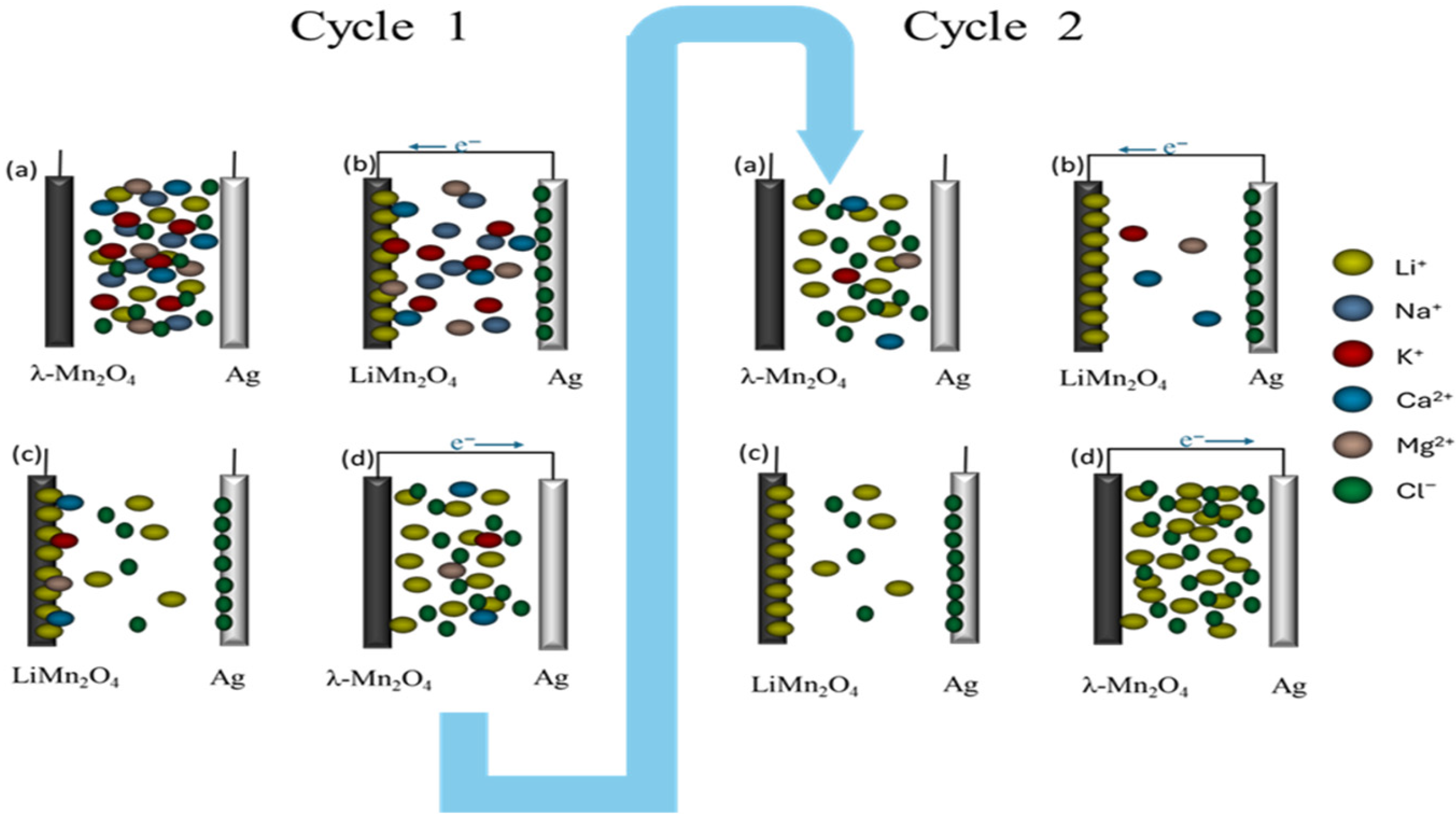
In electrochemical extraction, a two-stage process is implemented, as illustrated in
Figure 1. In the first stage, a source solution containing lithium ions is pumped into the cell, and a negative voltage sweep is applied, enabling the intercalation of lithium ions into the λ-MnO
2 electrode. In the second stage, the cell is purged with deionized water to remove any residues. Subsequently, a diluted recovery solution containing LiCl is introduced into the cell, and a positive voltage sweep is applied, releasing the captured lithium ions into the recovery solution. Typically, several cycles of repeating the first and second stages are executed to increase the purity of lithium chloride. The recovered solution from the prior cycle is then used as the input for the first stage of the following cycle. For battery manufacturers, a purity of 99.5% or higher is preferred.
For the commercialization of electrochemical extraction technology, materials, fabrication, and operational costs are major barriers and concerns. By comparison, the costs of active electrode materials are much lower than the combined costs of corrosion-resistant current collectors, membranes/separators, bipolar plates, pumps, tubes, and valves. Therefore, the total cost per unit of product could be reduced by increasing the loading of active materials per unit area of the electrode or by increasing the thickness of the active material layer of the electrode. Although maximizing lithium absorption/intercalation capacity per unit area by increasing electrode thickness could be highly beneficial, it has not received sufficient attention in the literature. In fact, the fabrication of crack-free thick electrodes presents notable technical challenges. To date, intercalation electrodes thicker than 200 µm have rarely been reported. Conventional tape-casting or slurry-casting methods often encounter a limit on electrode thickness due to the initiation of macroscopic surface cracks during the post-casting drying process [
38,
39,
40]. These cracks are believed to primarily result from capillary stresses generated during the non-uniform drying process [
41]. Cracked active electrodes are prone to falling off or falling apart, making them unsuitable for electrochemical cell fabrication. The presence of these cracks reduces the in-plane conductivity of the electrode, induces heterogeneity in current and potential distribution, and causes uneven flow of liquid reactants. This leads to reduced absorption capacity, ion uptake efficiency, energy efficiency, and durability [
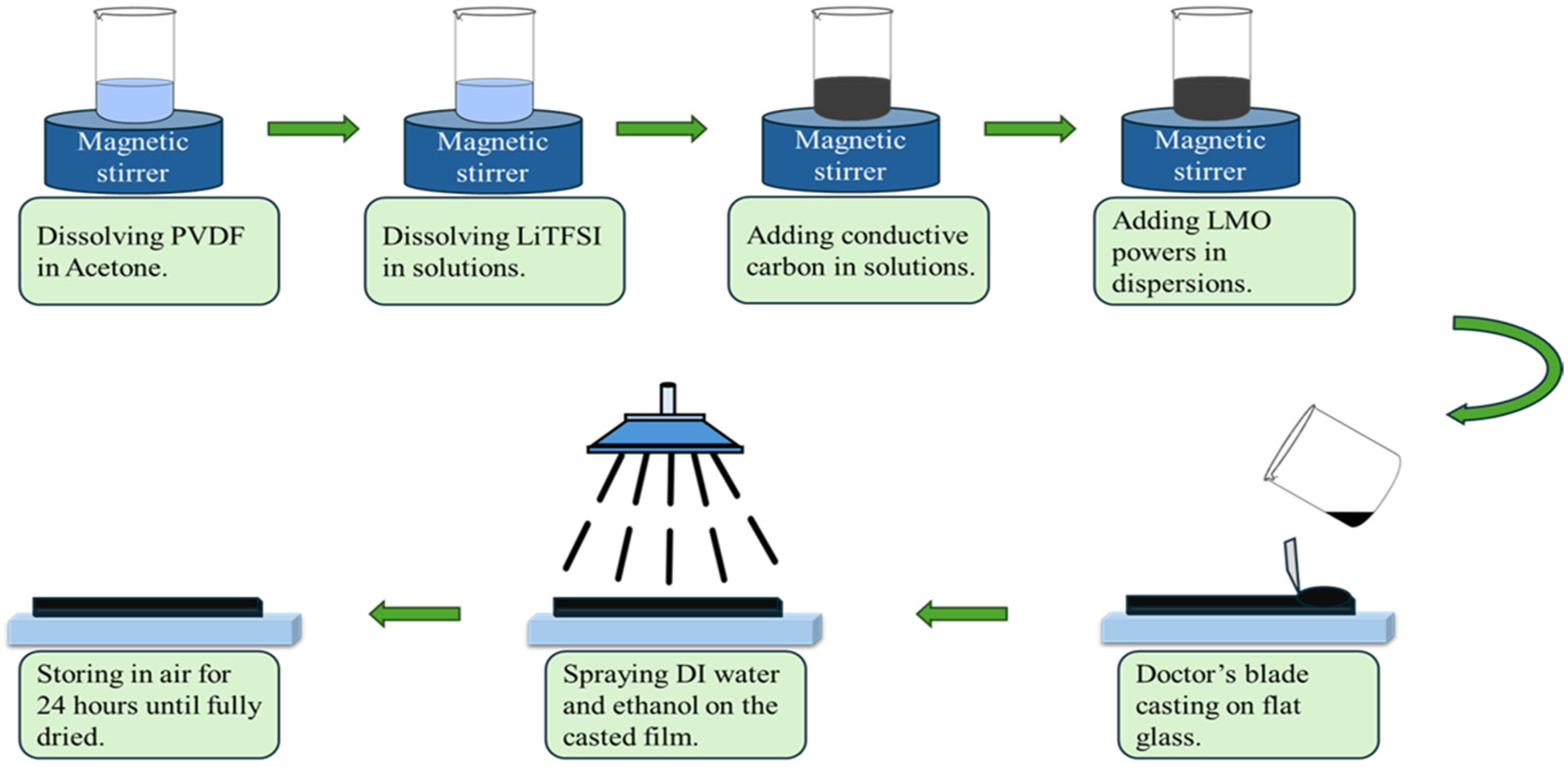
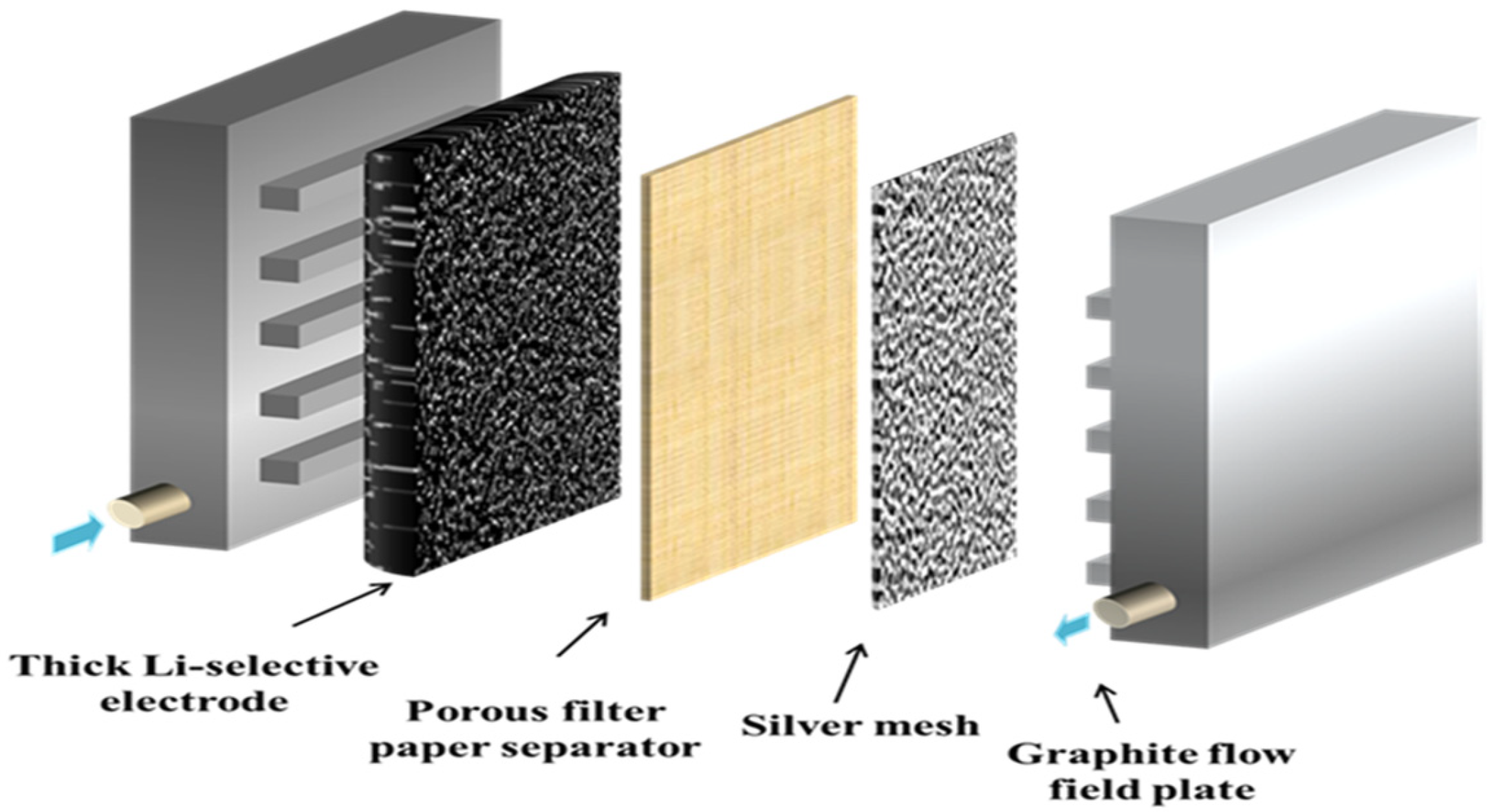
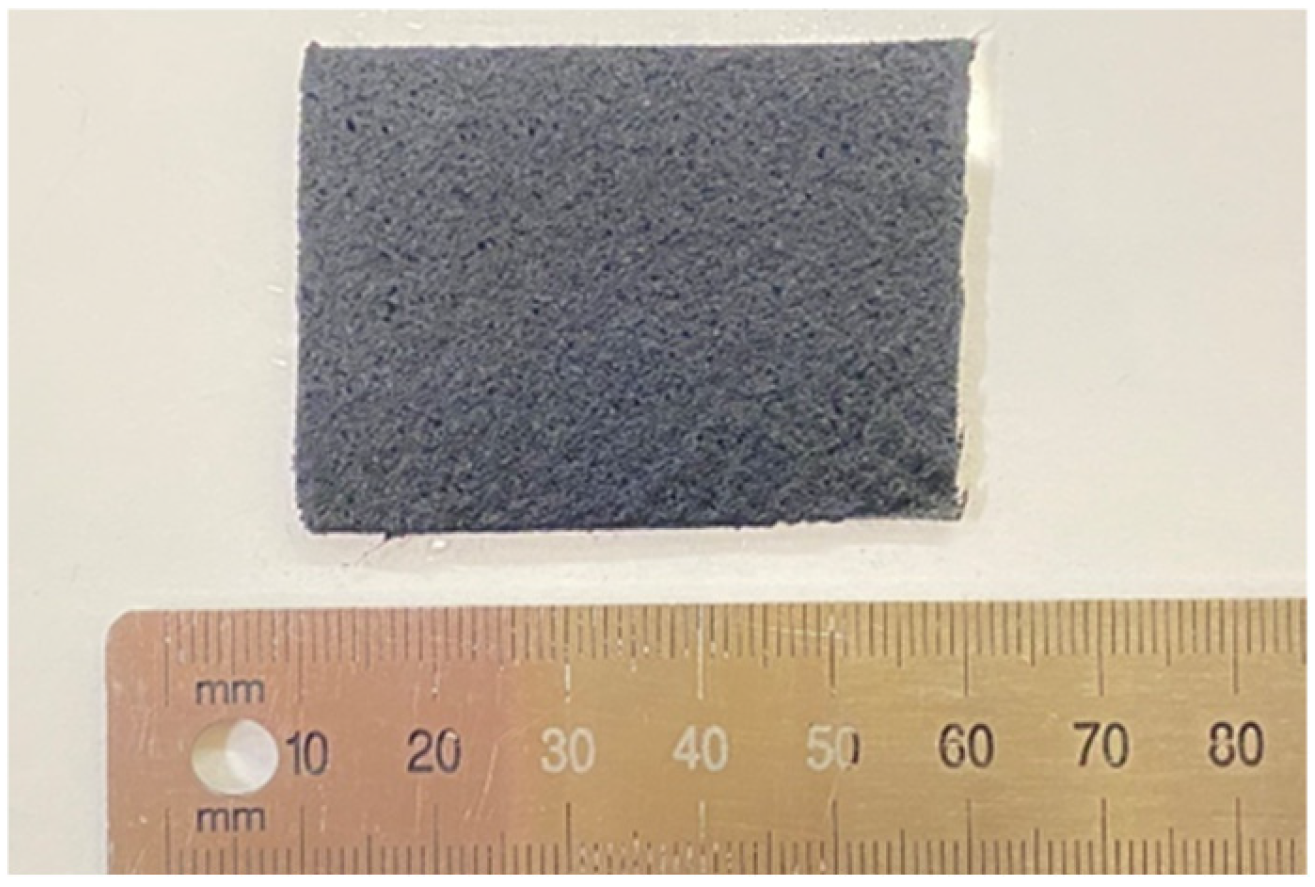
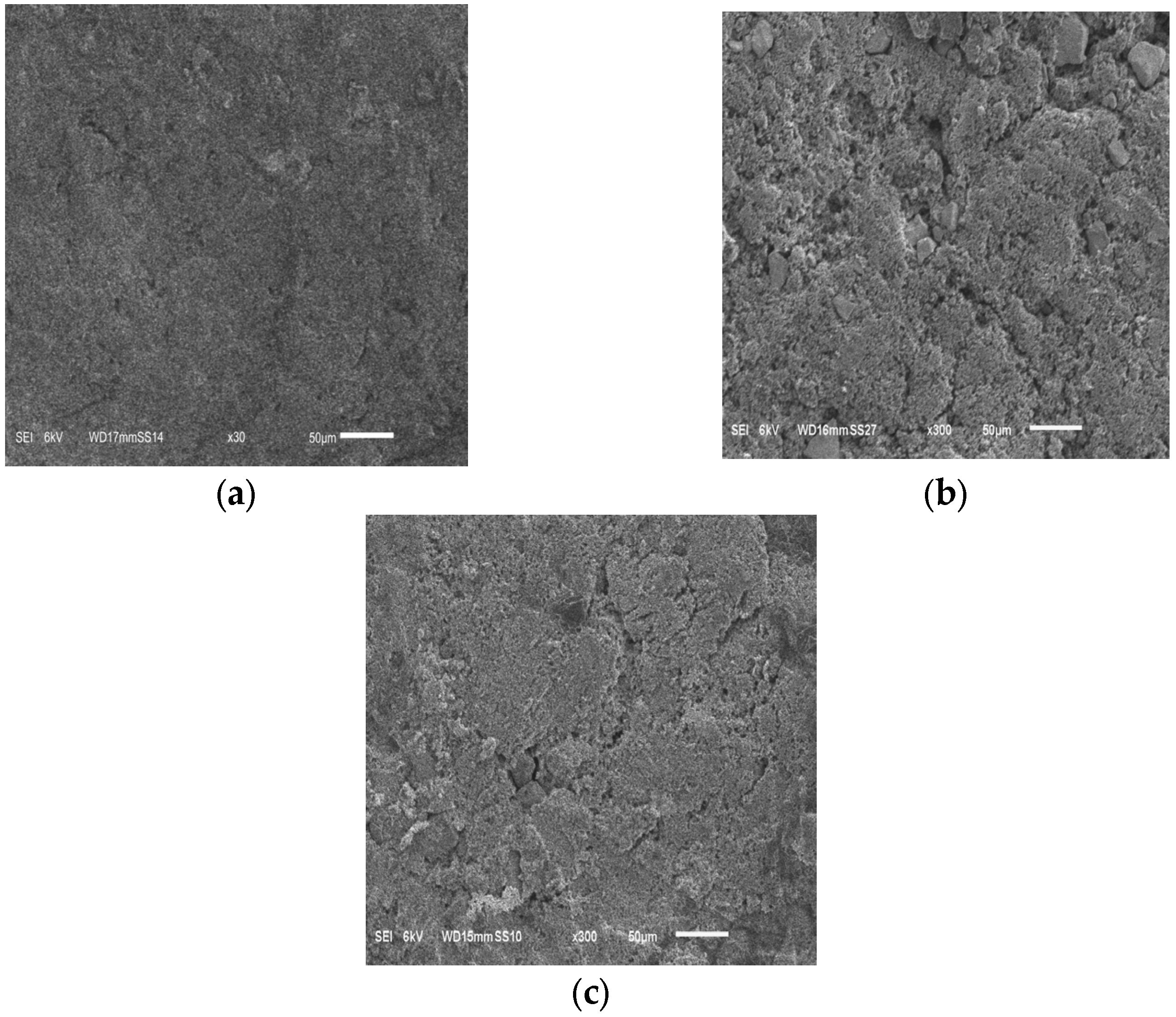
42]. In this study, we developed a method for fabricating thick, crack-free, porous Li-selective LMO-based polymer electrolyte-containing electrodes with thicknesses up to 1500 µm. The electrochemical cells fabricated with thick electrodes demonstrated high selectivity, capacity, and stability when tested in synthetic brine containing lithium ions and multiple co-existing metal ions.
4. Discussion
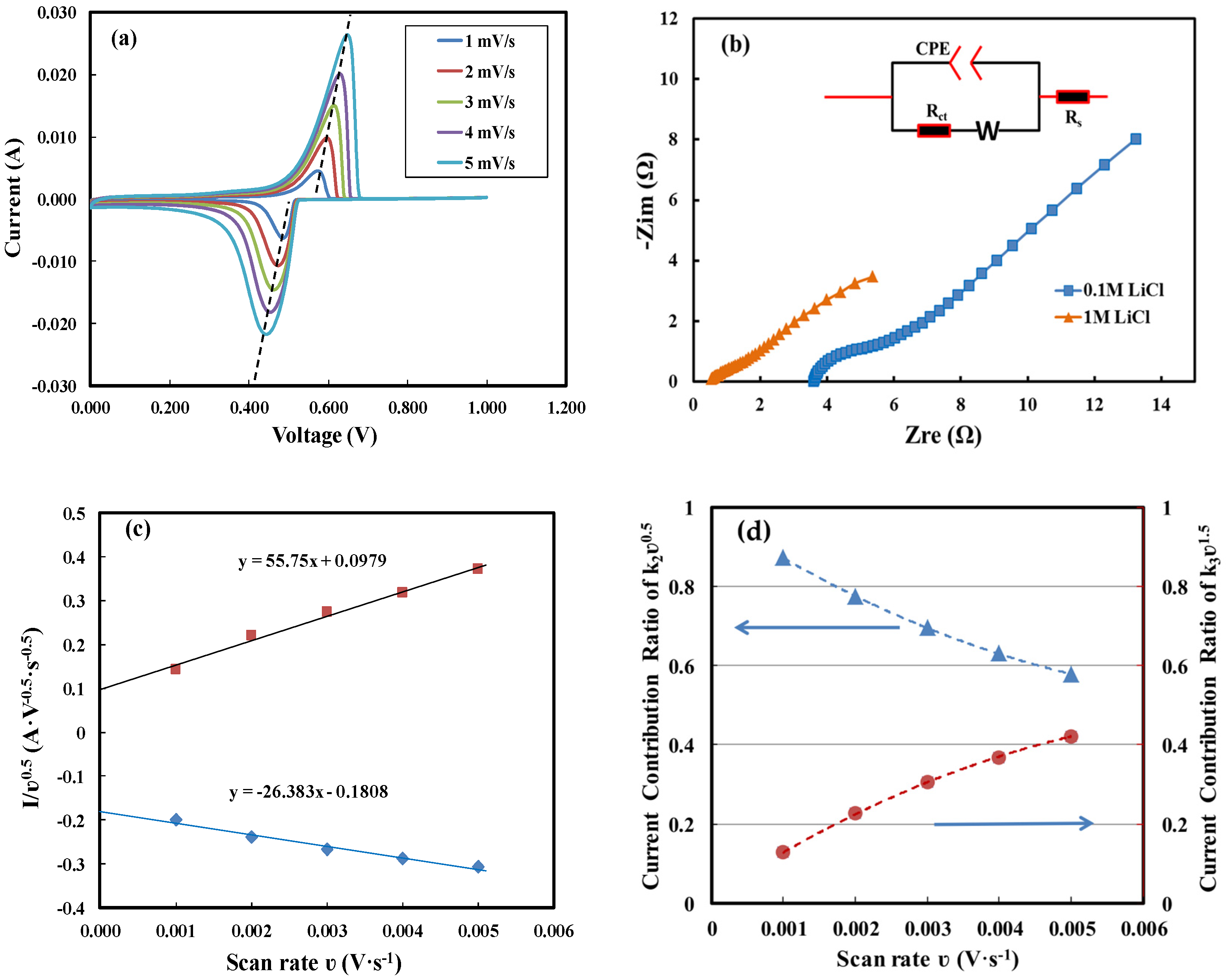
From
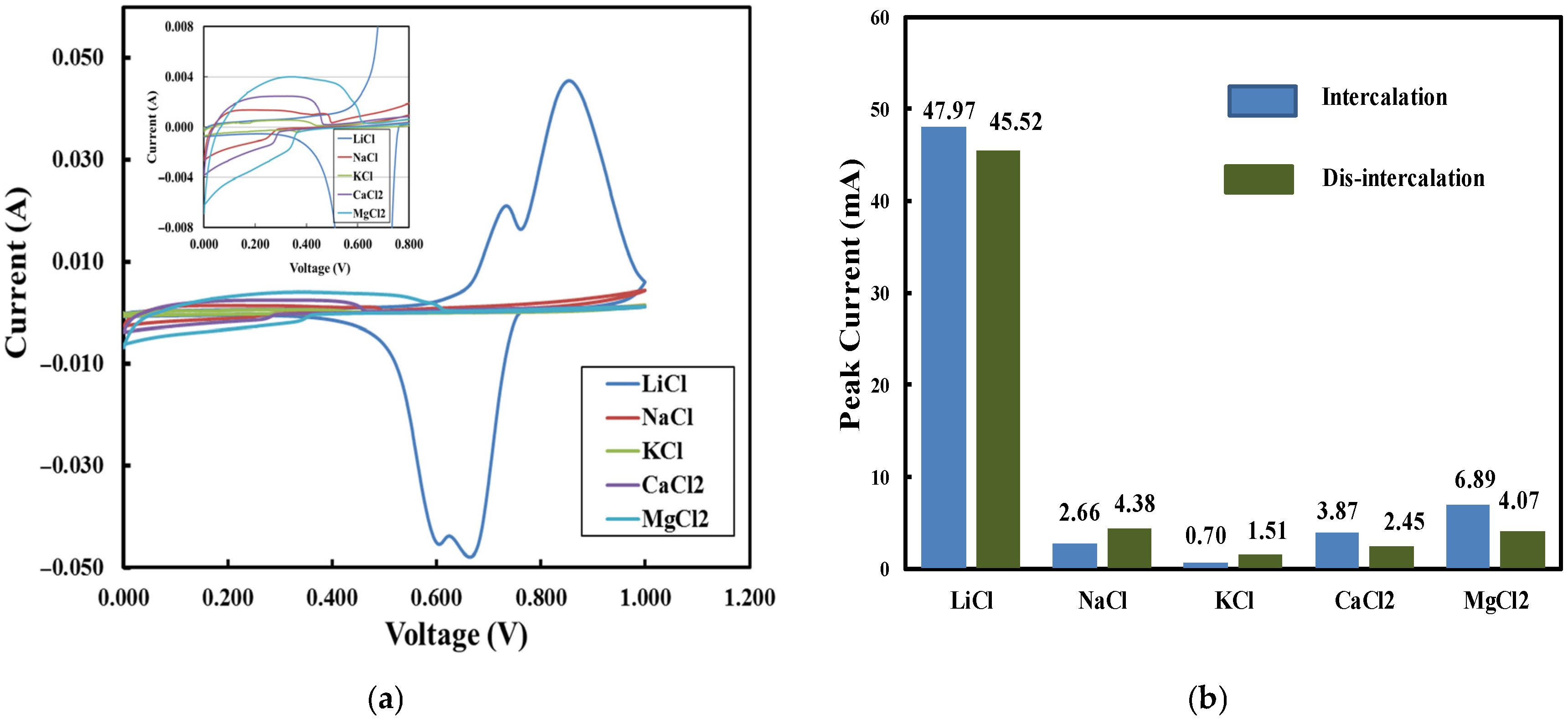
Figure 7a, the CV curve for 1 M LiCl shows two distinct pairs of current peaks, which correspond to the two-step intercalation process of lithium ions into the electrode material. These reactions can be described as follows [
51]:
In
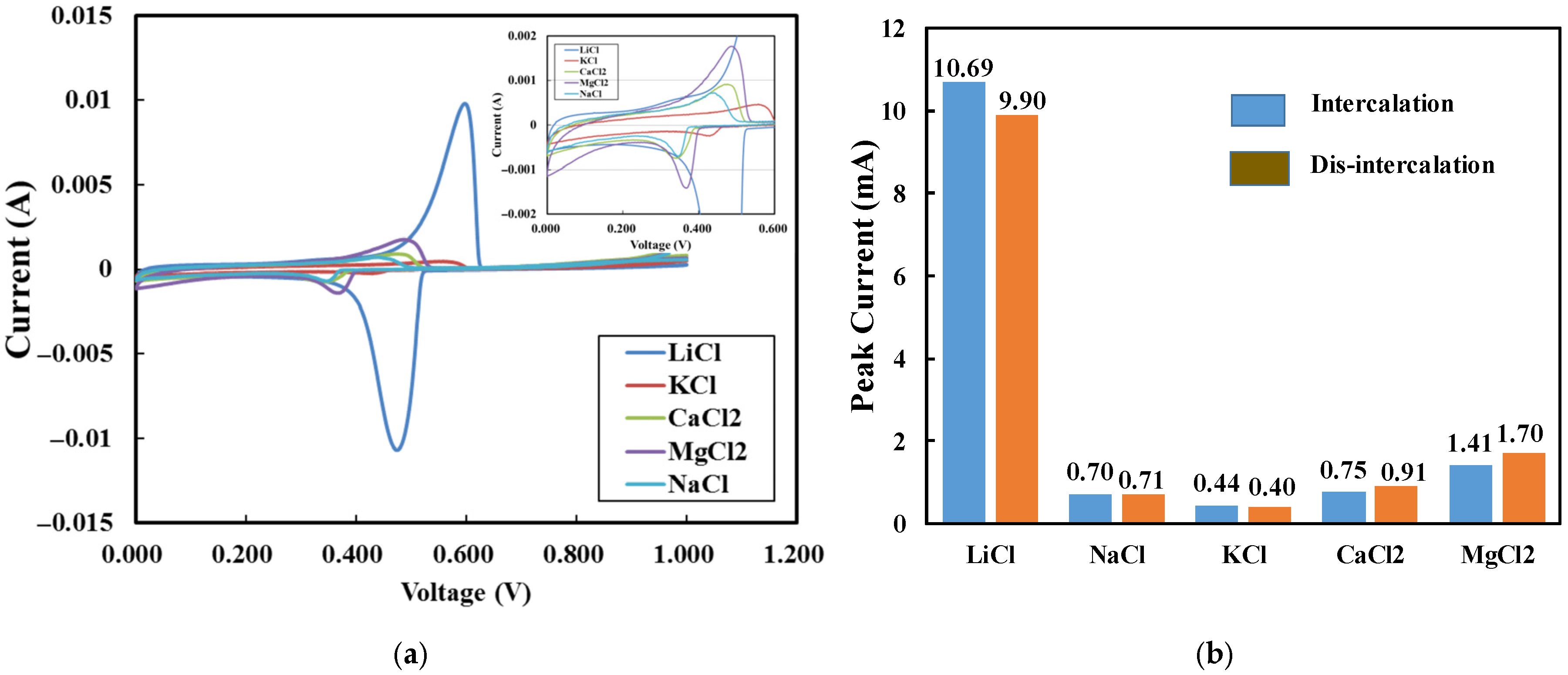
Figure 8a, the integration of the CV curve obtained in 0.1 M LiCl solution yielded an estimated lithium adsorption capacity of 11.826 mg/g for the Li-selective electrode. Based on the XRD analysis in
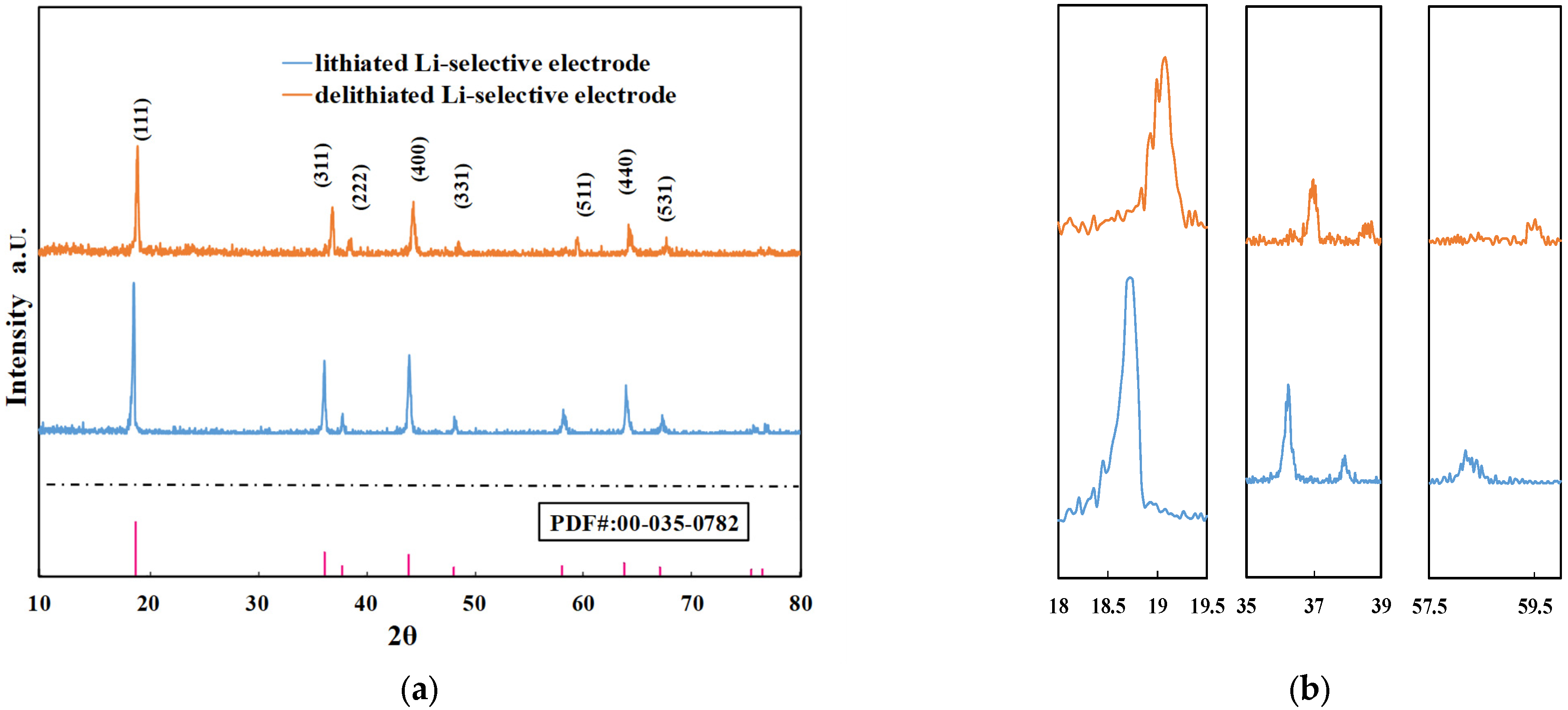
Figure 6, the lattice parameter of LMO changed from 8.20495 Å (lithiated) to 8.05145 Å (delithiated). According to Chladil’s [
52] method, the corresponding lithium concentration, x, in Li
xMn
2O
4 during the lithiation/delithiation process fell within the range of 0.3 ≤ x ≤ 0.9. Based on this result, the adsorption capacity was 13.649 mg/g, which was consistent with the value directly obtained by integrating the CVs.
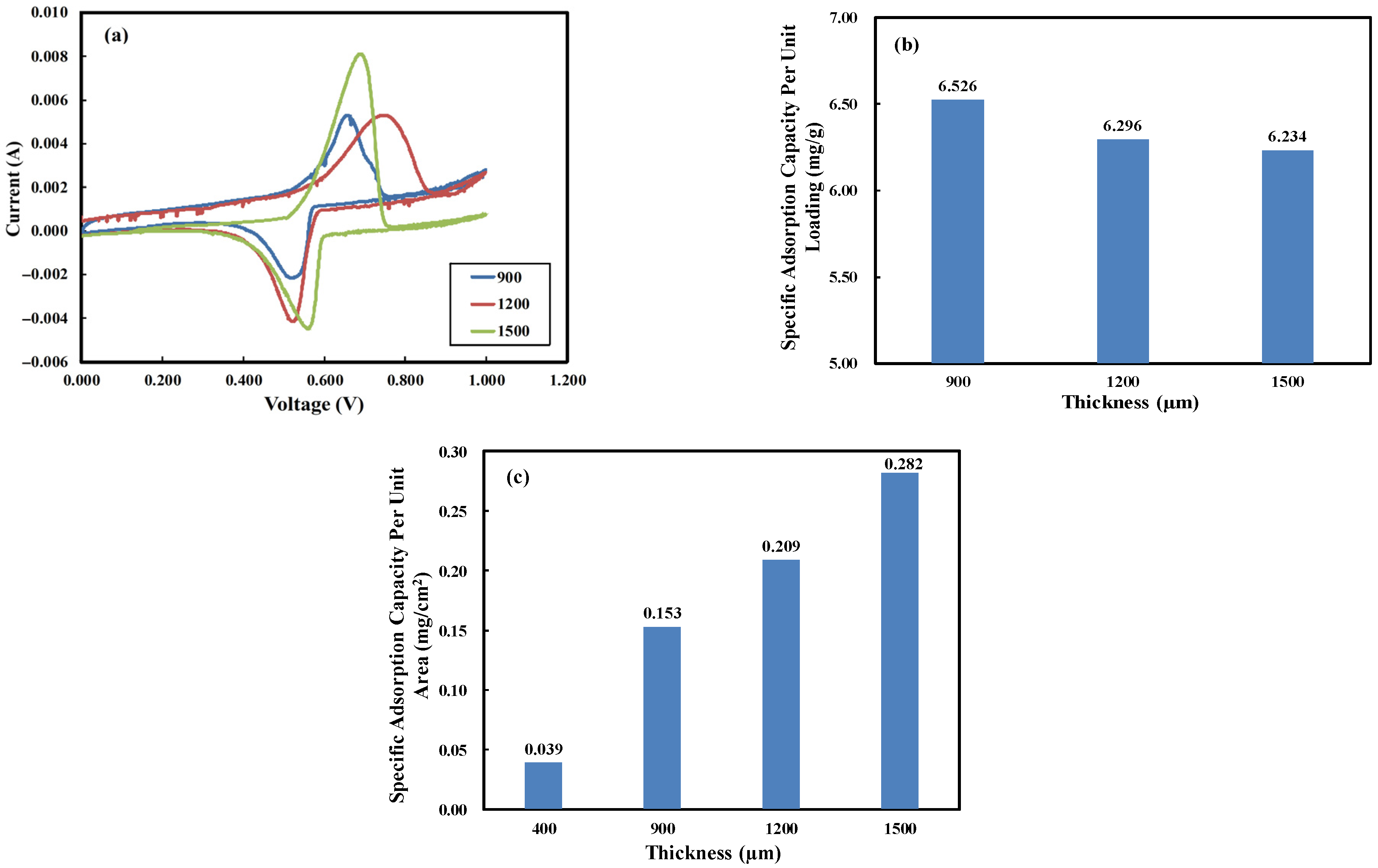
While the maximum theoretical adsorption capacity for the LMO-based electrode prepared in this study was 38.4 mg/g (for x = 1), the reported values of adsorption capacity in the literature typically ranged from 2 to 25 mg/g [
53,
54]. In
Figure 11b, the adsorption capacity in the synthetic brine with multiple metal ions for the 1500 μm electrode was 6.234 mg/g, smaller than 11.826 mg/g obtained in the 0.1 M LiCl solution. This decrease was mainly due to the competitive adsorption of coexisting ions on the electrode surfaces, resulting in significant steric hindrance to lithium intercalation kinetics [
55,
56,
57].
From
Figure 7a and
Figure 8a, the peak capacity values for K
+, Ca
2+, Mg
2+, and Na
+ at the peak voltage for Li
+ were determined. These values are given in
Table 4, along with the peak capacity for Li
+. For 0.1 M solutions, the peak capacity for LiCl is over 20 times higher than that for 0.1 M NaCl, or 32 times higher than that for 1.0 M NaCl, revealing a significant selectivity difference.
Methods for practical electrochemical adsorption of lithium have been proposed and assessed in laboratories [
54]. The two most commonly discussed methods are the constant current (galvanostatic) method [
30,
54,
58,
59] and the constant voltage (potentiostatic) method [
54,
60]. In a galvanostatic process, the cell voltage decreases continuously from a high to a low voltage (typically by 1.3 V), whereas in a constant voltage process, the current decreases continuously from a high current and gradually approaches zero.
In the galvanostatic method, the selectivity of Li to Na can be estimated using the ratio of the peak capacities. For high concentration, the ratio is 6.299/0.191 = 32.97, and for low concentration, the ratio is 0.329/0.015 = 21.93. However, when the constant voltage method is used, the selectivity of Li to Na is estimated using the ratio of the peak capacity of LiCl to the capacity of NaCl at the peak voltage. For example, the ratio is 0.329/0.0021 = 156.7. Thus, to achieve greater selectivity, the constant voltage method is preferred over the galvanostatic method.
Calvo et al. [
54] evaluated the selectivity of Li to Na in a simulated brine. The initial [Li
+]/[Na
+] ratio was 0.01. After the first cycle of the lithium extraction process, as described in
Figure 1, the ratio increased to 1.59. This selectivity of 159 is consistent with the selectivity estimated at the peak current voltage in a constant voltage process.
The high selectivity of lithium ions can be attributed to their small ionic radii, which allow them to fit precisely into the tetrahedral sites of the three-dimensional spinel structure of λ-MnO
2 [
32]. The ionic radii of relevant cations are summarized in
Table 5. As lithium ions are removed from the LMO lattice during de-intercalation, the resulting vacancies in λ-MnO
2 create well-defined structural templates that selectively accommodate Li
+ during re-intercalation. This “template effect” underpins the intercalation capacity of λ-MnO
2, enabling high selectivity for Li
+ while excluding larger cations such as Na
+, K
+, and Ca
2+ [
61].
However, the case for Mg
2+ is different. Although Mg
2+ has an ionic radius comparable to that of Li
+, its high dehydration energy presents a kinetic barrier, effectively hindering its intercalation into the λ-MnO
2 framework [
62].
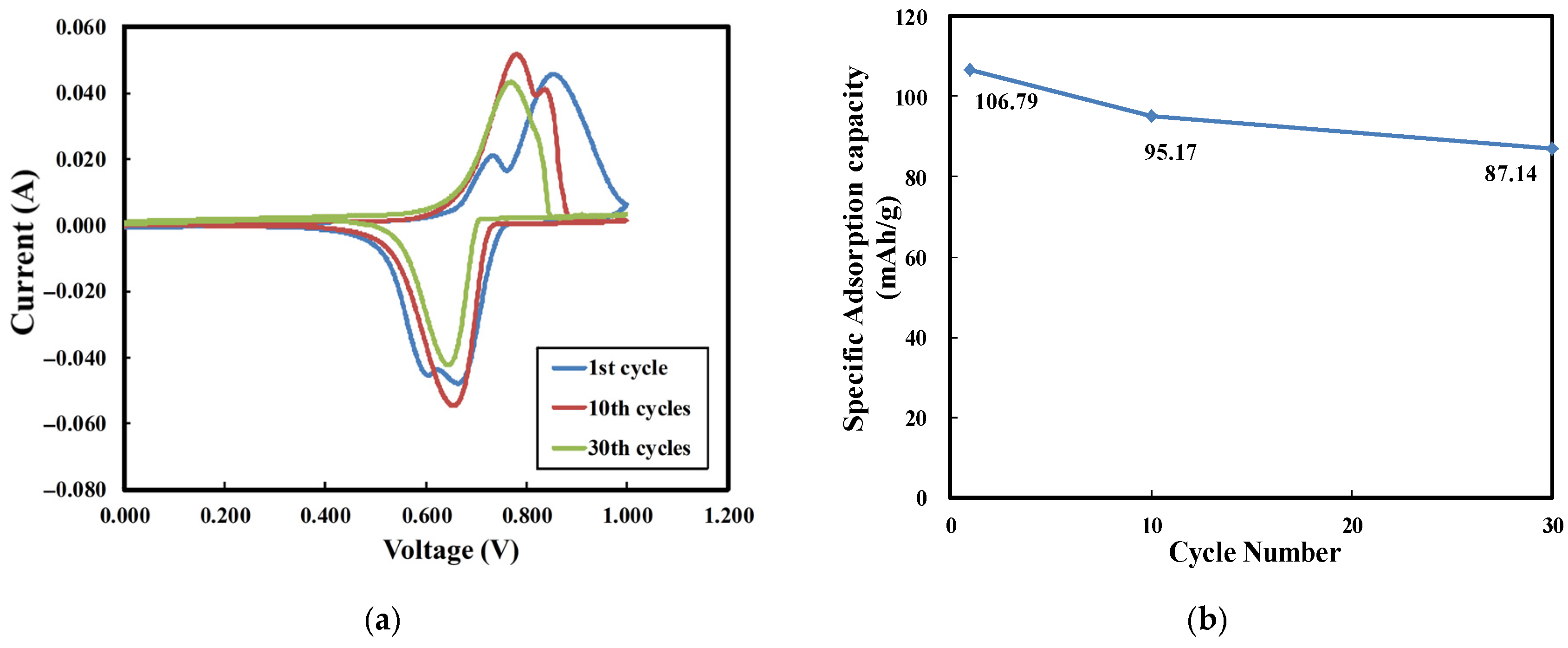
A shift in the peak potential towards more negative values was observed in
Figure 9a, suggesting that not all the absorbed lithium ions are released back into the recovery solution. This behavior can be explained by the Nernst equation.
The Li
+ intercalation reaction in LMO is:
Thus, the Nernst equation can be rewritten as [
33]:
where
is the standard equilibrium potential of electrode reaction,
is the ideal gas constant (8.314 J·mol
−1·K
−1),
is the temperature,
is the Faraday’s constant (96,485 C/mol),
is the residual intercalation percentage of Li
+, and
is the activity of Li
+ in water. The accumulation of residual Li
+ leads to an increase in
value, resulting in a negative shift in the equilibrium potential. Additionally, capacity fading may arise from microstructural changes within the electrode pores, as well as from detachment of active particles from the conductive carbon-based binder [
63,
64]. Moreover, manganese dissolution—recognized as a critical degradation mechanism in LiMn
2O
4 spinel materials—proceeds through a disproportionation reaction (2 Mn
3+ → Mn
2+ + Mn
4+) [
65]. Several mitigation strategies have been proposed. For instance, the addition of Nafion has been shown to suppress both the disproportionation reaction and the resulting Mn dissolution, as its sulfonic acid groups preferentially capture Mn
2+ over other cations [
66]. Jiang et al. [
67] fabricated an LMO electrode supported by a carbon nanotube sponge, whose abundant microstructure provides increased active sites. The formation of Mn–O–C bonds further enhances the structural robustness. Furthermore, Gou et al. [
68] demonstrated that doping with Bi
3+ effectively suppresses the Jahn–Teller effect. This incorporation compresses the Mn–O octahedra while expanding the Li–O tetrahedra, a structural adjustment that strengthens the framework and improves the electrode’s cycle life.
From the CV curves for lithium adsorption shown in
Figure 7a and
Figure 8a, a shift in the peak potential for lithium adsorption toward more negative values is observed in 0.1 M LiCl solution compared to that in 1 M LiCl. Specifically, the peak potential in 0.1 M LiCl is approximately 0.48 V, while in 1 M LiCl, the peak potential increases to around 0.66 V. This shift exceeds the expected Nernstian response of 0.059 V per decade [
69,
70]. The deviation is attributed to differences in internal resistance, which arise from the reduction in bulk ion concentrations [
71]. Furthermore, during the intercalation process, lithium ions are depleted near the electrode surface, leading to a local concentration lower than that in the bulk solution. This concentration gradient also contributes to the deviation from the Nernstian prediction.
While the capacitive contribution to current arises from the formation of electric double layers (EDLs) at the electrolyte/electrode interface, without electric charge passing across the interface, both Faradaic diffusion-controlled and Faradaic non-diffusion-controlled (pseudocapacitive) contributions involve electric charge transfer across the interface. The Faradaic diffusion-controlled contribution is characterized by a conventional charge transfer process across an interface with regular geometry, whereas the pseudocapacitive contribution involves charge transfer at an irregular interface with nano-sized roughness, micro-porous channels, tortuous intercalation paths, and semi-structured cation-anion clusters. According to Ghasemiahangarani et al. [
50], in non-diffusion-controlled cases, mass transfer is dominated by migration rather than diffusion. This model provides insight into the fact that pseudocapacitive behavior originates from surface reactions.
It is not surprising that pseudocapacitive behavior arises from surface reactions, as it is observed in systems with irregular or high-surface-area interfaces, where migration dominates mass transfer. In such systems, the reaction time scaling is proportional to or , rather than . In the present study, both the CV and XRD measurements confirm similar intercalation levels, indicating that both pseudocapacitive and Faradaic diffusion-controlled (battery-like) currents are Faradaic in nature.
From
Figure 10d, the obtained values of
and
can be used to calculate the Faradaic diffusion-controlled and pseudocapacitive contributions, respectively. The ratio of the Faradaic diffusion-controlled current to the total current is highest at the lowest scan rate and decreases as the scan rate increases. This trend is primarily due to the sluggish kinetics of electrochemical reactions and limited ion mass transport through the electrode [
48]. At lower scan rates, lithium ions have sufficient time to diffuse into the deeper bulk area or regular geometry regions of the electrode material, leading to a larger battery-like current contribution. In contrast, at higher scan rates, diffusion into the deeper bulk regions does not keep up with the scan rate, while migration of ions in the irregular superficial areas is still comparable to the scan rate. As a result, the contribution of pseudocapacitive current increases with higher scan rates [
50]. Since pseudocapacitive current originates from a Faradaic intercalation process, it contributes to the selectivity of the LMO electrodes.
As shown in
Figure 11b, the lithium adsorption capacity per gram of active material slightly decreases with increasing electrode thickness at low scan rates. This is due to longer diffusion pathways in both the electrolyte and solid active material phases for thicker electrodes [
72]. At higher scan rates, thicker electrodes may exhibit a decrease in specific lithium adsorption capacity due to increased concentration overpotential [
73]. However, this rate-limiting process can be mitigated by designing electrodes with low tortuosity or a porosity gradient [
74,
75].
The results in
Figure 11c demonstrate that the area-specific capacity for lithium intercalation is proportional to the thickness of the Li-selective electrode. The area-specific lithium adsorption capacity for the 1500 µm thick electrode is 15 times that of the 400 µm electrode, which represents the typical maximum thickness achievable with conventional fabrication methods. A comparison of the area-specific lithium adsorption capacity between this study and others is presented in
Table 6. The area-specific capacity in this work is 3 to 11 times higher than that reported in other studies. By using thicker electrodes prepared in this study, the cost and energy consumption per unit mass of lithium chloride extracted can be significantly reduced.