Mining Minor Cold Resistance Genes in V. vinifera Based on Transcriptomics

Abstract
1. Introduction
2. Materials and Methods
2.1. Experimental Materials
2.2. Evaluation and Classification of Cold Resistance
2.2.1. Determination of the Semilethal Temperature of Dormant Winter Buds of Grape Plants
2.2.2. Classification of the Chilling Resistance of Dormant Winter Buds
2.3. Transcriptome Material
2.4. Transcriptome Sequencing and Data Analysis
2.5. Data Processing
3. Results
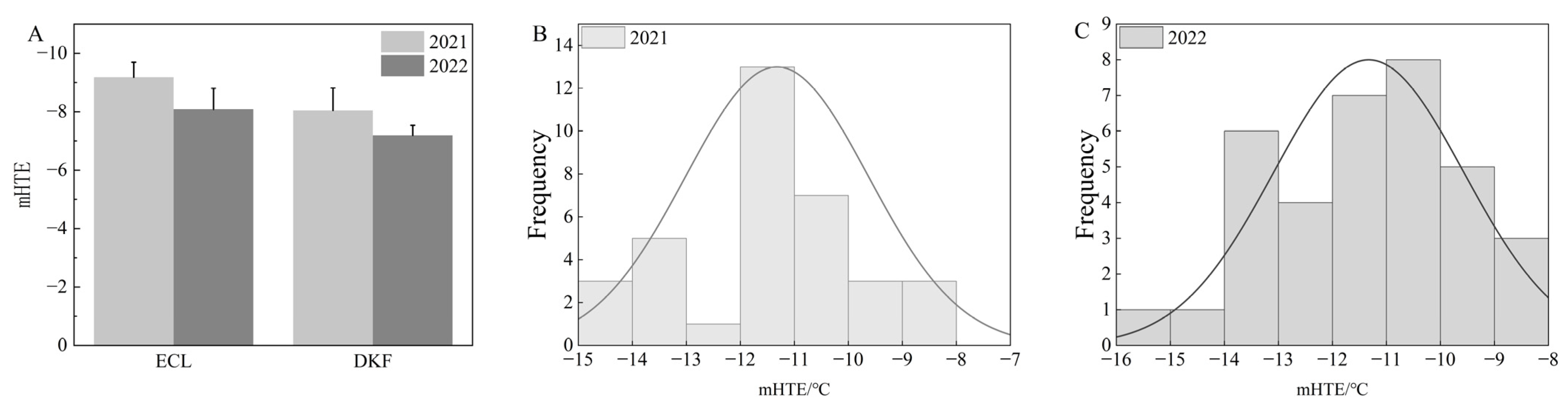
3.1. Evaluation and Classification of Winter Bud Cold Resistance
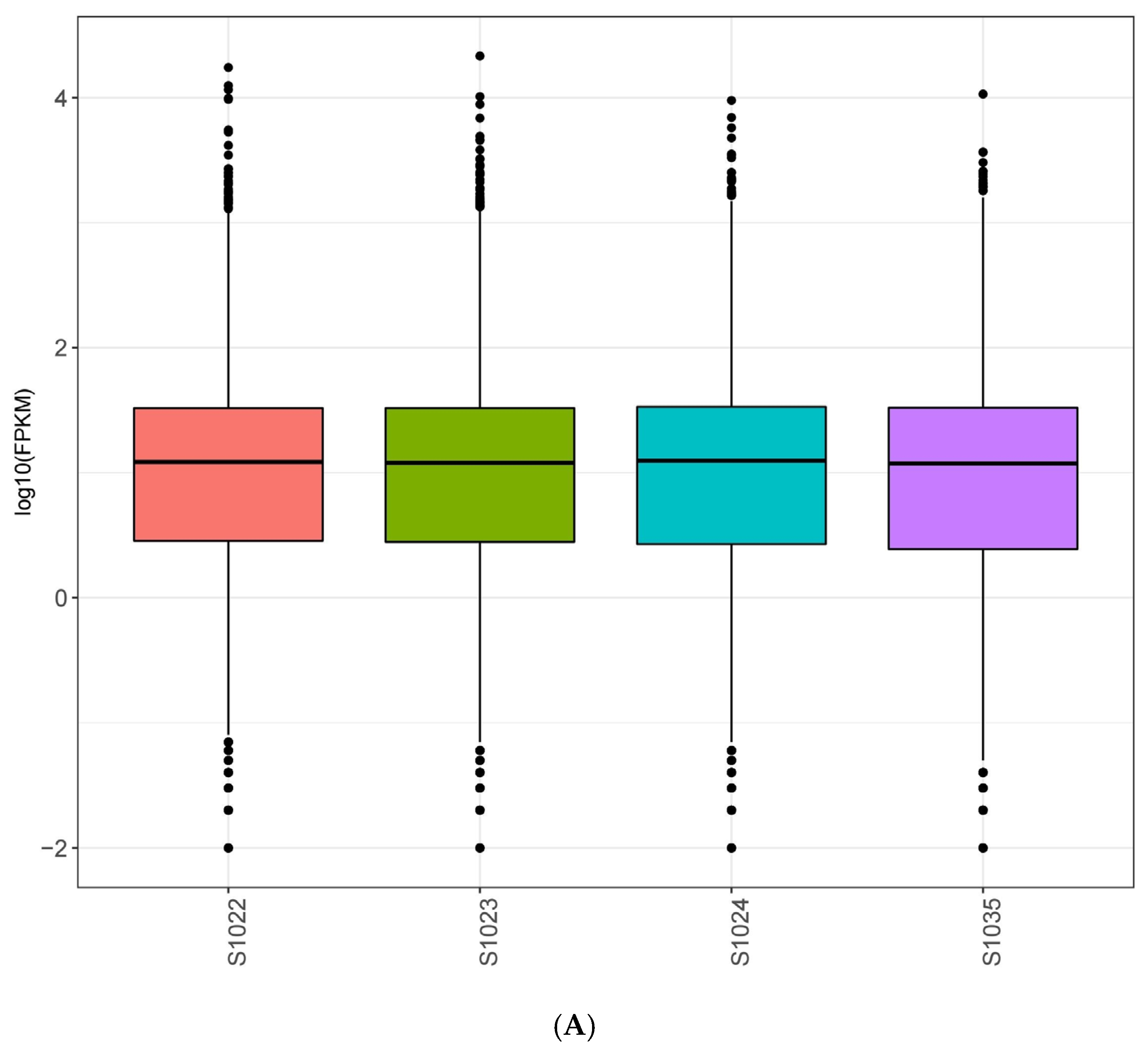
3.2. Transcriptome Sequencing Data Analysis
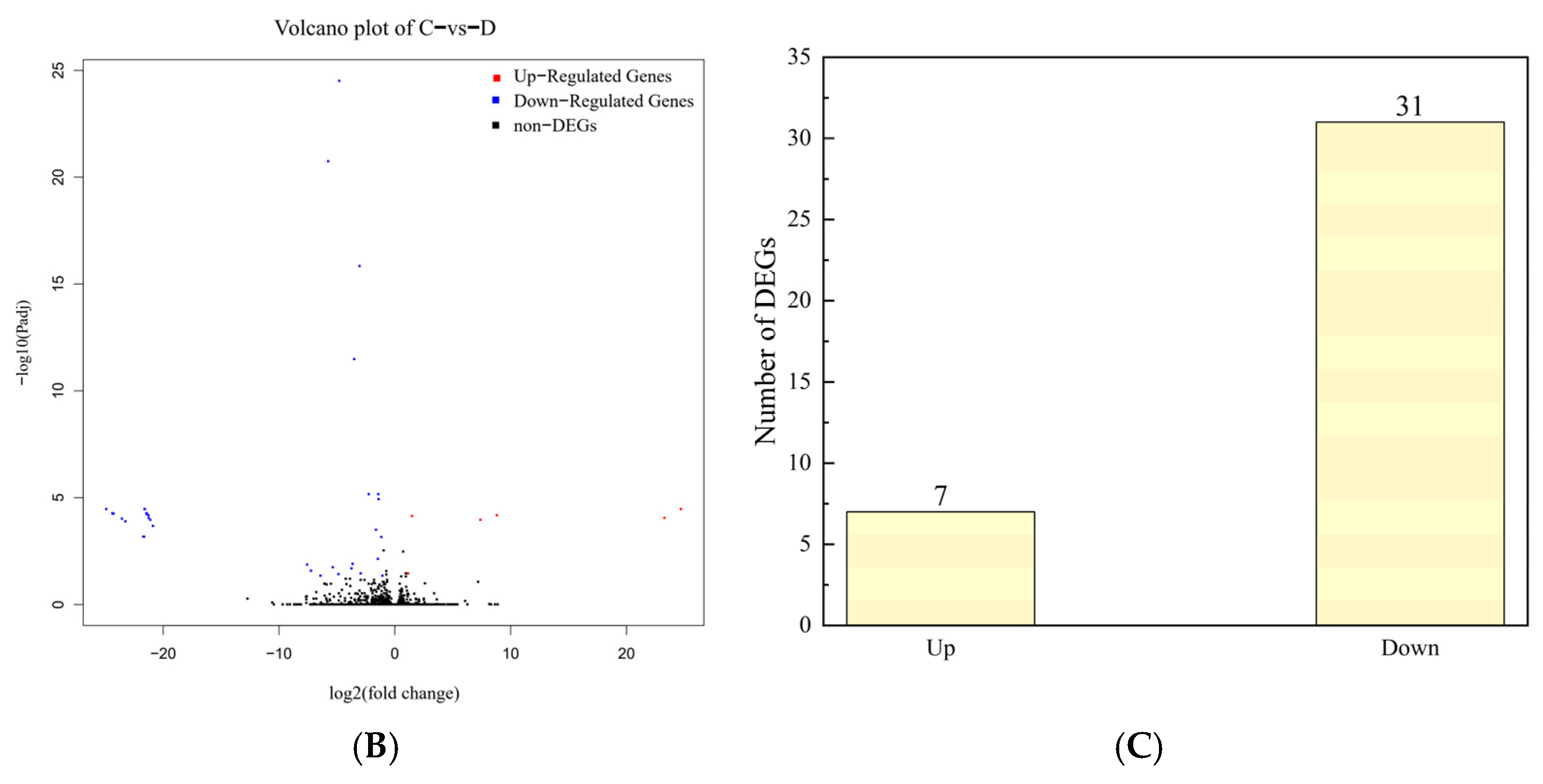
3.3. Overall Analysis of Differentially Expressed Genes
3.4. Differential Gene Analysis of Different Plant Samples
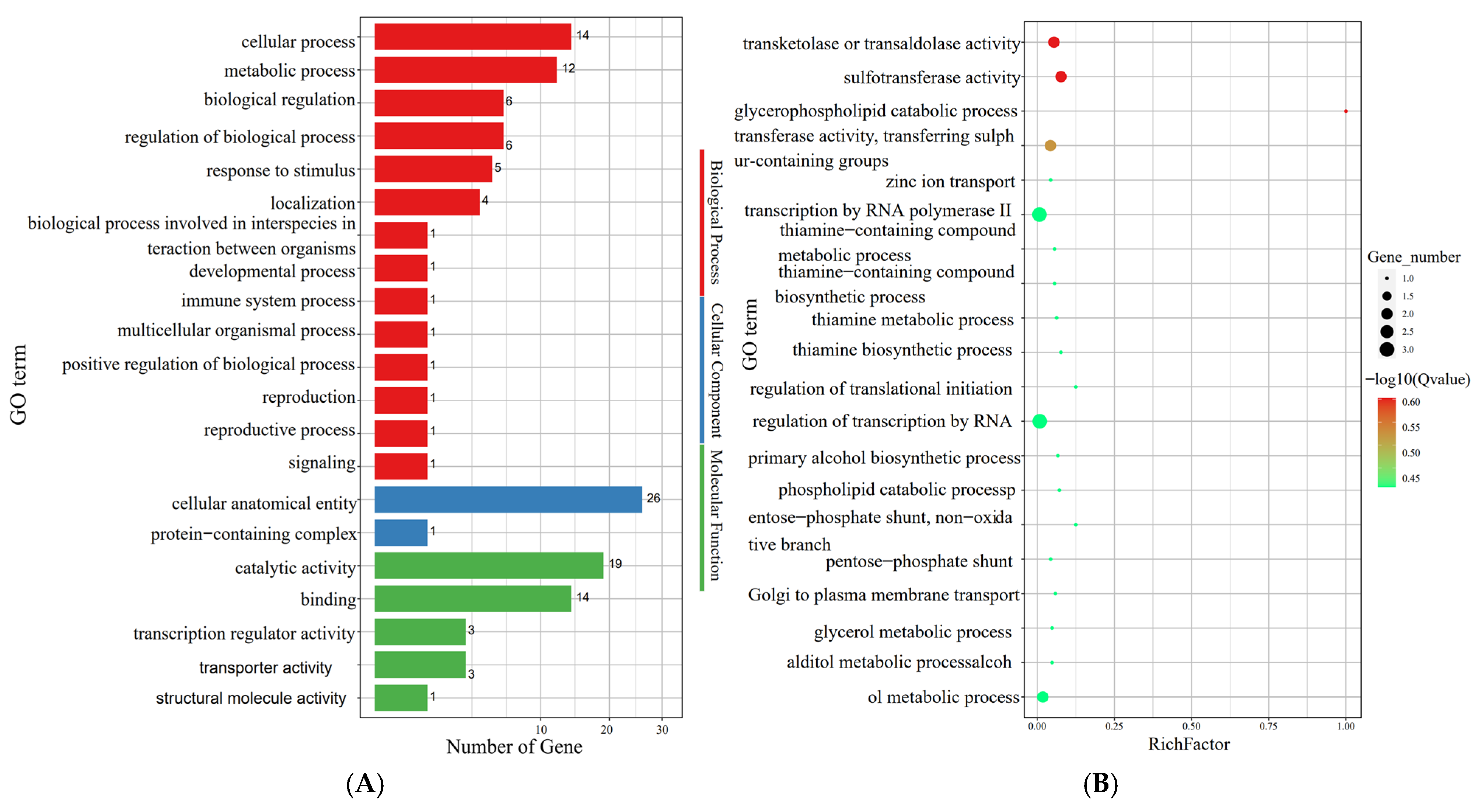
3.4.1. GO Enrichment Analysis
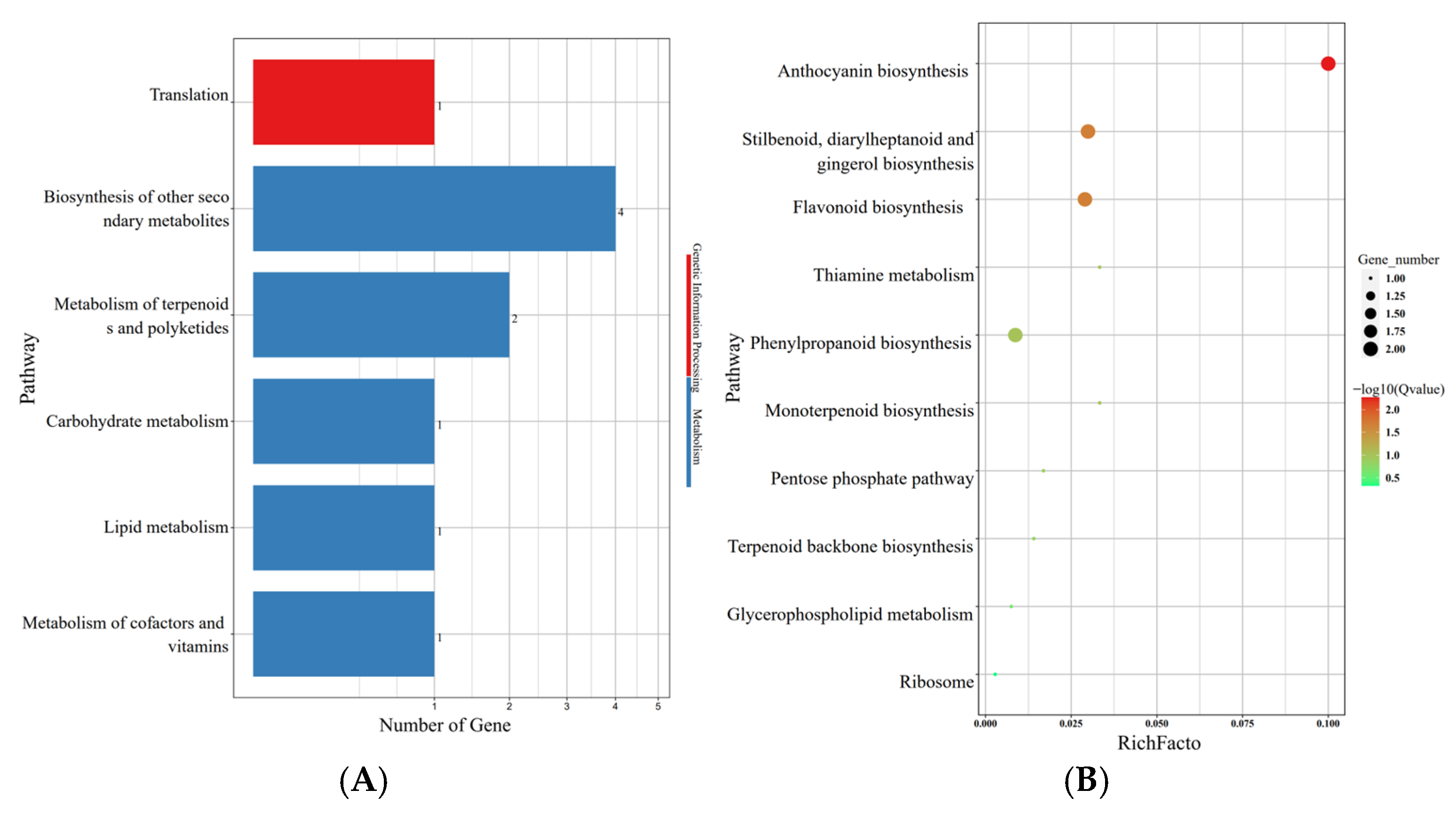
3.4.2. KEGG Enrichment Analysis
3.5. Expression Analysis of Genes Related to Cold Resistance in Grape
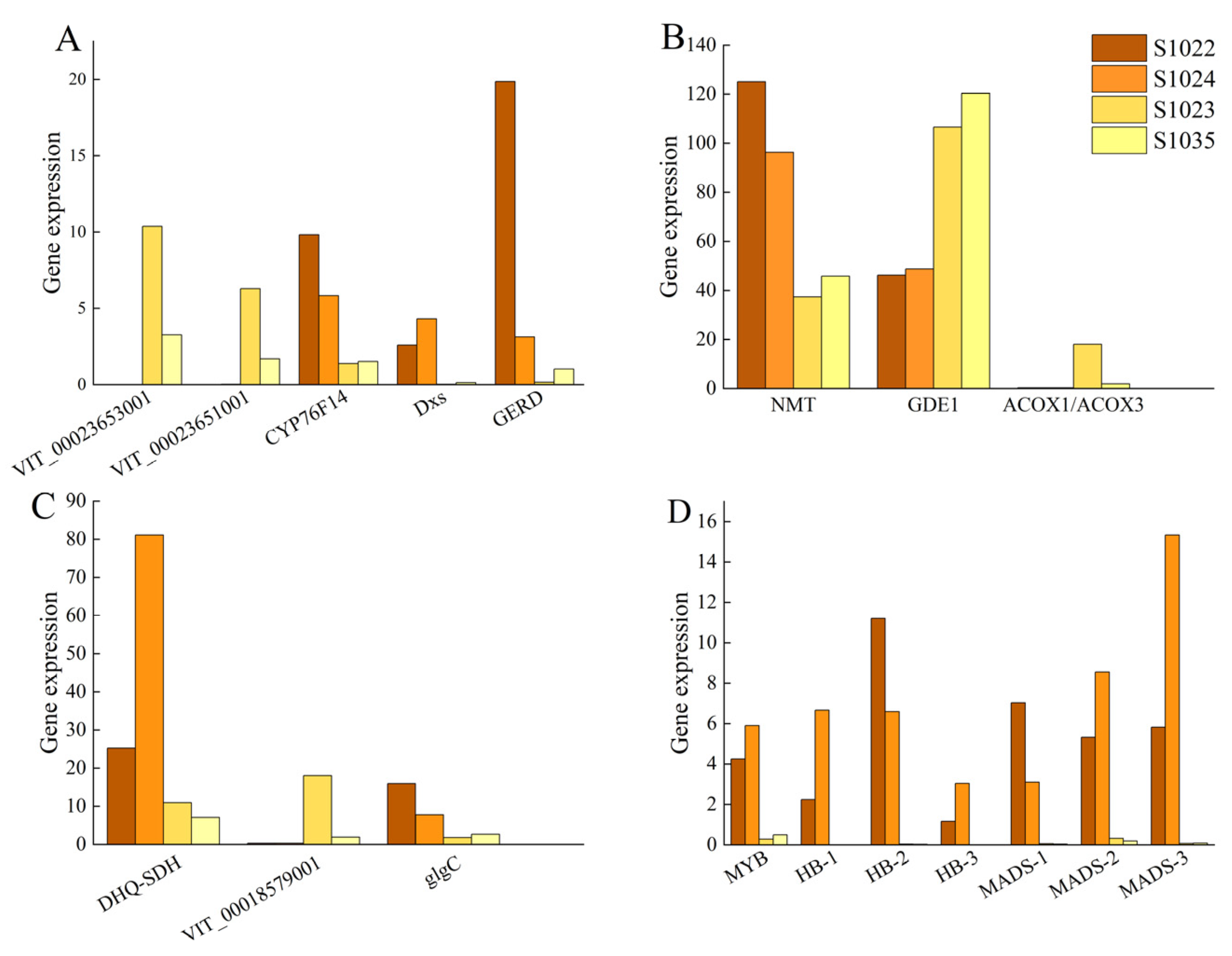
3.5.1. Anabolism of Secondary Metabolites
3.5.2. Lipid Anabolism
3.5.3. Carbohydrate and Amino Acid Metabolism
3.5.4. Transcription Factors
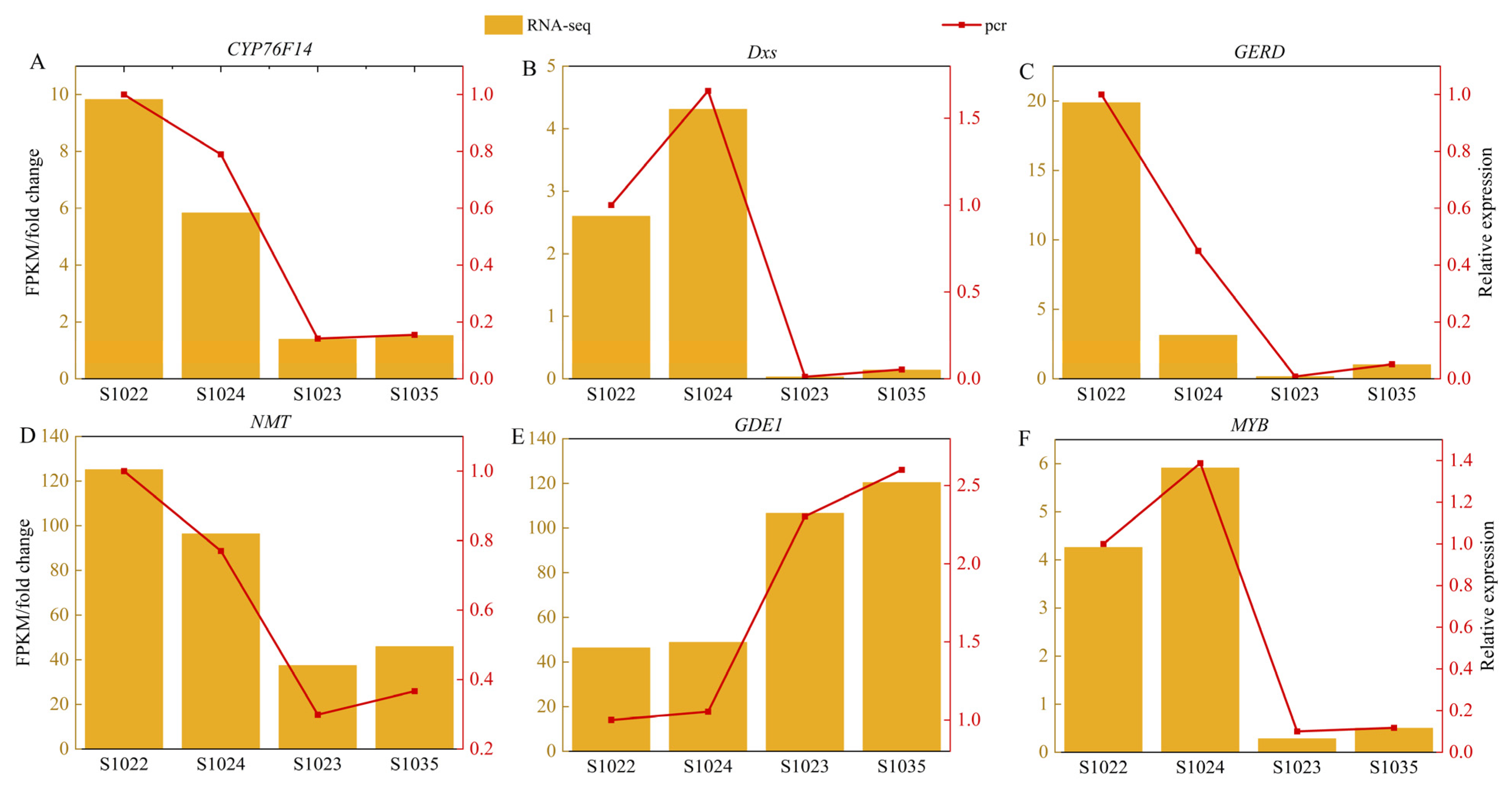
3.6. Candidate Gene Expression Analysis: Quantitative Real-Time Polymerase Chain Reaction
4. Discussion
4.1. Evaluation of Cold Resistance in Hybrid Population
4.2. Cold Resistance Gene and Metabolites
4.2.1. Cold Resistance and Secondary Metabolites
4.2.2. Cold Resistance and Lipid Metabolism
4.2.3. Cold Resistance and Carbohydrates
4.2.4. Cold Resistance and Transcription Factor Regulation
5. Conclusions
Author Contributions
Funding
Data Availability Statement
Conflicts of Interest
References
- Yang, F. Evaluation of Cold Resistance in the F1 Generation of Grape Interspecific Hybridization. Master’s Thesis, Northwest A&F University, Yangling, China, 2018. [Google Scholar]
- Karimi, R.; Ershadi, A. Role of exogenous abscisic acid in adapting of ‘sultana’ grapevine to low-temperature stress. Acta Physiol. Plant. 2015, 37, 151. [Google Scholar] [CrossRef] [Scilit]
- Xue, T.; Han, X.; Zhang, H.; Wang, Y.; Wang, H.; Li, H. Effects of a biodegradable liquid film on winter chill protection of winegrape cultivars. Sci. Hortic. 2019, 246, 398–406. [Google Scholar] [CrossRef] [Scilit]
- Shu, X.; Gu, B.; Zhang, H.; Tang, Y.; Zhang, J. Heterologous expression of the cysteine proteinase gene vacp17 from the cold-adapted grapevine vitis amurensis increases cold tolerance in arabidopsis. Plant Cell Tissue Organ Cult. 2022, 150, 153–164. [Google Scholar] [CrossRef] [Scilit]
- Chen, S.; Su, H.; Xing, H.; Mao, J.; Sun, P.; Li, M. Comparative proteomics reveals the difference in root cold resistance between Vitis. Riparia × V. Labrusca and cabernet sauvignon in response to freezing temperature. Plants 2022, 11, 971. [Google Scholar] [CrossRef] [Scilit]
- Guo, Y.C.; Li, S.C.; García-Caparros, P.; Wang, L.J.; Liang, Z.C. Grapevine adaptation to cold and heat stress. J. Exp. Bot. 2025, 76, 3038–3058. [Google Scholar] [CrossRef] [Scilit] [PubMed]
- Manso-Martínez, C.; Sáenz-Navajas, M.P.; Hernández, M.M.; Menéndez, C.M. Sensory profiling and quality assessment of wines derived from graciano × tempranillo selections. LWT 2020, 127, 109394. [Google Scholar] [CrossRef] [Scilit]
- Yang, Y.; Cuenca, J.; Wang, N.; Liang, Z.; Sun, H.; Gutierrez, B.; Xi, X.; Arro, J.; Wang, Y.; Fan, P.; et al. A key ‘foxy’ aroma gene is regulated by homology-induced promoter indels in the iconic juice grape ‘concord’. Hortic. Res. 2020, 7, 67. [Google Scholar] [CrossRef] [Scilit]
- Wang, Z.-L.; Xue, T.-T.; Gao, F.-F.; Zhang, L.; Han, X.; Wang, Y.; Hui, M.; Wu, D.; Li, H.; Wang, H. Intraspecific recurrent selection in V. Vinifera: An effective method for breeding of high quality, disease-, cold-, and drought -resistant grapes. Euphytica 2021, 217, 111. [Google Scholar] [CrossRef] [Scilit]
- Li, H.; Zhang, Z.W. Accumulation of primary substitution of slightly effective resistance genes against powdery mildew in Vitis vinifera. Northwest Bot. J. 1995, 2, 120–124. [Google Scholar]
- Liu, G.C.; Zhang, Z.; Tian, Y.; Yang, J.; Xu, X.F.; Liu, X. Vvbzip22 regulates quercetin synthesis to enhances cold resistance in grape. Plant Sci. 2025, 350, 112293. [Google Scholar] [CrossRef] [Scilit] [PubMed]
- Ma, X.; Zhao, F.; Su, K.; Lin, H.; Guo, Y. Discovery of cold-resistance genes in vitis amurensis using bud-based quantitative trait locus mapping and rna-seq. BMC Genom. 2022, 23, 551. [Google Scholar] [CrossRef] [Scilit]
- Shinozaki, K.; Yamaguchi-Shinozaki, K.; Seki, M. Regulatory network of gene expression in the drought and cold stress responses. Curr. Opin. Plant Biol. 2003, 6, 410–417. [Google Scholar] [CrossRef] [Scilit] [PubMed]
- Hou, L.; Zhang, G.; Zhao, F.; Zhu, D.; Fan, X.; Zhang, Z.; Liu, X. Vvbap1 is involved in cold tolerance in Vitis vinifera L. Front. Plant Sci. 2018, 9, 726. [Google Scholar] [CrossRef] [Scilit] [PubMed]
- Li, B.B.; Zang, Y.S.; Song, C.Z.; Wang, X.F.; Wu, X.Y.; Wang, X.H.; Xi, Z.M. Vverf117 positively regulates grape cold tolerance through direct regulation of the antioxidative gene bas1. Int. J. Biol. Macromol. 2024, 268, 131804. [Google Scholar] [CrossRef] [Scilit]
- Noronha, H.; Silva, A.; Silva, T.; Frusciante, S.; Diretto, G.; Gerós, H. Vvirafs5 is a raffinose synthase involved in cold acclimation in grapevine woody tissues. Front. Plant Sci. 2022, 12, 754537. [Google Scholar] [CrossRef] [Scilit]
- Xu, M.; Tong, Q.; Wang, Y.; Wang, Z.; Xu, G.; Elias, G.K.; Li, S.; Liang, Z. Transcriptomic analysis of the grapevine lea gene family in response to osmotic and cold stress reveals a key role for vamdhn3. Plant Cell Physiol. 2020, 61, 775–786. [Google Scholar] [CrossRef] [Scilit]
- Fang, L.C.; Wang, Z.M.; Su, L.Y.; Gong, L.Z.; Xin, H.P. vitis myb14 confer cold and drought tolerance by activating lipid transfer protein genes expression and reactive oxygen species scavenge. Gene 2024, 890, 147792. [Google Scholar] [CrossRef] [Scilit]
- Gao, F.; Zhao, H.-X.; Yao, H.-P.; Li, C.-L.; Chen, H.; Wang, A.-H.; Park, S.-U.; Wu, Q. Identification, isolation and expression analysis of eight stress-related r2r3-myb genes in tartary buckwheat (Fagopyrum tataricum). Plant Cell Rep. 2016, 35, 1385–1396. [Google Scholar] [CrossRef] [Scilit]
- Muhammad, N.; Uddin, N.; Khan, M.K.U.; Ali, N.; Ali, K.; Jones, D.A. Diverse role of basic helix-loop-helix (bhlh) transcription factor superfamily genes in the fleshy fruit-bearing plant species. Czech J. Genet. Plant Breed. 2022, 59, 1–13. [Google Scholar] [CrossRef] [Scilit]
- Zhu, D.; Che, Y.; Xiao, P.; Hou, L.; Guo, Y.; Liu, X. Functional analysis of a grape wrky30 gene in drought resistance. Plant Cell Tissue Organ Cult. 2017, 132, 449–459. [Google Scholar] [CrossRef] [Scilit]
- Sun, X.; Zhao, T.; Gan, S.; Ren, X.; Fang, L.; Karungo, S.K.; Wang, Y.; Chen, L.; Li, S.; Xin, H. Ethylene positively regulates cold tolerance in grapevine by modulating the expression of ethylene response factor 057. Sci. Rep. 2016, 6, 24066. [Google Scholar] [CrossRef] [Scilit]
- Kaya, Ö.; Köse, C. Determination of resistance to low temperatures of winter buds on lateral shoot present in karaerik (Vitis vinifera L.) grape cultivar. Acta Physiol. Plant. 2017, 39, 209. [Google Scholar] [CrossRef] [Scilit]
- Wang, Z.M.; Chai, F.M.; Zhu, Z.F.; Elias, G.K.; Xin, H.P.; Liang, Z.C.; Li, S.H. The inheritance of cold tolerance in seven interspecific grape populations. Sci. Hortic. 2020, 266, 109260. [Google Scholar] [CrossRef] [Scilit]
- Yao, R.; Bai, R.; Zhao, F.; Liu, H.; Zhang, M. Evaluation of cold resistance and fruit traits of grape interspecific hybridization offspring. Agric. Sci. Technol. Commun. 2024, 4, 117–120+125. [Google Scholar]
- Wang, Z.; Wang, Y.; Wu, D.; Hui, M.; Han, X.; Xue, T.; Yao, F.; Gao, F.; Cao, X.; Li, H.; et al. Identification and regionalization of cold resistance of wine grape germplasms (V. Vinifera). Agriculture 2021, 11, 1117. [Google Scholar] [CrossRef] [Scilit]
- Wang, R.; Qiao, G.; Tan, P.; Duan, W.; Liang, Z.; Fan, P. Evaluation of cold resistance in grape interspecific hybrid offspring. China Fruits 2021, 72, 25–32. [Google Scholar]
- Guo, Y. Construction of Cold Resistant Wine Grape Population and QTL Analysis of Cold Resistance. Master’s Thesis, Jilin Agricultural University, Changchun, China, 2021. [Google Scholar]
- Chu, Y.N.; Li, M.; Li, R.N.; Zhang, K.Z.; Qiu, P.P.; Yuan, X.J.; Han, Y.L.; Liu, X.Y.; Xu, Y.; Liu, G.T. Embryo rescue breeding of new cold-resistant, seedless grapes. Horticulturae 2023, 9, 992. [Google Scholar] [CrossRef] [Scilit]
- Ma, W.F.; Ma, L.J.; Ma, Z.H.; Li, W.F.; Lu, S.X.; Gou, H.M.; Mao, J.; Chen, B.H. Profiling the lncrna-mirna-mrna interaction network in the cold-resistant exercise period of grape (Vitis amurensis Rupr.). Chem. Biol. Technol. Agric. 2024, 11. [Google Scholar] [CrossRef] [Scilit]
- Fan, L.N.; Cheng, D.D.; Bai, H.F.; Wang, Y.Y.; Liu, Z.W.; Yu, F. Assessment of the effects of low-temperature stress on antioxidant and metabolite levels in cabernet sauvignon, bei binghong, and beta. J. Plant Growth Regul. 2025, 44, 6029–6045. [Google Scholar] [CrossRef] [Scilit]
- Che, L.L.; Lu, S.X.; Gou, H.M.; Li, M.; Guo, L.L.; Yang, J.B.; Mao, J. Vvjaz13 positively regulates cold tolerance in Arabidopsis and grape. Int. J. Mol. Sci. 2024, 25, 4458. [Google Scholar] [CrossRef] [Scilit]
- Yan, F.; Qu, D.; Chen, X.; Zeng, H.; Li, X.; Hu, C.Y. Metabolomics reveals 5-aminolevulinic acid improved the ability of tea leaves (Camellia sinensis L.) against cold stress. Metabolites 2022, 12, 392. [Google Scholar] [CrossRef] [Scilit]
- Liu, Y.; Li, Y.; Wang, A.; Xu, Z.; Li, C.; Wang, Z.; Guo, B.; Chen, Y.; Tang, F.; Li, J. Enhancing cold resistance in banana (Musa spp.) through ems-induced mutagenesis, l-hyp pressure selection: Phenotypic alterations, biomass composition, and transcriptomic insights. BMC Plant Biol. 2024, 24, 101. [Google Scholar] [CrossRef] [Scilit]
- Petrovi, A.; Lisov, N.; Akar, U.; Markovi, N.; Gojkovi-Bukarica, L. The effects of prokupac variety clones and vinification method on the quantity of resveratrol in wine. Food Feed Res. 2019, 46, 189–198. [Google Scholar] [CrossRef] [Scilit]
- Wei, J.; Yang, Y.; Peng, Y.; Wang, S.; Zhang, J.; Liu, X.; Liu, J.; Wen, B.; Li, M. Biosynthesis and the transcriptional regulation of terpenoids in tea plants (Camellia sinensis). Int. J. Mol. Sci. 2023, 24, 6937. [Google Scholar] [CrossRef] [Scilit]
- Ilc, T.; Halter, D.; Miesch, L.; Lauvoisard, F.; Kriegshauser, L.; Ilg, A.; Baltenweck, R.; Hugueney, P.; Werck-Reichhart, D.; Duchêne, E.; et al. A grapevine cytochrome p450 generates the precursor of wine lactone, a key odorant in wine. New Phytol. 2016, 213, 264–274. [Google Scholar] [CrossRef] [Scilit]
- Zhou, P.; Li, H.; Lin, Y.; Zhou, Y.; Chen, Y.; Li, Y.; Li, X.; Yan, H.; Lin, W.; Xu, B.; et al. Omics analyses of Rehmannia glutinosa dedifferentiated and cambial meristematic cells reveal mechanisms of catalpol and indole alkaloid biosynthesis. BMC Plant Biol. 2023, 23, 463. [Google Scholar] [CrossRef] [Scilit]
- Peng, B.; Ran, J.; Li, Y.; Tang, M.; Xiao, H.; Shi, S.; Ning, Y.; Dark, A.; Li, J.; Guan, X.; et al. Site-directed mutagenesis of vvcyp76f14 (cytochrome p450) unveils its potential for selection in wine grape varieties linked to the development of wine bouquet. J. Agric. Food Chem. 2024, 72, 3683–3694. [Google Scholar] [CrossRef] [Scilit]
- Berry, H.M.; Zhou, N.; Rickett, D.V.; Baxter, C.J.; Enfissi, E.M.A.; Fraser, P.D. The characterisation of phytoene synthase-1 and 2, and 1-d-deoxy-xylulose 5-phosphate synthase genes from red chilli pepper (Capsicum annuum). J. Hortic. Sci. Biotechnol. 2023, 98, 732–744. [Google Scholar] [CrossRef] [Scilit]
- Simpson, K.; Quiroz, L.F.; Rodriguez-Concepción, M.; Stange, C.R. Differential contribution of the first two enzymes of the mep pathway to the supply of metabolic precursors for carotenoid and chlorophyll biosynthesis in carrot (Daucus carota). Front. Plant Sci. 2016, 7, 1344. [Google Scholar] [CrossRef] [Scilit]
- Estévez, J.M.; Cantero, A.; Reindl, A.; Reichler, S.; León, P. 1-deoxy-d-xylulose-5-phosphate synthase, a limiting enzyme for plastidic isoprenoid biosynthesis in plants. J. Biol. Chem. 2001, 276, 22901–22909. [Google Scholar] [CrossRef] [Scilit]
- Cao, Y.; Hwarari, D.; Radani, Y.; Guan, Y.; Yang, L. Molecular mechanism underlying plant response to cold stress. Phyton 2023, 92, 2665–2683. [Google Scholar] [CrossRef] [Scilit]
- Wang, Y.; Wang, J.; Sarwar, R.; Zhang, W.; Geng, R.; Zhu, K.-M.; Tan, X.-L. Research progress on the physiological response and molecular mechanism of cold response in plants. Front. Plant Sci. 2024, 15, 1334913. [Google Scholar] [CrossRef] [Scilit]
- Zhang, H.; Dong, J.; Zhao, X.; Zhang, Y.; Ren, J.; Xing, L.; Jiang, C.; Wang, X.; Wang, J.; Zhao, S.; et al. Research progress in membrane lipid metabolism and molecular mechanism in peanut cold tolerance. Front. Plant Sci. 2019, 10, 838. [Google Scholar] [CrossRef] [Scilit]
- Sanchez, J.; Mangat, P.K.; Angeles-Shim, R.B. Weathering the cold: Modifying membrane and storage fatty acid composition of seeds to improve cold germination ability in upland cotton (Gossypium hirsutum L.). Agronomy 2019, 9, 684. [Google Scholar] [CrossRef] [Scilit]
- Zhang, H.; Qi, H.; Lu, G.; Zhou, X.; Wang, J.; Li, J.; Zheng, K.; Fan, Y.; Zhou, H.; Wang, J.; et al. Non-targeted metabolomics analysis reveals the mechanism of arbuscular mycorrhizal symbiosis regulating the cold-resistance of elymus nutans. Front. Microbiol. 2023, 14, 1134585. [Google Scholar] [CrossRef] [Scilit]
- Joo, H.-J.; Kim, K.-Y.; Yim, Y.-H.; Jin, Y.-X.; Kim, H.; Kim, M.-Y.; Paik, Y.-K. Contribution of the peroxisomal acox gene to the dynamic balance of daumone production in caenorhabditis elegans. J. Biol. Chem. 2010, 285, 29319–29325. [Google Scholar] [CrossRef] [Scilit]
- Di, T.-M.; Yang, S.-L.; Du, F.-Y.; Zhao, L.; Li, X.-H.; Xia, T.; Zhang, X.-F. Oleiferasaponin A2, a novel saponin from Camellia oleifera abel. Seeds, inhibits lipid accumulation of hepg2 cells through regulating fatty acid metabolism. Molecules 2018, 23, 3296. [Google Scholar] [CrossRef] [Scilit]
- Yu, Y.; Le, H.H.; Curtis, B.J.; Wrobel, C.J.J.; Zhang, B.; Maxwell, D.N.; Pan, J.Y.; Schroeder, F.C. An untargeted approach for revealing electrophilic metabolites. ACS Chem. Biol. 2020, 15, 3030–3037. [Google Scholar] [CrossRef] [Scilit]
- Pociecha, E.; Dziurka, M.; Oklestkova, J.; Janeczko, A. Brassinosteroids increase winter survival of winter rye (Secale cereale L.) by affecting photosynthetic capacity and carbohydrate metabolism during the cold acclimation process. Plant Growth Regul. 2016, 80, 127–135. [Google Scholar] [CrossRef] [Scilit]
- Sugiyama, S.; Shimazaki, T. Increased cell-wall mass and resistance to freezing and snow mold during cold acclimation of winter wheat under field conditions. Plant Prod. Sci. 2015, 10, 383–390. [Google Scholar] [CrossRef] [Scilit]
- De Schepper, V.; Vanhaecke, L.; Steppe, K. Localized stem chilling alters carbon processes in the adjacent stem and in source leaves. Tree Physiol. 2011, 31, 1194–1203. [Google Scholar] [CrossRef] [Scilit]
- Peek, J.; Shi, T.; Christendat, D. Identification of novel polyphenolic inhibitors of shikimate dehydrogenase (AroE). SLAS Discov. 2014, 19, 1090–1098. [Google Scholar] [CrossRef] [Scilit]
- Cakir, B.; Shiraishi, S.; Tuncel, A.; Matsusaka, H.; Satoh, R.; Singh, S.; Crofts, N.; Hosaka, Y.; Fujita, N.; Hwang, S.-K.; et al. Analysis of the rice adpglucose transporter (osbt1) indicates the presence of regulatory processes in the amyloplast stroma that control adpglucose flux into starch. Plant Physiol. 2016, 170, 1271–1283. [Google Scholar] [CrossRef] [Scilit]
- Ihemere, U.; Arias-Garzon, D.; Lawrence, S.; Sayre, R. Genetic modification of cassava for enhanced starch production. Plant Biotechnol. J. 2006, 4, 453–465. [Google Scholar] [CrossRef] [Scilit]
- Ligaba-Osena, A.; Jones, J.; Donkor, E.; Chandrayan, S.; Pole, F.; Wu, C.-H.; Vieille, C.; Adams, M.W.W.; Hankoua, B.B. Novel bioengineered cassava expressing an archaeal starch degradation system and a bacterial adp-glucose pyrophosphorylase for starch self-digestibility and yield increase. Front. Plant Sci. 2018, 9, 192. [Google Scholar] [CrossRef] [Scilit]
- Liu, H.; Tang, X.; Zhang, N.; Li, S.; Si, H. Role of bzip transcription factors in plant salt stress. Int. J. Mol. Sci. 2023, 24, 7893. [Google Scholar] [CrossRef] [Scilit]
- Zhang, T.; Cui, Z.; Li, Y.; Kang, Y.; Song, X.; Wang, J.; Zhou, Y. Genome-wide identification and expression analysis of myb transcription factor superfamily in dendrobium catenatum. Front. Genet. 2021, 12, 714696. [Google Scholar] [CrossRef] [Scilit]
- Dai, X.; Xu, Y.; Ma, Q.; Xu, W.; Wang, T.; Xue, Y.; Chong, K. Overexpression of an r1r2r3 myb gene, osmyb3r-2, increases tolerance to freezing, drought, and salt stress in transgenic arabidopsis. Plant Physiol. 2007, 143, 1739–1751. [Google Scholar] [CrossRef] [Scilit]
- Yang, X.; Luo, Y.; Bai, H.; Li, X.; Tang, S.; Liao, X.; Zhang, L.; Liu, Q. Dgmyb2 improves cold resistance in chrysanthemum by directly targeting dggpx1. Hortic. Res. 2022, 9, uhab028. [Google Scholar] [CrossRef] [Scilit]
- Wang, M.; Hao, J.; Chen, X.; Zhang, X. Slmyb102 expression enhances low-temperature stress resistance in tomato plants. PeerJ 2020, 8, e10059. [Google Scholar] [CrossRef] [Scilit]
- Bartlett, M.E. Changing mads-box transcription factor protein–protein interactions as a mechanism for generating floral morphological diversity. Integr. Comp. Biol. 2017, 57, 1312–1321. [Google Scholar] [CrossRef] [Scilit] [PubMed]
- Saha, G.; Park, J.-I.; Jung, H.-J.; Ahmed, N.U.; Kayum, M.A.; Chung, M.-Y.; Hur, Y.; Cho, Y.-G.; Watanabe, M.; Nou, I.-S. Genome-wide identification and characterization of mads-box family genes related to organ development and stress resistance in brassica rapa. BMC Genom. 2015, 16, 178. [Google Scholar] [CrossRef] [Scilit] [PubMed]
- Zhang, X.; Li, T.; Chen, H.; Tang, H.; Mu, Y.; Gou, L.; Habib, A.; Lan, X.; Ma, J. The wheat (Triticum aestiveum L.) mads-box transcription factor tamads32 plays a role in response to abiotic stresses. Biotechnol. Biotechnol. Equip. 2022, 36, 451–461. [Google Scholar] [CrossRef] [Scilit]
- Janmohammadi, M.; Sabaghnia, N. Proteome response of winter-hardy wheat to cold acclimation. Bot. Serbica 2023, 47, 317–324. [Google Scholar] [CrossRef] [Scilit]



| NO. | 2021 | 2022 | |||||
|---|---|---|---|---|---|---|---|
| mHTE | SVij | Level | mHTE | SVij | Level | ||
| Group C | S1022 | −13.36 | 0.81 | HR | −12.78 | 0.75 | HR |
| S1024 | −14.43 | 0.89 | HR | −14.32 | 0.88 | HR | |
| Group D | S1023 | −11.44 | 0.28 | S | −11.16 | 0.26 | S |
| S1035 | −8.13 | 0.11 | S | −8.31 | 0.13 | S | |
| Name | Clean Reads Pairs | Clean Base (Gp) | Length | Q20 (%) | Q30 (%) | GC (%) | Total Mapped Ratio% |
|---|---|---|---|---|---|---|---|
| S1022 | 26.14 | 7.84 | 150; 150 | 97.0; 97.3 | 91.1; 91.7 | 46.0; 46.0 | 87.38 |
| S1023 | 29.74 | 8.92 | 150; 150 | 96.9; 97.0 | 90.9; 90.7 | 46.0; 45.9 | 89.44 |
| S1024 | 35.59 | 10.68 | 150; 150 | 96.8; 97.1 | 90.7; 91.1 | 45.8; 45.7 | 90.09 |
| S1035 | 39.71 | 11.91 | 150; 150 | 97.2; 97.4 | 91.5; 91.9 | 46.0; 45.9 | 92.20 |
| Classification | Pathway ID | Pathway | Gene | Functional Annotations |
|---|---|---|---|---|
| Biosynthesis of other secondary metabolites | ko00941 | Flavonoid biosynthesis | VIT_00023653001 | HCT; Spermidine hydroxycinnamoyl transferase |
| VIT_00023651001 | HCT | |||
| ko00945 | Biosynthesis of dibenzene, diarylheptane, and gingerol | VIT_00023653001 | HCT; Spermidine hydroxycinnamoyl transferase | |
| VIT_00023651001 | HCT | |||
| ko00940 | Biosynthesis of phenylpropanoid | VIT_00023653001 | HCT; Spermidine hydroxycinnamoyl transferase | |
| VIT_00023651001 | HCT | |||
| Lipid metabolism | ko00564 | Glycerophospholipid metabolism | VIT_00011715001 | NMT; Phosphate ethanolamine N-methyltransferase 3 subtype X2; Phosphate methylethanolamine N-methyltransferase isomer X1 |
| VIT_00033033001 | GDE1 | |||
| ko01040 | Biosynthesis of unsaturated fatty acids | VIT_00018579001 | ACOX1/ACOX3 | |
| Cofactors and vitamins metabolism | ko00730 | Thiamine metabolism | VIT_00029109001 | Dxs; 1-deoxy-D-ketose-5-phosphate synthetase 2, chloroplast isomer X2 |
| Terpenoids and polyketones metabolism | ko00902 | Monoterpenoid biosynthesis | VIT_00019905001 | CYP76F14; Geraniol 8-hydroxylase |
| ko00900 | Terpenoid skeleton biosynthesis | VIT_00029109001 | Dxs; 1-deoxy-D-ketose-5-phosphate synthetase 2, chloroplast isomer X2 | |
| ko00909 | Biosynthesis of sesquiterpenes and triterpenes | VIT_00014175001 | GERD; (-)—Gemasene D Synthase | |
| Amino acid metabolism | ko00400 | Biosynthesis of phenylalanine, tyrosine, and tryptophan | VIT_00021979001 | Aro DE, DHQ-SDH |
| Carbohydrate metabolism | ko00640 | Propionic acid metabolism | VIT_00018579001 | ACOX1/ACOX3 |
| ko00592 | Alpha linolenic acid metabolism | |||
| ko00071 | Fatty acid degradation | |||
| ko00520 | Amino sugar and nucleotide sugar metabolism | VIT_00023805001 | glgC 1-Phosphoglucosadenyltransferase | |
| ko00500 | Starch and sucrose metabolism | |||
| Metabolism of other amino acids | ko00410 | Beita—alanine metabolism | VIT_00018579001 | ACOX1/ACOX3 |
| Transportation and catabolism | ko04146 | Peroxisome |
Disclaimer/Publisher’s Note: The statements, opinions and data contained in all publications are solely those of the individual author(s) and contributor(s) and not of MDPI and/or the editor(s). MDPI and/or the editor(s) disclaim responsibility for any injury to people or property resulting from any ideas, methods, instructions or products referred to in the content. |
© 2025 by the authors. Licensee MDPI, Basel, Switzerland. This article is an open access article distributed under the terms and conditions of the Creative Commons Attribution (CC BY) license (https://creativecommons.org/licenses/by/4.0/).
Share and Cite
Liu, J.; Li, Y.; Wang, Z.; Li, H.; Wang, H. Mining Minor Cold Resistance Genes in V. vinifera Based on Transcriptomics. Horticulturae 2025, 11, 1538. https://doi.org/10.3390/horticulturae11121538
Liu J, Li Y, Wang Z, Li H, Wang H. Mining Minor Cold Resistance Genes in V. vinifera Based on Transcriptomics. Horticulturae. 2025; 11(12):1538. https://doi.org/10.3390/horticulturae11121538
Chicago/Turabian StyleLiu, Junli, Yihan Li, Zhilei Wang, Hua Li, and Hua Wang. 2025. "Mining Minor Cold Resistance Genes in V. vinifera Based on Transcriptomics" Horticulturae 11, no. 12: 1538. https://doi.org/10.3390/horticulturae11121538
APA StyleLiu, J., Li, Y., Wang, Z., Li, H., & Wang, H. (2025). Mining Minor Cold Resistance Genes in V. vinifera Based on Transcriptomics. Horticulturae, 11(12), 1538. https://doi.org/10.3390/horticulturae11121538