Differential Agronomic Management Explains Soil and Berry Rheology in Traditional Vineyards of the Itata Valley, Chile

 , , and
Abstract
1. Introduction
2. Materials and Methods
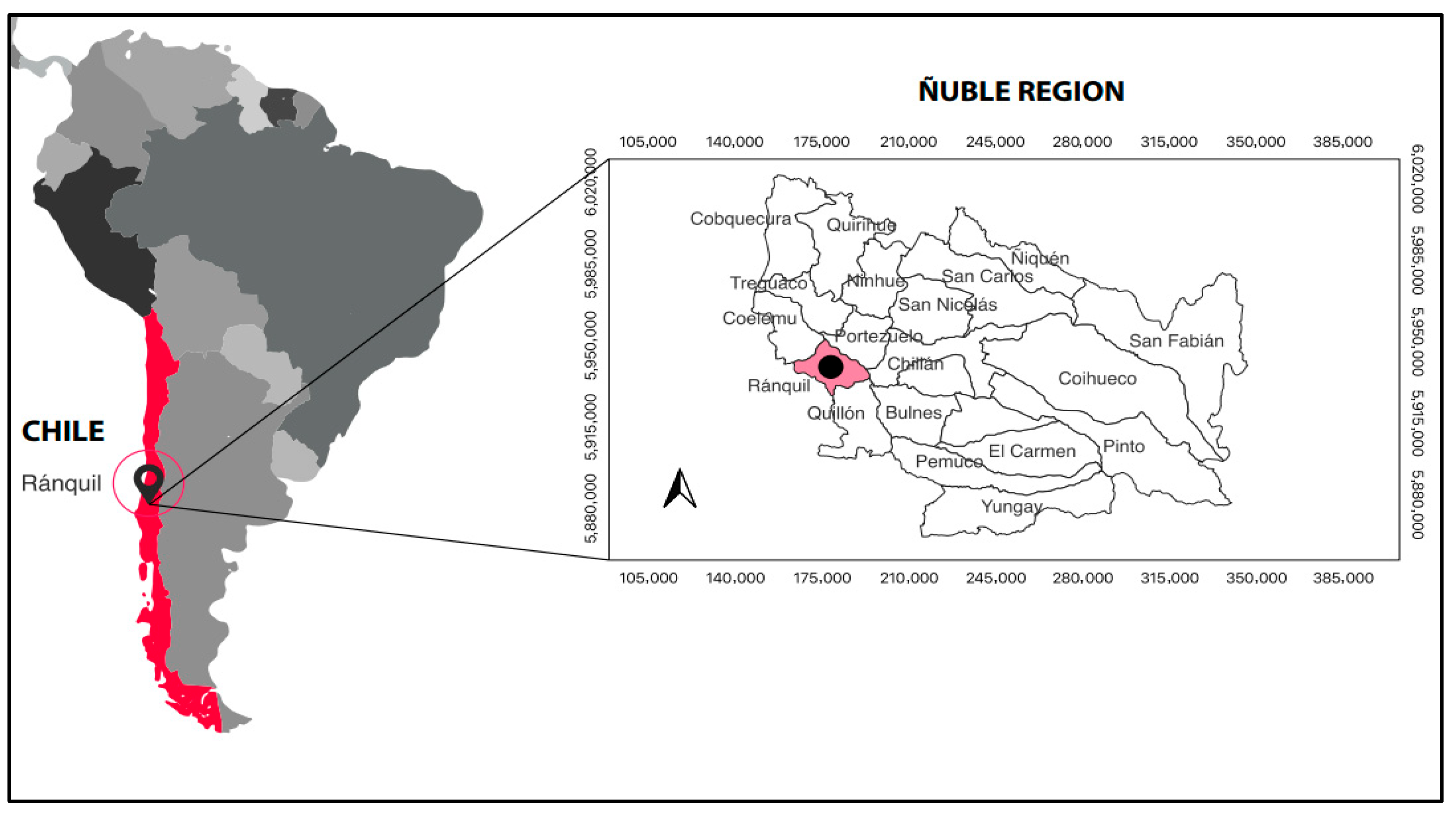
2.1. Soil Sampling and Study Area
2.2. Soil Biological Activity Analysis
2.3. Chemical Analysis of the Soil
2.4. Fruit Rheometry Analysis
2.5. Statistical Analysis
3. Results
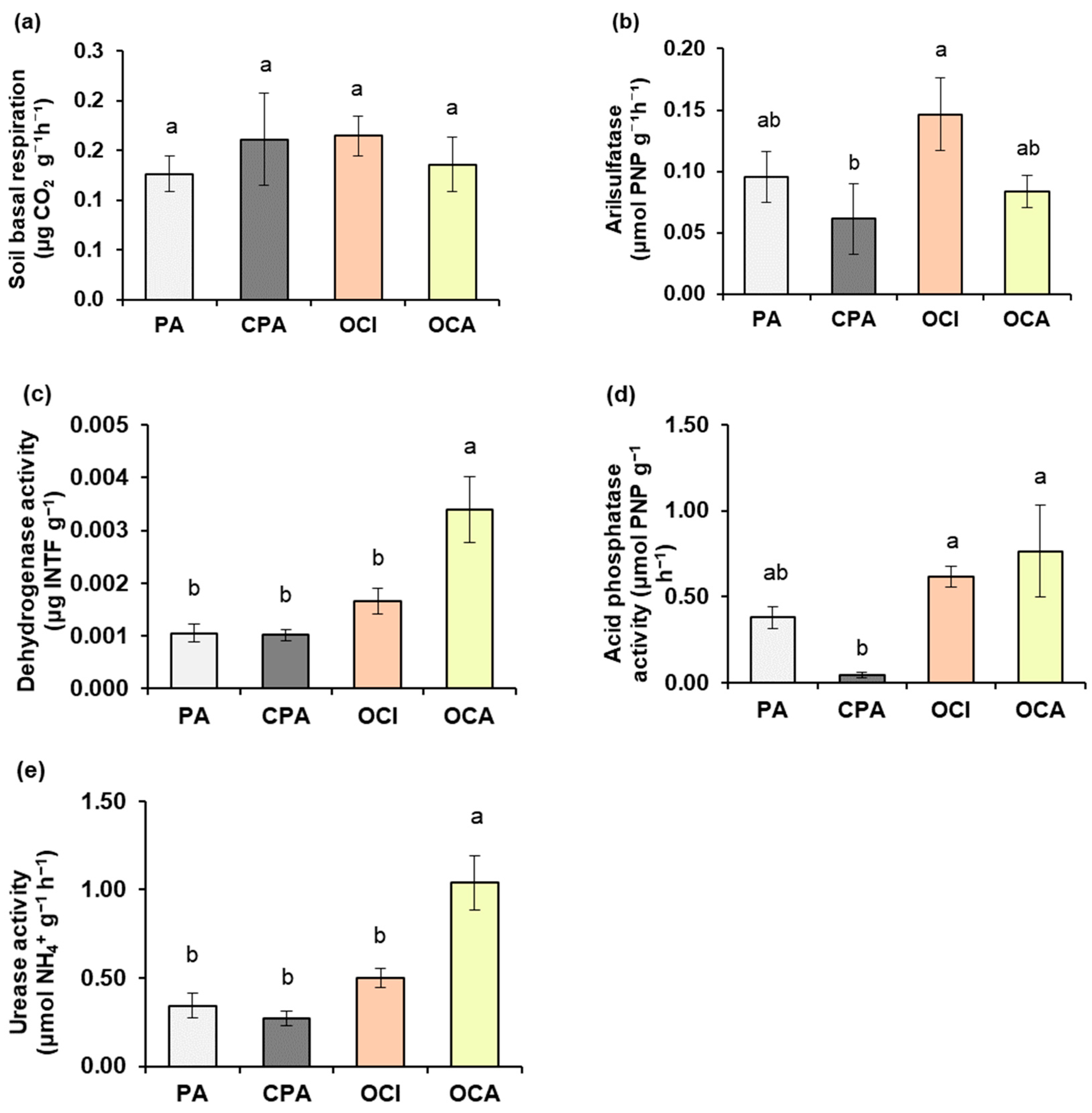
3.1. Biological Activity of the Soil
3.2. Chemical Properties of Soil
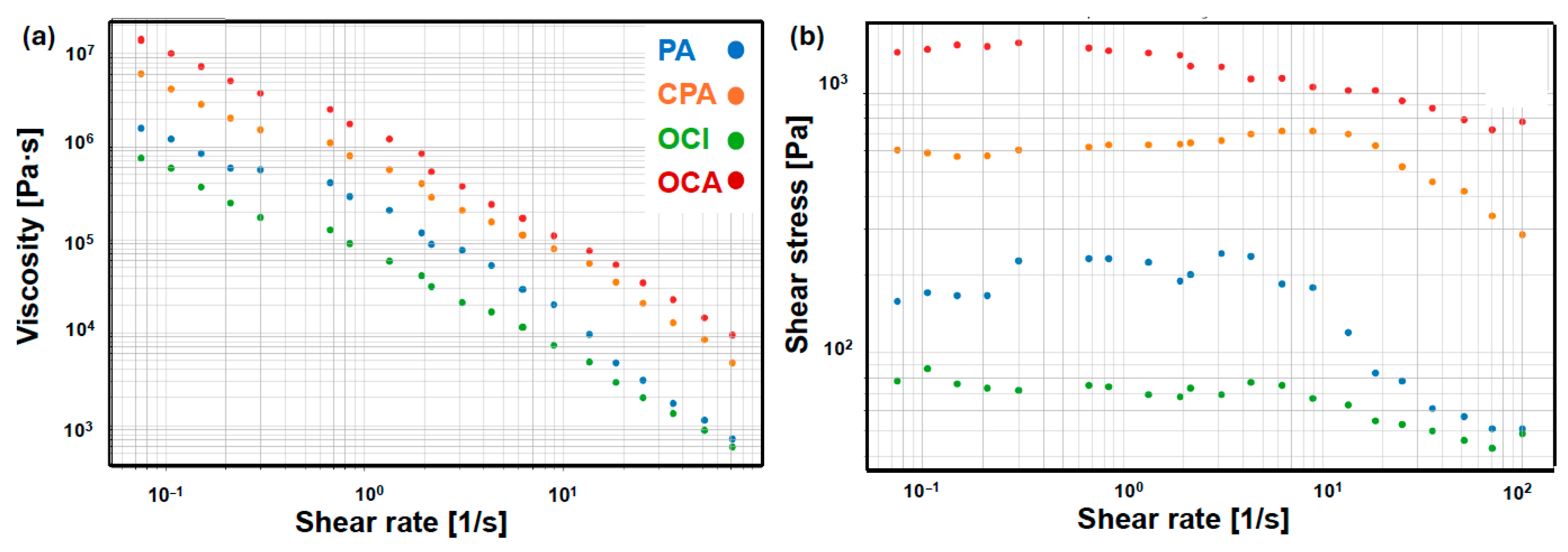
3.3. Rheometry of Fruits
3.4. Fruit Viscosity
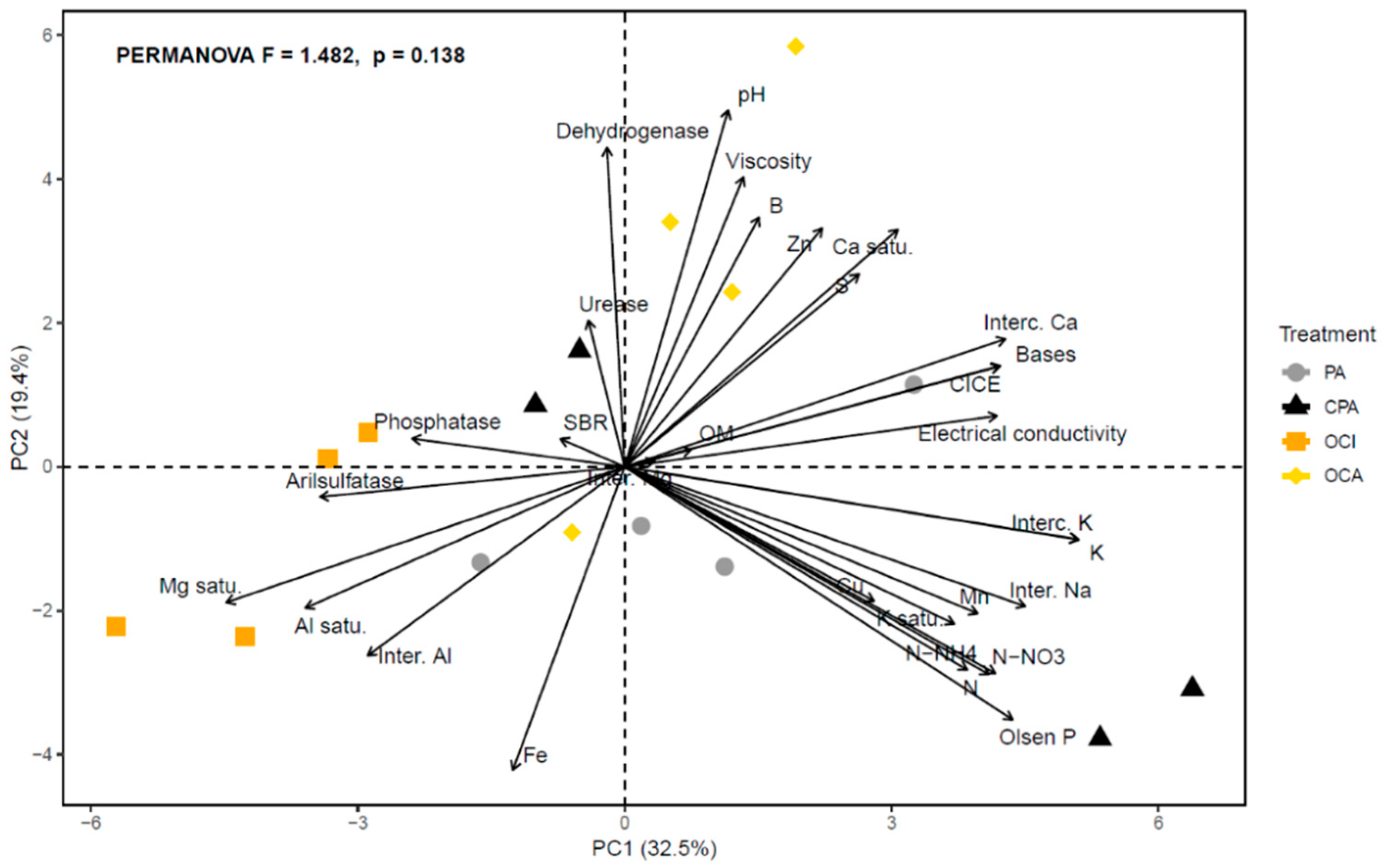
3.5. Analysis of Principal Components of Soil Variables and Fruit Viscosity
4. Discussion
5. Conclusions
Supplementary Materials
Author Contributions
Funding
Data Availability Statement
Acknowledgments
Conflicts of Interest
References
- International Organisation of Vine and Wine (OIV). State of the World Vine and Wine Sector in 2024; OIV: Paris, France, 2025; Available online: https://www.oiv.int/sites/default/files/2025-04/OIV-State_of_the_World_Vine-and-Wine-Sector-in-2024.pdf (accessed on 1 January 2025).
- Lacoste, P.; Aranda, M.; Matamala, J.; Premat, E.; Quinteros, K.; Soto, N.; Gaete, J.; Rivas, J.; Solar, M. Pisada de la uva y lagar tradicional en Chile y Argentina (1550–1850). Atenea 2011, 503, 39–81. [Google Scholar] [CrossRef]
- Sarricolea, P.; Herrera-Ossandon, M.; Meseguer-Ruiz, Ó. Climatic regionalisation of continental Chile. J. Maps 2017, 13, 66–73. [Google Scholar] [CrossRef]
- Casanova, M.; Salazar, O.; Seguel, O.; Luzio, W. Main Features of Chilean Soils. In The Soils of Chile; Springer: Dordrecht, The Netherlands, 2013; pp. 25–97. [Google Scholar] [CrossRef]
- Van Leeuwen, C.; Roby, J.-P.; De Rességuier, L. Soil-related terroir factors: A review. OENO One 2018, 52, 173–188. [Google Scholar] [CrossRef]
- Jerez Henríquez, B.; Eugenia Cid-Aguayo, B.; Oliveros, V.; Henríquez Ramírez, A.A.; Letelier, E.; Bastías-Mercado, F.; Vanhulst, J. Wineries in the Itata and Cauquenes Valleys: Local flavors, multiple dispossessions and care for the commons as pluriverses for (Neo)peasant climate resilience. Environ. Plan. E Nat. Space 2024, 7, 862–881. [Google Scholar] [CrossRef]
- Unc, A.; Eshel, G.; Unc, G.A.; Doniger, T.; Sherman, C.; Leikin, M.; Steinberger, Y. Vineyard soil microbial community under conventional, sustainable and organic management practices in a Mediterranean climate. Soil Res. 2021, 59, 253–265. [Google Scholar] [CrossRef]
- Cataldo, E.; Salvi, L.; Sbraci, S.; Storchi, P.; Mattii, G.B. Sustainable viticulture: Effects of soil management in Vitis vinifera. Agronomy 2020, 10, 1949. [Google Scholar] [CrossRef]
- Cederberg, P.; Gustafsson, J.-G.; Mårtensson, A. Potential for organic Chilean wine. Acta Agric. Scand. Sect. B-Soil Plant Sci. 2009, 59, 19–32. [Google Scholar] [CrossRef]
- Chausali, N.; Saxena, J. Conventional Versus Organic Farming: Nutrient Status. In Advances in Organic Farming; Elsevier: Amsterdam, The Netherlands, 2021; pp. 241–254. [Google Scholar] [CrossRef]
- Zaller, J.G.; Cantelmo, C.; Santos, G.D.; Muther, S.; Gruber, E.; Pallua, P.; Mandl, K.; Friedrich, B.; Hofstetter, I.; Schmuckenschlager, B.; et al. Herbicides in vineyards reduce grapevine root mycorrhization and alter soil microorganisms and the nutrient composition in grapevine roots, leaves, xylem sap and grape juice. Environ. Sci. Pollut. Res. 2018, 25, 23215–23226. [Google Scholar] [CrossRef]
- Sivcev, B.; Sivcev, I.; Rankovic-Vasic, Z. Natural process and use of natural matters in organic viticulture. J. Agric. Sci. Belgrade 2010, 55, 195–215. [Google Scholar] [CrossRef][Green Version]
- Colautti, A.; Civilini, M.; Contin, M.; Celotti, E.; Iacumin, L. Organic vs. conventional: Impact of cultivation treatments on the soil microbiota in the vineyard. Front. Microbiol. 2023, 14, 1242267. [Google Scholar] [CrossRef] [PubMed]
- Evangelista, R.R.; Ribeiro Sanches, M.A.; Machado de Castilhos, M.B.; Cantú-Lozano, D.; Telis-Romero, J. Determination of the rheological behavior and thermophysical properties of malbec grape juice concentrates (Vitis vinifera). Food Res. Int. 2020, 137, 109431. [Google Scholar] [CrossRef]
- Abbott, L. Soil health characteristics. Open Access Gov. 2023, 41, 398–399. [Google Scholar] [CrossRef]
- Laudicina, V.A.; Dennis, P.G.; Palazzolo, E.; Badalucco, L. Key biochemical attributes to assess soil ecosystem sustainability. In Environmental Protection Strategies for Sustainable Development; Malik, A., Grohmann, E., Eds.; Springer: Dordrecht, The Netherlands, 2012; pp. 193–227. [Google Scholar] [CrossRef]
- Handayani, I.P.; Hale, C. Healthy soils for productivity and sustainable development in agriculture. IOP Conf. Ser. Earth Environ. Sci. 2022, 1018, 012038. [Google Scholar] [CrossRef]
- Silva, J.M.D.; Toujaguez, R.; Alves, E.S.D.A.; Silva, P.C.V.D.; Montaldo, Y.C.; Santos, T.M.C.D.; Balbino, R.D.S.; Ramalho, V.R.R.D.A.R. Enzymatic activity of soil microbiota in agroecological systems: A review of its relevance for nutrient cycling. Adv. Res. 2025, 26, 74–88. [Google Scholar] [CrossRef]
- Macías-Gallardo, F.; Quiñones-Muñoz, T.A.; Miranda-Avilés, R.; Ramírez-Santoyo, L.F.; Zanor, G.A.; Ozuna, C. Impact of organic agriculture on the quality of grapes (Syrah and tempranillo) harvested in Guanajuato, Mexico: Relationship between soil elemental profile and grape bioactive properties. Agriculture 2025, 15, 169. [Google Scholar] [CrossRef]
- Maioli, F.; Picchi, M.; Millarini, V.; Domizio, P.; Scozzafava, G.; Zanoni, B.; Canuti, V. A methodological approach to assess the effect of organic, biodynamic, and conventional production processes on the intrinsic and perceived quality of a typical wine: The case study of chianti docg. Foods 2021, 10, 1894. [Google Scholar] [CrossRef] [PubMed]
- Laguna, L.; Bartolomé, B.; Moreno-Arribas, M.V. Mouthfeel perception of wine: Oral physiology, components and instrumental characterization. Trends Food Sci. Technol. 2017, 59, 49–59. [Google Scholar] [CrossRef]
- Ghimire, O.P.; Lazo, A.; Parajuli, B.; Nepal, J. Fostering microbial activity and diversity in agricultural systems: Adopting better management practices and strategies: Part 1. CSA News 2024, 69, 43–47. [Google Scholar] [CrossRef]
- Comisión Nacional de Riego; Centro de Información de Recursos Naturales (CIREN). Estudios de Suelos: Proyecto Itata, Etapa 1 (Informe); Biblioteca Digital CIREN: Santiago, Chile, 1987. [Google Scholar]
- Instituto de Investigaciones Agropecuarias (INIA). Red Agrometeorológica INIA; INIA: Santiago, Chile, 2025. [Google Scholar]
- Teixeira, A.; Martins, V.; Gerós, H. From the vineyard soil to the grape berry surface: Unravelling the dynamics of the microbial terroir. Agric. Ecosyst. Environ. 2024, 374, 109145. [Google Scholar] [CrossRef]
- Alef, K. Dehydrogenase Activity. In Methods in Applied Soil Microbiology and Biochemistry; Alef, K., Nannipieri, P., Eds.; Academic Press: London, UK, 1995; pp. 228–231. [Google Scholar]
- Nannipieri, P.; Ceccanti, B.; Cervelli, S.; Matarese, E. Extraction of phosphatase, urease, proteases, organic carbon, and nitrogen from soil. Soil Sci. Soc. Am. J. 1980, 44, 1011–1016. [Google Scholar] [CrossRef]
- Naseby, D.C.; Lynch, J.M. Rhizosphere soil enzymes as indicators of perturbations caused by enzyme substrate addition and inoculation of a genetically modified strain of Pseudomonas fluorescens on wheat seed. Soil Biol. Biochem. 1997, 29, 1353–1362. [Google Scholar] [CrossRef]
- Garcia, C.; Hernandez, T.; Costa, F. Potential use of dehydrogenase activity as an index of microbial activity in degraded soils. Commun. Soil Sci. Plant Anal. 1997, 28, 123–134. [Google Scholar] [CrossRef]
- Tabatabai, M.A.; Bremner, J.M. Arylsulfatase activity of soils. Soil Sci. Soc. Am. J. 1970, 34, 225–229. [Google Scholar] [CrossRef]
- Sadzawka, A.; Carrasco, M.; Grez, R.; Mora, G.; de la Luz, M.; Flores, H.; Neaman, A. Métodos de Análisis Recomendados Para los Suelos de Chile; Revisión 2006. Serie Actas (Spanish); Instituto de Investigaciones Agropecuarias: Santiago, Chile, 2006. [Google Scholar]
- ISO/IEC 17025:2017; General Requirements for the Competence of Testing and Calibration Laboratories. ISO: Geneva, Switzerland, 2017.
- Trávnícek, P.; Burg, P.; Krakowiak-Bal, A.; Junga, P.; Vitez, T.; Ziemianczyk, U. Study of rheological behaviour of wines. Int. Agrophysics 2016, 30, 509–518. [Google Scholar] [CrossRef][Green Version]
- Ah-Hen, K.; Fuenzalida, C.; Hess, S.; Contreras, A.; Vega-Gálvez, A.; Lemus-Mondaca, R. Antioxidant capacity and total phenolic compounds of twelve selected potato landrace clones grown in southern Chile. Chil. J. Agric. Res. 2012, 72, 3–9. [Google Scholar] [CrossRef]
- MathWorks. MATLAB (Version R2024a) [Computer Software]. The MathWorks, Inc. 2024. Available online: https://www.mathworks.com (accessed on 1 January 2025).
- Balzarini, M.G.; González, L.; Tablada, M.; Casanoves, F.; Di Rienzo, J.A.; Robledo, C.W. InfoStat: Manual del Usuario (Versión 2008); Editorial Brujas: Córdoba, Argentina, 2008. [Google Scholar]
- R Core Team. R: A Language and Environment for Statistical Computing (Versión 4.X). R Foundation for Statistical Computing. 2024. Available online: https://www.R-project.org/ (accessed on 1 January 2025).
- Amaral, H.F.; Schwan-Estrada, K.R.F.; Sena, J.O.A.D.; Colozzi-Filho, A.; Andrade, D.S. Seasonal variations in soil chemical and microbial indicators under conventional and organic vineyards. Acta Sci. Agron. 2022, 45, e56158. [Google Scholar] [CrossRef]
- Van Leeuwen, C.; Seguin, G. The concept of terroir in viticulture. J. Wine Res. 2006, 17, 1–10. [Google Scholar] [CrossRef]
- Clingeleffer, P. Terroir: The application of an old concept in modern viticulture. In Encyclopedia of Agriculture and Food Systems; Elsevier: Amsterdam, The Netherlands, 2014; pp. 277–288. [Google Scholar] [CrossRef]
- Kaya, O.; Karakus, S.; Ates, F.; Daler, S.; Hatterman-Valenti, H. Enhancing Royal grape quality through a three-year investigation of soil management practices and organic amendments on berry biochemistry. Chem. Biol. Technol. Agric. 2025, 12, 17. [Google Scholar] [CrossRef]
- Neina, D. The Role of Soil pH in Plant Nutrition and Soil Remediation. Appl. Environ. Soil Sci. 2019, 2019, 5794869. [Google Scholar] [CrossRef]
- Rusmayadi, G.; Safruddin, S. Effect of Soil pH Variation on Peanut Plant Growth. West Sci. Agro 2024, 2, 63–69. [Google Scholar] [CrossRef]
- Zarraonaindia, I.; Owens, S.M.; Weisenhorn, P.; West, K.; Hampton-Marcell, J.; Lax, S.; Bokulich, N.A.; Mills, D.A.; Martin, G.; Taghavi, S.; et al. The Soil Microbiome Influences Grapevine-Associated Microbiota. mBio 2015, 6, e02527-14. [Google Scholar] [CrossRef]
- Belda, I.; Zarraonaindia, I.; Perisin, M.; Palacios, A.; Acedo, A. From Vineyard Soil to Wine Fermentation: Microbiome Approximations to Explain the “terroir” Concept. Front. Microbiol. 2017, 8, 821. [Google Scholar] [CrossRef]
- Jamir, E.; Kangabam, R.D.; Borah, K.; Tamuly, A.; Deka Boruah, H.P.; Silla, Y. Role of Soil Microbiome and Enzyme Activities in Plant Growth Nutrition and Ecological Restoration of Soil Health. In Microbes and Enzymes in Soil Health and Bioremediation; Kumar, A., Sharma, S., Eds.; Springer: Singapore, 2019; pp. 99–132. [Google Scholar] [CrossRef]
- Jokinen, R. Effects of different ammonium nitrate levels on the amounts of exchangeable soil magnesium and applied magnesium in eight mineral soils. Agric. Food Sci. 1984, 56, 97–100. [Google Scholar] [CrossRef]
- Mitchell, A.D.; Smethurst, P.J. Base cation availability and leaching after nitrogen fertilisation of a eucalypt plantation. Soil Res. 2008, 46, 445. [Google Scholar] [CrossRef]
- Saha, B.; Saha, S.; Roy, P.D.; Padhan, D.; Pati, S.; Hazra, G.C. Microbial Transformation of Sulphur: An Approach to Combat the Sulphur Deficiencies in Agricultural Soils. In Role of Rhizospheric Microbes in Soil; Meena, V.S., Ed.; Springer: Singapore, 2018; pp. 77–97. [Google Scholar] [CrossRef]
- Kaur, H.; Srivastava, S.; Goyal, N.; Walia, S. Behavior of zinc in soils and recent advances on strategies for ameliorating zinc phyto-toxicity. Environ. Exp. Bot. 2024, 220, 105676. [Google Scholar] [CrossRef]
- Bao, L.; Sun, B.; Wei, Y.; Xu, N.; Zhang, S.; Gu, L.; Bai, Z. Grape Cultivar Features Differentiate the Grape Rhizosphere Microbiota. Plants 2022, 11, 1111. [Google Scholar] [CrossRef]
- Datt, N.; Singh, D. Enzymes in Relation to Soil Biological Properties and Sustainability. In Sustainable Management of Soil and Environment; Meena, R.S., Kumar, S., Bohra, J.S., Jat, M.L., Eds.; Springer: Singapore, 2019; pp. 383–406. [Google Scholar] [CrossRef]
- Mohammed Nisab, C.P.; Ghosh, G.K.; Sahu, M. Available zinc status in relation to soil properties in some red and lateritic soils of Birbhum district, west Bengal, India. Int. J. Curr. Microbiol. Appl. Sci. 2019, 8, 1764–1770. [Google Scholar] [CrossRef]
- Krishnasamy, R.; Krishnamoorthy, K. Cationic interferences on zinc adsorption. Soil Res. 1991, 29, 527–531. [Google Scholar] [CrossRef]
- Dhaliwal, S.S.; Naresh, R.K.; Mandal, A.; Singh, R.; Dhaliwal, M.K. Dynamics and transformations of micronutrients in agricultural soils as influenced by organic matter build-up: A review. Environ. Sustain. Indic. 2019, 1–2, 100007. [Google Scholar] [CrossRef]
- Kılıç, F.N.; Sönmez, O. The effect of different sulphur sources applied at various rates on soil ph. Turk. J. Agric.-Food Sci. Technol. 2025, 13, 59–64. [Google Scholar] [CrossRef]
- Khampuang, K.; Chaiwong, N.; Yazici, A.; Demirer, B.; Cakmak, I.; Prom-U-Thai, C. Effect of sulfur fertilization on productivity and grain zinc yield of rice grown under low and adequate soil zinc applications. Rice Sci. 2023, 30, 632–640. [Google Scholar] [CrossRef]
- Singh, M. Fungi and nitrogen cycle: Symbiotic relationship, mechanism and significance. In Soil Nitrogen Ecology; Cruz, C., Vishwakarma, K., Choudhary, D.K., Varma, A., Eds.; Springer International Publishing: Cham, Switzerland, 2021; Volume 62, pp. 391–406. [Google Scholar] [CrossRef]
- Dincă, L.C.; Grenni, P.; Onet, C.; Onet, A. Fertilization and soil microbial community: A review. Appl. Sci. 2022, 12, 1198. [Google Scholar] [CrossRef]
- Bhadouria, J.; Giri, J. Purple acid phosphatases: Roles in phosphate utilization and new emerging functions. Plant Cell Rep. 2022, 41, 33–51. [Google Scholar] [CrossRef]
- Nannipieri, P.; Giagnoni, L.; Landi, L.; Renella, G. Role of phosphatase enzymes in soil. In Phosphorus in Action; Bünemann, E., Oberson, A., Frossard, E., Eds.; Springer: Berlin/Heidelberg, Germany, 2011; Volume 26, pp. 215–243. [Google Scholar] [CrossRef]
- Giffard, B.; Winter, S.; Guidoni, S.; Nicolai, A.; Castaldini, M.; Cluzeau, D.; Coll, P.; Cortet, J.; Le Cadre, E.; d’Errico, G.; et al. Vineyard Management and Its Impacts on Soil Biodiversity, Functions, and Ecosystem Services. Front. Ecol. Evol. 2022, 10, 850272. [Google Scholar] [CrossRef]
- Nascimbene, J.; Marini, L.; Paoletti, M.G. Organic farming benefits local plant diversity in vineyard farms located in intensive agricultural landscapes. Environ. Manag. 2012, 49, 1054–1060. [Google Scholar] [CrossRef]
- Sanguankeo, P.P.; León, R.G. Weed management practices determine plant and arthropod diversity and seed predation in vineyards. Weed Res. 2011, 51, 404–412. [Google Scholar] [CrossRef]
- Fourie, J.C.; Louw, P.J.E.; Agenbag, G.A. Cover crop management in a sauvignon blanc/ramsey vineyard in the semi-arid olifants river valley, South Africa. 2. Effect of different cover crops and cover crop management practices on grapevine performance. S. Afr. J. Enol. Vitic. 2016, 28, 81–91. [Google Scholar] [CrossRef][Green Version]
- Fourie, J.C.; Louw, P.J.E.; Agenbag, G.A. Cover crop management in a chardonnay/99 richter vineyard in the coastal region, South Africa. 2. Effect of different cover crops and cover crop management practices on grapevine performance. S. Afr. J. Enol. Vitic. 2017, 27, 178–186. [Google Scholar] [CrossRef][Green Version]
- Nicolle, P.; Williams, K.A.; Angers, P.; Pedneault, K. Changes in the flavan-3-ol and polysaccharide content during the fermentation of Vitis vinifera Cabernet-Sauvignon and cold-hardy Vitis varieties Frontenac and Frontenac blanc. OENO One 2021, 55, 337–347. [Google Scholar] [CrossRef]
- Marangon, M.; Marassi, V.; Mattivi, F.; Marangon, C.M.; Moio, L.; Roda, B.; Rolle, L.; Ugliano, M.; Versari, A.; Zanella, S.; et al. The role of protein-phenolic interactions in the formation of red wine colloidal particles: This is an original research article submitted in cooperation with Macrowine 2025. OENO One 2025, 59, 1–9. [Google Scholar] [CrossRef]
- Ilyin, S.O. Structural Rheology in the Development and Study of Complex Polymer Materials. Polymers 2024, 16, 2458. [Google Scholar] [CrossRef]
- Çevik, M.; Tezcan, D.; Sabancı, S.; İçier, F. Changes in rheological properties of Koruk (unripe grape) juice concentrates during vacuum evaporation. Akad. Gıda 2016, 14, 322–332. [Google Scholar]
- Martínez-Lapuente, L.; Guadalupe, Z.; Ayestarán, B. Properties of Wine Polysaccharides; IntechOpen: Houston, TX, USA, 2020. [Google Scholar] [CrossRef]
- de Castilhos, M.B.M.; Betiol, L.F.L.; Carvalho, G.R.; Telis-Romero, J. Experimental study of physical and rheological properties of grape juice using different temperatures and concentrations. Part I: Cabernet Sauvignon. Food Res. Int. 2017, 100, 724–730. [Google Scholar] [CrossRef]
- Jančářová, I.; Jančář, L.; Náplavová, A.; Kubáň, V. Changes of organic acids and phenolic compounds contents in grapevine berries during their ripening. Open Chem. 2013, 11, 1575–1582. [Google Scholar] [CrossRef]
- Gao, Q.; Wu, C.; Yu, J.; Wang, M.; Ma, Y.; Li, C. Textural characteristic, antioxidant activity, sugar, organic acid, and phenolic profiles of 10 promising jujube (Ziziphus jujuba Mill.) selections. J. Food Sci. 2012, 77, C1218–C1225. [Google Scholar] [CrossRef] [PubMed]
- Kim, H.L.; Lee, M.; Chung, K.-H. Soil and leaf chemical properties and fruit quality in kiwifruit orchard. Korean J. Environ. Agric. 2022, 41, 158–166. [Google Scholar] [CrossRef]
- Mrabet, O.; Asbai, Z.; Hadidi, M.; Bahlaouan, B.; Tesse, R.; ElAntri, S.; Boutaleb, N. Fruit quality of ‘Stanley’ plums based on soil composition across diverse agro-ecological zones of Morocco. Comun. Sci. 2024, 16, e4293. [Google Scholar] [CrossRef]



| Parameter | Variety | p-Value | |||
|---|---|---|---|---|---|
| PA | CPA | OCI | OCA | ||
| pH | 6.04 ± 0.22 a | 6.09 ± 0.19 a | 5.85 ± 0.16 a | 6.48 ± 0.37 a | 0.2223 |
| Organic Matter (%) | 3.41 ± 0.32 a | 3.16 ± 0.31 a | 3.65 ± 0.37 a | 3.98 ± 0.38 a | 0.5345 |
| Nitrate (N-NO3) (mg kg−1) | 14.02 ± 4.06 b | 41.75 ± 19.22 a | 5.07 ± 0.65 b | 10.15 ± 2.01 b | 0.0292 |
| Ammonium (N-NH4) (mg kg−1) | 6.1 ± 0.81 b | 24.9 ± 11.71 a | 5.9 ± 1.47 b | 9.6 ± 2.93 b | 0.0463 |
| Available Nitrogen (mg kg−1) | 20.12 ± 4.67 b | 66.67 ± 31.14 a | 10.95 ± 0.97 b | 19.82 ± 4.42 b | 0.0349 |
| Olsen Phosphorus (mg kg−1) | 127.02 ± 17.99 ab | 222.10 ± 76.39 a | 36.85 ± 7.95 b | 43.25 ± 5.91 b | 0.0302 |
| K Available (mg kg−1) | 278.07 ± 44.35 a | 296.81 ± 47.13 a | 104.57 ± 11.02 b | 251.35 ± 33.01 a | 0.0241 |
| Interchangeable K (cmol kg−1) | 0.71 ± 0.12 a | 0.76 ± 0.13 a | 0.27 ± 0.03 b | 0.64 ± 0.09 a | 0.0243 |
| Interchangeable Ca (cmol kg−1) | 8.39 ± 1.52 a | 7.34 ± 0.51 a | 4.24 ± 0.48 b | 7.07 ± 0.64 a | 0.0379 |
| Interchangeable Mg (cmol kg−1) | 1.62 ± 0.16 a | 0.88 ± 0.09 b | 1.06 ± 0.11 b | 1.15 ± 0.07 b | 0.0053 |
| Interchangeable Na (cmol kg−1) | 0.08 ± 0.004 a | 0.08 ± 0.011 a | 0.07 ± 0.004 a | 0.07 ± 0.003 a | 0.5447 |
| Sum of bases (cmol kg−1) | 10.79 ± 1.81 a | 9.02 ± 0.67 a | 5.64 ± 0.47 b | 8.94 ± 0.52 a | 0.0266 |
| Interchangeable Al (cmol kg−1) | 0.015 ± 0.003 a | 0.015 ± 0.003 a | 0.041 ± 0.018 a | 0.012 ± 0.003 a | 0.1706 |
| * CICE (cmol kg−1) | 10.81 ± 1.81 a | 9.04 ± 0.68 a | 5.68 ± 0.46 b | 8.95 ± 0.52 a | 0.0272 |
| Al saturation (%) | 0.15 ± 0.022 b | 0.17 ± 0.010 b | 0.75 ± 0.35 a | 0.17 ± 0.01 b | 0.0433 |
| K saturation (%) | 6.68 ± 0.56 ab | 8.32 ± 1.14 a | 4.76 ± 0.57 b | 7.42 ± 1.47 ab | 0.0138 |
| Ca saturation (%) | 77.13 ± 1.02 a | 80.84 ± 0.74 a | 74.05 ± 2.81 a | 78.46 ± 2.92 a | 0.2064 |
| S Available (mg/Kg) | 15.33 ± 1.06 ab | 9.77 ± 0.65 c | 19.19 ± 2.54 a | 13.16 ± 1.43 bc | 0.0087 |
| Fe (mg kg−1) | 34.4 ± 3.29 a | 23.9 ± 1.88 ab | 29.3 ± 4.34 a | 14.5 ± 3.01 b | 0.0090 |
| Mn (mg kg−1) | 27.3 ± 4.13 a | 49.2 ± 20.98 a | 18.3 ± 4.77 a | 43.9 ± 4.72 a | 0.2321 |
| Zn (mg kg−1) | 1.5 ± 0.33 a | 0.4 ± 0.21 b | 0.4 ± 0.13 b | 2.2 ± 0.56 a | 0.0041 |
| Cu (mg kg−1) | 1.3 ± 0.22 a | 0.9 ± 0.12 ab | 0.5 ± 0.11 b | 0.7 ± 0.05 b | 0.0179 |
| B (mg kg−1) | 2.1 ± 0.36 ab | 1.6 ± 0.41 b | 0.8 ± 0.08 b | 8.8 ± 4.77 a | 0.0104 |
| Electrical conductivity (dS/m) | 0.1 ± 0.03 a | 0.2 ± 0.05 a | 0.1 ± 0.03 a | 0.2 ± 0.02 a | 0.0951 |
| Sample | Applied Model | R2 |
|---|---|---|
| * PA | Carreau | 0.989 |
| CPA | Carreau | 0.994 |
| OCI | Power Law | 0.978 |
| OCA | Power Law | 0.966 |
Disclaimer/Publisher’s Note: The statements, opinions and data contained in all publications are solely those of the individual author(s) and contributor(s) and not of MDPI and/or the editor(s). MDPI and/or the editor(s) disclaim responsibility for any injury to people or property resulting from any ideas, methods, instructions or products referred to in the content. |
© 2025 by the authors. Licensee MDPI, Basel, Switzerland. This article is an open access article distributed under the terms and conditions of the Creative Commons Attribution (CC BY) license (https://creativecommons.org/licenses/by/4.0/).
Share and Cite
Pinto-Poblete, A.; Betancur, M.; Moraga-Bustos, S.; Jarpa-Parra, M.; Ulloa-Inostroza, E.M.; Schoebitz, M. Differential Agronomic Management Explains Soil and Berry Rheology in Traditional Vineyards of the Itata Valley, Chile. Horticulturae 2025, 11, 1518. https://doi.org/10.3390/horticulturae11121518
Pinto-Poblete A, Betancur M, Moraga-Bustos S, Jarpa-Parra M, Ulloa-Inostroza EM, Schoebitz M. Differential Agronomic Management Explains Soil and Berry Rheology in Traditional Vineyards of the Itata Valley, Chile. Horticulturae. 2025; 11(12):1518. https://doi.org/10.3390/horticulturae11121518
Chicago/Turabian StylePinto-Poblete, Andrés, Matías Betancur, Sergio Moraga-Bustos, Marcela Jarpa-Parra, Elizabeth Maria Ulloa-Inostroza, and Mauricio Schoebitz. 2025. "Differential Agronomic Management Explains Soil and Berry Rheology in Traditional Vineyards of the Itata Valley, Chile" Horticulturae 11, no. 12: 1518. https://doi.org/10.3390/horticulturae11121518
APA StylePinto-Poblete, A., Betancur, M., Moraga-Bustos, S., Jarpa-Parra, M., Ulloa-Inostroza, E. M., & Schoebitz, M. (2025). Differential Agronomic Management Explains Soil and Berry Rheology in Traditional Vineyards of the Itata Valley, Chile. Horticulturae, 11(12), 1518. https://doi.org/10.3390/horticulturae11121518