
Regulation of Microstructure and Properties of Konjac Glucomannan Gels via Ethanol Under Low-Alkali Conditions


Abstract
1. Introduction
2. Results and Discussion
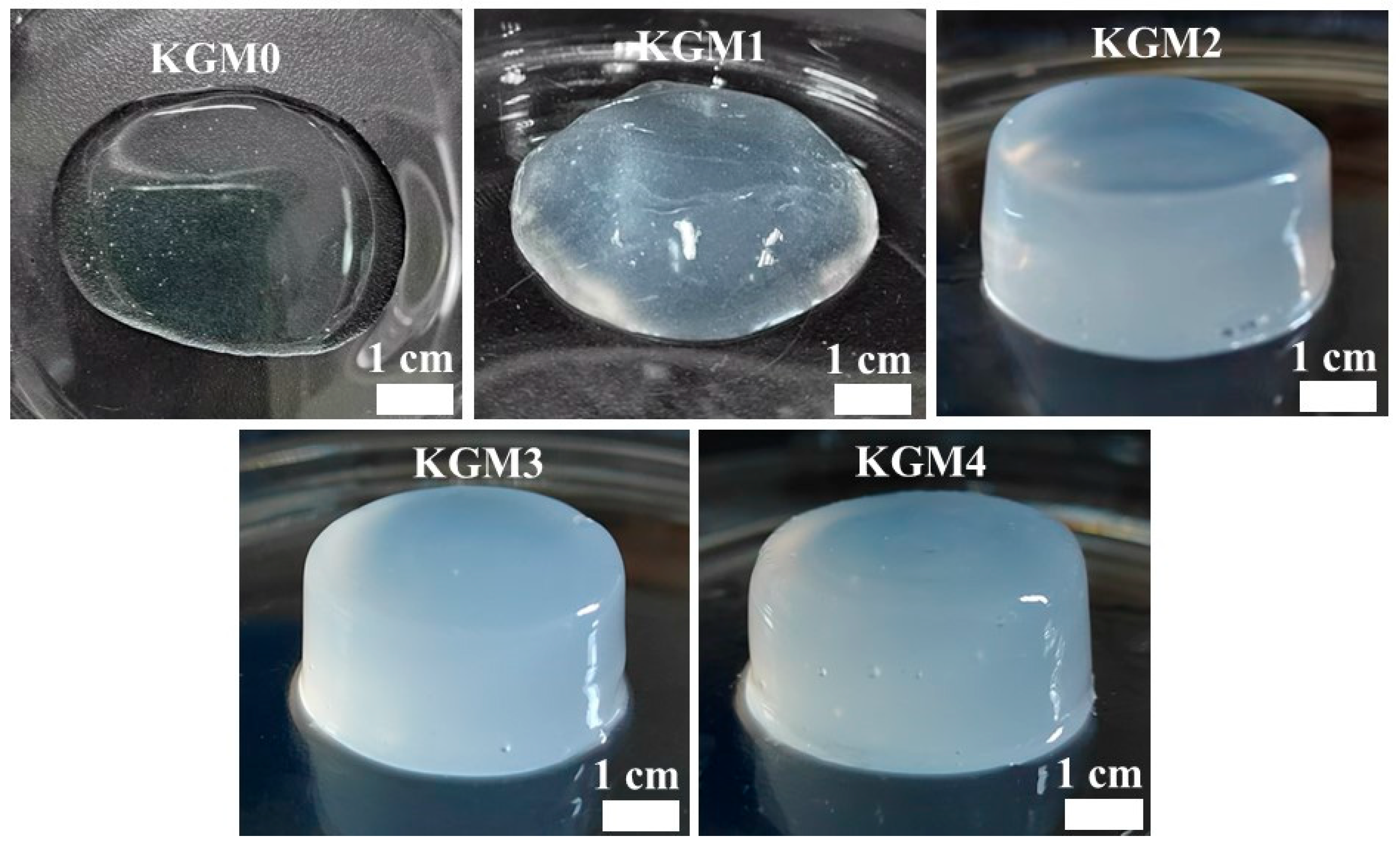
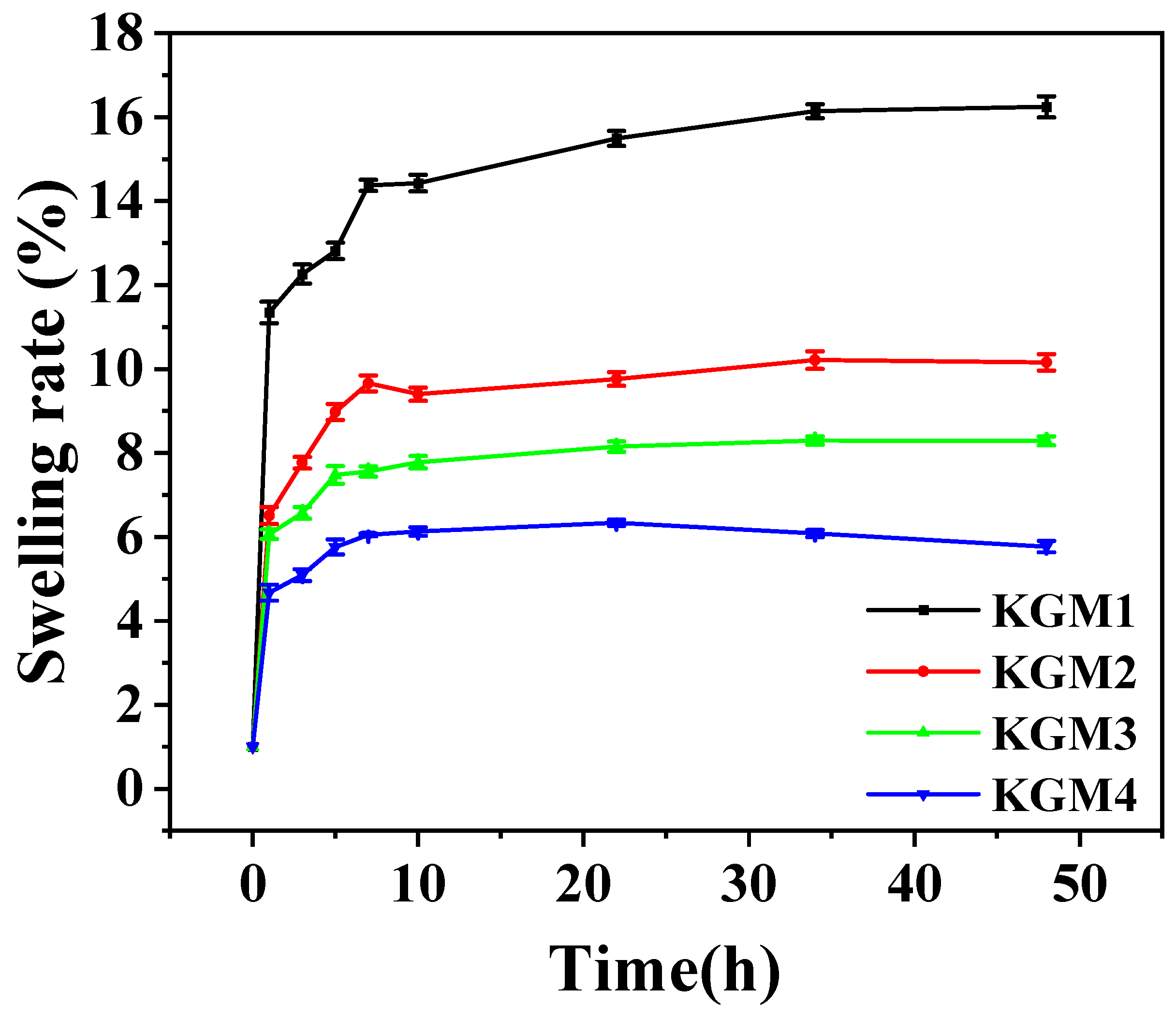
2.1. Visual Aspects and Swelling Ratio of KGM Gels
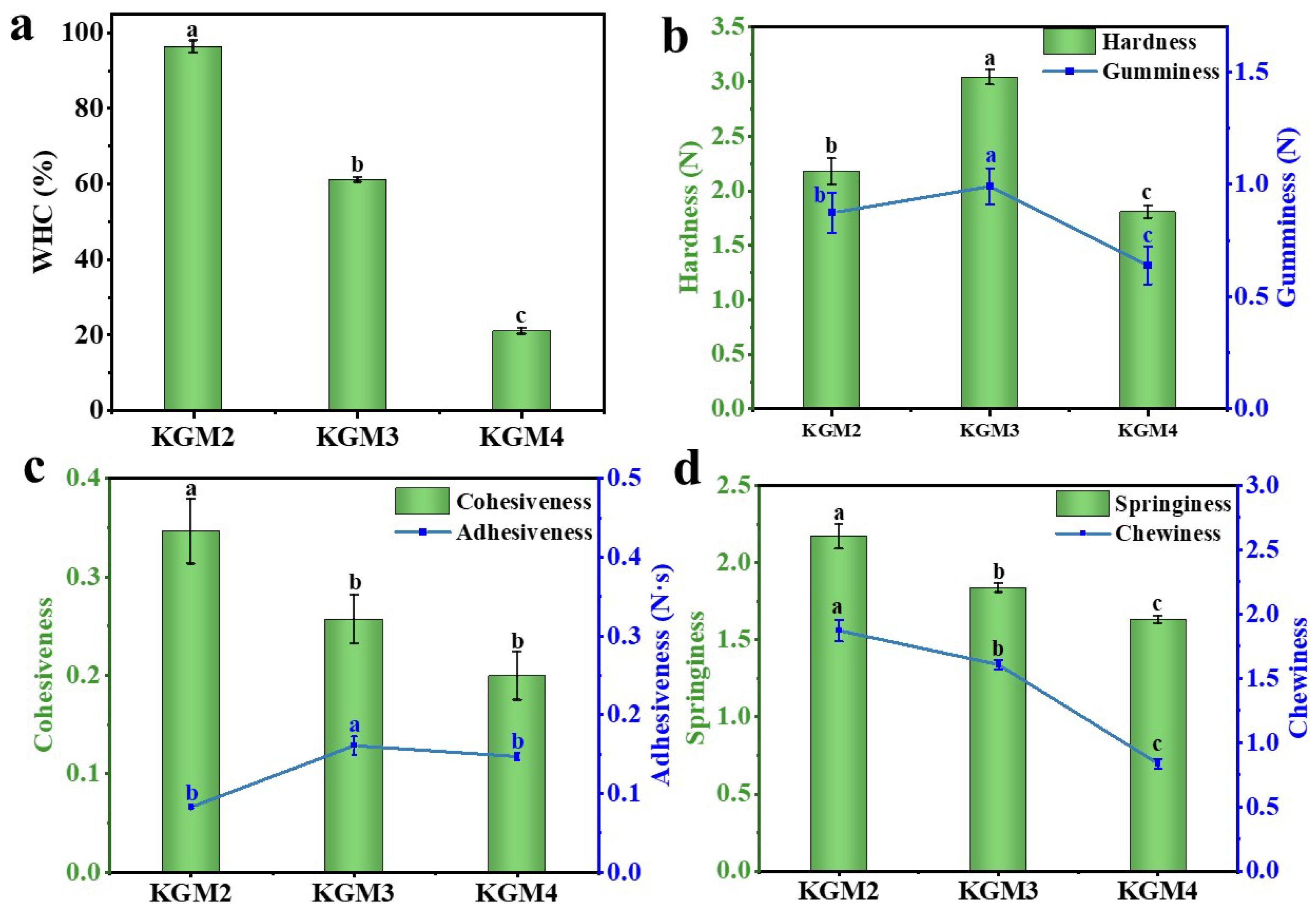
2.2. Water Holding Capacity (WHC) of KGM Gels
2.3. Texture of KGM Gels
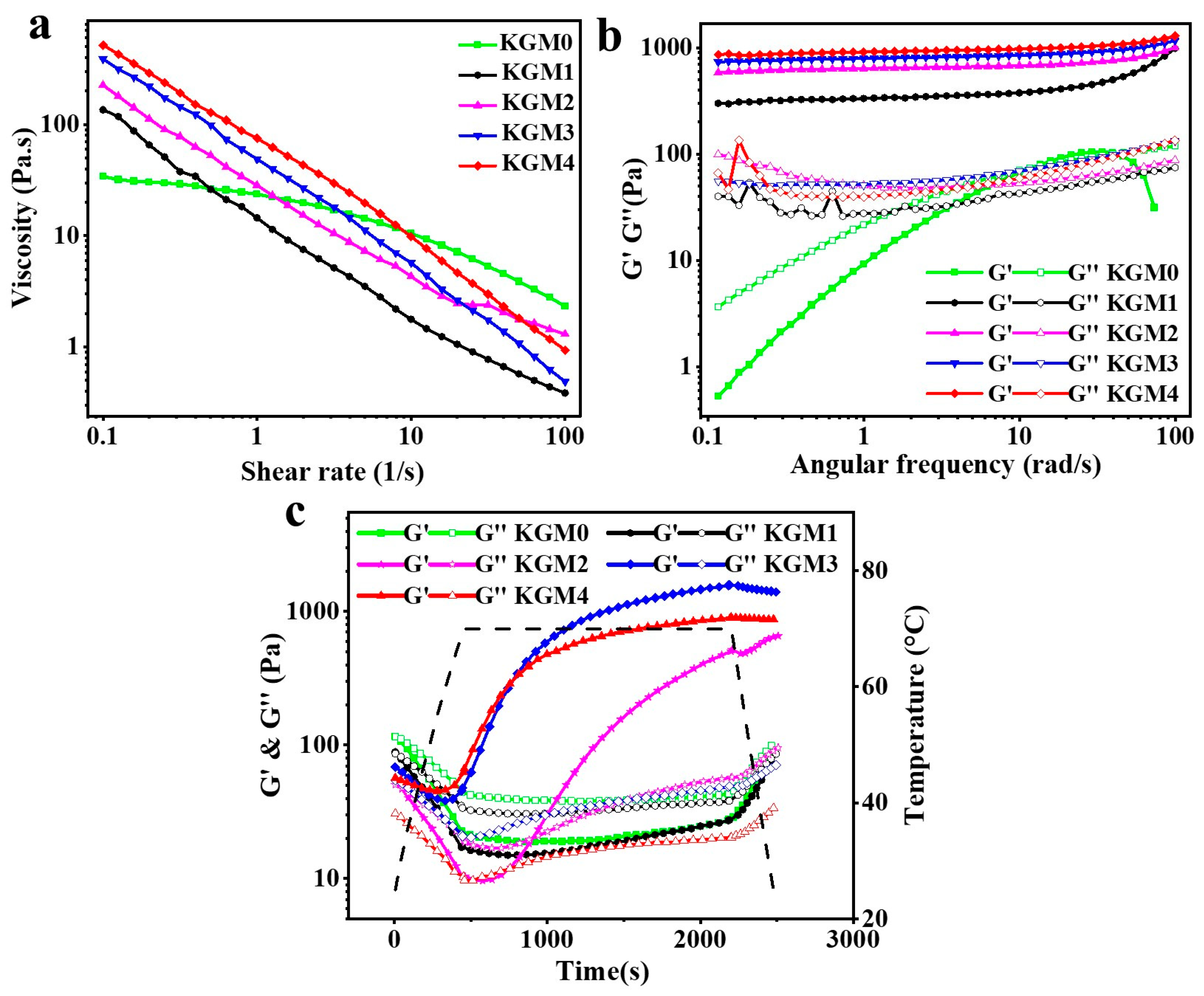
2.4. Rheological Properties
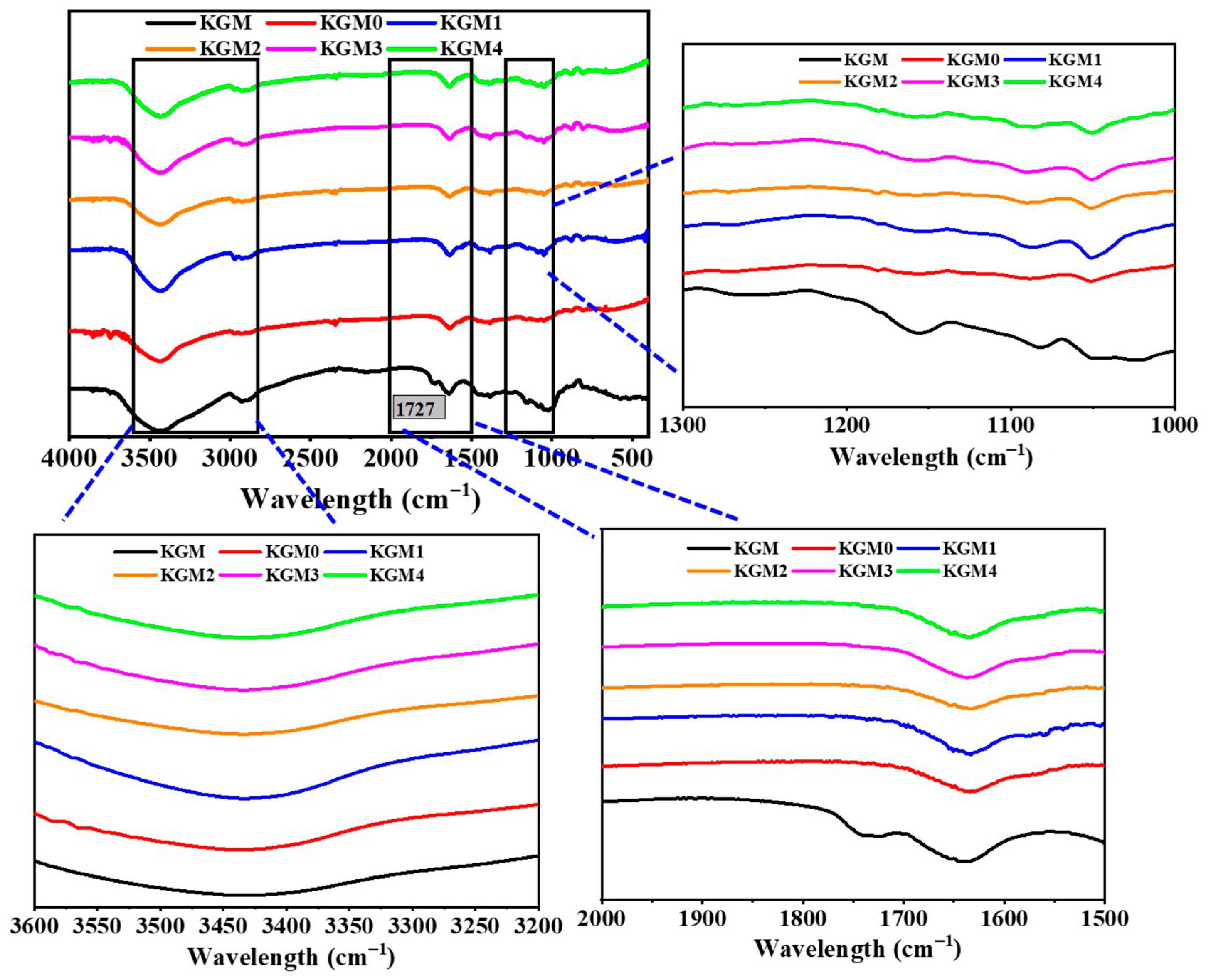
2.5. Fourier Transform Infrared Spectroscopy (FTIR) Analysis
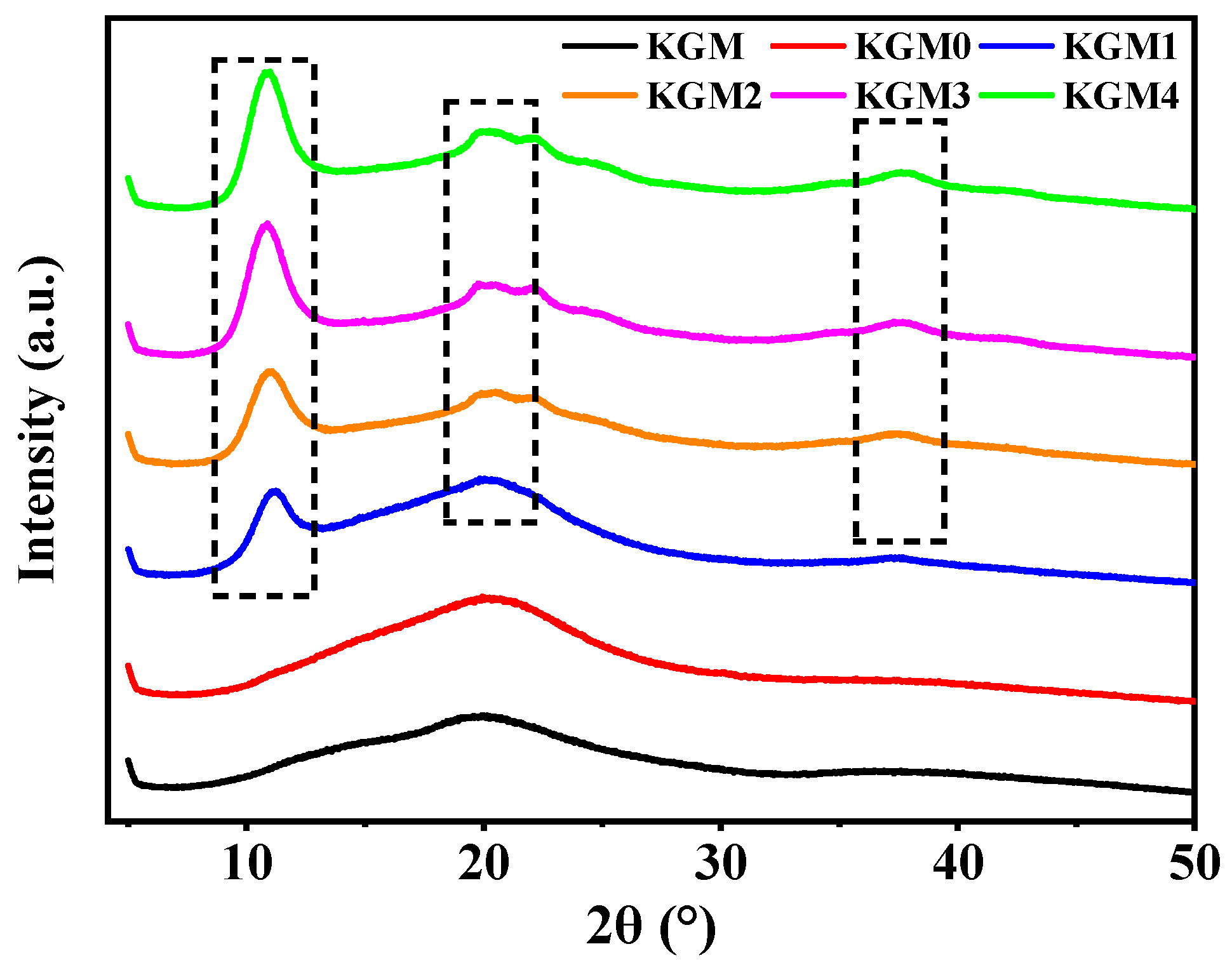
2.6. X-Ray Diffraction (XRD) Analysis
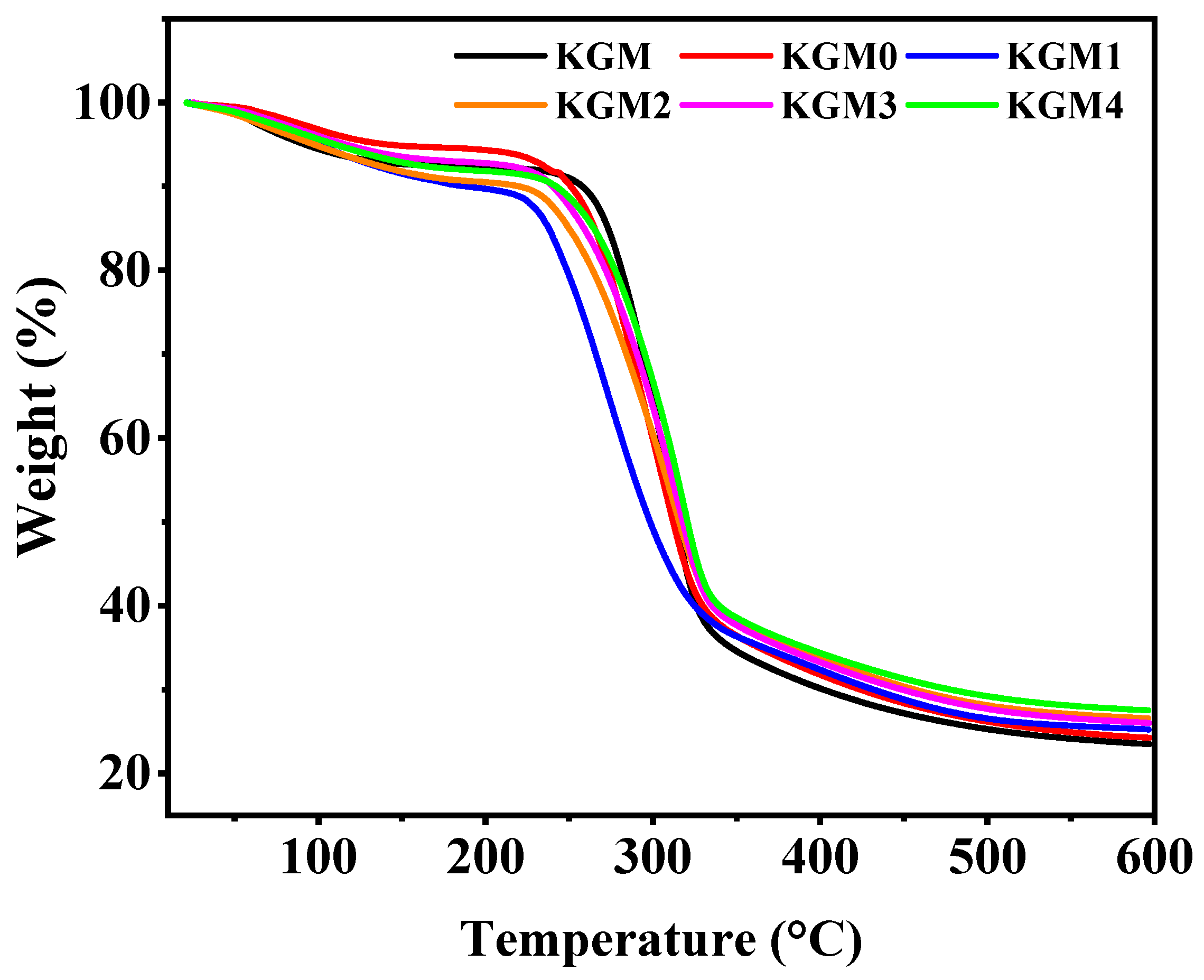
2.7. Thermal Gravimetric Analysis (TGA) Analysis
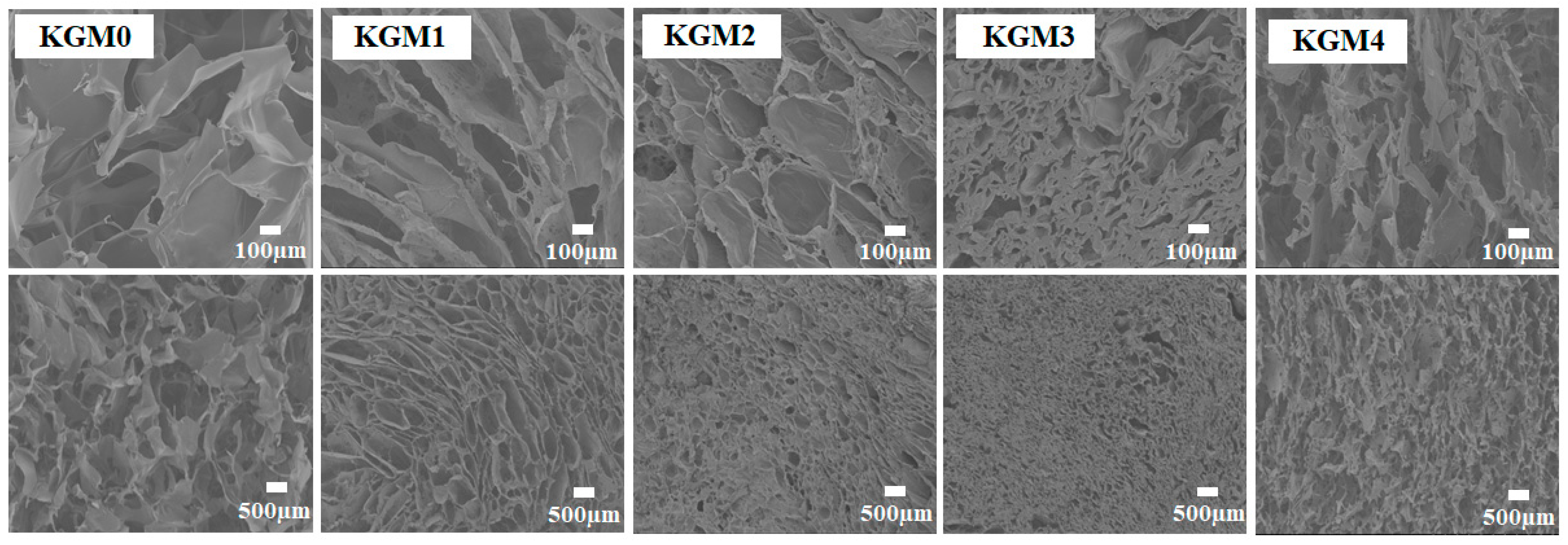
2.8. Scanning Electron Microscope (SEM) of a KGM Gels
3. Conclusions
4. Materials and Methods
4.1. Materials
4.2. Preparation of KGM Gels
4.3. Determination of Swelling Ratio
4.4. Measurement of WHC
4.5. Texture Profile Analysis (TPA)
4.6. Rheological Properties Measurements
4.7. Determination of FTIR
4.8. Measurement of XRD
4.9. Determination of TGA
4.10. Microstructural Observations
4.11. Statistical Analysis
Author Contributions
Funding
Institutional Review Board Statement
Informed Consent Statement
Data Availability Statement
Conflicts of Interest
References
- Zhou, L.; Zajac, M.; Tao, Y.; Lou, A.H.; Quan, W.; Fan, X.K.; Zhang, W.G.; Luo, J.; Shen, Q.W. Multiscale evaluation of protein-based emulsion gels: Impact of gel network structure. Compr. Rev. Food Sci. Food Saf. 2025, 24, e70342. [Google Scholar] [CrossRef] [PubMed]
- Regev-Yehishalom, O.; Peleg-Evron, O.; Zinger, A.; Bianco-Peled, H. Synergistic kappa-carrageenan/konjac-glucomannan hydrogels for the tunable and controlled release of biomimetic nanoparticles. Int. J. Biol. Macromol. 2025, 306, 141461. [Google Scholar] [CrossRef]
- Shi, S.; Huang, H.Y.; Duan, L.H.; Xie, X.Y.; Zhang, J.X.; Tang, J.J.; Liu, W.H.; Tong, C.L.; Pang, J.; Wu, C.H. Konjac glucomannan-based films and coatings for food packaging: Advances, applications, and future perspectives. Carbohydr. Polym. 2025, 357, 123474. [Google Scholar] [CrossRef]
- Chandarana, C.; Bonde, S.; Vashi, V.; Akhter, M.S.; Prajapati, B. Konjac glucomannan-based edible films: Method, properties, and applications. J. Food Process Eng. 2024, 47, e70009. [Google Scholar] [CrossRef]
- Lv, Y.Q.; Zhang, M.Z.; He, X.Y.; Du, F.T.; Xiao, Y.X.; Wang, J.; Xin, Y.; Yang, Y.J. Impact of konjac glucomannan with varied deacetylation degrees on plant-based meat analogue: Study on the gel properties, digestibility, and microstructure. Int. J. Biol. Macromol. 2024, 277, 134377. [Google Scholar] [CrossRef]
- Gao, Y.F.; Luo, C.; Zhang, J.Y.; Wei, H.J.; Zan, L.S.; Zhu, J. Konjac glucomannan improves the gel properties of low salt myofibrillar protein through modifying protein conformation. Food Chem. 2022, 393, 133400. [Google Scholar] [CrossRef] [PubMed]
- Sun, Y.L.; Xu, X.W.; Zhang, Q.H.; Zhang, D.; Xie, X.Y.; Zhou, H.L.; Wu, Z.Z.; Liu, R.Y.; Pang, J. Review of konjac glucomannan structure, properties, gelation mechanism, and application in medical biology. Polymers 2023, 15, 1852. [Google Scholar] [CrossRef]
- Berezina, O.V.; Rykov, S.V.; Schwarz, W.H.; Liebl, W. Xanthan: Enzymatic degradation and novel perspectives of applications. Appl. Microbiol. Biotechnol. 2024, 108, 227. [Google Scholar] [CrossRef] [PubMed]
- Wang, L.X.; Jiang, Y.P.; Lin, Y.H.; Pang, J.; Liu, X.Y. Rheological properties and formation mechanism of DC electric fields induced konjac glucomannan-tungsten gels. Carbohydr. Polym. 2016, 142, 293–299. [Google Scholar] [CrossRef]
- Wang, B.P.; Wang, Y.; Cheng, P.; Han, J.; Fan, Z.P. Next-generation konjac glucomannan hydrogels: Rational design, convergent applications, and industrial challenges. Langmuir 2023, 41, 24078–24096. [Google Scholar] [CrossRef]
- Zhou, Y.; Wu, L.L.; Tian, Y.; Li, R.; Zhu, C.Y.; Zhao, G.H.; Cheng, Y.Q. A novel low-alkali konjac gel induced by ethanol to modulate sodium release. Food Hydrocoll. 2020, 103, 105653. [Google Scholar] [CrossRef]
- Song, Q.H.; Wu, L.L.; Li, S.H.; Zhao, G.H.; Cheng, Y.Q.; Zhou, Y. Aggregation of konjac glucomannan by ethanol under low-alkali treatment. Food Chem. X 2022, 15, 100407. [Google Scholar] [CrossRef]
- Sason, G.; Nussinovitch, A. Characterization of k-carrageenan gels immersed in ethanol solutions. Food Hydrocoll. 2018, 79, 136–144. [Google Scholar] [CrossRef]
- Umemura, M.; Yuguchi, Y. Solvation of xyloglucan in water/alcohol systems by molecular dynamics simulation. Cellulose 2009, 16, 361–371. [Google Scholar] [CrossRef]
- Tong, C.L.; Liu, L.; Lin, Q.W.; Liu, J.W.; Xue, Q.Q.; Wu, C.H.; Pang, J. Insights into the formation of konjac glucomannan gel induced by ethanol equilibration. Food Hydrocoll. 2022, 126, 107469. [Google Scholar] [CrossRef]
- Jing, L.Z.; Su, L.S.; Xie, Q.T.; Zeng, S.J.; Zeng, X.J.; You, S.Y.; Fu, C.L.; Sun, J.; Huang, D.J. Alcogels based on secalin and konjac glucomannan composites for the controlled release of curcumin. Food Res. Int. 2025, 203, 115822. [Google Scholar] [CrossRef]
- Zhang, Y.F.; Song, Q.H.; Tian, Y.; Zhao, G.H.; Zhou, Y. Insights into biomacromolecule-based alcogels: A review on their synthesis, characteristics and applications. Food Hydrocoll. 2022, 128, 107574. [Google Scholar] [CrossRef]
- Zhao, T.T.; Dong, S.Q.; Shao, S.J.; Lu, G.D.; Hou, J.; Yang, F.D. Injectable hydroethanolic physical gels based on Codonopsis pilosula polysaccharide for sustained anticancer drug delivery. Int. J. Biol. Macromol. 2023, 230, 123178. [Google Scholar] [CrossRef]
- Lenji, M.A.; Haghshenasfard, M.; Sefti, M.V.; Salehi, M.B.; Heidari, A. Experimental study of swelling and rheological behavior of preformed particle gel used in water shutoff treatment. J. Pet. Sci. Eng. 2018, 169, 739–747. [Google Scholar] [CrossRef]
- Luo, C.; Xie, F.; Chen, Q.; Zhou, J.; He, Z.; Cai, J. Starch-nanoencapsulated polyphenol-induced polysaccharide gel coatings with efficient preservation capability. Food Chem. 2025, 467, 142203. [Google Scholar] [CrossRef]
- Chan, S.Y.; Choo, W.S.; Young, D.J.; Loh, X.J. Chapter 11: Pectin as a rheology modifier: Recent reports on its origin, structure, commercial production and gelling mechanism. In Polymers for Personal Care Products and Cosmetics; Loh, X.J., Ed.; Royal Society of Chemistry: Cambridge, UK, 2016; pp. 205–226. [Google Scholar]
- Ghoufi, A.; Artzner, F.; Malfreyt, P. Physical properties and hydrogen-bonding network of water-ethanol mixtures from molecular dynamics simulations. J. Phys. Chem. B 2016, 120, 793–802. [Google Scholar] [CrossRef] [PubMed]
- Lin, Y.C.; Zhang, L.; Li, X.X.; Zhai, C.; Liu, J.M.; Zhang, R. Effect and characterization of konjac glucomannan on xanthan gum/κ-carrageenan/agar system. Int. J. Biol. Macromol. 2024, 257, 128639. [Google Scholar] [CrossRef]
- Kleemann, C.; Zink, J.; Selmer, I.; Smirnova, I.; Kulozik, U. Effect of ethanol on the textural properties of whey protein and egg white protein hydrogels during water-ethanol solvent exchange. Molecules 2020, 25, 4417. [Google Scholar] [CrossRef]
- Tkalec, G.; Knez, Ž.; Novak, Z. Formation of polysaccharide aerogels in ethanol. RSC Adv. 2015, 5, 77362–77371. [Google Scholar] [CrossRef]
- Sun, Y.J.; Li, F.; Luan, Y.J.; Li, P.; Dong, X.Y.; Chen, M.; Dai, L.; Sun, Q.J. Gelatinization, pasting, and rheological properties of pea starch in alcohol solution. Food Hydrocoll. 2021, 112, 106331. [Google Scholar] [CrossRef]
- Li, K.X.; Liu, X.Z.; Jiang, F.T.; Zhang, B.J.; Qiao, D.L.; Xie, F.W. In the process of polysaccharide gel formation: A review of the role of competitive relationship between water and alcohol molecules. Int. J. Biol. Macromol. 2024, 281, 136398. [Google Scholar] [CrossRef]
- Yang, B.; Ren, P.P.; Xing, L.; Wang, S.H.; Sun, C.L. Roles of hydrogen bonding interactions and hydrophobic effects on enhanced water structure in aqueous solutions of amphiphilic organic molecules. Spectrochim. Acta Part A 2023, 296, 122605. [Google Scholar] [CrossRef] [PubMed]
- Wang, H.O.; Hu, J.Q.; Sun, X.Y.; Xiao, H.W.; Wu, H.C.; Liu, W.Y.; Zhou, F.; Wu, Y.L.; Zhang, H.L.; Gao, X.M. Hydrocolloid addition improves the textural quality of freeze-dried restructured strawberry blocks by regulating pore structural properties. Food Chem. X 2025, 27, 102403. [Google Scholar] [CrossRef]
- Hermansson, E.; Schuster, E.; Lindgren, L.; Altskär, A.; Ström, A. Impact of solvent quality on the network strength and structure of alginate gels. Carbohydr. Polym. 2016, 144, 289–296. [Google Scholar] [CrossRef] [PubMed]
- Cassanelli, M.; Norton, I.; Mills, T. Effect of alcohols on gellan gum gel structure: Bridging the molecular level and the three-dimensional network. Food Struct. 2017, 14, 112–120. [Google Scholar] [CrossRef]
- Lin, S.Y.; Liu, X.E.; Cao, Y.; Liu, S.C.; Deng, D.W.; Zhang, J.S.; Huang, G.H. Effects of xanthan and konjac gums on pasting, rheology, microstructure, crystallinity and in vitro digestibility of mung bean resistant starch. Food Chem. 2021, 339, 128001. [Google Scholar] [CrossRef]
- Guan, H.M.; Li, Y.; Qin, X.L.; Chen, Z.J.; Wang, H.Y.; Zeng, Z.L.; Liu, X. Effect of sodium alginate on freeze-thaw stability of deacetylated konjac glucomannan gel. J. Food Eng. 2024, 383, 112239. [Google Scholar] [CrossRef]
- Martínez-Padilla, L.P.; Sosa-Herrera, M.G.; Osnaya-Becerril, M. Effect of the konjac glucomannan concentration on the rheological behaviour and stability of sodium caseinate oil-in-water emulsions. Int. Dairy J. 2021, 117, 104993. [Google Scholar] [CrossRef]
- Huang, L.; Kobayashi, S.; Nishinari, K. Dynamic viscoelastic study on the gelation of acetylated konjac glucomannan. Trans. Mater. Res. Soc. Jpn. 2001, 26, 597–600. [Google Scholar]
- Cohen, N.; Du, C.; Wu, Z.L. Understanding the dissociation of hydrogen bond based cross-links in hydrogels due to hydration and mechanical forces. Macromolecules 2021, 54, 11316–11325. [Google Scholar] [CrossRef]
- Obas, F.L.; Thomas, L.C.; Terban, M.W.; Schmidt, S.J. Characterization of the thermal behavior and structural properties of a commercial high-solids confectionary gel made with gelatin. Food Hydrocoll. 2024, 148, 109432. [Google Scholar] [CrossRef]
- Chen, Q.; Wu, Y.Y.; Cao, L.M.; Zhao, Y.Q.; Xiang, H.; Lin, H.; Wang, Y.Q. Preparation and characterization of fish-derived protein gel as a potential dysphagia food: Co-mingling effects of inulin and konjac glucomannan mixtures. Food Chem. 2024, 460, 140742. [Google Scholar] [CrossRef]
- Jiang, Y.Y.; Reddy, C.K.; Huang, K.H.; Chen, L.Y.Q.; Xu, B.J. Hydrocolloidal properties of flaxseed gum/konjac glucomannan compound gel. Int. J. Biol. Macromol. 2019, 133, 1156–1163. [Google Scholar] [CrossRef] [PubMed]
- Takeno, H.; Hashimoto, R.; Lu, Y.Q.; Hsieh, W.C. Structural and mechanical properties of Konjac Glucomannan gels and influence of freezing-thawing treatments on them. Polymers 2022, 14, 3703. [Google Scholar] [CrossRef] [PubMed]
- Li, G.Y.; Jiang, Y.C.; Li, M.Y.; Zhang, W.J.; Li, Q.; Tang, K.Y. Investigation on the tunable effect of oxidized konjac glucomannan with different molecular weight on gelatin-based composite hydrogels. Int. J. Biol. Macromol. 2021, 168, 233–241. [Google Scholar] [CrossRef]
- Lai, R.; Liu, Y.W.; Liu, J. Properties of the konjac glucomannan and zein composite gel with or without freeze-thaw treatment. Food Hydrocoll. 2021, 117, 106700. [Google Scholar] [CrossRef]
- Wu, G.C.; Yin, Y.P.; Li, C.P.; Hao, R.J.; Zang, J.X.; Kang, M.Y.; Luo, D.L.; Xu, W. Sustained release behavior of lysozyme based on konjac glucomannan/κ-carrageenan composite hydrogels. LWT-Food Sci. Technol. 2024, 201, 116274. [Google Scholar] [CrossRef]
- Zhang, T.; Li, Z.J.; Wang, Y.M.; Xue, Y.; Xue, C.H. Effects of konjac glucomannan on heat-induced changes of physicochemical and structural properties of surimi gels. Food Res. Int. 2016, 83, 152–161. [Google Scholar] [CrossRef]
- Wang, Y.Y.; Liu, J.; Liu, Y.W. The effect of different ratios of starch and freeze-thaw treatment on the properties of konjac glucomannan gels. Gels 2023, 9, 72. [Google Scholar] [CrossRef]
- Zheng, M.J.; Wei, Y.M.; Jiao, X.J.; Jiang, Z.D.; Ni, H.; Li, Q.B.; Zhu, Y.B. Improving gel properties of glucomannan/κ-carrageenan blends by controlling ethanol pH for glucomannan purification. Food Biophys. 2024, 19, 400–411. [Google Scholar] [CrossRef]
- Li, S.; Han, W.F.; Li, J.; Li, B. Improving the edible quality of deacetylated konjac glucomannan gel: Synergistic ethanol immersion and low-temperature pretreatment. Innov. Food Sci. Emerg. Technol. 2025, 104, 104130. [Google Scholar] [CrossRef]
- Takeno, H.; Nishino, M.; Hsieh, W.C. Effects of freeze-thawing treatment on mechanical and structural properties of konjac glucomannan gels containing additives. Food Hydrocoll. 2023, 144, 109045. [Google Scholar] [CrossRef]
- Zhang, L.H.; Ning, Y.L.; Wei, Y.J.; Xin, Y.Y.; Shah, B.R.; Du, H.T.; Zou, J.; Xu, W. Effect of K2CO3 on konjac glucomannan/κ-carrageenan-based camellia oil Pickering emulsion gel for the development of fat analogs. Int. J. Biol. Macromol. 2025, 294, 140094. [Google Scholar] [CrossRef]
- Geng, X.Y.; Zhao, N.; Song, X.W.; Wu, J.F.; Zhu, Q.M.; Wu, T.; Chen, H.X.; Zhang, M. Fabrication and characterization of konjac glucomannan/oat β-glucan composite hydrogel: Microstructure, physicochemical properties and gelation mechanism studies. Molecules 2022, 27, 8494. [Google Scholar] [CrossRef] [PubMed]
- He, J.C.; Chen, C.C.; Chen, L.; Cheng, R.Y.; Sun, J.; Liu, X.Z.; Wang, L.; Zhu, C.; Hu, S.H.; Xue, Y.; et al. Honeycomb-like hydrogel microspheres for 3D bulk construction of tumor models. Res. A Sci. Partn. J. 2022, 2022, 9809763. [Google Scholar] [CrossRef]
- Wang, Y.H.; Liu, Q.; Yang, Y.Y.; Qiu, C.; Jiao, A.Q.; Jin, Z.Y. Impact of pH on pea protein-hydroxypropyl starch hydrogel based on interpenetrating network and its application in 3D-printing. Food Res. Int. 2023, 170, 112966. [Google Scholar] [CrossRef]
- Henau, R.D.; Vries, A.; Rousseau, D. Structure and mechanical properties of anisotropic agar gels obtained via unidirectional freezing. Food Res. Int. 2024, 191, 114626. [Google Scholar] [CrossRef] [PubMed]
- Luo, X.G.; He, P.; Lin, X.Y. The mechanism of sodium hydroxide solution promoting the gelation of konjac glucomannan (KGM). Food Hydrocoll. 2013, 30, 92–99. [Google Scholar] [CrossRef]
- Yu, L.; Xiong, C.H.; Li, J.K.; Luo, W.X.; Xue, H.; Li, R.; Tu, Y.G.; Zhao, Y. Ethanol induced the gelation behavior of duck egg whites. Food Hydrocoll. 2020, 105, 105765. [Google Scholar] [CrossRef]
- Qian, Z.; Dong, S.Z.; Zhong, L.; Zhan, Q.P.; Hu, Q.H.; Zhao, L.Y. Effects of carboxymethyl chitosan on the gelling properties, microstructure, and molecular forces of Pleurotus eryngii protein gels. Food Hydrocoll. 2023, 145, 109158. [Google Scholar] [CrossRef]




Disclaimer/Publisher’s Note: The statements, opinions and data contained in all publications are solely those of the individual author(s) and contributor(s) and not of MDPI and/or the editor(s). MDPI and/or the editor(s) disclaim responsibility for any injury to people or property resulting from any ideas, methods, instructions or products referred to in the content. |
© 2026 by the authors. Licensee MDPI, Basel, Switzerland. This article is an open access article distributed under the terms and conditions of the Creative Commons Attribution (CC BY) license.
Share and Cite
Xu, M.; Du, H.; Dhanasekaran, S.; Jia, Y.; Ren, Y.; Chen, H.; Xu, W. Regulation of Microstructure and Properties of Konjac Glucomannan Gels via Ethanol Under Low-Alkali Conditions. Gels 2026, 12, 83. https://doi.org/10.3390/gels12010083
Xu M, Du H, Dhanasekaran S, Jia Y, Ren Y, Chen H, Xu W. Regulation of Microstructure and Properties of Konjac Glucomannan Gels via Ethanol Under Low-Alkali Conditions. Gels. 2026; 12(1):83. https://doi.org/10.3390/gels12010083
Chicago/Turabian StyleXu, Meiqiu, Hongtao Du, Solairaj Dhanasekaran, Yin Jia, Yange Ren, Hong Chen, and Wei Xu. 2026. "Regulation of Microstructure and Properties of Konjac Glucomannan Gels via Ethanol Under Low-Alkali Conditions" Gels 12, no. 1: 83. https://doi.org/10.3390/gels12010083
APA StyleXu, M., Du, H., Dhanasekaran, S., Jia, Y., Ren, Y., Chen, H., & Xu, W. (2026). Regulation of Microstructure and Properties of Konjac Glucomannan Gels via Ethanol Under Low-Alkali Conditions. Gels, 12(1), 83. https://doi.org/10.3390/gels12010083