Biocompatibility and Drug Release Properties of Carboxymethyl Cellulose Hydrogel for Carboplatin Delivery

 ,
,
Abstract
1. Introduction
2. Results and Discussion
2.1. Preparation and Characterization of CMCG
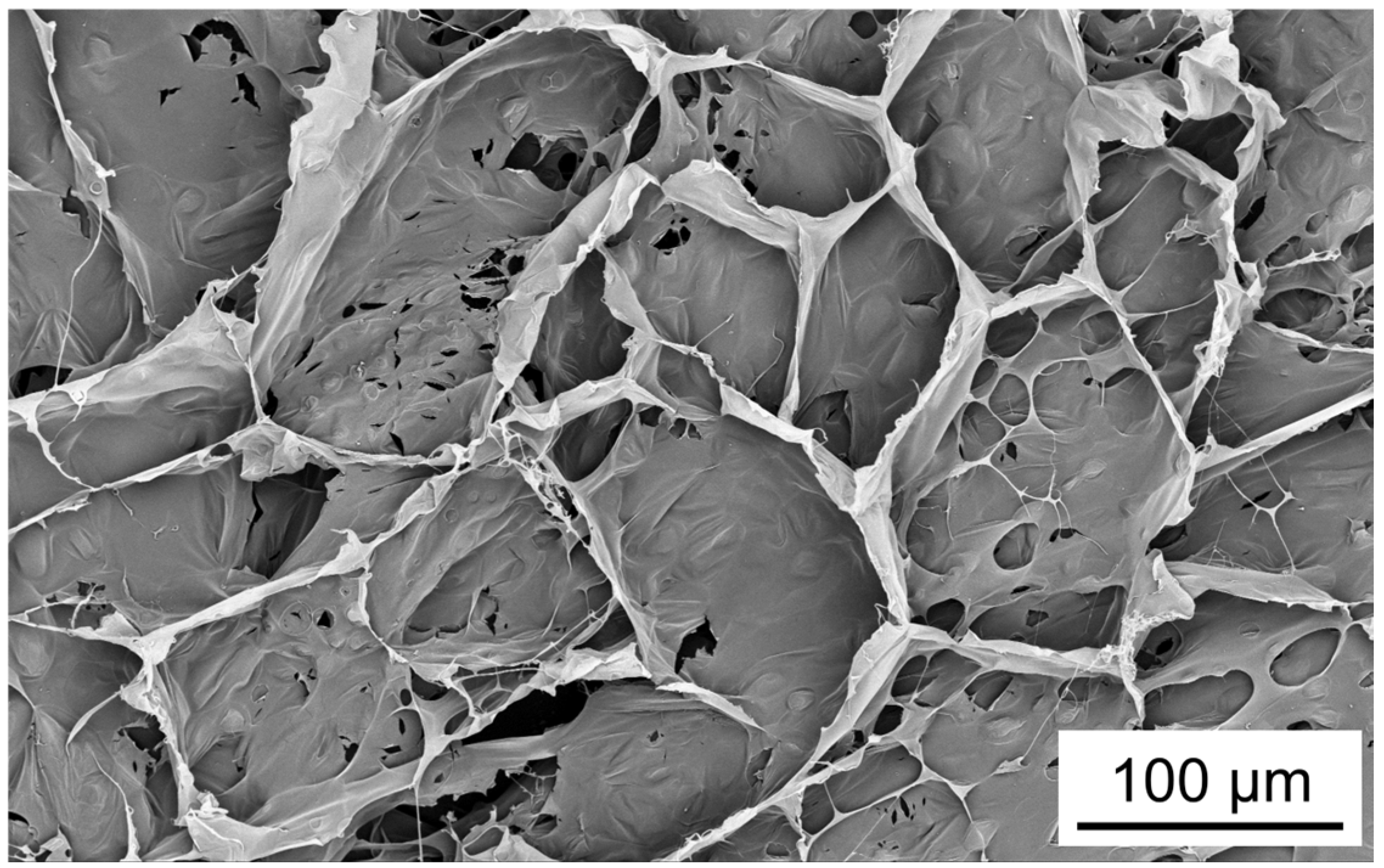
2.1.1. Preparation and Structural Characterization
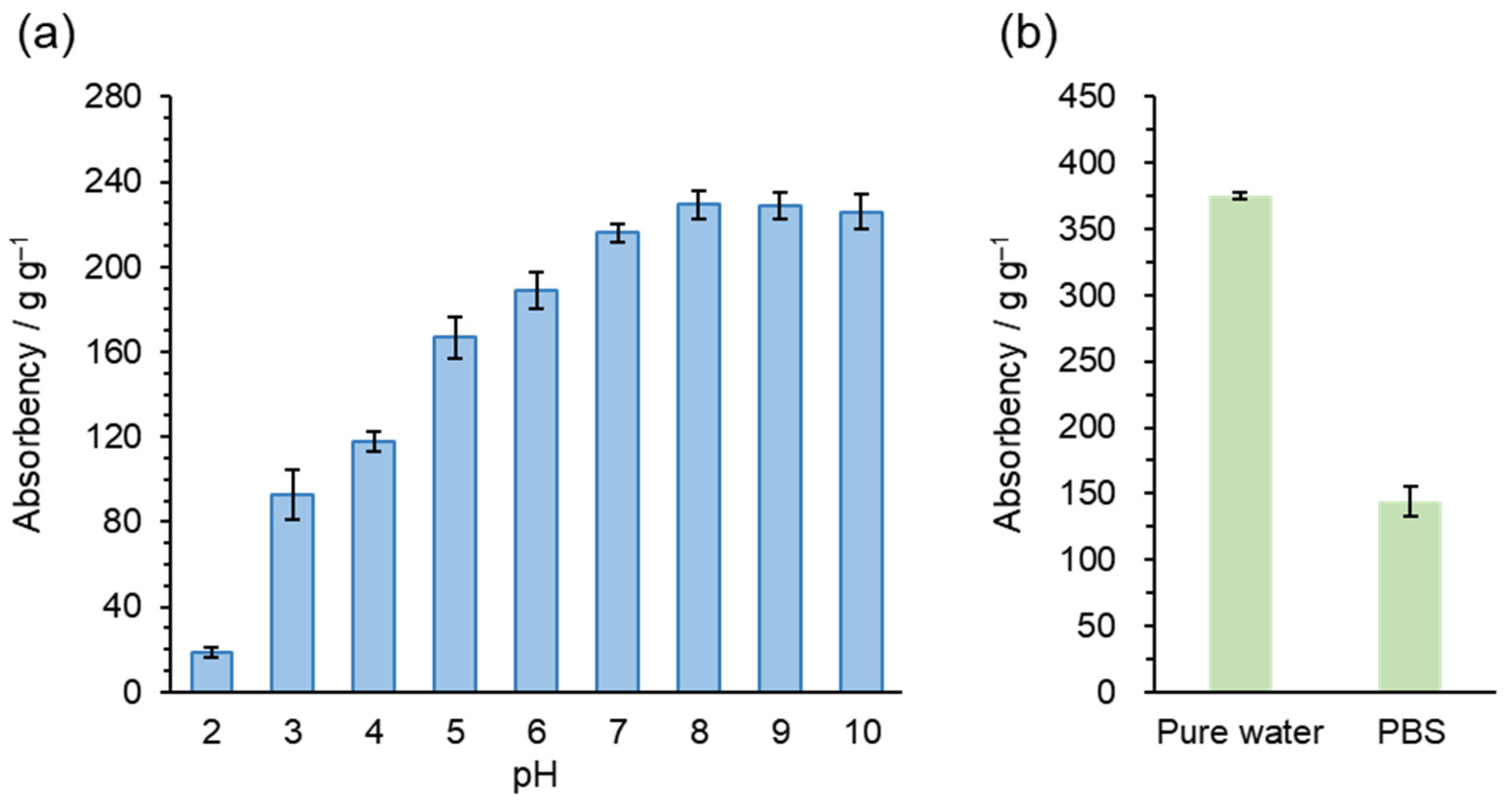
2.1.2. Water-Absorbency
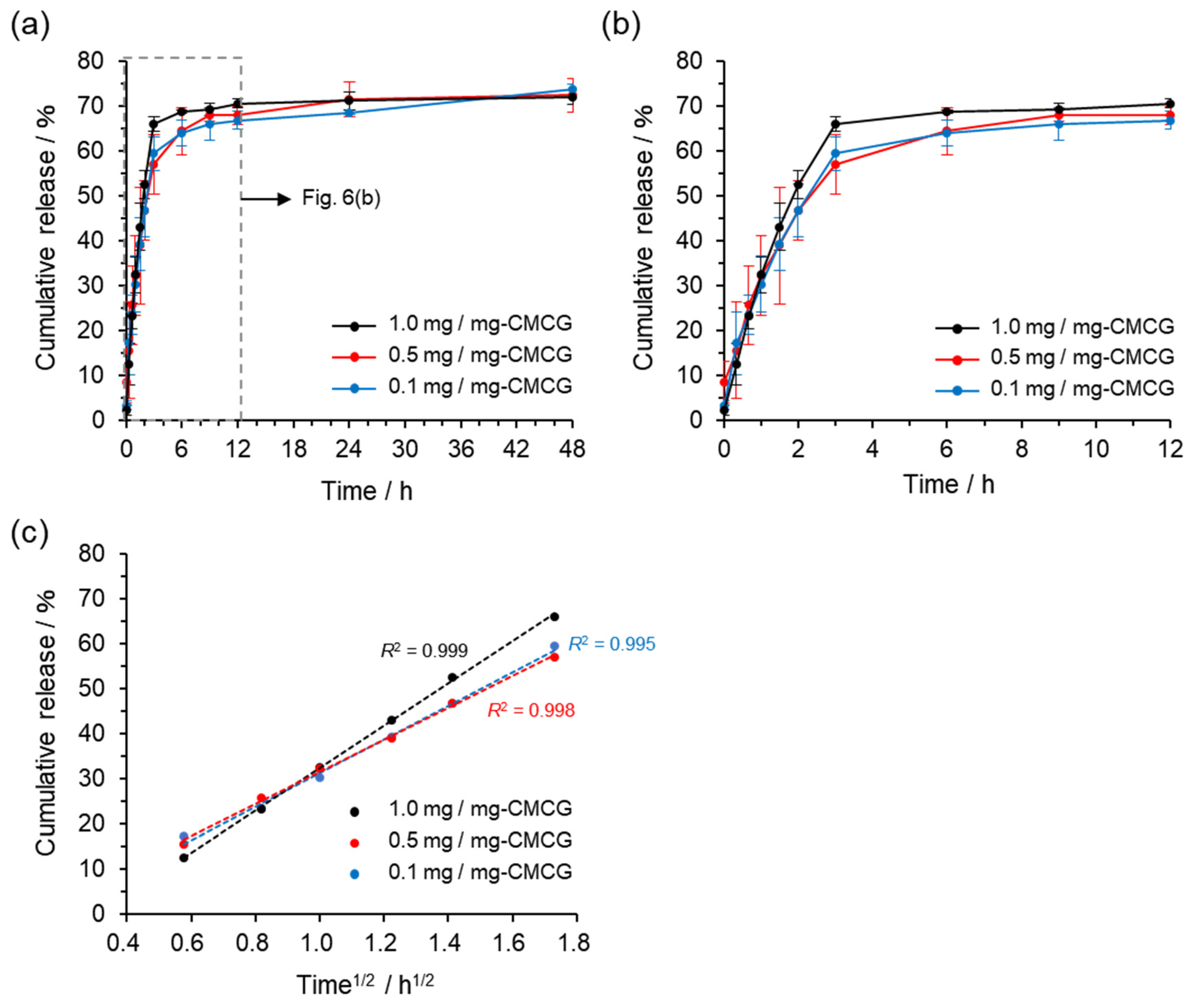
2.2. Preparation of CBP-CMCG and CBP Release In Vitro
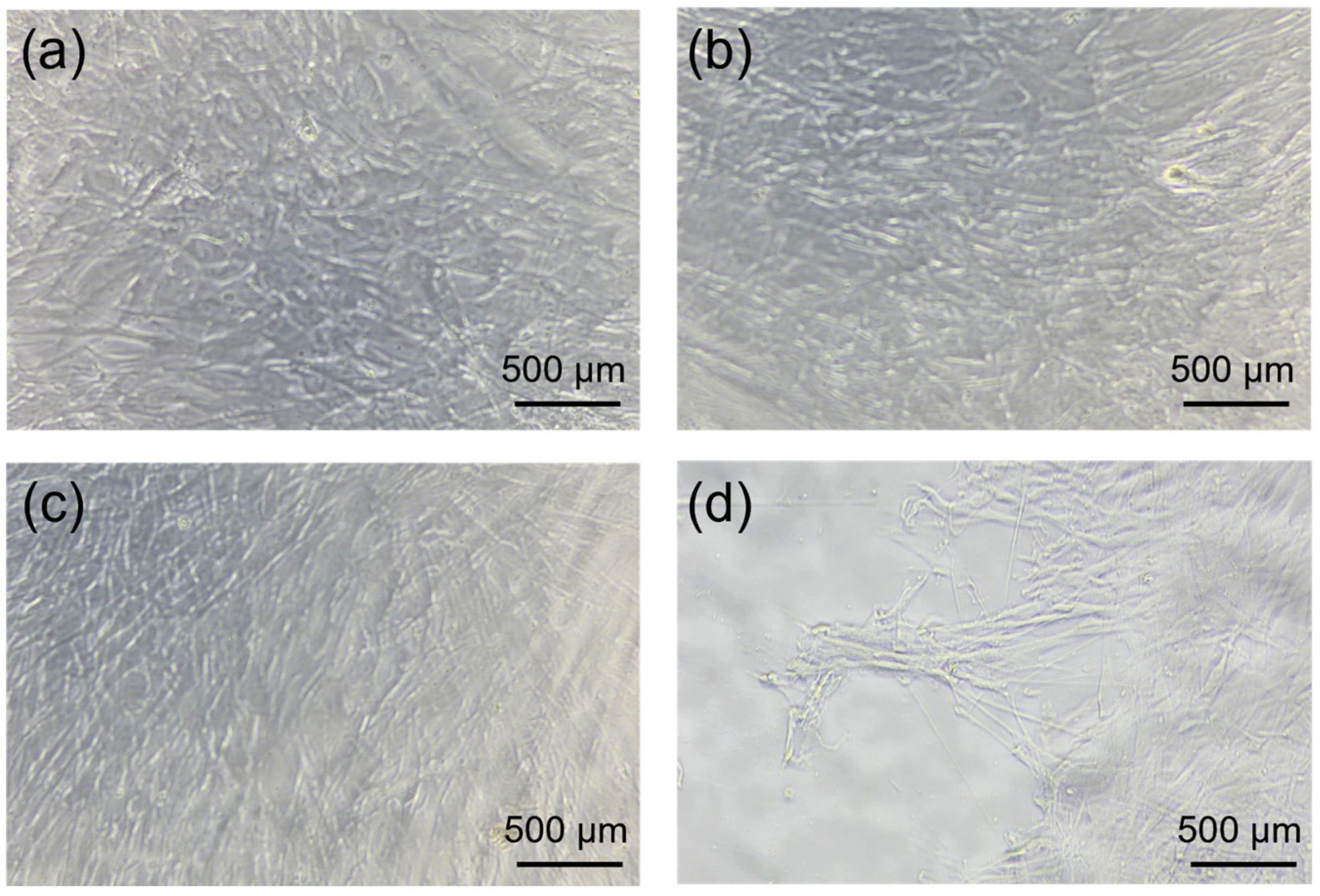
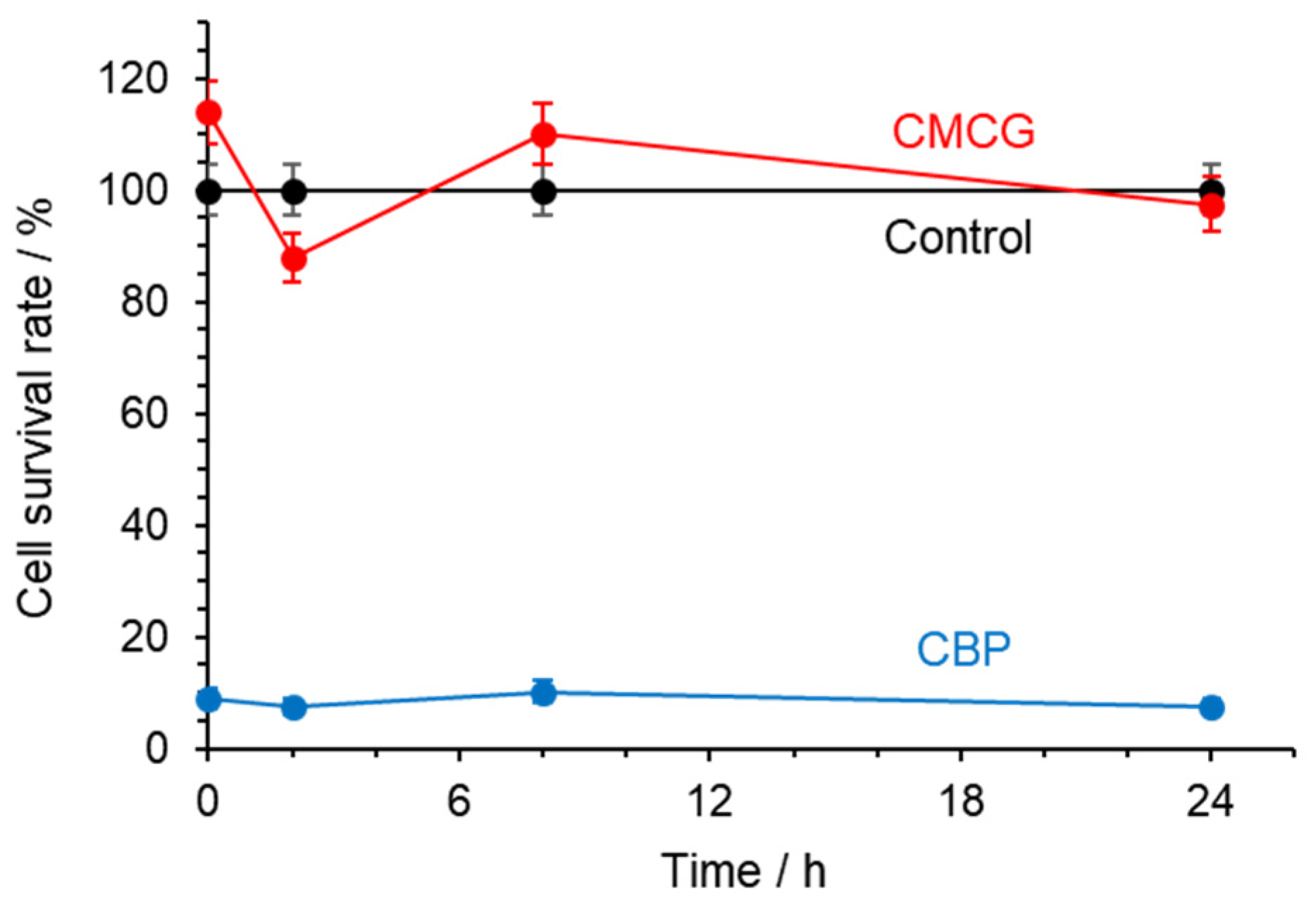
2.3. Evaluation of the Cytocompatibility of CMCG
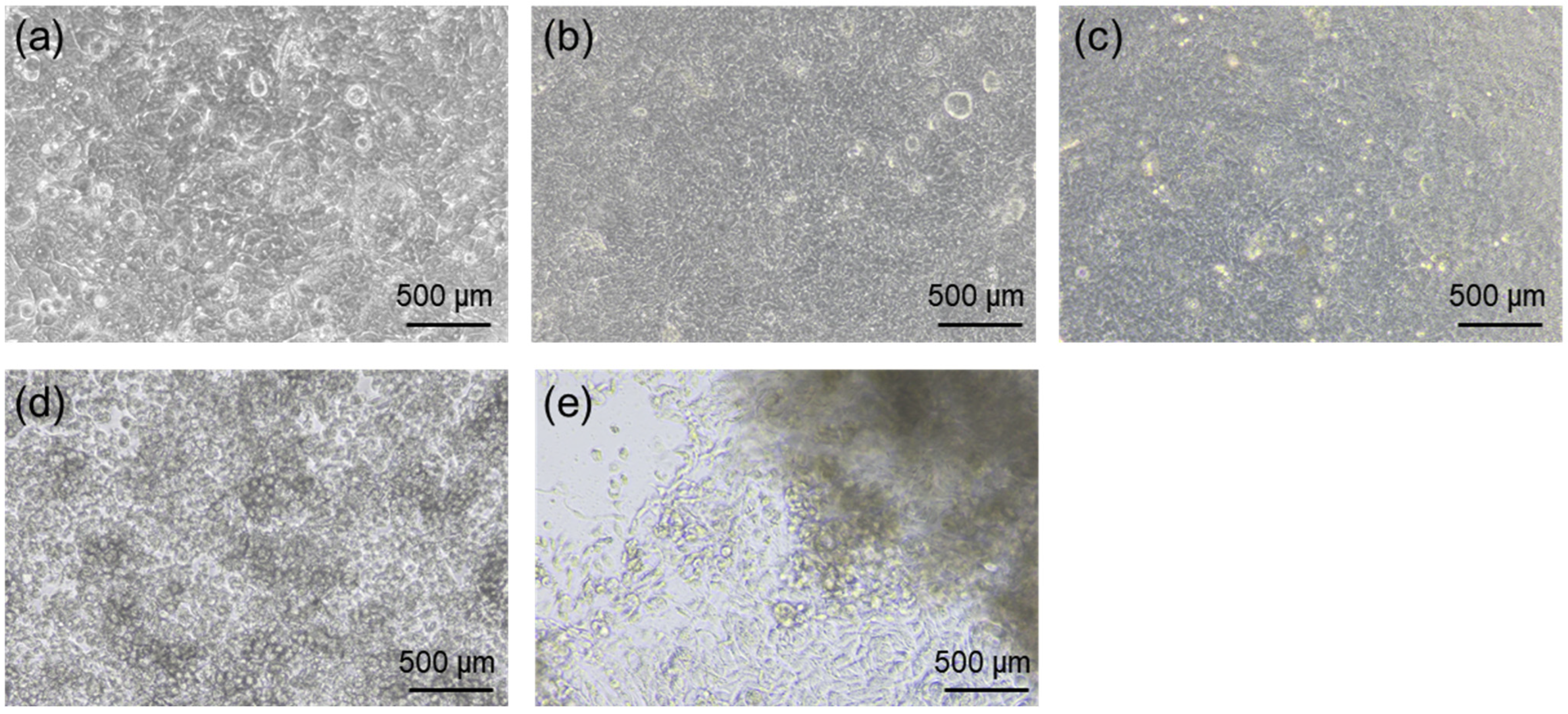
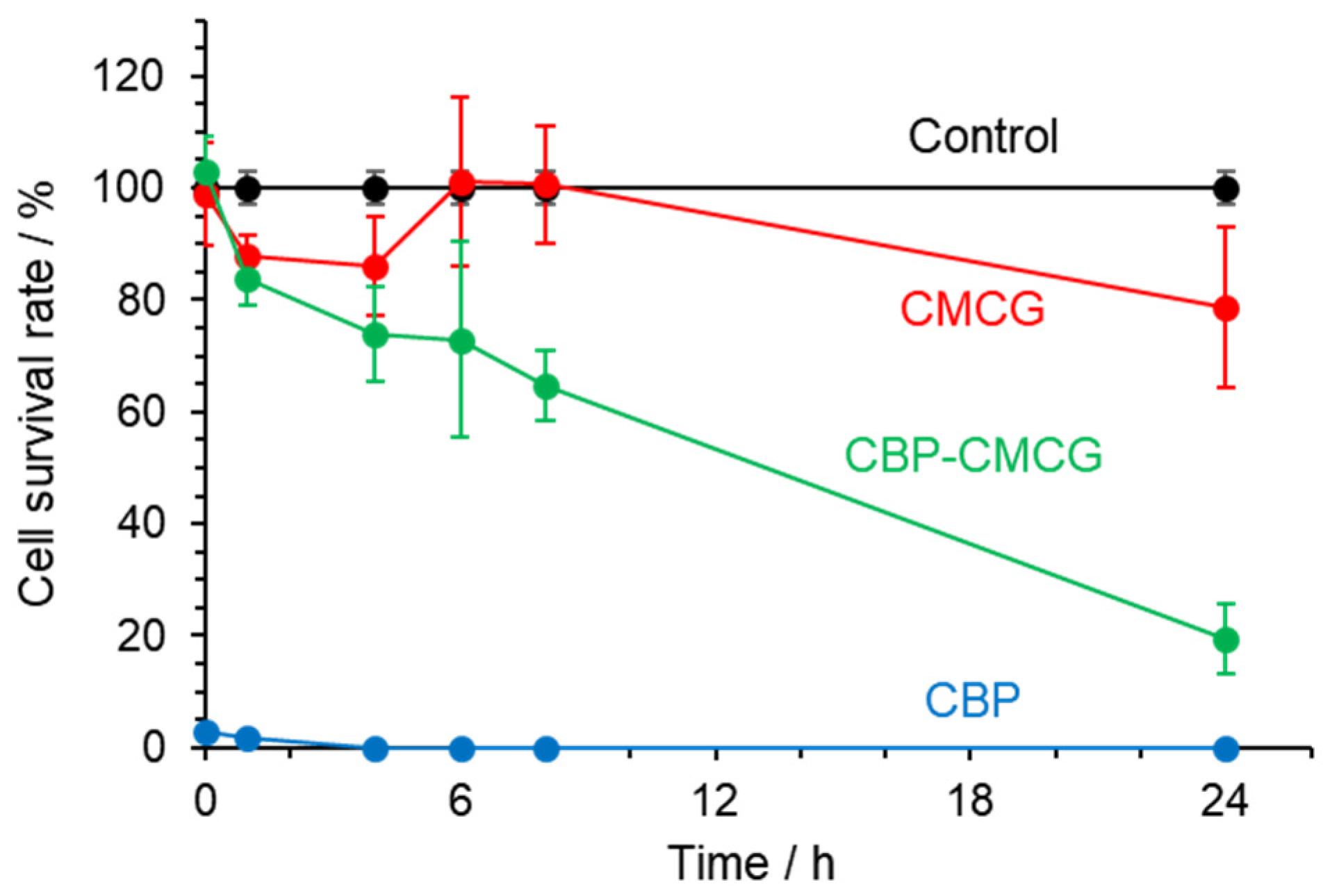
2.4. Sustained Release Effect of CBP-CMCG in Colorectal Cancer Cells
3. Conclusions
4. Materials and Methods
4.1. Materials and Cells
4.2. Preparation of CMCG
4.3. Characterization of CMCG
4.3.1. Structural Characterization
4.3.2. Determination of Water-Absorbency
4.4. Preparation and Characterization of CBP-CMCG
4.4.1. Preparation of CBP-CMCG
4.4.2. CBP Release from CBP-CMCG
4.5. Safety Evaluation of CMCG by Cell Viability Assay
4.6. Evaluation of the Sustained Release of CBP from CBP-CMCG in Cancer Cells
4.6.1. Preparation of Cancer Cell Line
4.6.2. Evaluation of the Anticancer Effect of CBP-CMCG Using Colorectal Cancer Cells
4.7. Microscopic Observation and Imaging of WI-38 and HT-29 Cells
Author Contributions
Funding
Institutional Review Board Statement
Informed Consent Statement
Data Availability Statement
Conflicts of Interest
Abbreviations
| AGU | Anhydroglucose Unit |
| CBP | Carboplatin |
| CBP-CMCG | Carboplatin-loaded Carboxymethyl Cellulose Hydrogel |
| CMC | Carboxymethyl Cellulose |
| CMCG | Carboxymethyl Cellulose Hydrogel |
| DMEM | Dulbecco’s Modified Eagle Medium |
| DS | Degree of Substitution |
| ECH | Epichlorohydrin |
| FBS | Fetal Bovine Serum |
| FTIR | Fourier Transform Infrared Spectroscopy |
| HT-29 | Human Colorectal Adenocarcinoma Cell Line |
| JIS | Japanese Industrial Standard |
| MAS | Magic Angle Spinning |
| MEM | Minimum Essential Medium |
| NMR | Nuclear Magnetic Resonance |
| PBS | Phosphate-Buffered Saline |
| PS | Penicillin–Streptomycin |
| SEM | Scanning Electron Microscopy |
| WI-38 | Human Normal Lung Fibroblast Cell Line |
| WST-1 | Water-Soluble Tetrazolium-1 Cell Proliferation Assay |
References
- Buwalda, S.J.; Boere, K.W.M.; Dijkstra, P.J.; Feijen, J.; Vermonden, T.; Hennink, W.E. Hydrogels in a historical perspective: From simple networks to smart materials. J. Control. Release 2014, 190, 254–273. [Google Scholar] [CrossRef] [Scilit]
- Choi, H.; Choi, W.S.; Jeong, J.O. A review of advanced hydrogel applications for tissue engineering and drug delivery systems as biomaterials. Gels 2024, 10, 693. [Google Scholar] [CrossRef] [Scilit]
- Farasati Far, B.; Naimi-Jamal, M.R.; Safaei, M.; Zarei, K.; Moradi, M.; Yazdani Nezhad, H. A review on biomedical application of polysaccharide-based hydrogels with a focus on drug delivery systems. Polymers 2022, 14, 5432. [Google Scholar] [CrossRef] [Scilit] [PubMed]
- Dattilo, M.; Patitucci, F.; Prete, S.; Parisi, O.I.; Puoci, F. Polysaccharide-based hydrogels and their application as drug delivery systems in cancer treatment: A review. J. Funct. Biomater. 2023, 14, 55. [Google Scholar] [CrossRef] [Scilit] [PubMed]
- Sun, M.; Sun, H.; Jiang, S.; Tian, Y. Thermosensitive injectable polysaccharide-based hydrogels: Gelation mechanisms, synthetic strategies, biomedical applications, and challenges. BioResources 2024, 19, 4015–4039. [Google Scholar] [CrossRef] [Scilit]
- Chai, Q.; Jiao, Y.; Yu, X. Hydrogels for biomedical applications: Their characteristics and the mechanisms behind them. Gels 2017, 3, 6. [Google Scholar] [CrossRef] [Scilit]
- Ahmed, E.M. Hydrogel: Preparation, characterization, and applications: A review. J. Adv. Res. 2015, 6, 105–121. [Google Scholar] [CrossRef] [Scilit]
- Li, J.; Mooney, D.J. Designing hydrogels for controlled drug delivery. Nat. Rev. Mater. 2016, 1, 16071. [Google Scholar] [CrossRef] [Scilit]
- Koetting, M.C.; Peters, J.T.; Steichen, S.D.; Peppas, N.A. Stimulus-responsive hydrogels: Theory, modern advances, and applications. Mater. Sci. Eng. R Rep. 2015, 93, 1–49. [Google Scholar] [CrossRef] [Scilit]
- Catoira, M.C.; Fusaro, L.; Di Francesco, D.D.; Ramella, M.; Boccafoschi, F. Overview of natural hydrogels for regenerative medicine applications. J. Mater. Sci. Mater. Med. 2019, 30, 115. [Google Scholar] [CrossRef] [Scilit]
- Mansur, A.A.P.; Rodrigues, M.A.; Capanema, N.S.V.; Carvalho, S.M.; Gomes, D.A.; Mansur, H.S. Functionalized bioadhesion-enhanced carboxymethyl cellulose/polyvinyl alcohol hybrid hydrogels for chronic wound dressing applications. RSC Adv. 2023, 13, 13156–13168. [Google Scholar] [CrossRef] [Scilit]
- Hivechi, A.; Joghataei, M.T.; Bahrami, S.H.; Milan, P.B.; Amoupour, M.; Latifi, N.; Haramshahi, S.M.A.; Naderi Gharahgheshlagh, S.; Nezari, S. Oxidized carboxymethyl cellulose/gelatin in situ gelling hydrogel for accelerated diabetic wound healing: Synthesis, characterization, and in vivo investigations. Int. J. Biol. Macromol. 2023, 242, 125127. [Google Scholar] [CrossRef] [Scilit]
- Jeong, J.W.; Park, D.J.; Kim, S.C.; Kang, H.W.; Lee, B.; Kim, H.W.; Kim, Y.M.; Linh, N.V.; Jung, W.K. Wound healing effect of fucoidan-loaded gelatin/oxidized carboxymethyl cellulose hydrogel. Int. J. Biol. Macromol. 2025, 286, 138254. [Google Scholar] [CrossRef] [Scilit] [PubMed]
- Zhang, W.; Li, X.; Chen, W.; Huang, X.; Hua, T.; Hu, J.; Zhu, J.; Ye, S.; Li, X. L-carnosine loaded on carboxymethyl cellulose hydrogels for promoting wound healing. RSC Adv. 2024, 14, 18317–18329. [Google Scholar] [CrossRef] [Scilit]
- Pratinthong, K.; Punyodom, W.; Jantrawut, P.; Jantanasakulwong, K.; Tongdeesoontorn, W.; Sriyai, M.; Panyathip, R.; Thanakkasaranee, S.; Worajittiphon, P.; Tanadchangsaeng, N.; et al. Modification of a carboxymethyl cellulose/poly(vinyl alcohol) hydrogel film with citric acid and glutaraldehyde crosslink agents to enhance the anti-inflammatory effectiveness of triamcinolone acetonide in wound healing. Polymers 2024, 16, 1798. [Google Scholar] [CrossRef] [Scilit]
- Mali, K.K.; Ghorpade, V.S.; Dias, R.J.; Dhawale, S.C. Synthesis and characterization of citric acid crosslinked carboxymethyl tamarind gum-polyvinyl alcohol hydrogel films. Int. J. Biol. Macromol. 2023, 236, 123969. [Google Scholar] [CrossRef] [Scilit]
- Chelu, M.; Calderon Moreno, J.M.; Musuc, A.M.; Popa, M. Natural regenerative hydrogels for wound healing. Gels 2024, 10, 547. [Google Scholar] [CrossRef] [Scilit]
- Yin, L.; Zhang, K.; Sun, W.; Zhang, Y.; Wang, Y.; Qin, J. Carboxymethylcellulose based self-healing hydrogel with coupled DOX as camptothecin loading carrier for synergetic colon cancer treatment. Int. J. Biol. Macromol. 2023, 249, 126012. [Google Scholar] [CrossRef] [Scilit]
- Fujita, S.; Tazawa, T.; Kono, H. Preparation and enzyme degradability of spherical and water-absorbent gels from sodium carboxymethyl cellulose. Gels 2022, 8, 321. [Google Scholar] [CrossRef] [Scilit] [PubMed]
- Ogata, M.; Anazawa, R.; Connolly, L.; Ogata, T.; Wada, Y.; Tanaka, Y.; Koizumi, A.; Asano, M.; Kono, H. Synthesis of multivalent glycoside-immobilized carboxymethyl cellulose nanohydrogel particles with superadsorption ability for lectins. ACS Appl. Mater. Interfaces 2024, 16, 56031–56040. [Google Scholar] [CrossRef] [Scilit] [PubMed]
- Kono, H. Characterization and properties of carboxymethyl cellulose hydrogels crosslinked by polyethylene glycol. Carbohydr. Polym. 2014, 106, 84–93. [Google Scholar] [CrossRef] [Scilit]
- Berradi, A.; Lafdali, A.; Ouazzani, N.; Aziz, K.; Mandi, L.; El Achaby, M.; Kurniawan, T.A.; Aziz, F. Development and characterization of a carboxymethyl cellulose-alginate hybrid superabsorbent hydrogel designed for water management in agriculture. Int. J. Biol. Macromol. 2025, 323, 146926. [Google Scholar] [CrossRef] [Scilit]
- Kang, J.; Yun, S.I. Double-network hydrogel films based on cellulose derivatives and κ-carrageenan with enhanced mechanical strength and superabsorbent properties. Gels 2022, 9, 20. [Google Scholar] [CrossRef] [Scilit]
- Shin, Y.; Kim, D.; Hu, Y.; Kim, Y.; Hong, I.K.; Kim, M.S.; Jung, S. pH-Responsive succinoglycan-carboxymethyl cellulose hydrogels with highly improved mechanical strength for controlled drug delivery systems. Polymers 2021, 13, 3197. [Google Scholar] [CrossRef] [Scilit]
- Quan, Z.; Wang, X.; Zheng, K.; Wen, Y.; Lin, J.; Cui, M. Synthesis of novel composite hydrogel based on carboxymethyl cellulose/acrylamide/β-cyclodextrin for drug delivery. Int. J. Biol. Macromol. 2025, 287, 138387. [Google Scholar] [CrossRef] [Scilit]
- Kelland, L. The resurgence of platinum-based cancer chemotherapy. Nat. Rev. Cancer 2007, 7, 573–584. [Google Scholar] [CrossRef] [Scilit] [PubMed]
- Yusoh, N.A.; Ahmad, H.; Vallis, K.A.; Gill, M.R. Advances in platinum-based cancer therapy: Overcoming platinum resistance through rational combinatorial strategies. Med. Oncol. 2025, 42, 262. [Google Scholar] [CrossRef] [Scilit]
- Laniti, D.D.; Verma, P. State-of-the art in emerging therapeutics for ovarian cancer therapy. Gynecol. Oncol. 2025, 201, 109–113. [Google Scholar] [CrossRef] [Scilit] [PubMed]
- Peptu, C.A.; Băcăiță, E.S.; Savin Logigan, C.-L.; Luțcanu, M.; Agop, M. Hydrogels based on alginates and carboxymethyl cellulose with modulated drug release—An experimental and theoretical study. Polymers 2021, 13, 4461. [Google Scholar] [CrossRef] [Scilit]
- Zhang, W.; Liu, Y.; Xuan, Y.; Zhang, S. Synthesis and applications of carboxymethyl cellulose hydrogels. Gels 2022, 8, 529. [Google Scholar] [CrossRef] [Scilit] [PubMed]
- Ciolacu, D.E.; Nicu, R.; Ciolacu, F. Cellulose-based hydrogels as sustained drug-delivery systems. Materials 2020, 13, 5270. [Google Scholar] [CrossRef] [Scilit]
- Kono, H.; Nagaoka, Y.; Izutsu, A.; Kita, S.; Maenaka, K.; Nishio, S.; Hattori, T.; Yoshikawa, Y.; Michishita, K.; Usui, T.; et al. Thermoresponsive hydrogelation of N-acetyl chitohexaose: Gelation mechanism and application in controlled protein release. Carbohydr. Polym. 2025, 366, 123897. [Google Scholar] [CrossRef] [Scilit]
- Yang, Y.; Wang, P.; Ji, Z.; Xu, X.; Zhang, H.; Wang, Y. Polysaccharide–platinum complexes for cancer theranostics. Carbohydr. Polym. 2023, 315, 120997. [Google Scholar] [CrossRef] [Scilit]
- Qu, Y.; Haverkamp, R.; Jakobs-Schönwandt, D.; Vazquez, J.M.E.; Hellweg, T.; Patel, A.V. Cation release from different carboxymethyl cellulose hydrogels. Colloid Polym. Sci. 2023, 301, 863–878. [Google Scholar] [CrossRef] [Scilit]
- Power, L.A.; Coyne, J.W. ASHP Guidelines on handling hazardous drugs. Am. J. Health Syst. Pharm. 2018, 75, 1996–2031. [Google Scholar] [CrossRef] [Scilit]
- Sugarman, B.J.; Aggarwal, B.B.; Hass, P.E.; Figari, I.S.; Palladino, M.A., Jr.; Shepard, H.M. Recombinant human tumor necrosis factor-alpha: Effects on proliferation of normal and transformed cells in vitro. Science 1985, 230, 943–945. [Google Scholar] [CrossRef] [Scilit] [PubMed]
- Hayflick, L.; Moorhead, P.S. The serial cultivation of human diploid cell strains. Exp. Cell Res. 1961, 25, 585–621. [Google Scholar] [CrossRef] [Scilit] [PubMed]
- Zhang, C.; Xu, C.; Gao, X.; Yao, Q. Platinum-based drugs for cancer therapy and anti-tumor strategies. Theranostics 2022, 12, 2115–2132. [Google Scholar] [CrossRef] [Scilit] [PubMed]
- Linares, J.; Sallent-Aragay, A.; Badia-Ramentol, J.; Recort-Bascuas, A.; Méndez, A.; Manero-Rupérez, N.; Re, D.L.; Rivas, E.I.; Guiu, M.; Zwick, M.; et al. Long-term platinum-based drug accumulation in cancer-associated fibroblasts promotes colorectal cancer progression and resistance to therapy. Nat. Commun. 2023, 14, 746. [Google Scholar] [CrossRef] [Scilit]
- Horvát-Karajz, K.; Balogh, Z.; Kovács, V.; drRerNat, A.H.; Sréter, L.; Uher, F. In vitro effect of carboplatin, cytarabine, paclitaxel, vincristine, and low-power laser irradiation on murine mesenchymal stem cells. Lasers Surg. Med. 2009, 41, 463–469. [Google Scholar] [CrossRef] [Scilit]
- Mikuła-Pietrasik, J.; Witucka, A.; Pakuła, M.; Uruski, P.; Begier-Krasińska, B.; Niklas, A.; Tykarski, A.; Książek, K. Comprehensive review on how platinum- and taxane-based chemotherapy of ovarian cancer affects biology of normal cells. Cell. Mol. Life Sci. 2019, 76, 681–697. [Google Scholar] [CrossRef] [Scilit] [PubMed]
- Rutecki, S.; Pakuła-Iwańska, M.; Leśniewska-Bocianowska, A.; Matuszewska, J.; Rychlewski, D.; Uruski, P.; Stryczyński, Ł.; Naumowicz, E.; Szubert, S.; Tykarski, A.; et al. Mechanisms of carboplatin- and paclitaxel-dependent induction of premature senescence and pro-cancerogenic conversion of normal peritoneal mesothelium and fibroblasts. J. Pathol. 2024, 262, 198–211. [Google Scholar] [CrossRef] [Scilit] [PubMed]
- JIS K 7223; 1996 Testing Method for Water Absorption Capacity of Super Absorbent Polymers. Japanese Standards Association: Tokyo, Japan, 1996.





Disclaimer/Publisher’s Note: The statements, opinions and data contained in all publications are solely those of the individual author(s) and contributor(s) and not of MDPI and/or the editor(s). MDPI and/or the editor(s) disclaim responsibility for any injury to people or property resulting from any ideas, methods, instructions or products referred to in the content. |
© 2025 by the authors. Licensee MDPI, Basel, Switzerland. This article is an open access article distributed under the terms and conditions of the Creative Commons Attribution (CC BY) license.
Share and Cite
Kono, H.; Kinjyo, S.; Uyama, R.; Fujita, S.; Murayama, Y.; Ikematsu, S. Biocompatibility and Drug Release Properties of Carboxymethyl Cellulose Hydrogel for Carboplatin Delivery. Gels 2026, 12, 5. https://doi.org/10.3390/gels12010005
Kono H, Kinjyo S, Uyama R, Fujita S, Murayama Y, Ikematsu S. Biocompatibility and Drug Release Properties of Carboxymethyl Cellulose Hydrogel for Carboplatin Delivery. Gels. 2026; 12(1):5. https://doi.org/10.3390/gels12010005
Chicago/Turabian StyleKono, Hiroyuki, Shion Kinjyo, Ryou Uyama, Sayaka Fujita, Yuko Murayama, and Shinya Ikematsu. 2026. "Biocompatibility and Drug Release Properties of Carboxymethyl Cellulose Hydrogel for Carboplatin Delivery" Gels 12, no. 1: 5. https://doi.org/10.3390/gels12010005
APA StyleKono, H., Kinjyo, S., Uyama, R., Fujita, S., Murayama, Y., & Ikematsu, S. (2026). Biocompatibility and Drug Release Properties of Carboxymethyl Cellulose Hydrogel for Carboplatin Delivery. Gels, 12(1), 5. https://doi.org/10.3390/gels12010005