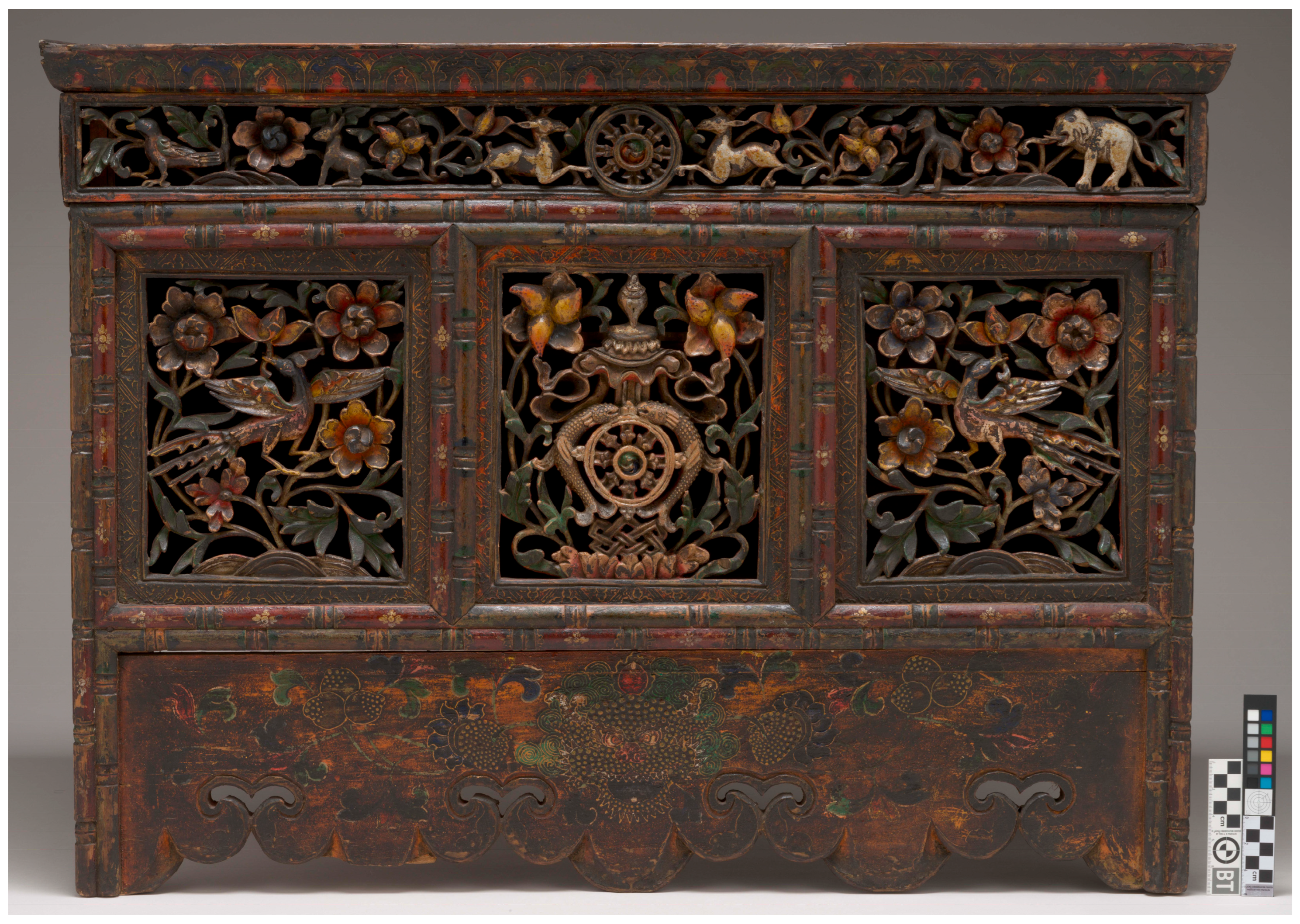

Confined Fluids in Gel Matrices for the Selective Cleaning of a Tibetan Altar Table



Abstract
1. Introduction
2. Results and Discussion
2.1. Analysis of the Constituent Materials
2.1.1. Portable X-Ray Fluorescence (pXRF)
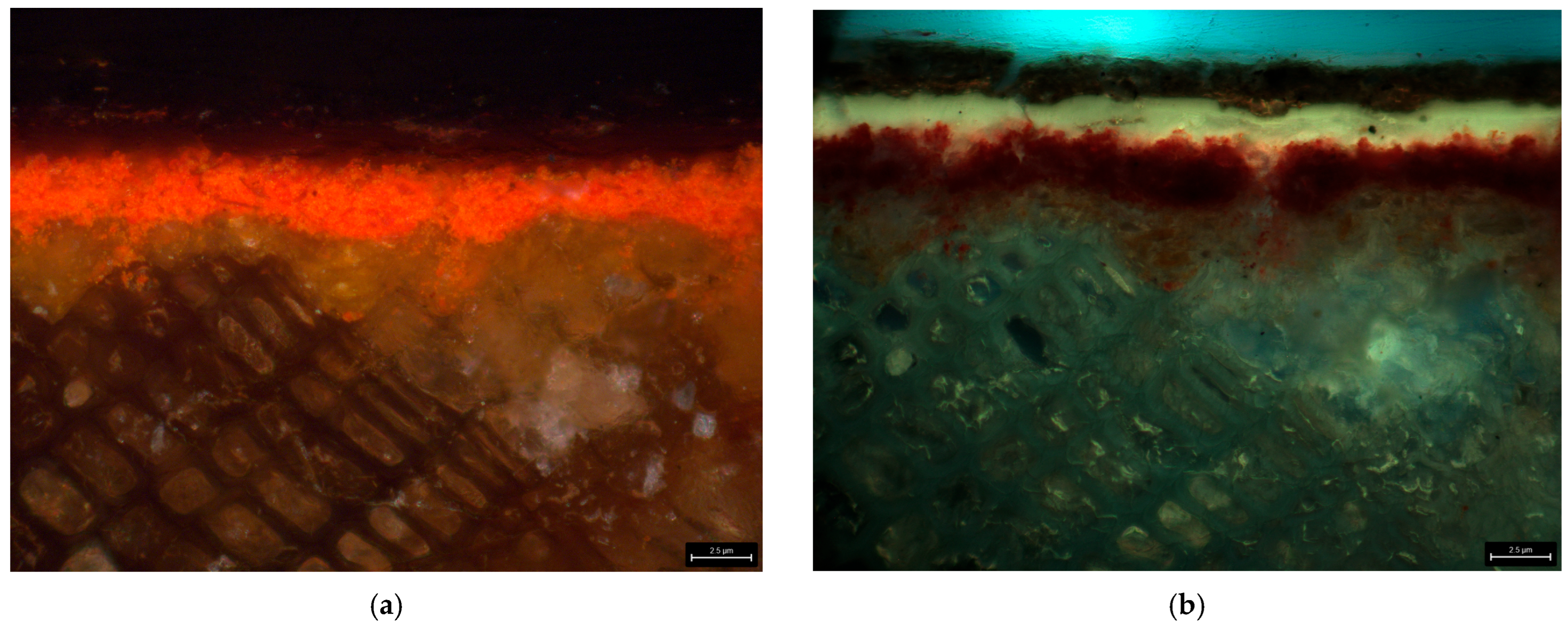
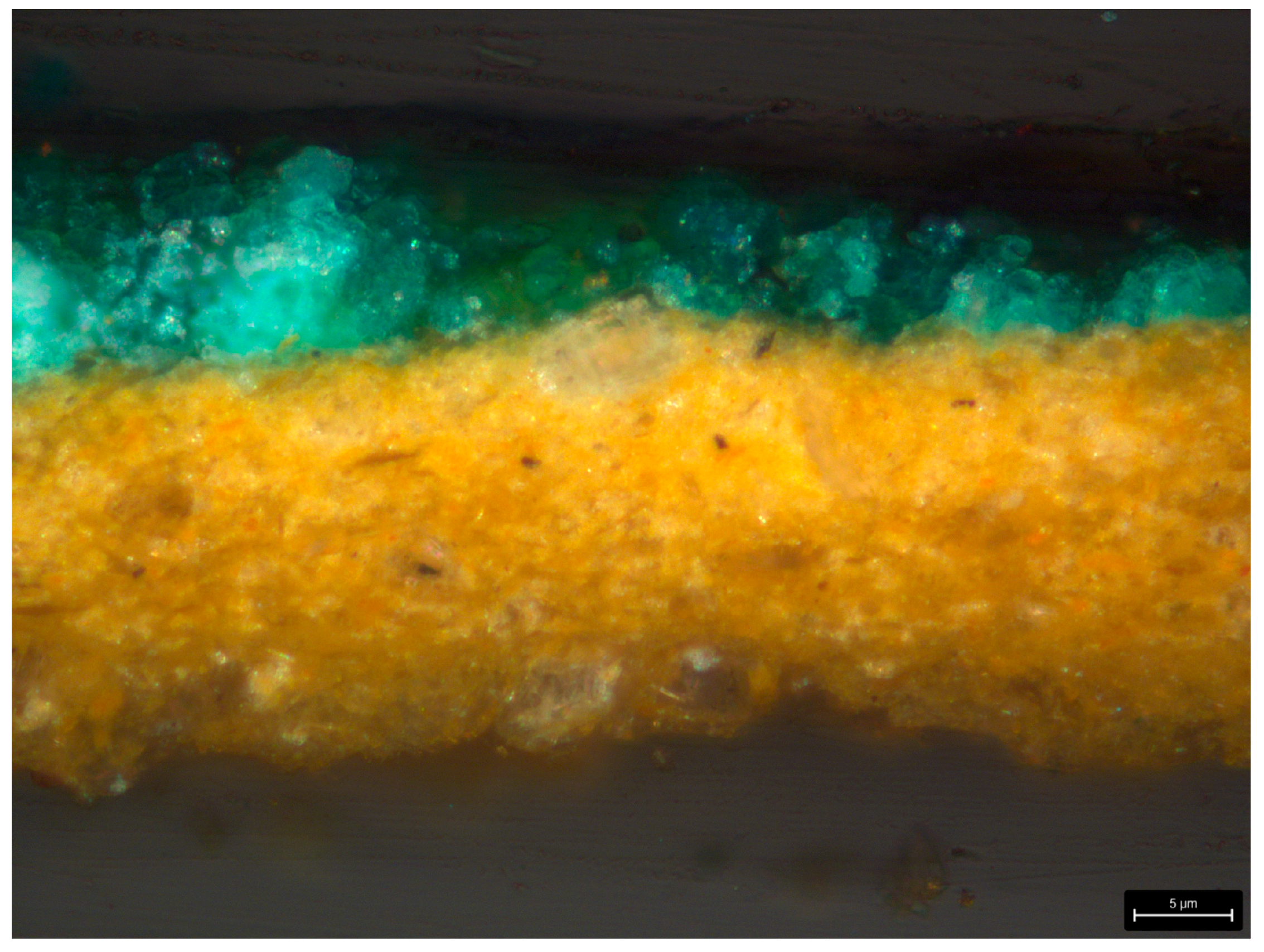
2.1.2. Optical Microscopy (OM)
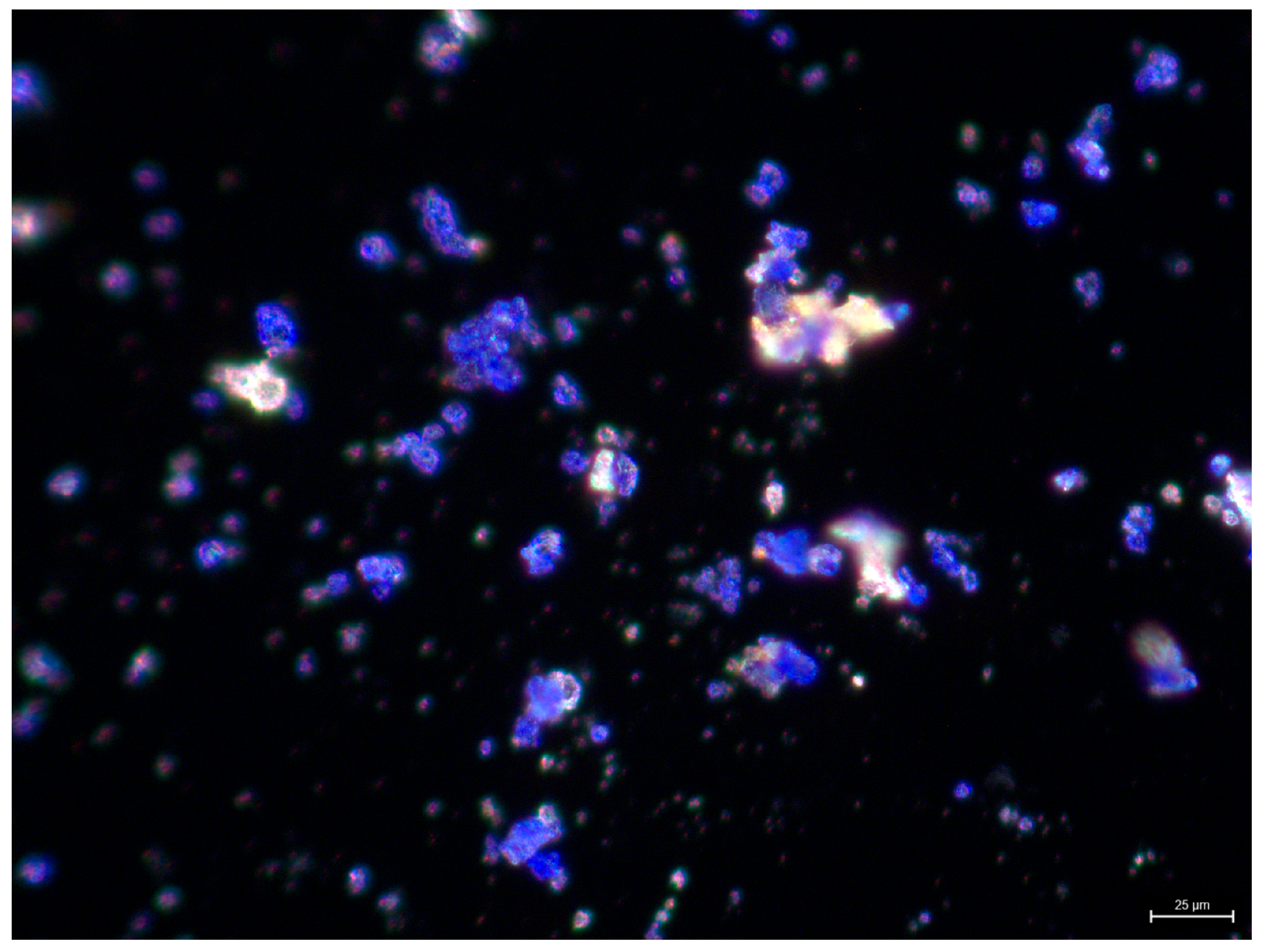
2.1.3. Scanning Electron Microscopy Coupled with Energy Dispersive X-Ray Spectroscopy (SEM/EDX) and Polarized Light Microscopy (PLM)
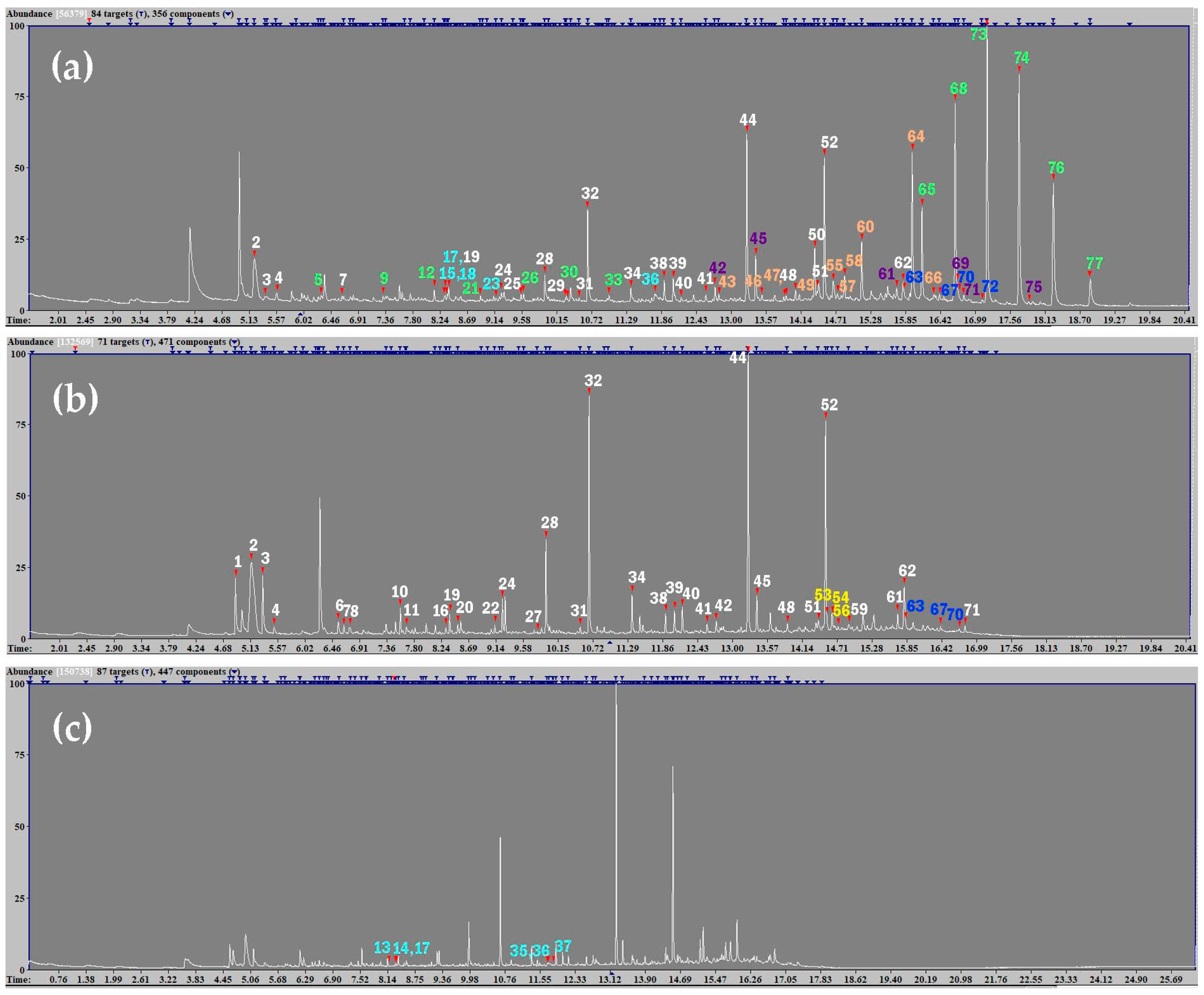
2.1.4. Pyrolysis-Gas Chromatography–Mass Spectrometry with Thermally Assisted Hydrolysis and Methylation (THM-Py-GC-MS)
2.2. Cleaning Tests
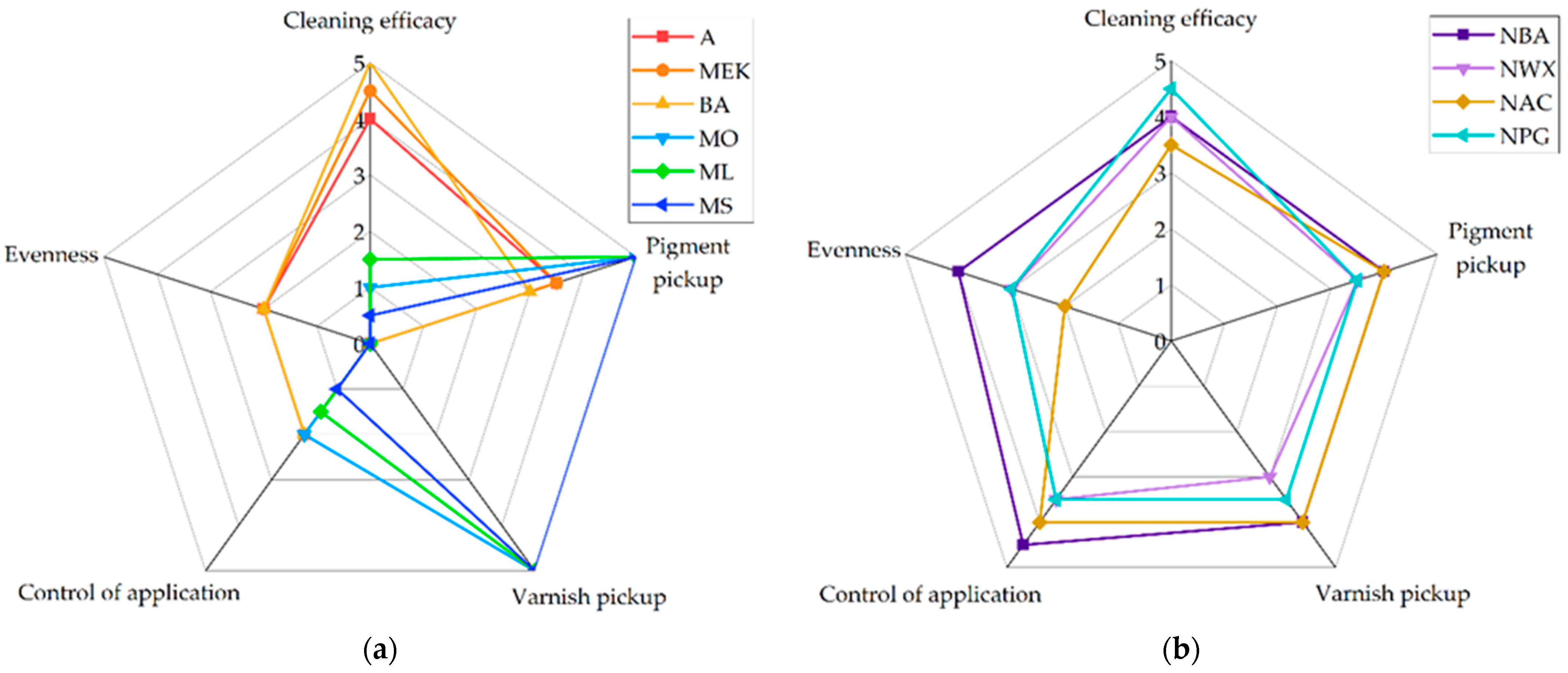
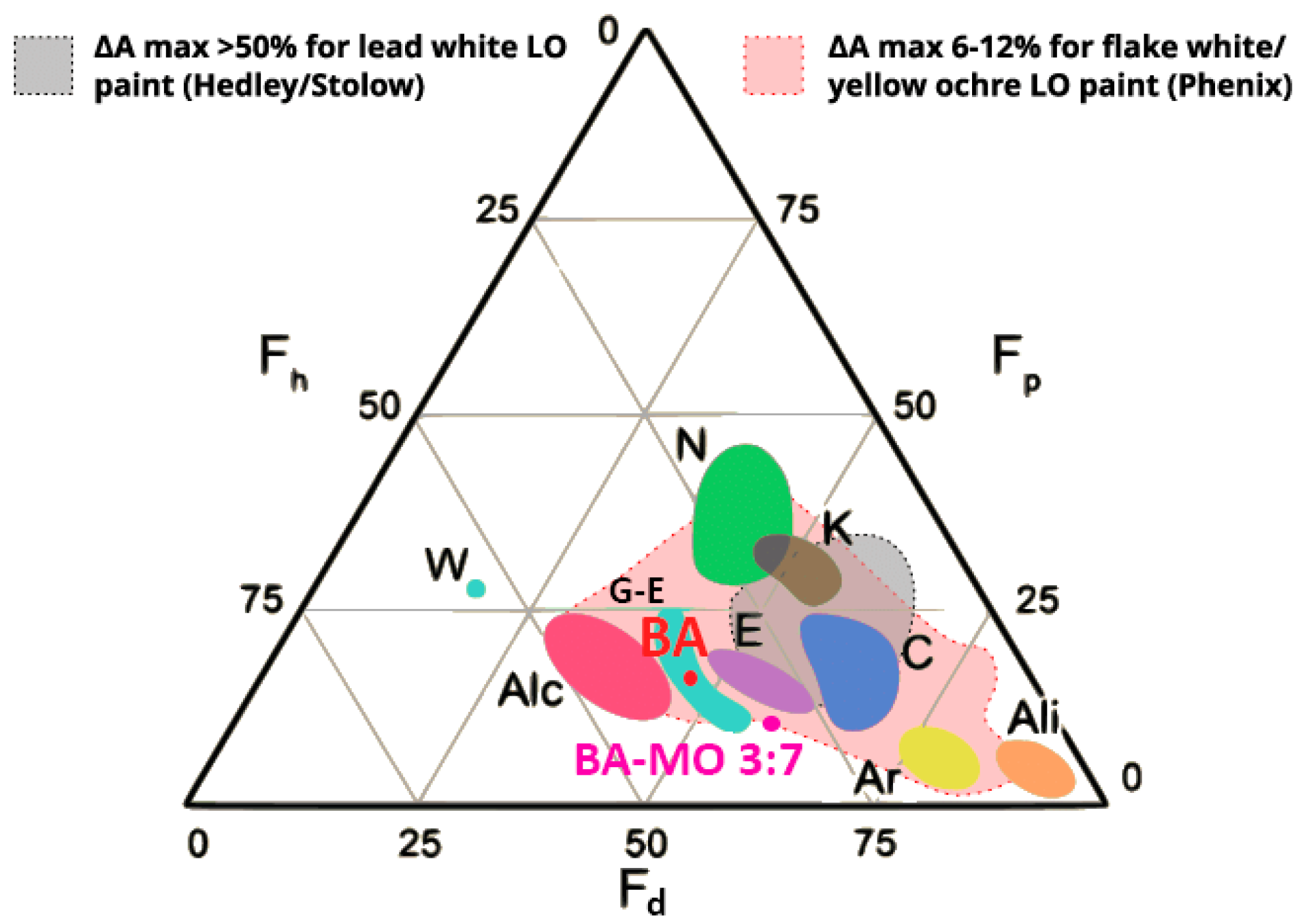
2.2.1. Standalone Fluids
Preliminary Tests on the Back of the Object
Tests on the Decorated Side Panel of the Object
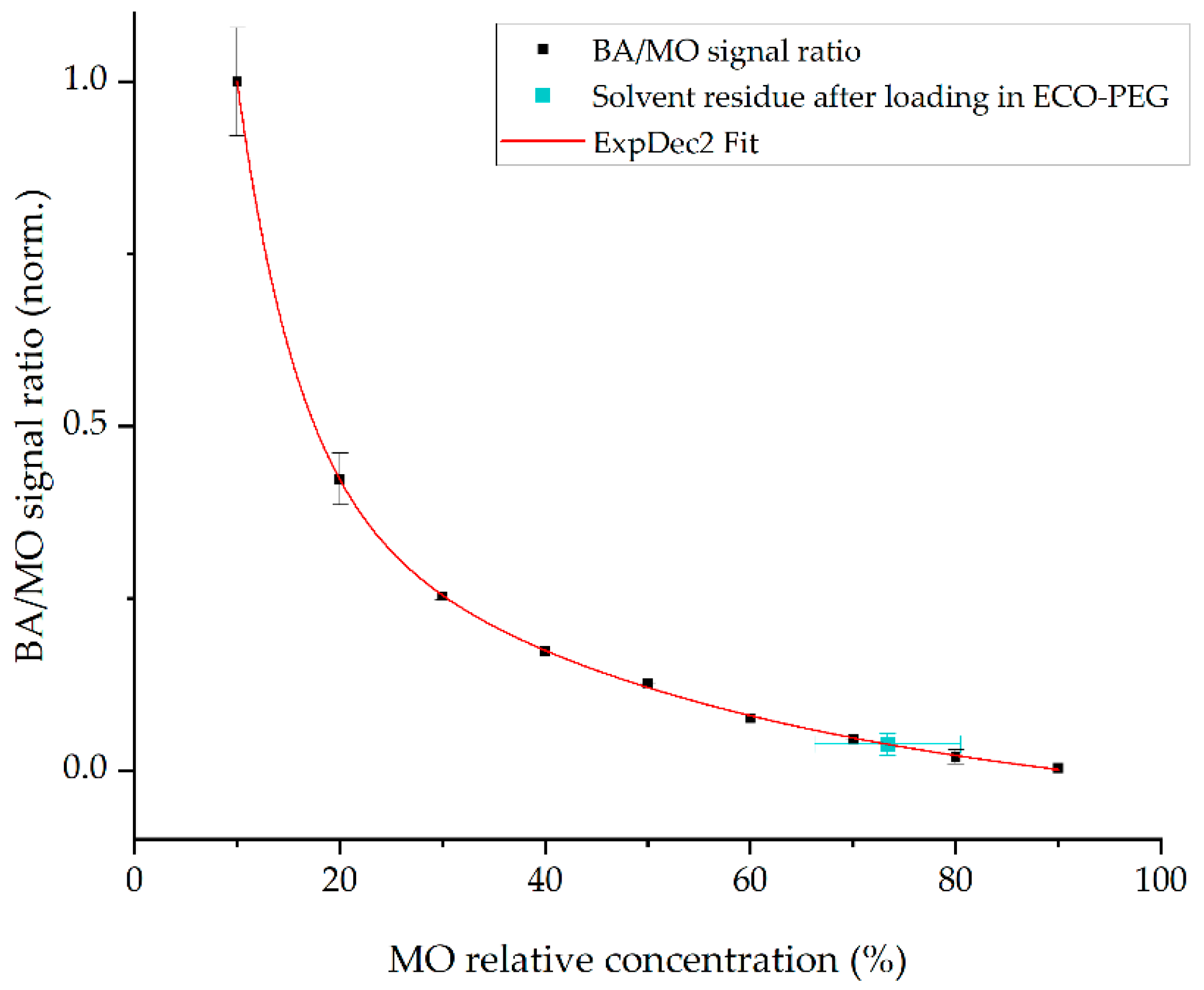
2.2.2. Analysis of the Organogel’s Solvent Uptake
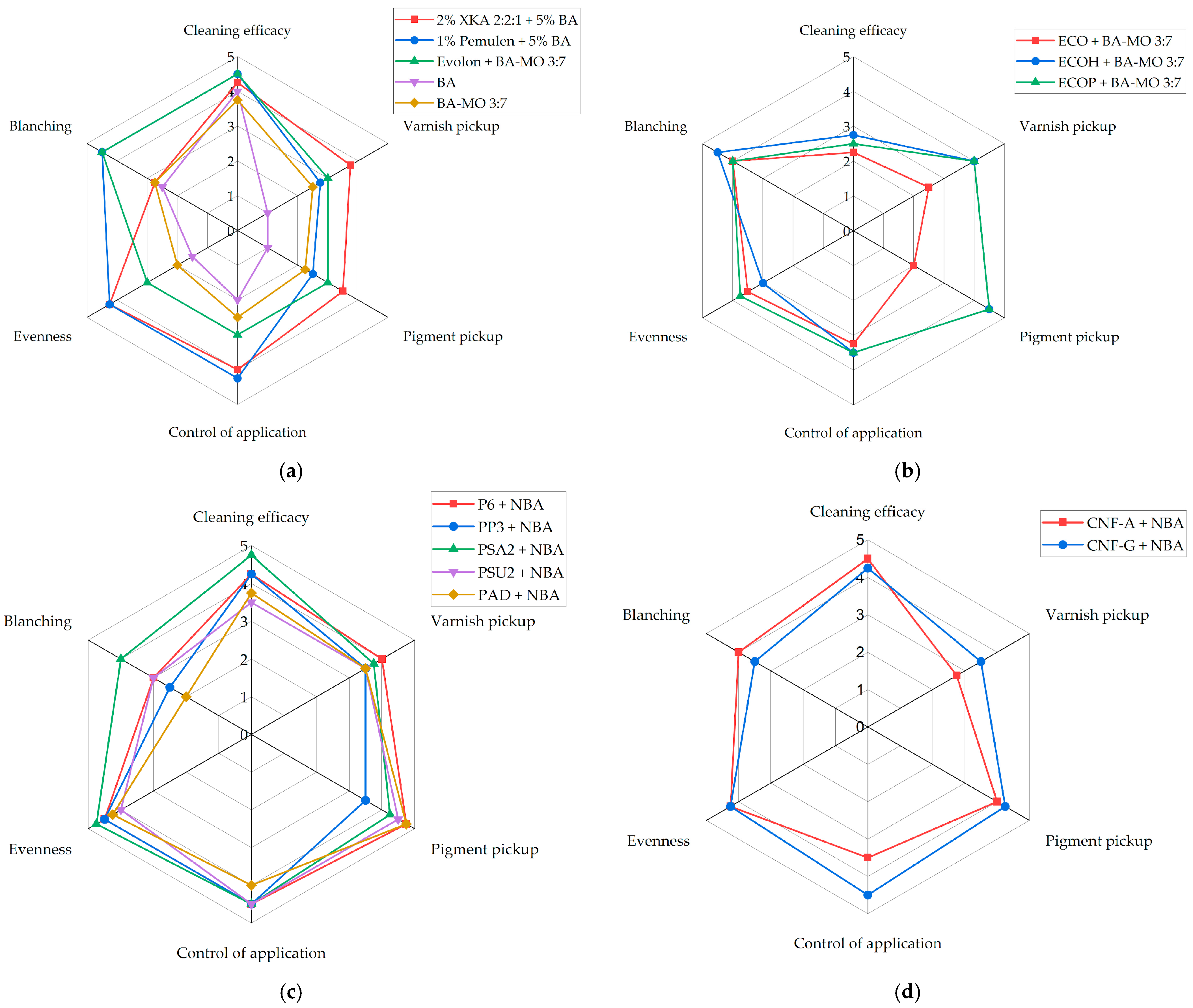
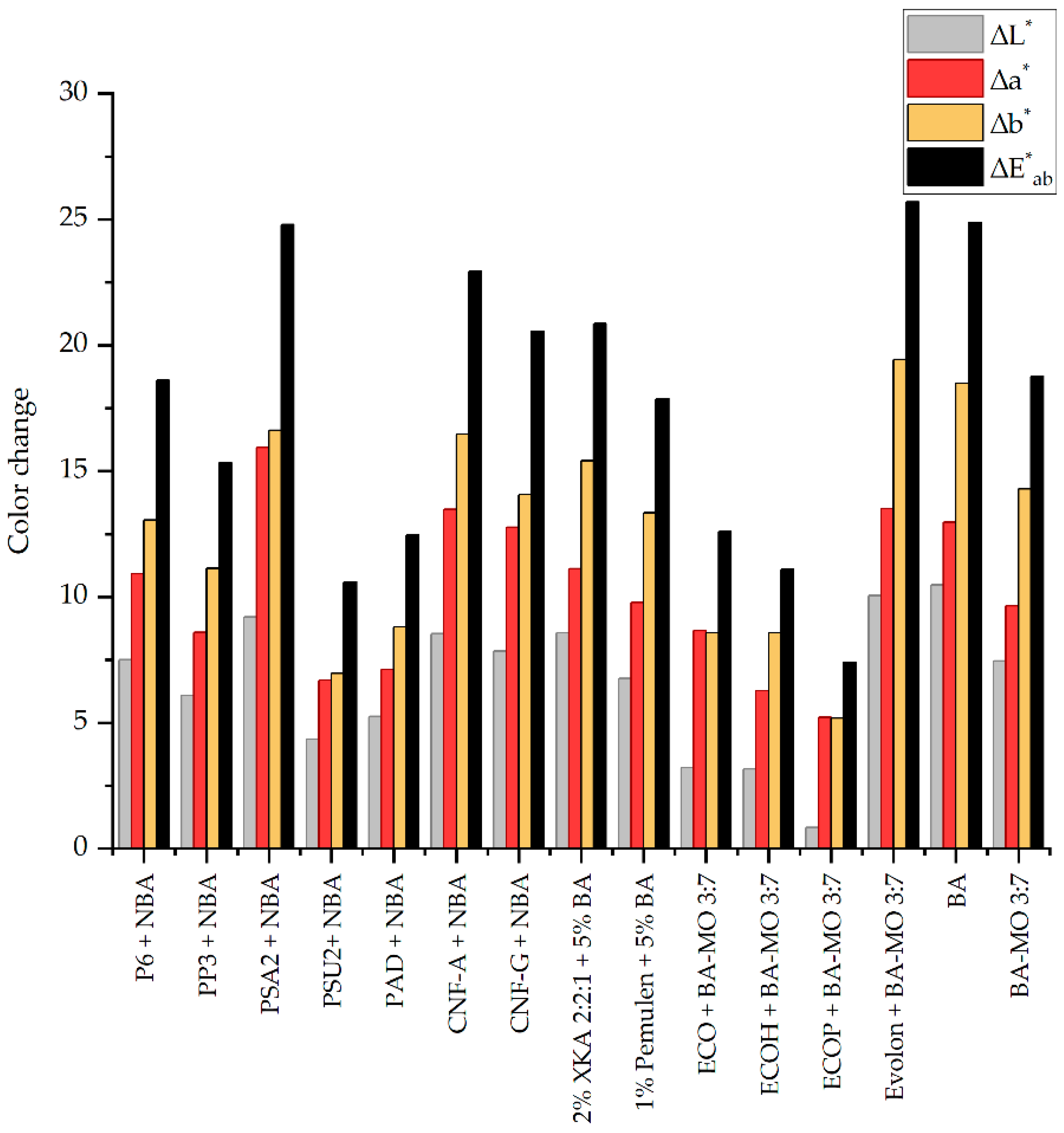
2.2.3. Final Testing

| ID | Fluid | Gel | Cleaning System | Application Time |
|---|---|---|---|---|
| 1 | NBA | Peggy 6 | Nanostructured fluid + hydrogel | 8′ (2′ intervals) |
| 2 | NBA | PP3 | Nanostructured fluid + hydrogel | 10′ (2′ intervals) |
| 3 | NBA | PSA2 | Nanostructured fluid + hydrogel | 8′ (2′ intervals) |
| 4 | NBA | PSU2 | Nanostructured fluid + hydrogel | 8′ (2′ intervals) |
| 5 | NBA | PAD | Nanostructured fluid + hydrogel | 8′ (2′ intervals) |
| 6 | NBA | CNF-A | Nanostructured fluid + hydrogel | 8′ (2′ intervals) |
| 7 | NBA | CNF-G | Nanostructured fluid + hydrogel | 10′ (2′ intervals) |
| 8 | DI water + 5% BA | 2% XKA 2:2:1 | Water and solvent + hydrogel | 4′ (2′ intervals) |
| 9 | pH 6.5-AW + 5% BA | 1% Pemulen™ TR-2 | Water and solvent + emulsifier | 1′ 15″ |
| 10 | BA-MO 3:7 | ECO | Solvent mixture + organogel | 8′ (2′ intervals) |
| 11 | BA-MO 3:7 | ECOH | Solvent mixture + organogel | 8′ (2′ intervals) |
| 12 | BA-MO 3:7 | ECOP | Solvent mixture + organogel | 8′ (2′ intervals) |
| 13 | BA-MO 3:7 | Evolon® | Solvent mixture + microfilament textile | 4′ (2′ intervals) |
| 14 | BA | - | Organic solvent | 1′ 15″ |
| 15 | BA-MO 3:7 | - | Organic solvent mixture | 2′ 45″ |
3. Conclusions
4. Materials and Methods
4.1. Analysis of the Constituent Materials
4.1.1. Portable X-Ray Fluorescence
4.1.2. Optical Microscopy (OM)
4.1.3. Scanning Electron Microscopy Coupled with Energy Dispersive X-Ray Spectroscopy (SEM/EDX)
4.1.4. Polarized Light Microscopy (PLM)
4.1.5. Pyrolysis-Gas Chromatography–Mass Spectrometry with Thermally Assisted Hydrolysis and Methylation (THM-Py-GC-MS)
4.2. Cleaning Systems
4.3. Cleaning Tests
4.3.1. Standalone Fluids
4.3.2. Final Testing
4.3.3. Analysis of the Organogel’s Solvent Uptake
Author Contributions
Funding
Institutional Review Board Statement
Informed Consent Statement
Data Availability Statement
Acknowledgments
Conflicts of Interest
Abbreviations
| A | Acetone |
| ACS | American Chemical Society |
| A/P | Azelaic/palmiticDirectory of open access journals |
| AlcTLA | AlcoholsThree letter acronym |
| AliLD | AliphaticsLinear dichroism |
| AMDIS | Automated Mass Spectral Deconvolution and Identification System |
| APAs | Alkylphenyl Alkanoates |
| Ar | Aromatics |
| AW | Adjusted water |
| BA | Benzyl alcohol |
| C | Chlorinated solvents |
| CNF-A | Cellulose nanofibrils-alginate biopolymer |
| CNF-G | Cellulose nanofibrils-gelatin biopolymer |
| CO | Castor oil |
| CSGI | Center for Colloid and Surface Science |
| ECO | Poly(hexamethylene diisocyanate) and castor oil-based organogel named ECO |
| ECOH | Poly(hexamethylene diisocyanate) and castor oil-based organogel named ECO-Hybrid |
| ECOP | Poly(hexamethylene diisocyanate) and castor oil-based organogel named ECO-PEG |
| ESCAPE | Expert System for Characterization using AMDIS Plus Excel |
| FAMEs | Fatty acid methyl esters |
| FT-IR | Fourier Transform Infrared spectroscopy |
| FTIR-ATR | Attenuated Total Reflectance-Fourier Transform Infrared Spectroscopy |
| GC | Gas chromatography |
| GCI | Getty Conservation Institute |
| GC-MS | Gas chromatography-mass spectrometry |
| G-E | Glycerol ethers and esters |
| GREENART | GREen ENdeavor in Art Restoration |
| K | Ketones |
| LACMA | Los Angeles County Museum of Art |
| MEK | Methyl ethyl ketone |
| MSD | Mass selective detector |
| m-THF | Methyl-tetrahydrofuran |
| N | Nitrogen containing solvents |
| NAC | Nanorestore Cleaning® Apolar Coating |
| NBA | Aqueous nanostructured fluid containing the solvent benzyl alcohol, named HCO BZ2 |
| NBuA | Aqueous nanostructured fluid containing the solvent butyl acetate, named HCO CeXOH-BuAco |
| NDEC | Aqueous nanostructured fluid containing the solvent diethyl carbonate, named HCO CeXOH-DEC |
| NDEK | Aqueous nanostructured fluid containing the solvent diethyl ketone, named HCO CeXOH-DEK |
| NPG | Nanorestore Cleaning® Polar Coating G |
| NWX | Aqueous nanostructured fluid containing the solvent methyl-tetrahydrofuran, named HCO WX |
| O/W | Oil-in-water |
| OM | Optical microscopy |
| OS | Organic solvent |
| P/S | Palmitic/stearic |
| PAD | PVA- and adipic acid-based hydrogel named PVA-AD |
| PLM | Polarized light microscopy |
| PP3 | PVA-based hydrogel named PG PLUS 3 |
| PSA2 | PVA- and sebacic acid-based hydrogel named PVA-SA 2 |
| PSU2 | PVA- and succinic acid-based hydrogel named PVA-SU 2 |
| PVA | Poly(vinyl alcohol) |
| pXRF | Portable X-Ray Fluorescence |
| RI | Retention index |
| SEM/EDX | Scanning Electron Microscopy coupled with Energy Dispersive X-Ray Spectroscopy |
| TEA | Triethanolamine |
| THM-Py-GC-MS | Pyrolysis-gas chromatography–mass spectrometry with thermally assisted hydrolysis and methylation using tetramethylammonium hydroxide |
| UN | United Nations |
| UNICAMP | State University of Campinas |
| UVF | Ultraviolet fluorescence |
| VIS | Visible |
| W | Water |
| XKA | Hydrogel based on xanthan gum, konjac, and agarose |
Appendix A
Appendix A.1. Data Related to the pXRF Analysis
| ID | Color | Instrument | Mode | Elements |
|---|---|---|---|---|
| 1 | White | Olympus | Alloy Plus | Fe, Cu, S, Al, Si, Zn, Pb, Ti |
| 2 | White | Olympus | Precious metal | Fe, Ti, Pb, Cu |
| 3 | White | Olympus | Precious metal | Fe, Pb, Ti, Cr, Mn |
| 4 | White | Olympus | Alloy Plus | Fe, Cu, Pb, Al, Si, Ti, Zn |
| 5 | Gold | Olympus | Alloy Plus | Fe, Cu, Zn, Pb, Al, Si, S, Ti |
| 6 | White | Olympus | Alloy Plus | Fe, Al, Si, S, Ti, Cu, Pb |
| 7 | Gold | Olympus | Alloy Plus | Fe, Cu, Zn, Ti, Al Si, S, Pb, Mn |
| 8 | Gold | Olympus | Alloy Plus | Fe, Cu, Zn, Pb, Al, Si, Ti |
| 9 | Silver | Olympus | Alloy Plus | Fe, Ti, Al, Si, Pb, Cu, Zn, S |
| 10 | Silver | Olympus | Alloy Plus | Fe, Cu, Zn, Pb, Ti, Al, Si, S |
| 11 | Silver | Olympus | Alloy Plus | Cu, Pb, Fe, Ti, Zn |
| 12 | Gold | Olympus | Alloy Plus | Fe, Cu, Ti, Al, Pb, Zn |
| 13 | Orange | Olympus | Geochem | Pb, Cr, As, Fe, Ca, Si, Al, K |
| 14 | Orange | Bruker | Standard | Pb, Cr, Fe, Ba, S, Ca, K, Cu, Ni |
| 15 | Black | Bruker | Standard | Cu, Fe, Ca, Cr, S, Zn, Ti, Si, Pb, Al |
| 16 | Orange | Olympus | Geochem | Pb, Fe, As, Al, Si, S, Ti, Ca, Cu, K, Cr, Hg |
| 17 | Black | Olympus | Geochem | Fe, Ca, As, Al, Si, S, K, Pb, Ti, Hg |
| 18 | Black | Bruker | Spectrometer | Pb, Fe, Ca, Cu, K, Hg, Si, Ti, Cr, Zn, Ni, Mn, Si |
| 19 | Ochre | Bruker | Spectrometer | Pb, Fe, Cu, Ca, Ba, Cr, Si, Ti, K, Ni, Al |
| 20 | Red | Bruker | Spectrometer | Pb, Ba, Fe, Cu, Hg, S, Ca, Zn, Si, K, Cr, Ni, Mn, Al |
| 21 | Yellow | Bruker | Spectrometer | Pb, Cr, Fe, S, Ba, Ca, Cu, Si |
| 22 | Yellow | Bruker | Spectrometer | Pb, Cr, Fe, Ca, Ba, Cu, Si, K, Ni, Al |
| 23 | White | Bruker | Spectrometer | Hg, Pb, Fe, Ca, Cu, Ba, Cr, S, Si, K, Ti, Al, Mn |
| 24 | Blue | Bruker | Spectrometer | Hg, Pb, Fe, S, Cu, Ca, Ba, K, Si, Ni, Cr, Mn, Ti, Al |
| 25 | Green | Bruker | Spectrometer | Cu, As, Hg, Fe, Ti, Ca |
| 26 | Green | Bruker | Spectrometer | Cu, As, Hg, Fe |
| 27 | Red | Bruker | Spectrometer | Hg, S, Pb, Ba, Fe, Ca, Cu, Cr, Ni, K, Si, Al, Ti |
| 28 | Red | Bruker | Spectrometer | Hg, Fe, Pb, S, Ca, Cu, K, Ba, Ti, Mn, Si, Al |
| 29 | Wood | Bruker | Spectrometer | Pb, Fe, Ca, Cu, Hg, K, Zn, Ti, Mn, S, Si, Al, Ba |
| 30 | Wood | Bruker | Spectrometer | Fe, Ca, Cu, Pb, Hg, Zn, K, Mn, Ti, Al |
| 31 | Wood | Bruker | Spectrometer | Pb, Fe, Ca, Cu, Hg, K, Mn, Ti, Zn, Si, Al |
| 32 | Wood | Bruker | Spectrometer | Ca, Fe, Ti, K, Cu, Pb, Si, S, Al |
Appendix A.2. Data Related to the SEM/EDX Analysis
| ID | PLM Images (VIS) | EDX Maps |
|---|---|---|
| XS1 |  |  |
| XS2 |  |  |
| XS3 |  |  |
| XS4 |  |  |
| XS5 |  |  |
| XS6 |  |  |
| XS7 |  |  |
Appendix A.3. Data Related to the Analysis of the ECOP Loaded in the BA-MO 3:7 Solvent Mixture
| Model | ExpDec2 |
|---|---|
| Equation | y = A1 × exp(−x/t1) + A2 × exp(−x/t2) + y0 |
| Plot | BA/MO signal ratio |
| y0 | −0.08 ± 0.02 |
| A1 | 3.17 ± 0.26 |
| t1 | 5.91 ± 0.48 |
| A2 | 0.62 ± 0.04 |
| t2 | 43.55 ± 7.24 |
| Reduced Chi-Sqr | 1.67 × 10⁻⁵ |
| R-Square (COD) | 1.00 |
| Adj. R-Square | 1.00 |
Appendix A.4. Areas Treated During the Final Cleaning Tests
| Before Treatment | After Treatment | |
|---|---|---|
| VIS |  |  |
| UVF |  |  |
Appendix A.5. Data Related to the Cleaning Tests
| Spot | Before Treatment | After Treatment |
| 1 |  |  |
| 2 |  |  |
| 3 |  |  |
| 4 |  |  |
| 5 |  |  |
| 6 |  |  |
| 7 |  |  |
| 8 |  |  |
| 9 |  |  |
| 10 |  |  |
| 11 |  |  |
| 12 |  |  |
| 13 |  |  |
| 14 |  |  |
| 15 |  |  |
References
- Los Angeles County Museum of Art. In the Service of The Buddha: Tibetan Furniture from the Hayward Family Collection. Available online: https://www.lacma.org/art/exhibition/service-buddha-tibetan-furniture-hayward-family-collection#:~:text=Hayward%20Family%20Collection-,In%20the%20Service%20of%20The%20Buddha:%20Tibetan%20Furniture%20from%20the,important%20type%20of%20Tibetan%20furniture (accessed on 9 August 2025).
- Xizang, Z. A Mirror of the Murals in the Potala; Jiuzhou Tushu Chubanshe: Beijing, China, 2000. [Google Scholar]
- Kamansky, D. Wooden Wonders: Tibetan Furniture in Secular and Religious Life; Serindia Publications: Chicago, IL, USA, 2004. [Google Scholar]
- Anninos, T. Painted Tibetan Furniture. Arts Asia 1997, 27, 47–65. [Google Scholar]
- Beer, R. The Encyclopedia of Tibetan Symbols and Motifs; Shambala Publications: Boston, MA, USA, 1999. [Google Scholar]
- Buckley, C. Tibetan Furniture; Thames Hudson: London, UK, 2005. [Google Scholar]
- Price, B.; Malenka, S.; Sutherland, K.; Cuffari, K.; Paul, K.; Kingery, A.; Zhang, X. A Tibetan Polychrome Domestic Altar and Four Six-Panel Cabinets: Materials Analysis, Implications for Dating, and Conservation Treatment. In Proceedings of the ICOM Committee for Conservation 15th Triennial Meeting, New Delhi, India, 22–26 September 2008; Volume 2, pp. 919–925. [Google Scholar]
- Duncan, T.T.; Vicenzi, E.P.; Lam, T.; Brogdon-Grantham, S.A. A Comparison of Materials for Dry Surface Cleaning Soot-Coated Papers of Varying Roughness: Assessing Efficacy, Physical Surface Changes, and Residue. J. Am. Inst. Conserv. 2023, 62, 152–167. [Google Scholar] [CrossRef]
- Anderson, A.M. Comparison of Dry-Cleaning Sponges Used to Remove Soot from Textiles. Master’s Thesis, University of Rhode Island, Kingston, RI, USA, 2016. [Google Scholar]
- Ravenel, N. Pemulen® TR-2: An Emulsifying Agent with Promise. WAAC Newsl. 2010, 32, 10–12. [Google Scholar]
- Maitland, C. Gels in the Conservation of Art. J. Am. Inst. Conserv. 2018, 57, 229–230. [Google Scholar] [CrossRef]
- Potenza, M.; Germinario, S.; Bergamonti, L.; Volpin, S.; Isella, E.; Cremonesi, P.; Casoli, A. GC/MS Investigations of Varnish Removal on Oil Paintings with Gelled Surfactant-Free Emulsions Made from Xanthan Gum and Benzyl Alcohol. In The Future of Heritage Science and Technologies; Furferi, R., Seymour, K., Pelagotti, A., Eds.; Springer Nature: Cham, Switzerland, 2025; pp. 42–53. [Google Scholar] [CrossRef]
- Ferreira, M.R.; Brito, A.V.; Fernandes, R.J. Occupational Diseases in Art Conservators and Restorers: A Systematic Review. Healthcare 2025, 13, 819. [Google Scholar] [CrossRef] [PubMed]
- Stavroudis, C. The Modular Cleaning Program. Available online: https://cool.culturalheritage.org/byauth/stavroudis/mcp/ (accessed on 10 August 2025).
- Ormsby, B.; Keefe, M.; Phenix, A.; von Aderkas, E.; Learner, T.; Tucker, C.; Kozak, C. Mineral Spirits-Based Microemulsions: A Novel Cleaning System for Painted Surfaces. J. Am. Inst. Conserv. 2016, 55, 12–31. [Google Scholar] [CrossRef]
- Chelazzi, D.; Baglioni, P. From Nanoparticles to Gels: A Breakthrough in Art Conservation Science. Langmuir 2023, 39, 10744–10755. [Google Scholar] [CrossRef]
- Chelazzi, D.; Giorgi, R.; Baglioni, P. Microemulsions, Micelles, and Functional Gels: How Colloids and Soft Matter Preserve Works of Art. Angew. Chem. Int. Ed. 2018, 57, 7296–7303. [Google Scholar] [CrossRef]
- European Research Executive Agency. GREENART Project. Available online: https://www.greenart-project.eu/ (accessed on 27 July 2025).
- Gilmore, C. LACMA Joins GREENART: The GREen ENdeavor in Art Restoration Project. Unframed 2023. Available online: https://unframed.lacma.org/2023/11/17/lacma-joins-greenart-green-endeavor-art-restoration-project (accessed on 31 October 2025).
- European Commission. The European Green Deal. Available online: https://commission.europa.eu/strategy-and-policy/priorities-2019-2024/european-green-deal_en (accessed on 11 August 2025).
- Baglioni, M.; Sekine, F.H.; Ogura, T.; Chen, S.H.; Baglioni, P. Nanostructured Fluids for Polymeric Coatings Removal: Surfactants Affect the Polymer Glass Transition Temperature. J. Colloid Interface Sci. 2022, 606, 124–134. [Google Scholar] [CrossRef]
- Baglioni, P.; Berti, D.; Bonini, M.; Carretti, E.; Dei, L.; Fratini, E.; Giorgi, R. Micelles, Microemulsions, and Gels for the Conservation of Cultural Heritage. Adv. Colloid Interface Sci. 2014, 205, 361–371. [Google Scholar] [CrossRef]
- Baglioni, M.; Guaragnone, T.; Mastrangelo, R.; Sekine, F.H.; Ogura, T.; Ogura, T.; Ogura, T.; Baglioni, P. Nonionic Surfactants for the Cleaning of Works of Art: Insights on Acrylic Polymer Films Dewetting and Artificial Soil Removal. ACS Appl. Mater. Interfaces 2020, 12, 26704–26716. [Google Scholar] [CrossRef]
- Casini, A.; Chelazzi, D.; Baglioni, P. Advanced Methodologies for the Cleaning of Works of Art. Sci. China Technol. Sci. 2023, 66, 2162–2182. [Google Scholar] [CrossRef]
- AIC Wiki. Gels. Available online: https://www.conservation-wiki.com/wiki/Gels (accessed on 10 August 2025).
- Feller, R.L.; Wilt, M. Evaluation of Cellulose Ethers for Conservation; The Getty Conservation Institute: Los Angeles, CA, USA, 1990; Volume 3. [Google Scholar]
- Passaretti, A.; Cuvillier, L.; Sciutto, G.; Guilminot, E.; Joseph, E. Biologically Derived Gels for the Cleaning of Historical and Artistic Metal Heritage. Appl. Sci. 2021, 11, 3405. [Google Scholar] [CrossRef]
- Bandelli, D.; Casini, A.; Guaragnone, T.; Baglioni, M.; Mastrangelo, R.; Pensabene Buemi, L.; Chelazzi, D.; Baglioni, P. Tailoring the Properties of Poly(Vinyl Alcohol) “Twin-Chain” Gels via Sebacic Acid Decoration. J. Colloid Interface Sci. 2024, 657, 178–192. [Google Scholar] [CrossRef]
- Mastrangelo, R.; Poggi, G.; Chelazzi, D.; Baglioni, P. Twin Chain Polymer Networks: Recent Developments in Hydrogels for Cultural Heritage. Polymer 2025, 325, 128294. [Google Scholar] [CrossRef]
- Mastrangelo, R.; Bandelli, D.; Pensabene Buemi, L.; Baglioni, P. “Twin Chain” PVA Cryogels with Controlled Tortuosity as Advanced Materials for Cleaning of Works of Art. Adv. Funct. Mater. 2024, 34, 2404287. [Google Scholar] [CrossRef]
- Camargos, C.H.M.; Rezende, C.A. Structure–Property Relationships of Cellulose Nanocrystals and Nanofibrils: Implications for the Design and Performance of Nanocomposites and All-Nanocellulose Systems. ACS Appl. Nano Mater. 2021, 4, 10505–10518. [Google Scholar] [CrossRef]
- Biribicchi, C.; Giuliani, L.; Macchia, A.; Favero, G. Organogels for Low-Polar Organic Solvents: Potential Applications on Cultural Heritage Materials. Sustainability 2023, 15, 16305. [Google Scholar] [CrossRef]
- Bandelli, D.; Mastrangelo, R.; Poggi, G.; Chelazzi, D.; Baglioni, P. Tailoring the Properties of Castor Oil Polyurethanes Organogels with Green Oligoesters. Colloids Surf. A Physicochem. Eng. Asp. 2024, 698, 134528. [Google Scholar] [CrossRef]
- Duncan, T.T.; Berrie, B.H.; Weiss, R.G. Soft, Peelable Organogels from Partially Hydrolyzed Poly(Vinyl Acetate) and Benzene-1,4-Diboronic Acid: Applications to Clean Works of Art. ACS Appl. Mater. Interfaces 2017, 9, 28069–28078. [Google Scholar] [CrossRef]
- Porpora, F.; Dei, L.; Duncan, T.T.; Olivadese, F.; London, S.; Berrie, B.H.; Weiss, R.G.; Carretti, E. Non-Aqueous Poly(Dimethylsiloxane) Organogel Sponges for Controlled Solvent Release: Synthesis, Characterization, and Application in the Cleaning of Artworks. Gels 2023, 9, 985. [Google Scholar] [CrossRef]
- Jia, Y.; Sciutto, G.; Mazzeo, R.; Samorì, C.; Focarete, M.L.; Prati, S.; Gualandi, C. Organogel Coupled with Microstructured Electrospun Polymeric Nonwovens for the Effective Cleaning of Sensitive Surfaces. ACS Appl. Mater. Interfaces 2020, 12, 39620–39629. [Google Scholar] [CrossRef]
- Bandelli, D.; Adamo, C.; Poggi, G.; Chelazzi, D.; Baglioni, P. Organogels for the Preservation of Cultural Heritage. Gels 2025, 11, 715. [Google Scholar] [CrossRef]
- Chakraborty, I.; Chatterjee, K. Polymers and Composites Derived from Castor Oil as Sustainable Materials and Degradable Biomaterials: Current Status and Emerging Trends. Biomacromolecules 2020, 21, 4639–4662. [Google Scholar] [CrossRef]
- Poggi, G.; Santan, H.D.; Smets, J.; Chelazzi, D.; Noferini, D.; Petruzzellis, M.L.; Pensabene Buemi, L.; Fratini, E.; Baglioni, P. Nanostructured Bio-Based Castor Oil Organogels for the Cleaning of Artworks. J. Colloid Interface Sci. 2023, 638, 363–374. [Google Scholar] [CrossRef]
- Zuliani, A.; Rapisarda, M.; Chelazzi, D.; Baglioni, P.; Rizzarelli, P. Synthesis, Characterization, and Soil Burial Degradation of Biobased Polyurethanes. Polymers 2022, 14, 4948. [Google Scholar] [CrossRef]
- Baioumy, H.M. Ti-Bearing Minerals in Sedimentary Kaolin Deposits of Egypt. Appl. Clay Sci. 2014, 101, 345–353. [Google Scholar] [CrossRef]
- Pourliaka, A.; Malletzidou, L.; Zorba, T.; Paraskevopoulos, K.M.; Pavlidou, E.; Vourlias, G. Towards the Discrimination between Natural and Synthetic Pigments: The Case of Ultramarine. In Proceedings of the 11th International Conference of the Balkan Physical Union (BPU11), Belgrade, Serbia, 28 August–1 September 2022. [Google Scholar]
- CAMEO. Ultramarine Blue, Synthetic. Available online: https://cameo.mfa.org/wiki/Ultramarine_blue,_synthetic (accessed on 16 November 2025).
- Li, Z.; Wang, L.; Ma, Q.; Mei, J. A Scientific Study of the Pigments in the Wall Paintings at Jokhang Monastery in Lhasa, Tibet, China. Herit. Sci. 2014, 2, 21. [Google Scholar] [CrossRef]
- Jackson, D.; Jackson, J. A Survey of Tibetan Pigments. Kailash 1976, 4, 273–293. [Google Scholar]
- Xu, J.; Wang, W.; Xia, Y. The Extraction and Colored Pigments Analysis of the Niche of the Qing Dynasty Tomb Found in Xihe Site, Zhangqiu of Shandong Province. In Preservation of Cultural Relics; Cultural Relics Press: Beijing, China, 2010; Volume 2, pp. 285–290. [Google Scholar]
- He, Q.; Li, T.; Shi, J.; Zhao, R.; Li, Y.; Shao, F. Non-destructive in-situ characterization of pigments on a portrait of Chinese Taoism figure. Sci. Conserv. Archaeol. 2010, 22, 61–68. [Google Scholar]
- Cheng, X.; Xia, Y.; Ma, Y.; Lei, D.Y. Three Fabricated Pigments (Han Purple, Indigo and Emerald Green) in Ancient Chinese Artifacts Studied by Raman Microscopy, Energy-Dispersive X-Ray Spectrometry and Polarized Light Microscopy. J. Raman Spectrosc. 2007, 38, 1274–1279. [Google Scholar] [CrossRef]
- Mass, J.; Huang, J.; Fiske, B.; Shaftel, A.; Zhang, X.; Laursen, R.; Shimoda, C.; Matsen, C.; Bisulca, C. Thangka Production in the 18th–21st Centuries: Documenting the Introduction of Non-Traditional Materials into Himalayan Painting Practice. In Proceedings of the Forum on the Conservation of Thangkas, International Council of Museums–Committee for Conservation (ICOM-CC), New Delhi, India, 22–26 September 2009; pp. 206–210. [Google Scholar]
- Regert, M.; Langlois, J.; Colinart, S. Characterisation of Wax Works of Art by Gas Chromatographic Procedures. J. Chromatogr. A 2005, 1091, 124–136. [Google Scholar] [CrossRef]
- Helfenstein, A.; Vahermo, M.; Nawrot, D.A.; Demirci, F.; İşcan, G.; Krogerus, S.; Yli-Kauhaluoma, J.; Moreira, V.M.; Tammela, P. Antibacterial Profiling of Abietane-Type Diterpenoids. Bioorg. Med. Chem. 2017, 25, 132–137. [Google Scholar] [CrossRef] [PubMed]
- Sutherland, K. Bleached Shellac Picture Varnishes: Characterization and Case Studies. J. Inst. Conserv. 2010, 33, 129–145. [Google Scholar] [CrossRef]
- Bonaduce, I.; Andreotti, A. Py-GC/MS of Organic Paint Binders. In Organic Mass Spectrometry in Art and Archaeology; John Wiley & Sons, Ltd.: Hoboken, NJ, USA, 2009; pp. 303–326. ISBN 9780470517031. [Google Scholar]
- Degano, I.; La Nasa, J.; Ghelardi, E.; Modugno, F.; Colombini, M.P. Model Study of Modern Oil-Based Paint Media by Triacylglycerol Profiling in Positive and Negative Ionization Modes. Talanta 2016, 161, 62–70. [Google Scholar] [CrossRef] [PubMed]
- Izzo, F.C. 20th Century Artist’s Oil Paints; a Chemical-Physical Survey. Ph.D. Thesis, University Ca’ Foscari, Venice, Italy, 2010. [Google Scholar]
- Hao, X.; Schilling, M.R.; Wang, X.; Khanjian, H.; Heginbotham, A.; Han, J.; Auffret, S.; Wu, X.; Fang, B.; Tong, H. Use of THM-PY-GC/MS Technique to Characterize Complex, Multilayered Chinese Lacquer. J. Anal. Appl. Pyrolysis 2019, 140, 339–348. [Google Scholar] [CrossRef]
- Sabouni, L.; Harrison, A.; Moffitt, K. Technical Study of a Tibetan Five-Panel Initiation Crown. Materia. 2023. Available online: https://issue-3.materiajournal.com/essay_sabouni-et-al/ (accessed on 7 December 2025).
- Shaftel, A. Notes on the Technique of Tibetan Thangkas. J. Am. Inst. Conserv. 1986, 25, 97–103. [Google Scholar] [CrossRef]
- Philadelphia Art Museum. Case Study: Tibetan Altar. Available online: https://www.visitpham.org/case-studies/tibetan-altar (accessed on 7 December 2025).
- Biribicchi, C.; Doutre, M.; Favero, G. Assessing the Swelling Behavior of Oil Paint in Fatty Acid Methyl Esters (FAMEs). RSC Adv. 2024, 14, 39692–39699. [Google Scholar] [CrossRef]
- Biribicchi, C.; Doutre, M.; Favero, G. Characterization and Assessment of Cleaning Systems Based on Fatty Acid Methyl Esters (FAMEs) for the Removal of Wax-Based Coatings from Cultural Heritage Objects. Mater. Adv. 2024, 5, 9359–9375. [Google Scholar] [CrossRef]
- Ambat, I.; Srivastava, V.; Sillanpää, M. Recent Advancement in Biodiesel Production Methodologies Using Various Feedstock: A Review. Renew. Sustain. Energy Rev. 2018, 90, 356–369. [Google Scholar] [CrossRef]
- Hedley, G. Solubility Parameters and Varnish Removal: A Survey. Conservator 1980, 4, 12–18. [Google Scholar] [CrossRef]
- Phenix, A. The Swelling of Artists’ Paints in Organic Solvents. Part 2, Comparative Swelling Powers of Selected Organic Solvents and Solvent Mixtures. J. Am. Inst. Conserv. 2002, 41, 61–90. [Google Scholar] [CrossRef]
- Phenix, A.; Mar Parkin, H. The Swelling of Artists’ Paints by Organic Solvents and the Cleaning of Paintings: Recent Perspectives, Future Directions. In AIC Paintings Specialty Group Postprints, Proceedings of the 30th Annual Meeting of the Institute for Conservation of Historic and Artistic Works, Miami, FL, USA, 6–11 June 2002; Paintings Specialty Group: Washington, DC, USA, 2002; pp. 6–11. [Google Scholar]
- Baij, L.; Hermans, J.; Ormsby, B.; Noble, P.; Iedema, P.; Keune, K. A Review of Solvent Action on Oil Paint. Herit. Sci. 2020, 8, 43. [Google Scholar] [CrossRef]
- Kühn, H.; Curran, M. Artists’ Pigments: A Handbook of Their History and Characteristics; Cambridge University Press: Cambridge, UK, 1986; Volume 1. [Google Scholar]
- Harley, R.D. Artists’ Pigments c.1600–1835: A Study in English Documentary Sources; Archetype Publications: London, UK, 2001. [Google Scholar]
- Mazzeo, R.; Cam, D.; Chiavari, G.; Fabbri, D.; Ling, H.; Prati, S. Analytical Study of Traditional Decorative Materials and Techniques Used in Ming Dynasty Wooden Architecture. The Case of the Drum Tower in Xi’an, P.R. of China. J. Cult. Herit. 2004, 5, 273–283. [Google Scholar] [CrossRef]
- Gmelin, C.G. Ueber Die Künstliche Darstellung Einer Dem Ultramarin Ähnlichen Farbe. Ann. Phys. Chem. 1828, 14, 363–371. [Google Scholar]
- Schilling, M.R.; Heginbotham, A.; van Keulen, H.; Szelewski, M. Beyond the Basics: A Systematic Approach for Comprehensive Analysis of Organic Materials in Asian Lacquers. Stud. Conserv. 2016, 61, 3–27. [Google Scholar] [CrossRef]
- National Institute of Standards and Technology (NIST). AMDIS—User Guide. Available online: https://chemdata.nist.gov/mass-spc/amdis/docs/amdis.pdf (accessed on 27 July 2025).
- van Keulen, H.; Schilling, M. AMDIS & EXCEL: A Powerful Combination for Evaluating THM-Py-GC/MS Results from European Lacquers. Stud. Conserv. 2019, 64, S74–S80. [Google Scholar] [CrossRef]
- Segel, K.; Brajer, I.; Taube, M.; Martin de Fonjaudran, C.; Baglioni, M.; Chelazzi, D.; Giorgi, R.; Baglioni, P. Removing Ingrained Soiling from Medieval Lime-Based Wall Paintings Using Nanorestore Gel® Peggy 6 in Combination with Aqueous Cleaning Liquids. Stud. Conserv. 2020, 65, P284–P291. [Google Scholar] [CrossRef]
- CIE International Commission on Illumination. CIE 15: Technical Report: Colorimetry, 3rd ed.; CIE: Vienna, Austria, 2004. [Google Scholar]


| Material | Main Markers | Main Marker Compounds |
|---|---|---|
| Animal fat | Monocarboxylic fatty acid methyl esters | 44 *, 48, 52 * |
| Miscellaneous | 15, 17, 18, 23, 29, 36 | |
| Paraffin wax | Linear hydrocarbons | 5, 9, 12, 21, 26, 30, 33, 65, 68, 73, 74, 76, 77 |
| Rapeseed oil | Glycerol | 1, 2, 3 |
| Monocarboxylic fatty acid methyl esters | 61, 69, 71, 75 * | |
| Dicarboxylic fatty acid methyl esters | 39, 42, 45 * | |
| Shellac | Monocarboxylic fatty acid methyl esters | 43, 46, 55 |
| Sesquiterpenic acid derivatives | 47, 49, 50, 58, 60 | |
| Aleuritic acid derivatives | 64, 66 | |
| Miscellaneous | 57 | |
| Pine resin | Abietic acid methyl esters | 63, 67, 70, 72 |
| Tung oil | Glycerol | 1, 2, 3 |
| Monocarboxylic fatty acid methyl esters | 44 *, 52 *, 59 | |
| Dicarboxylic fatty acid methyl esters | 32 * | |
| Alkylphenyl alkanoates | 53, 54, 56 | |
| Animal glue | Amino acids | 14 |
| Pyrroles | 37 | |
| Miscellaneous | 13, 15, 17, 18, 23, 29, 35, 36 |
| Name | ID | Category | CAS | Provider |
|---|---|---|---|---|
| Acetone | A | OS | 67-64-1 | Thermo Scientific (Waltham, MA, USA) |
| Methyl ethyl ketone | MEK | OS | 78-93-3 | Conservation Support Systems (Santa Barbara, CA, USA) |
| Benzyl alcohol | BA | OS | 100-51-6 | Thermo Scientific |
| Shellsol A100 | SA100 | OS | 64742-95-6 | Conservation Support Systems |
| Methyl octanoate | MO | OS | 0111-11-5 | Tokyo Chemical Industry (Tokyo, Japan) |
| Methyl laurate | ML | OS | 111-82-0 | Thermo Scientific |
| Methyl soyate (SOYGOLD 1100) | MS | OS | 67784-80-9 | ChemPoint (Bellevue, WA, USA) |
| HCO CeXOH-DEK | NDEK * | Nanostructured fluid | - | CSGI |
| HCO CeXOH-DEC | NDEC * | Nanostructured fluid | - | CSGI |
| HCO CeXOH-BuAco | NBuA * | Nanostructured fluid | - | CSGI |
| HCO WX | NWX * | Nanostructured fluid | - | CSGI |
| HCO BZ2 | NBA * | Nanostructured fluid | - | CSGI |
| Nanorestore Cleaning® Apolar Coating | NAC | Nanostructured fluid | - | CSGI |
| Nanorestore Cleaning® Polar Coating G | NPG | Nanostructured fluid | - | CSGI |
| Name | ID | Category | Composition | Provider |
|---|---|---|---|---|
| Peggy 6 | P6 | Hydrogel | PVA-based [74] | CSGI |
| PG PLUS 3 | PP3 | Hydrogel | PVA-based | CSGI |
| PVA-SA 2 | PSA2 | Hydrogel | PVA- and sebacic acid-based [30] | CSGI |
| PVA-SU 2 | PSU2 | Hydrogel | PVA- and succinic acid-based [30] | CSGI |
| PVA-AD | PAD | Hydrogel | PVA- and adipic acid-based [30] | CSGI |
| CNF-Alginate | CNF-A | Hydrogel | Cellulose nanofibril and alginate biopolymer [31] | UNICAMP |
| CNF-Gelatin | CNF-G | Hydrogel | Cellulose nanofibril and gelatin biopolymer [31] | UNICAMP |
| ECO | ECO | Organogel | Poly(hexamethylene diisocyanate), castor oil [39] | CSGI |
| ECO-Hybrid | ECOH | Organogel | Poly(hexamethylene diisocyanate), castor oil (CO), CO-modified polyethylene glycol (PEG), filler | CSGI |
| ECO-PEG | ECOP | Organogel | Poly(hexamethylene diisocyanate), castor oil (CO), CO-modified polyethylene glycol (PEG) [39] | CSGI |
Disclaimer/Publisher’s Note: The statements, opinions and data contained in all publications are solely those of the individual author(s) and contributor(s) and not of MDPI and/or the editor(s). MDPI and/or the editor(s) disclaim responsibility for any injury to people or property resulting from any ideas, methods, instructions or products referred to in the content. |
© 2025 by the authors. Licensee MDPI, Basel, Switzerland. This article is an open access article distributed under the terms and conditions of the Creative Commons Attribution (CC BY) license (https://creativecommons.org/licenses/by/4.0/).
Share and Cite
Biribicchi, C.; Chasen, J.; Maccarelli, L. Confined Fluids in Gel Matrices for the Selective Cleaning of a Tibetan Altar Table. Gels 2025, 11, 1001. https://doi.org/10.3390/gels11121001
Biribicchi C, Chasen J, Maccarelli L. Confined Fluids in Gel Matrices for the Selective Cleaning of a Tibetan Altar Table. Gels. 2025; 11(12):1001. https://doi.org/10.3390/gels11121001
Chicago/Turabian StyleBiribicchi, Chiara, Jessica Chasen, and Laura Maccarelli. 2025. "Confined Fluids in Gel Matrices for the Selective Cleaning of a Tibetan Altar Table" Gels 11, no. 12: 1001. https://doi.org/10.3390/gels11121001
APA StyleBiribicchi, C., Chasen, J., & Maccarelli, L. (2025). Confined Fluids in Gel Matrices for the Selective Cleaning of a Tibetan Altar Table. Gels, 11(12), 1001. https://doi.org/10.3390/gels11121001