

Expanded Perlite-Reinforced Alginate Xerogels: A Chemical Approach to Sustainable Building and Packaging Materials
 , ,
, ,  , ,
, ,  and
and
Abstract
1. Introduction
2. Results and Discussion
2.1. Image Analysis
2.2. FTIR Analysis
2.3. SEM Analysis
2.4. Brazilian Test
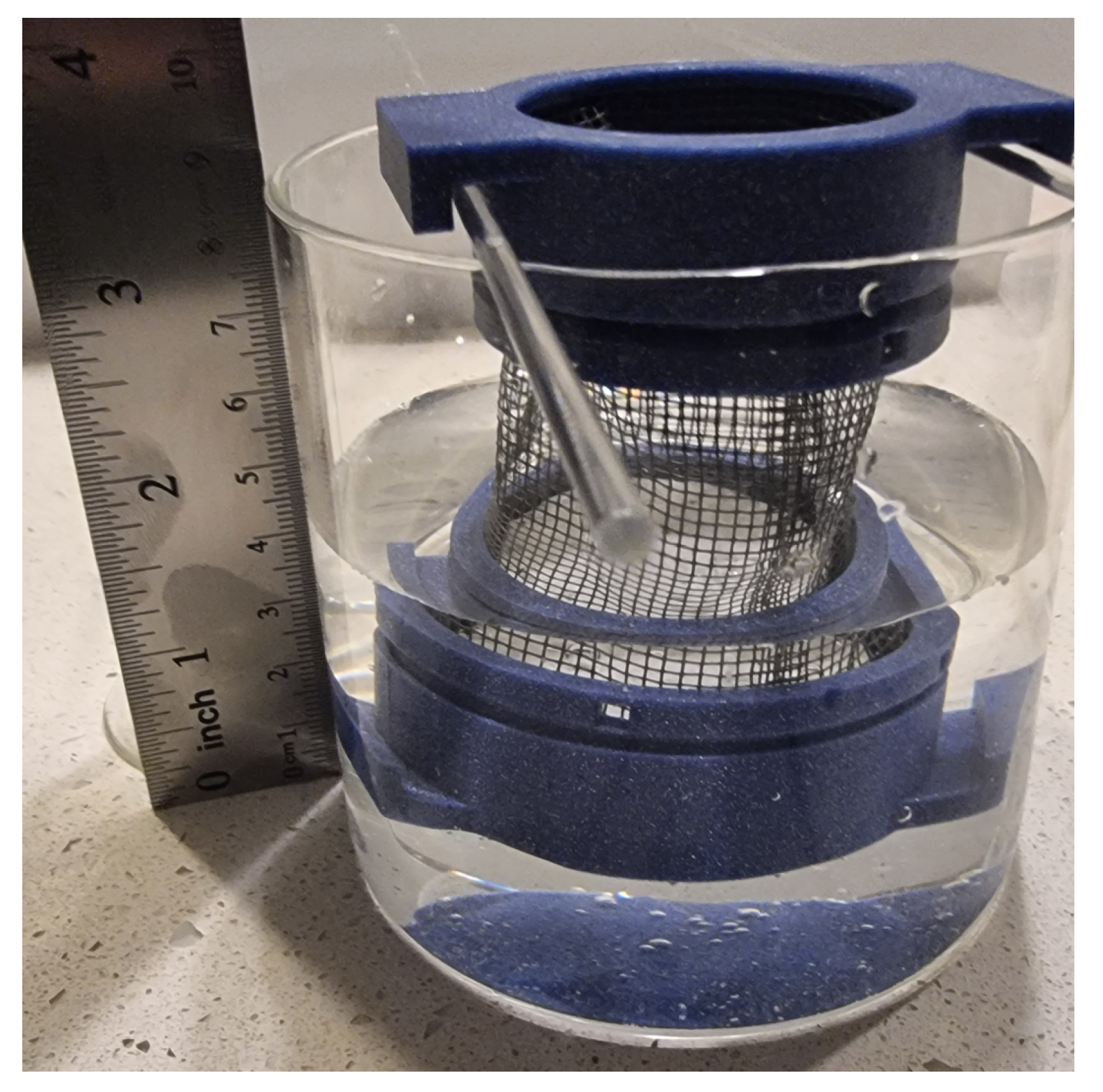
2.5. Water Absorption Test
3. Conclusions
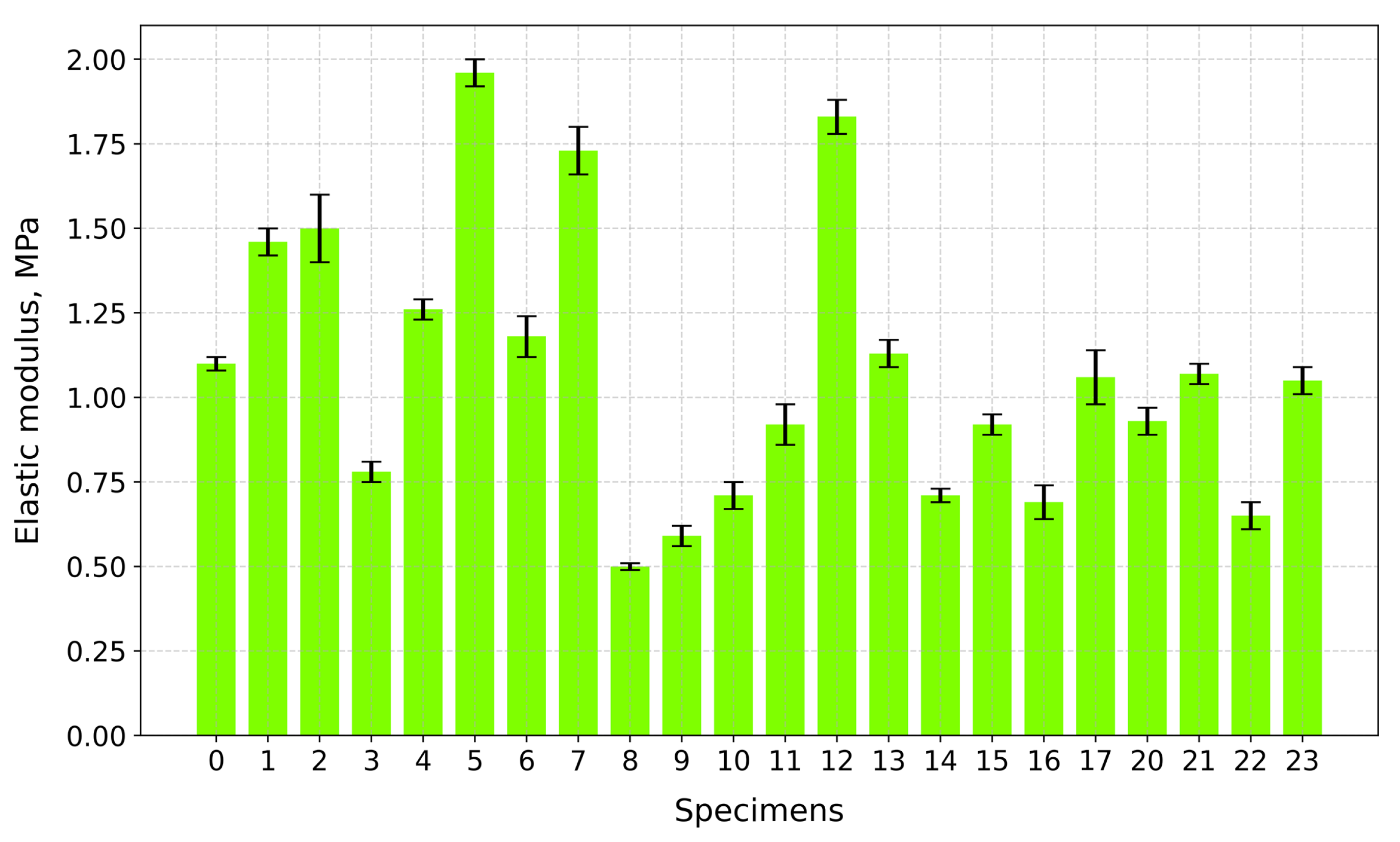
- Specimens without plasticizers have increased elastic modulus values, as observed in the case of Specimens 1 (1.46 MPa) and 2 (1.50 MPa), compared to Specimen 0 (1.10 MPa).
- The addition of chitosan improves the elastic modulus, as noted for Specimens 1 (32.7%), 5 (55.5%), 7 (46.6%), 9 (18.0%), 11 (29.6%), and 17 (53.6%), compared to the same specimens without chitosan (0, 4, 6, 8, 10, and 16, respectively).
- Using different percentages of the same plasticizer affects the composite’s modulus of elasticity, which can be seen by comparing Specimens 4 (with 5% glycerol (1.26 MPa)) and 8 (with 15% glycerol (0.50 MPa)) and Specimens 12 (with 1% gum arabic (1.83 MPa)) and 16 (with 5% gum arabic (0.69 MPa)). From the obtained results, it can be clearly seen that small percentages of plasticizer improve the modulus values, while higher percentages lead to a significant drop. In addition, the modulus of elasticity of specimens with a lower content of glycerol plasticizer (1.26 MPa) also increases with the presence of chitosan (1.96 MPa).
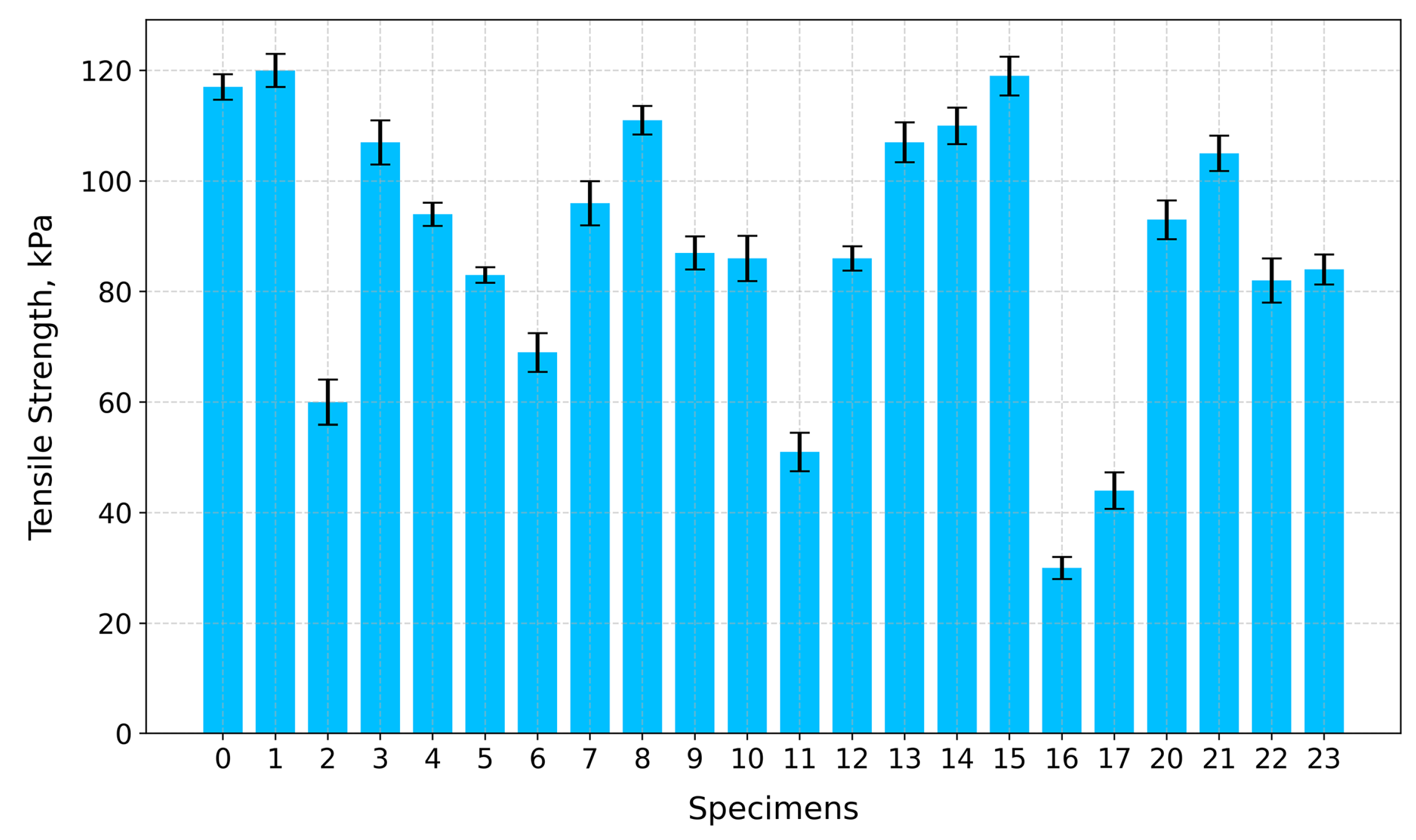
- The addition of chitosan and/or iota carrageenan in specimens with a lower percentage of gum arabic reduces the elastic modulus (1.83 MPa compared to 1.13 MPa, 0.71 MPa, and 0.92 MPa). On the other hand, when it comes to the tensile strength and toughness, the addition of either chitosan or iota carrageenan leads to an increase (107 kPa and 110 kPa compared to 86 kPa, and 11.3 kJ/m3 and 15.9 kJ/m3 compared to 7.5 kJ/m3, respectively).
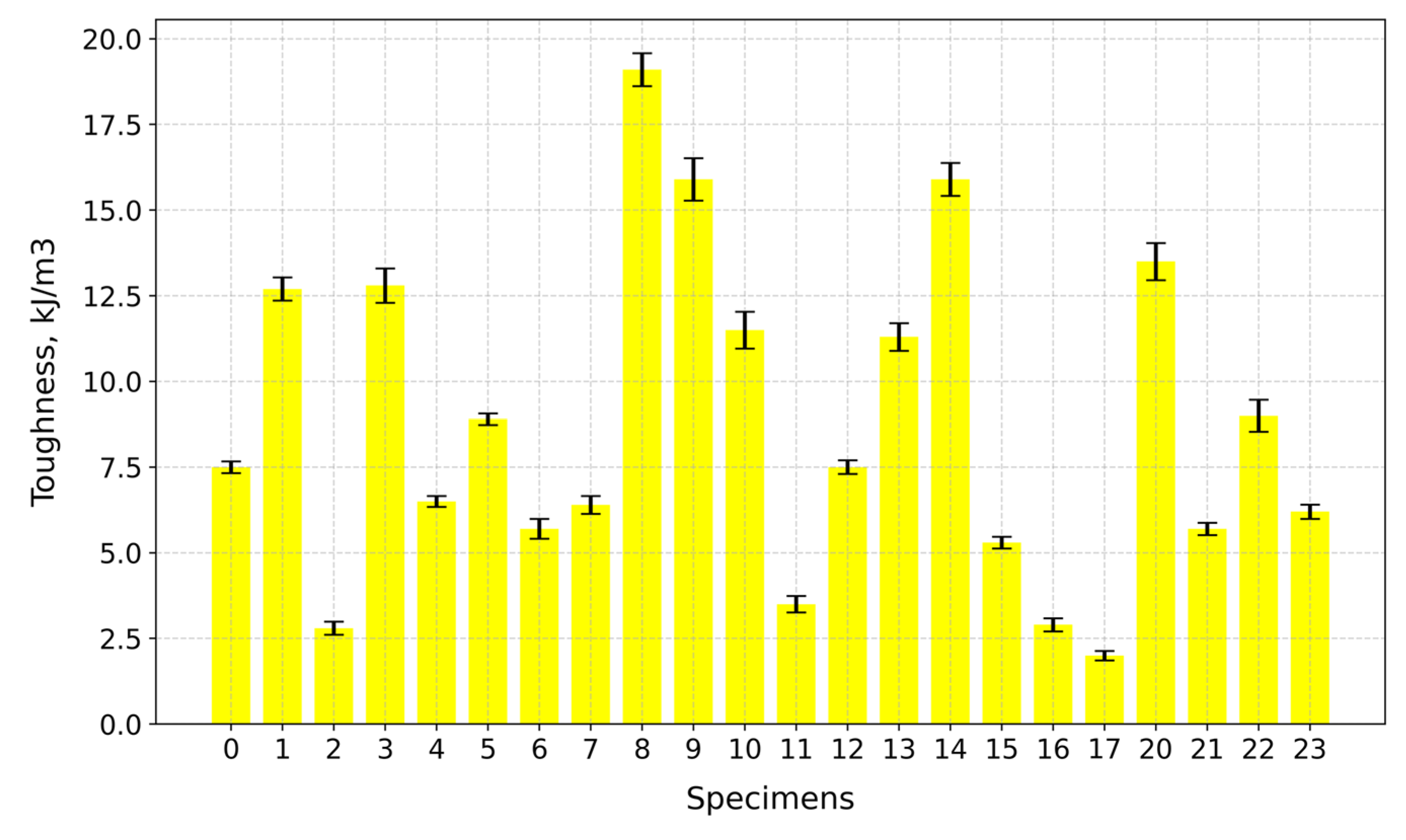
- Adding glycerol plasticizer at higher weight percentages improves the toughness value, as can be seen for Specimens 8 (19.1 kJ/m3), 9 (15.9 kJ/m3), and 10 (11.5 kJ/m3) compared to the specimens with a lower percentage of glycerol (6.5 kJ/m3, 8.9 kJ/m3, 5.7 kJ/m3, and 6.4 kJ/m3). Similar results were also observed for gum arabic plasticizer at lower weight percentages; the tensile strength values of Specimens 13 (107 kPa), 14 (110 kPa), and 15 (119 kPa) were higher compared to specimens with higher gum arabic percentages (30 kPa and 44 kPa). The toughness values of Specimens 13 (11.3 kJ/m3) and 14 (15.9 kJ/m3) were also increased compared to specimens with higher gum arabic percentages (2.9 kJ/m3 and 2.0 kJ/m3).
- The toughness increases when plasticizer is added in higher wight percentages; the increase is 193.8%, 78.6% and 101.7% for Specimens 8, 9, 10 (15% glycerol), respectively, compared to the corresponding Specimens 4, 5, 6 (5% glycerol), respectively.
- In the presence of iota carrageenan, along with gum arabic and chitosan, the toughness is reduced for specimen groups with a higher percentage of glycerol (15.9 kJ/m3 and 11.5 kJ/m3 compared to 3.5 kJ/m3) and specimen groups with a lower percentage of gum arabic (11.3 kJ/m3 and 15.9 kJ/m3 compared to 5.3 kJ/m3).
- The addition of iota carrageenan should be avoided when gum arabic is present at higher weight percentages, as this leads to shedding (Specimens 18 and 19).
- The combination of both chitosan and carrageenan, along with plasticizers, should be avoided when plasticizers are present at higher weight percentages, as these specimens in general did not exhibit good mechanical behavior.
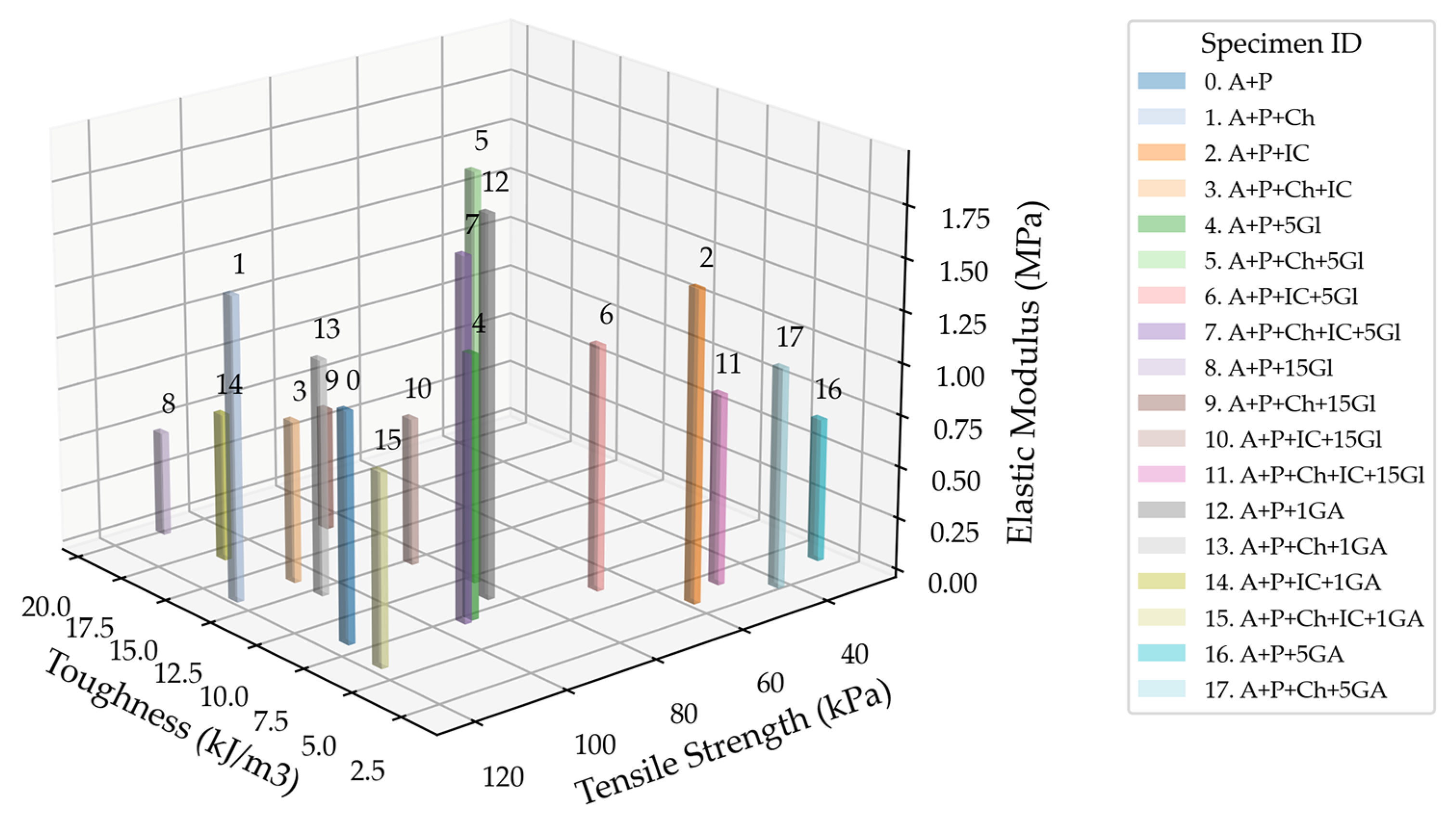
- The specimen possessing the optimal combination of tensile strength, elastic modulus, and toughness, if the criterion for optimality is based on the combination of their highest values, is Specimen 1 (120 kPa, 1.46 MPa, 12.7 kJ/m3), while Sample 16 is the weakest (30 kPa, 0.69 MPa, 2.9 kJ/m3).
- Regarding water absorption, a higher percentage of glycerol plasticizer reduces water absorption, which was observed for Specimens 8 (64.8%), 9 (74.8%), 10 (77.0%), and 11 (88.0%) compared to Specimens 4 (114.4%), 5 (164%), 6 (107.7%), and 7 (118.2%), respectively. All specimens maintained their structural stability.
4. Materials and Methods
4.1. Materials
4.2. Specimen Preparation
4.3. Characterization Methods
Author Contributions
Funding
Institutional Review Board Statement
Informed Consent Statement
Data Availability Statement
Acknowledgments
Conflicts of Interest
References
- Hecht, H.; Srebnik, S. Structural Characterization of Sodium Alginate and Calcium Alginate. Biomacromolecules 2016, 17, 2160–2167. [Google Scholar] [CrossRef] [PubMed]
- Ching, S.H.; Bansal, N.; Bhandari, B. Alginate Gel Particles–A Review of Production Techniques and Physical Properties. Crit. Rev. Food Sci. Nutr. 2017, 57, 1133–1152. [Google Scholar] [CrossRef]
- Soares, J.P.; Santos, J.E.; Chierice, G.O.; Cavalheiro, E.T.G. Thermal Behavior of Alginic Acid and Its Sodium Salt. Eclét. Quím. 2004, 29, 57–64. [Google Scholar] [CrossRef]
- Gheorghita Puscaselu, R.; Lobiuc, A.; Dimian, M.; Covasa, M. Alginate: From Food Industry to Biomedical Applications and Management of Metabolic Disorders. Polymers 2020, 12, 2417. [Google Scholar] [CrossRef] [PubMed]
- Hurtado, A.; Aljabali, A.A.A.; Mishra, V.; Tambuwala, M.M.; Serrano-Aroca, Á. Alginate: Enhancement Strategies for Advanced Applications. Int. J. Mol. Sci. 2022, 23, 4486. [Google Scholar] [CrossRef] [PubMed]
- Hu, C.; Lu, W.; Mata, A.; Nishinari, K.; Fang, Y. Ions-Induced Gelation of Alginate: Mechanisms and Applications. Int. J. Biol. Macromol. 2021, 177, 578–588. [Google Scholar] [CrossRef]
- Grant, G.T.; Morris, E.R.; Rees, D.A.; Smith, P.J.C.; Thom, D. Biological Interactions between Polysaccharides and Divalent Cations: The Egg-box Model. FEBS Lett. 1973, 32, 195–198. [Google Scholar] [CrossRef]
- Wei, Q.; Zhou, J.; An, Y.; Li, M.; Zhang, J.; Yang, S. Modification, 3D Printing Process and Application of Sodium Alginate Based Hydrogels in Soft Tissue Engineering: A Review. Int. J. Biol. Macromol. 2023, 232, 123450. [Google Scholar] [CrossRef]
- Leonardo, M.; Prajatelistia, E.; Judawisastra, H. Alginate-Based Bioink for Organoid 3D Bioprinting: A Review. Bioprinting 2022, 28, e00246. [Google Scholar] [CrossRef]
- Abourehab, M.A.S.; Rajendran, R.R.; Singh, A.; Pramanik, S.; Shrivastav, P.; Ansari, M.J.; Manne, R.; Amaral, L.S.; Deepak, A. Alginate as a Promising Biopolymer in Drug Delivery and Wound Healing: A Review of the State-of-the-Art. Int. J. Mol. Sci. 2022, 23, 9035. [Google Scholar] [CrossRef]
- Cervino, G.; Fiorillo, L.; Herford, A.S.; Laino, L.; Troiano, G.; Amoroso, G.; Crimi, S.; Matarese, M.; D’Amico, C.; Nastro Siniscalchi, E.; et al. Alginate Materials and Dental Impression Technique: A Current State of the Art and Application to Dental Practice. Mar. Drugs 2018, 17, 18. [Google Scholar] [CrossRef] [PubMed]
- Beni, A.A.; Esmaeili, A. Biosorption, an Efficient Method for Removing Heavy Metals from Industrial Effluents: A Review. Environ. Technol. Innov. 2020, 17, 100503. [Google Scholar] [CrossRef]
- Akter, N.; Akter, N.; Pervin, M.; Repon, M.R. The Influence of Mixed Thickeners on Printing over Lyocell Knitted Fabric. Heliyon 2023, 9, e14175. [Google Scholar] [CrossRef] [PubMed]
- Xu, Y.-J.; Qu, L.-Y.; Liu, Y.; Zhu, P. An Overview of Alginates as Flame-Retardant Materials: Pyrolysis Behaviors, Flame Retardancy, and Applications. Carbohydr. Polym. 2021, 260, 117827. [Google Scholar] [CrossRef]
- Jiang, Y.; Pang, X.; Deng, Y.; Sun, X.; Zhao, X.; Xu, P.; Shao, P.; Zhang, L.; Li, Q.; Li, Z. An Alginate Hybrid Sponge with High Thermal Stability: Its Flame Retardant Properties and Mechanism. Polymers 2019, 11, 1973. [Google Scholar] [CrossRef]
- Xu, H.; Liu, C.; Guo, W.; Li, N.; Chen, Y.; Meng, X.; Zhai, M.; Zhang, S.; Wang, Z. Sodium Alginate/Al2O3 Fiber Nanocomposite Aerogel with Thermal Insulation and Flame Retardancy Properties. Chem. Eng. J. 2024, 489, 151223. [Google Scholar] [CrossRef]
- Ahmad Raus, R.; Wan Nawawi, W.M.F.; Nasaruddin, R.R. Alginate and Alginate Composites for Biomedical Applications. Asian J. Pharm. Sci. 2021, 16, 280–306. [Google Scholar] [CrossRef] [PubMed]
- Lee, K.Y.; Mooney, D.J. Alginate: Properties and Biomedical Applications. Prog. Polym. Sci. 2012, 37, 106–126. [Google Scholar] [CrossRef]
- Eslami, Z.; Elkoun, S.; Robert, M.; Adjallé, K. A Review of the Effect of Plasticizers on the Physical and Mechanical Properties of Alginate-Based Films. Molecules 2023, 28, 6637. [Google Scholar] [CrossRef]
- Mohammed, A.; Gaduan, A.; Chaitram, P.; Pooran, A.; Lee, K.-Y.; Ward, K. Sargassum Inspired, Optimized Calcium Alginate Bioplastic Composites for Food Packaging. Food Hydrocoll. 2023, 135, 108192. [Google Scholar] [CrossRef]
- Lacoste, C.; El Hage, R.; Bergeret, A.; Corn, S.; Lacroix, P. Sodium Alginate Adhesives as Binders in Wood Fibers/Textile Waste Fibers Biocomposites for Building Insulation. Carbohydr. Polym. 2018, 184, 1–8. [Google Scholar] [CrossRef] [PubMed]
- Zhou, Y.; Trabelsi, A.; El Mankibi, M. Development and Characterization of Thermal Insulation Materials Based on Rice Straw and Natural Binder. In Proceedings of the CLIMA 2022 The 14th REHVA HVAC World Congress, Rotterdam, The Netherlands, 22–25 May 2022. [Google Scholar]
- Palumbo, M.; Formosa, J.; Lacasta, A.M. Thermal Degradation and Fire Behaviour of Thermal Insulation Materials Based on Food Crop By-Products. Constr. Build. Mater. 2015, 79, 34–39. [Google Scholar] [CrossRef][Green Version]
- Gurgel, M.; Vieira, A.; Altenhofen, M.; Oliveira, L.; Beppu, M.M. Natural-Based Plasticizers and Biopolymer Films: A Review. Eur. Polym. J. 2011, 47, 254–263. [Google Scholar] [CrossRef]
- da Silva, M.A.; Bierhalz, A.C.K.; Kieckbusch, T.G. Alginate and Pectin Composite Films Crosslinked with Ca2+ Ions: Effect of the Plasticizer Concentration. Carbohydr. Polym. 2009, 77, 736–742. [Google Scholar] [CrossRef]
- Wang, X.; Zhang, H.; Zhang, X.; Shen, C.; Liu, M.; Liu, S.; Han, Y.; He, T. A Comparison Study on Effects of Polyglycerols on Physical Properties of Alginate Films. Int. J. Biol. Macromol. 2024, 254, 127879. [Google Scholar] [CrossRef] [PubMed]
- Tong, Q.; Xiao, Q.; Lim, L. Effects of Glycerol, Sorbitol, Xylitol and Fructose Plasticisers on Mechanical and Moisture Barrier Properties of Pullulan–Alginate–Carboxymethylcellulose Blend Films. Int. J. Food Sci. Technol. 2013, 48, 870–878. [Google Scholar] [CrossRef]
- Ben, Z.Y.; Samsudin, H.; Yhaya, M.F. Glycerol: Its Properties, Polymer Synthesis, and Applications in Starch Based Films. Eur. Polym. J. 2022, 175, 111377. [Google Scholar] [CrossRef]
- Wolfson, A.; Dlugy, C.; Shotland, Y. Glycerol as a Green Solvent for High Product Yields and Selectivities. Environ. Chem. Lett. 2007, 5, 67–71. [Google Scholar] [CrossRef]
- Prasad, N.; Thombare, N.; Sharma, S.C.; Kumar, S. Gum Arabic—A Versatile Natural Gum: A Review on Production, Processing, Properties and Applications. Ind. Crops Prod. 2022, 187, 115304. [Google Scholar] [CrossRef]
- Feraru, A.; Tóth, Z.-R.; Mureșan-Pop, M.; Baia, M.; Gyulavári, T.; Páll, E.; Turcu, R.V.F.; Magyari, K.; Baia, L. Anionic Polysaccharide Cryogels: Interaction and In Vitro Behavior of Alginate–Gum Arabic Composites. Polymers 2023, 15, 1844. [Google Scholar] [CrossRef]
- Tsai, F.-H.; Kitamura, Y.; Kokawa, M. Effect of Gum Arabic-Modified Alginate on Physicochemical Properties, Release Kinetics, and Storage Stability of Liquid-Core Hydrogel Beads. Carbohydr. Polym. 2017, 174, 1069–1077. [Google Scholar] [CrossRef] [PubMed]
- Zakka, W. Suitability of Gum Arabic as a Plasticizer in Self-Compacting Concrete Compacting Concrete Compacting Concrete: Fresh Concrete Fresh Concrete Properties. Int. J. Environ. Stud. Saf. Res. 2019, 4, 53–62. [Google Scholar]
- Li, M.; Li, H.; Li, X.; Zhu, H.; Xu, Z.; Liu, L.; Ma, J.; Zhang, M. A Bioinspired Alginate-Gum Arabic Hydrogel with Micro-/Nanoscale Structures for Controlled Drug Release in Chronic Wound Healing. ACS Appl. Mater. Interfaces 2017, 9, 22160–22175. [Google Scholar] [CrossRef]
- Jiménez-Gómez, C.P.; Cecilia, J.A. Chitosan: A Natural Biopolymer with a Wide and Varied Range of Applications. Molecules 2020, 25, 3981. [Google Scholar] [CrossRef]
- Ramdhan, T.; Ching, S.H.; Prakash, S.; Bhandari, B. Physical and Mechanical Properties of Alginate Based Composite Gels. Trends Food Sci. Technol. 2020, 106, 150–159. [Google Scholar] [CrossRef]
- Kim, K.; Cheng, J.; Liu, Q.; Wu, X.Y.; Sun, Y. Investigation of Mechanical Properties of Soft Hydrogel Microcapsules in Relation to Protein Delivery Using a MEMS Force Sensor. J. Biomed. Mater. Res. Part A 2010, 92A, 103–113. [Google Scholar] [CrossRef]
- Baruch, L.; Machluf, M. Alginate–Chitosan Complex Coacervation for Cell Encapsulation: Effect on Mechanical Properties and on Long-term Viability. Biopolymers 2006, 82, 570–579. [Google Scholar] [CrossRef] [PubMed]
- Segale, L.; Giovannelli, L.; Mannina, P.; Pattarino, F. Calcium Alginate and Calcium Alginate-Chitosan Beads Containing Celecoxib Solubilized in a Self-Emulsifying Phase. Scientifica 2016, 2016, 5062706. [Google Scholar] [CrossRef] [PubMed]
- Bui, V.T.N.T.; Nguyen, B.T.; Nicolai, T.; Renou, F. Mixed Iota and Kappa Carrageenan Gels in the Presence of Both Calcium and Potassium Ions. Carbohydr. Polym. 2019, 223, 115107. [Google Scholar] [CrossRef]
- Abdul Khalil, H.P.S.; Tye, Y.Y.; Saurabh, C.K.; Leh, C.P.; Lai, T.K.; Chong, E.W.N.; Nurul Fazita, M.R.; Mohd Hafiidz, J.; Banerjee, A.; Syakir, M.I. Biodegradable Polymer Films from Seaweed Polysaccharides: A Review on Cellulose as a Reinforcement Material. Express Polym. Lett. 2017, 11, 244–265. [Google Scholar] [CrossRef]
- Zujovic, Z.; Wheelwright, W.V.K.; Kilmartin, P.A.; Hanna, J.V.; Cooney, R.P. Structural Investigations of Perlite and Expanded Perlite Using 1H, 27Al and 29Si Solid-State NMR. Ceram. Int. 2018, 44, 2952–2958. [Google Scholar] [CrossRef]
- Bush, A.L. Construction Materials: Lightweight Aggregates. In Encyclopedia of Materials: Science and Technology; Elsevier: Amsterdam, The Netherlands, 2001; pp. 1550–1558. [Google Scholar]
- Berge, B. The Ecology of Building Materials, 2nd ed.; Routledge: London, UK, 2009; p. 448. [Google Scholar]
- Rashad, A.M. A Synopsis about Perlite as Building Material—A Best Practice Guide for Civil Engineer. Constr. Build. Mater. 2016, 121, 338–353. [Google Scholar] [CrossRef]
- Roulia, M.; Chassapis, K.; Kapoutsis, J.A.; Kamitsos, E.I.; Savvidis, T. Influence of Thermal Treatment on the Water Release and the Glassy Structure of Perlite. J. Mater. Sci. 2006, 41, 5870–5881. [Google Scholar] [CrossRef]
- Arifuzzaman, M.; Kim, H.S. Novel Mechanical Behaviour of Perlite/Sodium Silicate Composites. Constr. Build. Mater. 2015, 93, 230–240. [Google Scholar] [CrossRef]
- Shastri, D.; Kim, H.S. A New Consolidation Process for Expanded Perlite Particles. Constr. Build. Mater. 2014, 60, 1–7. [Google Scholar] [CrossRef]
- Guo, Y.; Tian, Q.; Lu, H.; Qu, N.; Chen, L.; Zhang, Y.; Xiao, C.; Hasi, Q. An Expanded Perlite-Based Aerogel with Oil-Repellent Properties for Efficient Solar Evaporation in Oil-bearing Wastewater. ChemistrySelect 2022, 7, e202202920. [Google Scholar] [CrossRef]
- Türe, H.; Terzioğlu, K.; Tunca, E. Characterization of Alginate/Perlite Particles. Süleyman Demirel Üniversitesi Fen Bilim. Enstitüsü Derg. 2017, 21, 756. [Google Scholar] [CrossRef][Green Version]
- Parlayici, Ş. Alginate-Coated Perlite Beads for the Efficient Removal of Methylene Blue, Malachite Green, and Methyl Violet from Aqueous Solutions: Kinetic, Thermodynamic, and Equilibrium Studies. J. Anal. Sci. Technol. 2019, 10, 4. [Google Scholar] [CrossRef]
- Liffourrena, A.S.; Lucchesi, G.I. Alginate-Perlite Encapsulated Pseudomonas Putida A (ATCC 12633) Cells: Preparation, Characterization and Potential Use as Plant Inoculants. J. Biotechnol. 2018, 278, 28–33. [Google Scholar] [CrossRef]
- Chegeni, M.; Mehri, M.; Shokri Rozbahani, Z. Cuminum Cyminum L Encapsulaton on Perlite/Calcium Alginate/Single Walled Carbon Nanotubes -Glucose Composite: Fabricaton, Characterizaton, Antbacterial and Antfungal Propertes. Nanochemistry Res. 2023, 8, 164–172. [Google Scholar] [CrossRef]
- Iglesias, I.; Acosta, B.; Yu, R.; Ruiz, G.; Aineto, M.; Acosta, A. Estudio de Caracterización Mecánica de Probetas Cerámicas a Partir de Una Adaptación Del Ensayo Brasileño. Mater. Constr. 2011, 61, 417–429. [Google Scholar] [CrossRef]
- Elghazel, A.; Taktak, R.; Bouaziz, J. Determination of Elastic Modulus, Tensile Strength and Fracture Toughness of Bioceramics Using the Flattened Brazilian Disc Specimen: Analytical and Numerical Results. Ceram. Int. 2015, 41, 12340–12348. [Google Scholar] [CrossRef]
- Carmona, S.; Aguado, A. New Model for the Indirect Determination of the Tensile Stress–Strain Curve of Concrete by Means of the Brazilian Test. Mater. Struct. 2012, 45, 1473–1485. [Google Scholar] [CrossRef]
- Huang, Z.; Zhang, Y.; Li, Y.; Zhang, D.; Yang, T.; Sui, Z. Determining Tensile Strength of Rock by the Direct Tensile, Brazilian Splitting, and Three-Point Bending Methods: A Comparative Study. Adv. Civ. Eng. 2021, 2021, 5519230. [Google Scholar] [CrossRef]
- Price, H.L.; Murray, K.H. Finite Element Analysis of the Diametral Test of Polymer Moldings. J. Eng. Mater. Technol. 1973, 95, 186–191. [Google Scholar] [CrossRef]
- Martínez-López, M.; Martínez-Barrera, G.; Nunes, L.C.S.; Reis, J.M.L.; da Costa Mattos, H.S. Mixed Mode Fracture Analysis in a Polymer Mortar Using the Brazilian Disk Test. Eng. Fract. Mech. 2016, 154, 140–151. [Google Scholar] [CrossRef]
- Vuksanović, M.; Tomić, N.; Algellai, A.; Balanč, B.; Radovanović, Ž.; Trifunović, D.; Jančić-Heinemann, R. Examination of Mechanical Properties of Acrilyc Composite Materials with Different Al2O3 Reinforcement by Brazil Test. Tehnika 2019, 74, 9–14. [Google Scholar] [CrossRef]
- Al-Allaq, A.A.; Kashan, J.S.; El-Wakad, M.T.; Soliman, A.M. The Bio-Composites (Hydroxyapatite/High-Density Polyethylene) Materials Rein Forced with Multi-Walled Carbon Nanotubes for Bone Tissue Repair. J. Ceram. Process. Res. 2021, 22, 446–454. [Google Scholar] [CrossRef]
- Deniz Akin, I.; Likos, W.J. Brazilian Tensile Strength Testing of Compacted Clay. Geotech. Test. J. 2017, 40, 608–617. [Google Scholar] [CrossRef]
- Gaspar, T.A.V.; Jacobsz, S.W. Brazilian Tensile Strength Test Conducted on Ductile Unsaturated Soil Samples. Geotech. Test. J. 2021, 44, 799–810. [Google Scholar] [CrossRef]
- Larosa, C.; Salerno, M.; de Lima, J.S.; Merijs Meri, R.; da Silva, M.F.; de Carvalho, L.B.; Converti, A. Characterisation of Bare and Tannase-Loaded Calcium Alginate Beads by Microscopic, Thermogravimetric, FTIR and XRD Analyses. Int. J. Biol. Macromol. 2018, 115, 900–906. [Google Scholar] [CrossRef] [PubMed]
- Fajardo, A.R.; Silva, M.B.; Lopes, L.C.; Piai, J.F.; Rubira, A.F.; Muniz, E.C. Hydrogel Based on an Alginate–Ca2+/Chondroitin Sulfate Matrix as a Potential Colon-Specific Drug Delivery System. RSC Adv. 2012, 2, 11095. [Google Scholar] [CrossRef]
- Paraskevopoulou, P.; Gurikov, P.; Raptopoulos, G.; Chriti, D.; Papastergiou, M.; Kypritidou, Z.; Skounakis, V.; Argyraki, A. Strategies toward Catalytic Biopolymers: Incorporation of Tungsten in Alginate Aerogels. Polyhedron 2018, 154, 209–216. [Google Scholar] [CrossRef]
- Gómez-Ordóñez, E.; Rupérez, P. FTIR-ATR Spectroscopy as a Tool for Polysaccharide Identification in Edible Brown and Red Seaweeds. Food Hydrocoll. 2011, 25, 1514–1520. [Google Scholar] [CrossRef]
- Çelen, U.; Balçik Tamer, Y.; Berber, H. The Potential Use of Natural Expanded Perlite as a Flame Retardant Additive for Acrylonitrile-butadiene-styrene Based Composites. J. Vinyl Addit. Technol. 2024, 30, 277–293. [Google Scholar] [CrossRef]
- Appolonia Ibekwe, C.; Modupe Oyatogun, G.; Ayodeji Esan, T.; Michael Oluwasegun, K. Synthesis and Characterization of Chitosan/Gum Arabic Nanoparticles for Bone Regeneration. Am. J. Mater. Sci. Eng. 2017, 5, 28–36. [Google Scholar] [CrossRef]
- Ramli, R.H.; Fhong Soon, C.; Mohd Rus, A.Z. Synthesis of Chitosan /Alginate/ Silver Nanoparticles Hydrogel Scaffold. MATEC Web Conf. 2016, 78, 01031. [Google Scholar] [CrossRef]
- Gawad, R.; Fellner, V. Evaluation of Glycerol Encapsulated with Alginate and Alginate-Chitosan Polymers in Gut Environment and Its Resistance to Rumen Microbial Degradation. Asian-Australas. J. Anim. Sci. 2019, 32, 72–81. [Google Scholar] [CrossRef]
- Sowunmi, A.; Orodu, O.; Efeovbokhan, V.; Ogundare, S. Comparative Dataset on the Characterization of Natural Polymers and Nanocomposites for Enhanced Oil Recovery. Data Br. 2020, 33, 106506. [Google Scholar] [CrossRef] [PubMed]
- Nityananda Agasti, N.K.K. One Pot Synthesis of Crystalline Silver Nanoparticles. Am. J. Nanomater. 2014, 2, 4–7. [Google Scholar]
- Ngo, A.N.; Ezoulin, M.J.M.; Murowchick, J.B.; Gounev, A.D.; Youan, B.-B.C. Sodium Acetate Coated Tenofovir-Loaded Chitosan Nanoparticles for Improved Physico-Chemical Properties. Pharm. Res. 2016, 33, 367–383. [Google Scholar] [CrossRef] [PubMed]
- Beer, F.P.; Johnston, E.R., Jr.; DeWolf, J.T.; Mazurek, D.F. Mechanics of Materials; McGraw-Hill: New York, NY, USA, 2012. [Google Scholar]
- Shi, W.; Wan, M.; Tang, Y.; Chen, W. Ceramic Fiber-Reinforced Polyimide Aerogel Composites with Improved Shape Stability against Shrinkage. Gels 2024, 10, 327. [Google Scholar] [CrossRef]
- Miranda-Valdez, I.Y.; Coffeng, S.; Zhou, Y.; Viitanen, L.; Hu, X.; Jannuzzi, L.; Puisto, A.; Kostiainen, M.A.; Mäkinen, T.; Koivisto, J.; et al. Foam-Formed Biocomposites Based on Cellulose Products and Lignin. Cellulose 2023, 30, 2253–2266. [Google Scholar] [CrossRef]
- SRPS B.B7.127:2020; Rock Mechanics—Testing of Physical and Mechanical Properties—Method for the Determination of Tensile Strength Limit—Indirect Method. Institute for Standardization of Serbia: Belgrade, Serbia, 2020.
- ASTM D570-98; Standard Test Method for Water Absorption of Plastics. ASTM International: West Conshohocken, PA, USA, 2018.
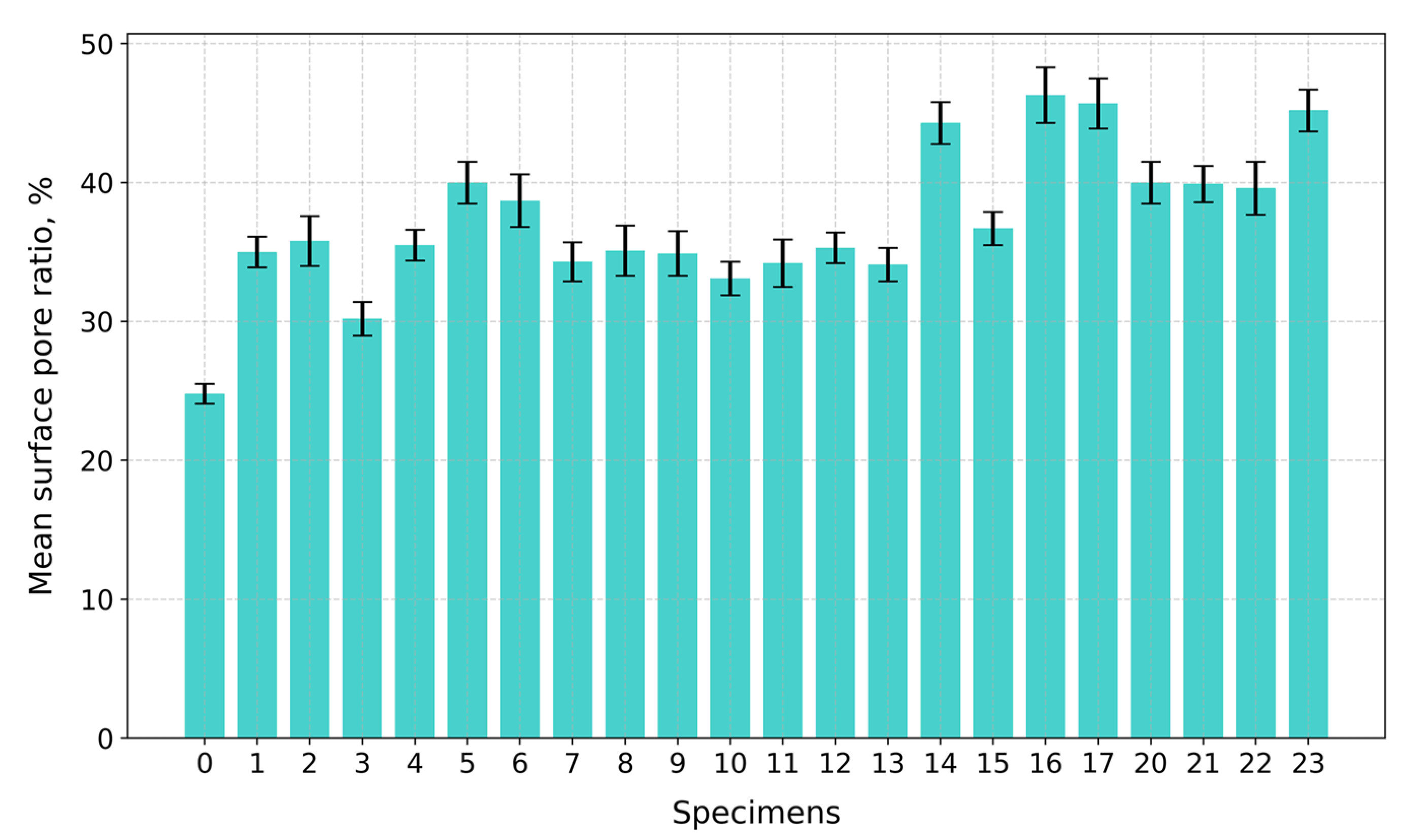
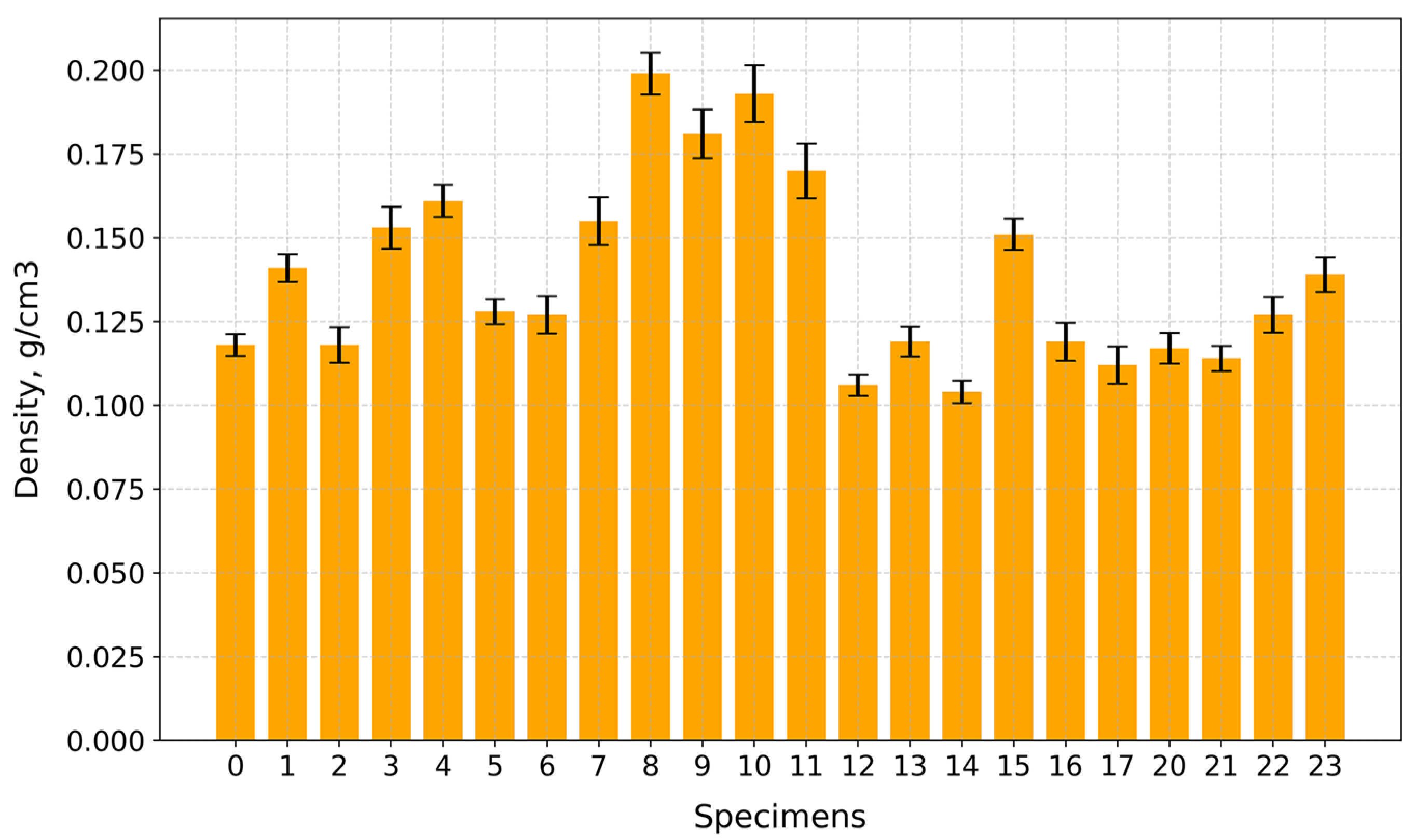
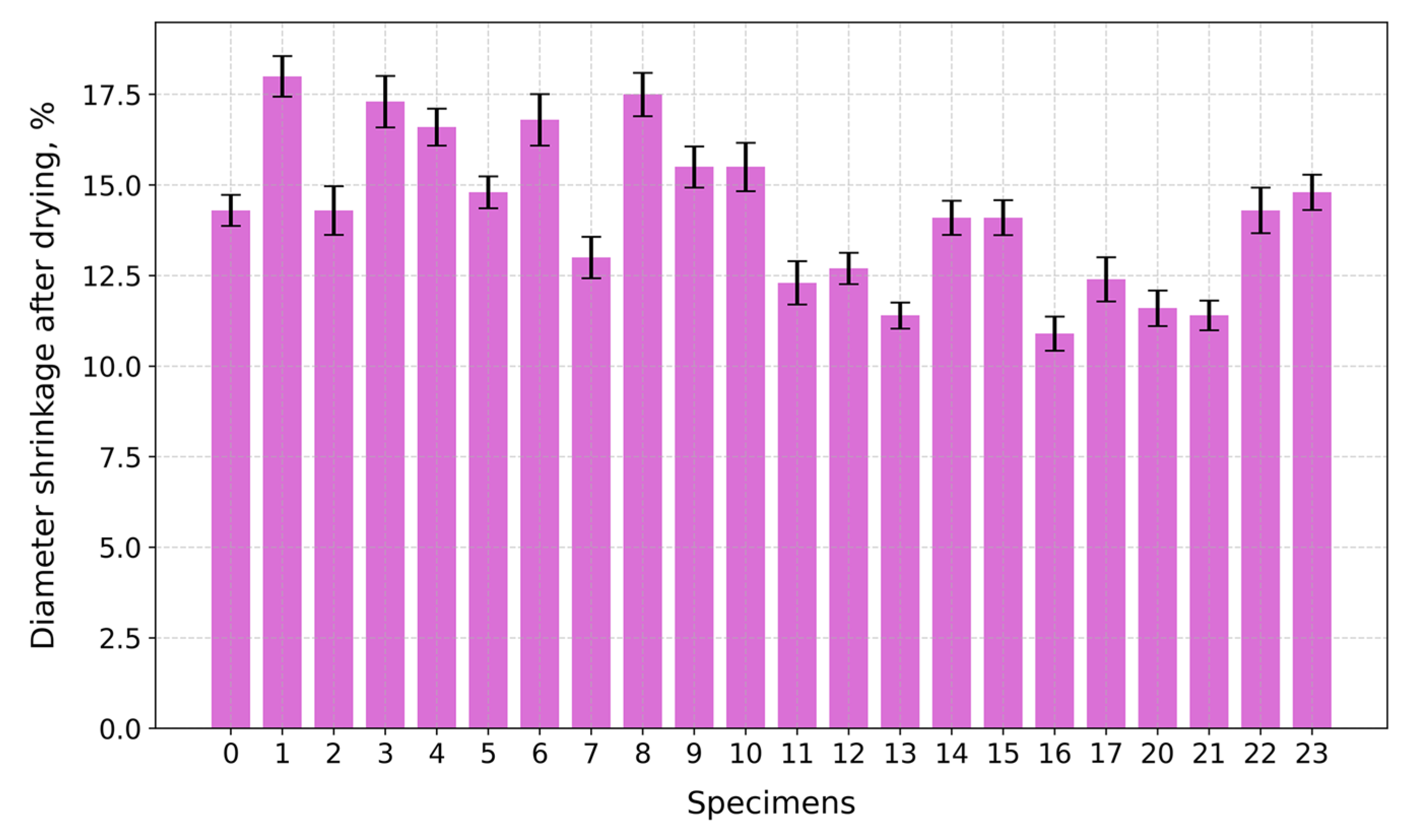







| Specimen | Tensile Strength, kPa | Elastic Modulus, MPa | Toughness, kJ/m3 | Mean Surface Pore Ratio, % | Density (Disk), g/cm3 | Diameter Shrinkage After Drying, % |
|---|---|---|---|---|---|---|
| 0 | 117 | 1.10 | 7.5 | 24.8 | 0.118 | 14.3 |
| 1 | 120 | 1.46 | 12.7 | 35.0 | 0.141 | 18.0 |
| 2 | 60 | 1.50 | 2.8 | 35.8 | 0.118 | 14.3 |
| 3 | 107 | 0.78 | 12.8 | 30.2 | 0.153 | 17.3 |
| 4 | 94 | 1.26 | 6.5 | 35.5 | 0.161 | 16.6 |
| 5 | 83 | 1.96 | 8.9 | 40.0 | 0.128 | 14.8 |
| 6 | 69 | 1.18 | 5.7 | 38.7 | 0.127 | 16.8 |
| 7 | 96 | 1.73 | 6.4 | 34.3 | 0.155 | 13.0 |
| 8 | 111 | 0.50 | 19.1 | 35.1 | 0.199 | 17.5 |
| 9 | 87 | 0.59 | 15.9 | 34.9 | 0.181 | 15.5 |
| 10 | 86 | 0.71 | 11.5 | 33.1 | 0.193 | 15.5 |
| 11 | 51 | 0.92 | 3.5 | 34.2 | 0.170 | 12.3 |
| 12 | 86 | 1.83 | 7.5 | 35.3 | 0.106 | 12.7 |
| 13 | 107 | 1.13 | 11.3 | 34.1 | 0.119 | 11.4 |
| 14 | 110 | 0.71 | 15.9 | 44.3 | 0.104 | 14.1 |
| 15 | 119 | 0.92 | 5.3 | 36.7 | 0.151 | 14.1 |
| 16 | 30 | 0.69 | 2.9 | 46.3 | 0.119 | 10.9 |
| 17 | 44 | 1.06 | 2.0 | 45.7 | 0.112 | 12.4 |
| 20 | 93 | 0.93 | 13.5 | 40.0 | 0.117 | 11.6 |
| 21 | 105 | 1.07 | 5.7 | 39.9 | 0.114 | 11.4 |
| 22 | 82 | 0.65 | 9.0 | 39.6 | 0.127 | 14.3 |
| 23 | 84 | 1.05 | 6.2 | 45.2 | 0.139 | 14.8 |
| Specimen | Water Absorption, % | Specimen | Water Absorption, % |
|---|---|---|---|
| 0 | 142.9 | 11 | 80.8 |
| 1 | 112.3 | 12 | 156.8 |
| 2 | 163.8 | 13 | 137.1 |
| 3 | 110.5 | 14 | 205.0 |
| 4 | 114.4 | 15 | 144.4 |
| 5 | 164.0 | 16 | 103.9 |
| 6 | 107.7 | 17 | 197.4 |
| 7 | 118.2 | 20 | 101.6 |
| 8 | 64.8 | 21 | 94.4 |
| 9 | 74.8 | 22 | 96.8 |
| 10 | 77.0 | 23 | 84.2 |
| Parameter | Sieve Diameter [mm] | Average Value |
|---|---|---|
| +1.000 | 11.4 | |
| Granulometric content | −1.000 + 0.315 | 52.8 |
| −0.315 + 0.200 | 12.7 | |
| −0.200 | 23.1 |
| Specimen No. | Alginate 3 wt.% Perlite 9 wt.% | Chitosan 0.95 wt.% | Iota Carrageenan 0.1 wt.% | Glycerol | Gum Arabic | Acrylic Binder 10 wt.% | ||
|---|---|---|---|---|---|---|---|---|
| 5 wt.% | 15 wt.% | 1 wt.% | 5 wt.% | |||||
| 0 | ● | x | x | x | x | x | x | x |
| 1 | ● | ● | x | x | x | x | x | x |
| 2 | ● | x | ● | x | x | x | x | x |
| 3 | ● | ● | ● | x | x | x | x | x |
| 4 | ● | x | x | ● | x | x | x | x |
| 5 | ● | ● | x | ● | x | x | x | x |
| 6 | ● | x | ● | ● | x | x | x | x |
| 7 | ● | ● | ● | ● | x | x | x | x |
| 8 | ● | x | x | x | ● | x | x | x |
| 9 | ● | ● | x | x | ● | x | x | x |
| 10 | ● | x | ● | x | ● | x | x | x |
| 11 | ● | ● | ● | x | ● | x | x | x |
| 12 | ● | x | x | x | x | ● | x | x |
| 13 | ● | ● | x | x | x | ● | x | x |
| 14 | ● | x | ● | x | x | ● | x | x |
| 15 | ● | ● | ● | x | x | ● | x | x |
| 16 | ● | x | x | x | x | x | ● | x |
| 17 | ● | ● | x | x | x | x | ● | x |
| 18 | ● | x | ● | x | x | x | ● | x |
| 19 | ● | ● | ● | x | x | x | ● | x |
| 20 | ● | x | x | x | x | x | x | ● |
| 21 | ● | ● | x | x | x | x | x | ● |
| 22 | ● | x | ● | x | x | x | x | ● |
| 23 | ● | ● | ● | x | x | x | x | ● |
Disclaimer/Publisher’s Note: The statements, opinions and data contained in all publications are solely those of the individual author(s) and contributor(s) and not of MDPI and/or the editor(s). MDPI and/or the editor(s) disclaim responsibility for any injury to people or property resulting from any ideas, methods, instructions or products referred to in the content. |
© 2024 by the authors. Licensee MDPI, Basel, Switzerland. This article is an open access article distributed under the terms and conditions of the Creative Commons Attribution (CC BY) license (https://creativecommons.org/licenses/by/4.0/).
Share and Cite
Damjanović, R.; Vuksanović, M.M.; Petrović, M.; Radovanović, Ž.; Stavrić, M.; Jančić Heinemann, R.; Živković, I. Expanded Perlite-Reinforced Alginate Xerogels: A Chemical Approach to Sustainable Building and Packaging Materials. Gels 2024, 10, 782. https://doi.org/10.3390/gels10120782
Damjanović R, Vuksanović MM, Petrović M, Radovanović Ž, Stavrić M, Jančić Heinemann R, Živković I. Expanded Perlite-Reinforced Alginate Xerogels: A Chemical Approach to Sustainable Building and Packaging Materials. Gels. 2024; 10(12):782. https://doi.org/10.3390/gels10120782
Chicago/Turabian StyleDamjanović, Radmila, Marija M. Vuksanović, Miloš Petrović, Željko Radovanović, Milena Stavrić, Radmila Jančić Heinemann, and Irena Živković. 2024. "Expanded Perlite-Reinforced Alginate Xerogels: A Chemical Approach to Sustainable Building and Packaging Materials" Gels 10, no. 12: 782. https://doi.org/10.3390/gels10120782
APA StyleDamjanović, R., Vuksanović, M. M., Petrović, M., Radovanović, Ž., Stavrić, M., Jančić Heinemann, R., & Živković, I. (2024). Expanded Perlite-Reinforced Alginate Xerogels: A Chemical Approach to Sustainable Building and Packaging Materials. Gels, 10(12), 782. https://doi.org/10.3390/gels10120782