Advances in Microbial Remediation of Heavy Metal-Contaminated Soils: Mechanisms, Synergistic Technologies, Field Applications and Future Perspectives

Abstract
1. Introduction
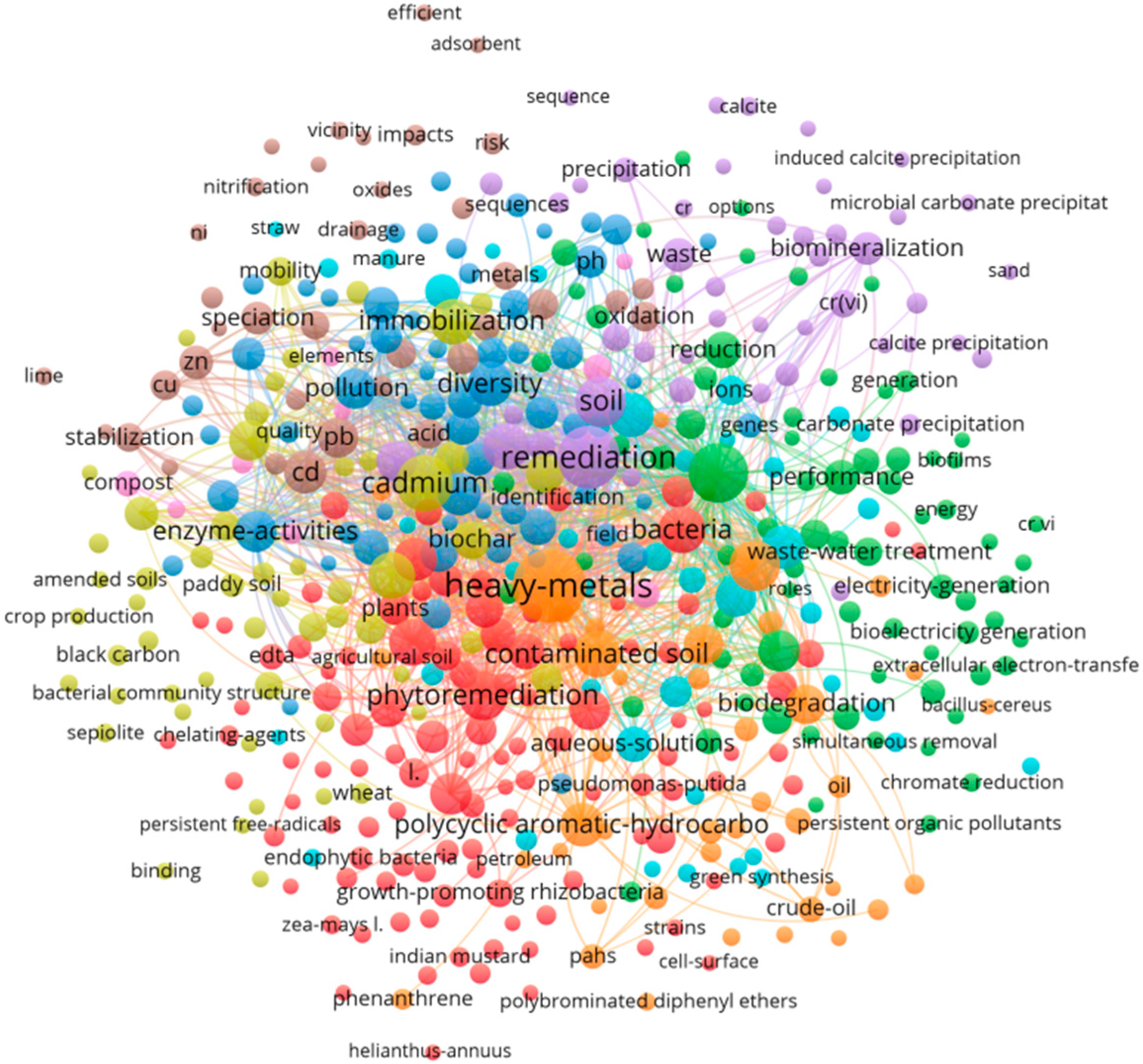
2. Knowledge Landscape: A Bibliometric Overview
3. Microbial Remediation Mechanisms: From Molecules to Communities
3.1. Molecular Interactions: Biosorption and Redox Transformation
3.2. Cellular Adaptation: Resistance, Detoxification, and Gene Transfer
3.3. Community Structure and Rhizosphere Effects
4. Synergistic Technologies: Enhancement of Microbial Remediation
4.1. Microbial Genetic Engineering
4.2. Microbial–Material Synergistic Systems
4.3. Bioelectrochemical Systems for Directed Remediation
5. Field Applications: Scaling Challenges and Solutions
5.1. Case Studies: From Laboratory to Field Application
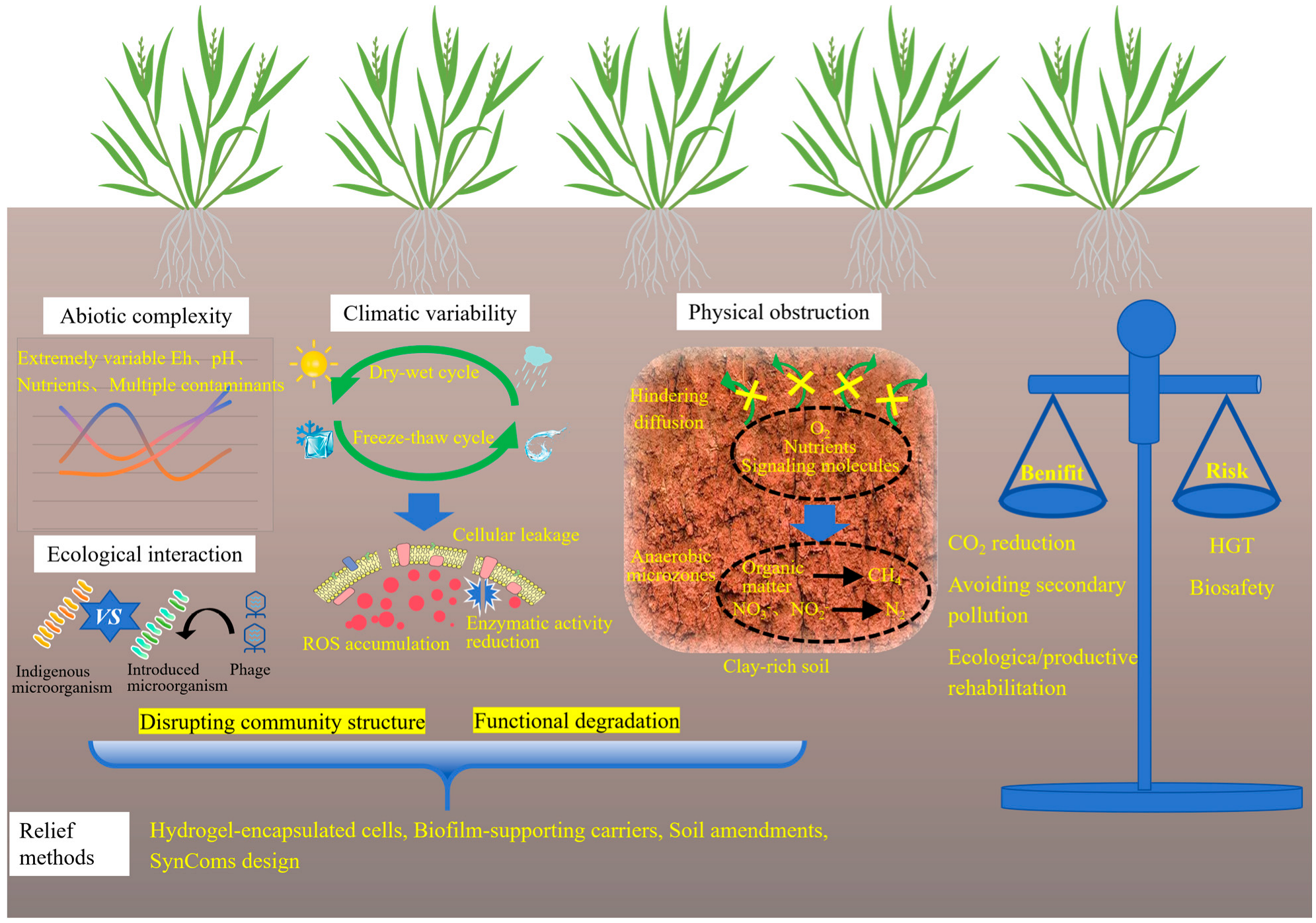
5.2. Microbial Environmental Adaptation and Performance Barriers
5.3. Risk–Benefit Assessment and Biocontainment Strategies
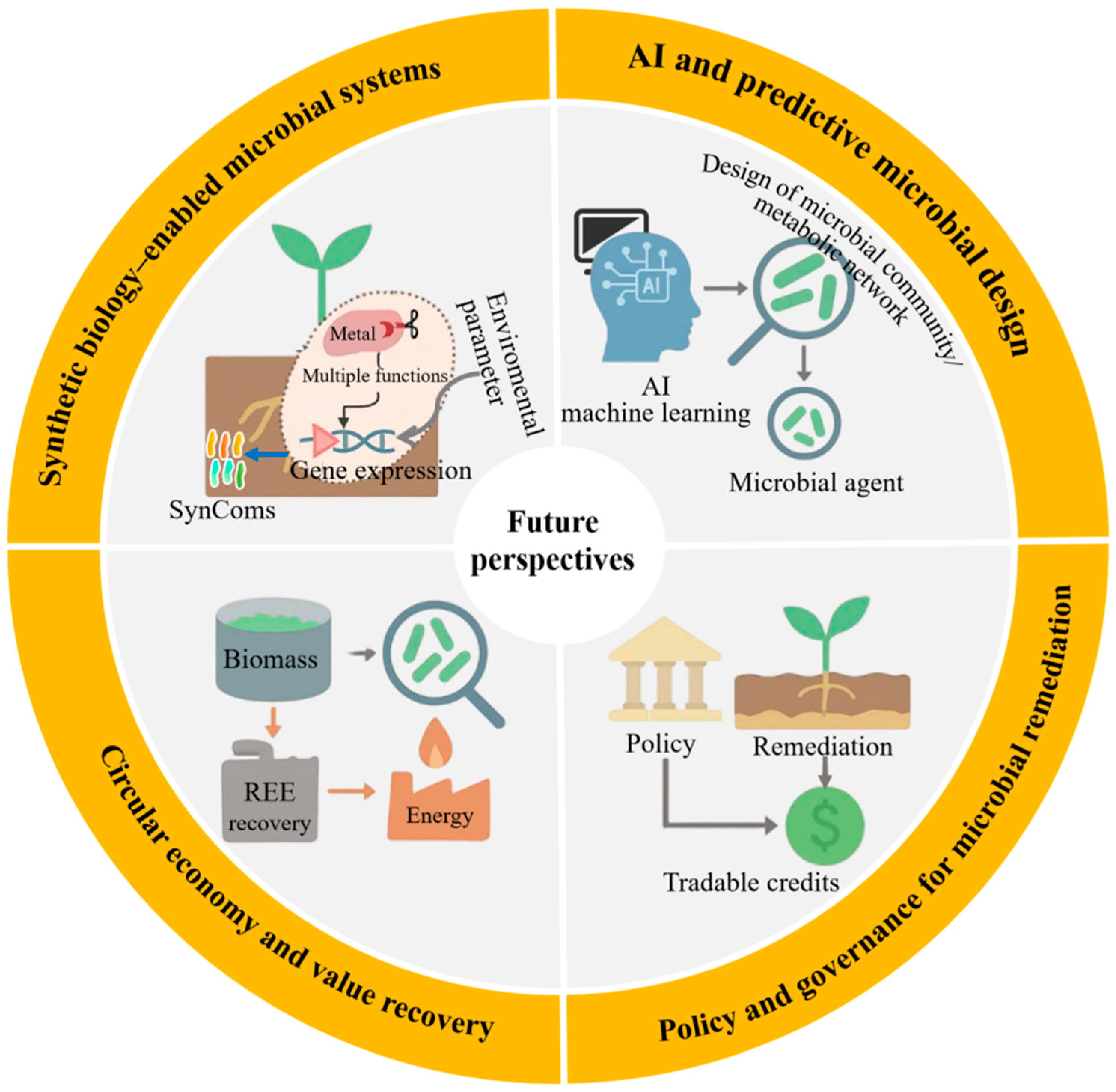
6. Future Perspectives: Emerging Frontiers in Microbial Remediation
6.1. Synthetic Biology-Enabled Microbial Systems
6.2. Artificial Intelligence and Predictive Microbial Design
6.3. Circular Economy and Value Recovery
6.4. Policy and Governance for Microbial Remediation
7. Conclusions
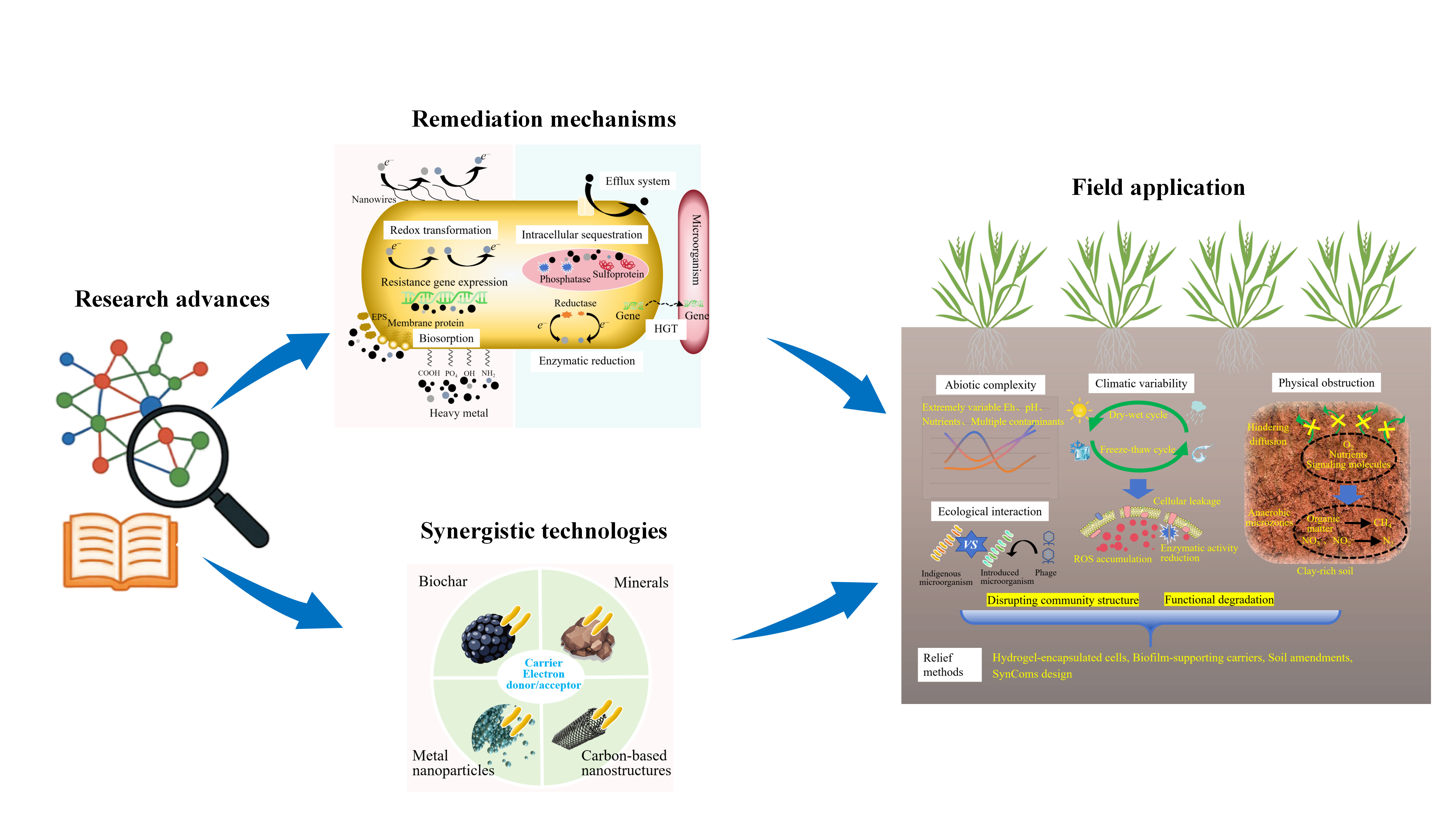
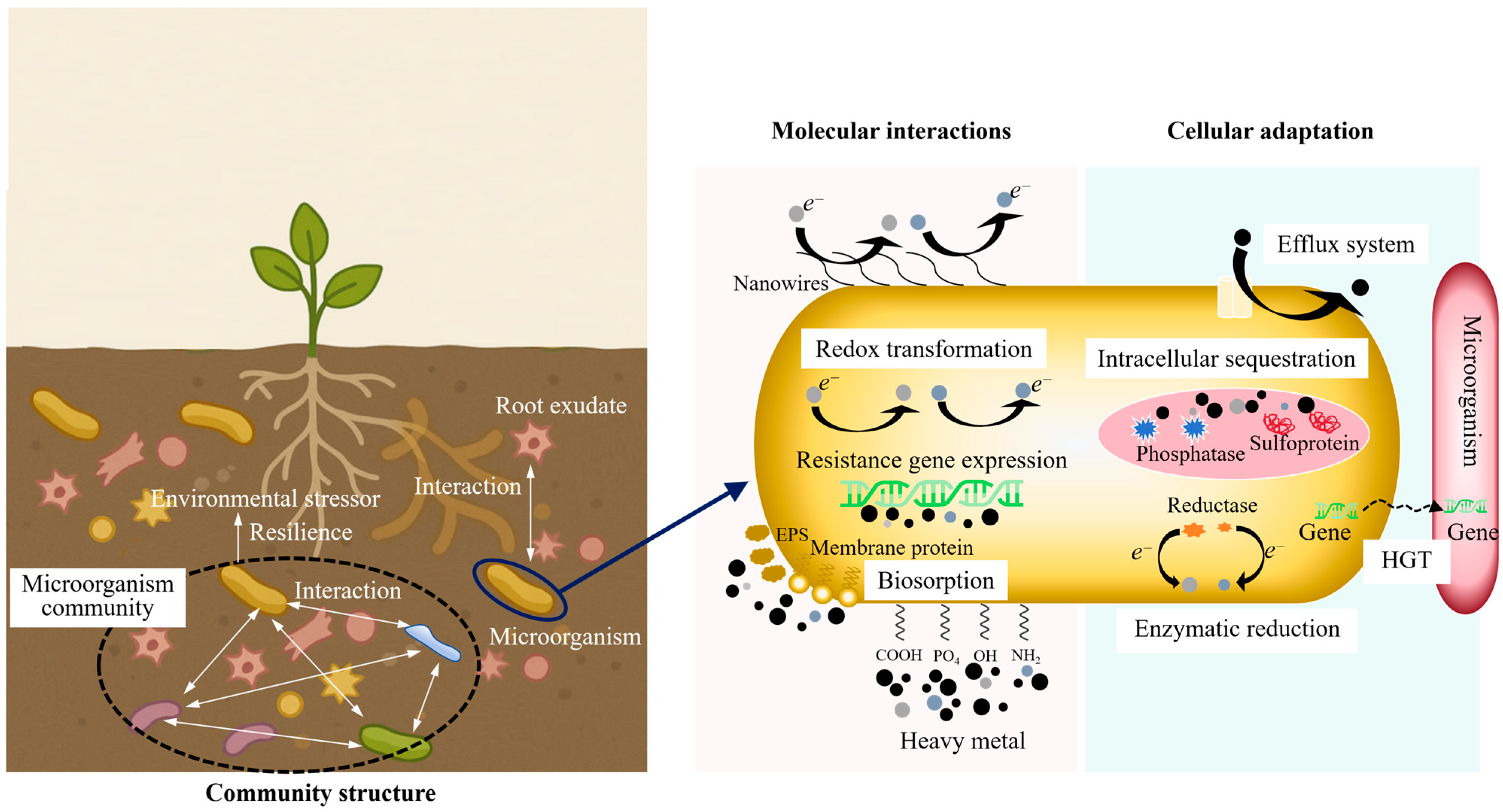
- Microorganisms remove or immobilize heavy metals through coordinated processes through cell-surface functional groups, novel metal-binding compounds such as phosphomelanin, and electron-transfer networks. Horizontal transfer of metal-resistance and detoxification genes, together with environmental factor (such as root exudate)-mediated selection and regulation of metal-tolerant microbial consortia, constructs a collaborative ecological network.
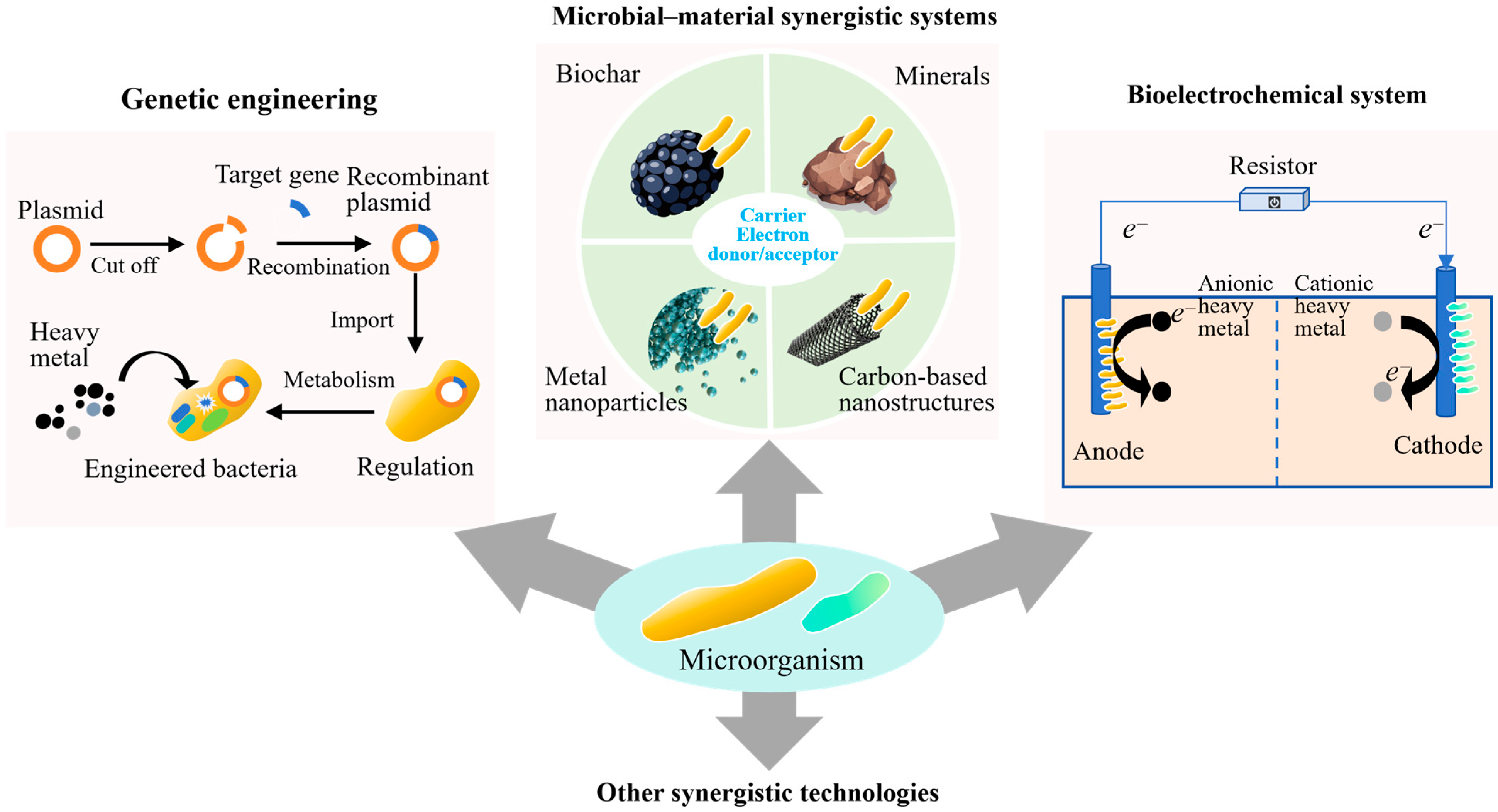
- Integrating microbial systems with functional materials (e.g., biochar, metal-oxide nanoparticles, composite carriers) and bioelectrochemical systems markedly enhances remediation efficiency, prolongs microbial activity, and improves the soil micro-environment. The supportive, electron-mediating, and microenvironment-regulating roles of these materials are key to achieving high-efficiency, sustainable remediation.
- Research over the past three decades has progressed from single-microbe experiments toward multidisciplinary integration and from laboratory-scale to large-area field deployment. Representative cases (such as SRB in paddy fields and plant growth promoting bacteria in tea plantations) demonstrate the cost-effectiveness and practicability of microbial remediation in real-world engineering.
- Emerging frontiers, including synthetic biology-engineered microbes, AI-driven microbial design, resource-recovery circular economies, and supportive policy-governance innovations, are expected to shape a future microbial remediation platform characterized by predictability, controllability, and sustainability. Achieving high-efficiency, reliable, and scalable heavy-metal soil remediation will require coordinated advances in microbial functional enhancement, system integration, risk assessment, and standardization.
Author Contributions
Funding
Institutional Review Board Statement
Informed Consent Statement
Data Availability Statement
Conflicts of Interest
References
- Che, S.; Wang, J.; Zhou, Y.; Yue, C.; Zhou, X.; Xu, Y.; Tian, S.; Cao, Z.; Wei, X.; Li, S.; et al. The adsorption and fixation of Cd and Pb by the microbial consortium weakened the toxic effect of heavy metal-contaminated soil on rice. Chem. Eng. J. 2024, 497, 154684. [Google Scholar] [CrossRef]
- Hong, Y.; Li, D.; Xie, C.; Zheng, X.; Yin, J.; Li, Z.; Zhang, K.; Jiao, Y.; Wang, B.; Hu, Y.; et al. Combined apatite, biochar, and organic fertilizer application for heavy metal co-contaminated soil remediation reduces heavy metal transport and alters soil microbial community structure. Sci. Total Environ. 2022, 851, 158033. [Google Scholar] [CrossRef] [PubMed]
- Li, X.; Gao, Y.; Ning, X.; Li, Z. Research progress and hotspots on microbial remediation of heavymetal-contaminated soil a systematic review and future perspectives. Environ. Sci. Pollut. Res. Int. 2023, 56, 118192–118212. [Google Scholar] [CrossRef] [PubMed]
- FAO; UNEP. Global Assessment of Soil Pollution: Report; UNEP: Nairobi, Kenya, 2021. [Google Scholar]
- The Ministry of Environmental Protection; The Ministry of Land and Resources. Report on the National Soil Contamination Survey. 2014. Available online: https://www.mee.gov.cn/gkml/sthjbgw/qt/201404/t20140417_270670.htm (accessed on 2 November 2025).
- Ge, Y.; Cheng, H.; Zhou, W.; Zhou, H.; Wang, Y. Enhancing Zn and Cd removal from heavy metal-contaminated paddy soil using an artificial microbial consortium. J. Soils Sediments 2022, 22, 218–228. [Google Scholar] [CrossRef]
- Song, P.; Xu, D.; Yue, J.; Ma, Y.; Dong, S.; Feng, J. Recent advances in soil remediation technology for heavy metal contaminated sites: A critical review. Sci. Total Environ. 2022, 838, 156417. [Google Scholar] [CrossRef]
- Liu, N.; Zhao, J.; Du, J.; Hou, C.; Zhou, X.; Chen, J.; Zhang, Y. Non-phytoremediation and phytoremediation technologies of integrated remediation for water and soil heavy metal pollution: A comprehensive review. Sci. Total Environ. 2024, 948, 174237. [Google Scholar] [CrossRef]
- Wang, Z.; Luo, P.; Zha, X.; Xu, C.; Kang, S.; Zhou, M.; Nover, D.; Wang, Y. Overview assessment of risk evaluation and treatment technologies for heavy metal pollution of water and soil. J. Clean. Prod. 2022, 379, 134043. [Google Scholar] [CrossRef]
- Jiang, Y.; Liu, S.; Cai, C.; Dang, X.; Yang, C.; Xing, Y.; Ma, F.; Tan, S.; Huang, Q.; Chen, W. Microbially induced carbonate precipitation balances survival and function: Driven heavy metal remediation and plant growth promotion by enterobacter ludwigii n15. J. Hazard. Mater. 2025, 498, 139970. [Google Scholar] [CrossRef]
- Nie, X.; Huang, X.; Li, M.; Lu, Z.; Ling, X. Advances in soil amendments for remediation of heavy metal-contaminated soils: Mechanisms, impact, and future prospects. Toxics 2024, 12, 872. [Google Scholar] [CrossRef]
- Zheng, K.; Liu, Z.; Liu, C.; Liu, J.; Zhuang, J. Enhancing remediation potentialof heavy metal contaminated soils through synergistic application ofmicrobial inoculants and legumes. Front. Microbiol. 2023, 14, 1272591. [Google Scholar] [CrossRef]
- Hassan, A.; Pariatamby, A.; Ahmed, A.; Auta, H.S.; Hamid, F.S. Enhanced bioremediation of heavy metal contaminated landfill soil using filamentous fungi consortia: A demonstration of bioaugmentation potential. Water Air Soil. Pollut. 2019, 230, 215. [Google Scholar] [CrossRef]
- Zhang, Y.; Sasaki, J.; Li, A.; Chen, J. Application and challenges of machine learning in microbial remediation: A review of current status and future directions. Crit. Rev. Environ. Sci. Technol. 2025, 55, 1657–1682. [Google Scholar] [CrossRef]
- Mandal, R.R.; Bashir, Z.; Raj, D. Microbe-assisted phytoremediation for sustainable management of heavy metal in wastewater—A green approach to escalate the remediation of heavy metals. J. Environ. Manag. 2025, 375, 124199. [Google Scholar] [CrossRef]
- Feng, Z.V.; Gunsolus, I.L.; Qiu, T.A.; Hurley, K.R.; Nyberg, L.H.; Frew, H.; Johnson, K.P.; Vartanian, A.M.; Jacob, L.M.; Lohse, S.E.; et al. Impacts of gold nanoparticle charge and ligand type on surface binding and toxicity to gram-negative and gram-positive bacteria. Chem. Sci. 2015, 6, 5186–5196. [Google Scholar] [CrossRef]
- Ren, X.; Zhao, L.; Shen, J.; Zhou, P.; Zhao, K.; Yuan, C.; Xing, R.; Yan, X. Engineered microbial platform confers resistance against heavy metals via phosphomelanin biosynthesis. Nat. Commun. 2025, 16, 4836. [Google Scholar] [CrossRef] [PubMed]
- Wu, C.; Li, F.; Yi, S.; Ge, F. Genetically engineered microbial remediation of soils co-contaminated by heavy metals and polycyclic aromatic hydrocarbons: Advances and ecological risk assessment. J. Environ. Manag. 2021, 296, 113185. [Google Scholar] [CrossRef]
- Selim, S.; Harun-Ur-Rashid, M. Harnessing microbial diversity for effective remediation of heavy metal-contaminated soils. Appl. Soil Ecol. 2025, 215, 106473. [Google Scholar] [CrossRef]
- He, Y.; Gong, Y.; Su, Y.; Zhang, Y.; Zhou, X. Bioremediation of Cr(VI) contaminated groundwater by Geobacter sulfurreducens: Environmental factors and electron transfer flow studies. Chemosphere 2019, 221, 793–801. [Google Scholar] [CrossRef]
- Lian, Z.; Kong, F. Treatments of heavy metals in bio electrochemical systems (BES) and microbial transfer mechanisms: Analyses of influencing factors, future research directions, prospect and outlook. Water Air Soil Pollut. 2025, 236, 486. [Google Scholar] [CrossRef]
- Xi, H.; Liu, B.; Li, X.; Long, X.; Sun, Y.; Wang, W.; Wang, H. Microbial extracellular electron transfer: A promising strategy for heavy metal removal mechanisms, regulation and future development. J. Water Process. Eng. 2025, 71, 107416. [Google Scholar] [CrossRef]
- Ma, F.; Tan, S.; Jiang, Y.; Yao, N.; Cao, Z.; Huang, Q.; Chen, W. Cadmium bioremediation and oxidative stress mitigation of acid-tolerant microbial strain in rice based on pan-genomic analysis. Int. Biodeterior. Biodegrad. 2026, 206, 106192. [Google Scholar] [CrossRef]
- Thai, T.D.; Lim, W. Synthetic bacteria for the detection and bioremediation of heavy metals. Front. Bioeng. Biotechnol. 2023, 11, 1178680. [Google Scholar] [CrossRef]
- Zhang, H.; Cui, J.; Xiong, Y.; Li, G.; Du, C.; Zhang, L. Microbial response and the crucial function of predominant phyla in sedum alfredii-mediated remediation of high concentration of multiple heavy metal soils. Environ. Pollut. 2025, 374, 126211. [Google Scholar] [CrossRef]
- Shuaib, M.; Azam, N.; Bahadur, S.; Romman, M.; Yu, Q.; Xuexiu, C. Variation and succession of microbial communities under the conditions of persistent heavy metal and their survival mechanism. Microb. Pathog. 2021, 150, 104713. [Google Scholar] [CrossRef] [PubMed]
- Xie, X.; Yin, S.; Zhang, X.; Tian, Q.; Zeng, Y.; Zhang, X. Boron-dependent autoinducer-2-mediated quorum sensing stimulates the Cr(VI) reduction of Leucobacter chromiireducens CD49. J. Environ. Manag. 2025, 375, 124290. [Google Scholar] [CrossRef]
- Alsafran, M.; Saleem, M.H.; Al Jabri, H.; Rizwan, M.; Usman, K. Principles and applicability of integrated remediation strategies for heavy metal removal/recovery from contaminated environments. J. Plant Growth Regul. 2023, 42, 3419–3440. [Google Scholar] [CrossRef]
- Guo, D.; Fan, Z.; Lu, S.; Ma, Y.; Nie, X.; Tong, F.; Peng, X. Changes in rhizosphere bacterial communities during remediation of heavy metal-accumulating plants around the Xikuangshan mine in southern China. Sci. Rep. 2019, 9, 1947. [Google Scholar] [CrossRef] [PubMed]
- Yu, F.; He, Z.; Xin, X.; Shi, X.; Chen, L.; He, X.; Huang, Y.; Li, Y. Evidence that beneficial microbial inoculation enhances heavy metal-contaminated soil remediation: Variations in plant endophyte communities. J. Hazard. Mater. 2024, 480, 135883. [Google Scholar] [CrossRef]
- Khatoon, Z.; Orozco-Mosqueda, M.D.C.; Santoyo, G. Microbial contributions to heavy metal phytoremediation in agricultural soils: A review. Microorganisms 2024, 12, 1945. [Google Scholar] [CrossRef]
- Wang, N.; Wang, X.; Chen, L.; Liu, H.; Wu, Y.; Huang, M.; Fang, L. Biological roles of soil microbial consortium on promoting safe crop production in heavy metal(loid) contaminated soil: A systematic review. Sci. Total Environ. 2024, 912, 168994. [Google Scholar] [CrossRef]
- Jaiswal, S.; Shukla, P. Alternative strategies for microbial remediation of pollutants via synthetic biology. Front. Microbiol. 2020, 11, 808. [Google Scholar] [CrossRef]
- Li, X.; Ren, Z.; Crabbe, M.J.C.; Wang, L.; Ma, W. Genetic modifications of metallothionein enhance the tolerance and bioaccumulation of heavy metals in Escherichia coli. Ecotoxicol. Environ. Saf. 2021, 222, 112512. [Google Scholar] [CrossRef]
- van Bodegom, P. Microbial maintenance: A critical review on its quantification. Microb. Ecol. 2007, 53, 513–523. [Google Scholar] [CrossRef] [PubMed]
- Chang, T.; Ding, W.; Yan, S.; Wang, Y.; Zhang, H.; Zhang, Y.; Ping, Z.; Zhang, H.; Huang, Y.; Zhang, J.; et al. A robust yeast biocontainment system with two-layered regulation switch dependent on unnatural amino acid. Nat. Commun. 2023, 14, 6487. [Google Scholar] [CrossRef]
- Garg, A.; Chauhan, P.; Kaur, C.; Arora, P.K.; Garg, S.K.; Singh, V.P.; Singh, K.P.; Srivastava, A. Comprehensive heavy metal remediation mechanisms with insights into CRISPR-Cas9 and biochar innovations. Biodegradation 2025, 36, 69. [Google Scholar] [CrossRef]
- Abbas, H.M.M.; Rais, U.; Altaf, M.M.; Rasul, F.; Shah, A.; Tahir, A.; Nafees-Ur-Rehman, M.; Shaukat, M.; Sultan, H.; Zou, R.; et al. Microbial-inoculated biochar for remediation of salt and heavy metal contaminated soils. Sci. Total Environ. 2024, 954, 176104. [Google Scholar] [CrossRef]
- Ma, W.; Sun, T.; Xu, Y.; Zheng, S.; Sun, Y. In-situ immobilization remediation, soil aggregate distribution, and microbial community composition in weakly alkaline Cd-contaminated soils: A field study. Environ. Pollut. 2022, 292, 118327. [Google Scholar] [CrossRef] [PubMed]
- Rehman, H.; Khan, A.H.A.; Butt, T.A.; Toqeer, M.; Bilal, M.; Ahmad, M.; Al-Naghi, A.A.A.; Latifee, E.R.; Algassem, O.A.S.; Iqbal, M. Synergistic biochar and Serratia marcescens tackle toxic metal contamination: A multifaceted machine learning approach. J. Environ. Manage 2024, 370, 122575. [Google Scholar] [CrossRef] [PubMed]
- Su, M.; Yin, W.; Liu, L.; Li, P.; Fang, Z.; Fang, Y.; Chiang, P.; Wu, J. Enhanced Cr(VI) stabilization in soil by carboxymethyl cellulose-stabilized nanosized Fe0 (CMC-nFe0) and mixed anaerobic microorganisms. J. Environ. Manag. 2020, 257, 109951. [Google Scholar] [CrossRef] [PubMed]
- Kou, B.; Yuan, Y.; Zhu, X.; Ke, Y.; Wang, H.; Yu, T.; Tan, W. Effect of soil organic matter-mediated electron transfer on heavy metal remediation: Current status and perspectives. Sci. Total Environ. 2024, 917, 170451. [Google Scholar] [CrossRef]
- Su, H.; Zhang, Y.; Lu, Z.; Wang, Q. A mechanism of microbial sensitivity regulation on interventional remediation by nanozyme manganese oxide in soil heavy metal pollution. J. Clean. Prod. 2022, 373, 133825. [Google Scholar] [CrossRef]
- Simonin, M.; Richaume, A. Impact of engineered nanoparticles on the activity, abundance, and diversity of soil microbial communities: A review. Environ. Sci. Pollut. Res. 2015, 22, 13710–13723. [Google Scholar] [CrossRef] [PubMed]
- Zhang, Y.; Zhang, Y.; Wu, A. Design and construction of magnetic nanomaterials and their remediation mechanisms for heavy metal contaminated soil. Sci. Total Environ. 2024, 951, 175369. [Google Scholar] [CrossRef]
- Habibul, N.; Hu, Y.; Wang, Y.; Chen, W.; Yu, H.; Sheng, G. Bioelectrochemical Chromium(VI) removal in plant-microbial fuel cells. Environ. Sci. Technol. 2016, 50, 3882–3889. [Google Scholar] [CrossRef]
- Gustave, W.; Yuan, Z.; Liu, F.; Chen, Z. Mechanisms and challenges of microbial fuel cells for soil heavy metal(loid)s remediation. Sci. Total Environ. 2021, 756, 143865. [Google Scholar] [CrossRef]
- Jiang, G.; Ruan, Z.; Yin, Y.; Hu, C.; Tian, L.; Lu, J.; Wang, S.; Tang, Y.; Qiu, R.; Chao, Y. Keystone species in microbial communities: From discovery to soil heavy metal-remediation. J. Hazard. Mater. 2025, 494, 138753. [Google Scholar] [CrossRef]
- Liu, S.; Liu, J.; Lin, C. Heavy metal removal and recovery from contaminated sediments based on bioelectrochemical systems: Insights, progress, and perspectives. Int. Biodeterior. Biodegrad. 2025, 196, 105940. [Google Scholar] [CrossRef]
- Wang, H.; Xing, L.; Zhang, H.; Gui, C.; Jin, S.; Lin, H.; Li, Q.; Cheng, C. Key factors to enhance soil remediation by bioelectrochemical systems (BEES): A review. Chem. Eng. J. 2021, 419, 129600. [Google Scholar] [CrossRef]
- Zhang, D.; Gong, Y.; Qin, R.; Zaib, S.; Shang, K.; Xia, J.; Zhou, L.; Xie, Y. Effect and mechanism of rice-Solanum nigrum L. Rotation system inoculated with sulfate-reducing bacteria (SRB) and sulfur-oxidizing bacteria (SOB) for the remediation of Cd-contaminated paddy soil. J. Hazard. Mater. 2025, 496, 139540. [Google Scholar] [CrossRef] [PubMed]
- Wang, M.; Xu, Z. Plant growth-promoting Serratia and Erwinia strains enhance tea plant tolerance and rhizosphere microbial diversity under heavy metal stress. Agronomy 2025, 15, 1876. [Google Scholar] [CrossRef]
- Liu, X.; Zhang, S.; Zhang, X.; Guo, H.; Lou, Z.; Zhang, W.; Chen, Z. Cr(VI) immobilization in soil using lignin hydrogel supported nZVI: Immobilization mechanisms and long-term simulation. Chemosphere 2022, 305, 135393. [Google Scholar] [CrossRef]
- Yu, J.; Chen, Z.; Gao, W.; He, S.; Xiao, D.; Fan, W.; Huo, M.; Nugroho, W.A. Global trends and prospects in research on heavy metal pollution at contaminated sites. J. Environ. Manag. 2025, 383, 125402. [Google Scholar] [CrossRef]
- Saghafi, D.; Delangiz, N.; Lajayer, B.A.; Ghorbanpour, M. An overview on improvement of crop productivity in saline soils by halotolerant and halophilic pgprs. 3 Biotech 2019, 9, 261. [Google Scholar] [CrossRef]
- Zhang, J.; Sun, Y.; Wang, H.; Liu, Y.; Cao, X.; Li, X. Effect of soil type on heavy metals removal in bioelectrochemical system. Bioelectrochemistry 2020, 136, 107596. [Google Scholar] [CrossRef]
- Johns, N.I.; Blazejewski, T.; Gomes, A.L.; Wang, H.H. Principles for designing synthetic microbial communities. Curr. Opin. Microbiol. 2016, 31, 146–153. [Google Scholar] [CrossRef]
- Velte, J.M.; Mudiyanselage, S.; Hofmann, O.F.; Lee, S.T.M.; Huguet-Tapia, J.; Miranda, M.; Martins, S.J. Interactions between native soil microbiome and a synthetic microbial community reveals bacteria with persistent traits. mSystems 2025, 10, e921–e925. [Google Scholar] [CrossRef] [PubMed]
- Agrawal, K.; Ruhil, T.; Gupta, V.K.; Verma, P. Microbial assisted multifaceted amelioration processes of heavy-metal remediation: A clean perspective toward sustainable and greener future. Crit. Rev. Biotechnol. 2024, 44, 429–447. [Google Scholar] [CrossRef]
- Aminian-Dehkordi, J.; Rahimi, S.; Golzar-Ahmadi, M.; Singh, A.; Lopez, J.; Ledesma-Amaro, R.; Mijakovic, I. Synthetic biology tools for environmental protection. Biotechnol. Adv. 2023, 68, 108239. [Google Scholar] [CrossRef] [PubMed]
- Aggarwal, N.; Kitano, S.; Puah, G.R.Y.; Kittelmann, S.; Hwang, I.Y.; Chang, M.W. Microbiome and human health: Current understanding, engineering, and enabling technologies. Chem. Rev. 2023, 123, 31–72. [Google Scholar] [CrossRef] [PubMed]
- Warner, C.M.; Carter, S.R.; Lance, R.F.; Crocker, F.H.; Meeks, H.N.; Adams, B.L.; Magnuson, M.L.; Rycroft, T.; Pokrzywinski, K.; Perkins, E.J. Synthetic biology: Research needs for assessing environmental impacts. In Synthetic Biology 2020: Frontiers in Risk Analysis and Governance; Trump, B.D., Cummings, C.L., Kuzma, J., Linkov, I., Eds.; Springer International Publishing: Cham, Switzerland, 2020; pp. 19–50. [Google Scholar]
- Jansson, J.K.; Mcclure, R.; Egbert, R.G. Soil microbiome engineering for sustainability in a changing environment. Nat. Biotechnol. 2023, 41, 1716–1728. [Google Scholar] [CrossRef]
- Mishra, S.; Patel, A.; Bhatt, P.; Chen, S.; Srivastava, P.K. Perspective evaluation of synthetic biology approaches for effective mitigation of heavy metal pollution. Rev. Environ. Contam. Toxicol. 2024, 262, 21. [Google Scholar] [CrossRef]
- Alavian, F.; Khodabakhshi, F. Integrating artificial intelligence with microbial biotechnology for sustainable environmental remediation. Environ. Monit. Assess. 2025, 197, 1183. [Google Scholar] [CrossRef]
- Xiong, B.; Chen, K.; Ke, C.; Zhao, S.; Dang, Z.; Guo, C. Prediction of heavy metal removal performance of sulfate-reducing bacteria using machine learning. Bioresour. Technol. 2024, 397, 130501. [Google Scholar] [CrossRef]
- Gautam, K.; Sharma, P.; Dwivedi, S.; Singh, A.; Gaur, V.K.; Varjani, S.; Srivastava, J.K.; Pandey, A.; Chang, J.; Ngo, H.H. A review on control and abatement of soil pollution by heavy metals: Emphasis on artificial intelligence in recovery of contaminated soil. Environ. Res. 2023, 225, 115592. [Google Scholar] [CrossRef] [PubMed]
- Liu, C.; Liu, W.; Huot, H.; Guo, M.; Zhu, S.; Zheng, H.; Morel, J.L.; Tang, Y.; Qiu, R. Biogeochemical cycles of nutrients, rare earth elements (REEs) and al in soil-plant system in ion-adsorption REE mine tailings remediated with amendment and ramie (Boehmeria nivea L.). Sci. Total Environ. 2022, 809, 152075. [Google Scholar] [CrossRef] [PubMed]
- Vítová, M.; Mezricky, D. Microbial recovery of rare earth elements from various waste sources: A mini review with emphasis on microalgae. World J. Microbiol. Biotechnol. 2024, 40, 189. [Google Scholar] [CrossRef] [PubMed]
- Segundo, R.; De La Cruz-Noriega, M.; Luis, C.; Otiniano, N.M.; Soto-Deza, N.; Rojas-Villacorta, W.; De La Cruz-Cerquin, M. Reduction of toxic metal ions and production of bioelectricity through microbial fuel cells using Bacillus marisflavi as a biocatalyst. Molecules 2024, 29, 2725. [Google Scholar] [CrossRef]
- Khan, M.; Nizamani, M.M.; Asif, M.; Kamran, A.; He, G.; Li, X.; Yang, S.; Xie, X. Comprehensive approaches to heavy metal bioremediation: Integrating microbial insights and genetic innovations. J. Environ. Manag. 2025, 374, 123969. [Google Scholar] [CrossRef]


Disclaimer/Publisher’s Note: The statements, opinions and data contained in all publications are solely those of the individual author(s) and contributor(s) and not of MDPI and/or the editor(s). MDPI and/or the editor(s) disclaim responsibility for any injury to people or property resulting from any ideas, methods, instructions or products referred to in the content. |
© 2025 by the authors. Licensee MDPI, Basel, Switzerland. This article is an open access article distributed under the terms and conditions of the Creative Commons Attribution (CC BY) license (https://creativecommons.org/licenses/by/4.0/).
Share and Cite
Li, H.; Cui, X.; Sun, Y.; Zheng, P.; Wang, L.; Shi, X. Advances in Microbial Remediation of Heavy Metal-Contaminated Soils: Mechanisms, Synergistic Technologies, Field Applications and Future Perspectives. Toxics 2025, 13, 1069. https://doi.org/10.3390/toxics13121069
Li H, Cui X, Sun Y, Zheng P, Wang L, Shi X. Advances in Microbial Remediation of Heavy Metal-Contaminated Soils: Mechanisms, Synergistic Technologies, Field Applications and Future Perspectives. Toxics. 2025; 13(12):1069. https://doi.org/10.3390/toxics13121069
Chicago/Turabian StyleLi, Hongxia, Xinglan Cui, Yingchun Sun, Peng Zheng, Lei Wang, and Xinyue Shi. 2025. "Advances in Microbial Remediation of Heavy Metal-Contaminated Soils: Mechanisms, Synergistic Technologies, Field Applications and Future Perspectives" Toxics 13, no. 12: 1069. https://doi.org/10.3390/toxics13121069
APA StyleLi, H., Cui, X., Sun, Y., Zheng, P., Wang, L., & Shi, X. (2025). Advances in Microbial Remediation of Heavy Metal-Contaminated Soils: Mechanisms, Synergistic Technologies, Field Applications and Future Perspectives. Toxics, 13(12), 1069. https://doi.org/10.3390/toxics13121069