
Metabolomic Impact of Maternal Barium Exposure on Miscarriage Risk: Identification of Metabolic Biomarkers and Construction of a Risk Prediction Model

Highlights
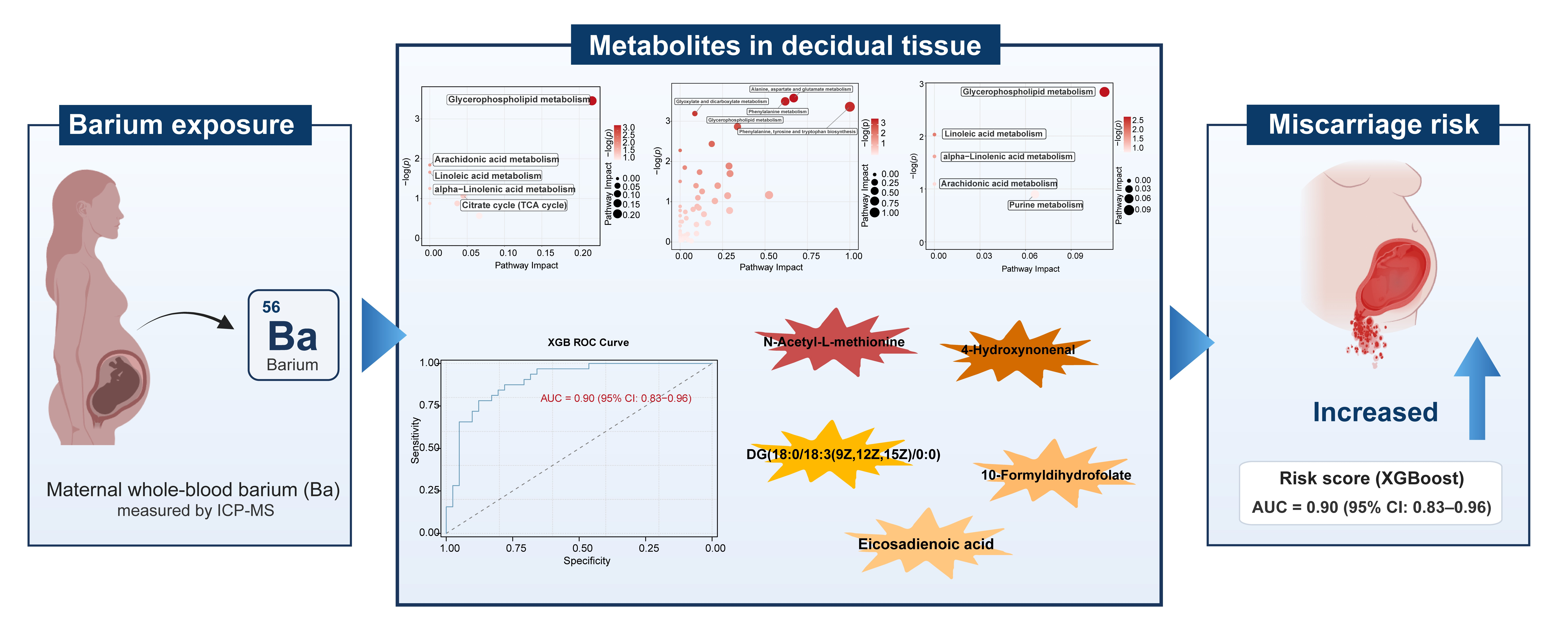
- Nineteen metabolites and five metabolic pathways were jointly implicated.
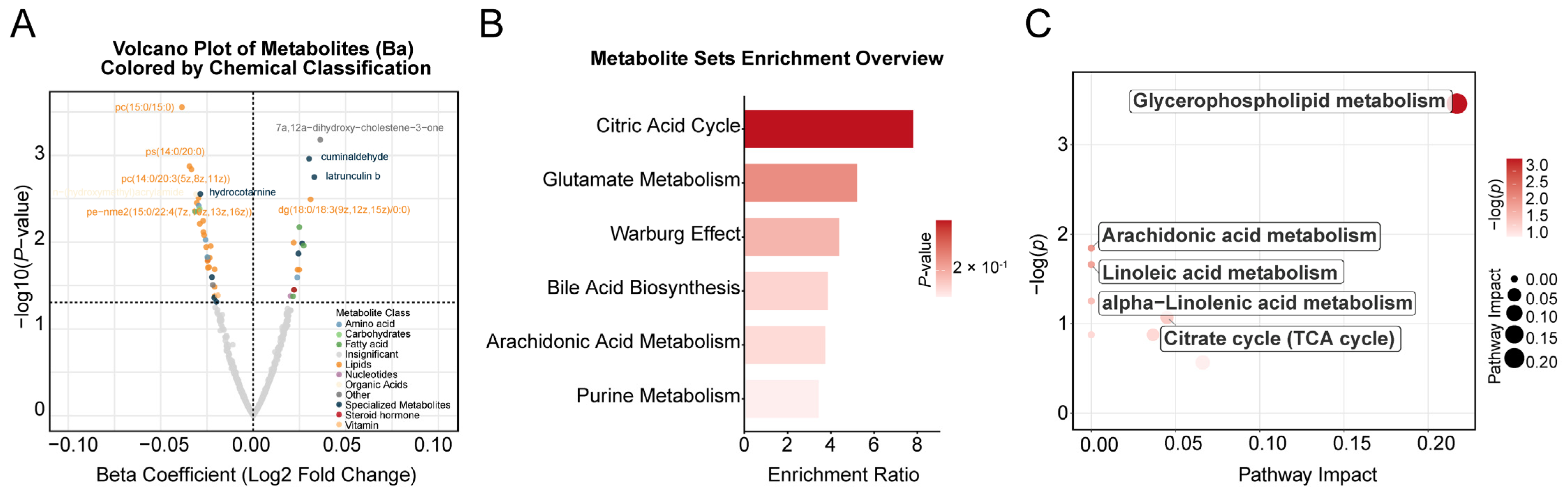
- Glycerophospholipid metabolism was the most significantly enriched pathway.
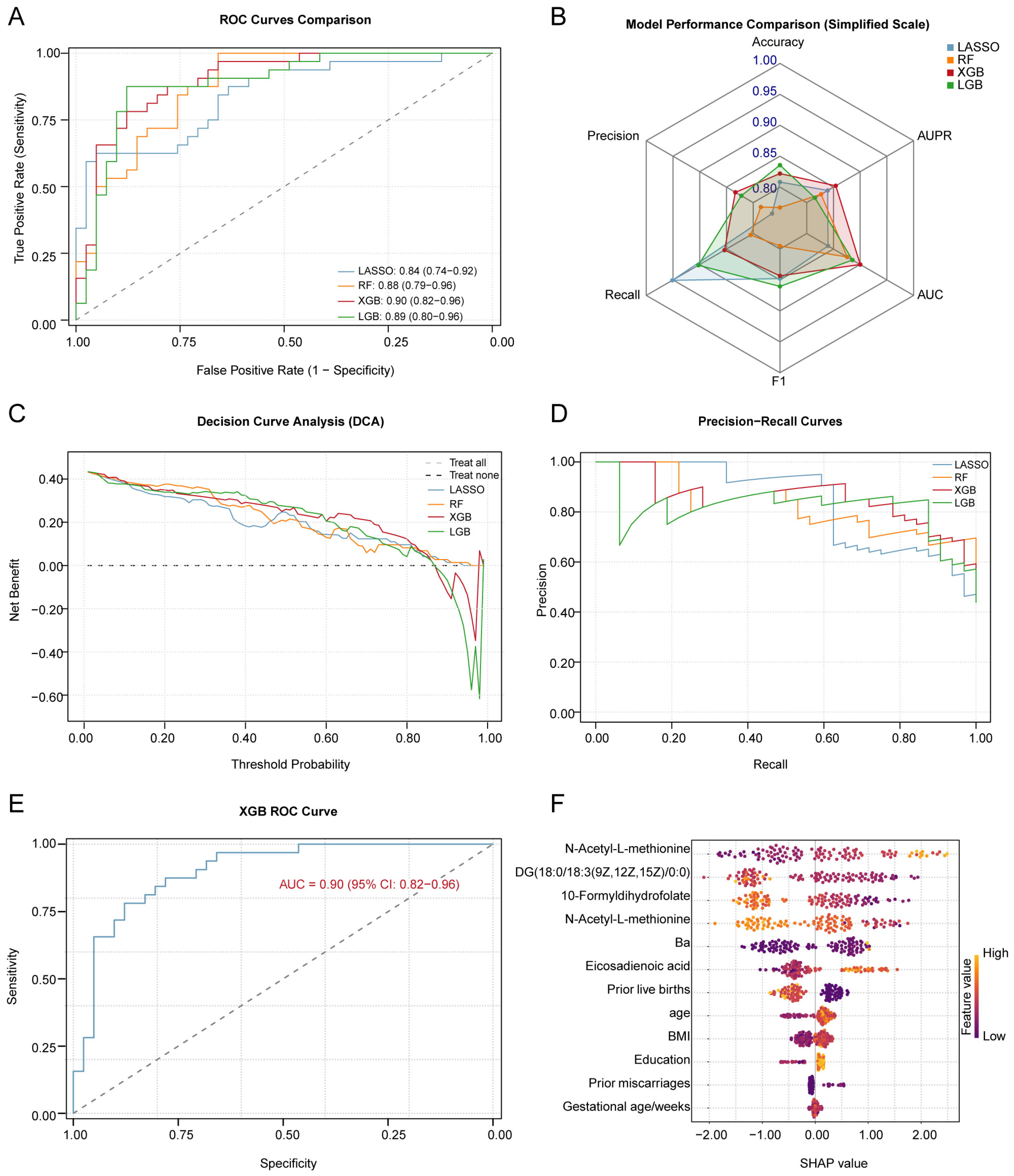
- The XGBoost model achieved high predictive accuracy (AUC = 0.90) for the risk of miscarriage.
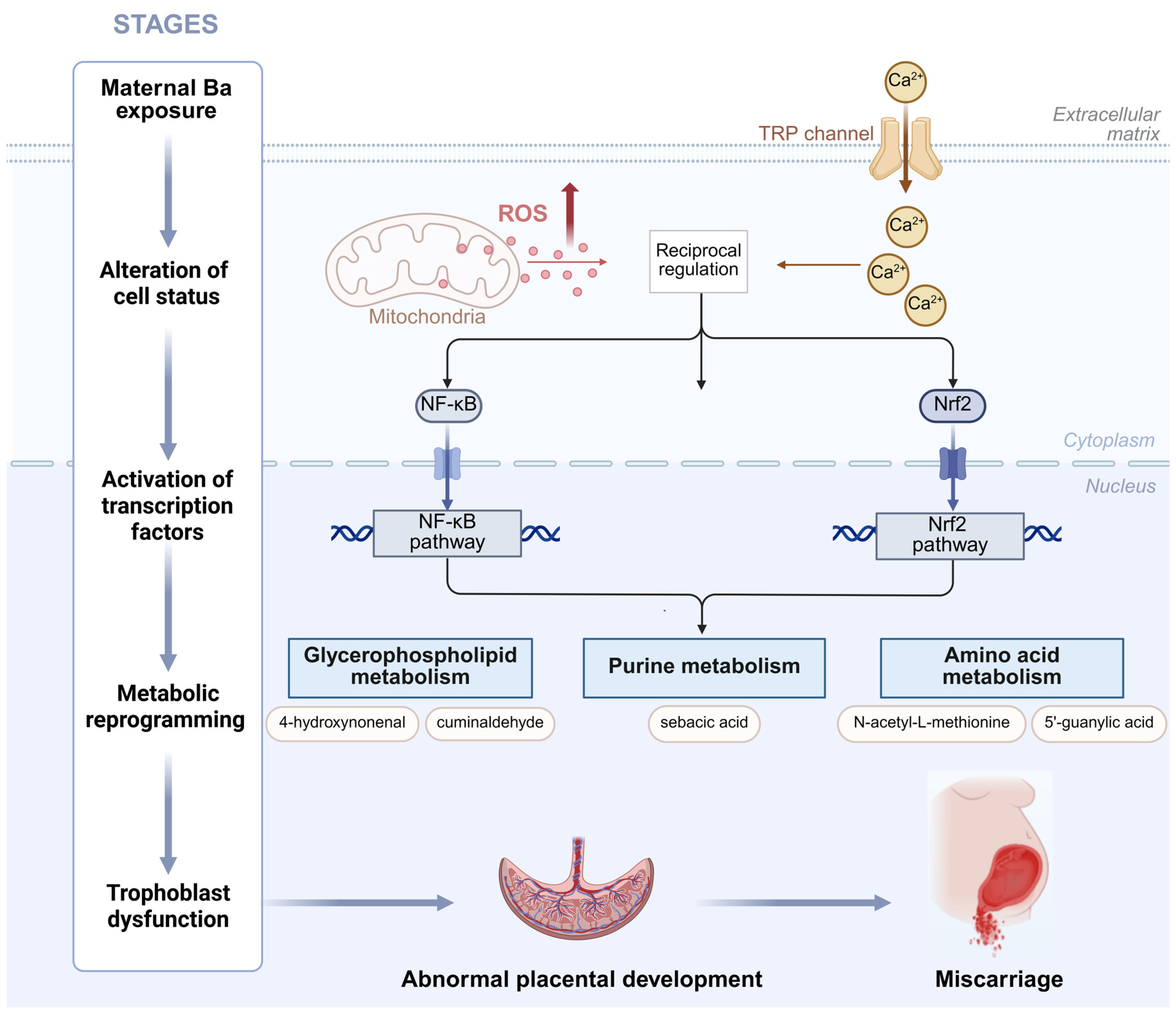
- The findings suggested that metabolic disturbances may explain barium-related miscarriage and offer biomarkers for early risk assessment.
Abstract
1. Introduction
2. Materials and Methods
2.1. Study Design and Population
2.2. Blood Collection and Elemental Detection
2.3. Tissue Collection and Metabolomic Analysis
2.4. Covariate Assessment
2.5. Statistical Analysis
3. Results
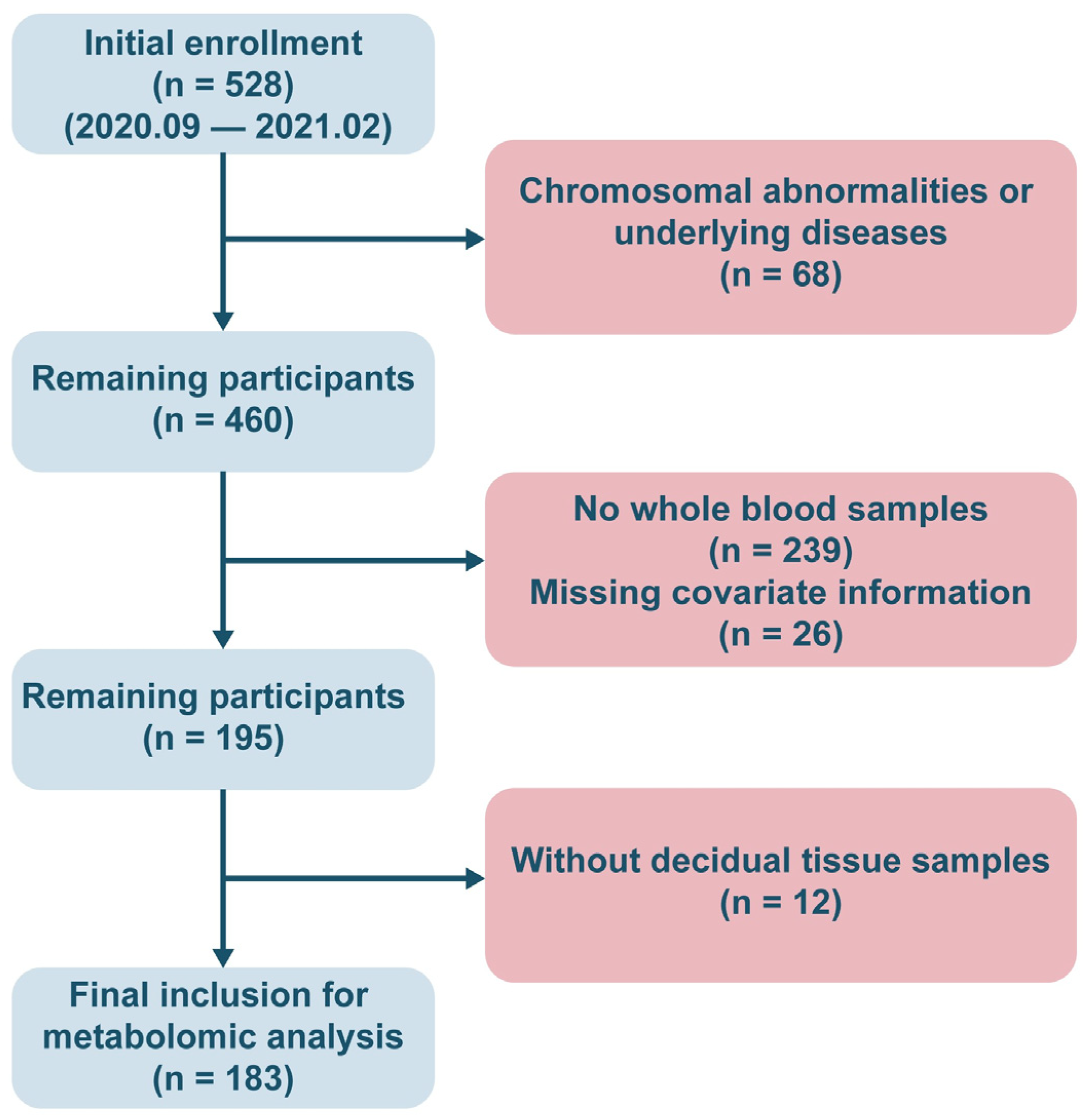
3.1. Inclusion of Study Subjects and Baseline Characteristics
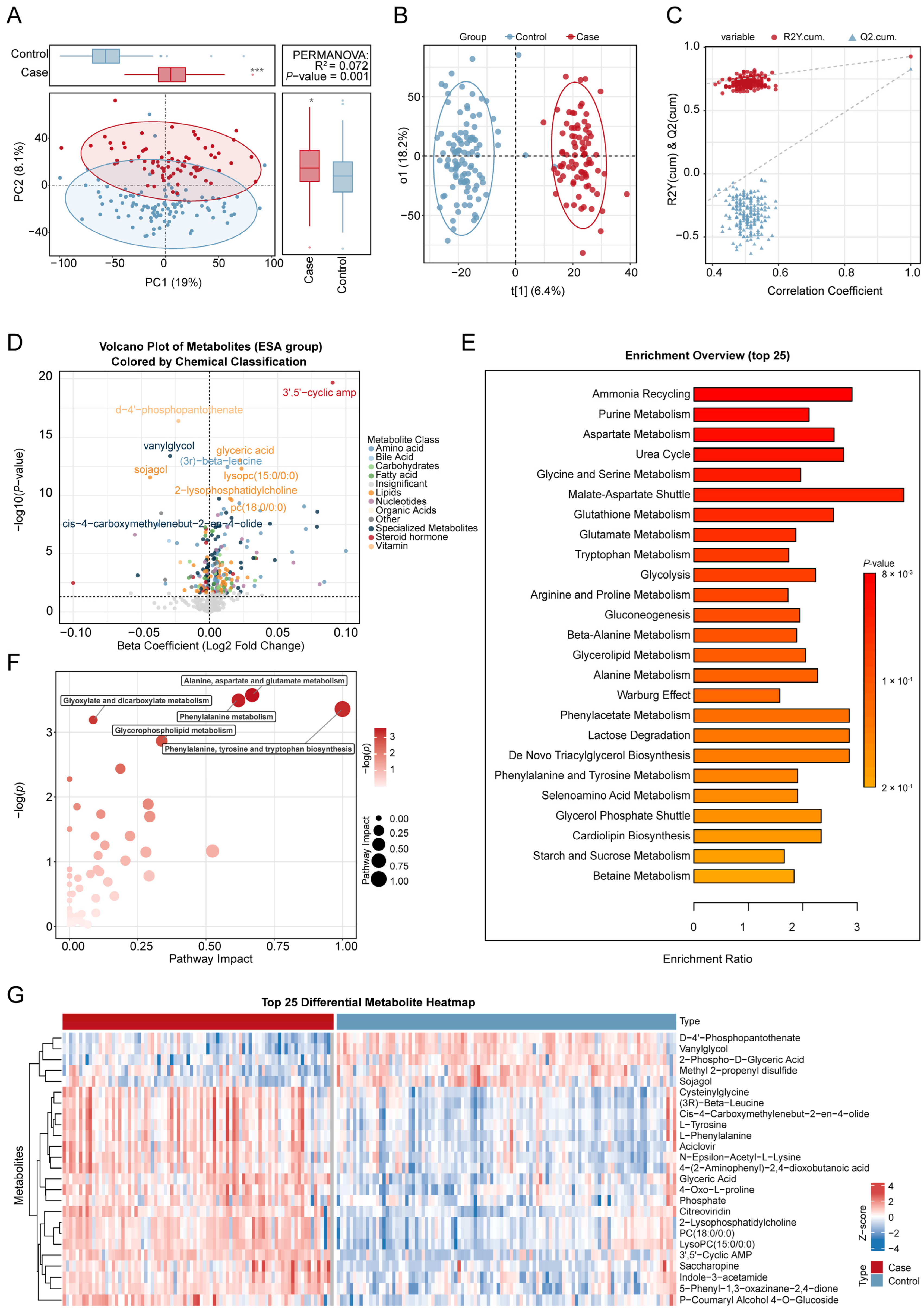
3.2. Maternal Blood Ba Exposure and Its Association with Miscarriage: A Metabolomics Study (MWAS)
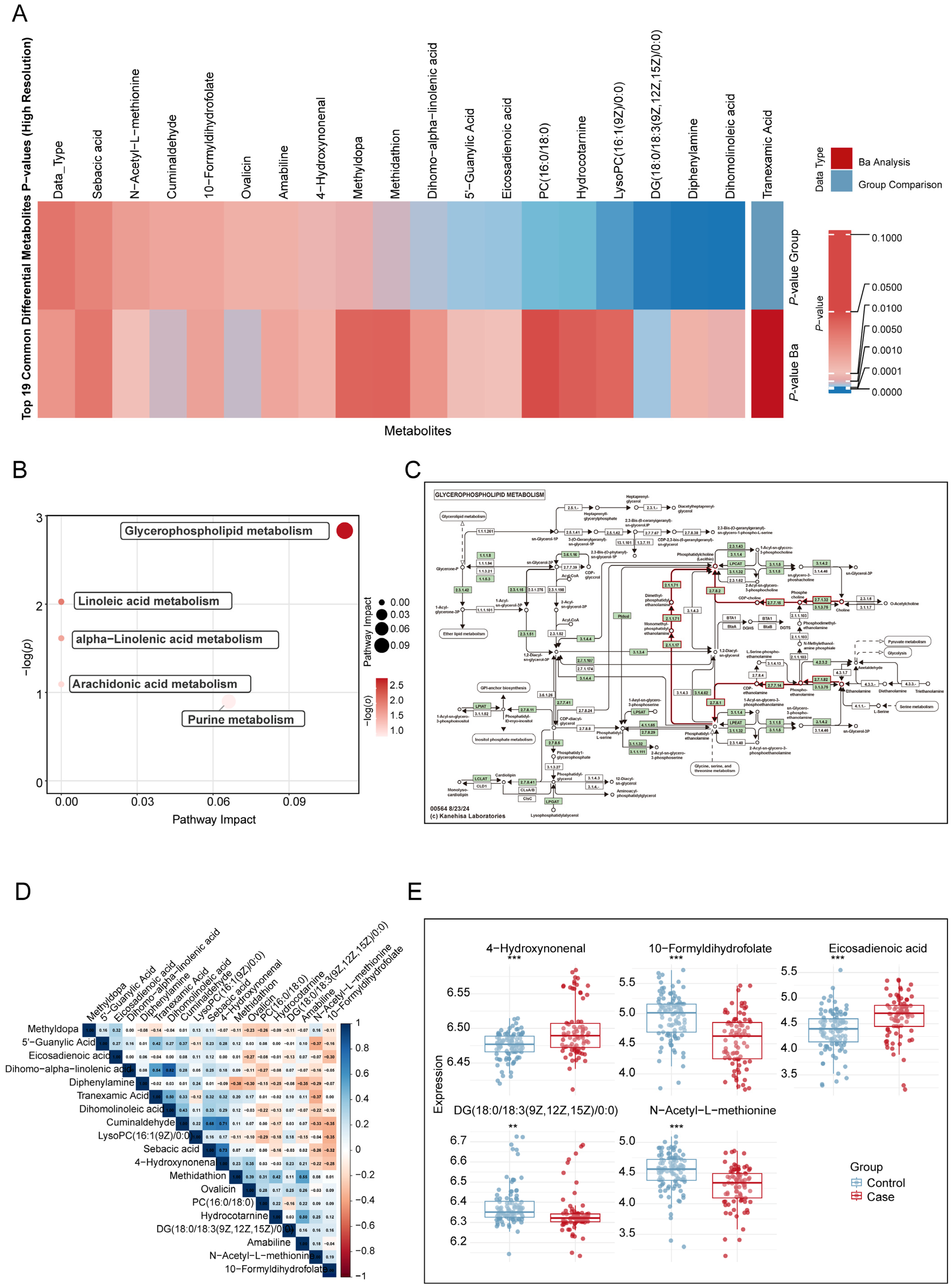
3.3. Overlapping Enriched Pathways Associated with Maternal Barium Exposure and Miscarriage
3.4. Mediating Role of Overlapping Metabolites in the Association Between Maternal Blood Ba Exposure and Miscarriage
3.5. Potential Biomarkers for Risk of Miscarriage
4. Discussion
5. Conclusions
Supplementary Materials
Author Contributions
Funding
Institutional Review Board Statement
Informed Consent Statement
Data Availability Statement
Conflicts of Interest
References
- Neill, S. Management of Early Pregnancy Loss. JAMA 2023, 329, 1399–1400. [Google Scholar] [CrossRef] [Scilit]
- Rai, R.; Regan, L. Recurrent miscarriage. Lancet 2006, 368, 601–611. [Google Scholar] [CrossRef] [Scilit]
- Larsen, E.C.; Christiansen, O.B.; Kolte, A.M.; Macklon, N. New insights into mechanisms behind miscarriage. BMC Med. 2013, 11, 154. [Google Scholar] [CrossRef] [Scilit]
- Moriello, C.; Costabile, M.; Spinelli, M.; Amoresano, A.; Palumbo, G.; Febbraio, F.; Piscopo, M. Altered Expression of Protamine-like and Their DNA Binding Induced by Cr(VI): A Possible Risk to Spermatogenesis? Biomolecules 2022, 12, 700. [Google Scholar] [CrossRef] [Scilit]
- Lettieri, G.; Di Giovanni, C.; Amore, S.; Del Gaudio, R.; Palumbo, G.; Montano, L.; Febbraio, F.; Piscopo, M. Exploring human sperm nuclear basic protein-DNA interactions: Could hexavalent chromium play an interfering role? Chem. Biol. Interact. 2025, 421, 111768. [Google Scholar] [CrossRef] [Scilit]
- Krieg, S.A.; Shahine, L.K.; Lathi, R.B. Environmental exposure to endocrine-disrupting chemicals and miscarriage. Fertil. Steril. 2016, 106, 941–947. [Google Scholar] [CrossRef] [Scilit] [PubMed]
- Kravchenko, J.; Darrah, T.H.; Miller, R.K.; Lyerly, H.K.; Vengosh, A. A review of the health impacts of barium from natural and anthropogenic exposure. Environ. Geochem. Health 2014, 36, 797–814. [Google Scholar] [CrossRef] [Scilit] [PubMed]
- Yoshinaga, M.; Ninomiya, H.; Al Hossain, M.M.A.; Sudo, M.; Akhand, A.A.; Ahsan, N.; Alim, M.A.; Khalequzzaman, M.; Iida, M.; Yajima, I.; et al. A comprehensive study including monitoring, assessment of health effects and development of a remediation method for chromium pollution. Chemosphere 2018, 201, 667–675. [Google Scholar] [CrossRef] [Scilit] [PubMed]
- Elwej, A.; Ghorbel, I.; Chaabane, M.; Soudani, N.; Mnif, H.; Boudawara, T.; Zeghal, N.; Sefi, M. Zinc and selenium modulate barium-induced oxidative stress, cellular injury and membrane-bound ATPase in the cerebellum of adult rats and their offspring during late pregnancy and early postnatal periods. Arch. Physiol. Biochem. 2018, 124, 237–246. [Google Scholar] [CrossRef] [Scilit]
- Liu, J.; Ruan, F.; Cao, S.; Li, Y.; Xu, S.; Xia, W. Associations between prenatal multiple metal exposure and preterm birth: Comparison of four statistical models. Chemosphere 2022, 289, 133015. [Google Scholar] [CrossRef] [Scilit]
- Lu, Y.; Zhang, Y.; Guan, Q.; Xu, L.; Zhao, S.; Duan, J.; Wang, Y.; Xia, Y.; Xu, Q. Exposure to multiple trace elements and miscarriage during early pregnancy: A mixtures approach. Environ. Int. 2022, 162, 107161. [Google Scholar] [CrossRef] [Scilit]
- Smith, A.R.; Lin, P.D.; Rifas-Shiman, S.L.; Rahman, M.L.; Gold, D.R.; Baccarelli, A.A.; Claus Henn, B.; Amarasiriwardena, C.; Wright, R.O.; Coull, B.; et al. Prospective Associations of Early Pregnancy Metal Mixtures with Mitochondria DNA Copy Number and Telomere Length in Maternal and Cord Blood. Environ. Health Perspect. 2021, 129, 117007. [Google Scholar] [CrossRef] [Scilit] [PubMed]
- Santos, A.S.E.; Hauser-Davis, R.A.; Rocha, R.C.C.; Saint’Pierre, T.D.; Meyer, A. Metal exposure and oxidative stress biomarkers in a Brazilian agricultural community. Arch. Environ. Occup. Health 2022, 77, 611–620. [Google Scholar] [CrossRef] [Scilit] [PubMed]
- Mores, L.; França, E.L.; Silva, N.A.; Suchara, E.A.; Honorio-França, A.C. Nanoparticles of barium induce apoptosis in human phagocytes. Int. J. Nanomed. 2015, 10, 6021–6026. [Google Scholar] [CrossRef] [Scilit] [PubMed]
- Polettini, J.; da Silva, M.G. Telomere-Related Disorders in Fetal Membranes Associated With Birth and Adverse Pregnancy Outcomes. Front. Physiol. 2020, 11, 561771. [Google Scholar] [CrossRef] [Scilit]
- Zhu, Y.; Liu, X.; Ding, X.; Wang, F.; Geng, X. Telomere and its role in the aging pathways: Telomere shortening, cell senescence and mitochondria dysfunction. Biogerontology 2019, 20, 1–16. [Google Scholar] [CrossRef] [Scilit]
- Tan, Y.; Barr, D.B.; Ryan, P.B.; Fedirko, V.; Sarnat, J.A.; Gaskins, A.J.; Chang, C.J.; Tang, Z.; Marsit, C.J.; Corwin, E.J.; et al. High-resolution metabolomics of exposure to tobacco smoke during pregnancy and adverse birth outcomes in the Atlanta African American maternal-child cohort. Environ. Pollut. 2022, 292, 118361. [Google Scholar] [CrossRef] [Scilit]
- Gaskins, A.J.; Tang, Z.; Hood, R.B.; Ford, J.; Schwartz, J.D.; Jones, D.P.; Laden, F.; Liang, D. Periconception air pollution, metabolomic biomarkers, and fertility among women undergoing assisted reproduction. Environ. Int. 2021, 155, 106666. [Google Scholar] [CrossRef] [Scilit]
- Zhu, X.Z.; Deng, Z.M.; Dai, F.F.; Liu, H.; Cheng, Y.X. The impact of early pregnancy metabolic disorders on pregnancy outcome and the specific mechanism. Eur. J. Med. Res. 2023, 28, 197. [Google Scholar] [CrossRef] [Scilit]
- Tong, J.; Wang, X.; Gan, H.; Gao, H.; Lu, M.; Zhou, J.; Liang, C.; Tao, S.; Geng, M.; Yan, S.; et al. Gestational and Early Childhood Exposure to Barium and Cardiometabolic Risk in Preschoolers: Findings From the Ma’anshan Birth Cohort Study in China. J. Am. Heart Assoc. 2025, 14, e037887. [Google Scholar] [CrossRef] [Scilit]
- ACOG Practice Bulletin No. 200 Summary: Early Pregnancy Loss. Obstet. Gynecol. 2018, 132, 1311–1313. [CrossRef] [Scilit]
- Johnson, C.L.; Paulose-Ram, R.; Ogden, C.L.; Carroll, M.D.; Kruszon-Moran, D.; Dohrmann, S.M.; Curtin, L.R. National Health and Nutrition Examination Survey: Analytic Guidelines, 1999–2010; Vital Health Stat 2; U.S. Government Printing Office: Washington, DC, USA, 2013; pp. 1–24.
- Vento-Tormo, R.; Efremova, M.; Botting, R.A.; Turco, M.Y.; Vento-Tormo, M.; Meyer, K.B.; Park, J.E.; Stephenson, E.; Polański, K.; Goncalves, A.; et al. Single-cell reconstruction of the early maternal-fetal interface in humans. Nature 2018, 563, 347–353. [Google Scholar] [CrossRef] [Scilit] [PubMed]
- Mbadhi, M.N.; Fujiwara, H.; Gill, R.; Mitchum, K.T.; Lin, C.; Raghuraman, N.; Frolova, A.I. The Sphingosine-1-phosphate pathway is differentially activated in human gestational tissues. bioRxiv 2025. [Google Scholar] [CrossRef] [Scilit] [PubMed]
- Chong, J.; Wishart, D.S.; Xia, J. Using MetaboAnalyst 4.0 for Comprehensive and Integrative Metabolomics Data Analysis. Curr. Protoc. Bioinform. 2019, 68, e86. [Google Scholar] [CrossRef] [Scilit]
- Kanehisa, M.; Goto, S. KEGG: Kyoto encyclopedia of genes and genomes. Nucleic. Acids Res. 2000, 28, 27–30. [Google Scholar] [CrossRef] [Scilit] [PubMed]
- Xia, J.; Wishart, D.S. MetPA: A web-based metabolomics tool for pathway analysis and visualization. Bioinformatics 2010, 26, 2342–2344. [Google Scholar] [CrossRef] [Scilit]
- Chadeau-Hyam, M.; Athersuch, T.J.; Keun, H.C.; De Iorio, M.; Ebbels, T.M.; Jenab, M.; Sacerdote, C.; Bruce, S.J.; Holmes, E.; Vineis, P. Meeting-in-the-Middle Using Metabolic Profiling—A Strategy for the Identification of Intermediate Biomarkers in Cohort Studies. Biomarkers 2011, 16, 83–88. [Google Scholar] [CrossRef] [Scilit]
- Elshenawy, S.; Pinney, S.E.; Stuart, T.; Doulias, P.T.; Zura, G.; Parry, S.; Elovitz, M.A.; Bennett, M.J.; Bansal, A.; Strauss, J.F., 3rd; et al. The Metabolomic Signature of the Placenta in Spontaneous Preterm Birth. Int. J. Mol. Sci. 2020, 21, 1043. [Google Scholar] [CrossRef] [Scilit]
- Maraka, S.; Ospina, N.M.; O’Keeffe, D.T.; Espinosa De Ycaza, A.E.; Gionfriddo, M.R.; Erwin, P.J.; Coddington, C.C., 3rd; Stan, M.N.; Murad, M.H.; Montori, V.M. Subclinical Hypothyroidism in Pregnancy: A Systematic Review and Meta-Analysis. Thyroid 2016, 26, 580–590. [Google Scholar] [CrossRef] [Scilit]
- Karahoda, R.; Abad, C.; Horackova, H.; Kastner, P.; Zaugg, J.; Cerveny, L.; Kucera, R.; Albrecht, C.; Staud, F. Dynamics of Tryptophan Metabolic Pathways in Human Placenta and Placental-Derived Cells: Effect of Gestation Age and Trophoblast Differentiation. Front. Cell Dev. Biol. 2020, 8, 574034. [Google Scholar] [CrossRef] [Scilit]
- Zhang, Y.; Higgins, C.B.; Van Tine, B.A.; Bomalaski, J.S.; DeBosch, B.J. Pegylated arginine deiminase drives arginine turnover and systemic autophagy to dictate energy metabolism. Cell Rep. Med. 2022, 3, 100498. [Google Scholar] [CrossRef] [Scilit] [PubMed]
- Lee, Y.C.; Su, Y.T.; Liu, T.Y.; Tsai, C.M.; Chang, C.H.; Yu, H.R. L-Arginine and L-Citrulline Supplementation Have Different Programming Effect on Regulatory T-Cells Function of Infantile Rats. Front. Immunol. 2018, 9, 2911. [Google Scholar] [CrossRef] [Scilit]
- Wu, G.; Bazer, F.W.; Satterfield, M.C.; Li, X.; Wang, X.; Johnson, G.A.; Burghardt, R.C.; Dai, Z.; Wang, J.; Wu, Z. Impacts of arginine nutrition on embryonic and fetal development in mammals. Amino Acids 2013, 45, 241–256. [Google Scholar] [CrossRef] [Scilit]
- Hsu, C.N.; Tain, Y.L. Impact of Arginine Nutrition and Metabolism during Pregnancy on Offspring Outcomes. Nutrients 2019, 11, 1452. [Google Scholar] [CrossRef] [Scilit]
- Yang, S.L.; Tan, H.X.; Lai, Z.Z.; Peng, H.Y.; Yang, H.L.; Fu, Q.; Wang, H.Y.; Li, D.J.; Li, M.Q. An active glutamine/α-ketoglutarate/HIF-1α axis prevents pregnancy loss by triggering decidual IGF1(+)GDF15(+)NK cell differentiation. Cell Mol. Life Sci. 2022, 79, 611. [Google Scholar] [CrossRef] [Scilit] [PubMed]
- Tang, L.; Xu, X.H.; Xu, S.; Liu, Z.; He, Q.; Li, W.; Sun, J.; Shuai, W.; Mao, J.; Zhao, J.Y.; et al. Dysregulated Gln-Glu-α-ketoglutarate axis impairs maternal decidualization and increases the risk of recurrent spontaneous miscarriage. Cell Rep. Med. 2023, 4, 101026. [Google Scholar] [CrossRef] [Scilit] [PubMed]
- Hong, L.; Zhu, Y.C.; Liu, S.; Wu, T.; Li, Y.; Ye, L.; Diao, L.; Zeng, Y. Multi-omics reveals a relationship between endometrial amino acid metabolism and autophagy in women with recurrent miscarriage†. Biol. Reprod. 2021, 105, 393–402. [Google Scholar] [CrossRef] [Scilit]
- Vaishya, S.; Joshi, S.R. Tracing the Lipid Fingerprints of Preeclampsia. Reprod. Sci. 2025, 32, 52–63. [Google Scholar] [CrossRef] [Scilit]
- Chen, Y.; Zhao, X.; Gan, B.; Jin, L.; Wei, J.; Yan, J. Metabolomics and proteomics analyses reveal the role of the glycerophospholipid metabolism pathway in unexplained recurrent spontaneous abortion. PeerJ 2025, 13, e19317. [Google Scholar] [CrossRef] [Scilit]
- Zhang, L.; Bi, S.; Liang, Y.; Huang, L.; Li, Y.; Huang, M.; Huang, B.; Deng, W.; Liang, J.; Gu, S.; et al. Integrated Metabolomic and Lipidomic Analysis in the Placenta of Preeclampsia. Front. Physiol. 2022, 13, 807583. [Google Scholar] [CrossRef] [Scilit]
- Borghese, M.M.; Walker, M.; Helewa, M.E.; Fraser, W.D.; Arbuckle, T.E. Association of perfluoroalkyl substances with gestational hypertension and preeclampsia in the MIREC study. Environ. Int. 2020, 141, 105789. [Google Scholar] [CrossRef] [Scilit] [PubMed]
- Elwej, A.; Grojja, Y.; Ghorbel, I.; Boudawara, O.; Jarraya, R.; Boudawara, T.; Zeghal, N. Barium chloride induces redox status unbalance, upregulates cytokine genes expression and confers hepatotoxicity in rats-alleviation by pomegranate peel. Environ. Sci. Pollut. Res. Int. 2016, 23, 7559–7571. [Google Scholar] [CrossRef] [Scilit] [PubMed]
- Elwej, A.; Chaabane, M.; Ghorbel, I.; Chelly, S.; Boudawara, T.; Zeghal, N. Effects of barium graded doses on redox status, membrane bound ATPases and histomorphological aspect of the liver in adult rats. Toxicol. Mech. Methods 2017, 27, 677–686. [Google Scholar] [CrossRef] [Scilit] [PubMed]
- Lyon, R.C.; Li, D.; McGarvie, G.; Ellis, E.M. Aldo-keto reductases mediate constitutive and inducible protection against aldehyde toxicity in human neuroblastoma SH-SY5Y cells. Neurochem. Int. 2013, 62, 113–121. [Google Scholar] [CrossRef] [Scilit]
- Ko, Y.; Hong, M.; Lee, S.; Kumar, M.; Ibrahim, L.; Nutsch, K.; Stanton, C.; Sondermann, P.; Sandoval, B.; Bulos, M.L.; et al. S-lactoyl modification of KEAP1 by a reactive glycolytic metabolite activates NRF2 signaling. Proc. Natl. Acad. Sci. USA 2023, 120, e2300763120. [Google Scholar] [CrossRef] [Scilit]
- Tian, P.; Xu, Z.; Guo, J.; Zhao, J.; Chen, W.; Huang, W.; Wang, M.; Mi, C.; Zhang, Y.; Yang, Y.; et al. Hypoxia causes trophoblast cell ferroptosis to induce miscarriage through lnc-HZ06/HIF1α-SUMO/NCOA4 axis. Redox Biol. 2024, 70, 103073. [Google Scholar] [CrossRef] [Scilit]
- Sultana, Z.; Maiti, K.; Aitken, J.; Morris, J.; Dedman, L.; Smith, R. Oxidative stress, placental ageing-related pathologies and adverse pregnancy outcomes. Am. J. Reprod. Immunol. 2017, 77, e12653. [Google Scholar] [CrossRef] [Scilit]
- Negre-Salvayre, A.; Swiader, A.; Salvayre, R.; Guerby, P. Oxidative stress, lipid peroxidation and premature placental senescence in preeclampsia. Arch. Biochem. Biophys. 2022, 730, 109416. [Google Scholar] [CrossRef] [Scilit]
- Choe, S.Y.; Kim, S.J.; Kim, H.G.; Lee, J.H.; Choi, Y.; Lee, H.; Kim, Y. Evaluation of estrogenicity of major heavy metals. Sci. Total Environ. 2003, 312, 15–21. [Google Scholar] [CrossRef] [Scilit]
- Rasool, A.; Mahmoud, T.; O’Tierney-Ginn, P. Lipid Aldehydes 4-Hydroxynonenal and 4-Hydroxyhexenal Exposure Differentially Impact Lipogenic Pathways in Human Placenta. Biology 2023, 12, 527. [Google Scholar] [CrossRef] [Scilit]
- Yang, Y.; Jin, H.; Qiu, Y.; Liu, Y.; Wen, L.; Fu, Y.; Qi, H.; Baker, P.N.; Tong, C. Reactive Oxygen Species are Essential for Placental Angiogenesis During Early Gestation. Oxid. Med. Cell Longev. 2022, 2022, 4290922. [Google Scholar] [CrossRef] [Scilit] [PubMed]
- Duttaroy, A.K.; Basak, S. Maternal Fatty Acid Metabolism in Pregnancy and Its Consequences in the Feto-Placental Development. Front. Physiol. 2021, 12, 787848. [Google Scholar] [CrossRef] [Scilit]
- Pedley, A.M.; Benkovic, S.J. A New View into the Regulation of Purine Metabolism: The Purinosome. Trends Biochem. Sci. 2017, 42, 141–154. [Google Scholar] [CrossRef] [Scilit] [PubMed]
- Aye, I.; Aiken, C.E.; Charnock-Jones, D.S.; Smith, G.C.S. Placental energy metabolism in health and disease-significance of development and implications for preeclampsia. Am. J. Obstet. Gynecol. 2022, 226, S928–S944. [Google Scholar] [CrossRef] [Scilit] [PubMed]
- Joffe, H.V.; Goldhaber, S.Z. Laboratory thrombophilias and venous thromboembolism. Vasc. Med. 2002, 7, 93–102. [Google Scholar] [CrossRef] [Scilit]
- Sacks, D.; Baxter, B.; Campbell, B.C.V.; Carpenter, J.S.; Cognard, C.; Dippel, D.; Eesa, M.; Fischer, U.; Hausegger, K.; Hirsch, J.A.; et al. Multisociety Consensus Quality Improvement Revised Consensus Statement for Endovascular Therapy of Acute Ischemic Stroke. Int. J. Stroke 2018, 13, 612–632. [Google Scholar] [CrossRef] [Scilit]
- Kalhan, S.C. One carbon metabolism in pregnancy: Impact on maternal, fetal and neonatal health. Mol. Cell Endocrinol. 2016, 435, 48–60. [Google Scholar] [CrossRef] [Scilit]
- Garattini, E.; Terao, M. Aldehyde oxidase and its importance in novel drug discovery: Present and future challenges. Expert Opin. Drug Discov. 2013, 8, 641–654. [Google Scholar] [CrossRef] [Scilit]
- Sah, S.; Varshney, U. Methionyl-tRNA formyltransferase utilizes 10-formyldihydrofolate as an alternative substrate and impacts antifolate drug action. Microbiology 2023, 169, 001297. [Google Scholar] [CrossRef] [Scilit]
- Naz, N.; Jimenez, A.R.; Sanjuan-Vilaplana, A.; Gurney, M.; Miyan, J. Neonatal hydrocephalus is a result of a block in folate handling and metabolism involving 10-formyltetrahydrofolate dehydrogenase. J. Neurochem. 2016, 138, 610–623. [Google Scholar] [CrossRef] [Scilit]
- Yang, W.; Hua, R.; Cao, Y.; He, X. A metabolomic perspective on the mechanisms by which environmental pollutants and lifestyle lead to male infertility. Andrology 2024, 12, 719–739. [Google Scholar] [CrossRef] [Scilit] [PubMed]



| Characteristics | N (%)/Mean ± SD | p Value | |
|---|---|---|---|
| Control N = 101 | Miscarriage N = 82 | ||
| Age (years) | 31.03 (5.76) | 31.38 (5.25) | 0.673 |
| Pre-pregnancy BMI (kg/m2) | 21.58 (2.97) | 21.70 (2.39) | 0.778 |
| Gestational age (weeks) | 8.62 (1.09) | 9.00 (1.15) | 0.025 |
| Prior pregnancies | 0.106 | ||
| 0 | 23 (22.8) | 31 (37.8) | |
| 1 | 24 (23.8) | 17 (20.7) | |
| 2 | 27 (26.7) | 13 (15.9) | |
| ≥3 | 27 (26.7) | 21 (25.6) | |
| Prior miscarriages | 0.003 | ||
| 0 | 92 (91.1) | 59 (72.0) | |
| 1 | 6 (5.9) | 18 (22.0) | |
| ≥2 | 3 (3.0) | 5 (6.1) | |
| Prior live births | |||
| 0 | 33 (32.7) | 51 (62.2) | <0.001 |
| 1 | 52 (51.5) | 29 (35.4) | |
| ≥2 | 16 (15.8) | 2 (2.4) | |
| Education (%) | |||
| Lower than high school | 3 (3.0) | 6 (7.3) | 0.1 |
| High school/some college | 21 (20.8) | 9 (11.0) | |
| College graduate | 21 (20.8) | 25 (30.5) | |
| Graduate degree or higher | 56 (55.4) | 42 (51.2) | |
| Occupation | 0.618 | ||
| Office work | 55 (54.5) | 48 (58.5) | |
| Services/Workers | 2 (2.0) | 4 (4.9) | |
| Professionals | 4 (4.0) | 5 (6.1) | |
| Unemployed | 22 (21.8) | 17 (20.7) | |
| Students | 4 (4.0) | 1 (1.2) | |
| Others | 14 (13.9) | 7 (8.5) | |
| Personal income (CNY) | 0.705 | ||
| <1000 | 27 (26.7) | 20 (24.4) | |
| 1000–4999 | 25 (24.8) | 18 (21.9) | |
| 5000–9999 | 37 (36.6) | 28 (34.1) | |
| ≥10,000 | 12 (11.9) | 16 (19.5) | |
| Smoking during pregnancy | 0.240 | ||
| Yes | 2 (1.9) | 1 (1.2) | |
| No | 99 (98.0) | 81 (98.8) | |
| Alcohol consumption during pregnancy | 0.285 | ||
| Yes | 5 (5.0) | 2 (2.4) | |
| No | 96 (95.0) | 80 (97.6) | |
| Mediator | Indirect Effect β (95% CI) | p Value | Proportion Mediated |
|---|---|---|---|
| 5′-Guanylic acid | 0.003 (0.001–0.008) | <0.0001 | 21.1% |
| Cuminaldehyde | 0.007 (0.003–0.011) | <0.001 | 54.7% |
| Sebacic acid | 0.007 (0.002–0.012) | <0.005 | 48.3% |
| 4-Hydroxynonenal | 0.005 (0.002–0.009) | <0.005 | 33.0% |
| N-Acetyl-L-methionine | 0.005 (0.001–0.008) | <0.005 | 29.5% |
Disclaimer/Publisher’s Note: The statements, opinions and data contained in all publications are solely those of the individual author(s) and contributor(s) and not of MDPI and/or the editor(s). MDPI and/or the editor(s) disclaim responsibility for any injury to people or property resulting from any ideas, methods, instructions or products referred to in the content. |
© 2025 by the authors. Licensee MDPI, Basel, Switzerland. This article is an open access article distributed under the terms and conditions of the Creative Commons Attribution (CC BY) license (https://creativecommons.org/licenses/by/4.0/).
Share and Cite
Zhao, X.; Guo, Z.; Zhao, S.; Wan, D.; Xu, J.; Xu, Y.; Liu, Y.; Xu, H.; Wang, Z.; Xu, Q. Metabolomic Impact of Maternal Barium Exposure on Miscarriage Risk: Identification of Metabolic Biomarkers and Construction of a Risk Prediction Model. Toxics 2025, 13, 1066. https://doi.org/10.3390/toxics13121066
Zhao X, Guo Z, Zhao S, Wan D, Xu J, Xu Y, Liu Y, Xu H, Wang Z, Xu Q. Metabolomic Impact of Maternal Barium Exposure on Miscarriage Risk: Identification of Metabolic Biomarkers and Construction of a Risk Prediction Model. Toxics. 2025; 13(12):1066. https://doi.org/10.3390/toxics13121066
Chicago/Turabian StyleZhao, Xiaoyu, Ziwei Guo, Shuangshuang Zhao, Danyang Wan, Jie Xu, Yifan Xu, Yujie Liu, Haoyi Xu, Ziyang Wang, and Qing Xu. 2025. "Metabolomic Impact of Maternal Barium Exposure on Miscarriage Risk: Identification of Metabolic Biomarkers and Construction of a Risk Prediction Model" Toxics 13, no. 12: 1066. https://doi.org/10.3390/toxics13121066
APA StyleZhao, X., Guo, Z., Zhao, S., Wan, D., Xu, J., Xu, Y., Liu, Y., Xu, H., Wang, Z., & Xu, Q. (2025). Metabolomic Impact of Maternal Barium Exposure on Miscarriage Risk: Identification of Metabolic Biomarkers and Construction of a Risk Prediction Model. Toxics, 13(12), 1066. https://doi.org/10.3390/toxics13121066