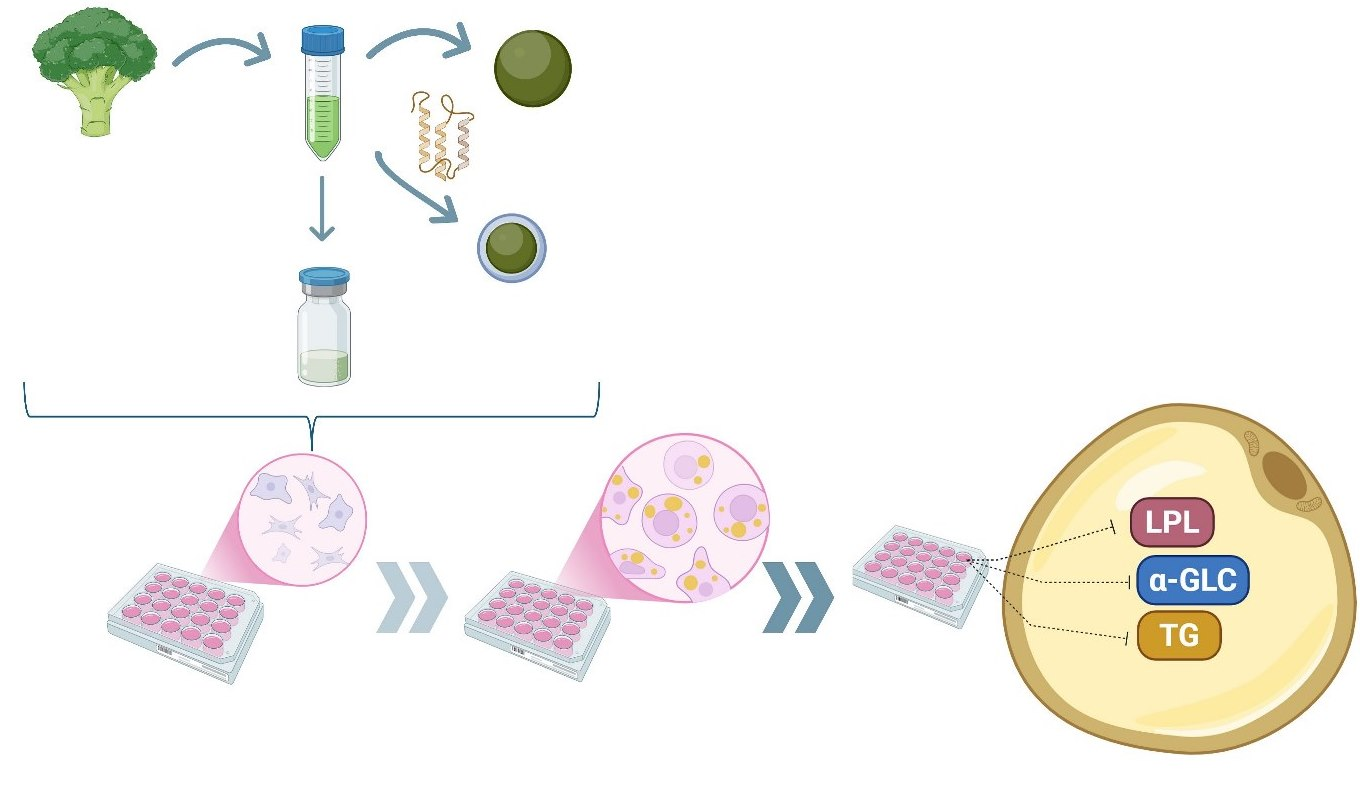
Glucosinolate–Myrosinase Formulations for Adult Obesity: Towards Next Generation of Bioactive Therapies
 ,
,  , and
, and 
Abstract
1. Introduction
2. Materials and Methods
2.1. Chemicals and Reagents
2.2. Tested Formulations

| Tested Formulation | Code/Abbreviation |
|---|---|
| GSL-rich starting material, obtained by processing of broccoli (Brassica oleracea L. [Italica Group]) in frozen-food industrial facilities | GS0 |
| GSL Concentrated extract, obtained from GS0, liquid format | GSC |
| GSC freeze-dried powdered formula | DGSC |
| Myrosinase-rich concentrated extract, liquid formula | MYRC |
| Sulforaphan® BASIC encapsulated and powdered formula (including GSC) | BASIC |
| Sulforaphan® SMART powdered and encapsulated formula (including GSC and MYRC) | SMART |
2.3. Organosulfur Compounds Quantitative Profile (Glucosinolate Analysis)
2.4. Cell Culture and Differentiation Procedure
2.5. In Vitro Cytotoxic Test (MTT Assay)
2.6. Quantification of Triglycerides and Assessment of Lipoprotein Lipase and α-Glucosidase Activity
2.7. Statistical Analysis
3. Results and Discussion
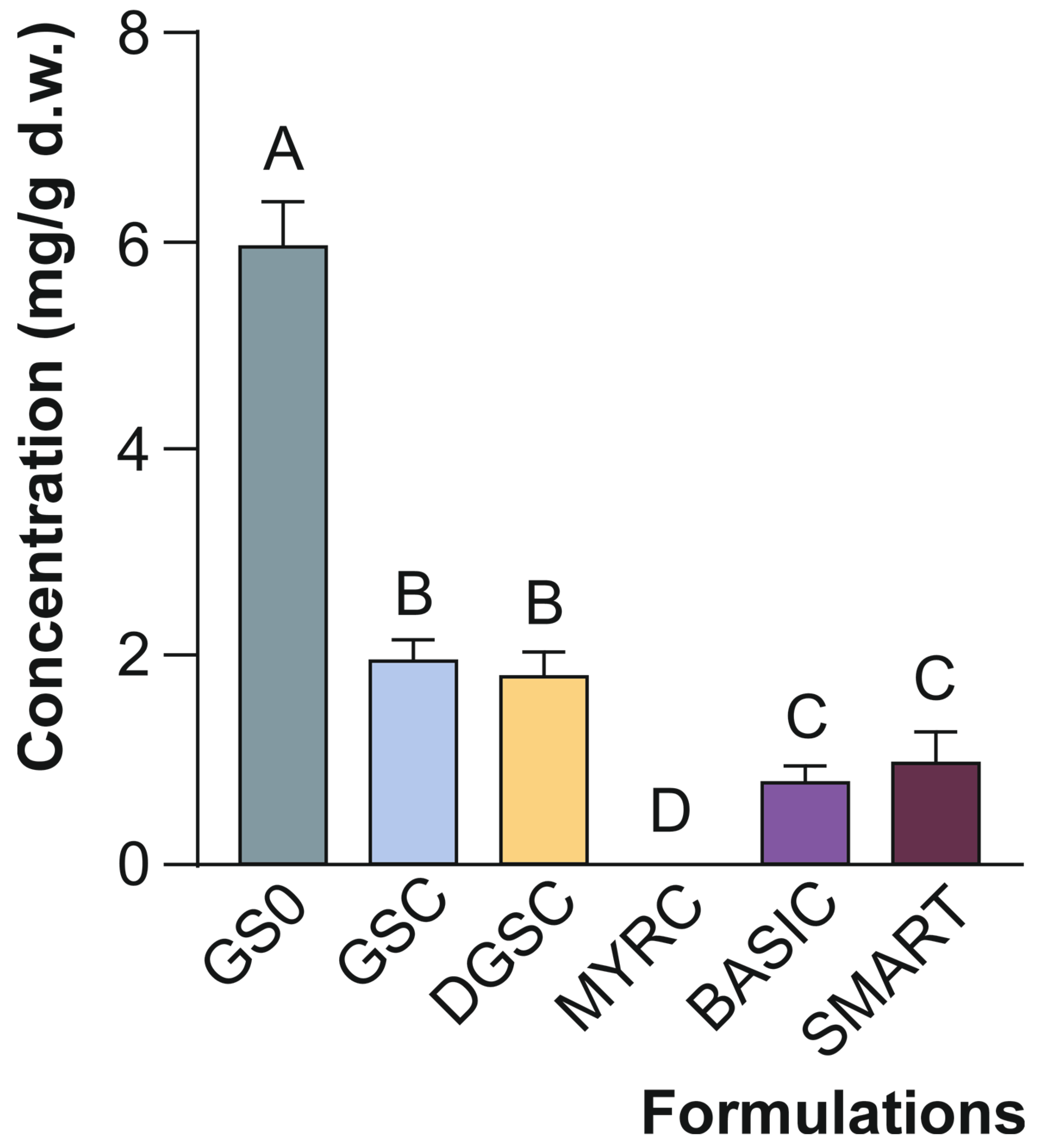
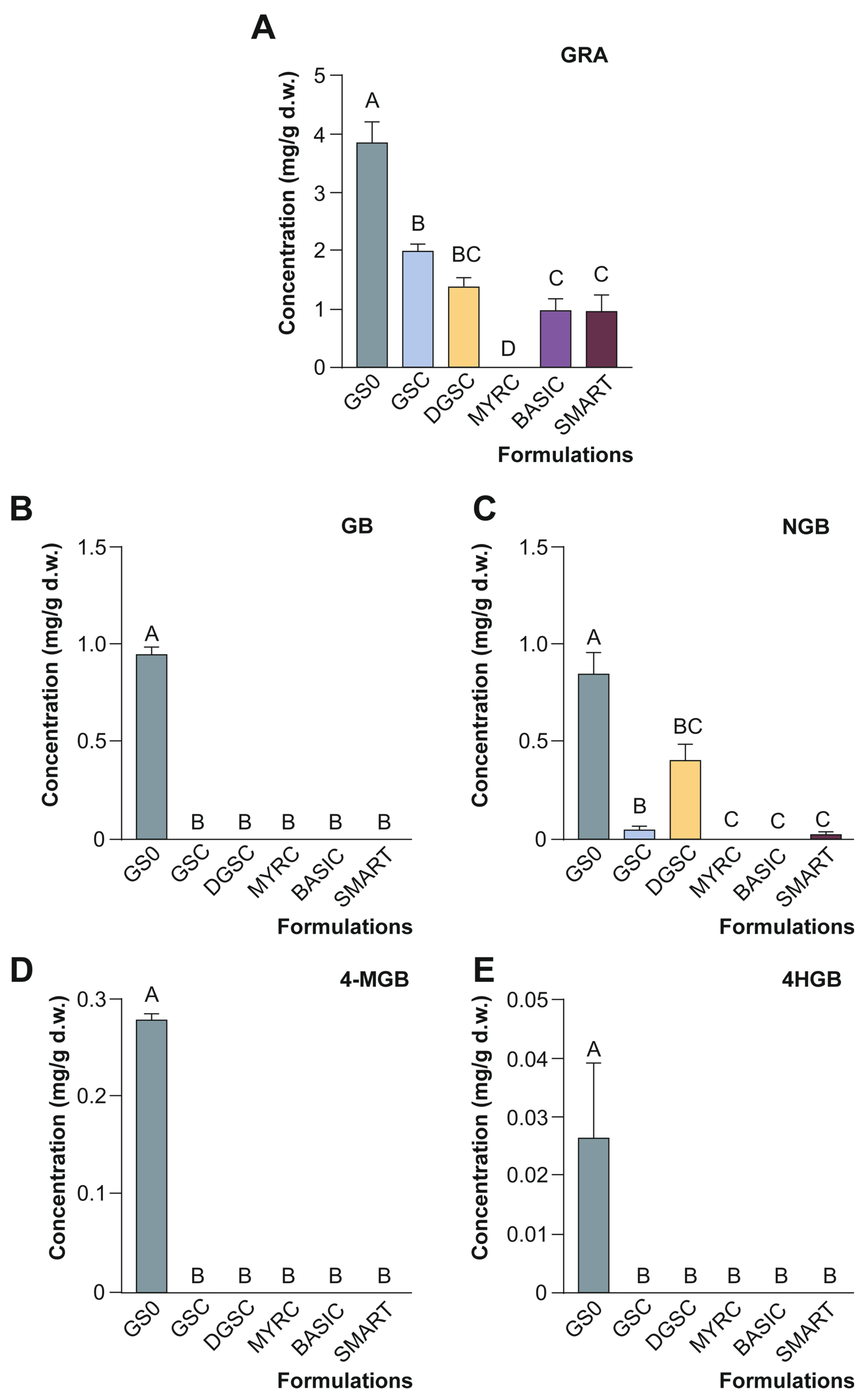
3.1. Characterisation
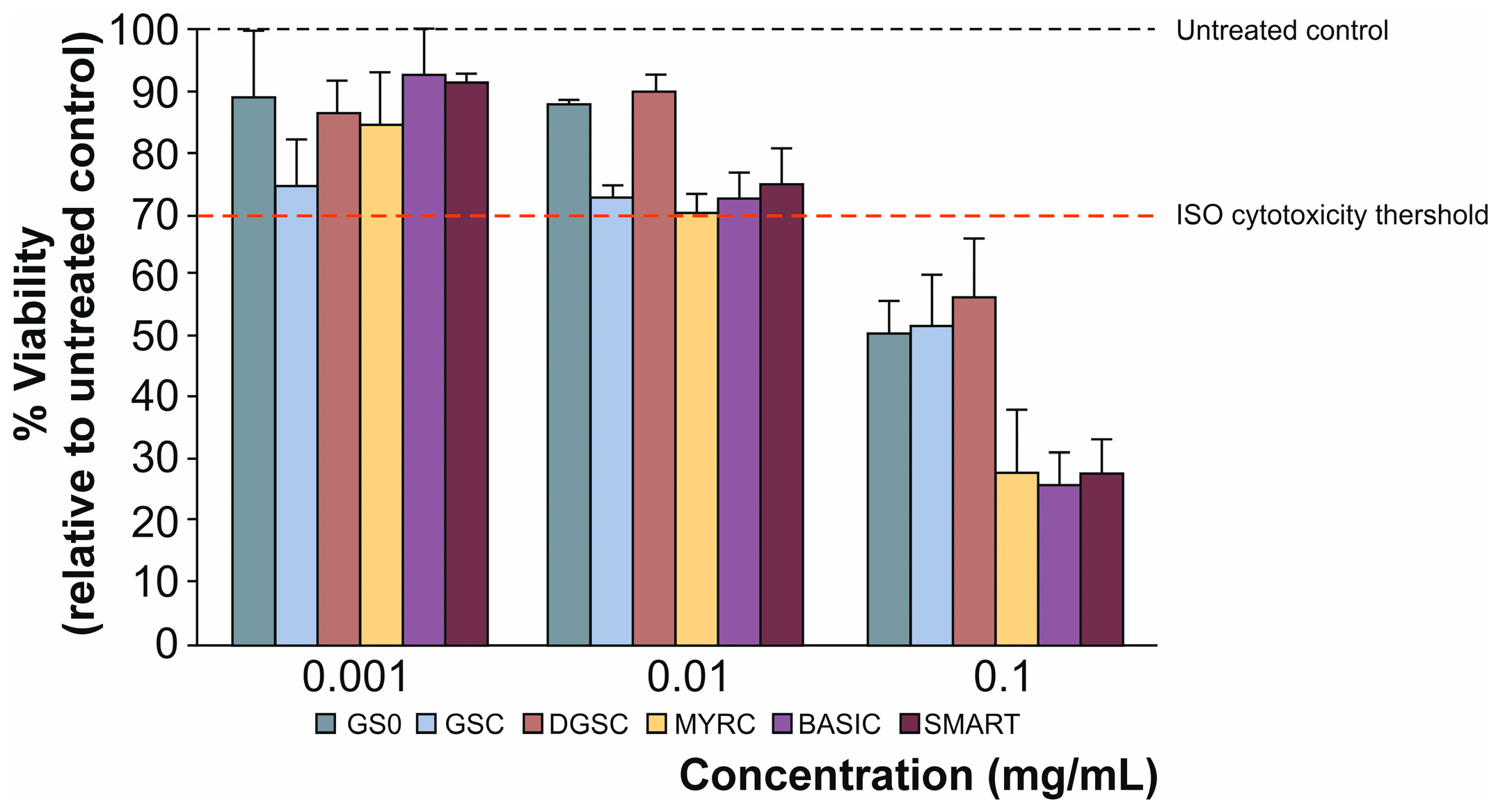
3.2. Cell Viability
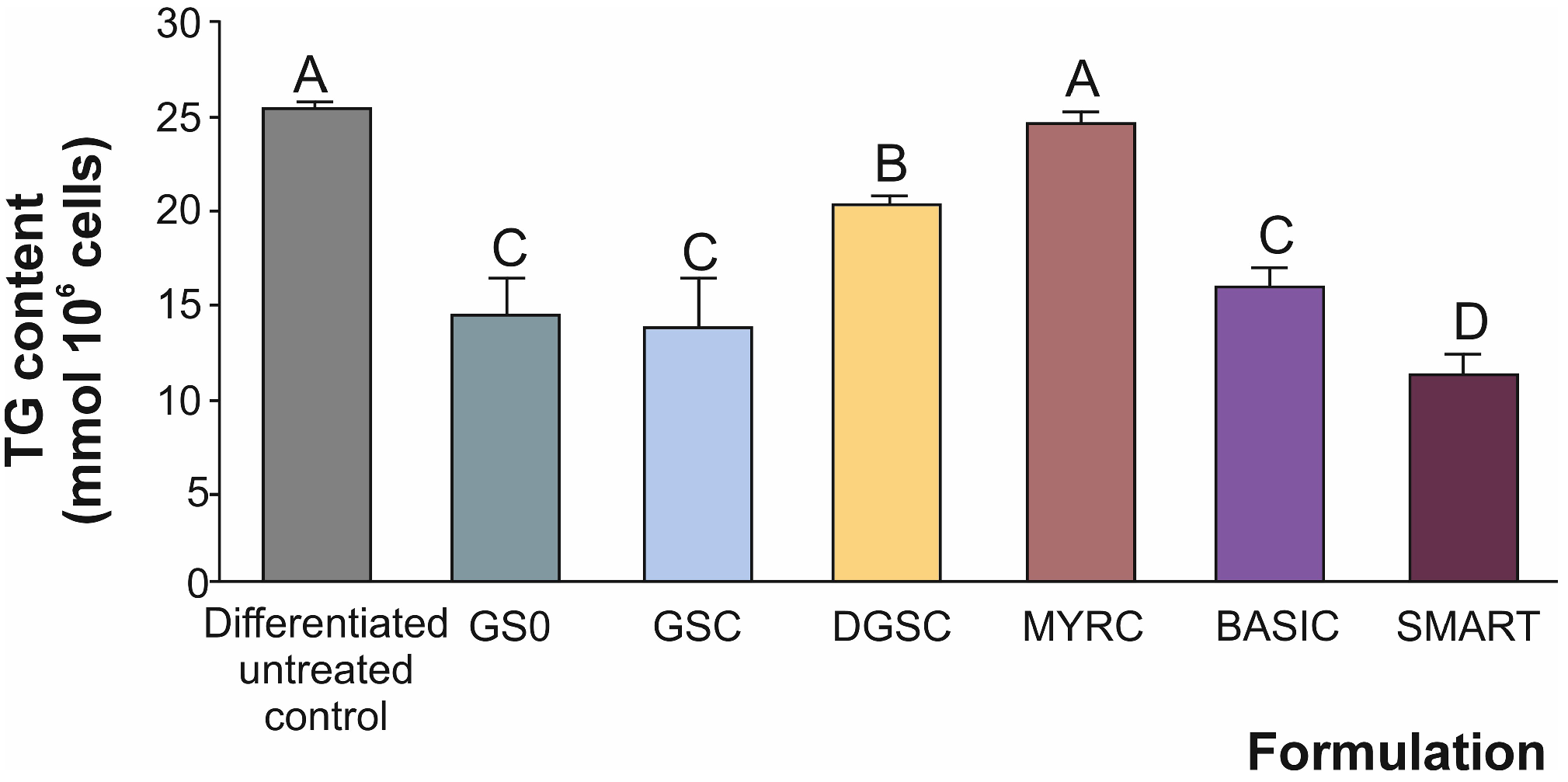
3.3. Triglyceride Content
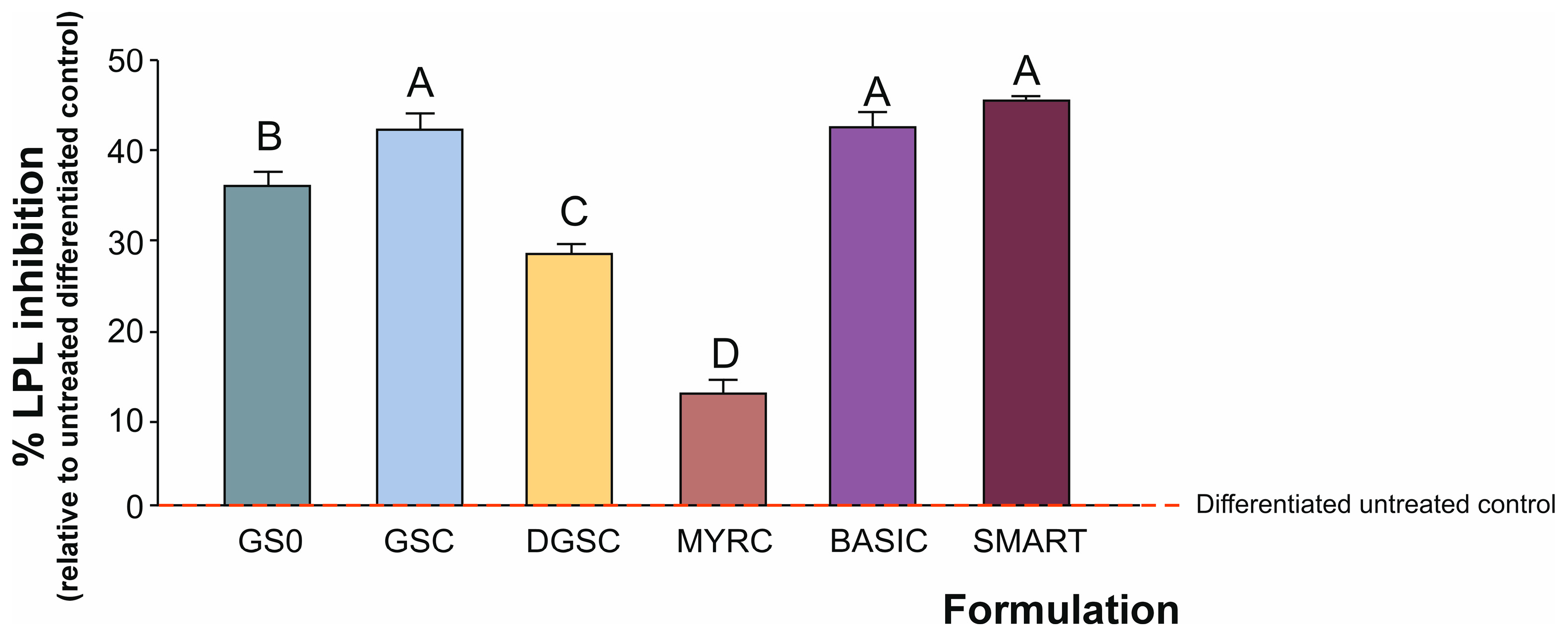
3.4. Lipoprotein Lipase (LPL) Activity
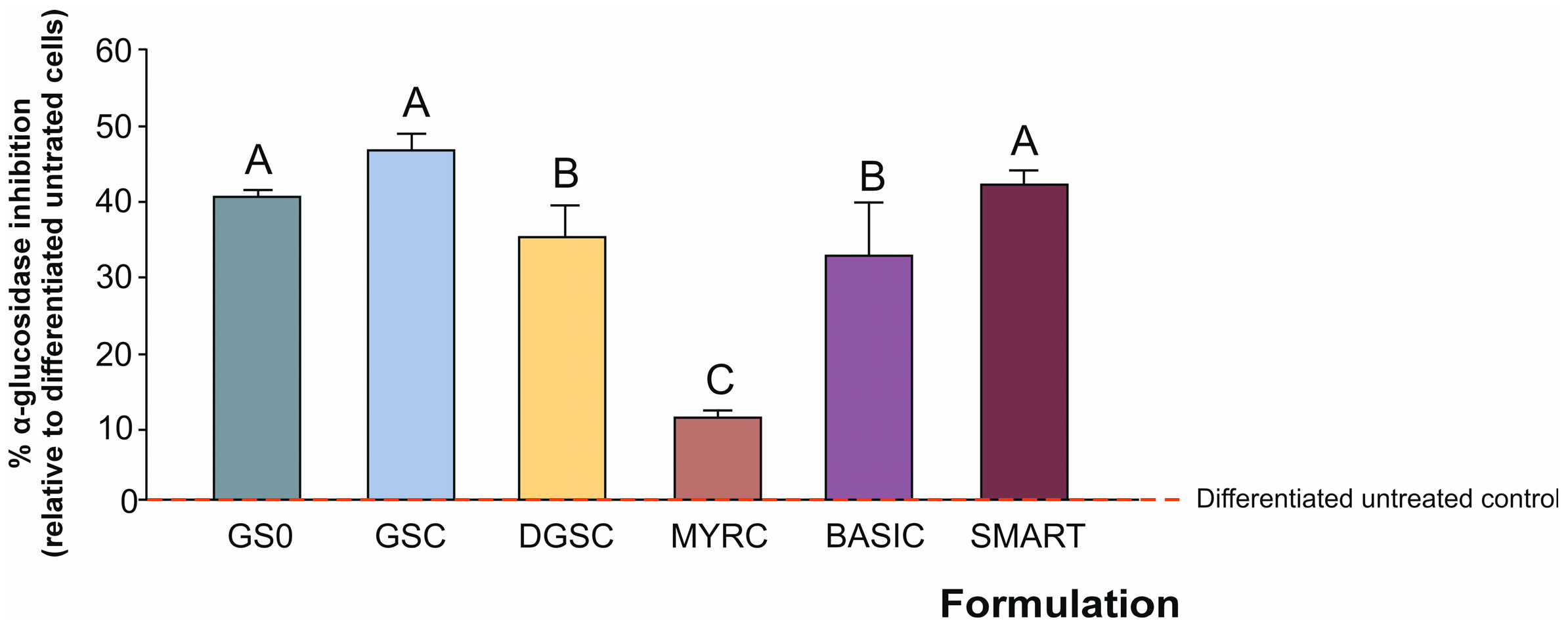
3.5. α-Glucosidase

4. Conclusions
Supplementary Materials
Author Contributions
Funding
Institutional Review Board Statement
Informed Consent Statement
Data Availability Statement
Acknowledgments
Conflicts of Interest
Abbreviations
| 4-HGB | 4-Hydroxy-Glucobrassicin |
| 4-MGB | 4-Methoxy-Glucobrassicin |
| ANOVA | One-way Analyses of Variance |
| DMEM | Dulbecco’s Modified Eagle Medium |
| EDTA | Ethylenediaminetetraacetic Acid |
| FBS | Foetal Bovine Serum |
| FXR | Farnesoid X Receptor |
| GB | Glucobrassicin |
| GRA | Glucoraphanin |
| GSL | Glucosinolates |
| ITC | Isothiocyanates |
| LPL | Lipoprotein lipase |
| NGB | Neo-Glucobrassicin |
| ROS | Reactive Oxygen Species |
| SD | Standard Deviation |
| SFN | Sulforaphane |
| T2D | Type II diabetes |
| TG | Triglycerides |
References
- Economic Impact of Overweight and Obesity to Surpass $4 Trillion by 2035. Available online: https://www.worldobesity.org/news/economic-impact-of-overweight-and-obesity-to-surpass-4-trillion-by-2035 (accessed on 11 January 2025).
- Obesidad y Sobrepeso. Available online: https://www.who.int/es/news-room/fact-sheets/detail/obesity-and-overweight (accessed on 22 January 2025).
- Capoccia, D.; Milani, I.; Colangeli, L.; Parrotta, M.E.; Leonetti, F.; Guglielmi, V. Social, Cultural and Ethnic Determinants of Obesity: From Pathogenesis to Treatment. Nutr. Metab. Cardiovasc. Dis. 2025, 35, 103901. [Google Scholar] [CrossRef] [PubMed]
- Korac, B.; Kalezic, A.; Pekovic-Vaughan, V.; Korac, A.; Jankovic, A. Redox Changes in Obesity, Metabolic Syndrome, and Diabetes. Redox Biol. 2021, 42, 101887. [Google Scholar] [CrossRef]
- Sharma, P.; Sharma, V.; Mathpal, S.; Tewari, D.; Chandra, S.; Tamta, S. Identification of Alpha-Glucosidase Enzyme Inhibitors from Phytochemicals via Integrated Deep Learning, Molecular Docking, Molecular Dynamics Simulation, and MMPBSA Analysis. S. Afr. J. Bot. 2024, 167, 48–61. [Google Scholar] [CrossRef]
- Alexandre, E.M.C.; Moreira, S.A.; Pinto, C.A.; Pintado, M.; Saraiva, J.A. Analysis of Glucosinolates Content in Food Products. In Glucosinolates: Properties, Recovery, and Applications; Elsevier: Amsterdam, The Netherlands, 2019; pp. 213–250. ISBN 978-0-12-816493-8. [Google Scholar]
- Wu, S.A.; Kersten, S.; Qi, L. Lipoprotein Lipase and Its Regulators: An Unfolding Story. Trends Endocrinol. Metab. 2021, 32, 48–61. [Google Scholar] [CrossRef]
- García-Pérez, P.; Tomas, M.; Giuberti, G.; Capanoglu, E.; Callegari, M.L.; Lucini, L.; Patrone, V. Brassica Microgreens Shape Gut Microbiota and Functional Metabolite Profiles in a Species-Related Manner: A Multi-Omics Approach Following In Vitro Gastrointestinal Digestion and Large Intestine Fermentation. Microbiol. Res. 2025, 298, 128226. [Google Scholar] [CrossRef]
- Dmytriv, T.R.; Lushchak, O.; Lushchak, V.I. Glucoraphanin Conversion into Sulforaphane and Related Compounds by Gut Microbiota. Front. Physiol. 2025, 16, 1497566. [Google Scholar] [CrossRef] [PubMed]
- Çakır, I.; Pan, P.L.; Hadley, C.K.; El-Gamal, A.; Fadel, A.; Elsayegh, D.; Mohamed, O.; Rizk, N.M.; Ghamari-Langroudi, M. Sulforaphane Reduces Obesity by Reversing Leptin Resistance. eLife 2022, 11, e67368. [Google Scholar] [CrossRef] [PubMed]
- Cámara-Martos, F.; Bolívar, A.; Rabasco-Vílchez, L.; Lafont-Déniz, F.; Luque-Ojeda, J.L.; Pérez-Rodríguez, F. Exploring the Bioaccessibility, In Vitro Colonic Fermentation, and the Impact on the Intestinal Microbiota of Allyl-and Benzyl-Isothiocyanate from White and Ethiopian Mustard. Food Res. Int. 2025, 203, 115781. [Google Scholar] [CrossRef]
- Paśko, P.; Tyszka-Czochara, M.; Galanty, A.; Gdula-Argasińska, J.; Żmudzki, P.; Bartoń, H.; Zagrodzki, P.; Gorinstein, S. Comparative Study of Predominant Phytochemical Compounds and Proapoptotic Potential of Broccoli Sprouts and Florets. Plant Foods Hum. Nutr. 2018, 73, 95–100. [Google Scholar] [CrossRef] [PubMed]
- Radünz, M.; Camargo, T.M.; Raphaelli, C.D.O.; Radünz, A.L.; Gandra, E.Á.; Zavareze, E.D.R. Chemical Composition, Antimicrobial and Antioxidant Activities of Broccoli, Kale, and Cauliflower Extracts. Plant Foods Hum. Nutr. 2024, 79, 700–706. [Google Scholar] [CrossRef]
- De Vasconcelos Lopes, V.; De Souza, Y.A.; Brito, F.O.; Soares, C.L.; Beres, C.; Citelli, M.; Antunes, A.E.C.; Miyahira, R.F. The Effect of Plant Ontogeny on Antioxidant Capacity and Bioaccessibility of Total Phenolic Compounds and Sulforaphane in Broccoli Sprouts. Plant Foods Hum. Nutr. 2025, 80, 119. [Google Scholar] [CrossRef]
- Zhang, Y.; Zhang, W.; Zhao, Y.; Peng, R.; Zhang, Z.; Xu, Z.; Simal-Gandara, J.; Yang, H.; Deng, J. Bioactive Sulforaphane from Cruciferous Vegetables: Advances in Biosynthesis, Metabolism, Bioavailability, Delivery, Health Benefits, and Applications. Crit. Rev. Food Sci. Nutr. 2025, 65, 3027–3047. [Google Scholar] [CrossRef]
- López-Chillón, M.T.; Carazo-Díaz, C.; Prieto-Merino, D.; Zafrilla, P.; Moreno, D.A.; Villaño, D. Effects of Long-Term Consumption of Broccoli Sprouts on Inflammatory Markers in Overweight Subjects. Clin. Nutr. 2019, 38, 745–752. [Google Scholar] [CrossRef] [PubMed]
- Axelsson, A.S.; Tubbs, E.; Mecham, B.; Chacko, S.; Nenonen, H.A.; Tang, Y.; Fahey, J.W.; Derry, J.M.J.; Wollheim, C.B.; Wierup, N.; et al. Sulforaphane Reduces Hepatic Glucose Production and Improves Glucose Control in Patients with Type 2 Diabetes. Sci. Transl. Med. 2017, 9, eaah4477. [Google Scholar] [CrossRef]
- Fahey, J.W.; Kensler, T.W. The Challenges of Designing and Implementing Clinical Trials with Broccoli Sprouts… and Turning Evidence Into Public Health Action. Front. Nutr. 2021, 8, 648788. [Google Scholar] [CrossRef]
- Bankole, T.; Ma, T.; Arora, I.; Lei, Z.; Raju, M.; Li, Z.; Li, Y. The Effect of Broccoli Glucoraphanin Supplementation on Ameliorating High-Fat-Diet-Induced Obesity through the Gut Microbiome and Metabolome Interface. Mol. Nutr. Food Res. 2024, 68, 2300856. [Google Scholar] [CrossRef]
- Vasileva, L.V.; Savova, M.S.; Amirova, K.M.; Dinkova-Kostova, A.T.; Georgiev, M.I. Obesity and NRF2-Mediated Cytoprotection: Where Is the Missing Link? Pharmacol. Res. 2020, 156, 104760. [Google Scholar] [CrossRef]
- Guijarro-Real, C.; Hernández-Cánovas, L.; Abellán-Victorio, Á.; Ben-Romdhane, O.; Moreno, D.A. The Combination of Monochromatic LEDs and Elicitation with Stressors Enhances the Accumulation of Glucosinolates in Mustard Sprouts with Species-Dependency. Plants 2022, 11, 2961. [Google Scholar] [CrossRef] [PubMed]
- Abellán, Á.; Domínguez-Perles, R.; García-Viguera, C.; Moreno, D.A. Evidence on the Bioaccessibility of Glucosinolates and Breakdown Products of Cruciferous Sprouts by Simulated In Vitro Gastrointestinal Digestion. Int. J. Mol. Sci. 2021, 22, 11046. [Google Scholar] [CrossRef] [PubMed]
- Luo, S.; An, R.; Zhou, H.; Zhang, Y.; Ling, J.; Hu, H.; Li, P. The Glucosinolate Profiles of Brassicaceae Vegetables Responded Differently to Quick-Freezing and Drying Methods. Food Chem. 2022, 383, 132624. [Google Scholar] [CrossRef]
- Zhao, Y.; Zhang, W.; Yang, H.; Xu, Z.; Wang, X.; Zhang, Z.; Deng, J. Effects of Drying Methods on Phytochemicals and Antioxidant Activity of Broccoli By-Products. Food Res. Int. 2025, 208, 116284. [Google Scholar] [CrossRef]
- Vargas, L.; Kapoor, R.; Nemzer, B.; Feng, H. Application of Different Drying Methods for Evaluation of Phytochemical Content and Physical Properties of Broccoli, Kale, and Spinach. LWT 2022, 155, 112892. [Google Scholar] [CrossRef]
- Costa-Pérez, A.; Moreno, D.A.; Periago, P.M.; García-Viguera, C.; Domínguez-Perles, R. A New Food Ingredient Rich in Bioaccessible (Poly)Phenols (and Glucosinolates) Obtained from Stabilized Broccoli Stalks. Foods 2022, 11, 1734. [Google Scholar] [CrossRef]
- Costa-Pérez, A.; Sánchez-Bravo, P.; Medina, S.; Domínguez-Perles, R.; García-Viguera, C. Bioaccessible Organosulfur Compounds in Broccoli Stalks Modulate the Inflammatory Mediators Involved in Inflammatory Bowel Disease. Int. J. Mol. Sci. 2024, 25, 800. [Google Scholar] [CrossRef] [PubMed]
- Tatasciore, S.; Santarelli, V.; Neri, L.; Ortega, R.G.; Faieta, M.; Mattia, C.D.D.; Michele, A.D.; Pittia, P. Freeze-Drying Microencapsulation of Hop Extract: Effect of Carrier Composition on Physical, Techno-Functional, and Stability Properties. Antioxidants 2023, 12, 442. [Google Scholar] [CrossRef]
- Oliviero, T.; Verkerk, R.; Dekker, M. Effect of Water Content and Temperature on Glucosinolate Degradation Kinetics in Broccoli (Brassica oleracea Var. italica). Food Chem. 2012, 132, 2037–2045. [Google Scholar] [CrossRef]
- Khalef, L.; Lydia, R.; Filicia, K.; Moussa, B. Cell Viability and Cytotoxicity Assays: Biochemical Elements and Cellular Compartments. Cell Biochem. Funct. 2024, 42, e4007. [Google Scholar] [CrossRef] [PubMed]
- Martin, O.; Scholze, M.; Ermler, S.; McPhie, J.; Bopp, S.K.; Kienzler, A.; Parissis, N.; Kortenkamp, A. Ten Years of Research on Synergisms and Antagonisms in Chemical Mixtures: A Systematic Review and Quantitative Reappraisal of Mixture Studies. Environ. Int. 2021, 146, 106206. [Google Scholar] [CrossRef]
- Sestili, P.; Fimognari, C. Cytotoxic and Antitumor Activity of Sulforaphane: The Role of Reactive Oxygen Species. BioMed Res. Int. 2015, 2015, 402386. [Google Scholar] [CrossRef]
- Biological Evaluation of Medical Devices—Part 5: Tests for In Vitro Cytotoxicity. Available online: https://www.iso.org/standard/36406.html (accessed on 15 December 2025).
- Gu, X.; Wang, L.; Liu, S.; Shan, T. Adipose Tissue Adipokines and Lipokines: Functions and Regulatory Mechanism in Skeletal Muscle Development and Homeostasis. Metabolism 2023, 139, 155379. [Google Scholar] [CrossRef] [PubMed]
- Sirichai, P.; Kittibunchakul, S.; Thangsiri, S.; On-Nom, N.; Chupeerach, C.; Temviriyanukul, P.; Inthachat, W.; Nuchuchua, O.; Aursalung, A.; Sahasakul, Y.; et al. Impact of Drying Processes on Phenolics and In Vitro Health-Related Activities of Indigenous Plants in Thailand. Plants 2022, 11, 294. [Google Scholar] [CrossRef] [PubMed]
- Shariat, S.Z.S.; Jafari, N.; Tavakoli, N.; Najafi, R.B. Protection of Lactoperoxidase Activity with Sugars during Lyophilization and Evaluation of Its Antibacterial Properties. Res. Pharm. Sci. 2015, 10, 152–160. [Google Scholar]
- Okunade, O.; Niranjan, K.; Ghawi, S.K.; Kuhnle, G.; Methven, L. Supplementation of the Diet by Exogenous Myrosinase via Mustard Seeds to Increase the Bioavailability of Sulforaphane in Healthy Human Subjects after the Consumption of Cooked Broccoli. Mol. Nutr. Food Res. 2018, 62, 1700980. [Google Scholar] [CrossRef]
- Saiki, A.; Koide, N.; Watanabe, F.; Murano, T.; Miyashita, Y.; Shirai, K. Suppression of Lipoprotein Lipase Expression in 3T3-L1 Cells by Inhibition of Adipogenic Differentiation through Activation of the Renin-Angiotensin System. Metabolism 2008, 57, 1093–1100. [Google Scholar] [CrossRef]
- Angelino, D.; Jeffery, E. Glucosinolate Hydrolysis and Bioavailability of Resulting Isothiocyanates: Focus on Glucoraphanin. J. Funct. Foods 2014, 7, 67–76. [Google Scholar] [CrossRef]
- Baenas, N.; Piegholdt, S.; Schloesser, A.; Moreno, D.A.; García-Viguera, C.; Rimbach, G.; Wagner, A.E. Metabolic Activity of Radish Sprouts Derived Isothiocyanates in Drosophila Melanogaster. Int. J. Mol. Sci. 2016, 17, 251. [Google Scholar] [CrossRef]
- Radünz, M.; Mota Camargo, T.; Dos Santos Hackbart, H.C.; Blank, J.P.; Hoffmann, J.F.; Moro Stefanello, F.; Da Rosa Zavareze, E. Encapsulation of Broccoli Extract by Electrospraying: Influence of In Vitro Simulated Digestion on Phenolic and Glucosinolate Contents, and on Antioxidant and Antihyperglycemic Activities. Food Chem. 2021, 339, 128075. [Google Scholar] [CrossRef] [PubMed]
- Agrawal, N.; Sharma, M.; Singh, S.; Goyal, A. Recent Advances of α-Glucosidase Inhibitors: A Comprehensive Review. Curr. Top. Med. Chem. 2022, 22, 2069–2086. [Google Scholar] [CrossRef] [PubMed]
- Podsȩdek, A.; Majewska, I.; Kucharska, A.Z. Inhibitory Potential of Red Cabbage against Digestive Enzymes Linked to Obesity and Type 2 Diabetes. J. Agric. Food Chem. 2017, 65, 7192–7199. [Google Scholar] [CrossRef]
- Zhao, C.C.; Shen, J.; Chen, J.; Shao, J.H.; Li, K.H.; Gu, W.Y.; Miao, B.J. Phenolic Glycoside Constituents from Brassica rapa Flowers and Their α-Glucosidase Inhibitory Activity. Nat. Prod. Res. 2019, 33, 3398–3403. [Google Scholar] [CrossRef]
- Chen, X.L.; Zhang, K.; Zhao, X.; Wang, H.L.; Han, M.; Li, R.; Zhang, Z.N.; Zhang, Y.M. Triterpenoids from Kochiae Fructus: Glucose Uptake in 3T3-L1 Adipocytes and α-Glucosidase Inhibition, in Silico Molecular Docking. Int. J. Mol. Sci. 2023, 24, 2454. [Google Scholar] [CrossRef]
- Moreno, D.A.; Ilic, N.; Poulev, A.; Brasaemle, D.L.; Fried, S.K.; Raskin, I. Inhibitory Effects of Grape Seed Extract on Lipases. Nutrition 2003, 19, 876–879. [Google Scholar] [CrossRef] [PubMed]
- Sikorska-Zimny, K.; Beneduce, L. The Metabolism of Glucosinolates by Gut Microbiota. Nutrients 2021, 13, 2750. [Google Scholar] [CrossRef] [PubMed]
- Cai, H.; Lin, M.; Chen, K.; Wu, Y.; Le, T.N.; Zhang, J.; Zhao, M. Dose-Specific Amelioration of Caffeic Acid Phenethyl Ester on High-Fat Diet-Induced Obesity Based on Intestinal FXR Signaling and Bile Acid Regulation. Food Biosci. 2025, 68, 106628. [Google Scholar] [CrossRef]


Disclaimer/Publisher’s Note: The statements, opinions and data contained in all publications are solely those of the individual author(s) and contributor(s) and not of MDPI and/or the editor(s). MDPI and/or the editor(s) disclaim responsibility for any injury to people or property resulting from any ideas, methods, instructions or products referred to in the content. |
© 2025 by the authors. Licensee MDPI, Basel, Switzerland. This article is an open access article distributed under the terms and conditions of the Creative Commons Attribution (CC BY) license.
Share and Cite
Medrano-Padial, C.; Harris, C.B.; Mellado-Romero, V.; Domínguez-Perles, R.; Moreno, D.A. Glucosinolate–Myrosinase Formulations for Adult Obesity: Towards Next Generation of Bioactive Therapies. Foods 2026, 15, 13. https://doi.org/10.3390/foods15010013
Medrano-Padial C, Harris CB, Mellado-Romero V, Domínguez-Perles R, Moreno DA. Glucosinolate–Myrosinase Formulations for Adult Obesity: Towards Next Generation of Bioactive Therapies. Foods. 2026; 15(1):13. https://doi.org/10.3390/foods15010013
Chicago/Turabian StyleMedrano-Padial, Concepción, Cassidy Bo Harris, Verónica Mellado-Romero, Raúl Domínguez-Perles, and Diego A. Moreno. 2026. "Glucosinolate–Myrosinase Formulations for Adult Obesity: Towards Next Generation of Bioactive Therapies" Foods 15, no. 1: 13. https://doi.org/10.3390/foods15010013
APA StyleMedrano-Padial, C., Harris, C. B., Mellado-Romero, V., Domínguez-Perles, R., & Moreno, D. A. (2026). Glucosinolate–Myrosinase Formulations for Adult Obesity: Towards Next Generation of Bioactive Therapies. Foods, 15(1), 13. https://doi.org/10.3390/foods15010013