Skip to Content
ProcessesProcesses
  • Article
  • Open Access

25 February 2026

Comprehensive Early Alert and Adaptive Local Response Framework for Wildfire Risk in Transmission Line Corridors Using Coupled Global Factors in Power System


,
,
and
1
College of Electrical Engineering and New Energy, China Three Gorges University, Yichang 443002, China
2
Hubei Provincial Engineering Research Center of Intelligent Energy Technology, China Three Gorges University, Yichang 443002, China
*
Author to whom correspondence should be addressed.

Abstract

Escalating global climate change has intensified the frequency and scale of wildfires in mountainous regions hosting transmission line infrastructure. These conflagrations act as extreme meteorological events, capable of generating localized heatwaves that compromise the air insulation of power lines and trigger protective relay operations, thereby posing systemic threats to regional grid stability. To enhance wildfire early-warning efficacy for grid security, this study formulates wildfire early warning for power transmission corridors as a regression-based risk prediction problem and proposes a hierarchical “global screening–local refinement” risk assessment framework. The primary contribution of this study lies in the integration of a machine-learning-based global wildfire risk screening model with tower-level spatial refinement using geographically weighted regression (GWR), enabling coordinated global–local wildfire risk characterization along power transmission corridors The framework employs a predictive model built on a Gradient Boosting Decision Tree algorithm, integrating geospatial and statistical analyses. A global risk model, utilizing historical data from the Himawari-8 satellite alongside meteorological, topographic, and anthropogenic variables, produces a composite risk index. This index is spatially interpolated via Kriging to generate stratified wildfire risk maps for broad-area assessment. For precise corridor-level analysis, these Globally Projected Risk Indices, along with localized terrain features, inter-tower clearance distances, and proximity to historical ignition points, are incorporated into a Geographically Weighted Regression model. This yields a spatially calibrated wildfire risk index along critical routes. The results show that the GBDT-based model achieved the best predictive performance among the evaluated regression models, with an R2 of 0.626 and a mean squared error of 0.178. This approach offers a scientifically robust and operationally viable reference for wildfire prevention strategies in power line maintenance.

1. Introduction

Environmental catastrophes worldwide have increasingly contributed to tripping events on transmission lines, such as fires, which are among the highest contributors. Thus, the problem of wildfires affecting the safety of transmission corridors has been increasing on increasing levels of severity. Moreover, current early warning systems are limited by their inability to provide spatial resolution, context-specific adaptability to local topography, and sufficient overall response capability relative to safety standards required by modern-day electrical power systems. Currently available wildfire risk and prediction models have utilized various mathematical, statistical and machine learning technologies, which have been used to identify areas that have the greatest potential for wildfires by using various risk components (ignition source, fuel and vegetation condition, topography and meteorological or climatic conditions) combined together with model outputs from multiple models of these components.
A number of studies have applied traditional machine learning and statistical models to wildfire risk prediction. For instance, data-driven models integrating multi-source remote sensing information have been used to characterize the spatial distribution of wildfire risk and identify high-risk areas [1,2,3]. With the increasing availability of high-resolution remote sensing data, deep learning techniques have been introduced to enhance wildfire risk assessment. Convolutional neural networks and other deep learning architectures have been used to extract spatial and temporal features from multispectral satellite imagery for wildfire detection, burn severity prediction, and dynamic risk mapping [4,5,6]. These approaches have shown improved performance in large-scale wildfire monitoring and feature representation. Regression-based and ensemble learning approaches, including random forests and boosting models, have further been employed to quantify the relationships between wildfire occurrence and environmental variables across different regions [7,8,9]. These studies highlight the capability of data-driven approaches to model complex and nonlinear wildfire risk patterns. In addition, probabilistic and knowledge-based models have been explored to address uncertainties in wildfire risk assessment. Bayesian networks, fuzzy mathematical models, and multi-criteria decision-making approaches have been proposed to represent complex relationships between fire occurrence and risk factors [10,11,12,13,14,15]. Some studies have further integrated operational data, such as line patrol records and field experiments, to support wildfire risk classification along power distribution and transmission lines [16].
Recent studies have integrated wildfire propagation prediction into early warning of electrical transmission line outages [17]. Such approaches focus on dynamic fire spread modeling and event-based outage assessment. In contrast, this study adopts a complementary perspective by emphasizing regional wildfire risk screening and spatial refinement along transmission corridors using data-driven machine learning and spatial regression techniques.
By reviewing the achievements and ideas of existing research, it can be seen that predicting wildfires faces two major challenges. First, global monitoring systems based on satellite remote sensing (e.g., MODIS, VIIRS) are capable of large-scale fire detection; however, their kilometer-level spatial resolution is insufficient to meet the precision requirements of tower-level early warning. As a result, most existing wildfire risk warning studies remain at relatively coarse geographic scales and are not directly applicable to the corridor-level context of power transmission lines [18,19]. Second, fire risk factors in existing warning models exhibit significant spatial heterogeneity. To address this, geospatial analysis techniques, in combination with field investigations of transmission corridors, are required to capture the localized characteristics of individual towers. Such an approach would enable dynamic weight adjustment and facilitate regionalized wildfire risk warnings tailored to transmission lines [20,21].
To address the above two challenges, this paper proposes a hierarchical “global warning–local correction” wildfire risk early warning framework for power transmission line corridors. At the global scale, a Gradient Boosting Decision Tree (GBDT) regression model is constructed based on Himawari-8 satellite data and multi-source environmental variables, enabling quantitative analysis of wildfire risk factor contributions through Bayesian hyperparameter optimization. At the local scale, Geographically Weighted Regression (GWR) is incorporated to explicitly account for spatial heterogeneity by integrating corridor-specific features, including tower buffer distances and “∧”-shaped management zones. Through this global–local collaborative strategy, the proposed framework achieves refined tower-level wildfire risk characterization, supporting more targeted early warning and reducing unnecessary inspection efforts in low-risk corridor sections. Accordingly, this study is designed with the following scientific objectives:
(1)
to develop a machine-learning-based global wildfire risk screening model that integrates multi-source remote sensing, meteorological, topographic, and anthropogenic data for large-scale assessment of wildfire threats along power transmission corridors;
(2)
to introduce a geographically weighted regression–based local refinement strategy that explicitly captures spatial heterogeneity and corridor-specific characteristics at the tower level, thereby enhancing spatial precision beyond conventional kilometer-scale warning systems; and
(3)
to establish a collaborative global–local wildfire early warning framework that supports refined tower-level risk characterization, improves predictive accuracy, and reduces unnecessary inspection efforts in low-risk corridor sections.
Through these objectives, this study aims to provide a scientifically sound and operationally practical solution for wildfire early warning and risk management in power transmission line corridors.

2. Data Source and Processing

2.1. Overview of the Study Area

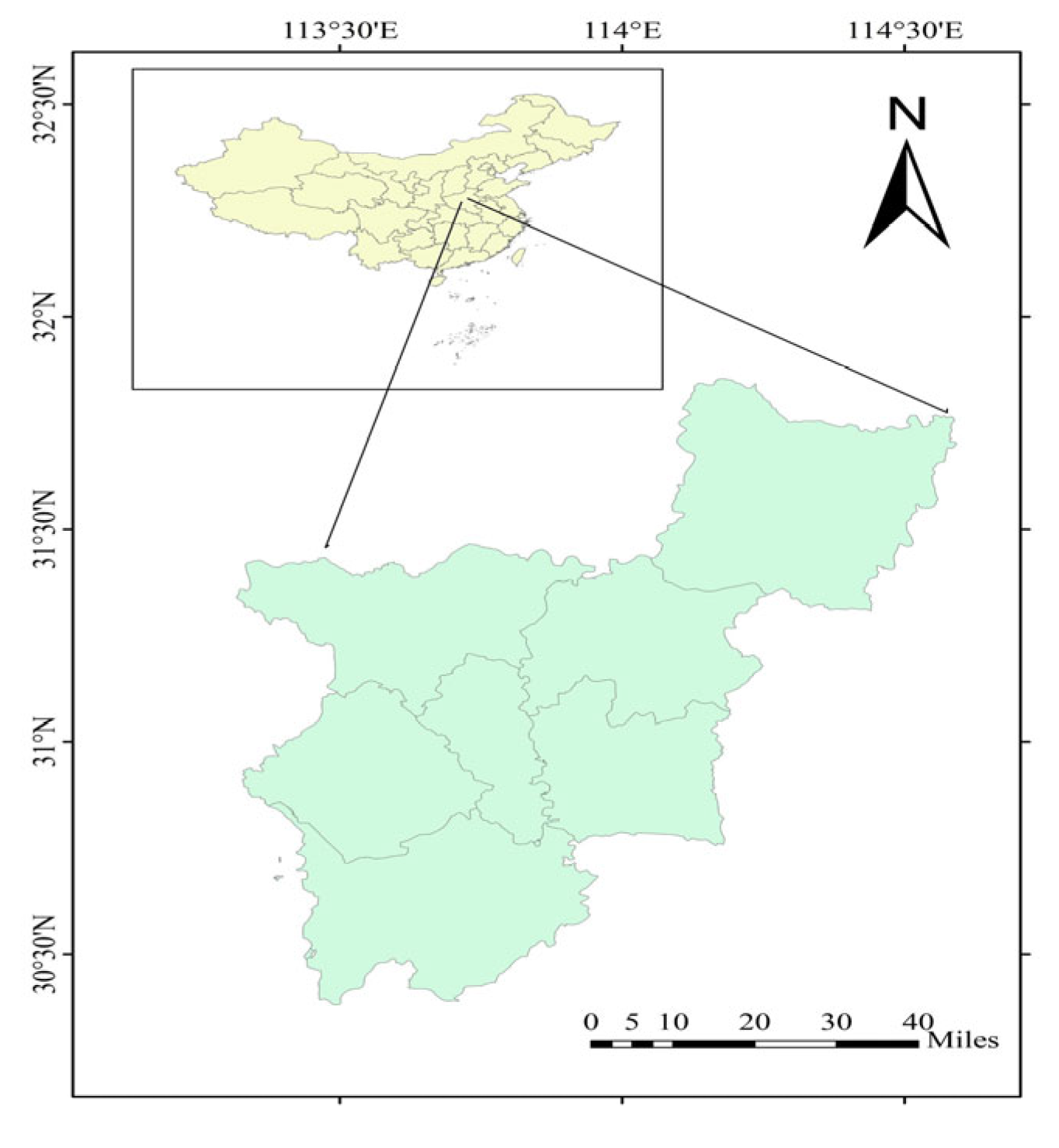
This research took place in Xiaogan, Hubei Province, China. The Xiaogan study area is located in northern Central Yangtze River Plain with its predominantly flat terrain being composed of low hills and plains at elevations from 20 to 200 m. There is generally very little elevation variation within the study area, with a climatic influence of subtropical monsoonal rains. Xiaogan has four seasons; summer is hot and wet and winter is cold and dry, with an average yearly temperature of approximately 16–17° then the lowest yearly temperature 0° and an average annual precipitation of 1100–1300 mm. In Figure 1 are the global coordinates for the study area.
Figure 1. Schematic diagram of the study area.

2.2. Fire Risk Factor Screening for Transmission Corridors

Transmission line related wildfires have complicated causes and show different temporal and geographic behaviors. Wildfires usually arise from a combination of multiple wildfire risk factors. Meteorological conditions, ecological conditions, and topography were chosen as the main factors for use in determining the severity of wildfires in the study area.
  • Meteorological Factors
    • The weather affects how humid forests feel. When the rain falls often enough, it can keep fuel materials such as wood wet and less likely to catch fire. Research shows that if the daily average precipitation is 5 mm or over, the chance of having a wildfire goes down to almost zero [22,23].
    • Soil moisture content has an enormous effect on plant growth as it is one of the most important factors affecting the growth of vegetation on the land surface. In addition to affecting plant growth, soil moisture also influences how much heat will be transferred through the ground and how quickly water will evaporate from burning materials. When soil moisture levels are low, water vapour escapes from the materials being burned, which lowers the temperature at which they are likely to ignite and increases their chance of igniting [24].
    • Fires are directly influenced by temperature, and their location, time, and weather conditions at the time of ignition will affect how a fire spreads. For example, warmer weather causes both direct and indirect effects in many ways, both through influences on atmospheric moisture and indirectly through drying out the area’s fuel sources. If high temperatures are combined with overall low humidity and drought conditions, it can create what is called “dry heat” conditions and will greatly enhance the chance for fires to start and spread rapidly, creating an extremely high probability for wildfires to start or spread even faster [25].
    • Wind increases the rate at which moisture evaporates from plants and soil and promotes fast spreading of wildfires due to the increased flow of fresh air into the fire. Wind also carries smoke further away from the fire, impeding the function of transmission lines [26].
  • Vegetation Ecological Factors
    • The NDVI is a measure of the relative amount of photosynthetically active vegetation in a pixel. It is calculated using the Near-infrared (B8) and Red (B4) bands of satellite surface reflectance data. The NDVI provides a quantitative measure of the biophysical and biochemical properties of vegetation, including vegetation biomass, cover, and chlorophyll [27].
      N D V I = B 8 B 4 B 8 + B 4
    • The Fractional Vegetation Cover (FVC) is a measure of how much vegetative cover is on the surface of the land, represented as a percentage of how much vegetative cover exists on a given piece of land. FVC is derived from remotely sensed data using a linear mixing model to combine the pixel reflectances from vegetation and soil that have been observed on that site. The resulting image characterises regional vegetation distributions as well as the ecological status of the pixel being analysed [28].
      F V C = N D V I N D V I min N D V I max N D V I min
  • Terrain-Related Factors
    • Elevation (DEM, Digital Elevation Model) is a digital representation of the surface elevation, which stores the height values of each location on the Earth’s surface in a gridded format.
    • The slope indicates the steepness or incline of a particular slope. Understanding the slope can help identify the types of landforms that may form, predict water flow patterns when precipitation reaches the slope, assess erosion potential, and determine suitable locations for vegetation.
    • Aspect refers to the direction in which a slope points with respect to the four cardinal directions (North, South, East, West). It is measured as an angle from 0° (toward true North) to 360°, with the slope considered to have a clockwise orientation on Earth. The aspect of a slope determines the amount and direction of solar radiation received, affecting the local microclimate, vegetation growth, and soil moisture.
    • Land cover has a substantial influence on the probability and spread rate of wildfires, as well as on the types of fuels available. Different land cover types contribute different levels and types of fire risk; these include forests, grasslands, bare ground, farmland, wetlands, and urban areas.

2.3. GIS Data Integration and Archiving

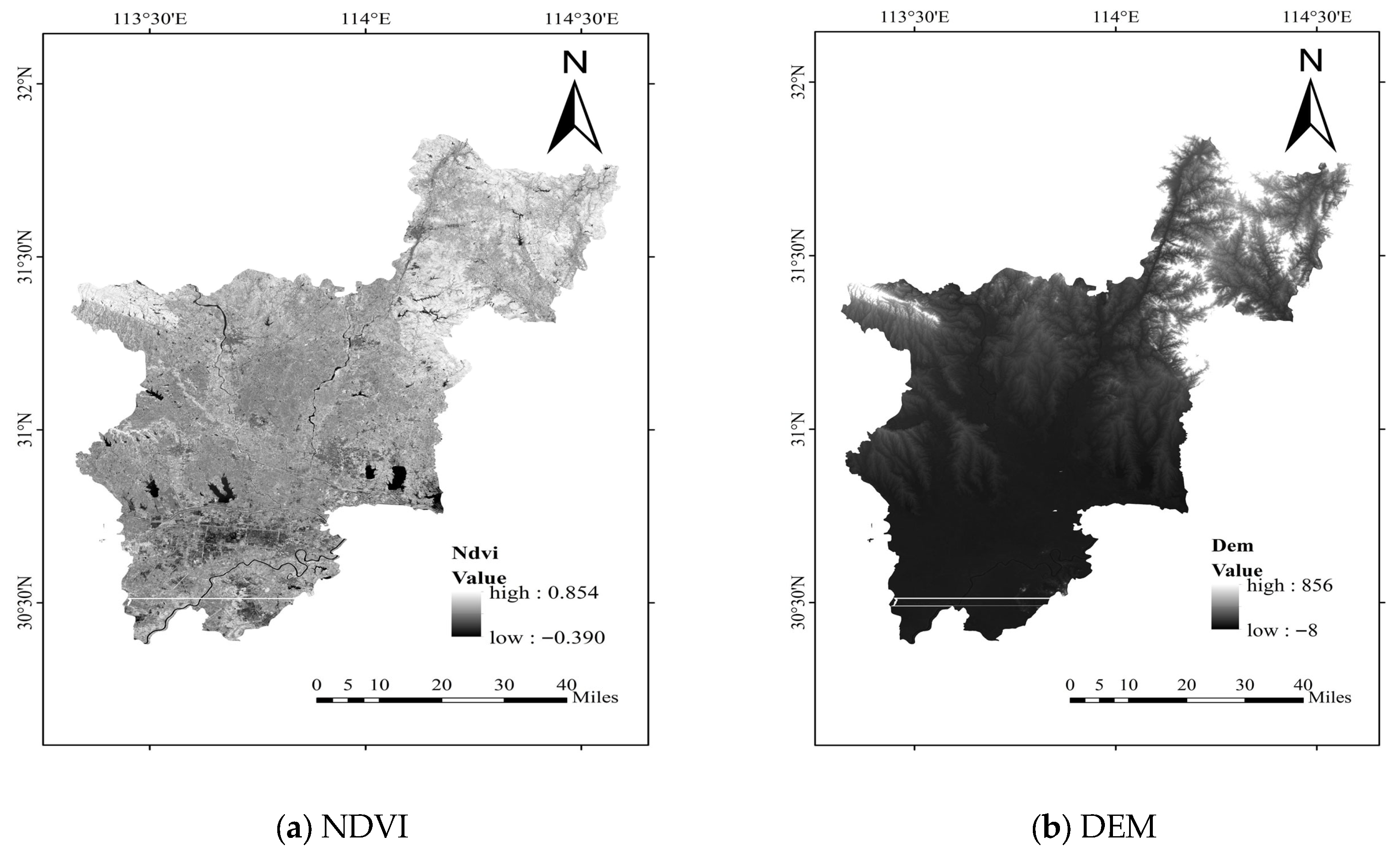
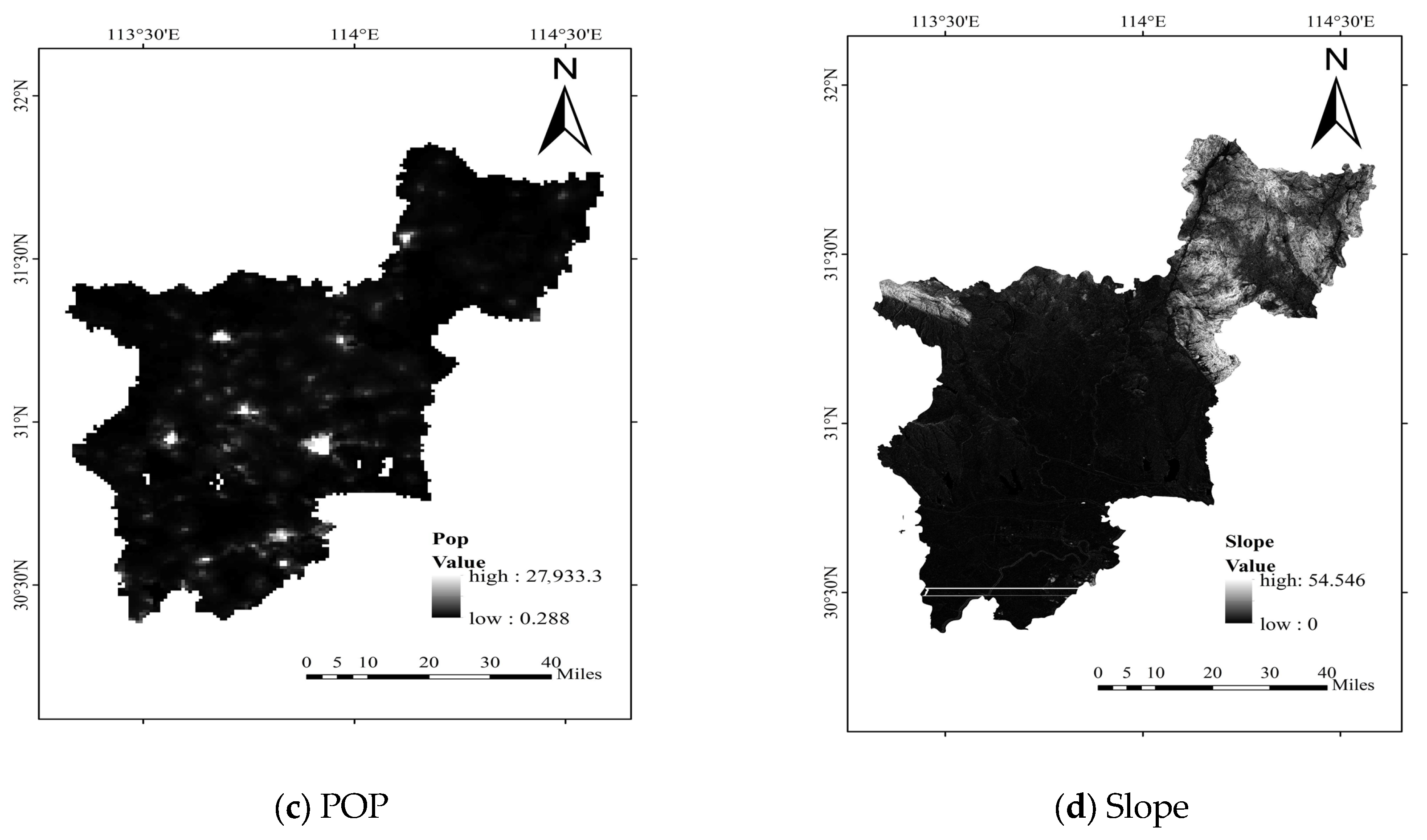
When conducting wildfire risk assessments, various wildfire impact factors exhibit different spatial scales and geographic reference systems. To ensure the accuracy and comparability of subsequent wildfire risk model analyses, preliminary processing should be performed on the selected wildfire risk factor data used as evaluation indicators prior to model analysis. Figure 2 shows a raster map visualizing the selected fire risk factors after standardization.
Figure 2. Fire Risk Factors Visualization Chart.
The meteorological data were obtained from the National Qinghai–Tibet Plateau Science Data Center, provided in a 1 km × 1 km raster format. The terrain data were derived from NASA’s DEM dataset with a resolution of 30 m, and slope and aspect data were calculated from the DEM elevation data using Google Earth Engine (GEE). Surface reflectance data were acquired from the Sentinel-2 satellite, from which NDVI and FVC were calculated. Land cover types were obtained through supervised classification in ArcGIS 10.8. For the above wildfire risk factors, the Project Raster tool in ArcGIS was used to convert all raster layers to the WGS_1984_UTM_Zone_50N coordinate system. The Resample tool was then applied to uniformly set the pixel size of all raster data to 1000 m × 1000 m. A standardized and spatially consistent integrated raster database was thus established, providing a reliable data foundation for subsequent wildfire risk modeling.
Justification of spatial resolution. In this study, all raster-based wildfire risk factors were resampled to a unified spatial resolution of 1 km × 1 km for the global wildfire risk modeling stage. This resolution was selected as a compromise between spatial detail and data consistency across multi-source datasets. Most satellite-derived meteorological products and fire detection datasets are natively provided at kilometer-level resolution, and unifying all variables at this scale helps minimize uncertainty introduced by resolution mismatch. Moreover, the global model is designed to perform regional-scale wildfire risk screening rather than tower-level prediction, and a kilometer-scale resolution is sufficient to capture large-scale spatial patterns of wildfire occurrence and environmental driving factors.
Uncertainty in satellite-based wildfire detection. Satellite-based wildfire detection is subject to several sources of uncertainty, including sensor spatial resolution, detection thresholds, cloud cover, viewing geometry, and temporal sampling frequency. Small or short-duration fires may be missed, while false detections may occur under strong surface heating or reflective land-cover conditions. In this study, these uncertainties are mitigated by aggregating fire occurrence information at the kilometer scale and focusing on relative wildfire risk patterns rather than individual ignition events. Furthermore, the subsequent local-scale refinement using geographically weighted regression (GWR) helps compensate for potential limitations of satellite-based detection at the global screening stage.

2.4. Himawari Wildfire Data

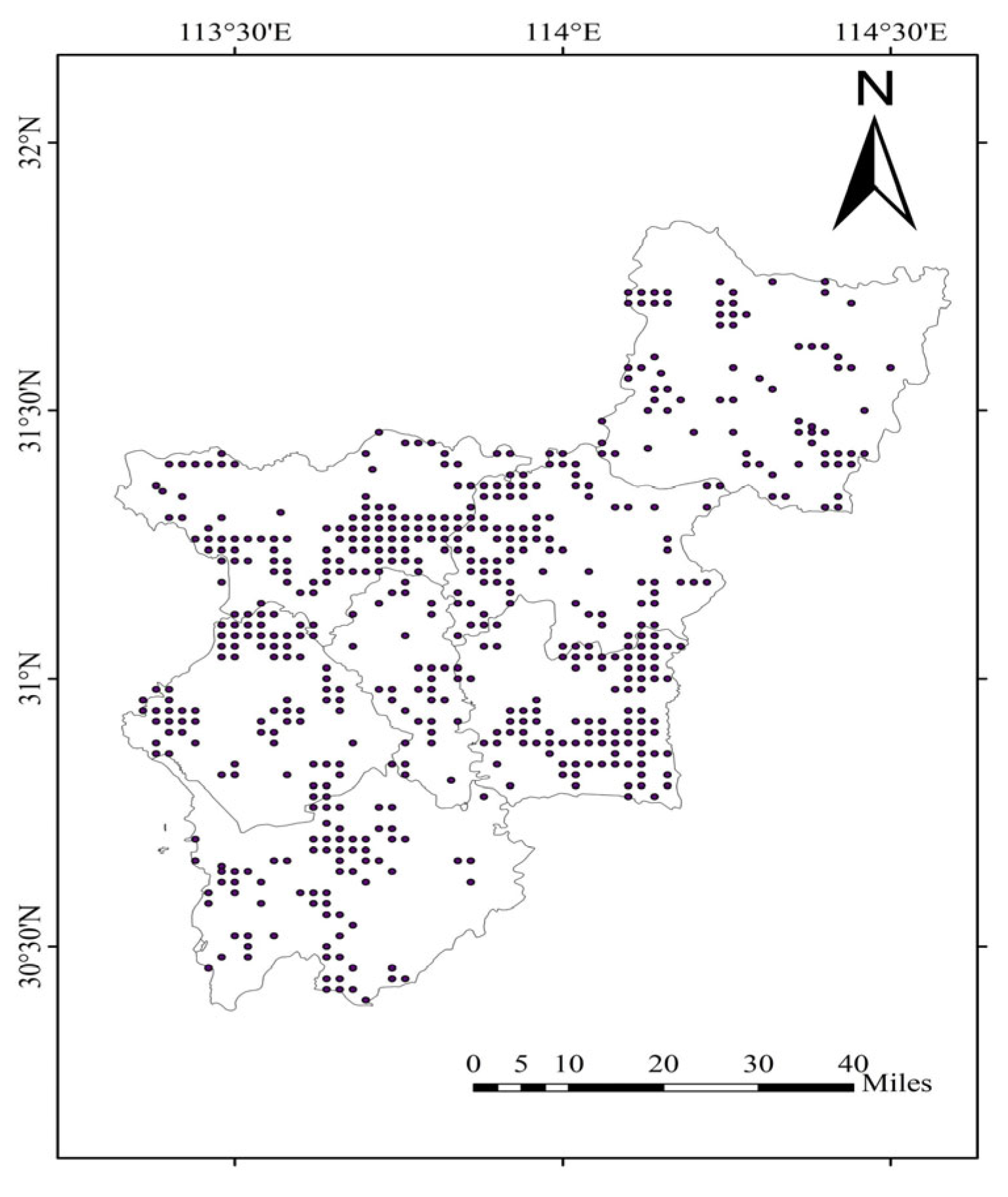
Himawari wildfire data originates from the Japan Meteorological Agency’s Himawari series of geostationary meteorological satellites. WLF data is an official product released by the Japan Aerospace Exploration Agency (JAXA), derived from Himawari-8/9 satellite data, providing fire point locations and fire radiation power. It delivers fire detection results for the region spanning 60° N to 60° S latitude and 80° E to 160° W longitude, with a spatial resolution of 2 km and temporal resolution of 10 min, covering the entire study area. The data were accessed through the JAXA Himawari Monitor platform via authorized FTP services and are publicly available to registered users This study collected 932 fire points from January to May 2024 as research points, with their distribution shown in Figure 3.
Figure 3. Fire Spot Distribution Map.

3. Fire Risk Early Warning Model for Transmission Corridors

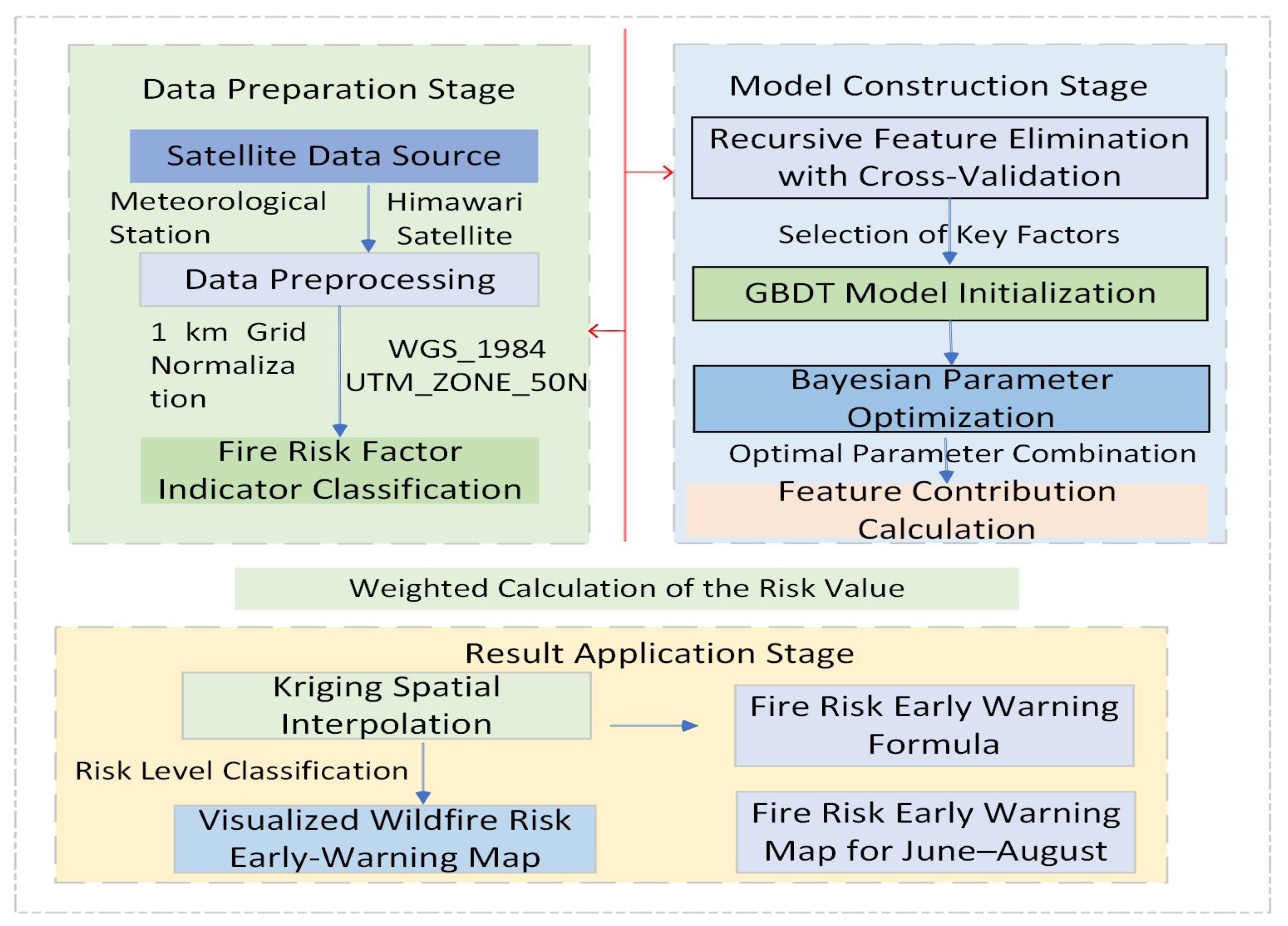
The transmission corridor early warning model, as shown in Figure 4, comprises three stages: data preparation, model construction, and result application. Using 932 fire points obtained from the Himawari geostationary meteorological satellite as the study subjects, this section focuses on the construction of the wildfire risk early warning methodology. The corresponding analytical outputs are used solely to support model configuration and indicator selection, while the final early warning results are presented in subsequent sections. Each fire risk factor’s early warning indicator level serves as an independent variable. The total number of fire points under each level combination is counted as the dependent variable. Python 3.12 (Anaconda distribution) is employed to conduct gradient-boosted decision tree regression analysis based on feature selection and Bayesian parameter tuning. Within this modeling framework, to further clarify the relationship between the mathematical formulations and the actual data processing workflow, the roles of the equations used in this chapter are explicitly clarified. Specifically, Equations (3)–(6), which are introduced in the following sections, describe the iterative training process of the Gradient Boosting Decision Tree (GBDT) model used to learn the nonlinear relationship between wildfire risk factor levels and fire point counts. Equation (7), presented later in this chapter, is applied after model training to quantify the global importance of each wildfire risk factor based on the trained GBDT model. These equations are integrated into the overall workflow illustrated in Figure 4, providing a clear linkage between the mathematical modeling steps and the practical implementation of the proposed wildfire early warning framework.
Figure 4. Transmission Corridor Fire Risk Early Warning Flowchart.

3.1. Selection of Early Warning Indicators

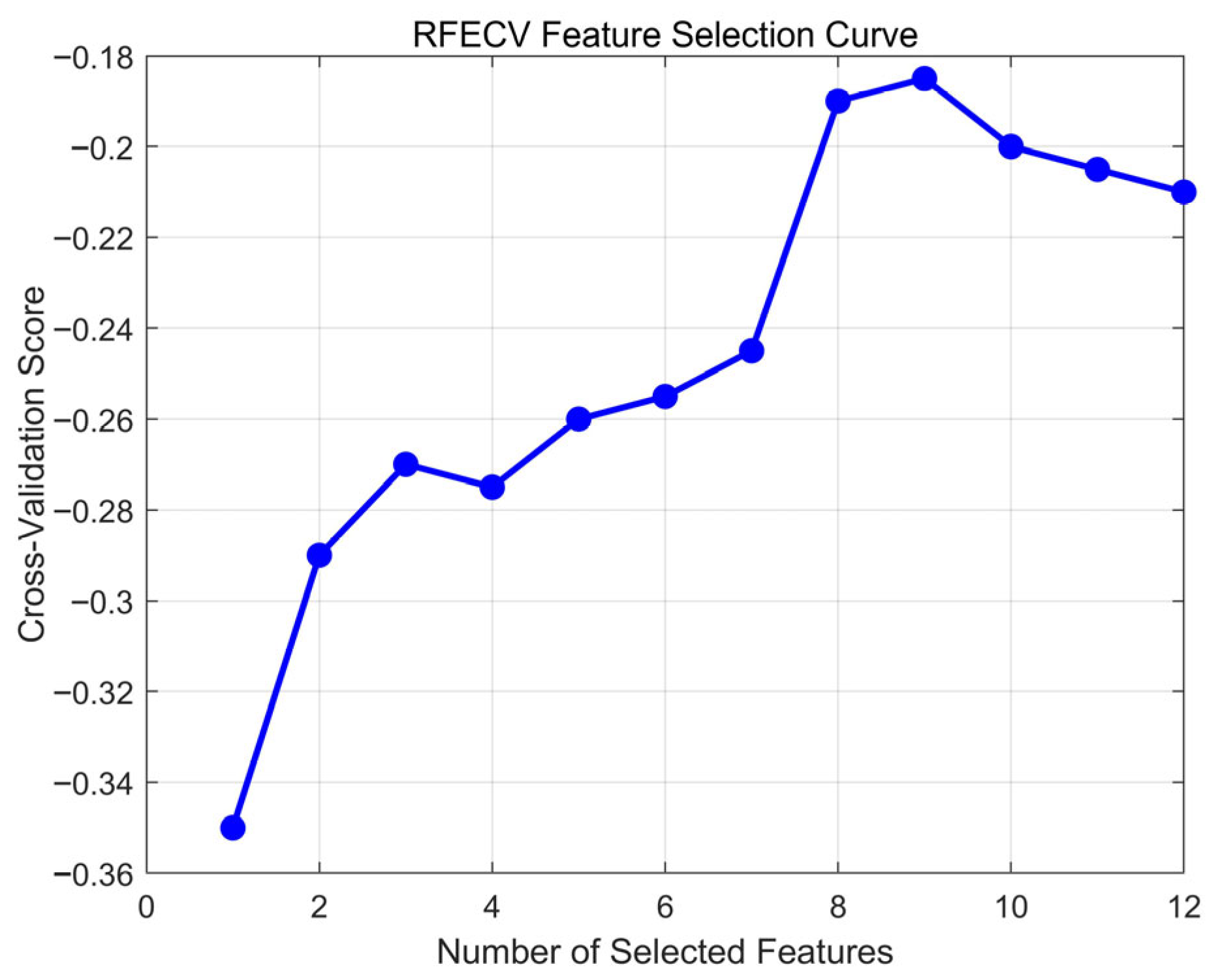
Recursive Feature Elimination with Cross-Validation (RFECV) is adopted to select an optimal subset of early warning indicators from the initially identified fire-risk factors. Based on data availability, prior studies, and physical relevance to wildfire occurrence, a total of 12 candidate fire-risk factors were initially considered, including temperature, precipitation, wind speed, soil moisture, NDVI, fractional vegetation cover (FVC), land use type, elevation, slope, aspect, population density, and fire radiative power (FRP).
RFECV is a feature selection method based on recursive feature elimination. By iteratively removing features with lower model contribution and evaluating the performance of different feature subsets using 5-fold cross-validation, it automatically determines the optimal number of features.
The implementation of RFECV involves two steps: Recursive Feature Elimination (RFE) and Cross-Validation (CV). RFE recursively evaluates feature importance, progressively removing the least significant features until the most representative ones remain. CV selects the optimal number of features by training and evaluating models on different feature subsets, thereby optimizing model performance and ensuring strong generalization capabilities. The base learner selects a gradient-boosted decision tree model, using negative mean squared error as the feature evaluation metric.
The RFECV evaluation results are shown in Figure 5. The cross-validation score reaches its maximum when 9 out of the 12 fire-risk factors are retained. Accordingly, these nine high-contribution features are selected as early warning indicators and used as the input variables for subsequent wildfire risk modeling.
Figure 5. RFECV Feature Selection Curve.

3.2. Early Warning Indicator Grading

For positive-type data (monthly average temperature, fire spot radiant power, wind speed), classify into 1–5 levels based on linear quantile classification: 0–10%, 10–30%, 30–60%, 60–90%, 90–100%. Negative-type data (monthly average precipitation, soil moisture) are classified into 5–1 levels based on linear quantile classification: 0–10%, 10–30%, 30–60%, 60–90%, 90–100%.
For moderate indicators (normalized vegetation index, average population density, land use type, slope, aspect, elevation), classification is based on the inherent characteristics of each indicator. For example, slope and aspect fire risk levels are categorized from Level 1 to Level 5 as follows: no slope aspect, shaded slope, sunny slope, semi-shaded slope, and semi-sunny slope. Based on these classification rules, the corresponding fire risk factor levels are assigned to each wildfire point.
Although a total of 932 wildfire points were initially collected from the Himawari-8 dataset, multiple fire points may correspond to identical fire-risk factor level combinations after indicator discretization. In such cases, repeated combinations were aggregated to avoid redundancy in the feature space. As a result, the original 932 wildfire points were mapped to 837 unique fire-risk factor level combinations, which constitute the final modeling samples. For each unique combination, the dependent variable represents the total number of wildfire occurrences under that specific factor-level configuration. Table 1 summarizes the statistical distribution of wildfire points across these unique combinations.
Table 1. Fire Risk Factors and FRP Statistics.

3.3. Gradient Boosting Decision Tree (GBDT) Model

Although Gradient Boosting Decision Tree (GBDT) has been widely applied in wildfire prediction studies, in this research it is employed as a global modeling component within a hierarchical wildfire early warning framework, serving as the basis for subsequent spatial refinement rather than as a standalone prediction model.
The Gradient Boosting Decision Tree (GBDT) is an ensemble learning algorithm based on decision trees. GBDT has demonstrated excellent performance in classification, regression, and ranking tasks, and has been widely applied in various machine learning domains. The learning process described below is based on the classical gradient boosting formulation and has been widely adopted in wildfire risk modeling studies [2]. Its core principle lies in iterative optimization, where each successive tree is built to fit the residual errors of the previous model. The wildfire risk samples were randomly divided into a training set (80%) and an independent test set (20%). Feature selection, model training, and Bayesian hyperparameter optimization were conducted exclusively on the training dataset. Five-fold cross-validation was employed within the training set to guide RFECV-based feature selection and Bayesian hyperparameter tuning, thereby reducing the risk of overfitting. No explicit temporal separation was applied, as the global model is designed for regional-scale wildfire risk screening rather than time-series prediction. The final model performance was evaluated on the independent test set, where the coefficient of determination (R2) was calculated.
  • Initialization: The mean value of the target variable y (fire point count) in the training dataset is used as the initial prediction F 0 ( x ) .
F 0 ( x ) = 1 N i = 1 N y i
where N denotes the total number of samples, y i represents the fire point count of the i -th sample, and the initialized F 0 ( x ) serves as the baseline for subsequent iterations.
2.
Iterative training process: At the m -th iteration, the residual (negative gradient) between the current model prediction F m 1 ( x ) and the true value y   is calculated.
r i ( m ) = L ( y i , F ( x i ) ) F ( x i ) F ( x i ) = F m 1 ( x i )
In the equation, L ( y i , F ( x i ) ) is the loss function, F ( x i ) represents the model’s prediction for the i -th sample, and F m 1 ( x i ) denotes the model’s prediction for the i -th sample after the ( m | 1 ) -th iteration. For mean squared error, the residual is equivalent to the difference between the current prediction and the true value. In this study, the iteration index m corresponds to the sequential construction of decision trees in the GBDT model. The total number of iterations is equal to the number of trees in the ensemble and is determined by the optimized hyperparameter n_estimators, which is selected through Bayesian optimization based on cross-validation performance.
r i ( m ) = y i F m 1 ( x i )
3.
The residual r i ( m ) is used as a pseudo-target to train a new learner h m ( x ) , which fits the current residual distribution. Based on the prediction results of the current learner, the model prediction is then updated.
F m ( x ) = F m 1 ( x ) + η h m ( x )
where η denotes the learning rate, which controls the step size of each update and helps prevent overfitting. Through multiple iterations, the prediction F ( x ) is continuously optimized until the residuals converge and the change in the objective function becomes stable.

3.4. Bayesian Parameter Optimization

Bayesian optimization is a probabilistic global optimization strategy designed to efficiently search for optimal solutions of black-box objective functions under limited computational budgets. In this study, Bayesian methods are employed exclusively in the form of Bayesian Optimization for automatic hyperparameter tuning of the Gradient Boosting Decision Tree (GBDT) model, rather than for constructing a Bayesian Network or learning probabilistic dependencies among variables.
Specifically, the optimization objective is defined as minimizing the validation error of the GBDT model. Bayesian Optimization iteratively searches for the optimal combination of GBDT hyperparameters by constructing a probabilistic surrogate model to approximate the relationship between hyperparameter configurations and model performance. Based on this surrogate model, an acquisition function is used to select promising hyperparameter configurations in each iteration by balancing exploration of the parameter space and exploitation of known high-performance regions. Through this iterative optimization process, the Bayesian optimizer converges toward an optimal set of hyperparameters that improves model performance while avoiding manual or exhaustive parameter tuning.
The hyperparameters optimized in this study include the number of decision trees, learning rate, and maximum tree depth, along with additional tree structure parameters. The predefined search ranges and the corresponding optimal values obtained through Bayesian Optimization are summarized in Table 2.
Table 2. Hyperparameter Optimization Table.

3.5. Model Evaluation Criteria

The performance of the regression models is evaluated using the mean squared error (MSE) and the coefficient of determination (R2), which are commonly adopted metrics in regression-based wildfire risk modeling MSE quantifies the average squared difference between predicted and observed wildfire occurrence counts, reflecting the overall prediction error magnitude and penalizing larger errors. R2 represents the proportion of variance in the dependent variable explained by the model and is used to assess goodness-of-fit.
These metrics are jointly adopted to provide complementary perspectives on prediction accuracy and explanatory capability, and are consistent with the loss function and modeling objectives of this study.

3.6. Feature Importance Analysis and Global Wildfire Risk Index Construction

To quantitatively evaluate the relative importance of each fire risk factor in the early warning model, this study employs the feature importance calculation mechanism embedded in GBDT. By statistically analyzing the average information gain contributed by each feature during all regression tree node splits (measured by the reduction in mean squared error), a feature contribution assessment framework is established. For the feature subset selected through recursive feature elimination with cross-validation (RFECV), the importance weight of each feature is quantified using Equation (7).
f i = 1 N trees t = 1 N trees s S i t Δ M S E s
where f i represents the i -th feature, N trees denotes the total number of decision trees, s i t is the set of nodes in the t -th tree where f i is used for splitting, and Δ MSE s indicates the reduction in mean squared error contributed by the split node s .
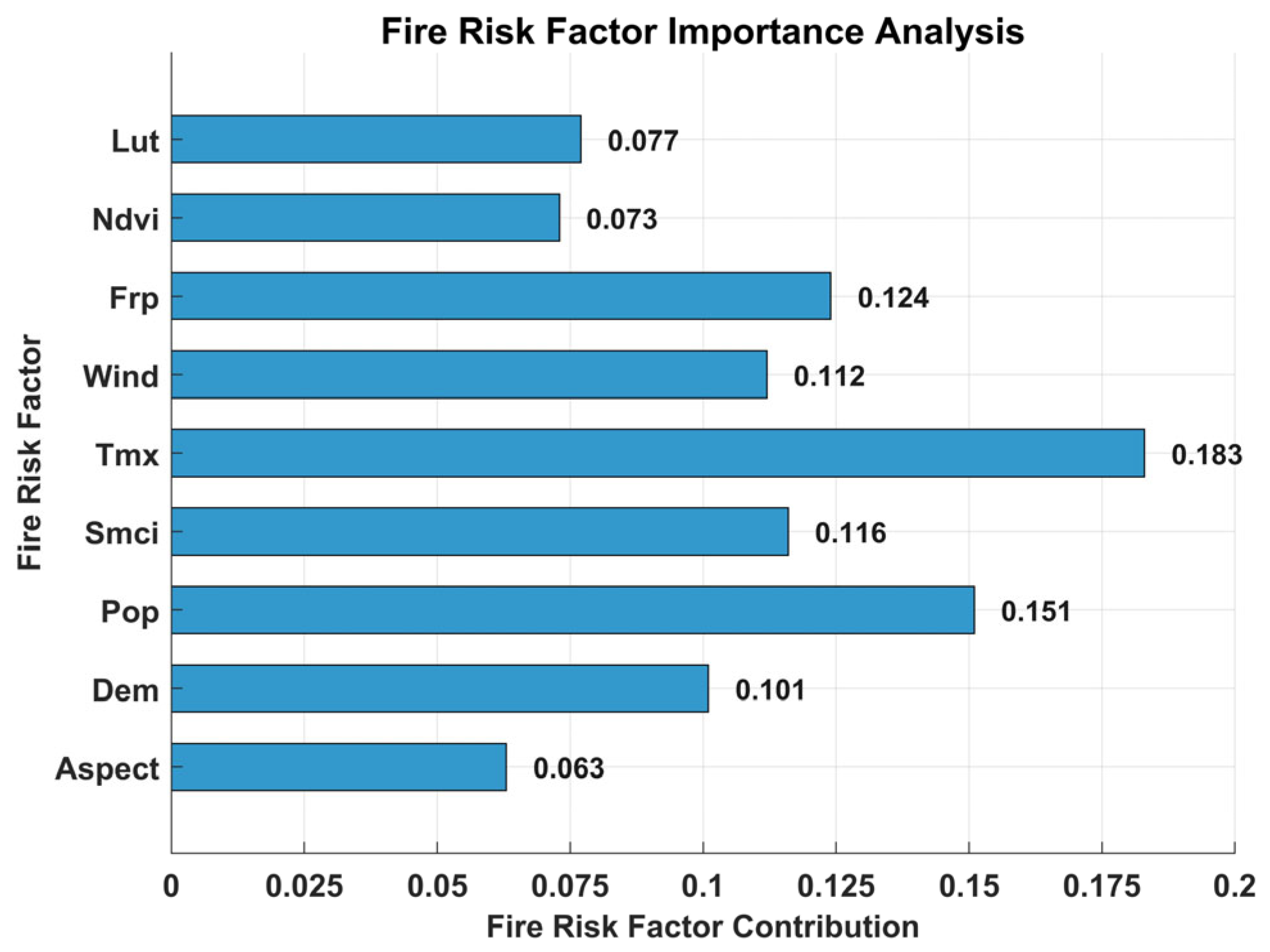
Figure 6 illustrates the importance ranking of wildfire risk factors in predicting the number of fire points. The importance of each factor varies in its contribution to fire point prediction. The wildfire risk warning value can be expressed as a weighted linear combination of the feature contribution of each risk factor and its corresponding risk level:
Figure 6. Fire Risk Factor Feature Contribution Chart.
Based on the GBDT-derived feature importance results, a composite wildfire risk index was constructed by performing a weighted linear aggregation of the standardized fire risk factor levels, where the weights correspond to the normalized importance values of each feature. This procedure yields a continuous global wildfire risk score for each grid cell, reflecting the combined influence of multiple fire risk factors. For practical early warning applications, the continuous wildfire risk index was further transformed into discrete warning levels using a quantile-based classification scheme. Specifically, the risk index values were divided into five ordered warning categories (Level 1 to Level 5) according to predefined percentile thresholds. These categorical warning levels serve as the global wildfire early warning outputs and form the basis for subsequent spatial interpolation and corridor-level analysis.
This evaluation looks at three regression techniques, and each was rated based on the results in Table 3 in the experiments. The one which used the GBDT modelling technique, combined with feature selection and Bayesian parameter tuning, gave the best results with an R 2 of 0.626, and the lowest mean squared error of 0.178 compared with the other models. This R2 value reflects the predictive performance of the global model at the regional scale for wildfire risk screening. The predictive performance is intentionally further improved in the subsequent local refinement stage by incorporating spatial heterogeneity and corridor-specific features using GWR. Therefore, by these measures, the GBDT approach was considered the best at predicting wildfire warnings.
Table 3. Performance comparison of regression models.

3.7. Visualization and Analysis of Early Warning Results

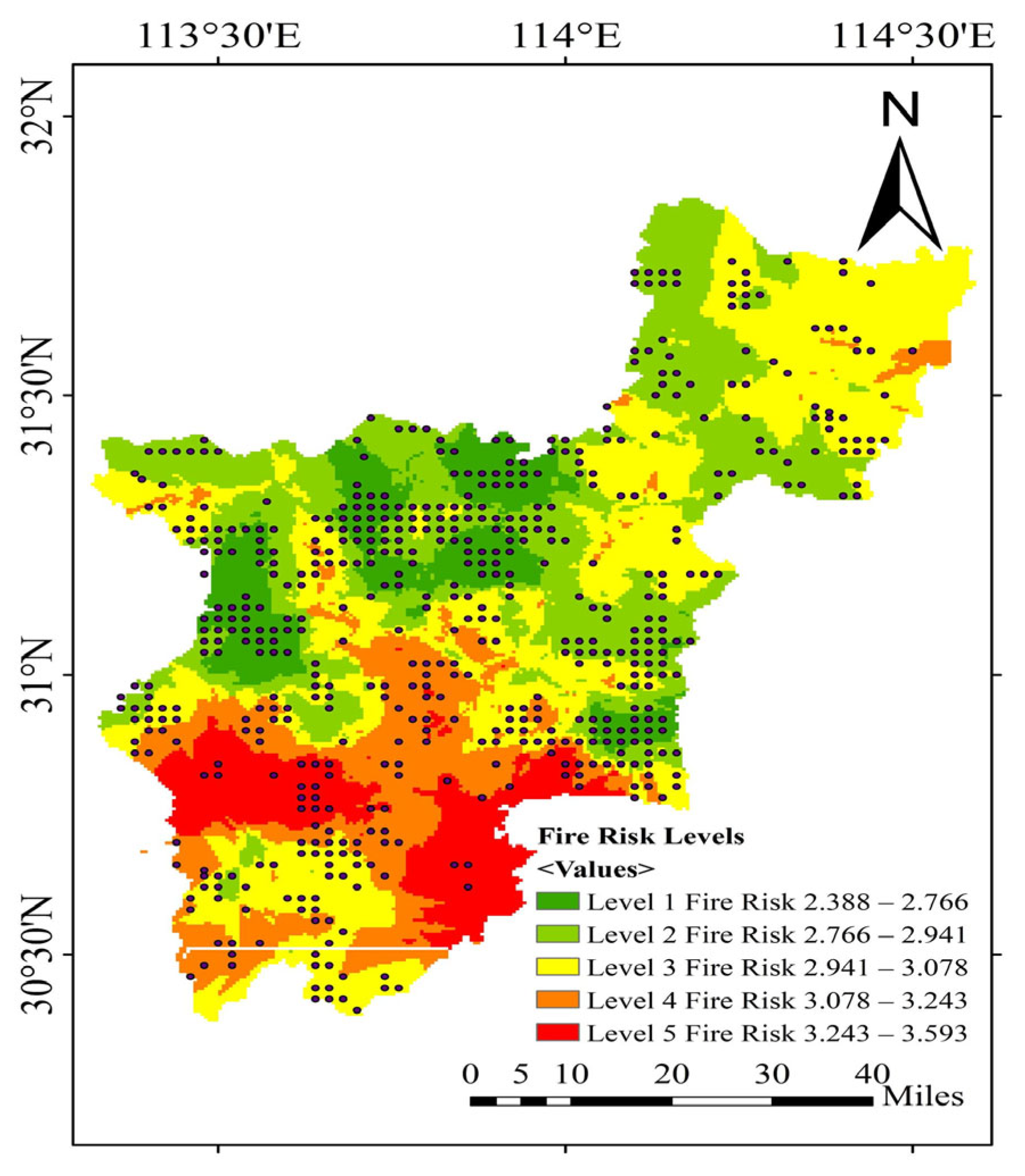
Fire Danger Ratings (FDR) in Xiaogan City were used to determine the risk of wildfires in selected areas. FDR feed values were utilized to create a fire risk distribution; site-specific data were subjected to kriging interpolation for mapping wildfire risk photographs with appropriate risk category groupings. FDR classifications include five categories: red/orange (highest risk) and blue (least risk). Fire risk assessment maps created in this study can be found in Figure 7.
Figure 7. Wildfire Early Warning Risk Map of Xiaogan City. Black dots represent historical fire points detected during the corresponding period.
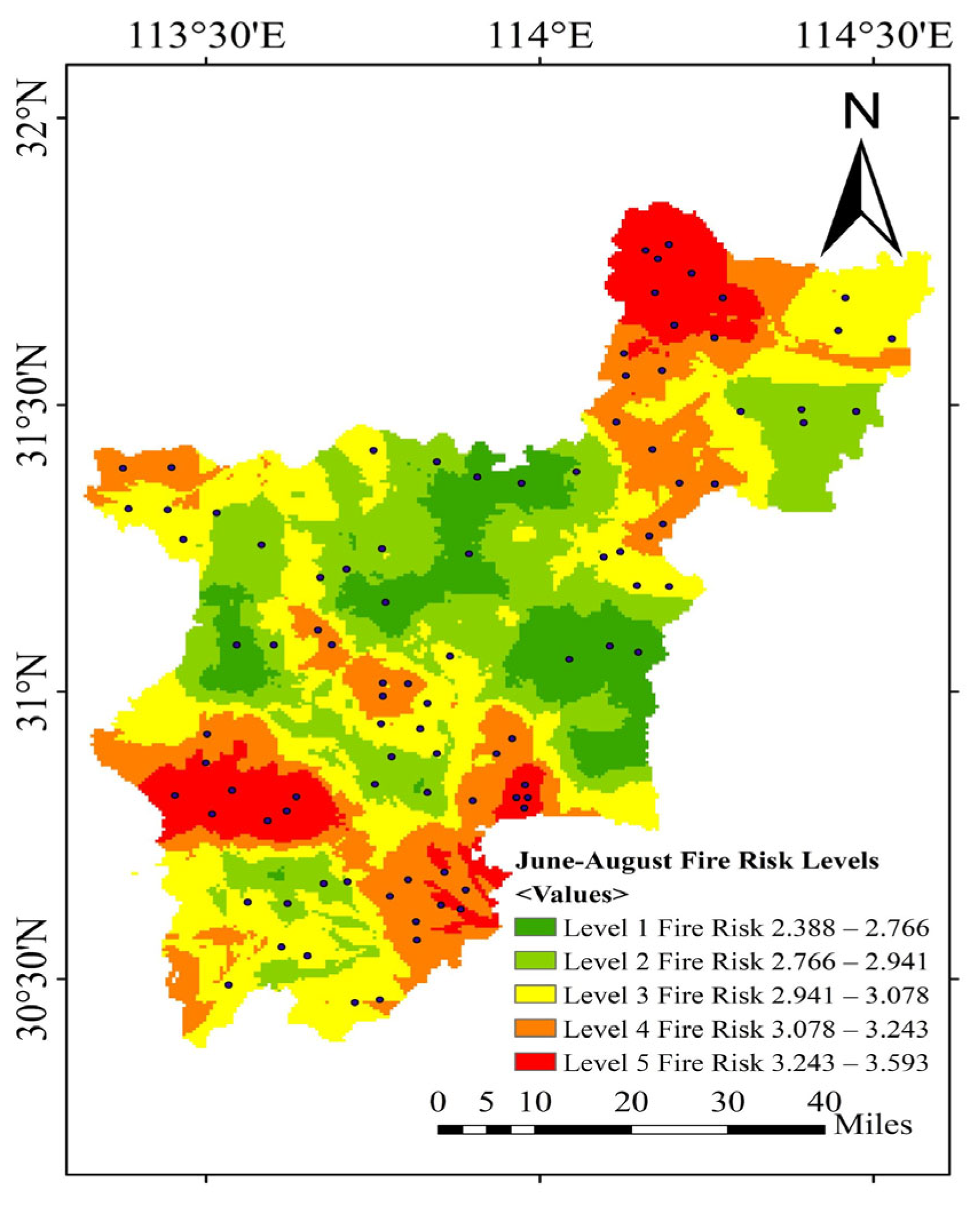
The monthly Wildfire Risk Prediction formula is for June, July, and August and indicates the areas of highest Fire Risk in a region by the colour depth in Figure 8 (e.g., Central Yunmeng, Eastern Xiaochang, Northwestern Dawu, and Central Yingcheng). Fire Points also occur in the same areas (identified by the Hisawari satellite) during these months, confirming the accuracy of the monthly Wildfire Risk Prediction formula.
Figure 8. June–August Mountain Fire Risk Warning Map. Black dots represent historical fire points detected during the corresponding period.
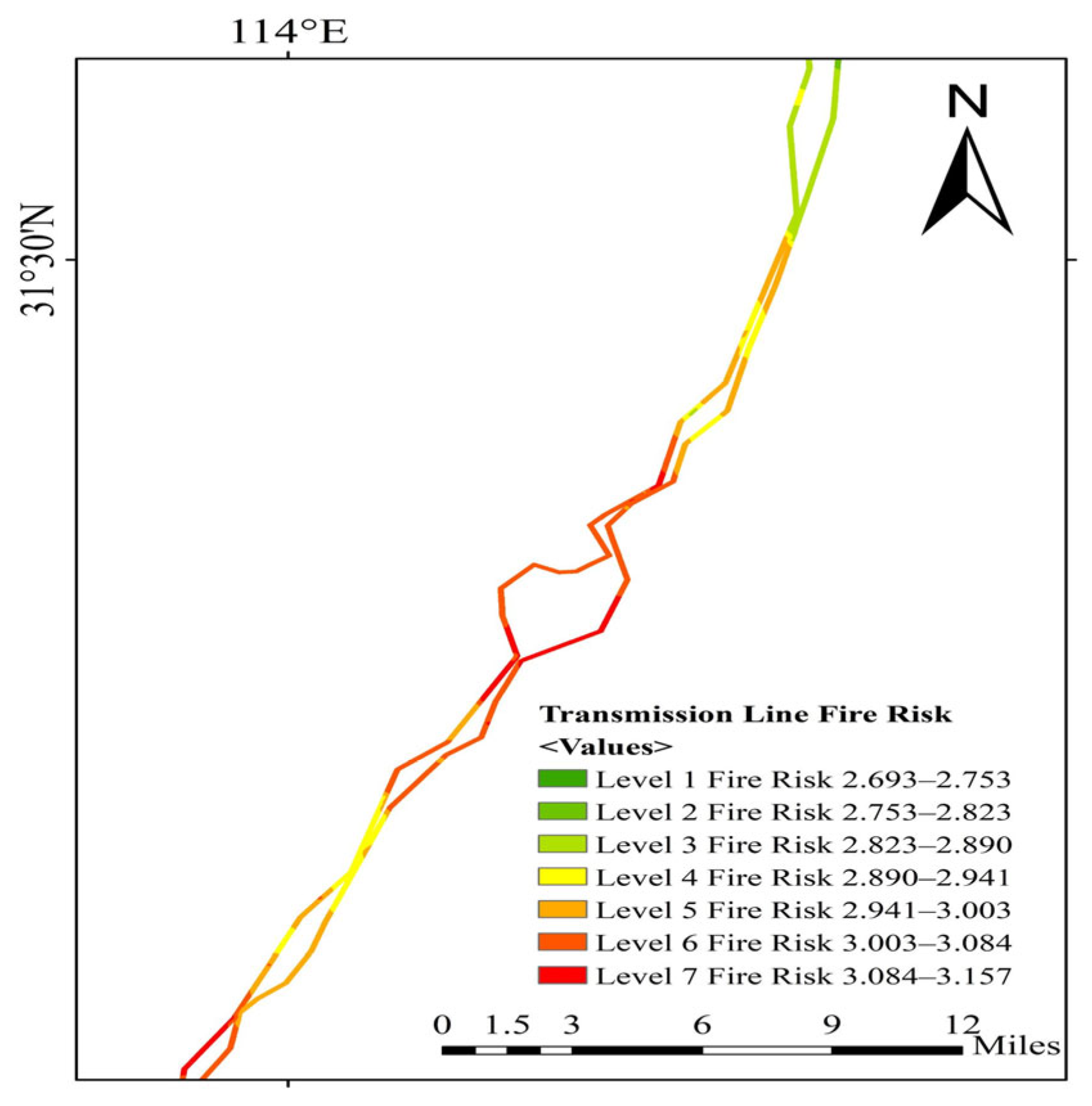
Based on the actual conditions of the transmission corridor, a 30 m rectangular area was selected as the buffer zone. Using the wildfire early warning risk map shown in Figure 7, a mask extraction was performed in ArcGIS to obtain the wildfire risk levels of the Xiaoshi I and II transmission corridors under the global pattern, as illustrated in Figure 9.
Figure 9. Transmission Corridor Wildfire Risk Level Map (Levels 1–7).
The GBDT-based global wildfire risk early warning model still has the following two shortcomings in the context of transmission line corridors, which require refined adjustments.
  • The spatial resolution cannot meet the requirements for tower-level early warning. Although the preliminary model uses a grid scale suitable for regional wildfire risk assessment, it is difficult to accurately capture the local microenvironmental differences along transmission lines. As a result, it cannot directly guide tower-level inspections and risk management, and multiple adjacent towers may be assigned the same warning level.
  • Spatial data features exhibit spatial autocorrelation, meaning that features located close to each other are often more similar than those farther apart. Using only traditional regression methods to obtain global coefficients for wildfire risk indicators ignores the spatial heterogeneity among variables, which affects the model’s reliability at local sections. In addition, the wildfire risk factors are mostly limited to natural factors such as meteorology and topography, without accounting for on-site factors of transmission lines, such as microtopography along the corridor.
Therefore, to address the above issues and improve the spatial accuracy and practical value of wildfire risk early warning, this study further introduces a Geographically Weighted Regression (GWR) model. By integrating remote sensing image masking and on-site tower feature data, a collaborative “global warning–local adjustment analysis” is conducted.

4. Refined Adjustment of Transmission Line Corridor Sections

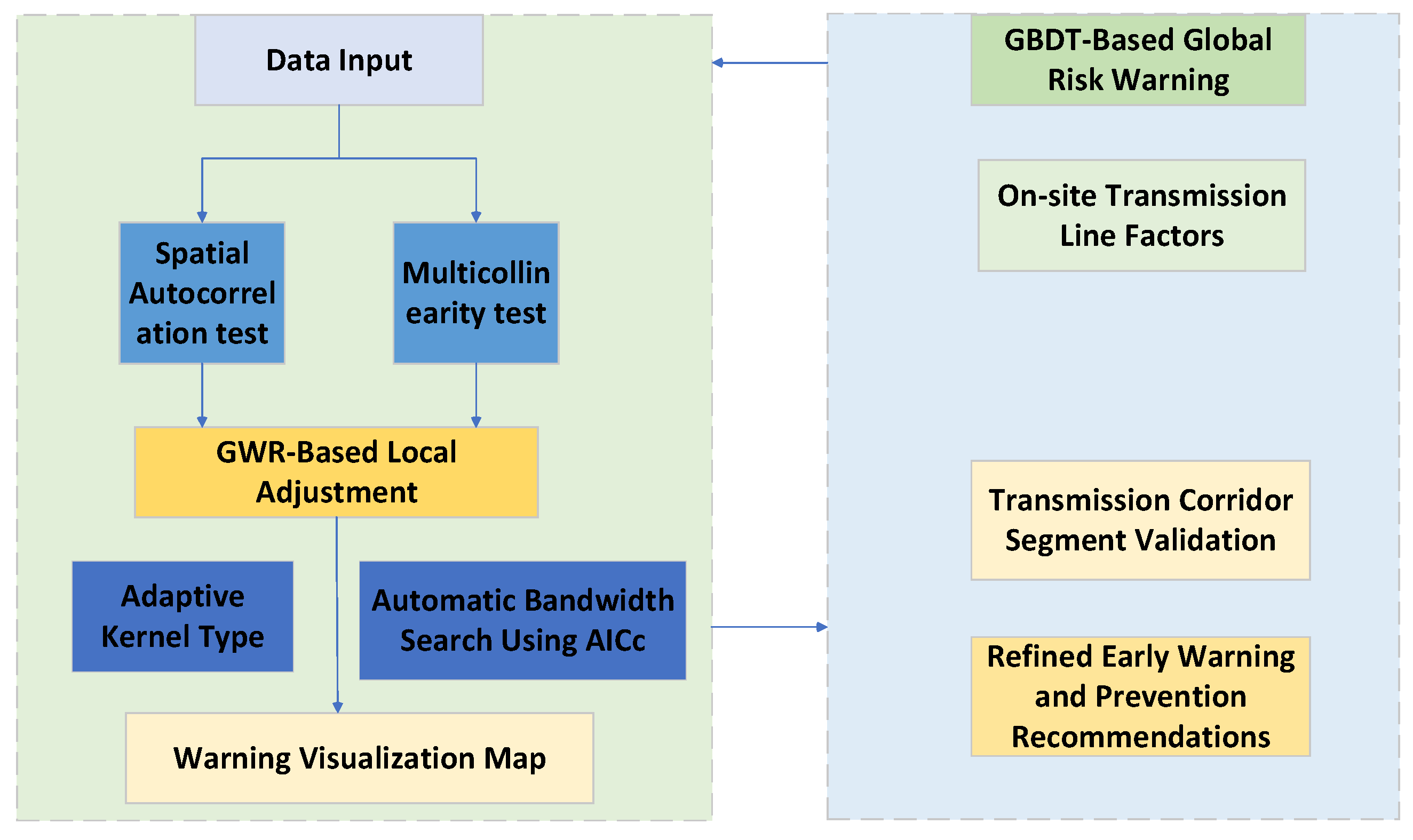
Figure 10 illustrates the full process from GBDT-based global wildfire risk early warning to refined adjustment of transmission line corridors. Each tower along the Xiao–Shi 1st and 2nd circuits is treated as the study unit, with the GBDT global warning value as the dependent variable. On-site transmission line factors are incorporated, followed by spatial autocorrelation testing of the dependent variable and multicollinearity testing of the independent variables. After GWR analysis, a visualized map of the adjusted transmission line corridor is produced. This allows comparison and demonstration of the risk level changes in specific corridor sections, and provides refined prevention and control recommendations.
Figure 10. Precision Modification Workflow.

4.1. Geographically Weighted Regression (GWR)

A key methodological innovation of this local refinement stage lies in the explicit integration of on-site transmission line factors into the GWR framework, including tower buffer characteristics, minimum clearance distance, corridor-specific management zones, and proximity to historical fire points. By embedding these infrastructure-related variables into the spatial regression model, the proposed approach enables a direct linkage between regional wildfire risk screening and tower-level operational decision-making.
In GWR, regression coefficients are affected by an observation’s geographic location on a map. GWR allows each observation’s geographic locations to be included in the calculation of local variation in the regression equation. The method uses a distance-weighted average from all points of observation in the regression equation to create local variations in spatial relationships. It allows regression coefficients to vary across space, taking into account the local effects of spatial features by incorporating the geographic locations of sample points into the regression coefficients through distance-based weighting. According to [21], the GWR model can be expressed as follows:
y i = β 0 ( u i , v i ) + k β k ( u i , v i ) x i k + ε i
In the formula, ( u i | v i ) are the spatial coordinates of the i -th sample point; β k ( u i , v i ) represents the local regression coefficient of the k -th independent variable at the i -th sample point; and ε i is an independently and identically distributed error term. Following previous studies [21], a Gaussian distance-decay spatial weighting function is adopted and expressed as Equation (9):
w i j = exp ( 1 2 ( d i j b ) 2 )
In the formula, w i j represents the weight of the influence of object j on i , d i j is the Euclidean distance between sample points i and j , and b is the bandwidth that determines the search range within the neighborhood. The definition of the Akaike Information Criterion (AIC) is shown in Equation (10):
A I C c = 2 n log ( σ ^ ) + n log ( 2 π ) + n n + tr ( S ) n 2 tr ( S )
n represents the sample size, the total number of transmission towers; σ ^ denotes the maximum likelihood estimate of the variance of the random error term; and t r ( S ) is a function of the bandwidth b . This study implements GWR using the spatial statistics tools in ArcGIS. Compared with the global regression model ( w i j = 1 ), the Gaussian spatial weighting function allows each sample point to have its own set of regression coefficients. Considering that the distribution of transmission line towers is not completely uniform, an adaptive kernel type with a fixed number of neighbors is selected as the bandwidth range. The Corrected Akaike Information Criterion (AIC) is used to automatically search for the optimal bandwidth, fully optimizing the bandwidth to minimize the model’s AIC value.

4.2. On-Site Factors Affecting Transmission Lines

Analysis of historical wildfire-induced transmission line outages indicates that such outages are mainly caused by flashovers to ground. Under flame conditions, the air insulation beneath the lines can be bridged by flame plasma, resulting in discharges when the insulation cannot withstand the line’s maximum operating voltage [29]. In addition, phase-to-phase insulation may also experience discharges under the high temperatures and smoke generated by wildfires, causing phase-to-phase short circuits and line trips [30,31,32,33,34,35,36]. To accurately assess the wildfire risk to transmission lines, in addition to the existing fire risk factors, it is necessary to incorporate field variables describing the characteristics of the transmission lines.
  • Minimum clearance distance of transmission line towers: This reflects the smallest vertical distance between the towers and the ground. If this clearance is too small, it significantly reduces the safety buffer, making it easier for ground vegetation to grow close to the towers and causing combustible materials such as fallen branches and leaves to accumulate near the tower bases. This directly increases the risk of vegetation or debris coming into contact with live conductors under adverse weather conditions.
  • A fire in a key management area that is controlled by the “/\”-shaped area creates a boundary for fire control. When a fire burns in proximity to a transmission power line, the heat generated by the flames will produce a strong updraft. Because of this, very quickly, as a result of the updraft, an area of disturbance (or turbulence) will form. A fire under these conditions in a key management area would burn much hotter than a normal wood fire, and can cause numerous electrical malfunctions and faults in the transmission lines due to the extreme heat generated by the fire.
  • The distance from each tower to the closest historical fire points is calculated by measuring the distance to each historical fire point using the nearest neighbor tool within the GIS program (ArcGIS). The results will depend on the location of the fire points relative to the towers, as well as how quickly the fires spread and the speed of the tower’s construction. A practical wildfire risk warning strategy for transmission line corridors is based on the distance between fire points and the lines, with the warning levels defined in kilometers: distances less than 1 km correspond to Level 1 risk, 1–2 km to Level 2 risk, and 2–3 km to Level 3 risk.

4.3. Spatial Autocorrelation Analysis

Before performing Geographically Weighted Regression (GWR) analysis, it is necessary to assess whether the dependent variable, namely the wildfire risk index, exhibits spatial autocorrelation. Moran’s I is a commonly used global spatial autocorrelation indicator that evaluates the spatial distribution pattern of a variable. A positive Moran’s I indicates that the data are spatially clustered, whereas a negative Moran’s I indicates a dispersed spatial pattern. The calculation formula for Moran’s I is shown in Equation (11).
I = n i j w i j × i j w i j ( X i X ¯ ) ( X j X ¯ ) i ( X i X ¯ ) 2
where n is the total number of observation units; X(i) and X(j) represent the wildfire risk indices of the i-th and j-th units, respectively; X ¯ is the mean wildfire risk index; and w(ij) is the spatial weight matrix, which indicates the spatial adjacency relationship between units i and j. The results of Moran’s I test for the wildfire risk warning values are presented in Table 4.
Table 4. Results of Moran’s I Statistic Analysis.
By combining statistical testing, the spatial autocorrelation of the wildfire risk index was further verified. Moran’s I value is 0.881, which is very close to 1, indicating a strong positive spatial autocorrelation. This result suggests that high and low values of the wildfire risk index tend to exhibit clear spatial clustering patterns.
Z = I E [ I ] Var ( I )
In the formula, I denotes the observed Moran’s I, E[I] represents the expected value under the null hypothesis of no spatial autocorrelation, and VAR(I) is the corresponding variance. The standardized Moran’s I value of 14.89 is far greater than 1.96, which corresponds to the 95% confidence level, and the associated p-value is close to zero, well below the threshold of 0.05. These results lead to a clear rejection of the null hypothesis, indicating that the observed spatial clustering is highly statistically significant. Consequently, the spatial distribution of the wildfire risk index is well-suited for Geographically Weighted Regression (GWR) modeling to further investigate the spatial heterogeneity of different wildfire risk factors.

4.4. Multicollinearity Diagnosis of Fire Risk Factors

Before performing Geographically Weighted Regression (GWR), it is necessary to diagnose multicollinearity among the independent variables in order to remove variables with strong collinearity and improve the accuracy of the model. Multicollinearity refers to the existence of exact or near-exact linear relationships among explanatory variables in a regression equation, which can lead to unstable parameter estimates and reduced interpretability. In this study, the Variance Inflation Factor (VIF) method was adopted to detect multicollinearity among the independent variables. The mathematical expression of the variance inflation factor is given as follows:
VIF i = 1 1 R i 2 ( i = 1 , 2 , , n )
In the formula, R i denotes the multiple correlation coefficient obtained by regressing the independent variable X i on the remaining n 1   independent variables. When the VIF value satisfies 0 < VIF < 10 , multicollinearity among the variables is considered negligible; when 10 VIF 100 , strong multicollinearity exists among the variables. In this study, the VIF values of all candidate wildfire risk factors were calculated for preliminary multicollinearity diagnosis. Based on the diagnostic results, factors with VIF values significantly exceeding the threshold were excluded as appropriate, ensuring that the final set of independent variables included in the GWR model exhibits low multicollinearity. This process enhances both the reliability and interpretability of the model. Table 5 presents the multicollinearity test results for the wildfire risk factors.
Table 5. Multicollinearity Test Results of Fire Risk Factors.

4.5. Results and Analysis

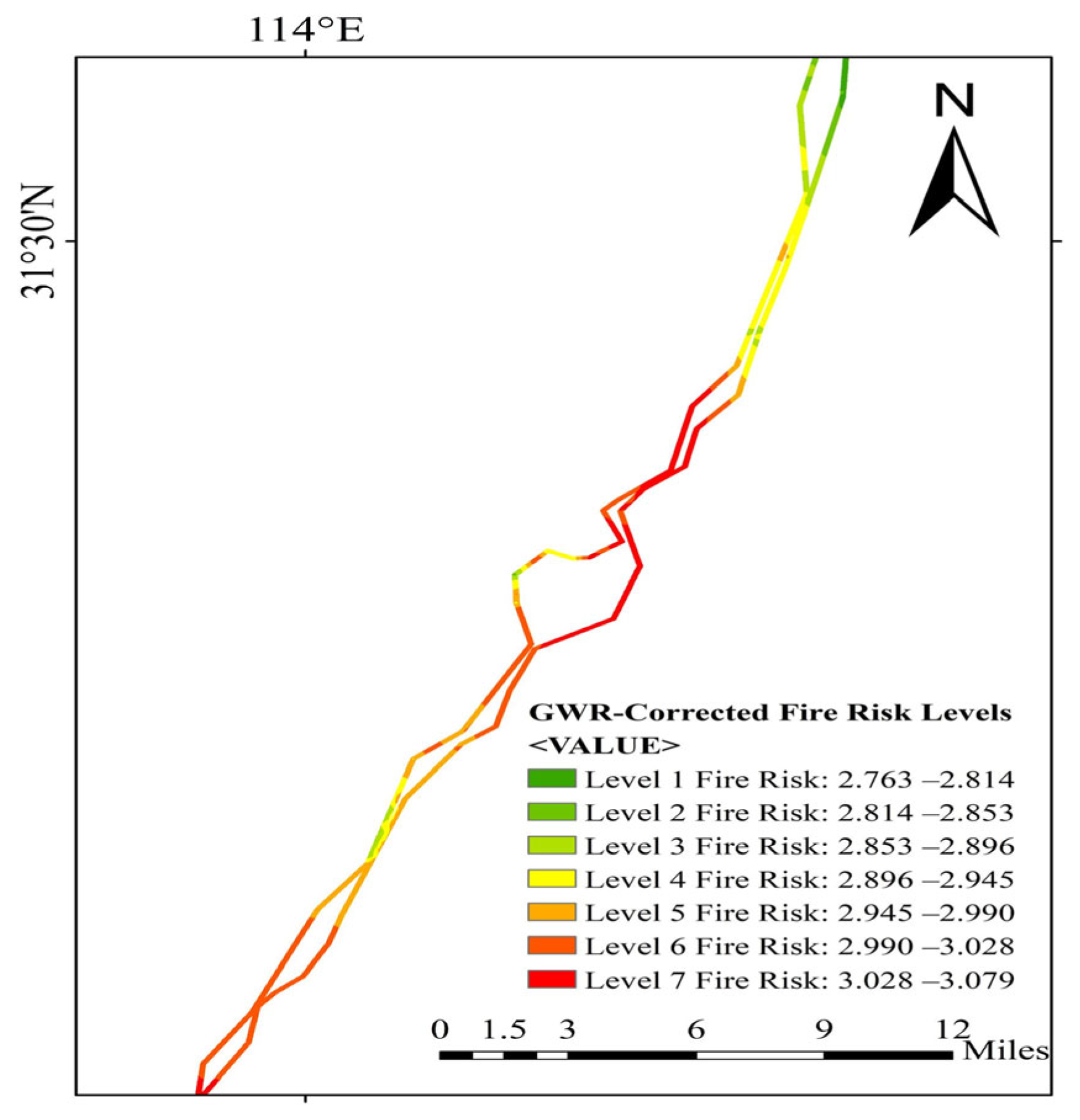
The corrected wildfire early warning risk map within the buffer zone of the Xiaoshi I–II transmission corridor is shown in Figure 11.
Figure 11. Corrected Wildfire Risk Map of the Transmission Corridor.
Using a multi-factor coupled GBDT global model constructed based on Himawari satellite data, an initial 1 km × 1 km grid-level wildfire risk stratification was produced, achieving an accuracy of R2 = 0.626 with an RMSE of 0.178. This global model establishes the baseline for the distribution of wildfire risk in the study area. The model was further refined at the local level using Geographically Weighted Regression (GWR) to account for geographical factors influencing wildfire risk across the study area. The GWR improved the goodness-of-fit statistic (R2 = 0.791; p < 0.01) by 26.4% compared to the original global model.
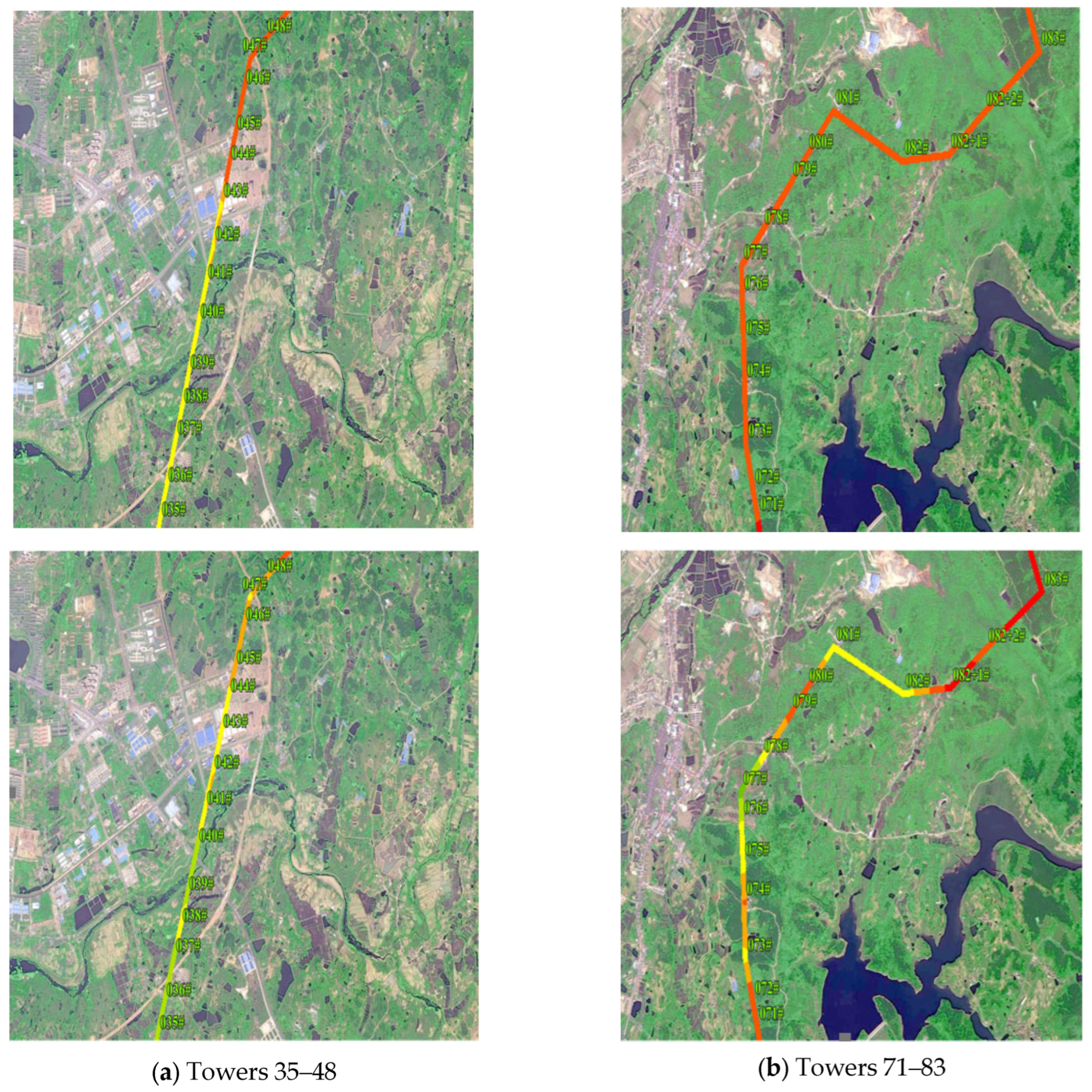
There was no change to the global thermal fire threat levels of the Xiaoshi I transmission line between towers 35 and 58 (first section); they remained the same as previously reported. The new report indicates that due to the large number of people living in the area surrounding the 43/44 tower segment, the early warning level decreased from 6 to 4 as a result of increased population density, an average NDVI of 0.25, low fuel load, and clustered buildings that limited wind spread. The 39–40 tower segment lies in a farmland–road isolation zone, where most surrounding features are agricultural fields and water bodies. Compared with nearby areas containing forest and grassland, the early warning level decreased from level 4 to levels 2–3. The 46–47 tower segment is situated in a road isolation zone, predominantly surrounded by bare land, with the warning level decreasing from level 6 to levels 4–5.
In the second section (shown in the right part of Figure 12), the global warning levels ranged between levels 6 and 7. After correction, the 76–77 tower segment, located on bare land, saw its warning level drop from level 6 to level 3 relative to surrounding areas. The 74 and 78 tower segments, located in road isolation zones, experienced a decrease in warning level from 6 to 4. Around tower 82 + 1#, there is a special “/\”-shaped terrain feature, and the minimum clearance distance of the transmission line is within a hazardous range, resulting in the warning level increasing from 6 to 7.
Figure 12. Corrected Characteristic Segment Map of the Transmission Corridor. Different colors indicate different wildfire risk levels, with warmer colors representing higher risk.
The wildfire early-warning risk levels for specific sections of the two transmission lines, before and after correction, along with the grading used by the operation and maintenance company, are shown in Table 6.
Table 6. Comparison of Pre- and Post-Correction Fire Risk Levels.
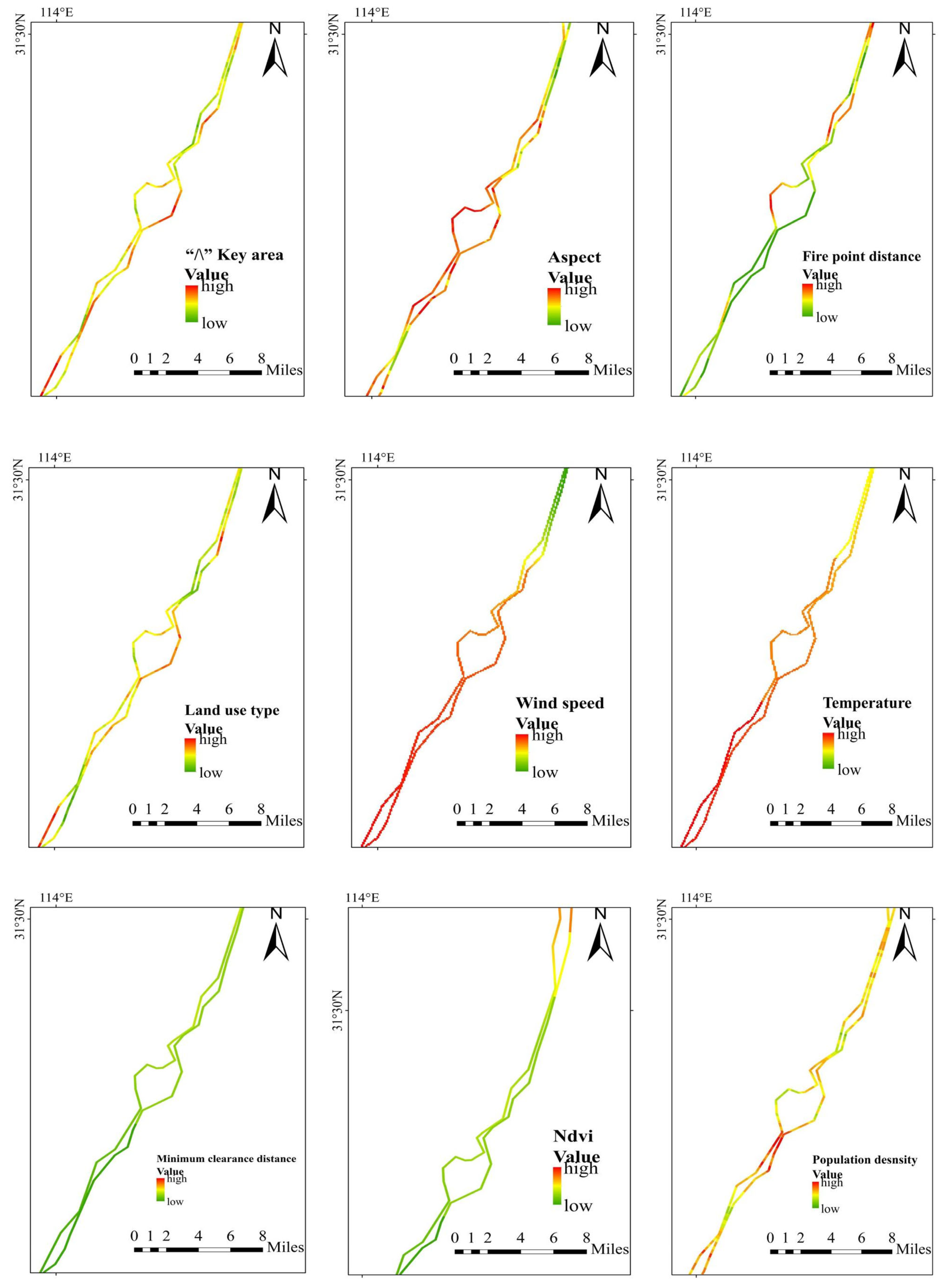
The spatial distribution of GWR coefficients for wildfire risk factors along the transmission corridor is shown in Figure 13. The color gradient from cool to warm indicates increasing regression coefficients, reflecting the spatial heterogeneity of the independent variables across different regions and revealing the contribution of each wildfire risk factor to fire risk in different geographic locations. The spatial heterogeneity of wildfire risk factors can be categorized into three types:
Figure 13. Geographically Weighted Regression (GWR) Coefficient Distribution Map for Wildfire Risk Factors.
To explicitly examine the impacts of topography and vegetation types on wildfire risk, the spatial heterogeneity of key wildfire risk factors was further analyzed based on the GWR results. According to the spatial behavior of regression coefficients, wildfire risk factors can be classified into several representative categories, which reflect different mechanisms through which terrain conditions, vegetation characteristics, and human activities influence wildfire occurrence along the transmission corridor.
The first type pertains to factors such as the minimum clearance distance of transmission line towers and other manually designed structural parameters. After Geographically Weighted Regression, these variables exhibit minimal variation and are close to the global coefficients, indicating insignificant spatial heterogeneity.
Second type: Several factors exhibit linear spatial heterogeneity, including soil moisture and temperature, due to latitudinal gradients along the transmission corridor. Regression coefficients for soil moisture and temperature in the southern transmission segment are higher than those in the northern segment. These coefficients decrease from south to north because of the presence of the topographic barrier, which diminishes the influence of soil moisture and temperature on the northern transmission segment.
Third type: Spatial heterogeneity reflects variations in management intensity within regions. The distance to past fires is influenced by the number and location of fire management activities in each area, as well as how historical fire behavior has affected the frequency of fires at the historical fire site and surrounding locations. Moving along the fire corridor toward areas of historical fire activity, the distances between these locations and key management zones decrease, as do the distances between these areas and the historical fire points. In the northern portion of the corridor, the regression coefficients for these regions are much larger, indicating that fire risk is significantly higher in these management zones compared to areas further along the corridor. In addition, population density is an important anthropogenic factor associated with this category of spatial heterogeneity. Areas with higher population density are typically characterized by more frequent human activities, which may increase potential ignition sources; however, they often exhibit reduced fuel continuity due to land-use fragmentation, lower vegetation cover, road isolation, and enhanced fire management and suppression capacity. As a result, the influence of population density on wildfire risk is context-dependent and varies spatially along the transmission corridor. Land use classification also shows spatial heterogeneity, with gradients of change based on distance and differences depending on the spacing between land use types (for example, each land use type has a distinct boundary). This is particularly evident in transition zones between land uses where two types exhibit contrasting characteristics, such as forests versus water bodies. In these transition areas, the regression coefficients often increase as one moves from one land use type to another, reflecting the varying influence of land use on wildfire risk.
Wildfire risk factors are characterized by spatial heterogeneity and can be classified and differentiated based on these variations across different locations along the corridor. Developing wildfire monitoring and management strategies that focus on the areas of greatest concern will enhance the effectiveness and accuracy of early warning and prevention measures for wildfires in transmission corridors. Regarding the transferability of the proposed approach, the global–local collaborative wildfire early warning framework is designed to be adaptable to regions with different topographical and climatic characteristics. While the relative importance and spatial patterns of wildfire risk factors may vary across regions, the overall modeling strategy remains applicable through region-specific recalibration of the global machine-learning model and adjustment of local GWR inputs to reflect local terrain, climate conditions, vegetation structure, and transmission line configurations. Therefore, the proposed framework can be extended to other transmission corridors under diverse environmental settings, provided that appropriate regional data and on-site infrastructure information are available.

5. Discussion

  • This study presents a method to provide early warning of wildfire threats along power transmission corridors. Our study involved 412 transmission lines along two Xiao–Shi circuit lines and utilized GBDT and the GWR approach to integrate meteorological, remote sensing, on-site, and GIS data into a GIS-based model, offering a better estimation of potential wildfire threats compared to previous modeling methods. By monitoring fires on a broad scale, we then implement a local response to fire threats based on the location of reference fire points within the study area. The ability to continuously adjust the level of risk along transmission lines, down to the tower level, helps address the challenge of assessing wildfire threats across diverse terrain, as the determination of fire risk is based on global fire risk factor weights calculated for all sections of the corridor. The combination of GBDT’s global fire risk prediction with GWR’s local area fire risk prediction provides a comprehensive understanding of fire risk trends and insights into how risk factors vary locally. This approach allows for identification of the highest-risk areas, maximizing resources dedicated to monitoring and managing wildfires, and thereby improving the effectiveness and accuracy of wildfire prevention along power transmission lines. It should be noted that this study focuses on wildfire risk early warning along transmission corridors rather than the direct estimation of transmission line outage probability. The derived wildfire risk information is intended to serve as an upstream risk indicator that can support outage risk assessment, preventive inspection planning, and operational decision-making, rather than a replacement for detailed reliability- or protection-based outage probability models. It should be emphasized that this study focuses on wildfire risk early warning as an external hazard to transmission lines, aiming to support transmission line breakdown prevention, preventive inspection, and operational decision-making, rather than to directly predict specific transmission line breakdown events. Importantly, the local GWR refinement is applied to the global GBDT-derived risk outputs rather than by refitting the original wildfire observations, thereby avoiding in-sample overfitting.
  • GBDT-GWR, a flexible, coupled model, has demonstrated its utility across different transmission line corridors. The model is effective because it integrates multiple sources of meteorological and remote sensing data along with GIS information to create a dynamic wildfire risk assessment at the tower level, identifying both high-risk locations along the line and the underlying causes of these risks. By providing both tower-based and corridor-wide risk assessments, companies can monitor and manage high-risk areas using a more accurate method, improving preparedness for potential fire events. This methodological framework can be extended to other corridors with similar environmental and structural characteristics, offering a scalable and adaptable solution for proactive wildfire prevention in power transmission networks.

6. Conclusions

  • Despite the encouraging results, several limitations of this study should be acknowledged. First, the analysis is based on wildfire and environmental data covering a limited temporal period, which may not fully capture long-term seasonal variability or interannual extremes. Second, the case study focuses on specific transmission corridors within a particular geographical and climatic setting, and regional characteristics may influence the relative importance and spatial behavior of wildfire risk factors. Third, the global wildfire risk screening stage relies on satellite-based fire point products, which are subject to inherent uncertainties related to sensor spatial resolution, detection thresholds, cloud cover, and viewing conditions. Although these limitations are partially mitigated through spatial aggregation and the subsequent local refinement using GWR, they should be considered when interpreting the results.
  • Future research could further enhance the proposed global–local wildfire early warning framework in several directions. Incorporating longer time-series datasets spanning multiple fire seasons would improve model robustness and enable the analysis of long-term wildfire dynamics. In addition, integrating real-time or near-real-time data streams, such as UAV-based observations, ground sensor networks, or high-frequency meteorological data, could support more responsive and adaptive wildfire early warning capabilities. These extensions would further strengthen the operational applicability of the framework and support proactive wildfire risk management for power transmission corridors under evolving environmental conditions.

Author Contributions

Conceptualization, methodology, writing—original draft preparation, and supervision: T.X.; software, validation, formal analysis, data curation, writing—review and editing: C.X.; writing—review and editing: X.C.; writing—review and editing, project administration, and funding acquisition: L.Z. All authors have read and agreed to the published version of the manuscript.

Funding

This research was funded by the Hubei Provincial Natural Science Joint Foundation (2024AFD409) and the Technology Research Project of State Grid Xiaogan Power Supply Company (SGTYHT/25-JS-004).

Data Availability Statement

The original contributions presented in this study are included in the article. Further inquiries can be directed to the corresponding author.

Conflicts of Interest

The authors declare that this study received funding from the Technology Research Project of State Grid Xiaogan Power Supply Company. The funder was not involved in the study design, collection, analysis, interpretation of data, the writing of this article or the decision to submit it for publication.

References

  1. Bahadori, N.; Razavi-Termeh, S.V.; Sadeghi-Niaraki, A.; Al-Kindi, K.M.; Abuhmed, T.; Nazeri, B.; Choi, S.-M. Wildfire susceptibility mapping using deep learning algorithms in two satellite imagery datasets. Forests 2023, 14, 1325. [Google Scholar] [CrossRef]
  2. Moghim, S.; Mehrabi, M. Wildfire assessment using machine learning algorithms in different regions. Fire Ecol. 2024, 20, 104. [Google Scholar] [CrossRef]
  3. Alizadeh, M.R.; Abatzoglou, J.T.; Adamowski, J.; Modaresi Rad, A.; AghaKouchak, A.; Pausata, F.S.R.; Sadegh, M. Elevation-dependent intensification of fire danger in the western United States. Nat. Commun. 2023, 14, 1773. [Google Scholar] [CrossRef] [PubMed]
  4. Klimas, K.B.; Yocom, L.L.; Murphy, B.P.; David, S.R.; Belmont, P.; Lutz, J.A.; DeRose, R.J.; Wall, S.A. A machine learning model to predict wildfire burn severity for pre-fire risk assessments, Utah, USA. Fire Ecol. 2025, 21, 8. [Google Scholar] [CrossRef]
  5. Diaz-Vazquez, D.; Casillas-García, L.F.; Garcia-Gonzalez, A.; Graf Montero, S.H.; Márquez Rubio, J.I.; Llamas Llamas, J.J.; Gradilla Hernandez, M.S. Integrating remote sensing and machine learning for dynamic burn probability mapping in data-limited contexts. Remote Sens. Appl. Soc. Environ. 2025, 38, 101554. [Google Scholar] [CrossRef]
  6. Yu, S.; Singh, M. Deep learning-based remote sensing image analysis for wildfire risk evaluation and monitoring. Fire 2025, 8, 19. [Google Scholar] [CrossRef]
  7. Torres-Vázquez, M.Á.; Herrera, S.; Gincheva, A.; Halifa-Marín, A.; Cavicchia, L.; Di Giuseppe, F.; Montávez, J.P.; Turco, M. Enhancing seasonal fire predictions with hybrid dynamical and random forest models. Npj Nat. Hazards 2025, 2, 20. [Google Scholar] [CrossRef]
  8. Thies, B. Machine learning wildfire susceptibility mapping for Germany. Nat. Hazards 2025, 121, 12517–12530. [Google Scholar] [CrossRef]
  9. Singh, H.; Ang, L.-M.; Srivastava, S. Active wildfire detection via satellite imagery and machine learning: An empirical investigation of Australian wildfires. Nat. Hazards 2025, 121, 9777–9800. [Google Scholar] [CrossRef]
  10. Feizizadeh, B.; Omarzadeh, D.; Mohammadnejad, V.; Khallaghi, H.; Sharifi, A.; Golmohmadzadeh Karkarg, B. An integrated approach of artificial intelligence and geoinformation techniques applied to forest fire risk modeling in Gachsaran, Iran. J. Environ. Plan. Manag. 2023, 66, 1369–1391. [Google Scholar] [CrossRef]
  11. Tian, G.; Chen, H.; Xu, X. Research on forest fire risk prediction based on fuzzy comprehensive evaluation. Disaster Sci. 2013, 28, 117–122. [Google Scholar]
  12. Yang, X.; Yu, Q.; Ye, Q.; Nie, R.; Wu, R.; Luo, R. Research on transmission corridor vegetation wildfire early-warning platform based on remote sensing technology. J. Nat. Disasters 2021, 30, 67–76. [Google Scholar] [CrossRef]
  13. Ma, W.; Feng, Z.; Cheng, Z.; Wang, F. Study on forest fire driving factors and distribution patterns in Shanxi Province. J. Cent. South Univ. For. Technol. 2020, 40, 57–69. [Google Scholar] [CrossRef]
  14. Xiao, Y.; Ji, P. Forest fire occurrence prediction based on a Bayesian zero-inflated negative binomial model. J. Cent. South Univ. For. Technol. 2021, 41, 49–56. [Google Scholar] [CrossRef]
  15. Zhang, K.; Wu, X.; Zhao, J.; Liu, L.; Qin, P.; Wang, H.; Zhan, T. Real-time wildfire risk assessment model for transmission corridors based on feature engineering, ensemble learning, and model fusion. Power Syst. Technol. 2023, 47, 4727–4738. [Google Scholar] [CrossRef]
  16. Ouyang, F.; She, X.; Xu, B.; Zeng, J.; Yu, K.; Zang, X.; He, S. Classification of wildfire risk levels for grounding faults in distribution networks based on multi-indicator comprehensive evaluation. Power Syst. Prot. Control 2024, 52, 10–19. [Google Scholar] [CrossRef]
  17. Dian, S.; Cheng, P.; Ye, Q.; Wu, J.; Luo, R.; Wang, C.; Hui, D.; Zhou, N.; Zou, D.; Yu, Q.; et al. Integrating wildfire propagation prediction into early warning of electrical transmission line outages. IEEE Access 2019, 7, 27586–27603. [Google Scholar] [CrossRef]
  18. Yang, C.; Ning, X.; Xu, H.; Chen, T.; Zeng, C.; Yang, S. A review of power grid wildfire monitoring and risk early warning technologies. Power Syst. Technol. 2023, 47, 4765–4777. [Google Scholar] [CrossRef]
  19. Zhang, R. Safety Assessment of Power Transmission Corridors in Forestry Area Based on Multi-Source Data. Ph.D. Dissertation, Wuhan University, Wuhan, China, 2020. [Google Scholar]
  20. Zhang, B.; Ou, G.; Sun, X.; Xu, T.; Xu, H. Application of spatial effects and regression models in forestry. J. Southwest For. Univ. 2016, 36, 144–152. [Google Scholar]
  21. Rodrigues, M.; De la, R.; Fotheringham, S. Modeling the spatial variation of the explanatory factors of human-caused wildfires in Spain using geographically weighted logistic regression. Appl. Geogr. 2014, 48, 52–63. [Google Scholar] [CrossRef]
  22. Lu, J.; Liu, Y.; Yang, L.; Xu, X.; Wu, C. Analysis of wildfire occurrence patterns along transmission lines. Fire Sci. Technol. 2014, 33, 1447–1451. [Google Scholar]
  23. Chen, X. A Risk Level Prediction and Assessment Method for Transmission Line Tripping Caused by Wildfires; State Grid Hubei Electric Power Research Institute: Wuhan, China, 2017. [Google Scholar]
  24. Wang, S.; Zhang, G.; Tan, S.; Wang, P.; Wu, X. Forest fire risk assessment in Hunan Province based on spatial logistic regression. J. Cent. South Univ. For. Technol. 2020, 40, 88–95. [Google Scholar] [CrossRef]
  25. Li, X. Synergy of Multi-Factors for Forest Fire Prediction and Detection Based on MODIS Data. Ph.D. Dissertation, University of Science and Technology of China, Hefei, China, 2016. [Google Scholar]
  26. Xie, Q. Wildfire Danger Assessment and Early Warning from Multi-Source Spatio-Temporal Big Data. Master’s Thesis, University of Electronic Science and Technology of China, Chengdu, China, 2022. [Google Scholar]
  27. Zhang, C.; Wei, S.T.; Liu, X.Y.; Zhang, S.H.; Tang, C.H.; Zhou, Y. Spatiotemporal evolution characteristics and driving factors of vegetation in the southwest arid-hot valley based on the Google Earth Engine platform. Acta Ecol. Sin. 2025, 45, 5398–5412. [Google Scholar] [CrossRef]
  28. Tian, Y.; Ji, Z.; Wang, D.; Xie, Y. Vegetation coverage and ecological water requirement in the Yellow River Delta. Res. Soil Water Conserv. 2025, 32, 168–175+188. [Google Scholar] [CrossRef]
  29. Lu, J.; Wu, C.; Yang, L.; Zhang, H.; Liu, Y.; Xu, X. Research and application of wildfire monitoring and early warning system for transmission lines. Power Syst. Prot. Control 2014, 42, 89–95. [Google Scholar]
  30. Wu, T.; Ruan, J.; Hu, Y.; Liu, B.; Chen, C. Characteristics and mechanisms of wildfire-induced flashover on 500 kV transmission lines. Proc. CSEE 2011, 31, 163–170. [Google Scholar] [CrossRef]
  31. Wu, T.; Ruan, J.; Zhang, Y.; Chen, C.; Pu, Z.; Wang, G. Statistical characteristics and identification analysis of wildfire-induced tripping accidents on transmission lines. Power Syst. Prot. Control 2012, 40, 138–148. [Google Scholar] [CrossRef]
  32. Tu, D. Study on the Influence of Asymmetric V-Shaped Tunnel Structure on Smoke Propagation Characteristics and Flame Characteristics. Master Thesis, Beijing University of Technology, Beijing, China, 2022. [Google Scholar]
  33. Zheng, Z.; Gao, Y.; Yang, Q.; Tang, Y.; Xu, Y.; Chen, Y. Study on the comprehensive forest fire risk forecast model in the southwestern mountainous area: A case study of Chongqing. J. Nat. Disasters 2020, 29, 152–161. [Google Scholar] [CrossRef]
  34. Liu, Z.; Jiang, Y.; Shen, Z.; Li, S.; Zhao, X. Discussion on improving China’s forest fire monitoring capability using satellite systems. Spacecr. Eng. 2019, 28, 96–100. [Google Scholar]
  35. Liu, S.; Lu, J.; Zhou, E.; Huang, Y.; Wei, R.; Chen, W. Refined wildfire monitoring and alarming technology for overhead transmission lines. Guangdong Electr. Power 2022, 35, 99–106. [Google Scholar]
  36. Zhang, P.; Guo, Q.; Chen, B.; Feng, X. Comparative analysis of China’s Fengyun-4 meteorological satellite and Japan’s Himawari-8/9 satellites. Adv. Meteorol. Sci. Technol. 2016, 6, 72–75. [Google Scholar]
Disclaimer/Publisher’s Note: The statements, opinions and data contained in all publications are solely those of the individual author(s) and contributor(s) and not of MDPI and/or the editor(s). MDPI and/or the editor(s) disclaim responsibility for any injury to people or property resulting from any ideas, methods, instructions or products referred to in the content.

Article Metrics

Citations

Article Access Statistics

Multiple requests from the same IP address are counted as one view.