Exergoeconomic Assessment of a Cogeneration Unit Using Biogas

 ,
,  , ,
, ,  and
and 
Abstract
1. Introduction
- Conducting an exergoeconomic assessment of a small-scale cogeneration system powered by biogas from organic waste in a residential building;
- Transforming an environmental liability (organic waste) into an energy asset, aiming to replace high-energy-consuming equipment (electric showers) with more sustainable water heating;
- Detailed component analysis and optimization that not only calculate the exergetic efficiency and exergy destroyed by components, by quantifying the costs of exergy destroyed and other exergoeconomic parameters, but also perform sensitivity analysis, offering clear guidelines for system optimization.
2. System Description
3. Thermodynamic Analysis
3.1. Energy Analysis
3.2. Exergy Analysis
3.3. Exergoeconomic Analysis
- The identification of exergy flows;
- The definition of fuel F and product P;
- The allocation of costs to exergetic flows;
- Definition of auxiliary equations by the F and P principles.
4. Results and Discussion
4.1. Energetic, Exergetic, and Exergoeconomic Results
4.2. Parametric Analysis
4.2.1. Energetic Analysis Results
4.2.2. Exergetic Analysis Results
4.2.3. Exergoeconomic Analysis
4.3. Consolidated Critical Discussion
5. Conclusions
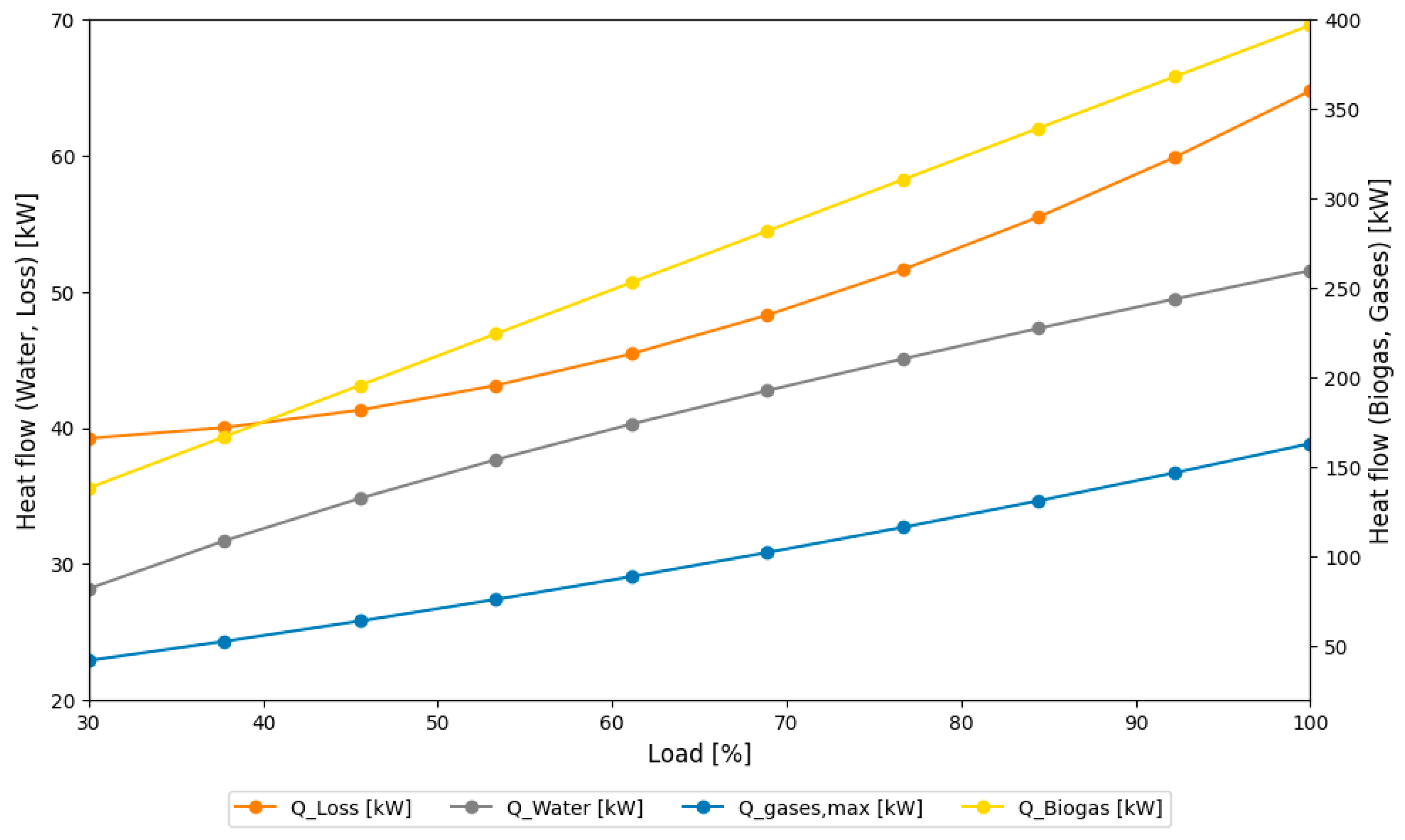
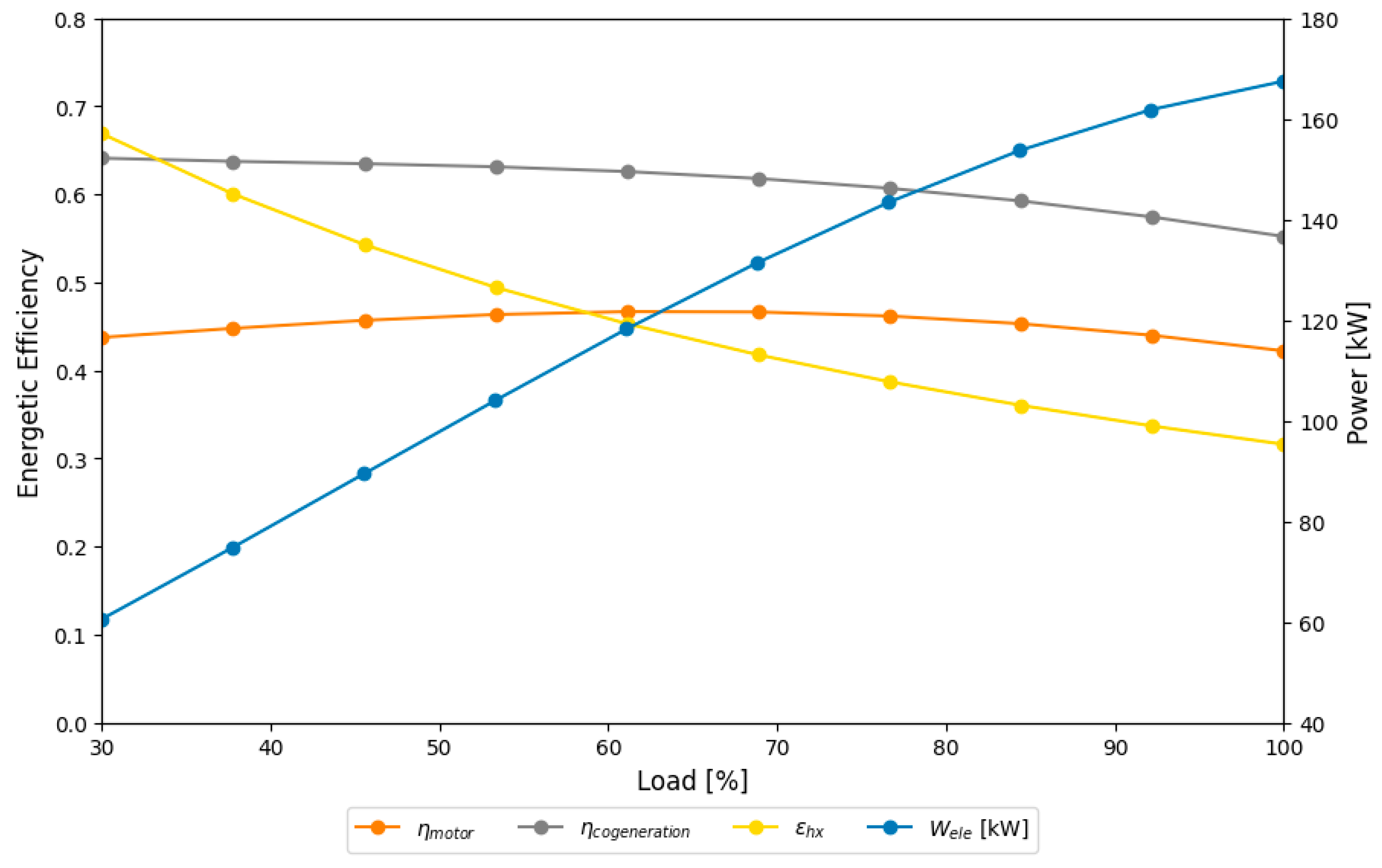
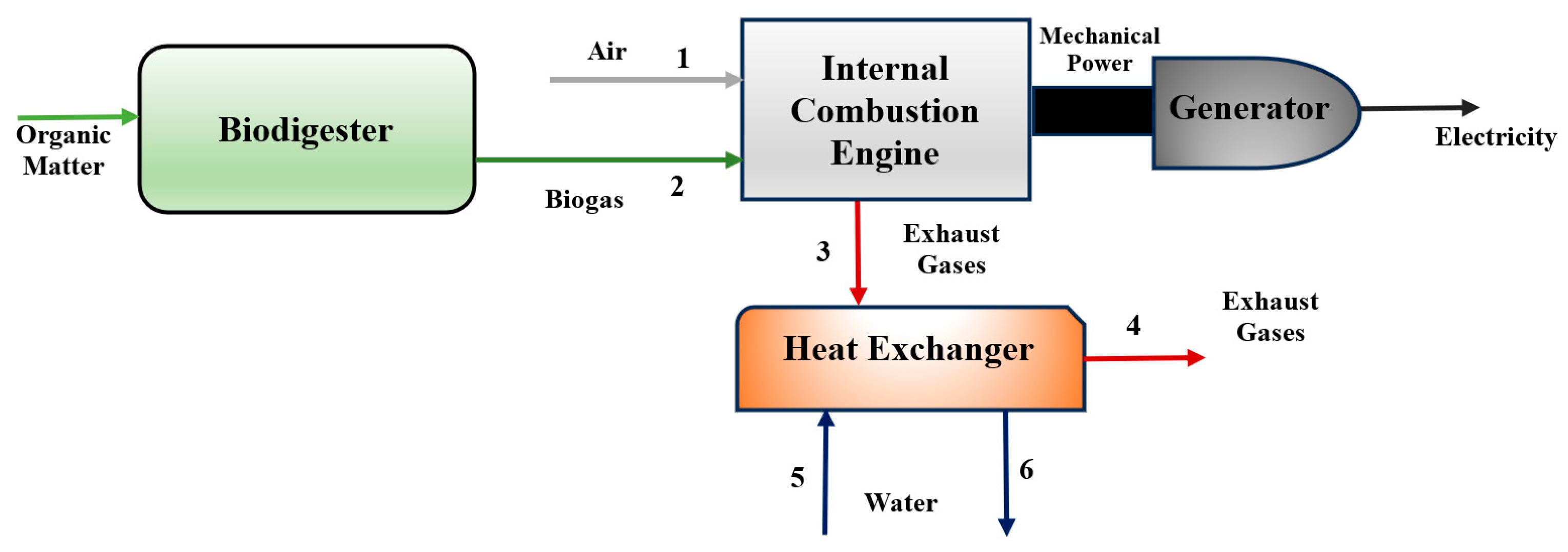
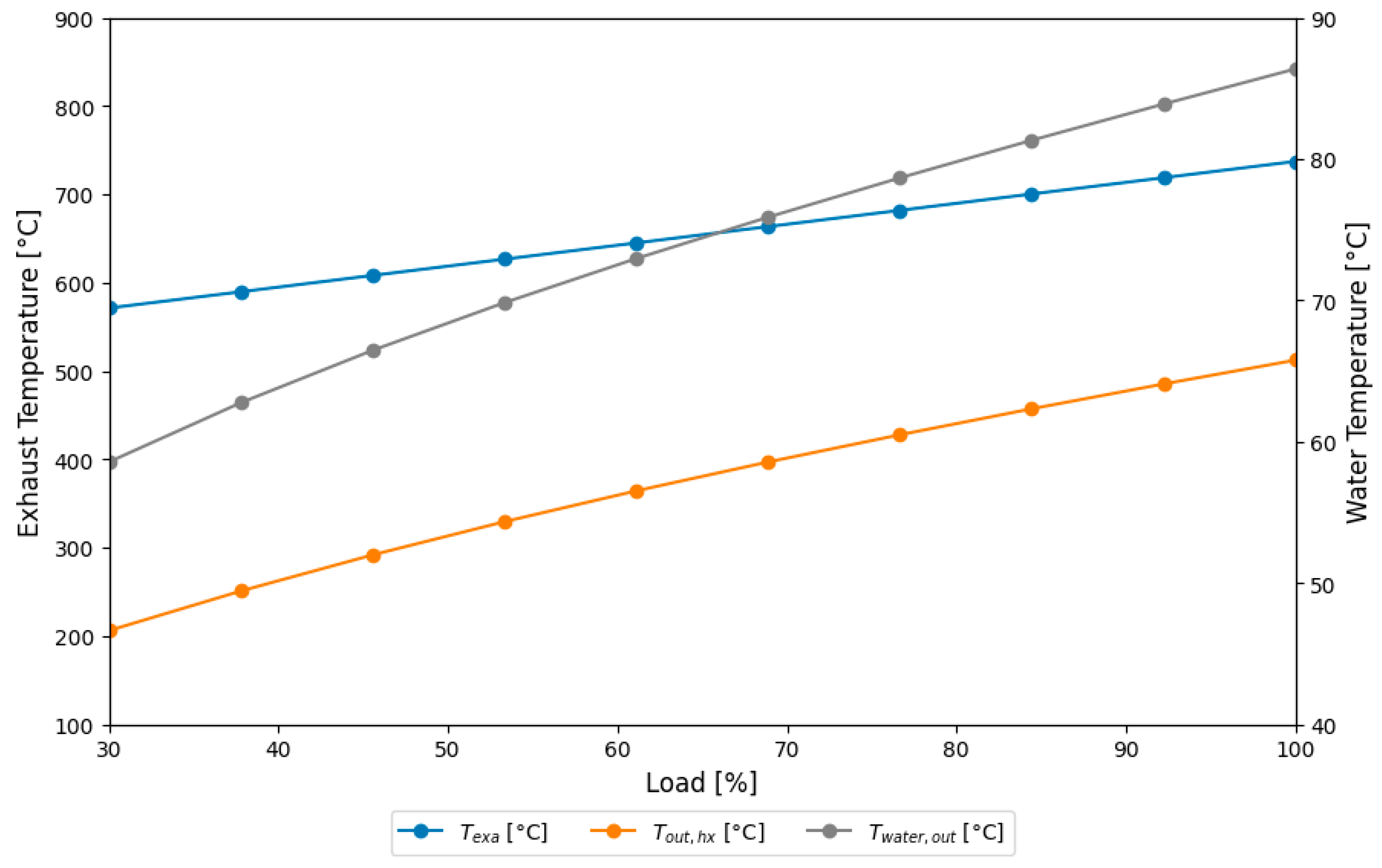
- The electricity production was 167.40 kW, with 100% engine load and a heat transfer rate of 51.55 kW.
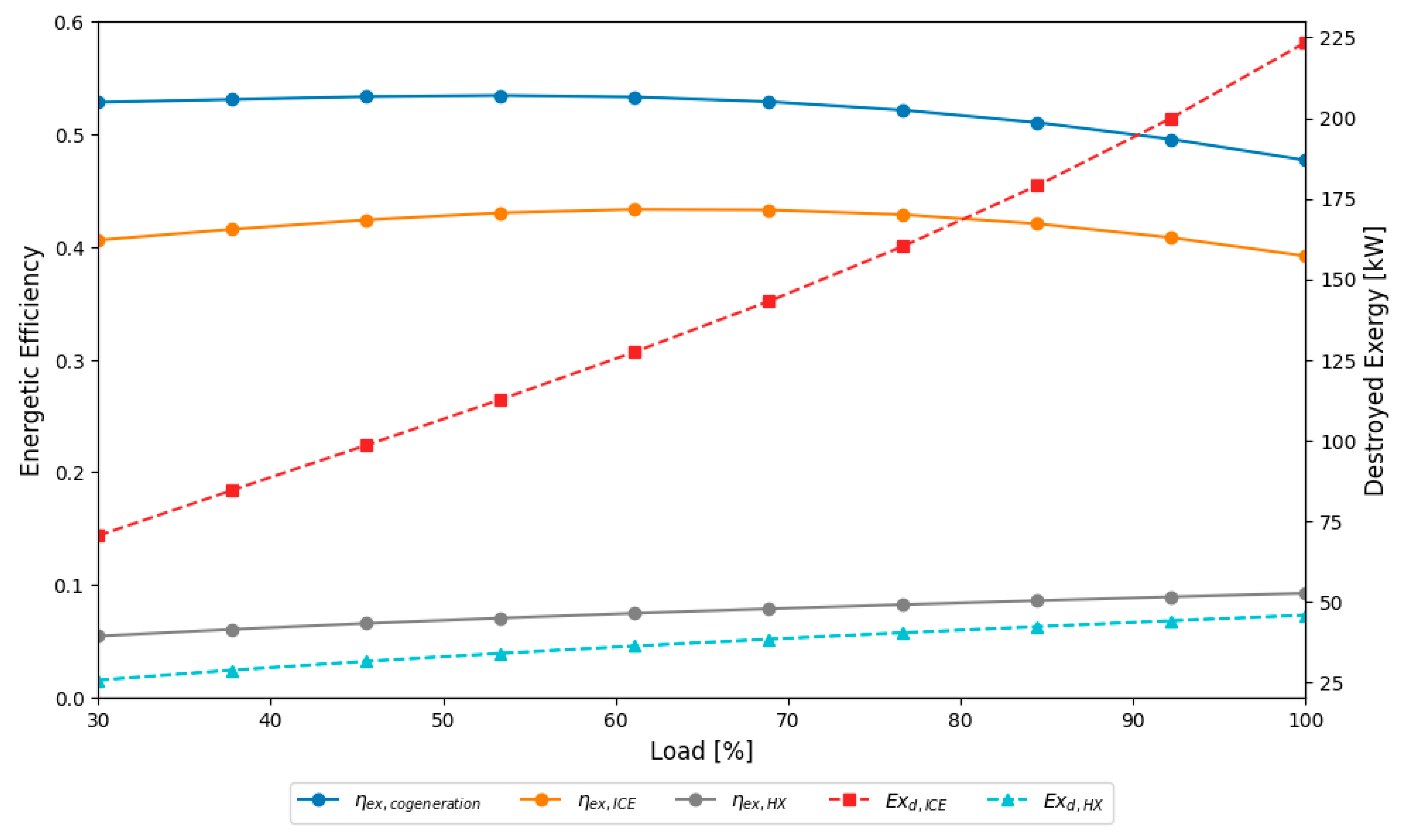
- The exergy destroyed in the Internal Combustion Engine (ICE) was 223.65 kW, while in the heat exchanger (HX) it was 45.67 kW. Regarding exergy efficiencies, the ICE reached 39.19%, while the HX had a low value of around 9%. The low efficiency of the heat exchanger (HX) was attributed to the significant temperature difference between the exhaust gases and the water, resulting in a small temperature and exergy difference across the product fluid (hot water). This indicated a considerable portion of exergy was being wasted.
- The inclusion of the heat exchanger (HX) resulted in a significant improvement in the overall performance of the cogeneration system, with an increase of almost 40% in energy efficiency and 23% in exergy efficiency compared to the electricity-only production scenario.
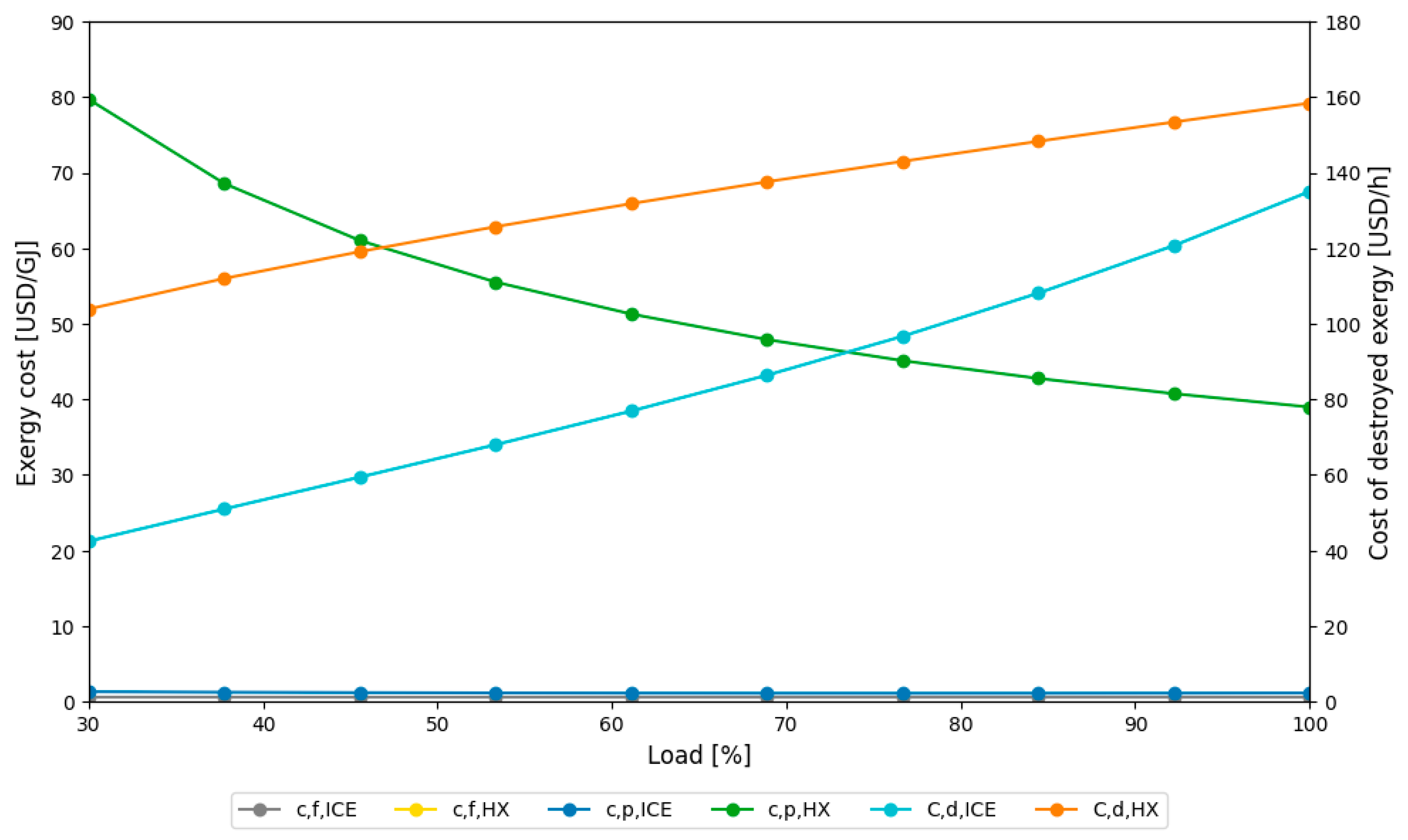
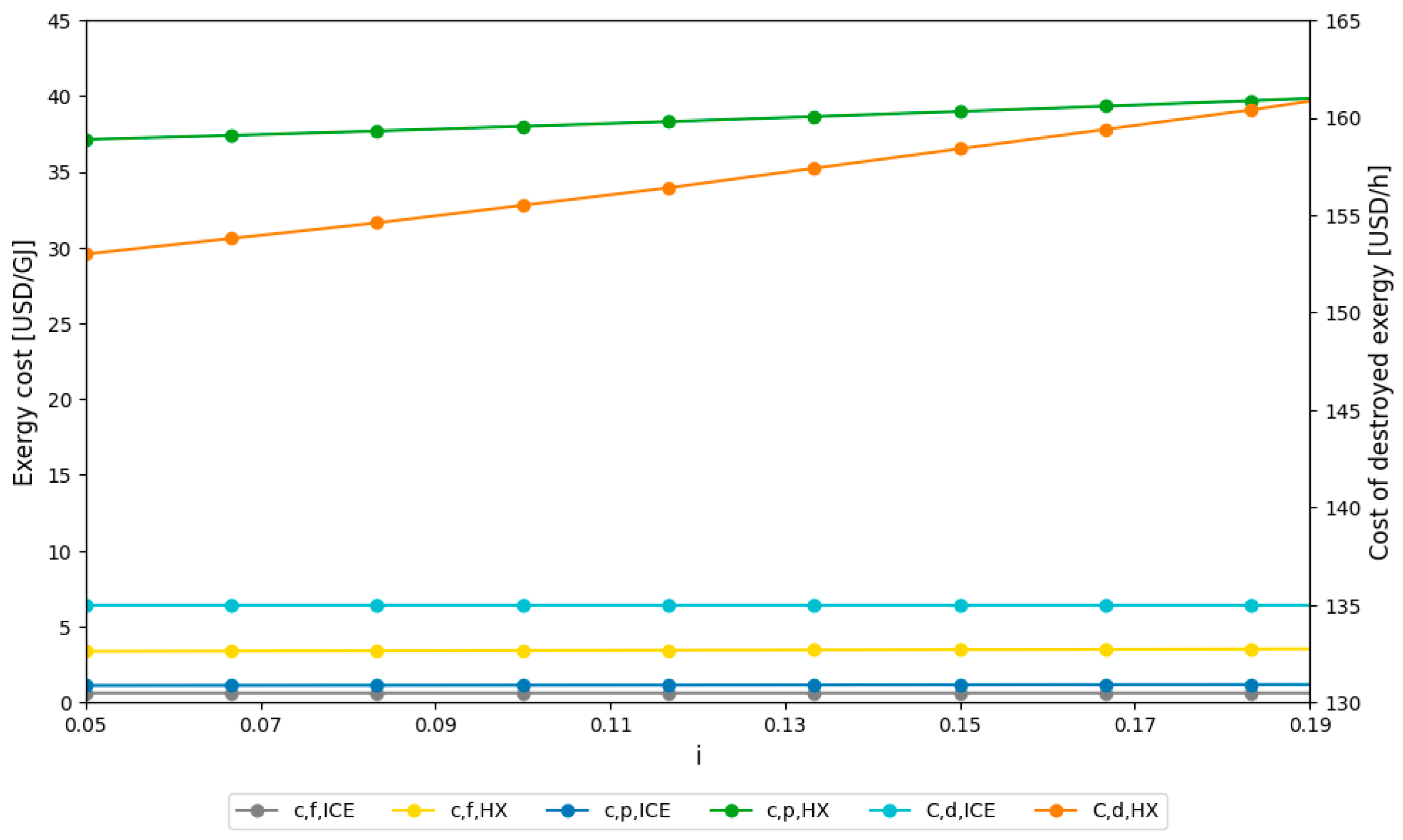
- In reference to the exergoeconomic analysis, the exergy destroyed in the MCI (223.65 kW) was greater than in the HX (45.67 kW); the cost of the exergy destroyed was significantly higher in the HX (USD/h 158.40) than in the ICE.
- The cost of producing hot water (product) was considered extremely high at USD/GJ 38.98, a value well above the cost of the input fuel at USD/GJ 3.468.
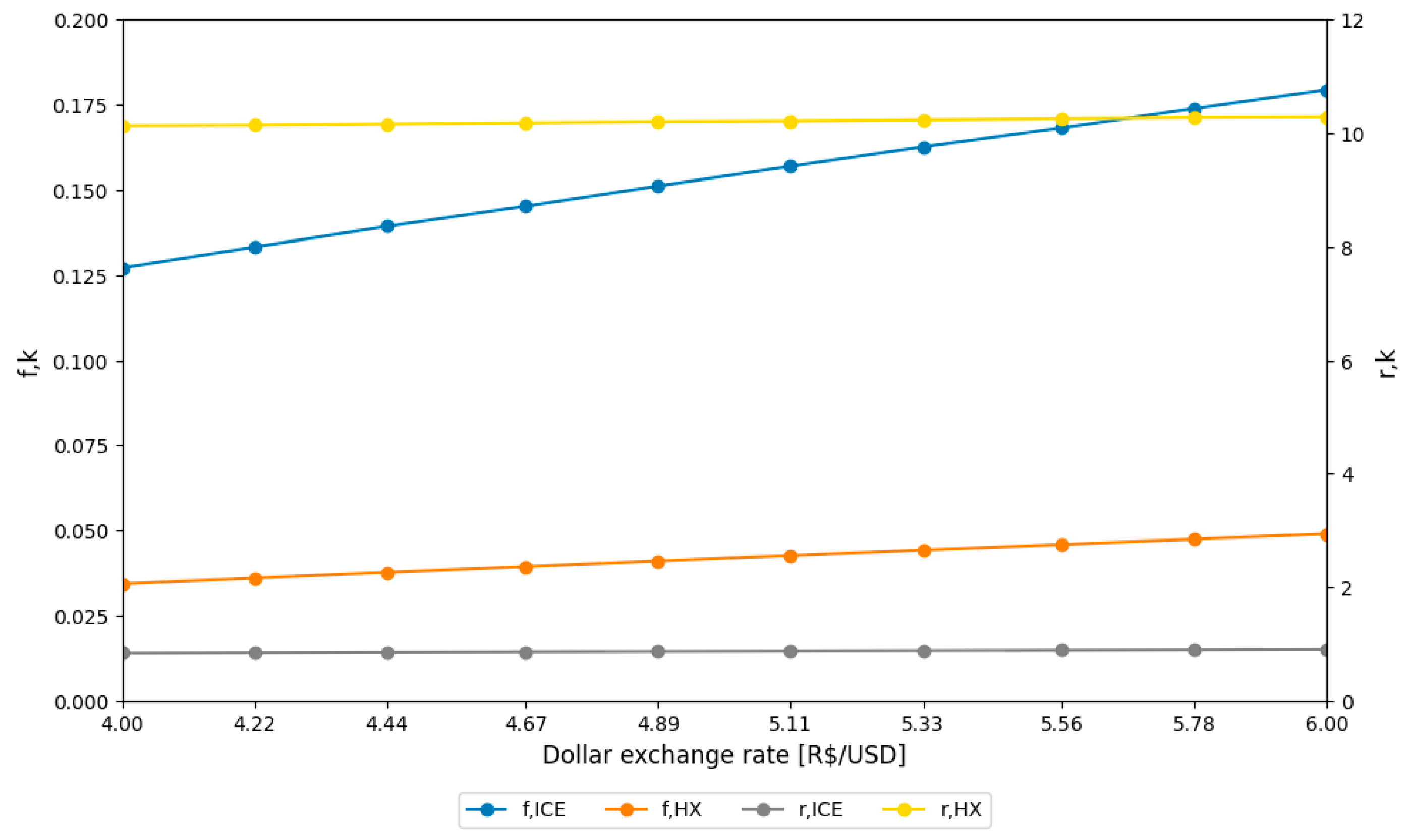
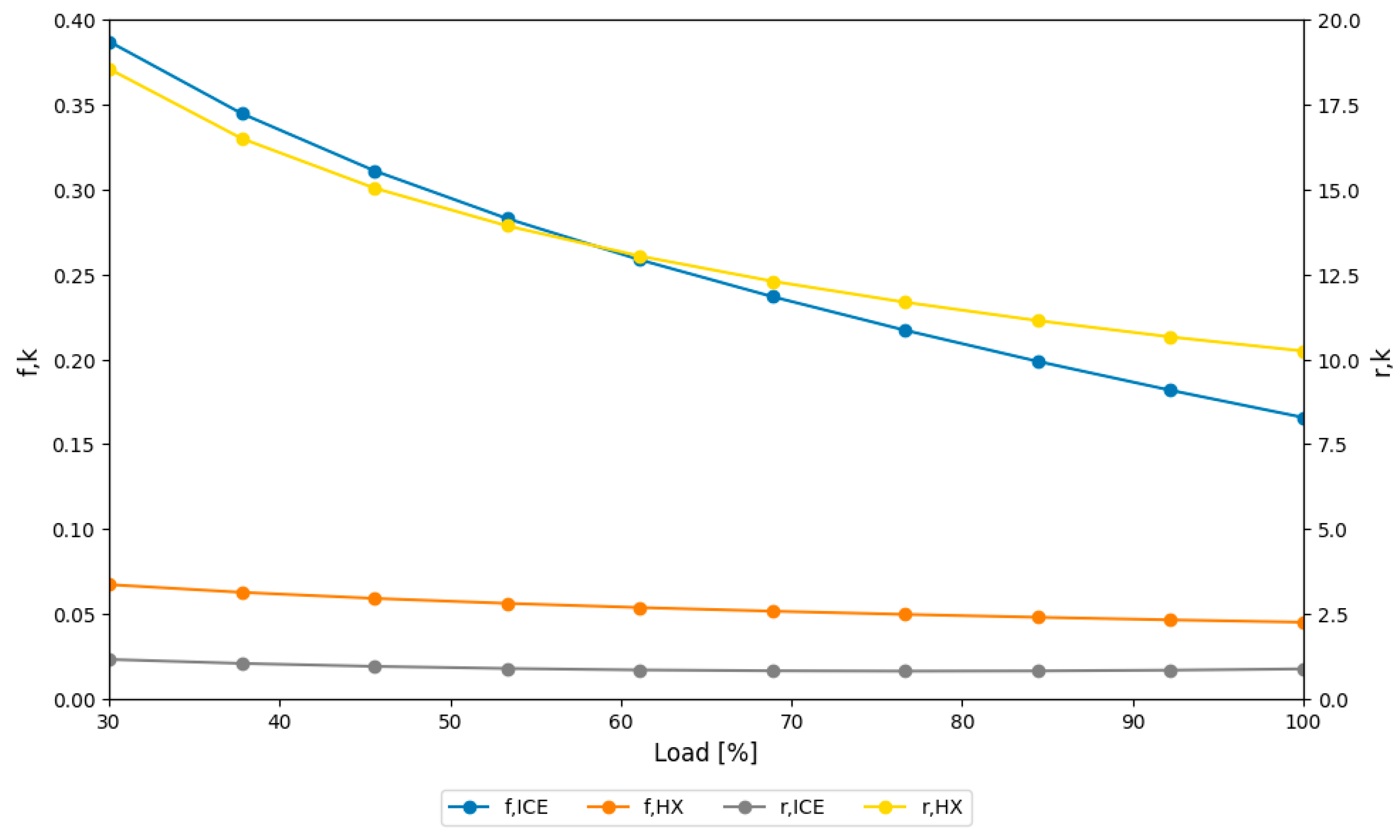
- In reference to the exergoeconomic parameters, the relative cost difference (rk) in the HX was very high (10.24) with a low exergoeconomic factor fk (4.53%), indicating that the heat exchanger represents the component in need of optimization.
- The best operating range to minimize the unit cost was at full load (100%). At this load, the HX product cost drops from approximately USD/GJ 80 (30% load) to less than USD/GJ 40. The 90% to 100% load range represents the ideal region to counterbalance the reduction in product cost and the maximization of total exergy efficiency, despite the increased cost of destroyed exergy.
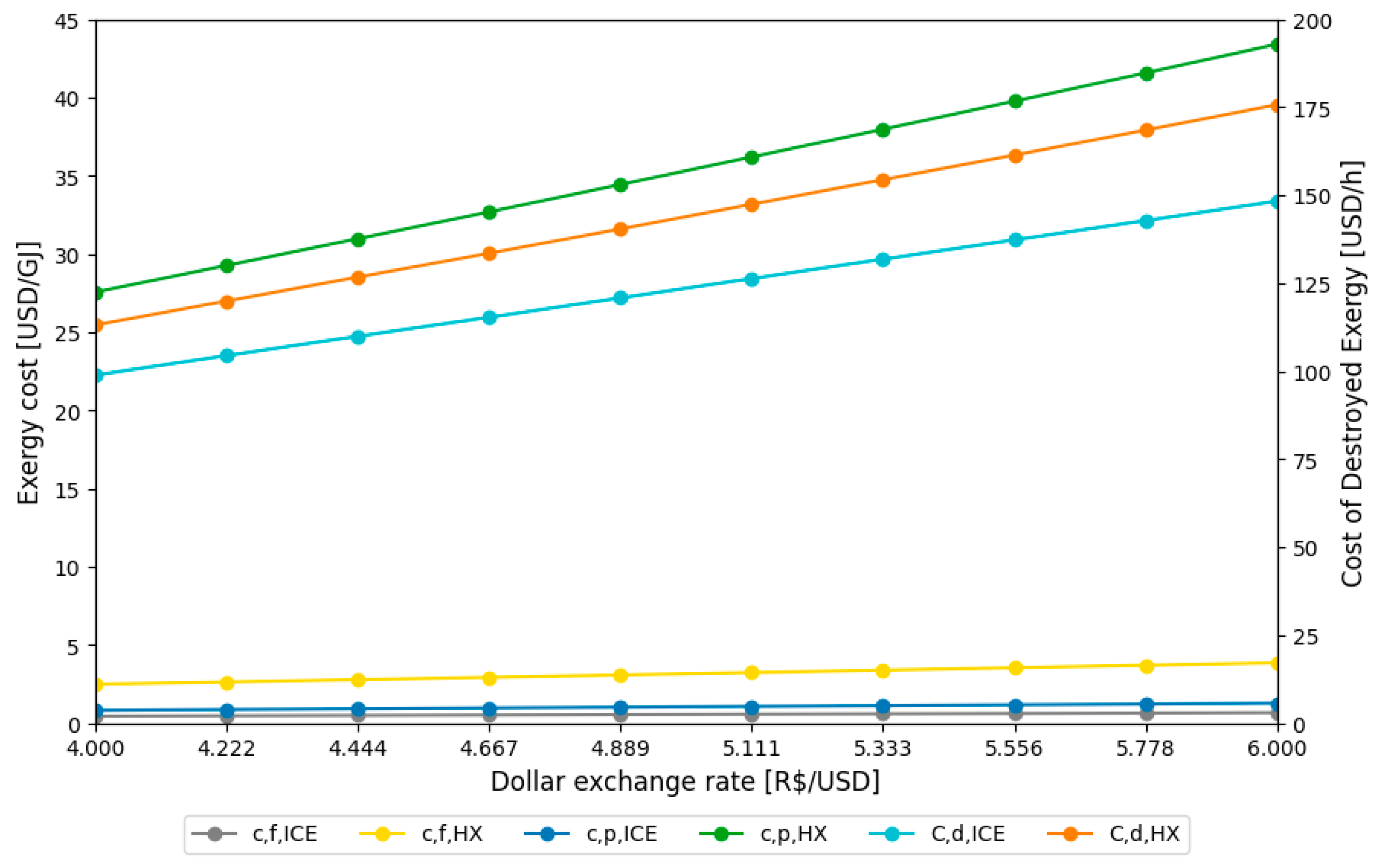
- Fluctuations in the dollar exchange rate (BRL/USD) demonstrated the economic vulnerability of the system. The increase in the exchange rate (from BRL/USD 4.00 to 6.00) raised the exergoeconomic factors fk from 0.13 to 0.18, as capital and O&M costs are susceptible to dollar fluctuations. The most suitable configuration is one with a lower exchange rate (around 4.0) to mitigate the impact of investment costs.
- The study concludes that the cogeneration unit is more justifiable based on the savings from thermal energy production than from isolated electricity production, as the system demonstrated significant increases in energy and exergy efficiencies of up to 55% and 48%, respectively.
- Research data indicates that the cycle must be optimized to be technically and economically viable. For example, such a cycle should be applied in condominiums with higher waste generation, that is, with a greater concentration of people;
Author Contributions
Funding
Data Availability Statement
Acknowledgments
Conflicts of Interest
References
- Legrottaglie, F.; Mattarelli, E.; Rinaldini, C.A.; Scrignoli, F. Application to micro-cogeneration of an innovative dual fuel compression ignition engine running on biogas. Int. J. Thermofluids 2021, 10, 100093. [Google Scholar] [CrossRef] [Scilit]
- Leite, C.A.A.F.; Alcântara, S.C.S.; Ochoa, A.A.V.; dos Santos, C.A.C.; Dutra, J.C.C.; Costa, J.A.P.; Michima, P.S.A.; Silva, H.C.N. Natural gas based cogeneration system proposal to a textile industry: A financial assessment. Energy Effic. 2021, 14, 20. [Google Scholar] [CrossRef] [Scilit]
- Colakoglu, M.; Durmayaz, A. Energy, exergy and environmental-based design and multiobjective optimization of a novel solar-driven multi-generation system. Energy Convers. Manag. 2021, 227, 113603. [Google Scholar] [CrossRef] [Scilit]
- Yuan, Z.L.; Gerbens-leenes, P.W. Biogas feedstock potentials and related water footprints from residues in China and the European Union. Sci. Total Environ. 2021, 793, 148340. [Google Scholar] [CrossRef] [Scilit]
- Prestipino, M.; Salmeri, F.; Cucinotta, F.; Galvagno, A. Thermodynamic and environmental sustainability analysis of electricity production from an integrated cogeneration system based on residual biomass: A life cycle approach. Appl. Energy 2021, 295, 117054. [Google Scholar] [CrossRef] [Scilit]
- Delavega-quintero, J.C.; Nuñez-pérez, J.; Lara-fiallos, M.; Barba, P.; Burbano-García, J.L.; Espín-Valladares, R. Advances and Challenges in Anaerobic Digestion for Biogas Production: Policy, Technological, and Microbial Perspectives. Processes 2025, 13, 3648. [Google Scholar] [CrossRef] [Scilit]
- Hervé, P.L.; Michael, T.T.; Salomon, N.-E.P.; Joseph, K.; Raphael, M.K.; Jean, N. Heliyon Energy and exergy analyses of CCHP (combined cooling, heating and power) system based on co-firing of biogas and syngas produced from biomass. Heliyon 2023, 9, e21753. [Google Scholar] [CrossRef] [Scilit]
- Simeonov, I.; Chorukova, E.; Kabaivanova, L. Two-Stage Anaerobic Digestion for Green Energy Production: A Review. Processes 2025, 13, 294. [Google Scholar] [CrossRef] [Scilit]
- Ajay, C.M.; Mohan, S.; Dinesha, P. Decentralized energy from portable biogas digesters using domestic kitchen waste: A review. Waste Manag. 2021, 125, 10–26. [Google Scholar] [CrossRef] [Scilit]
- Arslan, M.; Yılmaz, C. Design and optimization of multigeneration biogas power plant using waste heat recovery System: A case study with Energy, Exergy, and thermoeconomic approach of Power, cooling and heating. Fuel 2022, 324, 124779. [Google Scholar] [CrossRef] [Scilit]
- Cheng, S.; Lohani, S.P.; Rajbhandari, U.S.; Shrestha, P.; Shrees, S.; Bhandari, R.; Jeuland, M. Sustainability of large-scale commercial biogas plants in Nepal. J. Clean. Prod. 2024, 434, 139777. [Google Scholar] [CrossRef] [Scilit]
- Kozłowski, K.; Pietrzykowski, M.; Czekała, W.; Dach, J.; Kowalczyk-Juśko, A.; Jóźwiakowski, K.; Brzoski, M. Energetic and economic analysis of biogas plant with using the dairy industry waste. Energy 2019, 183, 1023–1031. [Google Scholar] [CrossRef] [Scilit]
- Al-Wahaibi, A.; Osman, A.I.; Al Muhtaseb, H.; Alqaisi, O.; Baawain, M.; Fawzy, S.; Rooney, D.W. Techno-economic evaluation of biogas production from food waste via anaerobic digestion. Sci. Rep. 2020, 10, 15719. [Google Scholar] [CrossRef] [Scilit]
- Pochwatka, P.; Rozakis, S.; Kowalczyk-Juśko, A.; Czekała, W.; Qiao, W.; Nägele, H.-J.; Janczak, D.; Mazurkiewicz, J.; Mazur, A.; Dach, J. The energetic and economic analysis of demand-driven biogas plant investment possibility in dairy farm. Energy 2023, 283, 129165. [Google Scholar] [CrossRef] [Scilit]
- Vilardi, G.; Bassano, C.; Deiana, P.; Verdone, N. Exergy and energy analysis of three biogas upgrading processes. Energy Convers. Manag. 2020, 224, 113323. [Google Scholar] [CrossRef] [Scilit]
- Rafiee, A.; Khalilpour, K.R.; Prest, J.; Skryabin, I. Biogas as an energy vector. Biomass Bioenergy 2021, 144, 105935. [Google Scholar] [CrossRef] [Scilit]
- Khan, M.S.; Huan, Q.; Lin, J.; Zheng, R.; Gao, Z.; Yan, M. Exergoeconomic analysis and optimization of an innovative municipal solid waste to energy plant integrated with solar thermal system. Energy Convers. Manag. 2022, 258, 115506. [Google Scholar] [CrossRef] [Scilit]
- Panahizadeh, F.; Hamzehei, M.; Farzaneh-Gord, M.; Ochoa, A.A.V. Energy, exergy, economic analysis and optimization of single-effect absorption chiller network. J. Therm. Anal. Calorim. 2021, 145, 669. [Google Scholar]
- Panahizadeh, F.; Hamzehei, M.; Farzaneh-Gord, M.; Villa, A.A.O. Thermo-Economic Analysis and Optimization of the Steam Absorption Chiller Network Plant. Therm. Sci. 2022, 26, 95–106. [Google Scholar] [CrossRef] [Scilit]
- Leite, A.L.F.; Dos Santos, C.A.C.; Ochoa, A.A.V.; Michima, P.S.A. Exergy analysis and exergoeconomic assessment of trigeneration system: A case study. Int. J. Exergy 2021, 35, 527–554. [Google Scholar] [CrossRef] [Scilit]
- Da Marques, A.S.; Carvalho, M.; Ochoa, Á.A.V.; Souza, R.J.; dos Santos, C.A.C. Exergoeconomic assessment of a compact electricity-cooling cogeneration unit. Energies 2020, 13, 5417. [Google Scholar] [CrossRef] [Scilit]
- Aghbashlo, M.; Tabatabaei, M.; Soltanian, S.; Ghanavati, H.; Dadak, A. Comprehensive exergoeconomic analysis of a municipal solid waste digestion plant equipped with a biogas genset. Waste Manag. 2019, 87, 485–498. [Google Scholar] [CrossRef] [Scilit]
- Gas, B.C.; Combined, T.; Cycle, O.R.; Chiller, A. Exergoeconomic Evaluation of a Cogeneration System Driven by a Natural Gas and Biomass Co-Firing Gas Turbine Combined with a Steam Rankine Cycle, Organic Rankine Cycle, and absorption chiller. Processes 2024, 12, 82. [Google Scholar]
- Wu, C.; Wang, S.; Feng, X.; Li, J. Energy, exergy and exergoeconomic analyses of a combined supercritical CO2 recompression Brayton/absorption refrigeration cycle. Energy Convers. Manag. 2017, 148, 360–377. [Google Scholar] [CrossRef] [Scilit]
- Souza, R.J.; Dos Santos, C.A.C.; Ochoa, A.A.V.; Marques, A.S.; Neto, J.L.M.; Michima, P.S.A. Proposal and 3E (energy, exergy, and exergoeconomic) assessment of a cogeneration system using an organic Rankine cycle and an Absorption Refrigeration System in the Northeast Brazil: Thermodynamic investigation of a facility case study. Energy Convers. Manag. 2020, 217, 113002. [Google Scholar] [CrossRef] [Scilit]
- da Silva Marques, A.; Benito, Y.R.; Ochoa, A.A.; Carvalho, M. Thermoeconomic Analysis of a Microcogeneration System Using the Theory of Exergetic Cost. Therm. Sci. 2023, 27, 3579–3589. [Google Scholar] [CrossRef] [Scilit]
- Sharew, S.S.; Di Pretoro, A.; Yimam, A.; Negny, S.; Montastruc, L. Exploiting exergy and exergoeconomic analysis as decisional tool for cogeneration plant optimal operating mode: A sugar factory case study. Energy Rep. 2024, 12, 143–157. [Google Scholar] [CrossRef] [Scilit]
- Caglayan, H.; Caliskan, H.; Hong, H.; Caliskan, N.; Kale, U.; Kilikevičius, A. Case Studies in Thermal Engineering Advanced exergoeconomic analysis and mathematical modelling of the natural gas fired gas turbine unit used for industrial cogeneration system. Case Stud. Therm. Eng. 2024, 61, 104969. [Google Scholar] [CrossRef] [Scilit]
- Hajabdollahi, H.; Saleh, A.; Yadollahi, N.K. Multi-objective optimization of a solar-assisted cogeneration system in hot climate: An exergoeconomic and exergoenvironmental assessment. Therm. Sci. Eng. Prog. 2025, 62, 103656. [Google Scholar] [CrossRef] [Scilit]
- Raiyan, A.R.; Uzzaman, S.; Ehsan, M.M.; Khan, Y. Energy, exergy, exergoeconomic (3E) analyses and ANN-based multi-objective optimization of novel vortex tube and turbo-expander enhanced transcritical CO2 cogeneration cycles. Energy Convers. Manag. 2025, 345, 120385. [Google Scholar] [CrossRef] [Scilit]
- Su, W. Optimization and exergoeconomic analysis of a biomass-driven cogeneration system for power and cooling applications. Appl. Therm. Eng. 2025, 258, 124510. [Google Scholar] [CrossRef] [Scilit]
- Zahedi, R.; Ahmadi, A.; Dashti, R. Energy, exergy, exergoeconomic and exergoenvironmental analysis and optimization of quadruple combined solar, biogas, SRC and ORC cycles with methane system. Renew. Sustain. Energy Rev. 2021, 150, 111420. [Google Scholar] [CrossRef] [Scilit]
- Tahir, M.F.; Haoyong, C.; Guangze, H. A comprehensive review of 4E analysis of thermal power plants, intermittent renewable energy and integrated energy systems. Energy Rep. 2021, 7, 3517–3534. [Google Scholar] [CrossRef] [Scilit]
- Kallio, S.; Siroux, M. Exergy and Exergy-Economic Approach to Evaluate Hybrid Renewable Energy Systems in Buildings. Energies 2023, 16, 1029. [Google Scholar] [CrossRef] [Scilit]
- Fallah, M.; Mohammadi, Z.; Allahyari, S.; Rahimi, S.H.; Fathi, M.; Tabar, Z.H.; Mahmoudi, S.M.S. Comprehensive review of methodologies and case studies in advanced exergy, exergo-economic, and exergo-environmental analyses. Energy 2025, 334, 137606. [Google Scholar] [CrossRef] [Scilit]
- Hasan, M.; Manesh, K. Energy, Exergy, and Thermo-Economic Analysis of Renewable Energy-Driven Polygeneration Systems for Sustainable Desalination. Processes 2021, 9, 210. [Google Scholar]
- Pathak, S.K.; Tyagi, V.; Chopra, K.; Pandey, A.K.; Goel, V.; Saxena, A.; Ma, Z. Energy, exergy, economic and environmental analyses of solar air heating systems with and without thermal energy storage for sustainable development: A systematic review. J. Energy Storage 2023, 59, 106521. [Google Scholar] [CrossRef] [Scilit]
- Moharram, N.A.; Konsowa, A.H.; Shehata, A.I.; El-maghlany, W.M. Sustainable seascapes: An in-depth analysis of multigeneration plants utilizing supercritical zero liquid discharge desalination and a combined cycle power plant. Alex. Eng. J. 2025, 118, 523–542. [Google Scholar] [CrossRef] [Scilit]
- Alcântara, S.C.S.; Ochoa, A.A.V.; da Costa, J.A.P.; Michima, P.S.A.; Silva, H.C.N. Natural gas based trigeneration system proposal to an ice cream factory: An energetic and economic assessment. Energy Convers. Manag. 2019, 197, 111860. [Google Scholar] [CrossRef] [Scilit]
- Santos, C.M.S. Análise Exergoeconomica de Uma Unidade de Cogeração a Gás Natural Com Refrigeração Por Absorção; Federal University of Paraíba: João Pessoa, Brazil, 2005. [Google Scholar]
- Ochoa, A.A.V.; Dutra, J.C.C.; Henríquez, J.R.G.; Rohatgi, J. Energetic and exergetic study of a 10RT absorption chiller integrated into a microgeneration system. Energy Convers. Manag. 2014, 88, 545–553. [Google Scholar] [CrossRef] [Scilit]
- Neto, L.F.G.; da Silva Gomes, S.; Ursulino, D.M.A.; Maia, L.P. Plano Municipal de Gestão Integrada de Resíduos Sólidos de Teresina—PI: Produto Final. Ciênc. Exatas Terra 2018, 28, 15. [Google Scholar]
- Kotas, T.J. The Exergy Method of Thermal Plant Analysis; Krieger Publishinf Company: Malabar, FL, USA, 1995; ISBN 0-89464-946-9. [Google Scholar]
- Gartner, G.L. Geração de Biogás Proveniente de Resíduos Sólidos Urbanos em Condomínios Verticais Residenciais: Estudo de Caso no Condomínio Marquês de Firenze; Universidade do Vale do Itajaí: Valladolid, Spain, 2015. [Google Scholar]
- Vitázek, I.; Klúčik, J.; Uhrinová, D.; Mikulová, Z.; Mojžiš, M. Thermodynamics of combustion gases from biogas. Res. Agric. Eng. 2016, 62, S8–S13. [Google Scholar] [CrossRef] [Scilit]
- Krou, N.M.; Baba, G.; Akpaki, O. Estimation of the Amount of Electrical Energy Available From the Biogas Produced at the Faecal Sludge Treatment Plant in the City of Sokodé. TH Wildau Eng. Nat. Sci. Proc. 2021, 1, 77–82. [Google Scholar] [CrossRef] [Scilit]
- Yang, K.; Zhu, N.; Ding, Y.; Chang, C.; Wang, D.; Yuan, T. Exergy and exergoeconomic analyses of a combined cooling, heating, and power (CCHP) system based on dual-fuel of biomass and natural gas. J. Clean. Prod. 2019, 206, 893–906. [Google Scholar] [CrossRef] [Scilit]
- Wang, J.; Chen, Y.; Lior, N. Exergo-economic analysis method and optimization of a novel photovoltaic/thermal solar-assisted hybrid combined cooling, heating and power system. Energy Convers. Manag. 2019, 199, 111945. [Google Scholar] [CrossRef] [Scilit]
- Ruwa, T.L.; Abbaso, S.; Akün, E. Energy and Exergy Analysis of Biogas-Powered Power Plant from Anaerobic Co-Digestion of Food and Animal Waste. Processes 2022, 10, 871. [Google Scholar] [CrossRef] [Scilit]
- Lazzaretto, A.; Tsatsaronis, G. SPECO: A systematic and general methodology for calculating efficiencies and costs in thermal systems. Energy 2006, 31, 1257–1289. [Google Scholar] [CrossRef] [Scilit]
- Banco Central do Brasil Banco Central do Brasil. Estabilidade Financeira–Fechamento Dolar. Available online: https://www.bcb.gov.br/estabilidadefinanceira/fechamentodolar (accessed on 5 August 2025).
- Bejan, A.; Tsatsaronis, G.; Moran, M. Thermal Design and Optimization; John Wiley & Sons: Hoboken, NJ, USA, 1996. [Google Scholar]
- Portal de Finanças IGP–10. Available online: http://www.portaldefinancas.com/igp_10_fgv.htm (accessed on 10 November 2025).
- Equatorial. Serviços. Available online: https://pi.equatorialenergia.com.br/ (accessed on 10 November 2025).
- Supergabras. Serviços. Available online: https://www.supergasbras.com.br/ (accessed on 10 November 2025).
- Marques, A.S.; Carvalho, M.; Ochoa, A.A.V.; Abrahão, R.; Santos, C.A.C. Life cycle assessment and comparative exergoenvironmental evaluation of a micro-trigeneration system. Energy 2021, 216, 119310. [Google Scholar] [CrossRef] [Scilit]
- Cavalcanti, E.J.C.; Carvalho, M.; Ochoa, A.A.V. Exergoeconomic and exergoenvironmental comparison of diesel-biodiesel blends in a direct injection engine at variable loads. Energy Convers. Manag. 2019, 183, 450–461. [Google Scholar] [CrossRef] [Scilit]
- Lima, A.A.S.; Ochoa, A.A.V.; Da Costa, J.Â.P.; Dos Santos, C.A.C.; Lima, M.V.F.; De Menezes, F.D. Energetic analysis of an absorption chiller using NH3/LiNO3 as an alternative working fluid. Braz. J. Chem. Eng. 2019, 36, 1061–1073. [Google Scholar] [CrossRef] [Scilit]




| Waste Characterization | Value |
|---|---|
| Volatile solid content | 90% |
| Moisture content | 80% |
| Theoretical Biogas Generation Potential | 316.6 NL biogas/kgSV |
| Variables | Description |
|---|---|
| Rotation speed | |
| Thermal energy contained in the exhaust gases | |
| Fuel mass flow rate | |
| Electrical power |
| Component | Fuel | Product | Auxiliary Equation | Exergoeconomic Balance |
|---|---|---|---|---|
| Internal Combustion Engine +Generator | - | |||
| Heat Exchanger |
| Parameter | Value |
|---|---|
| Organic matter | 17.56 kg·hab·day |
| Total organic matter | 20251.72 kg·day |
| Mass of solids | 4046.01 kg·day |
| Mass of volatile solids | 3644.20 kg·day |
| Volume of biogas produced | 1152.66 Nm3/day |
| Total energy available from burning biogas | 407.39 kW |
| Generated electrical power | 167.40 kW |
| Heat in the exhaust gases | 51.55 kW |
| Heat in the cooling system | 51.55 kW |
| Losses in transmission and heat to the environment | 64.75 kW |
| Points | Fluid | Temperature (°C) | Enthalpy (kJ/kg) | Mass Flow (kg/s) | Entropy (kJ/kg·K) |
|---|---|---|---|---|---|
| 1 | Air | 25.00 | 298.6 | 0.1665 | 5.695 |
| 2 | Biogas | 25.00 | −5781 | 0.0119 | 9.435 |
| 3 | Exhaust Gases | 737.20 | −1741 | 0.1784 | 8.314 |
| 4 | Exhaust Gases | 512.20 | −2023 | 0.1784 | 7.998 |
| 5 | Water | 25.00 | 104.9 | 0.2000 | 0.367 |
| 6 | Water | 86.37 | 361.7 | 0.2000 | 1.150 |
| Points | Fluid | Physical Exergy (kJ/kg) | Chemical Exergy (kJ/kg) | Total Specific Exergy (kJ/kg) | Total Exergy (kW) | Average Specific Cost (USD/GJ) | Exergy Costing (USD/h) |
|---|---|---|---|---|---|---|---|
| 1 | Air | 0.00 | 0.00 | 0.00 | 0.00 | 0.0000 | 0.0000 |
| 2 | Biogas | 0.00 | 54520 | 35669 | 427.3 | 0.01312 | 47.2500 |
| 3 | Exhaust Gases | 357.40 | 102.9 | 460.3 | 82.13 | 0.02443 | 87.9400 |
| 4 | Exhaust Gases | 75.21 | 102.9 | 178.1 | 31.78 | 0.00945 | 34.0300 |
| 5 | Water | 0.00 | 49.96 | 49.96 | 9.99 | 0.00000 | 0.0000 |
| 6 | Water | 23.36 | 49.96 | 73.32 | 14.66 | 0.01527 | 54.9800 |
| Component | Electrical Power (kW) | Heat transfer Rate (kW) | Exergy Destroyed (kW) | Energetic Efficiency (%) | Exergetic Efficiency (%) |
|---|---|---|---|---|---|
| ICE + Generator | 167.40 | 163.20 | 223.65 | 42.00 | 39.19 |
| Heat exchanger | - | 51.55 | 45.67 | 31.39 | 9.29 |
| Component | Cost of Product (USD/GJ) | Cost of Fuel (USD/GJ) | Cost of Exergy Destroyed (USD/h) | Monetary Costs (USD/h) | Relative Difference | Exergoeconomic Factor (%) |
|---|---|---|---|---|---|---|
| ICE + Generator | 1.141 | 0.6038 | 135.00 | 4.913 | 0.8902 | 16.58 |
| Heat exchanger | 38.980 | 3.468 | 158.40 | 1.376 | 10.240 | 4.53 |
Disclaimer/Publisher’s Note: The statements, opinions and data contained in all publications are solely those of the individual author(s) and contributor(s) and not of MDPI and/or the editor(s). MDPI and/or the editor(s) disclaim responsibility for any injury to people or property resulting from any ideas, methods, instructions or products referred to in the content. |
© 2025 by the authors. Licensee MDPI, Basel, Switzerland. This article is an open access article distributed under the terms and conditions of the Creative Commons Attribution (CC BY) license.
Share and Cite
Lima, A.L.F.L.d.; dos Santos, C.A.C.; Ochoa, A.A.V.; López, D.R.; Michima, P.S.A.; da Costa, J.Â.P.; Leite, G.d.N.P. Exergoeconomic Assessment of a Cogeneration Unit Using Biogas. Processes 2026, 14, 134. https://doi.org/10.3390/pr14010134
Lima ALFLd, dos Santos CAC, Ochoa AAV, López DR, Michima PSA, da Costa JÂP, Leite GdNP. Exergoeconomic Assessment of a Cogeneration Unit Using Biogas. Processes. 2026; 14(1):134. https://doi.org/10.3390/pr14010134
Chicago/Turabian StyleLima, Ana Lívia Formiga Leite de, Carlos Antônio Cabral dos Santos, Alvaro Antonio Villa Ochoa, Daniel Rodríguez López, Paula Suemy Arruda Michima, José Ângelo Peixoto da Costa, and Gustavo de Novaes Pires Leite. 2026. "Exergoeconomic Assessment of a Cogeneration Unit Using Biogas" Processes 14, no. 1: 134. https://doi.org/10.3390/pr14010134
APA StyleLima, A. L. F. L. d., dos Santos, C. A. C., Ochoa, A. A. V., López, D. R., Michima, P. S. A., da Costa, J. Â. P., & Leite, G. d. N. P. (2026). Exergoeconomic Assessment of a Cogeneration Unit Using Biogas. Processes, 14(1), 134. https://doi.org/10.3390/pr14010134