3. Results and Discussion
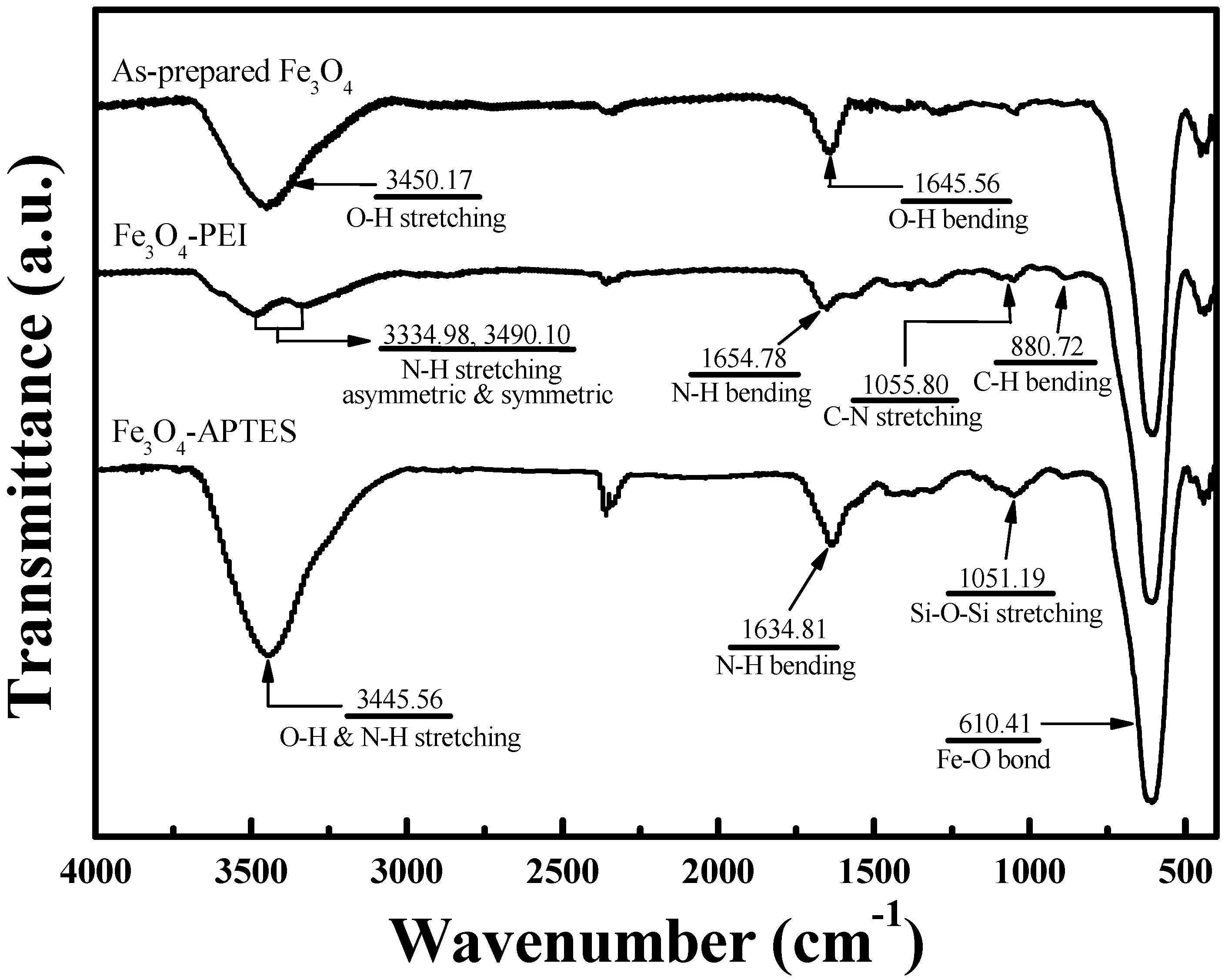
The FT-IR spectra of the nanoparticles were analyzed post-synthesis and functionalization to determine surface chemistry changes, as depicted in
Figure 1. All spectra prominently featured a peak at 590.41 cm
−1, characteristic of the Fe–O bond, indicating the integrity of the iron oxide structure across all samples. For the as-prepared Fe
3O
4 nanoparticles, the peaks at 1645.56 and 3450.17 cm
−1 were attributed to the bending and stretching vibrations of the O–H bond, respectively, confirming the presence of surface hydroxyl groups. These groups are critical for the subsequent surface modifications.
Post-functionalization with PEI, a polymer precursor, led to the emergence of several new peaks: C–H bending at 880.72 cm
−1 and C–N stretching at 1055.80 cm
−1, suggesting the formation of a polymer layer enveloping the nanoparticle surface [
14]. Notably, a peak at 1654.78 cm
−1 indicated the N–H bending mode of terminal amine groups, with additional peaks at 3334.98 cm and 3580.10 cm
−1 corresponding to symmetric and asymmetric N–H stretching vibrations, respectively. Conversely, the FT-IR spectrum of the APTES-modified Fe
3O
4 displayed different characteristics. A distinct peak at 1083.91 cm
−1, representative of Si-O-Si stretching, confirmed the formation of silane bonds, likely due to a condensation reaction with the surface hydroxyl groups. N–H bending vibration was observed at 1634.81 cm
−1, with significant intensity compared to that of the PEI-treated samples [
15]. A composite peak at 3445.56 cm
−1, merging the O–H stretching and N–H stretching vibrations, suggested an overlap of these functional groups due to the dense packing of APTES on the nanoparticle surface.
The successful attachment of amino groups to the nanoparticle surface was evident from the N–H vibration peaks in the spectra of both the PEI- and APTES-modified samples. However, the distinct spectral features following the PEI and APTES treatments highlight the different chemical environments created by these precursors. The decrease in the intensity of the O–H stretching peak post-PEI treatment and the emergence of Si-O-Si stretching vibrations post-APTES treatment underscore the transformative impact of these functionalizations on nanoparticle surface chemistry. These spectral findings not only confirm the successful modification of Fe3O4 nanoparticles but also illustrate how different precursors influence the nature of surface functional groups, guiding their potential applications in targeted technological fields.
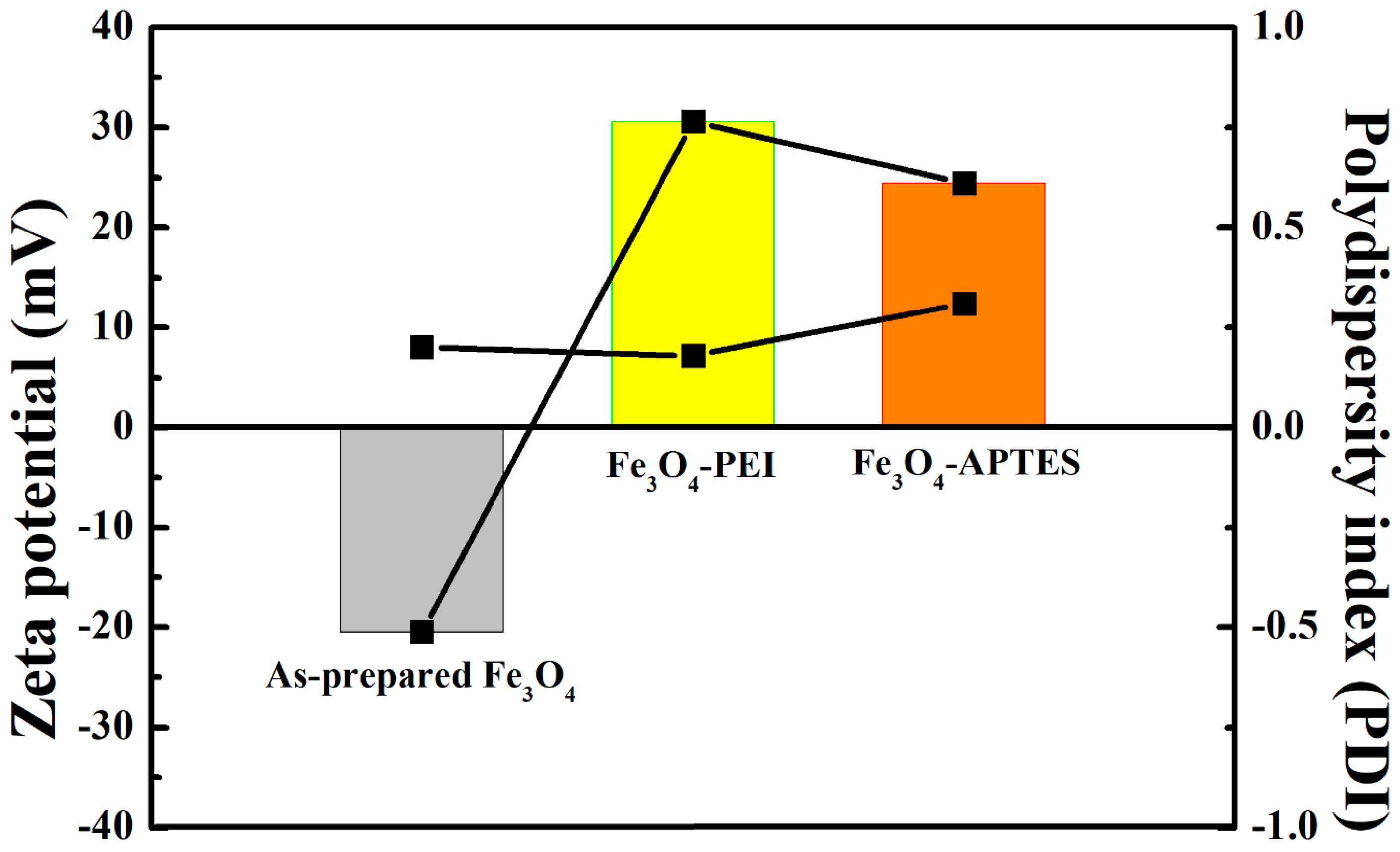
Zeta-potential measurements were conducted to assess the surface charge characteristics and dispersion stabilities of the as-prepared and amino-functionalized Fe
3O
4 nanoparticles, as illustrated in
Figure 2. The as-prepared Fe
3O
4 nanoparticles exhibited a negative surface charge of −20.43 mV, indicating the inherent surface chemistry prior to modification. Upon amino functionalization, a significant shift in the zeta potential toward positive values was observed, reflecting changes in surface chemistry. Specifically, the zeta potential increased to +30.63 mV for the PEI-treated nanoparticles and +24.42 mV for the APTES-treated nanoparticles. This increase can be attributed to the nature of the functional groups introduced during amino functionalization. PEI, a polymeric precursor, formed a network of carbon chains and terminal amine groups that encapsulated the nanoparticle surface. This dense packing of amine groups increases the overall surface charge, explaining the higher zeta potential observed with PEI than with APTES. In contrast, APTES functionalization involved fewer hydroxyl group interactions and formed a silane layer via condensation, leading to a moderately positive surface charge. Furthermore, the polydispersity index (PDI), which is an indicator of particle dispersion in colloidal systems, displayed trends distinct from those of the surface charge. The lowest PDI value (0.18) was observed for PEI-functionalized Fe
3O
4, indicating superior particle dispersion. This contrasts with the as-prepared Fe
3O
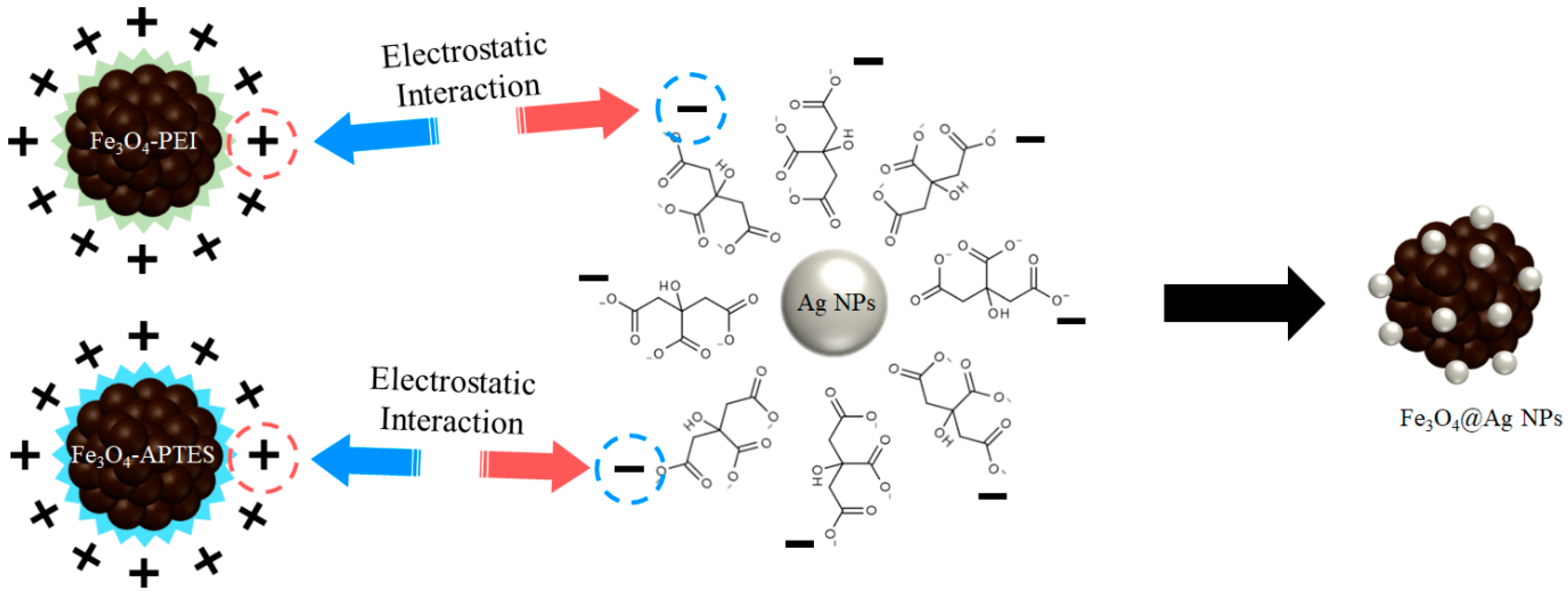
4 and APTES-functionalized nanoparticles, which had PDI values of 0.20 and 0.31, respectively. The relatively high PDI of the APTES-functionalized nanoparticles suggests potential particle aggregation during the SiO condensation reaction, which may reduce the dispersion quality. Conversely, the enhanced dispersion stability in the PEI-functionalized nanoparticles is likely due to stronger electrostatic repulsion among the particles as a result of the higher positive surface charge (
Figure 3).
When the as-prepared Fe3O4 was amino-functionalized, the surface charge became positive because of the amine groups on the surface. In contrast, Ag nanoparticles obtained using AgNO3 as a precursor had a negative charge owing to citrate functionalization of the surface, which occured as a result of the tSCD used during the synthesis process. As a result, Fe3O4@Ag nanoparticles were formed with Ag nanoparticles decorating the surface of the Fe3O4 nanoparticles.
Decorated Ag nanoparticles were synthesized using different reduction reactions depending on the type of reducing agent used. When NaBH
4 was used as the reducing agent, the reaction proceeded according to the formula represented by Equation (1). In this reaction, AgNO
3 and NaBH
4 were reacted to yield a 1:1 ratio of NaNO
3 to Ag. However, when NaOH is used as the reducing agent, as indicated in Equations (2) and (3), the reaction between AgNO
3 and NaOH results in the formation of Ag
2O and NaNO
3 [
16]. Subsequently, Ag
2O underwent ionization in an aqueous solution. Following this, as indicated in Equation (4), Ag
+ undergoes a redox reaction with the electrons from tSCD, resulting in the formation of Ag and the ionization of Na.
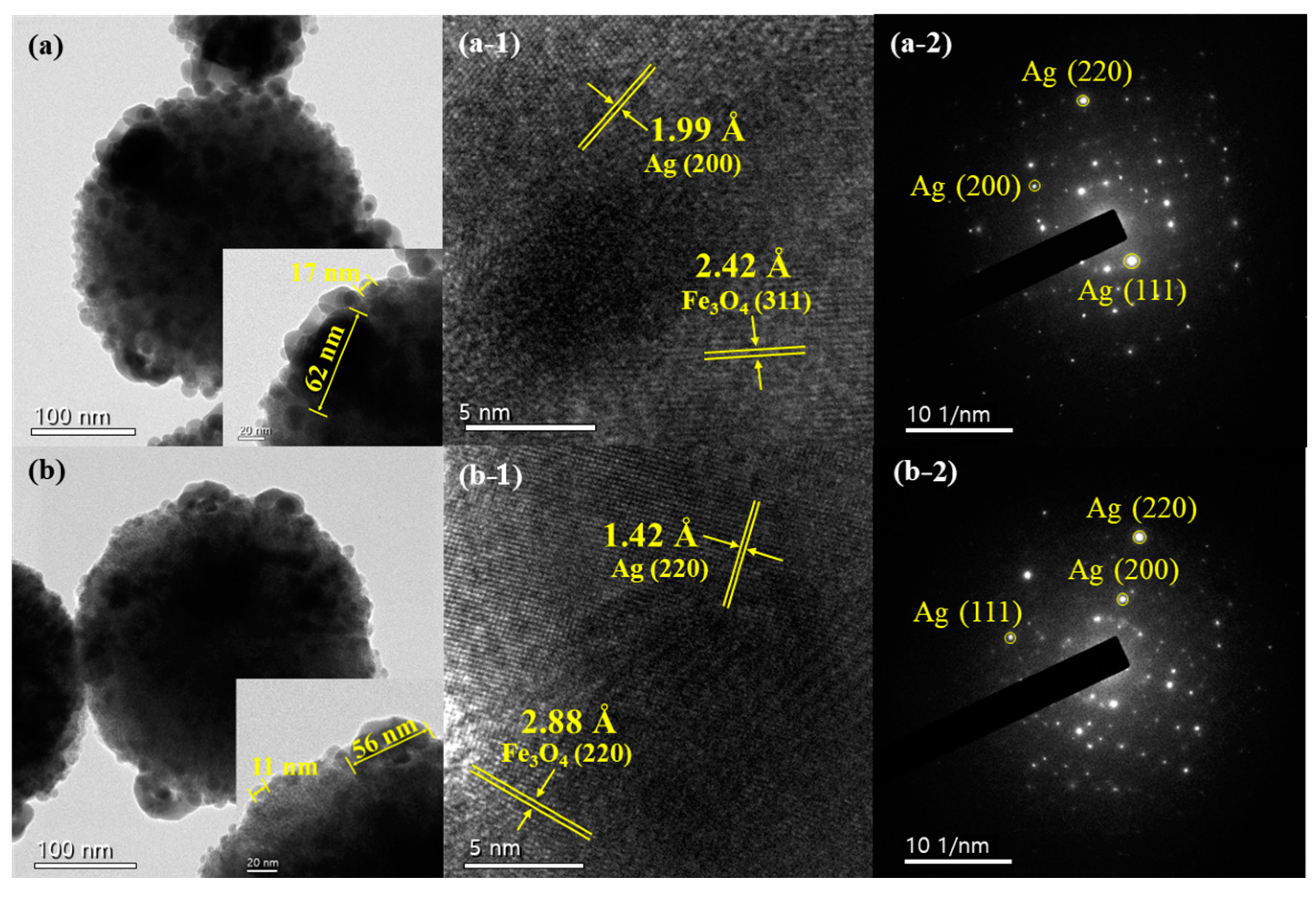
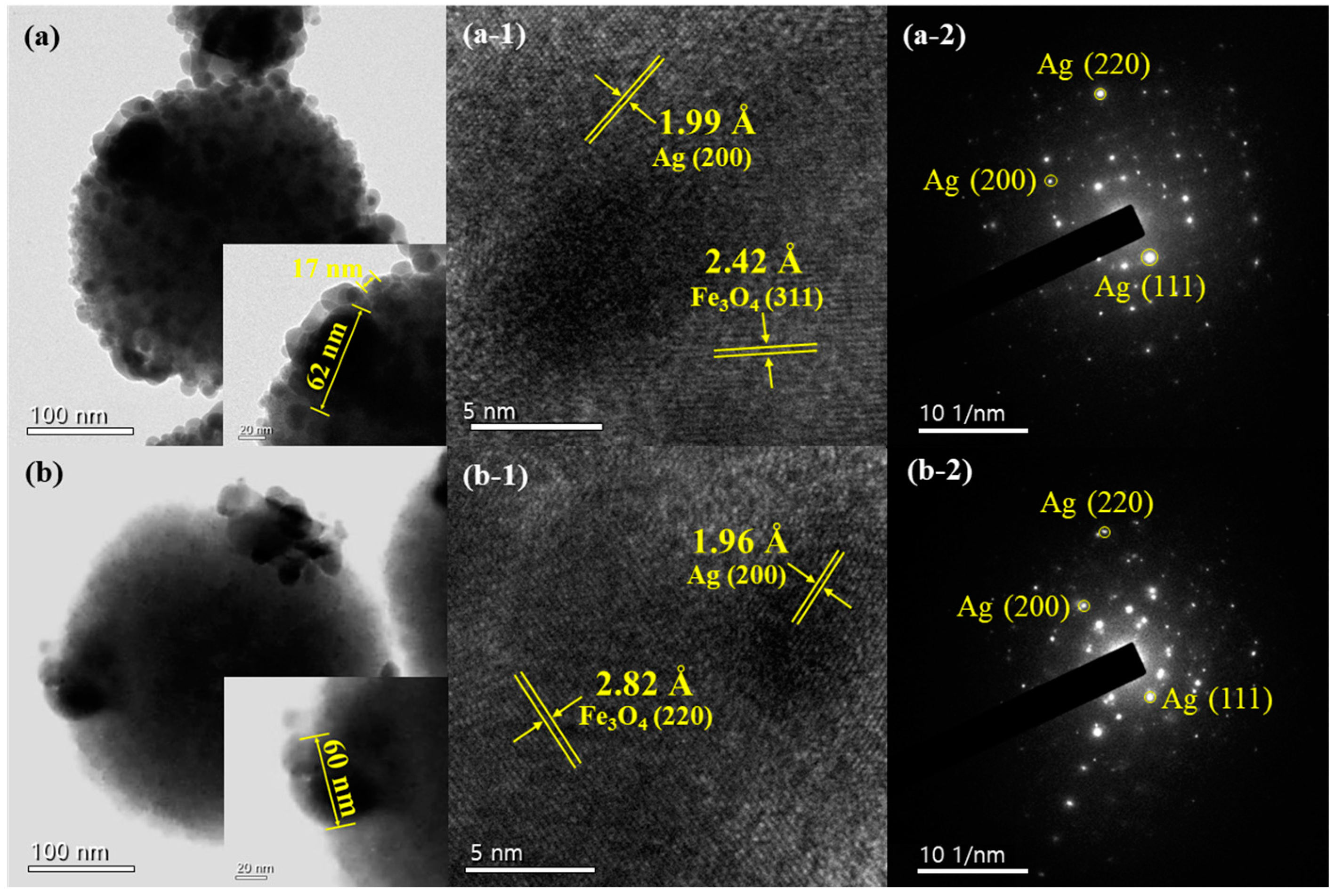
Figure 4 shows the transmission electron microscopy (TEM) and selected area electron diffraction (SAED) patterns of Fe
3O
4@Ag nanoparticles synthesized using different amino-functionalization precursors, specifically PEI and APTES with NaBH
4 (reducing agent). The TEM images confirmed the presence of silver nanoparticles adsorbed in the surfaces of both the PEI- and APTES-treated Fe
3O
4 nanoparticles. The size of the adsorbed Ag particles ranged from 11 nm to 62 nm. Notably, a higher quantity of Ag nanoparticles was adsorbed into the PEI-modified Fe
3O
4 nanoparticles than onto those modified with APTES. High-resolution TEM (HR-TEM) further delineated the microstructural details of the adsorbed AgNPs. The images displayed distinct striped patterns with lattice spacings of 1.99 and 1.42 Å, correlating with the (200) and (220) crystallographic planes of Ag, respectively [
17]. These observations were substantiated by SAED pattern analysis, in which the diffraction patterns corresponding to the (200) and (220) planes of Ag were distinctly visible, confirming the successful adsorption of Ag nanoparticles following amine functionalization. The enhanced adsorption observed in the PEI-modified samples was attributed to the higher density of amine groups available for binding the Ag nanoparticles.
The adsorption morphologies and microstructures of the nanoparticles were characterized using high-resolution TEM (
Figure 5). This analysis revealed significant differences in the adsorption efficiencies of the nanoparticles reduced with NaBH4 and those reduced with NaOH with PEI as an amine precursor. When NaBH
4 was used as the reducing agent, extensive adsorption of Ag nanoparticles was evident, suggesting effective nucleation and growth on the Fe
3O
4 surface. Conversely, minimal Ag nanoparticle adsorption was observed when NaOH was used as the reducing agent. This disparity was likely due to the different mechanisms of silver ion reduction by these agents. NaBH
4 rapidly reduces AgNO
3 to metallic Ag, facilitating immediate nanoparticle formation and adsorption. In contrast, NaOH induces the preliminary formation of Ag
2O, which subsequently reacts with tri-sodium citrate dihydrate (tSCD) to slowly produce Ag nanoparticles.
Microstructural analysis under high-resolution TEM revealed lattice patterns with spacings of 1.96 and 2.82 Å, corresponding to the (200) plane of Ag and the (220) plane of Fe3O4, respectively. This finding indicates the limited adsorption of Ag nanoparticles, presumably owing to the slower reaction kinetics associated with the NaOH reduction pathway. The reduced Ag particle formation rate during the allotted reaction time resulted in less adsorption into the Fe3O4 surface when NaOH was used compared to NaBH4. These findings collectively highlight the influence of amino functionalization and the choice of reducing agent on the adsorption and microstructural characteristics of Fe3O4@Ag nanoparticles, offering insights into optimizing nanoparticle synthesis to enhance functional properties.
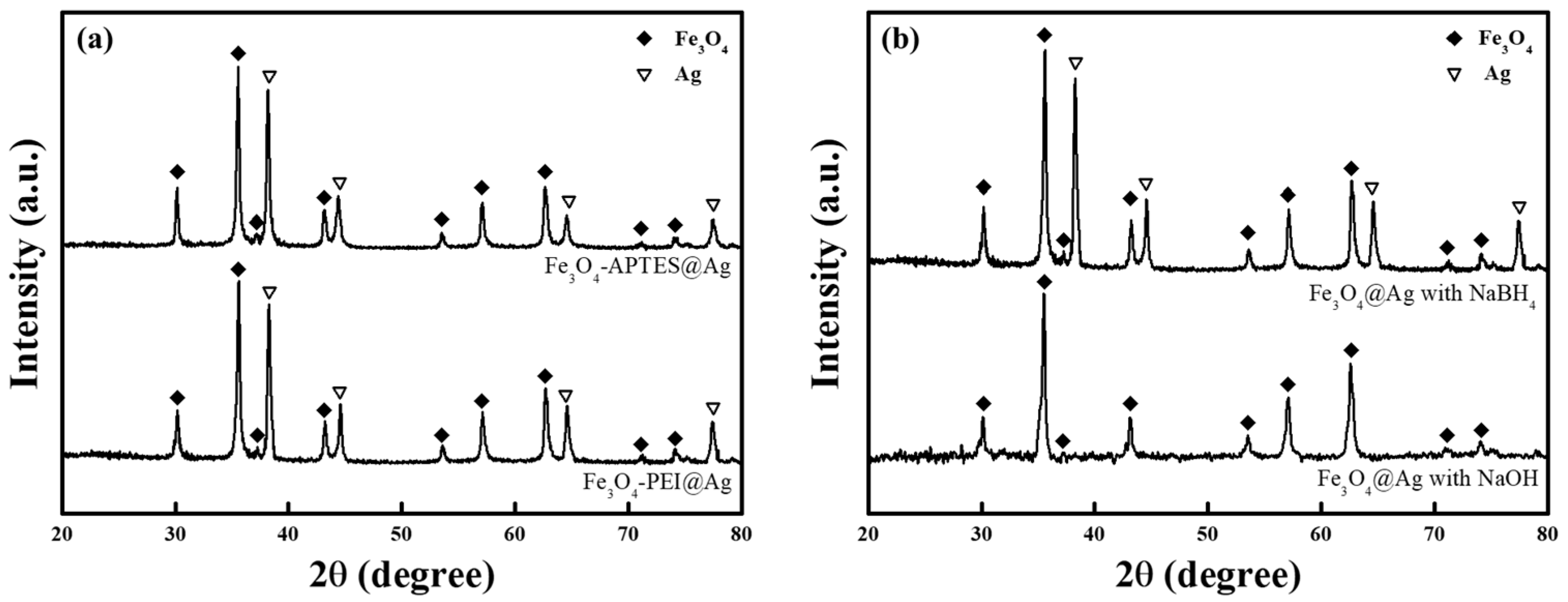
The XRD patterns displayed in
Figure 6 elucidate the crystalline structures of the Fe
3O
4@Ag nanoparticles synthesized using various precursors and reducing agents.
Figure 6a confirms the presence of distinct diffraction peaks characteristic of Fe
3O
4 across all the samples, regardless of the precursor used. These peaks appear at 2θ values of 30.1°, 35.5°, 37.1°, 43.1°, 53.5°, 57.0°, 62.7°, 71.1°, and 74.1°, corresponding to the (220), (311), (222), (400), (422), (511), (440), (620), and (533) planes, respectively, which are indexed to the standard JCPDS 65-3107 [
18]. This pattern confirmed the retention of the cubic inverse spinel structure of Fe
3O
4 in the synthesized nanoparticles.
Simultaneously, the Ag diffraction pattern is evident in all samples, appearing at 2θ values of 38.3°, 44.5°, 64.8°, and 77.5°, associated with the crystal planes (111), (200), (220), and (311), respectively (JCPDS 04-0783) [
16]. These results are consistent with the microstructural analysis previously conducted using high-resolution TEM, further validating the cubic face-centered cubic crystalline structure of the Ag nanoparticles. The pronounced sharp peaks of both Fe
3O
4 and Ag indicate the high crystallinity of these materials. The comparable peak intensities of the Fe
3O
4-PEI@Ag and Fe
3O
4-APTES@Ag samples indicated that the amino-functionalization process did not adversely affect the crystalline properties of the nanoparticles. Moreover, the absence of any extraneous diffraction peaks confirmed that the Ag nanoparticles were synthesized without any oxidation, thus confirming the integrity and purity of the post-synthesis nanoparticles. This confirms no oxidation or structural deformation during the adsorption process on the Fe
3O
4 surface.
However, as shown in
Figure 6b, a deviation was observed when NaOH (with PEI) was used as the reducing agent. In these instances, only the diffraction peaks of Fe
3O
4 are discernible, with no apparent Ag diffraction peaks. This suggests that the Ag nanoparticles adsorbed into the Fe
3O
4 surface were insufficient in quantity or size to be detected by XRD, likely because of the relatively weaker reducing capabilities of NaOH compared to NaBH
4. This weaker reduction capability may have impeded the adequate growth of Ag nuclei to yield detectable diffraction patterns, suggesting limitations in the use of NaOH for effective Ag nanoparticle synthesis on Fe
3O
4 substrates.
The Ag adsorption mechanism of the Fe
3O
4 nanoparticles according to the precursor and reducing agent was investigated through chemical composition analysis using EDS based on TEM (
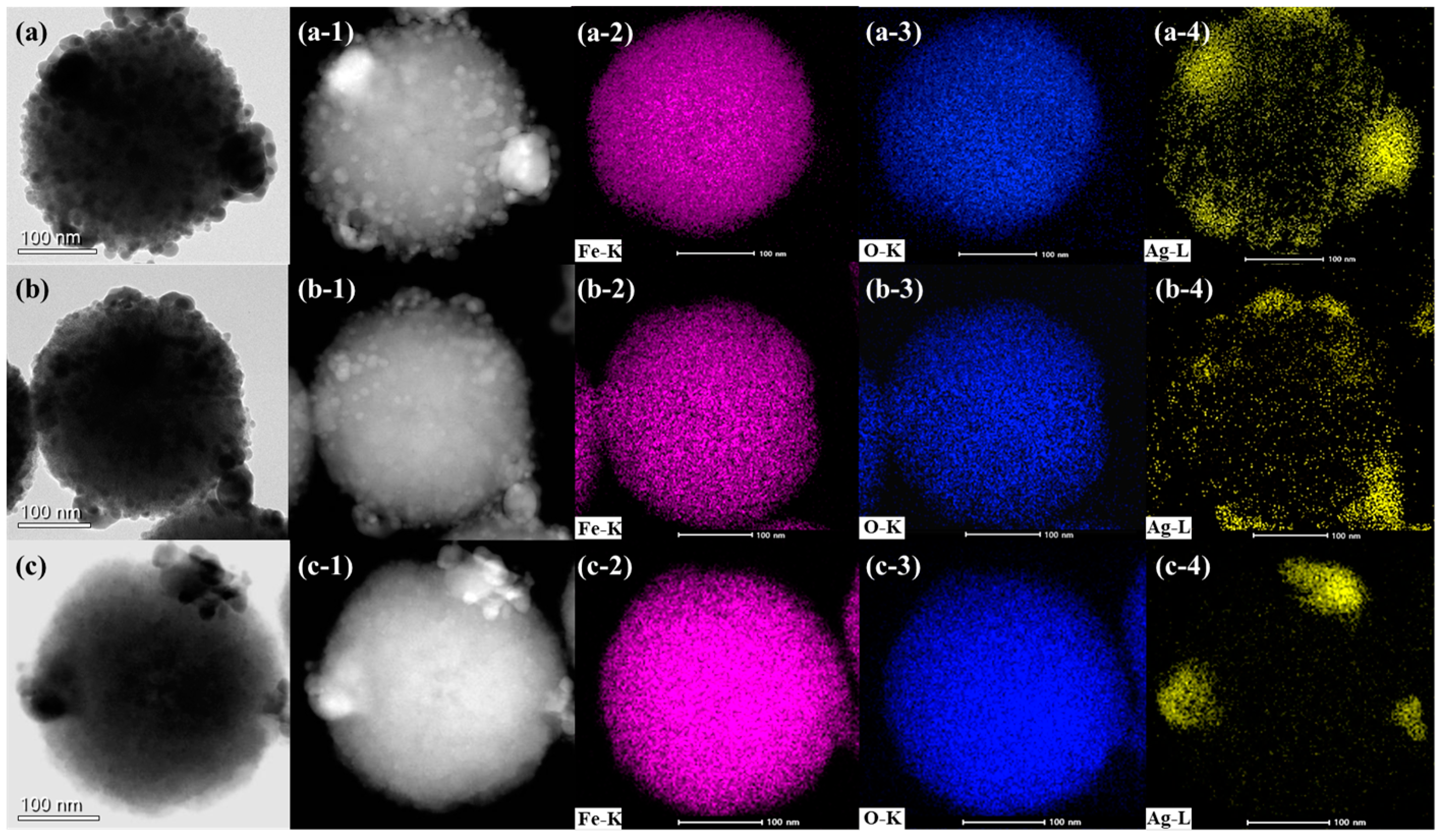
Figure 7). Here, when Fe-K, O-K, and Ag-L are qualitatively analyzed through EDS, X-rays such as K, L, M, N, and O are generated in series for each element, and the acceleration voltage and EDS energy range, if the conditions are properly set so that X-rays of each line can be sufficiently generated, can be used to check whether these series lines are properly generated and serve as a basis for trusting the peak of that element. Potential elemental mapping was performed for Fe-K, O-K, and Ag-L. For the PEI-modified sample named Fe
3O
4-PEI@Ag, and revealed the existence of particles with a core diameter of approximately 306 nm, primarily composed of Fe and O. Furthermore, the Ag-L element distribution demonstrated a consistent dispersion of Ag across an area measuring approximately 327 nm. This distribution surrounds regions with a certain mass corresponding to the luminous areas inferred to be Ag nanoparticles, as observed in
Figure 7a-1. This analysis confirms the presence of larger Ag nanoparticles within some agglomerated regions. A perceptible size difference of approximately 21 nm was confirmed between the core and Ag-L images, suggesting the adsorption of Ag nanoparticles into the surface of the core particles with an estimated thickness of approximately 10 nm.
In the case of the Fe
3O
4 particles subjected to surface modification with APTES, elemental mapping revealed Fe-K and O-K with diameters of approximately 314 nm, whereas Ag-L had a diameter of approximately 318 nm (
Figure 7b). This resulted in a relatively small size difference of approximately 4 nm, suggesting that Ag was adsorbed into the surface with an estimated thickness of approximately 2 nm around. Evaluation of the Ag mapping image indicated an overall uniform distribution. However, compared to the PEI-modified Fe
3O
4 sample, a relatively lower degree of distribution was observed. The Ag content adsorbed in the amino-functionalized Fe
3O
4 surface was compared by referring to the atomic and weight percentages, as shown in
Table 1. It was confirmed that PEI-modified Fe
3O
4 and APTES-modified Fe
3O
4 contained 5.88 at% and 3.24 at% of Ag nanoparticles, respectively. In addition, the weight % of Ag nanoparticles adsorbed in PEI-modified Fe
3O
4 was the highest at 16.63 wt%, indicating that the Ag content of the sample was the highest. Consequently, while Ag nanoparticles adsorbed uniformly after amine functionalization, the PEI modification resulted in a higher adsorption rate.
According to the zeta-potential results of amino-functionalized Fe3O4, it is evident that the use of PEI results in a higher charge and more amine groups are formed on the surface. Consequently, it was concluded that Ag nanoparticles could be most efficiently adsorbed into the particle surface when the polymer precursor was capable of generating a larger number of amine groups on the surface via amine functionalization.
Elemental mapping analysis of the Fe
3O
4-PEI@Ag particles, synthesized using NaOH as the reducing agent, showed that the Fe and O constituents of the core displayed a diameter of approximately 307 nm. In the Ag-L element mapping image, in contrast to the previous two samples, Ag was concentrated at three distinct locations. This observation supports the brightly illuminated areas corresponding to the Ag nanoparticles in the three specific regions shown in
Figure 7c-1, signifying that aside from the larger Ag nanoparticles, no additional Ag nanoparticles were adsorbed into the particle surface.
The zeta potential was analyzed to investigate the changes in the surface charge and dispersion after Ag nanoparticle adsorption (
Table 2). The surface charge of the nanoparticles shifted from positive to negative after Ag adsorption for both the PEI and APTES modifications. Specifically, Fe
3O
4-PEI@Ag indicated a surface charge of −20.39 mV, while Fe
3O
4-APTES@Ag showed a surface charge of −9.02 mV.
In contrast, when NaOH was used as the reducing agent for Fe3O4-PEI@Ag, the surface charge was measured at +26.91 mV. This can be considered a basis for supplementing the elemental analysis results. Considering the charge of the PEI-modified Fe3O4 nanoparticles was +30.63 mV suggests that the number of Ag nanoparticles was minimal when NaOH was used as the reducing agent, indicating that the charge of the Ag nanoparticles had an insignificant impact on the surface charge.
In the colloidal state, an electric double layer is formed on the particle surface. A stern layer is formed directly on the particle surface, topped by a diffusion layer. The concentration of the adsorbed Ag decreased as the distance from the Fe
3O
4 surface increased. Based on this hypothesis, we conclude that the PEI-modified Fe
3O
4@Ag nanoparticles show the most negative charge, resulting in the adsorption of the highest number of Ag nanoparticles (
Figure 8).
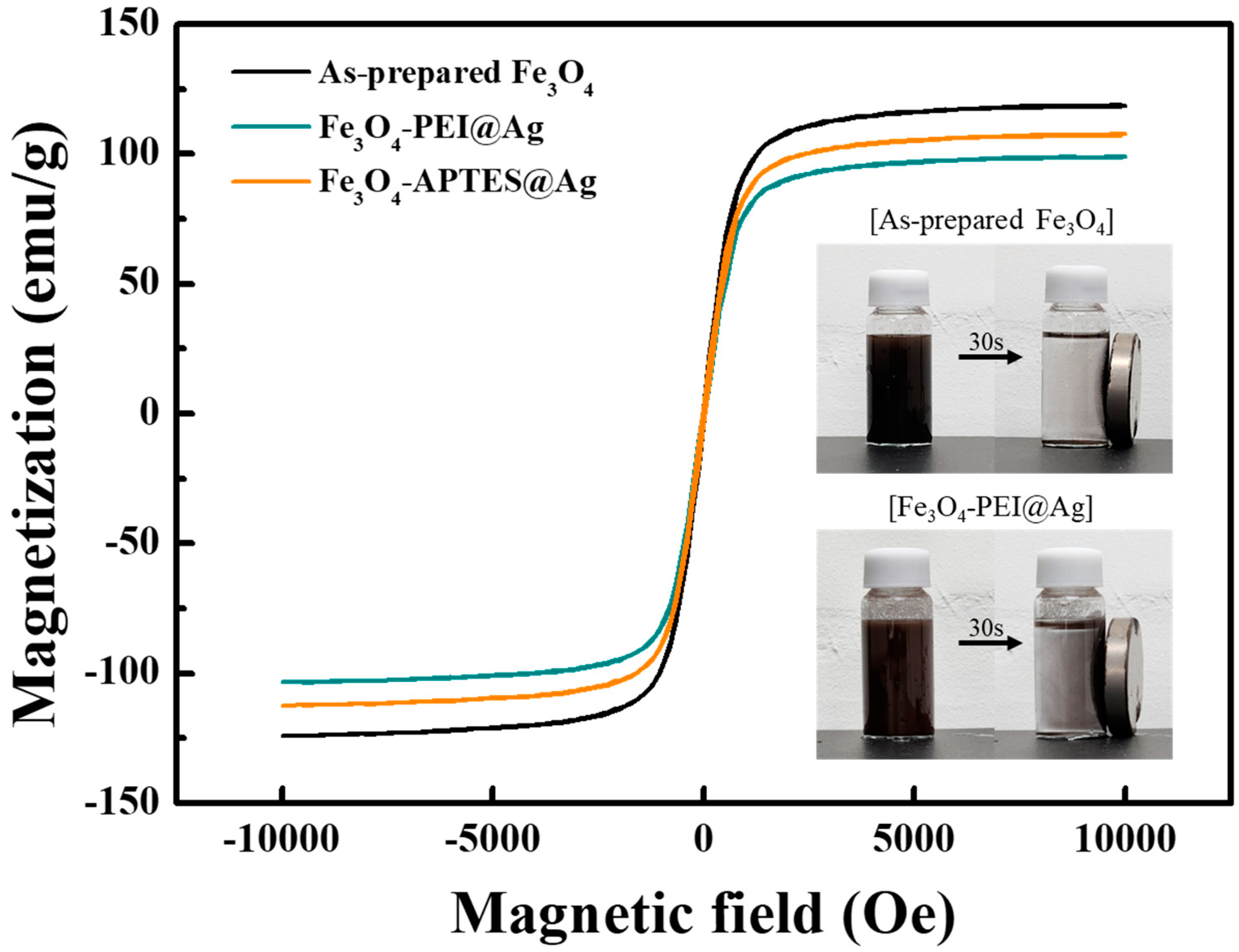
The magnetic properties of the as-prepared Fe3O4, Fe3O4-PEI@Ag, and Fe3O4-APTES@Ag nanoparticles were analyzed using a vibrating-sample magnetometer. Coercive force and residual magnetization were not observed in any of the particles. The as-prepared Fe3O4 nanoparticles exhibited the highest saturation magnetization (121.6 emu/g). It was observed that Fe3O4-PEI@Ag and Fe3O4-APTES@Ag had saturation magnetization values of 72.5 emu/g and 78.4 emu/g, respectively. However, the saturation magnetization was higher when APTES was used than when amine functionalization was performed with PEI.
The hysteresis loop shows a significant decrease in saturation magnetization after Ag adsorption. This is a phenomenon in which the magnetic properties depend on the mass, and the saturation magnetization decreases significantly as the mass of the Fe3O4 nanoparticles increases due to Ag adsorption.