1. Introduction
Currently, the information security environment in the global chemical industry is becoming increasingly severe, and the impact of cyber attacks on chemical safety is further intensifying [
1,
2]. For example, in 2019, two American chemical companies, Hexion and Momentive, experienced ransomware attacks, resulting in the loss of a large amount of critical production and operational data, and causing huge economic losses to the companies. The complexity of the chemical industry and centrality of information management in traditional chemical companies make information security protection more difficult. Moreover, there are various subcategories of the chemical industry, and numerous enterprises are confronted with the challenges of information security protection, making it necessary to strengthen information security [
3]. In this context, blockchain, in the chemical industry, can be an effective technology to address the challenges. Blockchain is a distributed electronic database [
4] that can store any information, such as records, events, and transactions, and can set rules for updating information. Compared to traditional centralized control systems, decentralized ones based on blockchain have advantages in data security, privacy, and integrity, and have recently attracted increasing attention in the field of data security.
Blockchain technology has made significant progress due to research on application feasibility, architecture, system performance, transaction efficiency, and transparency in recent years. In terms of application feasibility, Mandrita Banerjee [
5] reviewed the research on industrial internet security and suggested that blockchain is an effective technology for strengthening data security. Fernández et al. [
6] systematically analyzed the development restrictions of the current physical information system and pointed out the need to apply and improve blockchain technology. Ali Dorri [
7] evaluated the possibility of applying blockchain in the industrial internet and applied a lightweight blockchain to achieve secure communication among home devices. Ivan Stojmenovic et al. [
8] discussed the information security challenges faced by present small-scale physical information systems and large-scale integrated systems and predicted the promising future of blockchain. In terms of blockchain architecture, Nir Kshetri et al. [
9] discussed the differences between cloud computing and blockchain technology, and expounded the application architecture and scalability of blockchain in the industrial internet field. Shiyong Yin [
10] constructed a triple blockchain architecture model based on a cotton factory example, proving blockchain provides good security protection of machine communication data. Zhi Li et al. [
11,
12] proposed an improved novel paradigm to explain the problems in data security in the new cloud manufacturing model and demonstrated that blockchain technology is an effective way to solve the problems. Raja Wasim Ahmad et al. [
13] described the potential role of blockchain technology in transforming port logistics operation systems and proposed a framework for improving port logistics operation modes. In terms of blockchain data security protection, Yue Qiu et al. [
14] researched the problems of identity authorization and verification methods in blockchain technology and pointed out the significant significance of blockchain for protecting future information security. Yongfeng Qian et al. [
15] believed that the Internet of Things (IOT) would greatly promote the development of the manufacturing industry in the future, and blockchain technology could be used to protect against increasingly serious data security threats. Koblitz and Menezes et al. [
16] discussed two solutions using elliptic curve encryption algorithms and Bitcoin to strengthen the security of digital currency transactions. Xu Xuesong et al. [
17] proposed a lightweight hierarchical blockchain to solve problems such as the poor scalability, high energy consumption, and strong latency of traditional blockchains. In terms of blockchain operating strategies, Yang et al. [
18] demonstrated the mutual promotion between semantic networks and blockchain technology. The former can promote the latter’s implementation in several novel application fields, while the latter can help the former achieve a more robust semantic network. For example, India is trying to use blockchain technology to enhance online education and supply chain management security levels. Janusz J. Sikorski et al. [
19] discussed the security issues in electricity market transactions with the background of the chemical energy industry, and analyzed an example of electricity trading using blockchain, indicating that blockchain technology can effectively solve data security problems. In terms of transaction efficiency and information transparency, Cardeira [
20] believed that the main problems in the construction industry, namely, delivery time and payment guarantees, can be solved through the smart contract function of blockchain technology. Pei Xu et al. [
21] studied the application of blockchain technology in the supply chain field and proposed that blockchain technology could be used to solve the contradiction between supply chain transparency and security. Wang Qiang et al. [
22] investigated the trust problem in manufacturing service transactions and proposed a method based on blockchain transaction trust, which not only protected transaction information security but also improved system performance.
Although blockchain and manufacturing service integration platforms are highly compatible in openness, distribution, and decentralization, there are still some shortcomings in their application feasibility, architecture, system performance, transaction efficiency, and transparency in chemical engineering fields. The chemical industry represents a wide knowledge system, ranging from the atomic scale to the supply chain and industrial chain scale, which makes it a complex, nonlinear, and strongly coupled system. The knowledge transfer mechanism and mode between the scales have not been well solved, and there are difficulties in cross-domain evaluation and knowledge integration. In summary, the intelligent model of the chemical industry should make more significant progress in information fusion and process collaboration across levels, from units, processes, and parks to industrial chains, addressing issues such as atomic economy, process efficiency, green production, and sustainable development under the condition of multi-level interconnection of enterprises.
Specifically, traditional manufacturing systems are centralized systems centered around enterprises, whereas the chemical industry is oriented towards industrial chain integration and has extensive interconnectivity. At the same time, enterprise entities present a loosely coupled state at the industrial chain scale, with decentralized characteristics, which pose higher challenges and requirements for industrial safety systems. The chemical production process is complex, with a wide variety of equipment, and lacks information exchange between internal systems, making it difficult to ensure precise control of the production process. Moreover, data in the production process have not been fully utilized, resulting in differences from chemical intelligence. Introducing cyber-physical systems (CPS) in the chemical process is the basis for achieving chemical intelligence. CPS are intelligent networks based on sensors, intelligent devices, control systems, and other fundamentals, using communication, computing, and other technologies to achieve communication and coordination between information space and physical space to achieve real-time optimization of the production process [
23]. Although CPS have enhanced chemical production, factors such as environmental complexity and security attacks have posed huge challenges to CPS’ security protection, such as data tampering, trojan viruses, and data theft, which bring great challenges to CPS’ security protection [
24,
25]. Regarding the research on the security of CPS based on blockchain, Gupta et al. [
26] noted the security vulnerabilities in smart contracts in CPS applications based on blockchain and applied artificial intelligence to solve the problem. Kanhere [
27] proposed that blockchain faces complex challenges in different CPS fields. Bodkhe et al. [
28] studied the existing consensus mechanism of blockchain in CPS and proposed a decentralized consensus mechanism to deal with relevant issues in different CPS. Wang et al. [
29] analyzed the security risks of CPS’ data storage and offered an improved blockchain mechanism to protect the data in CPS. Maloney et al. [
30] designed an integrated security automation system based on blockchain, which is built on the Ethereum network and reduced the complexity of CPS to improve security. Gu et al. [
31] proposed a functional safety and information security protection mechanism based on blockchain technology for CPS’ functional safety problems.
However, the above research failed to deeply integrate the multi-scale characteristics of the chemical industry. Therefore, this paper innovatively proposes a dual-layer blockchain technology based on the technical characteristics of the chemical industry CPS, in order to better solve the problem of information security in the chemical industry. The main contributions of this article are as follows:
(1) A dual blockchain cyber-physical systems (CPS) architecture suitable for information security in the chemical industry has been proposed, wherein wide-area blockchain is used to provide information transaction security between manufacturers and customers, and local blockchain is used to handle communication security issues between devices in the production process.
(2) The security and time responsiveness of this blockchain technology have been tested and verified, meeting the needs of most intermittent production in the chemical industry.
2. Dual Blockchain Security Architecture for Process Industry CPS
2.1. CPS Architecture for the Process Industry
Combining the multi-scale characteristics of the process industry, the CPS of the process industry are divided into the system level (supply chain), process level (enterprise), and unit level.
(1) Unit-level CPS are based on equipment unit operation and utilize intelligent devices such as integrated control systems, smart terminals, field sensors, and warning devices to achieve real-time optimization of production processes, device anomaly handling, and advanced control objectives.
(2) Process-level CPS are aimed at the enterprise level, utilizing the advantages of the industrial internet to achieve real-time optimization and control of internal process flows, while integrating management functions such as safety, environmental protection, and product production to realize enterprise-level intelligent construction.
(3) System-level CPS are aimed at the supply chain between enterprises; according to product supply and demand situations, intelligent adjustments are made to the raw material procurement, the product production, and the sales planning, while process-level CPS are integrated with unit-level CPS to achieve optimization and control of the entire process from raw material procurement to product sales.
2.2. Dual-Layer Blockchain Architecture for Process Industry CPS
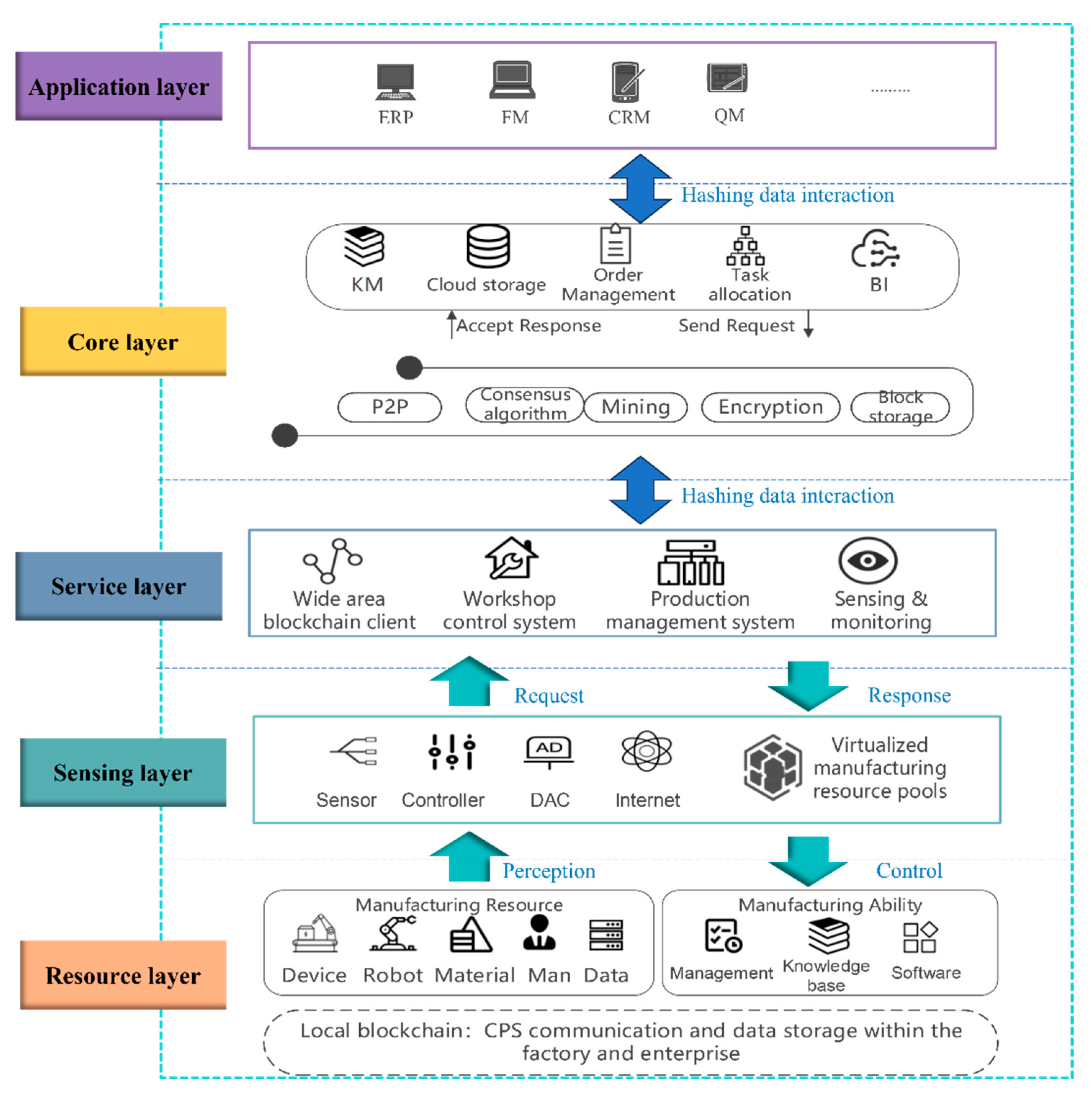
For process industry multi-level integrated CPS, a dual-layer blockchain architecture for the process industry is proposed herein as shown in
Figure 1. This architecture not only provides security for commodity transactions in the chemical industry but also protects information exchange among the devices within the process system.
The blockchain technology architecture proposed in this article can be evaluated based on Hyperledger Fabric. Hyperledger Fabric is a powerful and flexible blockchain platform suitable for enterprise-level applications in various fields such as industrial production and supply chain management. It provides key features such as security, reliability, scalability, and privacy protection, providing strong support for enterprises to build blockchain solutions.
The dual nature of the proposed dual-layer blockchain architecture is mainly reflected in two areas:
(1) For the supply-chain-level CPS, a wide-area blockchain is for solving problems from a global perspective, with a focus on information such as transactions and bills between customers and industry enterprises.
(2) For the process-level CPS, a local blockchain ensures smooth production manufacturing within a manufacturer while also protecting communication security between devices within a manufacturer.
By introducing a dual-layer blockchain architecture, where the two blockchain layers are coupled with each other, into the system, information security is enhanced. The product manufacturing tasks are confirmed by the wide-area blockchain, and then the relevant data are sent to the local blockchain, where the production process is controlled. Finally, the necessary data are transmitted back to the wide-area blockchain. The physical information system based on the dual-layer blockchain in
Figure 1 consists of five functional layers: the resource layer, perception layer, manufacturer service layer, core functional layer, and application layer. The resource layer contains hardware resources such as personnel, equipment, and materials, as well as software resources for enterprise management. With the production process, a large amount of data is generated, which is encrypted using a local blockchain to protect data security. The perception layer mainly collects the required data using the IOT technology. The manufacturer service layer utilizes blockchain clients and various internal management systems of the enterprise to achieve two key functions: first, using management systems such as workshop control systems for process control; second, establishing a distributed blockchain management platform for multiple manufacturers and users using blockchain clients. The core functional layer is used for order transactions for product manufacturers and customers. The customer sends a transaction request, and the product manufacturer obtains the order information with the wide-area blockchain and uses the order management function to send the order to the local blockchain for product production. The application layer mainly consists of enterprise management software such as ERP and CRM. When product manufacturers and customers use specific functions in the application layer, the relevant functions in the core functional layer will be activated. All transaction information will be recorded in the blockchain and synchronized to all nodes.
The subsequent parts of this section provide details of the execution processes of the wide-area blockchain and the local blockchain.
2.2.1. Wide-Area Blockchain
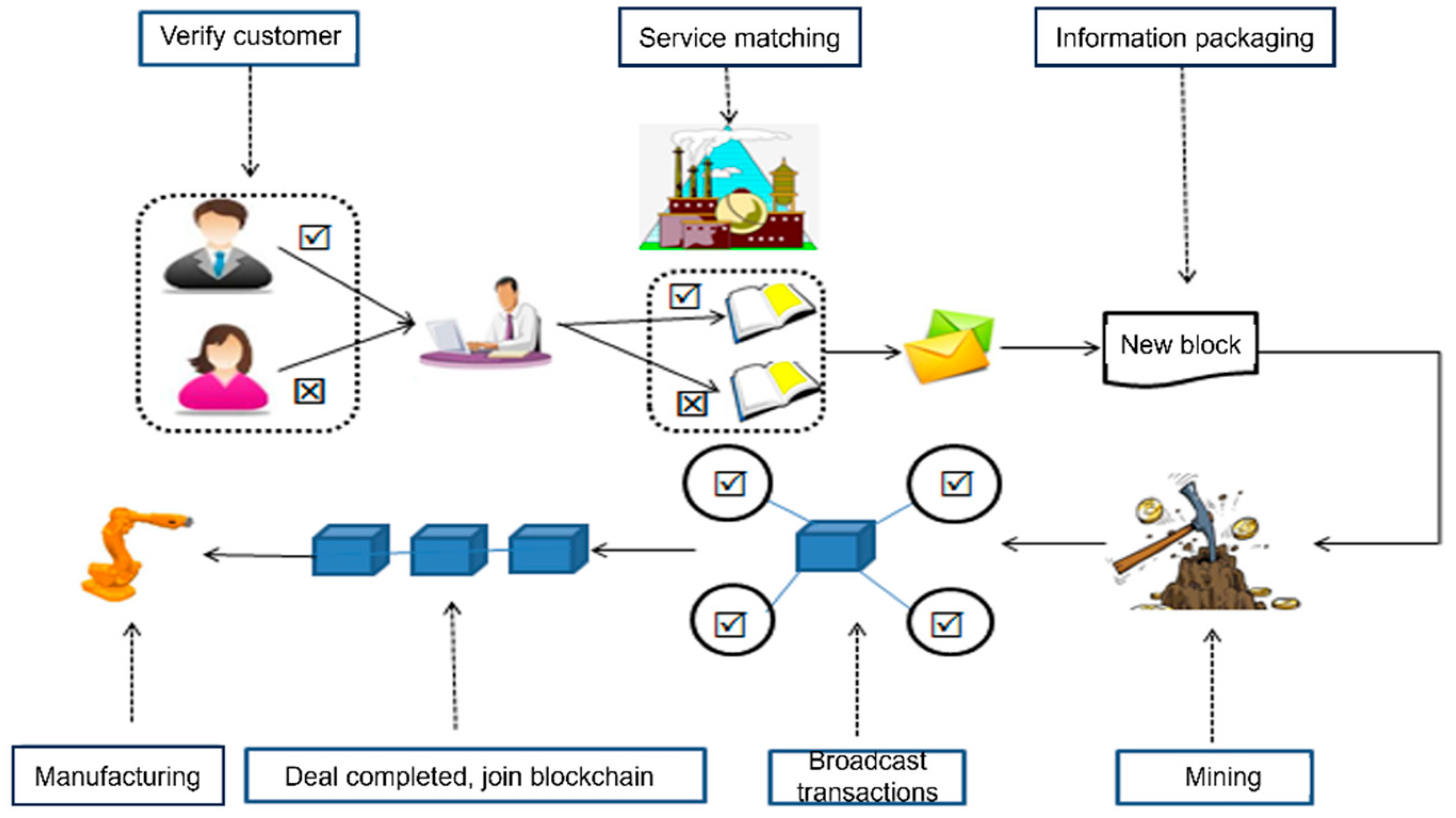
Figure 2 illustrates the process diagram for the wide-area blockchain.
In the wide-area blockchain, clients send transaction requests through related applications. After the system verifies the client, it performs matching work for related manufacturers and provides corresponding service solutions. The client evaluates the solutions provided by the system and responds. When the client accepts the proposed solution, the system submits a transaction request to the wide-area blockchain, which packages all transactions within a certain period of time into blocks. The blockchain client verifies the mining operation of the blockchain, the purpose of which is to ensure that the platform data are not recorded by fixed roles and that all nodes have the same transaction data, and transaction rules, and then broadcasts all information about block X to all nodes of the blockchain. Other nodes in the blockchain also verify the information of block X and begin the mining operation. When a node completes the random number calculation first, it broadcasts its calculation result to the entire wide-area blockchain. Other nodes verify whether the node’s calculation is correct, and the block is added to the end of the blockchain to indicate the successful transaction. Other nodes also incorporate the block into their own copies of the blockchain to maintain the consistency of the distributed blockchain. After the transaction completes successfully, the manufacturer produces the product based on the customer’s requirements.
2.2.2. Local Blockchain
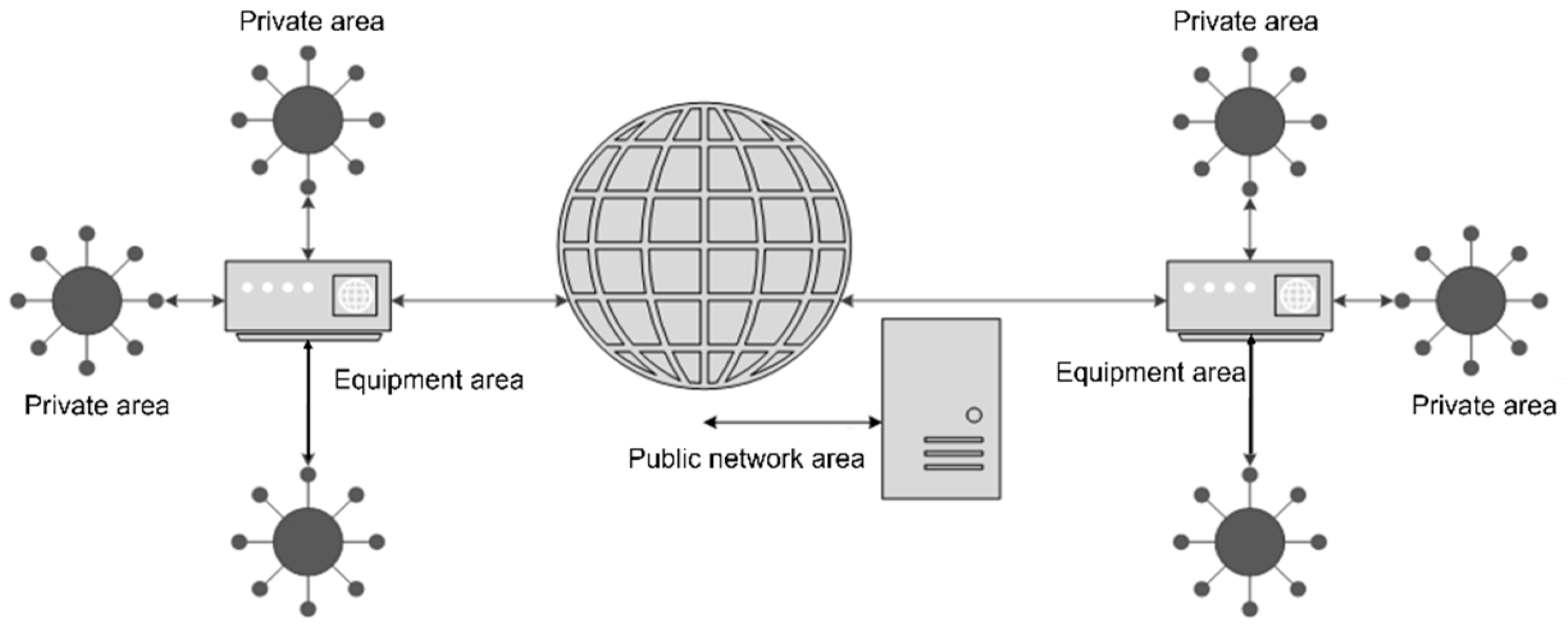
Product manufacturers obtain orders through the wide-area blockchain and begin production using internal machinery and equipment. In order to ensure information communication security among different devices during the production process, to prevent malicious modification of the production data, and to ensure the smooth completion of production tasks, a local blockchain is introduced. The network structure diagram of the local blockchain is shown in
Figure 3.
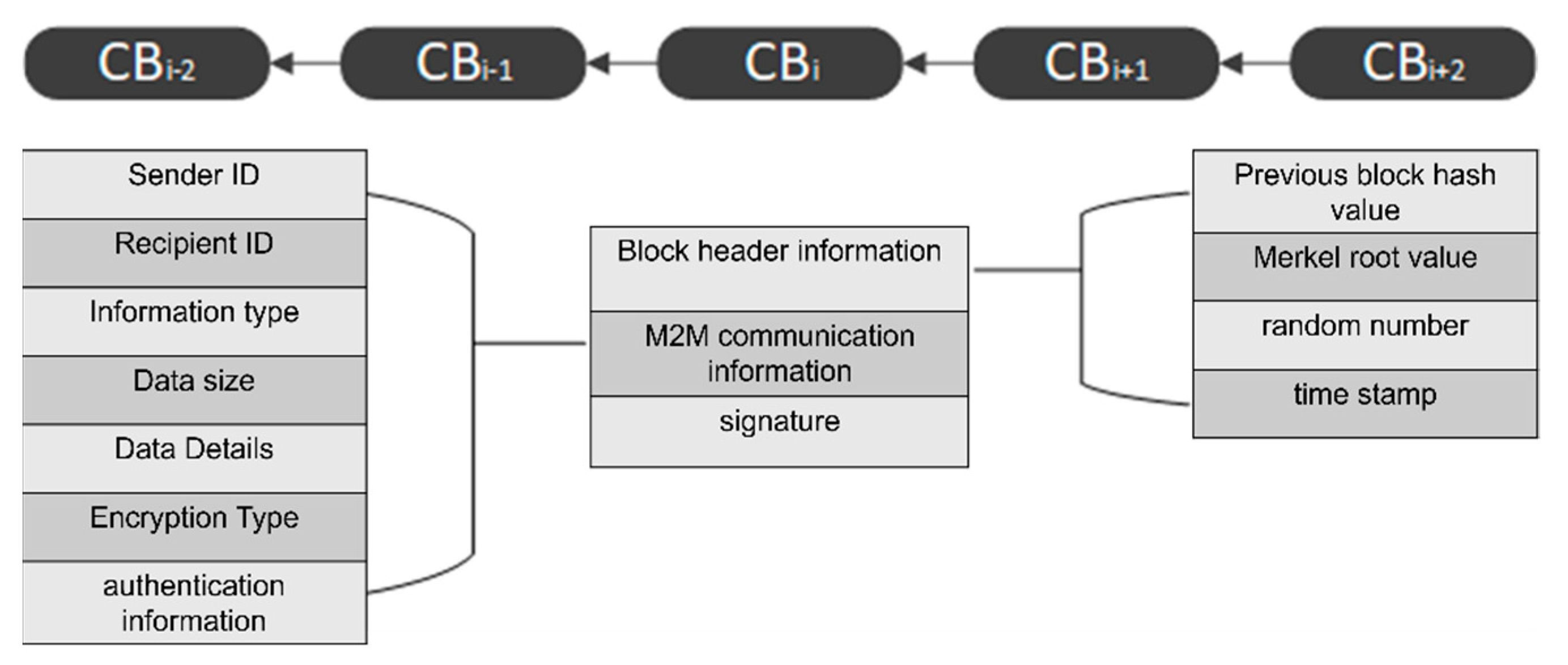
The local blockchain consists of three parts: the public network area, the private area, and the device area. The public network area plays the role of ensuring that different types of devices can communicate normally, establishing communication principles, unifying data formats, and querying past communication records. The device area serves as a bridge to connect the private area and the public network area, which facilitates data communication between the private area and the public network area. The private area introduces an M2M (Machine-to-Machine) blockchain, which establishes and records communication data among devices for subsequent queries. Each M2M communication process generates a separate block and adds it to the M2M blockchain.
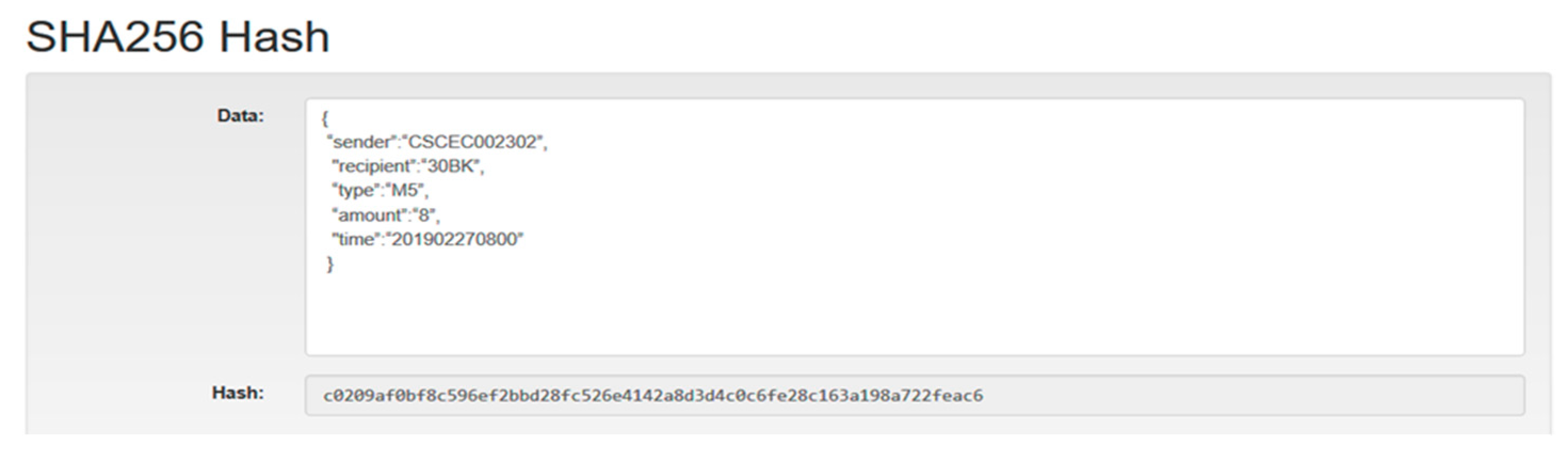
Figure 4 shows the M2M communication blockchain, each block containing the ID of the communication among devices, specific data content, encryption method, and data type.
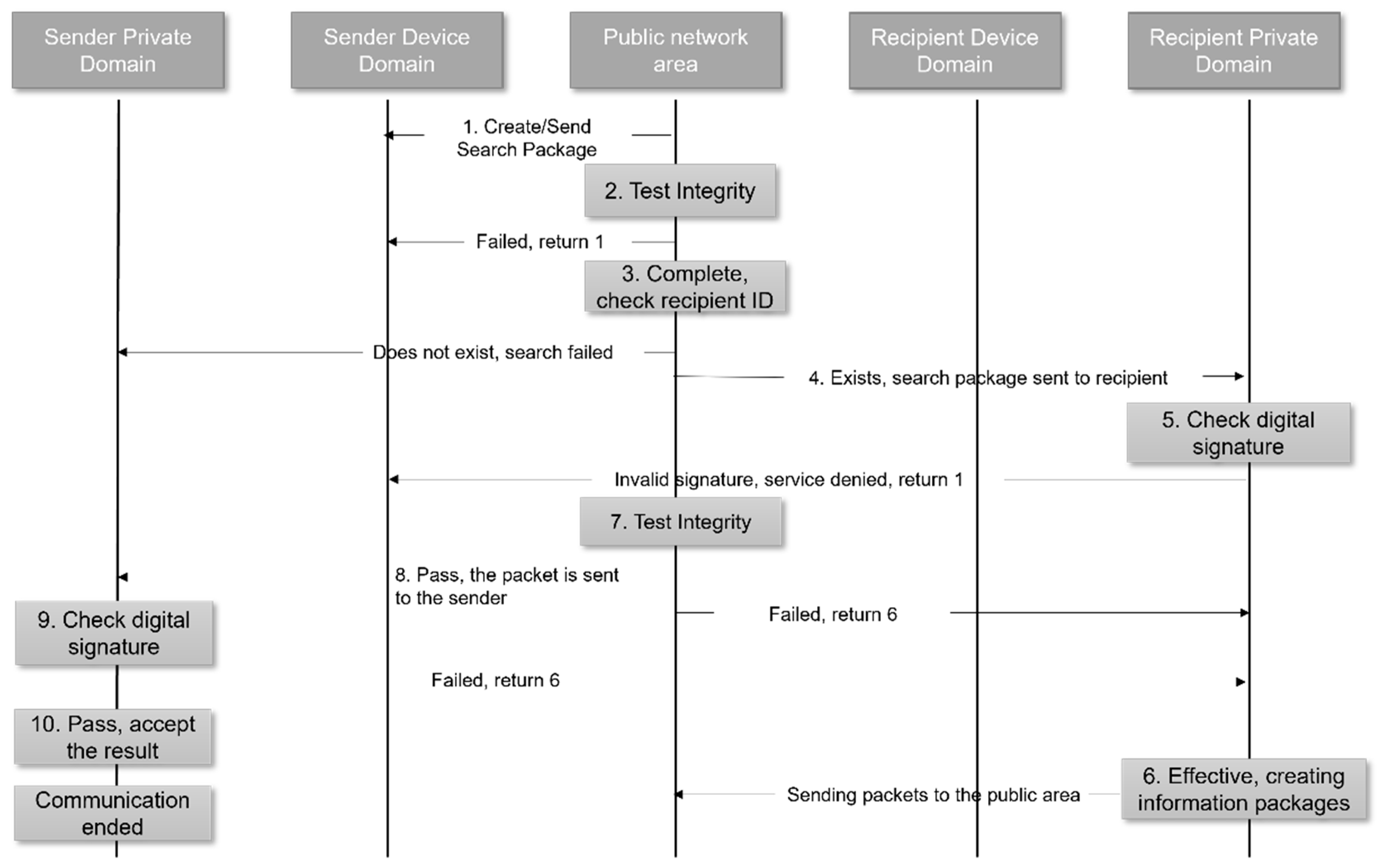
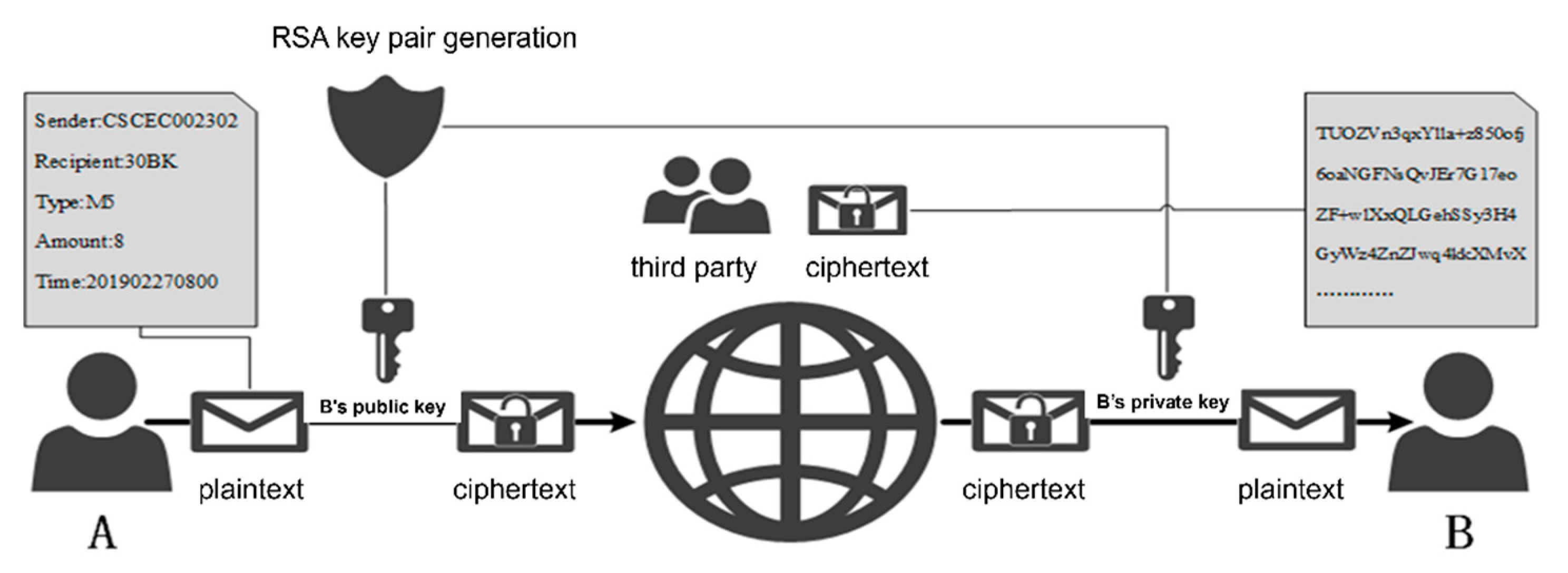
Next, the process of M2M communication will be taken as an example to illustrate how machines exchange information with each other.
Figure 5 shows the flow of data communication among devices. Device A needs to know the production information of another device, B, in the production process, so it creates and sends a search packet to the public network area through the device area. After receiving the request, the public network area checks whether the search packet information is complete, after which, whether the ID of device B is in the system will be checked: if not, the query fails; if it is in the system, the public network area sends the search packet to the private area of device B. Following this, device B checks whether the digital signature of the search packet is valid: if invalid, the service is denied and the search packet is returned to the device domain of device A; if valid, device B performs the operation of querying the history of communication records and creates the information packet, and sends the information packet to the public network area. The public network area accepts the information packet from device B and then performs the information check as to whether the information is incomplete: if incomplete, the information packet will be rejected; if complete, the packet is sent to the private area of device A. Finally, device A identifies the validity of the packet by the digital signature: if valid, the query result is accepted and the communication process is finished; if invalid, device B needs to recreate the packet.
4. Conclusions
Currently, the chemical industry is facing increasingly serious challenges in terms of information security, as important information loss and unauthorized data tampering due to network attacks or other reasons are serious problems for the chemical industry. In view of the current situation of the chemical industry, combined with the characteristics of decentralization, difficulty of modifying data, and easy querying of historical data of blockchain, a new scheme is proposed to introduce a dual blockchain into the cyber-physical systems of the chemical industry to address information security issues. The conclusions of this research are as follows:
(1) Blockchain technology can be used to solve the information security problems in the current cyber-physical systems of the chemical industry.
(2) A dual-blockchain cyber-physical systems architecture is proposed, wherein a wide-area blockchain is for ensuring the security of information transactions between manufacturers and customers, and a local blockchain is for addressing the communication security problems among pieces of equipment during the production process.
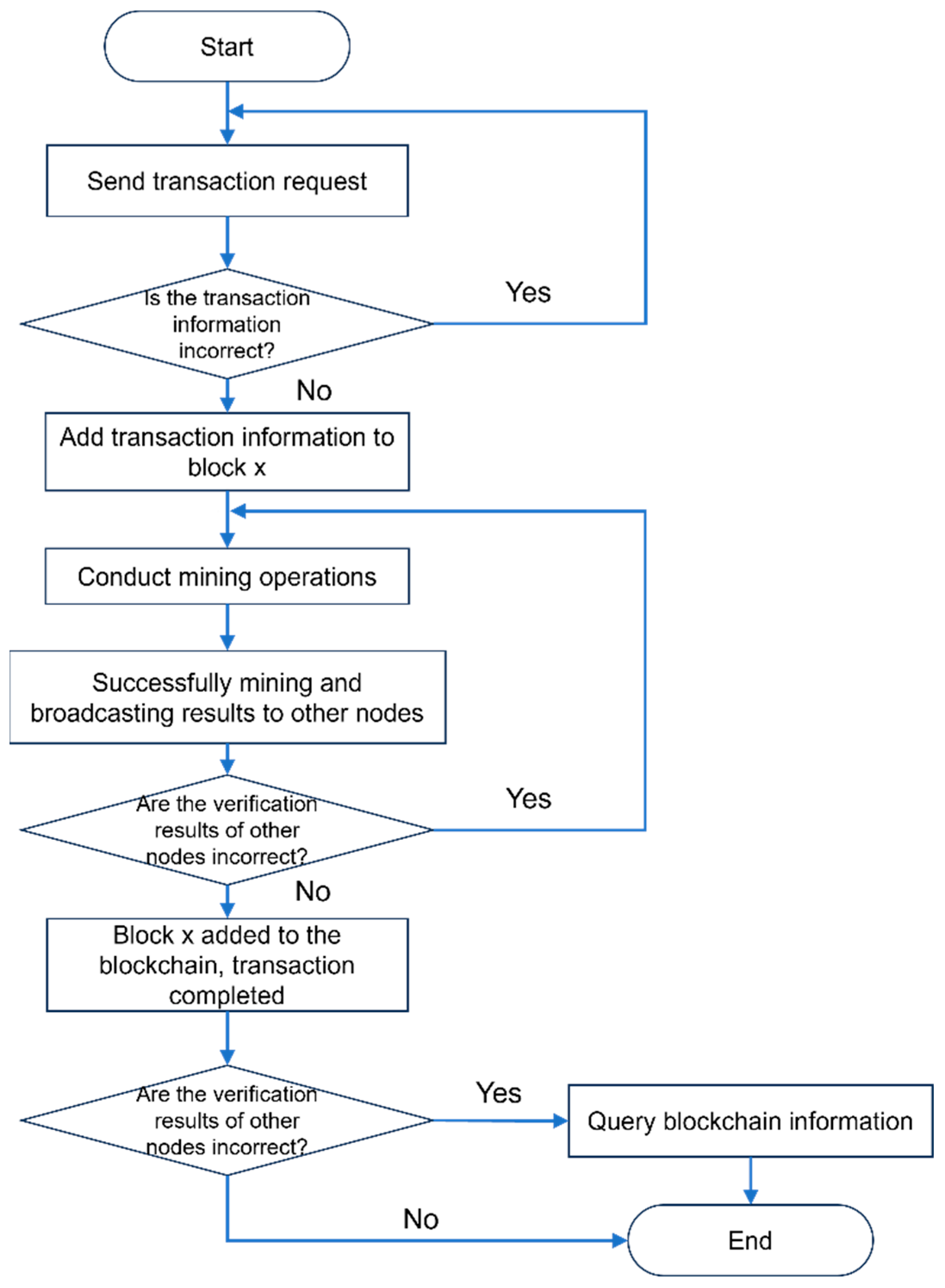
(3) The security of this blockchain model has been verified, and functions such as transaction requests, block generation, and blockchain querying have been realized. Through testing, we confirm that the response was finished within the millisecond level, which meets the demands for most intermittent production in the chemical industry.