Abstract
The most important advantages of adding additives to adhesives are increasing the bonding strength and reducing the adhesive cost. The desire to reduce costs as well as the need for environmentally friendly and health-friendly products have paved the way for the recycling of waste materials and the use of cheaper natural materials as additives. In this study, mussel, olive pomace, and walnut powders in different ratios (5%, 15%, and 30% by weight) and in different sizes (38 and 45 µm) were added to an epoxy adhesive. The steel materials were joined in the form of single-lap joints by using the obtained adhesives with additives. These joints were subjected to the tensile test and the strengths of these joints were examined. SEM images of the bonding interface were taken, and the distribution of the powders was examined. When the powder size was 45 µm, bond strengths increased in all additive ratios compared to the pure adhesive, while for 38 µm powders, the strength value increased only at the 5% additive ratio. In joints with 45 µm powder additives, the strength increased by up to 38% compared to the pure adhesive, while this rate was determined as 31% for 38 µm.
1. Introduction
Although both adhesive materials and the application methods have changed over the years, adhesive bonding is a traditional method that has been used since ancient times to join various materials [1]. There are many factors that must be taken into account in order for a bonding application to be considered successful. Since the sectors in which adhesives are used are quite different from each other, it is important to use a strong, economical adhesive appropriate for the application purpose [2]. Additionally, adhesive materials have the potential to be developed according to their intended use. Adhesive materials are very diverse since they are made of plastic and rubber material groups [3]. Moreover, due to the combinations of the properties and amount of organic and inorganic additives in nano or micron size that can be added into additives, the types of new composite adhesives and their application areas are constantly increasing [4,5,6,7,8,9,10,11].
When the literature is examined, it is seen that there are various studies conducted by adding ceramic/glass [12,13,14], metal [15,16,17,18], and plastic-based [19,20,21] additives into adhesive materials. These studies have focused on reducing the processing cost; increasing the mechanical strength; improving the viscosity, electrical, and/or thermal conductivity; and improving the water/moisture absorption properties [22]. By adding materials found in nature or produced in the laboratory into adhesives, the researchers aim to increase the life expectancy of the joint and its resistance to the forces that the joint is exposed to.
Difficulties in supplying raw materials and increased product costs are serious problems worldwide. The increase in raw material costs and the need for environmentally friendly and biodegradable products have also affected the adhesive industry. In the countries that do not have adhesive manufacturers or whose adhesive suppliers are dependent on foreign countries, it becomes a much bigger problem to reach these products.
The fact that natural (bio-based) additives have advantages such as ease of availability, low cost, and being environmentally friendly support the interest in studies on the additives and their effects on the bonding process. Materials such as rye, wheat, walnut shell and wood flours, flour, soybean powder, wood powder, and bark powder can be organic additives. Similarly, agricultural industrial waste materials such as palm kernel and starch material are specimens for such additives [23]. Some organic materials are used as composite additives [24], and some are used in the form of fibers in the adhesive [25,26].
Kumar et al. [27] investigated the mechanical properties of particle-filled composites produced using biowaste horn powder (HP) and epoxy resin. The HP particles and matrix were mixed and molded in an appropriate ratio and cured at room temperature to produce the specimens. The properties of the samples such as tensile strength, tensile modulus, elongation percentage at break, flexural strength, flexural modulus, impact strength, and microstructure were investigated.
Alireza Akhavan-Safar et al. [28] examined the effects of date palm fibers on the mode I fracture energy of adhesives. For this purpose, they added fibers collected from four different parts of a date palm tree (bunch, rachis, petiole, and mesh) to the adhesive in three various weight ratios (2%, 5%, and 10%). The results showed that date palm fibers had the ability to increase the tensile fracture energy of adhesives. It was also found that the mode I fracture energy of the adhesive reinforced by 10% weight of rachis fiber was 7.6 times higher than that of the pure adhesive. The same authors, in another study [29], improved the static strength of the bonded joints by factors such as the type and size of natural fibers/particles, alkali treatment, and weight ratio. Fibers collected from a date palm tree were added to the adhesive in different weight ratios (2%, 5%, and 10%), in short fiber (0.5–2 mm) and long fiber (30 mm) sizes. They found that the strength of single-lap joints reinforced by 2% weight of rachis fiber treated with 6% by weight NaOH solution increased by 140%.
Barbosa et al. [30] used natural micro cork particles ranging in size from 125 to 250 mm to increase the ductility of a brittle epoxy adhesive. The amount of cork varying between 0.5% and 5% in weight was added to Araldite 2020 epoxy adhesive and the effect of the amount of cork particles on the joint was investigated. As a result of the evaluation conducted using tensile tests, it was seen that higher adhesive ductility and joints containing 1% cork had higher bond strength.
The reuse of waste materials both prevents the pollution of natural resources (soil, water, etc.) and can provide new high value-added products at affordable costs. When the literature was reviewed, no study was found on the reintroduction of waste materials into production and adding them to adhesives as reinforcement.
In this study, waste mussel, olive pomace, and walnut shells were added to an adhesive material in different ratios (5%, 15%, and 30% by weight) and in different sizes (38 and 45 µm) after being recycled. Then, they were used as an adhesive in single-lap joints for the experimental investigation of joint strength. Finally, the tensile test was applied to examine the joint strength and the effects of the additives on the joints were interpreted.
2. Materials and Methods
2.1. Materials and Properties
DX51D+Z galvanized steel material (EN 10346:2015) with dimensions of 100 × 25 × 1.5 mm was used for the experimental study. The chemical compositions of the test samples are given in Table 1, and their mechanical properties are given in Table 2.
Table 1.
Chemical composition of steel (% by weight).
Table 2.
Mechanical properties of the steel.
Araldite 2015 Huntsman was used as the adhesive material (an intermediate-stiffness epoxy adhesive). The properties of the adhesive are given in Table 3.
Table 3.
Mechanical properties of Araldite 2015 [31].
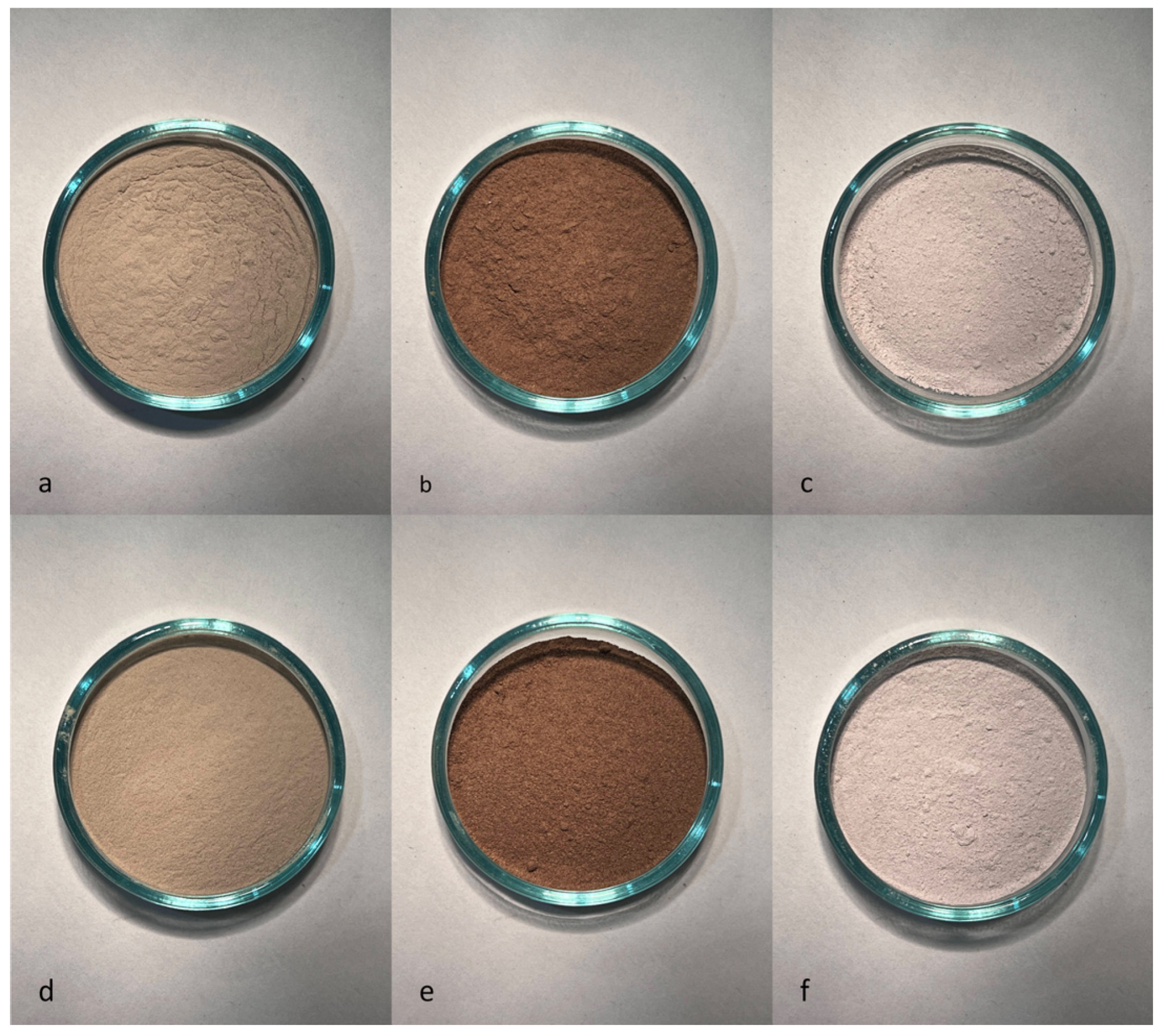
Three different types of powders, namely mussels, olive pomace, and walnut powders, in two different sizes of 38 µm and 45 µm were used as additives. The grinded powders of 38 µm and 45 µm are given in Figure 1 as olive pomace, walnut, and mussel, respectively. For mussel powders, waste mytilus galloprovincialis shells were used. A hardness of 3.5 Mohs to 4.0 Mohs is acceptable for mussel shells [32].
Figure 1.
Ground 38 µm (a) olive pomace, (b) walnut, and (c) mussel powders and ground 45 µm (d) olive pomace, (e) walnut, and (f) mussel powders.
Calcium carbonate is a commonly used filler in polymer material. While the chemical composition of mussel shells contains 95.7% CaO, this ratio is 99.1% in commercial CaCO3. Since mussel shells contain a similar amount of CaO as commercial CaCO3, it is appropriate to be used as an additive material [33,34].
Olive pomace was obtained from a company operating in the Aegean region. Walnut shells were also collected from people who consumed walnuts. Olive seeds and walnut shell are lignocellulosic in chemical structure. Olive pomace contains 40% cellulose and 19% lignin in its structure [35]. Lignin content in walnut shells is around 30% [36]. Walnut Sheel has a specific gravity of 1.2–1.4 and a hardness of 3–3.5 MOH [37,38].
After the waste materials were dried in the oven, they were ground in a ring mill and sieved in a sieve shaker. The amounts of organic additives added to the adhesive were determined as 5%, 15%, and 30% by weight.
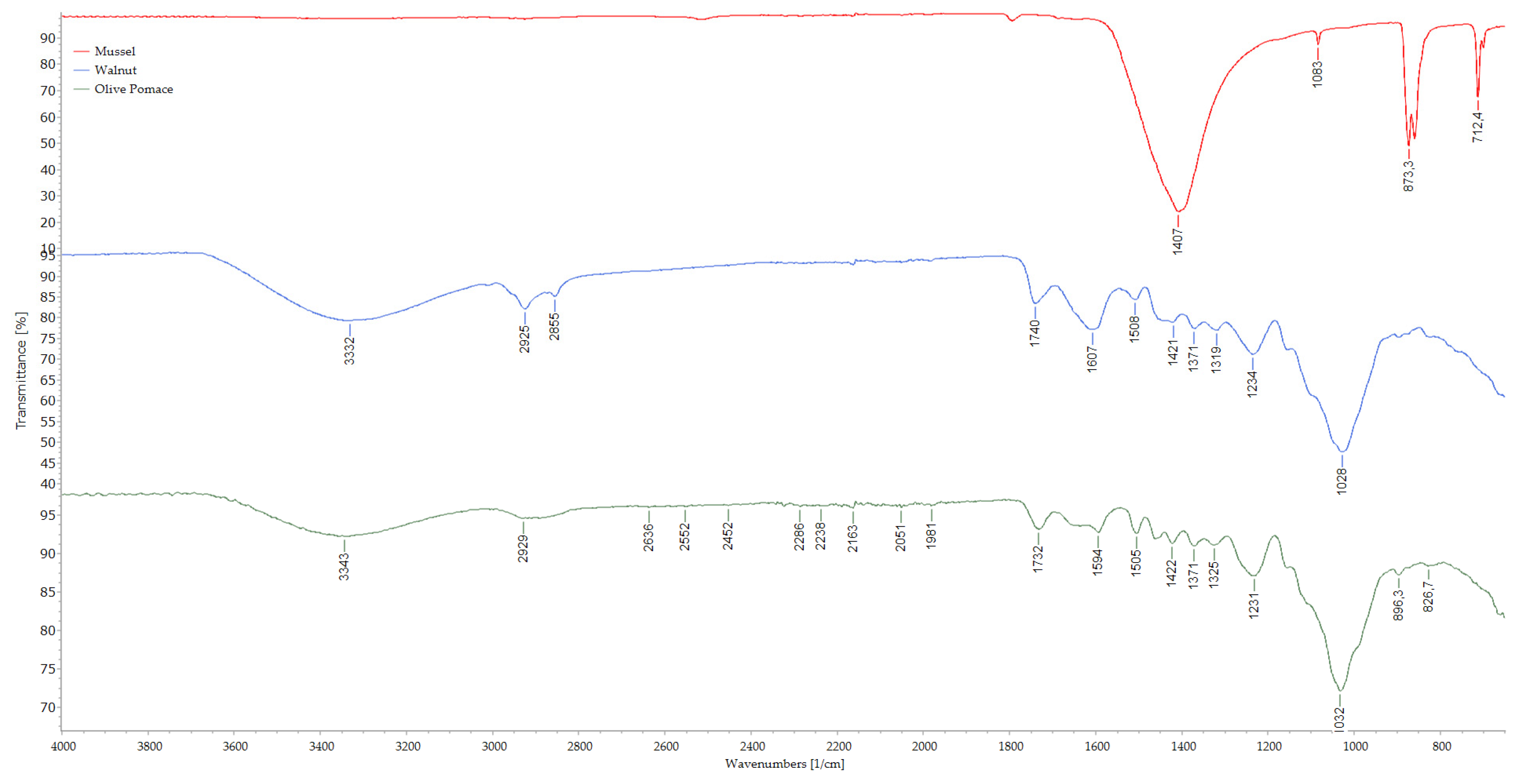
Infrared spectra were recorded on a Perkin–Elmer Spectrum 100 FTIR spectrophotometer with an attenuated total reflection (ATR) accessory featuring a zinc selenide (ZnSe) crystal at room temperature.
Since walnuts and olive pomace are organic structures, -OH and -CH groups are observed (3300 cm−1 OH and 2900 cm−1 CH). For organic powders, the OH groups can be hydrogen bond-promoting groups. Likewise, alkene groups (C=C) in the 1610s, amine groups in the 1230s, and aliphatic CO groups in the 1028s are observed in organic structures (Figure 2).
Figure 2.
FTIR spectroscopy of organic powders (mussel, walnut, and olive pomace).
For mussels, the carbonate CO3−2 groups are observed around 1407 cm−1 and 873 cm−1 band. These findings support the calcium carbonate structure for mussel powder.
2.2. Joint Geometry
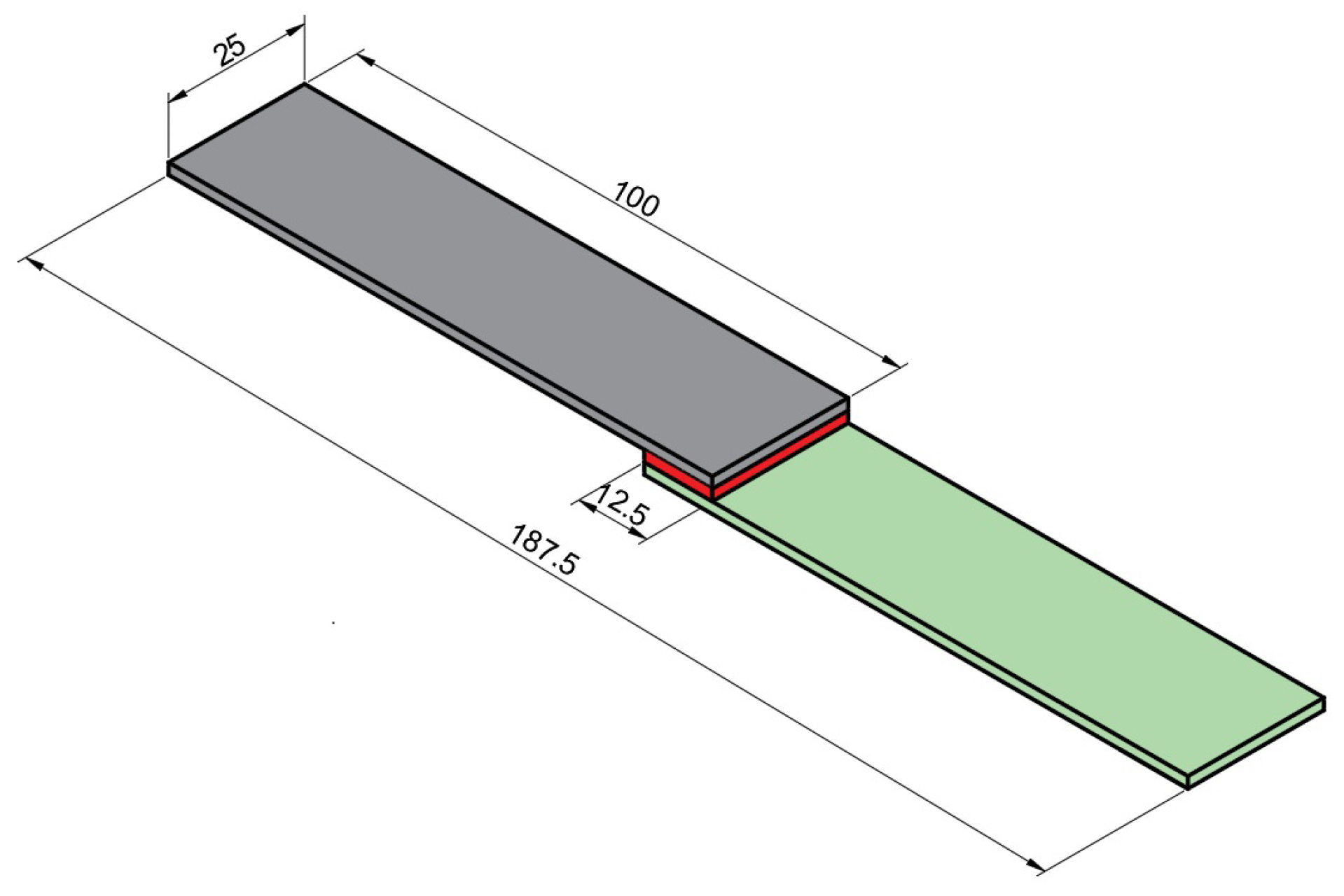
The type of joint used in the experiments was the single-lap joint model given in Figure 3. The usual test for this type of joint is the ASTM D 1002 [39].
Figure 3.
Single-lap joint type (mm).
2.3. Surface Preparation
Mechanical cleaning was conducted to prepare the surface of the adhesive joints. The surfaces of the samples were sanded with 120 SiC sandpaper. To roughen the entire bonding area, the sanding process was carried out in the bonding area in the horizontal and vertical directions, respectively. The sanded surfaces were wiped with acetone, washed with distilled water, and dried. The adhesive material and the filler powder were mixed manually in a plastic plate and then applied on the joint surfaces with the help of a spatula [40,41,42]. In the bonding area, metal paper clips were placed opposite each other, and the required pressure was provided. The bonding thickness of the joints was measured as 0.1 mm using mechanical caliper.
2.4. Surface Roughness and Tensile Testing
A Mitutoyo brand SJ-301 type desktop profilometer device with a digital display was used for surface roughness measurements. Average surface roughness values Ra were obtained by taking the arithmetic average of the five measurement values taken from the surfaces, according to the EN ISO 21920-2 standard [43].
Tensile tests were carried out at room temperature at a constant crosshead rate of 1 mm/min using the ALSA tensile test machine. All experiments were performed in triplicate.
2.5. Surface Morphology Analysis and Characterization (SEM, Joint Interfaces)
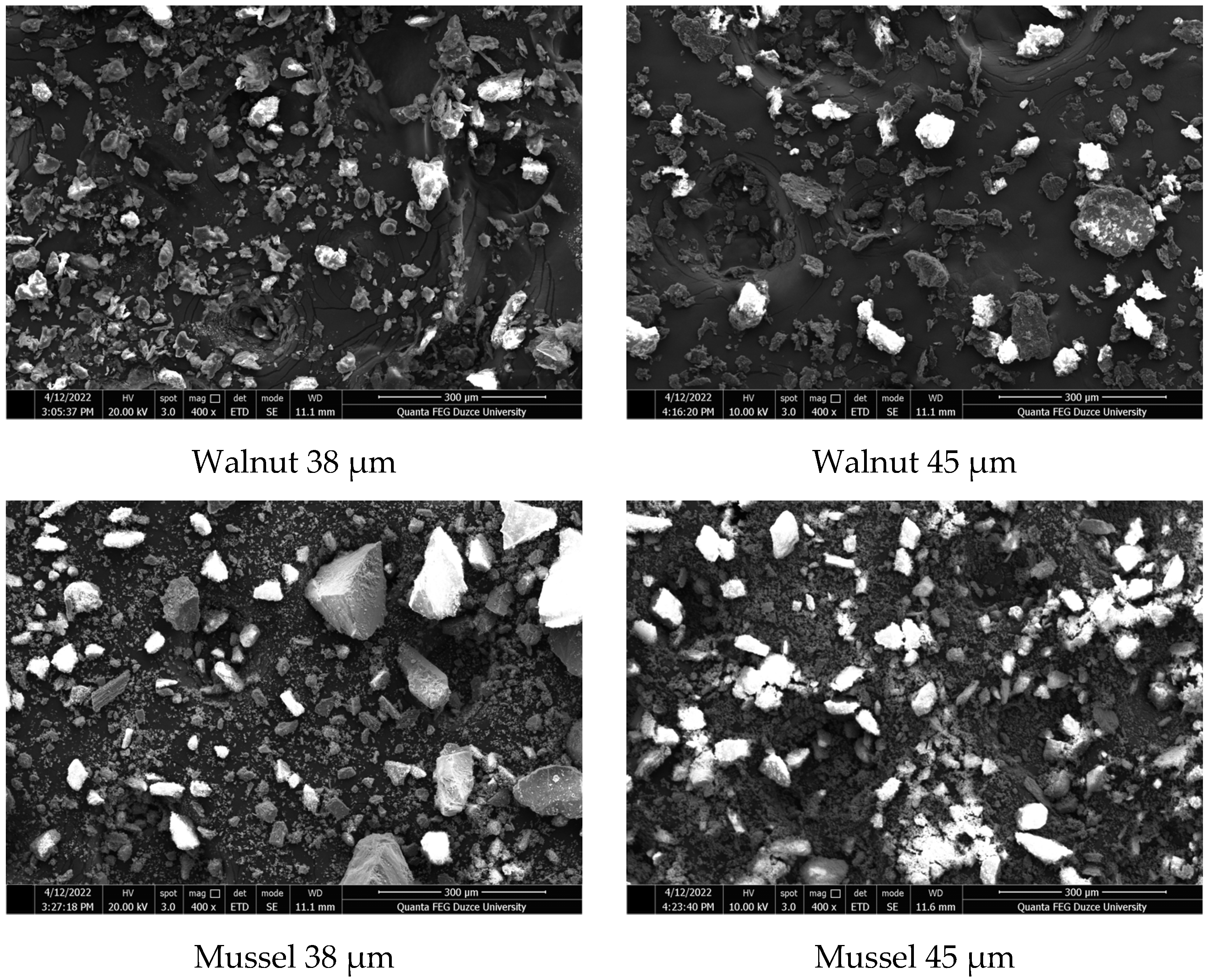
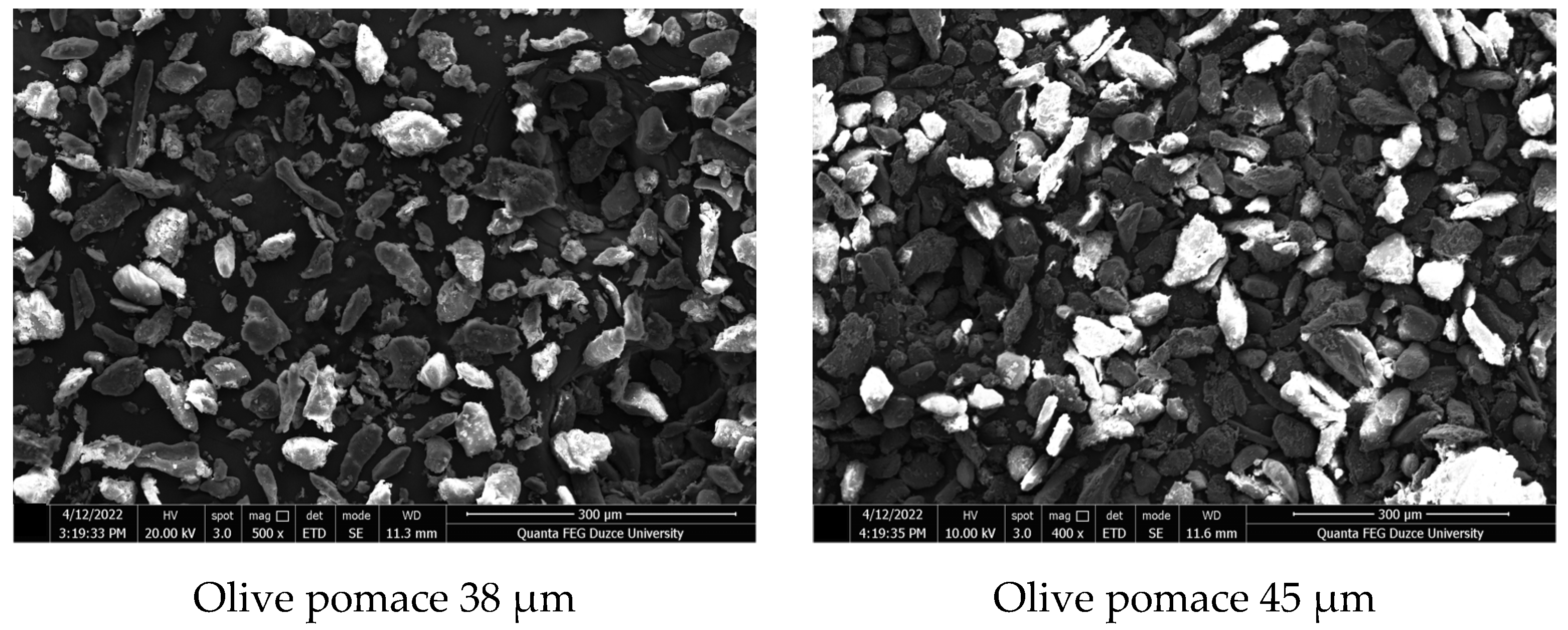
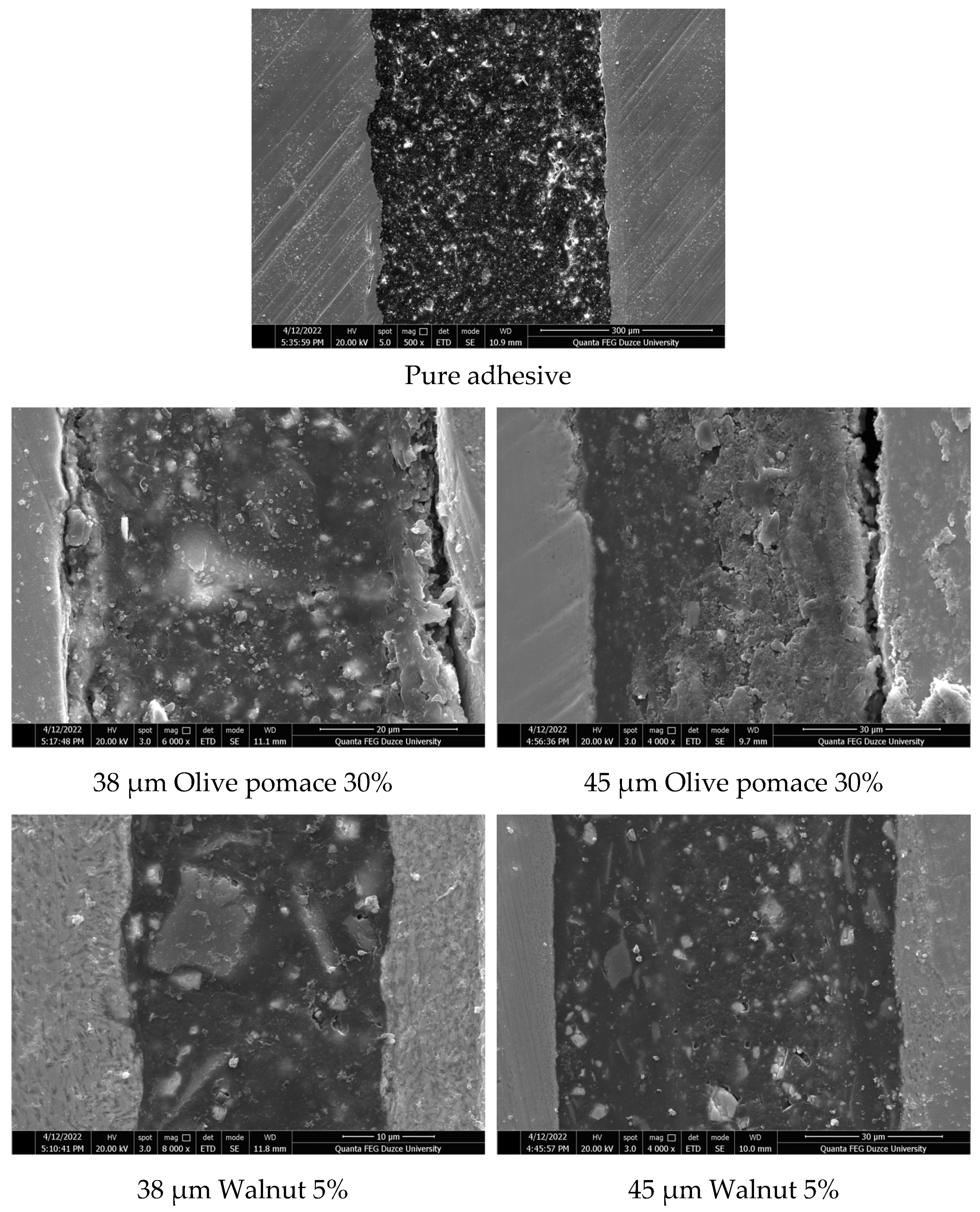
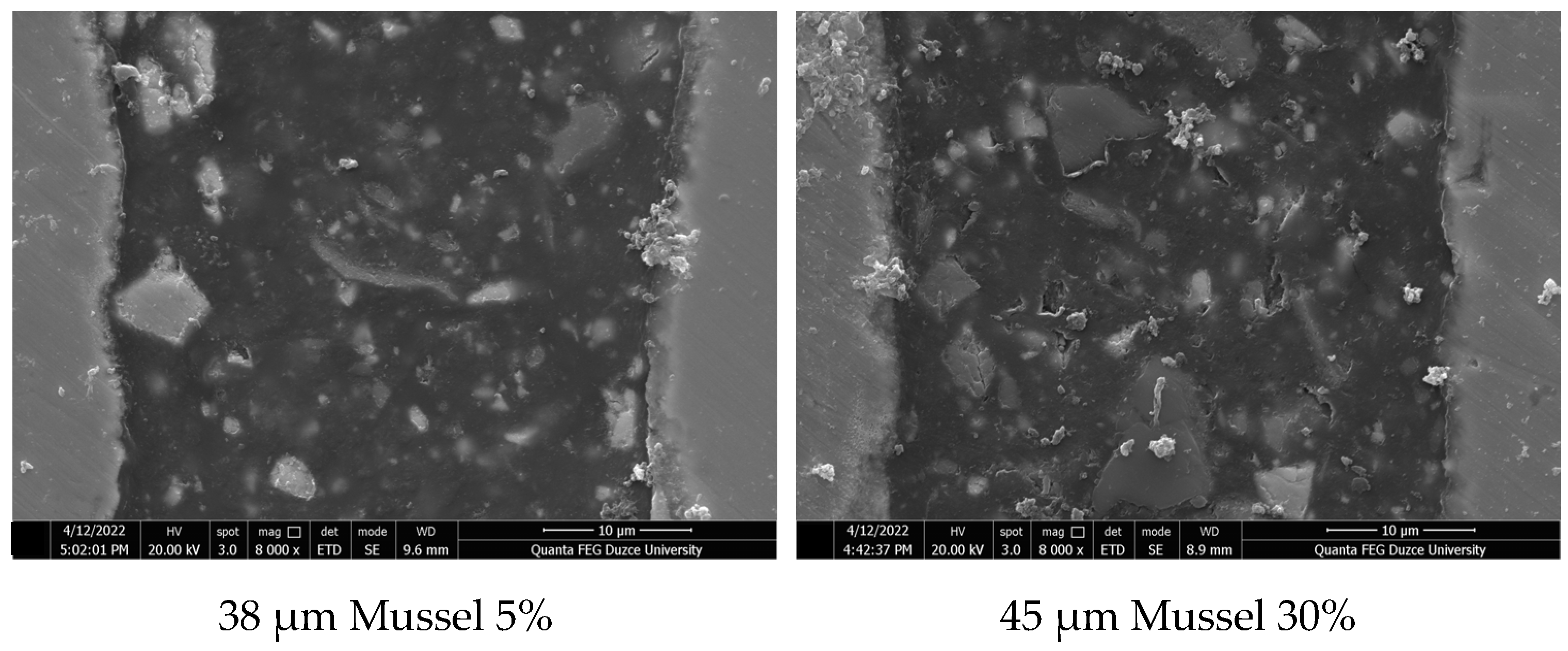
In order to better understand the strength results of the joint formed as a result of the bonding, images were taken of the powder materials and joint regions, and they were examined. All the samples were coated with gold palladium. Images were taken with a scanning electron microscope (SEM). SEM images of the powders are given in Figure 4, and joint interface images are given in Figure 5.

Figure 4.
SEM images of powders.

Figure 5.
Interface images of bonded joints.
3. Results and Discussion
3.1. Single-Lap Shear Tests
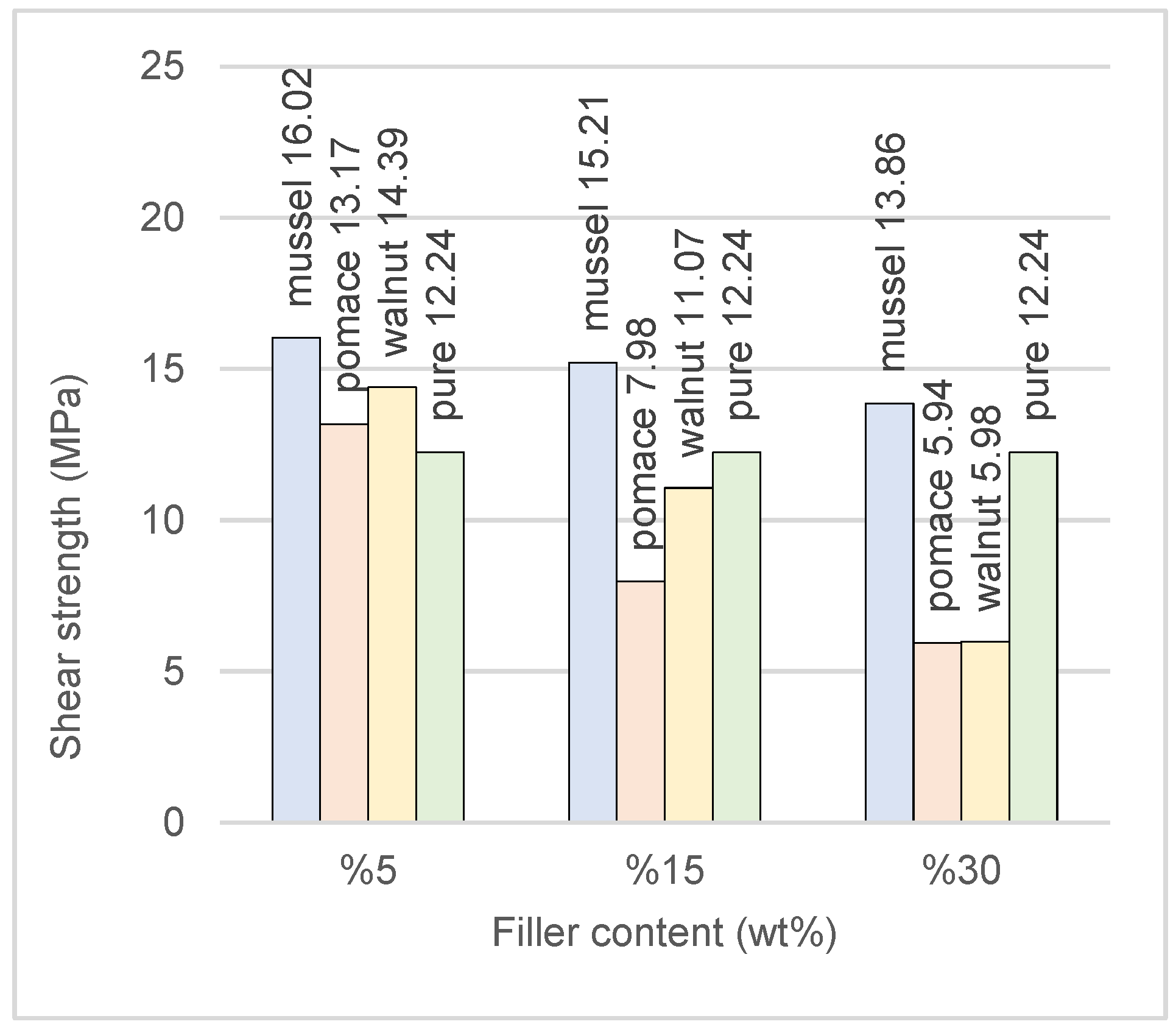
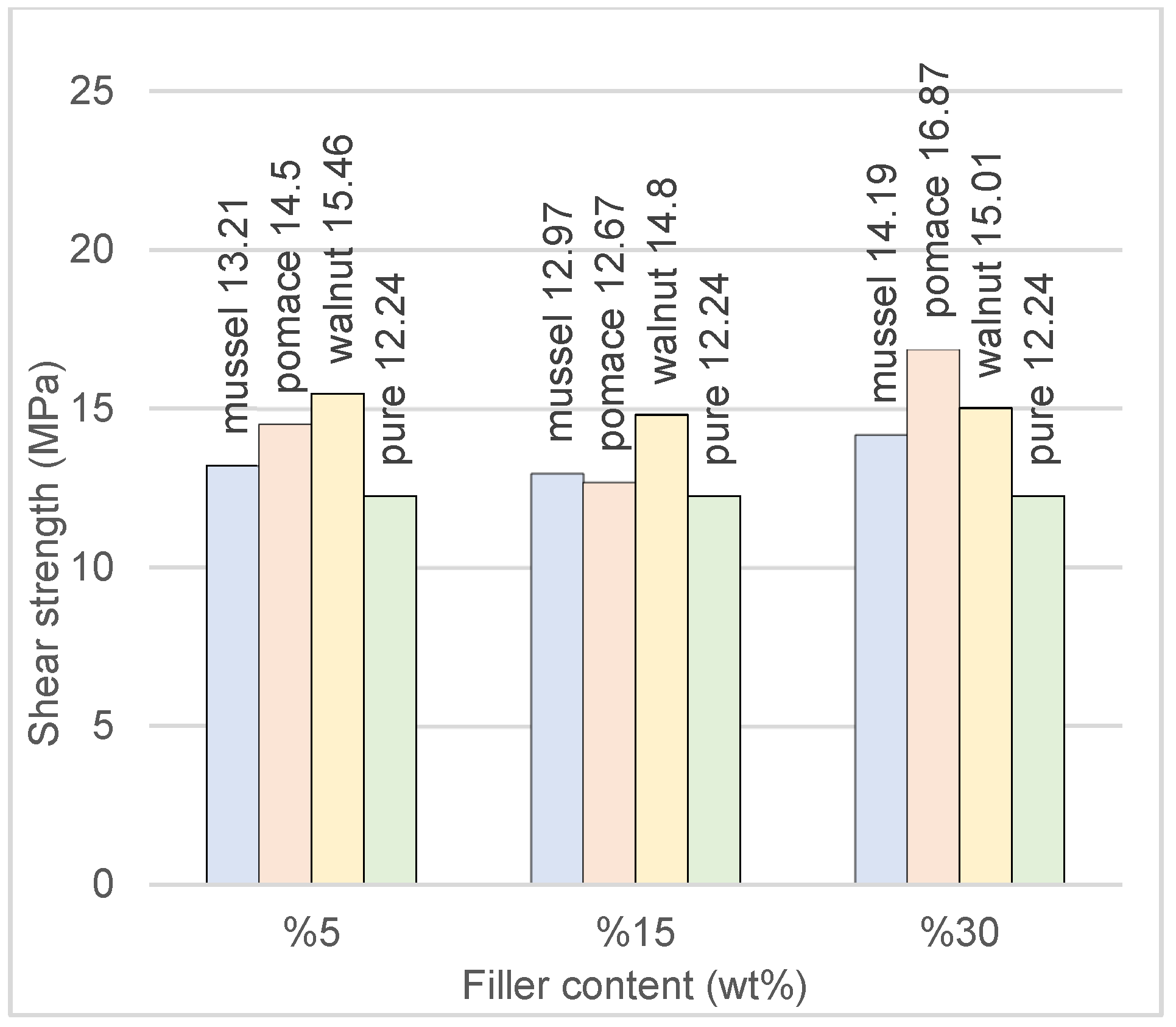
The tensile tests were carried out for the bonded test samples. The tensile test graphs are given in Figure 6 and Figure 7. The average shear strength of the bonded joint obtained using pure adhesive was found as 12.24 N/mm2. It is known that the bond strength decreases when the amount of powder added to the pure adhesive is higher than a certain amount (threshold value). In the studies verifying this statement, metal powders are generally used as the additives [44]. The results of the experiments performed using olive pomace, walnuts, and mussels with a size of 38 µm are consistent with the literature. On the other hand, when the powder size increases to 45 µm, there is an effect of increasing-decreasing-increasing strength as the amount of additive increases. Accordingly, it is understood that there is a threshold value for the amount of powder added to the adhesive.
Figure 6.
Average shear strengths of the 38 µm adhesive joints.
Figure 7.
Average shear strengths of the 45 µm adhesive joints.
When the size of the powder added to the adhesive was 45 µm, bond strengths increased for all additive ratios compared to the pure adhesive. The powder-added bonded joints (in 45 µm size) provided better bond strength overall.
In the experiments, the lowest strength value was measured as 5.94 MPa in joints where 38 µm olive pomace was added in the ratio of 30% by weight, and the highest strength value was measured as 16.87 MPa in joints where 45 µm olive pomace was added in the ratio of 30% by weight. In addition, when the effect of olive pomace and walnut additives added by 30% on the joint strengths was examined, it was seen that the increases in the joint strength were close to each other. It can be assumed that the organic structural similarity of olive pomace and walnut materials resulted in similar increase amounts.
The mussel additive produced a higher strength value compared to the pure adhesive in all ratios without any size difference. This indicates that a strong bond was formed between the mussel shell and the adhesive. It can be said that the layered natural structure of the mussel shell strengthens this bond [26].
As can be seen from the graphics in Figure 6 and Figure 7, the bond strength varies considerably depending on the type of additive (especially for 38 µm powder). Although the same grinding processes were carried out, there were changes in shape due to the type (structural properties) of the powders. The shape changes can be seen from the SEM images in Figure 4. This may be a parameter that changes the ability of the additive powders to adhere to the adhesive. This situation explains or is affected by the change in the strength values of the joints.
3.2. Surface Roughness Measurement
A surface roughness measurement was taken from the surfaces of the galvanized steel material that was mechanically abrasive using 120 SiC sandpaper, and the average Ra value was found to be 1 µm.
3.3. Surface Morphology Analysis and Characterization
In the visual examination of the powders, there was no difference other than color separation. However, it was seen that there were significant differences when SEM images were taken. Mussel powders are brittle, olive pomace powders are round, and walnut powders have a fringed fractured surface. When the SEM images in Figure 5, taken from the joints where 38 µm olive pomace was added in the ratio of 30% by weight, are examined, it is seen that there is a large void where the olive pomace added adhesive contacts the lower and upper surfaces of the base metal. This void is also seen along the joint interface. Therefore, it is understood that adhesion is not fully realized. Moreover, it is understood that the void spreads over the base metal surface into the bonding zone. Mixing the adhesive and the 38 µm olive pomace with each other at this rate reduced the adhesion effect of the adhesive.
When the SEM images taken from the joints where 45 µm olive pomace was added in the ratio of 30% by weight are examined, it is seen that there is a void where the adhesive contacts the metal surface. However, the width of this void is small.
4. Conclusions
By modifying the adhesives with a natural filler, a strong joint can be obtained, which can improve the parameters of the adhesive joint in terms of mechanical properties. The use of waste materials as additives after recycling makes it possible to reduce the production cost. The research follows the future trend in the field of ecological composites with fillers (or powder) based on waste material. Olive pomace, mussels, and walnut shells are recyclable organic waste materials. In this study, recycled organic materials in 38 µm and 45 µm sizes were added to the adhesive in the ratios of 5%, 15%, and 30% by weight. Single-overlap joints were formed by combining the steel materials with the modified adhesives which the ground powders were added to.
The results of tests to determine the mechanical properties of the adhesive filled with organic powders are presented. All results were compared with those obtained in the adhesive without powder additions.
The findings obtained as a result of the experimental studies are summarized as follows:
- The bond strength decreased when the amount of the powder (in 38 µm size) added to adhesive was more than 5%.
- The strength of all joints obtained by 5% powder additives (for 38 µm) increased compared to that with pure adhesive.
- The bond strength at all additive ratios (for 45 µm powder) increased compared to that with pure adhesive.
- In the experiments, the lowest strength value was obtained in joints where 38 µm olive pomace was added in the ratio of 30% by weight, and the highest strength value was obtained in joints where 45 µm olive pomace was added in the ratio of 30% by weight.
- When the additives in 38 µm powder size were used, it was seen that the change in bond strength varied depending on the powder type, while the effect of powder type on the bond strength did not make a difference in 45 µm powder sizes.
Author Contributions
The study was carried out as a two-person team. Conceptualization and methodology was introduced by N.A.; data curation, N.A. and Z.D.; writing—original draft preparation, N.A. and Z.D.; writing—review and editing, N.A. and Z.D.; visualization, Z.D.; supervision, N.A.; project administration, N.A. and Z.D.; funding acquisition, N.A. and Z.D. All authors have read and agreed to the published version of the manuscript.
Funding
This research received no external funding.
Data Availability Statement
Not applicable.
Conflicts of Interest
The authors declare no conflict of interest.
References
- Petrie, E.M. Handbook of Adhesives and Sealants; McGraw-Hill Education: New York, NY, USA, 2007. [Google Scholar]
- Adams, R.D. Adhesive Bonding: Science, Technology and Applications; Woodhead Publishing: Sawston, UK, 2021. [Google Scholar]
- Pocius, A.V. Adhesion and Adhesives Technology: An Introduction; Carl Hanser Verlag GmbH Co., KG: Munich, Germany, 2021. [Google Scholar]
- Taylor, A. Advances in nanoparticle reinforcement in structural adhesives. In Advances in Structural Adhesive Bonding; Elsevier: Amsterdam, The Netherlands, 2010; pp. 151–182. [Google Scholar]
- Hoque, M.E.; Kumar, R.; Sharif, A. Advanced Polymer Nanocomposites: Science, Technology and Applications; Woodhead Publishing: Sawston, UK, 2022. [Google Scholar]
- Thomas, S.; Gopi, S.; Amalraj, A. Biopolymers and Their Industrial Applications: From Plant, Animal, and Marine Sources, to Functional Products; Elsevier: Amsterdam, The Netherlands, 2020. [Google Scholar]
- Alam, M.O.; Bailey, C. Advanced Adhesives in Electronics: Materials, Properties and Applications; Elsevier: Amsterdam, The Netherlands, 2011. [Google Scholar]
- Ghosh, P.; Nukala, S. Properties of adhesive joint of inorganic nano-filler composite adhesive. Indian J. Eng. Mater. Sci. 2008, 15, 68–74. [Google Scholar]
- Müller, M.; Tichý, M.; Šleger, V.; Hromasová, M.; Kolář, V. Research of hybrid adhesive bonds with filler based on coffee bean powder exposed to cyclic loading. Manuf. Technol. 2020, 20, 1–9. [Google Scholar] [CrossRef]
- Gonçalves, F.A.; Santos, M.; Cernadas, T.; Alves, P.; Ferreira, P. Influence of fillers on epoxy resins properties: A review. J. Mater. Sci. 2022, 57, 15183–15212. [Google Scholar] [CrossRef]
- Hrabě, P.; Kolář, V.; Müller, M.; Hromasová, M. Service Life of Adhesive Bonds under Cyclic Loading with a Filler Based on Natural Waste from Coconut Oil Production. Polymers 2022, 14, 1033. [Google Scholar] [CrossRef]
- Yetgin, H.; Veziroglu, S.; Aktas, O.C.; Yalçinkaya, T. Enhancing thermal conductivity of epoxy with a binary filler system of h-BN platelets and Al2O3 nanoparticles. Int. J. Adhes. Adhes. 2020, 98, 102540. [Google Scholar] [CrossRef]
- Kwon, D.-J.; Kwon, I.-J.; Kong, J.; Nam, S.Y. Investigation of impediment factors in commercialization of reinforced adhesives. Polym. Test. 2021, 93, 106995. [Google Scholar] [CrossRef]
- Hunter, R.; Möller, J.; Vizán, A.; Pérez, J.; Molina, J.; Leyrer, J. Experimental study of the effect of microspheres and milled glass in the adhesive on the mechanical adhesion of single lap joints. J. Adhes. 2017, 93, 879–895. [Google Scholar] [CrossRef]
- Hamrah, Z.S.; Lashgari, V.; Mohammadi, M.D.; Uner, D.; Pourabdoli, M. Microstructure, resistivity, and shear strength of electrically conductive adhesives made of silver-coated copper powder. Microelectron. Reliab. 2021, 127, 114400. [Google Scholar] [CrossRef]
- Kahraman, R.; Al-Harthi, M. Moisture diffusion into aluminum powder-filled epoxy adhesive in sodium chloride solutions. Int. J. Adhes. Adhes. 2005, 25, 337–341. [Google Scholar] [CrossRef]
- Kahraman, R.; Sunar, M.; Yilbas, B. Influence of adhesive thickness and filler content on the mechanical performance of aluminum single-lap joints bonded with aluminum powder filled epoxy adhesive. J. Mater. Process. Technol. 2008, 205, 183–189. [Google Scholar] [CrossRef]
- Singh, R.; Zhang, M.; Chan, D. Toughening of a brittle thermosetting polymer: Effects of reinforcement particle size and volume fraction. J. Mater. Sci. 2002, 37, 781–788. [Google Scholar] [CrossRef]
- Quan, D.; Carolan, D.; Rouge, C.; Murphy, N.; Ivankovic, A. Mechanical and fracture properties of epoxy adhesives modified with graphene nanoplatelets and rubber particles. Int. J. Adhes. Adhes. 2018, 81, 21–29. [Google Scholar] [CrossRef]
- Zakiah, A.; Ansell, M.P.; Smedley, D.; Md Tahir, P. The Effect of Long Term Loading on Epoxy-Based Adhesive Reinforced with Nano-Particles for In Situ Timber Bonding. Proc. Adv. Mater. Res. 2012, 545, 111–118. [Google Scholar]
- Vinay, M. Optimization of process parameters of aluminium 2024–T3 joints bonded using modified epoxy resin. Mater. Today Proc. 2022, 54, 325–329. [Google Scholar] [CrossRef]
- Nemati Giv, A.; Ayatollahi, M.R.; Ghaffari, S.H.; da Silva, L.F. Effect of reinforcements at different scales on mechanical properties of epoxy adhesives and adhesive joints: A review. J. Adhes. 2018, 94, 1082–1121. [Google Scholar] [CrossRef]
- Sanghvi, M.R.; Tambare, O.H.; More, A.P. Performance of various fillers in adhesives applications: A review. Polym. Bull. 2022, 79, 1–63. [Google Scholar] [CrossRef]
- Suleiman, I.Y.; Kasim, A.; Mohammed, A.T.; Sirajo, M.Z. Evaluation of Mechanical, Microstructures and Wear Behaviours of Aluminium Alloy Reinforced with Mussel Shell Powder for Automobile Applications. Stroj. Vestn.-J. Mech. Eng. 2021, 67, 27–35. [Google Scholar] [CrossRef]
- Udatha, P.; Babu, Y.N.; Satyadev, M.; Bhagavathi, L.R. Effect of natural fibers reinforcement on lap-shear strength of adhesive bonded joints. Mater. Today Proc. 2020, 23, 541–544. [Google Scholar] [CrossRef]
- Mishra, A.; Singh, S.; Kumar, R.; Mital, A. Natural fiber based adhesive butt joints as a replacement to gas welded butt joints for thin tubes: An experimental study. IOP Conf. Ser. Mater. Sci. Eng. 2018, 404, 012024. [Google Scholar] [CrossRef]
- Kumar, D.; Boopathy, S.R.; Sangeetha, D.; Bharathiraja, G. Investigation of mechanical properties of horn powder-filled epoxy composites/Raziskava mehanskih lastnosti epoksi kompozitov s polnilom iz rozevine v prahu. Stroj. Vestn.-J. Mech. Eng. 2017, 63, 138–148. [Google Scholar] [CrossRef]
- Akhavan-Safar, A.; Delzendehrooy, F.; Ayatollahi, M.; da Silva, L.F.M. Influence of Date Palm Tree Fibers on the Tensile Fracture Energy of an Epoxy-based Adhesive. J. Nat. Fibers 2022, 19, 14379–14395. [Google Scholar] [CrossRef]
- Delzendehrooy, F.; Ayatollahi, M.; Akhavan-Safar, A.; da Silva, L. Strength improvement of adhesively bonded single lap joints with date palm fibers: Effect of type, size, treatment method and density of fibers. Compos. Part B Eng. 2020, 188, 107874. [Google Scholar] [CrossRef]
- Barbosa, A.; da Silva, L.; Öchsner, A. Effect of the amount of cork particles on the strength and glass transition temperature of a structural adhesive. Proc. Inst. Mech. Eng. Part L J. Mater. Des. Appl. 2014, 228, 323–333. [Google Scholar] [CrossRef]
- Ri, J.-H.; Kim, M.-H.; Hong, H.-S. A mixed mode elasto-plastic damage model for prediction of failure in single lap joint. Int. J. Adhes. Adhes. 2022, 116, 103134. [Google Scholar] [CrossRef]
- de Castro, A.L.P.; Serrano, R.O.P.; Pinto, M.A.; da Silva, G.H.T.Á.; de Andrade Ribeiro, L.; de Faria Viana, E.M.; Martinez, C.B. Case study: Abrasive capacity of Limnoperna fortunei (golden mussel) shells on the wear of 3 different steel types. Wear 2019, 438, 202999. [Google Scholar] [CrossRef]
- Hamester, M.R.R.; Balzer, P.S.; Becker, D. Characterization of calcium carbonate obtained from oyster and mussel shells and incorporation in polypropylene. Mater. Res. 2012, 15, 204–208. [Google Scholar] [CrossRef]
- Koçhan, C. An experimental investigation on mode-I fracture toughness of mussel shell/epoxy particle reinforced composites. Pamukkale Univ. J. Eng. Sci.-Pamukkale Univ. Muhendis. Bilim. Derg. 2020, 26, 599–604. [Google Scholar] [CrossRef]
- Badawy, W.; Smetanska, I. Utilization of olive pomace as a source of bioactive compounds in quality improving of toast bread. Egypt. J. Food Sci. 2020, 48, 27–40. [Google Scholar]
- Queirós, C.S.; Cardoso, S.; Lourenço, A.; Ferreira, J.; Miranda, I.; Lourenço, M.J.V.; Pereira, H. Characterization of walnut, almond, and pine nut shells regarding chemical composition and extract composition. Biomass Convers. Biorefin. 2020, 10, 175–188. [Google Scholar] [CrossRef]
- Materials, C. Walnut Shells Applications and Uses. Available online: https://www.azom.com/article.aspx?ArticleID=10430 (accessed on 23 April 2021).
- Deburring, A.B. Walnut Shell. Available online: https://abdeburr.com/corn-cob-walnut-shell/ (accessed on 12 August 2022).
- ASTM D 1002-10; Standard Test Method for Apparent Shear Strength of Single-Lap-Joint Ahdesively Bonded Metal Specimens by Tension Loading (Metal-to-Metal). ASTM International: West Conshohocken, PA, USA, 2010.
- Kavak, N.; Altan, E. A new hybrid bonding technique: Adhesive-soft soldered joints. Proc. Inst. Mech. Eng. Part L J. Mater. Des. Appl. 2014, 228, 137–143. [Google Scholar] [CrossRef]
- Budhe, S.; Ghumatkar, A.; Birajdar, N.; Banea, M. Effect of surface roughness using different adherend materials on the adhesive bond strength. Appl. Adhes. Sci. 2015, 3, 20. [Google Scholar] [CrossRef]
- Monteiro, J.; Salgado, R.; Rocha, T.; Pereira, G.; Marques, E.; Carbas, R.; da Silva, L. Effect of adhesive type and overlap length on the mechanical resistance of a simple overlap adhesive joint. U. Porto J. Eng. 2021, 7, 1–12. [Google Scholar] [CrossRef]
- Jones, C.W.; Sun, W.; Boulter, H.; Brown, S. 3D roughness standard for performance verification of topography instruments for additively-manufactured surface inspection. Meas. Sci. Technol. 2022, 33, 084003. [Google Scholar] [CrossRef]
- Kavak, N.; Altan, E. Influence of filler amount and content on the mechanical performance of joints bonded with metal powder filled adhesive. Mater. Sci. Forum 2014, 773–774, 226–233. [Google Scholar] [CrossRef]
Disclaimer/Publisher’s Note: The statements, opinions and data contained in all publications are solely those of the individual author(s) and contributor(s) and not of MDPI and/or the editor(s). MDPI and/or the editor(s) disclaim responsibility for any injury to people or property resulting from any ideas, methods, instructions or products referred to in the content. |
© 2023 by the authors. Licensee MDPI, Basel, Switzerland. This article is an open access article distributed under the terms and conditions of the Creative Commons Attribution (CC BY) license (https://creativecommons.org/licenses/by/4.0/).