1. Introduction
Social media use among children and adolescents is becoming increasingly common, especially since the COVID-19 pandemic. This excessive increase and inappropriate internet use by young people increases their exposure to risky situations. Analyzing these risks from multiple perspectives is vitally important to propose different solutions. In addition to risk, there are other consequences, such as decreased academic performance and an increase in psychological/emotional problems such as depression, anxiety, or stress [
1].
Secondary school students primarily use social media platforms like Twitter, TikTok, Telegram, and Discord in various communities of interest. In these communities, most users upload self-produced material. This results in a significant amount of information being produced and consumed. Regulation is only possible if schools and families collaborate to monitor access to this digital content. Some social media platforms can contribute to student learning; however, the content consumed influences this process [
2].
Among users aged 10 to 19, Instagram, WhatsApp, YouTube, and Facebook are the most frequently used social media platforms. New friendships are made on these social networks; however, they are exposed to certain risks due to sharing their personal data. These opportunities for privacy invasions have led to cyberbullying, distorted photos, threats, offensive messages, and the receipt of inappropriate content. These adolescents reported feeling primarily embarrassed and, at times, experiencing negative consequences for their mental health. This study was conducted in Brazil, and its results are consistent with the Brazilian Media Survey, confirming that adolescents use the internet seven days a week [
3].
In Ecuador, young people between the ages of 15 and 24 use social media between 3 and 4 h a day, extending up to 14 h [
4]. This behavior is evident and often demanded by schools themselves. The authors explore socialization to mitigate the risks to which elementary and secondary school students are exposed. These discussions should address responsibilities regarding privacy protection and the security of personal data. Specific settings must be implemented and available on these social media platforms to address these risks [
5,
6].
Children and adolescents are using social media excessively, especially since the pandemic. This situation exposes them to various risks, resulting in diverse consequences. Online platforms can be helpful in learning, but appropriate use and/or supervision are necessary, both in schools and within families. Above all, socialization with parents and children should be encouraged through educational talks about privacy protection and appropriate use. Much can be achieved if families, schools, the government, and the media work together. Therefore, all the studies conducted contribute enormously to establishing strategies and actions to protect children and adolescents from the risks they face when online [
7].
From a Latin American regional perspective, previous studies have documented high levels of online risk among adolescents in cyberbullying, sexting, and exposure to inappropriate content and have highlighted gender and cultural variations in the perception and management of these risks. In Latin America, research with teachers and adolescents from countries such as Peru, Chile, Argentina, Colombia, and Ecuador has identified links between online harassment and reduced well-being, underscoring that the digital risk environment transcends national borders [
8].
Therefore, the clustering method applied to the Peruvian youth context allows for comparison with regional patterns and the identification of subgroups, such as urban/rural location or device usage. Given the high access to mobile phones, variable parental mediation, and socioeconomic diversity in Peru, this study offers an opportunity to connect data-driven segmentation with the design of relevant public policy interventions. In summary, this research is situated at the intersection of rigorous computational techniques and the socially rooted understanding of risk perception in Latin American youth digital culture [
9].
In the Peruvian context, the growing internet access and social media use among young people demand detailed studies on how children and adolescents perceive and respond to risks in digital environments. For example, the study in [
10] found that the expansion of internet access in Peruvian homes had significant impacts on child development, demonstrating the rapid growth of digital connectivity in the country and thus providing fertile ground for examining risk perception on social media. The fact that Peruvian children are increasingly participating in online activities implies that their understanding of risks is likely conditioned by their sociocultural and technological environment. A cluster-based approach to identifying risk perception among Peruvian youth fills a fundamental gap by aligning methodological innovation with Peru’s unique trajectory of digital adoption [
11]. In this way, the study allows for the generation of locally relevant perspectives that may differ from those of other countries, given Peru’s specific characteristics regarding connectivity, education, and media consumption. Furthermore, the study’s relevance is reinforced by evidence linking intensive internet use to adverse mental health consequences for adolescents in Peru. It is reported that adolescents in one Peruvian region with higher levels of internet addiction exhibited a significantly higher prevalence of anxiety, highlighting that online behaviors are not only widespread but can also be potentially harmful in the Peruvian context [
12].
In recent years, the role of artificial intelligence applied to specific types of information and contexts has gained significant importance. The applications are highly diverse, and the analyzed information is presented in various formats. These range from the use of neural networks for classification and prediction, which would allow the identification of groups for decision-making [
13], to the use of clustering algorithms to obtain real-time behavioral data on social networks, which would allow timely solutions to different situations on these platforms with significant user activity [
14].
This research analyzes the perception of risk situations related to social media use among children and adolescents in school. Several unsupervised machine learning clustering models are used for this purpose. The structure of this paper is organized as follows.
Section 2 comprehensively reviews previous studies on digital risk perception and social media behavior among adolescents.
Section 3 details the materials and methods employed in this research, encompassing the theoretical background (
Section 3.1), tools and technologies (
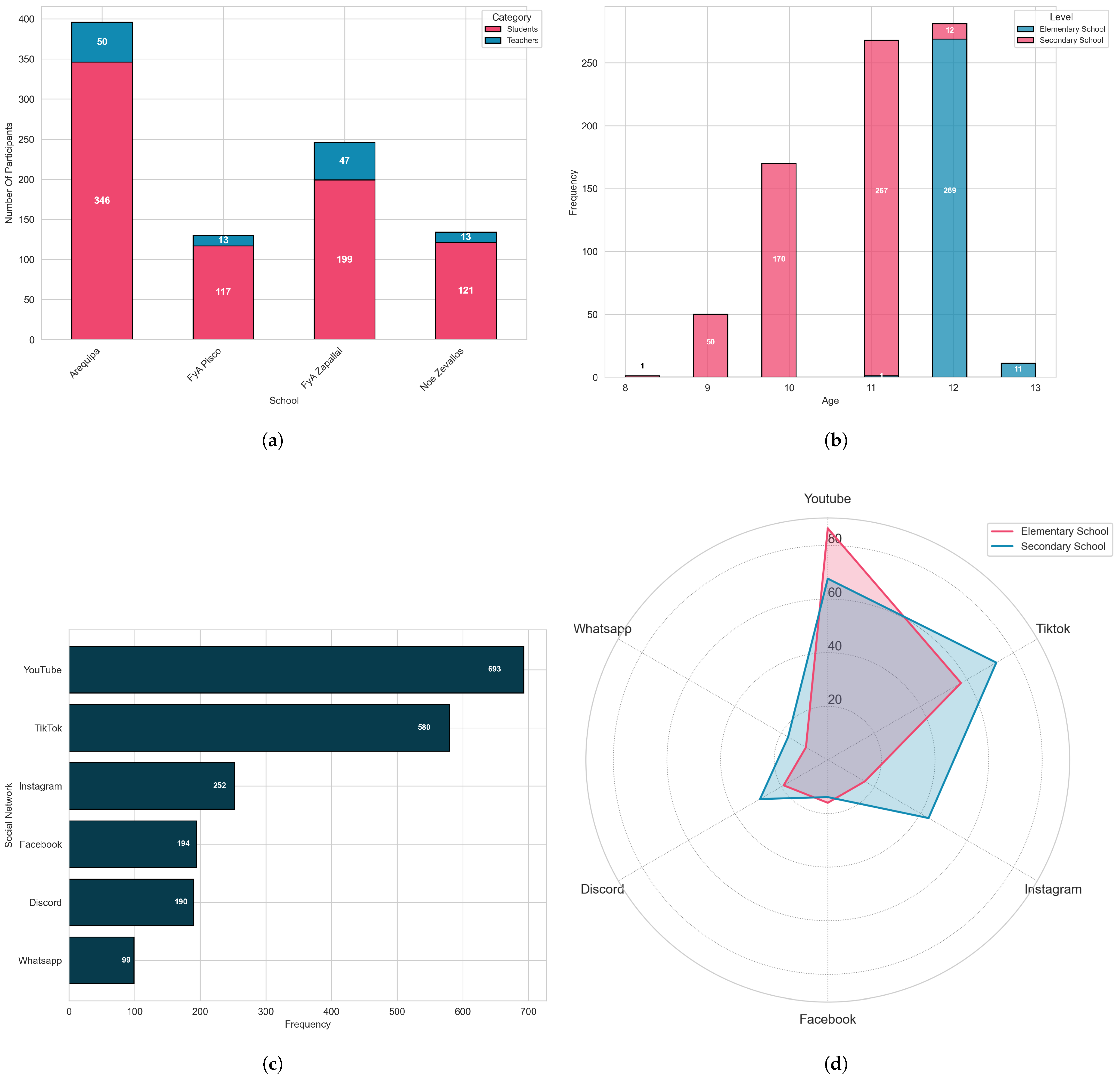
Section 3.2), dataset description (
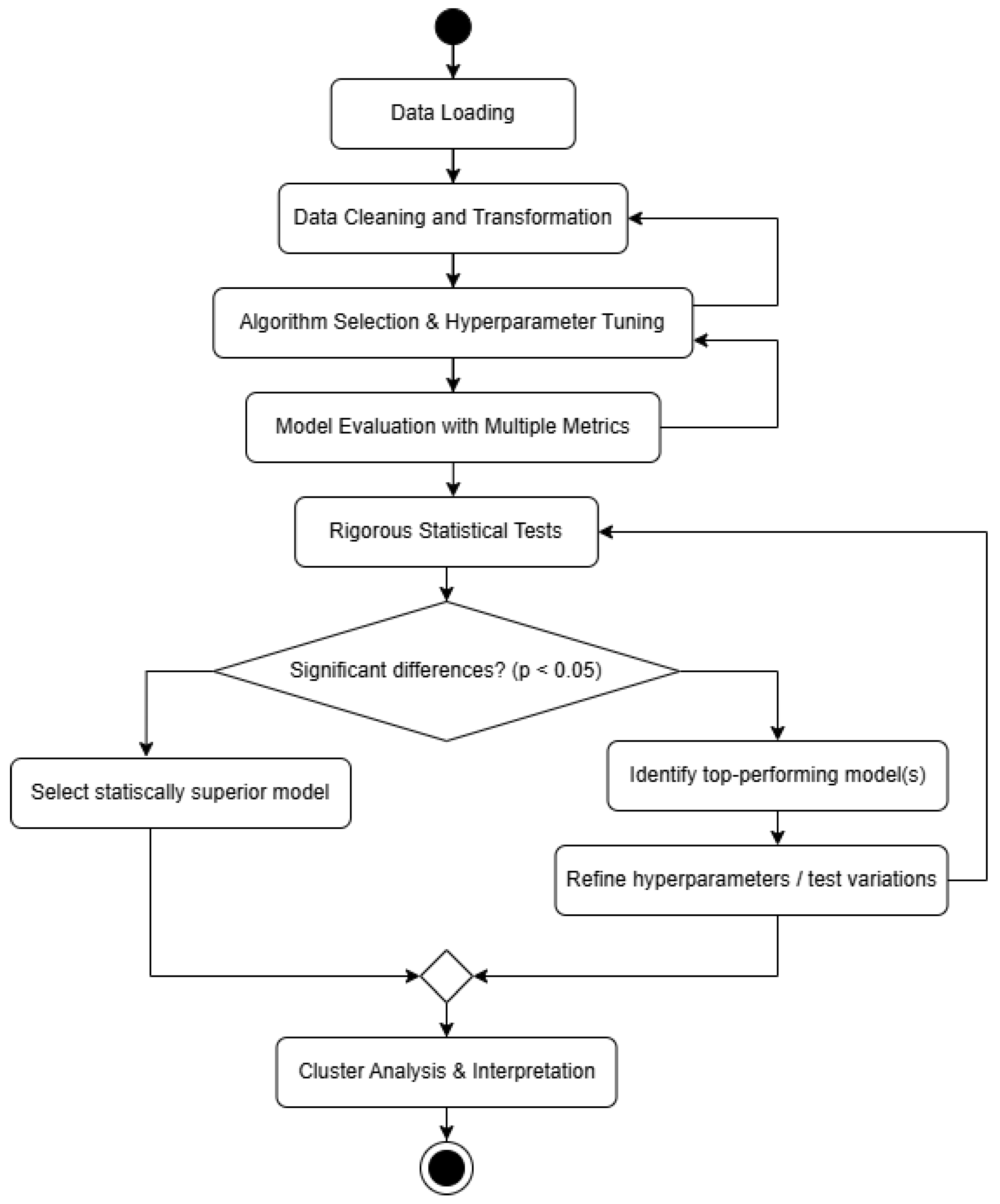
Section 3.3), and the proposed methodology for the analysis of risk perception in social networks (
Section 3.4).
Section 4 presents the experimental results obtained from the clustering models, followed by
Section 5, which offers an in-depth discussion and interpretation of the findings. Finally,
Section 6 summarizes the main conclusions derived from this study, and
Section 7 outlines this study’s limitations and future research directions.
2. Related Works
In 2025, a study on excessive social media use was conducted among 7184 adolescents from two Chinese cities. The study links smartphone use and problematic online behaviors. POBs include excessive use of smartphones, video games, and social media. The study was cross-sectional and used validated psychometric tools. Network analysis was applied to assess symptom associations for each of the POBs. The symptoms found were escapism, withdrawal, and loss of control. The results are significant for psychologists, clinicians, and policymakers to address these mental health problems in this digital age [
15].
Another study analyzed the values and countervalues perceived by adolescents when interacting on the social media platforms YouTube and Instagram. Fourteen focus groups were used in three communities in Spain. Content was analyzed using the software ATLAS.TI v25. The most perceived value was friendship for women, while fun was present for men. The countervalue present in all groups and for both genders is disrespect for human rights. The gender difference focuses on the values of prestige over image for women and achievement and success for men. Similarities between the two genders include play/recreation, education/knowledge, and friendship/relevance; for countervalues, they are rights/respect and control/order/discipline [
16].
In 2024, a study identified characteristics and patterns within 674 labeled private messages on the social media platform Instagram, intending to investigate risk. In this context of anonymity, hurtful opinions affecting the person involved were found. Five types of media content were analyzed: memes, screenshots, images of natural people, natural images of objects, and artistic illustrations. The question was whether comments on the content represented a risk or could be considered humorous. This work allowed for an extensive analysis of the conversations, separating acceptable interactions from those that harm users. Risk is highly subjective, especially in private interactions, but understanding risks on social media is vital [
17].
In 2023, another study analyzed the risk of 15,547 private messages on the social media platform Instagram from adolescents aged 13 to 21. To do so, a machine learning approach was used to create risk-detection classifiers. The Convolutional Neural Network (CNN) model and the random forest performed best for risk identification. An innovative framework was generated to apply artificial intelligence to online interactions. A total of 44,099 messages from participants were about unsafe sexual conversations. These conversations contained negative emotions such as anger and profanity that made the participant uncomfortable or insecure [
18].
In 2022, another study applied correlations and meta-regression models using the R language and the robumeta package, analyzing the impact of social media on psychological well-being. For this purpose, they compiled empirical publications from up to twelve years that examined information on social media use and psychological well-being. The relationship between social media use and six dimensions of psychological well-being was quantified through a meta-analysis of 226 empirical studies. They used a random-effects model that calculates the effect size between social media use and well-being. Small positive associations were found with anxiety, depression, and social well-being. The authors conclude that there is a trade-off between the increase in depression and anxiety and the improvement in social well-being associated with social media use [
19].
Another study conducted in 2022 proposed a feature extraction method that used a clustering algorithm. Social media behavioral feature extraction was performed on university students in the sports field to obtain real-time social behavior data. Processing was quantitative and standardized for data formatting, removal of abnormal data, error correction, and elimination of duplicate data. Weights were used for feature extraction on both words and sentences. Friendship relationships and the degree of similarity between users were used for the experimental process. The work had high application value in recognizing the behavior of university students on their social networks [
14].
In 2021, an exploratory and descriptive quantitative study was conducted with 560 parents of school-aged children between the ages of 6 and 17. The information collected included information about the use of social media, the internet, and the risk of online bullying. Ninety-seven percent of participants took the research seriously, and 50% were unfamiliar with “online grooming.” Eighty-nine percent of respondents did not know where to report cybercrimes. Awareness was raised about the risks of internet use, mainly social media use. Finally, the study encourages reflection among parents, teachers, and adolescents on detecting and responding to risky situations [
20].
In 2020, another study collected data from Instagram’s social media platform to analyze risk perception among adolescents aged 13 to 17. They used semi-structured interviews with 10 students beginning their university studies to consider sensitivity in data collection. They used a methodology that combines machine learning techniques to analyze social media interactions with guided discussions between adolescents and parents about identified risk situations. This helped balance the tensions between parents and children when discussing sensitive social media messages. This work promotes adolescent-centered solutions for online safety [
21].
In 2017, a literature review categorized the risks affecting the orphan population. This analysis examined the online activity of adolescents in foster care who engage in risky behaviors. The work was conducted by professionals dedicated to designing technology that improves child well-being, establishing the need for online safety systems through parental mediation. However, it is commonplace that this population of adolescents in orphanages is often not considered in risk protection plans. Therefore, this article motivates other researchers to propose social media solutions for protecting these young people in risk situations [
22].
In 2016, online personal diaries were promoted to 68 adolescents, who spent two months reflecting on their weekly experiences. They reported 207 risk events, including data breaches, online harassment, sexual solicitation, and exposure to explicit content. A qualitative structural analysis was conducted with the collected data, characterizing risk dimensions such as severity and level. Ways were found to empower adolescents to protect themselves in risky situations. The need for parents and adolescents to discuss all risk situations on social media was reinforced [
23].
Overall, the reviewed studies highlight that risk perception among adolescents on social media is a multidimensional phenomenon that cannot be understood through a single disciplinary lens. While psychological approaches shed light on emotional responses and coping mechanisms, computational techniques provide scalable ways to detect and classify risk patterns. The integration of these perspectives allows for a more holistic understanding of digital interactions, especially among vulnerable youth. However, many of these studies remain limited by cross-sectional designs and reliance on self-reported data, which constrain causal interpretations. Future research should therefore adopt longitudinal and mixed-method approaches to capture the evolving dynamics of online risk perception. Furthermore, interdisciplinary collaboration between psychologists, data scientists, and educators remains essential to translate these findings into effective digital safety policies.
In summary, the literature demonstrates clear progress toward identifying and mitigating online risks, yet the gap between detection and prevention persists. Technological tools such as machine learning classifiers or network analyses offer promise but must be complemented by ethical and educational frameworks. Adolescent voices should also be incorporated more actively to ensure that interventions align with their lived experiences and cultural contexts. Importantly, the findings emphasize that risk on social media is not only a matter of exposure but also of interpretation and agency. Recognizing adolescents as active participants rather than passive victims reshapes the narrative around digital safety. This critical shift can guide future research and policy toward more inclusive and adaptive strategies for safeguarding young people online.
4. Results
This section presents the results of evaluating clustering algorithms applied to our dataset. Five algorithms were tested: K-Means, Affinity Propagation, Mean Shift, Spectral Clustering, and Hierarchical Clustering. These algorithms represent varied approaches: centroid-based, graph-based, density-based, and hierarchical-based. Several configurations per algorithm were evaluated, varying hyperparameters and the number of clusters. The rationale for using clustering techniques follows previous research that leveraged unsupervised methods to identify latent behavioral patterns on social media. In particular, Wang (2022) [
14] applied clustering to extract social behavioral features among university students, showing how algorithmic groupings can reveal underlying social tendencies that are not evident through direct observation. Similarly, our study employs clustering as a data-driven strategy to uncover behavioral structures within adolescent online interactions.
Table 2 summarizes the results, showing the algorithm, configuration, number of clusters, and metrics.
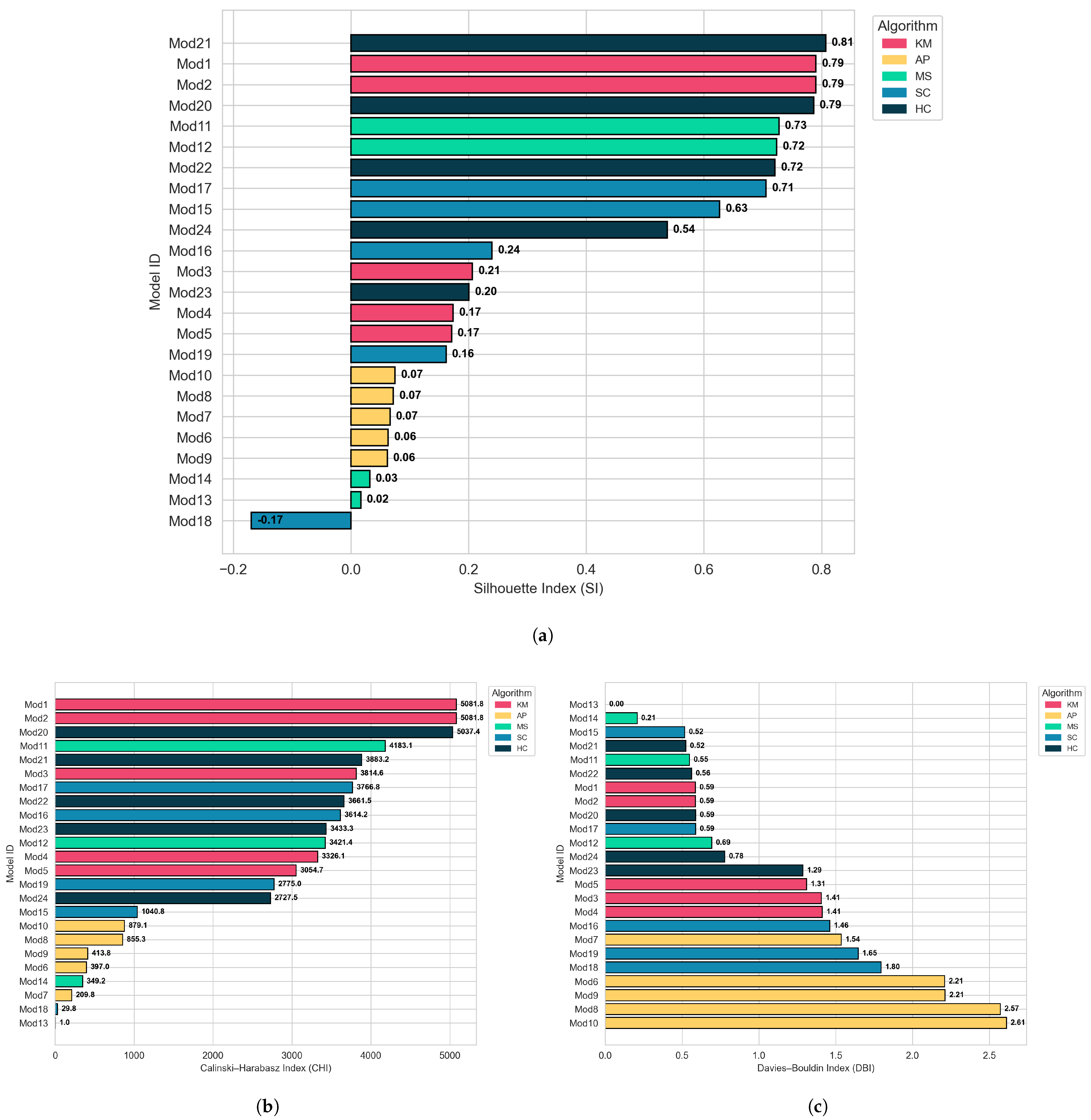
HC with complete linkage and K-Means with three clusters achieved the best Silhouette scores (0.8071 and 0.7905). This indicates well-defined clusters. Configurations with more clusters, such as SC with five clusters, showed negative metrics. Mean Shift excelled with the default bandwidth but failed with high values. It is observed that parameter optimization is key to improving results.
Configurations with more clusters, such as SC with five clusters, showed negative metrics. Mean Shift excelled with the default bandwidth but failed with high values. It is observed that parameter optimization is key to improving results. However, the weaker performance of Affinity Propagation and Spectral Clustering suggests that purely algorithmic partitioning may overlook the psychological and contextual dimensions influencing online behavior. As highlighted by [
16,
19], social media interactions are shaped not only by structural relationships but also by emotional and value-based factors, such as identity, friendship, or perceived respect. This reinforces that computational clustering must be complemented by interpretive frameworks to fully capture the complexity of digital social dynamics.
Figure 4a shows a bar chart for the Silhouette metric. The highest values are in HC (complete, three clusters) and K-Means (multiple with three clusters). Configurations such as SC with five clusters fall into negative territory, while AP and Mean Shift with many clusters have low values. This highlights that fewer clusters favor cohesion. The bars decrease with increasing parameter complexity.
Figure 4b presents the graph for Calinski–Harabasz. K-Means and HC dominate with values over 5000 in three clusters. Mean Shift with bandwidth None reaches 4183. Configurations with many clusters, such as Mean Shift with 898, drop to 1.0. SC varies from 3766 to 29. This indicates better separation in simple setups.
Figure 4c illustrates Davies–Bouldin with bars. Low (best) values are for SC (0.5166) and Mean Shift (0.0 at the extreme). HC and K-Means are around 0.5–0.6 at the optimal level. Poor configurations rose to 2.611 for AP. Mean Shift with bandwidth 0.5 reaches 0.0, but with many clusters. This indicates sensitivity to noise. Low bars favor density in specific cases.
Hypothesis tests were applied to the internal validation metrics (Silhouette, Calinski–Harabasz, and Davies–Bouldin) to compare all models and identify the most prominent ones. The Friedman test was appropriate for nonparametric comparisons with multiple treatments [
57]. The analysis yielded a statistic of 49.76 with a
p-value of 0.0009, confirming the existence of significant differences between configurations (
p < 0.05). Subsequently, Nemenyi’s post hoc test was used to perform pairwise comparisons [
58], identifying which models exhibited statistically significant differences in performance, with p-values indicating significant differences (e.g., Mod21 vs. others often <0.01).
The results show that Hierarchical Clustering (HC) in the Mod21 configuration achieved the best overall performance, with an average rank of 3.33. K-Means, in the Mod1 and Mod2 configurations, followed closely, both obtaining an average rank of 3.83. In fourth place was Mean Shift (Mod11) with 4.67, and in fifth place HC (Mod20) with 5.33. The average rank values derive from the Friedman test, which assigns ranks to each configuration based on the evaluated metrics-lower ranks indicating better overall performance. The Nemenyi post hoc test further confirmed that the first three configurations (Mod21, Mod1, and Mod2) are significantly superior (
p < 0.01) to the lower-performing ones, reinforcing the robustness of the hierarchical and K-Means approaches. Full comparative results for all 24 configurations are presented in
Table 3.
These findings reinforce that, under a three-cluster configuration, models based on HC (Mod21 and Mod20) and K-Means (Mod1 and Mod2) are positioned as the most consistent. At the same time, alternative approaches such as Spectral Clustering or Affinity Propagation exhibit inferior performance. More broadly, these outcomes align with the theoretical perspective emphasized in recent literature-that risk perception and digital behavior are inherently multidimensional phenomena. As discussed in prior studies, integrating computational and psychological approaches enables a deeper understanding of how adolescents interpret and respond to online risks [
16,
19]. Thus, our results not only validate the technical robustness of clustering-based analysis but also contribute to the interdisciplinary effort to connect algorithmic insight with behavioral meaning in digital contexts.
These findings reinforce that, under three clusters, the configurations based on HC (Mod21 and Mod20) and K-Means (Mod1 and Mod2) are positioned as the most consistent. At the same time, alternative approaches such as Spectral Clustering or Affinity Propagation show inferior performance in comparison.
5. Discussion
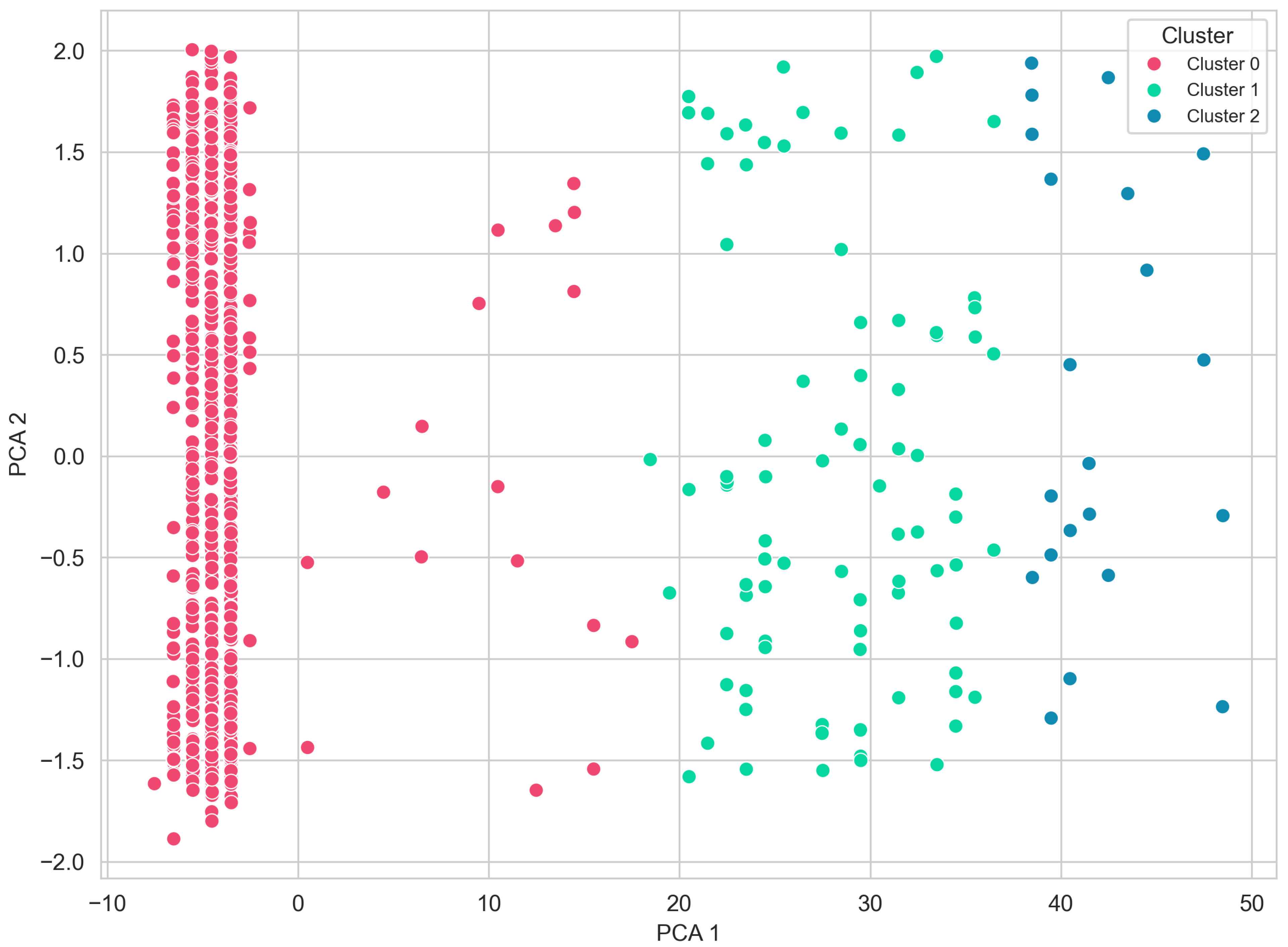
Three well-differentiated groups were identified on the PCA plane in the configuration obtained with HC (Mod21). Cluster 0, composed mainly of children around 11 years old (
n = 787), shows a high prevalence of digital risk behaviors such as following strangers (60%), followed by pretending to be someone else (20%). Cluster 1, composed chiefly of adults around 43 years old (
n = 87), maintains the tendency to follow strangers, although taking photographs without permission is more prevalent in this group. On the other hand, Cluster 2, made up of adults over 57 years old (
n = 21), stands out for the presence of practices linked to the publication of photographs without consent as the second most reported behavior. As shown in
Figure 5, the clusters generated with this algorithm are presented visually.
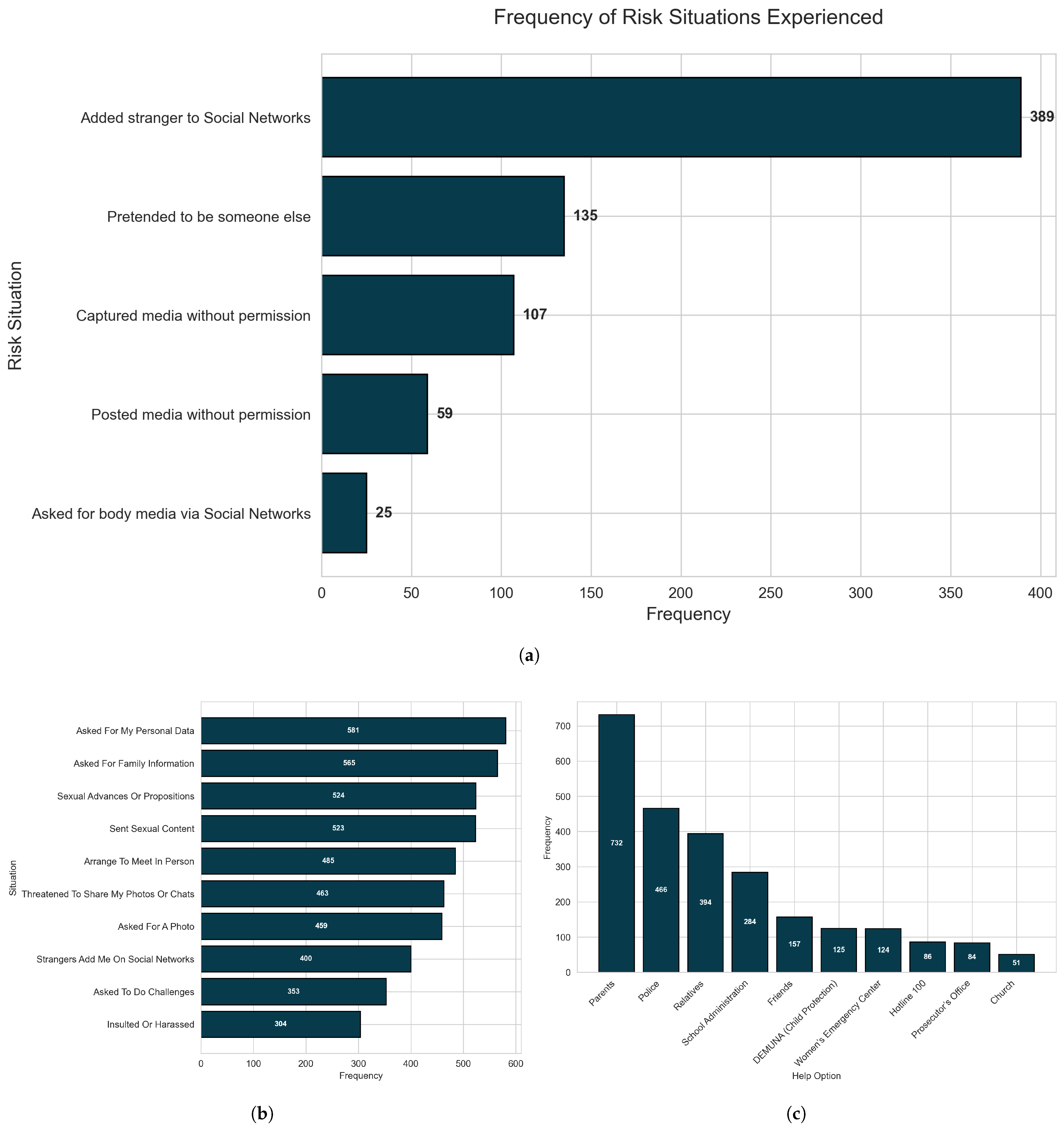
Across all three groups, the main perceived experiences of digital harassment are receiving requests for personal data and experiencing advances, which suggests a typical pattern of vulnerability at different stages of life. Regarding responses to these situations, seeking help from parents remains the first option in all three clusters, followed by the police; however, some significant nuances are evident: while in Clusters 0 and 1, family members appear as the third source of support, in Cluster 2, a shift toward friends emerges as the predominant alternative, reflecting a generational difference in the construction of networks of trust and support.
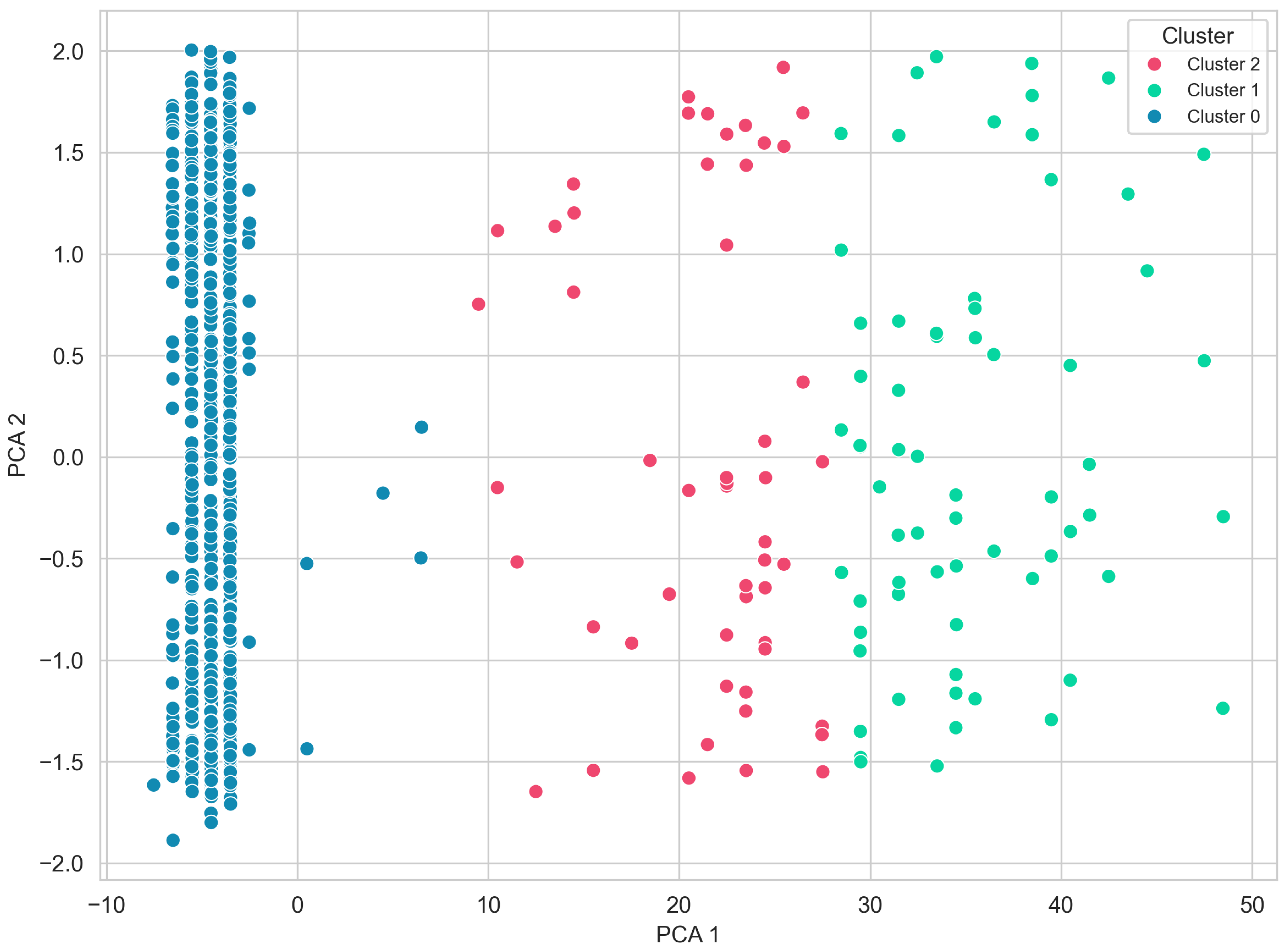
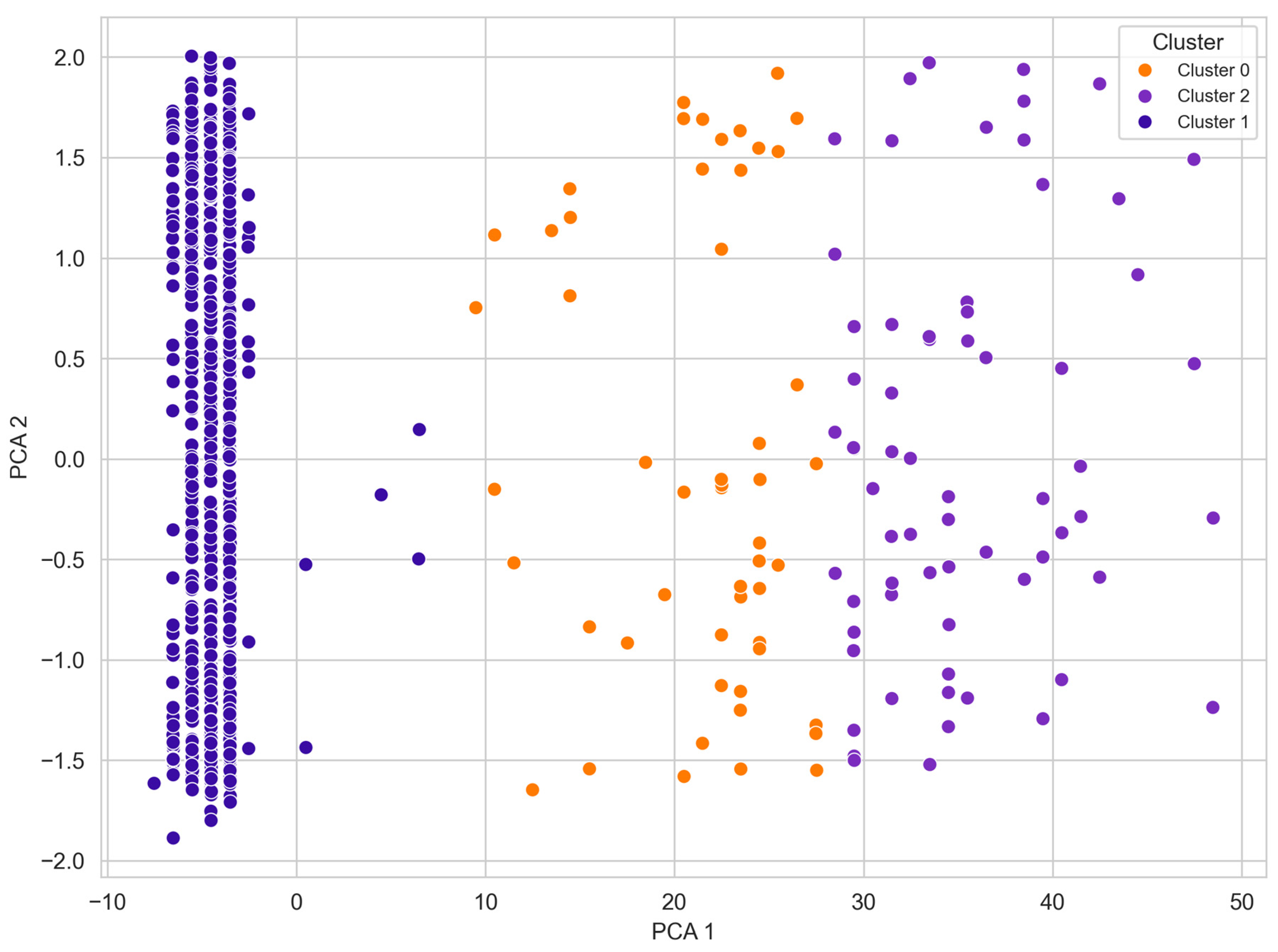
In the configuration obtained with K-Means (Mod1 and Mod2), the clusters show clear differentiation in terms of age and social media usage patterns. Cluster 0, composed of young people with an average age of 11, represents the entire student population and reflects a strong use of platforms such as YouTube, TikTok, and Instagram, which coincides with trends typical of the child and adolescent population. Cluster 1, made up of adults approximately 51 years old, prioritizes TikTok, followed by YouTube and Facebook, demonstrating an adaptation to emerging networks while maintaining an established platform like Facebook. Cluster 2, made up of young adults with an average age of 36, shows a digital consumption pattern centered on TikTok, Facebook, and YouTube, suggesting a balance between recreational social networks and more formal interaction. As shown in
Figure 6 and
Figure 7, the clusters generated with this algorithm are presented visually.
These results directly inform Peru’s ongoing efforts toward digital safety and education. The identification of a cluster of children (around 11 years old) with high-risk online behaviors underscores the need for preventive digital education at an early age, before secondary school. While national initiatives have strengthened technical safeguards—such as centralized authentication in educational platforms—there is a parallel need to embed digital-citizenship training that addresses behavioral dimensions inside the social media and apps students use daily.
Regarding reported risk situations, a worrying pattern is observed across all three groups: 41.5% of children admit to having invited strangers representing the Cluster 0, a figure that rises to 46.27% in Cluster 1 and reaches 58.49% in Cluster 2, demonstrating that exposure to unsafe practices is not limited to early childhood but increases in early adulthood. Finally, when analyzing responses to situations of digital harassment or risk, it is observed that in all three clusters, parents remain the primary source of support, even among adults, suggesting that trust in the family environment continues to be the central axis of support networks in all age groups analyzed.
At the policy level, these findings are aligned with Peru’s Digital Transformation Policy toward 2030, which prioritizes inclusion, digital skills, and security. The presence of digital risks across different stages of life demonstrates that digital literacy is a continuous requirement, extending beyond the school environment into workplaces and community contexts. Public institutions that offer training in digital and cybersecurity topics for local authorities can incorporate modules designed for specific age groups, such as basic digital safety for children in early primary education, privacy and digital resilience for working adults, and consent and responsible media use for older adults. Schools can integrate behavioral indicators, including reports of being followed online or sharing personal information, to support adaptive policy evaluation and informed decision making. Awareness initiatives for families and communities also play a key role, since many adults seek support from relatives when facing online harassment or misuse of personal data. Programs that encourage community ambassadors and intergenerational dialogue can serve as culturally appropriate strategies to strengthen digital resilience across diverse social contexts.
Author Contributions
Conceptualization, Y.P.V.; methodology, Y.P.V.; software, P.A.R.S.; validation, Y.P.V. and R.S.E.Q.; formal analysis, Y.P.V., R.S.E.Q. and P.A.R.S.; investigation, Y.P.V., R.S.E.Q. and P.A.R.S.; data curation, P.A.R.S.; writing—original draft preparation, Y.P.V., R.S.E.Q. and P.A.R.S.; writing—review and editing, Y.P.V.; visualization, P.A.R.S.; supervision, Y.P.V. and R.S.E.Q.; funding acquisition, Y.P.V. All authors have read and agreed to the published version of the manuscript.
Funding
This research was funded by Universidad La Salle Arequipa, Peru grant number P-01-CFI-2024 and the APC was funded by Universidad La Salle Arequipa, Peru.
Institutional Review Board Statement
Not applicable.
Informed Consent Statement
Not applicable.
Data Availability Statement
The data presented in this study are available on request from the corresponding author. The data are not publicly available due to privacy.
Acknowledgments
The authors of this article would like to acknowledge Universidad La Salle Arequipa, Peru, for funding this study. We also acknowledge to eBIZ LATIN AMERICA, a company based in Lima, Peru, for conducting the study that collected the data for this article.
Conflicts of Interest
The authors declare no conflicts of interest.
References
- Mandić, S.; Ricijaš, N.; Dodig Hundrić, D. Effects of Gender and Social Network Use on High School Students’ Emotional Well-Being during COVID-19. Psychiatry Int. 2024, 5, 154–168. [Google Scholar] [CrossRef]
- Ramírez García, A.; Gutiérrez-Arenas, M.P.; Ruiz-Calzado, I. Social networks: Influence on the deep learning of secondary school students. Digit. Educ. Rev. 2025, 46, 40–50. [Google Scholar] [CrossRef]
- Moreira De Freitas, R.J.; Oliveira, T.N.C.; Melo, J.A.L.D.; do Vale e Silva, J.; de Oliveira e Melo, K.C.; Fernandes, S.F.F. Percepções dos adolescentes sobre o uso das redes sociais e sua influência na saúde mental. Enfermería Glob. 2021, 20, 324–364. [Google Scholar] [CrossRef]
- Espinoza-Guillén, B.; Chávez-Vera, M.D. El uso de las redes sociales: Una perspectiva de género. Maskana 2021, 12, 19–24. [Google Scholar] [CrossRef]
- Astorga-Aguilar, C.; Schmidt-Fonseca, I. Peligros de las redes sociales: Cómo educar a nuestros hijos e hijas en ciberseguridad. Rev. Electrónica Educ. 2019, 23, 1–24. [Google Scholar] [CrossRef]
- Matkovic, R.; Vejmelka, L.; Kljucevic, Z. Use of security settings on social networks of elementary and high school students in the Split-Dalmatia County. In Proceedings of the 2020 43rd International Convention on Information, Communication and Electronic Technology (MIPRO), Opatija, Croatia, 28 September–2 October 2020; pp. 1476–1481. [Google Scholar] [CrossRef]
- Carcelén-García, S.; Díaz-Bustamante Ventisca, M.; Galmes-Cerezo, M. Young People’s Perception of the Danger of Risky Online Activities: Behaviours, Emotions and Attitudes Associated with Their Digital Vulnerability. Soc. Sci. 2023, 12, 164. [Google Scholar] [CrossRef]
- Varela, J.J.; Álamos, P.; Guzmán, P.; Marsollier, R.; Exposito, C.; Romo, F.; López, C.; Miranda, R. Cyberbullying against teachers in Latin America during the pandemic: The negative effects on their Levels of Well-Being through Burnout. J. Sch. Violence 2025, 24, 446–460. [Google Scholar] [CrossRef]
- Ghai, S.; Magis-Weinberg, L.; Stoilova, M.; Livingstone, S.; Orben, A. Social media and adolescent well-being in the Global South. Curr. Opin. Psychol. 2022, 46, 101318. [Google Scholar] [CrossRef]
- Malamud, O.; Cueto, S.; Cristia, B.; Beuermann, D. Do children benefit from internet access? Experimental evidence from Peru. J. Dev. Econ. 2019, 138, 41–56. [Google Scholar] [CrossRef]
- Regalado Chamorro, M.; Medina Gamero, A.; Tello Cabello, R. La salud mental en adolescentes: Internet, redes sociales y psicopatología. Atención Primaria 2022, 54, 102487. [Google Scholar] [CrossRef] [PubMed]
- Perez-Oyola, J.C.; Walter-Chavez, D.M.; Zila-Velasque, J.P.; Pereira-Victorio, C.J.; Failoc-Rojas, V.E.; Vera-Ponce, V.J.; Valladares-Garrido, D.; Valladares-Garrido, M.J. Internet addiction and mental health disorders in high school students in a Peruvian region: A cross-sectional study. BMC Psychiatry 2023, 23, 408. [Google Scholar] [CrossRef]
- Fontalvo-Herrera, T.J.; Vega-Hernández, M.A.; Mejía-Zambrano, F. Método de clustering e inteligencia artificial para clasificar y proyectar delitos violentos en Colombia. Rev. Científica Gen. José María Córdova 2023, 21, 551–572. [Google Scholar] [CrossRef]
- Wang, Y.; Sun, H. Behavior feature extraction method of college students’ social network in sports field based on clustering algorithm. J. Intell. Syst. 2022, 31, 477–488. [Google Scholar] [CrossRef]
- Zhang, S.; Tao, S.; Zhang, Y.L.; Zhou, J.; Wei, J.; Chen, M.; Hu, Q.; Zheng, H.; Wang, Z.L. Examining the spectrum of problematic online behaviors in Chinese adolescents: A network analysis of smartphone, gaming, and social media use. Comput. Hum. Behav. 2025, 167, 108611. [Google Scholar] [CrossRef]
- Korres Alonso, O.; Elexpuru-Albizurii, I.; Moro Inchaurtieta, Á.; Aran-Ramspott, S. Redes sociales y valores percibidos: Diferencias de género en adolescentes y jóvenes. Aloma Rev. De Psicol. Ciències De L’Educació I De L’Esport 2025, 43, 10–22. [Google Scholar] [CrossRef]
- Park, J.; Gracie, J.; Alsoubai, A.; Razi, A.; Wisniewski, P.J. Personally Targeted Risk vs. Humor: How Online Risk Perceptions of Youth vs. Third-Party Annotators Differ based on Privately Shared Media on Instagram. In Proceedings of the 23rd Annual ACM Interaction Design and Children Conference, Delft, The Netherlands, 17–20 June 2024; pp. 1–13. [Google Scholar] [CrossRef]
- Razi, A.; Alsoubai, A.; Kim, S.; Ali, S.; Stringhini, G.; De Choudhury, M.; Wisniewski, P.J. Sliding into My DMs: Detecting Uncomfortable or Unsafe Sexual Risk Experiences within Instagram Direct Messages Grounded in the Perspective of Youth. Proc. ACM Hum.-Comput. Interact. 2023, 7, 1–29. [Google Scholar] [CrossRef]
- Hancock, J.; Liu, S.X.; Luo, M.; Mieczkowski, H. Psychological Well-Being and Social Media Use: A Meta-Analysis of Associations between Social Media Use and Depression, Anxiety, Loneliness, Eudaimonic, Hedonic and Social Well-Being. 2022. Available online: https://papers.ssrn.com/sol3/papers.cfm?abstract_id=4053961 (accessed on 30 August 2025).
- Sani, A.I.; Vieira, A.P.; Dinis, M.A.P. Social Networks, the Internet, and risks: Portuguese parents’ perception of online grooming. Rev. Avaliação Psicológica 2021, 20, 486–494. [Google Scholar] [CrossRef]
- Razi, A.; Agha, Z.; Chatlani, N.; Wisniewski, P. Privacy Challenges for Adolescents as a Vulnerable Population. 2020. Available online: https://papers.ssrn.com/sol3/papers.cfm?abstract_id=3587558 (accessed on 30 August 2025).
- Badillo-Urquiola, K.; Harpin, S.; Wisniewski, P. Abandoned but Not Forgotten: Providing Access While Protecting Foster Youth from Online Risks. In Proceedings of the 2017 Conference on Interaction Design and Children, Stanford, CA, USA, 27–30 June 2017; pp. 17–26. [Google Scholar] [CrossRef]
- Wisniewski, P.; Xu, H.; Rosson, M.B.; Perkins, D.F.; Carroll, J.M. Dear Diary: Teens Reflect on Their Weekly Online Risk Experiences. In Proceedings of the 2016 CHI Conference on Human Factors in Computing Systems, San Jose, CA, USA, 7–12 May 2016; pp. 3919–3930. [Google Scholar] [CrossRef]
- Pazdur, M.; Tutus, D.; Haag, A.C. Risk Factors for Problematic Social Media Use in Youth: A Systematic Review of Longitudinal Studies. Adolesc. Res. Rev. 2025, 10, 237–253. [Google Scholar] [CrossRef]
- Bozzola, E.; Spina, G.; Agostiniani, R.; Barni, S.; Russo, R.; Scarpato, E.; Di Mauro, A.; Di Stefano, A.V.; Caruso, C.; Corsello, G.; et al. The Use of Social Media in Children and Adolescents: Scoping Review on the Potential Risks. Int. J. Environ. Res. Public Health 2022, 19, 9960. [Google Scholar] [CrossRef] [PubMed]
- Vismara, M.; Girone, N.; Conti, D.; Nicolini, G.; Dell’Osso, B. The current status of Cyberbullying research: A short review of the literature. Curr. Opin. Behav. Sci. 2022, 46, 101152. [Google Scholar] [CrossRef]
- Ali, S.; Haykal, H.A.; Youssef, E.Y.M. Child Sexual Abuse and the Internet—A Systematic Review. Hum. Arenas 2023, 6, 404–421. [Google Scholar] [CrossRef]
- Núñez-Gómez, P.; Larrañaga, K.P.; Rangel, C.; Ortega-Mohedano, F. Critical Analysis of the Risks in the Use of the Internet and Social Networks in Childhood and Adolescence. Front. Psychol. 2021, 12, 683384. [Google Scholar] [CrossRef]
- Zhang, X.; Guo, F.; Chen, T.; Pan, L.; Beliakov, G.; Wu, J. A Brief Survey of Machine Learning and Deep Learning Techniques for E-Commerce Research. J. Theor. Appl. Electron. Commer. Res. 2023, 18, 2188–2216. [Google Scholar] [CrossRef]
- Wani, A.A. Comprehensive analysis of clustering algorithms: Exploring limitations and innovative solutions. PeerJ Comput. Sci. 2024, 10, e2286. [Google Scholar] [CrossRef]
- Uelwer, T.; Robine, J.; Wagner, S.S.; Höftmann, M.; Upschulte, E.; Konietzny, S.; Behrendt, M.; Harmeling, S. A survey on self-supervised methods for visual representation learning. Mach. Learn. 2025, 114, 111. [Google Scholar] [CrossRef]
- Moujahid, A.; Dornaika, F. Advanced unsupervised learning: A comprehensive overview of multi-view clustering techniques. Artif. Intell. Rev. 2025, 58, 234. [Google Scholar] [CrossRef]
- Singh, J.; Singh, D. A comprehensive review of clustering techniques in artificial intelligence for knowledge discovery: Taxonomy, challenges, applications and future prospects. Adv. Eng. Informatics 2024, 62, 102799. [Google Scholar] [CrossRef]
- Pitafi, S.; Anwar, T.; Sharif, Z. A Taxonomy of Machine Learning Clustering Algorithms, Challenges, and Future Realms. Appl. Sci. 2023, 13, 3529. [Google Scholar] [CrossRef]
- Ikotun, A.M.; Ezugwu, A.E.; Abualigah, L.; Abuhaija, B.; Heming, J. K-means clustering algorithms: A comprehensive review, variants analysis, and advances in the era of big data. Inf. Sci. 2023, 622, 178–210. [Google Scholar] [CrossRef]
- Zubair, M.; Iqbal, M.A.; Shil, A.; Chowdhury, M.J.M.; Moni, M.A.; Sarker, I.H. An Improved K-means Clustering Algorithm Towards an Efficient Data-Driven Modeling. Ann. Data Sci. 2024, 11, 1525–1544. [Google Scholar] [CrossRef]
- Ge, H.; Wang, L.; Pan, H.; Zhu, Y.; Zhao, X.; Liu, M. Affinity Propagation Based on Structural Similarity Index and Local Outlier Factor for Hyperspectral Image Clustering. Remote Sens. 2022, 14, 1195. [Google Scholar] [CrossRef]
- Abdulah, S.; Atwa, W.; Abdelmoniem, A.M. Active clustering data streams with affinity propagation. ICT Express 2022, 8, 276–282. [Google Scholar] [CrossRef]
- Chen, Q.; He, L.; Diao, Y.; Zhang, K.; Zhao, G.; Chen, Y. A Novel Neighborhood Granular Meanshift Clustering Algorithm. Mathematics 2022, 11, 207. [Google Scholar] [CrossRef]
- Shumaila, M.N. A Comparison of K-Means and Mean Shift Algorithms. Int. J. Theor. Appl. Math. 2021, 7, 76–84. [Google Scholar] [CrossRef]
- Ding, L.; Li, C.; Jin, D.; Ding, S. Survey of spectral clustering based on graph theory. Pattern Recognit. 2024, 151, 110366. [Google Scholar] [CrossRef]
- Berahmand, K.; Saberi-Movahed, F.; Sheikhpour, R.; Li, Y.; Jalili, M. A Comprehensive Survey on Spectral Clustering with Graph Structure Learning. arXiv 2025, arXiv:2501.13597. [Google Scholar] [CrossRef]
- Gao, C.X.; Dwyer, D.; Zhu, Y.; Smith, C.L.; Du, L.; Filia, K.M.; Bayer, J.; Menssink, J.M.; Wang, T.; Bergmeir, C.; et al. An overview of clustering methods with guidelines for application in mental health research. Psychiatry Res. 2023, 327, 115265. [Google Scholar] [CrossRef] [PubMed]
- Ezugwu, A.E.; Ikotun, A.M.; Oyelade, O.O.; Abualigah, L.; Agushaka, J.O.; Eke, C.I.; Akinyelu, A.A. A comprehensive survey of clustering algorithms: State-of-the-art machine learning applications, taxonomy, challenges, and future research prospects. Eng. Appl. Artif. Intell. 2022, 110, 104743. [Google Scholar] [CrossRef]
- Subasi, O.; Bel, O.; Manzano, J.; Barker, K. The Landscape of Modern Machine Learning: A Review of Machine, Distributed and Federated Learning. arXiv 2023, arXiv:2312.03120. [Google Scholar] [CrossRef]
- Iglesias Vázquez, F.; Zseby, T. Temporal silhouette: Validation of stream clustering robust to concept drift. Mach. Learn. 2024, 113, 2067–2091. [Google Scholar] [CrossRef]
- Jeon, H.; Aupetit, M.; Shin, D.; Cho, A.; Park, S.; Seo, J. Sanity Check for External Clustering Validation Benchmarks using Internal Validation Measures. arXiv 2022, arXiv:2209.10042. [Google Scholar] [CrossRef]
- Zampolo, R.F.; Lopes, F.H.R.; de Oliveira, R.M.S.; Fernandes, M.F.; Dmitriev, V. Dimensionality Reduction and Clustering Strategies for Label Propagation in Partial Discharge Data Sets. Energies 2024, 17, 5936. [Google Scholar] [CrossRef]
- Ashari, I.F.; Nugroho, E.D.; Baraku, R.; Yanda, I.N.; Liwardana, R. Analysis of Elbow, Silhouette, Davies-Bouldin, Calinski-Harabasz, and Rand-Index Evaluation on K-Means Algorithm for Classifying Flood-Affected Areas in Jakarta. J. Appl. Informatics Comput. 2023, 7, 95–103. [Google Scholar] [CrossRef]
- Ros, F.; Riad, R.; Guillaume, S. PDBI: A partitioning Davies-Bouldin index for clustering evaluation. Neurocomputing 2023, 528, 178–199. [Google Scholar] [CrossRef]
- Castro, O.; Bruneau, P.; Sottet, J.S.; Torregrossa, D. Landscape of High-performance Python to Develop Data Science and Machine Learning Applications. arXiv 2023, arXiv:2302.03307. [Google Scholar] [CrossRef]
- Harris, C.R.; Millman, K.J.; Van Der Walt, S.J.; Gommers, R.; Virtanen, P.; Cournapeau, D.; Wieser, E.; Taylor, J.; Berg, S.; Smith, N.J.; et al. Array programming with NumPy. Nature 2020, 585, 357–362. [Google Scholar] [CrossRef]
- Nylund, K.; Mankoff, J.; Potluri, V. MatplotAlt: A Python Library for Adding Alt Text to Matplotlib Figures in Computational Notebooks. Comput. Graphics Forum 2025, 44, e70119. [Google Scholar] [CrossRef]
- Jain, A. Machine learning in materials research: Developments over the last decade and challenges for the future. Curr. Opin. Solid State Mater. Sci. 2024, 33, 101189. [Google Scholar] [CrossRef]
- Quispe, J.O.Q.; Quispe, A.C.F.; Calvo, N.C.L.; Toledo, O.C. Analysis and Selection of Multiple Machine Learning Methodologies in PyCaret for Monthly Electricity Consumption Demand Forecasting. Mater. Proc. 2024, 18, 5. [Google Scholar] [CrossRef]
- Chávez Espejo, F.; Toche Vega, F.L.; Zúñiga Izquierdo, C.E.; Iriarte Ahon, E.A. Percepción y Uso de las Redes Sociales en Escolares en el Perú, 2024. Available online: https://ebiz.pe/noticias/ebiz-presento-estudio-sobre-riesgos-a-menores-peruanos-en-internet/ (accessed on 30 August 2025).
- Liu, J.; Xu, Y. T-Friedman Test: A New Statistical Test for Multiple Comparison with an Adjustable Conservativeness Measure. Int. J. Comput. Intell. Syst. 2022, 15, 29. [Google Scholar] [CrossRef]
- Liu, Y.; Chen, W. A SAS macro for testing differences among three or more independent groups using Kruskal-Wallis and Nemenyi tests. J. Huazhong Univ. Sci. Technol. [Med. Sci.] 2012, 32, 130–134. [Google Scholar] [CrossRef] [PubMed]
| Disclaimer/Publisher’s Note: The statements, opinions and data contained in all publications are solely those of the individual author(s) and contributor(s) and not of MDPI and/or the editor(s). MDPI and/or the editor(s) disclaim responsibility for any injury to people or property resulting from any ideas, methods, instructions or products referred to in the content. |