Effectiveness of Oral Sensory-Motor Stimulation in Premature Infants in the Neonatal Intensive Care Unit (NICU) Systematic Review

 , ,
, ,
Abstract
1. Introduction
2. Materials and Methods
2.1. Study Design
2.2. Search Strategy
2.3. Criteria for Considering Studies
2.4. Assessment of the Methodological Quality of Studies
2.5. Data Analysis
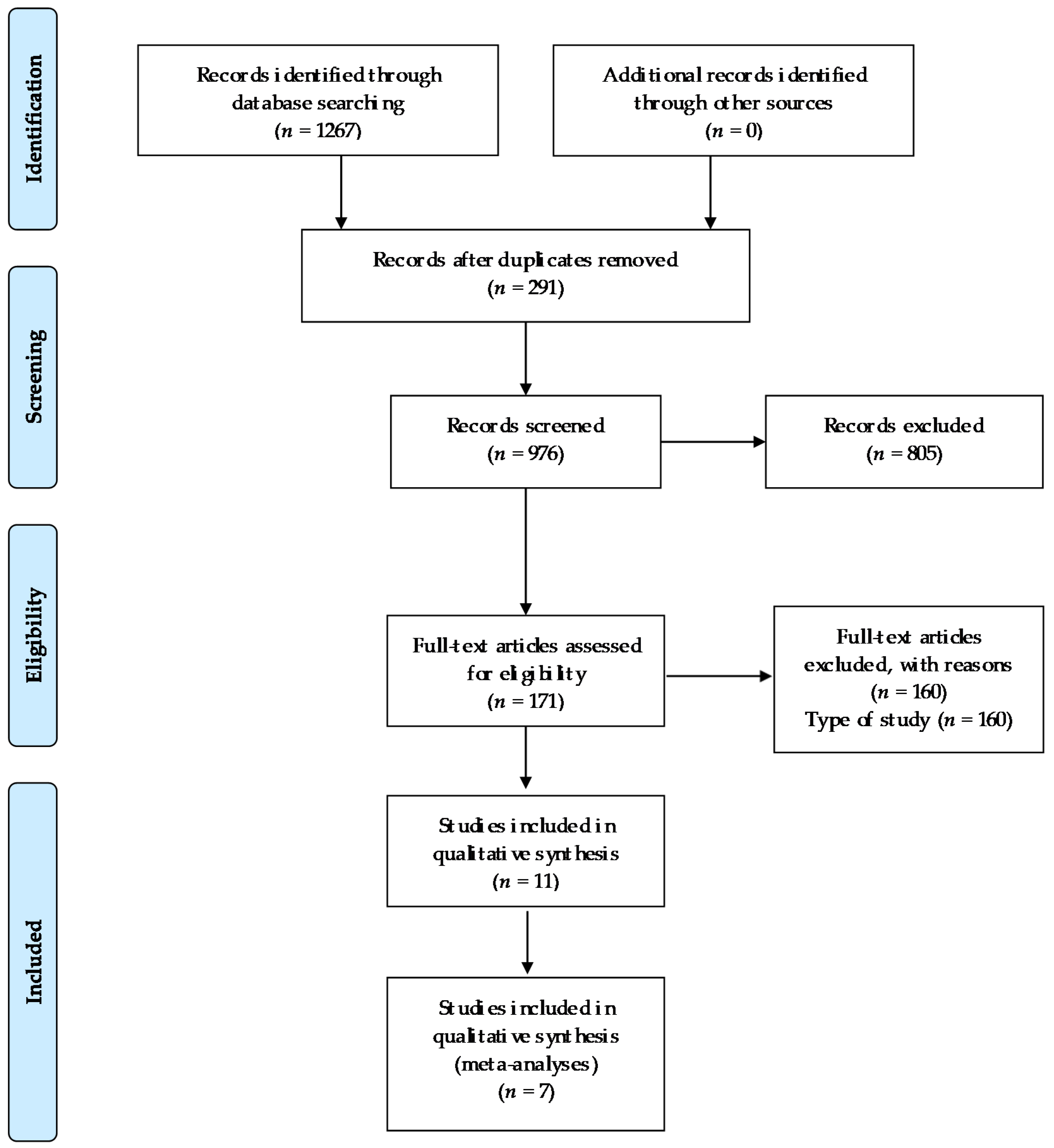
3. Results
3.1. Data Extraction
3.2. Assessment of the Methodological Quality of Studies
3.3. Data Analysis and Outcomes
4. Discussion
5. Conclusions
Author Contributions
Funding
Institutional Review Board Statement
Informed Consent Statement
Conflicts of Interest
References
- Caserío Carbonero, S.; Pallás Alonso, C.R. Seguimiento del prematuro/gran prematuro en Atención Primaria. Rev. Pediatr. Aten. Primaria 2009, 11, 443–450. [Google Scholar] [CrossRef] [Scilit]
- Goldenberg, R.L.; Culhane, J.F.; Iams, J.D.; Romero, R. Epidemiology and causes of preterm birth. Lancet 2008, 371, 75–84. [Google Scholar] [CrossRef] [Scilit]
- Thompson, J.M.D.; Irgens, L.M.; Rasmussen, S.; Daltveit, A.K. Secular trends in socio-economic status and the implications for preterm birth. Paediatr. Perinat. Epidemiol. 2006, 20, 182–187. [Google Scholar] [CrossRef] [Scilit]
- Blencowe, H.; Cousens, S.; Chou, D.; Oestergaard, M.; Say, L.; Moller, A.B.; Kinney, M.; Lawn, J. Born Too Soon: The global epidemiology of 15 million preterm births. Reprod. Health 2013, 10, S2. [Google Scholar] [CrossRef] [Scilit] [PubMed]
- Goldenberg, R.L.; Cliver, S.P.; Mulvihill, F.X.; Hickey, C.A.; Hoffman, H.J.; Klerman, L.V.; Johnson, M.J. Medical, psychosocial and behavioral risk factors do not explain the increased risk for low birth weight among black women. Am. J. Obstet. Gynecol. 1996, 175, 1317–1324. [Google Scholar] [CrossRef] [Scilit]
- Sullivan, M.C.; Hawes, K.; Winchester, S.B.; Miller, R.J. Developmental origins theory from prematurity to adult disease. J. Obstet. Gynecol. Neonatal Nurs. 2008, 37, 158–164. [Google Scholar] [CrossRef] [Scilit] [PubMed]
- Hendler, I.; Goldenberg, R.L.; Mercer, B.M.; Iams, J.D.; Meis, P.J.; Moawad, A.H.; MacPherson, C.A.; Caritis, S.N.; Miodovnik, M.; Menard, K.M.; et al. The Preterm Prediction study: Association between maternal body mass index and spontaneous and indicated preterm birth. Am. J. Obstet. Gynecol. 2005, 192, 882–886. [Google Scholar] [CrossRef] [Scilit]
- Ralser, E.; Mueller, W.; Haberland, C.; Fink, F.M.; Gutenberger, K.H.; Strobl, R.; Kiechl-Kohlendorfer, U. Rehospitalization in the first 2 years of life in children born preterm. Acta Paediatr. Int. J. Paediatr. 2012, 101, e1–e5. [Google Scholar] [CrossRef] [Scilit]
- Joseph, K.S. The natural history of pregnancy: Diseases of early and late gestation. BJOG An Int. J. Obstet. Gynaecol. 2011, 118, 1617–1629. [Google Scholar] [CrossRef] [Scilit]
- Smith, G.C.; Gutovich, J.; Smyser, C.; Pineda, R.; Newnham, C.; Tjoeng, T.H.; Vavasseur, C.; Wallendorf, M.; Neil, J.; Inder, T. Neonatal intensive care unit stress is associated with brain development in preterm infants. Ann. Neurol. 2011, 70, 541–549. [Google Scholar] [CrossRef] [Scilit]
- Im, H.; Kim, E. Effect of Yakson and Gentle Human Touch versus usual care on urine stress hormones and behaviors in preterm infants: A quasi-experimental study. Int. J. Nurs. Stud. 2009, 46, 450–458. [Google Scholar] [CrossRef] [Scilit] [PubMed]
- Westrup, B.; Böhm, B.; Lagercrantz, H.; Stjernqvist, K. Preschool outcome in children born very prematurely and cared for according to the Newborn Individualized Developmental Care and Assessment Program (NIDCAP). Acta Paediatr. Int. J. Paediatr. 2004, 93, 498–507. [Google Scholar] [CrossRef] [Scilit]
- Field, T.; Diego, M.; Hernandez-Reif, M. Preterm infant massage therapy research: A review. Infant Behav. Dev. 2010, 33, 115–124. [Google Scholar] [CrossRef] [Scilit] [PubMed]
- Field, T.; Diego, M.A.; Hernandez-Reif, M.; Deeds, O.; Figuereido, B. Moderate versus light pressure massage therapy leads to greater weight gain in preterm infants. Infant Behav. Dev. 2006, 29, 574–578. [Google Scholar] [CrossRef] [Scilit]
- Mahoney, M.C.; Cohen, M.I. Effectiveness of developmental intervention in the neonatal intensive care unit: Implications for neonatal physical therapy. Pediatr. Phys. Ther. 2005, 17, 194–208. [Google Scholar] [CrossRef] [Scilit]
- Dodgson, J.E.; Tarrant, M. Outcomes of a breastfeeding educational intervention for baccalaureate nursing students. Nurse Educ. Today 2007, 27, 856–867. [Google Scholar] [CrossRef] [Scilit] [PubMed]
- Angell, C.; Taylor, A.M. Alien knowledge: Preparing student midwives for learning about infant feeding-Education practice at a UK university. Nurse Educ. Today 2013, 33, 1411–1415. [Google Scholar] [CrossRef] [Scilit]
- Fernández Rego, F.J.; Gómez-Conesa, A. La fisioterapia en el presente y futuro de los niños que nacen demasiado pequeños, demasiado pronto. Fisioterapia 2012, 34, 1–3. [Google Scholar] [CrossRef] [Scilit]
- Barlow, S.M.; Finan, D.S.; Bradford, P.T.; Andreatta, R.D. Transitional properties of the mechanically evoked perioral reflex from infancy through adulthood. Brain Res. 1993, 623, 181–188. [Google Scholar] [CrossRef] [Scilit]
- Medoff-Cooper, B.; Rankin, K.; Li, Z.; Liu, L.; White-Traut, R. Multisensory Intervention for Preterm Infants Improves Sucking Organization. Adv. Neonatal Care 2015, 15, 142–149. [Google Scholar] [CrossRef] [Scilit] [PubMed]
- Amaizu, N.; Shulman, R.J.; Schanler, R.J.; Lau, C. Maturation of oral feeding skills in preterm infants. Acta Paediatr. Int. J. Paediatr. 2008, 97, 61–67. [Google Scholar] [CrossRef] [Scilit] [PubMed]
- Gaebler, C.P.; Hanzlik, J.R. The Effects of a Prefeeding Stimulation Program on Preterm Infants. Am. J. Occup. Ther. 1996, 50, 184–192. [Google Scholar] [CrossRef] [Scilit] [PubMed]
- Clawson, E.; Palinski, K.; Elliott, C. Outcome of intensive oral motor and behavioural interventions for feeding difficulties in three children with Goldenhar Syndrome. Pediatr. Rehabil. 2006, 9, 65–75. [Google Scholar] [CrossRef] [Scilit]
- Pinelli, J.; Symington, A.J. Non-nutritive sucking for promoting physiologic stability and nutrition in preterm infants. In Cochrane Database of Systematic Reviews; John Wiley & Sons, Ltd.: Hoboken, NJ, USA, 2005. [Google Scholar]
- Fucile, S.; Gisel, E.; Lau, C. Oral stimulation accelerates the transition from tube to oral feeding in preterm infants. J. Pediatr. 2002, 141, 230–236. [Google Scholar] [CrossRef] [Scilit] [PubMed]
- Lau, C. Développement de l’oralité chez le nouveau-né prématuré. Arch. Pediatr. 2007, 14, 35–41. [Google Scholar] [CrossRef] [Scilit]
- Tian, X.; Yi, L.J.; Zhang, L.; Zhou, J.G.; Ma, L.; Ou, Y.X.; Shuai, T.; Zeng, Z.; Song, G.M. Oral motor intervention improved the oral feeding in preterm infants: Evidence based on a meta-analysis with trial sequential analysis. Medicine 2015, 94, e1310. [Google Scholar] [CrossRef] [Scilit]
- Altimier, L.; Phillips, R. The Neonatal Integrative Developmental Care Model: Advanced Clinical Applications of the Seven Core Measures for Neuroprotective Family-centered Developmental Care. Newborn Infant Nurs. Rev. 2016, 16, 230–244. [Google Scholar] [CrossRef] [Scilit]
- Diego, M.A.; Field, T.; Hernandez-Reif, M. Preterm infant weight gain is increased by massage therapy and exercise via different underlying mechanisms. Early Hum. Dev. 2014, 90, 137–140. [Google Scholar] [CrossRef] [Scilit] [PubMed]
- Grassi, A.; Sgherri, G.; Chorna, O.; Marchi, V.; Gagliardi, L.; Cecchi, F.; Laschi, C.; Guzzetta, A. Early Intervention to Improve Sucking in Preterm Newborns: A Systematic Review of Quantitative Studies. Adv. Neonatal Care 2019, 19, 97–109. [Google Scholar] [CrossRef] [Scilit]
- Liberati, A.; Altman, D.G.; Tetzlaff, J.; Mulrow, C.; Gøtzsche, P.C.; Ioannidis, J.P.A.; Clarke, M.; Devereaux, P.J.; Kleijnen, J.; Moher, D. The PRISMA statement for reporting systematic reviews and meta-analyses of studies that evaluate health care interventions: Explanation and elaboration. PLoS Med. 2009, 6, e1000100. [Google Scholar] [CrossRef] [Scilit]
- Mamédio, C.; Roberto, M.; Nobre, C. The Pico Strategy for the Research Question. Rev. Lat.-Am. Enferm. 2007, 15, 508–511. [Google Scholar]
- Neura. University of Sydney Physiotherapy Evidence Database. Available online: https://www.pedro.org.au/english/downloads/pedro-scale/ (accessed on 1 March 2019).
- Cochrane Cochrane Training. Available online: https://training.cochrane.org/online-learning/core-software-cochrane-reviews/revman/revman-5-download (accessed on 1 May 2019).
- Epidemiología General y Demografía Sanitaria, 2010–2011. Open Course Ware (16633). Epidat: Pruebas Diagnósticas [Internet]. Universidad, Campus de Excelencia; Salamanca, Spain, 2005 [citado 1 de Mayo de 2014]. Recuperado a partir de: https://goo.gl/UfAwMe http://ocw.usal.es/ciencias-biosanitarias/epidemiologia-general-y-demografia-sanitaria/contenidos/01PROGRAMATE0RICO/01EPIDEMIOLOGIAenPDF/Tema08enPDF/08Tema8EstudiosEpidemiologicosDescriptivos.pdf. Available online: http://ocw.usal.es/ciencias-biosanitarias/epidemiologia-general-y-demografia-sanitaria/contenidos/01PROGRAMATE0RICO/01EPIDEMIOLOGIAenPDF/Tema08enPDF/08Tema8EstudiosEpidemiologicosDescriptivos.pdf (accessed on 1 May 2014).
- Ghomi, H.; Yadegari, F.; Soleimani, F.; Knoll, B.L.; Noroozi, M.; Mazouri, A. The effects of premature infant oral motor intervention (PIOMI) on oral feeding of preterm infants: A randomized clinical trial. Int. J. Pediatr. Otorhinolaryngol. 2019, 120, 202–209. [Google Scholar] [CrossRef] [Scilit]
- Hwang, Y.S.; Vergara, E.; Lin, C.H.; Coster, W.J.; Bigsby, R.; Tsai, W.H. Effects of prefeeding oral stimulation on feeding performance of preterm infants. Indian J. Pediatr. 2010, 77, 869–873. [Google Scholar] [CrossRef] [Scilit] [PubMed]
- Arora, K.; Goel, S.; Manerkar, S.; Konde, N.; Panchal, H.; Hegde, D.; Mondkar, J. Prefeeding Oromotor Stimulation Program for Improving Oromotor Function in Preterm Infants—A Randomized Controlled Trial. Indian Pediatr. 2018, 55, 675–678. [Google Scholar] [CrossRef] [Scilit]
- Bala, P.; Kaur, R.; Mukhopadhyay, K.; Kaur, S. Oromotor stimulation for transition from gavage to full oral feeding in preterm neonates: A Randomized controlled trial. Indian Pediatr. 2016, 53, 36–38. [Google Scholar] [CrossRef] [Scilit]
- Boiron, M.; Da Nobrega, L.; Roux, S.; Henrot, A.; Saliba, E. Effects of oral stimulation and oral support on non-nutritive sucking and feeding performance in preterm infants. Dev. Med. Child Neurol. 2007, 49, 439–444. [Google Scholar] [CrossRef] [Scilit]
- Fucile, S.; Gisel, E.G.; McFarland, D.H.; Lau, C. Oral and non-oral sensorimotor interventions enhance oral feeding performance in preterm infants. Dev. Med. Child Neurol. 2011, 53, 829–835. [Google Scholar] [CrossRef] [Scilit]
- Fucile, S.; Gisel, E.G.; Lau, C. Effect of an oral stimulation program on sucking skill maturation of preterm infants. Dev. Med. Child Neurol. 2005, 47, 158–162. [Google Scholar] [CrossRef] [Scilit]
- Fucile, S.; Gisel, E.G. Sensorimotor interventions improve growth and motor function in preterm infants. Neonatal Netw. 2010, 29, 359–366. [Google Scholar] [CrossRef] [Scilit] [PubMed]
- Aguilar-Rodríguez, M.; León-Castro, J.C.; Álvarez-Cerezo, M.; Aledón-Andújar, N.; Escrig-Fernández, R.; Rodríguez de Dios-Benlloch, J.L.; Hervás-Marín, D.; Vento-Torres, M. The Effectiveness of an Oral Sensorimotor Stimulation Protocol for the Early Achievement of Exclusive Oral Feeding in Premature Infants. A Randomized, Controlled Trial. Phys. Occup. Ther. Pediatr. 2020, 40, 371–383. [Google Scholar] [CrossRef] [Scilit] [PubMed]
- Fucile, S.; McFarland, D.H.; Gisel, E.G.; Lau, C. Oral and nonoral sensorimotor interventions facilitate suck-swallow-respiration functions and their coordination in preterm infants. Early Hum. Dev. 2012, 88, 345–350. [Google Scholar] [CrossRef] [Scilit] [PubMed]
- Fucile, S.; Milutinov, M.; Timmons, K.; Dow, K. Oral Sensorimotor Intervention Enhances Breastfeeding Establishment in Preterm Infants. Breastfeed. Med. 2018, 13, 473–478. [Google Scholar] [CrossRef] [Scilit] [PubMed]
- Mathai, S.; Fernandez, A.; Mondkar, J.; Kanbur, W. Effects of tactile-kinesthetic stimulation in preterms: A controlled trial. Indian Pediatr. 2001, 38, 1091–1098. [Google Scholar] [PubMed]
- Álvarez, M.J.; Fernández, D.; Gómez-Salgado, J.; Rodríguez-González, D.; Rosón, M.; Lapeña, S. The effects of massage therapy in hospitalized preterm neonates: A systematic review. Int. J. Nurs. Stud. 2017, 69, 119–136. [Google Scholar] [CrossRef] [Scilit] [PubMed]
- Lau, C.; Alagugurusamy, R.; Schanler, R.J.; Smith, E.O.; Shulman, R.J. Characterization of the Developmental Stages of Sucking in Preterm Infants During Bottle Feeding. Acta Paediatr. 2000, 89, 846–852. [Google Scholar] [CrossRef]



| Search Strategy 1 TS = ((“Premature Birth” OR “Infant, Extremely Premature” OR “Infant, Premature”) AND “Mouth” AND (“Physical Therapy Modalities” OR “Physical Therapy Specialty” OR “Physical Therapy Department, Hospital” OR “Physical Therapist Assistants”)) | ||||
| Database | Total Results | Filters and Inclusion Criteria | Elimination of Duplicates | Valid Results |
| PubMed | n = 4 | n = 4 | n = 4 | n = 4 |
| Scopus | n = 0 | n = 0 | n = 0 | n = 0 |
| WoS 1 | n = 0 | n = 0 | n = 0 | n = 0 |
| Search Strategy 2 TS = ((“Premature Birth” OR “Infant, Extremely Premature” OR “Infant, Premature”) AND “Mouth”) | ||||
| Database | Total Results | Filters and Inclusion Criteria | Elimination of Duplicates | Valid Results |
| PubMed | n = 282 | n = 23 | n = 19 | n = 3 |
| Scopus | n = 427 | n = 82 | n = 73 | n = 0 |
| WoS | n = 527 | n = 62 | n = 53 | n = 3 |
| Search Strategy 3. Advanced Search. “Premature” for title and abstract, “Stretching, mobilisation, manipulation, massage” for Therapy, “Head or neck” for Body part y “Clinical trial” for Method. | ||||
| Database | Total Results | Filters and Inclusion Criteria | Elimination of Duplicates | Valid Results |
| PEDro 2 | n = 2 | n = 1 | n = 1 | n = 1 |
| Search Strategy 4. Simple Search. “Oral sensorimotor intervention” | ||||
| Database | Total Results | Filters and Inclusion Criteria | Elimination of Duplicates | Valid Results |
| PEDro | n = 6 | n = 0 | n = 0 | n = 0 |
| Search Strategy 5. Simple Search. “Physiotherapy in premature infants” | ||||
| Database | Total Results | Filters and Inclusion Criteria | Elimination of Duplicates | Valid Results |
| PEDro | n = 12 | n = 2 | n = 2 | n = 0 |
| Search Strategy 6. Simple Search. “Oral sensorimotor intervention in preterm infants” | ||||
| Database | Total Results | Filters and Inclusion Criteria | Elimination of Duplicates | Valid Results |
| PEDro | n = 4 | n = 4 | n = 0 | n = 0 |
| Authors Country, Year | Sample (N) Groups (n) | Characteristics | Intervention |
|---|---|---|---|
| Fucile, S. Gisel, E.G. Lau, C. [41] USA, 2005 | n = 32 EG: oral stimulation (n = 16). CG: control group (n = 16). | Mean age (wks)/Gender G1: 28.2, 7M:9F G2: 28.1, 6M:10F Inclusion: Gestational age (26–29 weeks), Tube feeding, No congenital malformations, No chronic diseases | Total duration: 10 days Assessment −1 to 2 oral/feedings/day −6 to 8 oral feedings/day G1: oral stimulation program, stroking the perioral and intraoral (15 min) G2: no intervention |
| Boiron, M. Da Nobrega, L. Roux, S. Henrot, A. Saliba, E. [39] France, 2007 | n = 43 G1: Oral Stimulation + Oral support (n = 9). G2: Oral Stimulation (n = 11). G3: Oral support (n = 12). G4: Control group (n = 11). | Mean age (wks)/Gender G1: 31.3/M5:F4 G2: 31.1 M4:F7 G3: 31.6 M7:F5 G4: 31.1 M11:4F Inclusion: Gestational age (29–34 weeks), Naso-gastric tube feeding, No respiratory support in the preceding 48 h, Normal blood oxygen levels. Exclusion: Perinatal asphyxia, Intrauterine growth retardation, Severe jaundice with exsanguination transfusion, Cerebral lesions after severe grade III or IV intraventricular hemorrhage, Bronchopulmonary dysplasia were excluded | Total duration: 14 days. Assessment -D1: 1st day -D7: 4th day -D14: 14th day -D17: 17th day -D20: 20th day -D23: 23th day G1: Oral Stimulation+ oral support G2: Oral Stimulation G3: Oral Support G4: Control group Oral Stimulation: 12 min, once a day Oral Support during bottle feeding: 10 min, twice a day |
| Fucile, S. Gisel, E.G. [42] Canada, 2010 | n = 75 G1: Oral stimulation (O) (n = 19). G2: Tactile/Kinesthetic stimulation (T/K) (n = 18) G3: Oral + Tactile/Kinesthetic stimulation (O+T/K) (n = 18) G4: Control group (n = 20) | Mean age (wks)/Gender G1: 29.6 ± 1.5, M12:F7 G2: 29.1 ± 2, M11:F7 G3: 29.0 ± 1.8, M3:F8 G4: 29.4 ± 1.9. M16:F4 Inclusion: Gestational age (26–32 weeks), Appropriate size for their GA, Tube feeding, No congenital malformations, No chronic diseases | Total duration: 10 days. G1: 15-min oral stimulation (O) intervention twice a day (total: 30 min per day) G2: T/K 15-min tactile/kinesthetic intervention (T/K) (stroking the body) twice a day (total: 30 min per day) G3: 15-min O +15-min T/K G4: Control group |
| Hwang, Y.-S. Vergara, E. Lin, C.-H. Coster, W.J. Bigsby, R. Tsai, W.-H. [36] Taiwan, 2010 | n = 19 EG: oral stimulation CG: Control group | Mean age (wks)/Gender 28.1 ± 2.6,/7M:12F Inclusion: Gestational age (24–34), Inefficient feeders (<4 mL mL/milk in the first 5 min) Exclusion: Congenital anomalies affecting feeding and digestive function, Chromosomal or genetic problems, Medical instability | Total duration: 2 days EG: 5 min peri and intraoral stimulation CG: no intervention |
| Fucile, S. Gisel, E.G. McFarland, D.H. Lau, C. [40] Canada, 2011 | n = 75 G1: Oral stimulation (O) (n = 19). G2:Tactile/Kinesthetic stimulation (T/K) (n = 18). G3: Oral + Tactile/Kinesthetic stimulation (O+T/K) (n = 18). G4: Control group (n = 20). | Mean age (wks)/Gender G1: 29.6 (0.4) .2, 12M:7F G2: 29.1 (0.3), 11M:7F G3: 29.0 (0.3), 10M:8F G4: 29.4 (0.1), 16M:4F Inclusion: Gestational age (26–32 weeks), Appropriate size for their GA, Tube feeding, No congenital malformations, No chronic diseases | Total duration: 10 days Assessment −1 to 2 oral/feedings/day(o/f/d)−3 to 5 o/f/d −6 to 8 o/f/d G1: 15-min oral stimulation (O) intervention twice a day (total: 30 min per day) G2: T/K 15-min tactile/kinesthetic intervention (T/K) (stroking the body) twice a day (total: 30 min per day) G3: 15-min O +15-min T/K G4: Control group |
| Fucile, S. McFarland, D.H. Gisel, E.G. Lau, C. [44] Canadá, 2012 | n = 75 G1: Oral stimulation (O) (n = 19) G2:Tactile/Kinesthetic stimulation (T/K) (n = 18) G3: Oral + Tactile/Kinesthetic stimulation (O + T/K) (n = 18) G4: Control group (n = 20) | Mean age (wks)/Gender G1: 29.6 (0.4) .2, 12M:7F G2: 29.1 (0.3), 11M:7F G3: 29.0 (0.3), 10M:8F G4: 29.4 (0.1), 16M:4F Inclusion: Gestational age (26–32 weeks), Appropriate size for their GA, Tube feeding, No congenital malformations, No chronic diseases | Total duration: 10 days Assessment −1 to 2 oral/feedings/day(o/f/d)−3 to 5 o/f/d −6 to 8 o/f/d G1: 15-min oral stimulation (O) intervention twice a day (total: 30 min per day) G2: T/K 15-min tactile/kinesthetic intervention (T/K) (stroking the body) twice a day (total: 30 min per day) G3: 15-min O +15-min T/K G4: Control group |
| Bala, P. Kaur, R. Mukhopadhyay, K. Kaur, S. [38] India, 2016 | n = 51 EG: Oro-motor stimulation (OMS) (n = 25) CG: Control group (n = 26). | Mean age (wks)/Gender EG: 30.9; 10M:15F CG: 30.3; 16M:10F Inclusion: Gestational age (28–34 weeks), Tube feeding Exclusion: Respiratory distress, Congenital malformations | Total duration from birth to discharge EG: OMS by mother five times a day before each feed CG: Kangaroo mother care and non-nutritive sucking |
| Fucile, S. Milutinov, M. Timmons, K. Dow, K. [45] Canada, 2018 | n = 31 EG: oral sensorimotor stimulation(n = 16). CG: Control group (n = 15). | Mean age (wks)/Gender EG: 32.1 ± 1.6, 11M:5F CG: 31.2 ± 2.6, 13M:2F Inclusion: Gestacional age > 34 e., Appropriate size for GA, Tube feeding, Mother’s breastfeed intention Exclusion: Congenital malformations, Chronic medical complications, Bronchopulmonary, Dysplasia, Necrotizing enterocolitis, Intraventricular hemorrhage (IVH) grades III and IV, Periventricular leukomalacia, Congenital anomalies | Total duration: 10 days EG: 15-min oral sensorimotor stimulation once day. CG: 15-min sham intervention once day. |
| Arora, K. Goel, S. Manerkar, S Konde, N. Panchal, H. Hegde, D. Mondkar, J. [37] India, 2018 | n = 30 EG: Premature Infant Oro-motor Intervention (PIOMI (n = 16) CG: Control group (n = 14). | Mean age (wks)/Gender EG: 30; 8M:8F CG: 30.5; 8M:6F Inclusion: Gestational age (28–34 weeks), Tube feeding Exclusion: Respiratory distress, Congenital malformations | Total duration: 7 days. Assessment: Baseline, 7 days EG: PIOMI three times a day CG: sham intervention |
| Ghomi, H. Yadegari, F. Soleimani, F. Knoll, B.L. Noroozi, M. Mazouri, A. [35] Iran, 2019 | n = 30 EG: Premature Infant Oro-motor Intervention (PIOMI) (n = 15) CG: Control group (n = 15). | Mean age (days)/Gender EG: 197.50; 7M:8F CG: 197.60; 8M:7F Inclusion: Gestational age (26–29 weeks), Tube feeding, Apgar score of 6 at 5 min after birth Exclusion: Respiratory distress, Congenital malformations chromosomal abnormalities, Bronchopulmonary, Dysplasia, Necrotizing enterocolitis, Intraventricular hemorrhage (IVH) grades III and IV | Total duration: 10 days. Assessment: 1st, 4th, 8th and 10th days. EG: 5 min, PIOMI once a day CG: Control group |
| Aguilar-Rodriguez M. Leon-Castro JC. Alvarez-Cerezo M. Aledon-Andujar N. Escrig-Fernandez R. Rodríguez deDios-Benlloch J. Hervás-Marín D. Vento-Torre M. Spain, 2019 | n = 46 EG: OSMS protocol (n = 24) CG: Control group (n = 22). | Mean age (wks)/Gender EG: 28.21 (1.33) 27M:19F CG: 197.60; 8M:7F Inclusion: Gestational age (25–30 weeks), Tube feeding Exclusion: Congenital anomalies affecting feeding, Pathologies affecting hemodynamic or cardiorespiratory stability, Suffering severe sepsis | Total duration:2 weeks, 20 sessions in total, except weekends EG: OSMS protocol, 10 min CG: Control group |
| Authors Country, Year | Outcomes | Results | ||
|---|---|---|---|---|
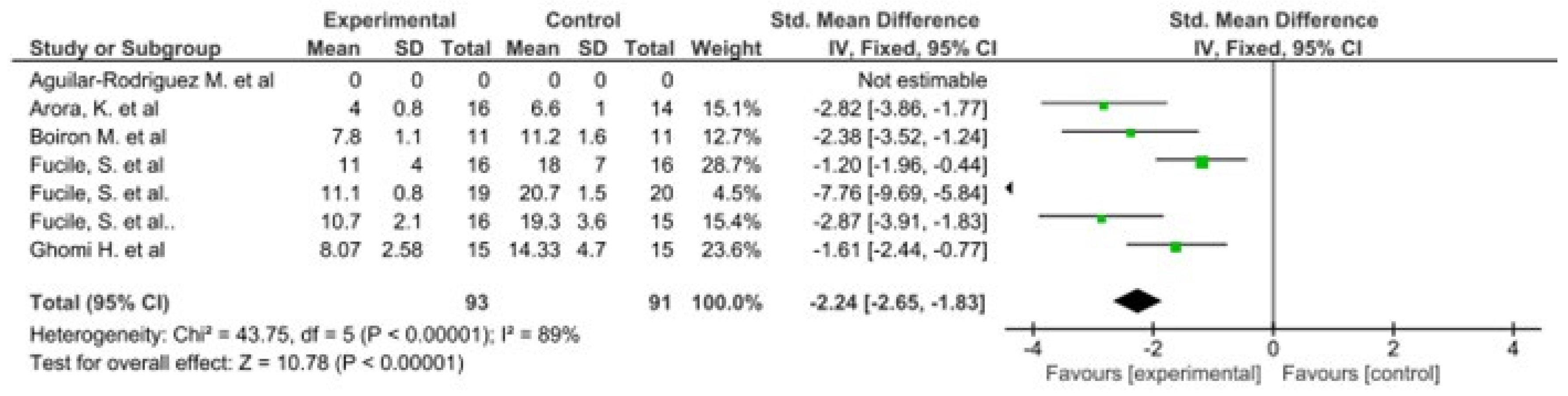
| Fucile, S. Gisel, E.G. Lau, C. [41] USA, 2005 | Nr days to reach full oral feeding | Mean (SD) Nr days to reach full oral feeding EG: 11 (4)/CG: 18 (7) p = 0.005 | ||
| Overall intake (volume taken/volume prescribed %) | 1 to 2 oral feedings/day Overall intake: EG: 80 (30)/CG: 50 (30) p = 0.001 | 6 to 8 oral feedings/day Overall intake EG: 89 (30)/CG: 67 (33) p = 0.06 | ||
| Rate of milk transfer (mL/min) | 1 to 2 oral feedings/day Rate of milk transfer EG: 1.6 (0.7)/CG: 0.9 (0.6) p = 0.02 | 6 to 8 oral feedings/day Rate of milk transfer EG: 2.3 (1.0)/CG: 1.6 (0.9) p = 0.08 | ||
| Suction and expression amplitudes (Mikro-tip sensor) | 1 to 2 oral feedings/day Suction amplitude EG: −31.9 (39.4) a/CG: −27.6 (21.4) p = 0.47 Expression amplitude EG: 32.9 (36.6) CG: 7.9 (9.03) p = 0.0003 | 6 to 8 oral feedings/day Suction amplitude EG: −38.9 (25.2)/CG: −38.5 (26.5) p = 0.36 Expression amplitude EG: 12.4 (8.8)/CG: 9.7 (9.4) p = 0.01 | ||
| Boiron, M. Da Nobrega, L. Roux, S. Henrot, A. Saliba, E. [39] France, 2007 | Nr days to reach full oral feeding | ANCOVA (means (SEM)) Nr days to reach full oral feeding F [3,39] = 3.71, p < 0.00 (group) | ||
| Sucking pressure | Effects G2, (D1, D7, D14) Sucking pressure F [3,38] = 20.30, p < 0.001 (group) group×time interaction F [6,76] = 10.96, p < 0.0001, ε = 0.81 | Effects G1, (D17, D20, D23) Sucking pressure F [3,38] = 18.49, p < 0.001 (group) group × time interaction F [3,114] = 4.19, p = 0.014, ε = 0.77 | ||
| Succking activity | Effects G2, (D1, D7, D14) Suking activity F [3,38] = 11.77, p < 0.001 (group) group × time interaction F [6,76] = 8.35, p < 0.0001, ε = 0.92 | Effects G1, (D17, D20, D23) Suking activity F [3,38] = 11.03, p < 0.001 (group) group × time interaction F [3,114] = 9.58, p < 0.001, ε = 0.87 | ||
| Daily bottle feeds | Daily bottle feeds F [3,38] = 24.23, p < 0.001 (group) group × time interaction F [2,76) = 9.13, p < 0.0005, ε = 0.88 | |||
| Daily milk ingestion | Daily milk ingestion F [3,38] = 8.72, p = 0.002 (group) group×time interaction F [6,76] = 3.13, p = 0.01, ε = 0.94 | |||
| No significant difference between the four groups for birth-weight or GA at birth at the outset and end of the protocol | ||||
| Fucile, S. Gisel, E.G. [42] Canada, 2010 | Daily weight gain | One-way ANOVA Daily weight gain During intervention G1: 17.4 ± 6.1 G2: 17.6 ± 3.8 G3: 15.7 ± 4.6 G4: 12.6 ± 5.9 p = 0.014 | Daily weight gain After intervention G1: 16.1 ± 6.9 G2: 15.1 ± 7.4 G3: 13.1 ± 7.3 G4: 14.3 ± 5.4 p = 0.583 | |
| Test of Infant Motor Performance (TIMP). | TIMP G1: 34.6 ± 4.5 G2: 36.7 ± 4.0 G3: 36.9 ± 4.7 G4: 30.2 ± 8.2 p = 0.003 | |||
| Hwang, Y.-S. Vergara, E. Lin, C.-H. Coster, W.J. Bigsby, R. Tsai, W.-H. [36] Taiwan, 2010 | Intake rate | Intake rate, initial 5 min: EG: 2.3 (1.6) CG: 1.7 (1.1), p = 0.0021 | ||
| Feeding parameters: no differences except to: Feeding start. Alertness categories Day 1. Extreme to middle EG vs. CG, p = 0.0016 Day 2. Extreme to middle EG vs. CG, p = 0.0016 | |||
| No more significant differences were found. | |||
| Fucile, S. Gisel, E.G McFarland, D.H. Lau, C. [40] Canada, 2011 |
| No. days to reach full oral feeding G1: 11.1 (0.8) G2: 11.4 (0.8) G3: 10.0 (0.8) G4: 20.7 (1.5) p ≤ 0.001 | ||
| Volume transfer (mL/min) | Volume transfer F [3,69] = 17.018; p < 0.00 (group) Group × time interaction F [6,141] = 4.879; p < 0.001 | |||
| Rate of transfer (mL/min) | Rate of transfer F [3,69] = 4.634; p = 0.009 | |||
| Volume loss (mL/min) | Volume loss F [3,69] = 4.567; p = 0.00 (group) | |||
| Fucile, S. McFarland, D.H. Gisel, E.G. Lau, C. [44] Canadá, 2012 | Sucking stage scale (Lau et al.) | One-way ANOVA 1 to 2 oral feedings/day Stage of sucking G1: 3.3 (0.1) vs. control group p = 0.003 G2: 3.1 (0.1) G3: 3.2 (0.1) G4: 2.8 (0.1) F [3,69] = 5.222, p = 0.00 (group) group × time interaction F [6,141] = 2.930, p = 0.02 | 3 to 5 oral feedings/day Stage of sucking G1: 3.3 (0.1) G2: 3.2 (0.1) G3: 3.1 (0.1) G4: 3.0 (0.1) | 6 to 8 oral feedings/day Stage of sucking G1: 3.7 (0.1) vs. G2, G3 and G4: p < 0.039 vs. control group p = 0.003 G2: 3.3 (0.1) G3: 3.2 (0.1) G4: 3.1 (0.1) F [3,69] = 5.222, p = 0.00 (group) group × time interaction F [6,141] = 2.930, p = 0.02 There were no significant in suck–swallow coordination |
| Suck to swallow ratio | 1 to 2 oral feedings/day Suction amplitude G1: −35.3 (0.5) G2: −34.8 (6.3) G3: −28.8 (4.5) G4:−24.0 (3.4) F3 = 694.804, p = 0.011 (group) | 3 to 5 oral feedings/day Suction amplitude G1: −53.4 (5.5) G2: −42.4 (8.7) G3: −41.8 (8.1) G4: −35.9 (5.0) F [3,69] = 4.804, p = 0.011 (group) | 6 to 8 oral feedings/day Suction amplitude G1: −46.4 (5.5) G2: −46.4 (6.7) G3: −46.7 (8.8) G4: −38.3 (5.8) F [3,69] = 4.804, p = 0.011 (group) | |
| Swallow–respiration | 1 to 2 oral feedings/day Expression amplitude G1: 6.5 (1.9) G2: 1.9 (0.6) G3: 6.7 (1.5) G4: 1.5 (0.3) F [3,69] = 8.347, p = 0.006 (group) Group × time F [2,138] = 8.434, p = 0.007 | 3 to 5 oral feedings/day Expression amplitude G1: 3.4 (1.2) G2: 1.9 (0.4) vs. G4 p = 0.034 G3: 3.4 (1.0) G4: 3.7 (0.6) | 6 to 8 oral feedings/day Expression amplitude G1: 15.7 (2.6) vs. G2, G3 and G4, p < 0.003 G2: 3.2 (0.7) G3: 2.9 (0.9) G4: 2.5 (0.5) F [3,69] = 8.347, p = 0.006 (group) Group × time F [2,138] = 8.434, p = 0.007 There were no significant in suck–swallow coordination. | |
| Bala, P. Kaur, R. Mukhopadhyay, K. Kaur, S. [38] India, 2016 |
| Transition time (Median (IQR) -Partial spoon feed EG: 5 (3–9.5) CG: 10 (5–15) p = 0.006 -Full spoon feed EG: 7 (5–14.5) CG: 12.5 (7–21) p = 0.03) | Feed mood at discharge -Partial breast/spoon EG: 14 (56) CG: 8 (31) p = 0.01 -Only spoon feed EG: 10 (40) CG: 18 (69) p = 0.03 | |
| Fucile, S. Milutinov, M. Timmons, K. Dow, K. [45] Canada, 2018 | No. days to reach full oral feeding | No. days to reach full oral feeding EG:10.7–2.1 CG:19.3–3.6 p = 0.01 | ||
| Acquisition of breastfeeding | Acquisition of breastfeeding EG:11 CG: 5 p = 0.049 | |||
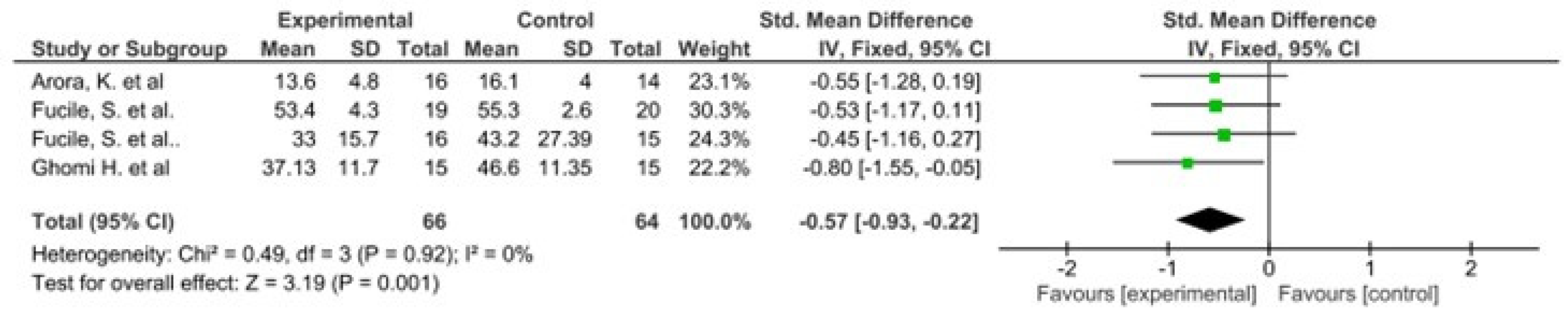
| Duration of hospital stay | Duration of hospital stay EG: 33.0 (15.7) CG: 43.2 (27.39) p = 0.054 | |||
| PIBBS score | There were no significant in PIBBS and breastfeeding duration follow-up. | |||
| Arora, K. Goel, S. Manerkar, S Konde, N. Panchal, H. Hegde, D. Mondkar, J. [37] India, 2018 | Duration of hospital stay | No. days to reach full oral feeding EG: 4.0 (0.8) CG: 6.6 (1.0) p < 0.001 | ||
| Neonatal Oro-Motor Assessment Scale (NOMAS) | Improvement in NOMAS score EG: 9.3 (1.7) CG: 4.8 (1.5) p < 0.001 | |||
| No significant difference in terms of hospital stay after enrolment and weight gain at discharge. | |||
| Ghomi, H. Yadegari, F. Soleimani, F. Knoll, B.L. Noroozi, M. Mazouri, A. [35] Iran, 2019 | No. days to reach full oral feeding | No. days to reach full oral feeding EG: 8.07 (2.58) CG: 14.33 (4.70) p < 0.001 | ||
| Duration of hospital stay | Duration of hospital stay EG: 37.13 (11.70) CG: 46.60 (11.35) p = 0.03 | |||
| Weight gain after intervention | No significant difference in terms of weight gain at discharge. | |||
| Aguilar-Rodriguez M. Leon-Castro J.C. Alvarez-Cerezo M. Aledon-Andujar N. Escrig-Fernandez R. Rodríguez deDios-Benlloch J. Hervás-Marín D. Vento-Torre M. Spain, 2019 | No. days to reach full oral feeding | Mean (SD) Median (1st, 3r) No. days to reach full oral feeding EG:36 (26.75, 40) CG: 42.5 (34.25, 47.75) p = 0.0013 | ||
| No. days 100% intake | No. days 100% intake EG: 26.33 (10.11) CG: 32.64 (9.44) p = 0.040 | |||
| Duration of hospital stay | Duration of hospital stay EG: 43 (39, 50.25) CG: 50 (43.25, 59.75) p = 0.028 | |||
| Weight gain after intervention | No significant difference in terms of weight gain at discharge. | |||
| Study, Year | PEDro Scale Items | Total | ||||||||||
|---|---|---|---|---|---|---|---|---|---|---|---|---|
| Item 1 | Item 2 | Item 3 | Item 4 | Item 5 | Item 6 | Item 7 | Item 8 | Item 9 | Item 10 | Item 11 | ||
| Fucile, 2010 [43] | 1 | 1 | 0 | 1 | 0 | 0 | 1 | 0 | 0 | 1 | 1 | 5 |
| Fucile, 2018 [45] | 1 | 1 | 0 | 0 | 0 | 0 | 1 | 0 | 0 | 1 | 1 | 4 |
| Fucile, 2012 [44] | 1 | 1 | 0 | 0 | 0 | 0 | 0 | 1 | 0 | 1 | 1 | 4 |
| Fucile, 2011 [40] | 1 | 1 | 0 | 1 | 1 | 1 | 0 | 1 | 0 | 1 | 1 | 7 |
| Ghomi, 2019 [35] | 1 | 1 | 0 | 1 | 1 | 0 | 1 | 1 | 0 | 1 | 1 | 7 |
| Borion, 2007 [39] | 0 | 1 | 0 | 1 | 0 | 0 | 0 | 0 | 0 | 1 | 1 | 4 |
| Hwang, 2010 [36] | 1 | 1 | 0 | 1 | 1 | 0 | 0 | 1 | 0 | 1 | 0 | 5 |
| Arora, 2018 [37] | 1 | 1 | 1 | 1 | 1 | 0 | 1 | 1 | 0 | 1 | 1 | 8 |
| Bala, 2016 [38] | 1 | 1 | 1 | 1 | 1 | 0 | 0 | 1 | 0 | 1 | 0 | 6 |
| Fucile, 2005 [41] | 1 | 1 | 0 | 0 | 0 | 0 | 0 | 1 | 0 | 1 | 1 | 4 |
| Aguilar, 2020 [44] | 1 | 1 | 0 | 0 | 0 | 0 | 1 | 1 | 0 | 1 | 1 | 6 |
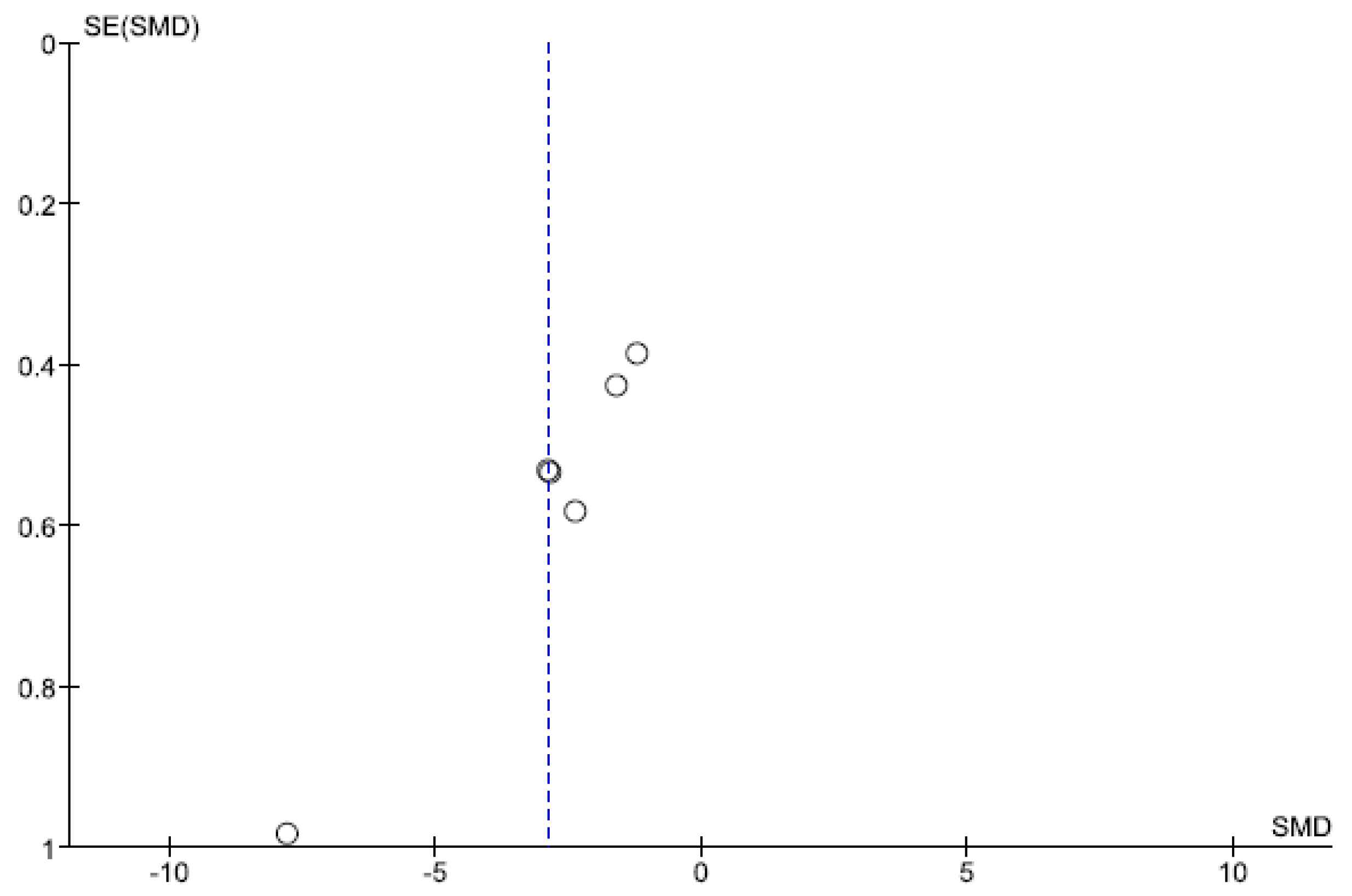
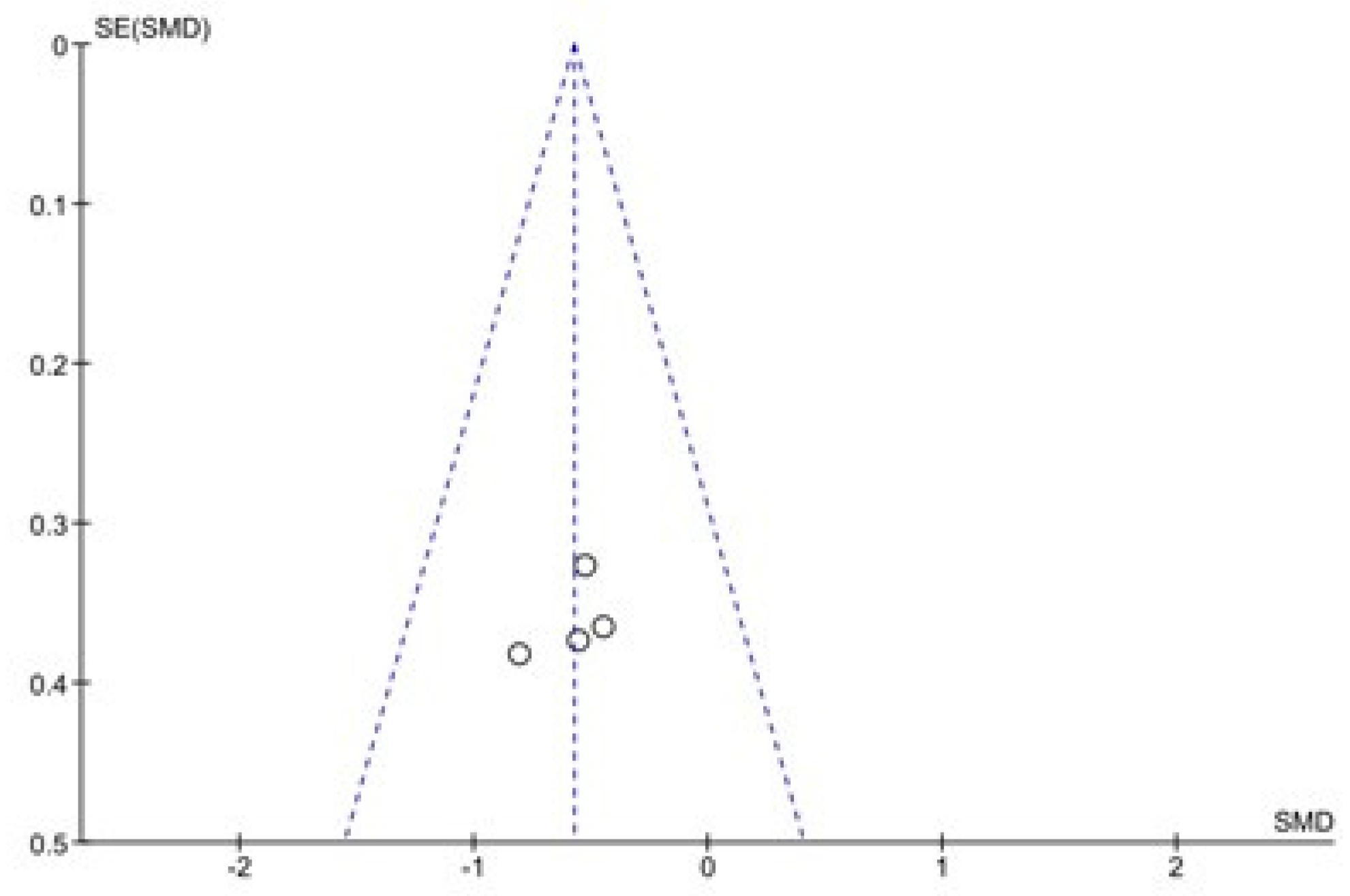
| Variable | Begg (p) | Egger (p) |
|---|---|---|
| Duration of hospital stay | p = 0.0085 | p = 0.0003 |
| Number of days to reach full oral feeding | p = 0.7341 | p = 0.2092 |
Publisher’s Note: MDPI stays neutral with regard to jurisdictional claims in published maps and institutional affiliations. |
© 2021 by the authors. Licensee MDPI, Basel, Switzerland. This article is an open access article distributed under the terms and conditions of the Creative Commons Attribution (CC BY) license (https://creativecommons.org/licenses/by/4.0/).
Share and Cite
Rodriguez Gonzalez, P.; Perez-Cabezas, V.; Chamorro-Moriana, G.; Ruiz Molinero, C.; Vazquez-Casares, A.M.; Gonzalez-Medina, G. Effectiveness of Oral Sensory-Motor Stimulation in Premature Infants in the Neonatal Intensive Care Unit (NICU) Systematic Review. Children 2021, 8, 758. https://doi.org/10.3390/children8090758
Rodriguez Gonzalez P, Perez-Cabezas V, Chamorro-Moriana G, Ruiz Molinero C, Vazquez-Casares AM, Gonzalez-Medina G. Effectiveness of Oral Sensory-Motor Stimulation in Premature Infants in the Neonatal Intensive Care Unit (NICU) Systematic Review. Children. 2021; 8(9):758. https://doi.org/10.3390/children8090758
Chicago/Turabian StyleRodriguez Gonzalez, Paula, Veronica Perez-Cabezas, Gema Chamorro-Moriana, Carmen Ruiz Molinero, Ana María Vazquez-Casares, and Gloria Gonzalez-Medina. 2021. "Effectiveness of Oral Sensory-Motor Stimulation in Premature Infants in the Neonatal Intensive Care Unit (NICU) Systematic Review" Children 8, no. 9: 758. https://doi.org/10.3390/children8090758
APA StyleRodriguez Gonzalez, P., Perez-Cabezas, V., Chamorro-Moriana, G., Ruiz Molinero, C., Vazquez-Casares, A. M., & Gonzalez-Medina, G. (2021). Effectiveness of Oral Sensory-Motor Stimulation in Premature Infants in the Neonatal Intensive Care Unit (NICU) Systematic Review. Children, 8(9), 758. https://doi.org/10.3390/children8090758