The Impact of Parental Behaviors on Children’s Lifestyle, Dietary Habits, Screen Time, Sleep Patterns, Mental Health, and BMI: A Scoping Review

 ,
,  ,
,  and
and
Abstract
1. Introduction
2. Materials and Methods
2.1. Protocol and Registration
2.2. Eligibility Criteria
2.3. Literature Search and Study Selection
2.4. Inclusion and Exclusion Criteria
2.5. Data Extraction
2.6. Data Items, Synthesis, and Charting
2.7. Risk of Bias and Study Quality Assessment
3. Results
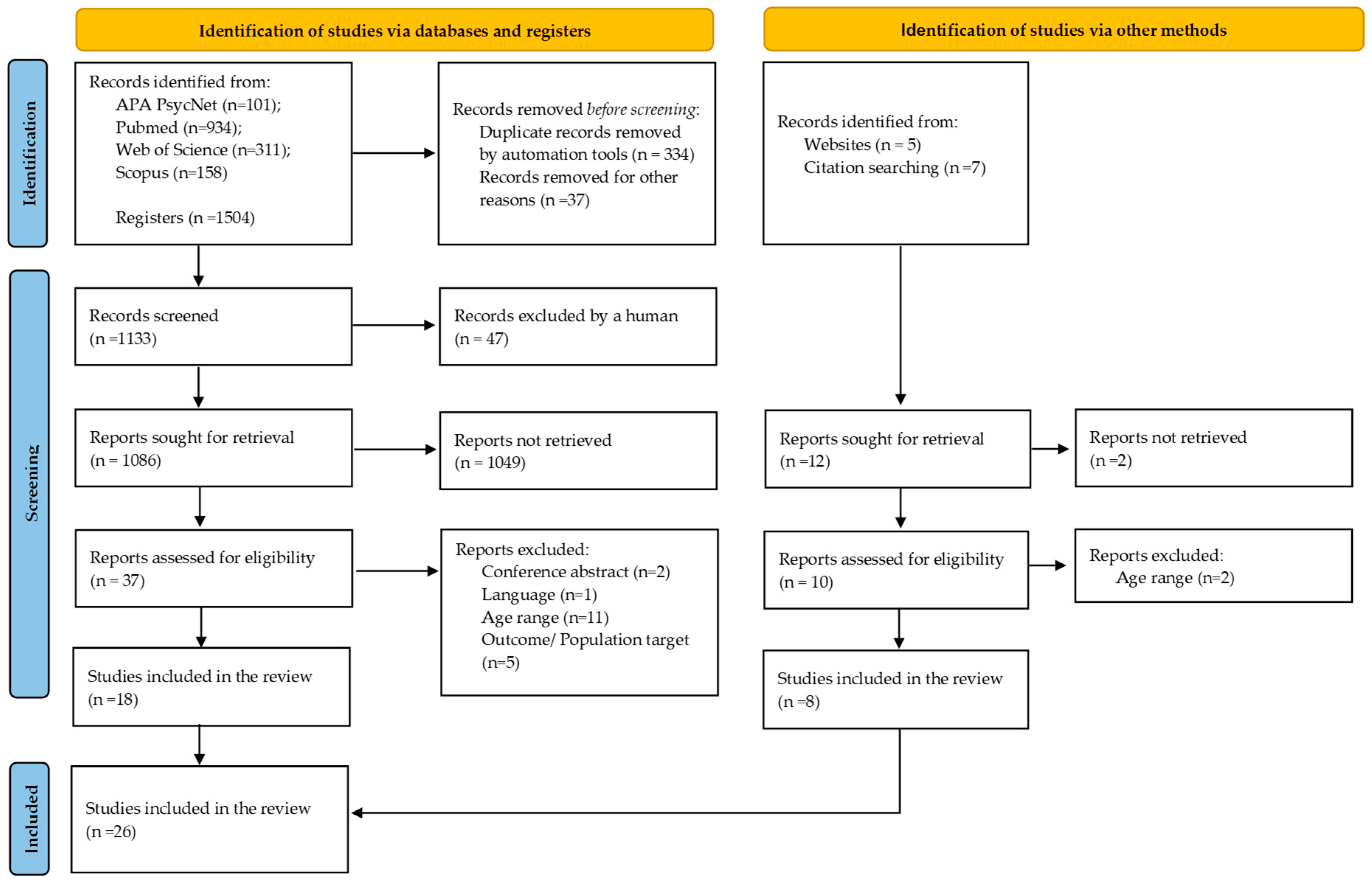
3.1. Selection and Description of Studies
3.2. Main Findings
4. Discussion
4.1. Family Environment, Characteristics, and BMI
4.2. Physical Activity and Sedentary Behavior
4.3. Nutritional Habits and Eating Habits
4.4. Mental Health
4.5. Screen Time
4.6. Quality and Sleep Habits
4.7. Study Strengths and Limitations
5. Conclusions
Supplementary Materials
Author Contributions
Funding
Institutional Review Board Statement
Informed Consent Statement
Data Availability Statement
Conflicts of Interest
References
- Ventura, A.K.; Birch, L.L. Does parenting affect children’s eating and weight status? Int. J. Behav. Nutr. Phys. Act. 2008, 5, 15. [Google Scholar] [CrossRef] [Scilit] [PubMed]
- Jones, B.L.; Orton, A.L.; Tindall, S.W.; Christensen, J.T.; Enosakhare, O.; Russell, K.A.; Robins, A.-M.; Larriviere-McCarl, A.; Sandres, J.; Cox, B.; et al. Barriers to Healthy Family Dinners and Preventing Child Obesity: Focus Group Discussions with Parents of 5-to-8-Year-Old Children. Children 2023, 10, 952. [Google Scholar] [CrossRef] [Scilit] [PubMed]
- Vasile, C.M.; Padovani, P.; Rujinski, S.D.; Nicolosu, D.; Toma, C.; Turcu, A.A.; Cioboata, R. The Increase in Childhood Obesity and Its Association with Hypertension during Pandemics. J. Clin. Med. 2023, 12, 5909. [Google Scholar] [CrossRef] [Scilit] [PubMed]
- Umekar, S.; Joshi, A. Obesity and Preventive Intervention Among Children: A Narrative Review. Cureus 2024, 16, e54520. [Google Scholar] [CrossRef] [Scilit]
- Minuchin, S. Families and Family Therapy; Routledge: London, UK, 2018. [Google Scholar]
- Webber-Ritchey, K.J.; Habtezgi, D.; Wu, X.; Samek, A. Examining the Association Between Parental Factors and Childhood Obesity. J. Community Health Nurs. 2023, 40, 94–105. [Google Scholar] [CrossRef] [Scilit]
- Lee, C.Y.; Ledoux, T.A.; Johnston, C.A.; Ayala, G.X.; O’Connor, D.P. Association of parental body mass index (BMI) with child’s health behaviors and child’s BMI depend on child’s age. BMC Obes. 2019, 6, 11. [Google Scholar] [CrossRef] [Scilit]
- Tang, D.; Bu, T.; Dong, X. Are parental dietary patterns associated with children’s overweight and obesity in China? BMC Pediatr. 2020, 20, 12. [Google Scholar] [CrossRef] [Scilit]
- Demment, M.M.; Haas, J.D.; Olson, C.M. Changes in family income status and the development of overweight and obesity from 2 to 15 years: A longitudinal study. BMC Public Health 2014, 14, 417. [Google Scholar] [CrossRef] [Scilit]
- Farajian, P.; Panagiotakos, D.B.; Risvas, G.; Karasouli, K.; Bountziouka, V.; Voutzourakis, N.; Zampelas, A. Socio-economic and demographic determinants of childhood obesity prevalence in Greece: The GRECO (Greek Childhood Obesity) study. Public Health Nutr. 2013, 16, 240–247. [Google Scholar] [CrossRef] [Scilit]
- Notara, V.; Sakellari, E. Family-Related Characteristics and Childhood Obesity: A Systematic Literature Review. J. Obes. 2022, 2022, 6728502. [Google Scholar]
- Gopinath, B.; Baur, L.A.; Burlutsky, G.; Robaei, D.; Mitchell, P. Socio-economic, familial and perinatal factors associated with obesity in Sydney schoolchildren. J. Paediatr. Child. Health 2012, 48, 44–51. [Google Scholar] [CrossRef] [Scilit] [PubMed]
- Alghadir, A.H.; Gabr, S.A.; Iqbal, Z.A. Television watching, diet and body mass index of school children in Saudi Arabia. Pediatr. Int. 2016, 58, 290–294. [Google Scholar] [CrossRef] [Scilit] [PubMed]
- Qiu, C.; Hatton, R.; Li, Q.; Xv, J.; Li, J.; Tian, J.; Yuan, S.; Hou, M. Associations of parental feeding practices with children’s eating behaviors and food preferences: A Chinese cross-sectional study. BMC Pediatr. 2023, 23, 84. [Google Scholar] [CrossRef] [Scilit] [PubMed]
- Gold, J.M.; Vander Weg, M.W. Investigating the relationship between parental weight stigma and feeding practices. Appetite 2020, 149, 104635. [Google Scholar] [CrossRef] [Scilit]
- Costa, A.; Oliveira, A. Parental Feeding Practices and Children’s Eating Behaviours: An Overview of Their Complex Relationship. Healthcare 2023, 11, 400. [Google Scholar] [CrossRef] [Scilit]
- Berge, J.M. A review of familial correlates of child and adolescent obesity: What has the 21st century taught us so far? Int. J. Adolesc. Med. Health 2009, 21, 457–483. [Google Scholar] [CrossRef] [Scilit]
- Sampige, R.; Kuno, C.B.; Frankel, L.A. Mental health matters: Parent mental health and children’s emotional eating. Appetite 2023, 180, 106317. [Google Scholar] [CrossRef] [Scilit]
- Kanellopoulou, A.; Notara, V.; Magriplis, E.; Antonogeorgos, G.; Rojas-Gil, A.P.; Kornilaki, E.N.; Lagiou, A.; Yannakoulia, M.; Panagiotakos, D.B. Sleeping patterns and childhood obesity: An epidemiological study in 1728 children in Greece. J. Clin. Sleep Med. 2021, 17, 1093–1101. [Google Scholar] [CrossRef] [Scilit]
- Litsfeldt, S.; Ward, T.M.; Hagell, P.; Garmy, P. Association Between Sleep Duration, Obesity, and School Failure Among Adolescents. J. Sch. Nurs. 2020, 36, 458–463. [Google Scholar] [CrossRef] [Scilit]
- Qi, Y.; Lv, R.; Zhao, M.; Huang, Y.; Zhang, Y.; Zhang, H.; Li, Z.; Jia, P.; Zhang, H.; Yang, Z.; et al. Parental adherence to healthy lifestyles in relation to the risk of obesity in offspring: A prospective cohort study in China. J. Glob. Health 2023, 13, 04181. [Google Scholar] [CrossRef] [Scilit]
- Davidson, G.; Bunting, L.; McCartan, C.; Grant, A.; McBride, O.; Mulholland, C.; Nolan, E.; Schubotz, D.; Cameron, J.; Shevlin, M. Parental physical activity, parental mental health, children’s physical activity, and children’s mental health. Front. Psychiatry 2024, 15, 1405783. [Google Scholar] [CrossRef] [Scilit] [PubMed]
- Ai, A.L.; Appel, H.B.; Lee, J.; Fincham, F. Family Factors Related to Three Major Mental Health Issues Among Asian-Americans Nationwide. J. Behav. Health Serv. Res. 2022, 49, 4–21. [Google Scholar] [CrossRef] [Scilit] [PubMed]
- Marth, S.; Cook, N.; Bain, P.; Lindert, J. Family factors contribute to mental health conditions—A systematic review. Eur. J. Public Health 2022, 32 (Suppl. S3), ckac129.454. [Google Scholar] [CrossRef] [Scilit]
- Schardt, C.; Adams, M.B.; Owens, T.; Keitz, S.; Fontelo, P. Utilization of the PICO framework to improve searching PubMed for clinical questions. BMC Med. Inform. Decis. Mak. 2007, 7, 16. [Google Scholar] [CrossRef] [Scilit]
- Aromataris, E.L.C.; Porritt, K.; Pilla, B.; Jordan, Z. JBI Manual for Evidence Synthesis; JBI: Adelaide, Australia, 2024. [Google Scholar]
- Niño de Guzmán, E.; Martínez García, L.; González, A.; Heijmans, M.; Huaringa, J.; Immonen, K.; Ninov, L.; Orrego-Villagrán, C.; Pérez-Bracchiglione, J.; Salas-Gama, K.; et al. The perspectives of patients and their caregivers on self-management interventions for chronic conditions: A protocol for a mixed-methods overview [version 2; peer review: 2 approved]. F1000Research 2021, 9, 120. [Google Scholar] [CrossRef] [Scilit]
- Loh, Z.C.; Hussain, R.; Balan, S.; Saini, B.; Muneswarao, J.; Ong, S.C.; Babar, Z.-U.-D. Perceptions, attitudes, and behaviors of asthma patients towards the use of short-acting β2-agonists: A systematic review. PLoS ONE 2023, 18, e0283876. [Google Scholar] [CrossRef] [Scilit]
- Stang, A. Critical evaluation of the Newcastle-Ottawa scale for the assessment of the quality of nonrandomized studies in meta-analyses. Eur. J. Epidemiol. 2010, 25, 603–605. [Google Scholar] [CrossRef] [Scilit]
- Wells, G.S.B.; O’Connell, D.; Peterson, J.; Welch, V.; Losos, M.; Tugwell, P. The Newcastle-Ottawa Scale (NOS) for Assessing the Quality of Nonrandomised Studies in Meta-Analyses. Available online: https://www.ohri.ca/programs/clinical_epidemiology/oxford.asp (accessed on 12 November 2024).
- Ma, L.-L.; Wang, Y.-Y.; Yang, Z.-H.; Huang, D.; Weng, H.; Zeng, X.-T. Methodological quality (risk of bias) assessment tools for primary and secondary medical studies: What are they and which is better? Mil. Med. Res. 2020, 7, 7. [Google Scholar] [CrossRef] [Scilit]
- Arai, Y.; Sasayama, D.; Suzuki, K.; Nakamura, T.; Kuraishi, Y.; Washizuka, S. Association between Children’s Difficulties, Parent-Child Sleep, Parental Control, and Children’s Screen Time: A Cross-Sectional Study in Japan. Pediatr. Rep. 2023, 15, 668–678. [Google Scholar] [CrossRef] [Scilit]
- Brouwer, S.I.; Küpers, L.K.; Kors, L.; Sijtsma, A.; Sauer, P.J.J.; Renders, C.M.; Corpeleijn, E. Parental physical activity is associated with objectively measured physical activity in young children in a sex-specific manner: The GECKO Drenthe cohort. BMC Public Health 2018, 18, 1033. [Google Scholar] [CrossRef] [Scilit]
- Chehri, A.; Taheri, P.; Khazaie, H.; Jalali, A.; Ahmadi, A.; Mohammadi, R. The relationship between parents’ sleep quality and sleep hygiene and preschool children’ sleep habits. Sleep Sci. 2022, 15, 272–278. [Google Scholar] [CrossRef] [Scilit] [PubMed]
- Dozier, S.G.H.; Schroeder, K.; Lee, J.; Fulkerson, J.A.; Kubik, M.Y. The Association between Parents and Children Meeting Physical Activity Guidelines. J. Pediatr. Nurs.-Nurs. Care Child. Fam. 2020, 52, 70–75. [Google Scholar] [CrossRef] [Scilit] [PubMed]
- Hoehne, S.; Pollatos, O.; Warschburger, P.; Zimprich, D. The Association Between Longitudinal Changes in Body Mass Index and Longitudinal Changes in Hours of Screen Time, and Hours of Physical Activity in German Children. Obes. Sci. Pract. 2024, 10, e70031. [Google Scholar] [CrossRef] [Scilit] [PubMed]
- Tommasi, M.; Toro, F.; Salvia, A.; Saggino, A. Connections between Children’s Eating Habits, Mental Health, and Parental Stress. J. Obes. 2022, 2022, 6728502. [Google Scholar] [CrossRef] [Scilit] [PubMed]
- Hughes, A.M.; Sanderson, E.; Morris, T.; Ayorech, Z.; Tesli, M.; Ask, H.; Reichborn-Kjennerud, T.; Andreassen, O.A.; Magnus, P.; Helgeland, Ø.; et al. Body mass index and childhood symptoms of depression, anxiety, and attention-deficit hyperactivity disorder: A within-family Mendelian randomization study. eLife 2022, 11, e70031. [Google Scholar] [CrossRef] [Scilit]
- Thompson, J.L.; Jago, R.; Brockman, R.; Cartwright, K.; Page, A.S.; Fox, K.R. Physically active families—De-bunking the myth? A qualitative study of family participation in physical activity. Child. Care Health Dev. 2010, 36, 265–274. [Google Scholar] [CrossRef] [Scilit]
- Cadogan, S.L.; Keane, E.; Kearney, P.M. The effects of individual, family and environmental factors on physical activity levels in children: A cross-sectional study. BMC Pediatr. 2014, 14, 107. [Google Scholar] [CrossRef] [Scilit]
- Bracale, R.; Milani Marin, L.E.; Russo, V.; Zavarrone, E.; Ferrara, E.; Balzaretti, C.; Valerio, A.; Pasanisi, F.; Nisoli, E.; Carruba, M.O. Family lifestyle and childhood obesity in an urban city of Northern Italy. Eat. Weight Disord. 2015, 20, 363–370. [Google Scholar] [CrossRef] [Scilit]
- Maher, J.P.; Ra, C.; O’Connor, S.G.; Belcher, B.R.; Leventhal, A.; Margolin, G.; Dunton, G.F. Associations Between Maternal Mental Health and Well-being and Physical Activity and Sedentary Behavior in Children. J. Dev. Behav. Pediatr. 2017, 38, 385–394. [Google Scholar] [CrossRef] [Scilit]
- Foster, B.A.; Weinstein, K.; Mojica, C.M.; Davis, M.M. Parental Mental Health Associated with Child Overweight and Obesity, Examined Within Rural and Urban Settings, Stratified by Income. J. Rural Health 2020, 36, 27–37. [Google Scholar] [CrossRef] [Scilit]
- Zhu, H.; Zhao, K.; Huang, L.; Shi, W.; Tang, C.; Xu, T.; Zhu, S.; Xu, Q.; Li, X.; Chen, Y.; et al. Individual, family and social-related factors of eating behavior among Chinese children with overweight or obesity from the perspective of family system. Front. Pediatr. 2024, 12, 1305770. [Google Scholar] [CrossRef] [Scilit]
- Kobayashi, M.A.; Kyoung Lee, T.; Leite, R.O.; Noriega Esquives, B.; Prado, G.; Messiah, S.E.; St George, S.M. The Effects of Parental Stress on Physical Activity Among Overweight and Obese Hispanic Adolescents: Moderating Role of Family Communication and Gender. J. Phys. Act. Health 2019, 16, 952–961. [Google Scholar] [CrossRef] [Scilit] [PubMed]
- Harbec, M.J.; Pagani, L.S. Associations Between Early Family Meal Environment Quality and Later Well-Being in School-Age Children. J. Dev. Behav. Pediatr. 2018, 39, 136–143. [Google Scholar] [CrossRef] [Scilit]
- Wang, W.C.; Ding, M.; Strohmaier, S.; Schernhammer, E.; Sun, Q.; Chavarro, J.E.; Tiemeier, H. Maternal adherence to healthy lifestyle and risk of depressive symptoms in the offspring: Mediation by offspring lifestyle. Psychol. Med. 2023, 53, 6068–6076. [Google Scholar] [CrossRef] [Scilit] [PubMed]
- Martins, A.L.; Chaves, P.; Papoila, A.L.; Loureiro, H.C. The family role in children’s sleep disturbances: Results from a cross-sectional study in a Portuguese Urban pediatric population. Sleep Sci. 2015, 8, 108–114. [Google Scholar] [CrossRef] [Scilit] [PubMed]
- Tsai, S.Y.; Tung, Y.C.; Huang, C.M.; Gordon, C.J.; Machan, E.; Lee, C.C. Sleep disturbance associations between parents and children with overweight and obesity. Res. Nurs. Health 2024, 47, 582–592. [Google Scholar] [CrossRef] [Scilit]
- Neumark-Sztainer, D.; Wall, M.; Story, M.; van den Berg, P. Accurate parental classification of overweight adolescents’ weight status: Does it matter? Pediatrics 2008, 121, e1495–e1502. [Google Scholar] [CrossRef] [Scilit]
- Monteiro, P.; Victora, C.; Barros, F. Social, familial, and behavioral risk factors for obesity in adolescents. Rev. Panam. Salud Publica 2004, 16, 250–258. [Google Scholar] [CrossRef] [Scilit]
- Sepúlveda, A.R.; Lacruz, T.; Solano, S.; Blanco, M.; Moreno, A.; Rojo, M.; Beltrán, L.; Graell, M. Identifying Loss of Control Eating within Childhood Obesity: The Importance of Family Environment and Child Psychological Distress. Children 2020, 7, 225. [Google Scholar] [CrossRef] [Scilit]
- Eley, T.C.; Liang, H.L.; Plomin, R.; Sham, P.; Sterne, A.; Williamson, R.; Purcell, S. Parental familial vulnerability, family environment, and their interactions as predictors of depressive symptoms in adolescents. J. Am. Acad. Child. Adolesc. Psychiatry 2004, 43, 298–306. [Google Scholar] [CrossRef] [Scilit]
- Mäkinen, M.; Lindberg, N.; Komulainen, E.; Puukko-Viertomies, L.R.; Aalberg, V.; Marttunen, M. Psychological well-being in adolescents with excess weight. Nord. J. Psychiatry 2015, 69, 354–363. [Google Scholar] [CrossRef] [Scilit] [PubMed]
- Benny, C.; Patte, K.A.; Veugelers, P.J.; Senthilselvan, A.; Leatherdale, S.T.; Pabayo, R. A Longitudinal Study of Income Inequality and Mental Health Among Canadian Secondary School Students: Results from the Cannabis, Obesity, Mental Health, Physical Activity, Alcohol, Smoking, and Sedentary Behavior Study (2016–2019). J. Adolesc. Health 2023, 73, 70–78. [Google Scholar] [CrossRef] [Scilit] [PubMed]
- Peng, L.; Hu, R.; Feng, Y.; Shi, W.; Zhao, L.; Jiang, L. The relationship between family diet consumption, family environment, parent anxiety and nutrition status children during the COVID-19 pandemic: A longitudinal study. Front. Public Health 2023, 11, 1228626. [Google Scholar] [CrossRef] [Scilit]
- Buratta, L.; Delvecchio, E.; Capurso, M.; Mazzeschi, C. Health-Related Quality of Life in Children with Overweight and Obesity: An Explorative Study Focused on School Functioning and Well-being. Contin. Educ. 2023, 4, 96–104. [Google Scholar] [CrossRef] [Scilit]
- East, P.; Delker, E.; Blanco, E.; Burrows, R.; Lozoff, B.; Gahagan, S. Home and Family Environment Related to Development of Obesity: A 21-Year Longitudinal Study. Child. Obes. 2019, 15, 156–166. [Google Scholar] [CrossRef] [Scilit]
- Fontanezi, N.M.; Maximino, P.; Machado, R.H.V.; Ferrari, G.; Fisberg, M. Association between parental feeding styles, body mass index, and consumption of fruits, vegetables and processed foods with mothers’ perceptions of feeding difficulties in children. BMC Pediatr. 2024, 24, 167. [Google Scholar] [CrossRef] [Scilit]
- Frankel, L.A.; O’Connor, T.M.; Chen, T.A.; Nicklas, T.; Power, T.G.; Hughes, S.O. Parents’ perceptions of preschool children’s ability to regulate eating. Feeding style differences. Appetite 2014, 76, 166–174. [Google Scholar] [CrossRef] [Scilit]
- Awasthi, A.; Gupta, B.; Bigoniya, P. Association of childhood obesity with obese parents and other familial factors: A systematic review. Int. J. Pharm. Res. 2020, 12, 206–212. [Google Scholar]
- Dhana, K.; Zong, G.; Yuan, C.; Schernhammer, E.; Zhang, C.; Wang, X.; Hu, F.B.; Chavarro, J.E.; Field, A.E.; Sun, Q. Lifestyle of women before pregnancy and the risk of offspring obesity during childhood through early adulthood. Int. J. Obes. 2018, 42, 1275–1284. [Google Scholar] [CrossRef] [Scilit]
- Gete, D.G.; Waller, M.; Mishra, G.D. Pre-Pregnancy Diet Quality Is Associated with Lowering the Risk of Offspring Obesity and Underweight: Finding from a Prospective Cohort Study. Nutrients 2021, 13, 1044. [Google Scholar] [CrossRef] [Scilit]
- Liberali, R.; Kupek, E.; Assis, M.A.A. Dietary Patterns and Childhood Obesity Risk: A Systematic Review. Child. Obes. 2020, 16, 70–85. [Google Scholar] [CrossRef] [Scilit] [PubMed]
- Qi, Y.; Lv, R.; Zhao, M.; Huang, Y.; Zhang, Y.; Zhang, H.; Song, P.; Li, Z.; Jia, P.; Zhang, H.; et al. Associations between parental adherence to healthy lifestyles and risk of obesity in offspring: A prospective cohort study in China. Lancet Glob. Health 2023, 11 (Suppl. S1), S6. [Google Scholar] [CrossRef] [Scilit] [PubMed]
- Petersen, T.L.; Møller, L.B.; Brønd, J.C.; Jepsen, R.; Grøntved, A. Association between parent and child physical activity: A systematic review. Int. J. Behav. Nutr. Phys. Act. 2020, 17, 67. [Google Scholar] [CrossRef] [Scilit] [PubMed]
- Christofaro, D.G.D.; Tebar, W.R.; Silva, C.C.M.d.; Saraiva, B.T.C.; Santos, A.B.; Antunes, E.P.; Leite, E.G.F.; Leoci, I.C.; Beretta, V.S.; Ferrari, G.; et al. Association of parent-child health parameters and lifestyle habits—The “epi-family health” longitudinal study protocol. Arch. Public Health 2024, 82, 83. [Google Scholar] [CrossRef] [Scilit] [PubMed]
- Kann, L.; McManus, T.; Harris, W.A.; Shanklin, S.L.; Flint, K.H.; Queen, B.; Lowry, R.; Chyen, D.; Whittle, L.; Thornton, J.; et al. Youth Risk Behavior Surveillance—United States, 2017. MMWR Surveill. Summ. 2018, 67, 1–114. [Google Scholar] [CrossRef] [Scilit]
- Li, X.; Xiang, S.-T.; Dong, J.; Zhong, Y.; Zhao, S.; Xiao, Z.; Li, L. Association between Physical Activity and Age among Children with Overweight and Obesity: Evidence from the 2016–2017 National Survey of Children’s Health. BioMed Res. Int. 2020, 2020, 9259742. [Google Scholar] [CrossRef] [Scilit]
- Yu, J.; Huang, F.; Zhang, X.; Xue, H.; Ni, X.; Yang, J.; Zou, Z.; Du, W. Association of Sugar-Sweetened Beverage Consumption and Moderate-to-Vigorous Physical Activity with Childhood and Adolescent Overweight/Obesity: Findings from a Surveillance Project in Jiangsu Province of China. Nutrients 2023, 15, 4164. [Google Scholar] [CrossRef] [Scilit]
- Karatzi, K.; Moschonis, G.; Choupi, E.; Manios, Y. Late night overeating is associated with smaller breakfast, breakfast skipping and obesity in children. The Healthy Growth Study. Nutrition 2016, 33, 141–144. [Google Scholar] [CrossRef] [Scilit]
- Abarca-Gómez, L.; Abdeen, Z.A.; Hamid, Z.A.; Abu-Rmeileh, N.M.; Acosta-Cazares, B.; Acuin, C.; Adams, R.J.; Aekplakorn, W.; Afsana, K.; Aguilar-Salinas, C.A.; et al. Worldwide trends in body-mass index, underweight, overweight, and obesity from 1975 to 2016: A pooled analysis of 2416 population-based measurement studies in 128·9 million children, adolescents, and adults. Lancet 2017, 390, 2627–2642. [Google Scholar] [CrossRef] [Scilit]
- Zong, B.B.; Li, L.; Cui, Y.F.; Shi, W.X. Effects of outdoor activity time, screen time, and family socioeconomic status on physical health of preschool children. Front. Public Health 2024, 12, 1434936. [Google Scholar] [CrossRef] [Scilit]
- López-Gil, J.F.; Miguel, P.; Tapia Serrano, M.; García-Hermoso, A. Skipping breakfast and excess weight among young people: The moderator role of moderate-to-vigorous physical activity. Eur. J. Pediatr. 2022, 181, 3195–3204. [Google Scholar] [CrossRef] [Scilit] [PubMed]
- Tarro, S.; Lahdenperä, M.; Vahtera, J.; Pentti, J.; Lagström, H. Parental feeding practices and child eating behavior in different socioeconomic neighborhoods and their association with childhood weight. The STEPS study. Health Place 2022, 74, 102745. [Google Scholar] [CrossRef] [Scilit] [PubMed]
- Haycraft, E. Mental health symptoms are related to mothers’ use of controlling and responsive child feeding practices: A replication and extension study. Appetite 2020, 147, 104523. [Google Scholar] [CrossRef] [Scilit]
- Schneider, L.A.; King, D.L.; Delfabbro, P.H. Family factors in adolescent problematic Internet gaming: A systematic review. J. Behav. Addict. 2017, 6, 321–333. [Google Scholar] [CrossRef] [Scilit]
- Marques, L.M.; Uchida, P.M.; Aguiar, F.O.; Kadri, G.; Santos, R.I.M.; Barbosa, S.P. Escaping through virtual gaming—What is the association with emotional, social, and mental health? A systematic review. Front. Psychiatry 2023, 14, 1257685. [Google Scholar] [CrossRef] [Scilit] [PubMed]
- Jarvis, J.W.; Berry, T.R.; Carson, V.; Rhodes, R.E.; Lithopoulos, A.; Latimer-Cheung, A.E. Examining differences in parents’ perceptions of children’s physical activity versus screen time guidelines and behaviours. J. Paediatr. Child. Health 2021, 57, 1448–1453. [Google Scholar] [CrossRef] [Scilit] [PubMed]
- Arundell, L.; Gould, L.; Ridgers, N.D.; Ayala, A.M.C.; Downing, K.L.; Salmon, J.; Timperio, A.; Veitch, J. “Everything kind of revolves around technology”: A qualitative exploration of families’ screen use experiences, and intervention suggestions. BMC Public Health 2022, 22, 1606. [Google Scholar] [CrossRef] [Scilit]
- Francis, K.; Scholten, H.; Granic, I.; Lougheed, J.; Hollenstein, T. Insights about Screen-Use Conflict from Discussions between Mothers and Pre-Adolescents: A Thematic Analysis. Int. J. Environ. Res. Public Health 2021, 18, 4686. [Google Scholar] [CrossRef] [Scilit]
- Tang, L.; Darlington, G.; Ma, D.W.L.; Haines, J. Mothers’ and fathers’ media parenting practices associated with young children’s screen-time: A cross-sectional study. BMC Obes. 2018, 5, 37. [Google Scholar] [CrossRef] [Scilit]
- Myruski, S.; Gulyayeva, O.; Birk, S.; Pérez-Edgar, K.; Buss, K.A.; Dennis-Tiwary, T.A. Digital disruption? Maternal mobile device use is related to infant social-emotional functioning. Dev. Sci. 2018, 21, e12610. [Google Scholar] [CrossRef] [Scilit]
- McDaniel, B.T.; Radesky, J.S. Technoference: Parent Distraction with Technology and Associations with Child Behavior Problems. Child. Dev. 2018, 89, 100–109. [Google Scholar] [CrossRef] [Scilit] [PubMed]
- Mustonen, R.; Torppa, R.; Stolt, S. Screen Time of Preschool-Aged Children and Their Mothers, and Children’s Language Development. Children 2022, 9, 1577. [Google Scholar] [CrossRef] [Scilit] [PubMed]
- Paez, D.; Delfino, G.; Vargas-Salfate, S.; Liu, J.H.; Gil De Zúñiga, H.; Khan, S.; Garaigordobil, M. A longitudinal study of the effects of internet use on subjective well-being. Media Psychol. 2020, 23, 676–710. [Google Scholar] [CrossRef] [Scilit]
- Oswald, T.K.; Rumbold, A.R.; Kedzior, S.G.E.; Moore, V.M. Psychological impacts of “screen time” and “green time” for children and adolescents: A systematic scoping review. PLoS ONE 2020, 15, e0237725. [Google Scholar] [CrossRef] [Scilit]
- Martinot, P.; Bernard, J.Y.; Peyre, H.; De Agostini, M.; Forhan, A.; Charles, M.-A.; Plancoulaine, S.; Heude, B. Exposure to screens and children’s language development in the EDEN mother–child cohort. Sci. Rep. 2021, 11, 11863. [Google Scholar] [CrossRef] [Scilit]
- Liu, J.; Riesch, S.; Tien, J.; Lipman, T.; Pinto-Martin, J.; O’Sullivan, A. Screen Media Overuse and Associated Physical, Cognitive, and Emotional/Behavioral Outcomes in Children and Adolescents: An Integrative Review. J. Pediatr. Health Care 2022, 36, 99–109. [Google Scholar] [CrossRef] [Scilit]
- Suggate, S.P.; Martzog, P. Children’s sensorimotor development in relation to screen-media usage: A two-year longitudinal study. J. Appl. Dev. Psychol. 2021, 74, 101279. [Google Scholar] [CrossRef] [Scilit]
- Alanko, D. The Health Effects of Video Games in Children and Adolescents. Pediatr. Rev. 2023, 44, 23–32. [Google Scholar] [CrossRef] [Scilit]
- Commodari, E.; Consiglio, A.; Cannata, M.; La Rosa, V.L. Influence of parental mediation and social skills on adolescents’ use of online video games for escapism: A cross-sectional study. J. Res. Adolesc. 2024, 34, 1668–1678. [Google Scholar] [CrossRef] [Scilit]
- Görgülü, Z.; Özer, A. Conditional role of parental controlling mediation on the relationship between escape, daily game time, and gaming disorder. Curr. Psychol. 2024, 43, 3821–3829. [Google Scholar] [CrossRef] [Scilit]
- Lissak, G. Adverse physiological and psychological effects of screen time on children and adolescents: Literature review and case study. Environ. Res. 2018, 164, 149–157. [Google Scholar] [CrossRef] [Scilit] [PubMed]
- Dutil, C.; Podinic, I.; Sadler, C.M.; da Costa, B.G.; Janssen, I.; Ross-White, A.; Saunders, T.J.; Tomasone, J.R.; Chaput, J.P. Sleep timing and health indicators in children and adolescents: A systematic review. Health Promot. Chronic Dis. Prev. Can. 2022, 42, 150–169. [Google Scholar] [CrossRef] [Scilit] [PubMed]
- Viljakainen, H.; Engberg, E.; Dahlström, E.; Lommi, S.; Lahti, J. Delayed bedtime on non-school days associates with higher weight and waist circumference in children: Cross-sectional and longitudinal analyses with Mendelian randomisation. J. Sleep Res. 2024, 33, e13876. [Google Scholar] [CrossRef] [Scilit]
- Lee, B. Association between Sleep Duration and Body Mass Index among South Korean Adolescents. Korean J. Health Promot. 2015, 15, 16–23. [Google Scholar] [CrossRef] [Scilit]
- He, F.; Bixler, E.O.; Berg, A.; Imamura Kawasawa, Y.; Vgontzas, A.N.; Fernandez-Mendoza, J.; Yanosky, J.; Liao, D. Habitual sleep variability, not sleep duration, is associated with caloric intake in adolescents. Sleep Med. 2015, 16, 856–861. [Google Scholar] [CrossRef] [Scilit]
- Wearick-Silva, L.E.; Richter, S.A.; Viola, T.W.; Nunes, M.L. Sleep quality among parents and their children during COVID-19 pandemic. J. Pediatr. (Rio. J.) 2022, 98, 248–255. [Google Scholar] [CrossRef] [Scilit]
- Schmeer, K.K.; Tarrence, J.; Browning, C.R.; Calder, C.A.; Ford, J.L.; Boettner, B. Family contexts and sleep during adolescence. SSM—Popul. Health 2019, 7, 100320. [Google Scholar] [CrossRef] [Scilit]
- Machado-Rodrigues, A.M.; Rodrigues, D.; Gama, A.; Nogueira, H.; Mascarenhas, L.P.; Padez, C. Sleep duration, risk of obesity, and parental perceptions of residential neighborhood environments in 6–9 years-old children. Am. J. Hum. Biol. 2022, 34, e23668. [Google Scholar] [CrossRef] [Scilit]
- Scott, A.J.; Webb, T.L.; Martyn-St James, M.; Rowse, G.; Weich, S. Improving sleep quality leads to better mental health: A meta-analysis of randomised controlled trials. Sleep Med. Rev. 2021, 60, 101556. [Google Scholar] [CrossRef] [Scilit]
- Jeon, E.; Kim, N. Correspondence between Parents’ and Adolescents’ Sleep Duration. Int. J. Environ. Res. Public Health 2022, 19, 1034. [Google Scholar] [CrossRef] [Scilit]
- Sasser, J.; Lecarie, E.K.; Park, H.; Doane, L.D. Daily Family Connection and Objective Sleep in Latinx Adolescents: The Moderating Role of Familism Values and Family Communication. J. Youth Adolesc. 2021, 50, 506–520. [Google Scholar] [CrossRef] [Scilit] [PubMed]
- Rojo-Wissar, D.M.; Owusu, J.T.; Nyhuis, C.; Jackson, C.L.; Urbanek, J.K.; Spira, A.P. Parent–child relationship quality and sleep among adolescents: Modification by race/ethnicity. Sleep Health 2020, 6, 145–152. [Google Scholar] [CrossRef] [Scilit] [PubMed]
- Gallego, A.; Olivares-Arancibia, J.; Yáñez-Sepúlveda, R.; Gutiérrez-Espinoza, H.; López-Gil, J. Socioeconomic Status and Rate of Poverty in Overweight and Obesity among Spanish Children and Adolescents. Children 2024, 11, 1020. [Google Scholar] [CrossRef] [Scilit] [PubMed]
- Page, M.J.; McKenzie, J.E.; Bossuyt, P.M.; Boutron, I.; Hoffmann, T.C.; Mulrow, C.D.; Shamseer, L.; Tetzlaff, J.M.; Akl, E.A.; Brennan, S.E.; et al. The PRISMA 2020 statement: An updated guideline for reporting systematic reviews. BMJ 2021, 372, n71. [Google Scholar] [CrossRef] [Scilit]


| Database | Type of Research | Search Strategy | N. Articles |
|---|---|---|---|
| Web of Science | Topic and Title | Adolescent* OR Teenager* OR teen OR family (Topic) AND Adiposity OR “Normal weight” OR overweight OR obesity OR BMI (Topic) AND lifestyle* OR “physical activity” OR “sedentary lifestyle” OR “sleep habit*” OR “nutritional habit* “ OR “family environment*” (Title) AND “mental health” OR anxiety OR stress OR depress* OR well-being OR “body satisfaction” (Title). | 311 |
| Pubmed | Title or Abstract | (adolescent[Title/Abstract] OR teenager*[Title/Abstract] OR teen[Title/Abstract] OR family[Title/Abstract]) AND (adiposity[Title/Abstract] OR “Normal weight”[Title/Abstract] OR overweight[Title/Abstract] OR obesity[Title/Abstract] OR bmi[Title/Abstract]) AND (lifestyle[Title/Abstract] OR “physical activity”[Title/Abstract] OR “sedentary lifestyle”[Title/Abstract] OR “sleep habits”[Title/Abstract] OR “nutritional habits”[Title/Abstract] OR “family environment”[Title/Abstract]) AND (“mental health”[Title/Abstract] OR anxiety[Title/Abstract] OR stress[Title/Abstract] OR depress[Title/Abstract] OR well-being[Title/Abstract] OR “body satisfaction”[Title/Abstract]). | 934 |
| Scopus | Title, Abstract, or Keywords | (TITLE-ABS-KEY (adolescent* OR teenager* OR teen OR family) AND TITLE-ABS-KEY (adiposity OR “Normal weight” OR overweight OR obesity OR bmi) AND TITLE ( lifestyle* OR “physical activity” OR “sedentary lifestyle” OR “sleep habit*” OR “nutritional habit*“ OR “family environment*”) AND TITLE (“mental health” OR anxiety OR stress OR depress* OR well-being OR “body satisfaction”)) AND PUBYEAR > 1979 AND PUBYEAR < 2025 AND (LIMIT-TO (DOCTYPE, “ar”)) AND (LIMIT-TO (LANGUAGE, “English”)). | 158 |
| APA PsycNet | Abstract and Title | ((adolescent* or teenager* or teen or family) and (adiposity or “Normal weight” or overweight or obesity or bmi)). ab. and (lifestyle* or “physical activity” or “sedentary lifestyle” or “sleep habit*” or “nutritional habit* “ or “family environment*”).ti. and (“mental health” or anxiety or stress or depress* or well-being or “body satisfaction”).ti. | 101 |
| JBI Critical Appraisal Checklist for Analytical Cross-Sectional Studies | ||||||||||
|---|---|---|---|---|---|---|---|---|---|---|
| 1. | 2. | 3. | 4. | 5. | 6. | 7. | 8. | Total | Quality | |
| Ari et al. [32] | Yes | Unc | Yes | Yes | Unc | Yes | Yes | Yes | 75% | High quality |
| Bracale et al. [41] | Yes | Unc | No | Yes | Yes | Yes | Yes | Yes | 75% | High quality |
| Brouwer et al. [33] | Yes | Unc | Yes | Yes | Yes | Yes | Yes | Yes | 87.5% | High quality |
| Cadogan et al. [40] | Yes | Yes | Yes | Unc | Yes | Yes | Yes | Yes | 87.5% | High quality |
| Chehri et al. [34] | Yes | Unc | Yes | Yes | Yes | Yes | Yes | Yes | 87.5% | High quality |
| Dozier et al. [35] | Yes | Yes | Yes | Yes | Unc | Yes | Yes | Yes | 87.5% | High quality |
| Eley et al. [53] | Yes | No | Yes | Yes | Yes | Yes | Yes | Yes | 87.5% | High quality |
| Foster et al. [43] | Yes | Yes | Unc | Yes | Yes | Yes | Yes | Yes | 87.5% | High quality |
| Kobayashi et al. [45] | Yes | Yes | Yes | Unc | Unc | Yes | Yes | Yes | 75% | High quality |
| Maher et al. [42] | Yes | Unc | Yes | Unc | Yes | Yes | Yes | Yes | 75% | High quality |
| Makinen et al. [54] | Yes | Yes | Yes | Yes | Unc | Yes | Yes | Yes | 87.5% | High quality |
| Martins et al. [48] | Yes | Yes | Unc | Yes | No | No | Yes | No | 62.5% | Moderate quality |
| Qiu et al. [14] | Yes | Yes | Yes | Unc | Unc | Yes | Yes | Yes | 75% | High quality |
| Sepúlveda et al. [52] | Yes | Yes | Yes | Yes | Unc | Yes | Yes | Yes | 87.5% | High quality |
| Tommasi et al. [37] | Yes | Yes | Unc | Unc | Unc | Yes | Yes | Yes | 62.5% | Moderate quality |
| Tsai et al. [49] | Yes | Yes | Yes | No | No | Yes | Yes | Yes | 75% | High quality |
| Zhu et al. [44] | Yes | Yes | Unc | NA | Yes | Yes | Yes | Yes | 75% | High quality |
| JBI Critical Appraisal Checklist for Qualitative Research | ||||||||||||
|---|---|---|---|---|---|---|---|---|---|---|---|---|
| 1. | 2. | 3. | 4. | 5. | 6. | 7. | 8. | 9. | 10. | Total | Quality | |
| Thompson et al. [39] | Yes | Yes | Yes | Yes | Yes | No | Unc | Yes | Yes | Yes | 80% | High quality |
| Newcastle-Ottawa Quality Assessment Form (NOS) for Cohort Studies | |||||||||
|---|---|---|---|---|---|---|---|---|---|
| Selection | Comparability | Outcome | |||||||
| 1. | 2. | 3. | 4. | 5. | 6. | 7. | 8. | Quality | |
| Benny et al. [55] | X | X | XX | X | X | Fair | |||
| Harbec et al. [46] | X | X | X | X | X | X | X | Good | |
| Hoehne et al. [36] | X | X | X | X | X | X | X | X | Good |
| Monteiro et al. [51] | X | X | X | X | XX | X | X | Good | |
| Neumark-Sztainer et al. [50] | X | X | X | X | X | X | X | Good | |
| Peng et al. [56] | X | X | X | XX | X | X | Good | ||
| Wang et al. [47] | X | X | X | X | X | Fair | |||
| Webber-Richey et al. [6] | X | X | X | XX | X | X | Good | ||
| Authors, Year, Study Design | Age (yrs) | N and Statistical Analysis | Sleep Measure | Screen Time Measure | Family Environment and Characteristics | Main Findings | |||||
|---|---|---|---|---|---|---|---|---|---|---|---|
| Ari et al., 2023 [32]. Cross-sectional | 6–15 | N = 225 households Descriptive statistics, non-parametric tests, stepwise regression, path analysis | Time in bed (TIB) was calculated by investigating students’ habitual bedtimes and wake-up times and their parents’ bedtimes and wake-up times on weekdays. | Screen time was assessed by reporting children’s average daily usage times (excluding study usage) over the past week, including weekends. Screen time was recorded in 30 min intervals, ranging from 0 to 300 min. | The background information was collected from the questionnaire survey. Children’s Strengths and Difficulties Questionnaire (SDQ) was administered to parents to assess each child’s difficulties. | The significant challenges identified by the SDQ and shorter sleep durations were linked to increased screen time among elementary and junior high school students. A negative relationship was found between parental bedtime and children’s sleep duration (β = 0.325, p < 0.001). However, no significant direct or overall effect of parental bedtime on children’s screen time was observed (direct effect: β = 0.027, p = 0.689; total effect: β = 0.068, p = 0.308). Parental control was found to be associated with a reduction in screen time among elementary and junior high school students. | |||||
| Authors, Year, Study Design | Age (yrs) | N and Statistical analysis | BMI Measure | PA Measure | Screen Time Measure | Family Environment and Characteristics | Nutritional Habits | Main Findings | |||
| Bracale et al., 2015 [41]. Cross-sectional | 6–11 | N = 14,500 children Comparative analyses with ANOVA, multinomial regression | A questionnaire with the following information: children’s anthropometric measures | A questionnaire with the following information: physical activity frequency | A questionnaire with the following information: TV watching time | A questionnaire with the following information: parents’ and children’s ages, gender, citizenship, and the level of parents’ education | A questionnaire with the following information: parents’ and children’s fruit and vegetable consumption frequencies | Important environmental factors which contribute to childhood obesity and being overweight include screen time, physical activity, vegetable intake, and the level of parental education. While eating fruits and vegetables alone may not prevent obesity, children who eat vegetables less often are typically more sedentary and tend to watch more TV. Regular physical activity, even just 2–3 times a week, can help lower the risk of obesity. On the other hand, excessive TV watching encourages the consumption of unhealthy foods and fosters an unhealthy lifestyle, making it a significant risk factor for obesity. | |||
| Authors, Year, Study Design | Age (yrs) | N and Statistical Analysis | BMI Measure | PA Measure | Family Environment and Characteristics | Main Findings | |||||
| Brouwer et al., 2018 [33]. Cross-sectional | 4–7 | N = 623 children and 606 families Descriptive statistics, non-parametric correlation (Spearman), linear regression, and stratification | Height and weight were measured by trained youth healthcare nurses at age 6 during a routine check-up. Parents’ heights and weights were self-reported via questionnaires. | PA in children was assessed using an ActiGraph GT3X (ActiGraph, Pensacola, FL, USA), and parental PA was assessed using the validated Short Questionnaire to Assess Health Enhancing Physical Activity (SQUASH). | Socioeconomic status (SES) was assessed by education and the income level of the parents and the highest household income. | The parents’ overall physical activity (PA) was not found to be correlated with the PA levels of their children (mothers: r = 0.018, p < 0.05; fathers: r = 0.010, p < 0.05). However, light PA by the fathers was linked to lower-to-moderate physical activity (MPA) levels in their children. Mothers who engaged in more vigorous physical activity (VPA) and participated in sports and leisure activities had daughters who were more active in moderate-to-vigorous physical activity (MVPA) (r = 0.159, p < 0.05). Maternal PA showed a significant relationship with PA levels in girls, while paternal PA levels were associated with PA in boys. More time spent performing light PA was connected with greater sedentary times and less MVPA in children. | |||||
| Authors, Year, Study Design | Age (yrs) | N and Statistical Analysis | BMI Measure | PA Measure | Screen Time Measure | Family Environment and Characteristics | Main Findings | ||||
| Cadogan et al., 2014 [40]. Cross-sectional | 9 | N = 8568 children Multivariate analysis, multinomial multivariate logistic regression | Height and weight data were recorded using a Leicester portable height stick and an SECA 761 flat mechanic scale. | PA questions adapted from the Leisure Time Exercise Questionnaire | Combining three screen time variables: hours spent watching TV or videos, playing video games, and using a computer | Primary caregiver’s education, employment status, parenting style, primary caregiver weight status, siblings, and household structure | A total of 26.3% of the participants showed low physical activity (PA), 19.3% had moderate levels, and 54.4% displayed high activity levels. Boys were more likely to meet the recommended PA guidelines than girls (29% versus 21%, p < 0.001). At the individual level, factors such as participation in sports or fitness clubs and having an active favorite hobby were strongly linked to higher PA levels in 9 year-olds. On the other hand, exceeding 2 h of screen time and being overweight or obese were associated with lower PA levels. | ||||
| Authors, Year, Study Design | Age (yrs) | N and Statistical Analysis | Sleep Measure | Main Findings | |||||||
| Chehri et al., 2022 [34]. Cross-sectional | 4.5–6 | N = 153 children Non-parametric tests and multiple linear regression | Quality of sleep was measured with the Pittsburg Sleep Quality Index (PSQI), the Sleep Hygiene Index (SHI), and the Child Sleep Habit Questionnaire (CSHQ). | A strong and significant connection exists between the sleep habits of children in daycare and the quality of their parents’ sleep, where poor sleep quality in parents tends to lead to difficulties in their children’s sleep patterns. The quality of parents’ sleep was found to positively influence and predict changes in their children’s sleep habits. Additionally, the study emphasized that parental sleep hygiene plays a crucial role in shaping children’s sleep behaviors, with the level of parental involvement and guidance on sleep hygiene as key factors. Parents experiencing sleep disturbances were more likely to encounter challenges with their children’s sleep, indicating that children’s sleep habits are closely aligned with their parents’ sleep practices and hygiene. | |||||||
| Authors, Year, Study Design | Age (yrs) | N and Statistical Analysis | BMI Measure | PA Measure | Family Environment and Characteristics | Main Findings | |||||
| Dozier et al., 2020 [35]. Cross-sectional | 8–12 | N = 132 children Linear regression, interaction analysis, group comparisons, and model fit assessment | Height and weight were measured following standard procedures, and child BMI was calculated using age- and sex-specific growth charts from the CDC. | Parent and child PA data were collected using a self-reported paper-and-pencil survey adapted from the reliable and valid Leisure Time Exercise Questionnaire. | Self-reported demographic measures for parents and their children were collected. The child’s perception of parental support for PA was measured with a 9 item scale adapted from reliable tools. | Overall, 33% of the children adhered to physical activity (PA) guidelines. Boys reported a higher level of perceived parental support for PA (20.22 ± 3.059) than girls (19.11 ± 3.80) and greater participation in sports. However, these differences were not statistically significant. About 57% of the parents met PA guidelines. No significant association was observed between the parents and children meeting PA guidelines in the overall sample (boys: OR = 1.43, 95% CI = 0.63–3.24, p = 0.39; girls: OR = 0.65, 95% CI = 0.18–2.33, p = 0.51). Among boys, those with parents who met PA guidelines were 3.8 times more likely to meet PA guidelines themselves (p = 0.04, 95% CI 1.28–13.41). Parental support for PA is linked to higher levels of physical activity in children. | |||||
| Authors, Year, Study Design | Age (yrs) | N and Statistical Analysis | BMI Measure | Mental Health Measure | Family Environment and Characteristics | Nutritional Habits Measure | Main Findings | ||||
| Eley et al., 2004 [53]. Cross-sectional | 15–19 | N = 1294 parents and 1.818 adolescents Logistic regression, robust cluster option, and univariate and multivariate analysis | Parental BMI was calculated as the standard weight ratio in kilograms divided by the square height in meters. | Parental characteristics were assessed using the short form of the neuroticism scale from the Eysenck Personality Questionnaire, the General Health Questionnaire, and short versions of the anxious arousal and high positive affect subscales from the Mood and Anxiety Symptoms Questionnaire. Adolescent characteristics were evaluated through self-reported depression levels using the short form of the Moods and Feelings Questionnaire (SMFQ). | Social adversity was assessed using the Social Problems Questionnaire; parental educational level was assessed using an 8 point scale ranging from no qualifications to a postgraduate degree; and adverse life events were assessed using the 12 item List of Threat-Ending Events. | Alcohol intake was assessed as the number of units consumed per week. | A nearly significant correlation of 0.046 (p = 0.054) was found between age and depressive symptoms. Girls exhibited significantly higher depression scores compared with boys (Gmean = 8.59, SD = 5.92; Bmean = 6.73, SD = 4.91). Parental smoking (OR = 1.26, p < 0.01), parental BMI (OR = 1.33, p < 0.001), parental education level (OR = 2.63, p < 0.001), and social problems (OR = 2.11, p < 0.001) showed significant associations with adolescent depressive symptoms. Parental education and social issues were strongly linked to more severe depressive symptoms in adolescents. | ||||
| Authors, Year, Study Design | Age (yrs) | N and Statistical Analysis | BMI Measure | PA Measure | Screen Time Measure | Mental Health Measure | Family Environment and Characteristics | Nutritional Habits | Main Findings | ||
| Foster et al., 2020 [43]. Cross-sectional | 10–17 | N = 14,733 children and adolescents Descriptive, bivariate, and multivariate (or multivariable) analyses and complex survey sampling techniques | Parents reported their children’s weights and heights in the NSCH. BMIs were calculated from those reported measurements. | The physical activity variable queries how many days a child spent more than 60 min per day exercising or playing a sport per week. | Television and computer or other electronic device time for each child were acquired using categorical responses ranging from none to 4 or more hours, specifically asking about weekdays only. | Mental health status was generated from the question, “In general, how is your mental or emotional health?” | Race, ethnicity, and education level were collected, along with metropolitan statistical area (MSA) residence as a binary variable (yes or no). Family-level income data were available from the public use file as a percentage of the federal poverty level (FPL). | Family food security was assessed based on four parent responses: (1) always able to afford nutritious meals; (2) able to afford enough food but not always the preferred types; (3) sometimes unable to afford sufficient food; and (4) often unable to afford enough food. | In rural areas, 19.3% of children in low-income families were overweight, and 24.8% were obese, compared with 14.6% and 18.3% in high-income families, respectively. In urban areas, 16.9% of low-income children were overweight, and 23.5% were obese, while 15.8% and 12.5% were overweight and obese in high-income families, respectively. These findings highlight the role of maternal mental health in rural areas and its connection to child weight. In contrast, positive paternal mental health is linked to lower odds of obesity, with family food security also playing a role. | ||
| Authors, Year, Study Design | Age (yrs) | N and Statistical Analysis | PA Measure | Mental Health Measure | Family Environment and Characteristics | Main Findings | |||||
| Kobayashi et al., 2019 [45]. Cross-sectional | 12–14 | N = 280 low-income adolescents Multiple linear regression, 2 way interaction, multiple group test, and standardized regression coefficients were estimated. | Physical activity was measured using the World Health Organization’s Global Physical Activity Questionnaire. | The parents’ total stress was measured using the abbreviated version of the Hispanic stress inventory for immigrants. | Family communication was measured using the Family Relations Scale. | Parental stress was found to have a negative effect on adolescents’ MVPA levels (r = −0.158, p ≤ 0.05). Positive family communication had a positive influence (r = 0.171, p ≤ 0.05). Stress among parents was associated with poorer family communication, which in turn was positively related to physical activity in youths. The interaction between parental stress and family communication notably impacted the adolescent MVPA (β = 0.20, t = 2.471, p = 0.01), with a more substantial negative impact observed in boys when family communication was low. | |||||
| Authors, Year, Study Design | Age (yrs) | N and Statistical Analysis | BMI Measure | PA Measure | Mental Health Measure | Family Environment and Characteristics | Main Findings | ||||
| Maher et al., 2017 [42]. Cross-sectional | 8–12 | N = 191 mothers Simple linear regression, multiple linear regression, and moderation analysis | Height and weight were measured using an electronically calibrated digital scale and professional stadiometer. These data were used to calculate the body mass indexes for mothers and CDC age- and sex-specific BMI percentiles for children. | Physical activity (PA) and sedentary behavior (SB) were measured in children via an ActiGraph GT2M or GT3X accelerometer-based activity monitor (Firmware v06.02.00; ActiGraph, Pensacola, FL, USA). | Maternal mental health: Depression Scale, State-Trait Anxiety Inventory, Cohen’s Perceived Stress Scale, Parenting Stress Scale, Financial Stress Scale, and Life Events Stress Scale. Maternal well-being: Rosenberg Self-Esteem Scale and Satisfaction with Life Scale. | Questionnaires assessing age, household type, marital status, maternal employment status, maternal education level, annual household income, and race or ethnicity for themselves and their children | There was a stronger link between maternal parenting stress and children’s physical activity (PA) in single-parent households compared with dual-multigenerational households. A less conclusive association was observed between maternal parenting stress and children’s sedentary behavior (SB) in single-parent families. Children participated in just under an hour of moderate-to-vigorous physical activity (MVPA) per valid day while spending over half of their accelerometer wear time engaged in SB. Three-fourths of the children in the sample had at least 7 h of SB each day. | ||||
| Authors, Year, Study Design | Age (yrs) | N and Statistical Analysis | BMI Measure | Mental Health Measure | Nutritional Habits | Main Findings | |||||
| Makinen et al., 2014 [54]. Cross-sectional | M age = 14.5 | N = 1370 adolescents Chi-squared test and Fisher’s exact test; inferential statistical analyses; binary logistic regression; and moderation analysis (linear probability model) | School nurses measured each participant’s body weight and height, and the pupils also reported their subjective body weights and heights. | Self-esteem was measured using the Rosenberg Self-Esteem Scale (RSES). | The Eating Disorder Inventory (EDI) assessed subjective eating disorder pathology. At the same time, health- and food-related attitudes and habits were examined using questions from the Finnish School Health Promotion Study and a major Finnish twin study. | The participants exhibited good self-esteem, with no significant differences between those with excess and healthy weight (mean 29.06 ± 6.03; mean 29.70 ± 5.55). Adolescents in mid-adolescence did not show a clear association between excess weight and self-esteem. Girls were more likely to engage in unhealthy weight control behaviors. Overweight boys had lower physical activity levels and spent more time watching TV than their healthy-weight counterparts. Most adolescents rated their health as good. While 90% reported having close friends without weight-related issues, those with excess weight dated less frequently. | |||||
| Authors, Year, Study Design | Age (yrs) | N and Statistical Analysis | BMI Measure | Sleep Measure | Family Environment and Characteristics | Main Findings | |||||
| Martins et al., 2015 [48]. Cross-sectional | 4–10 | N = 136 children. Exploratory data analysis, descriptive statistics, and inferential tests | Subjects were weighed using a calibrated scale (100 g), and their heights were measured using a wall-mounted stadiometer (accurate to 0.5 cm). | Children Sleep Habits Questionnaire validated for the Portuguese population (CSHQ-PT) | A questionnaire with demographic, health status, and anthropometric information was applied. | No significant differences in sleep disorders (SDs) were observed based on age, gender, ethnicity, or school retention. Children from single-parent households tend to experience more sleep disturbances, especially parasomnia. These children also sleep less compared with those from two-parent families, with higher incidences of bedtime resistance and parasomnia linked to the family structure. | |||||
| Authors, Year, Study Design | Age (yrs) | N and Statistical Analysis | BMI Measure | Family Environment and Characteristics | Nutritional Habits | Main Findings | |||||
| Qiu et al., 2023 [14]. Cross-sectional | 7–12 | N = 242 children Descriptive statistics, linear regression, nonparametric tests, and multicollinearity check | Children’s weights and heights were obtained from annual school health records. | Parents were required to self-report their sex, age, education, and family income. Parental education was categorized as “secondary high school or lower”, “high school or equivalent”, “bachelor’s degree or equivalent”, and “master’s degree and above”. | Parental feeding practices were assessed using parental feeding behaviors and Practice Food Preferences Questionnaire (PFPQ); Children’s eating behaviors were assessed using the Children’s Eating Behavior Questionnaire. Food preferences were evaluated through a questionnaire covering 79 commonly consumed food items. | Parental feeding practices and children’s eating behaviors did not show significant differences in children aged 7–12 years (p > 0.050 for all). Emotional feeding by parents was positively associated with emotional undereating in children (β 0.54, 95% CI 0.16–0.92, p = 0.006). Instrumental feeding negatively affected the children’s preference for fish (β −0.47, 95% CI from −0.94 to −0.01, p = 0.048). Parental encouragement in feeding was positively associated with children’s preference for processed meat (β 0.43, 95% CI 0.08–0.77, p = 0.015). Parents of boys tended to use more overeating control practices compared with those with girls. Children were more likely to exhibit emotional undereating when their parents had higher emotional feeding scores. | |||||
| Authors, Year, Study Design | Age (yrs) | N and Statistical Analysis | BMI Measure | Mental Health Measure | Family Environment and Characteristics | Nutritional Habits | Main Findings | ||||
| Sepúlveda et al., 2020 [52]. Cross-sectional | 8–12 | N = 239 families Descriptive statistics, partial correlation, MANCOVA, post hoc tests, and mediation analysis | Height and weight were measured using a digitally calibrated scale (Type SECA 799 and 769) and a telemeter. | Psychological distress was assessed using the Trait-Anxiety Scale of the Trait-State Anxiety Inventory for Children (STAIC) and the Children Depression Inventory (CDI). | The family environment was assessed using the EE (Family Questionnaire (FQ)) and the Family Adaptation and Cohesion Scales (FACES-III). | Disordered eating symptomatology was assessed using the Body Esteem Scale (BES) and the Children’s Eating Attitudes Test (ChEAT). Trained interviewers evaluated the presence of episodes of LOC eating through a semi-structured interview about the child’s eating habits and behavior. | A child’s BMI was associated with the family’s expressed emotion (EE), the child’s psychological distress, and disordered eating behaviors. No significant indirect effect of EE on the depression levels was found ([B] = 0.07, [SE] = 0.07, 95% CI: 0.07–0.23). A significant relationship was observed between high EE and loss of control (LOC) eating episodes (B[SE] = 0.47 [0.22]; p = 0.03). Both EE and psychological distress were linked to LOC eating, while the BMI was related to psychological distress and disordered eating symptoms but not family functioning. Children with LOC eating patterns also had higher family EE and emotional distress levels compared with those without LOC episodes, with no significant differences in the family environment. | ||||
| Authors, Year, Study Design | Age (yrs) | N and Statistical Analysis | BMI Measure | PA Measure | Mental Health Measure | Family Environment and Characteristics | Nutritional Habits | Main Findings | |||
| Tommasi et al., 2022 [37]. Cross-sectional | 8–11 | N = 125 children and 161 parents Descriptive statistics, reliability analysis (Cronbach’s alpha), bivariate correlations, multigroup confirmatory factor analysis (MG-CFA), and MIMIC models | The anthropometric assessment used a meter to measure body stature and a scale to measure body weight. Parents were asked if they were overweight. | The children’s PA was measured through a short questionnaire asking if they played sports, and the parents were asked if they played sports. | Measured with two scales taken from the SCARED. The Parenting Stress Index (short form), the Child Behavior Check List/6–18, the Parent Form, and the Marlowe-Crowne–Scale were used. It was also asked if they were deemed fat by their classmates. | A short questionnaire assessed parent-child relationship satisfaction based on time spent by mothers and fathers. Personal data like gender and age were also collected from parents. | Measured with a short questionnaire. Children were asked if they liked eating. The Children’s Eating Behavior Questionnaire (CEBQ) was used. Parents were asked if they followed a diet. | Children’s eating habits were not significantly influenced by their BMIs, except in the case of mothers. There was a link between children’s eating habits and parental concern about their BMIs. Children’s anxiety did not appear to affect their eating behaviors. Both children’s eating habits and parental stress levels similarly predicted children’s mental health, with better mental health observed in both parents and children when children enjoyed their meals. Additionally, children’s strong desire to drink was associated with higher parental stress levels. | |||
| Authors, Year, Study Design | Age (yrs) | N and Statistical Analysis | BMI Measure | Screen Time Measure | Family Environment and Characteristics | Main Findings | |||||
| Tsai et al., 2024 [49]. Cross-sectional | 6–9 | N = 246 children Descriptive analysis, simple linear regression, multiple linear regression, and multicollinearity analysis | Children’s weights were measured using a digital scale (HD-380, Tanita), and heights were measured using a portable stadiometer (Model 213, Seca) | Children’s sleep habits were assessed using the Children’s Sleep Habits Questionnaire, Pittsburgh Sleep Quality Index, and Centre for Epidemiologic Studies questionnaires. Sleep patterns were objectively measured over seven consecutive days using a wrist-worn ActiGraph (Actiwatch 2, Phillips-Respironics Co., Inc., Murrysville, PA, USA). | Parents provided sociodemographic information. Depression scale was included. | Overall, 60.2% of the children followed bedtime routines at least five times a week, and 84.6% had a CSHQ sleep disturbance score greater than 41. Poor sleep quality in parents was linked to more severe sleep disturbances in their children in the unadjusted and adjusted models (b = 0.48, p = 0.001 and b = 0.46, p < 0.001, respectively). Both the parents and their overweight or obese school-age children experienced significant sleep disturbances (b = 0.14, p < 0.001). Parents also reported elevated depressive symptoms. There was a strong bidirectional association between sleep disturbances in both parents and children who were overweight or obese, with sleep problems often clustering in these children. | |||||
| Authors, Year, Study Design | Age (yrs) | N and Statistical Analysis | BMI Measure | PA Measure | Mental Health Measure | Family Environment and Characteristics | Nutritional Habits | Main Findings | |||
| Zhu et al., 2024 [44]. Cross-sectional | 6–12 | N = 388 students Descriptive statistics, group comparisons (t-test, ANOVA, and chi square or Fisher’s exact test), correlation analysis, and multiple linear regression | Heights and body weight were self-reported by parents. | Physical activity was measured with the short Chinese version of the International Physical Activity Questionnaire (IPAQ-C). | Social anxiety was assessed using the Social Anxiety Scale for Children (SASC). Depressive symptoms were assessed using the Depression Self-rating Scale for Children (DSRSC). | The researchers designed a sociodemographic questionnaire covering children’s ages, genders, ethnicities, family structures, parents’ education, work statuses, and residences. They used the Family Environment Scale, Family APGAR, s-EMBU-c, Kansas Marital Satisfaction Scale, and Social Support Rating Scale. | Eating behavior was assessed using a validated Chinese version of the Dutch Eating Behavior Questionnaire (DEBQ-C). The home Food Environment Scale was used, and the Child Feeding Questionnaire (CFQ) was used. | Age, father’s employment status, social anxiety, maternal punishment and harshness, parental nutrition literacy, perception of child weight, pressure to eat, and family functioning play a significant role in shaping the eating behaviors of overweight or obese children. Movement behaviors do not appear to influence eating patterns. Family structure does not significantly impact children’s eating behaviors, with no notable differences found between those living with grandparents, parents, or other family arrangements. Maternal strictness or punitive styles are associated with poorer eating habits. At the same time, lower parental nutrition literacy is linked to unhealthy eating, particularly emotional eating; parents who perceive their child as overweight attempt to change their child’s eating behaviors. | |||
| Authors, Year, Study Design | Age (yrs) | N and Statistical Analysis | BMI Measure | PA Measure | Family Rnvironment and Characteristics | Main Findings | |||||
| Thompson et al., 2010 [39]. Cross-sectional | 10–11 | N = 30 parents. The interviews were recorded using an Olympus DS-2200 Digital recorder and a semi-structured script with follow-up probes on key topics of interest. | Telephone interviews | Telephone interviews | Telephone interviews | Parents consider family involvement in physical activity necessary but feel the specific activities are less crucial. While they recognize the benefits of exercise, families often fail to engage in physical activities during the week. Weekends are typically filled with sedentary activities like eating, watching TV, gardening, or playing games. Key obstacles to family physical activity include children’s varying ages and interests and hectic schedules. | |||||
| Authors, Year, Study Design | Age (yrs) | N and Statistical Analysis | Mental Health Measure | Family Environment and Characteristics | Main Findings | ||||||
| Benny et al., 2023 [55]. Longitudinal study: wave 1 = 2016–2017; wave 2 = 2017–2018; wave 3 = 2018–2019 | M age = 14.9 ± 1.0 | N = 21,141 adolescents Three-level multilevel modeling (MLM); intraclass correlation coefficient (ICC); bivariate multilevel analyses; and adjusted multilevel model | Adolescent depression and anxiety: assessed using self-reporting measures with the 10 item Center for Epidemiologic Studies Depression Scale-Revised and the 7 item Generalized Anxiety Disorder scale (GAD-7) | Income inequality: measured using the Gini coefficient (CDs). Students reported age, gender, race, and personal weekly spending money. | The mean Gini coefficient was 0.37 (range: 0.30–0.46). Attending schools in communities with higher income inequality was associated with increased depressive scores (β = 0.08; 95% CI = 0.02, 0.14) and greater odds of depression (odds ratio = 1.55; 95% CI = 1.06, 2.28). Income inequality did not significantly relate to anxiety symptoms over time. It was linked to higher depressive scores in both females (β = 0.10; 95% CI = 0.01, 0.18) and males (β = 0.08; 95% CI = 0.01, 0.15), as well as increased anxiety scores in females (β = 0.13; 95% CI = 0.04, 0.22) but not in males (β = 0.01; 95% CI = −0.09, 0.06). | ||||||
| Authors, Year, Study Design | Age (yrs) | N and Statistical Analysis | BMI Measure | PA Measure | Mental Health Measure | Family Environment and Characteristics | Nutritional Habits | Main Findings | |||
| Harbec et al., 2017 [46]. Observational, longitudinal cohort study: 2 data collection points (age 6 and 10) | 6–10 | N = 1492 children Ordinary least-squares (OLS) regression | Maternal body mass index (BMI) and child BMI were directly measured in children aged 1.5 and 6 years. | Parents reported on child’s physical fitness relative to other children (ranging from 5 (much more than others) to 15 (much less than others)). | Children self-reported their social adjustment using the Social Behavior Questionnaire. Mothers reported their depressed feelings at 5 months using a short version of the Center for Epidemiological Studies Depression Scale. | Mothers reported education (0 = completed high school, 1 = not completed), family structure (0 = intact, 1 = not intact), and family dysfunction using a 7 item scale measuring communication, problem-solving, behavior control, and affection. | The scale measuring family meal environment quality, as reported by parents, assessed factors like enjoyment, conversation, acceptance, and openness. Parents also reported their frequency of soft drink consumption, with responses ranging from 1 (never) to 7 (4 or more times per day). | A positive family meal environment at age 6 is linked to healthier lifestyle habits at age 10 (B = −0.01, p = 0.014, 95% CI: from −0.01 to −0.002). Higher maternal depression levels were associated with a lower quality of family meal environment (B = −0.01, p = 0.003, 95% CI: from −0.02 to −0.004). Improved family meal quality led to better physical fitness and reduced soft drink consumption. | |||
| Authors, Year, Study Design | Age (yrs) | N and Statistical Analysis | BMI Measure | PA Measure | Screen Time Measure | Family Environment and Characteristics | Main Findings | ||||
| Hoehne et al. 2024 [36]. Longitudinal study: T1 and T2 (M = 273 days, SD = 55 days) | 6–11 | N = 971 children Multilevel modeling (hierarchical linear modeling) | Measured using calibrated ultrasound measurement devices and calibrated digital scales. | Leisure time activity measured: daily hours of physical activity. Parents reported their children’s time each day in three different activities. Questions were answered on a 5 point Likert-type scale (0 = “no time at all”, 1 = “approximately 30 min”, 2 = “1–2 h”, 3 = “3–4 h”, 4 = “more than 4 h”). | Leisure time activities measured: (1) daily hours of watching TV and (2) daily hours of using computers. Parents reported their children’s time each day in three different activities. Questions were answered on a 5 point Likert-type scale as used in PA measurement. | Parental education level was used as a measure of socioeconomic status on a scale from 1 (“none”) to 6 (“university degree”). Parents’ highest job level was used as a second indicator of socioeconomic status on a scale from 0 (lowest job level) to 4 (highest job level). | Parental education and job status were associated with children’s BMIs, with lower education and job statuses linked to higher average BMIs. Children with more daily physical activity had lower BMIs than those who spent more time watching TV. The prevalence of being overweight and obese was notably higher among children with less educated or lower-status parents. In a longitudinal study, boys experienced an average BMI increase of 0.58 per year, while girls saw an increase of 0.18. A correlation (r = 0.35) indicated that children starting with a higher BMI tended to increase over time. Higher parental education and job statuses were predictors of lower cross-sectional BMIs but did not impact longitudinal BMI changes. Increased consumption correlated with a more significant rise in BMI, while more physical activity predicted a decrease in the BMI slope. Changes in TV viewing hours and physical activity impacted the BMI in opposite directions. | ||||
| Authors, Year, Study Design | Age (yrs) | N and Statistical Analysis | BMI Measure | Mental Health Measure | Family Environment and Characteristics | Nutritional Habits | Main Findings | ||||
| Monteiro et al., 2004 [51]. Observational, longitudinal cohort study: 2 data collection points (1997–1998, sample loss: 4.7%) | 15–16 | N = 1076 adolescents Linear regression (bivariate analyses and multivariate analyses) | UNICEF portable electronic scales (Uniscale) and height without shoes | Behavioral and psychological questionnaire | Socioeconomic and demographic questionnaire | Dietary questionnaire | Obesity occurrence did not differ by skin color, but sex showed a borderline significant relationship (p = 0.062). A positive association was found between obesity and household income. Children who watched TV for 4 h or less had half the risk of obesity compared with those watching for 5 or more hours. Boys with anxiety traits had a fourfold higher obesity risk. Smoking and fat intake were not associated with obesity. | ||||
| Authors, Year, Study Design | Age (yrs) | N and Statistical Analysis | BMI Measure | Screen Time Measure | Family Environment and Characteristics | Nutritional Habits Measure | Main Findings | ||||
| Neumark-Sztainer et al., 2015 [50]. Longitudinal study: 2 data collection points (1998/1999 and 2003/2004) | μ = 14.4 + 1.7 | N = 314 pairs of parents and overweight adolescents Logistic regression; interaction analysis; propensity score weighting | Adolescents’ heights and weights were measured, and self-reported data were collected. Parents were asked to describe their child’s current weight using six categories: “very underweight”, “somewhat underweight”, “about right”, “somewhat overweight”, “very overweight”, and “don’t know”. Parents also self-reported their heights and weights. | To assess television-watching during meals, parents were asked how strongly they agreed with the statement, “We often watch TV while eating dinner”. | Adolescent gender, age, and ethnicity or race were based on adolescent self-reporting. Parental gender and family socioeconomic status (SES) were based on parental responses. SES was based on a factor analysis using parental education of the more highly educated parent, family income, and the higher employment status of the father or mother. | Family meal frequency was measured using the question, “How many times did your family eat a meal together in the past week?” Fast food consumption was assessed with the question, “How many times was a family meal from a fast-food restaurant (including pizza) eaten at home or the restaurant in the past week?” Fruit and vegetable availability at home was evaluated by asking parents, “How often are fruits and vegetables available in your home?” | No significant differences were found in family meal practices, the availability of healthy or unhealthy foods at home, or parental encouragement for adolescents to make healthy food choices and stay active. Parents who correctly identified their children as overweight were more likely to encourage dieting for weight control. Encouragement to diet at time 1 was marginally linked to a persistent overweight status in boys (OR: 3.54 [CI: 0.90–13.85]; p = 0.070) and significantly for girls (OR: 2.98 [CI: 1.10–8.07]; p = 0.032). About half of the boys whose parents did not encourage dieting remained overweight, while a similar pattern was observed for girls. | ||||
| Authors, Year, Study Design | Age (yrs) | N and Statistical Analysis | BMI Measure | Mental Health Measure | Family Environment and Characteristics | Nutritional Habits Measure | Main Findings | ||||
| Peng L, et al., 2023 [56]. Longitudinal study- data 1 (2020) and data 2 (2021) | 13–15 | N = 7645 students Descriptive statistics, chi-squared test or t-test, multiple logistic regression, generalized estimation model (GEM), sided tests | BMI was calculated concerning the Chinese children’s standard. | Parental anxiety variables were measured using the Anxiety Self-Assessment Scale (SAS). | A basic information questionnaire (gender, grade, and age of the elementary school students, as well as education level, age, and residence) was used to collect demographics about the subjects and their parents. Family environment variables were measured using the Chinese Family Assessment Instrument (C-FAI). | Children’s nutritional statuses were assessed using BMIs based on the Chinese standard for children. Since June 2020, parents have been asked about changes in meal patterns and their consumption of major food items during the pandemic. They were explicitly asked whether their household consumption of “staple foods”, “vegetables”, “fruits”, and “sugary drinks and desserts” has “increased”, “remained the same”, or “decreased”. | Wave 1: The prevalence rates were 11.64% for malnutrition, 13.11% for being overweight, and 11.60% for obesity. Wave 2: Malnutrition prevalence decreased to 4.96%, overweight status increased to 13.73%, and obesity dropped to 10.60%. Significant differences in malnutrition and obesity rates between the waves were observed (p < 0.05). Parental anxiety was more common in Wave 1, and environmental barriers were higher for malnourished children during this period. Wave 2: Families reported decreases in staple food, vegetable, and fruit consumption of 22.26%, 33.23%, and 32.28%, respectively, while 50.70% increased their intake of sugary beverages and desserts. Wave 2: Child malnutrition was more prevalent in households with reduced staple food intake (OR = 1.88, 95% CI: 1.05–3.37). Increased take-out and meal delivery correlated with higher overweight rates (OR = 1.33, 95% CI: 1.02–1.75), and increased sugary drink consumption was linked to higher obesity rates. Risk factors for obesity included low maternal education, younger ages, urban living, family dysfunction, and parental anxiety (p < 0.05). | ||||
| Authors, Year, Study Design | Age (yrs) | N and Statistical Analysis | BMI Measure | PA Measure | Mental Health Measure | Family Environment and Characteristics | Nutritional Habits | Main Findings | |||
| Wang et al., 2023 [47]. Longitudinal cohort study: data were collected across 27 years for NHSII (1989–2016) and 20 years for GUTS (1996–2016), with biennial follow-ups every 1–3 years. | 9–17 | N = 13,478 children and 10,368 mothers Generalized estimating equations; multiple imputation; mediation analysis | Body height and weight were asked for in biennial questionnaires. | Mothers’ physical activity was assessed by a validated, self-reported questionnaire. | Studies Depression Scale-10 (CESD-10) results were collected. | Smoking was asked about in biennial questionnaires. | A food frequency questionnaire (FFQ) was distributed. Questions about the consumption of alcoholic beverages were included in each questionnaire. Diet quality was calculated using the Alternate Healthy Eating Index 2010 (AHEI) diet score. | Higher maternal healthy lifestyle scores were associated with lower depression levels in children. Children of mothers with the healthiest lifestyle had depression scores 0.30 lower (95% CI: 0.09–0.50) compared with those with the least healthy lifestyles. Children of mothers with normal BMIs had lower depression scores than those with overweight or obese mothers. Mothers who engaged in regular physical activity (≥150 min/week) had children with lower depression scores. Maternal healthy lifestyle scores were linked to higher healthy lifestyle scores in children, with those of mothers with the highest scores showing better health and fewer depressive symptoms. | |||
| Authors, Year, Study Design | Age (yrs) | N and Statistical Analysis | BMI Measure | PA Measure | Nutritional Habits | Main Findings | |||||
| Webber-Ritchey KJ, 2023 [6]. Descriptive longitudinal study with data from a CHECC (2015–2019) | 6–12 | N = 428 dyads Descriptive statistics, regression models (linear and logistic), and factor analysis | The height and weight of each parent and child were collected and then used to compute a BMI z-score. | Children were surveyed about the typical number of hours they spend on sedentary activities each day during weekdays and weekends. They were questioned about their participation in intense exercise for at least 20 min and moderate exercise for at least 30 min over the past 7 days. Parents were asked how many days per week they typically engage in activities with their children. | The parents’ consumption of 24 common healthy and unhealthy foods in the prior month was assessed using adapted questions from Supplemental Nutrition Assistance Program Education (SNAP-Ed). | A total of 223 children (52.10%) were classified as having normal weights, 73 children (17.06%) were considered overweight, and 132 children (30.84%) were considered obese. Among parents, 56 (13.08%) were of a normal weight, 122 (28.5%) were overweight, and 250 (58.41%) were obese. Time spent on the internet was significantly associated with an increase in children’s BMIs. No correlation was identified between children’s physical activity (PA) levels and BMIs. The study highlighted that parents who frequently consumed cheese and Mexican-style salsa with tomato or tomato-based sauces exhibited significantly higher odds of being overweight or obese. Parents who consumed milk and potatoes daily had lower odds of being overweight or obese. The study identified a link between the consumption of obesogenic foods and an increased risk of obesity in children. The risk of children being overweight or obese increased by 12% if their parents were overweight or obese. | |||||
Disclaimer/Publisher’s Note: The statements, opinions and data contained in all publications are solely those of the individual author(s) and contributor(s) and not of MDPI and/or the editor(s). MDPI and/or the editor(s) disclaim responsibility for any injury to people or property resulting from any ideas, methods, instructions or products referred to in the content. |
© 2025 by the authors. Licensee MDPI, Basel, Switzerland. This article is an open access article distributed under the terms and conditions of the Creative Commons Attribution (CC BY) license (https://creativecommons.org/licenses/by/4.0/).
Share and Cite
Maia, C.; Braz, D.; Fernandes, H.M.; Sarmento, H.; Machado-Rodrigues, A.M. The Impact of Parental Behaviors on Children’s Lifestyle, Dietary Habits, Screen Time, Sleep Patterns, Mental Health, and BMI: A Scoping Review. Children 2025, 12, 203. https://doi.org/10.3390/children12020203
Maia C, Braz D, Fernandes HM, Sarmento H, Machado-Rodrigues AM. The Impact of Parental Behaviors on Children’s Lifestyle, Dietary Habits, Screen Time, Sleep Patterns, Mental Health, and BMI: A Scoping Review. Children. 2025; 12(2):203. https://doi.org/10.3390/children12020203
Chicago/Turabian StyleMaia, Cátia, Diogo Braz, Helder Miguel Fernandes, Hugo Sarmento, and Aristides M. Machado-Rodrigues. 2025. "The Impact of Parental Behaviors on Children’s Lifestyle, Dietary Habits, Screen Time, Sleep Patterns, Mental Health, and BMI: A Scoping Review" Children 12, no. 2: 203. https://doi.org/10.3390/children12020203
APA StyleMaia, C., Braz, D., Fernandes, H. M., Sarmento, H., & Machado-Rodrigues, A. M. (2025). The Impact of Parental Behaviors on Children’s Lifestyle, Dietary Habits, Screen Time, Sleep Patterns, Mental Health, and BMI: A Scoping Review. Children, 12(2), 203. https://doi.org/10.3390/children12020203