Subtype-Independent Dysregulation of the Notch Signaling Pathway and Its miRNA Regulators in Breast Cancer

 , , , , , , and
Abstract
1. Introduction
2. Materials and Methods
2.1. Patients
2.2. Total RNA Isolation
2.3. mRNA Microarrays
2.4. Reverse Transcription Quantitative Polymerase Chain Reaction (RT-qPCR)
2.5. Enzyme-Linked Immunosorbent Assay (ELISA)
2.6. miRNA Analysis and Prediction
2.7. Statistical Analysis
3. Results
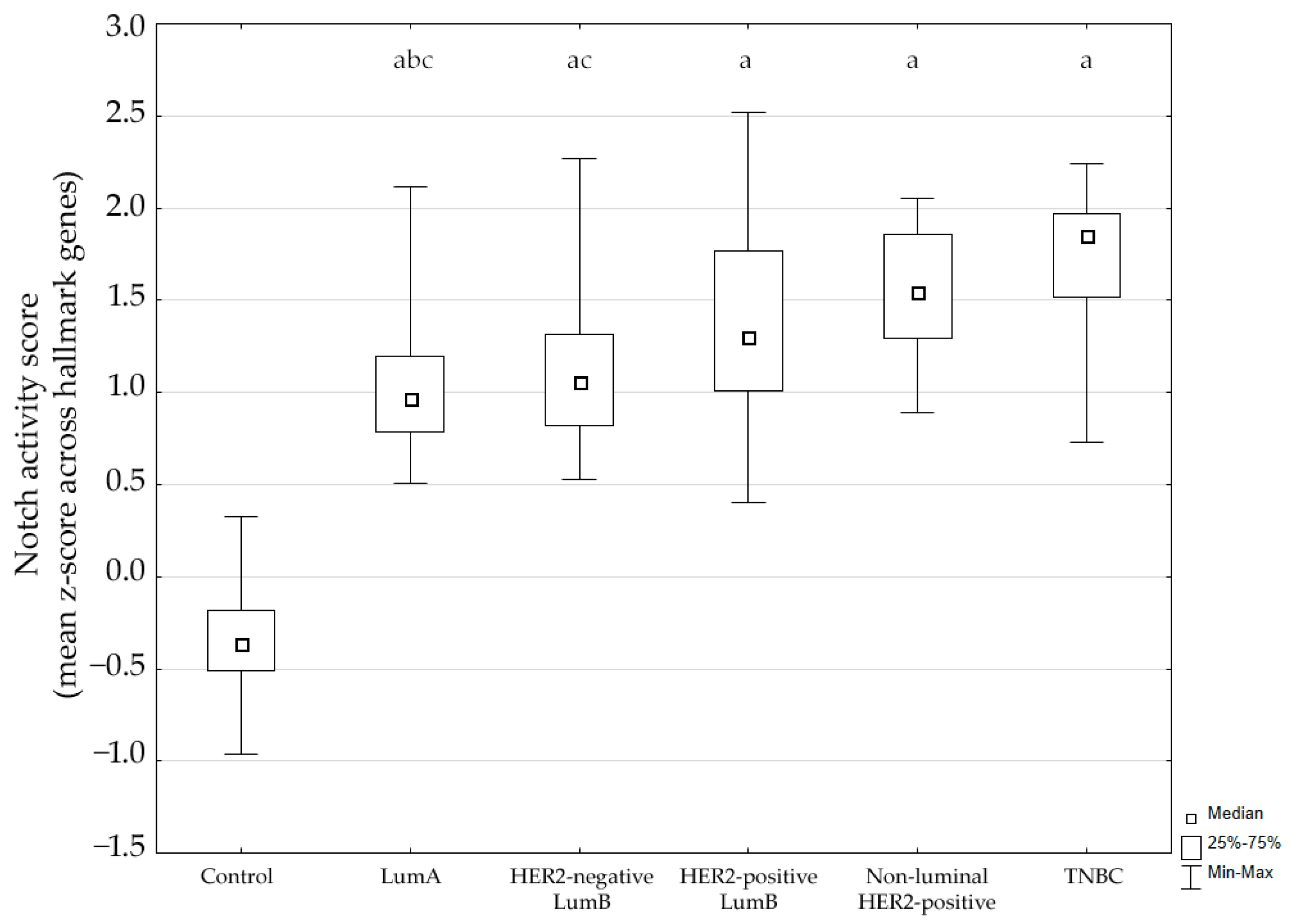
3.1. Notch Signaling Pathway Activity Analysis Based on MSigDB Hallmark Signature
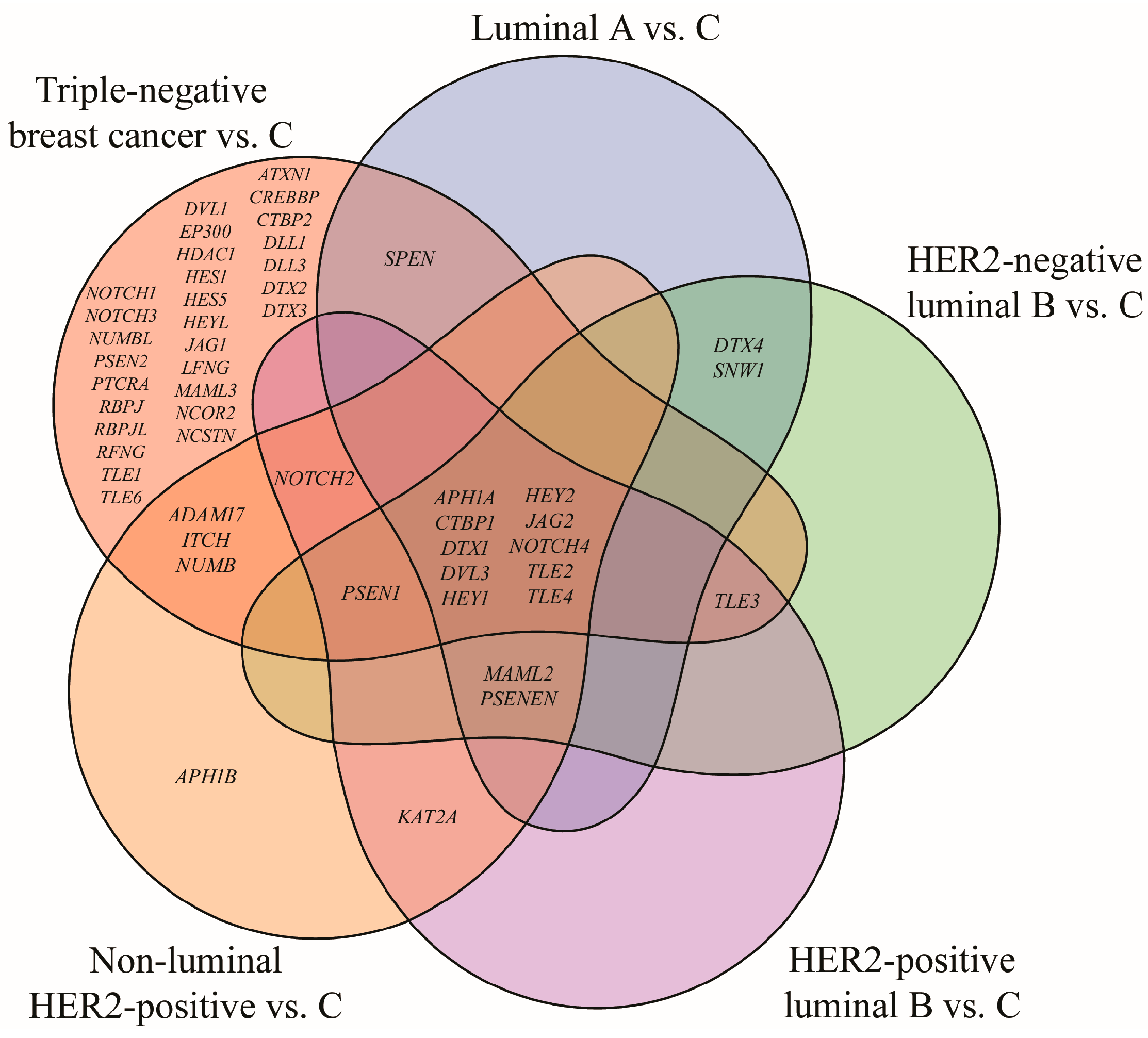
3.2. mRNA Microarray-Based Gene Expression Profiling
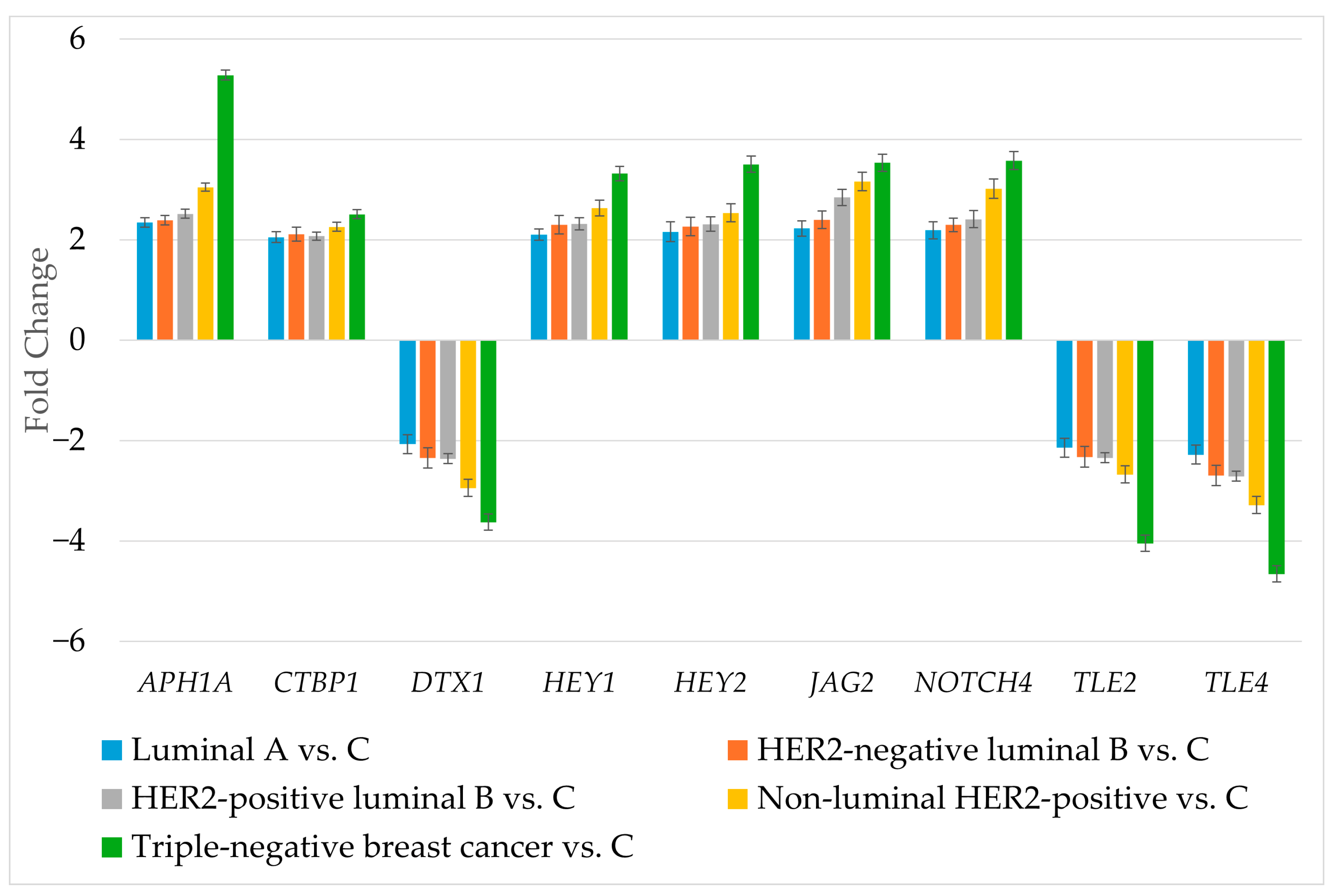
3.3. Expression Profile of APH1A, CTBP1, DTX1, HEY1, HEY2, JAG2, NOTCH4, TLE2, TLE4 Assessed with RT-qPCR and ELISA
3.4. miRNA Target Prediction
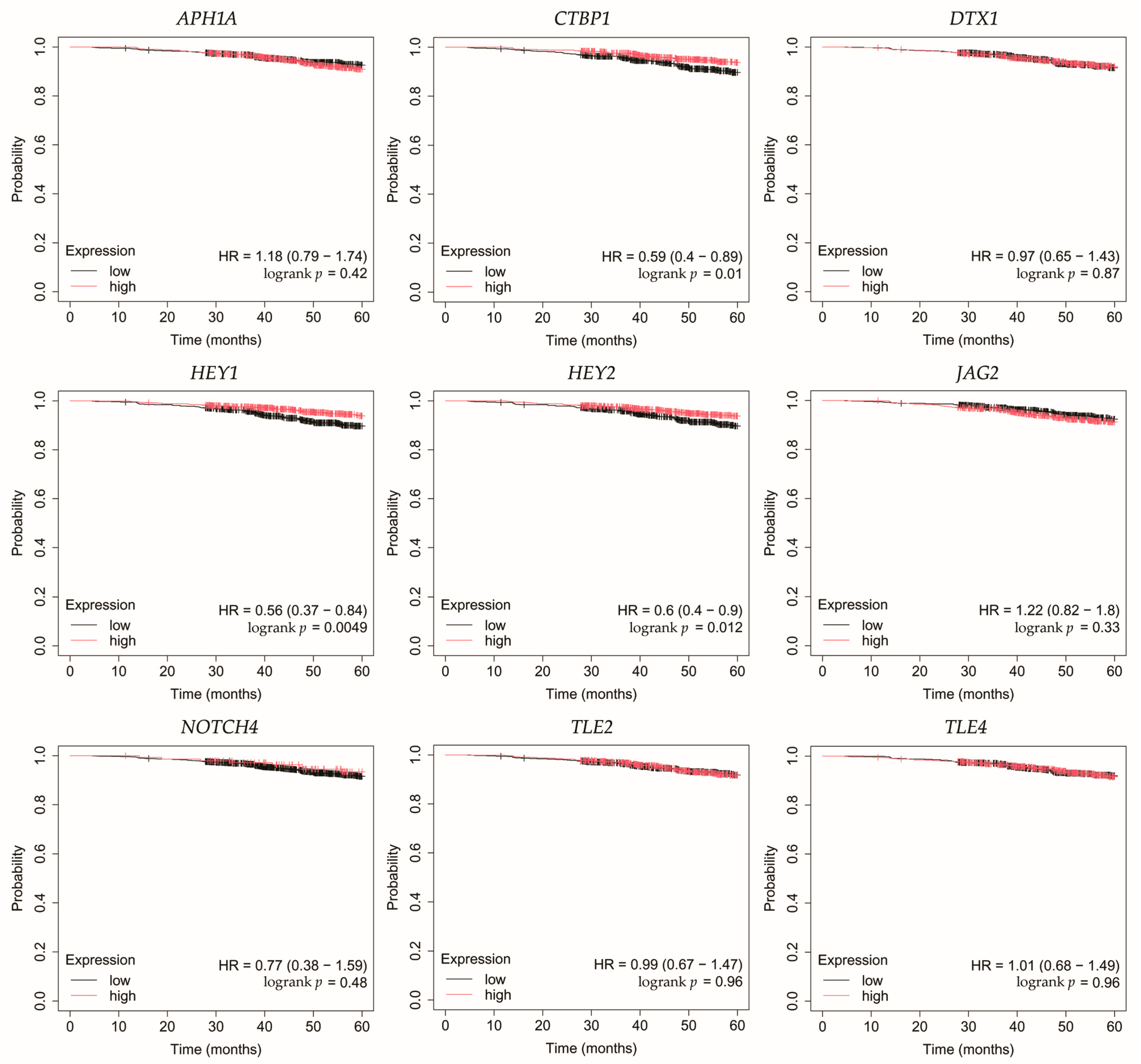
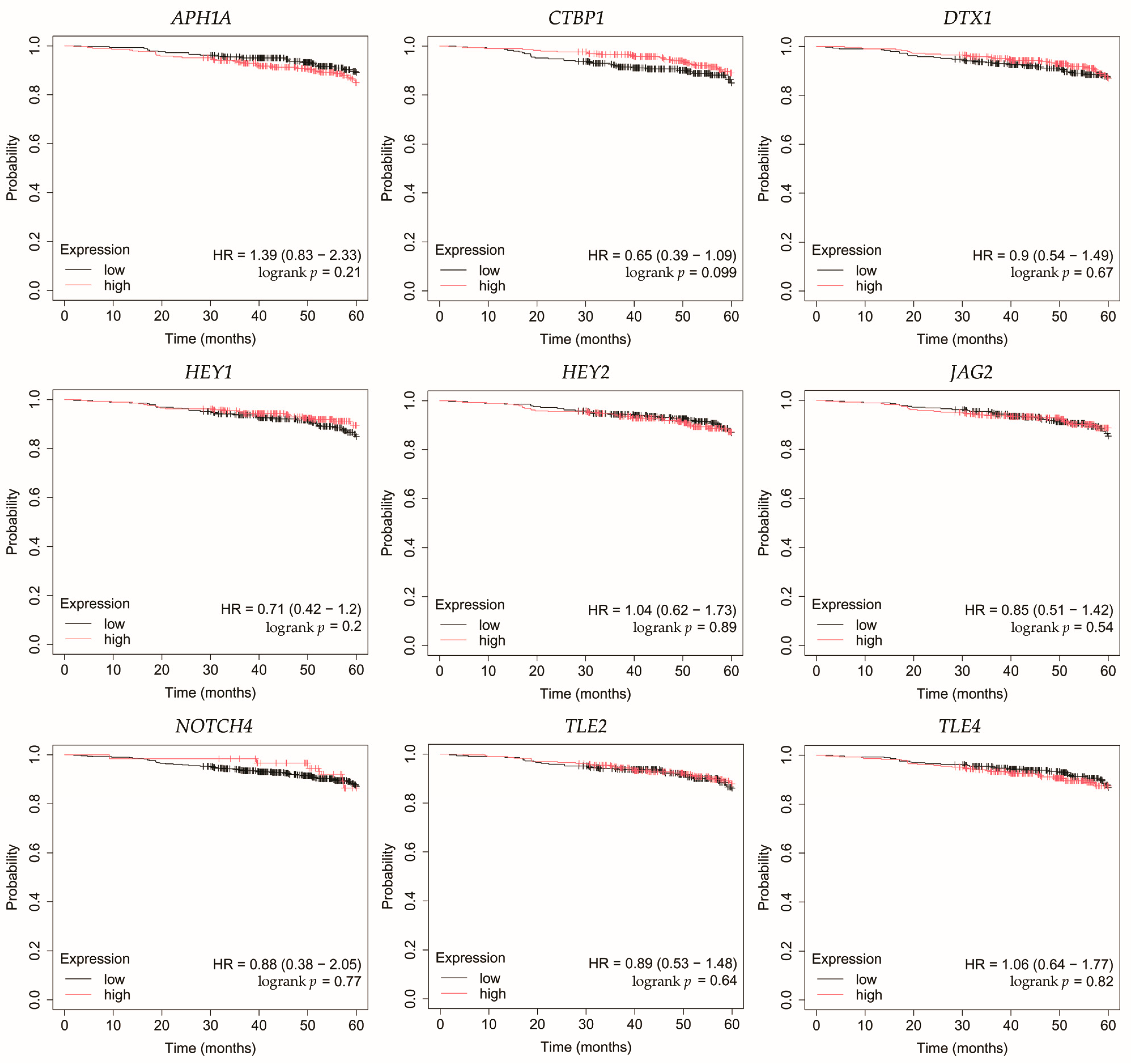
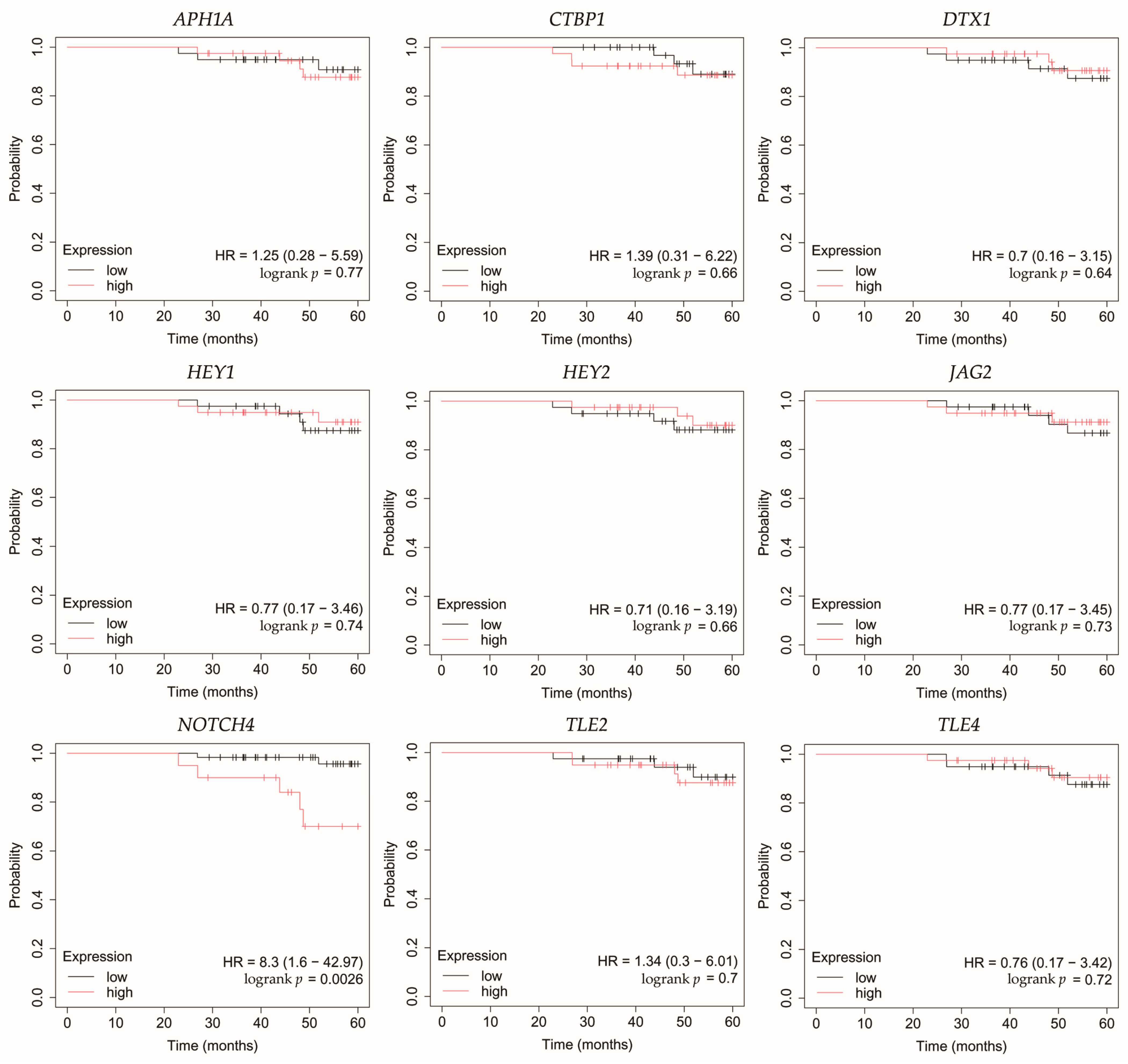
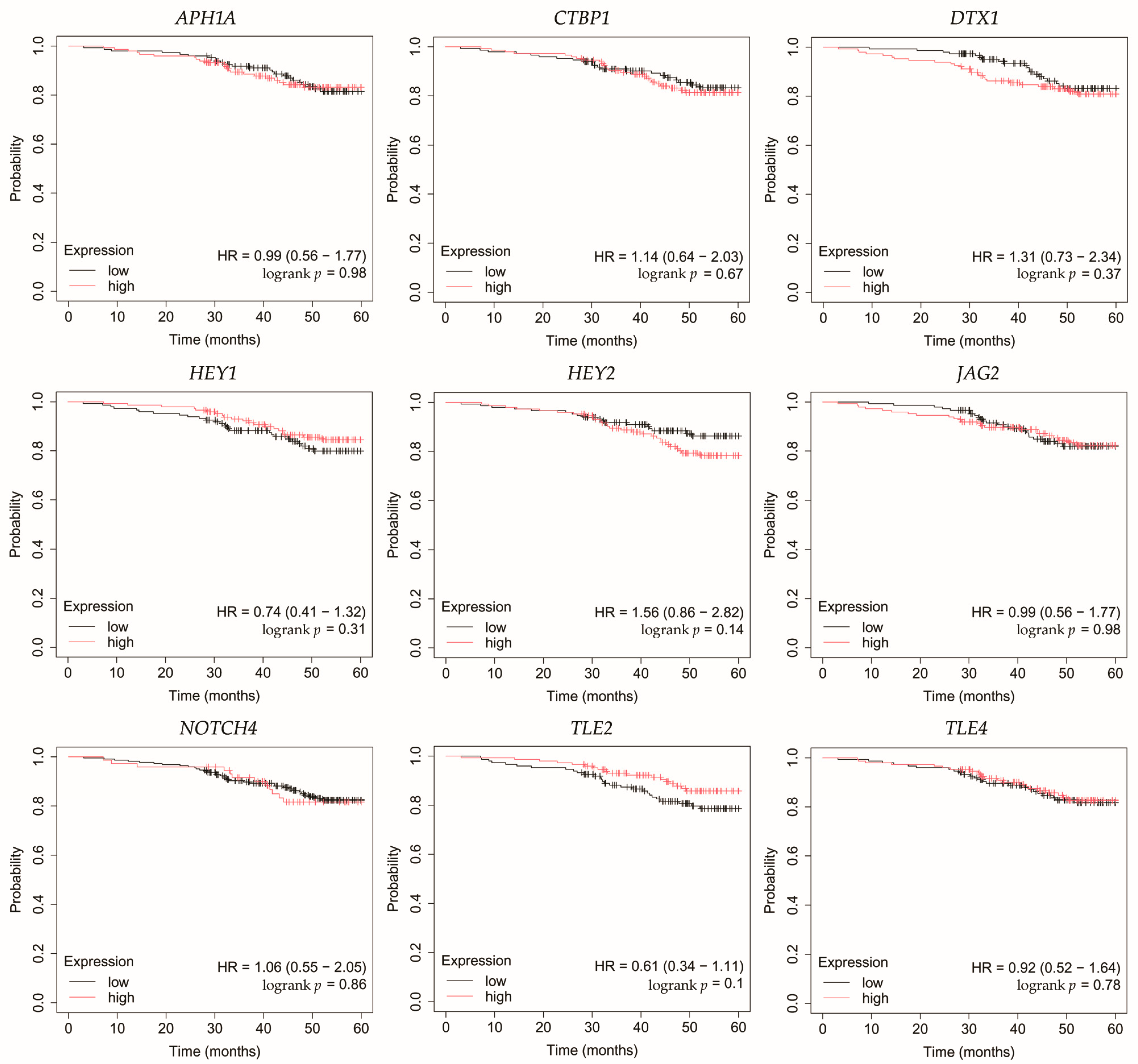
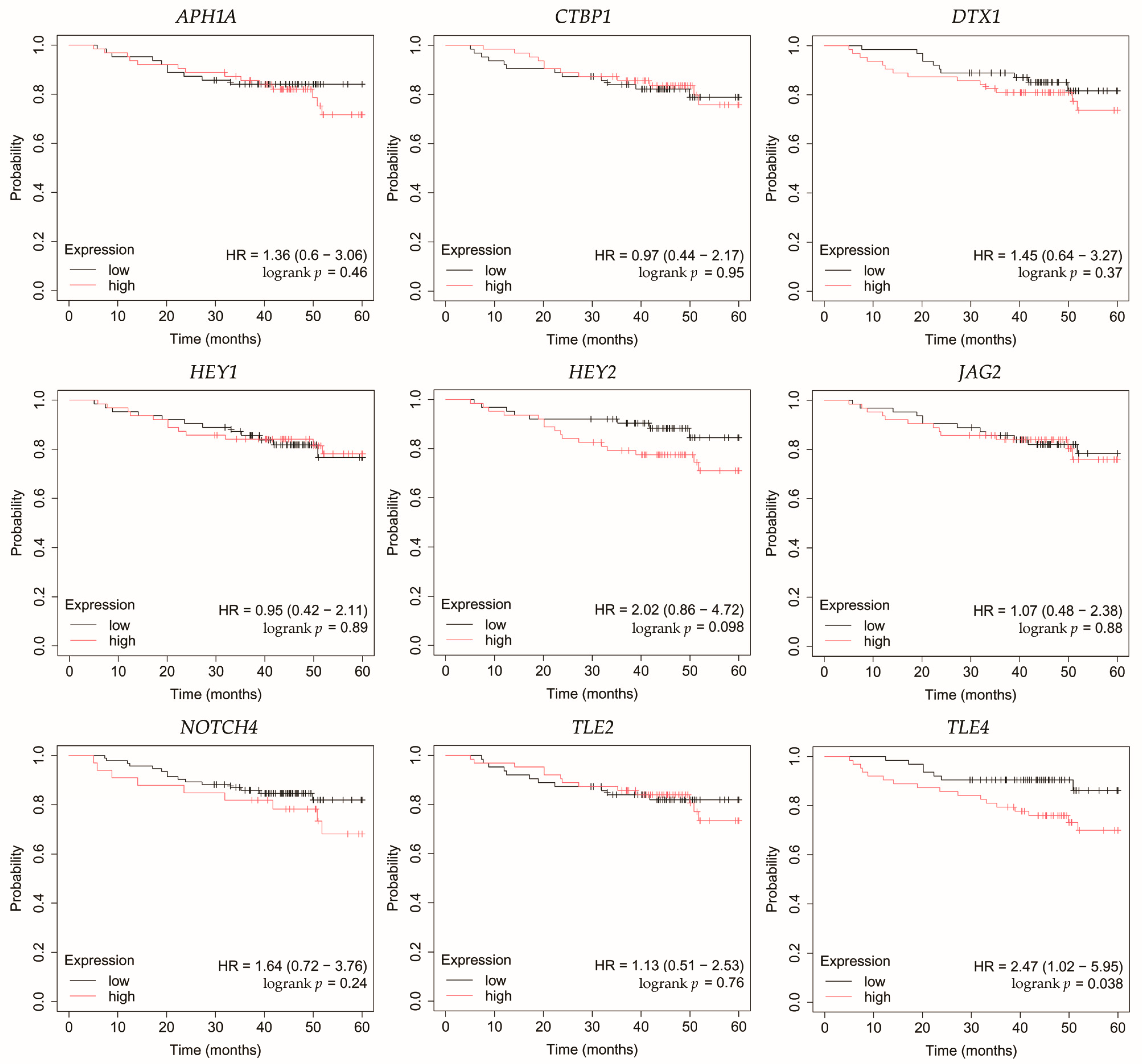
3.5. Overall Survival Outcomes Across Breast Cancer Subtypes
4. Discussion
5. Conclusions
Supplementary Materials
Author Contributions
Funding
Institutional Review Board Statement
Informed Consent Statement
Data Availability Statement
Conflicts of Interest
Abbreviations
| APH1A | aph-1A gamma-secretase subunit |
| CTBP1 | C-terminal binding protein 1 |
| DTX1 | deltex E3 ubiquitin ligase 1 |
| HER2 | human epidermal growth factor receptor 2 |
| HEY1 | hes-related family bHLH transcription factor with YRPW motif 1 |
| HEY2 | hes-related family bHLH transcription factor with YRPW motif 2 |
| JAG2 | jagged 2 |
| miRNA | microRNA |
| NOTCH4 | notch 4 |
| OS | overall survival |
| TLE2 | transducin-like enhancer of split 2 |
| TLE4 | transducin-like enhancer of split 4 |
| TNBC | triple-negative breast cancer |
References
- Bray, F.; Laversanne, M.; Sung, H.; Ferlay, J.; Siegel, R.L.; Soerjomataram, I.; Jemal, A. Global Cancer Statistics 2022: GLOBOCAN Estimates of Incidence and Mortality Worldwide for 36 Cancers in 185 Countries. CA Cancer J. Clin. 2024, 74, 229–263. [Google Scholar] [CrossRef]
- Krajowy Rejestr Nowotworów. Nowotwór Piersi—2019. Available online: https://onkologia.org.pl/sites/default/files/Pier%C5%9B.pdf (accessed on 1 February 2024).
- Yang, X.; Smirnov, A.; Buonomo, O.C.; Mauriello, A.; Shi, Y.; Bischof, J.; Woodsmith, J.; TOR CENTRE; Melino, G.; Candi, E.; et al. A Primary Luminal/HER2 Negative Breast Cancer Patient with Mismatch Repair Deficiency. Cell Death Discov. 2023, 9, 365. [Google Scholar] [CrossRef] [PubMed]
- Łukasiewicz, S.; Czeczelewski, M.; Forma, A.; Baj, J.; Sitarz, R.; Stanisławek, A. Breast Cancer-Epidemiology, Risk Factors, Classification, Prognostic Markers, and Current Treatment Strategies-An Updated Review. Cancers 2021, 13, 4287. [Google Scholar] [CrossRef] [PubMed]
- Yang, Z.-J.; Liu, Y.-X.; Huang, Y.; Chen, Z.-J.; Zhang, H.-Z.; Yu, Y.; Wang, X.; Cao, X.-C. The Regrouping of Luminal B (HER2 Negative), a Better Discriminator of Outcome and Recurrence Score. Cancer Med. 2023, 12, 2493–2504. [Google Scholar] [CrossRef]
- Falato, C.; Schettini, F.; Pascual, T.; Brasó-Maristany, F.; Prat, A. Clinical Implications of the Intrinsic Molecular Subtypes in Hormone Receptor-Positive and HER2-Negative Metastatic Breast Cancer. Cancer Treat. Rev. 2023, 112, 102496. [Google Scholar] [CrossRef]
- Thomas, A.; Reis-Filho, J.S.; Geyer, C.E.; Wen, H.Y. Rare Subtypes of Triple Negative Breast Cancer: Current Understanding and Future Directions. NPJ Breast Cancer 2023, 9, 55. [Google Scholar] [CrossRef] [PubMed]
- Shi, Q.; Xue, C.; Zeng, Y.; Yuan, X.; Chu, Q.; Jiang, S.; Wang, J.; Zhang, Y.; Zhu, D.; Li, L. Notch Signaling Pathway in Cancer: From Mechanistic Insights to Targeted Therapies. Signal Transduct. Target. Ther. 2024, 9, 128. [Google Scholar] [CrossRef]
- Brisset, M.; Mehlen, P.; Meurette, O.; Hollande, F. Notch Receptor/Ligand Diversity: Contribution to Colorectal Cancer Stem Cell Heterogeneity. Front. Cell Dev. Biol. 2023, 11, 1231416. [Google Scholar] [CrossRef]
- Krossa, I.; Strub, T.; Martel, A.; Nahon-Esteve, S.; Lassalle, S.; Hofman, P.; Baillif, S.; Ballotti, R.; Bertolotto, C. Recent Advances in Understanding the Role of HES6 in Cancers. Theranostics 2022, 12, 4374–4385. [Google Scholar] [CrossRef]
- Zhou, B.; Lin, W.; Long, Y.; Yang, Y.; Zhang, H.; Wu, K.; Chu, Q. Notch Signaling Pathway: Architecture, Disease, and Therapeutics. Signal Transduct. Target. Ther. 2022, 7, 95. [Google Scholar] [CrossRef]
- Giuli, M.V.; Giuliani, E.; Screpanti, I.; Bellavia, D.; Checquolo, S. Notch Signaling Activation as a Hallmark for Triple-Negative Breast Cancer Subtype. J. Oncol. 2019, 2019, 8707053. [Google Scholar] [CrossRef]
- O’Neill, C.F.; Urs, S.; Cinelli, C.; Lincoln, A.; Nadeau, R.J.; León, R.; Toher, J.; Mouta-Bellum, C.; Friesel, R.E.; Liaw, L. Notch2 Signaling Induces Apoptosis and Inhibits Human MDA-MB-231 Xenograft Growth. Am. J. Pathol. 2007, 171, 1023–1036. [Google Scholar] [CrossRef]
- Parr, C.; Watkins, G.; Jiang, W.G. The Possible Correlation of Notch-1 and Notch-2 with Clinical Outcome and Tumour Clinicopathological Parameters in Human Breast Cancer. Int. J. Mol. Med. 2004, 14, 779–786. [Google Scholar] [CrossRef] [PubMed]
- Nie, R.-Z.; Wang, H.; Wang, S.-S.; Chen, C.; Luo, H.-M.; Zhang, H.-K.; Jing, Z.-H.; Li, P.-F. The Role of Notch Signaling Pathway and Non-Coding RNAs in Cancer and Inflammation: Progress, Therapeutic Insights, and Future Directions. Front. Immunol. 2025, 16, 1567040. [Google Scholar] [CrossRef] [PubMed]
- Kanehisa, M.; Furumichi, M.; Sato, Y.; Matsuura, Y.; Ishiguro-Watanabe, M. KEGG: Biological Systems Database as a Model of the Real World. Nucleic Acids Res. 2025, 53, D672–D677. [Google Scholar] [CrossRef] [PubMed]
- Chen, Y.; Wang, X. miRDB: An Online Database for Prediction of Functional microRNA Targets. Nucleic Acids Res. 2020, 48, D127–D131. [Google Scholar] [CrossRef]
- Faul, F.; Erdfelder, E.; Lang, A.-G.; Buchner, A. G*Power 3: A Flexible Statistical Power Analysis Program for the Social, Behavioral, and Biomedical Sciences. Behav. Res. Methods 2007, 39, 175–191. [Google Scholar] [CrossRef]
- Győrffy, B. Integrated Analysis of Public Datasets for the Discovery and Validation of Survival-Associated Genes in Solid Tumors. Innovation 2024, 5, 100625. [Google Scholar] [CrossRef]
- Győrffy, B. Transcriptome-Level Discovery of Survival-Associated Biomarkers and Therapy Targets in Non-Small-Cell Lung Cancer. Br. J. Pharmacol. 2024, 181, 362–374. [Google Scholar] [CrossRef]
- Sirek, T.; Sirek, A.; Zmarzły, N.; Opławski, M.; Król-Jatręga, K.; Boroń, D.; Chalcarz, M.; Ossowski, P.; Dziobek, K.; Strojny, D.; et al. Impact of MiRNAs on Wnt-Related Gene Activity in Breast Cancer. Sci. Rep. 2025, 15, 16211. [Google Scholar] [CrossRef]
- Wang, J.-W.; Wei, X.-L.; Dou, X.-W.; Huang, W.-H.; Du, C.-W.; Zhang, G.-J. The Association between Notch4 Expression, and Clinicopathological Characteristics and Clinical Outcomes in Patients with Breast Cancer. Oncol. Lett. 2018, 15, 8749–8755. [Google Scholar] [CrossRef] [PubMed]
- Zhou, L.; Wang, D.; Sheng, D.; Xu, J.; Chen, W.; Qin, Y.; Du, R.; Yang, X.; He, X.; Xie, N.; et al. NOTCH4 Maintains Quiescent Mesenchymal-like Breast Cancer Stem Cells via Transcriptionally Activating SLUG and GAS1 in Triple-Negative Breast Cancer. Theranostics 2020, 10, 2405–2421. [Google Scholar] [CrossRef] [PubMed]
- Kim, D.C.; Jin, H.; Lee, J.S.; Son, E.; Lee, G.W.; Kim, H.J. P2Y2R Has a Significant Correlation with Notch-4 in Patients with Breast Cancer. Oncol. Lett. 2020, 20, 647–654. [Google Scholar] [CrossRef] [PubMed]
- Tian, Y.; Zhang, P.; Mou, Y.; Yang, W.; Zhang, J.; Li, Q.; Dou, X. Silencing Notch4 Promotes Tumorigenesis and Inhibits Metastasis of Triple-Negative Breast Cancer via Nanog and Cdc42. Cell Death Discov. 2023, 9, 148. [Google Scholar] [CrossRef]
- Eng, J.W.-L.; Kato, Y.; Adachi, Y.; Swaminathan, B.; Naiche, L.A.; Vadakath, R.; Sakamoto, Y.; Nakazawa, Y.; Tachino, S.; Ito, K.; et al. Inhibition of Notch4 Using Novel Neutralizing Antibodies Reduces Tumor Growth in Murine Cancer Models by Targeting the Tumor Endothelium. Cancer Res. Commun. 2024, 4, 1881–1893. [Google Scholar] [CrossRef] [PubMed]
- Xing, F.; Okuda, H.; Watabe, M.; Kobayashi, A.; Pai, S.K.; Liu, W.; Pandey, P.R.; Fukuda, K.; Hirota, S.; Sugai, T.; et al. Hypoxia-Induced Jagged2 Promotes Breast Cancer Metastasis and Self-Renewal of Cancer Stem-like Cells. Oncogene 2011, 30, 4075–4086. [Google Scholar] [CrossRef]
- Li, C.-Y.; Miao, K.-L.; Chen, Y.; Liu, L.-Y.; Zhao, G.-B.; Lin, M.-H.; Jiang, C. Jagged2 Promotes Cancer Stem Cell Properties of Triple Negative Breast Cancer Cells and Paclitaxel Resistance via Regulating microRNA-200. Eur. Rev. Med. Pharmacol. Sci. 2018, 22, 6008–6014. [Google Scholar] [CrossRef]
- Yahya, S.M.M.; Elmegeed, G.A.; Mohamed, M.S.; Mohareb, R.M.; Abd-Elhalim, M.M.; Elsayed, G.H. The Effect of Newly Synthesized Heterosteroids on miRNA34a, 98, and 214 Expression Levels in MCF-7 Breast Cancer Cells. Indian. J. Clin. Biochem. 2018, 33, 328–333. [Google Scholar] [CrossRef]
- Deng, Z.-Q.; Yin, J.-Y.; Tang, Q.; Liu, F.-Q.; Qian, J.; Lin, J.; Shao, R.; Zhang, M.; He, L. Over-Expression of miR-98 in FFPE Tissues Might Serve as a Valuable Source for Biomarker Discovery in Breast Cancer Patients. Int. J. Clin. Exp. Pathol. 2014, 7, 1166–1171. [Google Scholar]
- Cai, C.; Huo, Q.; Wang, X.; Chen, B.; Yang, Q. SNHG16 Contributes to Breast Cancer Cell Migration by Competitively Binding miR-98 with E2F5. Biochem. Biophys. Res. Commun. 2017, 485, 272–278. [Google Scholar] [CrossRef]
- Guo, C.; Zhang, M.; Qian, J.; Li, P.; Guo, L. Oncogenic Long Noncoding RNA Linc01287 Promotes IGF1R Expression by Sponging miR-98 in Breast Cancer. Crit. Rev. Eukaryot. Gene Expr. 2022, 32, 31–44. [Google Scholar] [CrossRef]
- Yu, Y.-Z.; Mu, Q.; Ren, Q.; Xie, L.-J.; Wang, Q.-T.; Wang, C.-P. miR-381-3p Suppresses Breast Cancer Progression by Inhibition of Epithelial–Mesenchymal Transition. World J. Surg. Oncol. 2021, 19, 230. [Google Scholar] [CrossRef] [PubMed]
- Shojaei, S.; Hashemi, S.M.; Ghanbarian, H.; Sharifi, K.; Salehi, M.; Mohammadi-Yeganeh, S. Delivery of miR-381-3p Mimic by Mesenchymal Stem Cell-Derived Exosomes Inhibits Triple Negative Breast Cancer Aggressiveness; an In Vitro Study. Stem Cell Rev. Rep. 2021, 17, 1027–1038. [Google Scholar] [CrossRef] [PubMed]
- Park, S.B.; Hwang, K.-T.; Chung, C.K.; Roy, D.; Yoo, C. Causal Bayesian Gene Networks Associated with Bone, Brain and Lung Metastasis of Breast Cancer. Clin. Exp. Metastasis 2020, 37, 657–674. [Google Scholar] [CrossRef]
- Brabletz, S.; Bajdak, K.; Meidhof, S.; Burk, U.; Niedermann, G.; Firat, E.; Wellner, U.; Dimmler, A.; Faller, G.; Schubert, J.; et al. The ZEB1/miR-200 Feedback Loop Controls Notch Signalling in Cancer Cells. EMBO J. 2011, 30, 770–782. [Google Scholar] [CrossRef]
- Sachdeva, M.; Mo, Y.-Y. MicroRNA-145 Suppresses Cell Invasion and Metastasis by Directly Targeting Mucin 1. Cancer Res. 2010, 70, 378–387. [Google Scholar] [CrossRef] [PubMed]
- Woo, J.W.; Choi, H.Y.; Kim, M.; Chung, Y.R.; Park, S.Y. miR-145, miR-205 and miR-451: Potential Tumor Suppressors Involved in the Progression of in Situ to Invasive Carcinoma of the Breast. Breast Cancer 2022, 29, 814–824. [Google Scholar] [CrossRef]
- Contreras-Sanzón, E.; Carlos-Reyes, Á.; Sierra-Martínez, M.; Acosta-Altamirano, G.; Luna-Rivero, C.; Núñez-Corona, D.; García-Hernández, A.P.; Ibarra-Sierra, E.; Vidrio-Morgado, H.; Alvarez-Sánchez, M.E.; et al. Metastatic Breast Tumors Downregulate miR-145 Regulating the Hypoxia-Induced Vasculogenic Mimicry. Transl. Oncol. 2023, 33, 101680. [Google Scholar] [CrossRef]
- Hajibabaei, S.; Sotoodehnejadnematalahi, F.; Nafissi, N.; Zeinali, S.; Azizi, M. Aberrant Promoter Hypermethylation of miR-335 and miR-145 Is Involved in Breast Cancer PD-L1 Overexpression. Sci. Rep. 2023, 13, 1003. [Google Scholar] [CrossRef]
- Hamelin, B.; Obradović, M.M.S.; Sethi, A.; Kloc, M.; Münst, S.; Beisel, C.; Eschbach, K.; Kohler, H.; Soysal, S.; Vetter, M.; et al. Single-Cell Analysis Reveals Inter- and Intratumour Heterogeneity in Metastatic Breast Cancer. J. Mammary Gland. Biol. Neoplasia 2023, 28, 26. [Google Scholar] [CrossRef]
- Chung, W.-C.; Wang, W.; Challagundla, L.; Moore, C.D.; Egan, S.E.; Xu, K. Subtype-Specific Role for Jagged1 in Promoting or Inhibiting Breast Tumor Formation. Oncogenesis 2025, 14, 2. [Google Scholar] [CrossRef]
- Simões, B.M.; O’Brien, C.S.; Eyre, R.; Silva, A.; Yu, L.; Sarmiento-Castro, A.; Alférez, D.G.; Spence, K.; Santiago-Gómez, A.; Chemi, F.; et al. Anti-Estrogen Resistance in Human Breast Tumors Is Driven by JAG1-NOTCH4-Dependent Cancer Stem Cell Activity. Cell Rep. 2015, 12, 1968–1977. [Google Scholar] [CrossRef] [PubMed]
- Yousefi, H.; Bahramy, A.; Zafari, N.; Delavar, M.R.; Nguyen, K.; Haghi, A.; Kandelouei, T.; Vittori, C.; Jazireian, P.; Maleki, S.; et al. Notch Signaling Pathway: A Comprehensive Prognostic and Gene Expression Profile Analysis in Breast Cancer. BMC Cancer 2022, 22, 1282. [Google Scholar] [CrossRef]
- Xu, R.; Yang, X.; Yao, K.; Yang, K.-F.; Hu, L.-Z.; Zhan, X.-Y.; Zhou, M.-S.; Jia, H. Key Subunits of γ-Secretase Complex and Breast Cancer Progression: Biological Function, Regulation Mode and Therapeutic Potential. Biochim. Et Biophys. Acta (BBA) Rev. Cancer 2025, 1880, 189386. [Google Scholar] [CrossRef]
- Birts, C.N.; Harding, R.; Soosaipillai, G.; Halder, T.; Azim-Araghi, A.; Darley, M.; Cutress, R.I.; Bateman, A.C.; Blaydes, J.P. Expression of CtBP Family Protein Isoforms in Breast Cancer and Their Role in Chemoresistance. Biol. Cell 2010, 103, 1–19. [Google Scholar] [CrossRef]
- Di, L.-J.; Byun, J.S.; Wong, M.M.; Wakano, C.; Taylor, T.; Bilke, S.; Baek, S.; Hunter, K.; Yang, H.; Lee, M.; et al. Genome-Wide Profiles of CtBP Link Metabolism with Genome Stability and Epithelial Reprogramming in Breast Cancer. Nat. Commun. 2013, 4, 1449. [Google Scholar] [CrossRef]
- Zheng, L.; Conner, S.D. PI5P4Kγ Functions in DTX1-Mediated Notch Signaling. Proc. Natl. Acad. Sci. USA 2018, 115, E1983–E1990. [Google Scholar] [CrossRef] [PubMed]
- Liu, X.; Xian, Y.; Xu, H.; Hu, M.; Che, K.; Liu, X.; Wang, H. The Associations between Deltex1 and Clinical Characteristics of Breast Cancer. Gland. Surg. 2021, 10, 3116–3127. [Google Scholar] [CrossRef] [PubMed]
- Agarwal, S.; Parija, M.; Naik, S.; Kumari, P.; Mishra, S.K.; Adhya, A.K.; Kashaw, S.K.; Dixit, A. Dysregulated Gene Subnetworks in Breast Invasive Carcinoma Reveal Novel Tumor Suppressor Genes. Sci. Rep. 2024, 14, 15691. [Google Scholar] [CrossRef]
- Wu, S.; Nitschke, K.; Heinkele, J.; Weis, C.-A.; Worst, T.S.; Eckstein, M.; Porubsky, S.; Erben, P. ANLN and TLE2 in Muscle Invasive Bladder Cancer: A Functional and Clinical Evaluation Based on In Silico and In Vitro Data. Cancers 2019, 11, 1840. [Google Scholar] [CrossRef]
- Hu, S.; Chen, Z.; Gu, J.; Tan, L.; Zhang, M.; Lin, W. TLE2 Is Associated with Favorable Prognosis and Regulates Cell Growth and Gemcitabine Sensitivity in Pancreatic Cancer. Ann. Transl. Med. 2020, 8, 1017. [Google Scholar] [CrossRef]
- Cho, E.H.; Kim, J.-Y.; Im, S.-A.; Jung, K.H.; Sohn, J.; Lee, K.S.; Chae, Y.S.; Lee, K.H.; Kim, J.H.; Jang, J.-H.; et al. Potential Role of CMPK1, SLC29A1, and TLE4 Polymorphisms in Gemcitabine-Based Chemotherapy in HER2-Negative Metastatic Breast Cancer Patients: Pharmacogenetic Study Results from the Prospective Randomized Phase II Study of Eribulin plus Gemcitabine versus Paclitaxel plus Gemcitabine (KCSG-BR-13-11). ESMO Open 2021, 6, 100236. [Google Scholar] [CrossRef]
- Han, Q.; Zhou, C.; Liu, F.; Xu, G.; Zheng, R.; Zhang, X. MicroRNA-196a Post-Transcriptionally Upregulates the UBE2C Proto-Oncogene and Promotes Cell Proliferation in Breast Cancer. Oncol. Rep. 2015, 34, 877–883. [Google Scholar] [CrossRef][Green Version]
- Jiang, C.-F.; Shi, Z.-M.; Li, D.-M.; Qian, Y.-C.; Ren, Y.; Bai, X.-M.; Xie, Y.-X.; Wang, L.; Ge, X.; Liu, W.-T.; et al. Estrogen-Induced miR-196a Elevation Promotes Tumor Growth and Metastasis via Targeting SPRED1 in Breast Cancer. Mol. Cancer 2018, 17, 83. [Google Scholar] [CrossRef] [PubMed]
- Yuan, Y.; Anbalagan, D.; Lee, L.H.; Samy, R.P.; Shanmugam, M.K.; Kumar, A.P.; Sethi, G.; Lobie, P.E.; Lim, L.H.K. ANXA1 Inhibits miRNA-196a in a Negative Feedback Loop through NF-kB and c-Myc to Reduce Breast Cancer Proliferation. Oncotarget 2016, 7, 27007–27020. [Google Scholar] [CrossRef] [PubMed]
- Xiong, M.; Wang, P.; Pan, B.; Nie, J.; Wang, S.; He, B. The Diagnostic and Prognostic Values of microRNA-196a in Cancer. Biosci. Rep. 2021, 41, BSR20203559. [Google Scholar] [CrossRef] [PubMed]
- Liu, X.; Chang, Q.; Wang, H.; Qian, H.; Jiang, Y. Discovery and Function Exploration of microRNA-155 as a Molecular Biomarker for Early Detection of Breast Cancer. Breast Cancer 2021, 28, 806–821. [Google Scholar] [CrossRef]
- Wang, J.; Wang, Q.; Guan, Y.; Sun, Y.; Wang, X.; Lively, K.; Wang, Y.; Luo, M.; Kim, J.A.; Murphy, E.A.; et al. Breast Cancer Cell-Derived microRNA-155 Suppresses Tumor Progression via Enhancing Immune Cell Recruitment and Antitumor Function. J. Clin. Investig. 2022, 132, e157248. [Google Scholar] [CrossRef]
- Chen, J.; Wang, B.-C.; Tang, J.-H. Clinical Significance of microRNA-155 Expression in Human Breast Cancer. J. Surg. Oncol. 2012, 106, 260–266. [Google Scholar] [CrossRef]
- Liu, J.-H.; Yang, Y.; Song, Q.; Li, J.B. MicroRNA-155regulates the Proliferation and Metastasis of Human Breast Cancers by Targeting MAPK7. J. BUON 2019, 24, 1075–1080. [Google Scholar]
- Zhang, W.; Chen, C.-J.; Guo, G.-L. MiR-155 Promotes the Proliferation and Migration of Breast Cancer Cells via Targeting SOCS1 and MMP16. Eur. Rev. Med. Pharmacol. Sci. 2018, 22, 7323–7332. [Google Scholar] [CrossRef]
- Chernyy, V.; Pustylnyak, V.; Kozlov, V.; Gulyaeva, L. Increased Expression of miR-155 and miR-222 Is Associated with Lymph Node Positive Status. J. Cancer 2018, 9, 135–140. [Google Scholar] [CrossRef] [PubMed]
- Miao, K.; Lei, J.H.; Valecha, M.V.; Zhang, A.; Xu, J.; Wang, L.; Lyu, X.; Chen, S.; Miao, Z.; Zhang, X.; et al. NOTCH1 Activation Compensates BRCA1 Deficiency and Promotes Triple-Negative Breast Cancer Formation. Nat. Commun. 2020, 11, 3256. [Google Scholar] [CrossRef] [PubMed]
- Xiao, Y.-S.; Zeng, D.; Liang, Y.-K.; Wu, Y.; Li, M.-F.; Qi, Y.-Z.; Wei, X.-L.; Huang, W.-H.; Chen, M.; Zhang, G.-J. Major Vault Protein Is a Direct Target of Notch1 Signaling and Contributes to Chemoresistance in Triple-Negative Breast Cancer Cells. Cancer Lett. 2019, 440–441, 156–167. [Google Scholar] [CrossRef] [PubMed]
- Qiu, M.; Peng, Q.; Jiang, I.; Carroll, C.; Han, G.; Rymer, I.; Lippincott, J.; Zachwieja, J.; Gajiwala, K.; Kraynov, E.; et al. Specific Inhibition of Notch1 Signaling Enhances the Antitumor Efficacy of Chemotherapy in Triple Negative Breast Cancer through Reduction of Cancer Stem Cells. Cancer Lett. 2013, 328, 261–270. [Google Scholar] [CrossRef]
- Wang, M.; Yu, F.; Zhang, Y.; Li, P. Novel Insights into Notch Signaling in Tumor Immunity: Potential Targets for Cancer Immunotherapy. Front. Immunol. 2024, 15, 1352484. [Google Scholar] [CrossRef]
- Sabit, H.; Adel, A.; Abdelfattah, M.M.; Ramadan, R.M.; Nazih, M.; Abdel-Ghany, S.; El-hashash, A.; Arneth, B. The Role of Tumor Microenvironment and Immune Cell Crosstalk in Triple-Negative Breast Cancer (TNBC): Emerging Therapeutic Opportunities. Cancer Lett. 2025, 628, 217865. [Google Scholar] [CrossRef]



| Subtype | Grade | Age | BMI [kg/m2] | |||
|---|---|---|---|---|---|---|
| G1 | G2 | G3 | <50 Years | >50 Years | ||
| Luminal A | 23 (18%) | 48 (37%) | 59 (45%) | 43 (33%) | 87 (67%) | 30.78 ± 2.76 |
| HER2-negative luminal B | 31 (31%) | 57 (57%) | 12 (12%) | 32 (32%) | 68 (68%) | 30.18 ± 4.56 |
| HER2-positive luminal B | 23 (24%) | 57 (59%) | 16 (17%) | 19 (20%) | 77 (80%) | 32.09 ± 6.19 |
| Non-luminal HER2-positive | 9 (25%) | 12 (33%) | 15 (42%) | 9 (25%) | 27 (75%) | 33.18 ± 5.67 |
| TNBC | 14 (32%) | 21 (49%) | 8 (19%) | 10 (23%) | 33 (77%) | 34.67 ± 2.98 |
| mRNA | RT-qPCR Primers (5′–3′) |
|---|---|
| APH1A | Forward: CTACAGGAGGTGTTCCGCTTTG Reverse: GACACCACTGATGATACCGAAGG |
| CTBP1 | Forward: AGATGCCCATCCTGAAGGACGT Reverse: GAGGGCTTTGAACTTCTCCAGG |
| DTX1 | Forward: AGAATCCCGAGGATGTGGTTCG Reverse: TCGTAGCCTGATGCTGTGACCA |
| HEY1 | Forward: TGTCTGAGCTGAGAAGGCTGGT Reverse: TTCAGGTGATCCACGGTCATCTG |
| HEY2 | Forward: TGAGAAGACTTGTGCCAACTGCT Reverse: CCCTGTTGCCTGAAGCATCTTC |
| JAG2 | Forward: GCTGCTACGACCTGGTCAATGA Reverse: AGGTGTAGGCATCGCACTGGAA |
| NOTCH4 | Forward: TTCCACTGTCCTCCTGCCAGAA Reverse: TGGCACAGGCTGCCTTGGAATC |
| TLE2 | Forward: CTGCCTCCAAATCCTGTGACTC Reverse: TGGTGAAGGGACTGGACAGAGT |
| TLE4 | Forward: GGAAAACCACCAGGAGTTGACC Reverse: TGGTCAGCTCTCCGTTCATTCC |
| ACTB | Forward: TCACCCACACTGTGCCCATCTACGA Reverse: CAGCGGAACCGCTCATTGCCAATGG |
| ID | mRNA | Fold Change | ||||
|---|---|---|---|---|---|---|
| LumA vs. C | HER2-Negative LumB vs. C | HER2-Positive LumB vs. C | Non-Luminal HER2-Positive vs. C | TNBC vs. C | ||
| 1554417_s_at | APH1A | 2.25 | 2.23 | 2.44 | 3.33 | 9.31 |
| 203392_s_at | CTBP1 | 2.14 | 2.15 | 2.24 | 2.36 | 2.83 |
| 227336_at | DTX1 | −2.16 | −2.34 | −2.39 | −3.15 | −4.01 |
| 218839_at 44783_s_at | HEY1 | 2.02 2.96 | 2.19 2.98 | 2.22 3.34 | 2.78 3.43 | 3.22 3.76 |
| 219743_at | HEY2 | 2.05 | 2.16 | 2.21 | 2.8 | 3.97 |
| 209784_s_at 32137_at | JAG2 | 2.28 2.19 | 2.46 2.63 | 2.39 2.82 | 2.53 2.96 | 2.71 3.85 |
| 205247_at | NOTCH4 | 2.36 | 2.59 | 2.68 | 3.24 | 3.8 |
| 40837_at | TLE2 | −2.09 | −2.39 | −2.38 | −3.01 | −5.44 |
| 204872_at | TLE4 | −2.35 | −2.46 | −3.53 | −3.81 | −5.18 |
| Protein [ng/mL] | Control | LumA | HER2-Negative LumB | HER2-Positive LumB | HER2-Positive | TNBC |
|---|---|---|---|---|---|---|
| APH1A | 8.26 ± 0.31 | 18.34 ± 0.19 * | 19.95 ± 0.27 * | 20.93 ± 0.27 * | 20.53 ± 0.34 * | 26.79 ± 0.31 * |
| CTBP1 | 2.42 ± 0.19 | 5.63 ± 0.17 * | 5.7 ± 0.26 * | 6.08 ± 0.21 * | 6.09 ± 0.33 * | 6.36 ± 0.23 * |
| DTX1 | 1.55 ± 0.2 | below detection threshold * | below detection threshold * | below detection threshold * | below detection threshold * | below detection threshold * |
| HEY1 | 0.95 ± 0.13 | 2.49 ± 0.22 * | 3.1 ± 0.19 * | 3.42 ± 0.24 * | 3.53 ± 0.24 * | 5.5 ± 0.19 * |
| HEY2 | 0.71 ± 0.19 | 2.61 ± 0.14 * | 3.96 ± 0.25 * | 3.97 ± 0.19 * | 5.6 ± 0.34 * | 5.78 ± 0.23 * |
| JAG2 | 1.8 ± 0.18 | 2.87 ± 0.13 * | 4 ± 0.16 * | 4.36 ± 0.19 * | 7.05 ± 0.16 * | 10.83 ± 0.21 * |
| NOTCH4 | 1.63 ± 0.18 | 2.88 ± 0.13 * | 3.18 ± 0.16 * | 3.62 ± 0.19 * | 4.01 ± 0.15 * | 6.15 ± 0.21 * |
| TLE2 | 0.78 ± 0.2 | below detection threshold * | below detection threshold * | below detection threshold * | below detection threshold * | below detection threshold * |
| TLE4 | 2.32 ± 0.2 | below detection threshold * | below detection threshold * | below detection threshold * | below detection threshold * | below detection threshold * |
| mRNA | miRNA | Target Score | Fold Change | ||||
|---|---|---|---|---|---|---|---|
| LumA vs. C | HER2-Negative LumB vs. C | HER2-Positive LumB vs. C | HER2-Positive vs. C | TNBC vs. C | |||
| HEY1 | miR-145 | 90 | −2.05 | −2.14 | −2.11 | −3.22 | −3.77 |
| JAG2 | miR-98 miR-381 | 86 86 | −2.12 −2.05 | −2.16 −2.1 | −2.35 −2.43 | −2.55 −2.6 | −2.83 −2.52 |
| TLE4 | miR-196a miR-155 | 100 93 | 2.06 2.1 | 2.31 3.21 | 2.7 3.45 | 2.76 4.97 | 3.43 7.84 |
Disclaimer/Publisher’s Note: The statements, opinions and data contained in all publications are solely those of the individual author(s) and contributor(s) and not of MDPI and/or the editor(s). MDPI and/or the editor(s) disclaim responsibility for any injury to people or property resulting from any ideas, methods, instructions or products referred to in the content. |
© 2025 by the authors. Licensee MDPI, Basel, Switzerland. This article is an open access article distributed under the terms and conditions of the Creative Commons Attribution (CC BY) license (https://creativecommons.org/licenses/by/4.0/).
Share and Cite
Mitka-Krysiak, E.; Król-Jatręga, K.; Ossowski, P.; Zmarzły, N.; Bereza, K.; Ordon, P.; Kulej, W.; Sirek, T.; Sirek, A.; Boroń, K.; et al. Subtype-Independent Dysregulation of the Notch Signaling Pathway and Its miRNA Regulators in Breast Cancer. Biomedicines 2025, 13, 3065. https://doi.org/10.3390/biomedicines13123065
Mitka-Krysiak E, Król-Jatręga K, Ossowski P, Zmarzły N, Bereza K, Ordon P, Kulej W, Sirek T, Sirek A, Boroń K, et al. Subtype-Independent Dysregulation of the Notch Signaling Pathway and Its miRNA Regulators in Breast Cancer. Biomedicines. 2025; 13(12):3065. https://doi.org/10.3390/biomedicines13123065
Chicago/Turabian StyleMitka-Krysiak, Elżbieta, Katarzyna Król-Jatręga, Piotr Ossowski, Nikola Zmarzły, Krzysztof Bereza, Paweł Ordon, Wojciech Kulej, Tomasz Sirek, Agata Sirek, Kacper Boroń, and et al. 2025. "Subtype-Independent Dysregulation of the Notch Signaling Pathway and Its miRNA Regulators in Breast Cancer" Biomedicines 13, no. 12: 3065. https://doi.org/10.3390/biomedicines13123065
APA StyleMitka-Krysiak, E., Król-Jatręga, K., Ossowski, P., Zmarzły, N., Bereza, K., Ordon, P., Kulej, W., Sirek, T., Sirek, A., Boroń, K., Boroń, M., Boroń, D., & Grabarek, B. O. (2025). Subtype-Independent Dysregulation of the Notch Signaling Pathway and Its miRNA Regulators in Breast Cancer. Biomedicines, 13(12), 3065. https://doi.org/10.3390/biomedicines13123065