


Effectiveness of Advanced Practice Nursing Interventions on Diabetic Patients: A Systematic Review

 and
and 
Abstract
1. Introduction
2. Materials and Methods
2.1. Study Design
2.2. Search Strategies and Selection Criteria
2.3. Data Analysis and Assessment of Article Quality
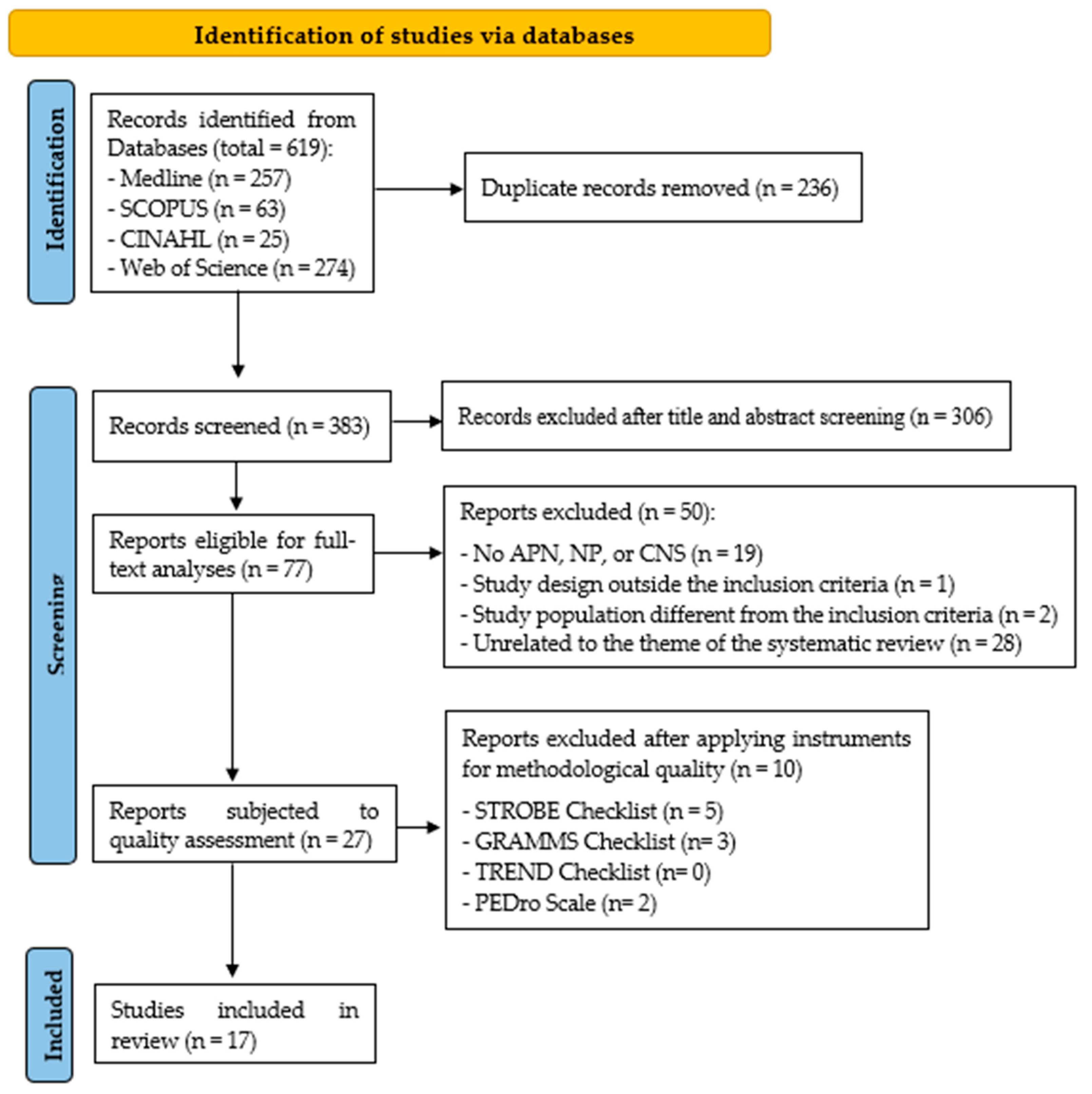
- In qualitative studies, those scoring below 50% on the Standards for Reporting Qualitative Research (SRQR) were excluded. This instrument consists of 21 items divided into five dimensions, providing a framework and recommendations for reporting this type of research. The following categorization, based on the percentage of items meeting the evaluation criteria, was applied: Excellent (80–100%), Good (50–80%), Fair (30–50%), and Poor (<30%) [15];
- In observational studies, those scoring below 12 on the Strengthening the Reporting of Observational Studies in Epidemiology (STROBE) checklist were excluded. This instrument consists of 22 items, with a maximum possible score of 22. Studies with scores <12 were deemed to be of insufficient quality [16];
- In Randomised Controlled Trials (RCTs), studies scoring below 4 on the Physiotherapy Evidence Database (PEDro) scale were excluded. This instrument comprises 11 items, each with a binary response (“Yes” or “No”), where each affirmative response scores 1 point. The maximum score is 10, as the first item is not considered due to its relevance to the external validity of the studies. The methodological quality was categorized as follows: Excellent (9–10 points), Good (8–6 points), Acceptable (5–4 points), and Poor (<4 points). Studies scoring below 4 were of insufficient quality [17,18,19];
- In quasi-experimental studies, those scoring below 12 on the Transparent Reporting of Evaluations with Nonrandomised Designs (TREND) checklist were excluded. This instrument comprises 22 items grouped into five domains: title and abstract, introduction, methodology, results, and discussion [21,22]. The same scoring criteria as the STROBE checklist were applied, given the identical number of items and the lack of evidence for a specific cut-off score. Accordingly, studies with scores <12 were of insufficient quality.
2.4. Risk of Bias Analysis
3. Results
3.1. Presentation of the Studies
3.2. Quality Assessment and Risk of Bias
3.3. Thematic Analysis
3.3.1. Characteristics of the Diabetic Patients Subjected to APN Interventions
3.3.2. APN Interventions in Diabetic Patients and Their Effectiveness
3.3.3. Improvement Strategies in Relation to APNs
4. Discussion
4.1. Characteristics of the Diabetic Patients Subjected to APN Interventions
4.2. APN Interventions in Diabetic Patients and Their Effectiveness
4.3. Improvement Strategies in Relation to APNs
4.4. Limitations
5. Conclusions
Supplementary Materials
Author Contributions
Funding
Institutional Review Board Statement
Informed Consent Statement
Data Availability Statement
Conflicts of Interest
References
- Consejo Internacional de Enfermería (CIE). Directrices de Enfermería de Práctica Avanzada. 2020. Available online: https://www.icn.ch/sites/default/files/2023-04/ICN_APN%20Report_ES_WEB.pdf (accessed on 7 February 2024).
- Canga-Armayor, N. La formación académica de las enfermeras que desarrollan roles de práctica avanzada. Enferm. Intensiva. 2024, 35, e41–e48. [Google Scholar] [CrossRef]
- Del Barrio-Linares, M. Competencias y perfil profesional de la enfermera de práctica avanzada. Enferm. Intensiv. 2014, 25, 52–57. [Google Scholar] [CrossRef]
- Palma, R.B. Enfermería de Práctica Avanzada: Situación Actual y Perspectiva a Futuro. 2019. Available online: https://docs.bvsalud.org/biblioref/2019/08/1008589/vea_47-49-54.pdf (accessed on 14 March 2024).
- Ramírez, P.; Hernández, O.; Sáenz De Ormijana, A.; Reguera, A.I.; Meneses, M.T. Enfermería de práctica avanzada: Historia y definición. Enfermería Clín. 2002, 12, 286–289. [Google Scholar]
- Giménez, A.M. La Enfermería y la Práctica Avanzada: Su Desarrollo en España. Ph.D. Thesis, Universidad Complutense de Madrid, Madrid, Spain, 2013. [Google Scholar]
- Miguélez-Chamorro, A.; Casado-Mora, M.I.; Company-Sancho, M.C.; Balboa-Blanco, E.; Font-Oliver, M.A.; Román-Medina, I.I. Enfermería de Práctica Avanzada y gestión de casos: Elementos imprescindibles en el nuevo modelo de atención a la cronicidad compleja en España. Enferm. Clin. 2019, 29, 99–106. [Google Scholar] [CrossRef]
- Sevilla, S.; Miranda, J.; Zabalegui, A. Profile of advanced nursing practice in Spain: A cross-sectional study: Advanced Practice Nursing in Spain. Nurs. Health Sci. 2018, 20, 99–106. [Google Scholar] [CrossRef]
- San Martín-Rodríguez, L. Práctica avanzada en Enfermería y nuevos modelos de organización sanitaria. Enferm. Clin. 2016, 26, 155–157. [Google Scholar] [CrossRef]
- Sánchez-Martín, C.I. Cronicidad y complejidad: Nuevos roles en Enfermería. Enfermeras de Práctica Avanzada y paciente crónico. Enferm. Clin. 2014, 24, 79–89. [Google Scholar] [CrossRef]
- Consejo General de Enfermería (CGE). Marco de Competencias de la Enfermera/o Experta en Cuidados y Educación Terapéutica de las Personas con Diabetes, Familiares o Cuidadores. Instituto Español de Investigación Enfermera y Consejo General de Enfermería de España. 2020. Available online: https://uesce.com/wp-content/uploads/2024/07/Marco-competencias-enfermeria-diabetes.pdf (accessed on 8 February 2024).
- Servicio Andaluz de Salud. Enfermera de Práctica Avanzada en la Atención de Personas con Tratamiento Complejos para Diabetes (EPA-TCD). Consejería de Salud de la Junta de Andalucía. 2018. Available online: https://www.sspa.juntadeandalucia.es/servicioandaluzdesalud/sites/default/files/sincfiles/wsas-media-mediafile_sasdocumento/2019/epa_diabetes_definitiva_1.pdf (accessed on 15 February 2024).
- Page, M.J.; McKenzie, J.E.; Bossuyt, P.M.; Boutron, I.; Hoffmann, T.C.; Mulrow, C.D.; Shamseer, L.; Tetzlaff, J.M.; Akl, E.A.; Brennan, S.E.; et al. The PRISMA 2020 statement: An updated guideline for reporting systematic reviews. BMJ 2021, 372, n71. [Google Scholar]
- Li, T.; Higgins, J.; Deeks, J.; Higgins, J.; Thomas, J.; Chnadler, J.; Cumpston, M.; Li, T.; Page, M.J.; Welch, V.A. Cochrane Handbook for Systematic Reviews of Interventions Version 6.2 (updated February 2021). Cochrane. 2021. Available online: https://training.cochrane.org/handbook (accessed on 4 February 2024).
- O’Brien, B.C.; Harris, I.B.; Beckman, T.J.; Reed, D.A.; Cook, D.A. Standards for reporting qualitative research: A synthesis of recommendations. Acad. Med. 2014, 89, 1245–1251. [Google Scholar] [CrossRef]
- Lozano-Muñoz, N.; Borrallo-Riego, Á.; Guerra-Martín, M.D. Impact of social network use on anorexia and bulimia in female adolescents: A systematic review. An. Sist. Sanit. Navar. 2022, 45, e1009. [Google Scholar] [CrossRef]
- Foley, N.C.; Teasell, R.W.; Bhogal, S.K.; Speechley, M.R. Stroke Rehabilitation Evidence-Based Review: Methodology. Top. Stroke Rehabil. 2003, 10, 1–7. [Google Scholar] [PubMed]
- Maher, C.G.; Sherrington, C.; Herbert, R.D.; Moseley, A.M.; Elkins, M. Reliability of the PEDro scale for rating quality of randomized controlled trials. Phys. Ther. 2003, 83, 713–721. [Google Scholar] [CrossRef] [PubMed]
- Ayala, F.; Sainz De Baranda, P. Calidad metodológica de los programas de estiramiento: Revisión sistemática. Rev. Int. Med. Cienc. Act. Física Deporte 2013, 13, 163–181. [Google Scholar]
- O’cathain, A.; Murphy, E.; Nicholl, J. The quality of mixed methods studies in health services research. J. Health Serv. Res. Policy 2008, 13, 92–98. [Google Scholar] [CrossRef] [PubMed]
- Moraga, J.; Cartes-Velasquez, R. Pautas de chequeo, parte I: CONSORT y TREND. Rev. Chil. Cirugía 2015, 67, 225–232. [Google Scholar]
- Vallvé, C.; Artés, M.; Cobo, E. Estudios de intervención no aleatorizados (TREND). Med. Clin. 2005, 125, 38–42. [Google Scholar]
- Higgins, J.P.T.; Savoviç, J.; Page, M.J.; Sterne, J.A.C. Revised Cochrane Risk-of-Bias Tool for Randomized Trials (RoB-2). 2019. Available online: https://sites.google.com/site/riskofbiastool/welcome/rob-2-0-tool/current-version-of-rob-2?authuser=0 (accessed on 2 April 2024).
- Sterne, J.A.; Savović, J.; Page, M.J.; Elbers, R.G.; Blencowe, N.S.; Boutron, I.; Cates, C.J.; Cheng, H.Y.; Corbett, M.S.; Eldridge, S.M.; et al. RoB 2: A revised tool for assessing risk of bias in randomised trials. BMJ 2019, 366, l4898. [Google Scholar] [CrossRef]
- Cochrane. Review Manager (RevMan). 2024. Available online: https://training.cochrane.org/online-learning/core-software (accessed on 8 April 2024).
- Barker, T.H.; Habibi, N.; Aromataris, E.; Stone, J.C.; Leonardi-Bee, J.; Sears, K.; Hasanoff, S.; Klugar, M.; Tufanaru, C.; Moola, S.; et al. The revised JBI critical appraisal tool for the assessment of risk of bias for quasi-experimental studies. JBI Evid. Synth. 2024, 22, 378–388. [Google Scholar] [CrossRef]
- National Heart Lung and Blood Institute (NIHLBI). Quality Assessment Tool for Before-After (Pre-Post) Studies with No Control Group. 2014. Available online: https://www.nhlbi.nih.gov/health-topics/study-quality-assessment-tools (accessed on 2 April 2024).
- Allen, J.K.; Dennison, C.R.; Szanton, S.L.; Frick, K.D. Cost-effectiveness of nurse practitioner/community health worker care to reduce cardiovascular health disparities. J. Cardiovasc. Nurs. 2014, 29, 308–314. [Google Scholar] [CrossRef]
- Mackey, P.A. Care directed by speciality-trained nurse practitioner or physician assistant can overcome clinical inertia in management of inpatient diabetes. Endocr. Pract. 2014, 20, 112–119. [Google Scholar]
- Richardson, G.C.; Derouin, A.L.; Vorderstrasse, A.A.; Hipkens, J.; Thompson, J.A. Nurse practitioner management of type 2 diabetes. Perm. J. 2014, 18, e134–e140. [Google Scholar] [CrossRef] [PubMed]
- Kuo, Y.F.; Goodwin, J.S.; Chen, N.W.; Lwin, K.K.; Baillargeon, J.; Raji, M.A. Diabetes mellitus care provided by nurse practitioners vs primary care physicians. J. Am. Geriatr. Soc. 2015, 63, 1980–1988. [Google Scholar] [CrossRef] [PubMed]
- Brumm, S.; Theisen, K.; Falciglia, M. Diabetes transition care from an inpatient to outpatient setting in a veteran population: Quality improvement pilot study: Quality improvement pilot study. Diabetes Educ. 2016, 42, 346–353. [Google Scholar] [CrossRef] [PubMed]
- Garg, R.; Hurwitz, S.; Rein, R.; Schuman, B.; Underwood, P.; Bhandari, S. Effect of follow-up by a hospital diabetes care team on diabetes control at one year after discharge from the hospital. Diabetes Res. Clin. Pract. 2017, 133, 78–84. [Google Scholar] [CrossRef]
- Kuo, C.R.; Quan, J.; Kim, S.; Tang, A.Y.; Heuerman, D.P.; Murphy, E.J. Group visits to encourage insulin initiation: Targeting patient barriers. J. Clin. Nurs. 2017, 26, 1705–1713. [Google Scholar] [CrossRef]
- Gardiner, F.W.; Nwose, E.U.; Bwititi, P.T.; Crockett, J.; Wang, L. Does a hospital diabetes inpatient service reduce blood glucose and HbA1c levels? A prospective cohort study. Ann. Med. Surg. 2018, 26, 15–18. [Google Scholar] [CrossRef]
- Marin, P.A.; Bena, J.F.; Albert, N.M. Real-world comparison of HbA 1c reduction at 6-, 12- and 24-months by primary care provider type. Prim. Care Diabetes 2018, 12, 319–324. [Google Scholar] [CrossRef]
- Akiboye, F.; Adderley, N.J.; Martin, J.; Gokhale, K.; Rudge, G.M.; Marshall, T.P.; Rajendran, R.; Nirantharakumar, K.; Rayman, G.; DICE team. Impact of the Diabetes Inpatient Care and Education (DICE) project on length of stay and mortality. Diabet. Med. A J. Br. Diabet. Assoc. 2019, 37, 277–285. [Google Scholar]
- McGloin, H.; O’Connell, D.; Glacken, M.; Mc Sharry, P.; Healy, D.; Winters-O’Donnell, L.; Crerand, K.; Gavaghan, A.; Doherty, L. Patient empowerment using electronic telemonitoring with telephone support in the transition to insulin therapy in adults with type 2 diabetes: Observational, pre-post, mixed methods study. J. Med. Internet Res. 2020, 22, e16161. [Google Scholar]
- Kulsick, C.; Votta, J.; Wright, W.L.; White, P.; Strowman, S. Enhancing medication adherence in older adults at two nurse practitioner-owned clinics. J. Am. Assoc. Nurse Pract. 2020, 33, 553–562. [Google Scholar] [CrossRef]
- Yago-Esteban, G.; Venturas, M.; Blanco, J.; Pérez, I.; Falces, C.; Roqué, M.; Yugueros, X.; Cardete, L.; Renu, A.; Caellas, D.; et al. Blood glucose monitoring during hospitalisation: Advanced practice nurse and semi-automated insulin prescription tools. Endocrinol. Diabetes Nutr. 2022, 69, 500–508. [Google Scholar] [CrossRef]
- Marsh, Z.; Teegala, Y.; Cotter, V. Improving diabetes care of community-dwelling underserved older adults. J. Am. Assoc. Nurse Pract. 2022, 34, 1156–1166. [Google Scholar] [CrossRef] [PubMed]
- Dimond, K. Improving glucose control in patients with type 2 diabetes using retrospective continuous glucose monitoring. J. Am. Assoc. Nurse Pract. 2023, 35, 425–433. [Google Scholar]
- Ju, H.H.; Momin, R.; Cron, S.; Jularbal, J.; Alford, J.; Johnson, C. A nurse-led telehealth program for diabetes foot care: Feasibility and usability study. JMIR Nurs. 2023, 6, e40000. [Google Scholar]
- Knee, M.; Hussain, Z.; Alkharaiji, M.; Sugunendran, S.; Idris, I. Diabetes specialist nurse point-of-care review service: Improving clinical outcomes for people with diabetes on emergency wards. Pract. Diabetes 2020, 37, 50–54. [Google Scholar] [CrossRef]
- Cabré, C.; Colungo, C.; Vinagre, I.; Jansà Morató, M.; Conget, I. Resultados del programa de educación terapéutica de optimización dirigido a pacientes insulinizados con diabetes tipo 2 desarrollado por enfermería de práctica avanzada en diabetes en el ámbito de atención primaria. Endocrinol. Diabetes Nutr. 2021, 68, 628–635. [Google Scholar] [CrossRef]
- Russo, M.P.; Grande-Ratti, M.F.; Burgos, M.A.; Molaro, A.A.; Bonella, M.B. Prevalencia de diabetes, características epidemiológicas y complicaciones vasculares. Arch. Cardiol. Mex. 2023, 93, 30–36. [Google Scholar] [CrossRef]
- Franch, J.; Artola, S.; Diez, J.; Mata, M. Evolución de los indicadores de calidad asistencial al diabético tipo 2 en atención primaria (1996–2007). Programa de mejora continua de calidad de la Red de Grupos de Estudio de la Diabetes en Atención Primaria de la Salud. Med. Clin. 2010, 135, 600–607. [Google Scholar] [CrossRef]
- Lewandowicz, A.; Skowronek, P.; Maksymiuk-Kłos, A.; Piątkiewicz, P. The giant geriatric syndromes are intensified by diabetic complications. Gerontol. Geriatr. Med. 2018, 4, 233372141881739. [Google Scholar] [CrossRef]
- Simarro, L.; Unanua, F. Diferencias y similitudes de la DM2 en hombres y mujeres: Lo que nos hace diferentes en diabetes. Rev. Diabetes 2024, 86, 1–6. [Google Scholar]
- Puig, P.; Ciria, M.T. Diabetes desde la perspectiva de género. Diabetes Práct. 2021, 12, 35–76. [Google Scholar] [CrossRef]
- Chapman, M.; García, R.; Caballero, G.; Paneque, Y.; Sablón, A. Efectividad de intervención educativa en el conocimiento del paciente diabético sobre autocuidados. Rev. Cuba Enfermería 2016, 32, 49–59. [Google Scholar]
- Guzmán-Priego, C.G.; Baeza-Flores, G.; Atilano-Jiménez, D.; Torres-León, J.A.; de Jesús León-Mondragón, O. Efecto de una intervención educativa sobre los parámetros bioquímicos de pacientes diabéticos de un servicio médico institucional. Aten. Fam. 2017, 24, 82–86. [Google Scholar] [CrossRef]
- De Carvalho, H.; Rodrigues, F.; Rodrigues, L. Avaliação das ações educativas na promoção do autogerenciamento dos cuidados em diabetes mellitus tipo 2. Rev. Esc. Enferm. USP 2011, 45, 1077–1082. [Google Scholar] [CrossRef]
- Tellier, H.; Colson, S.; Gentile, S. Améliorer la prise en charge de l’enfant atteint de diabète de type 1 et celle de sa famille: Quel rôle pour l’infirmière de pratique avancée, coordinatrice de parcours complexe de soins? Une étude qualitative et exploratoire. Rech. En. Soins Infirm. 2019, 136, 80–89. [Google Scholar]
- Galiana-Camacho, T.; Gómez-Salgado, J.; García-Iglesias, J.J.; Fernández-García, D. Enfermería de Práctica Avanzada en la atención urgente, una propuesta de cambio: Revisión sistemática. Rev. Española Salud Pública 2018, 92, e201809065. [Google Scholar]
- Martínez, A.; González, A.M.; Roldán, M.T.; Cervantes, C.; Conesa, A.M.; Riquelme Hurtado, M.J. Intervenciones de enfermería psicoeducativas presenciales y on-line, para el manejo de la ansiedad: Revisión integradora de la literatura. Enferm. Glob. 2022, 21, 531–561. [Google Scholar] [CrossRef]
- Tinoco, J.M.; Hidalgo, M.A.; Daifuku, N.; Lluch, M.T.; Raigal, L.; Puig, M. Intervenciones enfermeras para disminuir la sobrecarga de cuidadores informales. Revisión sistemática de ensayos clínicos. Enferm. Glob. 2022, 21, 562–586. [Google Scholar] [CrossRef]
- Ordóñez-Piedra, J.; Ponce-Blandón, J.A.; Robles-Romero, J.M.; Gómez-Salgado, J.; Jiménez-Picón, N.; Romero-Martín, M. Effectiveness of the Advanced Practice Nursing interventions in the patient with heart failure: A systematic review. Nurs. Open 2021, 8, 1879–1891. [Google Scholar] [CrossRef]
- Huaraca, C.G.; Ordoya, S.M.; Rivera, I.C.; Melgarejo, N.M.; Li, I.L. Enfermería de práctica avanzada (EPA) en un contexto internacional. Rev. Climatol. 2023, 23, 3106–3123. [Google Scholar] [CrossRef]
- Abraham, C.M.; Norful, A.A.; Stone, P.W.; Poghosyan, L. Cost-Effectiveness of Advance Practice Nurses compared to Physician-Led care for Chronic Diseases: A systematic review. Nurs. Econ. 2019, 36, 293–305. [Google Scholar]
- Molina-Gil, M.J.; Guerra-Martín, M.D.; De Diego-Cordero, R. Primary healthcare Case Management Nurses and assistance provided to chronic patients: A narrative review. Healthcare 2024, 12, 1054. [Google Scholar] [CrossRef] [PubMed]
- Schober, M. Desarrollo de la Enfermería de Práctica Avanzada: Contexto internacional. Enfermería Clín. 2019, 29, 63–66. [Google Scholar] [CrossRef] [PubMed]
- San Martín Rodríguez, L.; Soto Ruiz, N.; Escalada Hernández, P. Formación de las enfermeras de práctica avanzada: Perspectiva internacional. Enfermería Clín. 2019, 29, 125–130. [Google Scholar] [CrossRef]
- Momin, R.P.; Kobeissi, M.M.; Casarez, R.L.; Khawaja, M. A nurse practitioner–led telehealth protocol to improve diabetes outcomes in primary care. J. Am. Assoc. Nurse Pract. 2022, 34, 1167–1173. [Google Scholar] [CrossRef]
- Wright, W.L.; White, P.A.; Welsh, M.; Cutting, K. Evaluating the effect of COVID-19 on quality measures of patients with type 2 diabetes in two family nurse practitioner–owned clinics. J. Am. Assoc. Nurse Pract. 2022, 34, 1090–1097. [Google Scholar] [CrossRef]
- Akiboye, F.; Sihre, H.K.; Al Mulhem, M.; Rayman, G.; Nirantharakumar, K.; Adderley, N.J. Impact of diabetes specialist nurses on inpatient care: A systematic review. Diabet. Med. 2021, 38, e14573. [Google Scholar] [CrossRef]
- Dutton, J.; McCaskill, K.; Alton, S.; Levesley, M.; Hemingway, C.; Farndon, L. Changing roles in community health care: Delegation of insulin injections to health care support workers. Br. J. Community Nurs. 2018, 23, 14–19. [Google Scholar] [CrossRef]

| Authors | Sample (Age and Sex) |
|---|---|
| Allen et al. [28] | A total of 525 patients diagnosed with CVD, DM2, HT, and hypercholesterolemia. IG: 261 patients—187 women (71.7%) and 74 men. Mean age: 54 ± 12 years. CG: 264 patients—187 women (70.8%) and 77 men. Mean age: 55 ± 11.5 years. |
| Mackey et al. [29] | A total of 714 hospitalised diabetic patients. IG: 171 diabetic patients with 222 hospitalisations—108 women (63.15%) and 63 men. Mean age: 61 ± 13 years. CG: 543 diabetic patients with 665 hospitalisations—483 women (88.95%) and 60 men. Mean age: 68 ± 13 years. |
| Richardson et al. [30] | 26 patients with DM2, with a mean age of 58 years. The sample consisted of 13 women and 13 men. Only one patient had DM2 alone, while the remaining 25 combined DM2 with another chronic condition (HT and/or hyperlipidaemia). |
| Kuo et al. [31] | A total of 64,354 patients with DM2: Group 1: 14,811 patients, 67.8% of whom were women. The mean age was 76 ± 6.2 years. Group 2: 49,543 patients, 66.1% of whom were women. The mean age was 78 ± 6.5 years. |
| Brumm et al. [32] | IG: 40 diabetic patients, 95% of whom had DM2. Women accounted for 12.5% (n = 5). The mean age was 64 ± 11.4 years. CG: Patients were compiled from historical aggregated data from the internal patient evaluation centre regarding diabetes-related readmissions in 2014. |
| Garg et al. [33] | A total of 151 patients with DM2: IG: 77 patients, 58% (n = 45) were women. The mean age was 65 ± 9.4 years. CG: 74 patients, 59% (n = 44) were women. The mean age was 63 ± 10.5 years. |
| Kuo et al. [34] | A total of 241 diabetic patients: 53.11% (n = 128) were women. The mean age was 56 ± 11 years. The sample was divided into two groups: IG: 162 patients, 53.70% (n = 87) were women. The mean age was 58 ± 11 years. CG: 79 patients, 51.89% (n = 41) were women. The mean age was 52 ± 10 years. |
| Gardiner et al. [35] | A total of 67 diabetic patients referred at discharge to the hospital’s diabetes service due to a history of uncontrolled diabetes. Women accounted for 47.76% (n = 32). The mean age was 67 years. |
| Marin et al. [36] | A total of 269 patients with DM2 were divided into two groups: IG: 93 patients, 66.7% (n = 62) were women. The mean age was 62 ± 11.6 years. CG: 176 patients, 65.3% (n = 115) were women. The mean age was 63 ± 10.9 years. |
| Akiboye et al. [37] | In total, 16,102 patients from the pre-intervention study, of whom 2337 had diabetes. Among these, 43.33% (n = 1106) were women. The mean age was 71 years. At 6 months post-intervention, 17,353 patients were assessed, of whom 2433 had diabetes. Among these, 45.5% (n = 1107) were women. The mean age was 71 years. |
| Knee et al. [44] | A total of 979 diabetic patients were divided into two groups: Pre-intervention group: 443 patients with a mean age of 59 years. Of these, 46.3% had DM1, 48.5% had DM2, and 5.2% had another type of diabetes. Post-intervention group: 536 patients with a mean age of 62 years. Of these, 40.1% had DM1, 53.5% had DM2, and 6.3% had another type of diabetes. |
| McGloin et al. [38] | A total of 40 diabetic patients: 42.5% (n = 17) were women. The mean age was 62 years. |
| Kulsick et al. [39] | A total of 39 patients with diabetes: Pre-intervention: 23 patients, 78.26% were women. Age ranged from 65 to >85 years. Post-intervention: 16 patients, 68.75% were women. Age ranged from 65 to >85 years. |
| Yago-Esteban et al. [40] | Diabetic patients: Phase 1: 101 patients, 30% of whom were women. The mean age was 71 ± 11 years. Phase 2: 685 patients, 29% of whom were women. The mean age was 69 ± 12 years. Phase 3: 73 patients, 22% of whom were women. The mean age was 63 ± 12 years. |
| Marsh et al. [41] | A total of 16 patients with diabetes: 75% (n = 9) were women. The mean age was 68 ± 3.5 years. |
| Dimond [42] | 81 patients with DM2, 42% (n = 34) of whom were women. The mean age was 76 years. |
| Ju et al. [43] | A total of 39 diabetic patients, 36% of whom were women. The age range was from 30 to over 60 years, with 51% of patients aged between 50–59 years. |
| Authors | Variables and/or Instruments | Interventions | Effectiveness |
|---|---|---|---|
| Allen et al. [28] | HbA1c, BP, and cholesterol. They were measured from the initial evaluation to the follow-up one. The costs were assessed after one year. | Length of the intervention in time: 1 year. IG: An NP and a community health worker were in charge of implementing a program to reduce the BVD risks. The NP carried out evidence-based educational and behavioural interventions for lifestyle changes and treatment adherence, drug prescription, supervision of the other health professionals, and consultations with a physician. Telephone follow-up was implemented between the visits. The other professional was in charge of reinforcing the NP’s indications. CG: a physician provided feedback on the BVD risks. | At 12 months of the intervention, the IG improved significantly in terms of the LDL, AP, and HbA1c clinical outcomes when compared to the Cg. These findings were also observed during the 12-month follow-up. The total cost after one year of intervention was higher in the IG than in the CG. |
| Mackey et al. [29] | NP–PA relationship in diabetes care and in using basal-bolus insulin therapy (GEE method) The care provided by NPs/PAs was associated to lower glucose values. It was measured in the first and last 24 hospitalization hours. The care provided by NPs/PAs was associated to lower glucose values. It was measured in the first and last 24 hospitalization hours. | Length of the intervention in time: the patients’ hospitalization time. IG: Diabetes control and diabetic education in hospitalized diabetic patients in charge of an NP and an assistant physician, along with an endocrinologist. Each professional welcomes the patient, performs baseline evaluation, and initiates a preliminary treatment plan, which includes insulin therapy with dose adjustments, discharge recommendations about diabetes, and follow-up with an endocrinologist, if necessary. The process was reviewed by an endocrinologist. CG: patients not receiving care from an NP, assistant physician, or endocrinologist, but from another professional. | A larger reduction in the HbA1c levels was observed between the first and last 24 h in the IG patients, when compared to the CG. Basal-bolus insulin therapy was administered to 80% of the IG patients and to 34% of the CG ones. As for diabetes joint management, the IG reduced the mean HbA1c level by 6.96 units in the last 24 h when compared to the CG. |
| Richardson et al. [30] | HbA1c, BP, cholesterol, and body weight. Depression (PHQ-9) and self-efficacy (DES-SF). Everything was measured at the beginning and end of the intervention. | Length of the intervention in time: not specified. The Healthcare Effectiveness Data and Information Set (HEDIS) primary care tool was used, which measures and evaluates data and information about the efficacy of the health care provided by NPs. As a first step, the patients’ medical histories were reviewed; subsequently, an individualized treatment plan was defined for each patient according to their medical history, clinical data, medications in use, and social factors. Various data were collected form the patients before and after the intervention for comparison purposes. After the intervention, the patients were followed-up every 2–5 weeks for 5 months. In-person and electronic visits were combined with phone calls. The care frequency was based on each patient’s needs. If necessary, other professionals were consulted due to the patients’ complex health situation. | A large part of the NP’s contact with the patients in the interventions was via phone calls. Self-efficacy improved after the intervention. Albeit slightly, the depression scores were reduced. A total of 50% of the patients reached the HbA1c levels defined as target in the study (<8%), as was the case with the BP and cholesterol levels. |
| Kuo et al. [31] | Number of ophthalmologic exams, cholesterol, HbA1c, and nephropathy monitoring. Care continuity (MMCI). | Length of the intervention in time: not specified. The HEDIS primary care tool was used, which measures and evaluates the set of and information about the efficacy of the health care provided. IG: the HEDIS program was employed to select those patients comprehensively cared for by an APN to assess their undergoing of tests and exams related to cholesterol, retinographies, HbA1c, nephropathy, and treatment adherence. CG: the HEDIS program was employed to select those patients comprehensively cared for by a physician to assess their undergoing of tests and exams related to cholesterol, retinographies, HbA1c, nephropathy, and treatment adherence. | The IG presented fewer comorbidities, DM complications, hospitalizations, and visits to professionals the previous year than the CG. A lower probability of undergoing retinographies or HbA1c tests was observed in the IG. The IG presented less continuing care and more visits to specialists than the CG. The IG had lower DM treatment adherence than the CG. The expenses were similar in both groups. |
| Brumm et al. [32] | Rehospitalisation rates at 30 days, measuring them during a one-year period. HbA1c, measured during a 3–8-month period. | Length of the intervention in time: 19 months. IG: in charge of an APN specialised din diabetes; the participants were offered a diabetes transition program where they were instructed about survival skills (prevention, recognition, hypoglycaemia treatment, healthy habits, insulin administration, foot care, etc.). They received face-to-face visits, an information booklet before discharge, and weekly follow-up calls for 30 days. CG: in charge of a PHC nurse; the participants were provided standard care before discharge, providing them with education on diabetes self-control. On certain occasions, the patients received a follow-up call after discharge. | A total of 20% of the patients had in-person visits and none of them was readmitted in the 30 days after discharge. A total of 33 patients had their HbA1c levels collected before and after the intervention These levels were significantly reduced; from 11.3% to 9.1%. A total of 11 patients were not administered insulin; 10 had their HbA1c levels collected before and after the intervention. A reduction in these levels (from 11.6% to 7.8%) was observed in these patients. The readmission rate at 30 days was lower in the IG against the CG. |
| Garg et al. [33] | HbA1c, measured at baseline, at 3 months, and 1 year after discharge. BMI, BP, lipids, renal function, and urine albumin. | Length of the intervention in time: 1 year. IG: Care provided by an NP specialised in diabetes in collaboration with an endocrinologist, via weekly or monthly phone calls to review the HbA1c levels. Advice on diet, physical exercise, and medications was provided. CG: Follow-up in charge of a PHC physician. | There were no significant differences between the patients discharged with continuing insulin (IG: 3; CG: 8) and without insulin (IG: 4; CG 26) in either of the two groups. There were no significant differences between both groups in terms of HbA1c reduction at 3 months and 1 year after discharge. There was also no association between HbA1c reduction and more successful or total phone calls made by the NP. |
| Kuo et al. [34] | HbA1c, measured before and after the intervention. Number of people who underwent the self-injection simulation; it was measured after the intervention. | Length of the intervention in time: 1 day. IG: Diabetes program implemented by a hospital where a 2 h group visit was carried out in a given month with group of two–eight patients in charge of three NPs and one CSN specialised in diabetes. The first hour was focused on fears, concerns, myths, erroneous concepts, glycaemic self-control, preventing complications, etc. In turn, the second hour was focused on the practice. After the group visit, the patients could return to their PHC physician, undergo telephone or in-person follow-up with their NP, or attend a follow-up group. CG: Standard care in charge of another professional. | A total of 54.7% of the IG patients initiated insulin treatment, against 39.4% from the CG. 92% of the IG patients were successful in their self-injection simulations. The HbA1c level was reduced by 13.7% in the IG, 15.3% in those who initiated insulin, and 16% in those who performed an injection simulation and started using insulin thereafter. It only presented a 0.56% reduction in the CG during the same time period. By 2–6 months after the intervention, 54.8% of the IG patients managed to reduce their HbA1c levels. |
| Gardiner et al. [35] | HbA1c, measured at baseline and 3 months after the intervention. | Length of the intervention in time: not specified. Education in diabetes for diabetic patients taught by an NP specialised in the disease and a part-time educator in diabetes. An attempt was made to empower the patients by providing them with knowledge, motivation, and support to help them prevent complications in diabetes. | There were significant differences in the HbA1c levels before and after the intervention: from 13.3 mmol/L (before) to 11.2 mmol/L (after). There was a significant reduction in the HbA1c al levels when comparing the results at the discharge moment to those obtained 3 months after discharge. |
| Marin et al. [36] | HbA1c was measured at baseline and at 6, 12, and 24 months post-intervention. | Duration of the intervention: not specified. | At baseline, the IG had higher HbA1c levels than the CG, and this difference persisted across the three follow-up points. However, a reduction in HbA1c values was observed in the IG compared to pre-intervention levels. In the CG, HbA1c values remained similar at baseline and across all follow-up points. |
| IG: The APN implemented the intervention using the chronic care model. The APN provided patients with counselling and education on lifestyle changes, including physical activity, and discussions on barriers to achieving goals. Prior to the intervention, an assessment of cardiovascular risk factors and physical examinations was conducted. | |||
| CG: The physician also implemented the intervention using the chronic care model. | Patients who received care from an APN continued with this care over time, whereas some patients initially attended by a physician eventually sought care from an APN. | ||
| After each visit with the APN, a copy of the patient’s progress was sent to the physician. | |||
| Akiboye et al. [37] | Hospitalization time, mortality rate, and readmission rate at 30 days. They were measured 6 months before and after the intervention. | Length of the intervention in time: during hospitalization. Implementation of the DICE program, designed and developed to offer education and care to hospitalised diabetic patients. Each professional is provided with an eight-page booklet to fill in during the process of caring for a diabetic patient. It includes aspects to improve patient safety, control, and instructions for foot exams through a tactile test and how to refer to a multidisciplinary team through the Diabetic Patient At Risk (DPAR) scoring system. The program includes an electronic system to identify diabetic people and another intended for hypoglycaemic alerts. | In the people with DM2, the mortality rate was more significantly reduced after the intervention. Albeit to a slightly lesser extent, it was reduced in those without DM2. The mean hospitalization time was also reduced in both groups after the intervention. Likewise, it was possible to reduce the hospitalization time in the people with DM. This variable was unchanged in the patients without DM. For people with or without DM2, readmission showed a significant increase after the intervention. |
| Knee et al. [44] | Hospitalization time, readmission rate at 30 days, and mortality rate at 30 days. | Length of the intervention in time: not specified. Installation of a care point system called the Abbott FreeStyle Precision Pro in acute medical emergency rooms highlighting hypoglycaemic, hyperglycaemic, or ketosis values. A control panel on the glucose values was set up. It was managed by a nurse specialised in hospitalised patients with diabetes; she was in charge of reviewing the device (glucose monitoring), intervened in medication exchange, and provided diabetic education and support to patients and professionals in such areas. Pre-I G: patients from 2017. Post-I G: patients from 2018. | There were referrals due to hypoglycaemia in 40.98% of the Pre-I G participants and in 34.8% of the Post-I G ones. As for the patients’ readmissions at 30 days, there was a reduction in the Post-I G, with 20.1% of all the patients against 29.3% of all the Pre-I G patients. The mortality rate at 30 days was also lower in the Post-I G, with 10.8% against 11.5% in the Pre-I Group. The readmission rate fell from 29.9% in the Pre-I G to 20.1% in the Post-I Group. The readmission rate was also reduced in the patients not treated with insulin in the Pre-I G, with 28.1% against 20.4% in the Post-I G. In ICU and DHU patients, the readmission rate fell from 26.6% in the Pre-I Group to 21.4% in the Post-I G. |
| McGloin et al. [38] | HbA1c and BMI were measured at baseline and 6 and 12 months after the intervention. Self-efficacy (DES), distress (DDS), and satisfaction with the intervention (telemedicine usefulness and satisfaction questionnaire) were measured 6 and 12 months after the intervention. | Length of the intervention in time: 12 weeks. Education in diabetes and diabetic care in charge of CSNs in relation to the Fold TeleCare support, which compared blood glucose readings and insulin level adjustments. In addition, the patients received phone calls and visited the diabetes clinic if necessary. | HbA1c was reduced 6 and 12 months after the follow-up when compared to the baseline values. No changes were recorded in weight or BMI during the six follow-up months. From baseline to 6 months of follow-up, it was possible to enhance empowerment on diabetes and to reduce emotional distress due to diabetes. The mean score for satisfaction with the intervention was above 4 points out of 5. The patients stated greater awareness about self-controlling their disease. The good relationship between patients and CSNs led to increased empowerment in the patients and to better results. |
| Kulsick et al. [39] | Medication adherence rate, BP, cholesterol, and HbA1c, before and after the intervention. | Length of the intervention in time: 1 year. A number of NPs carried out several diabetic education strategies with the patients attending their office to improve drug management, prescribing consistency, and the NP–patient relationship, in addition to medication reminders. The visits lasted between 30 and 60 min. | The treatment adherence rate (taking the medication as prescribed at least 80% of the time) rose from 85.7% (before) to 94.6% (after). The patients with DM had 80% adherence before the intervention, which improved to 87% after it. In the 13 weeks after the intervention, the HbA1c levels fell from 6.9 mg/dL (before) to 6.7 mg/dL (after), representing a scarcely significant difference. |
| Yago-Esteban et al. [40] | Hospitalisation time, pharmacological and non-pharmacological treatment types, capillary glycaemia, and HbA1c were measured. An overall satisfaction ad hoc survey was the instrument used to know the professionals’ opinions about the program and the APN role. | Length of the intervention in time: approximately 3 years. | Phase 1: 48% of the patients were prescribed basal-bolus insulin in the first 48 h after admission, to later increase it up to 57%. |
| Care and educational therapy standardised program structured in three phases during hospitalisation in the cardiovascular wing, in charge of an APN specialised in diabetes and cardiovascular risk. - Phase 1: observation of the patients admitted, training of the professionals on the insulin calculator for good basal-bolus insulin prescription and habitual practice in patients admitted with high HbA1c levels; - Phase 2: implementation of the program where the physicians used the calculators and the APN worked with the physicians and patients; - Phase 3: follow-up of the patients after discharge by an APN (2 weeks, 4–6 weeks and 6–8 weeks) for those with customised interventions in terms of insulin therapy variation or adaptation. The patients were subsequently referred to PHC or to an endocrinologist. | Phase 2: The APN intervened in 11% of the patients, where 84% had HbA1c > 8%, 55% were in treatment with non-insulin anti-diabetic drugs, and 30% was administered at least two insulin doses. At discharge, the treatment was intensified in 48% of the patients and 36% was administered insulin therapy. Phase 3: The HbA1c levels in the patients identified in Phase 1 decreased after discharge; however, they remained at high levels (from 9.9% to 8.6%). In those that took part in the program, it was possible to reduce HbA1c to adequate levels (from 9.2% to 7.3%). This trend remained unchanged at 3, 6, and 12 months. The blood glucose level was higher in those that were prescribed insulin with the calculator. | ||
| Marsh et al. [41] | HbA1c. Diabetes self-care (SDSCA), knowledge (DKQ), and satisfaction level in the patients and health professionals (questionnaire from rural pilot program). | Length of the intervention in time: 12 weeks. COAH-TEAM diabetes program carried out by a community health worker along with other professionals (an NP and a nurse specialised in diabetes, among them). Home visits lasting 1 h were made every 2 weeks for 12 weeks. A routine evaluation and diabetic education were implemented in these visits. Videoconferences with patients and other health professionals were also carried out. The NP and NSD were in charge of training the CHW, in addition to supervising the interventions. | The HbA1c level was significantly reduced from 9.2% to 7.2% after the intervention. As for the diabetes self-care activities, there was an improvement when comparing those at baseline to the ones performed after the intervention. This improvement was also observed in the knowledge level. Regarding satisfaction with the care received, the patients stated being very satisfied with the program. A total of 91% were satisfied with the communication with the care team and the intervention carried out by the CHW. |
| Dimond [42] | HbA1c and hypoglycaemia onset were measured before and after their detection use. | Length of the intervention in time: 2 years and 6 months. Continued glucose monitoring by placing a sensor due to hyperglycaemia or to high HbA1c levels, hypoglycaemic events, or other reasons. There were two types: (1) Abbot FreeStyle Libre Pro for 14 days in the dorsal side and upper part of the arm; and (2) Dexcom G6 Pro for 10 days in the abdomen. Selection of one or the other depended on the patient and the physician. | There was a reduction in HbA1c in all the cases after incorporating GCM. Likewise, those with at least two GCMs in use noticed a reduction in HbA1c. Hypoglycaemia cases were observed in 48% of the subjects that had previously been applied GCMs due to hyperglycaemic events. |
| Ju et al. [43] | Feasibility of the program (DKS), summary of diabetes self-care activities (SDSCA), and diabetic foot self-care DFSBS). Usability of the program (telehealth usability questionnaire). They were measured at baseline and at 1.5 and 3 months after the intervention. | Length of the intervention in time: 3 months. Education on diabetic food taught by nurse specialists and guided by the Integrated Theory of Health Behaviour Change. Knowledge on diabetes was taught and information about self-care and care behaviours for the feet was provided. It consisted in one visit per month during 3 months through videoconferences lasting 1 h each. First visit: foot care practice. Second visit: healthy eating habits and maintaining actions with the support from family members. Third visit: reviewing previous concepts and exams to undergo in the consultations to detect neuropathy and peripheral vascular disease. | The participants reported a positive attitude towards using telehealth, with a score of 6.24 out of 7. Knowledge about diabetes, self-care ability, and foot care improved 3 months after the intervention. Likewise, there was increase in the foot exam frequency and the general behaviours for foot care. |
| Authors | Improvement Strategy |
|---|---|
| Allen et al. [28] | Larger incorporation of NPs and community health workers in community health centres, as they help improve care quality. |
| Mackey et al. [29] | Training other professionals such as NPs in diabetes management through education and managing activities. This way, it will be possible to support the individual services for hospitalised patients and to improve profitability by reducing the work team size. |
| Richardson et al. [30] | Larger incorporation of innovative methods such as support for the care provided by NPs. This will help improve HbA1c levels, self-efficacy, and the costs associated with visits to the office and with treatment adherence. |
| Kuo et al. [31] | More care time provided by NPs in consultations and visits. This is a requirement for the care of patients with diabetes, as it will assist in the clinical outcomes and improve prescription safety. |
| Brumm et al. [32] | Improving the trusting relationship between patients and professionals for better diabetes self-control and health outcomes. |
| Garg et al. [33] | Not described. |
| Kuo et al. [34] | Increasing the implementation of insulin therapies in patients with DM2 through group visits in charge of an APN. This will allow reducing psychological barriers regarding insulin use. |
| Gardiner et al. [35] | Not described. |
| Marin et al. [36] | Greater use of the APN-Physician model to provide support to the patient. This allows improving the patients’ health outcomes, as it makes use of the APN’s high qualifications, incorporating medical care in more complex cases. |
| Akiboye et al. [37] | Not described. |
| Knee et al. [44] | Improving diabetic education during hospitalisation. This ensures a safe and effective hospital–home transition for hospitalised patients. |
| McGloin et al. [38] | Not described. |
| Kulsick et al. [39] | Improving the patients’ treatment adherence, chronic disease management, and quality of life through interventions driven by teams not only from Primary Health Care but also from private clinics and hospitals. |
| Yago-Esteban et al. [40] | Not described. |
| Marsh et al. [41] | APNs improving the formal training of community health workers in motivational interviews to maximise the impact of self-care behaviours in the patients. In addition, improving virtual care throughout the assistance process. |
| Dimond [42] | The NPs that work in primary care on diabetes management should consider using glucose continuous monitoring in their practice. |
| Ju et al. [43] | Improving attendance to videoconferences by creating a website or mobile app so that the patients can be sent reminders or manage their visits. In addition, creating an educational program that incorporates telehealth videoconferences to improve diabetic foot care. |
Disclaimer/Publisher’s Note: The statements, opinions and data contained in all publications are solely those of the individual author(s) and contributor(s) and not of MDPI and/or the editor(s). MDPI and/or the editor(s) disclaim responsibility for any injury to people or property resulting from any ideas, methods, instructions or products referred to in the content. |
© 2025 by the authors. Licensee MDPI, Basel, Switzerland. This article is an open access article distributed under the terms and conditions of the Creative Commons Attribution (CC BY) license (https://creativecommons.org/licenses/by/4.0/).
Share and Cite
Rodríguez-García, A.; Borrallo-Riego, Á.; Magni, E.; Guerra-Martín, M.D. Effectiveness of Advanced Practice Nursing Interventions on Diabetic Patients: A Systematic Review. Healthcare 2025, 13, 738. https://doi.org/10.3390/healthcare13070738
Rodríguez-García A, Borrallo-Riego Á, Magni E, Guerra-Martín MD. Effectiveness of Advanced Practice Nursing Interventions on Diabetic Patients: A Systematic Review. Healthcare. 2025; 13(7):738. https://doi.org/10.3390/healthcare13070738
Chicago/Turabian StyleRodríguez-García, Ana, Álvaro Borrallo-Riego, Eleonora Magni, and María Dolores Guerra-Martín. 2025. "Effectiveness of Advanced Practice Nursing Interventions on Diabetic Patients: A Systematic Review" Healthcare 13, no. 7: 738. https://doi.org/10.3390/healthcare13070738
APA StyleRodríguez-García, A., Borrallo-Riego, Á., Magni, E., & Guerra-Martín, M. D. (2025). Effectiveness of Advanced Practice Nursing Interventions on Diabetic Patients: A Systematic Review. Healthcare, 13(7), 738. https://doi.org/10.3390/healthcare13070738

