1. Introduction
Over the past several years, high-dimensional neural networks (NNs), particularly complex-valued and quaternion-valued architectures [
1,
2], have demonstrated significant potential in domains such as image processing and computer vision [
3]. However, their capacity for high-dimensional feature representation remains fundamentally constrained. As an advanced extension, octonion-valued neural networks (OVNNs) exhibit superior performance in information storage and high-dimensional data processing by virtue of their distinctive eight-dimensional algebraic structure [
4]. Given the non-associative and non-commutative nature of octonion algebra, existing studies predominantly employ decomposition methods for analyzing OVNNs [
5]. Nevertheless, such approaches typically lead to an eightfold expansion of the original system’s dimensionality while potentially compromising critical information integrity. Consequently, research on the dynamic characteristics of OVNNs based on non-separation approaches carries substantial significance and has attracted growing scholarly attention [
6,
7,
8]. In neural network architectures, bidirectional associative memory NNs (BAMNNs) serve as a classical two-layer structure that demonstrates exceptional performance in associative memory tasks [
9]. Although research on real-valued BAMNNs has reached considerable maturity, investigations into octonion-valued BAMNNs (OV-BAMNNs) remain relatively scarce [
10,
11], which has sparked our research interest.
Synchronization, as a characteristic dynamical behavior in NNs, has significant applications in bioengineering and image encryption [
12,
13,
14]. The scaling factor
enables projective synchronization between drive-response NNs, where
and
correspond to complete synchronization and anti-synchronization, respectively. Given unavoidable transmission delays in practical systems, investigating projective lag synchronization is crucial [
15]. Moreover, discontinuous activation functions are particularly effective for nonlinear problems with ultra-high slopes and show unique advantages in electronic switching circuits. Therefore, research on projective lag synchronization in OV-BAMNNs with discontinuous activation functions has both theoretical importance and practical value.
To further minimize convergence time and enhance the precision of synchronization settling time (ST) estimation, synchronization research has evolved through four distinct generations: commencing with asymptotic synchronization [
16], advancing to finite-time synchronization [
17], progressing to fixed-time (FDT) synchronization [
18,
19], and ultimately achieving preassigned-time (PDT) synchronization [
20,
21]. Compared with other synchronization types, PDT synchronization allows the convergence time to be predetermined according to requirements and is independent of any system parameters. In [
20], Hu et al. established several innovative FDT stability inequalities by employing specific functions, then based on these inequalities and designed concise control strategies, sufficient conditions were derived for realizing both FDT and PDT synchronization in complex networks. In [
21], by employing aperiodic intermittent pinning control, the FDT synchronization and PDT synchronization of quaternion-valued fuzzy BAMNNs were discussed. In [
22], some general PDT stability lemmas are established to analyze the PDT synchronization of memristive complex-valued BAMNNs. By using event-triggered control (ETC), the practical PDT synchronization of complex networks with Markov switching topology under random DoS attacks was investigated in [
23].
In the synchronization study of NNs, controllers play a pivotal role. To date, various control strategies have been successively developed, including quantized control [
24,
25], intermittent control [
26,
27], and ETC [
28,
29,
30]. Notably, ETC executes updates only when predefined triggering conditions are met, thereby significantly reducing communication and computational overhead [
31]. So far, numerous outstanding works have been reported on PDT synchronization of systems based on ETC [
32,
33,
34,
35,
36,
37]. For instance, in [
32], by designing an ETC scheme, Zhang et al. achieved PDT synchronization for second-order NNs with distributed delays using the reduced-order approach. Based on PDT stability theory, the PDT anti-synchronization of unified chaotic systems was investigated by developing an ETC strategy in [
33]. Additionally, the latest research progress on ETC is detailed in
Table 1. It should be emphasized that existing findings primarily focus on real and quaternion domains. However, due to the non-commutative and non-associative algebraic structure of octonions, which entails more complex operational rules, conventional ETC schemes are not applicable to OVNNs. Moreover, signal quantization before transmission can effectively conserve bandwidth resources, while the integration of quantized control with ETC further enhances communication efficiency. Regrettably, no studies have yet discussed the PDT projective lag synchronization of OV-BAMNNs under quantized ETC, which has motivated our research.
Building upon the aforementioned discussions, this study investigates the PDT projective lag synchronization of OV-BAMNNs with discontinuous activation functions and time-varying delays via quantized ETC strategies. The main contributions are summarized as follows:
- (1)
An OV-BAMNN model with discontinuous activation functions and time-varying delays is established. By adopting a non-separation approach that treats the original OVNNs as a unified entity instead of decomposing it into eight real-valued NNs [
5,
10,
11], the PDT projective lag synchronization of the considered networks is discussed.
- (2)
Compared with ETC schemes in [
32,
36] that contain at least two terms and multiple control parameters, the proposed control strategy consists solely of a single exponential term requiring only one power-law parameter. This demonstrates that the developed controller not only has a more compact structure but also offers greater convenience in engineering implementation.
- (3)
By building two classes of ETC schemes based on the 2-norm and 1-norm, the synchronization problem of OV-BAMNNs is explored. Compared with studies considering only the 1-norm [
7,
18], the conclusions of this paper are more comprehensive and flexible. Furthermore, results such as FDT/PDT complete synchronization, FDT/PDT lag synchronization, or FDT/PDT anti-synchronization all be viewed as special cases of this study.
To further underscore the innovations of this work,
Table 2 provides a comparative analysis with existing works. For brevity, the quaternion and octonion fields are denoted by
and
, respectively; a checkmark
√ indicates that a feature is included, whereas a cross × marks its omission.
The remainder of this paper is organized as follows.
Section 2 introduces the OV-BAMNN model and provides the necessary prerequisite knowledge.
Section 3 discusses the PDT projective lag synchronization of OV-BAMNNs under two exponential quantized ETC schemes. Numerical simulations are presented in
Section 4 to validate the theoretical analysis.
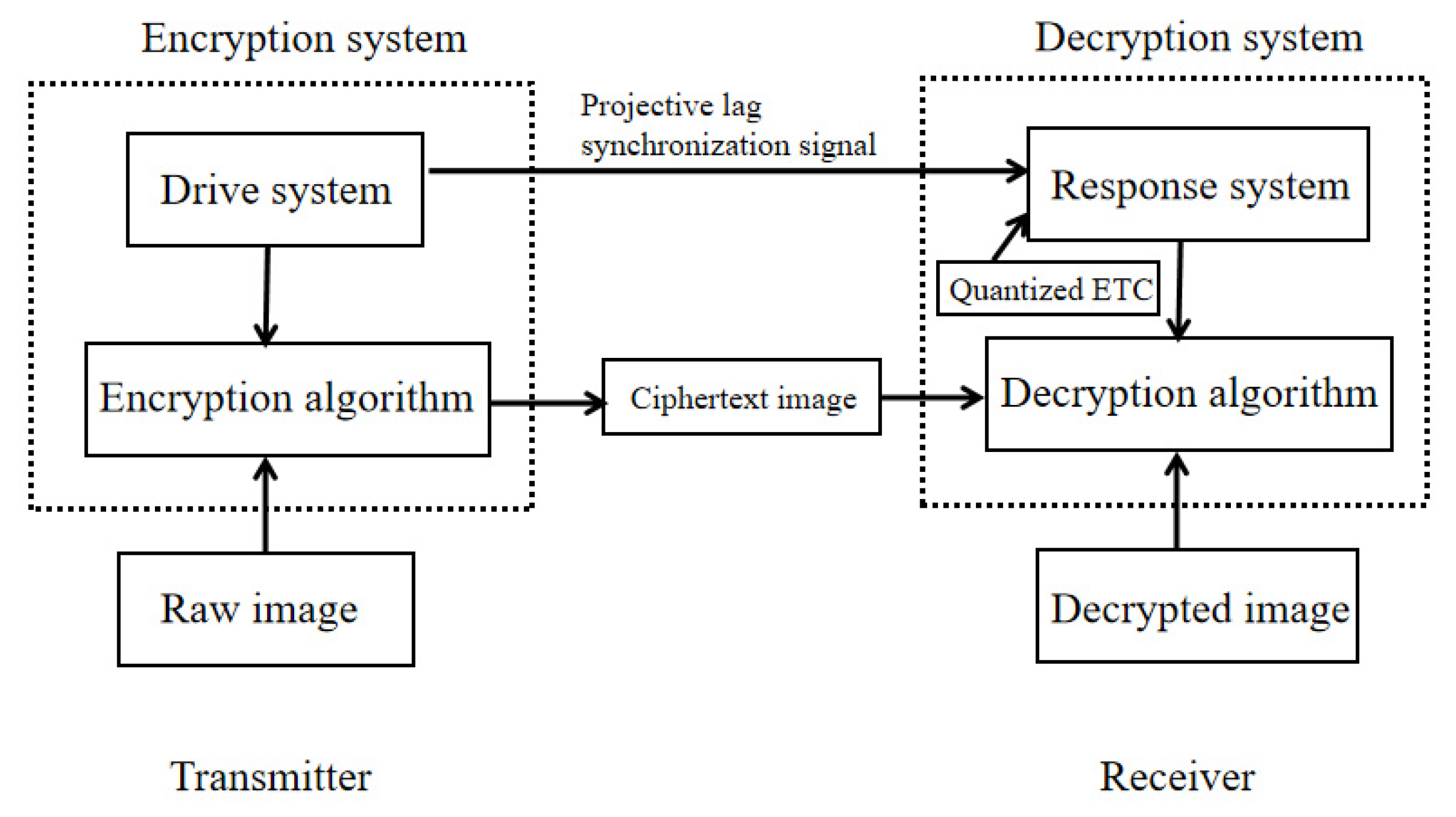
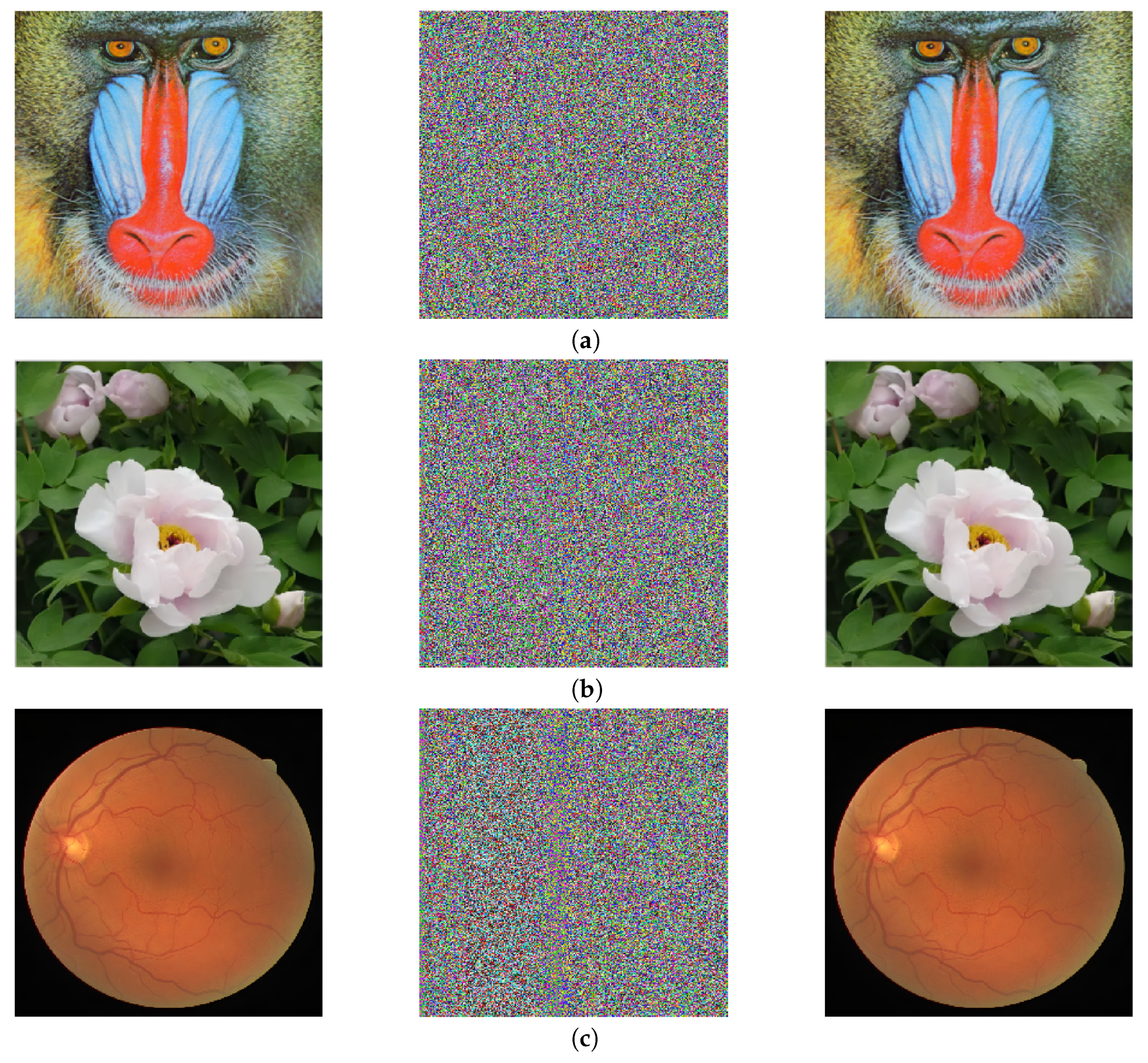
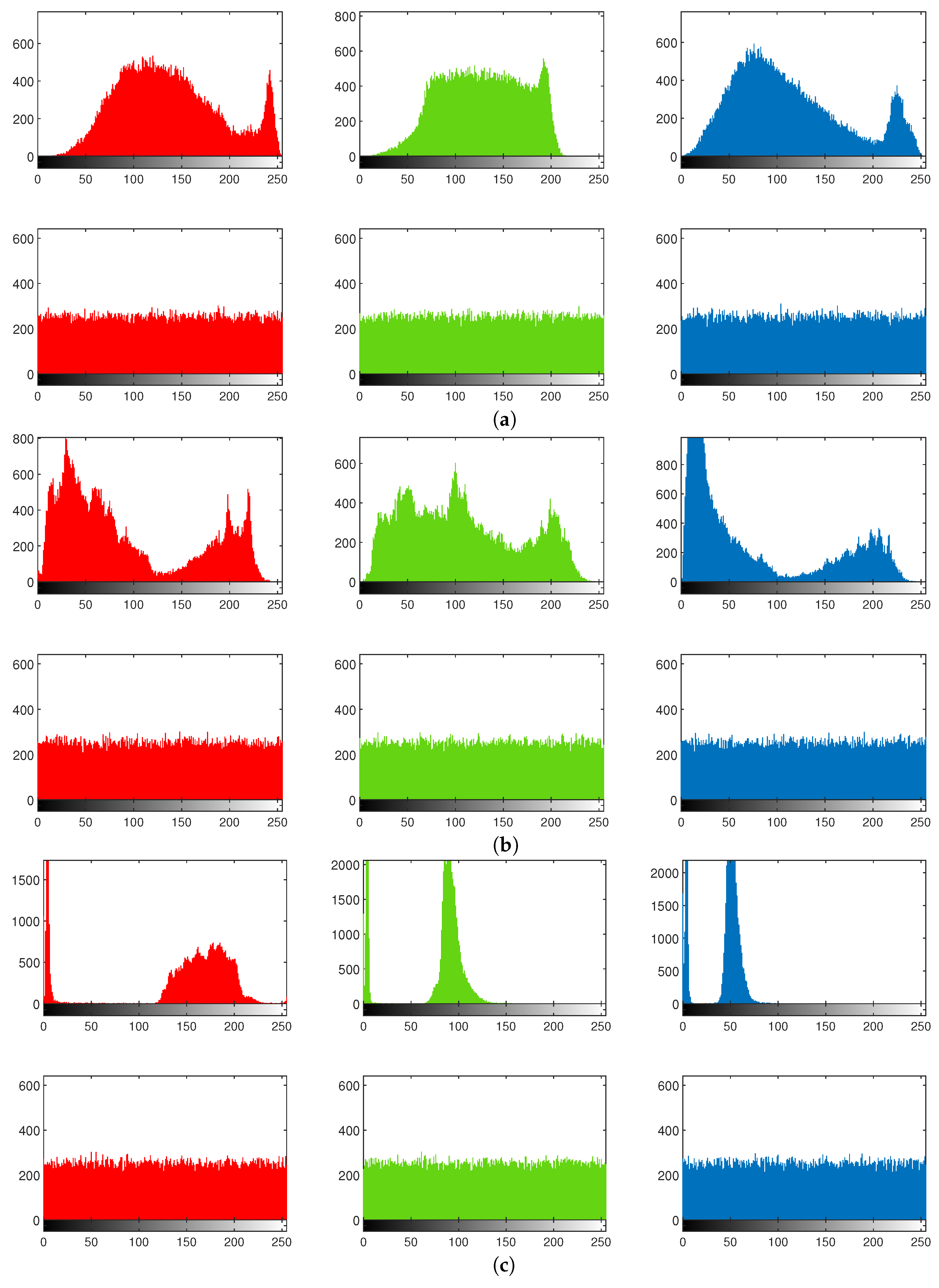
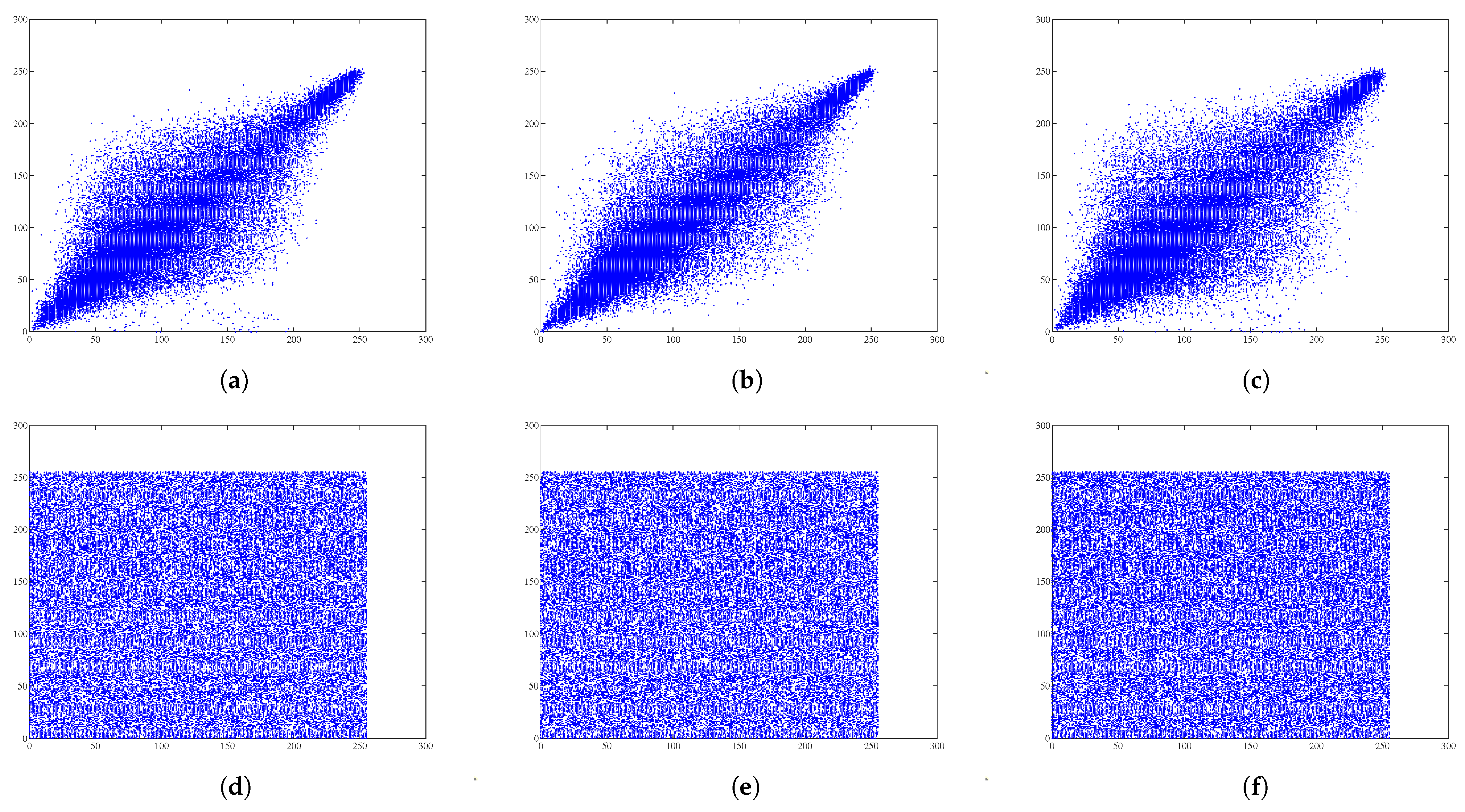
Section 5 applies the theoretical results to image encryption, and the work is concluded in
Section 6.
Notations. Denote , and . Let , and represent the set of real constants, the set of octonions and the n-dimensional octonion-valued vectors, respectively.
3. Preassigned-Time Projective Lag Synchronization
In order to facilitate the description, the relevant parameters are given as follows.
Firstly, the exponential quantized ETC scheme based on 1-norm for
can be designed as
where
,
,
,
,
denotes an increasing sequence of release instants and
,
and
and
. Besides,
,
, and the quantization function
(
) is defined as
where
with
,
and
. According to the analysis in [
25], there is a Filippov solution
which satisfies
.
The triggering condition is exploited as
where
,
,
,
and
are measurable errors, which are described as
for
. Furthermore, dynamic variables
and
are designed as
where
,
,
and the remaining undefined parameters are consistent with those in (
6).
Remark 2. The preassigned time is a user-specified parameter that sets the desired synchronization time. Typically, the selected should satisfy . However, choosing an excessively short will raise the control gain through the term in the controller (6), increasing control energy consumption and implementation costs. This may result in violations of practical constraints, such as actuator saturation or energy limitations. Hence, the selection of should strike a balance between synchronization speed and feasible control inputs, ensuring that remains within acceptable system limits.
Lemma 7. For , , , , .
Proof. Firstly, it is proved that
holds for
. Otherwise,
must hold for some
. Because
is continuous, there are some
such that
. Denote
. Because of
, and by (
9),
Integrating the above formula from 0 to
, one gets
This results in a contradiction. Hence, for any . By analogous reasoning, we have for any . □
Theorem 1. Under Assumptions 1–3, the quantized control protocol (6) and the dynamic ETC mechanism (7)–(9), if , systems (1) and (2) can attain PDT projective lag synchronization within , where and is given in (6). Proof. The Lyapunov function is constructed as
Calculating the upper right Dini derivative
along the error trajectories of (
5) for
, one derives
From Assumptions 2 and 3, and by means of Lemmas 1 and 2, one gets that
and
and
and
and
By the measure error
, one has
According to Lemmas 2 and 6,
where
. Substituting (
11)–(
16) into (
10), and using the dynamic ETC mechanism under 1-norm (
7)–(
9), one can conclude that
Combining (
17), (
18), adaptive law (
9), and using Lemma 4,
Since
and
,
Therefore, by virtue of Lemma 5, if
, the networks (
1) and (
2) can attain PDT projective lag synchronization within
via the controller (
6) with the dynamic ETC mechanism (
7)–(
9). □
Remark 3. In [36,37], the authors solved the PDT synchronization of quaternion-valued BAMNNs by designing the following ETC schemewhere . In contrast, the controller proposed (6) in this paper introduces two key innovations. First, it establishes a novel hybrid control framework that seamlessly integrates exponential quantization with the ETC mechanism. Second, it replaces the conventional linear combination of sign and power-law terms with a unified exponential term . This achieves simultaneous improvements in structural compactness, convergence speed, and resource utilization efficiency. Remark 4. The non-separation approach is adopted in this work, as opposed to the decomposition-based Lyapunov method [5,10,11], for three key reasons: First, decomposing OVNNs into real-valued subsystems disrupts the intrinsic non-commutative and non-associative nature of the octonion algebra. Second, this approach avoids the computational complexity incurred by handling eight equivalent real-valued subsystems, thereby yielding more concise stability criteria and controller designs. Finally, from a practical perspective, the non-separation method provides a more direct framework that is straightforward to implement, as it processes the complete OVNN directly without component separation. Remark 5. A novel dynamic ETC algorithm (6)–(9) is developed to achieve enhanced control efficiency and communication resource conservation. Unlike conventional static triggering schemes [28,29,30,34,35], dynamic auxiliary variables and are incorporated into the proposed methodology, enhancing adaptability and overall performance in resource-constrained environments. In the quantized controller (
6) and the dynamic ETC mechanism (
7)–(
9), if
, Theorem 1 degenerates to the following result.
Corollary 1. Under Assumptions 1–3, the quantized control protocol (6) and the dynamic ETC mechanism (7)–(9), if and , systems (1) and (2) can attain FDT projective lag synchronization, and the ST is reckoned as , where is given in (6). Next, we prove that the Zeno phenomenon is eliminated in the quantized controller (
6) with the dynamic ETC mechanism (
7)–(
9).
Theorem 2. By adopting the quantized controller (6) with the dynamic ETC mechanism (7)–(9), the Zeno behavior can be excluded. Proof. Assume Zeno behavior occurs, i.e., there is a moment
that satisfies
. According to the definition of limits, for any
, there is
such that
for any
, which implies that
. For
, by Lemma 3, one derives
where
. Since
, one can get
According to systems (
1) and (
2), then
Substituting (
20) and (
21) into (
19), one can obtain
Analogously,
where
. Combining (
22) and (
23),
Thus, for
, one gets
If
,
In addition, by utilizing the triggering condition (
7), one has
By dynamic variables (
9) and Lemma 7, for
, one has
and
Substitute (
26) and (
27) into (
25),
Ulteriorly, it can be seen from (
24) and (
28),
Then it can be further deduced that , which contradicts with . Consequently, the Zeno behavior can be precluded. □
In quantized ETC strategy (
6), if
, the controller becomes the following form
where
is defined as
and the remaining undefined parameters are consistent with those in (
6).
The triggering condition is exploited as
where
,
,
,
and
are described as
for
. Furthermore, dynamic variables
and
are designed as
where
,
and
.
Theorem 3. Under Assumptions 1–3, the quantized control protocol (29) and the dynamic ETC mechanism (30)–(32), if , the OV-BAMNNs (1) and (2) can achieve PDT projective lag synchronization in , where and is given in (29). Proof. Analogous to the proof of Theorem 1, it is not difficult to obtain
From Lemma 5, the QV-BAMNNs (
1) and (
2) can achieve PDT projective lag synchronization in
by the quantized control scheme (
29) and the dynamic ETC mechanism (
30)–(
32). □
Corollary 2. Under Assumptions 1–3, the quantized control strategy (29) and the dynamic ETC mechanism (30)–(32), if and , the OV-BAMNNs (1) and (2) can achieve FDT projective lag synchronization, and the ST is reckoned as , where is given in (29). Corollary 3. By adopting the quantized controller (29) with the dynamic ETC mechanism (30)–(32), the Zeno behavior can be excluded. To further strengthen the practicability of the results in this article, the PDT projective lag synchronization of OV-BAMNNs will be investigated by employing the 2-norm.
For convince, the related parameters are provided.
Next, the exponential quantized ETC scheme based on 2-norm for
can be designed as
where
,
,
,
,
denotes an increasing sequence of release instants and
,
is a preassigned-time and
and
.
,
and
is a quantization function, whose definition is consistent with that in Theorem 1.
The triggering condition is designed to
where
,
,
,
and
are measurable errors, which are described as
for
. Furthermore, dynamic variables
and
are designed as
where
,
and
.
Theorem 4. Under Assumptions 1–3, the quantized control protocol (33) and the dynamic ETC mechanism (34)–(36), if , the OV-BAMNNs (1) and (2) can achieve PDT projective lag synchronization in , where and is given in (33). Proof. Construct Lyapunov function
For
, calculating the upper right Dini derivative
along the error trajectories of (
5), one derives
From Assumptions 2 and 3, and by means of Lemma 1, one gets that
and
and
and
and
By the measure error
, one has
According to Lemmas 2 and 6,
where
.
Substituting (
38)–(
43) into (
37), and using the dynamic ETC mechanism under 1-norm (
34)–(
36), one can conclude that
Combining (
44), (
45) and adaptive law (
36),
Since
and
,
Therefore, by virtue of Lemma 5, if
, the networks (
1) and (
2) can attain PDT projective lag synchronization within
via the quantized controller (
33) with the dynamic ETC mechanism (
34)–(
36). □
Corollary 4. Under Assumptions 1–3, the quantized control protocol (33) and the dynamic ETC mechanism (34)–(36), if and , the OV-BAMNNs (1) and (2) can achieve FDT projective lag synchronization, and the ST is reckoned as . Corollary 5. By adopting the quantized controller (33) with the dynamic ETC mechanism (34)–(36), the Zeno behavior can be excluded. In quantized ETC strategy (
33), if
, the controller becomes the following form:
where
is defined as
and the remaining undefined parameters are consistent with those in (
33).
The ETC condition is exploited as
where
,
,
,
and
are described as
for
. Furthermore, dynamic variables
and
are designed as
where
,
and
.
Theorem 5. Under Assumptions 1–3, the quantized control protocol (46) and the dynamic ETC mechanism (47)–(49), if , the OV-BAMNNs (1) and (2) can achieve PDT projective lag synchronization in , where and is given in (46). Proof. Similar to the proof of Theorem
4, it is not difficult to obtain
By virtue of Lemma, if
, the networks (
1) and (
2) can attain PDT projective lag synchronization within
via the quantized controller (
46) with the dynamic ETC mechanism (
47)–(
49). □
Corollary 6. Under Assumptions 1–3, the quantized control protocol (46) and the dynamic ETC mechanism (47)–(49), if , systems (1) and (2) can implement FDT projective lag synchronization, and the ST is assessed by , where is given in (46). Corollary 7. By adopting the quantized controller (46) with the dynamic ETC mechanism (47)–(49), the Zeno behavior can be excluded. Remark 6. Under the framework of the non-decomposition method, Theorems 1 and 4 establish the PDT projective lag synchronization of OV-BAMNNs using the 1-norm and 2-norm, respectively. In particular, Theorem 1 is derived by designing an exponential quantized ETC protocol under the 1-norm, while Theorem 4 is obtained using the 2-norm. It is noteworthy that two distinct Lyapunov functions are formulated in the theoretical analysis to demonstrate synchronization under the two respective norms. Moreover, compared with conventional decomposition-based methods [5,10,11] or the previous studies limited to a single norm [7,18], the proposed approach not only yields more comprehensive theoretical results but also significantly reduces computational redundancy. Remark 7. The proposed PDT projective lag synchronization scheme offers a unified framework that generalizes several conventional synchronization types. As defined by the error and , our results encompass: (i) PDT complete synchronization when ; (ii) PDT lag synchronization when ; and (iii) PDT anti-synchronization when . While previous studies often focus on these special cases, they fail to address the combined challenges of PDT convergence [7,8], projective scaling [15], and transmission delays [38] simultaneously. Hence, the findings of the paper are more generalizable. Remark 8. In contrast to the finite-time and FDT synchronization, the ST of PDT synchronization can be predetermined depending on actual demands. Under the identical criteria, the ST of the PDT synchronization is noticeably less than that of the FDT synchronization. From this viewpoint, the PDT synchronization results in this paper are greater flexibility and practicality compared to the approaches in [28,29,30]. Remark 9. This paper is compared with recent studies [24,25,27] to highlight its innovations. Unlike [25], which used quantized controllers for multi-layer networks, our study employs a more efficient quantized ETC scheme for OV-BAMNNs. Compared with [27], which achieved finite-time switching via intermittent control, this work solves the PDT projective lag synchronization problem, with a ST that can be preset independently of initial conditions. In contrast to [24], which developed PDT control for launch vehicles, our approach ensures PDT synchronization for NNs without requiring complex observers or performance functions. 4. Numerical Simulations
This section presents two numerical examples to demonstrate the validity and feasibility of the theoretical findings.
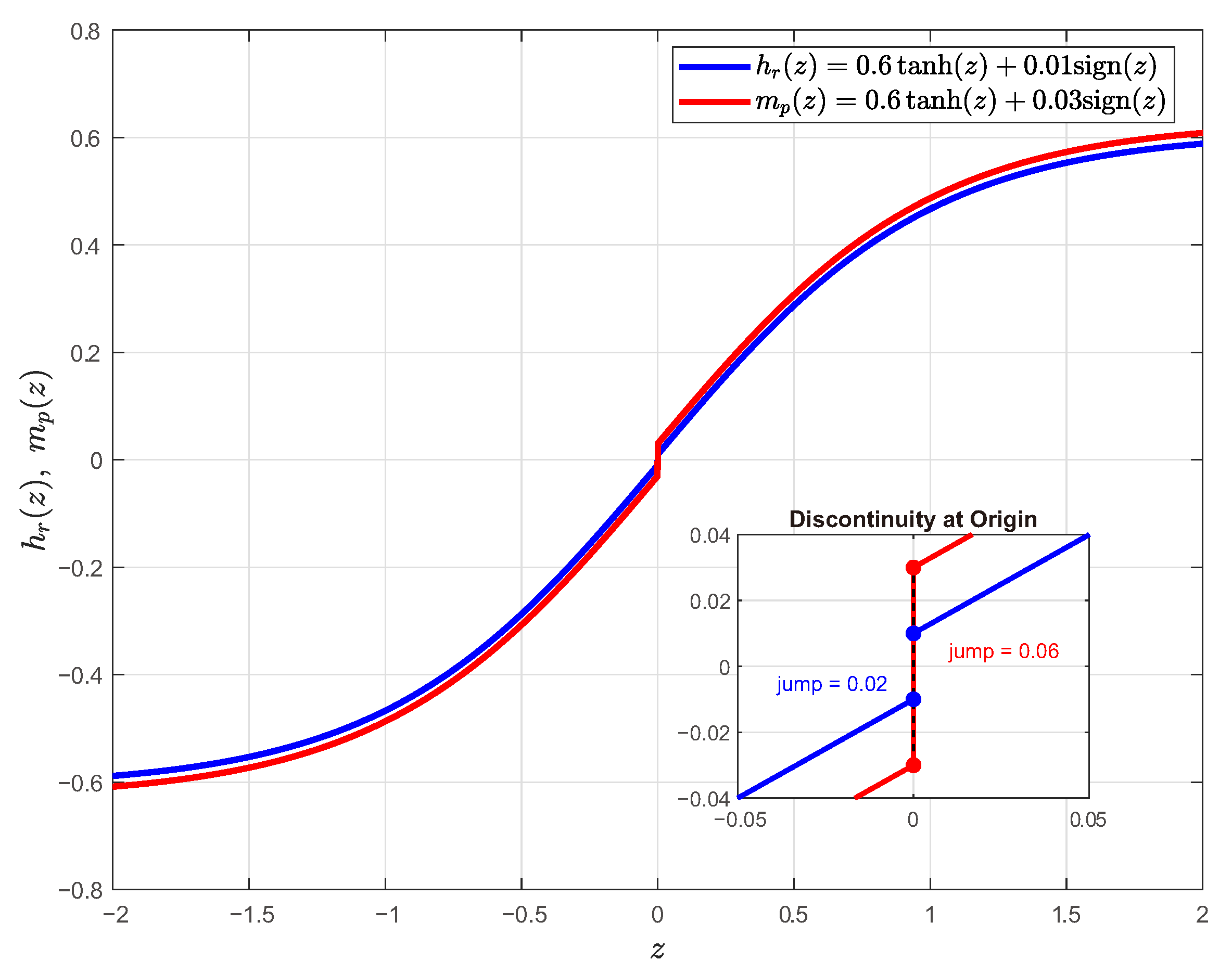
Example 1. Consider the following OV-BAMNNwhere , , , , , , and . , and . . Apparently, Assumptions A2 and A3 are met with , , and . The diagrams of the activation functions and are presented in Figure 1. The connection weights of the network (
50) are selected as
Under initial conditions
,
,
and
,
, the dynamic behaviors of network (
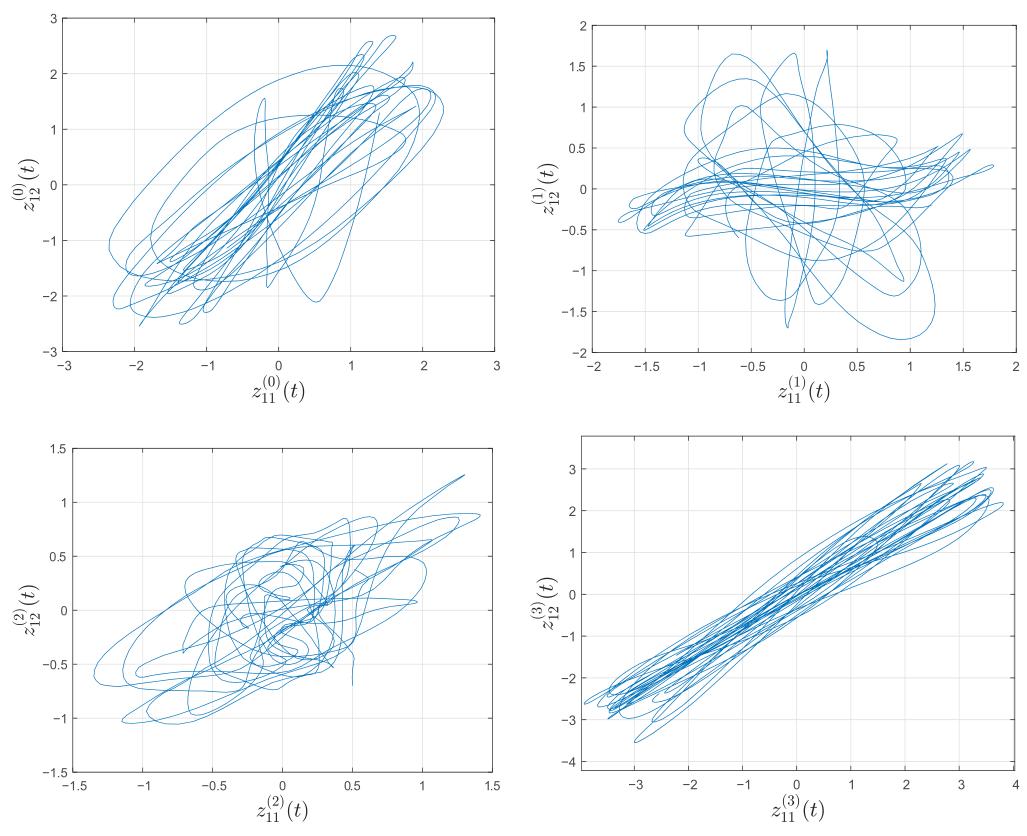
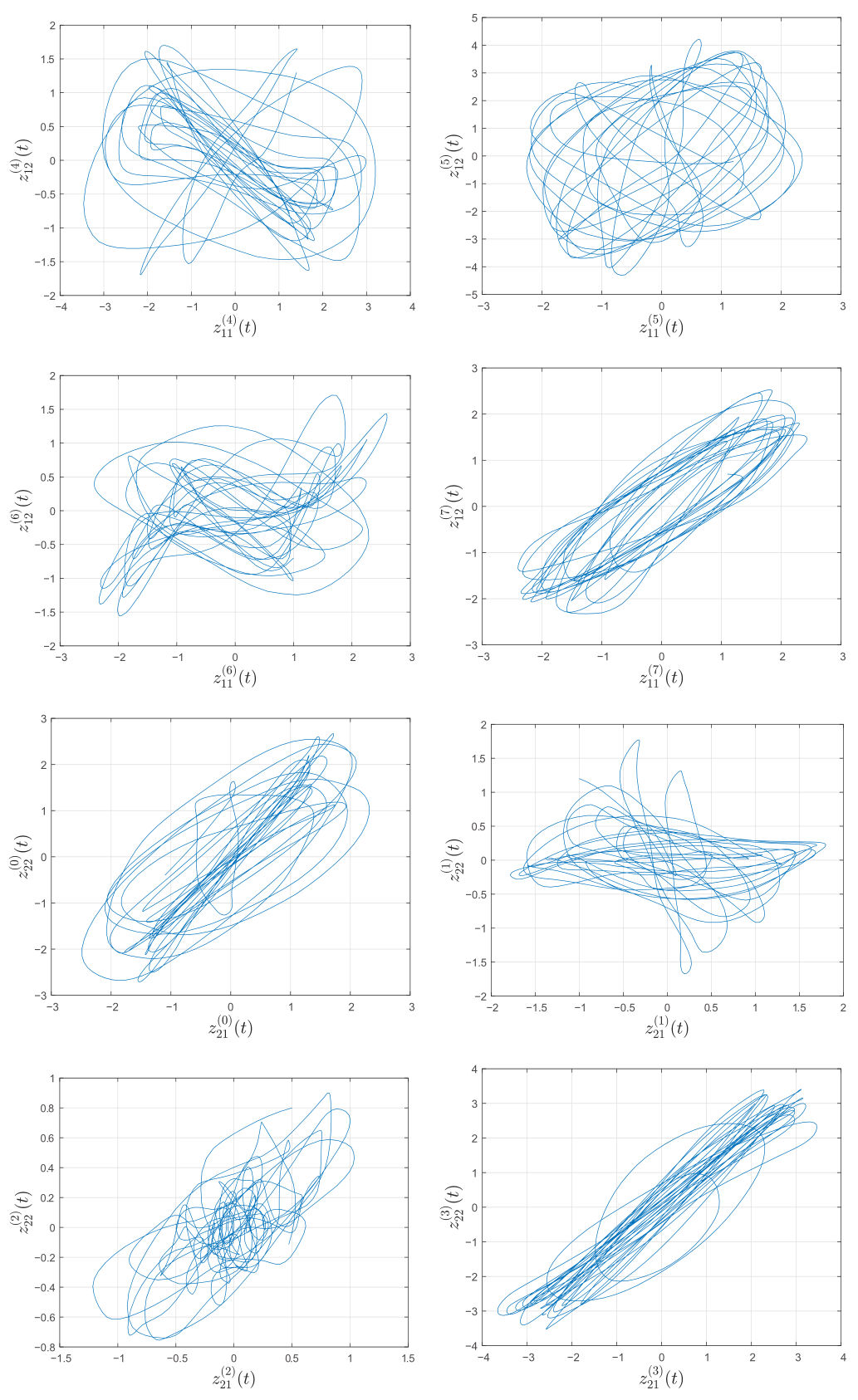
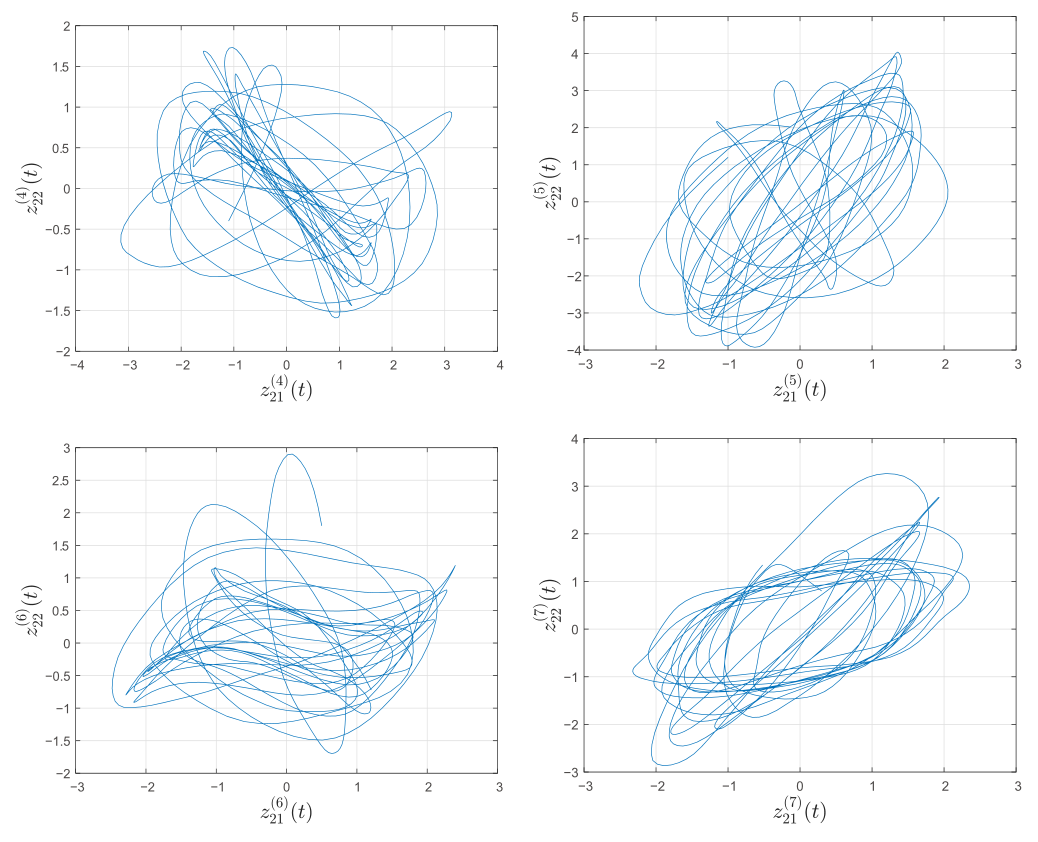
50) are displayed in
Figure 2.
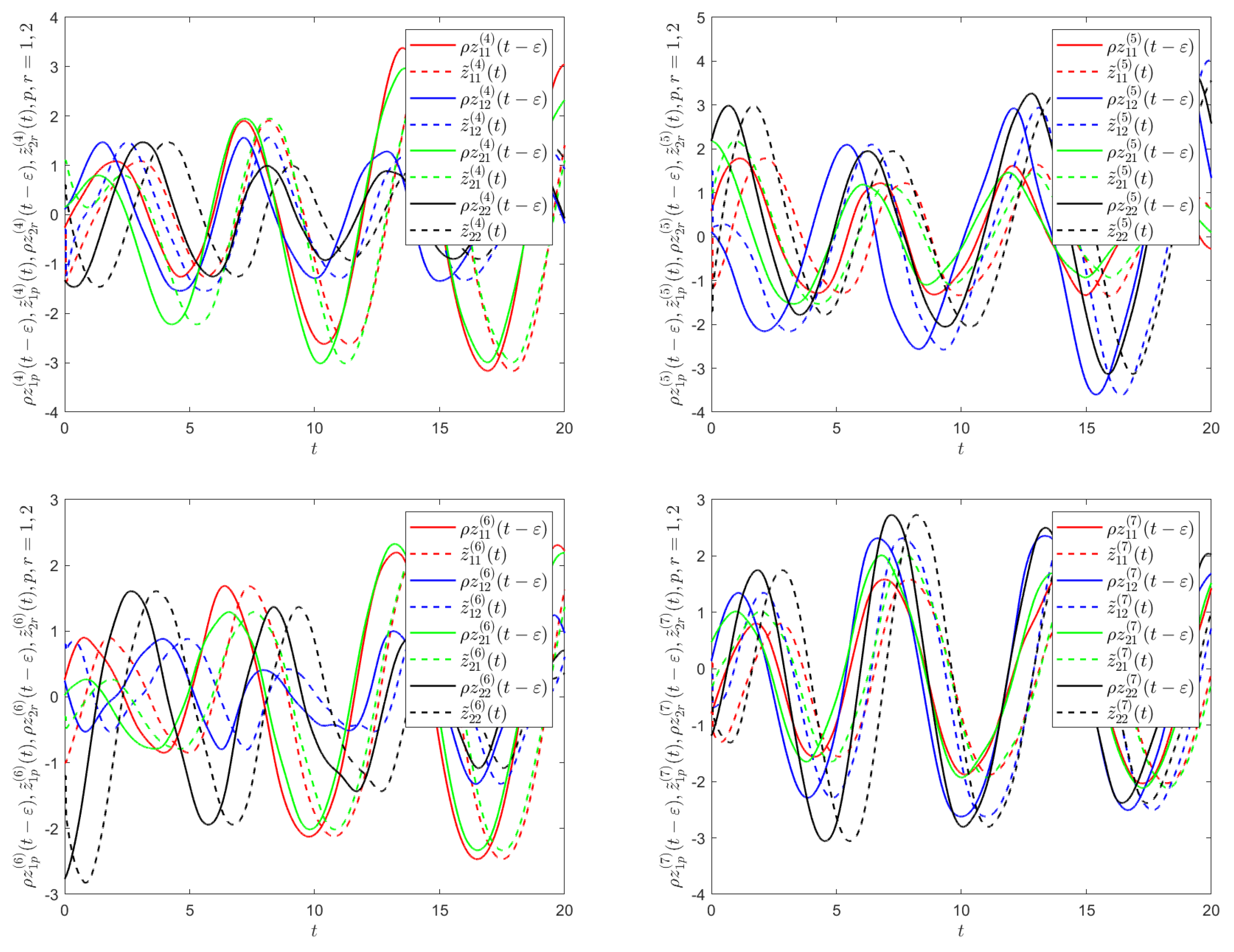
The slave network is
where
,
,
and
, where
.
Take
and
. When
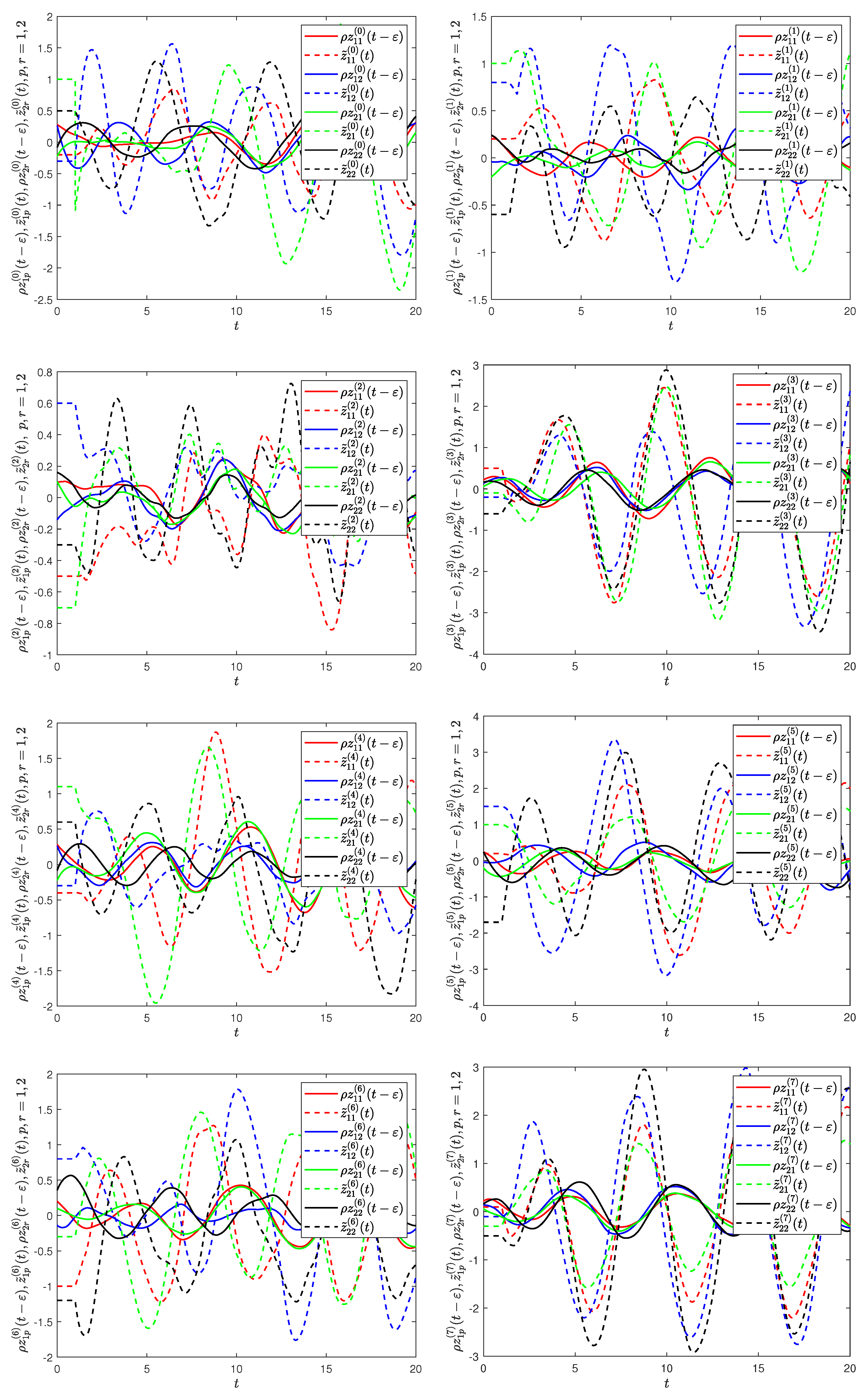
, the state trajectories of the OV-BAMNNs (
50) and (
51) are depicted in
Figure 3, which demonstrates that the OV-BAMNNs (
50) and (
51) cannot realize synchronization without control inputs.
First, the PDT projective lag synchronization of systems (
50) and (
51) will be verified via the quantized control scheme (
6) and the dynamic ETC mechanism (
7)–(
9). By simple calculation,
,
,
and
. Choose the quantizer density
. The parameters in (
6) are selected as
,
,
,
,
,
. The parameters in (
7) are selected as
. The parameters in (
9) are selected as
,
,
,
,
and
. According to the selection of the above parameters, it is not difficult to calculate
,
and
. Obviously, the inequality
holds and
. So, we take
, the OV-BAMNNs (
50) and (
51) can achieve PDT projective lag synchronization in
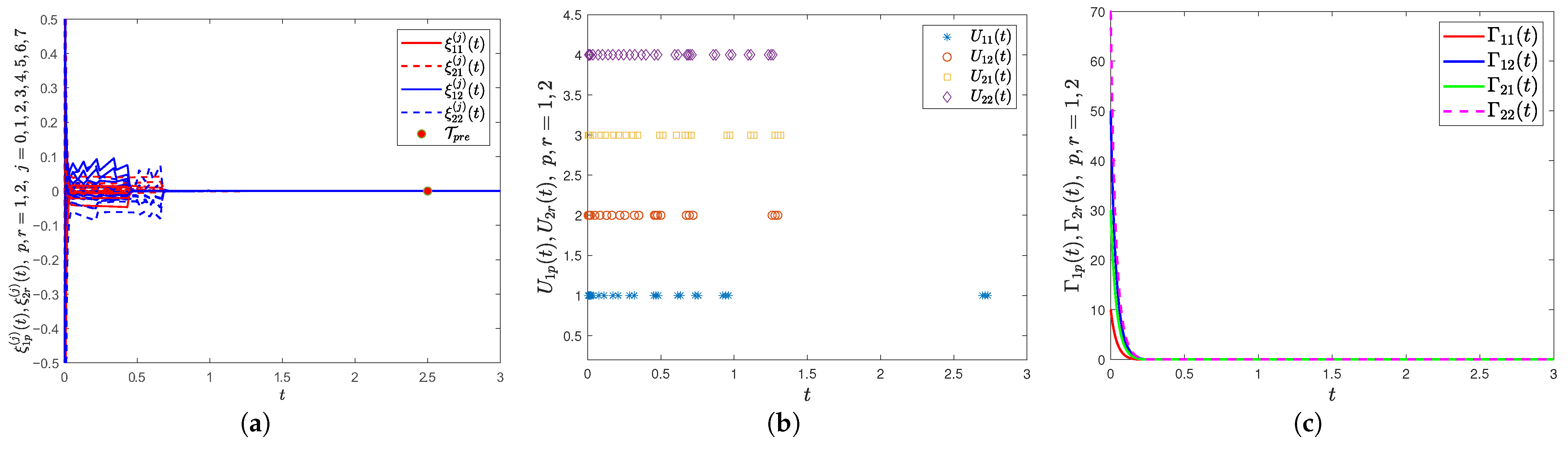
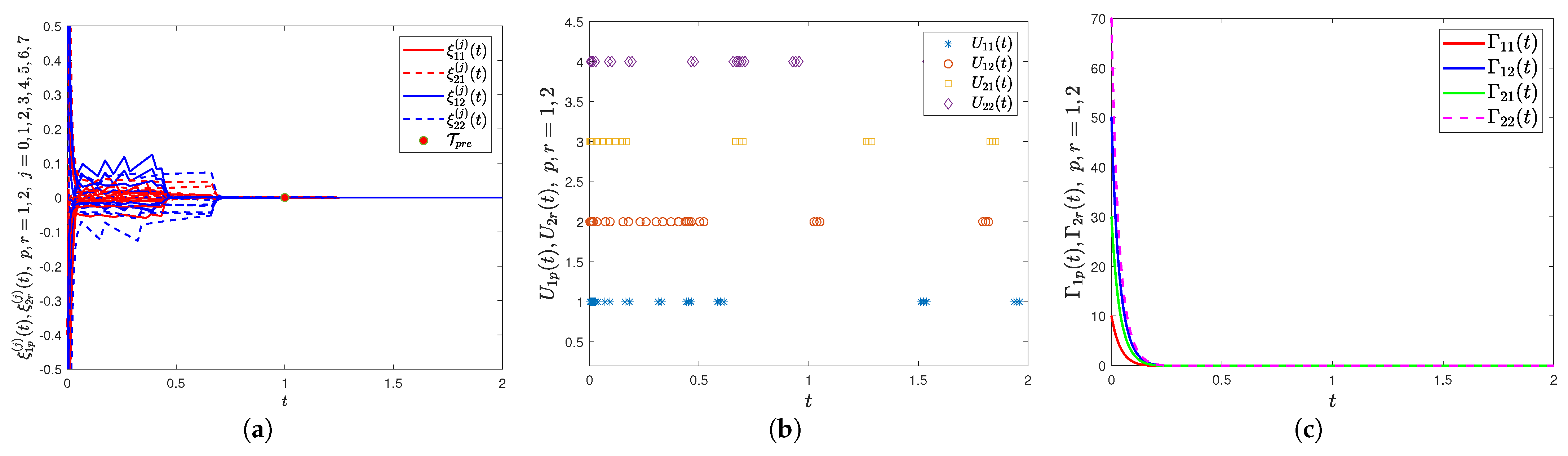
by Theorem 1. The trajectories of the synchronization error
and
are plotted in
Figure 4a. The triggering moments of each neuron in systems (
50) and (
51) are depicted in
Figure 4b. The trajectories of dynamic variables
and
are showed in
Figure 4c. Besides,
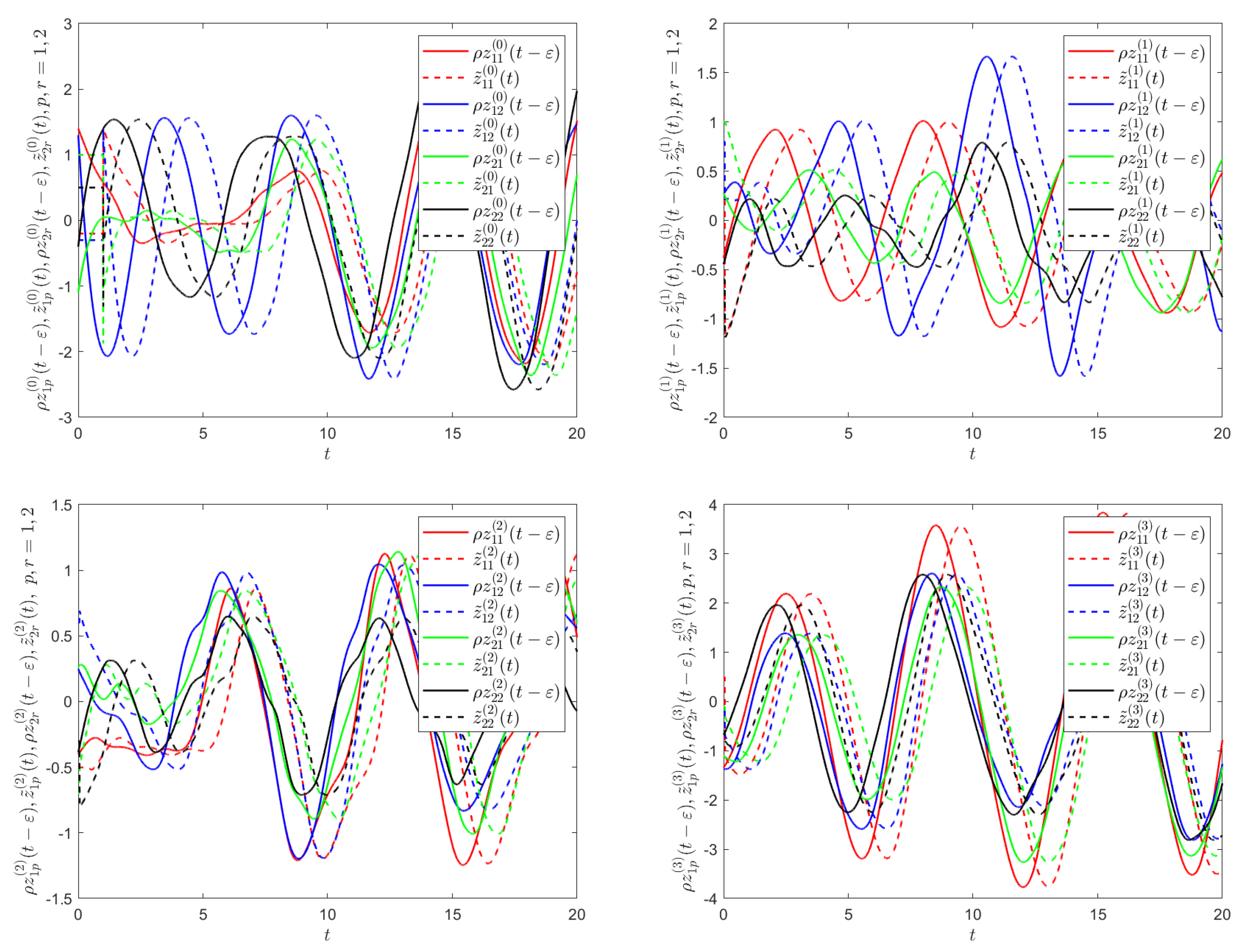
Figure 5 displays the state trajectories of OV-BAMNNs (
50) and (
51) with
and
.
4.1. Verification with Different Activation Functions
To verify the universality of the ETC protocol (
6)–(
9) with respect to different activation functions, the following two representative activation functions are additionally employed for validation.
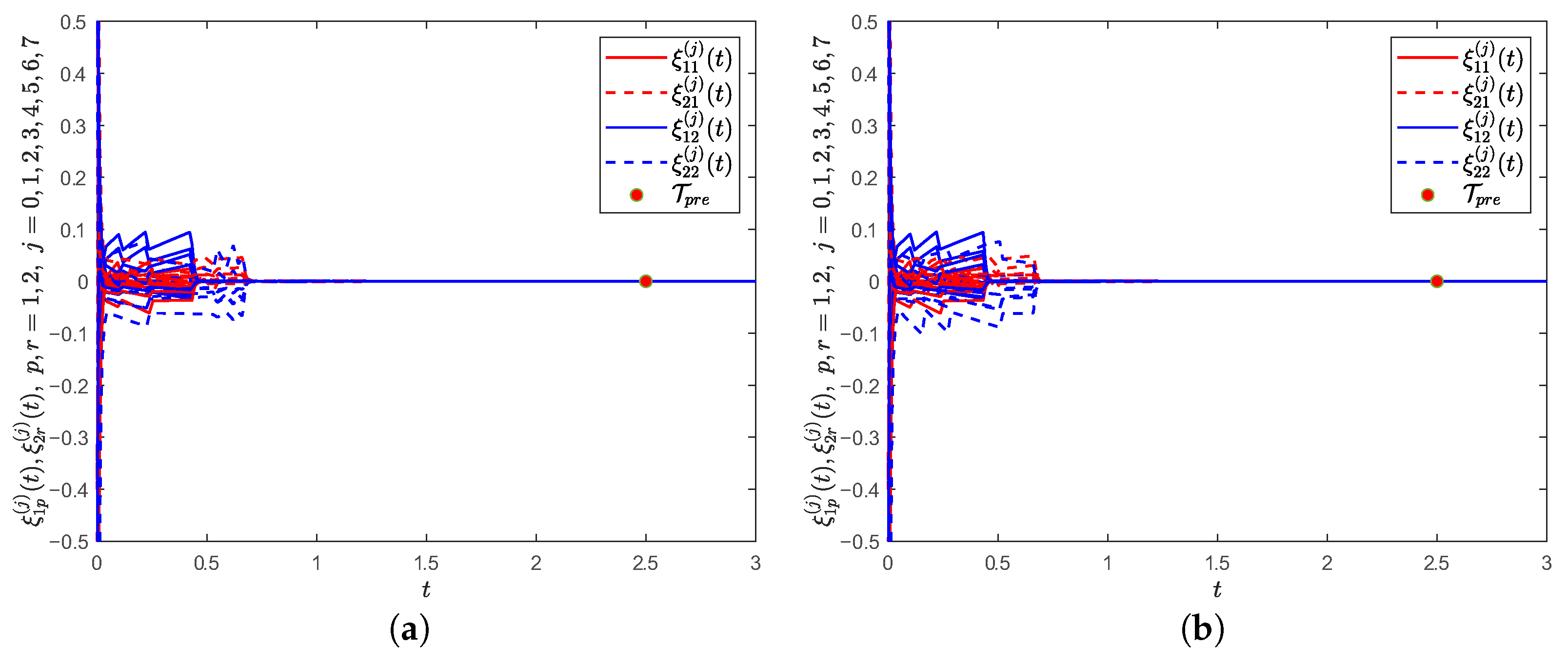
Figure 6a depicts the evolution of PDT projective lag synchronization errors under the saturation function
, while
Figure 6b illustrates the synchronization error evolution under the piecewise linear function
. The results demonstrate that the synchronization errors converge within
under both activation functions, confirming the generality of our control strategy.
4.2. Performance Evaluation of ETC Scheme
To evaluate the performance of the ETC protocol (
6)–(
9) and rule out Zeno behavior, we conducted comprehensive simulations comparing it with traditional time-triggered control (TTC).
Table 3 displays the average inter-event times for the four neurons in the OV-BAMNNs. The results show that all neurons exhibit positive and finite inter-event intervals, ranging from 0.0882 to 0.1364 seconds, providing empirical evidence for the exclusion of Zeno behavior.
Furthermore,
Table 4 presents a comparative analysis between the proposed ETC scheme (
6)–(
9) and traditional TTC with a fixed triggering interval of 0.05 seconds. The comparison results demonstrate that our ETC scheme achieves a significant 55% reduction in total triggering events (108 vs. 240) while maintaining the desired synchronization performance. This substantial reduction in communication frequency translates into considerable savings in network bandwidth utilization and energy consumption, highlighting the practical advantages of the proposed ETC mechanism over traditional TTC methods.
4.3. Comparative Experments
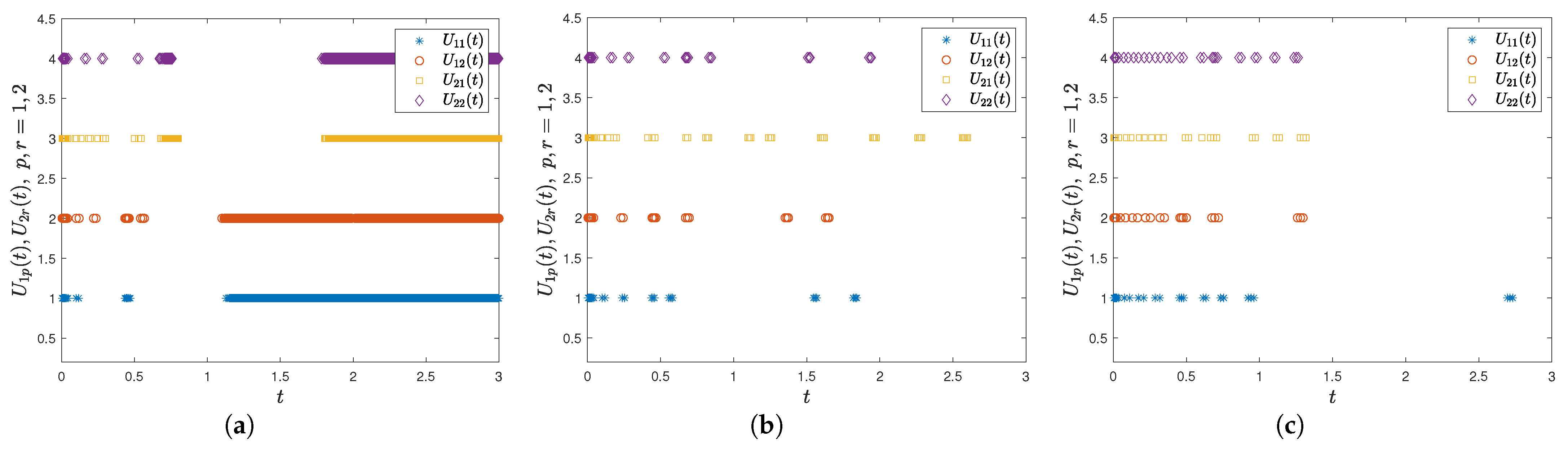
To validate the effectiveness of the proposed dynamic ETC scheme (
6)–(
9), comparative experiments are conducted in this section. The proposed method is compared with the static ETC mechanism in [
35] and the dynamic ETC mechanism in [
36]. The experimental results can be found in
Figure 7 and
Table 5.
Figure 7 presents a comparison of the triggering instants under the same experimental conditions for the three methods.
Table 5 details the statistical results of the triggering times for the three methods. It can be observed that while maintaining the system’s synchronization performance, the number of triggering times of the proposed dynamic ETC mechanism is significantly less than that of the static ETC mechanism in [
35]. Compared with the dynamic ETC mechanism in [
36], the proposed method exhibits a more uniform distribution of triggering instants and fewer triggering times.
Example 2. To test the correctness of the theoretical result of Theorem 4, OV-BAMNNs (50) and (51) in Example 1 will continue to be considered. By simple calculation, , , and . Choose the quantizer density . The parameters in (33) are selected as , , , , , . The parameters in (34) are selected as . The parameters in (36) are selected as , , , , and . According to the selection of the above parameters, it is straightforward to calculate that , and . Obviously, the inequality holds and . So, we take . According to Theorem 1, systems (50) and (51) can achieve PDT projective lag synchronization in , where and . The trajectories of synchronization errors and are presented in Figure 8a. The triggering moments of each neuron in systems (50) and (51) are plotted in Figure 8b. The trajectories of dynamic variables and are presented in Figure 8c.