


Abstract
Teen dating violence (TDV) is a relevant threat to adolescent wellbeing, and schools may contribute to prevention by promoting gender equity through both the explicit curriculum (formal content and materials) and the hidden curriculum (everyday norms, interactions, and climate). This convergent mixed-methods study descriptively compared teachers’ and students’ perceptions of gender equity practices in three technical upper secondary schools in Southern Italy. Thirty-five teachers and 82 students completed an online, mirrored questionnaire developed for this study, including Likert-type items across three domains (explicit curriculum, hidden curriculum, and affective relationships/TDV-related education) and brief open-ended prompts. Closed-ended responses were summarized using descriptive frequencies and stacked distributions based on aggregated Likert categories, and open-ended responses were analyzed through reflexive thematic analysis. Across domains, teachers reported higher endorsement of equity-oriented practices than students, whereas students more often indicated limited visibility of gender equity in materials and activities, greater neutrality/uncertainty in everyday practices, and weaker perceptions of school-wide consistency. Qualitative themes aligned with these descriptive patterns, emphasizing variability across contexts and requests for clearer, more consistent practices. These findings should be interpreted as perceptions within a context-specific convenience sample and may inform future school-based research and program development on gender equity and TDV-related education.
1. Introduction
Teen Dating Violence (TDV) is widely recognized as a significant threat to adolescents’ physical and psychological wellbeing. TDV includes physical, sexual, psychological, verbal, emotional, and digital behaviors occurring within an affective or sexual relationship, enacted with the aim of controlling, dominating, or harming one’s partner (Exner-Cortens et al., 2013). Epidemiological studies indicate that TDV affects a substantial proportion of adolescents, thus representing a public health priority (Exner-Cortens et al., 2013, 2025). Importantly, consequences are not confined to the period in which violence occurs: the literature documents associations with anxiety, depression, post-traumatic symptoms, substance use, risky sexual behaviors, and school difficulties, with potentially persistent effects over time (Foshee et al., 2013; Reyes et al., 2016; Temple et al., 2018).
In recent years, research has highlighted a specific vulnerability among sexual and gender minority youth (SGMY), including lesbian, gay, bisexual, transgender, queer, and nonbinary adolescents and, more broadly, young people who diverge from dominant heterosexual and cisgender norms. Indeed, numerous studies report higher rates of TDV among LGBTQIA+ adolescents than among their hetero-cisgender peers (Marshal et al., 2013; Birkett et al., 2015; Coulter & Gartner, 2023; Sulla et al., 2025b). One explanatory framework is minority stress theory, which links stigma-related stressors to heightened vulnerability through processes such as expectations of rejection, concealment, and reduced access to support (Meyer, 2003). Building on this perspective, Tan et al. (2020) conceptualize cisnormativity as a structural backdrop that can normalize non-affirmation and shift safety management onto transgender and gender diverse (TGD) youth through vigilance and nondisclosure. In school settings, everyday indicators such as respecting preferred names and pronouns and supporting the free expression of gender identity without fear of judgment may therefore be especially informative for understanding whether inclusion is experienced as stable and credible: conditions that may also shape help-seeking and protection in relation to TDV.
1.1. Theoretical Framework: Ecological Model and Levels of Risk/Protection
Understanding teen dating violence (TDV) requires a multilevel framework that accounts for how individual vulnerabilities, relationship processes, and social–institutional contexts jointly shape risk and protection. The ecological model (Bronfenbrenner, 1979, 2000) conceptualizes TDV as the outcome of dynamic interactions across systems, making it particularly suited to school-based prevention research, where norms, relationships, and access to adult support are co-constructed in everyday life (Sorrentino et al., 2023).
At the individual level, TDV has been associated with both internalizing and externalizing indicators (e.g., distress symptoms, substance use, risky behaviors), which may operate as outcomes of violence but also as conditions that reduce adolescents’ ability to recognize risk cues, set boundaries, and seek help (Edwards et al., 2021; Fix et al., 2022; Hazelwood, 2023).
At the relational level, family and peer dynamics can amplify or buffer vulnerability: limited emotional support and problematic communication are linked to increased risk, and peer marginalization may further sustain involvement in harmful relationships by increasing isolation and the need for belonging (Martin-Storey et al., 2021; Herbitter et al., 2022; Petit et al., 2023). Additionally, exposure to conflict or violence in early family contexts has been linked to later relational patterns, highlighting continuity processes across development (Widom & Wilson, 2014).
At the institutional/community level, schools represent a key microsystem for prevention because they shape both the formal messages adolescents receive (e.g., curriculum content) and the informal norms enacted through everyday interactions. Educational contexts lacking inclusive policies or reliable adult support may increase vulnerability, whereas trained teachers, diversity-sensitive curricula, and safe spaces for dialogue can function as protective factors (Sabina et al., 2022; Petit et al., 2023). These dynamics may become more complex when gender-related stigma intersects with other stressors (e.g., socio-economic disadvantage or community violence), underscoring the need for multilevel, context-sensitive prevention approaches (Peters et al., 2017; Thaxton et al., 2025).
1.2. School, Stereotypes, and Sexism: Rationale for Studying Explicit and Implicit Curricula
Within an ecological perspective, schools are not neutral settings: they contribute to shaping adolescents’ norms and expectations about gender, relationships, and legitimacy. A key mechanism through which school contexts may influence both gender equity and TDV-relevant relational scripts is the reproduction, or transformation, of gender stereotypes and sexist beliefs. Stereotypes provide prescriptive expectations about what is “appropriate” for girls and boys and can influence self-perception, educational trajectories, and relational behaviors (Hyde, 2014). Because stereotypes often operate implicitly, they may guide judgments and educational decisions even in the absence of explicit discriminatory intent (Greenwald & Banaji, 1995; Ellemers, 2018).
At the individual level, sexism can take the form of ambivalent sexism, including hostile and benevolent components, the latter being socially legitimized and therefore harder to detect despite its role in maintaining hierarchy (Glick & Fiske, 1996, 2001). At the institutional level, schools can legitimize what is considered “normal” through subtle but cumulative practice (i.e., feedback, examples, expectations, and language) that may produce self-fulfilling dynamics and differential participation (Bourdieu, 1998; Rosenthal & Jacobson, 1968). When specific training on gender and discrimination is limited, equity-related work risks being framed as “secondary” or left to individual sensitivity rather than embedded into shared educational routines (Biemmi, 2020).
For these reasons, examining both explicit curriculum and hidden curriculum becomes essential. Explicit curricular intentions may not translate into students’ lived experience if they are not visible, coherent, and repeated across contexts; conversely, the hidden curriculum can either reinforce or undermine equity messages through daily practices. In upper secondary school settings, where peer norms, identity processes, and relational scripts become highly salient, understanding how teachers and students interpret these curricular layers is critical for clarifying schools’ role in gender equity promotion and, by extension, TDV prevention.
1.3. Explicit and Hidden Curriculum
Within the school’s educational mandate, the distinction between explicit and hidden curriculum is crucial for understanding how gender norms are constructed and transmitted. The explicit curriculum includes formally planned programs, learning goals, and teaching methods, such as civic education initiatives focused on rights and citizenship. In the Italian context, analyses of school textbooks in lower grades document persistent gender imbalance and stereotyped portrayals, including underrepresentation of women in certain roles and domains (Biemmi, 2024). Although these studies focus on lower grades, they underscore how curricular materials can operate as a structural constraint on equity-oriented education, warranting attention also in upper secondary settings. Importantly, equity-oriented efforts may contribute to students’ learning and prevention-relevant norms only insofar as they are recognizable and experienced as consistent, rather than episodic or dependent on individual initiative. From this perspective, hidden-curriculum indicators are particularly informative because they reflect how norms are enacted and perceived in everyday interaction, beyond formal curricular intentions.
The concept of hidden curriculum, introduced by Jackson (1968), refers to the implicit norms, values, and routines conveyed through everyday school practices. These symbolic dimensions may reinforce existing hierarchies and power relations even in the absence of overt discrimination (Giroux & Penna, 1979; M. W. Apple, 1979; M. Apple & Apple, 2004). For instance, differentiated expectations, such as underestimating girls’ potential in STEM or associating care work more frequently with female students, may reflect and perpetuate social stereotypes (Lavanga, 2025).
At the individual level, such mechanisms can influence students’ self-perceptions, contributing to feelings of inadequacy and disengagement when school expectations conflict with personal identity (Kärner & Schneider, 2024). At the structural level, the hidden curriculum may foster conformity to broader socio-economic logics of productivity, control, and precarity (Bowles & Gintis, 1976).
In this scenario, teacher training emerges as a strategic tool: educators equipped to recognize and deconstruct implicit biases can promote more equitable and inclusive school environments (UNESCO, 2015; Condron et al., 2025). Beyond traditional curricula, comprehensive sexuality and relationship education (CSE) can provide a pedagogical framework for developing emotional, communicative, and relational skills grounded in respect, consent, and diversity. Despite its documented impact in preventing gender-based violence, the implementation of CSE in Italy remains fragmented, hindered by cultural resistance and gaps in teacher preparation, often resulting in a “pedagogy of silence” around bodies, emotions, and relationships (UNESCO, 2009; Jones, 2011; Ketting et al., 2018; Bonvini et al., 2025).
2. The Present Study
School represents a privileged context for promoting wellbeing, equity, and the prevention of gender-based violence. Beyond its instructional mandate, it is a primary site of socialization where values, identities, and relational models are shaped. However, recent qualitative studies conducted in Southern Italy (Sulla et al., 2025a) suggest that sexist beliefs and gender stereotypes persist in both explicit (e.g., language, teaching materials, classroom examples) and implicit (e.g., expectations, role assignments, and everyday interactions) forms, according to both students and teachers in upper secondary schools. These dynamics may undermine the school’s potential as a transformative space, as they reinforce traditional representations of gender and may impair the capacity to identify and address early signs of relational abuse, such as control, possessiveness, and normalization of jealousy in adolescent romantic relationships.
In this light, in Italy, the National Guidelines for Civic Education, issued by the Italian Ministry of Education (MIUR, 2020) as a national policy framework for schools, emphasize valuing each individual’s talents and responsibilities, cultivating mutual respect, and fostering active citizenship competencies grounded in human rights. Because Civic Education is implemented transversally across subjects, all teachers are expected to contribute through their regular teaching activities. This policy framework therefore reduces the extent to which gender equity can be framed as “outside” the remit of the explicit curriculum and highlights schools’ capacity to integrate equity-related competencies within ordinary instruction.
Within this framework, the present study investigates how schools contribute to the prevention of teen dating violence (TDV) and the promotion of gender equity, focusing on both explicit educational actions and the implicit messages embedded in everyday school life. By exploring the perspectives of students and teachers within the same educational settings, the study aims to shed light on how curriculum—both formal and informal—shapes awareness, expectations, and prevention practices concerning adolescent relationships.
Aims and Hypotheses
This study examines how upper secondary schools may contribute to gender equity and TDV prevention through both the explicit curriculum (formal content, materials, and classroom practices) and the hidden curriculum (everyday norms, interactions, and school climate). A core focus is the extent to which teachers’ self-reported practices align with students’ lived perceptions within the same institutional settings. In addition, consistent with our convergent mixed-methods design, we use brief qualitative responses to contextualize quantitative response patterns and illuminate the meaning of teacher–student discrepancies.
Based on the theoretical framing adopted in this manuscript and on the mechanisms highlighted in our interpretation of curriculum processes, namely that equity-oriented practices require visibility/recognizability to students to become credible and institutionalized, we formulated the following hypotheses:
H1.
Explicit curriculum. Relative to students, teachers will report higher endorsement of explicit-curriculum equity practices. Specifically, we expect (H1a) a teacher–student discrepancy in perceived inclusivity of classroom examples and activities (e.g., equitable representation of gender roles and family models), and (H1b) a stronger student perception of gender imbalance in textbooks/media adopted by schools, consistent with the broader literature documenting persistent underrepresentation in educational materials. We also expect (H1c) that teachers will describe equity as potentially transversal across subjects more often than students, who may perceive equity as concentrated within a limited set of disciplines.
H2.
Hidden curriculum. Teacher-student discrepancies will be especially pronounced on hidden-curriculum indicators that depend on everyday interactional dynamics and psychological safety. In particular, we expect (H2a) students to report a less affirming participatory climate (voice, asking questions, stating opinions), (H2b) a substantial gap regarding perceived freedom to express gender identity without fear of judgment, and (H2c) a perceptual gap in intervention practices in response to gender-based mockery (despite high teacher endorsement), consistent with the idea that responses may not always be equally visible or predictable from students’ standpoint. For the item on preferred names/pronouns, we expect (H2d) a discrepancy that may appear less extreme than other hidden-curriculum items, alongside a non-negligible share of student neutrality, reflecting potential differences in salience within predominantly cisgender student samples.
H3.
Affective relationships and TDV-related education. Teachers will report higher levels of school engagement in TDV-relevant education (e.g., boundaries, consent, distinguishing affection from possessiveness, early warning signs) than students. We also expect qualitative student responses to show limited elaboration and lower relational/emotional vocabulary relative to teachers’ accounts, consistent with a lower perceived institutionalization of relationship education within everyday school experiences.
3. Methodology
3.1. Participants
A total of 117 individuals took part in the present study, divided into two subsamples: teachers and students, recruited within the same school context to capture complementary perspectives. The teacher subsample comprised 35 participants currently teaching in the same three Italian technical upper-secondary schools located in the province of Barletta-Andria-Trani (BAT, Apulia, Southern Italy). Teachers’ mean age was 40.66 years (SD = 8.09), ranging from 25 to 58 years. Most teachers identified as female (N = 28; 80.0%), while 7 identified as male (N = 7; 20.0%). Teaching experience averaged 3.20 years (SD = 2.94), with a range from 0 to 10 years. The student subsample included 82 students from the same three schools. Regarding gender identity, 50 students identified as male (61.0%), 30 as female (36.6%), and 2 selected “Other” (2.4%). Students’ mean age was 16.23 years (SD = 0.45), ranging from 15 to 17 years. All participants were third-year students attending upper secondary school. In the Italian education system, a technical institute (istituto tecnico) is a vocationally oriented upper-secondary school that combines general education with specialized technical and applied training (e.g., in economics, technology, engineering-related fields), typically lasting five years and preparing students for either direct entry into the workforce or further tertiary education. Importantly, teachers and students belonged to the same school institutes, enabling a direct comparison between the two perspectives within a shared educational context (although they were not necessarily from the same classes). Schools were recruited via convenience sampling based on feasibility and an established collaboration with the research team, as the participating institutes had previously requested the authors’ involvement in school psychology and prevention activities. In the current Italian socio-political context, access to upper secondary schools for research and educational work explicitly addressing gender-related topics can be challenging; therefore, partnering with schools already engaged with the research team represented a pragmatic and ethically appropriate strategy. While this approach limits transferability, it provides context-specific evidence from a Southern Italian setting, where empirical data on TDV-related risk and protective factors remain comparatively scarce.
Terminological note—In this study, we intentionally use the term “affirmative” instead of “inclusive” to describe educational and relational practices aimed at enhancing the visibility and value of marginalized subjectivities. This is not merely a lexical choice, but a theoretical stance: affirmation moves beyond the binary of the including subject and the included object, highlighting the agency of individuals who assert themselves when structural barriers are transformed into enablers. This perspective emphasizes institutional responsibility in actively creating conditions for recognition, access, and flourishing, rather than merely accommodating difference. We use “inclusive” for broad school policies/practices (e.g., rights-based access and participation), whereas “affirming/affirmative” denotes active validation of gender identity in daily interactions (e.g., preferred names/pronouns), beyond general inclusion; quotation marks indicate participants’ original wording.
3.2. Instruments and Procedure
To assess perceptions and representations related to gender equity and behaviors in affective relationships, a semi-structured questionnaire was developed and administered, available in two parallel versions: one intended for teachers and one for students. The instrument was designed according to a mirror-logic: the two versions contained the same thematic areas, differing only in the linguistic adaptation needed to make the questions consistent with the respondent’s role. Items were developed ad hoc by the author team to reflect the study aims and the specific focus on alignment between explicit and hidden curriculum for gender equity and TDV prevention. Following a targeted review of the literature, we did not identify a single validated instrument that mapped onto our three-domain structure and allowed direct, mirrored teacher-student comparisons of the specific school practices examined here. Accordingly, the questionnaire was designed as an exploratory set of theory-informed indicators and should not be interpreted as a psychometrically validated scale.
Each questionnaire was divided into three main sections, designed to operationalize key school-ecology components discussed in the theoretical framework: (a) formal curricular content and materials, (b) everyday interactional norms and school climate, and (c) school-based relationship education relevant to TDV. The three domains therefore represent a conceptual organization aligned with the study aims, and findings are primarily interpreted at the item level in conjunction with the qualitative themes:
- Explicit curriculum, aimed at exploring how teaching contents, materials, and instructional practices integrate—or omit—topics related to gender equality, respect, and the valorization of differences.
- Hidden (implicit) curriculum, focused on less visible but equally meaningful aspects of school life, such as everyday language, classroom climate, interactions, and unwritten norms that can foster or hinder an affirmative environment.
- Affective relationships and the role of the school, a section intended to investigate how and/or if topics such as consent, jealousy, control, or conflict management in adolescents’ romantic relationships are addressed, recognized, and discussed at school.
Within each section, there were four closed-ended items, answered on a five-point Likert scale (from “strongly disagree” to “strongly agree”). These questions allowed a comparative assessment of agreement with a set of statements regarding school practices and perceptions of the gender culture conveyed at school. Alongside the closed-ended questions, each section included an open-ended question inviting participants to express personal reflections, concrete examples, or critical considerations. Consistent with a convergent mixed-methods logic, integration was built into the study design. Specifically, for each of the three domains we paired four closed-ended Likert items with one open-ended prompt, with the explicit aim of complementing the breadth of the quantitative indicators with richer accounts of participants’ reasoning and lived experience around potentially “critical” issues. Analytically, the qualitative strand was used to (a) contextualize and deepen interpretation of the quantitative patterns and (b) illuminate the meaning of teacher–student discrepancies (e.g., whether reported practices were experienced as visible, consistent, and institutionalized). In this sense, qualitative responses did not merely illustrate survey results; rather, they provided explanatory texture for why particular items attracted disagreement or neutrality and helped identify school-life mechanisms that are difficult to capture through closed-ended items alone.
Data was collected through Google Forms, which enabled efficient dissemination and flexible participation, in full compliance with privacy and personal data processing regulations. Participation was voluntary and anonymous and was preceded by informed consent; for minor students, consent was supplemented by authorization from parents or legal guardians.
Teachers were recruited through the three participating technical upper-secondary schools. The questionnaire link was disseminated through school-based channels (e.g., institutional email lists and/or internal communications coordinated by school staff). Students completed the questionnaire during school hours using an online form, with the presence of a reference teacher and a member of the research team to ensure standardized administration and to provide clarifications when needed. Teachers completed the questionnaire online via the same platform, on a voluntary basis. Completion time was approximately 15 min.
3.3. Analysis of Responses
Closed-ended items were examined descriptively (frequencies, means, and percentages) to compare teachers’ and students’ response patterns across items. For presentation and comparability, Likert responses (1–5) were aggregated into three categories (Disagreement = 1–2; Neutral = 3; Agreement = 4–5) and visually summarized using stacked bar charts (Indratmo et al., 2018; Wilke, 2019). Given the exploratory design, the use of two independent convenience subsamples (not classroom-matched), and the ad hoc, non-validated nature of the instrument, the quantitative strand was intentionally limited to descriptive summaries; thus, between-group differences are reported as observed distributional differences rather than inferentially tested effects. Quantitative data management and descriptive summaries were produced using IBM SPSS Statistics (Version 30.0); stacked distribution plots were created in Microsoft Excel following the stacked-bar approach (Indratmo et al., 2018; Wilke, 2019). Specifically, for each item we computed the proportion of responses in each aggregated category separately for teachers and students in SPSS, exported the resulting tables to Excel, and generated aligned stacked bar charts to visually compare response distributions across groups. Open-ended responses were analyzed using reflexive thematic analysis (Braun & Clarke, 2019, 2021). The process began with a thorough familiarization phase, involving repeated and reflective reading of the entire dataset to support critical engagement with participants’ narratives. An initial inductive coding followed, whereby codes were generated from the data to capture meaningful elements in relation to the study’s research questions. Coding was approached as an active and interpretative process, with codes being progressively reviewed, reformulated, and reorganized as analytic understanding deepened.
Through iterative reflection and conceptual development, themes were constructed as patterns of shared meaning, organized around central ideas rather than as mere descriptive summaries of topics. To ensure analytic depth and maintain a reflexive stance, five researchers (the authors) contributed to the qualitative process. Two pairs of authors independently conducted the familiarization and initial coding stages, followed by collaborative discussions aimed not at reaching consensus or measuring inter-coder reliability, but at expanding interpretive perspectives and fostering critical reflection on emerging meanings. The fifth author (last in the byline) contributed through continuous critical dialogue, supporting the development and refinement of themes and ensuring coherence across the analytical narrative. The final thematic structure was defined through an iterative process of writing and revision, ensuring that themes were internally coherent, clearly differentiated, and analytically meaningful in relation to the study’s aims.
Mixed-Methods Integration and Meta-Inferences
Integration was conducted at the domain and item level by comparing (a) teachers’ and students’ descriptive response distributions for each closed-ended item with (b) the themes generated from the corresponding open-ended prompt within the same domain. We then formulated meta-inferences describing how qualitative accounts (i) contextualized why certain items attracted neutrality or disagreement, (ii) clarified whether reported practices were experienced as visible, consistent, and institutionalized, and (iii) helped interpret teacher–student gaps as differences in perceived salience, implementation variability, or everyday recognizability rather than as objective indicators of enacted practice.
4. Results
Analysis of the collected data made it possible to outline an articulated picture of teachers’ and students’ perceptions concerning gender equity, educational climate, and the school’s formative role in the prevention of violence in relationships. Overall, results suggest widespread awareness of the importance of addressing gender issues at school, but also some significant discrepancies between the two groups in terms of attributed priorities, underlying attitudes, and perceptions of educational responsibility. For clarity of presentation, results are illustrated according to the three thematic areas structuring the assessment instrument: explicit curriculum, hidden curriculum, and affective relationships and the role of the school.
4.1. The Explicit Curriculum
In the first area, devoted to the explicit curriculum, interesting differences emerge concerning how teachers and students perceive the extent to which topics related to gender equity and respect for others are effectively integrated into teaching activities.
The first area of the questionnaire concerns the explicit curriculum in an overt and intentional way—topics of diversity, gender equity, and respect for differences. In this section, four closed-ended Likert items were analyzed (1 = strongly disagree; 5 = strongly agree), aggregated into three categories (“Disagreement” 1–2, “Neutral” 3, “Agreement” 4–5), as well as one open-ended question, proposed in a mirrored form to teachers and students.
4.1.1. Quantitative Data
Overall, quantitative results confirm the hypothesis that the explicit curriculum conveys equity-oriented messages; at the same time, they reveal partial and non-systematic integration of such contents, as well as perceptual discrepancies between the two groups.
The first item, in particular, investigates the presence of examples that valorize diversity within lessons. As shown in Figure 1, students’ responses predominantly fall in the disagreement area (51%), while nearly half of the teachers (49%) express agreement.
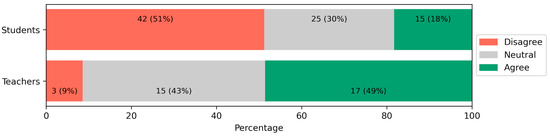
Figure 1.
At school, some lessons include examples that valorize diversity (e.g., different families, non-stereotypical gender roles). Aggregated responses: Disagreement (1–2), Neutral (3), Agreement (4–5).
The second item explores whether teaching materials show people of all genders in diverse roles, including positions of visibility and authority. As shown in Figure 2, the responses reveal a marked divergence between the two groups.
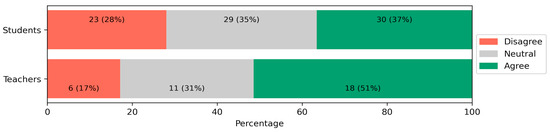
Figure 2.
Teaching materials (books, slides, videos, etc.) show people of all genders in different roles (e.g., women scientists, male nurses, women athletes). Aggregated responses: Disagreement (1–2), Neutral (3), Agreement (4–5).
Among teachers, over half (51%) agree with the statement, and 31% position themselves in a neutral zone, suggesting an overall perception of partial gender balance in textbooks and media. However, a non-negligible 17% disagree, hinting at an awareness of the persistence of traditional gender representations in curricular materials.
Students, by contrast, appear more critical and less confident: only 37% express agreement, while 35% remain neutral and 28% explicitly disagree. The third item, formulated in both teacher and student versions, directly addresses whether gender stereotypes are critically explored within educational settings. Figure 3 shows a very high level of agreement among teachers: 77% report explicitly tackling the topic by helping students recognize stereotypes in media, advertising, school materials, and everyday language, with only 3% expressing disagreement.
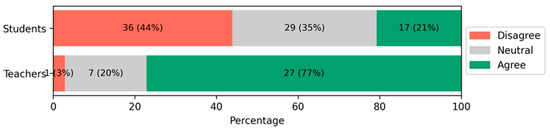
Figure 3.
Teachers (T): I explain that gender stereotypes exist and help my students recognize them in media, adverts, school texts, and language; Students (S): Teachers in my class explain that gender stereotypes exist and help us recognize them in media, adverts, school texts, and language. Aggregated responses: Disagreement (1–2), Neutral (3), Agreement (4–5).
Students’ responses, however, paint a markedly different picture: 44% disagree with the statement, while 35% remain neutral, and only 21% report clear agreement.
The fourth item explores whether teachers actively promote gender equity through the examples they provide during lessons. As illustrated in Figure 4, a large majority of teachers (71%) agree that they integrate gender-aware examples in their teaching practices—for instance, by alternating masculine and feminine names, or by referencing individuals who defy traditional gender expectations, including non-binary people. Because this item relies on self-report, teachers’ endorsement may partly reflect social desirability or professional norm compliance, and should be triangulated with observational or material-based evidence in future research.
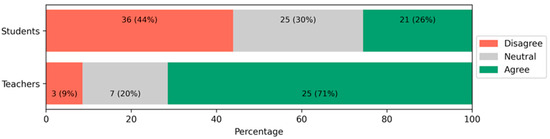
Figure 4.
T: I provide examples that promote gender equality during explanations (e.g., I alternate masculine and feminine names; I mention non-binary people); S: Teachers in my class give examples that promote gender equality during explanations (e.g., they alternate masculine and feminine names, mention non-binary people). Aggregated responses: Disagreement (1–2), Neutral (3), Agreement (4–5).
However, this intention is not always clearly perceived by students: 44% disagree and 30% remain neutral, indicating that such examples may not be consistently visible or interpretable as affirming messages.
4.1.2. Qualitative Data
Responses to the open-ended questions allow for deeper exploration of where and if gender equity is addressed in the explicit curriculum. The disciplinary frequency chart (Figure 5) reports the number of times different subjects were mentioned in response to an open-ended question, distinguishing between teachers and students. This item was designed to capture a general appraisal of which subjects address gender equity (not necessarily the respondent’s own subject), mirroring the student version to ensure comparability across groups. The pattern that emerges is markedly different across the two groups.
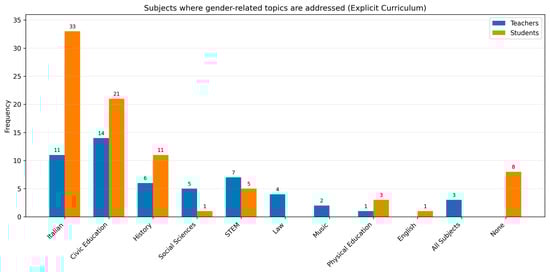
Figure 5.
Responses to the first part of the open-ended question about explicit curriculum: In which subjects, in your opinion, is gender equity discussed the most?
Teachers tend to indicate a broad and diversified set of subjects where gender-related themes are addressed. Civic Education (14 mentions) and Italian (11) are the most frequently cited, followed by STEM disciplines (7), History (6), and Human Sciences (5). Several responses also mention Law (4), Music (2), Physical Education (1), and even the possibility of integrating gender equity content in “All Subjects” (3), suggesting an intentional effort to treat this as a transversal and cross-disciplinary goal.
Students, by contrast, focus their recognition of gender-related topics on a narrower range of disciplines. The most cited are Italian (33), Religion (30), and Civic Education (21), followed by History (11). Other subjects—such as STEM (5), Physical Education (3), English (1)—are rarely mentioned, and many students explicitly report never encountering these themes in any subject (“None” = 8 responses).
The qualitative analysis of responses (Table 1) enriches the interpretation of quantitative data, offering a more nuanced understanding of how teachers and students conceptualize and recognize gender equity within the explicit curriculum.

Table 1.
Perceived contribution of school subjects to gender equity. Open-ended question. T: In which subjects, in your opinion, is gender equity discussed the most? Do you think your subject can contribute? If yes, how? If not, why not?; S: In which subjects, in your opinion, is gender equity discussed the most? Do you have any examples?
Among teachers, especially those in literary and civic subjects, equity is often equated with recognizing women’s presence in canonical content, such as literature and history. Several express a desire to update curricula and anthologies to include more women authors and non-stereotypical themes. However, in scientific and technical domains, some teachers report a sense of structural constraint, perceiving their subjects as less naturally suited to addressing these topics—unless specific occasions arise. As one math teacher notes, “with mathematics it is more difficult … but I have not avoided addressing it when the need has arisen.” Others, however, identify opportunities to valorize contributions of women in science or to highlight equity as a transversal value, even in subjects such as physical education or tourism.
Students, on the other hand, tend to reduce the notion of equity to the presence of female characters in texts or examples, often represented in traditional or passive roles—as muses, wives, or queens. In this sense, the symbolic visibility of women is not always accompanied by a critical interrogation of power asymmetries, gender norms, or the historical exclusion of marginalized identities. A girl reports that studying Boccaccio represented an “example of gender equality” because he gave voice to female characters. Another notes that Italian and History “mention both male and female figures,” equating this with gender-balanced representation.
4.2. The Hidden (Implicit) Curriculum
The transition from the explicit to the hidden curriculum makes it possible to move from analyzing messages that are declared and formalized in teaching materials and programs to those meanings conveyed indirectly through school climate, everyday language, and interpersonal relationships. If the explicit curriculum shows a declared but partial commitment, the hidden curriculum instead reveals the daily dynamics through which schools build—or limit—gender equity in everyday practice, often beyond teachers’ educational intentions.
4.2.1. Quantitative Data
The first dimension explored concerns perceptions of the relational climate, specifically whether all students feel equally encouraged to participate and express themselves, regardless of gender. These results refer to students’ overall perceptions of whether the classroom climate encourages speaking freely, asking questions, and stating opinions. The item was analyzed at the aggregate level and is therefore presented without stratification by students’ gender. Figure 6 reveals a marked discrepancy between teachers’ and students’ responses.
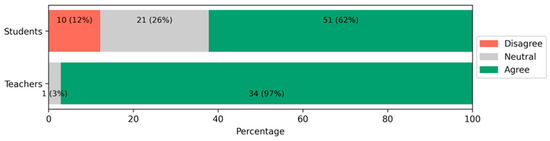
Figure 6.
T: I encourage everyone (regardless of gender) in the same way to participate, ask questions, and express opinions; S: Teachers encourage everyone (regardless of gender) in the same way to participate, ask questions, and express opinions. Aggregated responses: Disagreement (1–2), Neutral (3), Agreement (4–5).
Nearly all teachers (97%) agree that they promote affirmative participation, indicating a strong perceived commitment to fostering agency and dialogical openness. In contrast, only 62% of students confirm this perception, while a substantial portion express neutrality (26%) or even disagreement (12%).
A second item addressed affirming language practices, focusing on whether teachers use students’ preferred names and pronouns (Figure 7). In Italian, “preferred pronouns” involves not only pronouns (e.g., “lui/he” vs. “lei/she”) but also gendered grammatical agreement in everyday language (articles/adjectives), and because subject pronouns are often omitted, affirmation is typically conveyed through the preferred name and consistent gender agreement.
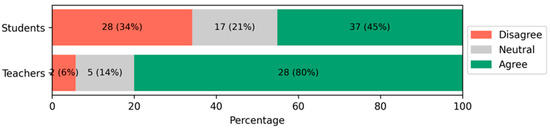
Figure 7.
T: I address students using the pronouns and names each person prefers; S: Teachers address students using the pronouns and names each person prefers. Aggregated responses: Disagreement (1–2), Neutral (3), Agreement (4–5).
While 80% of teachers reported doing so (with 6% disagreeing and 14% providing neutral responses), students’ perceptions were notably less aligned: only 45% agreed that teachers address students using preferred names and pronouns, whereas 34% disagreed and 21% reported a neutral position.
A further hidden-curriculum item assessed whether school is perceived as a context in which students can freely express their gender identity without feeling judged (Figure 8).
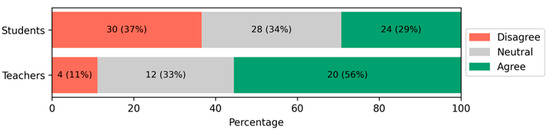
Figure 8.
T/S: At school there is a climate in which everyone can freely express their gender identity without feeling judged. Aggregated responses: Disagreement (1–2), Neutral (3), Agreement (4–5).
Here, teacher and student perspectives diverged: while a majority of teachers endorsed a favorable climate (56% agreement), student agreement was substantially lower (29%), with a sizable proportion explicitly disagreeing (37%).
The fourth item explores how teachers and students perceive the readiness to intervene in cases of jokes, insults, or discriminatory behaviors based on gender or identity (Figure 9).
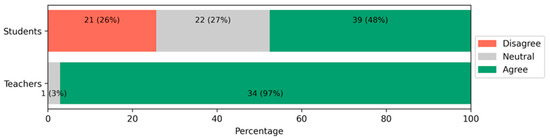
Figure 9.
T: I intervene when I hear jokes, insults, or discriminatory behaviors related to gender; S: Teachers intervene when they hear jokes, insults, or discriminatory behaviors related to gender. Aggregated responses: Disagreement (1–2), Neutral (3), Agreement (4–5).
Among teachers, responses are markedly affirmative: 97% agree that they actively intervene when discriminatory episodes occur, with only 3% remaining neutral and none in disagreement. This self-representation aligns with the idea of an educative mandate that includes protecting students and promoting respectful behavior.
Student responses, however, are more fragmented: only 48% agree, 27% remain neutral, and 26% disagree. This distribution indicates a substantial proportion of students who either do not perceive consistent interventions or who have witnessed unaddressed discriminatory behaviors
4.2.2. Qualitative Data
Open-ended questions enabled a deeper exploration of how teachers describe their own actions and how students perceive their effectiveness. Four main thematic categories emerged from teachers’ responses: (1) Talking about it, better and more: raising awareness through dialogue and civic education; (2) Beyond traditional teaching: the use of workshops, projects, role-play, and group activities; (3) Self-perceived equity promotion: emphasizing personal attention to respect and the valorization of differences; (4) Negative or passive stance: a minority of respondents expressed skepticism about the relevance or usefulness of addressing the topic within their subject area.
These categories outline a multifaceted representation of how teachers conceptualize gender equity education within the hidden curriculum. On one hand, some teachers demonstrate clear pedagogical intentionality, striving to integrate discussions on diversity transversally or through dialogic and experiential practices. For these respondents, gender equity is embedded in their professional identity and serves as a guiding principle in everyday interactions with students. On the other hand, some participants recognize the issue as appropriate but peripheral—something to be addressed during civic education or isolated projects. Their efforts, while well-intentioned, tend to remain episodic and focused more on awareness-raising than on the structural transformation of school climate.
Finally, defensive or hesitant attitudes also emerge. These include a tendency to externalize responsibility, framing equity issues as unrelated to one’s discipline or reducing them to individual ethical choices. This stance reflects an implicit resistance and difficulty in conceiving equity as a transversal pedagogical dimension that cuts across all subjects and educational roles.
Overall, these responses (see Table 2) illustrate a highly heterogeneous landscape in which personal beliefs significantly shape educational practice. This variability represents both a resource and a structural limitation: the absence of shared guidelines or a cohesive school culture risks generating inconsistencies that are perceived by students and may undermine the coherence of the educational experience.
Table 2.
Qualitative codes and categories from the open-ended questions on gender equity and respect for differences. Open-ended question. T: As a teacher, what do you feel you do to promote gender equity and respect for differences? Do you think what you do (or do not do) in this direction is influenced by school leadership/school policies?; S: In your opinion, what more or different could teachers do to promote gender equity and respect for differences?
A specific section of the questionnaire focused on the extent to which gender equity practices are shaped by school-level policies or leadership. Teachers’ responses (see Table 3) indicate that educational efforts in this area are largely perceived as autonomous and self-directed, rather than guided by institutional policies or leadership initiatives. Only a minority of respondents reported receiving explicit support or encouragement from school administrators, while others pointed to the absence of structural frameworks or even the presence of institutional obstacles.
Table 3.
Teachers’ perceptions of school leadership and policy influence. Open-ended question. T: As a teacher, what do you feel you do to promote gender equity and respect for differences? Do you think what you do (or do not do) in this direction is influenced by school leadership/school policies? S: In your opinion, what more or different could teachers do to promote gender equity and respect for differences?
4.3. Affective Relationships and the Role of the School
The area devoted to affective relationships investigates the extent to which school addresses topics such as consent, respect, jealousy, control, and violence in relationships. This area consists of four closed-ended items and one open-ended question, administered in mirrored form to teachers and students. Items, rated on a Likert scale from 1 (“strongly disagree”) to 5 (“strongly agree”), explore explicit treatment of consent, respect, and communication in relationships; critical questioning of romantic myths that justify jealousy and control (e.g., “if they are jealous, it means they love you”); teachers’ educational intervention in situations of relationships defined as “toxic” or violent; use of examples and media references (films, series, novels, articles) as tools to reflect on relational models. The open-ended question asks respondents to report any messages heard at school that may directly or indirectly justify or minimize jealousy, control, or violence in relationships, specifying (if possible) who they came from (teachers, peers, other school adults) and in which context.
4.3.1. Quantitative Data
Quantitative data show a consistent discrepancy between teachers’ and students’ responses. Across all items, teachers tend to rate themselves at medium-to-high agreement levels, indicating that school addresses consent and respect, discusses boundaries between love and control, intervenes in problematic relationships, and uses media examples as educational tools. Students show lower agreement values, accompanied by a substantial share of neutral responses. This suggests that, even when teachers implement relevant activities or discussions, these initiatives are not always perceived as an integral part of the school curriculum but rather as episodic occasions or dependent on individual teacher sensitivity.
The ninth item investigates whether school is perceived as a space where topics such as consent, mutual respect, and healthy affective relationships are addressed explicitly by teachers (Figure 10).
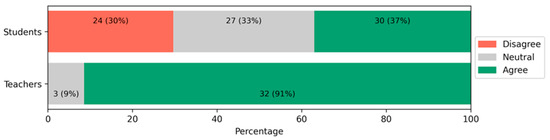
Figure 10.
T: At school I address topics such as consent, respect, and communication in relationships; S: Teachers address topics such as consent, respect, and communication in relationships. Aggregated responses: Disagreement (1–2), Neutral (3), Agreement (4–5).
The data show a marked divergence in perception between teachers and students.
Among teachers, the vast majority (91%) agree that they address these themes in their educational practice, either during curricular activities or within targeted projects. Only 9% declare neutrality, and none report disagreement.
Among students, responses are more varied: 37% agree, 33% remain neutral, and 30% actively disagree. This tripartite distribution suggests that, for many students, these contents are not perceived as clearly present or consistently integrated into their school experience.
The eleventh item explores whether school explicitly challenges the romanticized association between jealousy and love, a core theme in the deconstruction of relationship myths and in the prevention of controlling or abusive dynamics (Figure 11).
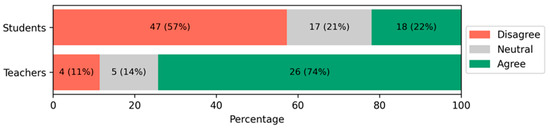
Figure 11.
At school the idea that love justifies control or jealousy is challenged (e.g., messages such as “if they are jealous, it means they truly love you” are countered). Aggregated responses: Disagreement (1–2), Neutral (3), Agreement (4–5).
Among teachers, 74% agree that this topic is addressed in their educational practice. Only 14% remain neutral, and 11% disagree. These results suggest that, from the educators’ perspective, the issue is at least partially integrated into discussions on relationships and emotional education.
Among students, the pattern diverges significantly: 57% disagree with the statement, 21% express neutrality, and only 22% report agreement. This distribution reflects a lack of perceived visibility of any critical discussion around jealousy, with a majority of students failing to recognize explicit educational efforts in this regard.
Responses to the third item of this dimension reveal a clear discrepancy between teachers’ and students’ perceptions (Figure 12).
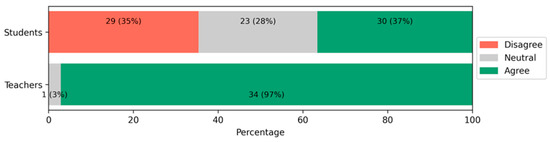
Figure 12.
T: At school you intervene when you hear about toxic or violent relationships; S: Teachers intervene when they hear about ‘toxic’ or violent relationships. Aggregated responses: Disagreement (1–2), Neutral (3), Agreement (4–5).
A large majority of teachers (97%) report agreement, stating they actively intervene in cases of toxic or violent relationships; only one respondent (3%) selected a neutral position, and no one disagreed. By contrast, students’ responses are more distributed: 35% disagree, 28% remain neutral, and only 37% agree that such interventions take place.
The fourth item explores the didactic use of instructional resources (films, novels, TV series, articles, literary texts) to stimulate reflection on relationship models. As shown in Figure 13, teachers overwhelmingly report using media materials—such as films, novels, or articles—to support discussions about relationships, with 89% agreeing with the statement. In contrast, student responses are more fragmented: only one third (33%) recognize this practice, while half (50%) explicitly disagree, suggesting they have not observed such integration in their school experience.
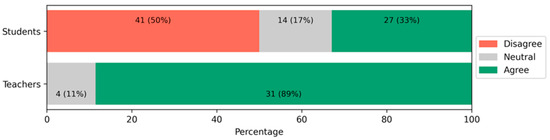
Figure 13.
T: At school you use examples (films, novels, TV series, articles, textbooks …) to encourage reflection on relationship models; S: Teachers use examples (films, novels, TV series, articles …) to encourage reflection on relationship models. Aggregated responses: Disagreement (1–2), Neutral (3), Agreement (4–5).
4.3.2. Qualitative Data
Analysis of open-ended responses allows deeper understanding of how students and teachers attribute meaning to the school’s role regarding affective relationships, jealousy, and control or violence behaviors. The open-ended question asks, mirrored for students and teachers, whether they have ever heard at school (from teachers, peers, colleagues, or other school staff) messages that justify jealousy, control, or violence in relationships, and to report any concrete examples (Table 4).
Table 4.
Perceived justifications of jealousy, control, and violence in school relationships. Open-ended question. T: Have you ever heard at school (from students or colleagues or other school staff) messages that justify jealousy, control, or violence behaviors in relationships? Do you have any example?; S: Have you ever heard at school (from teachers or during lessons) messages that justify jealousy, control, or violence behaviors in relationships? Do you have any example?
Students’ responses reveal a landscape marked by discursive silence. Most answered simply “no” when asked whether they had encountered messages at school that justify jealousy or violence in relationships. However, this apparent negation is multifaceted. In some cases, it implies trust in teachers’ values (“no, and fortunately”); in others, it signals the absence of discussion on these topics (“no, because it’s never talked about”); and in a few instances, it is modulated by avoidance or discomfort (“yes, but I prefer not to talk about it,” or “only among peers”), hinting at unspoken fears or the privatization of these issues within peer groups.
5. Discussion
In this section, we interpret teacher-student response patterns across domains by integrating the descriptive distributions with the qualitative themes. Importantly, findings reflect self-reported perceptions of school practices and school climate and do not provide evidence of intervention effectiveness or behavioral TDV prevention outcomes. Therefore, any references to TDV prevention are framed in terms of prevention-relevant educational conditions (e.g., coherence, visibility, and credibility of equity and relationship education), rather than demonstrated effects on TDV incidence or related behaviors.
5.1. Explicit Curriculum
In line with H1 (explicit curriculum), we examined whether teachers and students converge in their perceptions of equity-oriented practices in formal teaching, with attention to inclusive examples and activities (H1a), perceived gender balance in instructional materials (H1b), and the perceived transversality of gender equity across school subjects (H1c).
Regarding inclusive examples and classroom activities (H1a), teachers reported higher agreement than students (Figure 1). This pattern suggests a meaningful intent–perception gap: inclusion may be intended and enacted by teachers, yet not consistently experienced by students as visible or stable. The substantial share of neutral student responses further points to uncertainty and limited salience, consistent with broader scholarship indicating that teachers’ stated intentions do not always translate into students’ lived perceptions, particularly when practices remain episodic or insufficiently framed as part of a coherent curriculum (Cross, 2003; Pugach et al., 2020).
A similar dynamic emerges for perceptions of gender representation in textbooks and school media (H1b). Students appear more critical and less confident than teachers (Figure 2). Importantly, our data reflect self-reported perceptions rather than a direct content analysis of the specific textbooks and materials adopted by participating schools; therefore, interpretations should remain cautious and be triangulated in future work through systematic audits of the actual resources used in classrooms. At the same time, the direction of this discrepancy is broadly consistent with literature documenting persistent underrepresentation and stereotyped portrayals in educational resources (Biemmi, 2024; Tietz, 2007). Notably, Biemmi’s analyses focus primarily on Italian textbooks from lower grades; thus, whether comparable patterns characterize upper secondary materials remains an empirical question. Overall, even where teachers are sensitive to the issue, structural constraints linked to publishing and adoption processes may limit change, highlighting the role of critical selection and supplementation with alternative resources that visibly challenge normative gender hierarchies.
For items capturing efforts to deconstruct gender stereotypes (H1a; Figure 3), students again frequently occupied neutral or disagreement positions. This may indicate that deconstructive practices—when present—are not always recognized as systematic curricular work. As discussed in critical pedagogy and gender-aware teaching, learners are more likely to recognize and internalize equity-oriented messages when these are intentionally scaffolded, explicitly framed, and dialogic, rather than reactive or event-driven (Hooks, 2014; Atkinson & DePalma, 2009). Related applied work similarly suggests that well-intentioned efforts may remain sporadic or invisible unless consistently embedded and signposted as an instructional priority (Losioki & Mdee, 2023), again aligning with concerns about the translation of teacher intent into student experience (Cross, 2003; Pugach et al., 2020).
A comparable discrepancy characterizes the item assessing gender-aware linguistic and representational choices in lesson examples (Figure 4). Teachers strongly endorsed these practices, whereas students reported lower agreement. Even allowing for the possibility of socially desirable responding among teachers (as noted in the Limitations section), the central issue remains the recognizability of equity-oriented practices from students’ standpoint. When not supported by collective reflection and systemic routines, such practices may appear contingent on individual sensitivity or disciplinary context, contributing to fragmentation.
Finally, perceptions of transversality across subjects (H1c) also diverged (Figure 5). Teachers tended to envision equity education as widely distributed across the curriculum, whereas students perceived it as concentrated within a smaller set of disciplines, often humanities-oriented or normatively “sensitive” (e.g., Italian, Religion, Civic Education). This suggests that—even when equity is conceived as transversal—its enactment may not be consistently communicated or experienced as such across students’ school lives.
Taken together, the explicit-curriculum findings depict a curriculum that may carry equity messages, but often in a way that appears unevenly visible and variably institutionalized. The recurring teacher–student discrepancies point to a practical challenge: equity work in the explicit curriculum may require not only inclusion of content, but also a clearer pedagogical framing and more consistent cross-subject implementation to become a shared and recognizable educational experience.
5.2. Hidden Curriculum
In line with H2 (hidden curriculum), we examined domains where every day interactional norms and school climate are likely to shape students’ experiences of affirmation, psychological safety, and credibility of equity messages: participation climate (H2a), freedom to express gender identity without judgment (H2b), perceived adult responses to mockery (H2c), and preferred names/pronouns (H2d).
For the participation climate item (H2a; Figure 6), students reported lower agreement than teachers and showed a notable neutral component. This may reflect the fact that participation and voice are shaped by subtle, cumulative interactional dynamics—such as how contributions are validated, whose voices are amplified, and how classroom norms are enacted—which can be difficult to detect from the educator’s standpoint. It may also indicate variability across classes and teachers, resulting in a fragmented rather than consistently affirming climate. This reading aligns with work highlighting that gender equity in classroom participation requires both structural attentiveness and relational reflexivity, including attention to implicit power asymmetries in everyday routines (Keddie, 2006).
The item on preferred names and pronouns (H2d; Figure 7) shows a teacher–student discrepancy that appears less extreme than for other hidden-curriculum indicators and includes a non-negligible share of neutral student responses. This pattern may partly reflect the concrete and observable nature of language use in daily interactions. It may also reflect differences in salience across students: affirming name/pronoun practices are likely to be particularly consequential for transgender and nonbinary youth, whereas they may be perceived as less personally relevant by students who do not directly face the risk of misgendering. Consistent with this interpretation, our student sample largely identified within binary categories, with only a small number selecting “Other,” which may contribute to neutrality. This account remains tentative and should be tested in future studies explicitly examining whether gender identity moderates perceptions of affirming language practices.
From a psychological standpoint, preferred name/pronoun practices can be interpreted through minority stress processes. Tan et al. (2020) conceptualize cisnormativity as an ideology that positions cisgender identities as default and construes trans and gender diverse identities as deviant, rendering cisnormative routines “neutral” to those who benefit from them while constraining the wellbeing of those who do not. Within this framework, distal stressors (e.g., invalidation) and proximal processes (e.g., anticipating rejection and nondisclosure) can accumulate. In this sense, inconsistent affirmation may increase uncertainty and vigilance demands. Relatedly, Jacobsen et al. (2024) show that misgendering can be frequent and distressing for nonbinary people and is associated with poorer wellbeing indicators, particularly anxiety-related outcomes. Translating these mechanisms to schools, variability in affirming language practices across teachers and situations may matter not only as a matter of courtesy, but as part of the everyday conditions that shape students’ sense of recognition and safety.
The discrepancy on freedom to express gender identity without judgment (H2b; Figure 8) is especially notable. Even when teachers perceive the climate as supportive, students may experience visibility as socially consequential, anticipating subtle judgment or peer regulation. This interpretation is consistent with school-focused evidence linking school climate and perceived support to mental health outcomes among transgender and gender diverse students (Day & Brömdal, 2024). Complementarily, qualitative accounts emphasize that “trans livability” depends on whether schools enact recognition through everyday practices—rather than treating gender diversity as exceptional, disputable, or invisible (Martino et al., 2024). In this light, the teacher–student discrepancy may indicate that inclusion is experienced as uneven or fragile: affirmed in principle, but not sufficiently stable to reduce judgment concerns in everyday school life.
Finally, the item assessing teacher intervention in response to offensive language or gender-based mockery (H2c; Figure 9) indicates a perceptual gap despite very high teacher endorsement of intervening (97% agreement). Rather than questioning whether teachers respond, students’ distributions suggest that such responses may be less consistently noticed, remembered, or interpreted as intervention in everyday school life -particularly if they occur informally, in private, or only in more explicit situations. From a hid-den-curriculum perspective, limited visibility or predictability of adult responses can leave norms about what is acceptable in peer interactions less clear, potentially weakening the credibility of equity-related messages conveyed through the explicit curriculum and underscoring the value of response practices that are not only enacted but also recognizable from students’ standpoint.
A further interpretation of this pattern may be that, for some students, school may not be experienced as a context where they can speak openly or turn to adults when needed. This interpretation is consistent with the results shown in Figure 6, where students report lower endorsement (and greater neutrality/disagreement) regarding a classroom climate that encourages speaking freely, asking questions, and stating opinions. Taken together, these findings may suggest that perceived limitations in everyday communicative safety at school may co-occur with a weaker perception of the school as an accessible and supportive environment, potentially reducing students’ likelihood of seeking guidance or disclosing relational concerns.
Qualitative responses further contextualize these patterns (Table 2 and Table 3). Students oscillate between appreciation and criticism: many request more structured discussion and projects, while others emphasize a lack of coherence between talk and actual change. Teachers often ground equity promotion in personal values and informal attitudes and describe substantial autonomy in deciding how to act. However, the absence of shared policies and institutional guidance can leave even well-intentioned efforts fragmented and less visible across the broader school environment. Taken together, both strands converge on a central point: students ask for practices that are recognizable, dialogic, and systematic, whereas teachers’ actions frequently remain individualized and implicit.
Overall, the hidden curriculum reveals a perceptual and operational gap: teachers perceive themselves as active promoters of equity, but their actions often operate at an individual and implicit level and are not always perceived as intentional education by students. Without clear institutional frameworks and shared policies, everyday practices risk becoming fragmented, and school climate may reproduce the very disparities schools aim to counteract, limiting coherence between equity goals and lived school experience.
5.3. Affective Relationships and the Role of the School
Consistent with H3, we examined whether teachers and students differ in perceived school engagement with relationship education and TDV-relevant themes (e.g., emotional literacy, boundaries, consent, jealousy/possessiveness, early warning signs) and whether qualitative responses reflect different levels of elaboration and relational vocabulary.
Across items assessing school engagement with TDV-relevant education (Figure 10, Figure 11, Figure 12 and Figure 13), teachers consistently reported higher endorsement than students, who more often occupied neutral or disagreement positions. This pattern suggests that, from students’ standpoint, these themes may be addressed less systematically or be insufficiently framed as structured educational content, even when teachers perceive such work as part of their role. This is particularly relevant because these domains are closely related to adolescents’ ability to recognize unhealthy relational norms, set boundaries, and seek help; however, the present study captures perceived school engagement with these themes rather than behavioral competencies or prevention outcomes.
The discrepancy is especially salient for challenging romantic myths that normalize possessiveness and jealousy (Figure 11). Addressing these cultural scripts likely requires structured, repeated, and context-sensitive discussion; otherwise, romantic myths may continue to circulate as implicit norms, potentially limiting the preventive-education value of school-based discussions around jealousy, possessiveness, and healthy relationship norms (Jiménez-Picón et al., 2023). In addition, students’ open-ended responses (Table 4) were frequently brief and vague, with limited use of affective or evaluative vocabulary. This pattern suggests difficulty in naming ambiguous dynamics such as jealousy, digital control, emotional manipulation, or isolation—phenomena that adolescents may under-recognize and normalize (e.g., Sorrentino et al., 2023). Some literature also links adolescent belief patterns to cognitive rigidity and to masked forms of aggression connected to gendered power convictions (Pérez-Díaz et al., 2025; García-Díaz et al., 2018; Hammond et al., 2018), which may further complicate early recognition and help-seeking.
Teachers’ qualitative responses, by contrast, tended to be more reflective and explicit; many reported awareness of problematic messages circulating in school and described attempts to intervene through class discussions, one-to-one dialogue, or direct correction of sexist language. However, these interventions often appeared to rely on personal initiative rather than shared protocols, echoing students’ calls for more visible, structured, and collectively endorsed practices (Table 2 and Table 3). This is developmentally relevant, as interactions with adults and patterns of relational exchange contribute to identity construction and to the norms students adopt in intimate relationships (Ellerton, 2019).
Taken together, school is not a neutral space: gendered and relational messages circulate whether explicitly or implicitly. While many teachers demonstrate strong in-dividual commitment, the absence of shared curricular frameworks and institutional support contributes to fragmented and uneven educational experiences. Students’ requests (“talk about it more,” “do more projects,” “introduce awareness activities”) indicate a clear demand for visibility, structure, and continuity. Meeting this demand likely requires a shift from isolated good practices to a more systemic approach that integrates gender and relationship education into the curriculum and equips schools with coherent policies, tools, and training to support TDV-relevant early education (e.g., recognizing controlling dynamics and romantic myths) in a sustainable way. Importantly, this refers to strengthening the coherence and visibility of educational practices, not to demonstrated reductions in TDV.
5.4. Integration Summary and Meta-Inferences
Integrating the descriptive item-level distributions with the open-ended themes suggests that teacher-student gaps are less about the presence versus absence of equity-oriented intentions and more about the visibility, predictability, and school-wide consistency of practices in everyday school life. First, several items characterized by higher student neutrality were echoed by qualitative accounts emphasizing uneven enactment (“sometimes we talk about it, but nothing actually changes”), pointing to inclusion as context-dependent rather than institutionalized. Second, where teachers reported high endorsement but students indicated limited recognition, qualitative comments calling to “talk about it more” and “do more projects” helped refine the quantitative patterns by indicating that what students miss is not only content, but structured continuity and explicit framing that make equity and relationship education recognizable as part of the curriculum. Overall, these integrated meta-inferences support interpreting the observed distributions as perception-based indicators of how coherent and legible school practices are from students’ standpoint, and they highlight the hidden curriculum as a key lever through which intentions may or may not translate into credible everyday norms.
6. Conclusions
The results show that school simultaneously represents a context with strong potential to promote gender equity and, at the same time, a space where discontinuities, asymmetries, and shadow areas persist, limiting its formative effectiveness. In line with Bronfenbrenner’s (1979) socio-ecological model, the data confirm that the school curriculum, in both its explicit and hidden dimensions, serves as a privileged site for the transmission of gender norms, values, and representations. However, such transmission appears heterogeneous, non-systematic, and strongly dependent on individual initiative.
The discrepancy between teachers’ and students’ responses is a recurring pattern throughout the data. This gap can be partly explained by their different developmental stages: students, especially those still in the concrete operational stage, may find it difficult to recognize more abstract or indirect efforts by teachers. Additionally, the wording of items addressed to teachers may have unintentionally amplified social desirability bias, leading to overly optimistic self-assessments of their own educational practices.
Importantly, this gap should not be interpreted as a lack of willingness or sensitivity on the part of teachers. Rather, it may reflect the absence of national guidelines, institutional support, and integrated school policies capable of making such efforts visible, systemic, and sustainable over time. In this regard, the most common student response—simply “no”—should not be read as denial, but rather as an indicator of low emotional and relational literacy, and of a schooling experience in which certain themes remain underdeveloped or marginalized.
As highlighted in international literature (Stanley et al., 2015; Fellmeth et al., 2013), effective prevention of Teen Dating Violence requires structured, continuous, and intersectional interventions, involving not only teachers but also students, principals, and families. These must be supported by clear institutional frameworks, updated teaching materials, and specific training programs. When these elements are lacking, even well-intentioned interventions may remain fragmented and struggle to challenge the cultural and normative factors that underpin gender asymmetries and relationship violence.
In conclusion, schools hold substantial transformative potential, which appears only partially realized when equity-oriented practices remain individualized and unevenly visible to students. From an applied perspective, the findings point to three priorities for moving from episodic to systemic practice: (1) school policy and governance, by embedding gender equity and relationship education in mission documents and written procedures (e.g., shared response protocols to gender-based mockery, and standardized affirming language practices); (2) teacher education and in-service training, by focusing on practical implementation skills (e.g., making pedagogical aims explicit to students, recognizing interactional micro-asymmetries, and using structured, recurring activities to address stereotypes and romantic myths); and (3) curricular and material choices, by supporting critical selection of textbooks and integrating alternative resources that visibly challenge normative gender hierarchies. Importantly, our data are perception-based and do not test intervention effectiveness or behavioral TDV outcomes; therefore, implications are framed in terms of prevention-relevant educational conditions rather than demonstrated preventive impact.
Given the study’s reliance on self-reported perceptions within a context-specific convenience sample, future research should replicate these patterns across school tracks and regions, triangulate survey findings with audits/observations, and evaluate through longitudinal and intervention-based designs, whether structured school-based programs are associated with changes in relevant knowledge, norms, help-seeking attitudes, and—where feasible—prevention-related outcomes over time.
Limitations and Future Developments
Although the present study provides useful insights into the school’s potential role in promoting gender equity and preventing teen dating violence, several limitations should be acknowledged. Importantly, all findings derive from self-reported perceptions, which are subject to response biases (including social desirability, particularly among teachers) and should be interpreted considering the study’s convenience sampling, which limits generalizability beyond the participating schools and regional context.
First, despite teachers and students being recruited from the same school institutes, the study design remains cross-sectional and the two subsamples were not matched at the classroom level (i.e., teachers were not necessarily those directly teaching the participating students). Therefore, findings should be interpreted as a comparison of perspectives within a shared institutional context, rather than as evidence of dyadic teacher-student agreement within the same instructional settings.
Second, the study relied on a convenience sample drawn from three technical upper-secondary schools in one Italian province, which limits generalizability and transferability to other school tracks (e.g., academic-oriented schools), geographical areas, and socio-cultural contexts. Accordingly, the patterns observed should be considered context-dependent and not assumed to generalize to other regions or school tracks without replication. In addition, participation was voluntary, which may have introduced self-selection bias, potentially overrepresenting teachers and students who were more interested in, or sensitized to, topics related to gender equity and relationship education.
Third, the questionnaire was developed for the present study and was not subjected to formal psychometric validation. Although this design was necessary given the lack of an existing validated measure aligned with our specific aims and mirrored teacher–student format, it limits inferences about measurement properties. Accordingly, domain groupings should be considered conceptual rather than psychometrically established, and results are best interpreted at the item level alongside the qualitative strand. Future research should evaluate the instrument’s validity and reliability (e.g., factor structure, invariance across groups) and refine item wording to further strengthen measurement precision.
Relatedly, the item asking which school subjects address gender equity captured respondents’ overall perceptions across the curriculum; therefore, answers may partly reflect differential visibility of practices outside one’s own teaching area (e.g., endorsements for a specific subject could be driven by respondents who teach that subject). We did not collect a linkage between this item and teachers’ subject area suitable for cross-tabulation. Future studies should record teachers’ teaching subjects to examine whether perceived coverage varies by subject taught and related exposure to materials and classroom practices.
Additionally, we could not test whether responses to the item in Figure 6 differed by students’ gender. Future research with larger and more diverse samples should examine gender-stratified patterns (including non-binary identities where feasible) to clarify whether classroom communicative climate operates differently across groups.
From a methodological standpoint, the qualitative component was based on brief written responses to open-ended questions. While this approach facilitated participation and allowed for the collection of a broad range of viewpoints, it constrained narrative depth and limited the possibility of exploring more nuanced subjective meanings and school dynamics. Moreover, the content and framing of items may have encouraged socially desirable responding, particularly among teachers when reporting equity-oriented practices, potentially inflating endorsement of equity-oriented practices and contributing to teacher-student gaps.
Future research should aim to strengthen the design in several ways. Collecting data from teacher-student matched units (e.g., the same classes) would enable more direct examination of perceived coherence between reported educational practices and students’ lived experiences. Longitudinal or quasi-experimental designs (e.g., pre/post evaluations of structured school-based programs) would help to assess change over time and to examine whether targeted interventions produce measurable shifts in attitudes, perceived norms, and reported practices. Qualitatively, integrating semi-structured interviews, focus groups, and/or school-based observations would enrich interpretative depth and better capture the relational and institutional dimensions of school climate.
From a comparative perspective, extending research to school leadership figures would allow more complete analysis of decision-making processes, organizational strategies, and school policies that influence inclusion of a gender perspective in curricula.
Finally, expanding the sampling frame to include a wider range of school types and contexts—including schools with varying levels of prior engagement with gender and relationship education—would improve external validity and help identify institutional barriers, implementation challenges, and sources of cultural resistance. Including less active settings with respect to relationship education and gender equality would make it possible to detect institutional barriers, systemic criticalities, and cultural resistance—fundamental elements for understanding the real transformative capacity of educational policies. From this perspective, results indicate that the gap between student and teacher perceptions derives less from a deficit of teachers’ willingness or awareness than from the lack of ministerial guidelines, institutional support, and coherent school policies capable of translating a systemic vision of gender equity into daily practices.
Overall, these limitations suggest that our findings should be interpreted as context-specific perceptions rather than direct evidence of enacted practices. Future research should replicate the study across diverse school tracks and regions, triangulate self-reports with observations and audits of materials, and evaluate structured school-based interventions longitudinally to clarify which components most effectively strengthen equity-oriented climates and TDV-related prevention.
Author Contributions
Conceptualization, A.L. and F.S.; methodology, S.A.L. and F.S.; software, A.L. and N.M.; validation, A.L., F.S. and S.A.L.; formal analysis, A.L., S.A.L., N.M. and G.F.; investigation, A.L., G.F. and N.M.; resources, F.S.; data curation, S.A.L.; writing—original draft preparation, A.L. and F.S.; writing—review and editing, F.S. and S.A.L.; visualization, G.F.; supervision, F.S.; project administration, F.S. All authors have read and agreed to the published version of the manuscript.
Funding
This research received no external funding.
Institutional Review Board Statement
The study was conducted in accordance with the Declaration of Helsinki, and approved by the Ethics Committee for the research in Psychology of the University of Foggia (protocol code 026/CEpsi and date of approval: 6 Sepember 2024).
Informed Consent Statement
Informed consent was obtained from all subjects involved in the study.
Data Availability Statement
The raw data supporting the conclusions of this article will be made available by the authors on request.
Acknowledgments
The authors would like to thank the teachers and students of the participating technical institutes for their cooperation and commitment to this research.
Conflicts of Interest
The authors declare no conflicts of interest.
Abbreviations
The following abbreviations are used in this manuscript:
| TDV | Teen Dating Violence |
| SGMY J | Sexual and Gender Minority Youth |
| TGD | Trans and Gender Diverse |
References
- Apple, M., & Apple, M. W. (2004). Ideology and curriculum. Routledge. [Google Scholar]
- Apple, M. W. (1979). What correspondence theories of the hidden curriculum miss. The Review of Education/Pedagogy/Cultural Studies, 5(2), 101–112. [Google Scholar] [CrossRef]
- Atkinson, E., & DePalma, R. (2009). Un-believing the matrix: Queering consensual heteronormativity. Gender and Education, 21(1), 17–29. [Google Scholar] [CrossRef]
- Biemmi, I. (2020). Educazione sessista: Stereotipi di genere nei libri delle elementari. Rosenberg & Sellier. [Google Scholar]
- Biemmi, I. (2024). Obiettivo parità. Linee guida per implementare il principio dell’uguaglianza di genere nei libri di testo della scuola primaria. Lifelong Lifewide Learning, 21(44), 164–175. [Google Scholar]
- Birkett, M., Newcomb, M. E., & Mustanski, B. (2015). Does it get better? A longitudinal analysis of psychological distress and victimization in lesbian, gay, bisexual, transgender, and questioning youth. Journal of Adolescent Health, 56(3), 280–285. [Google Scholar] [CrossRef]
- Bonvini, E., Demozzi, S., & Ghigi, R. (2025). Educazione sessuale completa dalla prima infanzia. Le ricerche a supporto di un approccio di genere e trasformativo. Scuola Democratica, 17(1), 27–46. [Google Scholar]
- Bourdieu, P. (1998). La domination masculine. Seuil. [Google Scholar]
- Bowles, S., & Gintis, H. (1976). Schooling in capitalist America (Vol. 57). Basic Books. [Google Scholar]
- Braun, V., & Clarke, V. (2019). Reflecting on reflexive thematic analysis. Qualitative Research in Sport, Exercise and Health, 11(4), 589–597. [Google Scholar] [CrossRef]
- Braun, V., & Clarke, V. (2021). Thematic analysis: A practical guide. Sage. [Google Scholar]
- Bronfenbrenner, U. (1979). The ecology of human development: Experiments by nature and design (Vol. 352). Harvard University Press. [Google Scholar]
- Bronfenbrenner, U. (2000). Ecological systems theory. American Psychological Association. [Google Scholar]
- Condron, C., Power, M., Mathew, M., Lucey, S., Henn, P., Dean, T., Scott, M. K., Eppich, W., & Lucey, S. M. (2025). Gender equality training for students in higher education: Scoping review. JMIR Medical Education, 11, e60061. [Google Scholar] [CrossRef]
- Coulter, R. W., & Gartner, R. E. (2023). LGBTQ+ youth-generated intervention concepts for reducing teen dating violence inequities. Health Promotion Practice, 24(2), 252–257. [Google Scholar] [CrossRef]
- Cross, B. E. (2003). Learning or unlearning racism: Transferring teacher education curriculum to classroom practices. Theory into Practice, 42(3), 203–209. [Google Scholar] [CrossRef]
- Day, M., & Brömdal, A. (2024). Mental health outcomes of transgender and gender diverse students in schools: A systematic literature review. International Journal of Transgender Health, 27(1), 58–78. [Google Scholar] [CrossRef]
- Edwards, K. M., Banyard, V. L., Charge, L. L., Kollar, L. M. M., & Fortson, B. (2021). Experiences and correlates of violence Among American Indian and Alaska Native youth: A brief report. Journal of Interpersonal Violence, 36(23–24), 11808–11821. [Google Scholar]
- Ellemers, N. (2018). Gender stereotypes. Annual Review of Psychology, 69(1), 275–298. [Google Scholar] [CrossRef]
- Ellerton, P. (2019). Critical thinking in adolescence. In S. Hupp, & J. Jewell (Eds.), The encyclopedia of child and adolescent development (pp. 1–10). Wiley-Blackwell. [Google Scholar] [CrossRef]
- Exner-Cortens, D., Eckenrode, J., & Rothman, E. (2013). Longitudinal associations between teen dating violence victimization and adverse health outcomes. Pediatrics, 131(1), 71–78. [Google Scholar] [CrossRef]
- Exner-Cortens, D., Sharma, S., & Craig, W. (2025). Research on law and policy to prevent teen dating violence: Scoping review. Trauma, Violence, & Abuse, 2025, 15248380251320994. [Google Scholar] [CrossRef]
- Fellmeth, G. L., Heffernan, C., Nurse, J., Habibula, S., & Sethi, D. (2013). Educational and skills-based interventions for preventing relationship and dating violence in adolescents and young adults: A systematic review. Campbell Systematic Reviews, 9(1), i-124. [Google Scholar] [CrossRef]
- Fix, R. L., Nava, N., & Rodriguez, R. (2022). Disparities in adolescent dating violence and associated internalizing and externalizing menta health symptoms by gender, race/ethnicity, and sexual orientation. Journal of Interpersonal Violence, 37, NP15130–NP15152. [Google Scholar] [CrossRef]
- Foshee, V. A., Benefield, T. S., Reyes, H. L. M., Ennett, S. T., Faris, R., Chang, L. Y., Hussong, A., & Suchindran, C. M. (2013). The peer context and the development of the perpetration of adolescent dating violence. Journal of Youth and Adolescence, 42(4), 471–486. [Google Scholar] [CrossRef]
- García-Díaz, V., Lana-Pérez, A., Fernández-Feito, A., Bringas-Molleda, C., Rodríguez-Franco, L., & Rodríguez-Díaz, F. J. (2018). Actitudes sexistas y reconocimiento del maltrato en parejas jóvenes. Atención Primaria, 50, 398–405. [Google Scholar] [CrossRef] [PubMed]
- Giroux, H. A., & Penna, A. N. (1979). Social education in the classroom: The dynamics of the hidden curriculum. Theory & Research in Social Education, 7(1), 21–42. [Google Scholar] [CrossRef]
- Glick, P., & Fiske, S. T. (1996). The ambivalent sexism inventory: Differentiating hostile and benevolent sexism. Journal of Personality and Social Psychology, 70, 491–512. [Google Scholar] [CrossRef]
- Glick, P., & Fiske, S. T. (2001). An ambivalent alliance: Hostile and benevolent sexism as complementary justifications for gender inequality. American Psychologist, 56(2), 109. [Google Scholar] [CrossRef]
- Greenwald, A. G., & Banaji, M. R. (1995). Implicit social cognition: Attitudes, self-esteem, and stereotypes. Psychological Review, 102(1), 4. [Google Scholar] [CrossRef]
- Hammond, M. D., Milojev, P., Huang, Y., & Sibley, C. G. (2018). Benevolent sexism and hostile sexism across the ages. Social Psychological and Personality Science, 9, 863–874. [Google Scholar] [CrossRef]
- Hazelwood, A. (2023). Looking within: An analysis of intimate partner violence victimization among sexual minority youth. Journal of Interpersonal Violence, 38, 8042–8064. [Google Scholar] [CrossRef]
- Herbitter, C., Norris, A. L., Nelson, K. M., & Orchowski, L. M. (2022). Understanding associations between exposure to violent pornography and teen dating violence among female sexual minority high school students. Journal of Interpersonal Violence, 37(17–18), NP17023–NP17035. [Google Scholar] [CrossRef]
- Hooks, B. (2014). Teaching to transgress. Routledge. [Google Scholar]
- Hyde, J. S. (2014). Gender similarities and differences. Annual Review of Psychology, 65(1), 373–398. [Google Scholar] [CrossRef] [PubMed]
- Indratmo, I., Howorko, L., Boedianto, J. M., & Daniel, B. (2018). The efficacy of stacked bar charts in supporting single-attribute and overall-attribute comparisons. Visual Informatics, 2, 155–165. [Google Scholar] [CrossRef]
- Jackson, P. W. (1968). Life in classrooms. Holt, Rinehart and Winston. [Google Scholar]
- Jacobsen, K., Davis, C. E., Burchell, D., Rutherford, L., Lachowsky, N., Bauer, G., & Scheim, A. (2024). Misgendering and the health and wellbeing of nonbinary people in Canada. International Journal of Transgender Health, 25(4), 816–830. [Google Scholar] [CrossRef] [PubMed]
- Jiménez-Picón, N., Romero-Martín, M., Romero-Castillo, R., Palomo-Lara, J. C., & Alonso-Ruíz, M. (2023). Internalization of the romantic love myths as a risk factor for gender violence: A systematic review and meta-analysis. Sexuality Research and Social Policy, 20(3), 837–854. [Google Scholar] [CrossRef]
- Jones, T. (2011). A sexuality education discourses framework: Conservative, liberal, critical, and postmodern. American Journal of Sexuality Education, 6(2), 133–175. [Google Scholar] [CrossRef]
- Kärner, T., & Schneider, G. (2024). A scoping review on the hidden curriculum in education. Research in Education Curriculum and Pedagogy: Global Perspectives, 1. [Google Scholar] [CrossRef]
- Keddie, A. (2006). Gender and schooling: Frameworks for transformative social justice. Discourse: Studies in the Cultural Politics of Education, 27(3), 399–415. [Google Scholar] [CrossRef]
- Ketting, E., Friele, M., & Michielsen, K. (2018). Comprehensive sexuality education in Europe and Central Asia: An overview of current policies and practices. BZgA/UNFPA. [Google Scholar]
- Lavanga, A. (2025). Promuovere la parità di genere nelle aree interne: Il ruolo strategico della formazione insegnanti. In G. A. Toto, & G. Peconio (Eds.), Sviluppare la cultura nelle aree interne. Un approccio imprenditoriale (pp. 261–268). Marcianum Press. ISBN 979-12-5627-176-4. [Google Scholar]
- Losioki, B. E., & Mdee, H. K. (2023). The contribution of the hidden curriculum to gender inequality in teaching and learning materials: Experiences from Tanzania. Asian Journal of Education and Training, 9(2), 54–58. [Google Scholar] [CrossRef]
- Marshal, M. P., Dermody, S. S., Cheong, J., Burton, C. M., Friedman, M. S., Aranda, F., & Hughes, T. L. (2013). Trajectories of depressive symptoms and suicidality among heterosexual and sexual minority youth. Journal of Youth and Adolescence, 42(8), 1243–1256. [Google Scholar] [CrossRef] [PubMed]
- Martino, W., Kassen, J., & Omercajic, K. (2024). Trans and nonbinary students’ accounts of schooling: On epistemic witnessing, trans livability and the failure of the school cistem. Discourse: Studies in the Cultural Politics of Education, 45(5–6), 689–714. [Google Scholar] [CrossRef]
- Martin-Storey, A., Pollitt, A. M., & Baams, L. (2021). Profiles and predictors of dating violence among sexual and gender minority adolescents. Journal of Adolescent Health, 68, 1155–1161. [Google Scholar] [CrossRef]
- Meyer, I. H. (2003). Prejudice, social stress, and mental health in lesbian, gay, and bisexual populations: Conceptual issues and research evidence. Psychological Bulletin, 129(5), 674. [Google Scholar] [CrossRef]
- MIUR—Ministero dell’Istruzione, dell’Università e della Ricerca. (2020). Linee guida per l’insegnamento dell’educazione civica. Ministero dell’Istruzione. Available online: https://www.istruzione.it/educazione_civica/ (accessed on 25 December 2025).
- Peters, Z. J., Hatzenbuehler, M. L., & Davidson, L. L. (2017). Examining the intersection of bullying and physical relationship violence among New York City high school students. Journal of Interpersonal Violence, 32, 49–75. [Google Scholar] [CrossRef]
- Petit, M. P., Blais, M., & Hébert, M. (2023). Dating violence victimization disparities across sexual orientation of a population-based sample of adolescents: An adverse childhood experiences perspective. Psychology of Sexual Orientation and Gender Diversity, 10(2), 217. [Google Scholar] [CrossRef]
- Pérez-Díaz, L., Blázquez-Alonso, M., Moreno-Manso, J. M., Lucas-Milán, M. G., Cantillo-Cordero, P., & García-Baamonde, M. E. (2025). Cognitive strategies and social attitudes that perpetuate gender inequality in secondary education students. Social Sciences, 14(6), 388. [Google Scholar] [CrossRef]
- Pugach, M. C., Blanton, L. P., Mickelson, A. M., & Boveda, M. (2020). Curriculum theory: The missing perspective in teacher education for inclusion. Teacher Education and Special Education, 43(1), 85–103. [Google Scholar] [CrossRef]
- Reyes, H. L. M., Foshee, V. A., Klevens, J., Tharp, A. T., Chapman, M. V., Chen, M. S., & Ennett, S. T. (2016). Familial influences on dating violence victimization among Latino youth. Journal of Aggression, Maltreatment, & Trauma, 25(8), 773–792. [Google Scholar] [CrossRef]
- Rosenthal, R., & Jacobson, L. (1968). Pygmalion in the classroom. The Urban Review, 3(1), 16–20. [Google Scholar] [CrossRef]
- Sabina, C., Wills, C., Robles, G., & Cuevas, C. A. (2022). Victimization of sexual minority Latinx youth: Results from a national survey. Journal of Interpersonal Violence, 37(23–24), NP23513–NP23526. [Google Scholar] [CrossRef] [PubMed]
- Sorrentino, A., Santamato, M., & Aquino, A. (2023). Individual, familial, and school risk factors affecting teen dating violence in early adolescents: A longitudinal path analysis model. Societies, 13(9), 213. [Google Scholar] [CrossRef]
- Stanley, N., Ellis, J., Farrelly, N., Hollinghurst, S., & Downe, S. (2015). Preventing domestic abuse for children and young people: A review of school-based interventions. Children and Youth Services Review, 59, 120–131. [Google Scholar] [CrossRef] [PubMed]
- Sulla, F., Agueli, B., Lavanga, A., Logrieco, M. G. M., Fantinelli, S., & Esposito, C. (2025a). Analysis of the development of gender stereotypes and sexist attitudes within a group of Italian high school students and teachers: A grounded theory investigation. Behavioral Sciences, 15(2), 230. [Google Scholar] [CrossRef]
- Sulla, F., Fiorentino, G., La Selva, G., Merafina, N., Leone, S. A., & Monacis, L. (2025b). Risk factors for teen dating violence among sexual and gender minority youths: A systematic review. Adolescents, 5(3), 37. [Google Scholar] [CrossRef]
- Tan, K. K., Treharne, G. J., Ellis, S. J., Schmidt, J. M., & Veale, J. F. (2020). Gender minority stress: A critical review. Journal of Homosexuality, 67, 1471–1489. [Google Scholar] [CrossRef]
- Temple, J. R., Choi, H. J., Reuter, T., Wolfe, D., Taylor, C. A., Madigan, S., & Scott, L. E. (2018). Childhood corporal punishment and future perpetration of physical dating violence. The Journal of Pediatrics, 194, 233–237. [Google Scholar] [CrossRef]
- Thaxton, T., Nguyen, A. M., & Prata, N. (2025). Binge drinking and depression symptoms as risk factors for teen dating violence among sexual minority youth. Journal of Family Violence, 40, 95–107. [Google Scholar] [CrossRef]
- Tietz, W. M. (2007). Women and men in accounting textbooks: Exploring the hidden curriculum. Issues in Accounting Education, 22(3), 459–480. [Google Scholar] [CrossRef]
- UNESCO. (2009). International technical guidance on sexuality education: An evidence-informed approach for schools, teachers and health educators. UNESCO. [Google Scholar]
- UNESCO. (2015). Guide for gender equality in teacher education policy and practices. UNESCO Publishing. [Google Scholar]
- Widom, C. S., & Wilson, H. W. (2014). Intergenerational transmission of violence. In Violence and mental health: Its manifold faces (pp. 27–45). Springer. [Google Scholar]
- Wilke, C. O. (2019). Fundamentals of data visualization: A primer on making informative and compelling figures. O’Reilly Media, Inc. [Google Scholar]
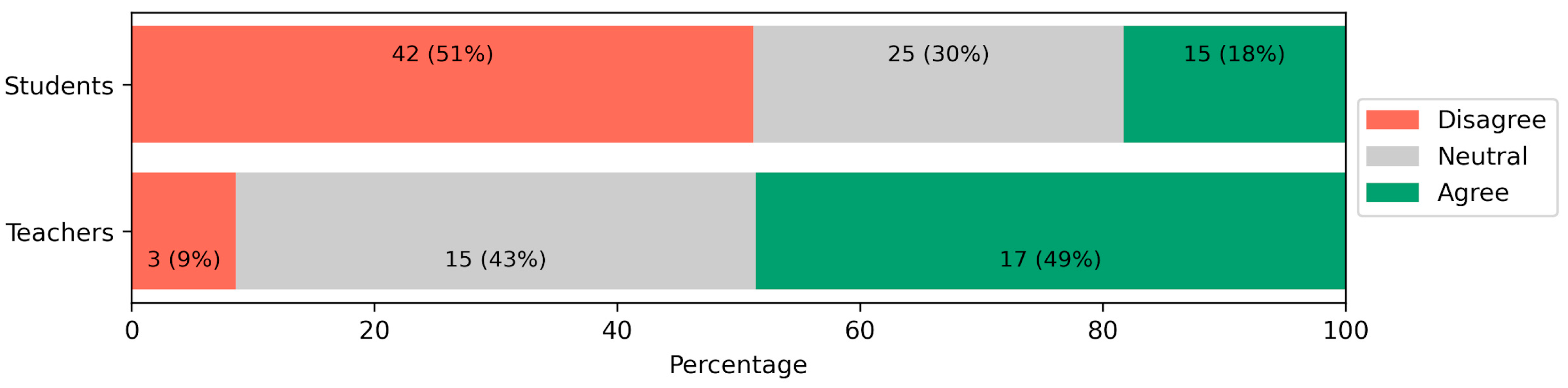
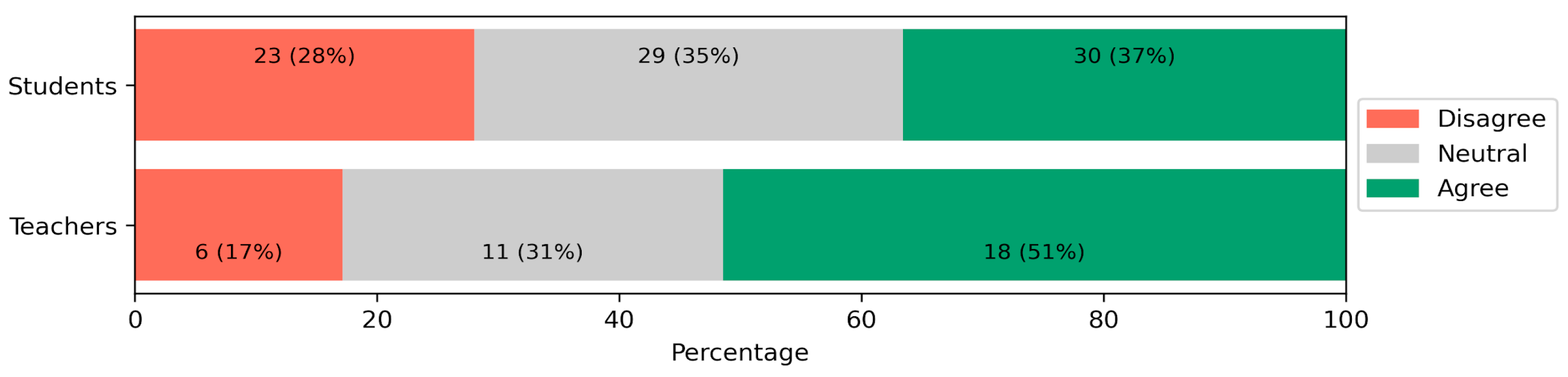
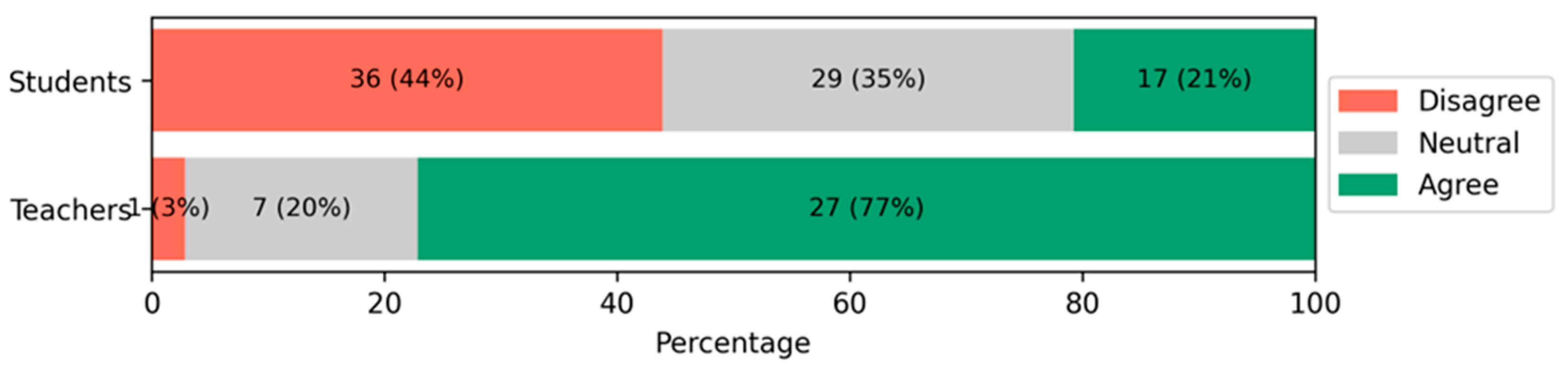
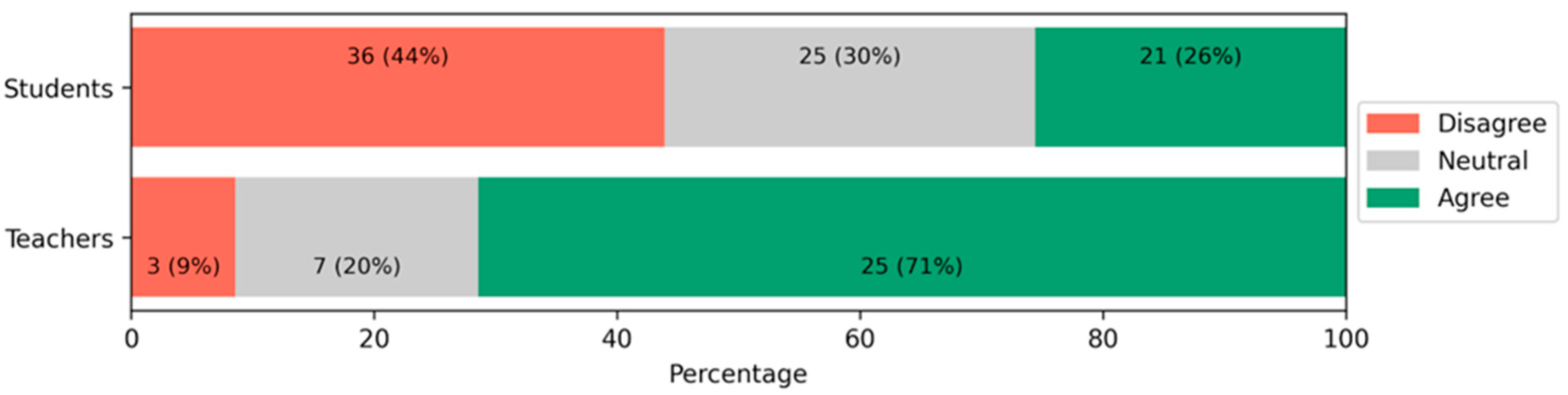
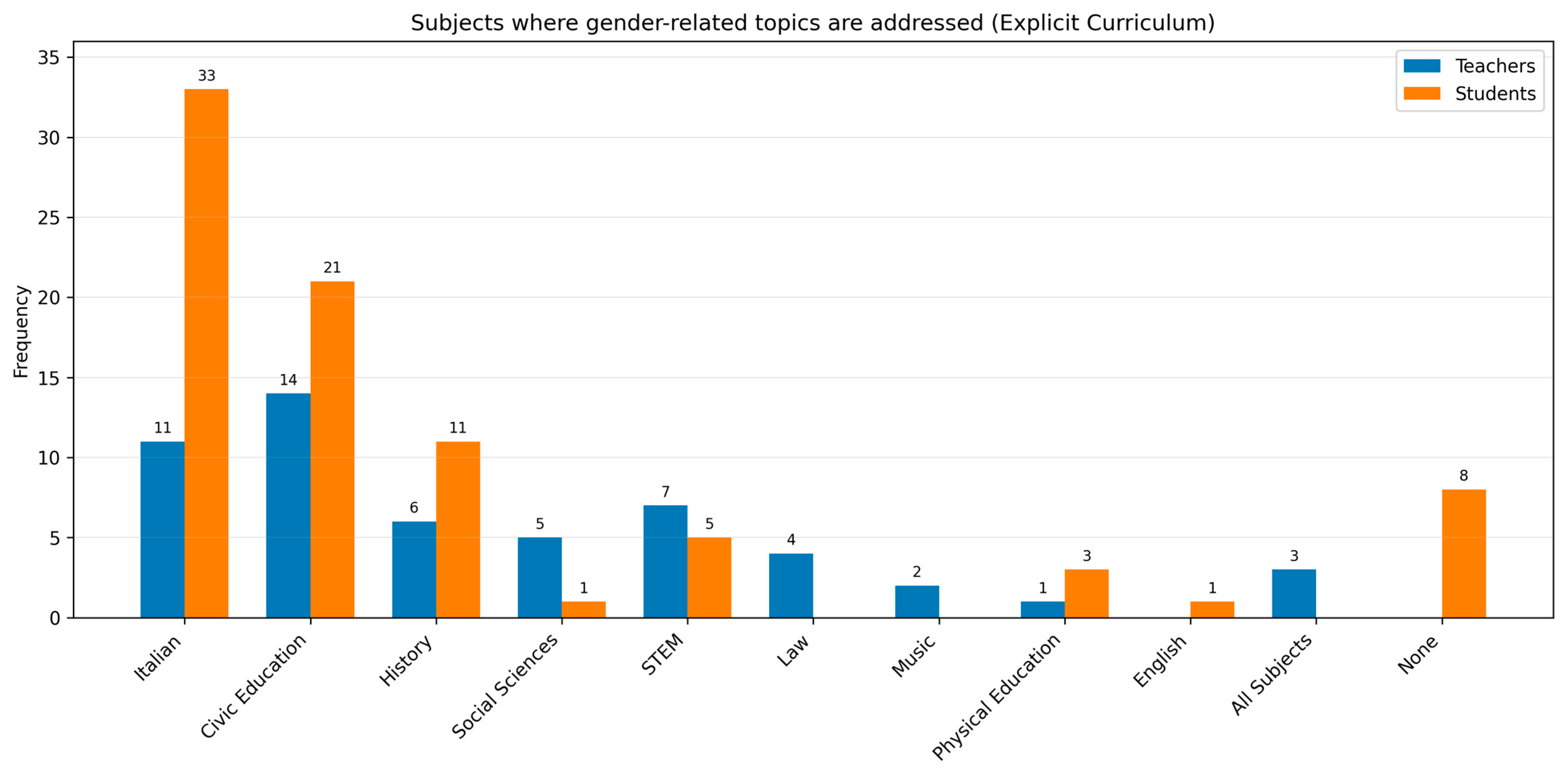
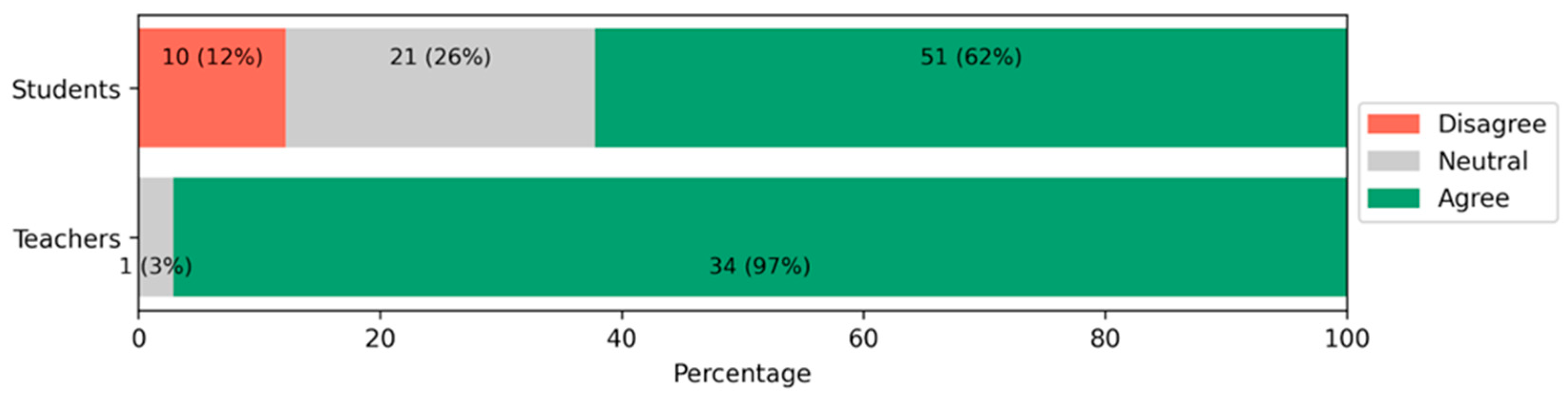
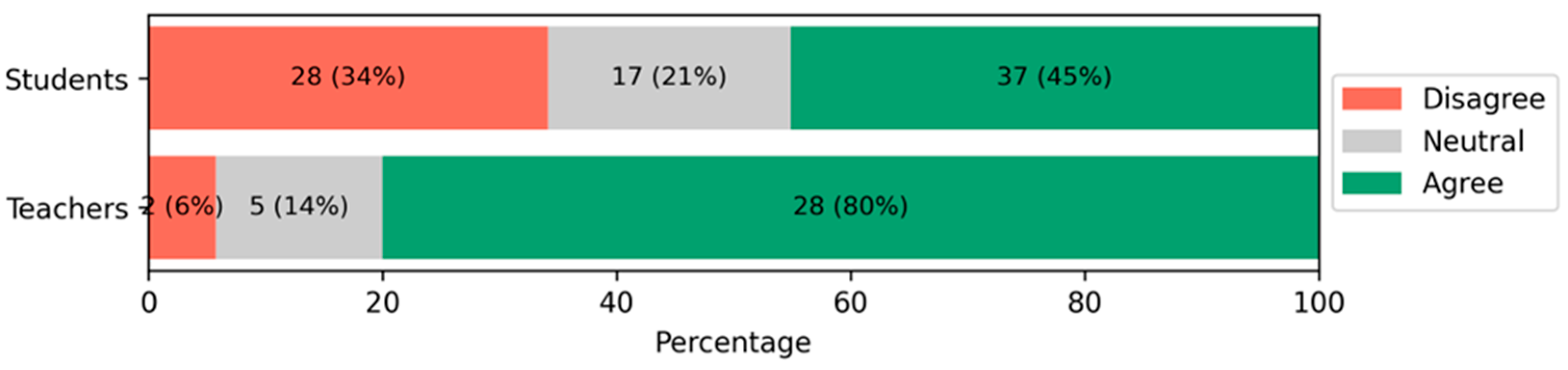
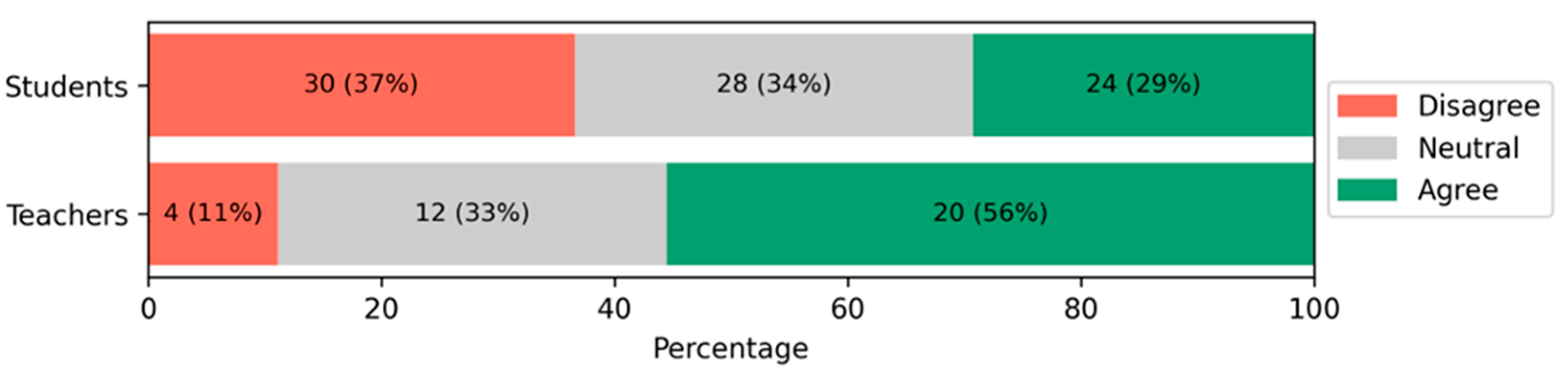
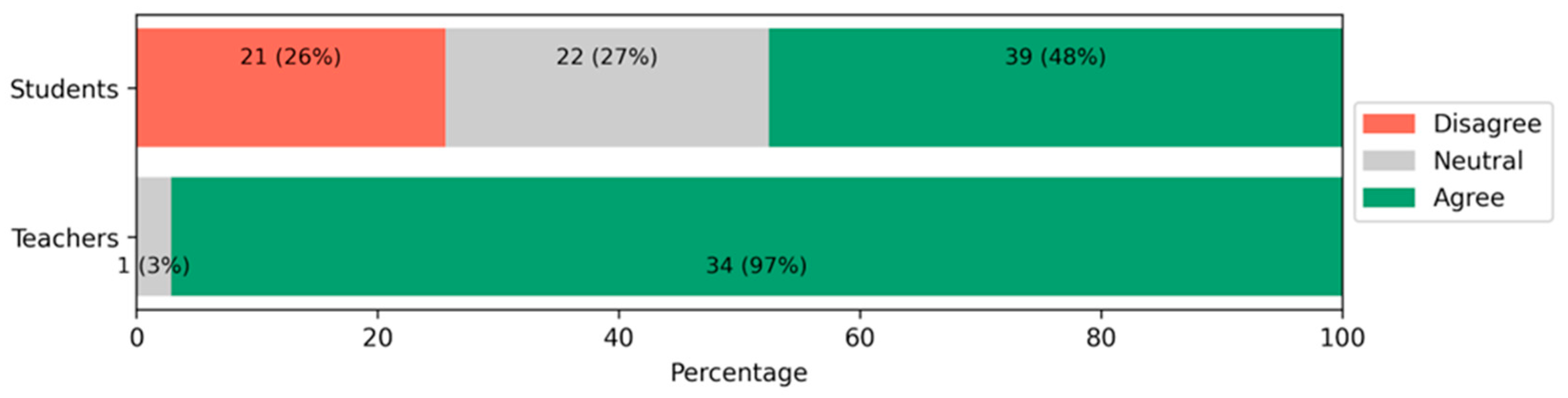
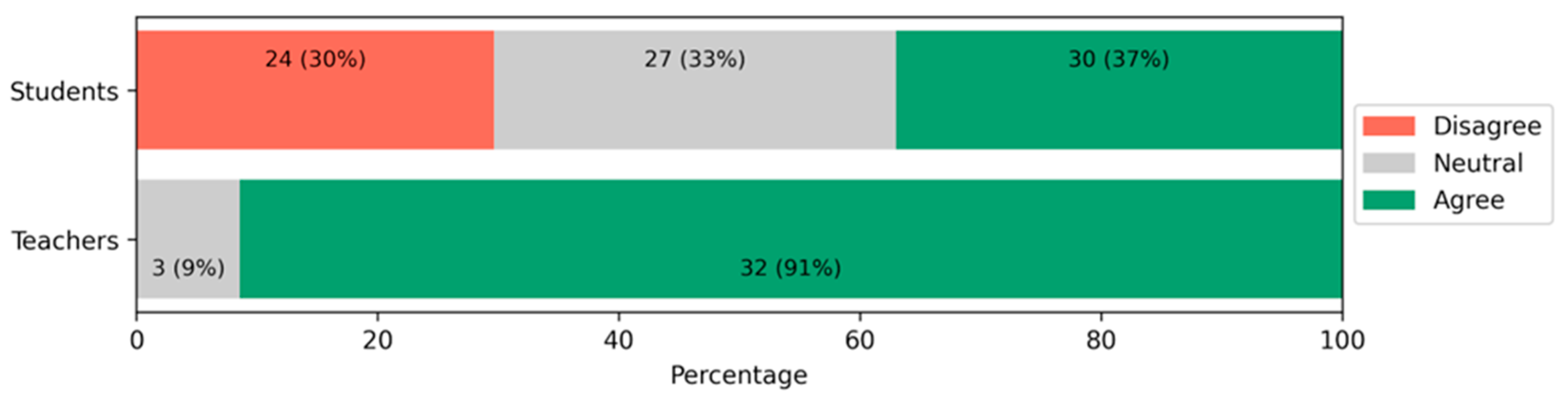
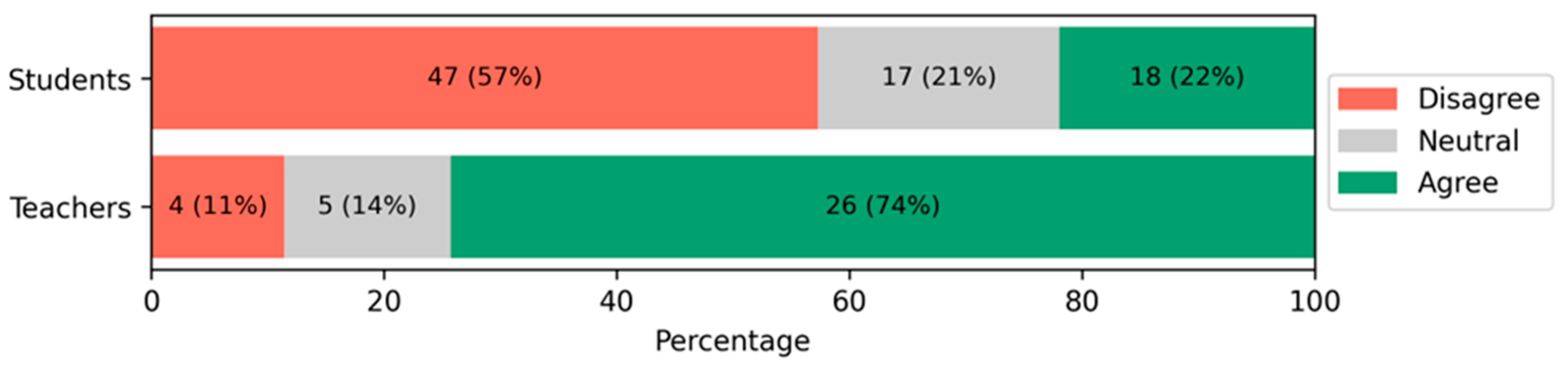
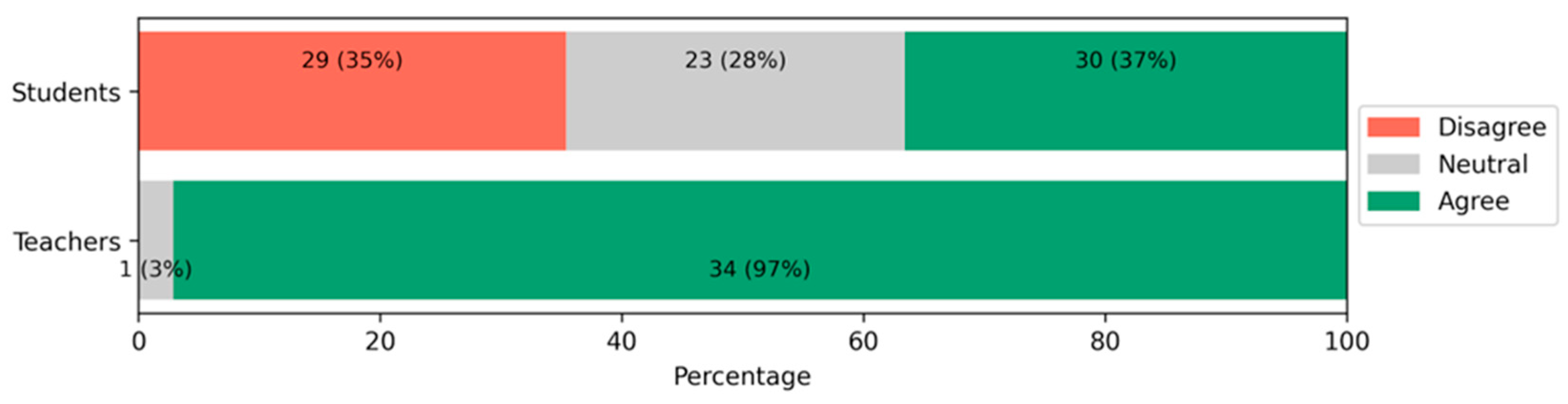
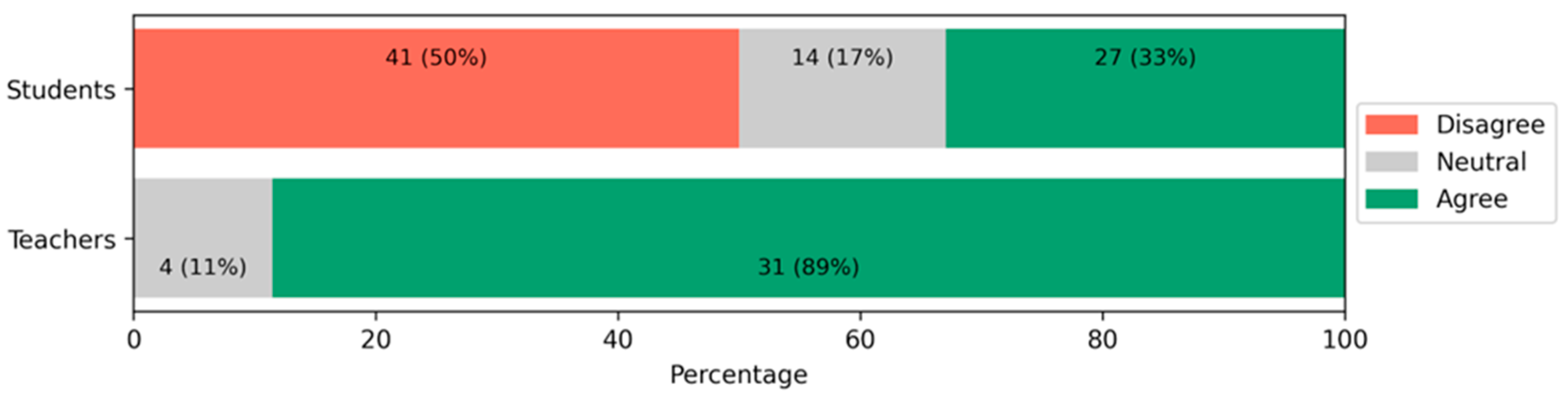
Disclaimer/Publisher’s Note: The statements, opinions and data contained in all publications are solely those of the individual author(s) and contributor(s) and not of MDPI and/or the editor(s). MDPI and/or the editor(s) disclaim responsibility for any injury to people or property resulting from any ideas, methods, instructions or products referred to in the content. |
© 2026 by the authors. Licensee MDPI, Basel, Switzerland. This article is an open access article distributed under the terms and conditions of the Creative Commons Attribution (CC BY) license.