Article

Mathematics on the Move: An Interdisciplinary Approach to Teaching Mathematics Using Physical Education


1
School of Education, La Trobe University, Melbourne, VIC 3086, Australia
2
School of Pharmacy and Medical Sciences, Griffith University, Nathan, QLD 4111, Australia
3
Faculty of Education, University of Canberra, Canberra, ACT 2617, Australia
*
Author to whom correspondence should be addressed.
Educ. Sci. 2025, 15(12), 1632; https://doi.org/10.3390/educsci15121632
Submission received: 16 July 2025 / Revised: 24 November 2025 / Accepted: 27 November 2025 / Published: 4 December 2025

Abstract

Physical educators can incorporate mathematics and technology into their curriculum. The challenge is how to do this without sacrificing the core learning central to physical education (PE). The aim of this study was to examine the impact of an intentionally designed interdisciplinary six-week program called Maths on the Move (MOTM), specifically designed to integrate mathematics and PE. The study participants included two middle school PE teachers and two mathematics teachers. Within PE lessons, students wore a human activity monitor (HAM) that recorded step counts and acceleration to allow students to gather their personalized data for use in their mathematics lessons on statistics and probability. While the teachers applied our interdisciplinary approach, the challenges and complexities of interdisciplinary methods were observed. We demonstrated how the integration of PE and mathematics can enrich students’ learning experiences, illustrating MOTM as a versatile integrated approach. Despite the results, a gap between pedagogical content knowledge, teacher connectiveness, and practical application was found. In conclusion, this study underlined the value and possibilities of integrating PE and mathematics through a teacher-centered approach, setting the stage for future research to enhance the effectiveness of interdisciplinary education.

1. Introduction

Mathematics plays a critical role in shaping the intellectual capabilities of students by fostering essential skills such as critical thinking, problem-solving, and analytical reasoning. As students progress, mathematics becomes increasingly complex, underscoring the need for effective pedagogies. Conversely, ensuring that teaching methodologies engage students to elicit a deep understanding of mathematical concepts presents a considerable challenge (Williams & Jones, 2016). Rosli et al. (2015) noted that elementary school teachers use both tangible and virtual manipulatives as instructional support to facilitate student understanding of concepts in numbers, operations, geometry, algebra, measurements, data analysis, and probability. Such teaching and learning can incorporate technology and the adoption of collaborative learning strategies (Harris & Martin, 2013). Despite these encouraging developments, educators still face constraints like addressing diverse mathematical proficiency levels among students and adapting teaching methods to suit various learning styles (Thompson & Davis, 2015).
The concept of interdisciplinarity has been the focus of much reflection, but studies on the implementation of interdisciplinarity in middle school are rare. A concern raised regarding interdisciplinary education is that the role played by mathematics is understated, in that it may be surpassed by other disciplines (Kristensen et al., 2024). Traditionally, mathematics has often had an explicit focus on skills and routines (Niss & Jensen, 2011), but Gravemeijer et al. (2017) noted that mathematics education for the future must complement the work that can be performed by computers, so mathematical education must focus more on modeling and application. There is also a potential risk that mathematics learning will become less explicit for students, who consequently may not understand its applicability (Shaugnessy, 2013). Notably, in middle school, students establish connections between abstract concepts and practical experiences in a tangible way, often experienced through games. Due to the abstract nature of its concepts, it is expected that some students may find learning mathematics challenging (Serin, 2023). Being able to visualize and use different mathematical concepts and then apply them to practical situations can support understanding (Abdul-Karim et al., 2023). Therefore, students may benefit from concrete experiences, specifically, having opportunities to explore concepts in different contexts.

1.1. An Interdisciplinarity Focus: Physical Education, Technology, and Mathematics

Interdisciplinary teaching comprises the planning and organization of integrating different disciplines. This can bolster learning when new knowledge is presented that relates to already known concepts (Woloshyn et al., 1994). However, interdisciplinary learning has been much debated (Rose, 2010). While interdisciplinary approaches can offer valuable learning experiences for students, they should not be at the detriment of meeting individual subject areas’ aims (Haydn-Davies, 2010).
Each year, physical educators are asked to incorporate even more mathematics, languages, arts, science, and social studies into their curriculum (Wade, 2016). The challenge lies in achieving this is how to do this without sacrificing the core learning provided in physical education (PE). For instance, DeFranceso and Casas (2002) showed the effective value of two weeks of integrated mathematics and PE teaching compared with a traditional form of teaching mathematics. Similarly, Fahiminezhad et al. (2012) determined that three months of integrated mathematics and PE teaching showed a strong positive effect on both subjects compared with traditional methods. Thus, the integration of heterogeneous teaching can make the educational process dynamic, interesting, and improve learning (Houtveen et al., 2004). Importantly, the outcome must benefit both subjects.
Mathematics and PE can be two subjects that middle school children do not immediately associate with having common ground, despite some fundamental links underpinning both learning areas. Therefore, the vision of the program, titled Maths on the Move (MOTM) was to determine: (1) mathematics and PE teachers’ willingness to adopt an interdisciplinary approach to teaching both learning areas; and (2) how the use of student-captured data in PE could be used by mathematics teachers to teach PE and mathematics while obtaining teacher perceptions about student engagement and learning. The study aimed to identify the conditions that favor the construction of interdisciplinary teaching sequences. This aim extended to investigating the effectiveness of pedagogical principles underpinning each subject (Evans & Willis, 2024; Morgan & Bourke, 2008; Rodríguez-Martín & Buscà Donet, 2022). To achieve both aims, our research questions were:
  • How do mathematics and PE teachers perceive the benefits and challenges associated with the interdisciplinary teaching of MOTM?
  • To what extent do mathematics and PE teachers perceive MOTM as a complementary student teaching and learning strategy?
Therefore, the purpose of the present study was to analyze the experiences of middle school mathematics and PE teachers throughout an interdisciplinary lesson program that focused on the teaching of mathematics using student-captured data obtained from wearable technology during PE.

1.2. Theoretical Lens

For analyzing teachers’ application of interdisciplinary innovations, Penuel et al. (2014) advocated both integrity and actor-oriented viewpoints. Integrity perspectives are aimed at understanding the degree to which teachers’ implementation of an innovation is aligned with its goals and principles. Implementation is consequently viewed as a comparatively linear process with little room for teachers to deviate from suggested central ideas (Century & Cassata, 2016). An integrity perspective carries convictions and principles consistent with reliability, which is a term frequently used to evaluate teachers’ implementation of pedagogical models in PE (Hastie & Casey, 2014). Integrity viewpoints are valuable when analyzing tactics or models that have been developed, validated, and tested as opposed to unknown ideas. As an initial step to strengthening interdisciplinary learning between middle school PE and mathematics teachers, it is useful to have some insight into what, if any, interdisciplinary teaching and learning initiatives currently exist; the teachers’ apparent importance of these topics; and what barriers, if any, are experienced. We draw from the works of Penuel et al. (2014) and Beni et al. (2021) and take an integrity and actor-oriented perspective to analyze teachers’ implementation of MOTM to help us further refine the approach for future dissemination and implementation. Akin to Beni et al. (2021), an actor-oriented analysis was conceptualized as a feasible instrument for studying teacher insights into students’ perceived transfer of learning in mathematics, placing weight on the learner’s preceding activities and experiences, and their impact on innovative interventions (Lobato, 2012, 2003). Consequently, as per Beni et al. (2021) and Penuel et al. (2014), the aim is to connect the decisions teachers make about implementation and how these decisions are reflective of innovation, prior experience, and context. Teachers’ viewpoints can enhance and modify initiatives based on their experiences of the challenges, successes, and contextual factors they deem significant. We concur with Penuel et al. (2014) that acknowledging teachers’ beliefs, prior experiences, and classroom realities through an actor-oriented analysis provides what Beni et al. (2021) classify as a means for identifying the “how and why”, which in our study concerns the interdisciplinary implementation challenges that need addressing.

2. Materials and Methods

A mixed-methods design was implemented where data were collected using an online questionnaire, semi-structured interviews, and focus groups. Our participants were four primary school teachers at a kindergarten to grade ten (K-10) (students aged four to 16 years old) public school located in Melbourne, Australia. The teachers (age: 34 ± 5 years; teaching experience 8 ± 4 years) were invited to participate through an email advertisement shared directly with the school’s principal. An initial meeting with the school principal, the assistant principal, and the PE and mathematics teachers then occurred, whereby the aims and objectives of the research project were explained by the researchers. The school principal provided written consent for the research to proceed, and the four teachers then confirmed their voluntary participation. Teachers were selected due to their area of specialization, that being mathematics and/or PE, along with their experience and their willingness to participate in the research. All teachers were required to be teaching either mathematics and/or PE, over 18 years, and registered with the Victorian Institute of Teaching, the regulatory body responsible for maintaining teaching registration. Each participant was responsible for teaching PE and mathematics to their own class (two teachers taught PE, while two taught mathematics). The teachers were not classified as generalist teachers, as each teacher specialized in their chosen area. In the interest of protecting participants’ anonymity, pseudonyms have been used in place of teachers’ names. Ethics approval was obtained from Author 1’s university committee (HEC24347) and departmental approval (IRB-24-351). Ethical approval was also provided by the school principal, the assistant principal, and all teachers involved. Information by way of a participant information consent statement (PICS) was provided to the parents and/or guardians of the children involved. Data management and storage policies regarding the de-identified data were followed according to Author 1’s institutional guidelines.
Table 1 provides details concerning the participants (teachers), the grades taught, and the number of students in their classes. Pseudonyms have been used to protect the identity of participants. Student grades 5–6 (middle school) were selected due to the specific research interest and the respective teaching phases of the mathematics and PE curriculum.

2.1. Research Design

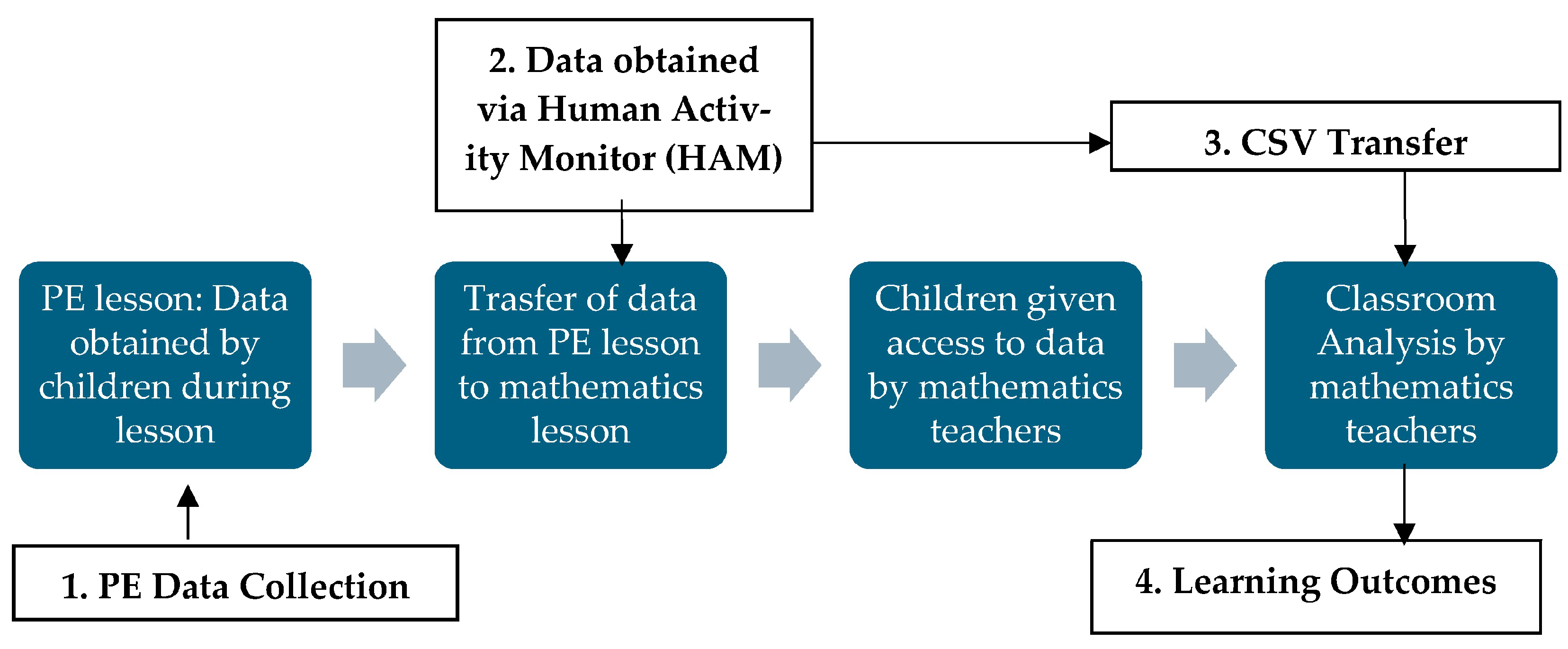
We completed our study between October and November 2024 over six weeks with PE and mathematics lessons timetabled twice weekly, each for approximately 60 min. Ten interdisciplinary lessons were scheduled during this period. Teachers responsible for teaching the same year (grade) level were paired so that a total of six lessons were taught per teacher (e.g., PE teacher Marie delivered six lessons and mathematics teacher Carol delivered six lessons). The researchers did not alter or suggest changes to either the PE or the mathematics timetable to ensure minimum disruption to the timetable. The process outlined in Figure 1 was repeated weekly throughout the study period.

2.2. Lesson Structure

The integrated lessons were constructed by both the PE and mathematics teachers to ensure alignment with the Victorian Curriculum Foundation to Year 10 (F-10). The curriculum key learning areas (KLAs) of mathematics and health and physical education (HPE) were then verified by Author 1 to ensure the lessons were curriculum aligned and that fidelity was maintained. The researchers did not alter or suggest changes to the lesson structure or lesson content to avoid possible bias and to ensure that teachers taught to the specific area of the curriculum as per the school’s requirements and directives. Ad hoc weekly meetings with all teachers occurred to ensure that fidelity of MOTM was maintained.
Curriculum mapping is the process of documenting and aligning the instructional and achievement standards of the curriculum. This process provided our participants with an overview of what was being taught (lesson content), when it was taught, and how it was being assessed (summative and formal assessment). This aligns with Penney et al. (2009) and the three fundamental and interrelated systems of schooling—curriculum, pedagogy, and assessment in PE (Table 2).
A novel integration of technological devices that allowed students to capture their own data was used. The technological devices consisted of 24 HAM devices (GCDC Human Activity Monitor, Gulf Coast Data Concepts, Waveland, MS, USA). The HAM is a compact self-recording data logger and pedometer, available with several accelerometers and six degrees of freedom inertial measurement unit sensor variants. This device (5.5 × 4.5 × 3.5 cm, 10 g) captured data in three orthogonal directions. The HAM is classified as a plug-and-play device, whereby the device is connected to a PC via a standard USB cable. From here, a Microsoft Excel (Microsoft Corporation, Redmond, WA, USA, Version 16) CSV file displays the student’s data obtained during the PE lesson. The HAM was calibrated according to the manufacturer’s instructions.
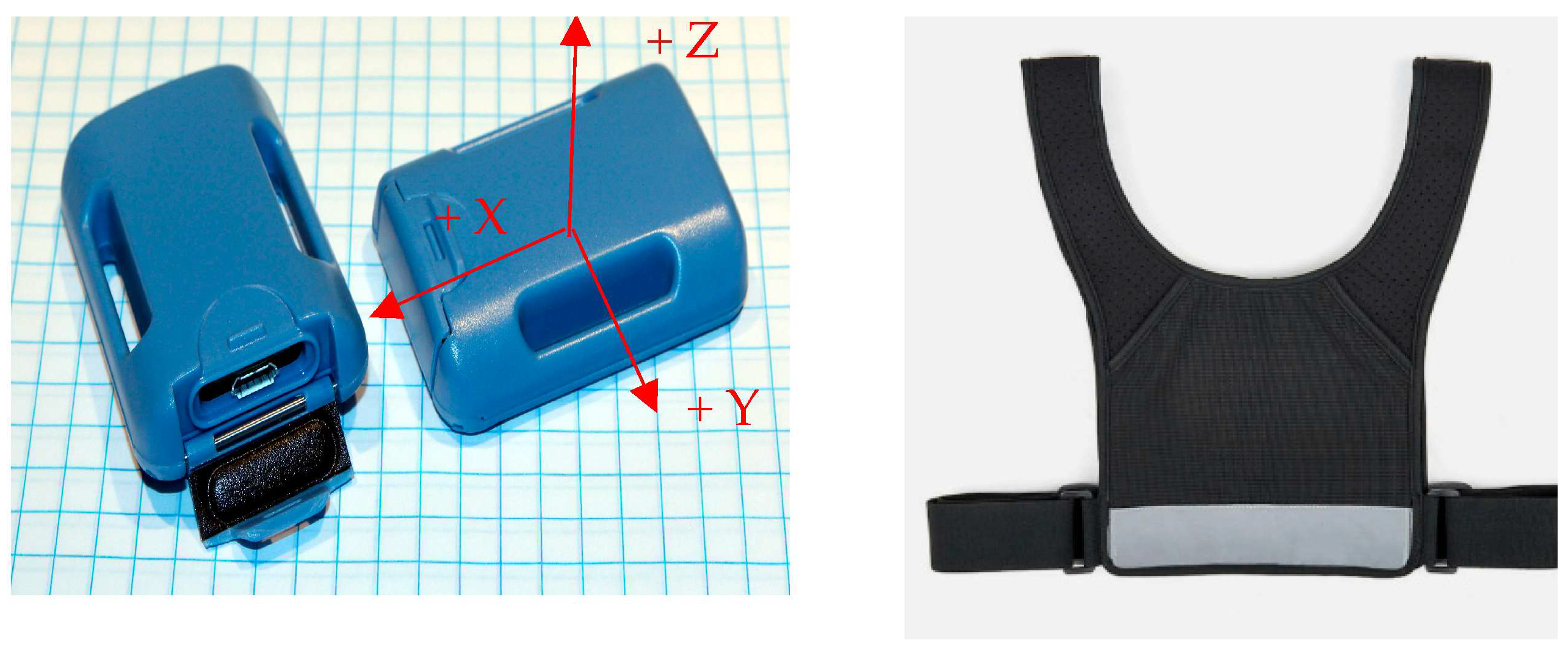
Each PE lesson consisted of an introduction, during which five minutes were allocated for students to correctly put on the technological devices using a vest with a nested pouch that held the device securely (Figure 2). Research on the use of wearables in PE has shown that this type of application brings advantages in terms of motivation, knowledge of results, evaluation, and improvement of student autonomy (Sousa et al., 2023; Klenk et al., 2017). Once the students had been fitted with the devices, the PE teachers commenced their lessons by instigating a warm-up activity followed by the main lesson and sport-specific activity. Introducing wearable technology into the classroom has previously been shown to increase student engagement (Willis et al., 2022).
Author 1 assisted the mathematics teachers as the students downloaded and explored their own raw data. From here, the mathematics teachers commenced teaching their existing lesson, within which the students analyzed, interpreted, and applied graphical, visual, and physical representations of the data, based on the experiences in European handball, field hockey, and dodgeball.

2.3. Data Collection and Analysis

To analyze the effectiveness of the intervention, three types of data were collected. First, during the pre- and post-implementation period, a member of the research team (Author 1) conducted a one-on-one semi-structured interview with each teacher. The semi-structured interviews were performed two days prior to the implementation of MOTM, and two days post its conclusion. Interviews lasted between 32 and 38 min. A focus group attended by all teachers was also held pre- and post-implementation. The focus group was held one day prior to the implementation of MOTM and one post its conclusion (two in total) and lasted for approximately 48 min. Interviews and focus groups were recorded via the Camtasia software (Windows/Mac) and downloaded as MP4 files.

2.4. Tools

Two questionnaires were used. For questionnaire one, teachers completed an online survey 24 h prior to the MOTM implementation (i.e., prior to Lesson 1). The online questionnaire was created on an ad hoc basis using QuestionPro and distributed to the teachers via email. The ad hoc questionnaire included 10 questions and was loosely based on the one developed by González-Gutiérrez et al. (2024), which also included components of the Attitudes Towards Physical Education Questionnaire (CAEF) (Moyano et al., 2018). This questionnaire was modified and consisted of teacher reflections on the interdisciplinary mathematics and PE classes. The responses were expressed on a Likert scale from 1, Disagree = 2, Neutral (Neither agree nor disagree) = 3, Agree = 4, and Strongly agree = 5. The second ad hoc questionnaire comprises eight items that ask the teachers to consider student interest and engagement in MOTM. The responses were also expressed on a Likert scale from one to four, with one being ‘completely disagree’ and four being ‘strongly agree’. Specifically, this questionnaire sought to understand the teachers’ perception of students’ achievement. This questionnaire collected information on participants’ gender (boy, girl) and the subject they were studying (maths, PE).

2.5. Interview and Focus Group Protocol

In the semi-structured interview pre-MOTM, the interviewer (Author 1) asked the teachers to define interdisciplinary teaching and elaborate on their definitions, challenges, benefits, limitations, perceived student engagement, and opportunities for teaching and learning. Clarifications and add-or-delete probes were used to elicit deeper understanding (Lune & Berg, 2016) in the pre- and post-semi-structured interviews. A similar approach was used in both focus groups. Finally, classroom observations by Author 1 occurred at pre-determined timepoints. Their purpose was to confirm/disconfirm the teaching practices and the interdisciplinary approaches used. Observations were conducted using a template (Supplementary Material S1) to detail the activity. Specifically, curriculum outcomes, essential learnings, and applied pedagogy were observed. No instructions or feedback were delivered to both PE and mathematics teachers during the observations, to avoid disturbing the natural lesson structure (Supplementary Material S2). However, verbal feedback was provided by Author 1 once the lesson had concluded and formed part of ongoing professional development for the teachers. The observations occurred in weeks 1, 3, and 5.

2.6. Statistical Analysis

Qualitative data analysis commenced at the outset of the study and continued throughout, following a process of “making sense of the data… [which] involves consolidating, reducing, and interpreting what the teachers said—it is the process of making meaning” (Saldana, 2009). The interviews and focus groups were recorded and transcribed verbatim. Once completed, Author 1 revisited each audio recording and “pre-coded” the data, highlighting quotes that stood out as potentially important codable moments Author 1 then wrote an analytical memo for each conversation, using these memos as a code- and category-generating method to gain a comprehensive understanding of teachers’ experiences and to begin comparing their perspectives (Weiss & Amorose, 2008). All data sources were read and reread for familiarization. Initial descriptive codes were generated and grouped into preliminary themes by Author 1 and shared with the second author for feedback. Data were coded by the first author. The resulting themes were shared with the second author and are presented in the section that follows. Data analysis was conducted inductively; however, the actor-oriented perspective was applied afterward to help us structure and make sense of the teachers’ responses (i.e., Beni et al., 2021). Descriptive statistics, including means and standard deviations, were calculated to summarize the first questionnaire data. To determine the differences among all the variables in the questionnaire, the educational topics (maths vs. PE), and gender (boys vs. girls), a two-way ANOVA was performed along with Cohen’s d effect size to assess difference in boys and girls, interpreted as 0.2 being a small effect size, 0.5 a medium effect size, and 0.8 representing a large effect size. Confidence intervals (CI) were used, set at 95%, as a measure of estimation alongside a coefficient of variation (CV). The p-value was set at 0.05 for all statistical tests.

3. Results

3.1. Insights of Interdisciplinary Teaching Using MOTM

Table 3 presents a summary of initial teacher insights regarding interdisciplinary teaching. The questionnaire consisted of 10 items, with the following scoring options: Strongly disagree = 1, Disagree = 2, Neutral (Neither agree nor disagree) = 3, Agree = 4, and Strongly agree = 5. The table includes the number of participants (n), means (M), and standard deviations (SD) for both groups—students and teachers.
A total of 44 middle school children participated in both the PE and mathematics lessons. The students were multicultural and culturally and linguistically diverse (CALD) with a mixture of native Australian students and students whose parents hailed from countries including Somalia, Greece, Italy, India, Korea, Japan, Vietnam, and Ethiopia. The average attendance for the duration of the six weeks was 75% for the grade 5 boys and 80% for the grade 5 girls. Attendance for grade 6 boys was 85% and 70% for the grade 6 girls. The results of the ANOVA based on Teacher Perceived (Teacher Insights) Learning and Engagement (Table 4) indicated statistically significant differences and a large effect between girls and boys in ‘Was interested in MOTM’ (p < 0.001, d = 0.8); ‘Was interested in technology’ (p < 0.001, d = 0.8]; ‘Was interested in movement skills’ (p < 0.001, d = 0.6); ‘Was interested in mathematics’ (p < 0.05, d = 0.4); ‘Participated and was involved’ (p < 0.001, d = 0.6); and ‘Found the interdisciplinary approach beneficial’ (p ≤ 0.001, d = 0.007). While not statistically significant, the teachers perceived that the boys showed a greater interest in the mathematical teaching of MOTM (d = 0.7), while the girls were inferred to have a greater interest in PE (d = 0.6). There were statistically significant differences in teacher insights despite small effect sizes in ‘Was interested in MOTM’ (p = 0.002, d = 0.2); ‘Was Interested in movement skills’ (p < 0.001, d = 0.3); and ‘Found the interdisciplinary approach beneficial’ (p < 0.05, d = 0.4).

3.2. Integration of Interdisciplinary Teaching Using MOTM

Qualitative findings support the quantitative data, highlighting the differing perspectives of teachers before and after the implementation of MOTM. In this section, five vignettes are presented. Each vignette represents answers articulated by teachers pre- and post- the semi-structured interviews and focus groups. The transcribed interview data, grouped into preliminary themes (Table 5), provide an overview of each teacher’s characteristics and views of interdisciplinary teaching using MOTM. Presenting the findings as vignettes and analyzing them from an integrity- and actor-oriented perspective permitted us to address the research questions, namely: How do mathematics and PE teachers perceive the benefits and challenges associated with the interdisciplinary teaching of MOTM? And, to what extent do mathematics and PE teachers perceive MOTM as complementary?

3.3. Vignette 1: Practices

In line with both an integrity and actor-oriented perspective, there were similarities between the PE and mathematics teachers prior to MOTM, as all teachers stated their teaching practice pre-implementation did not involve an interdisciplinary approach. Asked why, PE teacher Marie stated that it was because she had never contemplated it. “I’ve thought of myself as a PE teacher only. We’re siloed in what we teach and how we teach it, so considering how to include another subject or content area just wasn’t on my mind” (interview).
From an actor-oriented perspective, all teachers had comparable pre-conceived ideas about teaching practice regardless of whether the subject was mathematics or PE. Brett summarized this well: “We teach using basic datasets that we know worked in the past. Why would we consider changing?”. However, the perspective changed post MOTM as two types of self-initiated changes to teaching practice were inferred. This inference was based on whether the change was associated with the interdisciplinary approach taken or a change in the integrity of teachers’ beliefs. For instance, PE teacher Marie nearly always reflected on the feature of mathematical content knowledge pre- and post-MOTM. On reflection in her post-completion interview, Marie indicated: “I would have never said before, ‘What’s the average number of steps that you have taken between lesson 1 and lesson 2? If you increased your steps by 150, what would be the total steps taken?’ The kids applied themselves more as they realized that more steps meant more movement, and in European Handball, it meant that they moved around more to create space.” (interview). This could suggest that the experience of MOTM shaped the interdisciplinary implementation of the teachers. Likewise, PE teacher Pat emphasized how increased steps meant students were alert and tactically aware of the game: “They took ownership of developing their own technique and tactics.” Both mathematics teachers discussed how this became more student-centered as their teaching focused on the data the students collected. The teachers indicated they appreciated the integration of the technology and how the technology was perceived by students as something they owned. By using an integrity lens, we suggest that as MOTM developed over time, teachers’ fidelity increased, arguably coinciding with increased positive experiences.

3.4. Vignette 2: Interdisciplinary Content Knowledge

Perhaps unsurprisingly, the teachers interpreted and positioned MOTM in relation to what they already believed in teaching, identifying an integral familiarity with components aligned (or not) with their teaching philosophy and pedagogical approaches. The actor-positioned approach suggests that a modicum of comfort and familiarity provides a willingness to engage with outsiders or other actors. Reflecting on her own experience, Carol suggested interdisciplinary content knowledge was “a process of creating lessons, which can be applied to anything.” (interview). Mathematics teacher Brett said, “I started to appreciate what was happening in the PE class so that I could make my lesson more impactful. In class, the kids knew the type of activity that they completed as they could see when they were stationary and when they ran faster by identifying movement patterns in their data,” (interview).
In some instances, the teachers retained a sense of practicality, returning to their primary character. For example, although the teachers shared the benefits of interdisciplinary knowledge, Pat added that it was important to ensure that the core focus of the lesson remained: “You must keep bringing it back to the objective of PE. This requires that the kids learn about movement first”. During weeks 1 and 2, the teachers initially focused on content within their subjects rather than across disciplines, possibly because of their unfamiliarity with and lack of confidence in other subjects. Mathematics teachers Carol and Brett acknowledged that the more they became familiar with the PE content, the more they realized that they had more in common. For example, Brett stated, “MOTM ensured that we spoke more and exchanged ideas. I don’t believe that we would have done this otherwise. I remember saying to Marie (PE teacher) that the kids appeared to be more enthusiastic about going to her class and I wanted to know why, so I attended her class during my recess.” Teachers emphasized the importance of knowing each other’s content area to ensure that it was incorporated into practice. Carol noted, “Having a basic understanding of what the others were teaching was key to complementing my teaching. It’s essential to help the kids link the two subject areas together as otherwise it is an obstruction for learning.” (interview). While the approach was “challenging at first” (Brett), it was a “tactic that allowed us to recognize the benefits for and promote better engagement between our subjects.” Marie stated that it was important to “become familiar” of each other’s content area and allow it to inform your practice’ (Interview). Such experiences suggest that the teachers applied a recursive process of action and reflection that occurred during the implementation process, ensuring that the integrity of MOTM remained.

3.5. Vignette 3: Adaptive and Values-Based

Sharing the interdisciplinary features of MOTM raised comments highlighting its adaptiveness and values-based nature (values-driven), relative to its implementation and apparent meaning to students. This did not influence or change the integrity of the model. Carol suggested, “The kids would say, ‘this is exciting’, and ‘this is fun.’ The enthusiasm was apparent on their faces” (interview). Teachers concluded that the relevance of data was important to their students. Brett highlighted that: “[Students] enjoyed that it was their data put into the lessons. They were more interested in exploring what the data meant and how to display it differently.” However, learning to implement more adaptive and responsive strategies was not a simple task, specifically in PE. For instance, Pat reflected that “being responsive to the maths” was an aspect he needed to “get used to”. “This represented more of a personalized instruction approach and is not something that I was familiar with”. While MOTM initially proved to be challenging, both PE teachers thought it was valuable to work through the concerns. Pat said, “It was important to teach the value as to why the kids wore the technology devices”. Marie identified ways in which MOTM aligned with student engagement with the sport-specific subjects. “Developing skills is obviously important, but the interdisciplinary approach allowed the kids to connect value to what was being done and why.” It is conceivable that the teachers’ initial values or embedded personal values permitted a positive transfer of values to their students, which consequently provided meaning to why and how the technology was used.

3.6. Vignette 4: Connectiveness

There were instances where the actor-oriented model clashed with the integrity model, thus providing a problem of fragmented curricular fidelity. To illustrate, despite recognizing a connection between mathematics and PE, Marie and Pat acknowledged that some components of mathematics were difficult to integrate. Pat found value in connecting student learning between subjects, but added, “To ensure that the kids understood what was being learnt, more explicit links between subjects were needed. Over time, they’ll (kids) start making the connections themselves, incidentally, and they won’t even realize it’ (interview). Marie echoed similar sentiments in that, “The PE–maths connection can be difficult within the lessons as I gave (kids) choices in games. Trying to make strong maths connections can be frustrating if some find the maths part confusing” (interview). While the integrity of MOTM remained, a greater sense of making the model fit for purpose shaped how teachers connected with teachers and how this interaction transferred to students. In some cases, connections between teachers transcended to incidental interactions with students. Carol suggested, “This did not happen too much before this project. As the kids returned to my class with stories of what they did in PE, I found myself talking to the PE teachers more about their classes”. Marie identified what she stated as an “ah-ha” moment: “When I heard some of the less enthusiastic kids, the ones who always appear vague and uninterested in PE, say that they were looking forward to the class as they wanted to wear the technology and collect data, it was very pleasing to hear. They looked as though they could make connections between the different subjects”. Arguably, the teachers’ experiences led to the belief that MOTM was, indeed, complementary to teaching and learning.

4. Discussion and Conclusions

The aim of this paper was to assess: (1) mathematics and PE teachers’ willingness to adopt an interdisciplinary approach to teaching; and (2) how student-captured data in PE could be used by mathematics teachers to enhance student learning. We positioned interdisciplinary teaching using a model called Maths on the Move that was designed to utilize technology and offer flexible implementation; that is, we wanted teachers to implement it in their natural teaching environments in a way that made sense and suited the needs of their students. One of the primary ways teachers achieved this was by placing emphasis on different features of mathematics and physical activity skills at different time points. Throughout our conversations, teachers expanded upon their initial definitions of interdisciplinary teaching—some only slightly, and to something much broader—signifying that these observations can be malleable via small interventions. The integrity perspectives stated by Penuel et al. (2014) and the “actor-oriented” perspective established by Beni et al. (2021) provide the framework of this discussion.

4.1. Integrity Perspective: How Closely Did Teachers Follow the MOTM Model?

The fidelity of MOTM was generally maintained by all teachers. While there were occurrences where the actor-oriented model conflicted with the integrity model, the teachers recognized the intention and objectives, that is, to link both subjects so that learning intentions were understood by students. We infer that because fidelity was generally maintained, teachers and students perceived MOTM to be complementary to teaching and learning, thus answering the initial research question. This is not to say that challenges did not occur and that the integrity of the MOTM was not compromised. To illustrate, despite recognizing a connection between mathematics and PE, Marie and Pat acknowledged that some components of mathematics were difficult to integrate. Pat found value in connecting student learning between subjects, but added, “To ensure that the kids understood what was being learnt, more explicit links between subjects were needed. Over time, they’ll (kids) start making the connections themselves, incidentally, and they won’t even realize it” (interview).
Fitzallen et al. (2022) suggested that student-led representations have been central to the problem-solving process as a tool for mathematical thinking. While studies of meta-representational competence often focus on the students’ mathematical understanding portrayed through representations (Tytler et al., 2021), our results provide a possible pedagogical strategy to support students’ interpretation of data. While the integrity of MOTM remained, a greater sense of making the model fit for purpose shaped how teachers connected and how this interaction transferred to students. In some cases, connections between teachers transcended to incidental interactions with students.

4.2. Actor-Oriented Perspective: How Did Personal Beliefs, Experiences, and Classroom Context Shape Implementation?

Information collected through observations during weeks 1, 3, and 5 served as professional development and was not intended for summative or formative evaluation purposes for the teachers. In principle, the observations allowed Author 1 to provide feedback to teachers from the evidence collected to help them improve their interdisciplinary practice. In this sense, the teachers did not ‘fail’ or ‘pass’ but were provided with ideas and suggestions that could be implemented at their discretion. One of the reasons teachers mentioned why they were supportive of MOTM was their insight into its positive impact on student outcomes. This is not to imply that we (or teachers) measured student outcomes but that the teachers perceived learning benefits for students based upon the teachers’ insights and the students’ interactions.
The results imply that the teachers had a high perception of student interest in both mathematics and PE, with significant differences perceived between girls and boys. From a PE perspective, the results correspond with Aznar Ballesta and Vernetta (2022) and Rodríguez-Martín and Buscà Donet (2022) in that students recognized the mathematical contents and the role of mathematics in PE. Yet this could be due to a more favorable educational climate that provides students with feelings of satisfaction within PE classes. Likewise, the activities of European Handball and Field Hockey, as well as the methodologies applied, can be factors to consider when developing interdisciplinary approaches. We draw from similar studies that the integration of physical activity into environments such as mathematics might help to develop tools that improve mathematical learning (Cecchini & Carriedo, 2018). Girls also differed from boys in ‘was interested in movement skills’ and ‘participated and was involved’, yet the reasons why remain unknown despite the relatively high attendance rate. However, gender-based disparity in physical activity is a persistent finding (Hallal et al., 2012), as girls may receive less social support (Cairney et al., 2012) and therefore receive less enjoyment from participation (Edwardson et al., 2012). Yet this shows that gender can influence the opinion that students have about PE (i.e., Giakoni-Ramírez et al., 2021; Maass et al., 2019) and that boys exhibit greater values of intrinsic motivation towards PE than girls (Gómez-López et al., 2019; Moore et al., 2014). However, the originality of using a HAM device could have been enough to retain motivation throughout the eight weeks. In this situation, technology as a conduit and enabler to learning arguably trumps the notion of interdisciplinarity. Yet we are drawn to others who state that the application of technology in the classroom is not a novelty either.
Analyzing teachers’ insights about why students were interested in MOTM may be due to the positive environment and the quality of the teachers’ interaction with the students. Alternatively, it could be due to the novelty of the interdisciplinary approach used. Analogous to Beni et al. (2021), teacher perceptions were related to the reasons why the interdisciplinary approach was implemented and how they implemented it. In interdisciplinary teaching, the teacher plays more of a guiding role, and the hierarchical teacher-student structure is somewhat attenuated (e.g., Holmbukt & Larsen, 2016). Accordingly, the experiences of students inferred by the teachers may have been due to the flexible implementation and student-led approach as opposed to an explicitly taught one.
We drew from Beni et al. (2021) and used an actor-oriented analysis, which allowed us to outline teachers’ dynamic interpretations and insights. In this way, the interdisciplinary process was not inevitably the result of but a means to the development of a positive understanding of MOTM. We suggest this holds important implications for initiatives in future implementations of interdisciplinary approaches. Notably, providing opportunities for teachers to see and perceive positive outcomes for students is a key consideration (Guskey, 2002). Notwithstanding this, while interdisciplinary teaching offers benefits, its efficient integration into middle school educational practices necessitates collaboration between teachers. This involves the implementation of targeted and comprehensive professional development designed to equip teachers with the skills, knowledge, and attitudes needed to understand, engage with, and utilize their counterparts’ content areas. A concern of such approaches is preserving the integrity of disciplinary knowledge, especially when opportunities for mathematics learning are not realized. Nevertheless, we concur with Lehrer (2021) in that such interdisciplinary work (a) opens possibilities of knowledge transfer between disciplines; (b) emphasizes disciplinary knowledge as relevant to solving important problems, and (c) can build connected and structured knowledge systems.

4.3. Limitations

The current research has its limitations. For instance, the small sample size could be perceived as restrictive along with the six-week implementation phase; thus, the results are not generalizable to, or representative of, a whole population. Moreover, this study relied upon the mathematics and PE teachers’ insight into student engagement, student interest, and student achievement, all of which are indirect and subjective measures of learning. As student assessments (tests, interviews, and/or self-reports) were not used, any propositions of ‘change’ in teachers’ insights and teaching practice reflect their own practices of change. Since we were not familiar with the teachers’ practice prior to this study, it is not our intention to speak to the magnitude of any potential change in their practice but rather to share their insights, experiences, and observations of the process. Finally, interdisciplinary approaches are difficult to implement and can quickly fall into pseudo-interdisciplinarity (e.g., Hasni et al., 2015). Therefore, in future research, it would be interesting to consider teacher training (professional development), as we also observed that a few teachers are trained in interdisciplinarity (e.g., Tonnetti & Lentillon-Kaestner, 2023).

4.4. Conclusions

An integrity and actor-oriented perspective of middle school teachers’ interdisciplinary perspectives of mathematics and PE underlined the value of and possibilities for integrating PE and mathematics through a teacher-centered approach. The results here, while they cannot be generalized, may help pedagogues consider implementing interdisciplinary approaches in the future. The implication is that the middle school teachers had a high perception of student achievement, engagement, and interest in both mathematics and PE, with significant differences perceived between girls and boys in the benefits of interdisciplinary learning and motivation towards PE. The reasons for the gender differences remain unclear, yet they provide scope for further research. Despite this, this study underlined the value of and possibilities for integrating PE and mathematics through a teacher-focused approach, setting the stage for future research to enhance the effectiveness of interdisciplinary education. This kind of interdisciplinary method may contribute to enhancing the children’s physical activity levels during the school day

Supplementary Materials

The following supporting information can be downloaded at: https://www.mdpi.com/article/10.3390/educsci15121632/s1, S1: Author Observational Template; S2; Lesson Plan Template.

Author Contributions

Conceptualization, S.E.; methodology, S.E.; formal analysis, S.E., J.W. and C.W.; investigation, S.E. and C.W.; data curation, S.E. and C.W.; writing—original draft preparation, S.E.; writing—review and editing, J.W.; project administration, S.E. All authors have read and agreed to the published version of the manuscript.

Funding

This research received no external funding.

Institutional Review Board Statement

The study was approved by the relevant ethics committee (HEC24347) and received department approval (IRB-24-351) on 29 October 2024.

Informed Consent Statement

Informed consent was obtained from all participants involved in the study.

Data Availability Statement

Data is available upon request.

Acknowledgments

The authors thank the teachers and students for their participation.

Conflicts of Interest

The authors declare no conflicts of interest.

Note

1
Health and Physical Education is the name for this Key Learning Area in most Australian states and territories.

References

  1. Abdul-Karim, H., Kasimu, O., Rahaman, A., Kanimam, Y., Imoro, M., & Dokurugu, M. E. (2023). Assessing the impact of algebra tiles as visual and manipulative aids on students’ algebraic understanding. American Journal of Educational Research, 11(10), 705–711. [Google Scholar] [CrossRef]
  2. Aznar Ballesta, A., & Vernetta, M. (2022). Satisfaction and importance of physical education in schools. Revista Iberoamericana de Ciencias de La Actividad Física y El Deporte, 11, 44–57. [Google Scholar] [CrossRef]
  3. Beni, S., Chróinín, D. N., & Fletcher, T. (2021). ‘It’s how PE should be!’: Classroom teachers’ experiences of implementing meaningful physical education. European Physical Education Review, 27, 666–683. [Google Scholar] [CrossRef]
  4. Cairney, J., Kwan, M. Y., Velduizen, S., Hay, J., Bray, S. R., & Faught, B. E. (2012). Gender, perceived competence and the enjoyment of physical education in children: A longitudinal examination. International Journal of Behavioral Nutrition and Physical Activity, 9, 26. [Google Scholar] [CrossRef]
  5. Cecchini, J. A., & Carriedo, A. (2018). Effects of an interdisciplinary approach integrating mathematics and physical education on mathematical learning and physical activity levels. Journal of Teaching in Physical Education, 39(1), 121–125. [Google Scholar] [CrossRef]
  6. Century, J., & Cassata, A. (2016). Implementation research: Finding common ground on what, how, why, where, and who: Finding common ground on what, how, why, where, and who. Review of Research in Education, 40(1), 169–215. [Google Scholar] [CrossRef]
  7. DeFranceso, C., & Casas, B. (2002, April 27). The effect of incorporating math skills into physical education classes on math achievement of second grade elementary students. 1st Annual College of Education Research Conference (pp. 31–35), Miami, FL, USA. [Google Scholar]
  8. Edwardson, C. L., Gorely, T., Pearson, N., & Atkin, A. J. (2012). Sources of activity-related social support and adolescents’ objectively measured after school and weekend physical activity: Gender and age differences. Journal of Physical Activity and Health, 10, 1153–1158. [Google Scholar] [CrossRef]
  9. Evans, S., & Willis, C. (2024). Mathematical strategies in health and physical education in the junior secondary years: An approach incorporating STEM and fitness. Australian Mathematics Education Journal, 5(4), 25–29. [Google Scholar]
  10. Fahiminezhad, A., Mozafari, S., Sabaghiyanrad, L., & Esmaeili, M. (2012). The effect of traditional & integration methods of teaching on the amount of Math & sport performance of first grade elementary students. European Journal of Experimental Biology, 2, 1646–1653. [Google Scholar] [CrossRef]
  11. Fitzallen, N., Murphy, C., Hatisaru, V., & Maher, N. (Eds.). (2022, July 3–7). Mathematical confluences and journeys. Proceedings of the 44th Annual Conference of the Mathematics Education Research Group of Australasia (pp. 410–417), Launceston, Australia. [Google Scholar]
  12. Giakoni-Ramírez, F., Duclos-Bastías, D., & Parra-Camacho, D. (2021). Influence of the teacher, the methodology and the content of physical education classes on the perception of Chilean students. Revista Electrónica Educare, 25, 1–17. [Google Scholar] [CrossRef]
  13. González-Gutiérrez, I., López-García, S., Barcala-Furelos, M., Mecías-Calvo, M., & Navarro-Patón, R. (2024). School children’s thinking on the subject and teachers of physical education according to gender and educational grade. Education Science, 14, 914. [Google Scholar] [CrossRef]
  14. Gómez-López, M., Ruiz-Sánchez, V., & Granero-Gallegos, A. (2019). Analysis of the prediction of motivational climate in handball players’ fear of failure. International Journal of Environmental Research in Public Health, 16(3), 344. [Google Scholar] [CrossRef]
  15. Gravemeijer, K., Stephan, M., Julie, C., Lin, F.-L., & Ohtani, M. (2017). What mathematics education may prepare students for the society of the future? International Journal of Science and Mathematics Education, 15(Suppl. S1), 105–123. [Google Scholar] [CrossRef]
  16. Guskey, T. (2002). Professional development and teacher change. Teachers and Teaching, 8(3), 381–391. [Google Scholar] [CrossRef]
  17. Hallal, P. C., Andersen, L., Bull, F. C., Guthold, R., Haskell, W., & Ekelund, U. (2012). Global physical activity levels: Surveillance progress, pitfalls, and prospects. Lancet, 380, 247–257. [Google Scholar] [CrossRef]
  18. Harris, D., & Martin, B. (2013). Real-world applications in math teaching. Education Mathematics Journal, 28, 245–259. [Google Scholar]
  19. Hasni, A., Lenoir, Y., & Alessandra, F. (2015). Mandated interdisciplinarity in secondary school: The case of science, technology, and mathematics teachers in Quebec. Issues in Interdisciplinary Studies, 33(33), 144–180. [Google Scholar]
  20. Hastie, P., & Casey, A. (2014). Fidelity in models-based practice research in sport pedagogy: A guide for future investigations. Journal of Teaching in Physical Education, 33(3), 422–431. [Google Scholar] [CrossRef]
  21. Haydn-Davies, D. (2010). Physical literacy and learning and teaching approaches. Education. [Google Scholar]
  22. Holmbukt, T., & Larsen, A. (2016). Interdisciplinary teaching as motivation: An initiative for change in post-16 vocational education. Nordic Journal of Modern Language Methodology, 4, 67–82. [Google Scholar] [CrossRef]
  23. Houtveen, A., van de Grift, W., & Creemers, B. (2004). Effective school improvement in mathematics. School Effectiveness and School Improvement, 15, 337–376. [Google Scholar] [CrossRef]
  24. Klenk, S., Reifegerste, D., & Renatus, R. (2017). Gender differences in gratifications from fitness app use and implications for health interventions. Mobile Media & Communication, 5, 178–193. [Google Scholar] [CrossRef]
  25. Kristensen, M., Larsen, D., Seidelin, L., & Svabo, C. (2024). The role of mathematics in STEM activities: Syntheses and a framework from a literature review. International Journal of Mathematical Education in Science and Technology, 12, 418–431. [Google Scholar] [CrossRef]
  26. Lehrer, R. (2021). Promoting transdisciplinary epistemic dialogue. In M.-C. Shanahan, B. Kim, K. Koh, P. Preciado-Babb, & M. A. Takeuchi (Eds.), The learning sciences in conversation: Theories, methodologies, and boundary spaces. Routledge. [Google Scholar]
  27. Lobato, J. (2003). How design experiments can inform a rethinking of transfer and vice versa. Journal of Education Research, 32, 17–20. [Google Scholar] [CrossRef]
  28. Lobato, J. (2012). The actor-oriented transfer perspective and its contributions to educational research and practice. Educational Psychologist, 47, 232–247. [Google Scholar] [CrossRef]
  29. Lune, H., & Berg, B. (2016). Qualitative research methods for the social sciences (9th ed.). Pearson. [Google Scholar]
  30. Maass, K., Geiger, V., Ariza, M. R., & Goos, M. (2019). The role of mathematics in interdisciplinary STEM education. ZDM—Mathematics Education, 51, 869–884. [Google Scholar] [CrossRef]
  31. Moore, J. B., Beets, M. W., Kaczynski, A. T., Besenyi, G. M., Morris, S. F., & Kolbe, M. B. (2014). Sex moderates associations between perceptions of the physical and social environments and physical activity in youth. American Journal of Health Promotion, 29, 132–135. [Google Scholar] [CrossRef]
  32. Morgan, P., & Bourke, S. (2008). Non-specialist teachers’ confidence to teach physical education: The nature and influence of personal school experiences in physical education. Physical Education and Sport Pedagogy, 13, 1–29. [Google Scholar] [CrossRef]
  33. Moyano, A. C., Pacheco, M. M., & Urbieta, C. T. (2018). Psychosocial processes in physical education: Attitudes, strategies, and perceived motivational climate. Retos, 34, 19–24. [Google Scholar] [CrossRef]
  34. Niss, M., & Jensen, T. (2011). Competencies and mathematical learning. Roskilde University. [Google Scholar]
  35. Penney, D., Brooker, R., Hay, P., & Gillespie, L. (2009). Curriculum, pedagogy and assessment: Three message systems of schooling and dimensions of quality physical education. Sport Education and Society, 14, 421–442. [Google Scholar] [CrossRef]
  36. Penuel, W., Phillips, R., & Harris, C. (2014). Analysing teachers’ curriculum implementation from integrity and actor-oriented perspectives. Journal of Curriculum Studies, 46, 751–777. [Google Scholar] [CrossRef]
  37. Rodríguez-Martín, B., & Buscà Donet, F. (2022). Performance of mathematical competence in primary physical education contexts. Revista Internacional de Medicina y Ciencias de la Actividad Física y el Deporte, 22, 807–825. [Google Scholar]
  38. Rose, R. (2010). Confronting obstacles to inclusion: International responses to developing inclusive education. London Imprint Routledge. [Google Scholar]
  39. Rosli, R., Goldsby, D., & Capraro, M. (2015). Using manipulatives in solving and posing mathematical problems. Creative Education, 6, 1718–1725. [Google Scholar] [CrossRef]
  40. Saldana, J. (2009). The coding manual for qualitative researchers Johnny Saldana. SAGE. [Google Scholar]
  41. Serin, H. (2023). Teaching mathematics: Strategies for improved mathematical performance. International Journal of Social Science Studies, 10, 146–150. [Google Scholar] [CrossRef]
  42. Shaugnessy, M. (2013). By way of introduction: Mathematics in a STEM context. Mathematics Teaching in the Middle School, 18, 32. [Google Scholar]
  43. Sousa, A. C., Ferrinho, S. N., & Travassos, B. (2023). The use of wearable technologies in the assessment of physical activity in preschool- and school-age youth: Systematic review. International Journal of Environmental Research and Public Health, 20(4), 3402. [Google Scholar] [CrossRef]
  44. Thompson, L., & Davis, G. (2015). Adapting teaching methods to diverse learning styles in math. Mathematics Educator, 10, 42–56. [Google Scholar] [CrossRef]
  45. Tonnetti, B., & Lentillon-Kaestner, V. (2023). Teaching interdisciplinarity in secondary school: A systematic review. Cogent Education, 10(1), 2216038. [Google Scholar] [CrossRef]
  46. Tytler, R., Mulligan, J., Prain, V., White, P., Xu, L., Kirk, M., Nielsen, C., & Speldewinde, C. (2021). An interdisciplinary approach to primary school mathematics and science learning. International Journal of Science and Education, 43(12), 1926–1949. [Google Scholar] [CrossRef]
  47. Victorian Curriculum and Assessment Authority (VCAA). (2024). Available online: https://www.vcaa.vic.edu.au/ (accessed on 25 July 2025).
  48. Wade, M. (2016). Math and movement: Practical ways to incorporate math into physical education. Strategies, 29, 10–15. [Google Scholar] [CrossRef]
  49. Weiss, M. R., & Amorose, A. J. (2008). Motivational orientations and sport behavior. In T. S. Horn (Ed.), Advances in sport psychology (3rd ed.). Human Kinetics. [Google Scholar]
  50. Williams, M., & Jones, A. (2016). Challenges in mathematics education. Teaching Mathematics Today, 24, 115–130. [Google Scholar]
  51. Willis, C., Thrupp, R., Parker, J., James, D., & Lee, J. (2022). Curriculum resources for STEM engagement using physical activity. Territory Education Foundation. [Google Scholar]
  52. Woloshyn, V., Paivio, A., & Pressley, M. (1994). Use of elaborative interrogation to help students acquire information consistent with prior knowledge and information inconsistent with prior knowledge. Journal of Educational Psychology, 86, 79. [Google Scholar] [CrossRef]
Figure 1. Interdisciplinary MOTM workflow: PE data collection → CSV transfer → classroom analysis → learning outcomes.
Education 15 01632 g001
Figure 2. Example HAM wearable sensor and vest worn by the students.
Education 15 01632 g002
Table 1. Grade 5 and 6 children were aged between 10 and 11 years.
TeacherSubject Discipline SpecializationStudent GradeClass Size
Marie1Health and Physical EducationGrade 522
CarolMathematicsGrade 522
PatHealth and Physical EducationGrade 624
BrettMathematicsGrade 624
Table 2. Overview of lesson structure and curriculum mapping for Years 5 and 6 (per VCAA, 2024).
Lesson TopicWeekCurriculum Content Descriptor and Elaborations
European handball (PE)
Mathematics
1–2Moving our body 
  • Practice specialized movement skills and apply them in different movement situations in indoor, outdoor, and aquatic settings
  • Manipulate and modify the elements of effort, space, time, objects, and people to perform movement sequences
Data representation and interpretation
  • Describe and interpret different data sets in context
  • Construct displays, including column graphs, dot plots, and tables, appropriate for the data type, with and without the use of digital technologies
Field hockey (PE)
Mathematics
3–4Moving our body
  • Design and perform a variety of movement sequences
  • Manipulate and modify the elements of effort, space, time, objects, and people to perform movement sequences
Data representation and interpretation
  • Construct displays, including column graphs, dot plots, and tables, appropriate for the data type, with and without the use of digital technologies
  • Describe and interpret different data sets in context
  • Conduct chance experiments with both small and large numbers of trials using appropriate digital technologies
Dodgeball (PE)
Mathematics
5–6Moving our body
  • Manipulate and modify the elements of effort, space, time, objects, and people to perform movement sequences.
Data representation and interpretation
  • Conduct chance experiments with both small and large numbers of trials using appropriate digital technologies
  • Construct, interpret, and compare a range of data displays, including side-by-side column graphs for two categorical variables. Interpret secondary data presented in digital media and elsewhere
Table 3. Comparison of teacher insights of interdisciplinary learning using Maths on the Move. t = teacher (Questionnaire 1). Based on a Likert scale from 1, Disagree = 2, Neutral (Neither agree nor disagree) = 3, Agree = 4, and Strongly agree = 5.
Pre Maths on the MovePost Maths on the Move
t1t2t3t4Mean±SDt1t2t3t4Mean±SD
Interdisciplinary teaching can help me with my teaching practice in the future.33242.9±0.84.04.04.04.04.00.0
Interdisciplinary teaching can positively change my work as a teacher33232.7±0.54.04.04.04.04.00.0
Interdisciplinary teaching can improve overall academic performance23232.4±0.64.04.04.03.03.70.5
Interdisciplinary teaching can help me improve my pedagogical content knowledge22232.2±0.54.04.05.05.04.50.6
Interdisciplinary teaching is beneficial33343.2±0.54.05.05.05.04.70.5
Interdisciplinary teaching could hinder my ability to teach my core subject43433.5±0.62.02.02.02.02.00.0
Interdisciplinary teaching can be fun32332.7±0.54.04.04.04.04.00.0
Using technology in interdisciplinary teaching is advantageous33232.7±0.54.04.05.05.04.50.6
I am confident in taking an interdisciplinary approach to teaching33232.7±0.54.04.04.03.03.70.5
Interdisciplinary teaching will help me collaborate with my colleagues33443.5±0.64.05.05.05.04.70.5
Table 4. Teacher (n = 4) perception toward students’ (n = 44) achievement (Questionnaire 2). Based on a Likert scale from 1, Disagree = 2, Neutral (Neither agree nor disagree) = 3, Agree = 4, and Strongly agree = 5.
Teacher InsightsSexPhysical Education Mathematics Cohen’s d
Was interested in MOTMBoys3.87 ± 0.123.12 ± 0.140.4 (small)
Girls3.12 ± 0.12 *3.03 ± 0.31 **0.8 (large)
Was interested in technology Boys3.26 ± 0.213.58 ± 0.680.4 (small)
Girls3.35 ± 0.42 2.25 ± 0.33 **0.8 (large)
Was interested in movement skillsBoys3.88 ± 0.212.18 ± 0.820.6 (medium)
Girls3.17 ± 0.21 *3.14 ± 0.12 0.6 (medium)
Was interested in mathematicsBoys2.21 ± 0.53.45 ± 0.560.7 (medium)
Girls3.01 ± 0.13 *3.21 ± 0.360.6 (medium)
Participated and was involvedBoys3.57 ± 0.113.89 ± 0.170.3 (small)
Girls3.12 ± 0.52 *3.93 ± 0.83 0.6 (medium)
Encouraged others to participateBoys3.21 ± 0.193.82 ± 0.230.3 (small)
Girls2.32 ± 0.732.98 ± 0.420.4 (small)
Communicated well with others Boys3.65 ± 0.413.44 ± 0.510.4 (small)
Girls3.81 ± 0.78 3.92 ± 0.35 0.2 (small)
Found the interdisciplinary approach beneficialBoys3.98 ± 0.723.91 ± 0.120.2 (small)
Girls3.40 ± 0.77 *3.20 ± 0.39 *0.7 (medium)
Summary
95% Confidence Interval Mean UpperBoys and Girls 3.724.45
95% Confidence Interval Mean LowerBoys and Girls2.982.36
Coefficient of Variation Boys and Girls0.090.12
Note. Data displayed as mean ± standard deviation. * p < 0.05 different compared with Physical Education boys; ** p < 0.05 different compared with Mathematics Education boys.
Table 5. Overview of teacher insights in MOTM.
InsightsSub CodesDefinition
  • Practices
  • Teaching practice (non-interdisciplinary
  • Teaching practice (interdisciplinary)
  • Change
  • Teaching practice pre-MOTM
  • Teaching practice during MOTM
  • Changes to teaching practice during implementation of MOTM
2.
Interdisciplinary content knowledge
  • Pedagogical content knowledge
  • Pedagogical content knowledge in their own and other subjects.
3.
Adaptive and value-based
  • Dexterity
  • Skills involved in teaching
  • Perceived student experiences
4.
Connectiveness
  • Planned and incidental interactions
  • Interdisciplinary collaboration
Disclaimer/Publisher’s Note: The statements, opinions and data contained in all publications are solely those of the individual author(s) and contributor(s) and not of MDPI and/or the editor(s). MDPI and/or the editor(s) disclaim responsibility for any injury to people or property resulting from any ideas, methods, instructions or products referred to in the content.