1. Introduction
Territorial analysis is essential for the effective formulation of public policies and for rigorous socioeconomic analysis (
Abler et al., 1972;
Gregory et al., 2011). The efficacy of any intervention—whether in urban planning, fund distribution, or unemployment mitigation—depends directly on whether the spatial units used genuinely capture the economic, social, and environmental dynamics of the communities they represent.
Historically, analyses have relied on political-administrative units (such as municipalities, provinces, or regions). While convenient for governance, this approach often ignores the reality of functional flows, especially labor mobility. This disconnection lies at the core of the Modifiable Areal Unit Problem (MAUP), which suggests that the choice of territorial boundaries can significantly bias statistical results and the interpretation of spatial phenomena (
Openshaw, 1984;
Wong, 2004). The academic consensus, which will be detailed in the following section, emphasizes the need to use functional regions, such as Local Labor Markets (LLMs), which are defined by the intensity of internal interactions, primarily commuting flows of the labor force.
In the specific Chilean context, regional policies and socioeconomic inequality analyses continue to rely primarily on administrative provincial divisions. This practice is questionable, as Chile’s extensive geography and the marked disparities between urban centers and peripheral areas suggest that administrative borders are inconsistent with actual labor market boundaries. Despite existing efforts to delineate functional LLMs in the country (
Casado-Díaz et al., 2017), a significant gap remains in the Chilean empirical literature: there is a lack of rigorous validation that contrasts the internal and external coherence of these functional units against their administrative counterparts, using key socioeconomic indicators and spatial econometric tools.
Therefore, the central research question guiding this study is: Do Local Labor Markets (LLMs) in Chile exhibit greater internal spatial coherence and lower external interdependence in socioeconomic indicators compared to provincial units, thereby justifying their superior use in public policy design?
To address this question, the present study focuses on comparing Chilean provinces with LLMs defined based on commune divisions, using labor market (employment, unemployment) and educational indicators. Through the application of spatial autocorrelation tools such as Moran’s I and LISA, we examine the spatial homogeneity and heterogeneity of both unit types.
The remainder of the paper proceeds as follows: after introducing the theoretical foundations of functional regions and the Modifiable Areal Unit Problem (MAUP), we describe the data sources and methodological framework. Subsequently, we present the empirical results of the comparative coherence analysis, followed by a discussion of their implications. The paper concludes with the main findings and final reflections.
3. Methodology and Sources of Information
The core of this research is a comparative analysis of two distinct spatial partitions covering the Chilean territory: the provinces (the legally defined second-level administrative units) and the Local Labor Markets (LLMs) (functional units defined based on the optimization of self-containment criteria derived from daily commuting flows between communes). The study employs four key socioeconomic indicators to assess the spatial coherence of both partitions: Employment, Unemployment, Uneducated Population (percentage of the population with incomplete basic education), and Population under Study (population aged 15–24 attending an educational institution). Data for these variables were compiled from official sources, primarily the National Institute of Statistics (INE) and the National Socioeconomic Characterization Survey (CASEN), aggregated to the municipal level for the year.
The analysis of spatial coherence is grounded in the statistical framework of spatial econometrics, utilizing GeoDa software (
Anselin, 2003) to test for spatial autocorrelation and identify clustering patterns, which is critical given the inherent challenges of the Modifiable Areal Unit Problem (MAUP) (
Openshaw, 1984;
Wong, 2004). The coherence of the territorial partitions is tested using the Global Moran’s I Index to assess overall spatial autocorrelation, and the Local Indicators of Spatial Association (LISA) (
Anselin, 1995) to decompose this global average and identify specific local clusters (High-High, Low-Low, etc.).
A fundamental part of these analyses involves the use of spatial weight matrices, which describe how geographical elements (such as neighborhoods, cities, etc.) are related to each other. These relationships are determined by proximity or by the shared nature of characteristics. Different types of matrices can be used (
Bivand et al., 2008):
Binary Contiguity: This matrix simply indicates whether two observations are adjacent (with a weight of 1) or not (with a weight of 0).
Distance-based Contiguity: Assigns weights that reflect the distance between observations, with closer observations receiving a higher weight.
Kernel: Uses a kernel function to give greater weight to closer observations and less weight to more distant observations.
Distance matrix: Displays the distances between all observations in the dataset.
Connectivity matrix: Like a contiguity matrix, but can incorporate specific connections such as road routes, public transport routes, among others.
k-NN neighborhood matrix: Defines neighborhoods based on the k nearest neighbors, prioritizing these nearest neighbors with a higher weight.
The choice between using provincial matrices or matrices adjusted to Local Labor Markets should be the result of a careful and thoughtful analysis, considering a variety of essential factors. Such an assessment leading to an informed choice will improve the accuracy of spatial autocorrelation analysis, particularly in the field of employment policy, namely (
Lloyd, 2010):
- -
Territorial Coherence (Spatial Homogeneity): It is essential that the different communes within the same territory exhibit symmetries in their socioeconomic dynamics and employment patterns, reflecting a unity in their practices and conditions.
- -
Regional Uniformity (Spatial Heterogeneity): Ensuring that within the same established geographical area, there are no marked discrepancies in the socioeconomic profile or labor market of its communes, thus guaranteeing cohesion in regional characteristics.
- -
Sizing of Actions: It is crucial to define whether employment policy strategies are to be implemented at a local level or whether they will have a broader scope, as this will determine whether larger or smaller scale matrices are more appropriate.
- -
Purpose and Framework for Action: The guiding purpose of the initiative should be considered, whether it is aimed at addressing specifically local issues or whether it seeks to cover a wider territorial spectrum, thus adapting the matrix to the relevant vision and context.
For this comparative study, a first-order Queen contiguity matrix is employed. This choice is methodologically robust as the central aim is to evaluate the integrity of the borders of the two partitions (LLMs vs. provinces). Contiguity is the most direct representation of a shared frontier that could facilitate spatial spillover, making it the most rigorous test for verifying whether the functional units successfully minimize interaction with their neighbors. The resulting matrix is row-standardized to ensure that the weights sum to unity for each unit, which guarantees that the spatial effects are averaged and allows for the standardized interpretation of the coefficients of spatial autocorrelation.
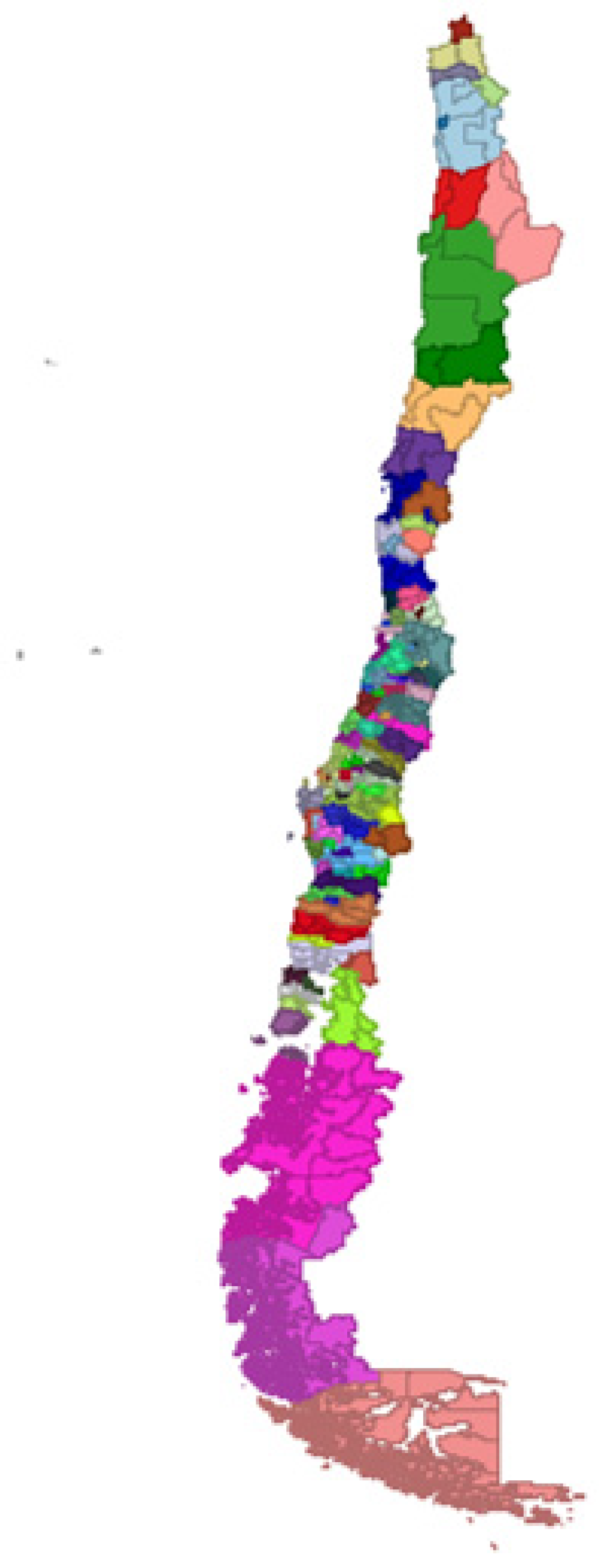
Casado-Díaz et al. (
2017) provide the functional regionalization based on LLMs, which is the one adopted in this study for a contextual interpretation of the information (
Figure 1).
The data for this study comes from the 2017 Census of the
National Institute of Statistics of Chile (
2017). Two key labor market indicators—the percentage of employment and the percentage of unemployment—were analyzed, as well as two key educational indicators—the percentage of the population without studies and the population studying—all relative to relevant populations. This approach allows us to address the influence of key variables on the country’s labor and education dynamics.
To identify the existence or not of correlation between the values of the key indicators, the Moran’s Index statistic is applied:
where
is the spatial weights matrix,
1 N is the sample size and
is the mean or expected value of the
variable. Instead of physical contiguity (
Larraz & Montero, 2003), the use of functional and administrative connectivity matrices is proposed as a way of considering the reciprocal influences between communes without the need for them to be physical neighbors.
This new way of approaching spatial analysis was pointed out by
Barkley et al. (
1995) and
Manzanares and Riquelme (
2017) as a way of considering belonging to the same province or to the same Local Labor Market (LLM) as elements that define a neighborhood.
In addition, Local Indicators of Spatial Association (LISA) are used to further examine the behavior of the proposed key indicator values. These association indicators use Moran’s statistic, but not globally, but by subgroups, to determine the degree of concentration of the key indicator values. The estimate of the local Moran’s I is:
where
is the matrix of geographical weights and
is the mean or expected value of the
variable. This indicator measures the spatial association between the key indicator values assumed by a commune and the values assumed by its neighbors, defined through the functional or administrative connectivity matrix. Thus: (a) a commune belonging to an LLM or province with above-average values in its key indicator that is surrounded by other communes with values also above average, will form a “High–High” type cluster; (b) a commune with a below average value, surrounded by communes with below average values, will form a “Low–Low” cluster; (c) a commune with a value above the average, surrounded by communes with values below the average will form a “High–Low” cluster; and (d) a commune with values below the average and communes above will form a “Low–High” cluster. Furthermore, it will be determined whether the clusters are significant at different
p-level values. The null hypothesis states the absence of a spatial pattern. In other words, confirming the null hypothesis shows that the key indicator values are randomly distributed. Conversely, rejecting the null hypothesis means the existence of a spatial behavior
p. The null hypothesis states the absence of a spatial pattern. That is, confirming the null hypothesis shows that the values of the key indicator are randomly distributed. Conversely, rejecting the null hypothesis means the existence of a spatial behavior. The hypothesis is tested by placing the Moran coefficient within a normal fitted probability curve. For a better understanding of the methodologies and results obtained in this study, a review of the literature concerning spatial autocorrelation and regional analysis is recommended (
Anselin, 1995;
Getis & Ord, 1992).
The comparative adequacy of LLMs versus Provinces is ultimately evaluated across two key dimensions of coherence, using multiple statistical indices: Internal Coherence (Homogeneity) and External Coherence (Independence). Internal Coherence is assessed by the magnitude of the Global Moran’s I and a dedicated Spatial Similarity Index (also known as the Homogeneity Index). This index quantifies the degree of socioeconomic resemblance between the basic units (provinces) within the larger territorial partition (LLMs):
A complementary Spatial Heterogeneity Similarity Index is used to evaluate the coherence of variation across the units, comparing how well each partition captures regional uniformity against marked discrepancies in the socioeconomic profile (
Lloyd, 2010). This assessment is further complemented by the visual evidence from the LISA cluster maps. External Coherence (Independence), which examines the degree of spatial dependence between adjacent units, is measured using a statistical test based on complementarity adjacency matrices:
This test, a key methodological component, assesses whether there are significant spatial spillovers across the borders of the defined units, comparing the degree of independence for both the Provincial and LLM partitions.
The analysis of geographic data through spatial weight matrices is a fundamental tool for understanding spatial dynamics and interactions, resulting in crucial information for strategic decision-making that incorporates the geographic component. GeoDa software is one of the platforms that facilitate this kind of analysis through the manipulation of spatial weight matrices (
Anselin, 2005).
By using the proposed matrices, the data is being divided into separate provincial structures or Local Labor Markets (LLMs), where patterns of spatial autocorrelation could be observed within each province or LLM, which could lead to differentiated interpretations according to the specific characteristics of each province or LLM. However, the idea is to analyze everything together at the national level, to obtain an overview covering all provinces or LLMs. This would allow identifying patterns of spatial autocorrelation at a broader level, considering the totality of the observations and how they relate to each other throughout Chile. It is essential to keep in mind that the subdivision by communes may influence the perception of autocorrelation, showing significant differences in spatial patterns within each province, even when analyzing the full Chilean dataset.
4. Results
This section presents the results of the spatial autocorrelation and coherence tests, focusing exclusively on the descriptive comparison between the Provincial and Local Labor Market (LLM) partitions.
4.1. Global Spatial Autocorrelation (Internal Coherence)
The results for the Global Moran’s I statistic for all four socioeconomic indicators (Employment, Unemployment, Uneducated Population, and Population under Study) are summarized in
Table 2.
For every indicator analyzed, the Moran’s I statistic for both the Provincial and LLM partitions is positive and statistically significant at the 99% confidence level (
p < 0.01). This result universally confirms the presence of strong positive spatial autocorrelation across the Chilean territory, indicating that the null hypothesis of spatial randomness is rejected for all variables and unit types. Specifically, this means that communes within the same unit (LLM or Province) tend to share similar socioeconomic values. A comparative assessment of Moran’s I values shows that the LLM partition exhibits a higher magnitude of spatial autocorrelation compared to the Provincial partition across all four indicators. This quantitative difference suggests that the LLM delineation captures a slightly greater degree of internal coherence or homogeneity, thereby better aligning the functional units with the spatial patterns of the socioeconomic dynamics under study. This finding provides preliminary evidence supporting the functional delineation of LLMs over administrative provinces based on the concept of internal coherence (
Smart, 1974;
Van der Laan & Schalke, 2001).
4.2. Local Spatial Autocorrelation (LISA) and Clustering
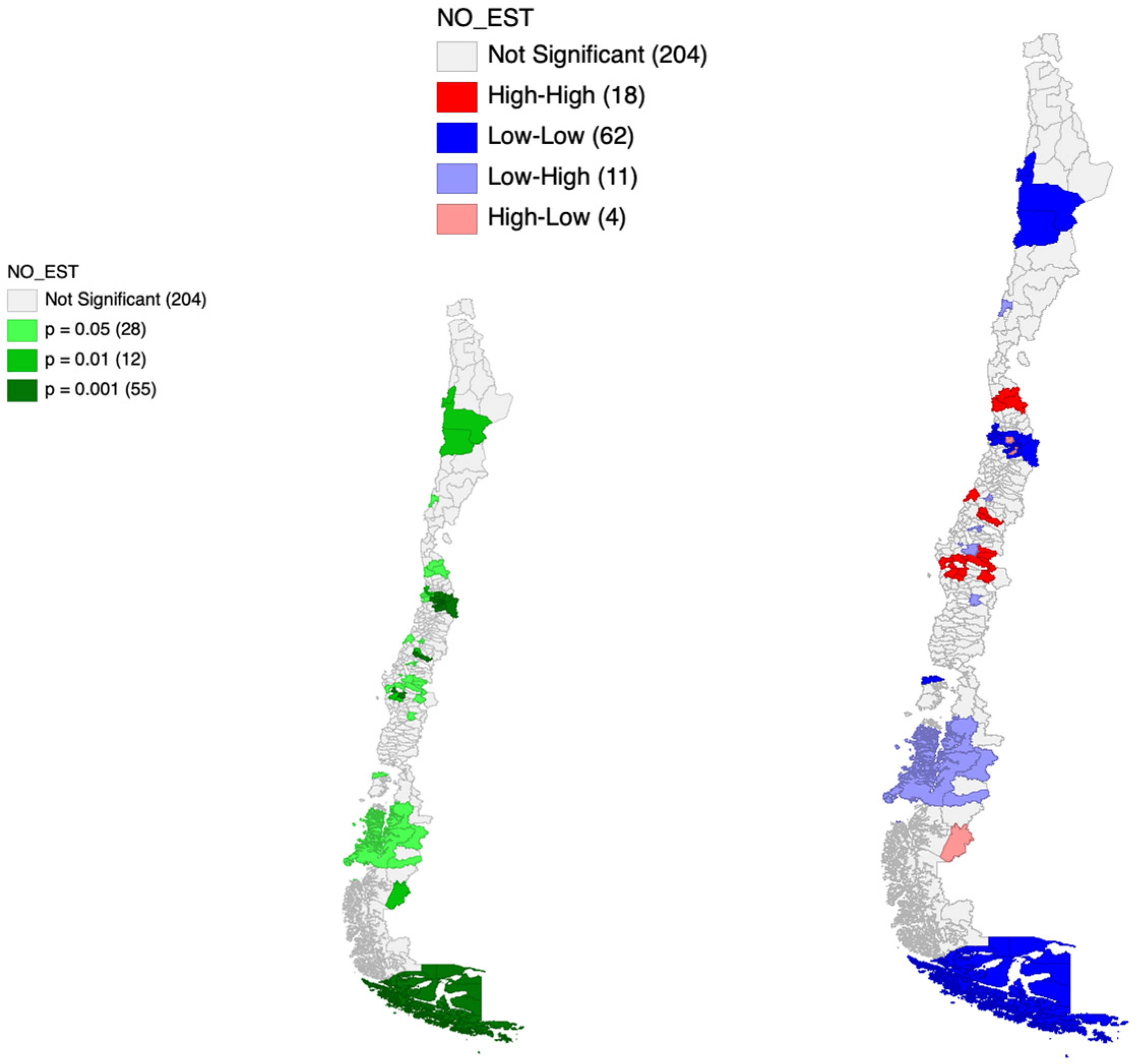
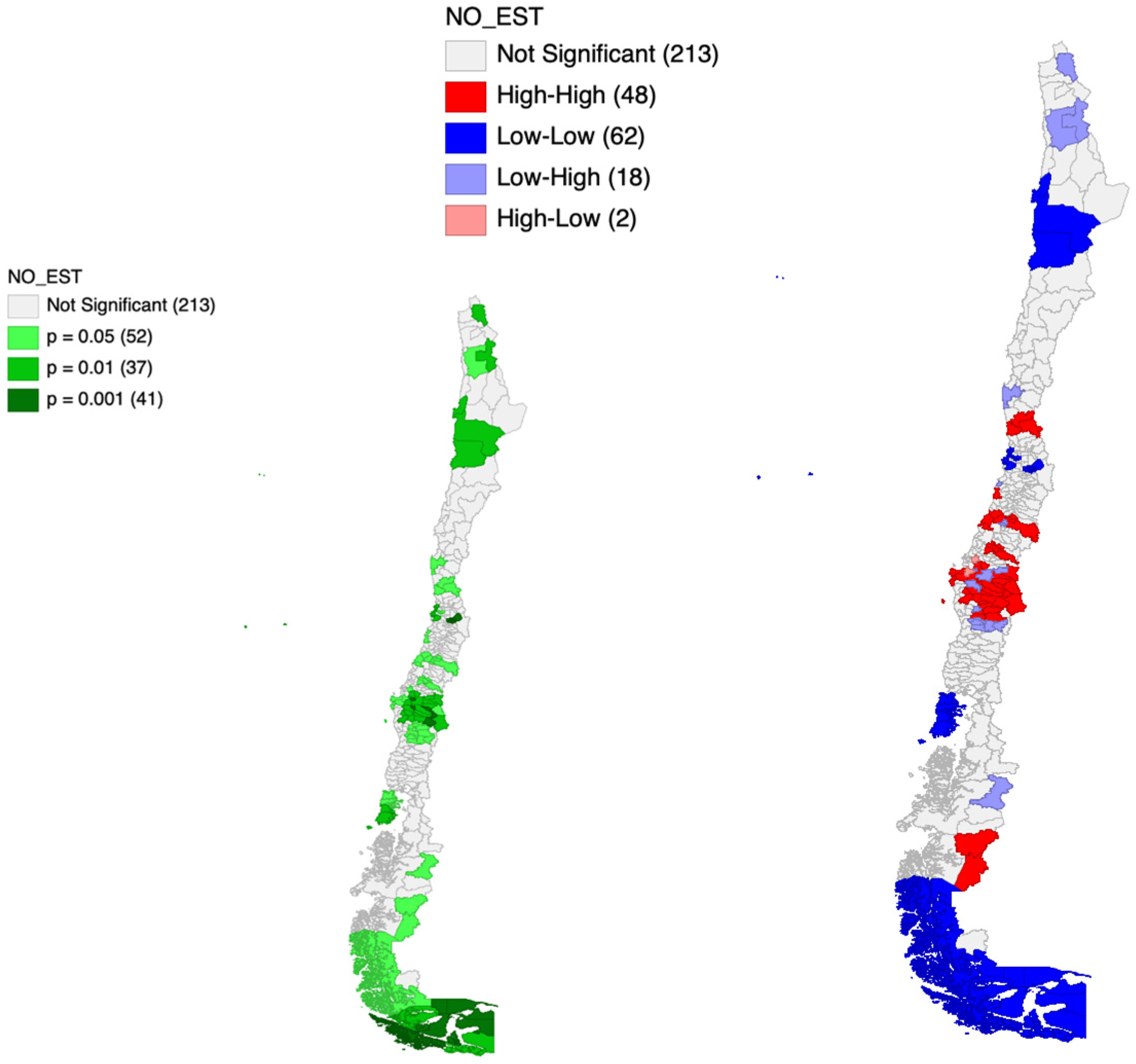
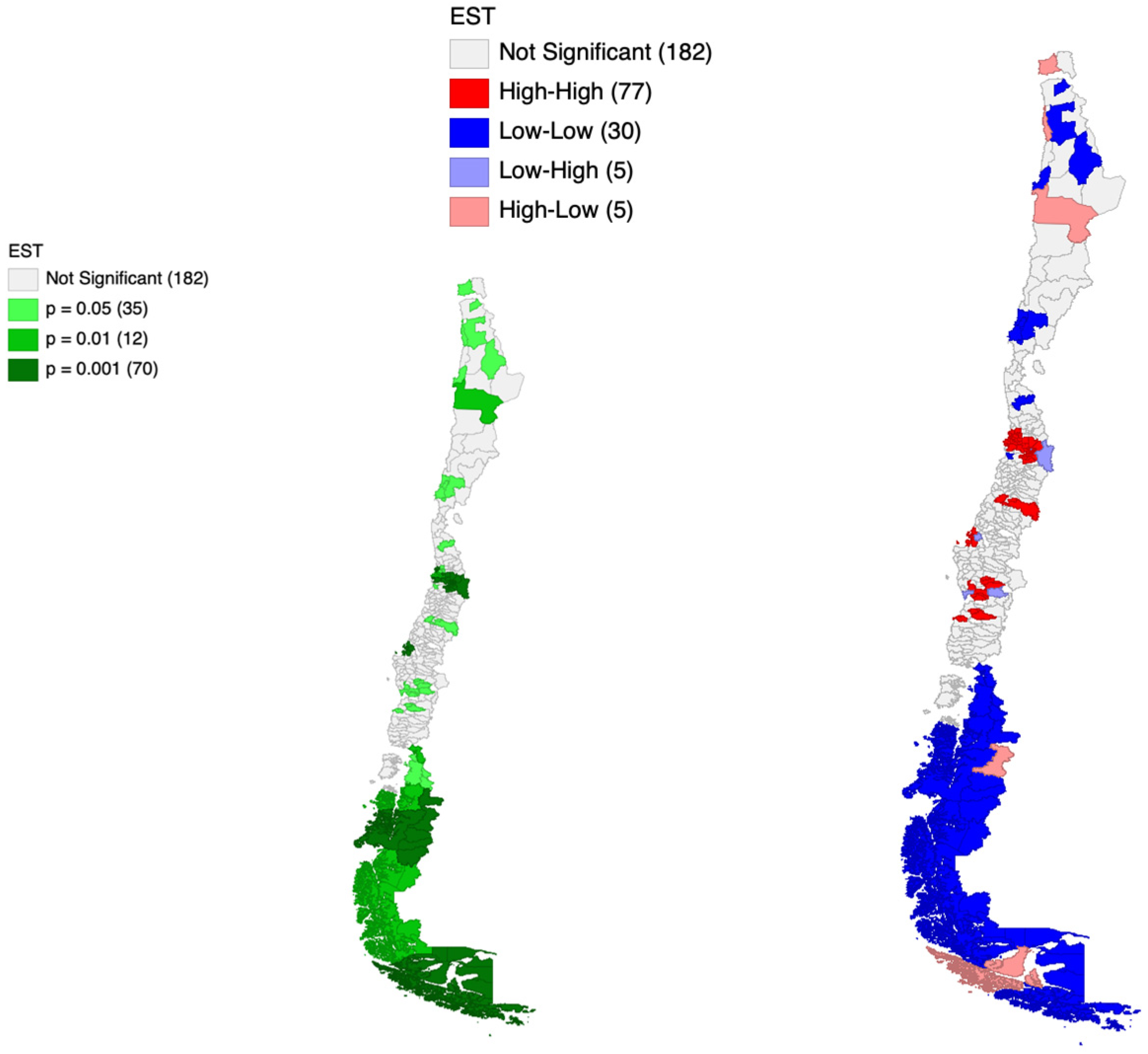
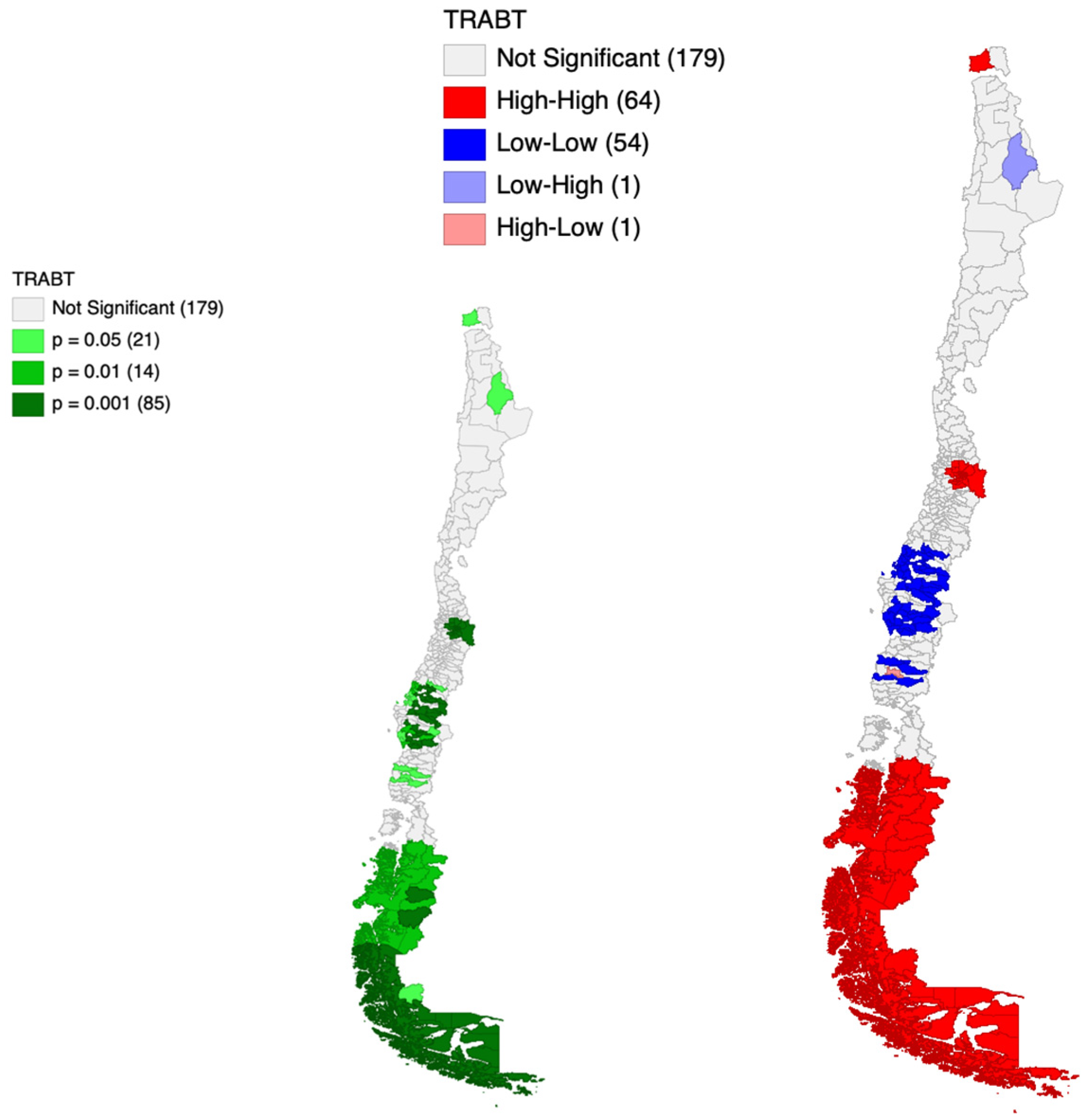
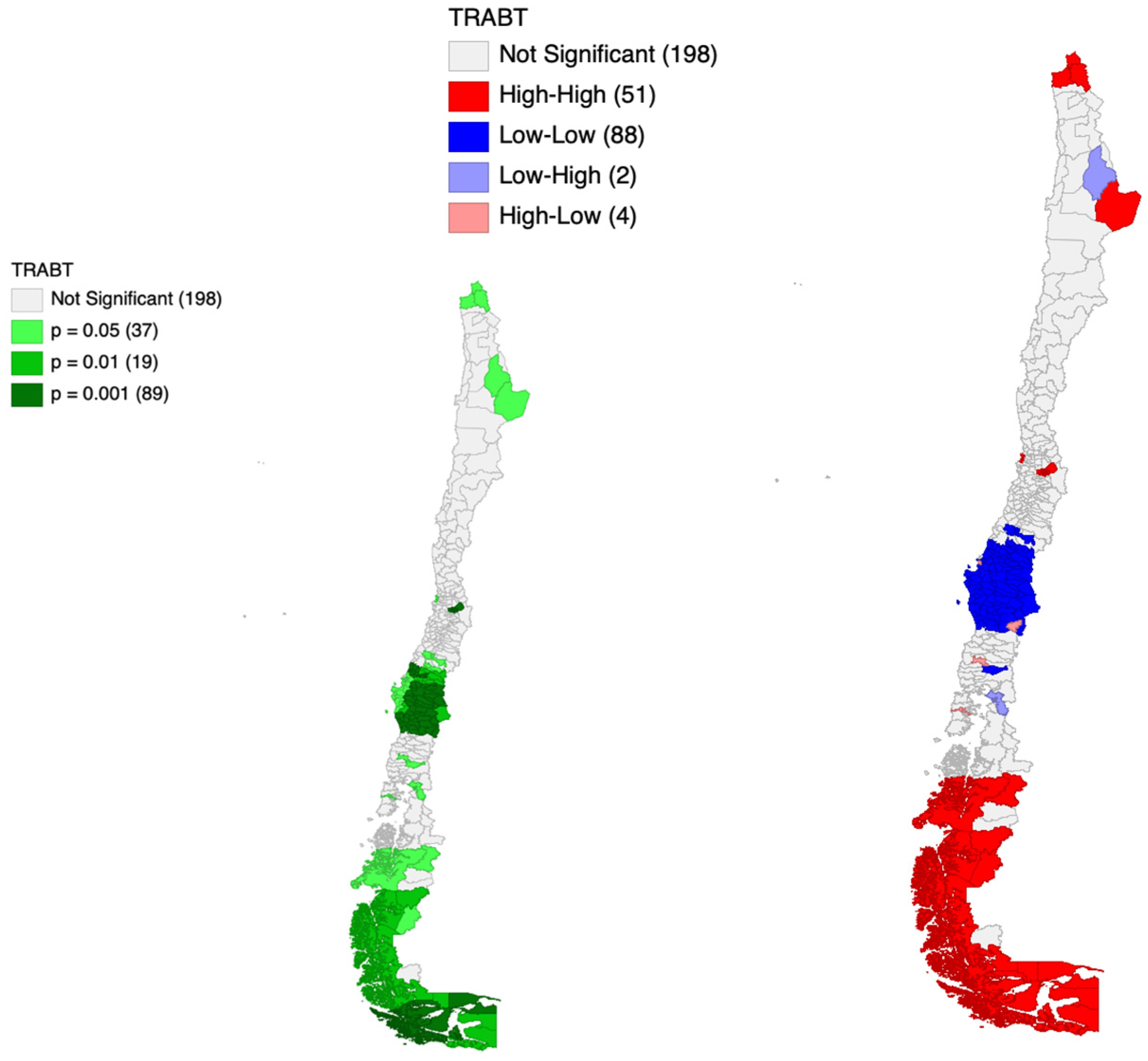
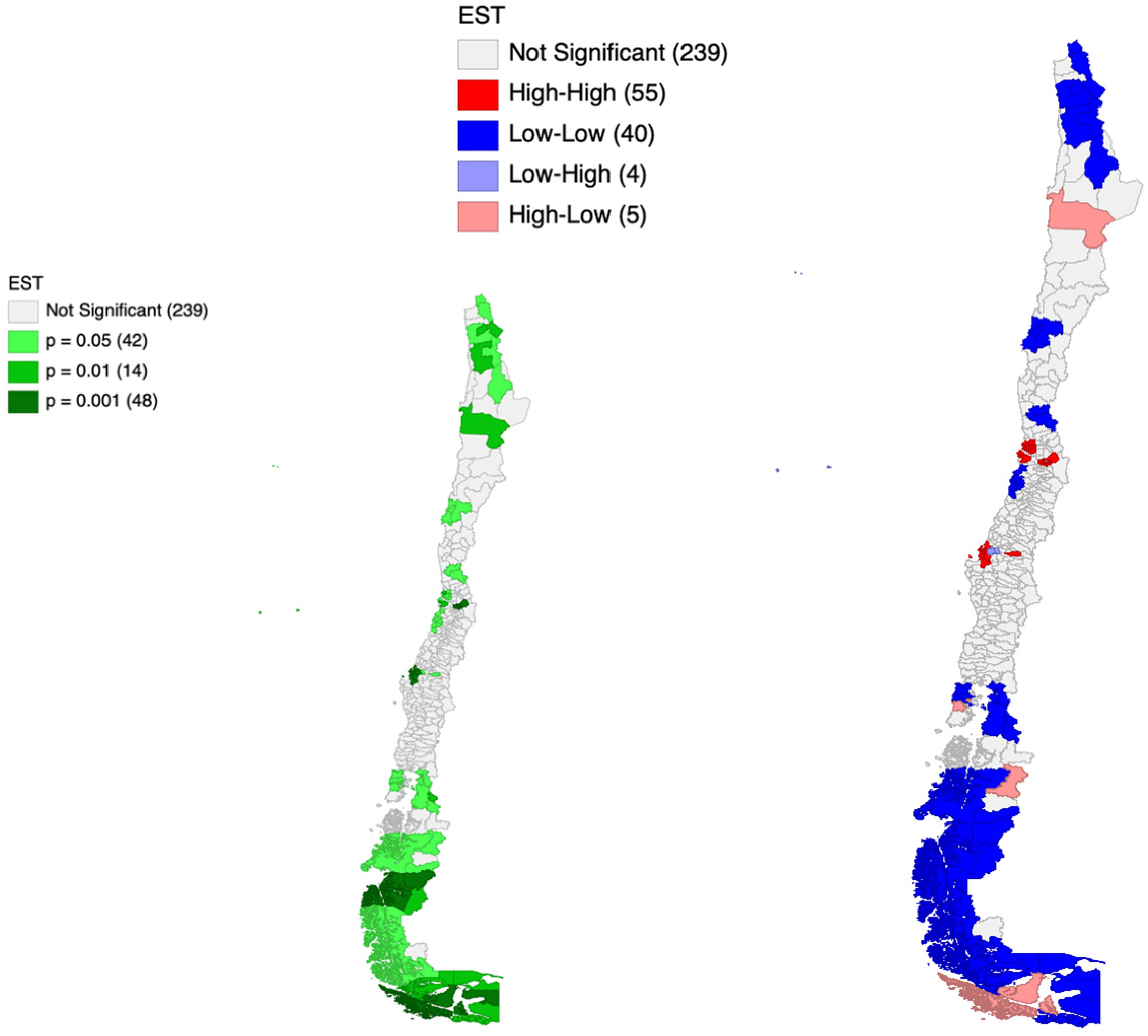
The Local Indicators of Spatial Association (LISA) analysis was conducted to identify specific spatial clustering patterns at a local level. The cluster maps generated by the LISA statistic for the employed population indicator and both partitions are visually represented in
Figure 2 and
Figure 3. The results of this analysis allow for a granular assessment of the spatial concentration of the socioeconomic indicators.
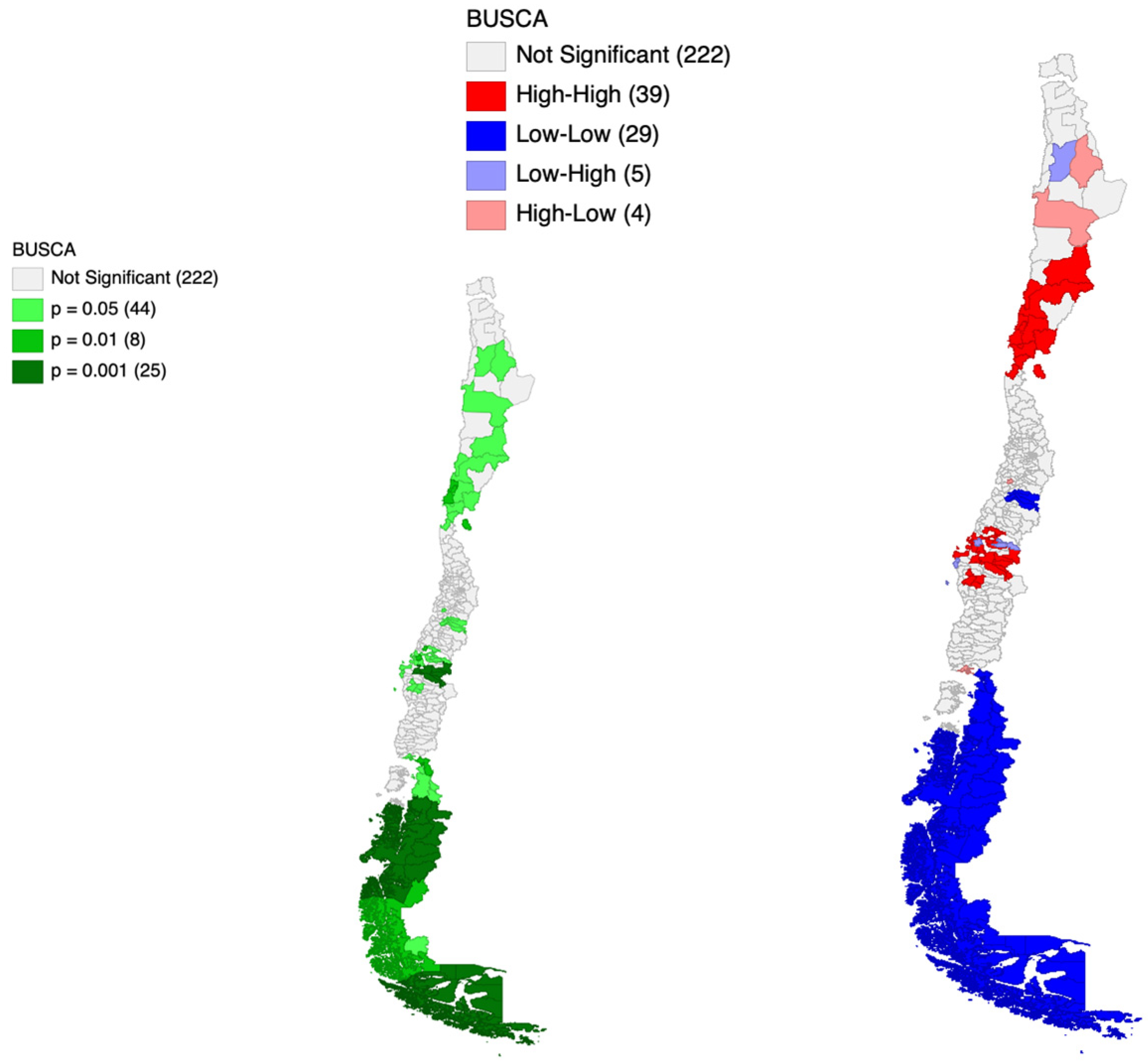
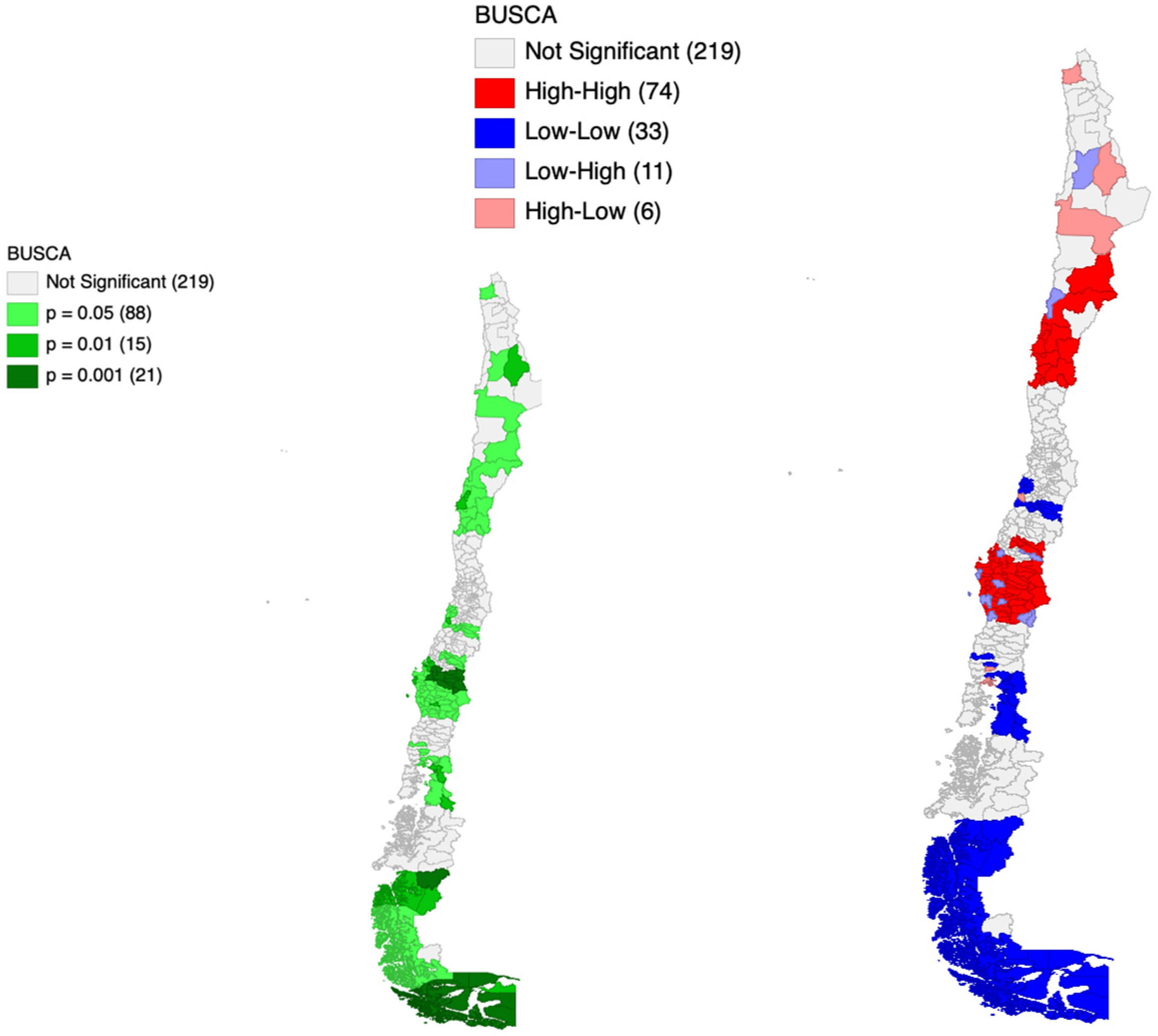
The Local Indicators of Spatial Association (LISA) analysis was finalized by incorporating the full set of key socioeconomic indicators to thoroughly assess spatial clustering patterns. The results of this analysis are presented in
Figure A1,
Figure A2,
Figure A3,
Figure A4,
Figure A5 and
Figure A6 in
Appendix A, which illustrate the geographical distribution of the clusters for the indicators, directly contrasting the LLM connectivity matrix with the Provincial connectivity matrix.
The LISA maps reveal two fundamental findings regarding spatial clustering: first, remarkably uniform High–High (H-H) and Low–Low (L-L) patterns are maintained regardless of whether the Provincial or the LLM spatial unit is employed. Second, there is a consistent geographic polarization of socioeconomic development. The most prominent H-H clusters (high values surrounded by high values, indicating areas of economic and social concentration) are consistently located in the central metropolitan areas of the country, particularly within the Metropolitan Region of Santiago and its immediate surrounding regions. These H-H clusters suggest strong internal coherence of high values at both scales. Conversely, L-L clusters (low values surrounded by low values, indicating areas with low socioeconomic indicators) are systematically observed in the southern and remote northern regions of Chile. The overall geographic distribution of the clusters suggests that the fundamental socioeconomic clustering trend within the Chilean territory is highly robust and largely dictated by underlying geographic and demographic factors, rather than being an exclusive artifact of the administrative boundaries. Importantly, the LLM partition generally shows a more compact and less diffuse spatial definition of these clusters, especially in the metropolitan areas.
4.3. External Coherence Analysis
To evaluate the external coherence (or independence) between neighboring units, the results of the complementary adjacency matrix test are presented in
Table 3. The complementary adjacency matrix defines neighboring communes as those located outside the specific LLM or Province to which the commune belongs.
The test results indicate that the relationship between neighboring units (for both LLMs and Provinces) is characterized by spatial independence for most of the indicators. Specifically, the Global Moran’s I statistic for the complementary adjacency matrix approaches zero and the test fails to reject the null hypothesis of independence in most cases, providing robust statistical evidence that the boundaries drawn—both administrative and functional—are effective in limiting strong inter-unit spillovers. This finding aligns with the criteria for effective functional regionalization, suggesting that internal processes are dominant over external interaction once the unit has been defined, even in the case of the administrative provinces. The resulting near-zero values confirm that external areas do not significantly influence the socioeconomic characteristics of the internal area, validating the external coherence of both partitions.
4.4. Synthesis of Spatial Coherence Results
The analysis of spatial autocorrelation shows distinct regional clustering patterns in the variables studied, both for regions defined by Local Labor Markets (LLMs) and those delimited by provinces. A moderate degree of positive autocorrelation has been identified for all four indicators. This result suggests that the two forms of regionalization—provinces and LLMs—are indeed reflecting spatial autocorrelation, with Moran’s Indices reflecting a tendency towards geographical clustering for all observed variables. The patterns of spatial autocorrelation are quantitatively more pronounced at the level of LLMs compared to provinces, mainly regarding the percentage of the population employed and the percentage of the population studying, indicating that LLMs achieve a stronger internal spatial coherence for these two key indicators. Despite this, the degree of these differences is not substantial, with clustering more evident for the employment rate and to a slightly lesser degree for the rates of job seekers and those in education.
When examining intra-regional similarity using indices of spatial homogeneity and heterogeneity, a high internal coherence is found. This means that there is a significant concentration of communes that share similar values in both provinces and LLMs. That is, there are communes that show similar socioeconomic characteristics grouped geographically, revealing relatively low spatial heterogeneity—little concentration of communes with opposite characteristics.
In particular, the provinces show slightly greater spatial homogeneity in the indicators of percentage of population seeking employment and percentage of population not in education. In contrast, the LLMs show greater uniformity in terms of the percentage of the population currently studying. When it comes to spatial heterogeneity, the values are comparable between LLMs and provinces, with no systematic advantage observed for either partition, suggesting that the variation and disparity within the variables analyzed are similar in both types of regionalization. This indicates that socioeconomic differences within the areas studied are limited or evenly distributed across the geographical space. In conclusion, the evidence points to a coherence in the distribution patterns of the variables across the different regions analyzed, with similar levels of homogeneity and heterogeneity in both LLMs and provinces. This suggests that, regardless of the regional scale employed, socio-economic characteristics tend to be clustered and uniform across geographical space.
To measure inter-regional coherence (External Coherence or independence) between the different LLMs and provinces, an innovative approach was proposed: using a complementary adjacency matrix for both regionalizations. The exploration revealed the absence of global spatial autocorrelation (Moran’s I near zero), with very low Moran’s Indices consistently observed for both provinces and LLMs. This result is positive for the analysis, as it indicates a desirable statistical isolation between the geographical units, which favors external coherence by suggesting there are no predictable patterns between communes in different areas.
The study of cluster concentration, carried out through LISA techniques, reinforces these findings, showing low values and thus low spatial homogeneity. This implies that communes rarely share similar characteristics with their neighbors that do not belong to the same province or LLM, and those few that do are dispersed and not representative of a provincial or LLM pattern. For example, the indicators for the percentage of the population seeking employment and the percentage of the population studying in the provinces exhibit somewhat higher values than in the LLMs, which may suggest a more pronounced geographical variation in these aspects when measured against external neighbors. On the other hand, spatial heterogeneity, which reflects how diverse an area is compared to other geographical units, showed higher values. This is particularly noticeable in the provinces for the employed population indicator, and in the LLMs for the job-seeking population. These numbers indicate that there are significant differences between communes in different provinces or LLMs in terms of these indicators, which is a point in favor of the implementation of public policies that can address the specific characteristics of groups of communes. Collectively, this evidence confirms that external coherence is strengthened when communes manifest relevant differences compared to those that do not belong to the same province or LLM, which is consistently observed in both partitions presented here.
6. Conclusions
The main conclusion of this research is the empirical validation of functional regionalization, exemplified by Local Labor Markets (LLMs), as a more robust and appropriate territorial framework for socioeconomic analysis and public policy formulation in Chile. This central finding reinforces the academic consensus that advocates for the use of units based on interaction and connectivity.
The results of the study hold direct applied significance, especially for employment and regional development policies. The superiority of LLMs is manifested in their greater internal coherence across most indicators, reflecting that they are delimitations that more effectively capture spatial systems of interaction (
Smart, 1974). This conclusion is strongly aligned with the position of the Organisation for Economic Co-operation and Development (OECD), which has systematically promoted the use of functional frameworks, such as Functional Urban Areas (FUAs), arguing that administrative boundaries are insufficient to capture real-world dynamics. Furthermore, the evidence of high spatial heterogeneity within LLMs, particularly notable for the job-seeking population, is crucial for the design of public strategies, as this heterogeneity reflects internal variations that justify differentiated attention, moving away from a “one-size-fits-all” approach. Concurrently, the low inter-regional spatial homogeneity, confirmed by the low Moran’s Indices in the complementary adjacency matrices, strongly supports the implementation of policies targeted at specific groups of communes with distinct needs. In terms of spatial dynamics, the confirmation of global and local spatial autocorrelation implies that socioeconomic variables in Chile are not randomly distributed but rather depend on the values of their neighbors (
Anselin, 1988). This observed spatial dependence underscores the critical reality that policy decisions in one region can generate indirect or spillover effects that impact neighboring regions. Therefore, local and national governments should move toward employing spatial econometric models that can quantify both the direct and indirect effects of investment or tax policies (
LeSage & Pace, 2009).
Methodologically, this research contributes to the field of regional science through its innovative approach. A significant contribution is the introduction of a spatial exploratory model that uses the complementary adjacency matrix, an innovative tool for measuring external or inter-regional coherence and demonstrating that Chilean territorial units meet the fundamental requirement of effective regionalization by exhibiting relevant differences compared to communes outside their unit (
Beyhan, 2019). Finally, while joining the tradition of territorial comparisons (e.g.,
Barkley et al., 1995;
Cörvers et al., 2009), the study explicitly acknowledges the influence of the Modifiable Areal Unit Problem (MAUP) (
Openshaw, 1984). The methodology, by comparing the results obtained from two partitioning systems (provinces and LLMs), successfully follows the recommended strategy for handling MAUP effects by reporting the range of possible outcomes (
Fotheringham, 1989;
Wong, 2004). Although the current results are based on exploratory analysis, a solid foundation is established for future work, where the next logical step is to move towards formal spatial regression modeling, such as SAR models, to formally estimate the magnitude of spillovers and confirm the suitability of LLMs as units for econometric modeling (
Anselin, 1988;
LeSage & Pace, 2009).