
Disparities in Postoperative Pain Management: A Scoping Review of Prescription Practices and Social Determinants of Health
 , , , , , , , ,
Abstract
1. Introduction
2. Methods
2.1. Step 1: Identifying Research Questions
2.2. Step 2: Conducting the Literature Review
2.3. Inclusion Criteria
2.4. Exclusion Criteria
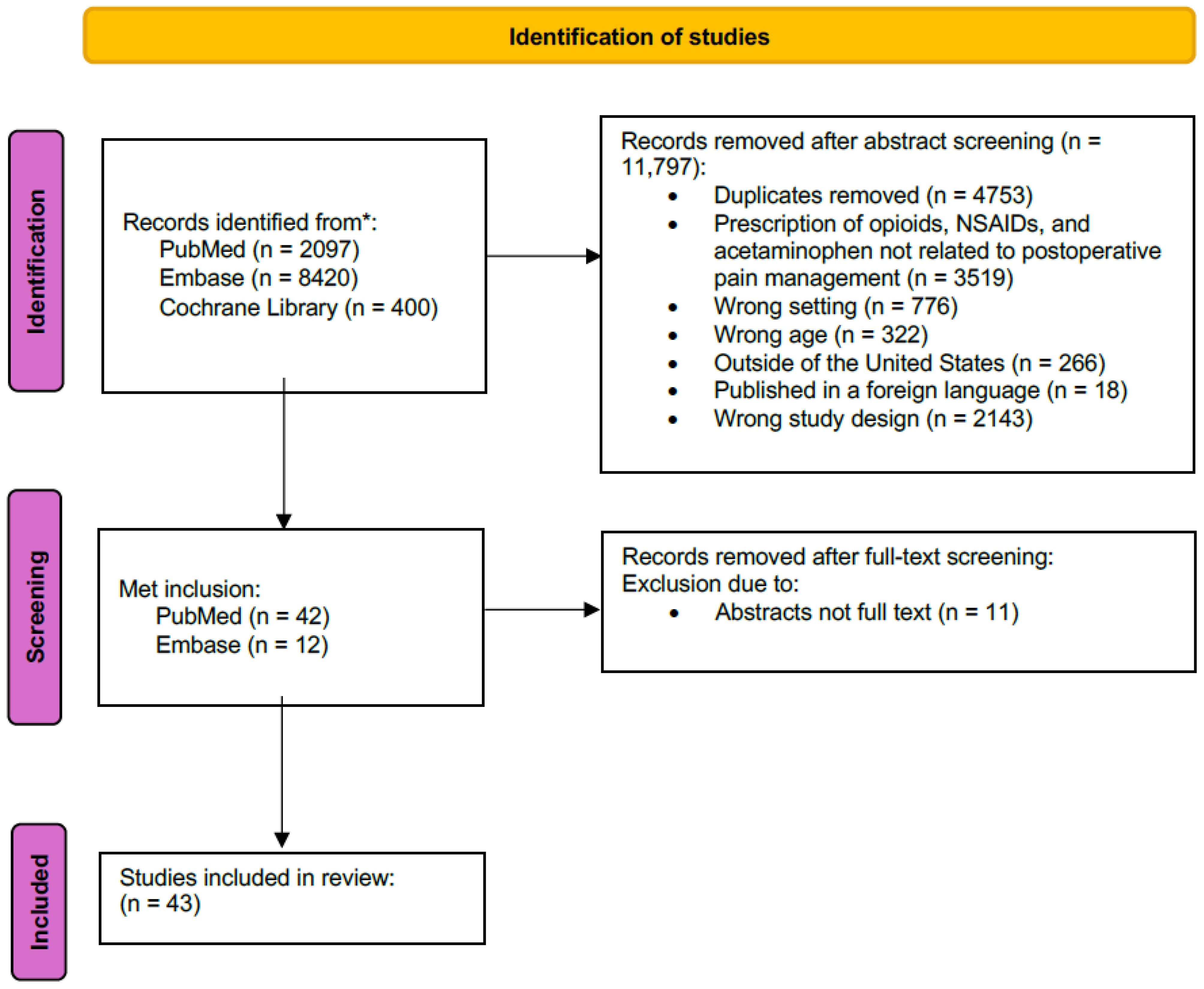
2.5. Step 3: Selecting Studies Relevant to the Research Questions
2.6. Steps 4 and 5: Charting the Data and Collation, Summarization, and Reporting of Results
3. Results
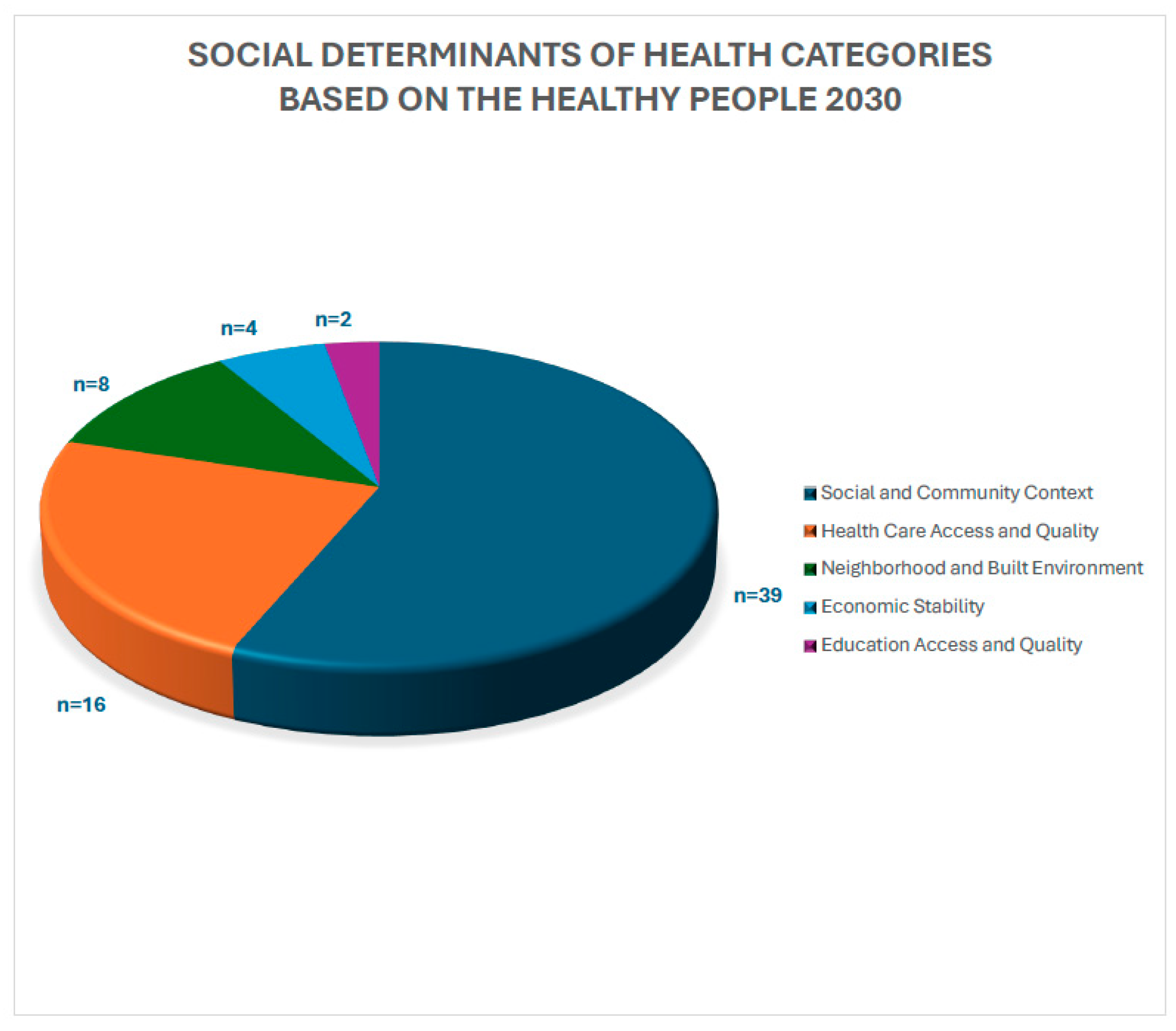
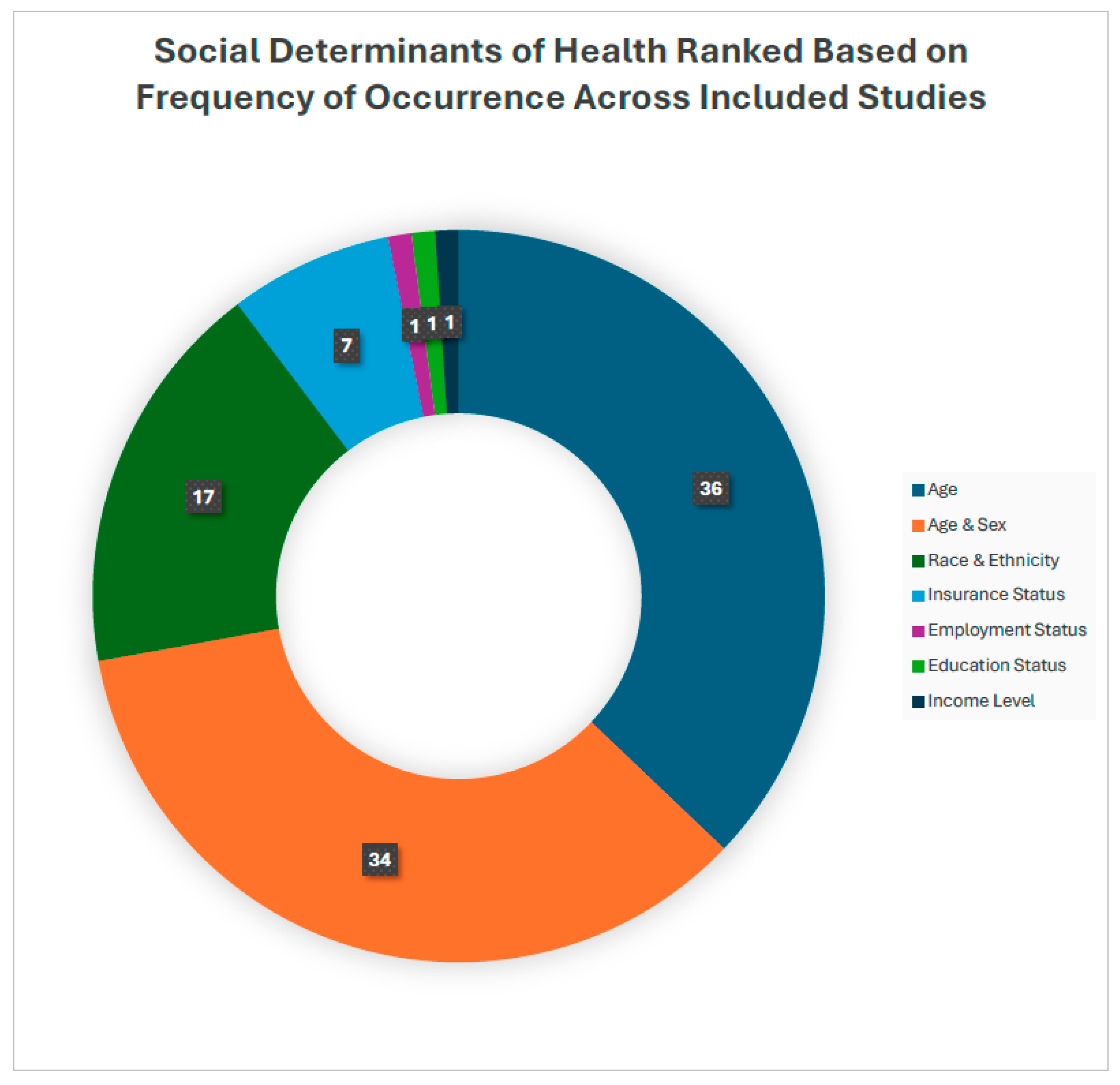
3.1. SDOH Explored and Classification Based on the Healthy People 2030 Categories
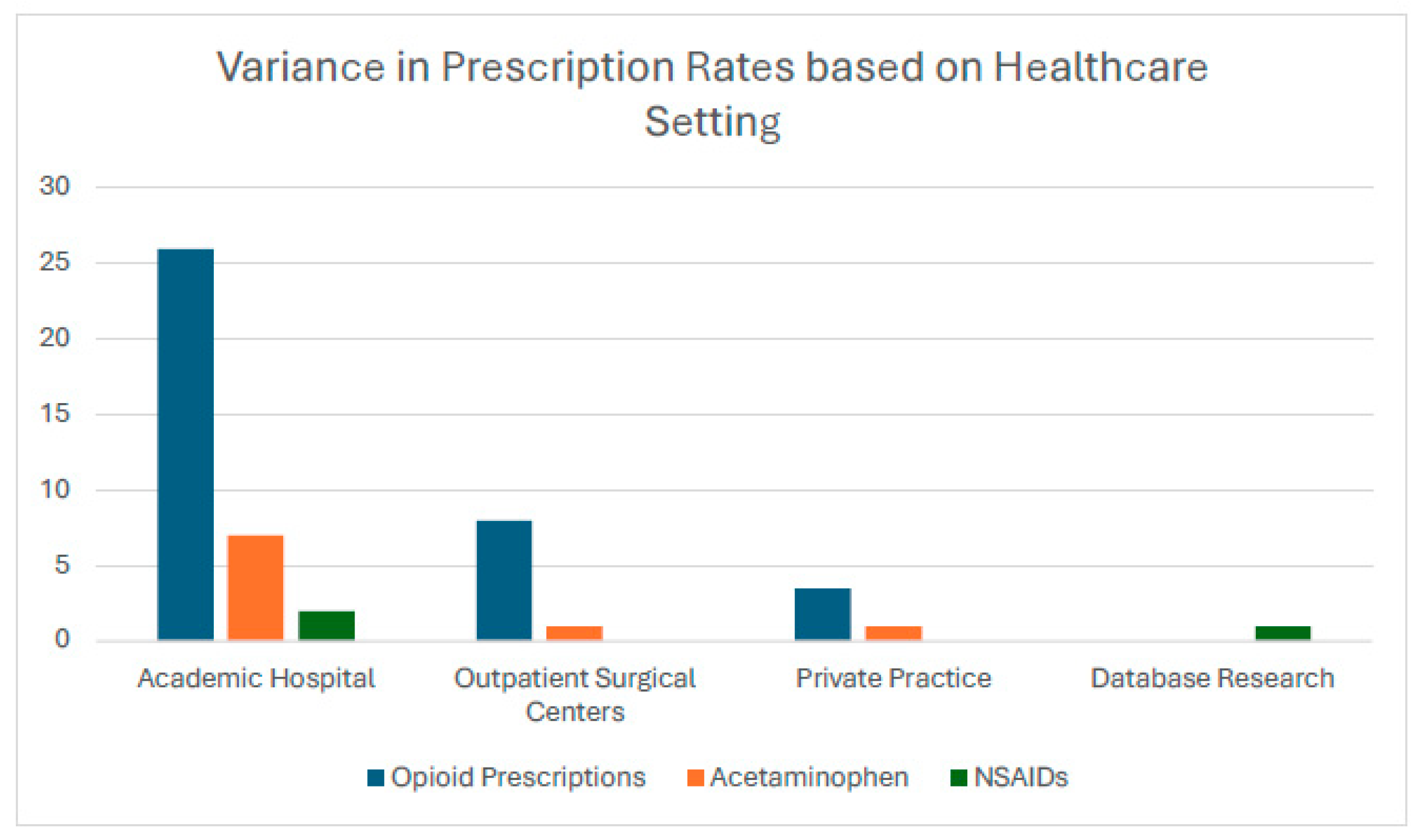
3.2. Variance in Prescription Rates Based on Healthcare Setting and SDoH
3.3. Types of Surgery of Postoperative Pain
4. Discussion
Limitations
5. Conclusions
Author Contributions
Funding
Institutional Review Board Statement
Informed Consent Statement
Data Availability Statement
Conflicts of Interest
References
- Horn, R.; Hendrix, J.; Kramer, J. Postoperative Pain Control; StatPearls: Treasure Island, FL, USA, 2024. Available online: https://www.ncbi.nlm.nih.gov/books/NBK544298/ (accessed on 19 November 2024).
- Moussa, N.; Ogle, O.E. Acute Pain Management. Oral Maxillofac. Surg. Clin. N. Am. 2022, 34, 35–47. [Google Scholar] [CrossRef] [PubMed]
- Chen, Q.; Chen, E.; Qian, X. A Narrative Review on Perioperative Pain Management Strategies in Enhanced Recovery Pathways—The Past, Present and Future. J. Clin. Med. 2021, 10, 2568. [Google Scholar] [CrossRef] [PubMed]
- O’Neill, A.; Lirk, P. Multimodal Analgesia. Anesthesiol. Clin. 2022, 40, 455–468. [Google Scholar] [CrossRef] [PubMed]
- Paladini, A.; Rawal, N.; Coca Martinez, M.; Trifa, M.; Montero, A.; Pergolizzi, J., Jr.; Pasqualucci, A.; Narvaez Tamayo, M.A.; Varrassi, G.; De Leon Casasola, O. Advances in the Management of Acute Postsurgical Pain: A Review. Cureus 2023, 15, e42974. [Google Scholar] [CrossRef] [PubMed]
- Dowell, D.; Ragan, K.R.; Jones, C.M.; Baldwin, G.T.; Chou, R. CDC Clinical Practice Guideline for Prescribing Opioids for Pain—United States, 2022. MMWR Recomm. Rep. 2022, 71, 1–95. [Google Scholar] [CrossRef] [PubMed]
- Bernard, S.A.; Chelminski, P.R.; Ives, T.J.; Ranapurwala, S.I. Management of Pain in the United States—A Brief History and Implications for the Opioid Epidemic. Health Serv. Insights 2018, 11, 1178632918819440. [Google Scholar] [CrossRef] [PubMed]
- Chou, R.; Gordon, D.B.; de Leon-Casasola, O.A.; Rosenberg, J.M.; Bickler, S.; Brennan, T.; Carter, T.; Cassidy, C.L.; Chittenden, E.H.; Degenhardt, E.; et al. Management of Postoperative Pain: A Clinical Practice Guideline from the American Pain Society, the American Society of Regional Anesthesia and Pain Medicine, and the American Society of Anesthesiologists’ Committee on Regional Anesthesia, Executive Committee, and Administrative Council. J. Pain 2016, 17, 131–157. [Google Scholar] [CrossRef] [PubMed]
- Hah, J.M.; Bateman, B.T.; Ratliff, J.; Curtin, C.; Sun, E. Chronic Opioid Use After Surgery: Implications for Perioperative Management in the Face of the Opioid Epidemic. Anesth. Analg. 2017, 125, 1733–1740. [Google Scholar] [CrossRef]
- Guy, G.P., Jr.; Zhang, K.; Bohm, M.K.; Losby, J.; Lewis, B.; Young, R.; Murphy, L.B.; Dowell, D. Vital Signs: Changes in Opioid Prescribing in the United States, 2006–2015. MMWR Morb. Mortal. Wkly. Rep. 2017, 66, 697–704. [Google Scholar] [CrossRef]
- Bykov, K.; Patorno, E.; Franklin, J.M.; Vine, S.M.; Bateman, B.T. Postoperative inpatient utilization of opioid and opioid-sparing analgesics in the United States hospitals, 2007–2017. Pharmacoepidemiol. Drug Saf. 2021, 30, 390–394. [Google Scholar] [CrossRef]
- National Academies of Sciences, Engineering, and Medicine; Health and Medicine Division; Board on Population Health and Public Health Practice; Committee on Community-Based Solutions to Promote Health Equity in the United States; Baciu, A.; Negussie, Y.; Geller, A.; Weinstein, J.N. The State of Health Disparities in the United States; National Academies Press (US): Washington, DC, USA, 2017. [Google Scholar]
- Singh, J.A.; Lu, X.; Rosenthal, G.E.; Ibrahim, S.; Cram, P. Racial disparities in knee and hip total joint arthroplasty: An 18- year analysis of national Medicare data. Ann. Rheum. Dis. 2014, 73, 2107–2115. [Google Scholar] [CrossRef] [PubMed]
- Usiskin, I.; Misra, D. Racial disparities in elective total joint arthroplasty for osteoarthritis. ACR Open Rheumatol. 2022, 4, 306–311. [Google Scholar] [CrossRef] [PubMed]
- Stafford, C.D., II; Keitt, F.; Irvin, L. Health disparities in the management of ACL injuries: How socioeconomic status, insurance, and race influence care. PMR 2022, 14, 669–677. [Google Scholar] [CrossRef] [PubMed]
- Baraga, M.G.; Smith, M.K.; Tanner, J.P.; Kaplan, L.D.; Lesniak, B.P. Anterior cruciate ligament injury and access to care in South Florida: Does insurance status play a role? J. Bone Jt. Surg. Am. 2012, 94, e183. [Google Scholar] [CrossRef]
- Khanna, K.; Janghala, A.; Pandya, N. The effect of insurance status and race on access to care for pediatric and adolescent patients with anterior cruciate ligament injury. J. Health Disparities Res. Pract. 2018, 11, 6. [Google Scholar]
- Meghani, S.H. Corporatization of Pain Medicine: Implications for Widening Pain Care Disparities. Pain Med. 2011, 12, 634–644. [Google Scholar] [CrossRef] [PubMed]
- Sinatra, R. Causes and Consequences of Inadequate Management of Acute Pain. Pain Med. 2010, 11, 1859–1871. [Google Scholar] [CrossRef] [PubMed]
- Keeney, T.; Jette, A.M.; Freedman, V.A.; Cabral, H. Racial differences in patterns of use of rehabilitation services among adults 65 and older racial differences in use of rehabilitation. J. Am. Geriatr. Soc. 2017, 65, 2707–2712. [Google Scholar] [CrossRef]
- Livingston-Rosanoff, D.; Aiken, T.; Rademacher, B.; Glover, C.; Skelton, P.; Paulson, M.; Lawson, E.H. Overprescription of opioids following outpatient anorectal surgery: A single-institution study. Dis. Colon Rectum 2020, 63, 1541–1549. [Google Scholar] [CrossRef] [PubMed]
- Matteson, K.A.; Schimpf, M.O.; Jeppson, P.C.; Thompson, J.C.; Gala, R.B.; Balgobin, S.; Gupta, A.; Hobson, D.; Olivera, C.; Singh, R.; et al. Prescription opioid use for acute pain and persistent opioid use after gynecologic surgery: A systematic review. Obstet. Gynecol. 2023, 141, 681–696. [Google Scholar] [CrossRef]
- Dobie, K.H.; Tiwari, V.; Shi, Y.; Shotwell, M.S.; Sandberg, W.S. Transition from Private to Academic Anesthesia Provision Changes Process and Patient Centered Outcomes in an Ambulatory Surgery Center. J. Med. Syst. 2020, 44, 204. [Google Scholar] [CrossRef] [PubMed]
- Singh, P.M.; Panwar, R.; Borle, A.; Goudra, B.; Trikha, A.; van Wagensveld, B.A.; Sinha, A. Efficiency and Safety Effects of Applying ERAS Protocols to Bariatric Surgery: A Systematic Review with Meta-Analysis and Trial Sequential Analysis of Evidence. Obes. Surg. 2017, 27, 489–501. [Google Scholar] [CrossRef] [PubMed]
- Choi, M.; Wang, L.; Coroneos, C.J.; Voineskos, S.H.; Paul, J. Managing postoperative pain in adult outpatients: A systematic review and meta-analysis comparing codeine with NSAIDs. Can. Med. Assoc. J. 2021, 193, E895–E905. [Google Scholar] [CrossRef] [PubMed]
- Hartford, L.B.; Murphy, P.B.; Gray, D.K.; Maciver, A.; Clarke, C.F.M.; Allen, L.J.; Garcia-Ochoa, C.; Leslie, K.A.; Van Koughnett, J.A.M. The Standardization of Outpatient Procedure (STOP) Narcotics after anorectal surgery: A prospective non-inferiority study to reduce opioid use. Tech. Coloproctol. 2020, 24, 563–571. [Google Scholar] [CrossRef]
- Tricco, A.C.; Lillie, E.; Zarin, W.; O’Brien, K.K.; Colquhoun, H.; Levac, D.; Moher, D.; Peters, M.D.J.; Horsley, T.; Weeks, L.; et al. PRISMA Extension for Scoping Reviews (PRISMA-ScR): Checklist and Explanation. Ann. Intern. Med. 2018, 169, 467–473. [Google Scholar] [CrossRef]
- Arksey, H.; O’Malley, L. Scoping studies: Towards a methodological framework. Int. J. Soc. Res. Methodol. 2005, 8, 19–32. [Google Scholar] [CrossRef]
- Office of Disease Prevention and Health Promotion. Social Determinants of Health. Health.gov. 2023. Available online: https://health.gov/healthypeople/objectives-and-data/social-determinants-health (accessed on 15 August 2023).
- Allan, L.D.; Coyne, C.; Byrnes, C.M.; Galet, C.; Skeete, D.A. Tackling the opioid epidemic: Reducing opioid prescribing while maintaining patient satisfaction with pain management after outpatient surgery. Am. J. Surg. 2020, 220, 1108–1114. [Google Scholar] [CrossRef]
- As-Sanie, S.; Till, S.R.; Mowers, E.L.; Lim, C.S.; Skinner, B.D.; Fritsch, L.; Tsodikov, A.; Dalton, V.K.; Clauw, D.J.; Brummett, C.M. Opioid Prescribing Patterns, Patient Use, and Postoperative Pain After Hysterectomy for Benign Indications. Obstet. Gynecol. 2017, 130, 1261–1268. [Google Scholar] [CrossRef] [PubMed]
- Asanad, K.; Nusbaum, D.J.; Samplaski, M.K. National opioid prescription patterns and patient usage after routine vasectomy. Andrologia 2020, 52, e13563. [Google Scholar] [CrossRef] [PubMed]
- Asmaro, K.; Fadel, H.A.; Haider, S.A.; Pawloski, J.; Telemi, E.; Mansour, T.R.; Chandra, A.; Bazydlo, M.; Robin, A.M.; Lee, I.Y.; et al. Reducing Superfluous Opioid Prescribing Practices After Brain Surgery: It Is Time to Talk About Drugs. Neurosurgery 2021, 89, 70–76. [Google Scholar] [CrossRef] [PubMed]
- Bateman, B.T.; Cole, N.M.; Maeda, A.; Burns, S.M.; Houle, T.T.; Huybrechts, K.F.; Clancy, C.R.; Hopp, S.B.; Ecker, J.L.; Ende, H.; et al. Patterns of Opioid Prescription and Use After Cesarean Delivery. Obstet. Gynecol. 2017, 130, 29–35. [Google Scholar] [CrossRef]
- Bhashyam, A.R.; Keyser, C.; Miller, C.P.; Jacobs, J.; Bluman, E.; Smith, J.T.; Chiodo, C. Prospective Evaluation of Opioid Use After Adoption of a Prescribing Guideline for Outpatient Foot and Ankle Surgery. Foot Ankle Int. 2019, 40, 1260–1266. [Google Scholar] [CrossRef]
- Bronstone, A.B.; Leonardi, C.; Kubilay, T.; Plessl, D.S.; Morreale, P.J.; Tortorich, G.M.; Krause, P.C. Dramatic Reduction in Opioid Prescribing for Common Outpatient Orthopaedic Lower Extremity Surgical Procedures at a Louisiana University-Based Safety-Net Hospital After Enactment of Opioid-Limiting State Legislation. J. Am. Acad. Orthop. Surg. 2022, 30, e405–e414. [Google Scholar] [CrossRef]
- Cooperman, S.P.; Jin, M.C.; Qian, Z.J.; Alyono, J.C. National Trends in Opioid Prescriptions Following Outpatient Otologic Surgery, 2005–2017. Otolaryngol. Neck Surg. 2021, 164, 841–849. [Google Scholar] [CrossRef]
- Cron, D.C.; Hwang, C.; Hu, H.M.; Lee, J.S.; Dupree, J.M.; Syrjamaki, J.D.; Chung, K.C.; Brummett, C.M.; Englesbe, M.J.; Waljee, J.F. A statewide comparison of opioid prescribing in teaching versus nonteaching hospitals. Surgery 2019, 165, 825–831. [Google Scholar] [CrossRef]
- Ford, J.; Kindel, T.; Higgins, R.M.; Lak, K.L.; Hetzel, E.; Gould, J.C. Examining current patterns of opioid prescribing and use after bariatric surgery. Surg. Endosc. 2022, 36, 2564–2569. [Google Scholar] [CrossRef] [PubMed]
- Fujii, M.H.; Hodges, A.C.; Russell, R.L.; Roensch, K.; Beynnon, B.; Ahern, T.P.; Holoch, P.; Moore, J.S.; Ames, S.E.; MacLean, C.D. Post-Discharge Opioid Prescribing and Use after Common Surgical Procedure. J. Am. Coll. Surg. 2018, 226, 1004–1012. [Google Scholar] [CrossRef] [PubMed]
- Hill, M.V.; McMahon, M.L.; Stucke, R.S.; Barth, R.J. Wide Variation and Excessive Dosage of Opioid Prescriptions for Common General Surgical Procedures. Ann. Surg. 2017, 265, 709–714. [Google Scholar] [CrossRef] [PubMed]
- Hite, M.A.; McCutcheon, T.; Feng, M.P.; Ford, M.M.; Geiger, T.M.; Hopkins, M.B.; Muldoon, R.L.; Irlmeier, R.; Fa, A.; Ye, F.; et al. Opioid Utilization in Outpatient Anorectal Surgery: An Opportunity for Improvement. J. Surg. Res. 2023, 291, 105–115. [Google Scholar] [CrossRef] [PubMed]
- Holst, K.A.; Thiels, C.A.; Ubl, D.S.; Blackmon, S.H.; Cassivi, S.D.; Nichols, F.C.I.I.I.; Shen, K.R.; Wigle, D.A.; Thomas, M.; Makey, I.A.; et al. Postoperative Opioid Consumption in Thoracic Surgery Patients: How Much Is Actually Used? Ann. Thorac. Surg. 2020, 109, 1033–1039. [Google Scholar] [CrossRef] [PubMed]
- Jandali, D.B.; Vaughan, D.; Eggerstedt, M.; Ganti, A.; Scheltens, H.; Ramirez, E.A.; Revenaugh, P.C.; Al-Khudari, S.; Smith, R.M.; Stenson, K.M. Enhanced recovery after surgery in head and neck surgery: Reduced opioid use and length of stay. Laryngoscope 2020, 130, 1227–1232. [Google Scholar] [CrossRef]
- Janek, K.C.; Bennett, K.M.; Imbus, J.R.; Danobeitia, J.S.; Philip, J.L.; Melnick, D.M. Patterns of opioid use in dialysis access procedures. J. Vasc. Surg. 2020, 72, 1018–1024. [Google Scholar] [CrossRef] [PubMed]
- Jawad, B.A.; Lam, K.K.; Cecola, C.F.; McCoul, E.D. Opioid Use After Elective Otolaryngologic Surgery at a Teaching Institution. Ochsner. J. 2022, 22, 15–21. [Google Scholar] [CrossRef] [PubMed]
- Katz, A.P.; Misztal, C.; Ghiam, M.K.; Hoffer, M.E. Changes in Single-Specialty Postoperative Opioid Prescribing Patterns in Response to Legislation: Single-Institution Analysis Over Time. Otolaryngol. Neck. Surg. 2021, 164, 774–780. [Google Scholar] [CrossRef] [PubMed]
- Keller, D.S.; Kenney, B.C.; Harbaugh, C.M.; Waljee, J.F.; Brummett, C.M. A national evaluation of opioid prescribing and persistent use after ambulatory anorectal surgery. Surgery 2021, 169, 759–766. [Google Scholar] [CrossRef]
- Kelley, J.J.; Hill, S.; Deem, S.; Hale, N.E. Post-Operative Opioid Prescribing Practices and Trends Among Urology Residents in the United States. Cureus 2020, 12, e12014. [Google Scholar] [CrossRef] [PubMed]
- Kim, N.; Matzon, J.L.; Abboudi, J.; Jones, C.; Kirkpatrick, W.; Leinberry, C.F.; Liss, F.E.; Lutsky, K.F.; Wang, M.L.; Maltenfort, M.; et al. A Prospective Evaluation of Opioid Utilization After Upper-Extremity Surgical Procedures: Identifying Consumption Patterns and Determining Prescribing Guidelines. J. Bone Jt. Surg. 2016, 98, e89. [Google Scholar] [CrossRef] [PubMed]
- Kirkness, C.S.; McAdam-Marx, C.; Unni, S.; Young, J.; Ye, X.; Chandran, A.; Peters, C.L.; Asche, C.V. Characterization of Patients Undergoing Total Hip Arthroplasty in a Real-World Setting and Pain-Related Medication Prescriptions for Management of Postoperative Pain. J. Pain Palliat. Care Pharmacother. 2013, 27, 235–243. [Google Scholar] [CrossRef]
- Kulik, A.; Bykov, K.; Choudhry, N.K.; Bateman, B.T. Non-steroidal anti-inflammatory drug administration after coronary artery bypass surgery: Utilization persists despite the boxed warning: NSAIDS AFTER CARDIAC SURGERY. Pharmacoepidemiol. Drug Saf. 2015, 24, 647–653. [Google Scholar] [CrossRef]
- Letchuman, V.; He, L.; Mummaneni, P.V.; Agarwal, N.; Campbell, L.J.; Shabani, S.; Chan, A.K.; Abrecht, C.R.; Miller, C.; Sankaran, S.; et al. Racial Differences in Postoperative Opioid Prescribing Practices in Spine Surgical Patients. Neurosurgery 2023, 92, 490–496. [Google Scholar] [CrossRef] [PubMed]
- Locketz, G.D.; Brant, J.D.; Adappa, N.D.; Palmer, J.N.; Goldberg, A.N.; Loftus, P.A.; Chandra, R.K.; Bleier, B.S.; Mueller, S.K.; Orlandi, R.R.; et al. Postoperative Opioid Use in Sinonasal Surgery. Otolaryngol. Neck Surg. 2019, 160, 402–408. [Google Scholar] [CrossRef] [PubMed]
- Long, S.M.; Lumley, C.J.; Zeymo, A.; Davidson, B.J. Prescription and Usage Pattern of Opioids after Thyroid and Parathyroid Surgery. Otolaryngol. Neck Surg. 2019, 160, 388–393. [Google Scholar] [CrossRef] [PubMed]
- Lutsky, K.; Hozack, B.; Lucenti, L.; Kwok, M.; Beredjiklian, P.K. Post-operative Opioid, Benzodiazepine and Sedative Usage in Medicare versus Commercial Insurance Hand Surgery Patients. Arch. Bone Jt. Surg. 2021, 9, 319–322. [Google Scholar] [CrossRef] [PubMed]
- McKinnish, T.R.; Lewkowitz, A.K.; Carter, E.B.; Veade, A.E. The impact of race on postpartum opioid prescribing practices: A retrospective cohort study. BMC Pregnancy Childbirth 2021, 21, 434. [Google Scholar] [CrossRef] [PubMed]
- Nouraee, C.M.; McGaver, R.S.; Schaefer, J.J.; O’Neill, O.R.; Anseth, S.D.; Lehman-Lane, J.; Uzlik, R.M.; Giveans, M.R. Opioid-Prescribing Practices Between Total Knee and Hip Arthroplasty in an Outpatient Versus Inpatient Setting. J. Healthc. Qual. 2022, 44, 95–102. [Google Scholar] [CrossRef] [PubMed]
- O’Sullivan, L.R.; Shofer, F.S.; Delgado, M.K.; Agarwal, A.K.; Humbyrd, C. Are There Differences in Postoperative Opioid Prescribing Across Racial and Ethnic Groups? Assessment of an Academic Health System. Clin. Orthop. 2023, 481, 1504–1511. [Google Scholar] [CrossRef]
- Ong, K.L.; Stoner, K.E.; Yun, B.M.; Lau, E.; Edidin, A.A. Baseline and postfusion opioid burden for patients with low back pain. Am. J. Manag. Care 2018, 24, e234–e240. [Google Scholar] [PubMed]
- Owusu-Agyemang, P.; Cata, J.P.; Kapoor, R.; Speer, B.B.; Bellard, B.; Feng, L.; Gottumukkala, V. Patterns and predictors of outpatient opioid use after cytoreductive surgery with hyperthermic intraperitoneal chemotherapy. Int. J. Hyperth. 2019, 36, 1057–1063. [Google Scholar] [CrossRef] [PubMed]
- Patel, K.; Stranges, P.M.; Bobko, A.; Yan, C.H.; Thambi, M. Changes in postoperative inpatient and outpatient opioid utilization after pharmacist-led order set standardization and education for total knee and hip replacement at an academic medical center. JACCP J. Am. Coll. Clin. Pharm. 2022, 5, 163–173. [Google Scholar] [CrossRef]
- Prabhu, M.C.; Jacob, K.C.; Patel, M.R.; Nie, J.W.; Hartman, T.J.; Singh, K. Multimodal analgesic protocol for cervical disc replacement in the ambulatory setting: Clinical case series. J. Clin. Orthop. Trauma 2022, 35, 102047. [Google Scholar] [CrossRef] [PubMed]
- Qian, Z.J.; Alyono, J.C.; Woods, O.D.; Ali, N.; Blevins, N.H. A Prospective Evaluation of Postoperative Opioid Use in Otologic Surgery. Otol. Neurotol. 2019, 40, 1194–1198. [Google Scholar] [CrossRef]
- Santos-Parker, J.R.; Yoshida, M.; Hallway, A.K.; Englesbe, M.J.; Woodside, K.J.; Howard, R.A. Postoperative Opioid Prescription and Use After Outpatient Vascular Access Surgery. J. Surg. Res. 2021, 264, 173–178. [Google Scholar] [CrossRef] [PubMed]
- Sim, V.; Hawkins, S.; Gave, A.A.; Bulanov, A.; Elabbasy, F.; Khoury, L.; Panzo, M.; Sim, E.; Cohn, S. How low can you go: Achieving postoperative outpatient pain control without opioids. J. Trauma Acute Care Surg. 2019, 87, 100–103. [Google Scholar] [CrossRef] [PubMed]
- Thiels, C.A.; Ubl, D.S.; Yost, K.J.; Dowdy, S.C.; Mabry, T.M.; Gazelka, H.M.; Cima, R.R.; Habermann, E.B. Results of a Prospective, Multicenter Initiative Aimed at Developing Opioid-prescribing Guidelines After Surgery. Ann. Surg. 2018, 268, 457–468. [Google Scholar] [CrossRef]
- Waljee, J.F.; Zhong, L.; Hou, H.; Sears, E.; Brummett, C.; Chung, K.C. The Use of Opioid Analgesics following Common Upper Extremity Surgical Procedures: A National, Population-Based Study. Plast. Reconstr. Surg. 2016, 137, 355e–364e. [Google Scholar] [CrossRef] [PubMed]
- Young, B.T.; Zolin, S.J.; Ferre, A.; Ho, V.P.; Harvey, A.R.; Beel, K.T.; Tseng, E.S.; Conrad-Schnetz, K.; Claridge, J.A. Effects of Ohio’s opioid prescribing limit for the geriatric minimally injured trauma patient. Am. J. Surg. 2020, 219, 400–403. [Google Scholar] [CrossRef] [PubMed]
- Zipple, M.; Braddock, A. Success of Hospital Intervention and State Legislation on Decreasing and Standardizing Postoperative Opioid Prescribing Practices. J. Am. Coll. Surg. 2019, 229, 158–163. [Google Scholar] [CrossRef] [PubMed]
- Devin, C.L.; Shaffer, V.O. Social Determinants of Health and Impact in Perioperative Space. Clin. Colon Rectal Surg. 2023, 36, 206–209. [Google Scholar] [CrossRef] [PubMed]
- HealthPartners Institute; Magnan, S. Social Determinants of Health 101 for Health Care: Five Plus Five. NAM Perspect. 2017, 7. [Google Scholar] [CrossRef]
- Thurston, K.L.; Zhang, S.J.; Wilbanks, B.A.; Billings, R.; Aroke, E.N. A Systematic Review of Race, Sex, and Socioeconomic Status Differences in Postoperative Pain and Pain Management. J. Perianesth. Nurs. 2023, 38, 504–515. [Google Scholar] [CrossRef]
- Perry, M.; Baumbauer, K.; Young, E.E.; Dorsey, S.G.; Taylor, J.Y.; Starkweather, A.R. The Influence of Race, Ethnicity and Genetic Variants on Postoperative Pain Intensity: An Integrative Literature Review. Pain Manag. Nurs. 2019, 20, 198–206. [Google Scholar] [CrossRef] [PubMed]
- Harbell, M.W.; Maloney, J.; Anderson, M.A.; Attanti, S.; Kraus, M.B.; Strand, N. Addressing Bias in Acute Postoperative Pain Management. Curr. Pain Headache Rep. 2023, 27, 407–415. [Google Scholar] [CrossRef] [PubMed]
- Karris, M.Y.; Danilovich, M. Editorial: Chronic Pain and Health Disparities in Older Adults with Complex Needs. Front. Pain Res. 2022, 3, 941476. [Google Scholar] [CrossRef] [PubMed]
- Rambachan, A.; Neilands, T.B.; Karliner, L.; Covinsky, K.; Fang, M.; Nguyen, T. Pain management inequities by demographic and geriatric-related variables in older adult inpatients. J. Am. Geriatr. Soc. 2024, 72, 3000–3010. [Google Scholar] [CrossRef] [PubMed]
- Karamesinis, A.D.; Neto, A.S.; Shi, J.; Fletcher, C.; Hinton, J.; Xing, Z.; Penny-Dimri, J.C.; Ramson, D.; Liu, Z.; Plummer, M.; et al. Sex Differences in Opioid Administration After Cardiac Surgery. J. Cardiothorac. Vasc. Anesth. 2024, 38, 701–708. [Google Scholar] [CrossRef] [PubMed]
- Nguyen, K.H.; Rambachan, A.; Ward, D.T.; Manuel, S.P. Language barriers and postoperative opioid prescription use after total knee arthroplasty. Explor. Res. Clin. Soc. Pharm. 2022, 7, 100171. [Google Scholar] [CrossRef] [PubMed]
- Ahmed, A.; McHenry, N.; Gulati, S.; Shah, I.; Sheth, S.G. Racial and Ethnic Disparities in Opioid Prescriptions for Patients with Abdominal Pain: Analysis of the National Ambulatory Medical Care Survey. J. Clin. Med. 2023, 12, 5030. [Google Scholar] [CrossRef]
- Cooke, A.; Castellanos, S.; Koenders, S.; Joshi, N.; Enriquez, C.; Olsen, P.; Miaskowski, C.; Kushel, M.; Knight, K.R. The intersection of drug use discrimination and racial discrimination in the management of chronic non-cancer pain in United States primary care safety-net clinics: Implications for healthcare system and clinic-level changes. Drug Alcohol Depend. 2023, 250, 110893. [Google Scholar] [CrossRef] [PubMed]
- Tolbert, J.; Drake, P.; Damico, A. Key Facts About the Uninsured Population. KFF. 18 December 2023. Available online: https://www.kff.org/uninsured/issue-brief/key-facts-about-the-uninsured-population/ (accessed on 1 December 2024).
- US Census Bureau. Health Insurance Coverage in the United States: 2023. Available online: https://www.census.gov/library/publications/2024/demo/p60-284.html (accessed on 20 December 2024).
- Disparities in Opioid Access for Cancer Pain at End of Life. 14 February 2023. Available online: https://www.cancer.gov/news-events/cancer-currents-blog/2023/disparities-opioids-cancer-pain-end-of-life (accessed on 1 December 2024).
- Morrison, R.S.; Wallenstein, S.; Natale, D.K.; Senzel, R.S.; Huang, L.L. “We Don’t Carry That”—Failure of Pharmacies in Predominantly Nonwhite Neighborhoods to Stock Opioid Analgesics. N. Engl. J. Med. 2000, 342, 1023–1026. [Google Scholar] [CrossRef]
- Zhao, S.; Chen, F.; Feng, A.; Han, W.; Zhang, Y. Risk Factors and Prevention Strategies for Postoperative Opioid Abuse. Pain Res. Manag. 2019, 2019, 7490801. [Google Scholar] [CrossRef]
- Patel, A.R.; Sarkisova, N.; Smith, R.; Gupta, K.; VandenBerg, C.D. Socioeconomic status impacts outcomes following pediatric anterior cruciate ligament reconstruction. Medicine 2019, 98, e15361. [Google Scholar] [CrossRef] [PubMed]
- Nagpal, A.K.; Gadkari, C.; Singh, A.; Pundkar, A. Optimizing Pain Management in Emergency Departments: A Comprehensive Review of Current Analgesic Practices. Cureus 2024, 16, e69789. [Google Scholar] [CrossRef] [PubMed]
- Khalil, H.; Shajrawi, A.; Al-Smadi, A.M.; Bani-Issa, W.; Ahmed, F.R.; AbuSharour, L.; Yateem, N.A.; Yousef, K. Examining postoperative care: Predictors of perceived pain relief and satisfaction with pain management after orthopedic surgeries. Int. J. Orthop. Trauma Nurs. 2025, 56, 101159. [Google Scholar] [CrossRef] [PubMed]


| # | Primary Author/Year | Study Design | Sample Size | Study Population | Age Range | Study Purpose | Type of SDOH | Category Based on HP 2030 |
|---|---|---|---|---|---|---|---|---|
| 1 | Allan et al., 2020 [30] | Prospective-Retrospective Cohort Study (Quality Improvement Project) | n = 133 | Patients who underwent one of the following elective outpatient procedures: laparoscopic cholecystectomy, laparoscopic inguinal hernia repair, laparoscopic umbilical hernia repair, open umbilical hernia repair, and laparoscopic inguinal hernia repair in the University of Iowa hospital system. | >18 years old | To examine postoperative pain prescriptions for outpatient procedures in a university hospital system | Age, Sex | Social and Community Context |
| 2 | As-Sanie et al., 2017 [31] | Prospective Cohort Study (Quality Improvement Project) | n = 102 | English-speaking patients undergoing hysterectomy for benign, non-obstetric indications at a university hospital between August and December of 2015 | >18 years old | To quantify physician prescribing patterns and patient opioid use in the two weeks after hysterectomy at an academic institution, and determine whether patient factors predict postsurgical opioid use and pain recovery | Age, Race, Access to Health Services | Social and Community Context |
| 3 | Asanad et al., 2020 [32] | Cross-Sectional Study | n = 136 | Urologists performing vasectomies in men identified as having undergone clinic vasectomy between March 2018 and May 2019 without surgical or postsurgical complications | Median: 60.5 years old | To determine urologist opioid prescribing patterns and patients’ pain control medication regimens (opioid and anti-inflammatory) after vasectomy | Sex, Age | Social and Community Context |
| 4 | Asmaro et al., 2021 [33] | Retrospective Cohort Study | n = 203 | Patients who were discharged home following a craniotomy for brain tumor resection between June 2017 and December 2018 at Henry Ford Hospital and Henry Ford West Bloomfield Hospital | >18 years old | To evaluate the effectiveness of a system-wide campaign to reduce opioid prescribing excess while maintaining adequate analgesia | Age, Sex, Race | Social and Community Context |
| 5 | Bateman et al., 2017 [34] | Cross-Sectional Study | n = 720 | Women who received a cesarian section at one of six academic medical centers in the United States from September 2014 to March 2016 | >18 years old | To define the number of opioid analgesics prescribed and consumed after discharge after cesarian delivery | Age, Sex, Race, Insurance Type | Healthcare Access and Quality |
| 6 | Bhashaym et al., 2019 [35] | Prospective Cohort Study | n = 303 | Patients of an orthopedic surgery practice undergoing one of the following procedures: Arthroscopy/tendoscopy, Neuroma, Hardware removal, Sesamoidectomy, Mass or ganglion resection Lateral ligament reconstruction, Peroneal tendon repair, Bunion surgery, First MTP fusion/cheilectomy, Forefoot procedures, Fusions (except first MTP), Total ankle replacement, Flatfoot correction, Below-knee amputation Open reduction internal fixation | >18 years old | To prospectively assess opioid consumption patterns following implementation of prescription guidelines in patients undergoing outpatient foot and ankle surgery | Age, Sex, Insurance Type | Healthcare Access and Quality |
| 7 | Bronstone et al., 2022 [36] | Retrospective Cohort Study (electronic medical record (EMR) review) | n = 655 | Adults who underwent one of the five most common outpatient lower extremity orthopedic surgeries performed during 2013 to 2018 at an urban tertiary care academic medical center | >18 years old | To examine trends in opioid prescribing for common outpatient lower extremity orthopedic surgeries in a population vulnerable to prolonged opioid use before and after the enactment of a 2017 Louisiana state law limiting opioid prescribing for acute pain | Sex, Race/Ethnicity, Insurance status, Access to Healthcare services, Policies | Healthcare Access and Quality, Neighborhood and Built Environment, Social and Community Context |
| 8 | Cooperman et al., 2017 [37] | Retrospective Cohort Study | n = 17,431 | Adult opioid-naïve outpatients who have undergone middle ear or mastoid surgery from 2005 to 2017 identified by ICD-9-CM, ICD-10-CM, and CPT-4 codes | >18 years old | To describe opioid stewardship in ambulatory otologic surgery from 2005 to 2017 | Sex, Race, Age, Income level, Education, Region | Economic Stability, Education Access and Quality, Healthcare Access and Quality, Social and Community Context, Neighborhood and Built Environment |
| 9 | Cron et al., 2019 [38] | Retrospective Cohort Study | n = 17,075 | Adult patients with age 18 to 64 who underwent the following non-emergent surgical procedures between January 2012 and June 2016 | 18–64 years old | To compare opioid prescribing across hospitals within a large statewide quality collaborative to compare the number of opioids prescribed, as well as high-risk patterns of opioid prescribing, at teaching hospitals compared to non-teaching hospitals. To identify other hospital factors associated with number of opioids prescribed postoperatively | Sex, Age, Access to Health Services | Healthcare Access and Quality, Social and Community Context |
| 10 | Ford et al., 2022 [39] | Retrospective Cohort Study/Cross-Sectional Survey Study | n = 192 | Patients who underwent elective bariatric surgery at a single academic institution from April2018 to March 2019 | >18 years old | To define the current prescribing guidelines at Medical College of Wisconsin for opioid medications following elective bariatric surgery and determine the actual opioid utilization after surgery | Age, Sex, Race/Ethnicity | Social and Community Context |
| 11 | Fujii et al., 2018 [40] | Retrospective medical record; prospective telephone questionnaire and medical record data | n = 10,112; n = 539 | Retrospective data: Patients 18 years and older who were discharged to home after one of 19 procedures in general surgery, orthopedic surgery, urology, and gynecology, during the study period; Prospective data: patients who underwent one of 13 common procedures in general surgery, orthopedic surgery, or urology during the recruitment period. | >18 years old | To identify opioid prescribing and use patterns after surgery to inform evidence-based practices | Age, Sex, Insurance type | Healthcare Access and Quality, Social and Community Context |
| 12 | Hill et al., 2017 [41] | Retrospective Cohort Study/Cross-Sectional Survey Study | n = 581 | Only opioid naïve patients, defined as having no history of opioid use within the 30 days before their procedure, who underwent either 5 most common outpatient general surgery procedures performed at our academic medical center in 2015 | >18 years old | To examine opioid prescribing patterns after general surgery procedures and to estimate an ideal number of pills to prescribe | Age, Access to Health Services | Healthcare Access and Quality, Social and Community Context |
| 13 | Hite et al., 2023 [42] | Observational, Cross-Sectional Survey Study | n = 104 | Patients undergoing outpatient anorectal surgery from January to May 2018 by the colorectal service at the Vanderbilt University Medical Center’s tertiary care medical center | >18 years old | To evaluate patient opioid use and create prescribing recommendationsfor anorectal surgery | Age, Sex, Race, Employment | Economic Stability, Social and Community Context |
| 14 | Holst et al., 2020 [43] | Prospective Cohort Study/Cross-Sectional Survey Study | n = 153 | Patients undergoing lung resection with MIS or thoracotomy from 3 academic centers within our hospital system from 13 March 2017 to 19 January 2018. | Median: 64 years old (MIS) and 66 years old (thoracotomy) | To investigate post-discharge opioid use in patients after hospitalization for surgical lung resection with a focus on the relative amount of opioid prescribed and the disposition of unused opioid | Age, Sex, Race, Access to Health Services | Healthcare Access and Quality, Social and Community Context |
| 15 | Jandali et al., 2020 [44] | Retrospective Cohort Study | n = 185 | Patients getting major oral cavity resection, oropharynx resection, laryngectomy, or pharyngectomy between July 2017 and January 2019 | 18–75 years old | To evaluate narcotic usage and length of stay, in addition to several other outcomes, following the implementation of an ERAS protocol | Age, Sex | Social and Community Context |
| 16 | Janek et al., 2022 [45] | Retrospective Cohort Study | n = 58 | Patients undergoing dialysis access surgery (AVF, AVG, PD) from August 2018 to January 2019 at UW-affiliated hospitals | 18–75 years old | To characterize opioid pain medication use following dialysis access surgery to promote a conservative approach to postoperative opioid prescription | Age, Sex | Social and Community Context |
| 17 | Jawad et al., 2022 [46] | Cross-Sectional Study | n = 3152 | Patients undergoing any of the 41 most common otolaryngology procedures with the department of otorhinolaryngology and communication sciences at Ochsner medical center between January 2013 and December 2017 | >18 years old | To investigate opioid prescribing patterns for otolaryngology procedures at a tertiary hospital with the aim of characterizing postoperative pain and opioid use | Age, Sex | Social and Community Context |
| 18 | Katz et al., 2021 [47] | Retrospective Cohort Study | n = 561 | All adult patients undergoing common outpatient otolaryngology surgical procedures in the 3 months before enactment of HB21 and 3 months after enactment of HB21 | >18 years old | To determine changes in the prescriptions of postoperative opioids in response to Florida state legislation restricting the number of days for which these medications could be prescribed to 3 days in most circumstances or 7 days at provider discretion | Age, Sex | Social and Community Context |
| 19 | Keller et al., 2021 [48] | Retrospective Cohort Study | n = 23,426 | Opioid naïve patients who underwent outpatient hemorrhoid, fissure, or fistula procedure from January 2010 to June 2017 using optums deidentified clinformatics database | >18 years old | To determine the prescribing trends, new persistent opioid use rates, and factors associated with NPOU after ambulatory anorectal procedures | Age, Sex, Race, Education, Geographic Region | Social and Community Context, Neighborhood and Built Environment |
| 20 | Kelley et al., 2020 [49] | Descriptive Cross-Sectional Study | n = 104 | Urology residents | >18 years old | To evaluate and characterize postoperative opioid prescribing habits and trends among urology residents in the United States | Sex, Race/Ethnicity, Geographic Region | Education Access and Quality, Social and Community Context, Neighborhood and Built Environment |
| 21 | Kim et al., 2016 [50] | Prospective Cohort Study | n = 1416 | Patients undergoing upper extremity surgery between April 2014 and October 2014 at a single private academic group | 18–93 years old | To prospectively evaluate opioid consumption following outpatient upper-extremity surgical procedures to determine opioid utilization patterns and to develop prescribing guidelines | Age, Sex, Insurance Type | Healthcare Access and Quality, Social and Community Context |
| 22 | Kirkness et al., 2013 [51] | Retrospective Cohort Study | n = 115 | Patients who were 40+ years old at the time of their total hip arthroplasty | >40 years old | To evaluate pharmacotherapy strategies for managing postoperative pain in patients undergoing total hip arthroplasty in a real-world clinical setting | Sex, Age, Geographic region | Social and Community Context, Neighborhood and Built Environment |
| 23 | Kulik et al., 2015 [52] | Retrospective Cohort Study | n = 277,576 | Patients who, during the course of hospital stay, underwent a coronary artery bypass graft operation between 2004 and 2010 | >50 years old | To examine the utilization patterns of NSAIDs before and after the FDA advisory for coronary artery bypass graft procedures and evaluate the predictors of postoperative NSAID administration early after coronary artery bypass graft procedures | Sex, Age, Policy | Social and Community Context, Neighborhood and Built Environment |
| 24 | Letchuman et al., 2022 [53] | Retrospective Cohort Study | n = 1944 | Opioid-naive patients 18 years and older who underwent a spine surgical procedure, had a postoperative length of stay of at least 24 h, and who were discharged to home, a skilled nursing facility, or a rehabilitation facility | 52–72 years old | To characterize the perioperative opioid requirements across racial groups after spine surgery | Race/Ethnicity | Social and Community Context |
| 25 | Livingston-Rosanoff et al., 2020 [21] | Retrospective Cohort Study, Prospective Cross-Sectional Survey | n = 627 | Adult patients who underwent an outpatient anorectal procedure performed by one of six staff colorectal surgeons at the University of Wisconsin between January 2018 and September 2019 | >18 years old | To characterize opioid prescribing and use among patients undergoing outpatient anorectal procedures and to assess adequacy of postoperative pain management | Sex | Social and Community Context |
| 26 | Locketz et al., 2019 [54] | Prospective Cohort Study | n = 219 | Patients undergoing nasal or sinus surgery (including septorhinoplasty, septoplasty, functional endoscopic sinus surgery, inferior turbinate reduction, and/or dacryocystorhinostomy) | Mean age 48.2 years old | To understand opioid prescribing patterns and postoperative consumption following sinonasal surgery by surveying postoperative patients regarding their postoperative pain and use of prescribed opioid pain medication | Age, Sex, History of Smoking | Social and Community Context, Access to Healthcare Services |
| 27 | Long et al., 2018 [55] | Retrospective Case Series | n = 237 | Patients who had thyroid and parathyroid surgery performed between January 2014 and August 2016 by a single surgeon | Mean age: 52.9 years old | To characterize the prescribing patterns of opioids by a single surgeon and the nature of pain and opioid consumption following thyroid and parathyroid sur- gery | Age, Sex | Social and Community Context |
| 28 | Lutsky et al., 2020 [56] | Retrospective Cohort Study | n = 269 | Patients undergoing elbow, wrist, and hand surgery by two hand surgeons at one academic outpatient surgical center | 16–88 years old | To assess postoperative opioid, sedative, and benzodiazepine usage in a Medicare population after hand surgery | Age, Sex | Social and Community Context |
| 29 | Matteson et al., 2023 [22] | Systematic Review | n = 35 studies | Individuals who underwent gynecologic surgery of any type for benign indications (including hysterectomy of any route, laparoscopy without hysterectomy, pelvic organ prolapse repair, incontinence surgery, hysteroscopy, dilation and curettage, and cervical conization) | >18 years old | To summarize the amount of outpatient opioid medication used after gynecologic surgery and assess the incidence of new persistent opioid use and misuse after gynecologic surgery | Age, Sex, Race, Employment, Insurance type, Access to Healthcare Services | Healthcare Access and Quality, Social and Community Context |
| 30 | McKinnish et al., 2021 [57] | Retrospective Cohort Study | n = 268 | Women undergoing vaginal and cesarean delivery from July–October 2018 with an active opioid order as an inpatient | 22–33 (women of childbearing age) | To investigate the effect of race on inpatient postpartum opioid consumption and the number of opioids prescribed at discharge after vaginal cesarean delivery | Race/Ethnicity | Social and Community Context |
| 31 | Nouraee et al. 2022 [58] | Retrospective Chart Review | n = 925 | Patients who underwent elective primary total knee arthroplasty and total hip arthroplasty in one of five ambulatory surgical centers or within one of five inpatient area hospitals from August 2018–2019 | Mean age: 56.8 years old | To compare patients who underwent total knee arthroplasty or total hip arthroplasty in an outpatient and inpatient setting and determine postoperative opioid prescription and consumption, pain, and satisfaction with pain control | Age, Sex, Access to Health Services | Healthcare Access and Quality, Social and Community Context |
| 32 | O’Sullivan et al., 2023 [59] | Retrospective Cohort Study | n = 12,366 | Patients who underwent one of the eight most common orthopedic procedures (rotator cuff repair, shoulder arthroscopy, knee arthroplasty, meniscus repair, knee articular cartilage repair, carpal tunnel repair, total hip arthroplasty, or total knee arthroplasty) between January 2017 and March 2021 | >18 years old | To determine whether Black, Hispanic/Latino, or Asian/Pacific Islander patients are less likely than non-Hispanic White patients to receive an opioid prescription after an orthopedic procedure and, if they do receive a prescription, do they receive a lower analgesic dose | Race/Ethnicity, Sex, Age, and Insurance Status | Social and Community Context, Economic Stability, and Healthcare Access and Quality |
| 33 | Ong & Stoner, 2018 [60] | Retrospective Cohort Study | n = 852,111 | Patients who had their first lower back pain diagnosis between October 2011 and September 2013 and had a 1- or 2-level lumbar fusion | >18 years old | To evaluate opioid usage patterns for patients with low back pain and spinal fusion surgery | N/A | N/A |
| 34 | Owusu-Agyemang et al., 2019 [61] | Retrospective Cohort Study | n = 288 | Patients who underwent cytoreductive surgery with hyperthermic intraperitoneal chemotherapy between January 2006 and July 2018 at The University of Texas MD Anderson Cancer Center | >19 years old | To describe the rates of outpatient opioid use postoperatively at 6 and 12 months and to determine which perioperative factors were associated with opioid use at 6 and 12 months | Age | Social and Community Context |
| 35 | Patel et al., 2022 [62] | Retrospective Cohort | n = 92 | Adults who underwent total knee or hip replacement at the University of Illinois Hospital between August 2019 through March 2020 | >18 years old | To evaluate the effect of a standardized postoperative multimodal pain regimen order set on cumulative opioids prescribed postoperatively at discharge | Age, Sex | Social and Community Context |
| 36 | Prabhu et al., 2022 [63] | Retrospective Cohort | n = 106 | Patients undergoing elective, primary, single, or multi-level cervical disc replacement procedures from one surgeon in an ambulatory surgical center between June 2017 and December 2021 | >18 years old | To evaluate the effect of an enhanced multimodal analgesic protocol on patient-reported outcome measures | Age | Social and Community Context |
| 37 | Qian et al., 2019 [64] | Prospective Cohort | n = 70 | Patients scheduled for otologic surgery at the Stanford Ear Institute between February 2018 and February 2019 who did not have a history of chronic opioid use | >18 years old | To evaluate opioid consumption following outpatient otologic surgery | Age, Sex | Social and Community Context |
| 38 | Santos-Parker et al., 2021 [65] | Retrospective Cohort Study | n = 117 | Adults with chronic kidney disease who underwent outpatient upper extremity vascular access surgery at a single outpatient surgical center. | 42–69 years old | To examine postoperative opioid prescription and use in patients undergoing vascular access surgery where preoperative opioid exposure is common | Age, Sex | Social and Community Context |
| 39 | Sim et al., 2019 [66] | Prospective Pilot Study | n = 65 | Patients who underwent laparoscopic appendectomy or cholecystectomy at a single academic institution. | ~46 years old | To evaluate patients’ adherence to pain control regimen, post-discharge opioid use, and adequacy of pain control | Affordability of medications | Healthcare Access and Quality |
| 40 | Thiels et al., 2018 [67] | Prospective Cohort Study | n = 2486 | Adults who underwent 1 of 25 elective procedures performed at 1 of 3 academic medical institutions located in Arizona, Minnesota, and Florida. | 54–72 years old | To examine postoperative opioid use to inform the development of opioid prescribing guidelines | Age, Sex, Race/Ethnicity | Social and Community Context |
| 41 | Waljee et al., 2016 [68] | Retrospective Cohort Study | n = 296,452 | Adults who underwent the following upper extremity procedures identified through Truven Health MarketScan Commercial Claims and Encounters. | >18 years old | To examine the use of opioids following outpatient upper extremity procedures | Age, Sex, Income, Insurance Type | Healthcare Access and Quality, Economic Stability, Social and Community Context |
| 42 | Young et al., 2020 [69] | Retrospective Cohort Study | n = 888 | Adults who underwent trauma evaluation at a single academic medical center. | 26–86 years old | To evaluate geriatric opioid prescriptions following a statewide outpatient prescribing limit | Age, Sex, Race, Policy, Access to Healthcare Services | Healthcare Access and Quality, Social and Community Context, Neighborhood and Built Environment |
| 43 | Zipple et al., 2019 [70] | Retrospective Cohort study | n = 722 | Opioid-naïve adults who underwent the following surgical procedures at a single community hospital. | 18–94 years old | To evaluate change in postoperative prescription practices in an independent community-based hospital after hospital interventions and state legislation | Age, Sex, Race, Policy, Access to Healthcare Services | Healthcare Access and Quality, Social and Community Context, Neighborhood and Built Environment |
| # | Primary Author/Year | Type of Surgery | Healthcare Setting | Type of Postoperative Pain | Type of Prescription | Findings for Variance in Prescription Rates Based on SDOH |
|---|---|---|---|---|---|---|
| 1 | Allan et al., 2020 [30] | Laparoscopic cholecystectomy, laparoscopic inguinal hernia repair, laparoscopic umbilical hernia repair, open umbilical hernia repair, and laparoscopic inguinal hernia repair | Academic Hospital | Acute Postoperative Pain | Opioids, NSAIDs, Acetaminophen | N/A |
| 2 | As-Sanie et al., 2017 [31] | Hysterectomy | Outpatient Hospital | Acute Postoperative Pain | Opioids | The authors conclude that patients with pre-existing chronic pain and current pain medication use are more likely to consume opioids postsurgically and conclude that a personalized approach to pain management should be developed for postoperative pain |
| 3 | Asanad et al., 2020 [32] | Vasectomy | Outpatient Hospital | Acute Postoperative Pain | Opioids, Ibuprofen | N/A |
| 4 | Asmaro et al., 2021 [33] | Craniotomy for tumor resection | Academic Hospital | Acute Postoperative Pain | Opioids | N/A |
| 5 | Bateman et al., 2017 [34] | Cesarian Section | Academic Hospital | Acute Postoperative Pain | Opioids | N/A |
| 6 | Bhashaym et al., 2019 [35] | Arthroscopy/tendoscopy, Neuroma, Hardware removal, Sesamoidectomy, Mass or ganglion resection, Lateral ligament reconstruction, Peroneal tendon repair, Bunion surgery, First MTP fusion/cheilectomy, Forefoot procedures, Fusions (except first MTP), Total ankle replacement, Flatfoot correction, Below-knee amputation Open reduction internal fixation | Outpatient Hospital | Acute Postoperative Pain | Opioids | The authors report that among the independent risk factors for increased opioid consumption were younger age, male sex, and recent preoperative opioid use. Average opioid consumption was highest (27 pills) among patients between 40 and 49 years of age The difference in pill consumption by 10-year age groups demonstrated statistically significant differences (P = 0.003). There was a statistically significant difference in opioid consumption by patient sex (female vs. male = 17 vs. 23 pills, respectively; P = 0.007) The authors found no statistically significant difference in consumption or utilization by insurance type |
| 7 | Bronstone et al., 2022 [36] | Outpatient lower extremity orthopedic surgeries (Ankle ORIF, Soft-tissue surgery, Implant removal, Meniscus repair/debridement, ACL reconstruction) | Academic Hospital | Acute Postoperative Pain | Opioids | A high proportion of Black patients and individuals with Medicaid insurance was found in the study, both risk factors for prolonged opioid use after surgery |
| 8 | Cooperman et al., 2017 [37] | Middle Ear Surgery and Mastoidectomy | Outpatient Hospital | Acute Postoperative Pain | Opioids | Older patients are prescribed fewer opioids. For every 10-year increase in age, patients received a half tablet less of 5-mg hydrocodone pill equivalents Men were prescribed higher doses than women In comparison with Caucasian patients, Asian patients received smaller opioid prescriptions Increasing income is associated with smaller dosages of opioids in comparison with the lowest income bracket Education level was not associated with morphine milligram equivalents (MME) |
| 9 | Cron et al., 2019 [38] | General, Joint/Spine, Oncologic, Cardiothoracic/Vascular, Gynecologic | Teaching and Non-teaching Hospitals | Acute Postoperative Pain | Opioids | N/A |
| 10 | Ford et al., 2022 [39] | Bariatric Surgery (sleeve gastrectomy (SG) or Roux-en-Y gastric bypass (RYGB) procedure) | Academic Hospital | Acute Postoperative Pain (Pain experienced in the week after surgery) | Opioids | N/A |
| 11 | Fujii et al., 2018 [40] | Specialty (Orthopedic surgery, General surgery, Gynecology, Urology): Outpatient procedures | Academic Hospital | Acute Postoperative Pain | Opioids | N/A |
| 12 | Hill et al., 2017 [41] | General Surgery (partial mastectomy, partial mastectomy with sentinel lymph node biopsy, laparoscopic cholecystectomy, laparoscopic inguinal hernia repair, and open inguinal hernia repair) | Academic outpatient surgical center | Acute Postoperative Pain | Opioids | No significant relationship between patient age and the number of opioids prescribed was reported Variations in frequency of provider prescription rates for patients undergoing same surgery was seen, leading to excess opioid use in certain number of patients and increased risk of adverse health outcomes |
| 13 | Hite et al., 2023 [42] | Anorectal Procedures | Outpatient Hospital | Acute Postoperative Pain | Opioids | N/A |
| 14 | Holst et al., 2020 [43] | Lung resection with either minimally invasive surgery (MIS) or thoracotomy | Academic Centers | Preoperative pain score (pain score in the 30 days leading up to surgery), the maximum pain score (the highest pain score from the day of hospital admission through hospital discharge), and the discharge pain score (last pain score of the hospitalization) | Opioids | N/A |
| 15 | Jandali et al., 2020 [44] | Major oral cavity resection, oropharynx resection, laryngectomy, or pharyngectomy | Academic Hospital | Acute Postoperative Pain | Gabapentin, Celecoxib, Acetaminophen, Ketorolac, Fentanyl Patch | N/A |
| 16 | Janek et al., 2022 [45] | Dialysis access surgery | Academic Hospital | Acute Postoperative Pain, Chronic Postoperative Pain | Hydrocodone/Acetaminophen, Oxycodone, Oxycodone/Acetaminophen, Tramadol, Codeine, Hydromorphine | N/A |
| 17 | Jawad et al., 2022 [46] | Any of the 41 most common otolaryngology procedures in the current procedural terminology code system | Academic Hospital | Acute Postoperative Pain | Hydrocodone/Acetaminophen, Oxycodone/Acetaminophen, Codeine | N/A |
| 18 | Katz et al., 2021 [47] | 7 common outpatient otolaryngology surgical procedures | Academic Hospital | Acute Postoperative Pain | Opioids | N/A |
| 19 | Keller et al., 2021 [48] | Outpatient hemorrhoid, fissure, or fistula procedures | Academic Hospital | Acute Postoperative Pain | Opioids | Patients living in the Western Region of the country exhibited higher rates of new persistent opioid use Patients with Bachelor’s degree or higher had lower rates of new persistent opioid use |
| 20 | Kelley et al., 2020 [49] | Urological | Academic Hospital | Acute Postoperative Pain | Opioids | N/A |
| 21 | Kim et al., 2016 [50] | Upper extremity orthopedic | Academic Hospital | Acute Postoperative Pain | Oxycodone/Acetaminophen, Acetaminophen/Hydrocodone, Acetaminophen/Codeine | Male patients reported taking higher mean number of pills for a longer period following surgery 30- to 39-year-olds had the highest mean opioid consumption following surgery Patients who self-pay or have Medicaid reported consuming greatest number of opioids |
| 22 | Kirkness et al., 2013 [51] | Total hip arthroplasty | Academic Hospital | Acute Postoperative Pain | NSAIDs (celecoxib, Ketorolac, naproxen, meloxicam, ibuprofen); Opioids (tramadol, propoxyphene, codeine, hydrocodone, hydromorphone, meperidine, methadone, morphine, oxycodone, remifentanil, sufentanil) | Opioids were the most commonly prescribed class of pain-related medications both while in hospital and upon discharge, with reliance predominantly on strong opioids as well as celecoxib |
| 23 | Kulik et al., 2015 [52] | Coronary artery bypass graft surgery | Database Research | Acute Postoperative Pain | NSAIDs (ibuprofen, indomethacin, naproxen, diclofenac, etodolac, ketorolac, meloxicam, celecoxib, rofecoxib, valdecoxib) | Compared with patients who were not treated with NSAIDs, those who were administered NSAIDs were more commonly men and were significantly younger Of the patients who received NSAIDs after surgery, 89.2% received ketorolac, representing 95.7% of those exposed to NSAIDs on postoperative day 1 |
| 24 | Letchuman et al., 2022 [53] | Spine surgery | Academic Hospital | Acute Postoperative Pain | Opioids | White patients received higher inpatient and outpatient postoperative opioid dosages compared with Black and Asian patients despite otherwise similar demographic and surgical case characteristics |
| 25 | Livingston-Rosanoff et al., 2020 [21] | Outpatient anorectal procedures (fistula surgery, exams under anesthesia, excisional hemorrhoidectomy, incision and drainage, pilonidal excision) | Academic Hospital | Acute Postoperative Pain | Opioids | The majority of patients used less than five opioid pills postoperatively, with patients undergoing fistula procedures, I and Ds, and excisional hemorrhoidectomy using the most On average, most patients reported no or mild postoperative pain |
| 26 | Locketz et al., 2019 [54] | Nasal/sinus surgery | Private practice and Academic medical institutions | Acute Postoperative Pain | Opioids, Acetaminophen | A weakly positive but statistically significant correlation was seen between opioid use and postoperative pain; similarly, a weakly positive but significant correlation was seen between postoperative pain and acetaminophen use No meaningful correlation was seen with respect to opioid consumption and use of acetaminophen No significant difference in postoperative pain or opioid consumption was seen with respect to age, sex, specific procedures performed, postoperative steroids, or smoking history |
| 27 | Long et al., 2018 [55] | Thyroid and parathyroid surgery | Academic Hospital | Acute Postoperative Pain | Opioids, Acetaminophen | Most patients (97%) were discharged home with an opioid prescription, the majority of which was acetaminophen/oxycodone Patients taking preoperative opioids reported a significantly higher maximum pain score during their hospital stay as compared with opioid-naıve patients Maximum pain scores were significantly higher in patients who received IV acetaminophen postoperatively Lower age, maximum pain score, and preoperative opioid use were independently associated with increased morphine milligram equivalents per day |
| 28 | Lutsky et al., 2020 [56] | Hand surgery | Academic outpatient surgical center | Acute Postoperative Pain | Opioids | Patients in the commercial insurance group took more morphine equivalent units intraoperatively and in the recovery room and filled fewer prescriptions postoperatively, which were all statistically significant |
| 29 | Matteson et al., 2023 [22] | Gynecologic surgery of any type for benign indications (including hysterectomy of any route, laparoscopy without hysterectomy, pelvic organ prolapse repair, incontinence surgery, hysteroscopy, dilation and curettage, and cervical conization) | Academic Hospital | Acute Postoperative Pain | Opioids | N/A |
| 30 | McKinnish et al., 2021 [57] | Cesarean delivery | Academic Hospital | Acute Postoperative Pain | Opioids | No significant difference in opioid consumption between Black and White was reported No significant difference in number of opioids prescribed was reported based on race or at discharge |
| 31 | Nouraee et al. 2022 [58] | Total knee or hip arthroplasty | Outpatient surgical center and Inpatient academic hospital | Acute Postoperative Pain | Opioids | Lower number of pills prescribed and consumed significantly differed in the outpatient vs. inpatient setting Postoperative pain was significantly lower for TKA in the outpatient vs. inpatient setting Satisfaction of pain control was significantly higher for TKA in the outpatient vs. inpatient setting |
| 32 | O’Sullivan et. al, 2023 [59] | Orthopedic procedures, including rotator cuff repair, shoulder arthroscopy, knee arthroplasty, meniscus repair, knee articular cartilage repair, carpal tunnel repair, total hip arthroplasty, or total knee arthroplasty | Academic Hospital | Acute Postoperative Pain | Opioids | No significant difference in the rates of opioid prescriptions between Black, Hispanic/Latino, or Asian/Pacific Islander patients and non-Hispanic White patients was reported Women were less likely to receive an opioid prescription than men Patients aged 18–34 were more likely to receive an opioid prescription than those aged 70+ Difference in the rates of opioid prescriptions between patients with private insurance and those who self-paid was significant Patients with Medicaid/Medicare insurance were less likely to receive an opioid prescription than patients with private insurance |
| 33 | Ong & Stoner, 2018 [60] | Spinal fusion surgery | Research Database | Chronic Postoperative Pain | Opioids | N/A |
| 34 | Owusu-Agyemang et al., 2019 [61] | Cytoreductive surgery | Academic Hospital | Chronic Postoperative Pain | Opioids | Patients aged > 55 years had increased odds of opioid use within the 12th postoperative month |
| 35 | Patel et al., 2022 [62] | Total knee replacement/Total hip replacement | Academic Hospital | Acute Postoperative pain | Opioids | Female sex, younger age, and history of substance use disorder increased opioid requirements following surgery Improvement in provider education significantly reduced the cumulative number of opioids prescribed |
| 36 | Prabhu et al., 2022 [63] | Cervical disc replacement | Outpatient Surgical Center | Acute Postoperative pain | Opioids/Acetaminophen | Average patient in the study was below the age of 50 (46.4) and benefitted from the enhanced multimodal analgesic protocol, leading to reduced opioid prescriptions postoperatively |
| 37 | Qian et al., 2019 [64] | Otologic surgery | Academic Hospital | Acute Postoperative pain | Opioids | No difference in opioid prescription rate between males and females No correlation between opioid prescription rate and age |
| 38 | Santos-Parker et al., 2021 [65] | Arteriovenous fistula, Basilic vein transposition, Arteriovenous graft | Outpatient surgical center | Acute Postoperative pain | Opioids | N/A |
| 39 | Sim et al., 2019 [66] | Cholecystectomy, Appendectomy | Academic Hospital | Acute Postoperative pain | Opioids Ibuprofen Acetaminophen | N/A |
| 40 | Thiels et al., 2018 [67] | Carotid endarterectomy, Parathyroidectomy, Arteriovenous fistula, MIS partial colectomy with anastomosis, Carpel tunnel release, MIS cholecystectomy, MIS inguinal hernia repair, Ovarian cancer cytoreduction, Open inguinal hernia repair, Simple mastectomy +- sentinel node, Breast lumpectomy +- sentinel node, MIS hysterectomy, MIS low anterior resection +- diverting ileostomy, MIS prostatectomy, MIS nephrectomy, Knee arthroscopic meniscectomy, Open pancreaticoduodenectomy, MIS lung wedge resection, Tonsillectomy, Rotator cuff surgery, Lumbar laminotomy/laminectomy, Open lung lobectomy, Lumbar fusion, Total hip, Total knee | Academic Hospital | Acute Postoperative pain | Opioids | N/A |
| 41 | Waljee et al., 2016 [68] | Carpal tunnel release, trigger finger release, cubital tunnel release, thumb carpometacarpal arthroplasty | Research Database | Acute Postoperative pain | Opioids | Older patients are less likely to receive a refill of opioids Patients 65 years and older were 23% less likely to receive a refill compared to patients aged 18 to 34 years old Patients who resided in areas with the highest median household income were less likely to receive a refill of opioids Patients residing in high-income areas were 43% less likely to receive a refill of opioids than patients in areas of lower median household income |
| 42 | Young et al., 2020 [69] | None | Academic Hospital | Acute Postoperative pain | Opioids | Geriatric patients were less likely to be prescribed opioids than non-geriatric patients 35% of non-geriatric patients were prescribed opioids, while only 27% of geriatric patients were prescribed opioids Geriatric patients were more likely to receive a greater quantity of opioids Geriatric patients received an average of 150 morphine equivalent doses (MEDs), while non-geriatric patients only received an average of 113 MEDs |
| 43 | Zipple et al., 2019 [70] | Cholecystectomy, Appendectomy, Open inguinal hernia repair, minimally invasive inguinal hernia repair, Lumpectomy | Community Hospital | Acute Postoperative pain | Opioids | No association between age, sex, or race and prescription rate of opioids was reported |
Disclaimer/Publisher’s Note: The statements, opinions and data contained in all publications are solely those of the individual author(s) and contributor(s) and not of MDPI and/or the editor(s). MDPI and/or the editor(s) disclaim responsibility for any injury to people or property resulting from any ideas, methods, instructions or products referred to in the content. |
© 2025 by the authors. Licensee MDPI, Basel, Switzerland. This article is an open access article distributed under the terms and conditions of the Creative Commons Attribution (CC BY) license (https://creativecommons.org/licenses/by/4.0/).
Share and Cite
Snell, A.; Lobaina, D.; Densley, S.; Moothedan, E.; Baker, J.; Al Abdul Razzak, L.; Garcia, A.; Skibba, S.; Dunn, A.; Follin, T.; et al. Disparities in Postoperative Pain Management: A Scoping Review of Prescription Practices and Social Determinants of Health. Pharmacy 2025, 13, 34. https://doi.org/10.3390/pharmacy13020034
Snell A, Lobaina D, Densley S, Moothedan E, Baker J, Al Abdul Razzak L, Garcia A, Skibba S, Dunn A, Follin T, et al. Disparities in Postoperative Pain Management: A Scoping Review of Prescription Practices and Social Determinants of Health. Pharmacy. 2025; 13(2):34. https://doi.org/10.3390/pharmacy13020034
Chicago/Turabian StyleSnell, Aidan, Diana Lobaina, Sebastian Densley, Elijah Moothedan, Julianne Baker, Lama Al Abdul Razzak, Alexandra Garcia, Shane Skibba, Ayden Dunn, Tiffany Follin, and et al. 2025. "Disparities in Postoperative Pain Management: A Scoping Review of Prescription Practices and Social Determinants of Health" Pharmacy 13, no. 2: 34. https://doi.org/10.3390/pharmacy13020034
APA StyleSnell, A., Lobaina, D., Densley, S., Moothedan, E., Baker, J., Al Abdul Razzak, L., Garcia, A., Skibba, S., Dunn, A., Follin, T., Mejia, M., Kitsantas, P., & Sacca, L. (2025). Disparities in Postoperative Pain Management: A Scoping Review of Prescription Practices and Social Determinants of Health. Pharmacy, 13(2), 34. https://doi.org/10.3390/pharmacy13020034