Article

A Novel Control Allocation Method for Yaw Control of Tailless Aircraft


by
Thomas R. Shearwood
1,*,
Mostafa R. A. Nabawy
1,
William J. Crowther
1 and
Clyde Warsop
2
1
Department of Mechanical, Aerospace and Civil Engineering, University of Manchester, Manchester M13 9PL, UK
2
BAE Systems Air, Filton, Bristol BS34 7QW, UK
*
Author to whom correspondence should be addressed.
Aerospace 2020, 7(10), 150; https://doi.org/10.3390/aerospace7100150

Submission received: 17 September 2020 / Revised: 8 October 2020 / Accepted: 13 October 2020 / Published: 19 October 2020
(This article belongs to the Special Issue Aircraft Modeling for Design, Simulation and Control)

Abstract

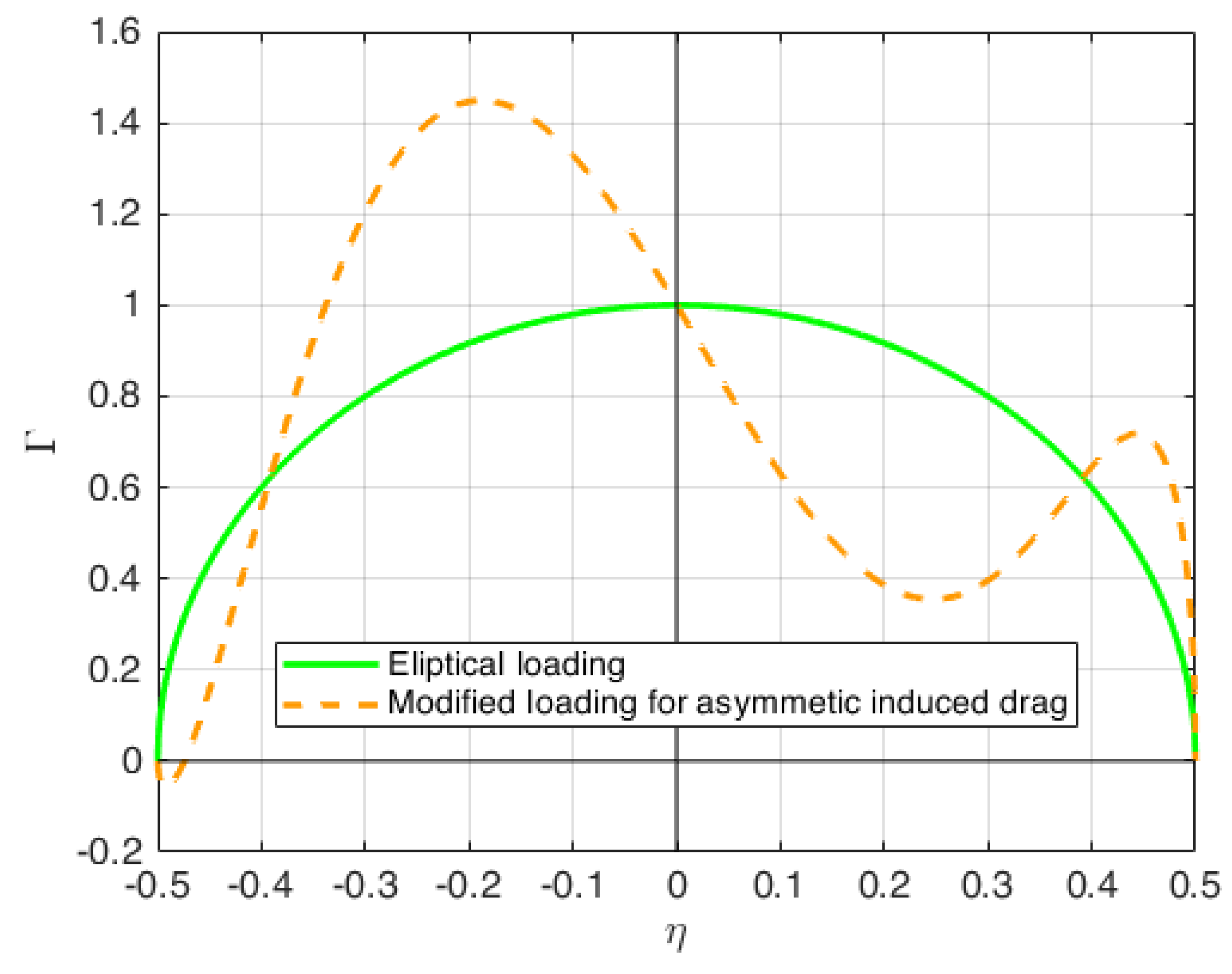
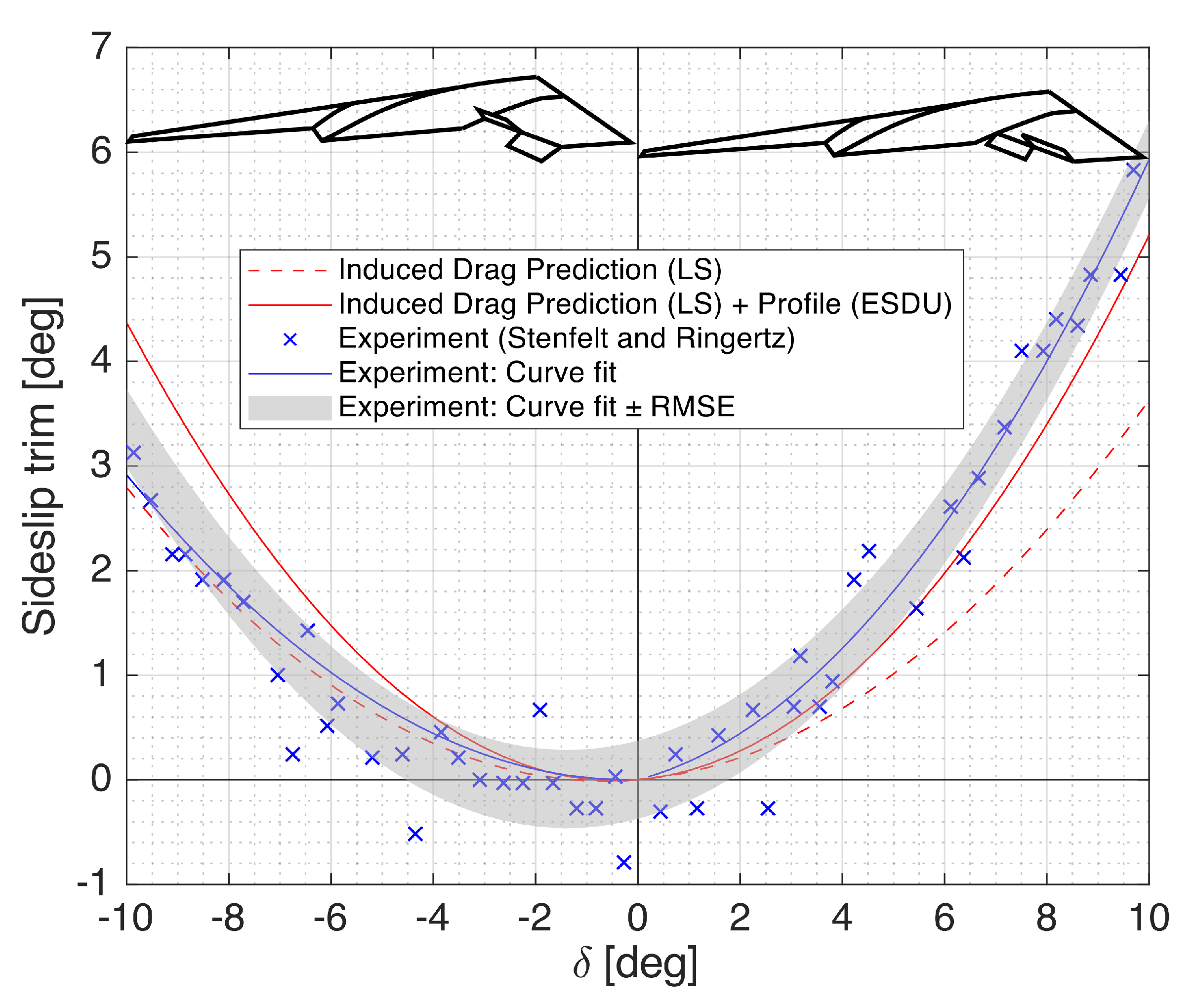
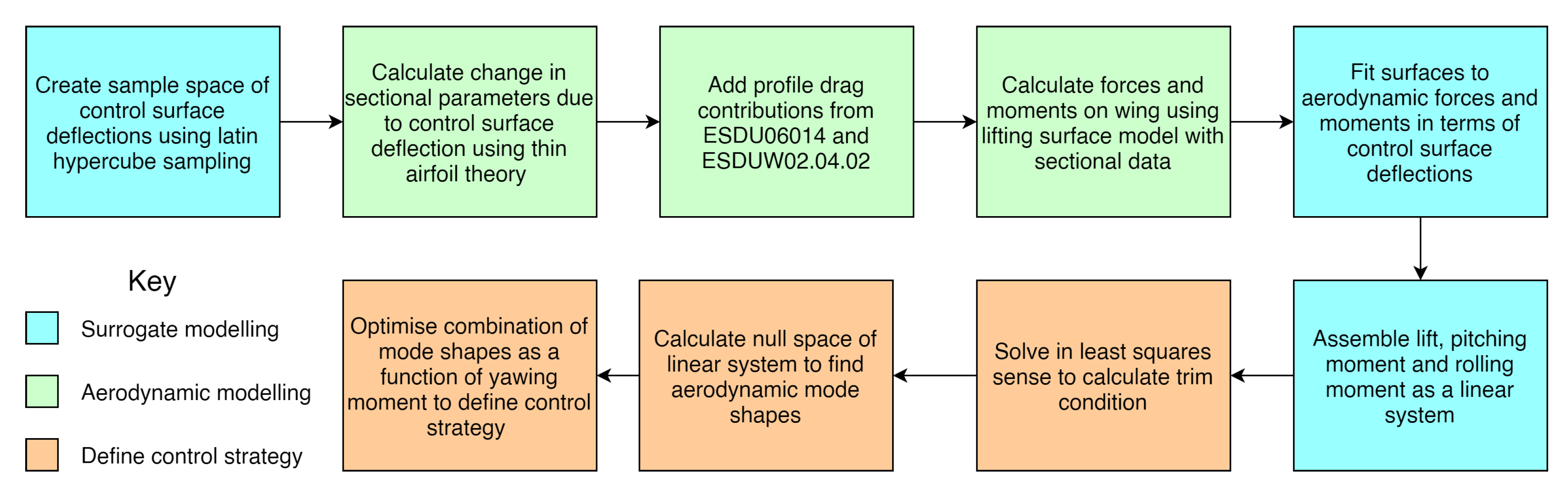
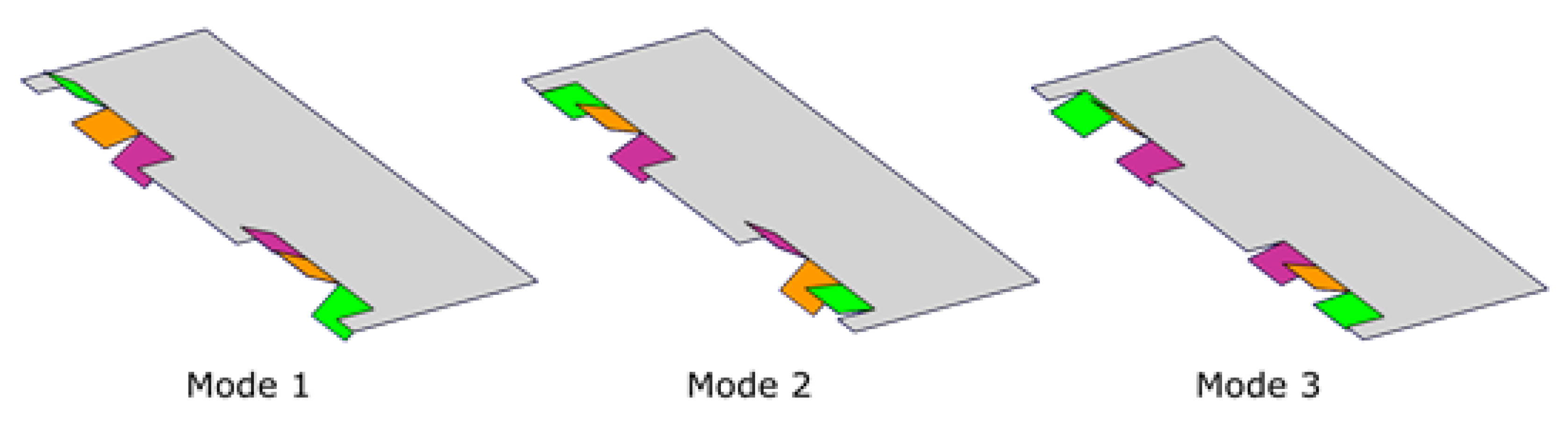
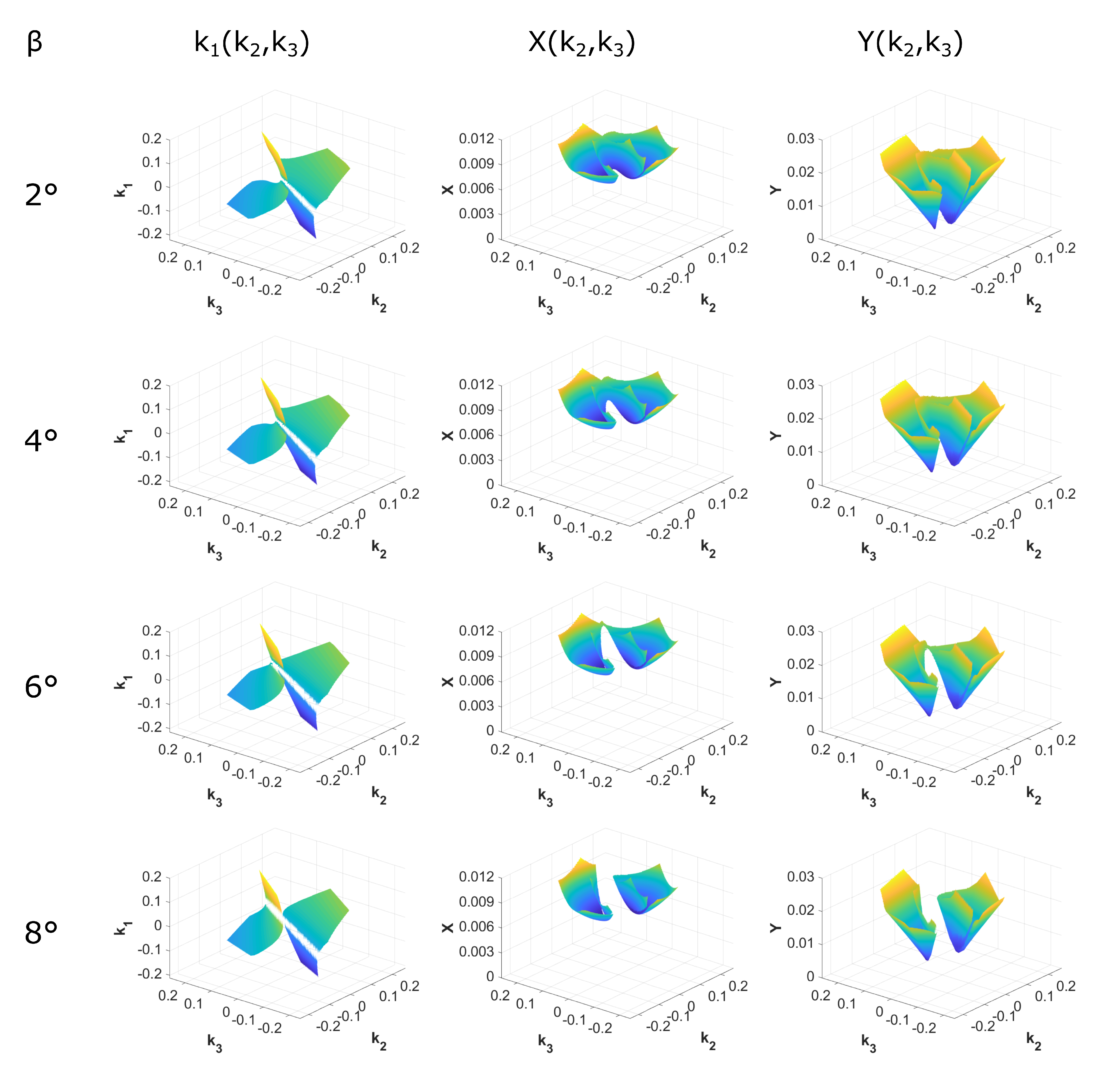
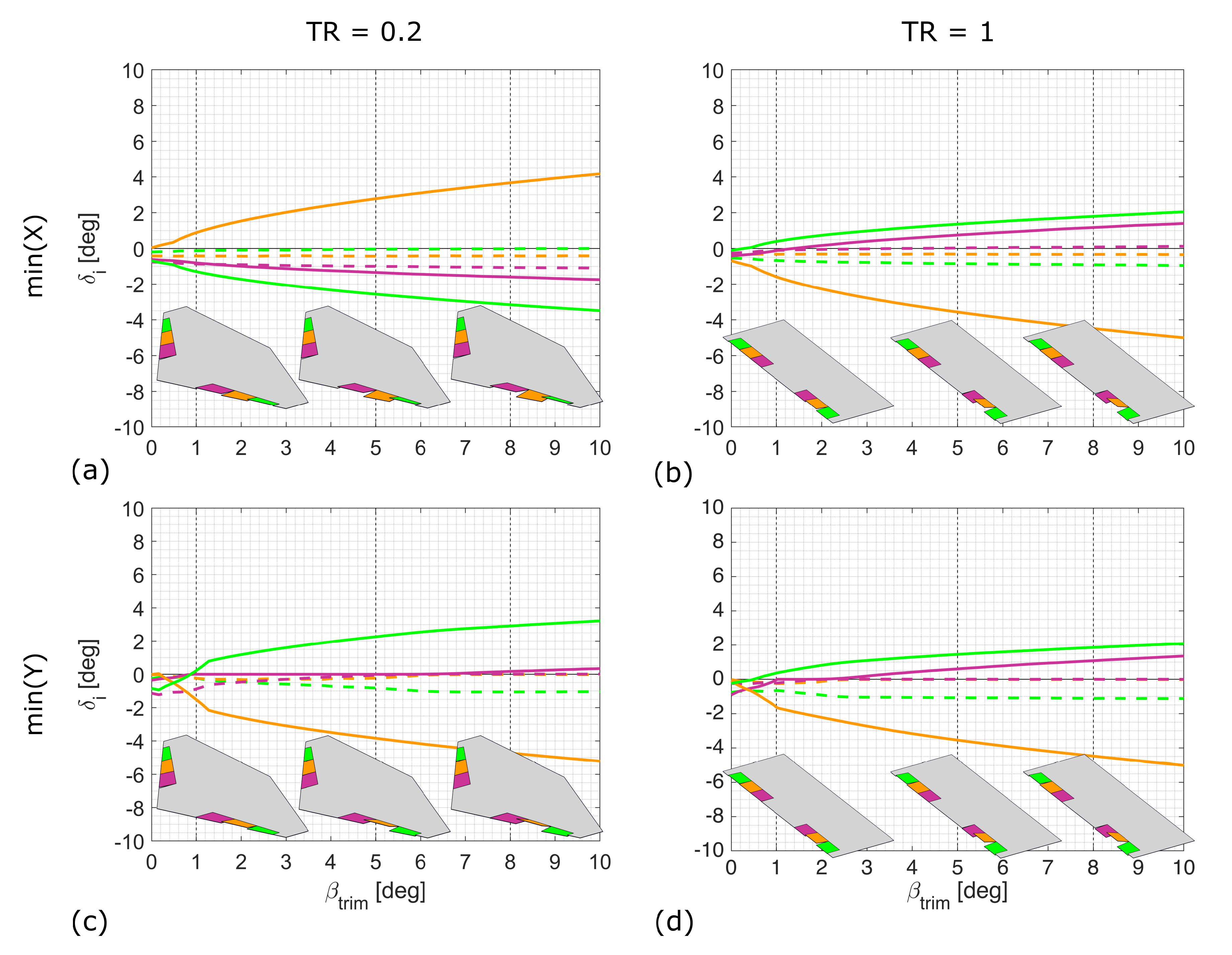
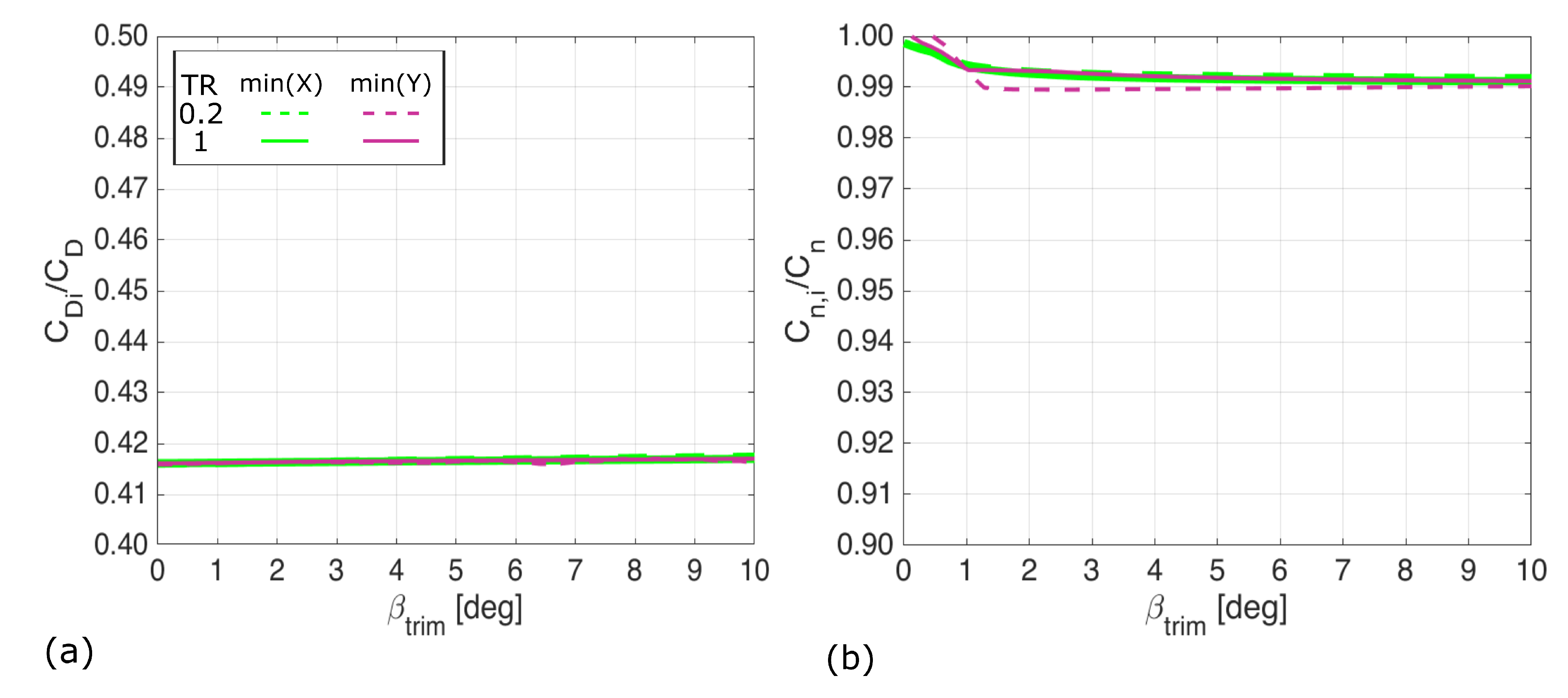
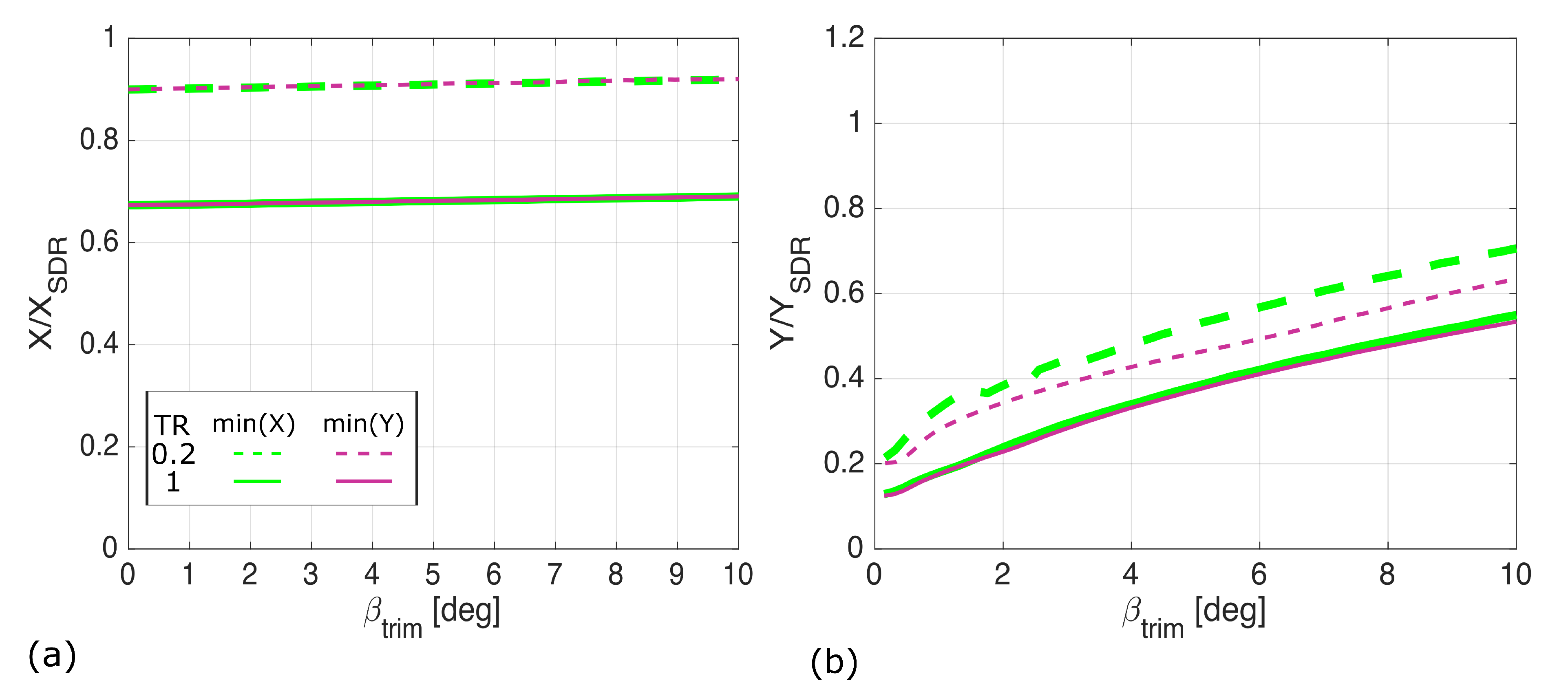
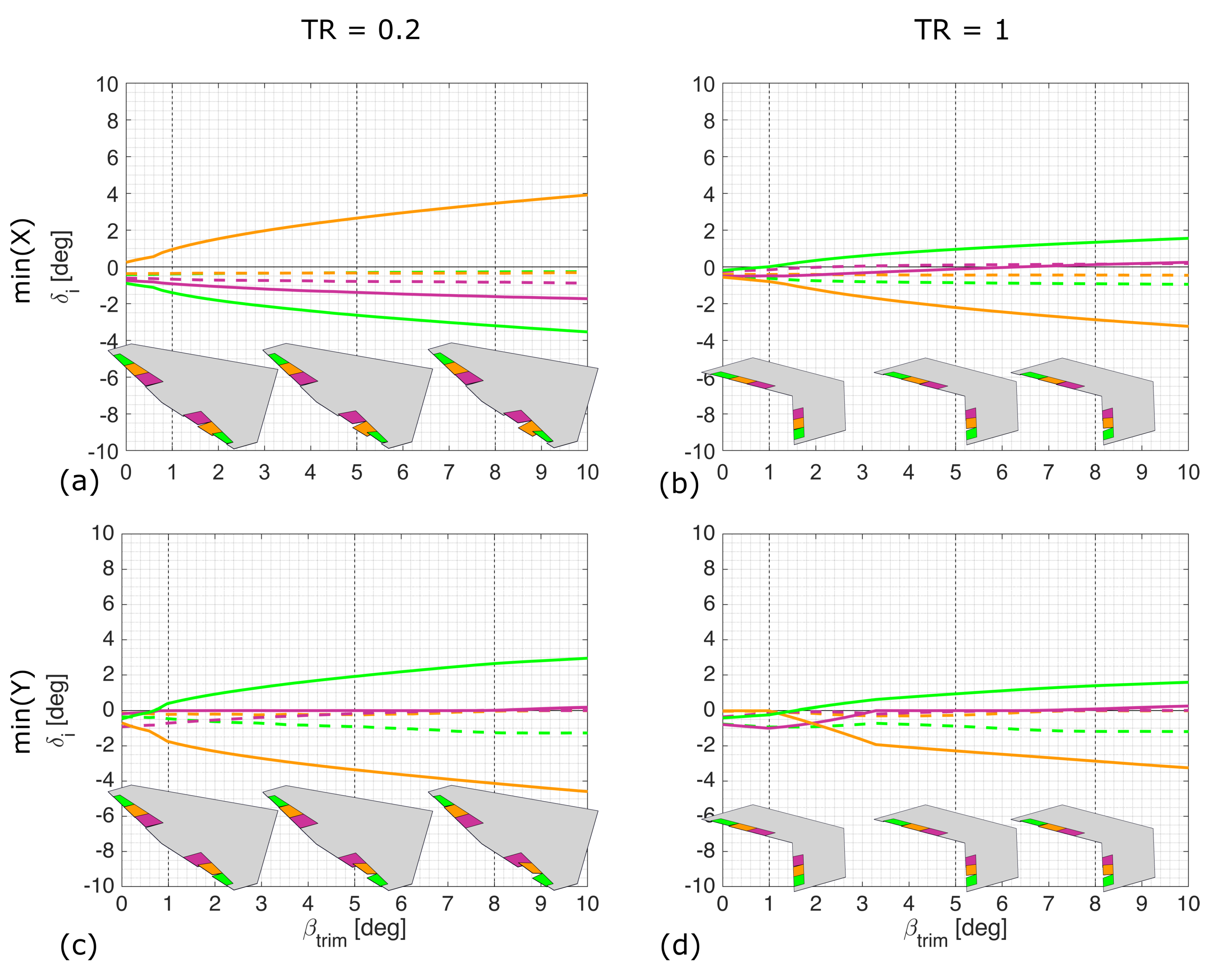
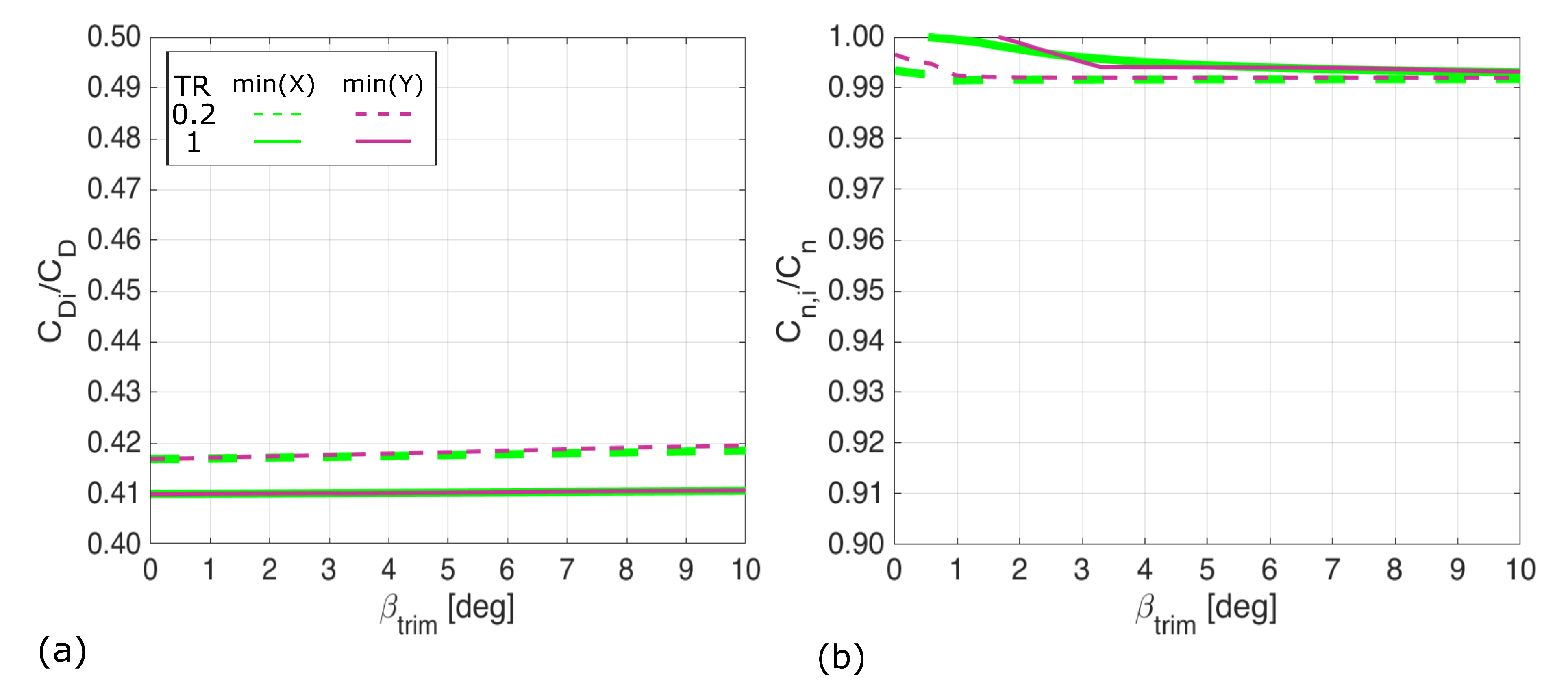
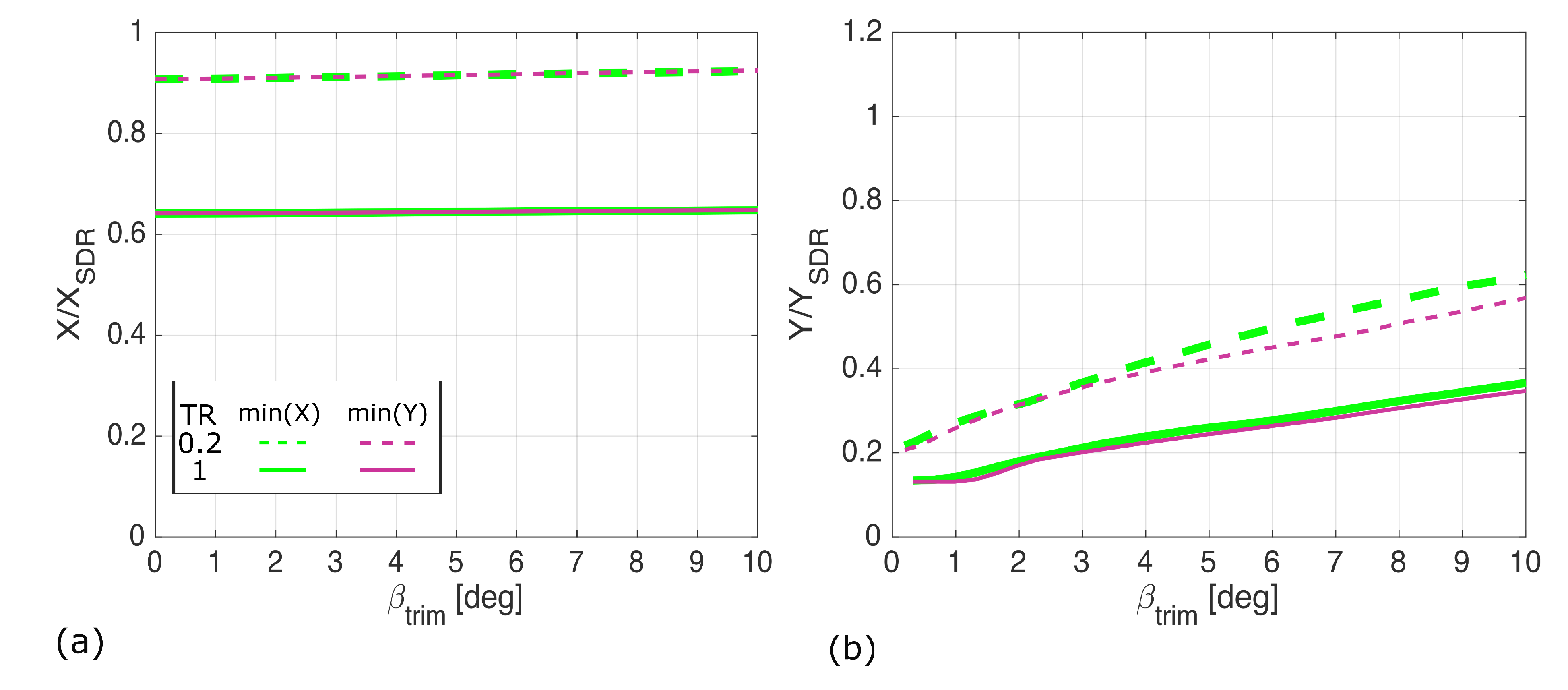
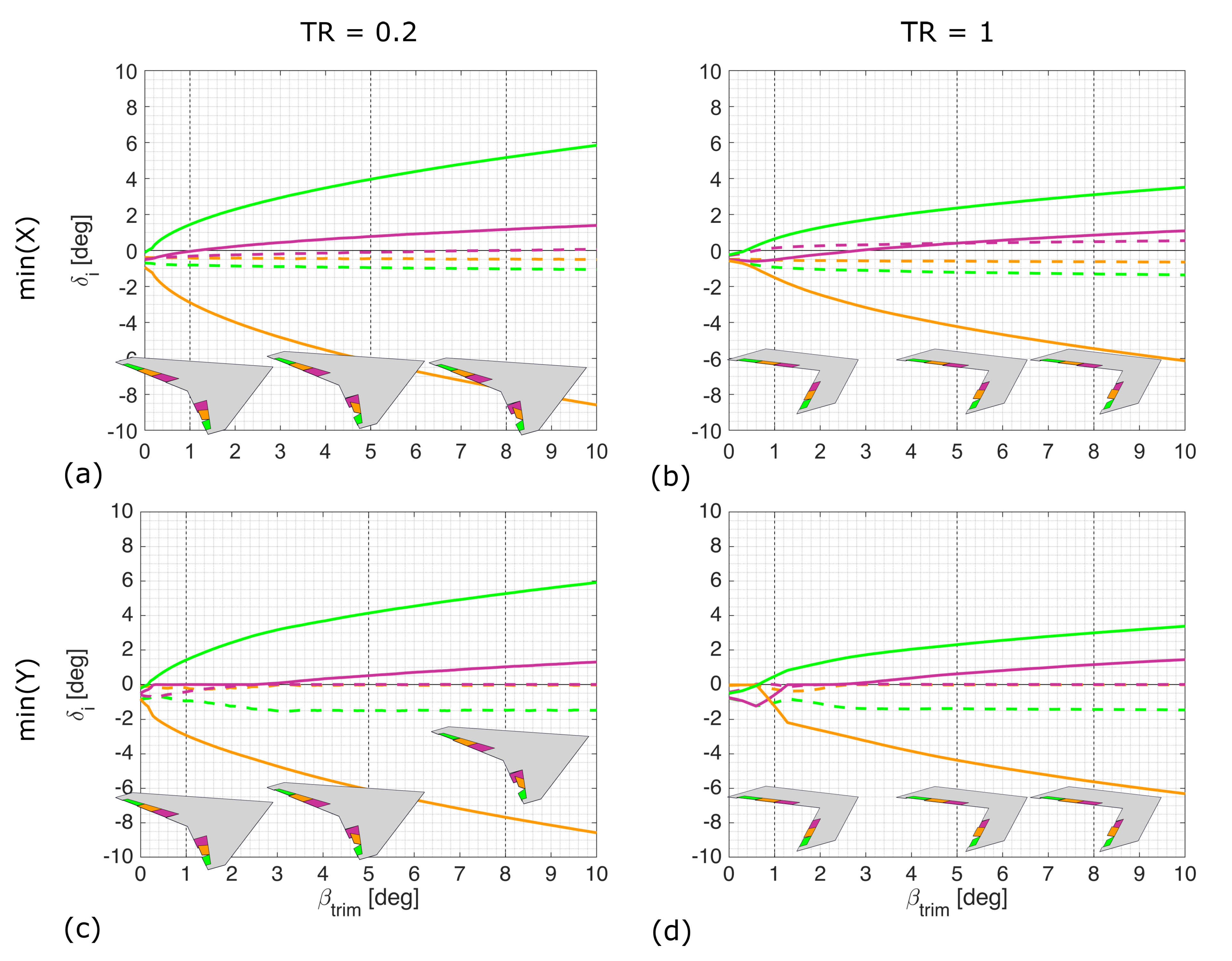
Tailless aircraft without vertical stabilisers typically use drag effectors in the form of spoilers or split flaps to generate control moments in yaw. This paper introduces a novel control allocation method by which full three-axis control authority can be achieved by the use of conventional lift effectors only, which reduces system complexity and control deflection required to achieve a given yawing moment. The proposed method is based on synthesis of control allocation modes that generate asymmetric profile and lift induced drag whilst maintaining the lift, pitching moment and rolling moment at the trim state. The method uses low order models for aerodynamic behaviour characterisation based on thin aerofoil theory, lifting surface methodology and ESDU datasheets and is applied to trapezoidal wings of varying sweep and taper. Control allocation modes are derived using the zero-sets of surrogate models for the characterised aerodynamic behaviours. Results are presented in the form of control allocations for a range of trimmed sideslip angles up to 10 degrees optimised for either maximum aerodynamic efficiency (minimum drag for a specific yawing moment) or minimum aggregate control deflection (as a surrogate observability metric). Outcomes for the two optimisation objectives are correlated in that minimum deflection solutions are always consistent with efficient ones. A configuration with conventional drag effector is used as a reference baseline. It is shown that, through appropriate allocation of lift based control effectors, a given yawing moment can be produced with up to a factor of eight less aggregate control deflection and up to 30% less overall drag compared to use of a conventional drag effector.
Keywords: tailless; finless; directional control; low observable; induced drag; lateral control; null space; control allocation tailless; finless; directional control; low observable; induced drag; lateral control; null space; control allocation