1. Introduction
1.1. Research Background
Effective inventory management presents substantial opportunities for operational cost reduction and remains a cornerstone research domain in both supply chain and industrial chain management [
1,
2]. In the dynamic real estate market landscape, optimizing inventory allocation through a comprehensive system approach has emerged as a critical strategy for enterprises to enhance supply chain agility and industrial chain responsiveness—key factors in maintaining competitive resilience and achieving sustainable regional development [
3,
4]. After more than 20 years of rapid development, the Chinese real estate market has accumulated a considerable amount of inventory. The 2015 Central Economic Work Conference listed “inventory reduction” as one of the five vital tasks of supply-side structural reform, highlighting the significance of this issue. Real estate inventory is not a regional issue in China. The management of real estate inventory in countries worldwide, including Brazil, the United States, Vietnam, and Belgium, has already drawn the attention of scholars [
5,
6].
Against the backdrop of the COVID-19 pandemic and economic downturn, the inventory issue in the real estate market directly impacts the healthy operation of the national economy and the stability of the financial system [
7,
8]. Real estate inventory exhibits pronounced regional divergence and externalities, and macro analysis at national or provincial scales is no longer effective in addressing real estate inventory management issues [
9,
10]. Changes in real estate inventory exhibit distinct temporal dynamics and spatial differentiation patterns. Accurately grasping these trends is a prerequisite for formulating effective policies. Therefore, conducting a systematic analysis of changes in China’s urban real estate inventory at the city level from both temporal and spatial dimensions, combined with the application of spatial econometric models to empirically test the impact mechanisms of influencing factors, holds significant research value in providing scientific basis for real estate market regulation and risk prevention [
11].
1.2. Literature Review
Research on real estate inventory management originated from vacancy analysis, with early studies emphasizing conceptual and model development, while recent work focuses on applied policy analysis. International scholars Emmi [
12,
13], Vandell [
14], and Ferrari [
15] proposed the Vacancy Chain Model and natural vacancy rates, while Miceli [
16], Radzimski [
17], Boessen [
18], and Mcclure [
19] examined the micro and macro impacts of vacancies. Research on real estate inventory has evolved from describing phenomena to analyzing underlying mechanisms. Early studies primarily focused on quantifying inventory levels and examining their correlation with economic cycles [
20]. As demonstrated by Lazear through an information economics model, the housing market exhibits the counterintuitive phenomenon of “inventory rising when demand falls”. The analysis reveals that while sellers rationally reduce prices during declining demand, the magnitude of these reductions proves insufficient. Consequently, the probability of sales decreases while inventory accumulates [
21]. As research deepens, scholars have increasingly focused on studying the factors influencing real estate inventory and have introduced or developed a number of econometric models. It contributes to both theoretical advancement in real estate economics and practical policymaking by establishing a scientific foundation for precise market regulation while offering robust decision-making support.
As for research content and focus, supply-side analyses have demonstrated that spatiotemporal variations in land supply policies exert critical influence on inventory levels. Shen et al., based on panel data from 35 Chinese cities, found that in cities with a price-to-income ratio below 7, land supply regulation plays a significantly positive role in inventory reduction, whereas high-price cities must rely on price-based regulation [
22]. On the demand side, demographic transitions and evolving housing preferences offer new perspectives. Bogataj et al. discovered that 11 million vacant homes in Europe are directly linked to a mismatch with housing demand in an aging society, where actuarially underwritten reverse mortgages can optimize supply-demand equilibrium [
23]. In addition, beyond supply and demand factors, Yoo et al. found in their study of Gyeonggi Province, South Korea, that green space characteristics exert differential effects on inventory reduction. They observed that increasing the area of public spaces within a development reduces the unsold unit ratio by 0.028, while the distance to external green spaces has no significant effect [
24]. Petersen, through counterfactual analysis of three Californian cities, found a post-pandemic valuation premium of 14.8–22% for inventory properties relative to rental units, suggesting that economic uncertainty drives speculative inventory accumulation [
25].
Analysis of research methodologies and models reveals that scholars have consistently prioritized inventory management model development and methodological innovation. In recent years, spatial econometrics and system dynamics have emerged as mainstream tools, with a pronounced trend toward methodological integration [
26]. Geman et al. first applied the inventory theory to UK commercial real estate, finding that futures data explained 35% of the variance in inventory fluctuations [
27]. Zhao et al. utilized a spatial Durbin model to quantify regional heterogeneity in housing price spillover effects across Chinese cities, revealing that conventional zoning approaches underestimate spatial interdependence by 15% [
28]. Zhang et al. integrated geographic information systems with super-efficiency DEA to achieve a synergistic evaluation of risk zoning and management performance, revealing that low-efficiency zones account for 60% of cities in the Yangtze River Delta [
29]; Wen et al. demonstrated through a Markov decision model that when price appreciation surpasses a critical threshold, implementing a “reservation-level pricing strategy” boosts corporate profitability by 12% [
30]. Kwoun et al. applied a system dynamics model to simulate real estate inventory cycles and housing investment patterns dynamically [
31].
Regarding research scale and geographic scope, existing literature predominantly examines macro-level analyses at national and provincial scales, while meso-scale case studies of specific regional markets have increasingly gained scholarly attention. Cao et al. conducted a probabilistic dynamic material flow analysis of urban housing stock in China, projecting the evolution trajectory of future housing stock at the national level, providing crucial insights for understanding overall trends [
32]. Zhang et al. conducted a detailed analysis of the dynamics, risks, and management performance of urban real estate inventory in the Yangtze River Delta region, revealing its “core-periphery” spatial pattern and diverse evolution pathways [
21]. Similarly, Zhao et al. analyzed the changing characteristics and multi-level influencing factors of real estate inventory using 35 key cities in China as samples [
14,
15,
16,
17,
18,
19,
20,
21,
22,
23,
24,
25,
26,
27,
28,
29,
30,
31,
32,
33].
1.3. Research Gap and Goals
The current research on the influencing factors of real estate inventory has developed into a multi-dimensional, multi-method framework, and has made remarkable progress in theoretical system, method innovation and empirical accumulation. First, the theoretical framework has become increasingly refined, with research content undergoing a profound shift from descriptive analysis to mechanism-based examination, thereby establishing a relatively comprehensive analytical framework. Second, as methodological systems continue to innovate, research has evolved from single methodologies to mixed methods, with method integration emerging as a prominent trend. This shift has significantly enhanced the scientific rigor and explanatory power of analytical outcomes. However, there is still significant room for improvement in research on real estate inventory management.
Firstly, the research scale is too large and does not match the practical needs of precise policy design and implementation. Most scholars conduct empirical research at the national or provincial level, with focus on revealing overarching patterns and common characteristics at the national or large-regional level. The studies at such levels facilitate understanding macro trends or overall patterns, but treating cities at different levels of development as “averaged” obscures significant internal disparities. Regional divergence in the real estate market is becoming increasingly pronounced. The macro-level “folding effect” obscures regional heterogeneity, leading to analytical results that often prove inaccurate or insufficiently precise when guiding the design of real estate market regulation policies.
Secondly, the limited sample size restricts the generalizability of conclusions due to the “amplification effect” inherent in case studies, thereby hindering the discovery of patterns in real estate inventory or the advancement of management theory innovation. Case studies on specific regions, urban agglomerations and cities constitute the main body of the literature available. Such research enables in-depth analysis of real estate inventory issues within particular geographical contexts, yielding policy recommendations that are more locally targeted. However, the conclusions of case studies are often constrained by local characteristics and difficult to generalize to other regions. Large-scale comparative studies covering most cities nationwide under a unified research framework remain scarce, preventing policymakers from developing systematic insights into underlying patterns.
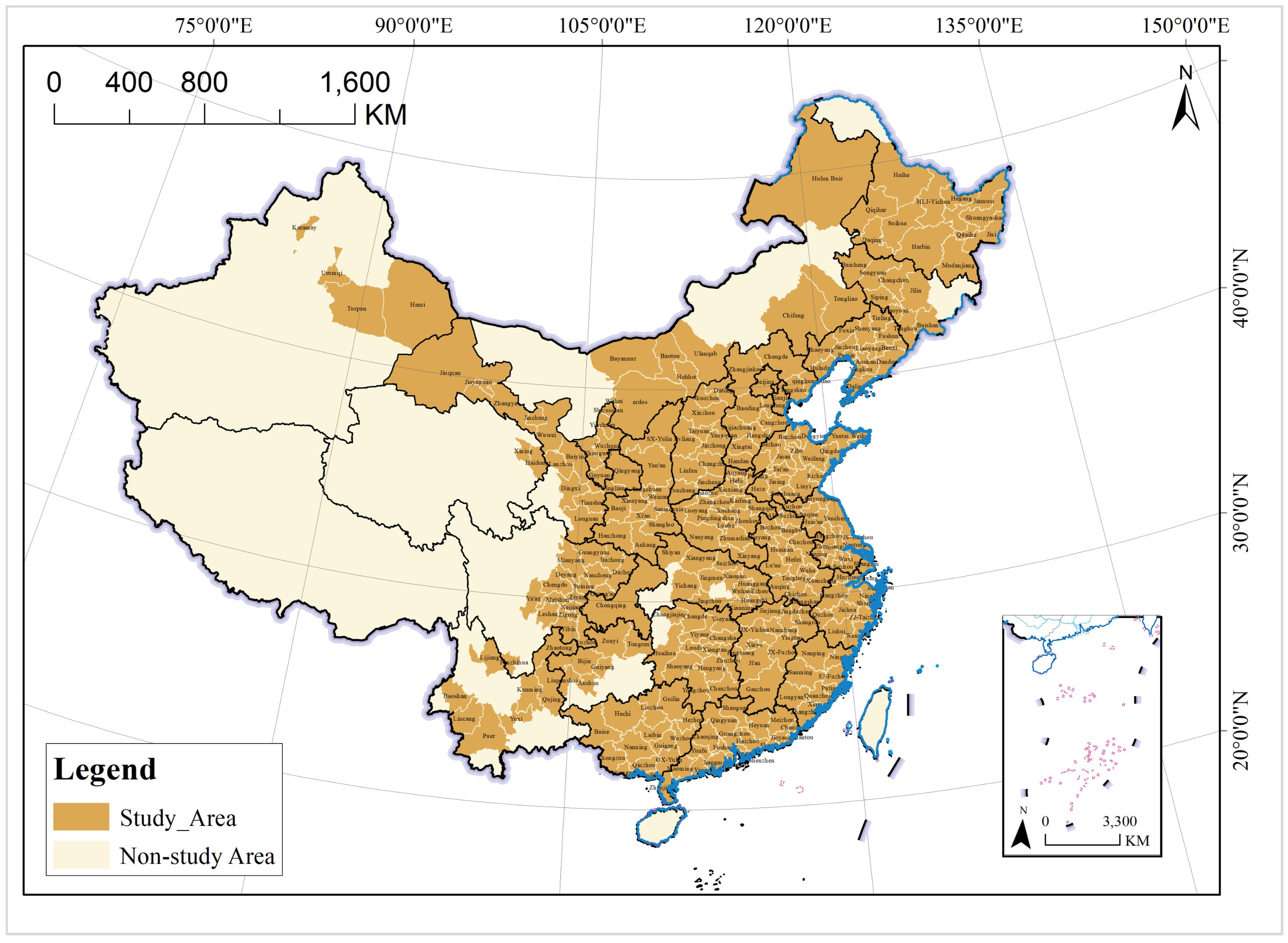
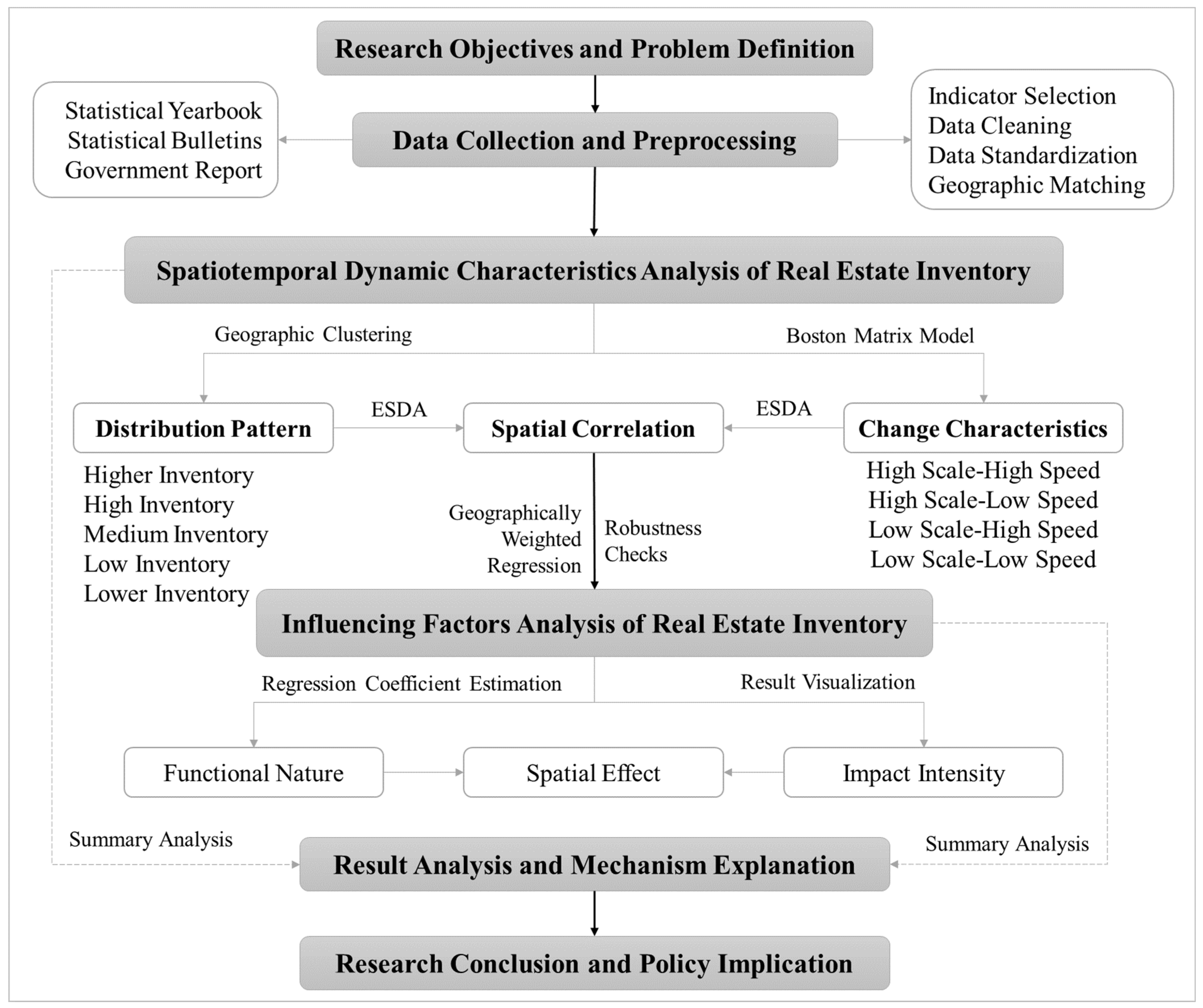
Identifying the scale, spatial distribution, spatiotemporal evolution patterns, and underlying drivers of real estate inventory is the cornerstone for scientifically designing policies to reduce inventory. This study aims to examine the following questions or hypotheses. First, what are the spatiotemporal patterns of real estate inventory in Chinese cities? Second, what are the nature and intensity of different factors influencing real estate inventory in Chinese cities, and how do their spatial mechanisms vary? Therefore, this study, based on 287 prefecture-level cities in China, conducts an in-depth analysis of the spatial pattern and changing pattern of real estate inventory in Chinese cities through ESDA, Boston matrix, and geographically weighted regression models. It reveals the mechanisms of factors influencing real estate inventory, providing a basis for central and local governments to design policies aimed at reducing real estate inventory.
3. Results
3.1. Distribution Pattern of Real Estate Inventory
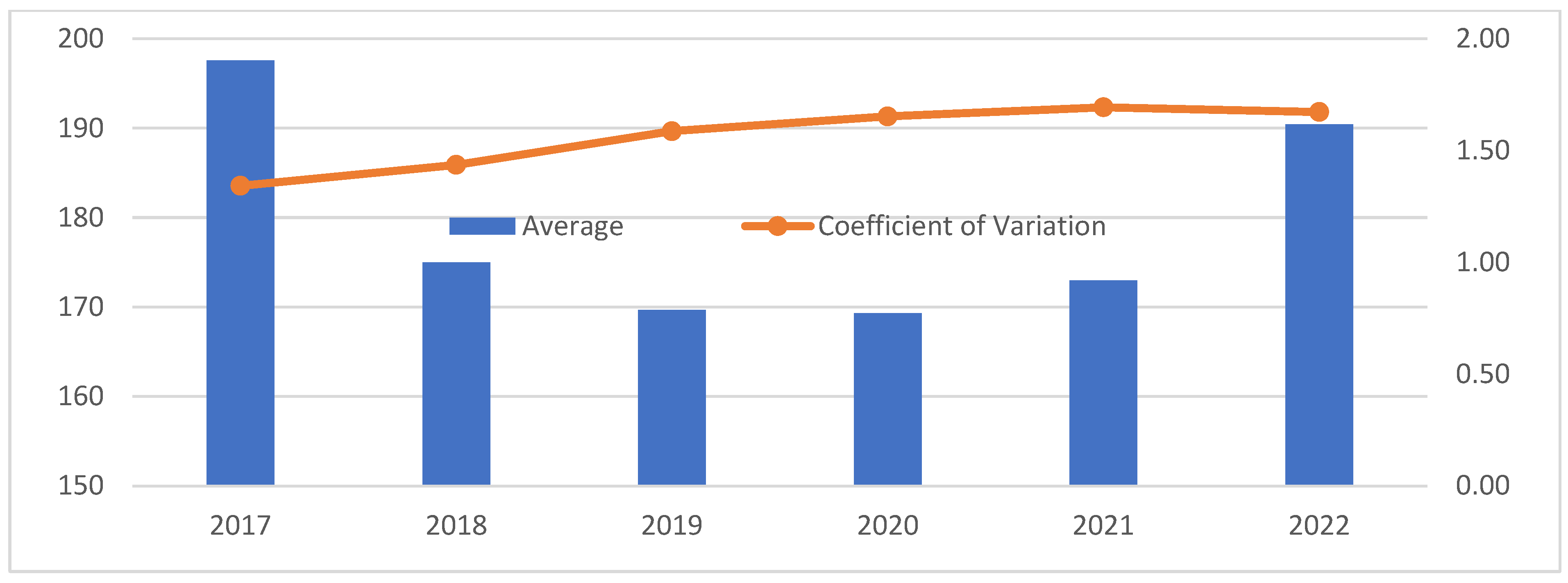
The average change in real estate inventory levels from 2017 to 2022 shows a distinct U-shaped curve, profoundly reflecting the transformation of China’s real estate market from “policy-driven destocking” to “restocking under fundamental economic pressures”. The period from 2017 to 2020 witnessed a continuous decline in real estate inventory levels, primarily driven by proactive policy initiatives and a relatively stable market environment. The monetized relocation policy for shantytown renovation initiated by China at the end of 2015 has effectively driven the digestion of the existing real estate stock by directly creating housing purchase demand. After hitting bottom in 2020, amid recurring COVID-19 outbreaks and mounting economic pressures, household income expectations weakened, leading to a significant decline in both willingness and ability to purchase homes. This resulted in a rapid rebound in real estate inventory levels. Although early destocking policies proved highly effective, the pandemic revealed the fragility of underlying market demand. The current rebound in absolute inventory levels, coupled with a weakening ability to reduce stock, indicates that inventory risks in the real estate market remain severe. This necessitates more targeted and sustained policy measures to address. with the cyclical shift of China’s real estate market from “destocking” to “restocking”, its core driving logic has changed from policy stimulus led to fundamental (population, income, expectations) led. The coefficient of variation has continued to rise, increasing from 1.34 in 2017 to 1.67 in 2022—substantially higher than 0.36. It indicates that the dispersion of real estate inventory levels across Chinese cities is growing increasingly pronounced, meaning disparities between cities are rapidly widening and heterogeneity is significantly intensifying [
57] (
Figure 3).
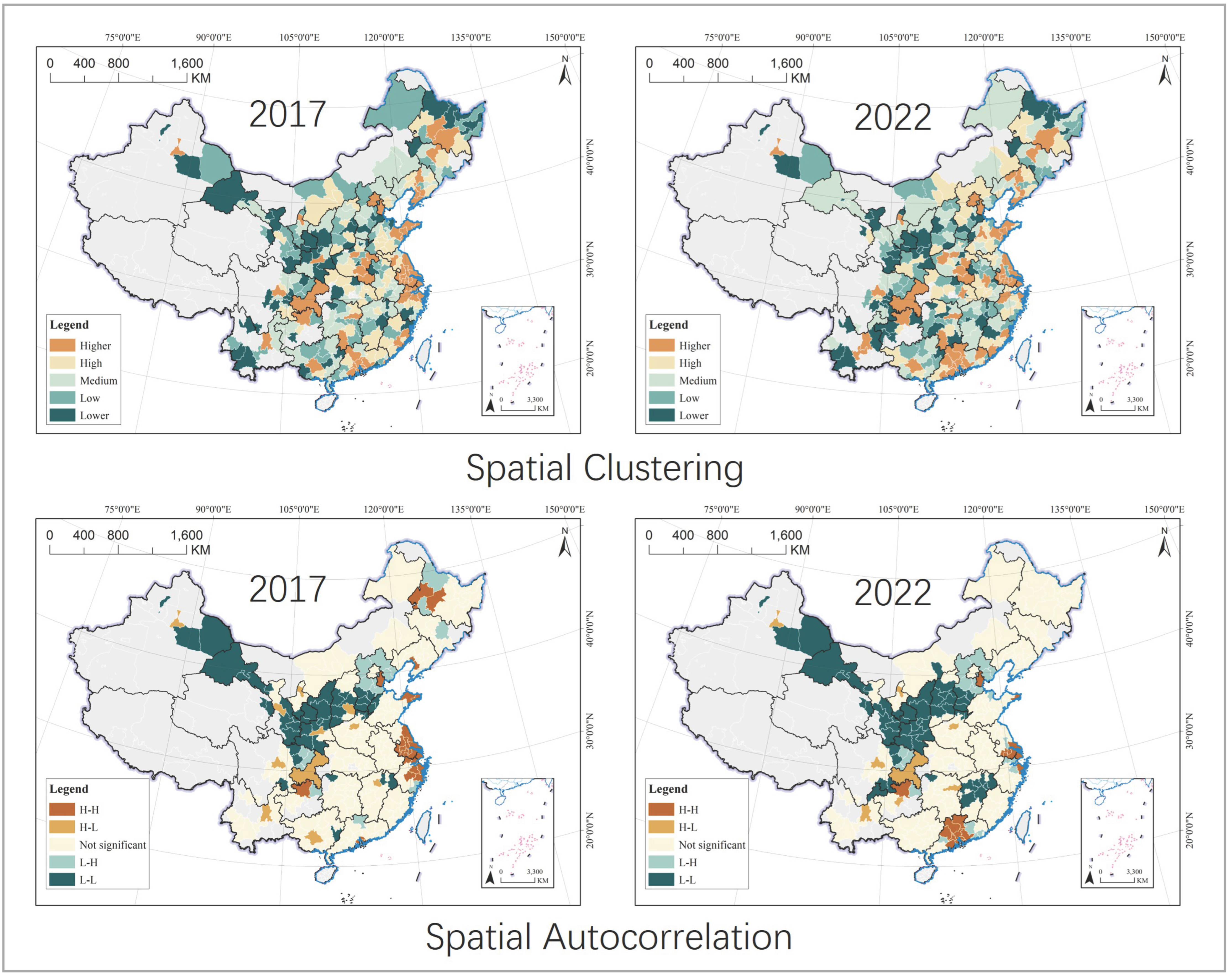
We classified the inventory scale of China’s real estate into five grades using quantile clustering method. In 2017, the inventory scale of the Higher-tier members exceeded 2.5 million square meters, decreasing to 2.4 million square meters by 2022. Notably, Beijing, Chongqing, and Shanghai consistently surpassed 20 million square meters, while Chengdu and Harbin long exceeded 10 million square meters. The inventory thresholds for real estate are defined as 2.5, 1.3, 0.8, and 0.5 million square meters for High, Medium, Low, and Lower categories, respectively. Although the specific values vary slightly across different years, the differences are consistently controlled within approximately 0.1 million square meters. Spatial clustering analysis using the quantile method reveals that high-inventory cities are predominantly concentrated in urban agglomeration regions, including the Yangtze River Delta (e.g., Wuxi, Nantong, JS-Suzhou, Hangzhou), Pearl River Delta (e.g., Guangzhou, Foshan), Chengdu-Chongqing, Beijing-Tianjin-Hebei, Harbin-Changchun (e.g., Harbin, Changchun, Suihua), Shandong Peninsula (e.g., Qingdao, Weifang), and Central Plains (e.g., Zhengzhou) urban agglomerations. Low-inventory cities are primarily clustered in the upper reaches of the Yellow River, the northwest, southwest, and northeast regions, as well as the peripheries of urban agglomerations in North China and the Yangtze River Basin. Representative cities include Lincang, Ziyang, Pingliang, Longnan, Karamay, Zhangjiajie, Hegang, HLJ-Yichun, Ya’an, Luohe, Xianyang, and Ezhou. In 2022, cities with high inventory further concentrated in the Pearl River Delta, while the Chengdu-Chongqing Urban Agglomeration, Beijing-Tianjin-Hebei region, and Shandong Peninsula Urban Agglomeration remained stable. The coverage of the Yangtze River Delta, Central Plains, and Harbin-Changchun urban agglomerations experienced a slight contraction. Meanwhile, the coverage of low-inventory cities expanded rapidly in the southwest and middle reaches of the Yangtze River, contracted significantly in the northeast and northwest regions, and remained relatively stable in the upper and middle reaches of the Yellow River Basin (
Figure 4).
The robustness check of spatial autocorrelation is shown in
Table 2, which compares the analysis results of different spatial weight parameters. Obviously, K-Nearest Neighbor is the best choice. The Moran’s I value for real estate inventory were 0.12 (Z = 5.00,
p = 0.001) in 2017 and 0.08 (Z = 3.44,
p = 0.006) in 2022, indicating that the inventory of real estate in Chinese cities is not randomly distributed, but exhibits significant spatial dependence. Cities with high inventory levels tend to cluster together, as do those with low inventory levels, forming “hotspots” and “coldspots”. In 2017, H-H and H-L cities were mainly concentrated in the Yangtze River Delta Urban Agglomeration, while hotspots in the Harbin-Changchun region (Northeast China) and the Chengdu-Chongqing Urban Agglomeration (Southwest China) had not yet taken shape (with their clustering processes only just initiated). By 2022, the coverage of hotspot cities within the Yangtze River Delta Urban Agglomeration contracted significantly. The nascent cluster in the Northeast region disappeared, while the emerging Chengdu-Chongqing Urban Agglomeration maintained its stability. The Pearl River Delta emerged as a new mature hotspot city cluster. In 2017 and 2022, most L-L and L-H cities were concentrated in the middle and upper reaches of the Yellow River Basin, extending into the northwest region (
Figure 4).
3.2. Change Characteristics of Real Estate Inventory
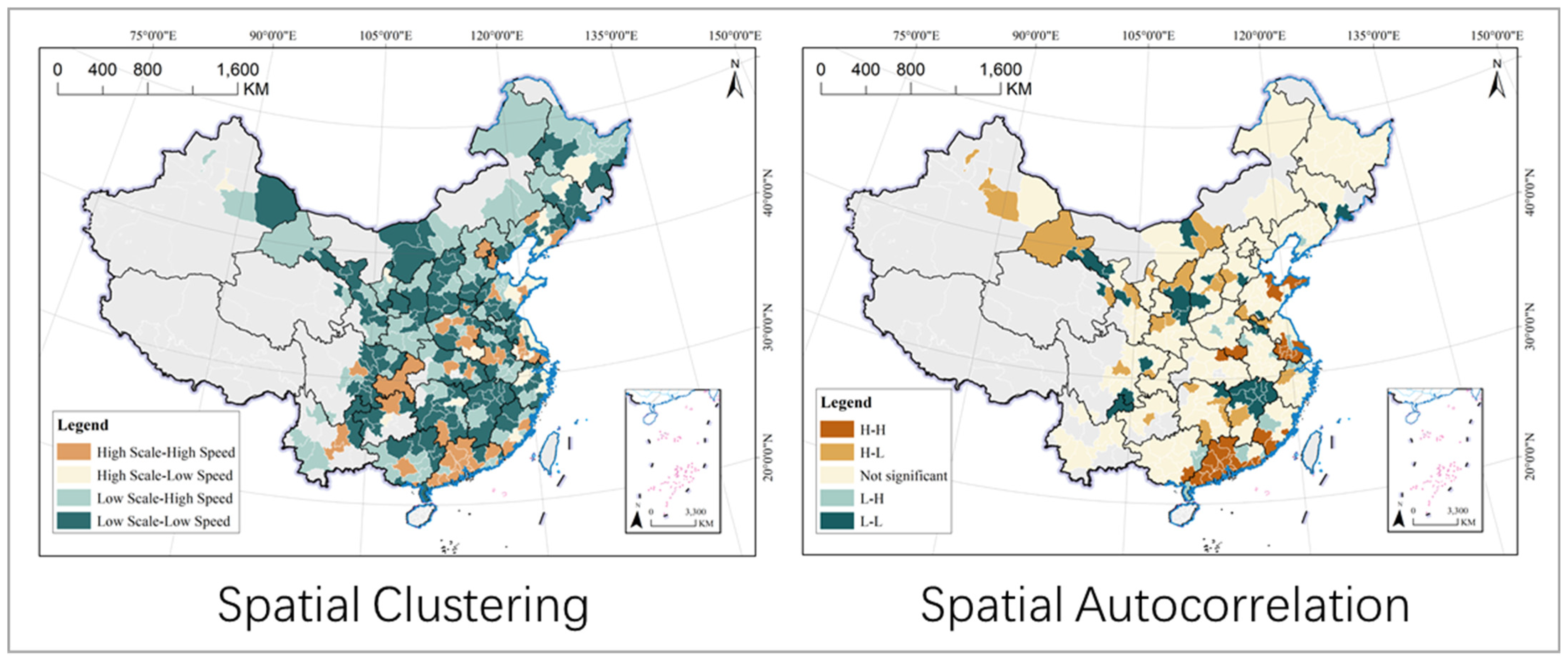
The mean reflects the overall average level but is susceptible to interference from extreme values. The median is robust against extreme values but does not fully utilize the data information. For data without extreme values, the mean should be prioritized as the threshold; for skewed or outlier-containing data, the median should be prioritized. In this study, the relative share of real estate inventory was between 0 and 1, with a maximum and minimum growth rate of 41.62% and −46.59%, respectively. There were no extreme values, so the average value was used as the threshold. The average annual change rate of real estate inventory from 2017 to 2022 was −2.17%, and the average relative share of real estate inventory in 2022 was 0.07. Using them as thresholds, we categorized the evolution patterns of real estate inventory across 287 cities into four types based on the Boston Matrix. High-Scale-High-Speed cities account for 16.03% of the total, primarily concentrated in the Pearl River Delta and Chengdu-Chongqing urban agglomerations, with a small number distributed across the Central Plains, Yangtze River Delta, Beijing-Tianjin-Hebei, and Liaoning Central-Southern urban agglomerations. High Scale-Low Speed cities constitute the smallest proportion at 7.32% of the sample, including Shenyang, Dalian, Anshan, Changchun, Harbin, Nanjing, Wuxi, Nantong, Yancheng, Hangzhou, Ningbo, Taizhou (Zhejiang), Quanzhou, and Yantai. These cities demonstrate a highly dispersed spatial distribution pattern. Low Scale-High Speed cities account for approximately 30% of the sample population, predominantly concentrated in North China-Northeast China, the Loess Plateau, and China’s southwestern border areas. Low Scale-Low Speed cities constitute the largest proportion at 46.69% of the sample population, exhibiting extensive continuous clusters across four key regions: North China, Northwest China, the Yangtze River Basin, and the New Western Land-Sea Corridor (
Figure 5).
The Moran’s I value of 0.19 (Z = 7.12, p = 0.001) demonstrates statistically significant positive spatial autocorrelation in urban real estate inventory changes across Chinese cities. H-H cities exhibited a dominant cluster in the Yangtze River Delta Urban Agglomeration, accompanied by three secondary clusters in the Haixi Urban Agglomeration, the Yangtze River Delta Urban Agglomeration, and the Shandong Peninsula Urban Agglomeration. H-L cities show a predominantly riverine distribution pattern along the Yellow River Basin, with particular concentration in its middle and upper reaches, while extending into northwestern China. L-L cities have developed extensive agglomerations in the Yangtze River’s middle reaches, with smaller clusters also emerging in the Yellow River’s middle reaches. Overall, regional variations in real estate inventory changes exhibit distinct spatial clustering patterns, closely linked to economic development, population concentration, and growth expectations. Driven by policies such as the Guangdong-Hong Kong-Macao Greater Bay Area and national strategic hinterlands, urban agglomerations including the Pearl River Delta, Yangtze River Delta, Chengdu-Chongqing, Beijing-Tianjin-Hebei, and Shandong Peninsula have emerged as highly dynamic regions. Fueled by robust population inflows and industrial support, these areas exhibit elevated residential expectations for the real estate market, resulting in substantial real estate inventories characterized by both large scale and rapid growth. In addition, traditional economically strong cities such as Changchun, Harbin, Nanjing, Wuxi, Nantong, Yancheng, Hangzhou, and Ningbo have fallen into the dilemma of high inventory share and low inventory growth rate due to excessive land supply or industrial restructuring in the early stages, indicating that the cultivation and transformation of new models of real estate development face many challenges.
3.3. Influencing Factors of Real Estate Inventory
The R-squared value is 0.71, and the
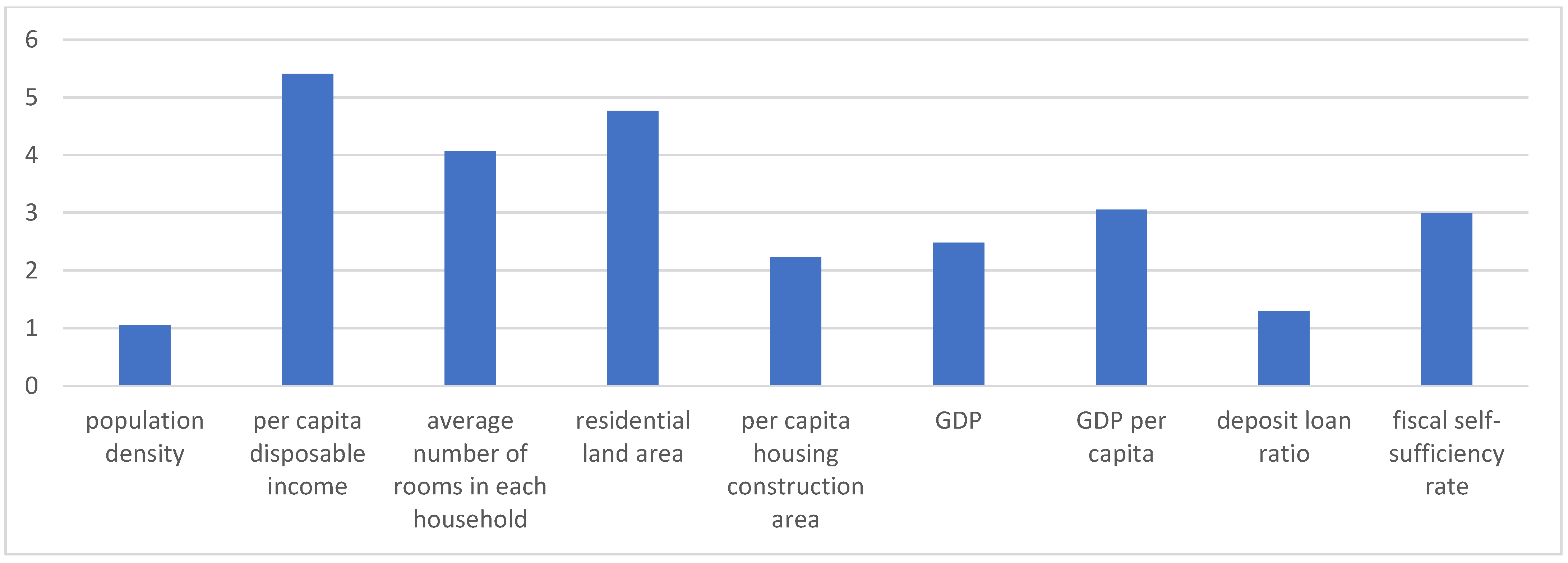
p-value is 0.000, indicating high goodness-of-fit and reliability of the OLS regression. The OLS regression results indicate that the Variance Inflation Factor values for all influencing factors are below 10, suggesting minimal impact of multicollinearity on the regression outcomes (
Figure 6). The GWR model achieved an R
2 of 0.84 (adjusted R
2 = 0.80), indicating that approximately 84% of the spatial variation in real estate inventory can be explained by the model—demonstrating excellent explanatory power and model fit. The GWR model utilizes 47.81 effective parameters (trace(S)) for local estimation, achieving a substantial reduction in the residual sum of squares (RSS) to 4,684,837.64—demonstrating significantly improved alignment between model predictions and empirical observations. The GWR and OLS, SLM, SEMs yield AICc values of 3716.59 and 3787.78, 3785.08, 3780.23, respectively, with a difference of 70—well beyond the critical threshold of 3—demonstrating the GWR model’s substantive superiority. In summary, the analysis of influencing factors for urban real estate inventory using the GWR model consistently demonstrates its advantages in goodness-of-fit, flexibility in parameter estimation, and statistical diagnostic metrics, revealing the spatial heterogeneity of variable relationships more profoundly than the OLS model (
Table 3).
Based on the absolute value of the Geographically Weighted Regression (GWR) parameter as the core criterion and the distribution differences of the absolute values across factors (whether they form distinct intensity breaks), we categorized influencing factors into three types: key factors, important factors, and auxiliary factors. GDP serves as the key factor, with its regression coefficient absolute value significantly higher than other factors (6.9 times that of the second-highest value). Its influence on inventory exhibits a “discontinuous leading effect”, making it the core variable affecting inventory levels. Important factors include GDP per capital, per capital disposable income, and residential land area, with the absolute regression coefficient ranking 2–4. Their influence is significantly stronger than that of auxiliary factors, exerting a pronounced driving or suppressing effect on inventory changes. Other influencing factors serve as auxiliary factors with weak effects. Their impact on inventory must be considered in combination with other factors, making it difficult to dominate inventory changes alone. An analysis of the range between minimum, median, and maximum regression coefficients reveals that GDP stands as the sole consistently positive driver across all cities. Other factors exhibit significant spatial heterogeneity, simultaneously demonstrating both positive driving and negative inhibiting effects (
Table 4).
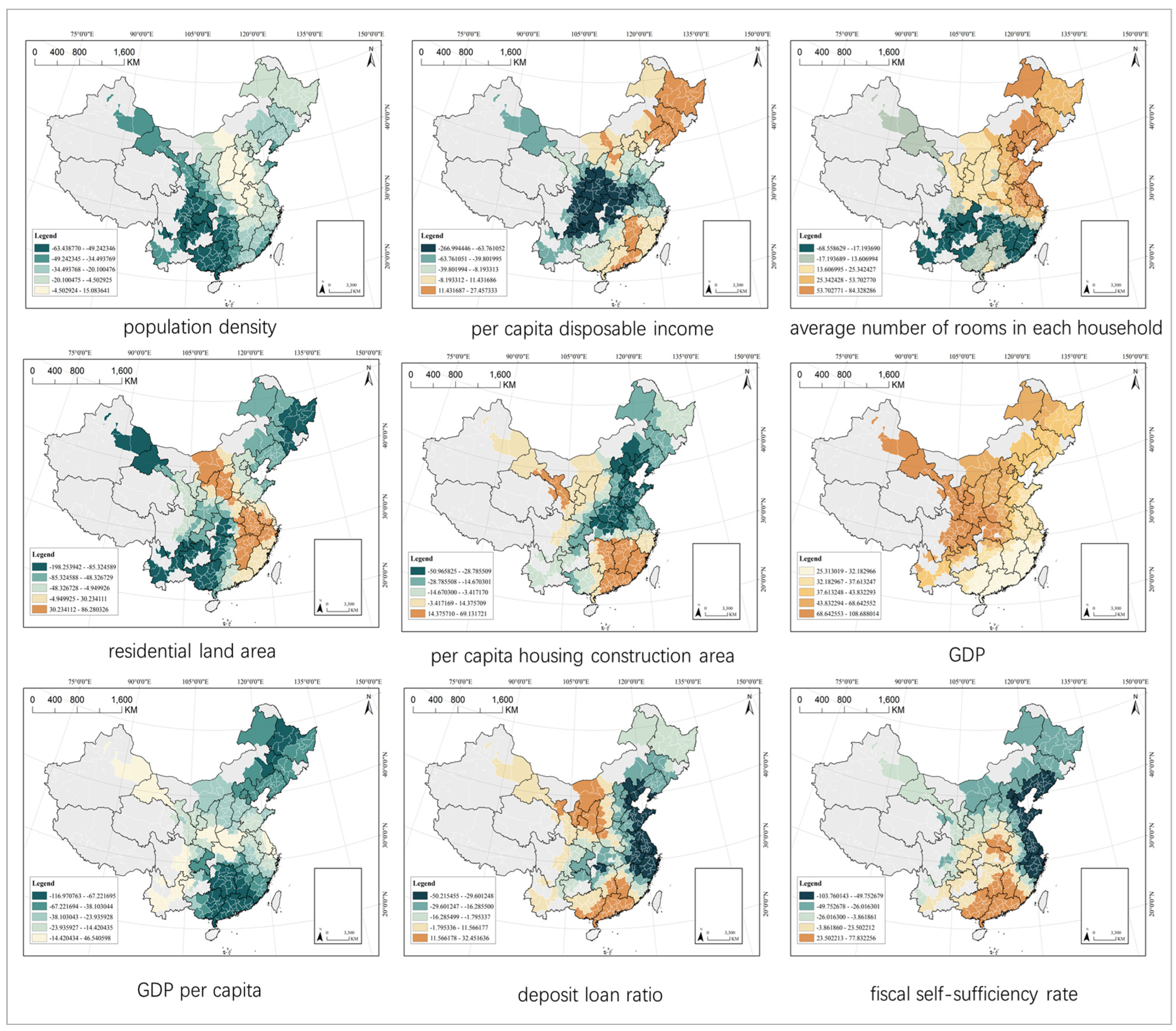
Overall, the impact of different factors on real estate inventory exhibits significant spatial heterogeneity and clustering, forming a distinct core-periphery spatial structure. The eastern core region shows concentrated and intense effects, while the central and western peripheral regions exhibit dispersed and weak effects. The core urban agglomerations along the eastern coast constitute a high-impact zone for most factors (including population density, per capita disposable income, and GDP per capita), demonstrating the high agglomeration of “economy population resources” in the region. This high concentration creates more direct and intensified effects on real estate inventory. In contrast, regions in central and western China experience a general weakening of the influence of various factors due to issues such as “economic underdevelopment, population outflow, and resource misallocation”. Furthermore, the direction of influence for some factors diverges (e.g., the north–south disparity in average number of rooms in each household).
The population density has a significant inhibitory effect on core regions, primarily concentrating along the Southwest Land-Sea New Channel and the Northwest Hexi Corridor, while its influence on peripheral regions diminishes. Per capita disposable income plays a prominent driving role in South China and Northeast China, while exerting a significant restraining effect in Central and Western China. The inhibitory effect is centered on the Loess Plateau and radiates to the periphery along the Yellow River Basin, Yangtze River Basin, Hexi Corridor, and Western Land Sea New Corridor. The positive high-impact areas of the average number of rooms in each household are primarily distributed in North China, Northeast China, and other regions, whereas the negative high-impact areas are mainly concentrated in southern regions such as the Strait Urban Agglomeration, the Yangtze River Mid-Reaches Urban Agglomeration, and the Chengdu-Chongqing Urban Agglomeration. This north–south disparity stems from spatial differentiation in regional living habits and household structures. Northern households exhibit higher room counts per dwelling on average, creating a positive push effect on real estate inventory that promotes accumulation. In contrast, southern regions—particularly the southeastern coastal areas—generally feature lower room counts per household with unsaturated housing demand. Certain cities in these regions even show a marginally negative effect (accelerating inventory reduction) due to “pronounced demand for compact housing units”. The high positive impact zone of residential land area exhibits concentrated distribution in eastern China and some central regions. The Yangtze River Delta cities’ rational land supply cadence effectively prevents inventory accumulation, thereby exerting significant negative suppression on real estate inventory levels. However, in both northeastern and western regions, the imbalanced quantity and suboptimal quality of residential land supply led to differentiated impacts on real estate inventory, exhibiting either “positive accumulation” or “marginal negative regulation” characteristics (
Figure 7).
Per capita housing construction area demonstrates saturated suppression effects in eastern regions, while exhibiting regionally differentiated improvement patterns in western and southern areas. In urban areas where per capita housing construction area has achieved elevated levels, housing market saturation becomes pronounced, exerting significant downward pressure on new inventory accumulation. In western and southern regions, the “demand for improved housing” moderates this factor’s inhibitory effect on inventory levels. In certain urban areas, additional supply from shantytown redevelopment, urban renewal initiatives, and new town construction projects has actually contributed to inventory expansion. GDP demonstrates a significant positive driving effect in the eastern region, while showing weak correlation characteristics in the central and western regions. A high per capita GDP indicates greater wealth accumulation among residents, stronger housing consumption capacity and willingness, and exerts a stronger negative restraint on housing inventory. Consequently, its negative impact is more pronounced in South China and Northeast China, while its effect weakens in the central and western regions. The high-impact zones for the deposit-loan ratio are located in the eastern regions and some credit-active areas in central China (such as Wuhan and Chengdu-Chongqing region). In regions with high deposit-loan ratios, active credit markets accelerate inventory reduction by supporting first-time homebuyers and those upgrading their homes, exerting a negative suppressing effect on inventory. In conservative credit markets of central and western China, the impact of loan-to-deposit ratios on inventory is significantly weakened. In regions with high fiscal self-sufficiency, governments possess stronger resource allocation capabilities. They can optimize inventory through precise land supply adjustments and the introduction of affordable housing, exerting a negative suppressing effect on real estate inventory. Conversely, in central and western regions with high fiscal dependency, regulatory tools and resources are limited. This factor exerts a weaker influence on inventory, and may even yield a weak positive effect (promoting inventory accumulation) due to the “land finance dependency—blind residential land supply” dynamic. Notably, the positive correlation between fiscal self-sufficiency rates and inventory levels in the Pearl River Delta and surrounding areas may stem from non-core cities where the “excessive supply driven by reliance on land finance” has dominated the regional average. This phenomenon obscures the positive cases of core cities exhibiting “high fiscal self-sufficiency coupled with low inventory levels”. The anomalies observed in localized areas due to various factors precisely reveal the complexity of real estate inventory management.
4. Discussion
The continuously rising coefficient of variation and consistently positive Moran’s I value that passed significance tests confirm intensifying regional divergence in China’s urban real estate inventory. Inventory accumulation and fluctuations across different cities exhibit spatial dependency and contagion effects [
22,
58]. Previous studies on spatial heterogeneity and autocorrelation have mainly focused on areas such as real estate prices [
59,
60], value [
61], efficiency [
62,
63], investment [
64], and development [
65], while empirical analyses examining the spatial effects of real estate inventory remain relatively scarce. It is worthwhile to note that the “evolutionary dynamics—risk analysis—performance evaluation” framework developed by Zhang et al. reveals that the urban inventory management performance index in the Yangtze River Delta region has remained persistently below 40% over the long term. High-risk zones exhibit a “center-periphery” spatial pattern [
22]. Vanneste et al. analyzed and identified four typical spatial patterns emerging in Belgium’s housing stock: north–south disparities, east–west disparities, core-periphery dynamics, and urban-rural duality [
66].
The analytical findings of this study represent a further refinement of their research outcomes. Regarding the former, this study extends the spatial pattern from the specific micro-region of the Yangtze River Delta to the national level. For the latter, it demonstrates that the spatial heterogeneity of real estate inventory and its clustering effect exhibit international and universal characteristics. Future empirical analyses in other countries should prioritize the use of spatial econometric models. Furthermore, the regional divergence and spatial dependence of real estate inventory provide a crucial policy implication that a “one-size-fits-all” national inventory management policy has proven ineffective. Future policies must adhere to targeted regulation through “agglomeration-specific measures” and “city-specific measures”, while emphasizing collective prevention and control centered on urban agglomerations [
67,
68].
Previous research mainly focused on the absolute value of real estate inventory and established a series of static inventory management models, which led to many limitations in the research results and their application in translation [
69]. First, it conceals dynamic risks, causing delays in decision-making. As a static indicator, the absolute value cannot reflect whether real estate inventory is accelerating in accumulation or beginning to be absorbed [
70]. A city with an extremely high absolute inventory level may be rapidly depleting its stock if sales far outpace new supply. Conversely, a city with a seemingly low absolute inventory may be accumulating inventory risks at an alarming rate if sales stagnate while new projects continuously enter the market [
71,
72]. Relying solely on absolute inventory metrics is like tracking a vehicle’s position without considering its speed and direction. This approach fails to predict when it will encounter danger, leading to missed opportunities for timely intervention. Second, it becomes impossible to accurately identify the true “problem areas”. The absolute value of the national or regional average inventory may mask significant disparities among cities.” Some third- and fourth-tier small and medium-sized cities may not have high absolute inventory levels, but due to population outflow and dwindling demand, their inventory reduction period (inventory divided by sales pace) is extremely prolonged, effectively rendering the market “stagnant”. While some major cities may have higher absolute values, their faster reduction rates make risks relatively manageable.
To support precise “city-specific measures” and “cluster-based management” policy design, this study employs the Boston Matrix to integrate the relative share and growth rate of real estate inventory, thereby categorizing urban inventory management into four types. This approach establishes robust theoretical and technical foundations for implementing a dynamic monitoring system with tiered early warning capabilities—fundamentally advancing real estate inventory governance from reactive “crisis management” to proactive “risk prevention” paradigms. The relative share metric captures the absolute inventory level, functioning as a real-time pressure indicator for market conditions. The growth rate metric quantifies inventory dynamics, serving as a leading indicator of emerging risk exposure. By employing average values as thresholds for city categorization into specific alert zones, this methodology achieves dual objectives: it enhances policy implementation precision while enabling differentiated approaches, and simultaneously it facilitates governance transition from reactive measures to proactive prevention in real estate inventory governance. Traditional research primarily classifies inventory based on single metrics such as value, cost, or time limit, adhering to a one-dimensional linear logic. This study advances the classification methodology by extending it to two dimensions, achieving methodological refinement [
73,
74].
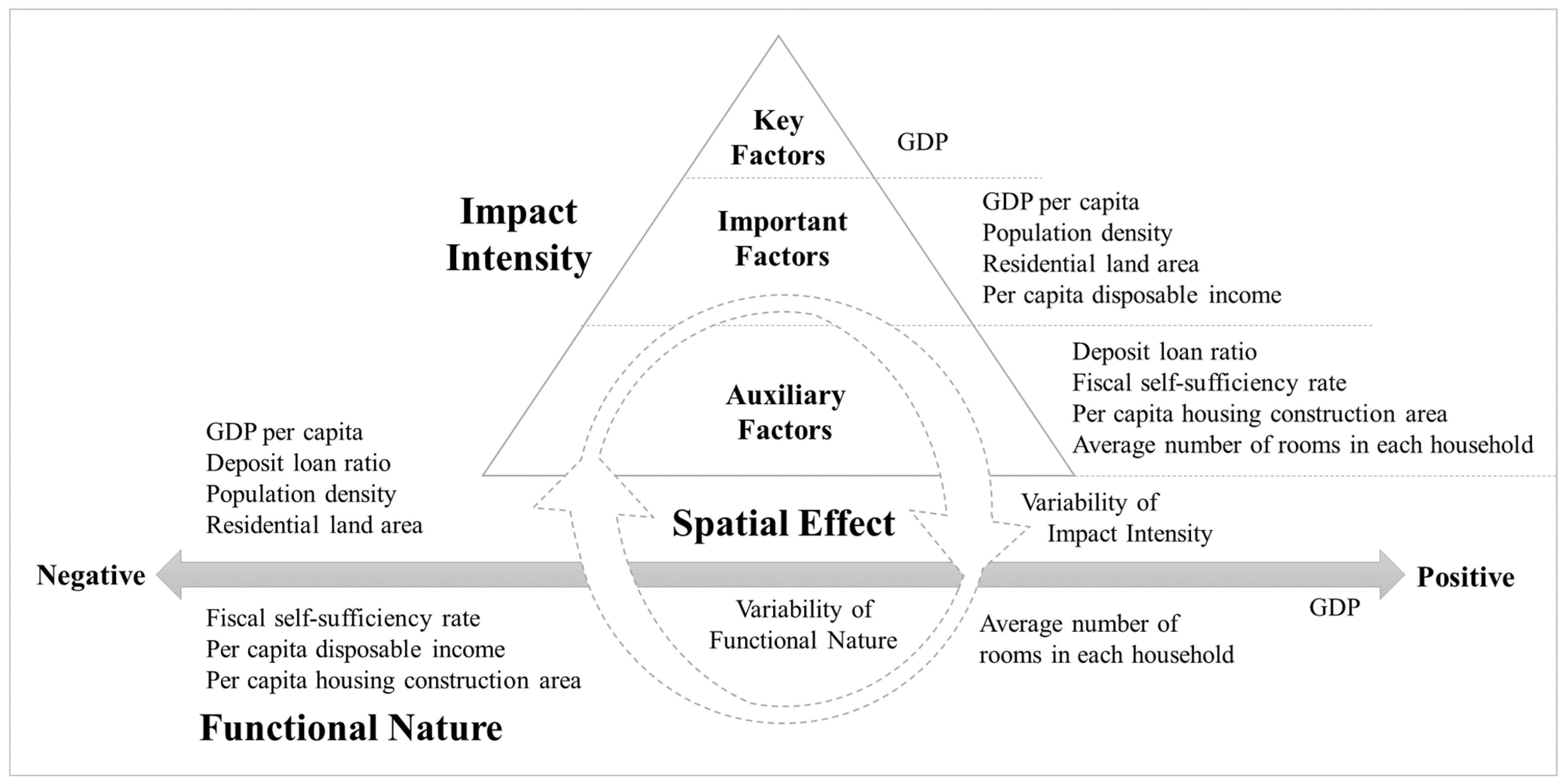
Empirical research using the GWR model demonstrates that the impact mechanism of China’s real estate inventory constitutes a complex system driven by GDP as the overarching core, involving multiple synergistic factors and severely constrained by spatial effects. Economic scale is the only factor that consistently acts as a driver across all cities, while factors such as population and income, land and housing supply, and financial and fiscal instruments simultaneously exert both driving and inhibiting effects. The inertia of China’s economy “being dominated by real estate” remains formidable, and the journey to truly restore housing to its fundamental purpose of providing shelter is still long and arduous [
75]. The GWR model reveals strong spatial non stationarity in the influence of all factors, with distinct regional differentiation patterns, forming a typical core edge spatial pattern. Overall, the impact of different factors on real estate inventory involves complex mechanisms, exhibiting distinct characteristics of differentiated nature, stratified intensity, and spatial variation. Future policy design for real estate inventory management must consider the nature and intensity of these factors while focusing on the spatial effects that drive their variability (
Figure 8).
5. Conclusions
Analyzing real estate inventory trends from temporal and spatial perspectives while delving into the mechanisms of influencing factors holds significant theoretical innovation value and carries great importance for scientifically formulating real estate market regulation policies and guiding enterprises’ inventory management strategies in practice. This study examines the spatiotemporal evolution patterns and influencing factors of real estate inventory in 287 Chinese cities from 2017 to 2022. Using multidisciplinary methodologies including Geographic ESDA, the Boston Matrix from management science, and the geographically weighted regression model from economics, it quantitatively analyzes these phenomena and proposes policy implications.
The findings reveal that, first, China’s real estate inventory management has undergone a cyclical shift from “de-stocking” to “restocking”, with the underlying logic transitioning from policy-driven mechanisms to fundamental economic factors, including demographic trends, income levels, and market expectations. Second, China’s real estate inventory and its fluctuations exhibit distinct temporal and spatial differentiation patterns alongside spatial clustering tendencies, revealing a spatial structure characterized by “multiple clustered highlands with peripheral lowlands” driven by urban clusters. The geographical distribution of cities with high inventory has always had the characteristic of multi-center cluster agglomeration, forming a loose core-periphery structure with the central cities of about 10 representative urban agglomerations as the core. In contrast, the geographical distribution of low-inventory cities has formed a spatial pattern characterized by one major and two minor clusters, with the center of agglomeration gradually shifting from the north to the south. Third, the results of the GWR model-based analysis clearly demonstrate that the impact mechanism of China’s real estate inventory constitutes a complex system driven by macroeconomic factors, regional divergence, and structural contradictions. In short, real estate inventory is not merely a simple accumulation of numbers, but rather the combined result of multiple mismatches in supply and demand across time, space, and structure. It is both the “result” of market imbalance and a warning “signal” for future risks. Effective inventory management must fundamentally regulate supply-demand relationships, optimize supply structures, stimulate real demand, and prevent policy-driven short-term fluctuations from masking long-term structural contradictions.
It is suggested that first of all, the design of destocking policies should shift from “short-term stimulus” to “long-term coordination”. It calls for breaking away from reliance on short-term policy tools (such as credit easing and shantytown renovation), promoting deep alignment between policy and urban fundamentals, and incorporating fundamental indicators like population, income, and expectations into the inventory risk monitoring system. Second, destocking policies should evolve from “industrial policy” to “spatial policy”. It requires incorporating dynamic indicators such as inventory growth rate or destocking period into inventory management frameworks, establishing a real estate inventory dynamic monitoring and risk assessment index. Based on the spatial differentiation and linkage patterns revealed by this new index, efforts should accelerate to develop emerging real estate inventory management tools featuring “dynamic monitoring, targeted governance, and tiered early warning”. Third, the design of destocking policies should shift from addressing superficial market “symptoms” to tackling the “root causes”. To design truly effective and sustainable destocking policies, it is essential to look beyond superficial appearances and gain a deep understanding of the underlying mechanisms at play across different spatial scales. This includes comprehending the scale and purchasing power of population demand, economic geography, and the role of financial and fiscal incentive tools. Policies must precisely align with the nature, intensity, and spatial effects of these influencing factors.
The study’s innovations include: (1) enhancing the accuracy of the analysis results by refining the study scale from the macro level of national and provincial regions to the meso-micro level of cities; (2) enhancing the universality of the findings by expanding the study scope from a small sample of a single city or urban agglomeration to a large sample covering the whole country; (3) developing a dynamic analysis method for real estate inventory by incorporating inventory growth rates, and employing spatial econometric models to examine the causal mechanisms and spatial effects of influencing factors, providing a valuable reference case for real estate inventory management research in other countries around the world.
There are also some limitations in the study. First, the short time series may lead to short-term or phased characteristics in some regular understandings. Future empirical analyses using longer time series data are needed to supplement and validate these findings. The Chinese government’s focus on real estate inventory dates back to around 2011, with national and local policy design and implementation commencing in 2015. During this period, China has accumulated substantial experience and data in managing real estate inventory. However, constrained by the absence of nationally standardized statistical data, the timeframe of this study is limited to 2017–2022. The data currently utilized represents the most comprehensive official information available. Future research may consider employing methods such as web scraping of big data (e.g., from real estate developers’ official websites or third-party platforms like E-House Research Institute and Fang.com) and corporate survey data (e.g., conducting interviews or questionnaires with representative real estate enterprises) to facilitate cross-validation with this study. It is worth noting that conducting empirical analysis using narrowly defined data allows for capturing a significant portion of real estate inventory risks, such as corporate funding chain disruptions, market supply-demand imbalances and liquidity shortages, as well as the effectiveness of policy interventions. However, it may also overlook certain risks, including long-term supply-demand mismatch risks stemming from speculative land reserves and irrational risks arising from distorted market expectations. Second, the dynamic analysis tool developed by integrating the relative share and growth rate of real estate inventory still has considerable room for improvement, with its analytical results being significantly influenced by threshold settings. Subsequent research should consider alternative thresholding approaches including the median value or expert-derived thresholds, with comparative analysis employed to determine the most robust methodology. Additionally, given the abundance of indicators characterizing the dynamics or trends of real estate inventory, growth rates may not necessarily be the optimal choice. Future research may explore utilizing indicators such as inventory reduction period, area of real estate under construction, and area of undeveloped land, and the most suitable approach for the study area can be selected through comparative studies.