


Abstract
Exploring the spatiotemporal evolution of building stock in African countries is of great significance for understanding the urbanization process, regional development disparities, and sustainable development pathways in the Global South. Integrating long-term (1975–2020), 100 m resolution building stock data for Tanzania with multi-source environmental and socioeconomic datasets, this study employed GIS spatial analysis techniques—including optimized hotspot analysis, standard deviational ellipse, and geographical detector—to investigate the spatiotemporal evolution characteristics and influencing factors of building differentiation. The results indicate that over the 45-year period, Tanzania’s building stock underwent rapid expansion, with a 3.83-fold increase in volume and a 4.93-fold increase in area, while the average height decreased continuously by 1.04 m. This growth was predominantly driven by the expansion of residential buildings. The spatial distribution of buildings exhibited a “north-dense, south-sparse” pattern with agglomeration along traffic axes. During 1975–1990, building growth hotspots were concentrated in western and southern regions, shifting to areas surrounding Lake Victoria and central administrative centers during 2005–2020. In contrast, coldspots expanded progressively from northern, northeastern regions and Zanzibar Island to parts of the southern and eastern coasts. The building distribution consistently maintained a northwest–southeast spatial orientation, with increasingly prominent directional characteristics; the centroid of building distribution moved more than 90 km northwestward, and the agglomeration intensity continued to increase. Socioeconomic factors—including population density, road network density, and GDP density—have a significantly stronger influence on building distribution than natural factors. Among natural factors, only river network density exhibits a significant effect, while constraints such as slope and terrain relief are relatively insignificant.
1. Introduction
1.1. Background
Africa is experiencing one of the world’s most rapid urbanization processes, with its urban population projected to triple by 2050 [1]. This unprecedented growth is reshaping the continent’s built environment, with urban and rural settlements expanding and transforming to accommodate growing populations and shifting economic activity [2,3]. Among African countries, Tanzania stands out for its dynamic demographic and spatial changes: its population grew from 16 million in 1975 to over 61 million in 2020, with the urbanization rate increasing from 11% to 35% over the same period. Such rapid growth has led to profound changes in the country’s building stock, reflecting the complex interplay between population pressure, economic development, and policy interventions.
Buildings, as the physical carriers of human activities, encapsulate the dynamics of urbanization. Changes in their volume, area, and height not only mirror demographic and economic trends but also reveal underlying patterns of resource allocation, land-use efficiency, and sustainable development [4]. In lower-middle-income countries like Tanzania—where formal planning systems are often weak and informal settlements proliferate—building expansion frequently follows pathways that defy conventional models of compact, vertically dense cities common in the Global North [5]. This “flat,” horizontal sprawl, driven by acute housing demand and informal land markets, raises pressing questions about long-term sustainability, land-use efficiency, and resilience. However, a systematic, long-term, and three-dimensional (3D) understanding of this building stock evolution—one that quantifies not just area but also volume and height to reveal the mode of expansion—is critically lacking for most African nations. This gap hinders our ability to assess the true spatial and environmental costs of current growth patterns and to formulate evidence-based policies for more sustainable urban futures.
Against this backdrop, analyzing the spatiotemporal evolution of buildings in Tanzania offers a window into the broader processes of African urbanization. Such efforts can clarify how developing countries address the trade-off between growth and sustainability and provide insights for evidence-based policymaking in urban planning, infrastructure investment, and livelihood improvement.
1.2. Spatial Studies of Building Stock in the Global South
Research on the built environment and urbanization has become a multidisciplinary field—integrating geography, urban planning, and environmental science—with a growing focus on applying spatial analysis and remote sensing techniques to explore human settlement dynamics [6,7,8]. Over the past few decades, advances in 3S (Remote Sensing, Geographic Information System, Global Positioning System) technology and the availability of long-term, high-resolution datasets have enabled scholars to investigate the spatial patterns, temporal changes, and driving mechanisms of buildings and settlements across multiple scales [9,10]. These studies provide critical insights into how urban and rural spaces respond to demographic shifts, economic development, and policy interventions, laying the foundation for sustainable development planning. Relevant research is summarized across three key aspects.
1.2.1. Patterns of Building Distribution
Studies on the spatial distribution of buildings primarily focus on characterizing their density, aggregation patterns, and regional disparities [11,12,13]. These investigations vary in temporal depth and purpose. At the global scale, existing research has revealed a highly uneven distribution of buildings [14], with concentrations in coastal zones, river basins, and transportation corridors—reflecting the combined influence of natural conditions and human activities. Many global and regional studies, however, rely on cross-sectional or short-term data, focusing on snapshots of distribution patterns rather than long-term dynamics. For example, in Asia, studies on megacities such as Shanghai and Tokyo have examined building density in relation to public transit and economic zones, often using data from the last two decades to inform urban planning and transportation policy [15,16]; in Europe, research has emphasized compact urban forms and mixed-use buildings, influenced by long-term planning traditions and land scarcity, with analyses frequently covering post-war urban development [17,18]. In contrast, African studies have highlighted the prevalence of low-rise, scattered buildings in both urban and rural areas, often linked to informal settlement expansion [19,20], and significant regional gaps between coastal and inland areas [21,22]. These studies, while insightful, are typically limited to specific cities or short time frames, and rarely provide nationwide, multidecadal perspectives on building distribution.
1.2.2. Trajectories of Building Spatiotemporal Evolution
The spatiotemporal evolution of buildings refers to changes in their quantity, form, and spatial extent over time, which are closely tied to stages of urbanization [23,24]. Longitudinal studies in developed countries, often spanning several decades, show that building evolution follows a typical “concentration–expansion–intensification” trajectory [25,26]. These studies aim to understand phased urban growth and inform land-use planning. In developing countries, however, the trajectory is more complex and less documented over long periods. Rapid population growth and weak planning systems often result in “sprawling expansion”—characterized by large-scale horizontal expansion of low-rise buildings, with informal settlements accounting for a significant proportion [27,28]. For instance, studies in Latin America have documented how unplanned peri-urban areas expand outward from cities over time, often analyzing 20–30-year periods to assess land-use change and environmental impacts [29,30]. In Africa, while similar trends have been identified, most studies are either localized or cover limited time spans, focusing on urban expansion rather than detailed building-level characteristics such as height and volume changes [31,32]. This gap limits our understanding of how building forms adapt to long-term socioeconomic shifts.
1.2.3. Factors Influencing Building Differentiation
Scholars have identified a range of factors shaping building distribution, which can be broadly categorized into socioeconomic and natural-environmental factors [33,34,35]. Research in this area varies in geographic focus and temporal scope, often aiming to model urban growth or assess policy impacts. Socioeconomic factors are widely recognized as dominant: population density directly drives demand for residential and public service buildings [36]; economic development promotes the expansion of commercial and industrial buildings [37]; transportation networks guide linear building growth along corridors [38]; and policies can redirect building expansion to specific regions. Many of these studies use multi-temporal data to correlate factors with urban expansion, but few dissect their relative influences on building distribution in African contexts over extended periods. Natural-environmental factors, while secondary in urbanized areas, still play a role in shaping building patterns, particularly in less developed regions [39]. Topography restricts building construction in mountainous areas [40]; water resources attract settlements, as seen in the concentration of buildings along the Nile in Egypt and Lake Victoria in East Africa [41,42]; and climate conditions influence building materials and density, with arid regions exhibiting lower building concentrations due to water scarcity [43]. In studies focusing on Africa, the interplay between these factors is often emphasized: for example, in Kenya, road network expansion has driven building growth in rural–urban transition zones, while in Ethiopia, population pressure has led to the conversion of agricultural land to low-rise residential buildings [44,45].
1.2.4. Identified Research Gaps
Despite progress in understanding building dynamics, significant gaps remain, particularly for low- and middle-income African countries. First, existing studies lack a detailed analysis of building-level characteristics (e.g., height changes and volume–area relationships), focusing instead on land-use or settlement boundaries, which limits insights into spatial efficiency and sustainability. Second, long-term nationwide studies on building evolution are scarce, hindering comprehension of how patterns respond to major socioeconomic shifts. Third, the factors influencing building differentiation in African countries are underexplored, with little attention paid to how interactions between population growth, transportation, and natural resources shape spatial patterns. Our study addresses these gaps by examining Tanzania’s building stock from 1975 to 2020, integrating building volume, area, and height metrics with spatial analysis to reveal long-term trends and influencing factors. Beyond filling the methodological and empirical gaps, a deeper understanding of such building patterns is critical for sustainable development in the Global South. The physical expansion and form of buildings are the direct, tangible outcomes of underlying processes such as rapid population growth, informal settlement dynamics, sociopolitical transitions, and international investments. Analyzing these patterns allows us to assess their implications for key sustainability challenges: the efficiency of land and resource use, the equity of access to services and shelter, the resilience of communities to environmental risks, and the long-term effectiveness of infrastructure investments. Therefore, by systematically quantifying and mapping Tanzania’s building evolution, this study provides an essential evidence base for evaluating how current urban development pathways align with or diverge from the goals of sustainable and inclusive urban growth.
1.3. Study Area Selection
Tanzania was chosen as the study area for three key reasons. First, Tanzania’s urbanization trajectory exemplifies that of lower-middle-income nations across Africa: rapid population growth, a mix of formal and informal development, and significant regional disparities between coastal and inland areas [46,47]. This diversity enables a nuanced analysis of building dynamics across different contexts. Second, Tanzania’s policy experiments—such as the relocation of the capital from Dar es Salaam to Dodoma and land reform in the 1990s [48]—provide natural experiments to explore how policy interventions shape building distribution patterns. Third, and critically, Tanzania represents a salient case of South–South cooperation, particularly with China, which has emerged as a major partner in infrastructure and urban development across Africa. China has been Tanzania’s largest trading partner since 2016 and a leading financier of large-scale transport and energy projects, such as the upgrading of the Tanzania–Zambia Railway (TAZARA) and the expansion of Dar es Salaam Port. These projects may directly influence spatial accessibility, economic corridors, and consequently, building expansion patterns. Moreover, under the Belt and Road Initiative (BRI), Tanzania has attracted significant Chinese investment in Special Economic Zones (SEZs), industrial parks, and housing projects [49], which could reshape its built environment.
1.4. Research Objectives
Informed by the identified literature gaps and the critical urban challenges outlined above, this study addresses the following central problem: The patterns, influencing factors, and sustainability implications of building stock evolution in rapidly urbanizing African countries remain poorly quantified and understood at a national scale over extended periods. To address this, we pose a primary research question: How has Tanzania’s building stock—in terms of its volume, area, height, and spatial distribution—evolved over the past 45 years, and what do these changes reveal about the dominant mode of urbanization and its key influencing factors? Specifically, this study aims to:
- To characterize long-term trends in building volume, area, and height and explore differences between residential and non-residential buildings.
- To reveal spatial patterns of building distribution, including changes in hotspots and shifts in distribution direction and center.
- To elucidate the relative influences of socioeconomic factors and natural factors on building dynamics.
- To derive evidence-based spatial insights that can inform sustainable urban–rural planning and provide a contextual framework for assessing the potential spatial implications of major infrastructure investments—including those under international cooperation frameworks, such as China’s investments, given its substantial and growing role in Tanzania’s transport, energy, and urban projects.
By addressing these objectives, this study offers three main contributions: (1) Empirically, we provide the first detailed, national-scale account of decadal changes not only in building footprint and volume but also in average height for Tanzania, offering a quantified perspective on the “horizontal sprawl” model; (2) Methodologically, we demonstrate the value of jointly analyzing area, volume, and height derived from the Global Human Settlement Layer (GHSL) dataset, combined with spatial statistics, to dissect the multidimensional patterns and factors influencing building differentiation; and (3) Theoretically, the Tanzanian case yields insights that refine the understanding of urbanization in resource-constrained contexts. Findings such as the declining average height, the weak explanatory power of natural constraints, and the precise spatial interplay of infrastructure and growth hotspots offer new evidence for debating sustainable development pathways, the role of informality, and the spatial impacts of international cooperation in Africa and the broader Global South.
2. Materials and Methods
2.1. Overview of the Study Area
Tanzania is located in East Africa, south of the equator. It borders Kenya and Uganda in the north; Zambia, Malawi, and Mozambique in the south; Rwanda, Burundi, and the Democratic Republic of the Congo in the west; and the Indian Ocean in the east (Figure 1). Tanzania consists of two regions, Tanganyika (mainland) and Zanzibar (island), with a total territorial area of 945,000 km2. The national capital is Dodoma, while Dar es Salaam remains the economic hub. Tanzania is divided into 31 regions, including 26 on the mainland and 5 in Zanzibar. There are currently 195 districts and 4344 wards in the country. As of June 2024, Tanzania has a population of approximately 67.44 million, ranking fifth among African countries in terms of population. Tanzania is one of the top ten economies in Africa and also one of the continent’s fastest-growing major economies. In July 2020, Tanzania was classified as a lower–middle-income country by the World Bank, becoming the second country in East Africa to be included in the middle-income category [50].
Figure 1.
Location Map of Tanzania. (Data sources: Tanzania National Bureau of Statistics; Database of Global Administrative Areas (GADM). The purple area on the top-right map indicates Tanzania’s location in Africa.).
2.2. Data Source and Processing
The types and sources of data used in the research are presented in Table 1. Tanzania’s building area and volume data—for four key time points (1975, 1990, 2005, 2020)—were obtained from the GHSL dataset. The average building height for each spatial unit and time period was calculated as the ratio of total building volume to total building footprint area (h = V/A), providing a representative indicator of vertical development intensity. Rainfall and temperature data were derived from the World Bank Climate Change Knowledge Portal, and soil type data were obtained from the International Livestock Research Institute. Elevation data were derived from the Shuttle Radar Topography Mission (SRTM), with slope and terrain relief calculated based on this elevation data. River and road network data were taken from OpenStreetMap, and the density of both river networks and road networks was computed, respectively. Population data originates from the GHSL, and Gross Domestic Product (GDP) and electricity consumption data are sourced from the Scientific Data website. The aforementioned raster datasets were processed through standard steps: seamless mosaicking, cropping, and projection normalization.
Table 1.
Data types and sources.
Administrative division data and socioeconomic statistics are provided by the Tanzania National Bureau of Statistics and Database of Global Administrative Areas.
2.3. Research Methods
2.3.1. Optimized Hotspot Analysis
Optimized Hotspot Analysis is a Geographic Information System (GIS) spatial statistical method that has evolved from classical hotspot analysis (e.g., the Getis-Ord Gi* statistic) and is designed to identify and quantify spatially clustered patterns of high-value (hotspots) or low-value (coldspots) phenomena more accurately [51]. As a core tool in spatial pattern analysis, it addresses key limitations of traditional approaches, which often rely on fixed analytical scales or oversimplified spatial weighting, leading to biased results in heterogeneous landscapes. By adapting to the intrinsic complexity of spatial data, optimized hotspot analysis delivers more context-aware, reliable insights into clustered phenomena—from environmental gradients to urban development—making it invaluable for targeted decision-making in spatial planning and resource management. The method, which utilizes the Hotspot Analysis module in ArcGIS 10.8, is used to analyze the high- and low-value clustering areas of building changes in Tanzania at different stages. The spatial units of analysis were districts in Tanzania.
2.3.2. Standard Deviation Ellipse Analysis
Standard Deviational Ellipse (SDE) is a GIS spatial analysis method used to quantify the spatial distribution pattern of geographic features [52]. It generates an ellipse that statistically summarizes three key aspects of a distribution: the center, which represents the mean location of features; the azimuth—defined as the clockwise angle from due north to the ellipse’s major axis—which indicates the dominant dispersion direction; and the oblateness—calculated as (major axis-minor axis)/major axis—which indicates the directionality of the feature distribution. A larger oblateness value indicates more pronounced directionality. Typically, a one-standard-deviation ellipse encloses roughly 68% of the features, capturing the core distribution. We employed the Standard Deviational Ellipse tool in ArcGIS 10.8 to study the directionality and central variation characteristics of building distribution in Tanzania. The spatial units of analysis are building surfaces in Tanzania, weighted by the area of the buildings.
2.3.3. Geographic Detector
Geographic Detector is a spatial statistical method developed to quantify spatial stratified heterogeneity and assess the statistical association between potential factors and geographical phenomena [53]. Its core lies in the q-statistic, which measures the explanatory power of an influencing factor on the spatial pattern of a target variable. Mathematically, the q-value is calculated as 1 − [Σ(σ_h2N_h)/(σ2N)], where σ_h2 is the variance of the target variable within subregion h, N_h is the number of samples in subregion h, σ2 is the global variance, and N is the total number of samples. By definition, the q-value ranges from 0 to 1. A q-value close to 1 indicates that the factor strongly explains the spatial heterogeneity of the target. A q-value near 0 suggests weak or no explanatory power. It can handle both categorical and numerical variables, making it widely used in fields such as public health, ecology, urban studies, and environmental science. We used Geographic Detector (implemented via the Geodetector Software Version 1.0 in Excel) to explore the factors influencing building differentiation in Tanzania. Referring to existing research and considering data availability, we classified the factors that affect the building distribution into two categories: natural-environmental factors and socioeconomic factors. The former includes soil type, temperature, rainfall, elevation, slope, terrain relief, and river network density, and the latter includes population density, GDP density, road network density, electricity consumption, and district status. The spatial units of analysis are wards in Tanzania.
3. Results
3.1. Overall Changes in Building Indicators
Using building volume and area data from GHSL, we calculated the changes in building volume, area, and average height in Tanzania from 1975 to 2020. The results are presented in Table 2. Over the 45-year period, Tanzania’s total building volume increased from 3.73 billion m3 to 14.27 billion m3—a roughly 3.83-fold increase—showing a continuous expansion trend with a gradually accelerating growth rate. Residential buildings accounted for over 97% of the total volume—more than 100 times that of non-residential buildings. Although the volume of non-residential buildings increased from 0.08 to 0.12 billion m3, their proportion continued to decline.
Table 2.
Changes in Building Volume, Area, and Average Height in Tanzania from 1975 to 2020.
The total building area increased from 0.83 to 4.09 billion m2, a roughly 4.93-fold increase over the 45-year period, and the growth trajectory was generally consistent with that of building volume. The proportion of residential building area exceeds 98%, while the proportion of non-residential building area decreased from 1.1% to 0.4%, consistent with the volumetric structural characteristics.
The average height of buildings decreased from 4.53 to 3.49 m, a decrease of 1.04 m in 45 years, and the decline rate accelerated in the later period. The average height of residential buildings has consistently been lower than that of non-residential buildings; however, both exhibited a downward trend: the former have decreased in height from 4.48 to 3.47 m, whereas the latter have decreased from 9.24 to 7.52 m. Residential buildings have always been dominated by low-rise buildings; in comparison, non-residential buildings, although remaining relatively high, have also shown a height reduction, with an accelerated decline in height since 2005. The contrast between falling average height and rising volume/area indicates that Tanzania’s building expansion relies primarily on “horizontal expansion” rather than “vertical growth”—specifically, constructing more low-rise buildings to meet housing demand. Specifically, the average height of buildings in all regions decreased over the past 45 years, with the Mwanza region experiencing the largest decrease, followed by Songwe, Kaskazini Pemba, and Kigoma.
Overall, from 1975 to 2020, buildings in Tanzania exhibited characteristics of “rapid expansion in volume and area and continuous decline in average height”. The core driving force was the rapid growth of residential buildings, reflecting the human settlements expansion model dominated by population and housing demand, with horizontal sprawl and low-rise as the main forms [54].
3.2. Overall Characteristics of Building Distribution
The spatial distribution of building density in Tanzania in 2020 is shown in Figure 2. With the main line of the central railway as the boundary, the overall building distribution in Tanzania exhibits a “north-dense, south-sparse” pattern, with the building density north of the line being 1.2 times that of the south. The building density is relatively high along the railway lines, along the eastern coast, and around Lake Victoria; in comparison, it is relatively low in the south-central and southeastern inland areas.
Figure 2.
Spatial distribution of building density in Tanzania in 2020. (Data sources: Building density derived from GHSL data; administrative boundaries from Tanzania National Bureau of Statistics).
The distribution of building density in Tanzania shows significant imbalances at both zonal and provincial scales. The building density in the lake zone (here, “lake” refers to Lake Victoria, similarly hereinafter) is the highest, significantly higher than in other zones. The western and eastern zones rank second, with similar levels of building density, both at a medium-to-high level. The building density in the northern and central zones is moderate. While the building density in the southern highland and southern zones is relatively low, with that in the southern zone being the lowest in the country, only roughly 30% of the building density is in the lake zone. Most regions have a low building density, but with large intra-zonal disparities. For example, the building density of Dar es Salaam and Mjini Magharibi regions in the eastern zone is far higher than that of other regions, roughly 6–7 times that of the second-tier regions. Other regions in the eastern zone have extremely low building density. In the lake zone, Mwanza has the highest building density; in comparison, that of Kagera amounts to only roughly 30% of the above value. The above results reflect the highly concentrated spatial characteristics of population and economic activities.
3.3. Optimized Hotspots Analysis of Changes in Building Area
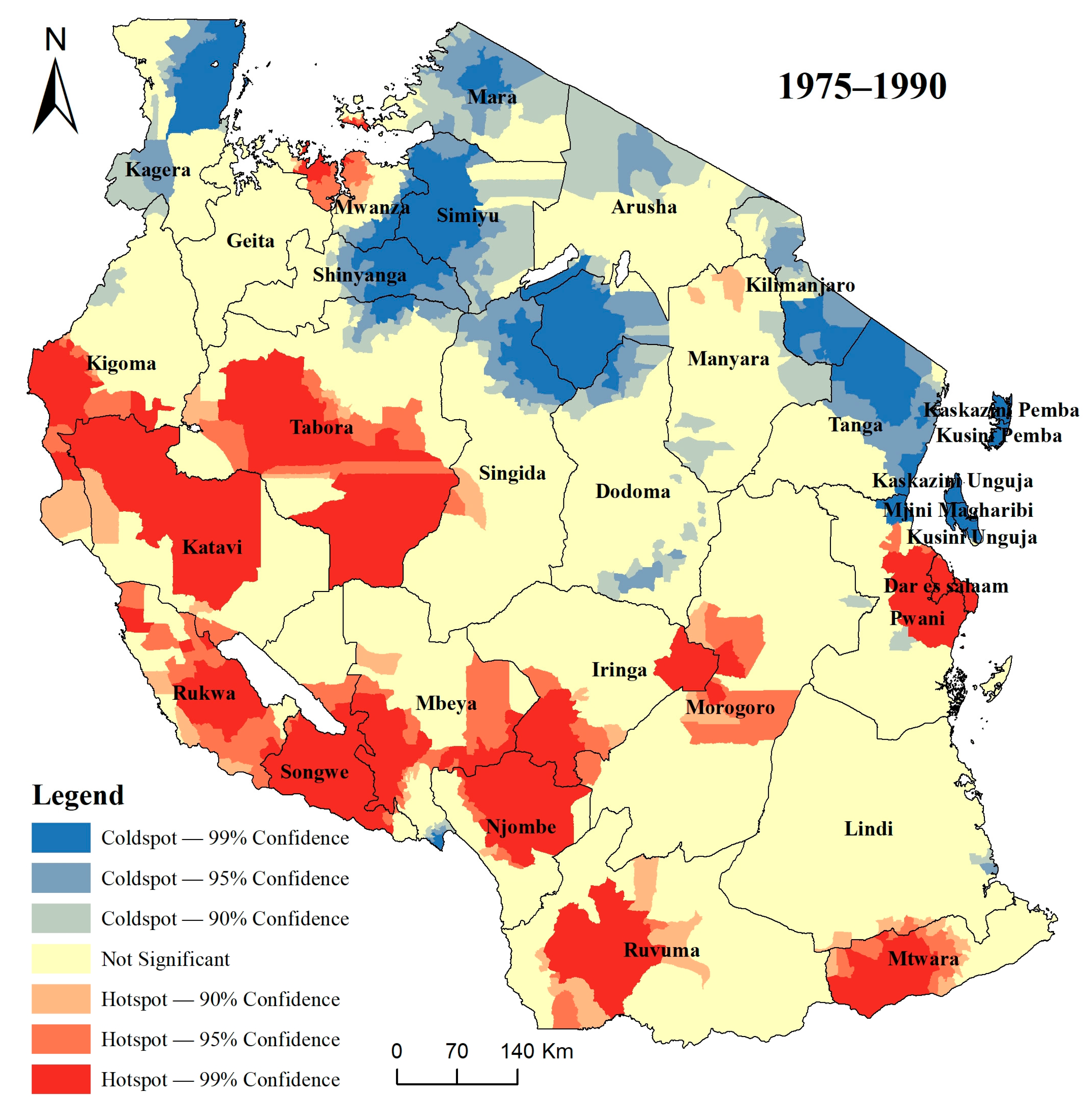
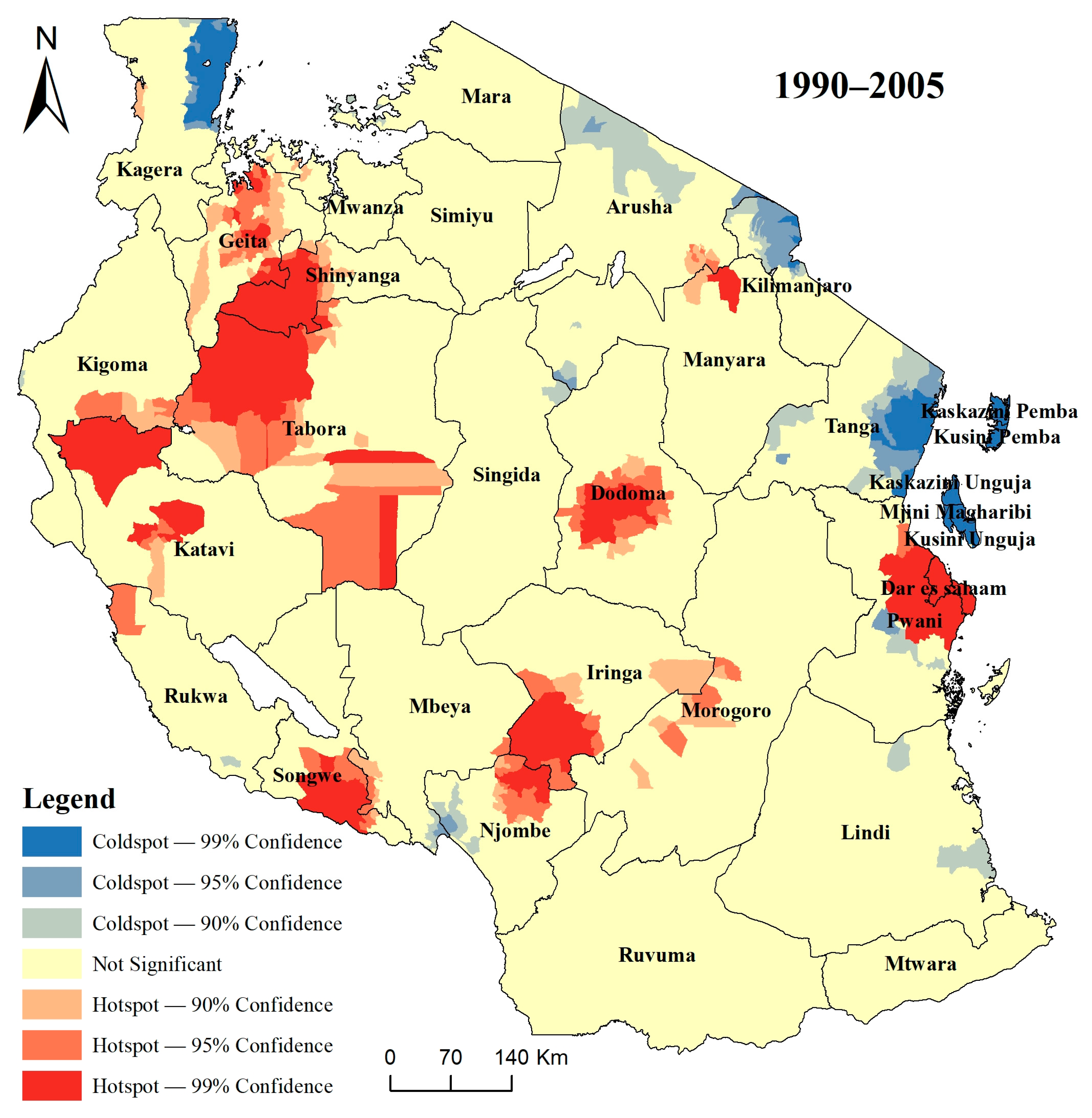
The optimized hotspots analysis results of the changes in building area in Tanzania from 1975 to 2020 are shown in Figure 3, Figure 4 and Figure 5. The results indicate that the hotspots and coldspots showed significant dynamic changes in spatial distribution.
- 1.
- 1975–1990
The hotspots of building area growth were mainly distributed in the western and southern zones between 1975 and 1990, including Tabora, Katavi, Kigoma, Rukwa, and Songwe regions. This finding was likely related to local resource development and initial infrastructure construction. In addition, Dar es Salaam, Pwani, and Morogoro (eastern zone) and Mwanza (lake zone) were also hotspots for building area growth. Dar es Salaam, an important coastal city with a major port, became a foreign trade hub due to its advantageous geographical location. The concentration of commercial activities and population has driven the increase in construction demand, making Dar es Salaam and its surrounding regions (Pwani, Morogoro) hotspots. Mwanza relies on Lake Victoria’s water and fishery resources, establishing a modest industrial foundation and driving building area growth.
The coldspots of building area growth were mainly distributed in the northern and northeastern parts of Tanzania, such as Kagera, Mara, Simiyu, Kilimanjaro, and Tanga. In addition, all regions on Zanzibar Island were also coldspots. Regions such as Kagera and Mara in the north had complex terrain, underdeveloped transportation, and weak infrastructure, which limited economic development and building expansion. Due to geographical isolation and insufficient economic ties with the mainland, the regions of Zanzibar Island had a relatively single industrial structure and lack sufficient development momentum [55], leading to slow building area growth.
Figure 3.
Spatial distribution of hotspots and coldspots in relation to building area changes from 1975 to 1990. (Data sources: Building change analysis based on GHSL data; administrative boundaries from Tanzania National Bureau of Statistics).
- 2.
- 1990–2005
Compared with the previous period (1975–1990), the hotspots and coldspots of building area growth in Tanzania (1990–2005) had significantly decreased and were relatively more dispersed. The hotspots were still mainly located in the western and southern zones but had shrunk significantly, particularly in regions such as Kigoma, Katavi, Rukwa, and Mbeya. Geita and Shinyanga (southern Lake Victoria) and Dodoma (central zone) had become new hotspots, likely due to the recent discovery and development of mineral resources and the catalytic role of administrative centers. Dar es Salaam and its surrounding areas continued to be hotspots because Dar es Salaam’s position as an economic center had been further consolidated, and foreign trade and industrial development continued to drive building demand.
The coldspots had also shrunk significantly, with those previously concentrated in the north and northeast having almost completely disappeared. This change could have been the result of government investment in infrastructure and economic policy support for these regions. The improvement of transportation infrastructure had strengthened the connections between these regions and other parts of Tanzania, promoting economic development and building expansion. Kagera, Arusha, Kilimanjaro, parts of Tanga, and all regions on Zanzibar Island continued to be coldspots due to challenges related to industrial structure transformation and geographical constraints.
Figure 4.
Spatial distribution of hotspots and coldspots in relation to building area changes from 1990 to 2005. (Data sources: Building change analysis based on GHSL data; administrative boundaries from Tanzania National Bureau of Statistics) 2005–2020.
Although the hotspots and coldspots in some areas had shrunk, the overall area of hotspots and coldspots had significantly expanded compared with the previous period (1990–2005). The southern shore of Lake Victoria had become a concentrated hotspot area, including the newly added hotspots of Mwanza, Simiyu, Shinyanga, and Tabora. This finding was likely related to the large-scale development of agriculture, the intensive exploitation of fishery resources, and the improvement of transportation networks. In addition, the hotspots of Mara, Kagera, and Geita (along Lake Victoria) and Singida (central zone) had also shown significant growth, mainly due to tourism development and advances in agricultural technology, which had driven the development of related industries [56]. Dar es Salaam and its surroundings were no longer hotspots, and some areas had changed from hotspots to coldspots. Due to long-term development in the region, land resources were becoming increasingly scarce. Concurrently, problems such as traffic congestion and environmental degradation that had arisen during urbanization had also affected the development of new construction projects.
The newly added coldspots were mainly distributed in Rukwa, Mbeya, Ruvuma, Mtwara, Lindi in the south, and Tanga in the east. Due to the gradual loss of resource advantages in these regions and the impact of natural disasters, economic development had slowed down and construction demand had decreased. The regions on Zanzibar Island had always been coldspots, indicating that development bottlenecks still existed.
Figure 5.
Spatial distribution of hotspots and coldspots in relation to building area changes from 2005 to 2020 (Data sources: Building change analysis based on GHSL data; administrative boundaries from Tanzania National Bureau of Statistics).
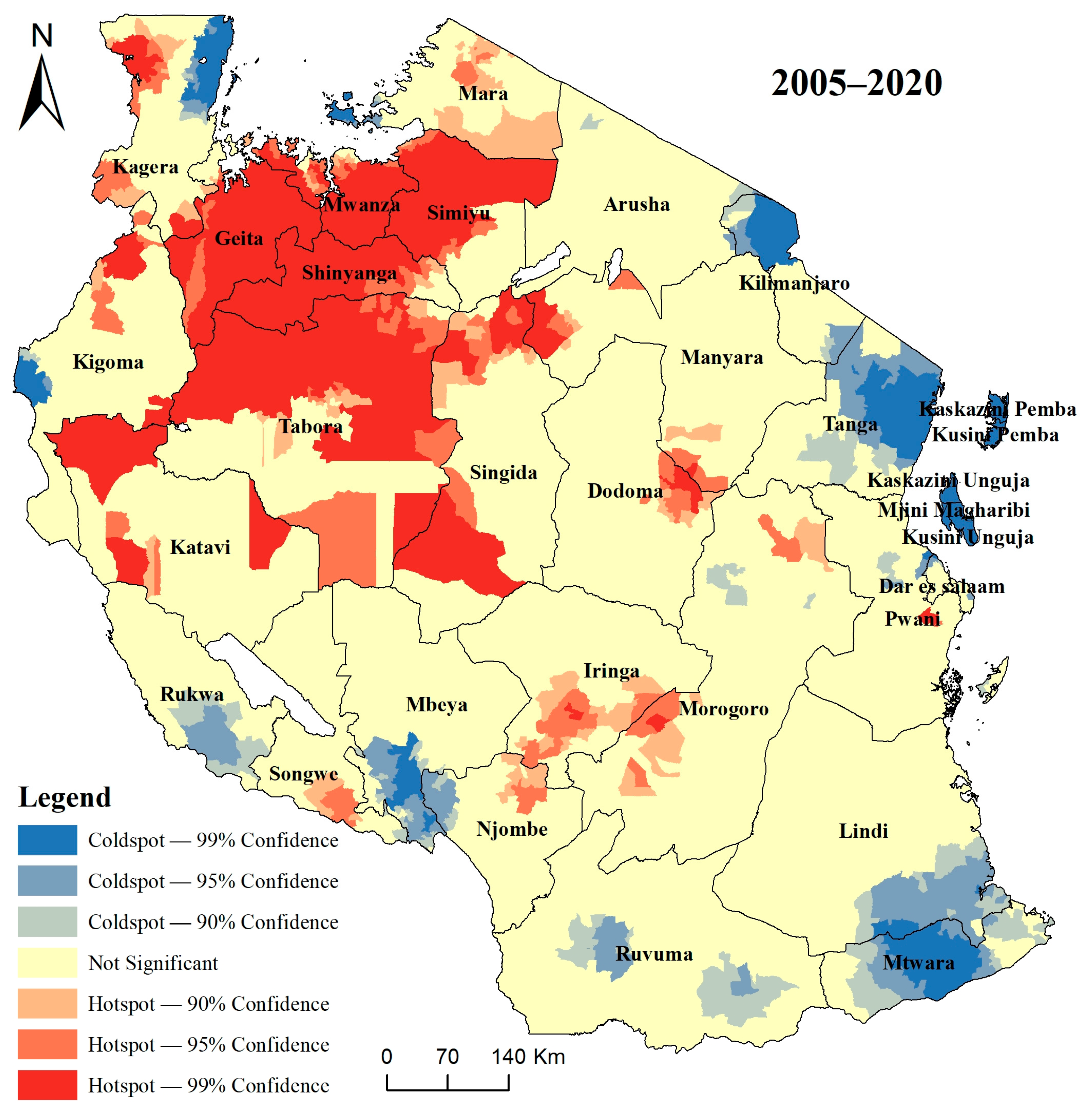
Over the 45-year period, hotspots had gradually shifted from the initial western, southern, and eastern regions to the lake and central regions; in contrast, coldspots had gradually spread from the northern, northeastern, and Zanzibar Island’s regions to southern and eastern regions. This change was influenced by various factors, including resource development, policy adjustments, transportation infrastructure construction, and industrial transfer, reflecting the evolution of Tanzania’s regional development strategies and economic patterns across different periods [57].
3.4. Distribution Direction and Center of Building Area
A weighted standard deviation ellipse analysis was conducted on Tanzania’s building surfaces (1975–2020), with building area as the weight. The results are shown in Figure 6 and Table 3, respectively. The geographic coordinates and other data in Table 3 were derived from the standard deviation ellipse analysis results. The ellipse’s azimuth changed slightly from 132.60° to 134.75° (1975–2020), indicating that the overall spatial distribution of building area in Tanzania remained stable in a northwest–southeast direction. This alignment was consistent with Tanzania’s general terrain, human settlement patterns, and the main direction of the central railway line [57].
Figure 6.
Standard deviation ellipse analysis map of building area in Tanzania. (Data sources: Building area from GHSL; administrative boundaries from Tanzania National Bureau of Statistics).
Table 3.
Standard deviation ellipse analysis results for building area in Tanzania.
In 1975, the ellipse center was located in west–central Dodoma, near the northern side of the main central railway line. From 1975 to 1990, it moved 24 km southwest; from 1990 to 2005, it shifted a further 17 km northwest. During this 30-year period, the elliptical center moved a relatively short distance and was consistently located in west–central Dodoma; in the latter period (1990–2005), however, it was located south of the central railway line. From 2005 to 2020, the elliptical center continued to move northwest by 79 km. In 2020, the elliptical center was located in east-central Singida and had returned to the north of the central railway line, 93 km from Tanzania’s geographic center. The building surface distribution center moved northwest overall over the 45-year period, indicating that the east–west building gap in Tanzania was narrowing, while the north–south gap was widening.
Excluding some border regions, the ellipse covered most of mainland Tanzania’s regions. The ellipse’s area was gradually decreasing, and the rate of decrease was accelerating, indicating that the clustering characteristics of Tanzania’s building distribution were becoming increasingly pronounced. By 2020, approximately 500,000 km2 of the ellipse covered 68% of Tanzania’s building area. The increasing elliptical oblateness was a direct reflection of the northwest–southeast distribution of buildings. With the formation of urban belts along transportation arteries [47], the concentration of building land along the northwest–southeast axis far exceeded that in the vertical direction, leading to a continuous strengthening of the directional characteristics of building distribution.
3.5. Buildings’ Spatial Differentiation
Geographic detector analysis was conducted on building area differentiation in Tanzania, and the factors with a significant association (p-value < 0.05) are shown in Figure 7. The results indicate that different factors had varying degrees and changes in their explanatory power for building area. Overall, the explanatory power of socioeconomic factors was generally higher than that of natural-environmental factors, and most showed an upward trend—indicating that their associations with the spatial distribution of building area were stronger and continued to strengthen.
Figure 7.
q value of factors influencing building differentiation in Tanzania from 1975 to 2020. (Data source: Analysis results derived from the datasets in Table 1).
Specifically, among natural-environmental factors, only river network density had significant explanatory power for building area distribution, with a steady upward trend over time. This indicates that water resource distribution was a key natural factor influencing building distribution in Tanzania. Tanzania’s economy was heavily reliant on agriculture, and its urban development depended on stable water sources [58]. Regions with dense river networks were not only convenient for agricultural irrigation but also met the water needs of urban life and industry. Therefore, building distribution was more concentrated in these regions. The q-values of temperature and elevation were low and exhibited small fluctuations, resulting in weak explanatory power. Tanzania is located near the equator, with small temperature differences nationwide, and the terrain is mainly a plateau. The spatial differences in temperature and elevation had not significantly affected the building distribution. The influence of natural-environmental factors (e.g., soil type, rainfall, slope, terrain relief) was insignificant, reflecting the relatively weak constraint of natural conditions on building area distribution. With the advancement of urbanization, informal settlements in Tanzania have rapidly expanded in single-story, high-density forms in recent decades, serving as an important supplement to urban housing shortages [59]. However, their site selection often ignored natural-environmental constraints (e.g., slope, terrain relief), and many were built in areas with potential ecological risks—posing severe challenges to urban sustainable development [46].
Socioeconomic factors had generally high q-values, most of which increased over time—establishing them as the factors with the strongest statistical association with building area distribution. The q-value of population density remained the highest and continued to rise, making it the core factor influencing building distribution. From 1975 to 2020, the population of Tanzania increased from 16 million to 61 million, and the urbanization rate rose from 11% to 35%. The population was concentrated in urban and economically active areas [57], directly driving a surge in demand for housing, public facilities, and other buildings—forming a positive cycle of “population agglomeration-building expansion”. The q-value of road network density had remained high for a long time, reflecting the key role of transportation accessibility in building distribution. The road network in Tanzania is the core carrier of personnel and material flow [60]. Areas with dense road networks facilitated industrial layout and residents’ commuting, promoting the agglomeration of commercial, industrial, and residential buildings. The q-value of both GDP density and electricity consumption had significantly increased, reflecting a marked increase in the explanatory power of economic development and energy supply for building distribution. With economic development, the demand for commercial, industrial, and residential buildings in economically active areas (e.g., coastal industrial zones, mineral resource development zones) had increased. Concurrently, power supply had expanded from cities to rural areas [61], and sufficient electricity had supported the distribution of industrial buildings and high-energy-consuming facilities—promoting an increase in the correlation between electricity consumption and building area. The q-value of administrative district status had steadily increased, indicating a strengthened agglomeration effect of administrative centers. For example, Dodoma (capital) and Dar es Salaam (economic center) attracted government office buildings, commercial centers, and other facilities through policy preferences such as public investment and priority infrastructure construction. With the advancement of decentralization reforms, the radiation effect of local administrative centers had gradually become prominent [62].
4. Discussion
In this study, we analyzed the spatiotemporal evolution characteristics and factors influencing building differentiation in Tanzania from 1975 to 2020, revealing the unique patterns of building stock expansion in the process of population growth and urbanization. Our findings not only provide a new perspective for understanding the urban–rural spatial reconstruction of developing countries in Africa but also form interesting echoes and differences with global urbanization theories.
4.1. Convergence and Differentiation with Global Urbanization Patterns
The characteristic of “rapid expansion of volume and area and continuous decline in average height” in Tanzanian buildings confirms the typical features of “horizontal sprawl” urbanization in developing countries [63]. This finding aligns closely with urban expansion patterns in other African countries (e.g., Ghana, Nigeria), where housing demand is met through low-density horizontal expansion rather than high-density vertical development [64,65]. The formation of this pattern is closely related to the rapid process of urbanization in Tanzania. The influx of a large proportion of the rural population into cities has led to a surge in housing demand, and the rapid expansion of informal settlements has become the main response.
However, the phenomenon of “a general decrease in average building height” found in this study is relatively unique in existing urbanization research in Africa. Previous studies have emphasized the “low stratification” characteristics of African cities but have paid less attention to their long-term decline trend [66]. This phenomenon may be attributed to Tanzania’s land policy: after the 1990s land reform, low-cost land acquisition methods prompted developers to be more inclined towards horizontal expansion rather than increasing building heights. In addition, the decrease in building height in regions such as Mwanza is particularly significant, reflecting the extensive spatial expansion of resource-based cities due to rapid population agglomeration, which contrasts sharply with the “highly clustered” pattern of resource-based cities in countries such as South Africa [67].
The distribution characteristics of buildings being “dense in the north and sparse in the south” and clustering along transportation arteries are consistent with the global “core-periphery” theory [68]. The high-density belt of buildings along the central railway confirms the shaping effect of transportation infrastructure on urban spatial structure, which is comparable to the experience of China’s “transportation-oriented” urbanization [69]. However, the difference in this context is that Tanzania’s building agglomeration relies more on a single railway trunk line and lacks multi-level transportation network support, resulting in more significant regional differences.
4.2. Policy-Driven Spatial Reconstruction Dynamics
The phenomenon of the distribution center of buildings in Tanzania moving northwestward reflects the profound impact of policy intervention on urban spatial evolution. The plan to relocate the capital from Dar es Salaam to Dodoma in 1972, although not substantially promoted until 2017, had already guided the concentration of construction resources towards the central region through infrastructural investment by 2020. This process follows a similar logic to the “politically driven” spatial reconstruction of Brazil’s capital relocation to Brasilia [70]; however, the process in Tanzania is slower, reflecting the limitations of African countries’ policy implementation capabilities.
The phased transition of hotspots further reveals the interaction between policies and resources. The hotspot distribution of resource-based regions in the western and southern zones from 1975 to 1990 was directly associated with the strategy of prioritizing resource development under the planned economy at that particular time; Geita became a new hotspot from 1990 to 2005 due to the development of gold mines, reflecting the attractiveness of resource endowments to capital after the transition to a market economy. The concentration of hotspots along the Victoria Lake coast from 2005 to 2020 confirms the effectiveness of the “fisheries-tourism” composite industry policy. This dynamic evolution is consistent with the general law of “resource driven urbanization” in Africa [71,72]; however, Tanzania’s uniqueness lies in the weak guiding role of policies in hotspot transfer, relying more on spontaneous market agglomeration. It is worth noting that Zanzibar Island has consistently been a coldspot area, which can be attributed to its geographical isolation and policy barriers. The slow growth of its buildings contrasts with the case of Southeast Asian island countries such as Indonesia promoting balanced development through cross-island transportation construction [73].
4.3. Environmental and Social Sustainability Challenges
The characteristics revealed in this study of “socioeconomic factors dominating building distribution and weak natural constraints” conceal significant sustainability risks. The natural-environmental factors, such as slope and terrain relief, have no significant explanatory power for the distribution of buildings, which is highly consistent with the common phenomenon of ecologically sensitive area encroachment in the process of “disorderly urbanization” in Africa [74]. A large number of informal settlements in Tanzania were expanding rapidly as single-story, high-density developments; their siting often ignores natural constraints, leading to distribution in ecologically fragile areas (e.g., slopes, river valleys). The above is particularly prominent in cities along the lake, such as Mwanza and Kigoma—these areas are vulnerable to disasters such as floods and soil erosion, which not only exacerbate the risk of ecological degradation but also pose a threat to residential safety [46]. This expansion model of natural constraints giving way to short-term demand is in sharp contrast to the strict control of building layout through ecological red lines in some Asian countries [75], reflecting Tanzania’s imbalance between urbanization speed and sustainability.
In addition, the contrast between the continuous decline in building height and the rapid expansion of building area highlights the inefficiency of land resource utilization. The expansion model dominated by low-rise buildings not only occupies more arable land and ecological land but also increases the cost of infrastructural extension; compared to high-rise buildings, low-rise buildings require longer supporting facilities such as pipelines and roads, which undoubtedly exacerbates the pressure on sustainable development for a financially constrained country such as Tanzania. This “flat sprawl” model contrasts with the intensive use of land under the European concept of “compact cities” and the American concept of “smart growth” [76,77], reflecting Tanzania’s accommodation to short-term needs and lack of long-term planning in its urbanization path selection.
4.4. Implications for China–Africa Cooperation and Global Southern Urbanization
While this study does not conduct a direct spatial analysis of Foreign Direct Investment (FDI) flows, our empirical findings provide a critical, evidence-based framework for understanding how large-scale infrastructure investments could interact with existing urban patterns. The spatiotemporal evolution characteristics of building distribution in Tanzania provide a practical and theoretical reference for deepening China–Africa cooperation and understanding the urbanization path of the global South. The strong correlation between its architectural expansion, transportation network, and economic density, in addition to the dynamic shift of hotspots from coastal areas to inland areas, provides clear coordinates for the precise implementation of China–Africa cooperation.
Firstly, the strong “traffic-oriented” building agglomeration suggests that major transport projects (e.g., railway upgrades, port expansions) should be planned as catalysts for structured corridor development. Strategic investment in feeder roads and utilities along these axes can channel future growth into efficient clusters, countering unstructured sprawl. Secondly, the northwestward centroid shift and the emergence of hotspots around Lake Victoria and central administrative centers highlight strategic regions for targeted cooperation. Enhancing connectivity and productive capacity in these secondary hubs can promote regional balance and reduce over-concentration in Dar es Salaam. Thirdly, the weak explanatory power of slope and terrain relief reveals a common disregard for ecological constraints in current building expansion. This underscores the need for bilateral projects to mandatorily integrate ecological risk assessments and promote land-efficient designs, thereby avoiding the replication of unsustainable, risk-prone spatial patterns.
Regarding the theory of urbanization in the global South, the case of Tanzania challenges the single narrative that high density equals high efficiency and reveals the diversity of urbanization paths in the global South [78]. Its population-driven flat expansion model, in addition to the spatial reconstruction dominated by informal settlements, which ignore natural constraints, indicates that global southern urbanization is not only a process of replicating Western models but also a localization practice that needs to adapt to local resource endowments, governance capabilities, and development stages [79]. The above requires the academic community to break away from the absolute understanding of compact cities and focus on how lower–middle-income countries such as Tanzania can achieve inclusive and sustainable urbanization with limited resources—for example, by optimizing the cluster layout of low-rise and mid-rise buildings rather than forcing high-rise buildings to improve spatial efficiency or relying on traditional settlement forms to develop low-cost infrastructure.
4.5. Research Limitations
Several limitations of this study should be considered. First, while the 100 m resolution of the GHSL building data is well-suited for long-term, national-scale analysis, it introduces uncertainties at finer scales and fails to distinguish between formal and informal settlement types within the building stock. This limitation affects the precise delineation of building footprints and volumes, potentially influencing derived metrics such as the average height (calculated as volume/area). The classification accuracy in heterogeneous urban fringes and informal settlements may also impact trend analysis. Consequently, the reported decline in average height should be interpreted as a robust macro-scale trend rather than a precise measurement of individual building dynamics. In addition, our analysis fails to delineate the specific spatial patterns, growth mechanisms, and contributions of informal settlements, which are a defining feature of Tanzanian urbanization. Future studies that integrate longitudinal analysis of morphological patterns, open spatial data (e.g., Landsat, OpenStreetMap), and topological analysis of crowdsourced maps are required to unpack this critical dimension in depth [80,81,82]; Second, while the discussion connects findings to the context of international infrastructure cooperation, this study does not incorporate or analyze spatially explicit data on FDI or the precise locations of internationally financed projects. Therefore, the discussion on China-Africa cooperation presents a conceptual and evidence-based framework for potential impacts and planning priorities, rather than an analysis of demonstrable causal effects. Future research that integrates geolocated investment data with building stock analysis would be valuable to directly quantify these relationships; Third, due to data availability and difficulties in quantification, factors such as policies, institutions, culture, and climate change were not directly included in the analysis of influencing factors; Fourth, without integrating field surveys and interviews, there is a lack of micro verification of the specific role of policies in the reconstruction of building stock, which may weaken the depth of the explanation of the buildings’ spatial differentiation. Fifth, this study is retrospective and descriptive in nature. While it identifies key spatial influencing factors and trends, it does not develop a predictive simulation model to project future building stock scenarios. Incorporating such modeling would be a valuable extension to directly inform strategic planning and policy evaluation.
5. Conclusions
This study systematically analyzed the spatiotemporal evolution and spatial differentiation of building stock in Tanzania from 1975 to 2020. The principal findings are summarized as follows:
- Rapid Horizontal Expansion: Tanzania’s building stock underwent significant growth, with volume and area increasing by factors of 3.83 and 4.93, respectively. This expansion was primarily driven by low-rise residential buildings, as indicated by a consistent decline in average building height of 1.04 m, underscoring an urbanization model dominated by horizontal sprawl.
- Distinct and Evolving Spatial Patterns: Building distribution exhibits a “north-dense, south-sparse” pattern, heavily clustered along the central railway and around Lake Victoria. Hotspots of growth shifted dynamically from western and southern zones (1975–1990) to areas surrounding Lake Victoria and central administrative centers (2005–2020).
- Northwestward Shift and Increased Concentration: The centroid of building distribution migrated over 90 km northwestward. Concurrently, a decreasing standard deviational ellipse area and increasing oblateness indicate a strengthening agglomeration of buildings along a northwest-southeast axis, linked to major transport corridors.
- Dominance of Socioeconomic Factors: The spatial differentiation of buildings is predominantly associated with socioeconomic factors. Population density, road network density, and GDP density were the most influential and consistently strengthened explanatory power. Among natural factors, only river network density showed significant explanatory power, while constraints like slope and terrain relief were weak, highlighting the frequent disregard for ecological risks in settlement expansion.
Based on the above findings, we propose the following recommendations for sustainable urban-rural development in Tanzania and similar African contexts:
- 1.
- For Tanzanian Policymakers and Planners
Incorporate Vertical Development into Spatial Planning: Move beyond land-use planning to actively manage the third dimension. Policies should incentivize moderate vertical intensification, especially in high-demand urban corridors like Dar es Salaam and Mwanza, to curb inefficient land consumption and protect agricultural/ecological land.
Guide Hotspot Development with Infrastructure: Intentionally align public investment in road and rail upgrades with the goal of stimulating structured growth in secondary cities and emerging hotspots (e.g., around Lake Victoria), rather than following spontaneous expansion.
Enforce Ecological Constraints in Informal Settlement Upgrading: Integrate slope, flood risk, and terrain stability assessments formally into urban planning and land allocation processes to mitigate the risks posed by informal settlements in ecologically sensitive areas.
Foster Polycentric Development: To address the north–south disparity, develop targeted strategies to enhance the connectivity and economic base of southern regions, potentially leveraging their resource endowments.
- 2.
- For International Cooperation
The finding that building growth is strongly “traffic-oriented” provides a critical evidence base for infrastructure-led development partnerships.
Adopt a “Corridor Development” Approach: Integrate infrastructure projects with complementary investments in housing, industrial parks, and social facilities along the transport axes to foster efficient, clustered development rather than inducing sprawl.
Support Secondary Growth Poles: Direct cooperation towards enhancing connectivity for emerging inland hotspots (e.g., in the Lake Victoria zone) to help balance spatial development and alleviate pressure on primary cities.
Promote Sustainable Construction Standards: Incorporate lessons on ecological risk and land efficiency into jointly planned housing and special economic zone projects.
Foster Integrated Spatial Planning: Strategically target investments to reinforce efficient urban structures, support the formalization of informal settlements in safe locations, and build local capacity for managing balanced horizontal and vertical growth.
This study provides a new case for understanding the urbanization path of lower-middle-income countries in Africa by analyzing the unique mode of building evolution in Tanzania. The conclusions can provide a scientific basis for regional development planning and infrastructure construction in Tanzania, and are of certain practical significance in promoting international cooperation between Africa and other countries and organizations.
Author Contributions
Conceptualization, Jiaqi Zhang and Xiaoke Guan; methodology, Jiaqi Zhang, Yannan Liu, and Jiaqi Fan; software, Jiaqi Zhang and Yannan Liu; validation, Jiaqi Zhang, Yannan Liu, and Jiaqi Fan; formal analysis, Jiaqi Zhang and Xiaoke Guan; investigation, Jiaqi Zhang and Yannan Liu; resources, Jiaqi Zhang and Xiaoke Guan; data curation, Jiaqi Zhang and Yannan Liu; writing—original draft preparation, Jiaqi Zhang and Yannan Liu; writing—review and editing, Jiaqi Zhang, Yannan Liu, and Jiaqi Fan; visualization, Jiaqi Zhang, Yannan Liu, and Jiaqi Fan; supervision, Jiaqi Zhang, and Xiaoke Guan; project administration, Jiaqi Zhang, Jiaqi Fan, and Xiaoke Guan; funding acquisition, Jiaqi Zhang, Jiaqi Fan, and Xiaoke Guan. All authors have read and agreed to the published version of the manuscript.
Funding
This research was funded by the National Natural Science Foundation of China, grant numbers 42101309, 42161144003, and 42301314; the Annual Projects of the Philosophy and Social Sciences Planning of Henan Province, grant numbers 2024BSH037 and 2022HSH026; and the Training Plan for Young Backbone Teachers in Higher Education Institutions in Henan Province, grant number 2025GGJS082.
Data Availability Statement
The original contributions presented in this study are included in the article. Further inquiries can be directed to the corresponding author.
Conflicts of Interest
The authors declare no conflicts of interest.
Abbreviations
The following abbreviations are used in this manuscript:
| TAZARA | Tanzania–Zambia Railway |
| BRI | Belt and Road Initiative |
| SEZs | Special Economic Zones |
| GDP | Gross Domestic Product |
| GIS | Geographic Information System |
| GHSL | Global Human Settlement Layer |
| SRTM | Shuttle Radar Topography Mission |
| GADM | Database of Global Administrative Areas |
References
- Ngounou, B.A.; Oumbe, H.T.; Nkoa, B.E.O.; Domguia, E.N. Inclusive Growth in the Face of Increasing Urbanization: What Experience for African Countries? Rev. Dev. Econ. 2024, 28, 34–70. [Google Scholar] [CrossRef] [Scilit]
- Joshipura, T. Feeding African Cities: Hinterland Suitability and Urban Growth in Twentieth-Century Sub-Saharan Africa. Econ. Hist. Dev. Reg. 2024, 39, 251–278. [Google Scholar] [CrossRef] [Scilit]
- Jiang, S.; Ren, H.; Zhang, Z. Monitoring and Assessing the Growth Law of Urban Land Using Multi-Source Data: A Case Study of Five East African Countries. Land Use Policy 2025, 153, 107530. [Google Scholar] [CrossRef] [Scilit]
- Xiang, W.; Gan, L.; Cai, W. Spatiotemporal Evolution Characteristics and Spillover Effects of Carbon Emissions from Public Building in China: The Tertiary Industry Perspective. Environ. Impact Assess. Rev. 2024, 106, 107545. [Google Scholar] [CrossRef] [Scilit]
- Sumari, N.S.; Cobbinah, P.B.; Tetteh, N.; Erdiaw-Kwasie, M.O. Unsettled Urbanization: Spatiality of Urban Growth in Dodoma, Tanzania. Geo-Spat. Inf. Sci. 2025, 28, 2163–2182. [Google Scholar] [CrossRef] [Scilit]
- Handayani, H.H.; Murayama, Y.; Ranagalage, M.; Liu, F.; Dissanayake, D.M.S.L.B. Geospatial Analysis of Horizontal and Vertical Urban Expansion Using Multi-Spatial Resolution Data: A Case Study of Surabaya, Indonesia. Remote Sens. 2018, 10, 1599. [Google Scholar] [CrossRef] [Scilit]
- Yang, C.; Zhao, S. Urban Vertical Profiles of Three Most Urbanized Chinese Cities and the Spatial Coupling with Horizontal Urban Expansion. Land Use Policy 2022, 113, 105919. [Google Scholar] [CrossRef] [Scilit]
- An, S.M. A Study on Urban-Scale Building, Tree Canopy Footprint Identification and Sky View Factor Analysis with Airborne LiDAR Remote Sensing Data. Remote Sens. 2023, 15, 3910. [Google Scholar] [CrossRef] [Scilit]
- Sudra, P. Spatial Dispersion and the Concentration of Buildings in an Urban Agglomeration—A Typology Proposal for the Warsaw Metropolitan Area. Environ. Socio-Econ. Stud. 2020, 8, 81–96. [Google Scholar] [CrossRef] [Scilit]
- Hsu, Y.-Y.; Han, H. Toward Volumetric Urbanism: Analysing the Spatial-Temporal Dynamics of 3D Floor Space Use in the Built Environment. Environ. Plan. B Urban Anal. City Sci. 2025, 52, 1181–1196. [Google Scholar] [CrossRef] [Scilit]
- Guan, C. Spatial Distribution of High-Rise Buildings and Its Relationship to Public Transit Development in Shanghai. Transp. Policy 2019, 81, 371–380. [Google Scholar] [CrossRef] [Scilit]
- Usui, H.; Asami, Y. Size Distribution of Building Lots and Density of Buildings and Road Networks: Theoretical Derivation Based on Gibrat’s Law and Empirical Study of Downtown Districts in Tokyo. Int. Reg. Sci. Rev. 2020, 43, 229–253. [Google Scholar] [CrossRef] [Scilit]
- Gallego-Valades, A.; Rodenas-Rigla, F.; Garces-Ferrer, J. Spatial Distribution of Public Housing and Urban Socio-Spatial Inequalities: An Exploratory Analysis of the Valencia Case. Sustainability 2021, 13, 11381. [Google Scholar] [CrossRef] [Scilit]
- Chen, S.; Gou, Z. City-Roof Coupling: Unveiling the Spatial Configuration and Correlations of Green Roofs and Solar Roofs in 26 Global Cities. Cities 2024, 147, 104780. [Google Scholar] [CrossRef] [Scilit]
- Yang, J.; Shi, B. Scale or Size? An Analysis of the Factors That Affect Building Density: Evidence from High-Density Central Urban Zones in Asia. Urban Des. Int. 2021, 26, 220–233. [Google Scholar] [CrossRef] [Scilit]
- Liang, H.; Bian, X.; Dong, L.; Shen, W.; Chen, S.S.; Wang, Q. Mapping the Evolution of Building Material Stocks in Three Eastern Coastal Urban Agglomerations of China. Resour. Conserv. Recycl. 2023, 188, 106651. [Google Scholar] [CrossRef] [Scilit]
- Claassens, J.; Koomen, E.; Rouwendal, J. Urban Density and Spatial Planning: The Unforeseen Impacts of Dutch Devolution. PLoS ONE 2020, 15, e0240738. [Google Scholar] [CrossRef] [Scilit] [PubMed]
- Hautamaki, R. From Sparse to Compact City—Shifting Notions of Nature in Post-War Residential Landscapes in the Helsinki Region. Plan. Perspect. 2022, 37, 1179–1203. [Google Scholar] [CrossRef] [Scilit]
- Agyabeng, A.N.; Peprah, A.A.; Mensah, J.K.; Mensah, E.A. Informal Settlement and Urban Development Discourse in the Global South: Evidence from Ghana. Nor. Geogr. Tidsskr.-Nor. J. Geogr. 2022, 76, 242–253. [Google Scholar] [CrossRef] [Scilit]
- Kolowa, T.J.; Daams, M.N.; Kuffer, M. Do Informal Settlements Contribute to Sprawl in Sub-Saharan African Cities? Sustain. Cities Soc. 2024, 113, 105663. [Google Scholar] [CrossRef] [Scilit]
- Msuya, I.; Moshi, I.; Levira, F. Land Pattern of Highly Urbanizing Cities: Change in Built-up Area, Population Density and Spatial Development of the Sprawling Dar Es Salaam City. Environ. Urban. Asia 2021, 12, S165–S182. [Google Scholar] [CrossRef] [Scilit]
- Secmen, S.; Ibrahim, F.A. Rethinking Sustainable Development Goals (SDG) for Floating Slums in African Coastal Settings: Makoko Community in Nigeria. Cities 2025, 159, 105751. [Google Scholar] [CrossRef] [Scilit]
- Chen, R.; Liu, L.; Ding, X.; Jiang, W. Spatiotemporal Evolution Analysis of OpenStreetMap Buildings in the Yangtze River Delta of China Based on Tree-like Model. Geocarto Int. 2024, 39, 2364727. [Google Scholar] [CrossRef] [Scilit]
- Shen, T.; Zhou, W.; Yuan, S.; Huo, L. Spatiotemporal Characterization of the Three-Dimensional Morphology of Urban Buildings Based on Moran’s I. Sustainability 2024, 16, 6540. [Google Scholar] [CrossRef] [Scilit]
- Carra, G.; Barthelemy, M. A Fundamental Diagram of Urbanization. Environ. Plan. B Urban Anal. City Sci. 2019, 46, 690–706. [Google Scholar] [CrossRef] [Scilit]
- Angel, S.; Lamson-Hall, P.; Blei, A.; Shingade, S.; Kumar, S. Densify and Expand: A Global Analysis of Recent Urban Growth. Sustainability 2021, 13, 3835. [Google Scholar] [CrossRef] [Scilit]
- van Oostrum, M. Access, Density and Mix of Informal Settlement: Comparing Urban Villages in China and India. Cities 2021, 117, 103334. [Google Scholar] [CrossRef] [Scilit]
- Orkpeh, A.K.; Adedire, F.M. African Urban Peripheries and Informal Development: A Review of Challenges and Sustainable Approaches to Inclusive Cities. Norsk. Geogr. Tidsskr.-Norw. J. Geogr. 2024, 78, 40–53. [Google Scholar] [CrossRef] [Scilit]
- Sierra, A.P.C.; Solano, A.S.A.; Lozano, D.H. Understanding Urban Densification in Latin American Cities: Determinants of the Production of Built Space in Informal Areas in Bogota (2007–2018). Cities 2024, 148, 104839. [Google Scholar] [CrossRef] [Scilit]
- Salcedo, S.M.S.; Pinzon, J.I.C.; Lopez, H.J.F. Informal Settlements in Colombia: A Look at the City of Tunja (2010–2022). Apunt. Cenes 2024, 43, 235–264. [Google Scholar] [CrossRef] [Scilit]
- Mottelson, J.; Venerandi, A. Urban Density and Socioeconomic Characteristics of Informal Settlements: Evidence of Interrelation from Maputo, Mozambique. Environ. Urban. 2023, 35, 349–368. [Google Scholar] [CrossRef] [Scilit]
- Taye, M.E.; Alemayehu, E.Y.; Woldeamanuel, M. Identifying the Spatial Coverage of Informal Settlements in Addis Ababa, Ethiopia, for Better Management and Policy Directions. Urban Sci. 2025, 9, 99. [Google Scholar] [CrossRef] [Scilit]
- Zhang, P.; Yang, D.; Qin, M.; Jing, W. Spatial Heterogeneity Analysis and Driving Forces Exploring of Built-up Land Development Intensity in Chinese Prefecture-Level Cities and Implications for Future Urban Land Intensive Use. Land Use Policy 2020, 99, 104958. [Google Scholar] [CrossRef] [Scilit]
- Salem, M.; Bose, A.; Bashir, B.; Basak, D.; Roy, S.; Chowdhury, I.R.; Alsalman, A.; Tsurusaki, N. Urban Expansion Simulation Based on Various Driving Factors Using a Logistic Regression Model: Delhi as a Case Study. Sustainability 2021, 13, 10805. [Google Scholar] [CrossRef] [Scilit]
- Li, G.; Sun, S.; Fang, C. The Varying Driving Forces of Urban Expansion in China: Insights from a Spatial-Temporal Analysis. Landsc. Urban Plan. 2018, 174, 63–77. [Google Scholar] [CrossRef] [Scilit]
- Jiang, S.; Zhang, Z.; Ren, H.; Wei, G.; Xu, M.; Liu, B. Spatiotemporal Characteristics of Urban Land Expansion and Population Growth in Africa from 2001 to 2019: Evidence from Population Density Data. ISPRS Int. J. Geo-Inf. 2021, 10, 584. [Google Scholar] [CrossRef] [Scilit]
- Schuster-Olbrich, J.P.; Marquet, O.; Miralles-Guasch, C.; Arce, L.F. Spatial Patterns and Drivers of Urban Expansion: An Exploratory Spatial Analysis of the Metropolitan Region of Santiago, Chile, from 1997 to 2013. Cities 2024, 153, 105305. [Google Scholar] [CrossRef] [Scilit]
- Patil, G.R.; Bhatia, S.Y.; Yadav, M.; Buddhiraju, K.M.; Rao, K.V. Spatiotemporal Urban Growth Dynamics and Its Interactions with Transportation Networks in an Unplanned Urban Conglomeration Using Satellite Imagery: A Case Study of Mumbai Metropolitan Region, India. Land Use Policy 2025, 157, 107617. [Google Scholar] [CrossRef] [Scilit]
- Lin, R.; Wu, Y.; Wu, Y.; Wu, R.; Yang, J. Park City 2035: Analysis of Policy-Driven Urban Expansion and Heat Island Effects under Scenario Simulation. Land 2025, 14, 631. [Google Scholar] [CrossRef] [Scilit]
- Jiang, Y.; Zhou, L.; Wang, B.; Zhang, Q.; Gao, H.; Wang, S.; Cui, M. The Impact of Gradient Expansion of Urban-Rural Construction Land on Landscape Fragmentation in Typical Mountain Cities, China. Int. J. Digit. Earth 2024, 17, 2310093. [Google Scholar] [CrossRef] [Scilit]
- Shalaby, H.; Hermas, E.; Khormi, H.; Farghaly, A.M.; ElSayed, A.M.; Alqurashi, A.; Ascoura, I. The Interplay between Spatial Urban Expansion and Morphologic Landscapes East of Cairo, Egypt Using Time Series Satellite Imagery. ISPRS Int. J. Geo-Inf. 2022, 11, 386. [Google Scholar] [CrossRef] [Scilit]
- Onyango, D.O.; Ikporukpo, C.O.; Taiwo, J.O.; Opiyo, S.B. Monitoring the Extent and Impacts of Watershed Urban Development in the Lake Victoria Basin, Kenya, Using a Combination of Population Dynamics, Remote Sensing and GIS Techniques. Environ. Socio-Econ. Stud. 2021, 9, 11–25. [Google Scholar] [CrossRef] [Scilit]
- Halder, B.; Tiyasha, T.; Shahid, S.; Yaseen, Z.M. Delineation of Urban Expansion and Drought-Prone Areas Using Vegetation Conditions and Other Geospatial Indices. Theor. Appl. Climatol. 2022, 149, 1277–1295. [Google Scholar] [CrossRef] [Scilit]
- Kyule, B.M.; Wang, X. Quantifying the Link between Industrialization, Urbanization, and Economic Growth over Kenya. Front. Archit. Res. 2024, 13, 799–808. [Google Scholar] [CrossRef] [Scilit]
- Molla, M.B.; Gelebo, G.; Girma, G. Urban Expansion and Agricultural Land Loss: A GIS-Based Analysis and Policy Implications in Hawassa City, Ethiopia. Front. Environ. Sci. 2024, 12, 1499804. [Google Scholar] [CrossRef] [Scilit]
- Zhang, J.; Chen, S.S.; Gao, Q.; Shen, Q.; Kimirei, I.A.; Mapunda, D.W. Morphological Characteristics of Informal Settlements and Strategic Suggestions for Urban Sustainable Development in Tanzania: Dar Es Salaam, Mwanza, and Kigoma. Sustainability 2020, 12, 3807. [Google Scholar] [CrossRef] [Scilit]
- Sumari, N.S.; Ujoh, F.; Swai, C.S.; Zheng, M. Urban Growth Dynamics and Expansion Forms in 11 Tanzanian Cities from 1990 to 2020. Int. J. Digit. Earth 2023, 16, 1985–2001. [Google Scholar] [CrossRef] [Scilit]
- Izar, P.; Mtwangi Limbumba, T. A Matter of Value: Assessing the Scope and Effects of Tanzania’s National Housing Corporation’s Development Strategy on Dar Es Salaam’s Urban Neighbourhoods. Int. J. Urban Sci. 2021, 25, 195–217. [Google Scholar] [CrossRef] [Scilit]
- Sakouba, I.; Chen, Z. Infrastructure Spending and the Regional Financial Development: Evidence from the Eastern African Belt and Road Initiative Countries. J. Asian Afr. Stud. 2025, 60, 1174–1195. [Google Scholar] [CrossRef] [Scilit]
- Zhang, J.; Liu, Y.; Zhang, R.; Fan, J.; Dai, Z.; Liang, H. Research on the Spatiotemporal Evolution Characteristics and Driving Factors of Cropland in Tanzania from 1990 to 2020. Land 2025, 14, 1771. [Google Scholar] [CrossRef] [Scilit]
- Dai, Y.; Du, S.; Min, H.; She, J.; Zhu, J.; Yang, M.; Kainz, W. Comparative Hotspot Analysis of Urban Living Environments and Transit-Oriented Development (TOD) Strategies: A Case Study of Beijing and Xi’an. ISPRS Int. J. Geo-Inf. 2023, 12, 446. [Google Scholar] [CrossRef] [Scilit]
- Wang, Z.; Wang, L.; Zhao, B.; Pei, Q. Analysis of Spatiotemporal Interaction Characteristics and Decoupling Effects of Urban Expansion in the Central Plains Urban Agglomeration. Land 2023, 12, 772. [Google Scholar] [CrossRef] [Scilit]
- Feng, R.; Wang, K. The Direct and Lag Effects of Administrative Division Adjustment on Urban Expansion Patterns in Chinese Mega-Urban Agglomerations. Land Use Policy 2022, 112, 105805. [Google Scholar] [CrossRef] [Scilit]
- Magina, F.B.; Paul, B.N.; Lupala, J.M. Impacts of Urban Sprawl on People’s Livelihoods: Analysis of Urban Fringe Neighbourhoods in Dar Es Salaam, Tanzania. Int. Plan. Stud. 2024, 29, 198–212. [Google Scholar] [CrossRef] [Scilit]
- Murphy, J.T. Global Production Network Dis/Articulations in Zanzibar: Practices and Conjunctures of Exclusionary Development in the Tourism Industry. J. Econ. Geogr. 2019, 19, 943–971. [Google Scholar] [CrossRef] [Scilit]
- Gupta, A.; Kagin, J.; Taylor, J.E.; Filipski, M.; Hlanze, L.; Foster, J. Is Technology Change Good for Cotton Farmers? A Local-Economy Analysis from the Tanzania Lake Zone. Eur. Rev. Agric. Econ. 2018, 45, 27–56. [Google Scholar] [CrossRef] [Scilit]
- Zhang, J.; Zhang, R.; Fan, J.; Guan, X.; Liang, H. Spatiotemporal Dynamics of Urban and Rural Settlements in Tanzania (1975–2020): Drivers, Patterns, and Regional Disparities. Land 2025, 14, 1205. [Google Scholar] [CrossRef] [Scilit]
- Ndesanjo, R.B.; Asokan, S.M. Climate Change Adaptation and the Water-Energy-Food Nexus in Tanzania: Policy Trends and Smallholder Livelihoods. Prog. Dev. Stud. 2023, 23, 169–182. [Google Scholar] [CrossRef] [Scilit]
- Simon, O.; Ngereja, Z. Spatial Determinants of Informal Settlement Expansion in Dar Es Salaam Metropolitan City, Tanzania: A Geographically Weighted Regression Approach. Geojournal 2025, 90, 100. [Google Scholar] [CrossRef] [Scilit]
- Dasgupta, S.; Lall, S.; Wheeler, D. Spatiotemporal Analysis of Traffic Congestion, Air Pollution, and Exposure Vulnerability in Tanzania. Sci. Total Environ. 2021, 778, 147114. [Google Scholar] [CrossRef] [Scilit] [PubMed]
- Falk, J.; Angelmahr, M.; Schade, W.; Schenk-Mathes, H. Socio-Economic Impacts and Challenges Associated with the Electrification of a Remote Area in Rural Tanzania through a Mini-Grid System. Energy Ecol. Environ. 2021, 6, 513–530. [Google Scholar] [CrossRef] [Scilit]
- Sumari, N.S.; Cobbinah, P.B. Secondary Cities in African Urbanization: On Urban Expansion and Density Patterns in Tanzania’s Mid-Sized Cities. Appl. Geogr. 2026, 186, 103859. [Google Scholar] [CrossRef] [Scilit]
- Gerten, C.; Fina, S.; Rusche, K. The Sprawling Planet: Simplifying the Measurement of Global Urbanization Trends. Front. Environ. Sci. 2019, 7, 140. [Google Scholar] [CrossRef] [Scilit]
- Asabere, S.B.; Acheampong, R.A.; Ashiagbor, G.; Beckers, S.C.; Keck, M.; Erasmi, S.; Schanze, J.; Sauer, D. Urbanization, Land Use Transformation and Spatio-Environmental Impacts: Analyses of Trends and Implications in Major Metropolitan Regions of Ghana. Land Use Policy 2020, 96, 104707. [Google Scholar] [CrossRef] [Scilit]
- Gumel, I.A.; Aplin, P.; Marston, C.G.; Morley, J. Time-Series Satellite Imagery Demonstrates the Progressive Failure of a City Master Plan to Control Urbanization in Abuja, Nigeria. Remote Sens. 2020, 12, 1112. [Google Scholar] [CrossRef] [Scilit]
- Muchelo, R.O.; Bishop, T.F.A.; Ugbaje, S.U.; Akpa, S.I.C. Patterns of Urban Sprawl and Agricultural Land Loss in Sub-Saharan Africa: The Cases of the Ugandan Cities of Kampala and Mbarara. Land 2024, 13, 1056. [Google Scholar] [CrossRef] [Scilit]
- Kabanda, T.H. Using Land Cover, Population, and Night Light Data to Assess Urban Expansion in Kimberley, South Africa. S. Afr. Geogr. J. 2022, 104, 539–552. [Google Scholar] [CrossRef] [Scilit]
- Fang, X.; Su, D.; Wu, Q.; Wang, J.; Zhang, Y.; Li, G.; Cao, Y. Dynamic Changes in Urban Land Spatial Inequality under the Core-Periphery Structure in Urban Agglomerations. J. Geogr. Sci 2023, 33, 760–778. [Google Scholar] [CrossRef] [Scilit]
- Xu, H.; Yan, Y. Integrated Planning Model of Land-Use Layout and Transportation Network Design for Regional Urbanization in China Based on TOD Theory. J. Urban Plan. Dev. 2021, 147, 04021013. [Google Scholar] [CrossRef] [Scilit]
- Bird, J.; Straub, S. The Brasilia Experiment: The Heterogeneous Impact of Road Access on Spatial Development in Brazil. World Dev. 2020, 127, 104739. [Google Scholar] [CrossRef] [Scilit]
- Kassouri, Y.; Okunlola, O.A. Analysis of Spatio-Temporal Drivers and Convergence Characteristics of Urban Development in Africa. Land Use Policy 2022, 112, 105868. [Google Scholar] [CrossRef] [Scilit]
- Yussif, K.; Dompreh, E.B.; Gasparatos, A. Sustainability of Urban Expansion in Africa: A Systematic Literature Review Using the Drivers-Pressures-State-Impact-Responses (DPSIR) Framework. Sustain. Sci. 2023, 18, 1459–1479. [Google Scholar] [CrossRef] [Scilit]
- Solihin, A.; Wardana, W.W.; Jamil, I.R.; Heriqbaldi, U.; Ngan, N.T.T.; Sylviana, W.; Istifadah, N. Infrastructure Provision and Economic Growth: Evidence from the Longest Bridge Construction in Indonesia. Cogent Econ. Financ. 2024, 12, 2421887. [Google Scholar] [CrossRef] [Scilit]
- Amponsah, O.; Boakye, O.; Tagnan, J.N.; Azunre, G.A.; Frempong, F.; Takyi, S.A.; Nanor, M.A. Why Are Ecologically Sensitive Areas (ESAs) in African Cities Encroached on? Unveiling the Encroachers’ Outlook. Cities 2025, 159, 105761. [Google Scholar] [CrossRef] [Scilit]
- Xu, X.; Tan, Y.; Yang, G.; Barnett, J. China’s Ambitious Ecological Red Lines. Land Use Policy 2018, 79, 447–451. [Google Scholar] [CrossRef] [Scilit]
- Kain, J.-H.; Adelfio, M.; Stenberg, J.; Thuvander, L. Towards a Systemic Understanding of Compact City Qualities. J. Urban Des. 2022, 27, 130–147. [Google Scholar] [CrossRef] [Scilit]
- Behan, K.; Maoh, H.; Kanaroglou, P. Smart Growth Strategies, Transportation and Urban Sprawl: Simulated Futures for Hamilton, Ontario. Can. Geogr.-Geogr. Can. 2008, 52, 291–308. [Google Scholar] [CrossRef] [Scilit]
- Chakraborty, S.; Maity, I.; Dadashpoor, H.; Novotny, J.; Banerji, S. Building in or out? Examining Urban Expansion Patterns and Land Use Efficiency across the Global Sample of 466 Cities with Million plus Inhabitants. Habitat Int. 2022, 120, 102503. [Google Scholar] [CrossRef] [Scilit]
- Chai, B.; Seto, K.C. Conceptualizing and Characterizing Micro-Urbanization: A New Perspective Applied to Africa. Landsc. Urban Plan. 2019, 190, 103595. [Google Scholar] [CrossRef] [Scilit]
- Thinh, N.K.; Kamalipour, H. Mapping Informal/Formal Morphologies over Time: Exploring Urban Transformations in Vietnam. Cities 2024, 152, 105168. [Google Scholar] [CrossRef] [Scilit]
- Assarkhaniki, Z.; Sabri, S.; Rajabifard, A. Using Open Data to Detect the Structure and Pattern of Informal Settlements: An Outset to Support Inclusive SDGs’ Achievement. Big Earth Data 2021, 5, 497–526. [Google Scholar] [CrossRef] [Scilit]
- Soman, S.; Beukes, A.; Nederhood, C.; Marchio, N.; Bettencourt, L.M.A. Worldwide Detection of Informal Settlements via Topological Analysis of Crowdsourced Digital Maps. ISPRS Int. J. Geo-Inf. 2020, 9, 685. [Google Scholar] [CrossRef] [Scilit]
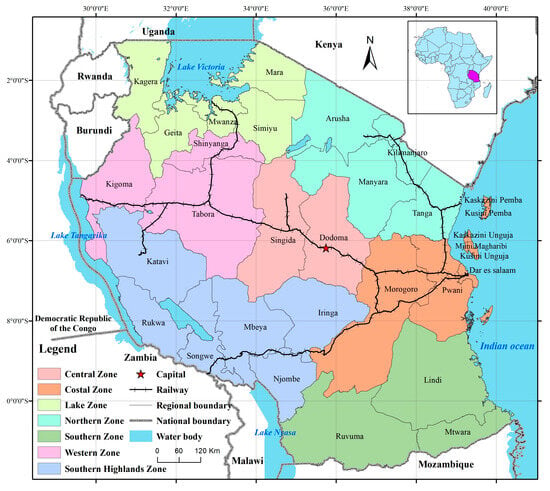
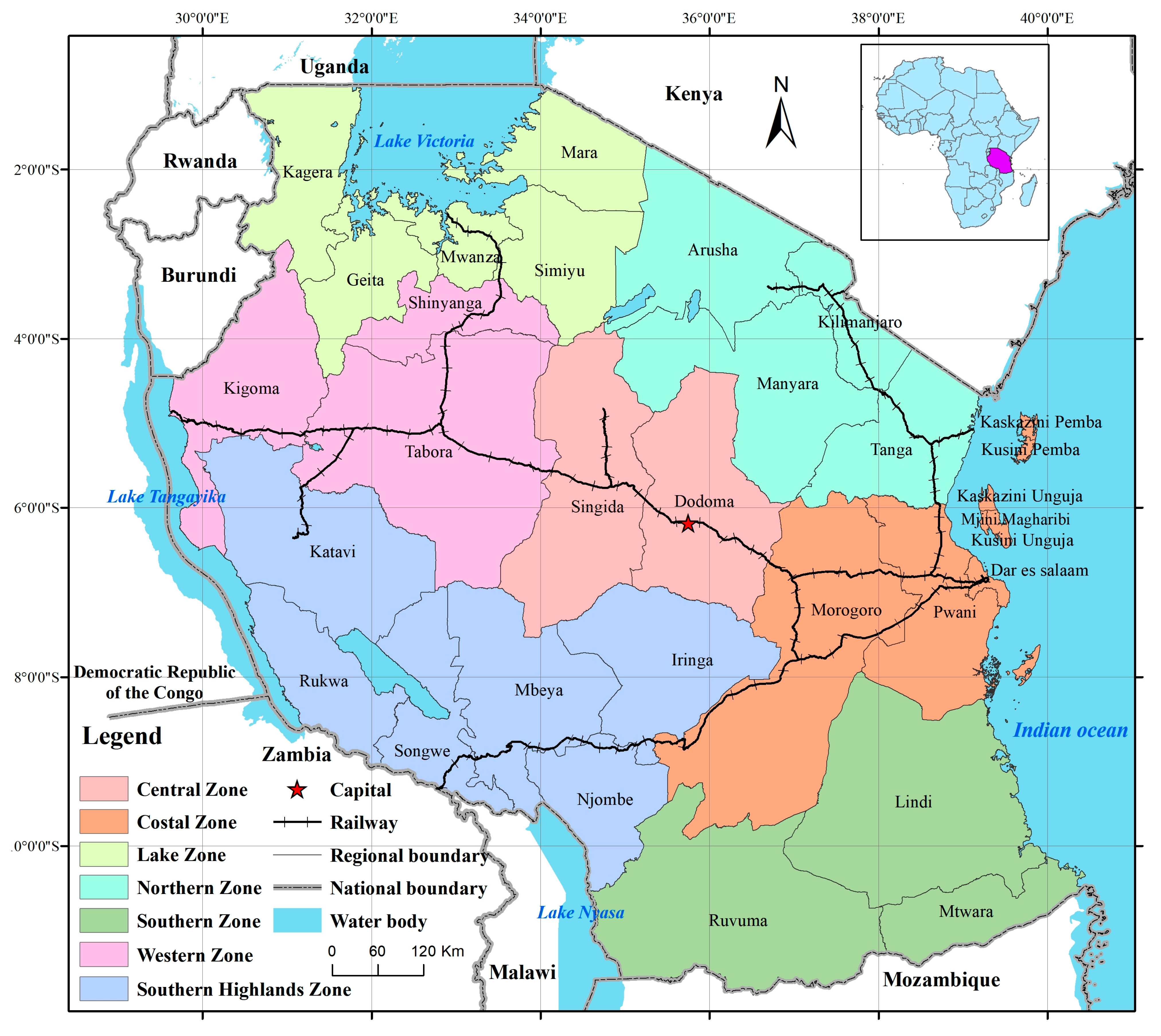
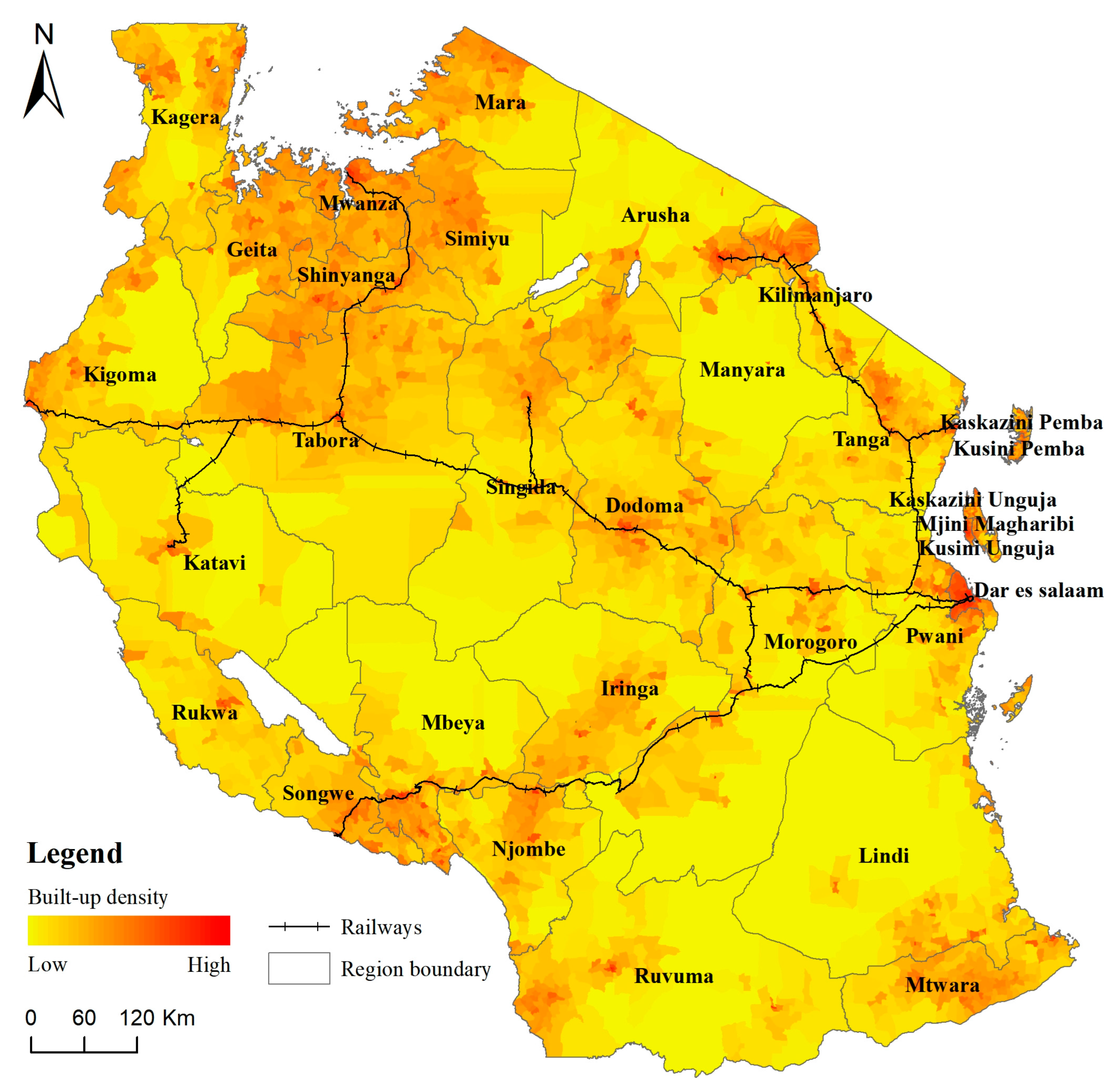
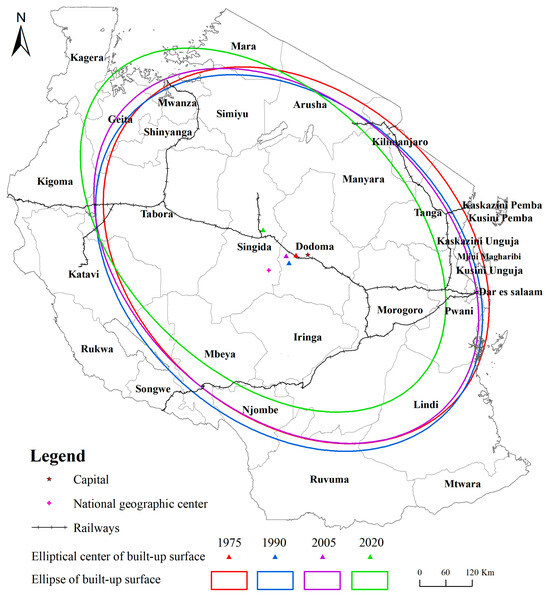
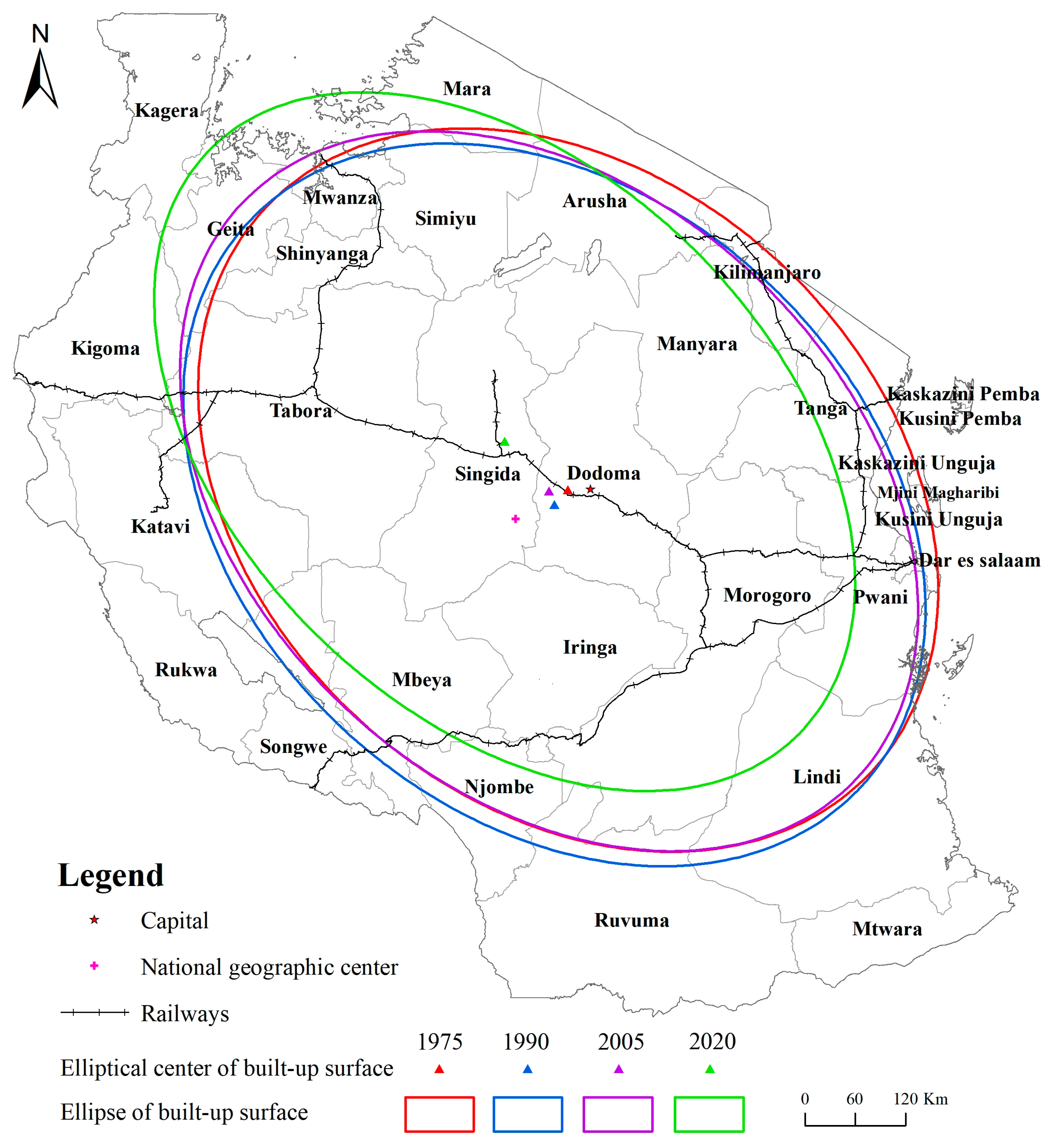
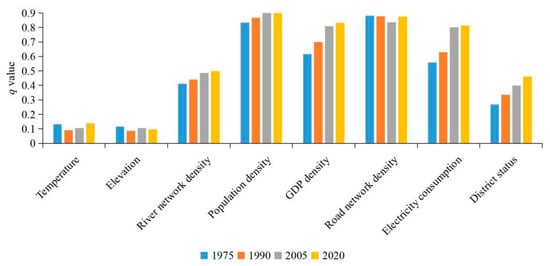

Disclaimer/Publisher’s Note: The statements, opinions and data contained in all publications are solely those of the individual author(s) and contributor(s) and not of MDPI and/or the editor(s). MDPI and/or the editor(s) disclaim responsibility for any injury to people or property resulting from any ideas, methods, instructions or products referred to in the content. |
© 2026 by the authors. Published by MDPI on behalf of the International Society for Photogrammetry and Remote Sensing. Licensee MDPI, Basel, Switzerland. This article is an open access article distributed under the terms and conditions of the Creative Commons Attribution (CC BY) license.