
Accelerating Computation for Estimating Land Surface Temperature: An Efficient Global–Local Regression (EGLR) Framework


Abstract
1. Introduction
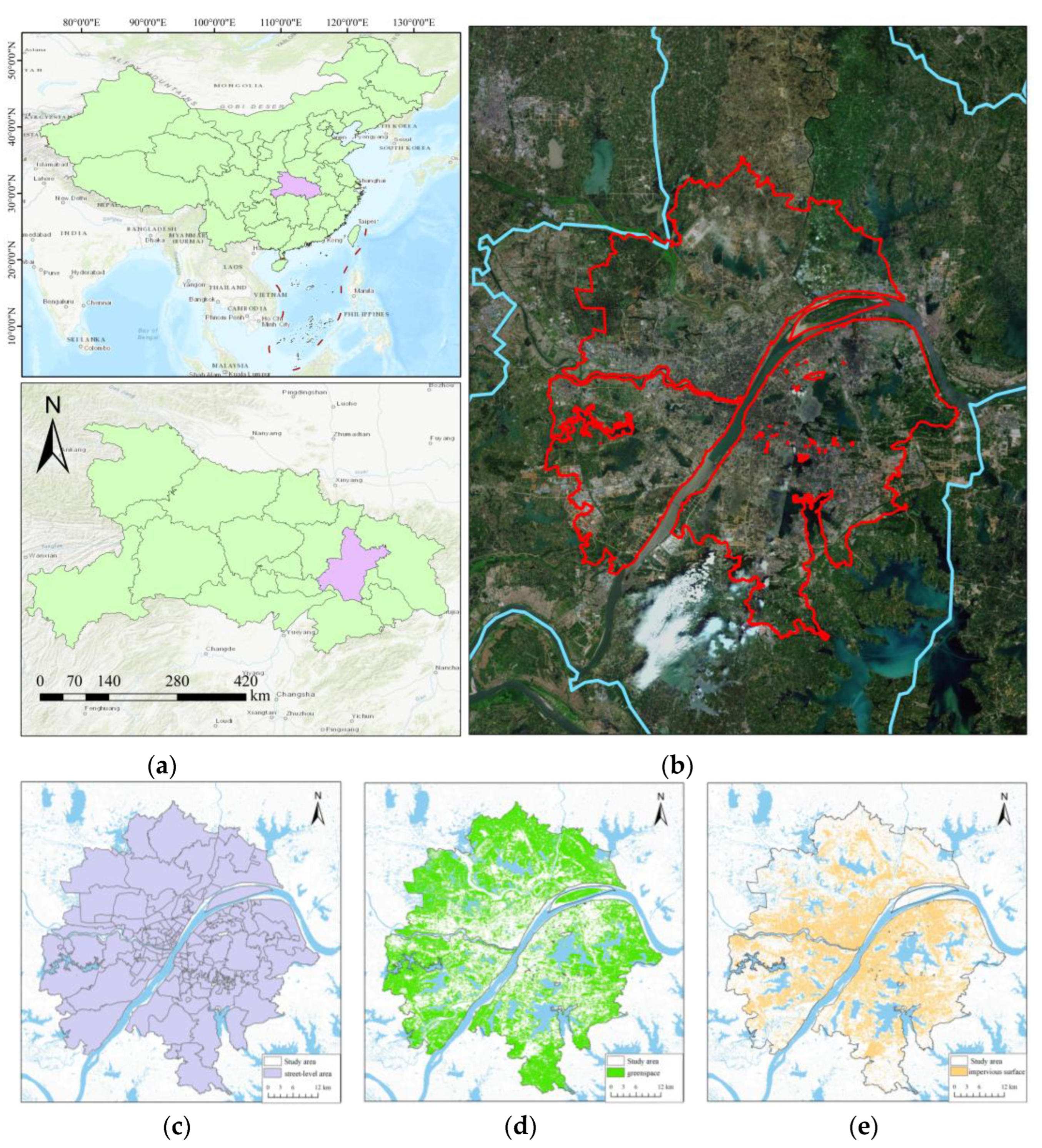
2. Study Area and Data
2.1. Study Area
2.2. Multi-Sourced Datasets and Variables
2.2.1. Sources of Datasets
- (1)
- Indicators of land use type
- (2)
- Socioeconomic indicators
- (3)
- Urban Form Factors
- (4)
- Natural environmental factors
2.2.2. Variables
3. Methods
3.1. Spatial Autocorrelation Analysis
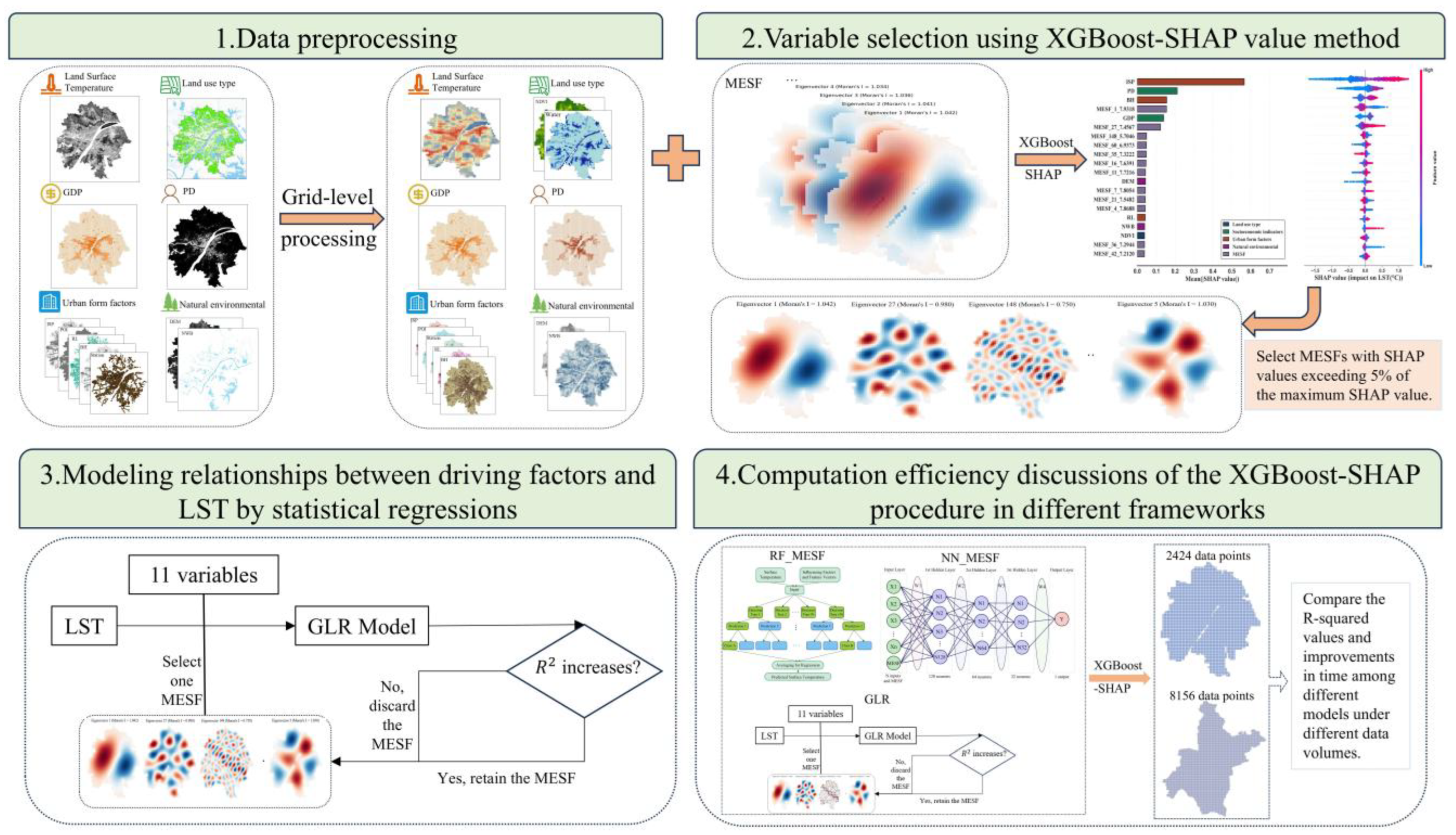
3.2. The Global–Local Regression
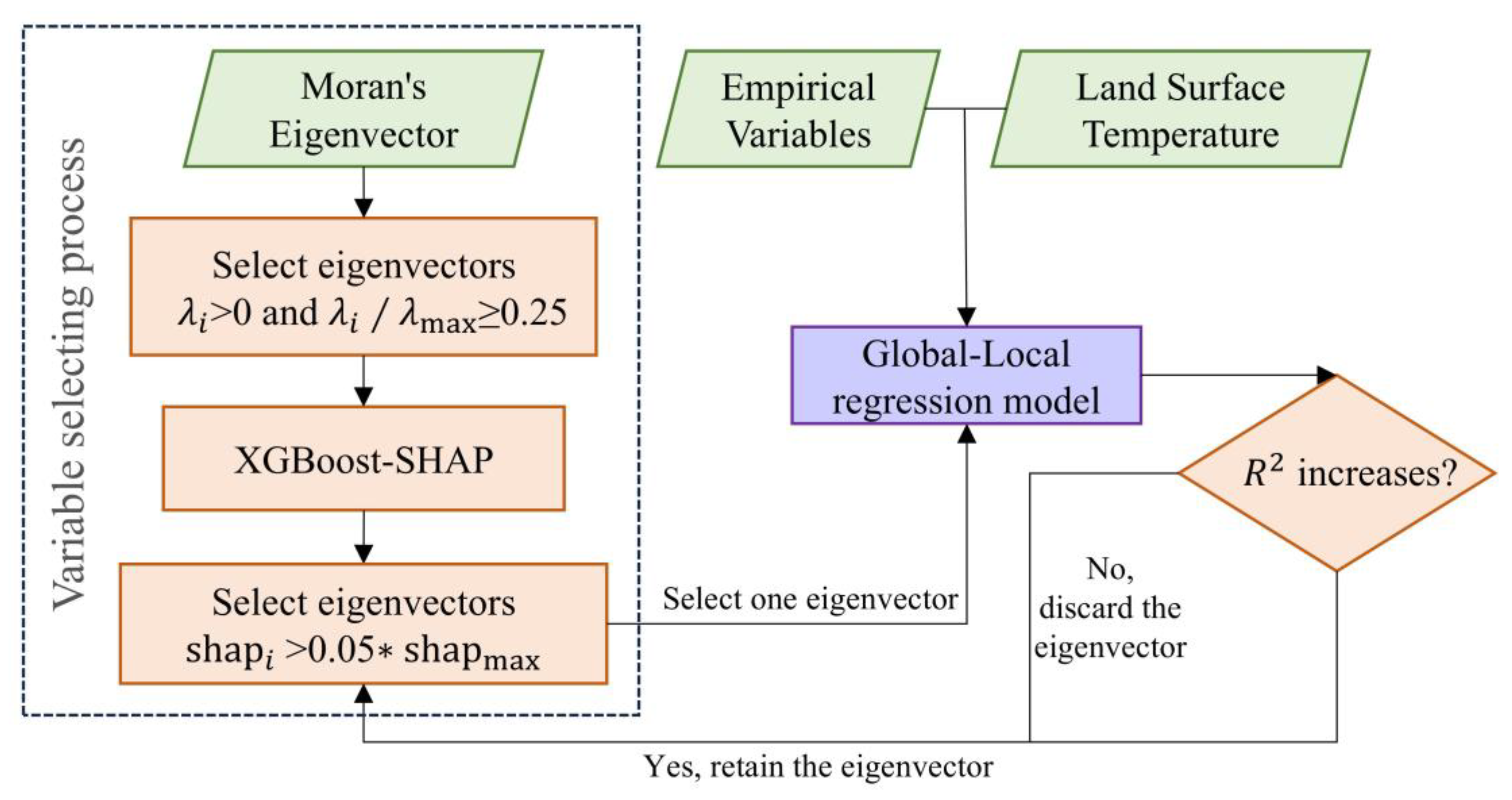
3.3. XGBoost-SHAP for Effectively Selecting Explanatory and Proxy Variables
4. Results
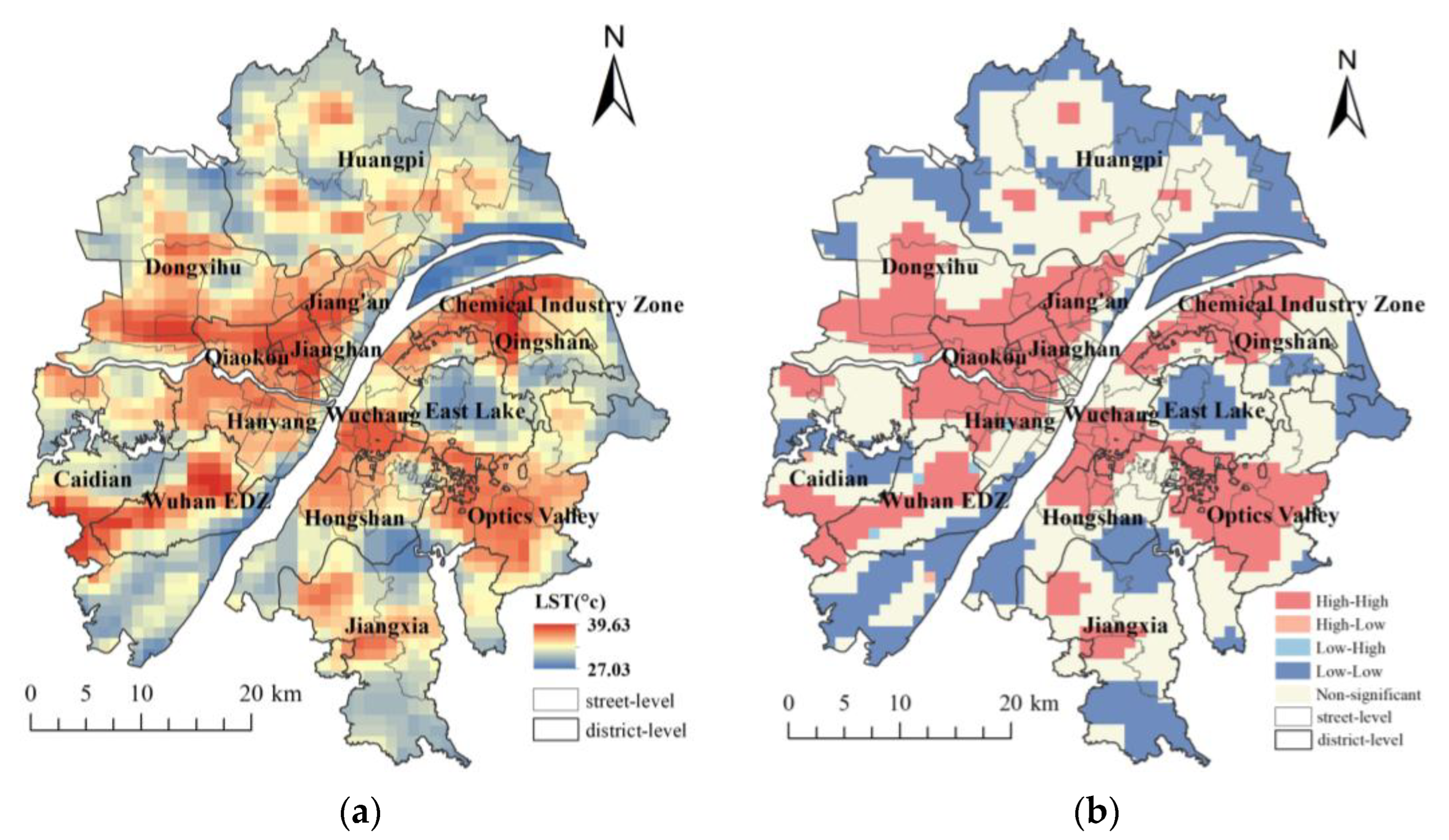
4.1. Spatial Distribution Characteristics of LST
4.2. Land Surface Temperature Modeling with Efficient Global–Local Regression
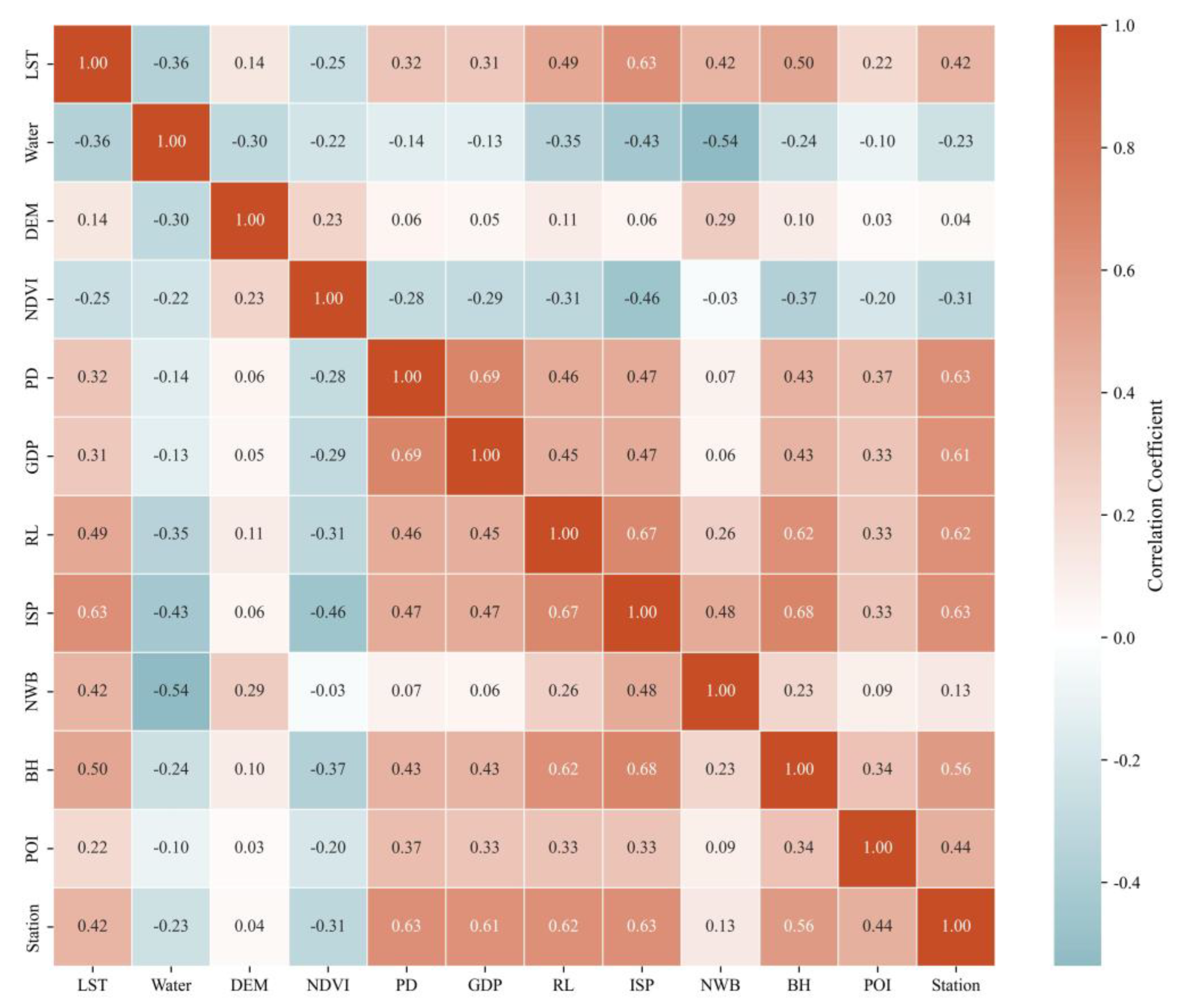
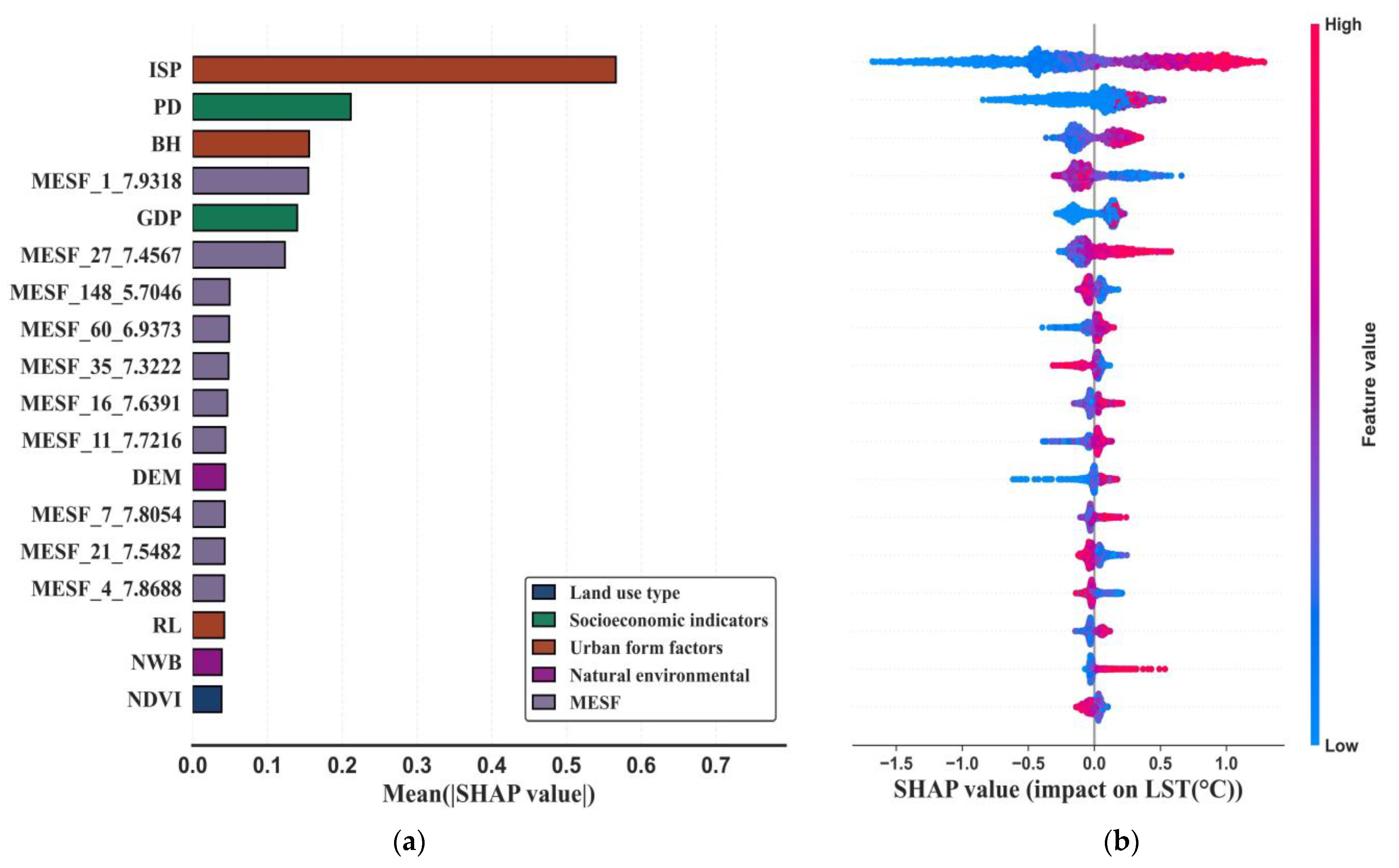
4.2.1. Variable Selection
4.2.2. Model Building and Performances
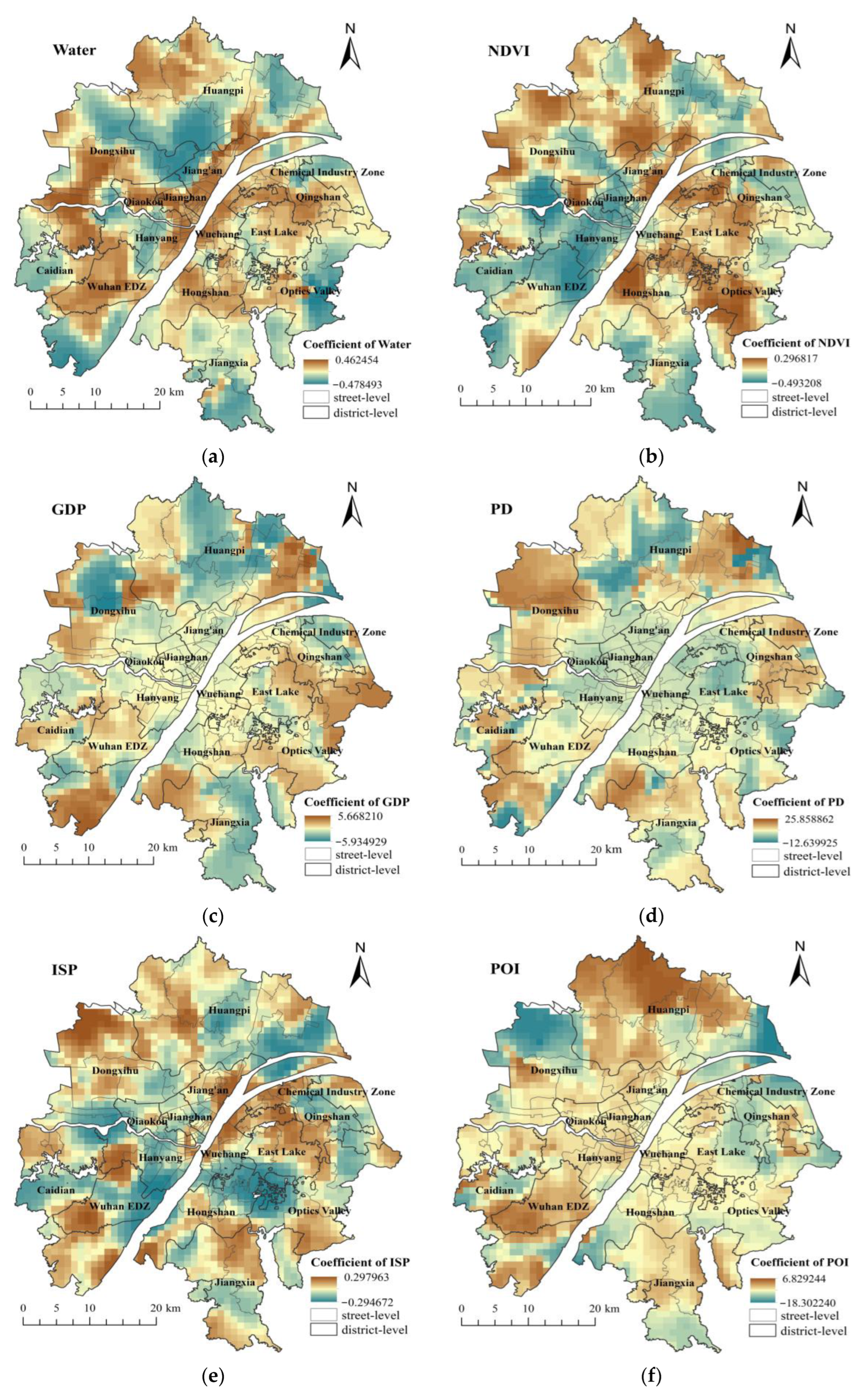
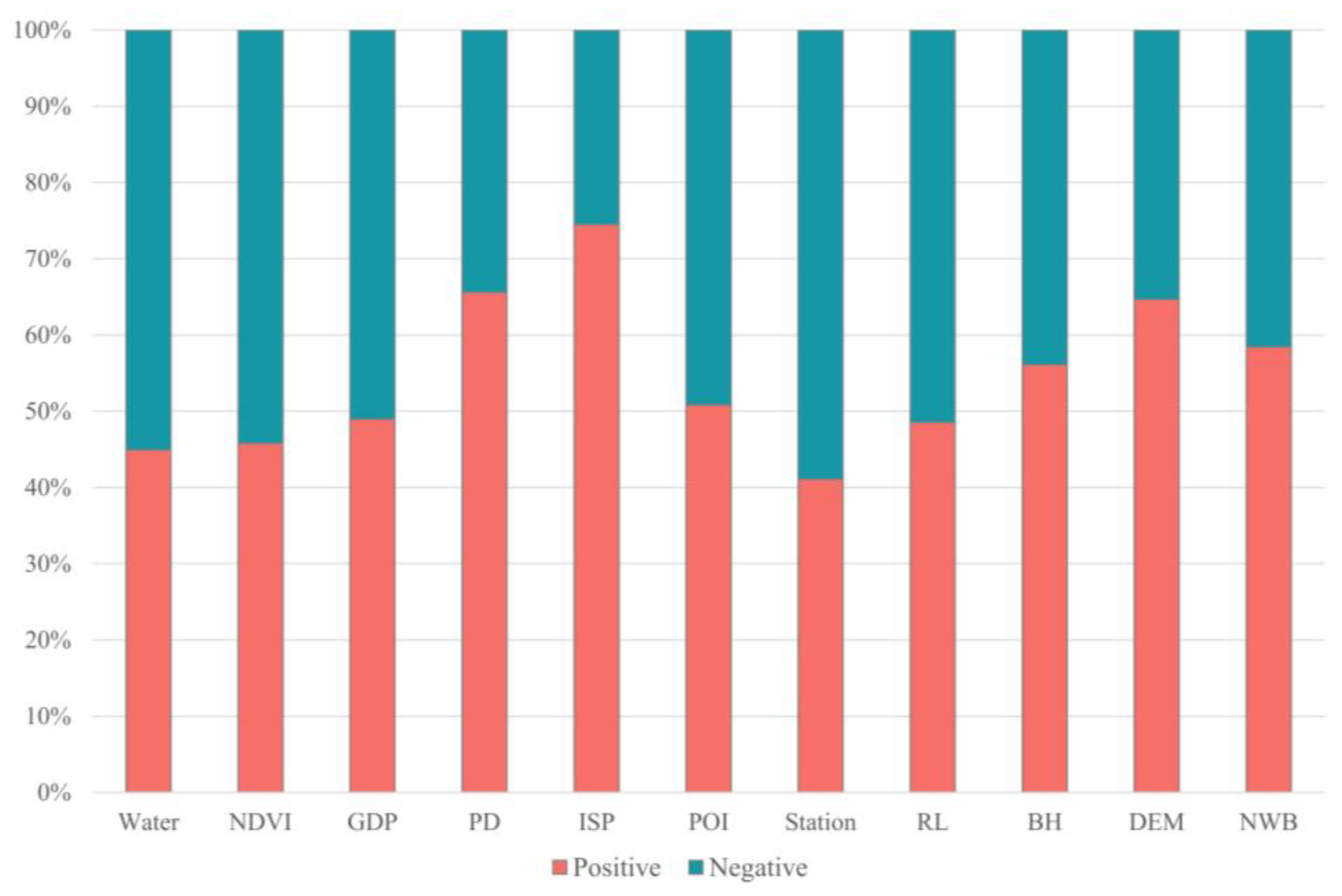
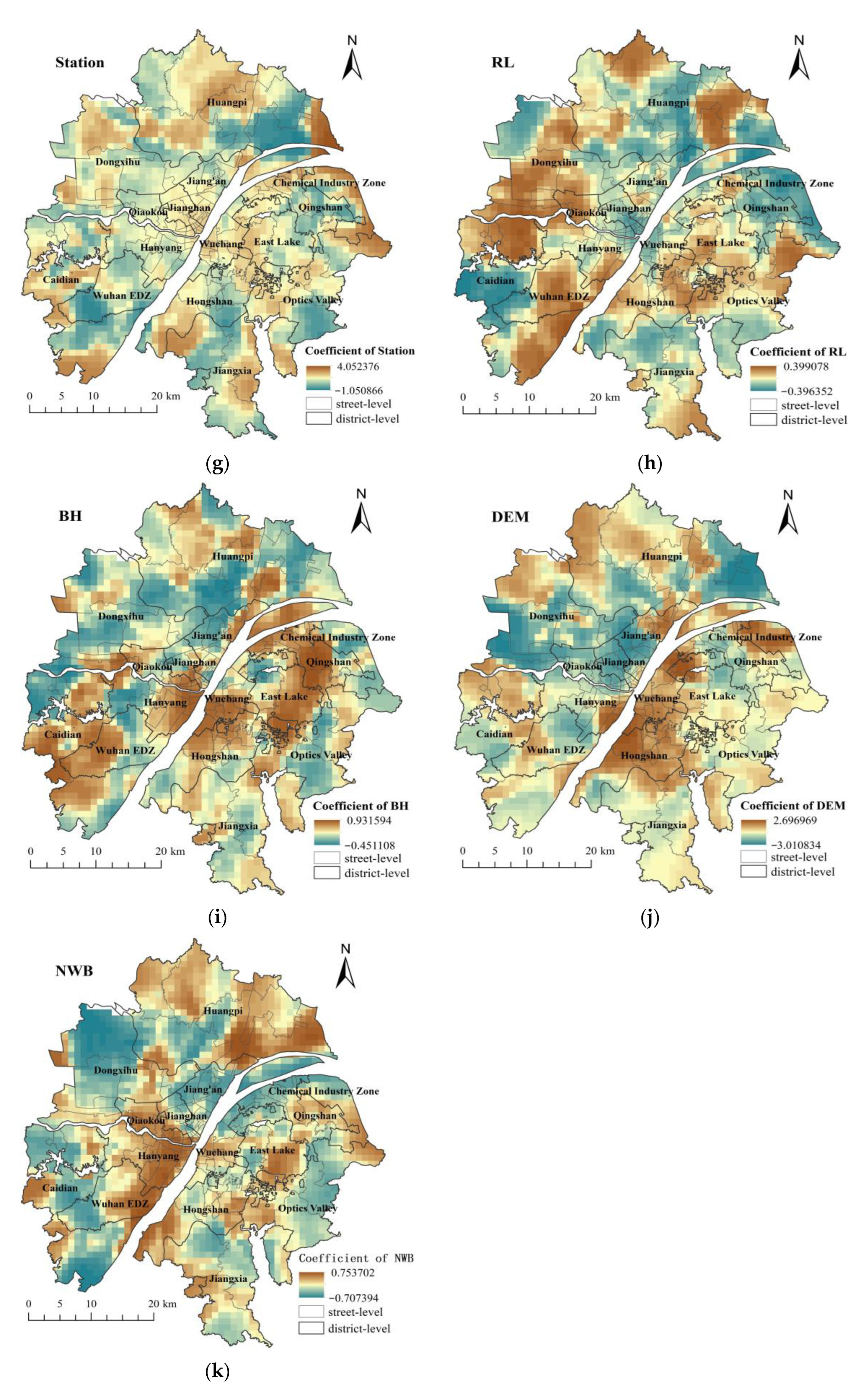
4.2.3. Relationship Between Driving Factors and LST
- (1)
- Spatial impacts of land use type on LST
- (2)
- Spatial impacts of socioeconomic indicators on LST
- (3)
- Spatial impacts of urban form factors on LST
- (4)
- Spatial impacts of natural environmental on LST
5. Discussion
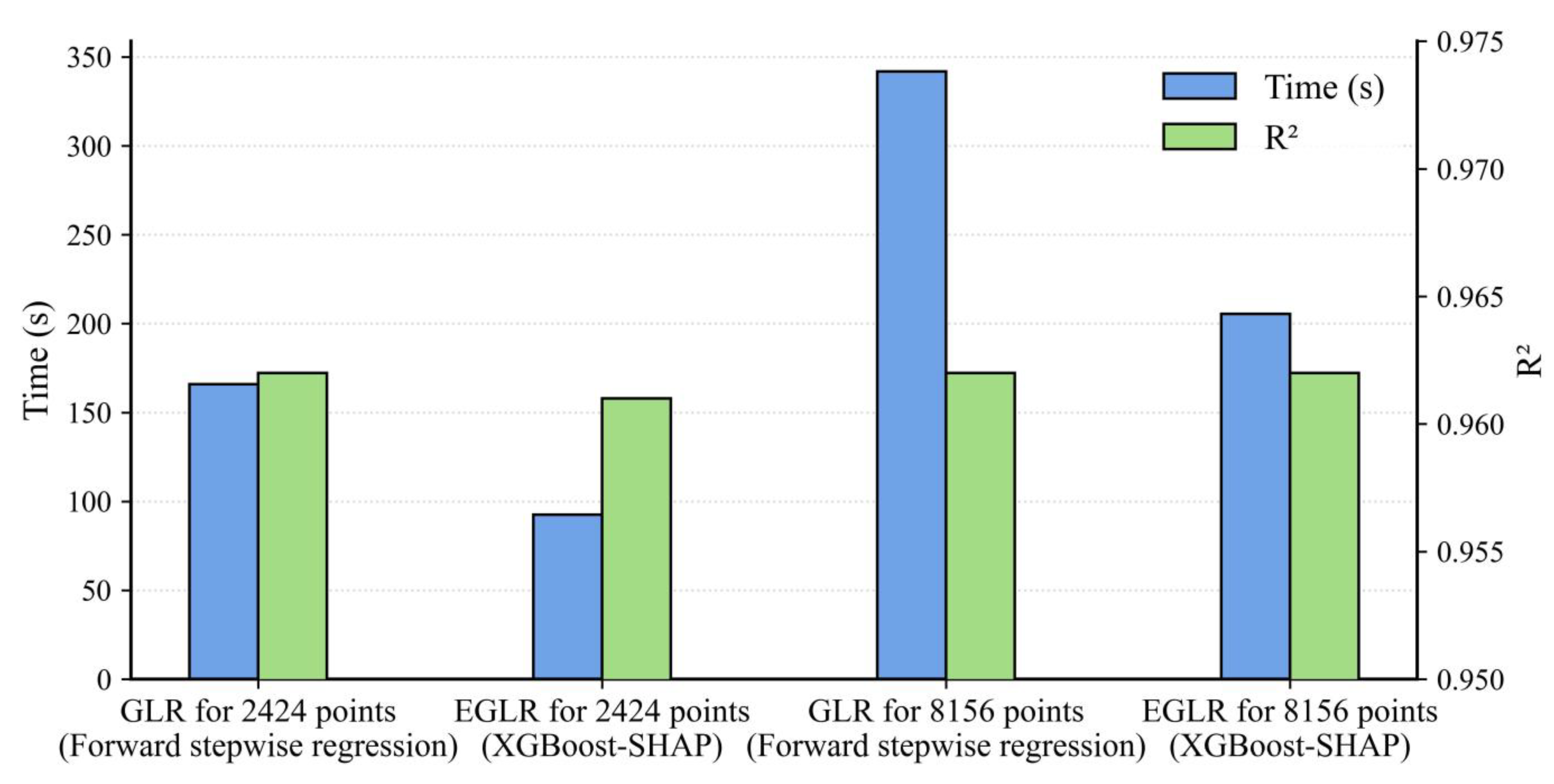
5.1. Computational Efficiency Comparison Between XGBoost-SHAP and Forward Stepwise Regressive Selecting for Moran Eigenvectors
5.2. XGBoost-SHAP Selecting for Moran Eigenvectors on Different Sample Sizes
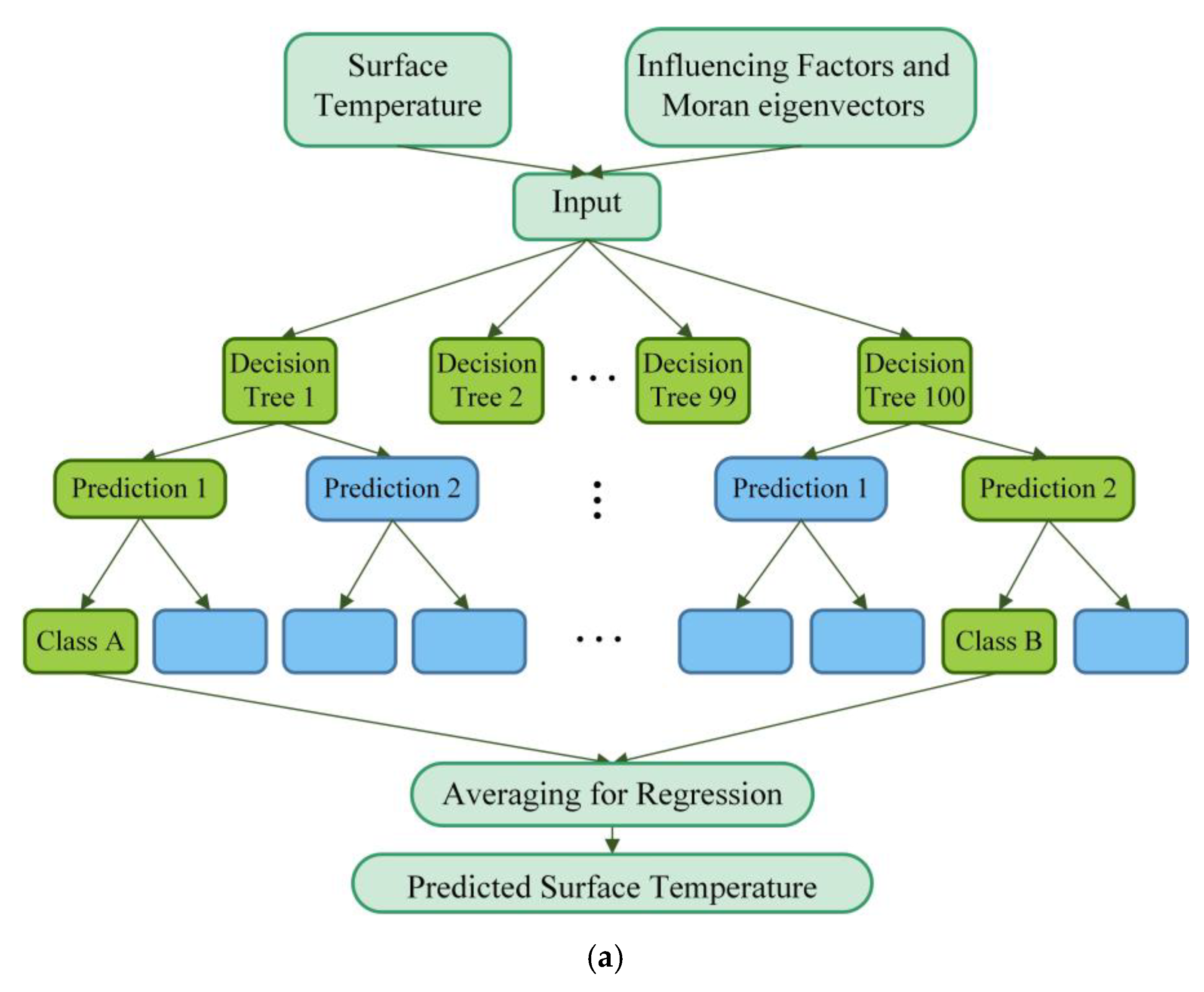
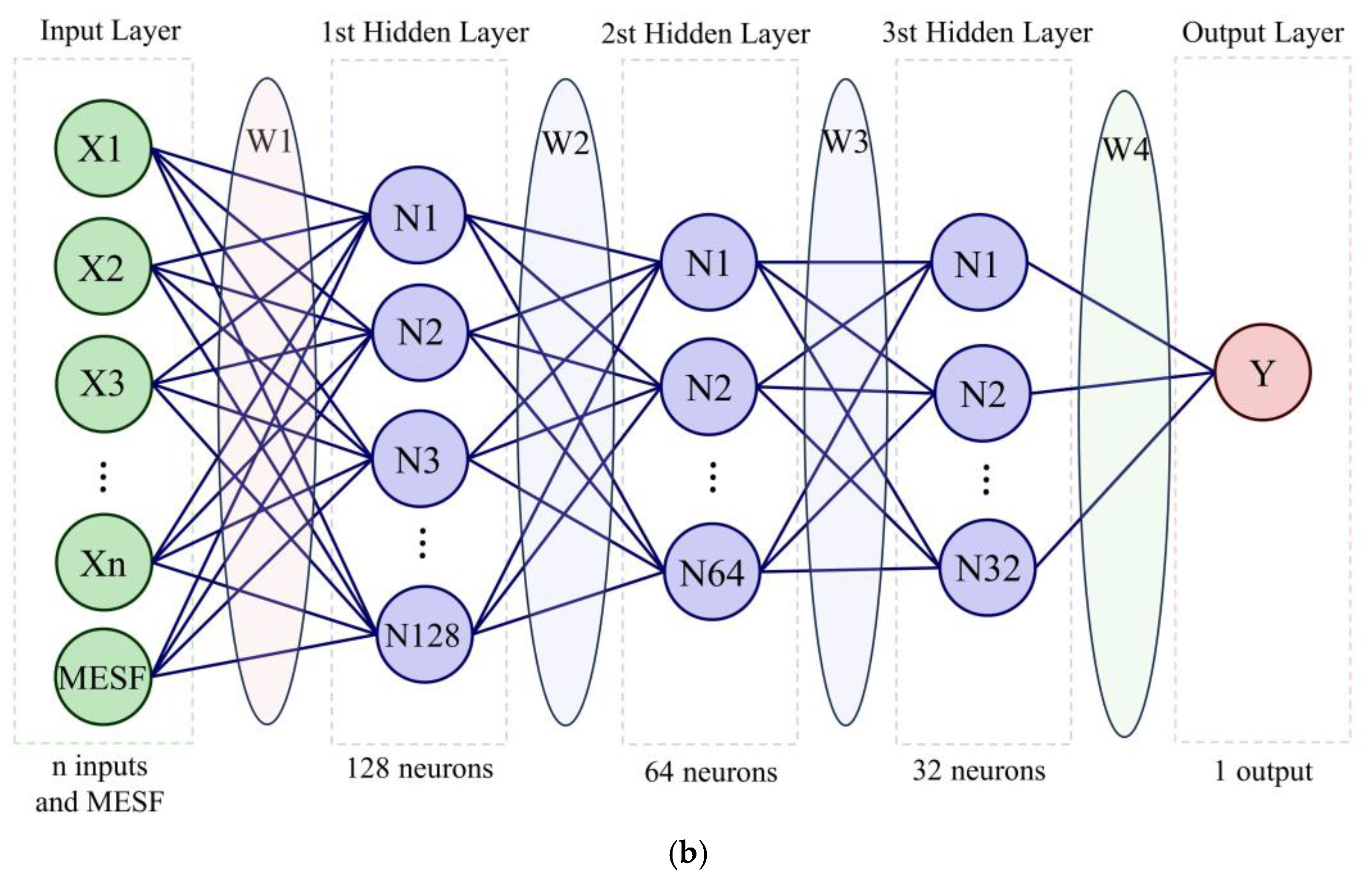
5.3. Expanding EGLR Framework to Two Machine Learning Models
5.4. Limitations
6. Conclusions
- (1)
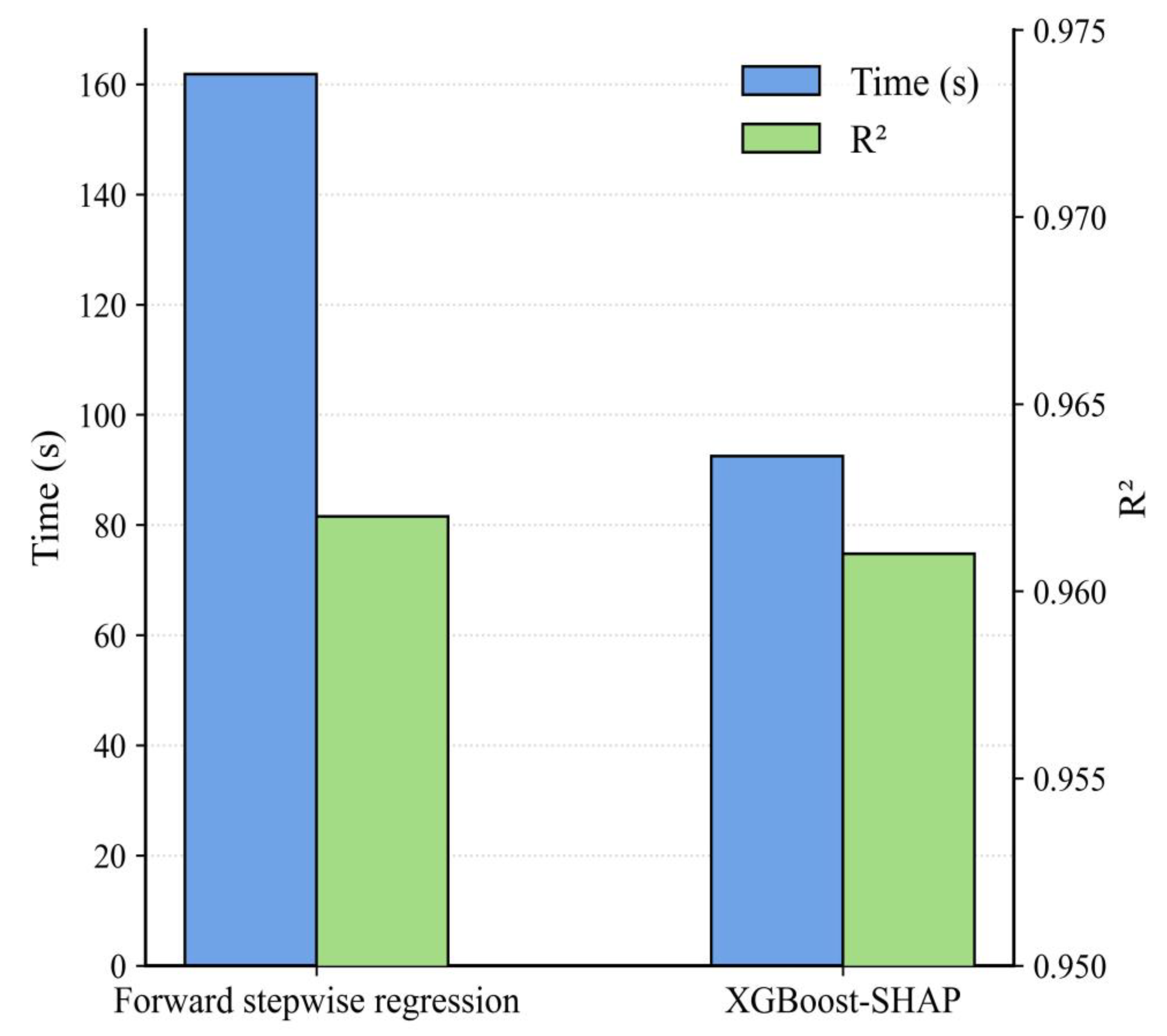
- The XGBoost-SHAP method significantly reduces the time required for selecting Moran eigenvectors compared to the traditional forward stepwise regressive selecting procedure.
- (2)
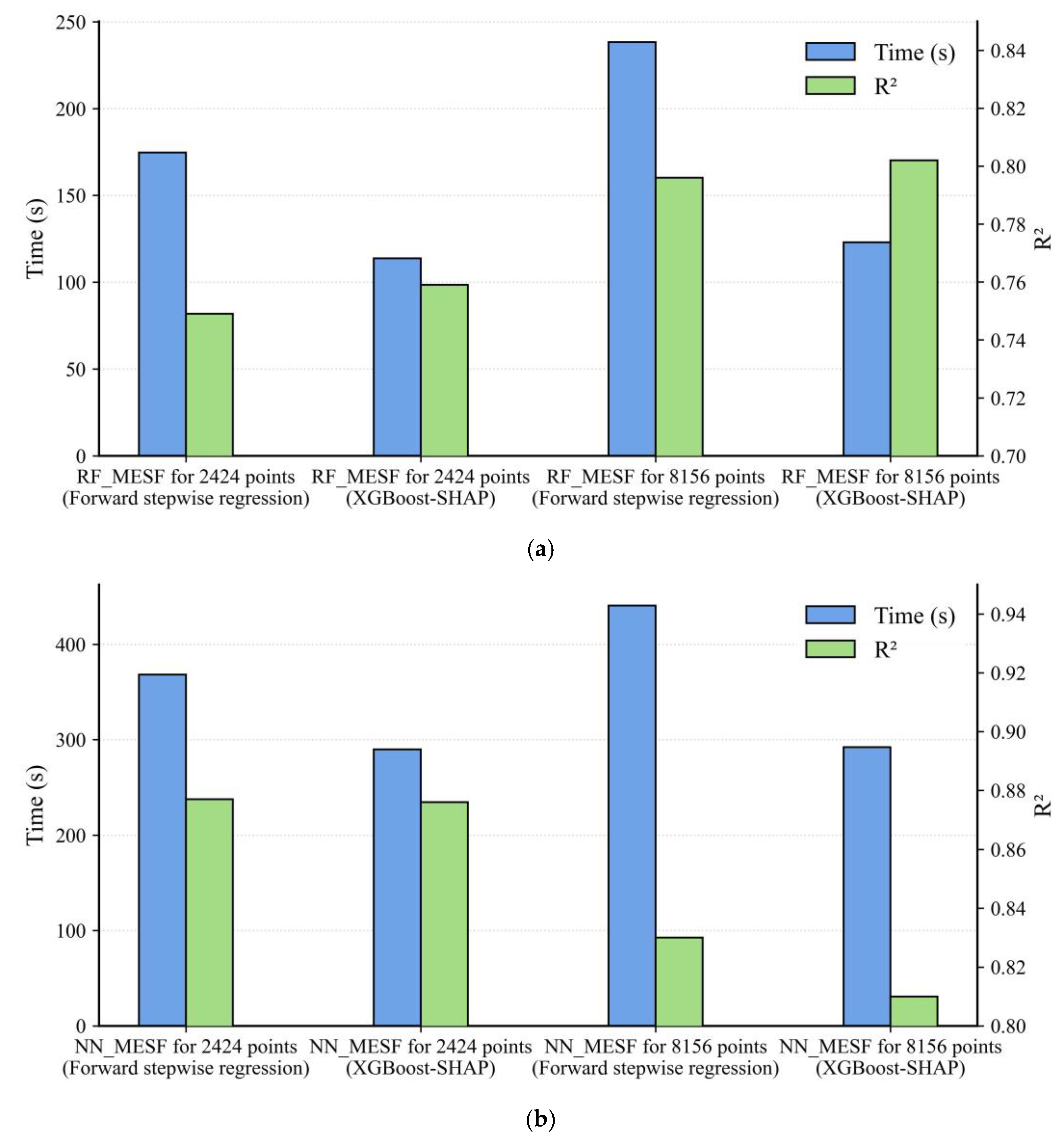
- For datasets with a large sample size, the XGBoost-SHAP method still achieves significant computational time savings compared to the forward stepwise regressive selecting procedure.
- (3)
- The integrated XGBoost-SHAP process and MESF are also applicable to machine learning methods, significantly improving the R2 of RF and NN models with acceptable running time.
Author Contributions
Funding
Data Availability Statement
Conflicts of Interest
Appendix A


| Variable Category | Variable | Standardized Coefficient | VIF |
|---|---|---|---|
| Land use type | Water | −0.0357 ** | 2.076 |
| NDVI | −0.0074 | 1.850 | |
| Socioeconomic indicators | GDP | −0.0174 | 2.272 |
| population | PD | 0.0384 | 2.682 |
| Urban form factors | ISP | 0.2195 *** | 3.753 |
| POI | 0.0332 | 2.874 | |
| Station | −0.0020 | 2.789 | |
| RL | 0.1395 *** | 2.117 | |
| BH | 0.2020 *** | 2.023 | |
| Natural environmental factors | DEM | 0.1036 *** | 1.213 |
| NWB | 0.1713 *** | 1.725 | |
| Moran’s I (error) | - | 0.6363 *** | - |
| - | 0.447 | - |
| Serial Number | Eigenvector Numbering | Eigenvalues | Moran’s I |
|---|---|---|---|
| 1 | spatial_component_1_7.9318 | 7.9318 | 0.993 |
| 27 | spatial_component_27_7.4567 | 7.4567 | 0.944 |
| 148 | spatial_component_148_5.7046 | 5.7046 | 0.746 |
| 16 | spatial_component_16_7.6391 | 7.6391 | 0.961 |
| 60 | spatial_component_60_6.9373 | 6.9373 | 0.889 |
| 35 | spatial_component_35_7.3222 | 7.3222 | 0.927 |
| 11 | spatial_component_11_7.7216 | 7.7216 | 0.971 |
| 21 | spatial_component_21_7.5482 | 7.5482 | 0.953 |
| 4 | spatial_component_4_7.8688 | 7.8688 | 0.987 |
| 7 | spatial_component_7_7.8054 | 7.8054 | 0.980 |
| 36 | spatial_component_36_7.2944 | 7.2944 | 0.925 |
| 9 | spatial_component_9_7.7751 | 7.7751 | 0.977 |
| 29 | spatial_component_29_7.4175 | 7.4175 | 0.938 |
| 42 | spatial_component_42_7.2120 | 7.2120 | 0.920 |
| 3 | spatial_component_3_7.8827 | 7.8827 | 0.988 |
| 78 | spatial_component_78_6.6569 | 6.6569 | 0.861 |
| 100 | spatial_component_100_6.3554 | 6.3554 | 0.823 |
References
- Oke, T.R. City Size and the Urban Heat Island. Atmos. Environ. 1973, 7, 769–779. [Google Scholar] [CrossRef]
- Zhao, L.; Lee, X.; Smith, R.B.; Oleson, K. Strong contributions of local background climate to urban heat islands. Nature 2014, 511, 216–219. [Google Scholar] [CrossRef] [PubMed]
- Waha, K.; Krummenauer, L.; Adams, S.; Aich, V.; Baarsch, F.; Coumou, D.; Fader, M.; Hoff, H.; Jobbins, G.; Marcus, R.; et al. Climate change impacts in the Middle East and Northern Africa (MENA) region and their implications for vulnerable population groups. Reg. Environ. Change 2017, 17, 1623–1638. [Google Scholar] [CrossRef]
- Founda, D.; Santamouris, M. Synergies between Urban Heat Island and Heat Waves in Athens (Greece), during an extremely hot summer (2012). Sci. Rep. 2017, 7, 10973. [Google Scholar] [CrossRef]
- Qian, Y.; Chakraborty, T.C.; Li, J.; Li, D.; He, C.; Sarangi, C.; Chen, F.; Yang, X.; Leung, L.R. Urbanization Impact on Regional Climate and Extreme Weather: Current Understanding, Uncertainties, and Future Research Directions. Adv. Atmos. Sci. 2022, 39, 819–860. [Google Scholar] [CrossRef]
- Ginzburg, A.S.; Dokukin, S.A. Influence of Thermal Air Pollution on the Urban Climate (Estimates Using the COSMO-CLM Model). Izv. Atmos. Ocean. Phys. 2021, 57, 47–59. [Google Scholar] [CrossRef]
- Klimenko, V.V.; Ginzburg, A.S.; Demchenko, P.F.; Tereshin, A.G.; Belova, I.N.; Kasilova, E.V. Impact of urbanization and climate warming on energy consumption in large cities. Dokl. Phys. 2016, 61, 521–525. [Google Scholar] [CrossRef]
- Souza, F.L.; Puppim de Oliveira, J.A.; Lepczyk, C.A. Editorial: Urban Ecosystem Services and Disservices in Tropical Regions. Front. Ecol. Evol. 2021, 9, 791070. [Google Scholar] [CrossRef]
- Lee, Y.Y.; Din, M.F.M.; Ponraj, M.; Noor, Z.Z.; Iwao, K.; Chelliapan, S. Overview of Urban Heat Island (UHI) phenomenon towards human thermal comfort. Environ. Eng. Manag. J. 2017, 16, 2097–2111. [Google Scholar] [CrossRef]
- Song, J.; Yu, H.; Lu, Y. Spatial-scale dependent risk factors of heat-related mortality: A multiscale geographically weighted regression analysis. Sustain. Cities Soc. 2021, 74, 103159. [Google Scholar] [CrossRef]
- Guo, Y.; Li, S.; Liu, D.L.; Chen, D.; Williams, G.; Tong, S. Projecting future temperature-related mortality in three largest Australian cities. Environ. Pollut. 2016, 208, 66–73. [Google Scholar] [CrossRef] [PubMed]
- Voogt, J.A.; Oke, T.R. Thermal remote sensing of urban climates. Remote Sens. Environ. 2003, 86, 370–384. [Google Scholar] [CrossRef]
- Ali, J.M. Modelling the Spatiotemporal Change of Urban Heat Islands and Influencing Parameters. Ph.D. Thesis, University of Nottingham, Nottingham, UK, 2017. [Google Scholar]
- Cai, J.; Tan, W.; Yan, B. The Structure of Urban Green Space System to tackle Heat-island Effect. Res. J. Chem. Environ. 2011, 15, 755–758. [Google Scholar]
- Carpio, M.; Gonzalez, A.; Gonzalez, M.; Verichev, K. Influence of pavements on the urban heat island phenomenon: A scientific evolution analysis. Energy Build. 2020, 226, 110379. [Google Scholar] [CrossRef]
- Mohajerani, A.; Bakaric, J.; Jeffrey-Bailey, T. The urban heat island effect, its causes, and mitigation, with reference to the thermal properties of asphalt concrete. J. Environ. Manag. 2017, 197, 522–538. [Google Scholar] [CrossRef]
- Ward, K.; Lauf, S.; Kleinschmit, B.; Endlicher, W. Heat waves and urban heat islands in Europe: A review of relevant drivers. Sci. Total Environ. 2016, 569, 527–539. [Google Scholar] [CrossRef]
- Ban, Y.; Liu, X.; Yin, Z.; Li, X.; Yin, L.; Zheng, W. Effect of urbanization on aerosol optical depth over Beijing: Land use and surface temperature analysis. Urban Clim. 2023, 51, 101655. [Google Scholar] [CrossRef]
- Qiao, Z.; He, T.; Wang, N.; Wu, F.; Chen, J.; Xu, X.; Liu, L.; Zhang, Q. How Do Natural Factor and Human Activity Affect Urban Land Surface Heat Environment in China? Ecosyst. Health Sustain. 2023, 9, 0126. [Google Scholar] [CrossRef]
- Wang, H.; Zhang, Y.; Tsou, J.Y.; Li, Y. Surface Urban Heat Island Analysis of Shanghai (China) Based on the Change of Land Use and Land Cover. Sustainability 2017, 9, 1538. [Google Scholar] [CrossRef]
- Yu, M.; Chen, X.; Yang, J.; Miao, S. A new perspective on evaluating high-resolution urban climate simulation with urban canopy parameters. Urban Clim. 2021, 38, 100919. [Google Scholar] [CrossRef]
- Kusaka, H.; Chen, F.; Tewari, M.; Dudhia, J.; Gill, D.O.; Duda, M.G.; Wang, W.; Miya, Y. Numerical Simulation of Urban Heat Island Effect by the WRF Model with 4-km Grid Increment: An Inter-Comparison Study between the Urban Canopy Model and Slab Model. J. Meteorol. Soc. Jpn. 2012, 90, 33–45. [Google Scholar] [CrossRef]
- Byon, J.Y.; Choi, Y.J.; Seo, B.G. Evaluation of Urban Weather Forecast Using WRF-UCM (Urban Canopy Model) Over Seoul. Atmosphere 2010, 20, 13–26. [Google Scholar]
- Guo, A.; Yang, J.; Xiao, X.; Xia, J.; Jin, C.; Li, X. Influences of urban spatial form on urban heat island effects at the community level in China. Sustain. Cities Soc. 2020, 53, 101972. [Google Scholar] [CrossRef]
- Shahfahad; Naikoo, M.W.; Islam, A.R.M.T.; Mallick, J.; Rahman, A. Land use/land cover change and its impact on surface urban heat island and urban thermal comfort in a metropolitan city. Urban Clim. 2022, 41, 101052. [Google Scholar] [CrossRef]
- Yang, L.; Yu, K.; Ai, J.; Liu, Y.; Yang, W.; Liu, J. Dominant Factors and Spatial Heterogeneity of Land Surface Temperatures in Urban Areas: A Case Study in Fuzhou, China. Remote Sens. 2022, 14, 1266. [Google Scholar] [CrossRef]
- Gao, Y.; Li, N.; Gao, M.; Hao, M.; Liu, X. Modelling Future Land Surface Temperature: A Comparative Analysis between Parametric and Non-Parametric Methods. Sustainability 2024, 16, 8195. [Google Scholar] [CrossRef]
- Zhang, G.P. Time series forecasting using a hybrid ARIMA and neural network model. Neurocomputing 2003, 50, 159–175. [Google Scholar] [CrossRef]
- Jia, S.; Wang, Y.; Ling, C.; Bi, X. A novel approach to estimating urban land surface temperature by the combination of geographically weighted regression and deep neural network models. Urban Clim. 2023, 47, 101390. [Google Scholar] [CrossRef]
- Hagenauer, J.; Helbich, M. A geographically weighted artificial neural network. Int. J. Geogr. Inf. Sci. 2022, 36, 215–235. [Google Scholar] [CrossRef]
- Du, Z.; Wang, Z.; Wu, S.; Zhang, F.; Liu, R. Geographically neural network weighted regression for the accurate estimation of spatial non-stationarity. Int. J. Geogr. Inf. Sci. 2020, 34, 1353–1377. [Google Scholar] [CrossRef]
- Su, H.; Chen, Y.; Tan, H.; Zhou, A.; Chen, G.; Chen, Y. Estimating Regional PM2.5 Concentrations in China Using a Global-Local Regression Model Considering Global Spatial Autocorrelation and Local Spatial Heterogeneity. Remote Sens. 2022, 14, 4545. [Google Scholar] [CrossRef]
- Brunsdon, C.; Fotheringham, A.S.; Charlton, M.E. Geographically Weighted Regression: A Method for Exploring Spatial Nonstationarity. Geogr. Anal. 1996, 28, 281–298. [Google Scholar] [CrossRef]
- Getis, A.; Griffith, D.A. Comparative Spatial Filtering in Regression Analysis. Geogr. Anal. 2002, 34, 130–140. [Google Scholar] [CrossRef]
- Peel, M.C.; Finlayson, B.L.; McMahon, T.A. Updated world map of the Köppen-Geiger climate classification. Hydrol. Earth Syst. Sci. 2007, 11, 1633–1644. [Google Scholar] [CrossRef]
- Zhou, X.; Chen, H. Impact of urbanization-related land use land cover changes and urban morphology changes on the urban heat island phenomenon. Sci. Total Environ. 2018, 635, 1467–1476. [Google Scholar] [CrossRef]
- Gui, X.; Wang, L.; Yao, R.; Yu, D.; Li, C.A. Investigating the urbanization process and its impact on vegetation change and urban heat island in Wuhan, China. Environ. Sci. Pollut. Res. 2019, 26, 30808–30825. [Google Scholar] [CrossRef] [PubMed]
- Zhao, Z.Q.; He, B.J.; Li, L.G.; Wang, H.B.; Darko, A. Profile and concentric zonal analysis of relationships between land use/land cover and land surface temperature: Case study of Shenyang, China. Energy Build. 2017, 155, 282–295. [Google Scholar] [CrossRef]
- Oliver, L.N.; Schuurman, N.; Hall, A.W. Comparing circular and network buffers to examine the influence of land use on walking for leisure and errands. Int. J. Health Geogr. 2007, 6, 41. [Google Scholar] [CrossRef] [PubMed]
- Li, Y.; Sun, Y.; Li, J.; Gao, C. Socioeconomic drivers of urban heat island effect: Empirical evidence from major Chinese cities. Sustain. Cities Soc. 2020, 63, 102425. [Google Scholar] [CrossRef]
- Xi, Y.; Wang, S.; Zou, Y.; Zhou, X.; Zhang, Y. Seasonal surface urban heat island analysis based on local climate zones. Ecol. Indic. 2024, 159, 111669. [Google Scholar] [CrossRef]
- Mashhoodi, B.; Unceta, P.M. Urban form and surface temperature inequality in 683 European cities. Sustain. Cities Soc. 2024, 113, 105690. [Google Scholar] [CrossRef]
- Zhang, X.; Zhao, T.; Xu, H.; Liu, W.; Wang, J.; Chen, X.; Liu, L. GLC_FCS30D: The first global 30 m land-cover dynamics monitoring product with a fine classification system for the period from 1985 to 2022 generated using dense-time-series Landsat imagery and the continuous change-detection method. Earth Syst. Sci. Data 2024, 16, 1353–1381. [Google Scholar] [CrossRef]
- Zhao, N.; Liu, Y.; Cao, G.; Samson, E.L.; Zhang, J. Forecasting China’s GDP at the pixel level using nighttime lights time series and population images. GISci. Remote Sens. 2017, 54, 407–425. [Google Scholar] [CrossRef]
- Che, Y.; Li, X.; Liu, X.; Wang, Y.; Liao, W.; Zheng, X.; Zhang, X.; Xu, X.; Shi, Q.; Zhu, J.; et al. 3D-GloBFP: The first global three-dimensional building footprint dataset. Earth Syst. Sci. Data 2024, 16, 5357–5374. [Google Scholar] [CrossRef]
- Delgado, R.C.; de Oliveira-Junior, J.F.; Gois, G.; Rodrigues, R.d.A.; Teodoro, P.E. Synoptic events associated with the land surface temperature in Rio de Janeiro. Biosci. J. 2017, 33, 1038–1047. [Google Scholar] [CrossRef]
- Moran, P.A. Notes on continuous stochastic phenomena. Biometrika 1950, 37, 17–23. [Google Scholar] [CrossRef]
- Amelin, L. Local Indicators of Spatial Association-LISA. Geogr. Anal. 1995, 27, 93–115. [Google Scholar]
- Chun, Y.; Griffith, D.A. A quality assessment of eigenvector spatial filtering based parameter estimates for the normal probability model. Spat. Stat. 2014, 10, 1–11. [Google Scholar] [CrossRef]
- Chun, Y.; Griffith, D.A.; Lee, M.; Sinha, P. Eigenvector selection with stepwise regression techniques to construct eigenvector spatial filters. J. Geogr. Syst. 2016, 18, 67–85. [Google Scholar] [CrossRef]
- Yu, Z.; Yu, R.; Ge, X.; Fu, J.; Hu, Y.; Chen, S. Tabular prior-data fitted network for urban air temperature inference and high temperature risk assessment. Sustain. Cities Soc. 2025, 128, 106484. [Google Scholar] [CrossRef]
- Joharestani, M.Z.; Cao, C.; Ni, X.; Bashir, B.; Talebiesfandarani, S. PM2.5 Prediction Based on Random Forest, XGBoost, and Deep Learning Using Multisource Remote Sensing Data. Atmosphere 2019, 10, 373. [Google Scholar] [CrossRef]
- Chen, T.; Guestrin, C. XGBoost: A Scalable Tree Boosting System. In Proceedings of the 22nd ACM SIGKDD International Conference on Knowledge Discovery and Data Mining, San Francisco, CA, USA, 13–17 August 2016. [Google Scholar]
- Meddage, D.P.P.; Ekanayake, I.U.; Weerasuriya, A.U.; Lewangamage, C.S.; Tse, K.T.; Miyanawala, T.P.; Ramanayaka, C.D.E. Explainable Machine Learning (XML) to predict external wind pressure of a low-rise building in urban-like settings. J. Wind Eng. Ind. Aerodyn. 2022, 226, 105027. [Google Scholar] [CrossRef]
- Lundberg, S. Explainable Machine Learning for Science and Medicine. Ph.D. Thesis, University of Washington, Seattle, WA, USA, 2019. [Google Scholar]
- Mo, T.; Li, S.; Li, G. An interpretable machine learning model for predicting cavity water depth and cavity length based on XGBoost-SHAP. J. Hydroinform. 2023, 25, 1488–1500. [Google Scholar] [CrossRef]
- Liao, J.; Wang, L.; Duan, L.; Gong, F.; Zhu, H.; Pan, H.; Yang, H. Association between estimated glucose disposal rate and cardiovascular diseases in patients with diabetes or prediabetes: A cross-sectional study. Cardiovasc. Diabetol. 2025, 24, 13. [Google Scholar] [CrossRef]
- Gu, X.; Wu, Z.; Liu, X.; Qiao, R.; Jiang, Q. Exploring the Nonlinear Interplay between Urban Morphology and Nighttime Thermal Environment. Sustain. Cities Soc. 2024, 101, 105176. [Google Scholar] [CrossRef]
- Griffith, D.A.; Paelinck, J.H.P. Non-Standard Spatial Statistics and Spatial Econometrics; Springer: Berlin/Heidelberg, Germany, 2011. [Google Scholar]
- Fotheringham, A.S.; Yang, W.; Kang, W. Multiscale Geographically Weighted Regression (MGWR). Ann. Am. Assoc. Geogr. 2017, 107, 1247–1265. [Google Scholar] [CrossRef]
- Chi Lang Le, P.; Hoang Son, N.; Cham Dao, D.; Ngoc Bay, T.; Quoc Bao, P.; Xuan Cuong, N. Cooling island effect of urban lakes in hot waves under foehn and climate change. Theor. Appl. Climatol. 2022, 149, 817–830. [Google Scholar] [CrossRef]
- Du, H.; Song, X.; Jiang, H.; Kan, Z.; Wang, Z.; Cai, Y. Research on the cooling island effects of water body: A case study of Shanghai, China. Ecol. Indic. 2016, 67, 31–38. [Google Scholar] [CrossRef]
- Brans, K.I.; Engelen, J.M.; Souffreau, C.; de Meester, L. Urban hot-tubs: Local urbanization has profound effects on average and extreme temperatures in ponds. Landsc. Urban Plan. 2018, 176, 22–29. [Google Scholar] [CrossRef]
- Kikon, N.; Kumar, D.; Ahmed, S.A. Quantitative assessment of land surface temperature and vegetation indices on a kilometer grid scale. Environ. Sci. Pollut. Res. 2023, 30, 107236–107258. [Google Scholar] [CrossRef]
- Ren, Z.; Wang, C.; Guo, Y.; Hong, S.; Zhang, P.; Ma, Z.; Hong, W.; Wang, X.; Geng, R.; Meng, F. The cooling capacity of urban vegetation and its driving force under extreme hot weather: A comparative study between dry-hot and humid-hot cities. Build. Environ. 2024, 263, 111901. [Google Scholar] [CrossRef]
- Shiflett, S.A.; Liang, L.L.; Crum, S.M.; Feyisa, G.L.; Wang, J.; Jenerette, G.D. Variation in the urban vegetation, surface temperature, air temperature nexus. Sci. Total Environ. 2017, 579, 495–505. [Google Scholar] [CrossRef]
- Xi, C.; Ren, C.; Zhang, R.; Wang, J.; Feng, Z.; Haghighat, F.; Cao, S.-J. Nature-based solution for urban traffic heat mitigation facing carbon neutrality: Sustainable design of roadside green belts. Appl. Energy 2023, 343, 121197. [Google Scholar] [CrossRef]
- Guo, A.; He, T.; Yue, W.; Xiao, W.; Yang, J.; Zhang, M.; Li, M. Contribution of urban trees in reducing land surface temperature: Evidence from china’s major cities. Int. J. Appl. Earth Obs. Geoinf. 2023, 125, 103570. [Google Scholar] [CrossRef]
- Cui, Y.; Xu, X.; Dong, J.; Qin, Y. Influence of Urbanization Factors on Surface Urban Heat Island Intensity: A Comparison of Countries at Different Developmental Phases. Sustainability 2016, 8, 706. [Google Scholar] [CrossRef]
- Singh, V.K.; Bhati, S.; Mohan, M.; Sahoo, N.R.; Dash, S. Numerical simulation of the impact of urban canopies and anthropogenic emissions on heat island effect in an industrial area: A case study of Angul-Talcher region in India. Atmos. Res. 2022, 277, 106320. [Google Scholar] [CrossRef]
- Wang, R.; Hou, H.; Murayama, Y.; Morimoto, T. A Three-Dimensional Investigation of Spatial Relationship between Building Composition and Surface Urban Heat Island. Buildings 2022, 12, 1240. [Google Scholar] [CrossRef]
- Cai, Z.; Han, G.; Chen, M. Do water bodies play an important role in the relationship between urban form and land surface temperature? Sustain. Cities Soc. 2018, 39, 487–498. [Google Scholar] [CrossRef]





| Dataset | Year | Spatial Resolution (m) | Description | Data Source |
|---|---|---|---|---|
| MOD11A2 product | 2020 | 1000 | Surface temperature data from cloudless imagery on 20 August in the summer | https://www.nasa.gov/ (accessed on 25 November 2024) |
| GLC_FCS30D product | 2020 | 30 | Used to extract water body area and impervious surface area data, and to calculate the distance to the nearest water body | https://data.casearth.cn/ (accessed on 25 November 2024) |
| MOD13A3 product | 2020 | 1000 | Monthly NDVI data averaged to obtain annual NDVI values for 2020 | https://www.earthdata.nasa.gov/ (accessed on 25 November 2024) |
| LandScan Population Dataset | 2020 | 1000 | 1-km resolution population spatial distribution in 1 km × 1 km grids | https://landscan.ornl.gov/ (accessed on 25 November 2024) |
| Zenodo database | 2020 | 0.5 | Building data with height attributes | https://zenodo.org/ (accessed on 25 November 2024) |
| OpenStreetMap | 2020 | Vector data | Used for road length quantification | https://www.openstreetmap.org/ (accessed on 25 November 2024) |
| POI and Bus Station | 2020 | Point data | POI and bus station data | https://lbsyun.baidu.com/ (accessed on 25 November 2024) |
| GDP | 2020 | 1000 | Gross Domestic Product | https://www.tandfonline.com/doi/full/10.1080/15481603.2016.1276705 (accessed on 25 November 2024) |
| General Bathymetric Chart of the Oceans | 2020 | 500 | Digital Elevation Model | https://www.gebco.net/data_and_products/gridded_bathymetry_data/ (accessed on 25 November 2024) |
| Variable Category | Variable | Description | Measurement |
|---|---|---|---|
| Land use type | Water | Percentage of water body in the spatial unit | % |
| NDVI | Normalized difference vegetation index | - | |
| Socioeconomic indicators | GDP | Gross Domestic Product in the spatial unit | million yuan/km2 |
| PD | Population density in the spatial unit | people/km2 | |
| Urban form factors | ISP | Percentage of impervious surface in the spatial unit | % |
| POI | Number of POIs in the spatial unit | n/km2 | |
| Station | Number of Stations in the spatial unit | n/km2 | |
| RL | Road Length | m/km2 | |
| BH | Average height of total buildings | m | |
| Natural environmental | DEM | Digital Elevation Model | m |
| NWB | Distance to the nearest water body | m |
| Model | MSE | Moran’s I of Residuals | Executing Time (s) | |
|---|---|---|---|---|
| OLS | 0.437 | 0.0159 | 0.630 | 1.4 |
| GWR | 0.876 | 0.0035 | 0.236 | 7.4 |
| MGWR | 0.936 | 0.0018 | 0.069 | 1704 |
| GLR | 0.962 | 0.0011 | 0.029 | 165.8 |
| EGLR | 0.961 | 0.0011 | 0.030 | 92.5 |
| Model | MSE | Time (s) | |
|---|---|---|---|
| RF | 0.521 | 0.0135 | 3.5 |
| RF_MESF | 0.759 | 0.0068 | 113.8 |
| NN | 0.433 | 0.0157 | 19.4 |
| NN_MSEF | 0.876 | 0.0036 | 289.68 |
Disclaimer/Publisher’s Note: The statements, opinions and data contained in all publications are solely those of the individual author(s) and contributor(s) and not of MDPI and/or the editor(s). MDPI and/or the editor(s) disclaim responsibility for any injury to people or property resulting from any ideas, methods, instructions or products referred to in the content. |
© 2025 by the authors. Published by MDPI on behalf of the International Society for Photogrammetry and Remote Sensing. Licensee MDPI, Basel, Switzerland. This article is an open access article distributed under the terms and conditions of the Creative Commons Attribution (CC BY) license (https://creativecommons.org/licenses/by/4.0/).
Share and Cite
Liu, J.; Luo, Q.; Wu, H. Accelerating Computation for Estimating Land Surface Temperature: An Efficient Global–Local Regression (EGLR) Framework. ISPRS Int. J. Geo-Inf. 2025, 14, 427. https://doi.org/10.3390/ijgi14110427
Liu J, Luo Q, Wu H. Accelerating Computation for Estimating Land Surface Temperature: An Efficient Global–Local Regression (EGLR) Framework. ISPRS International Journal of Geo-Information. 2025; 14(11):427. https://doi.org/10.3390/ijgi14110427
Chicago/Turabian StyleLiu, Jiaxin, Qing Luo, and Huayi Wu. 2025. "Accelerating Computation for Estimating Land Surface Temperature: An Efficient Global–Local Regression (EGLR) Framework" ISPRS International Journal of Geo-Information 14, no. 11: 427. https://doi.org/10.3390/ijgi14110427
APA StyleLiu, J., Luo, Q., & Wu, H. (2025). Accelerating Computation for Estimating Land Surface Temperature: An Efficient Global–Local Regression (EGLR) Framework. ISPRS International Journal of Geo-Information, 14(11), 427. https://doi.org/10.3390/ijgi14110427