The Relationship Between NETosis and Biofilm Formation in Chronic Infections



Abstract
1. Introduction
2. Biofilm Biology and Clinical Relevance
3. NETosis: Mechanisms and Functions
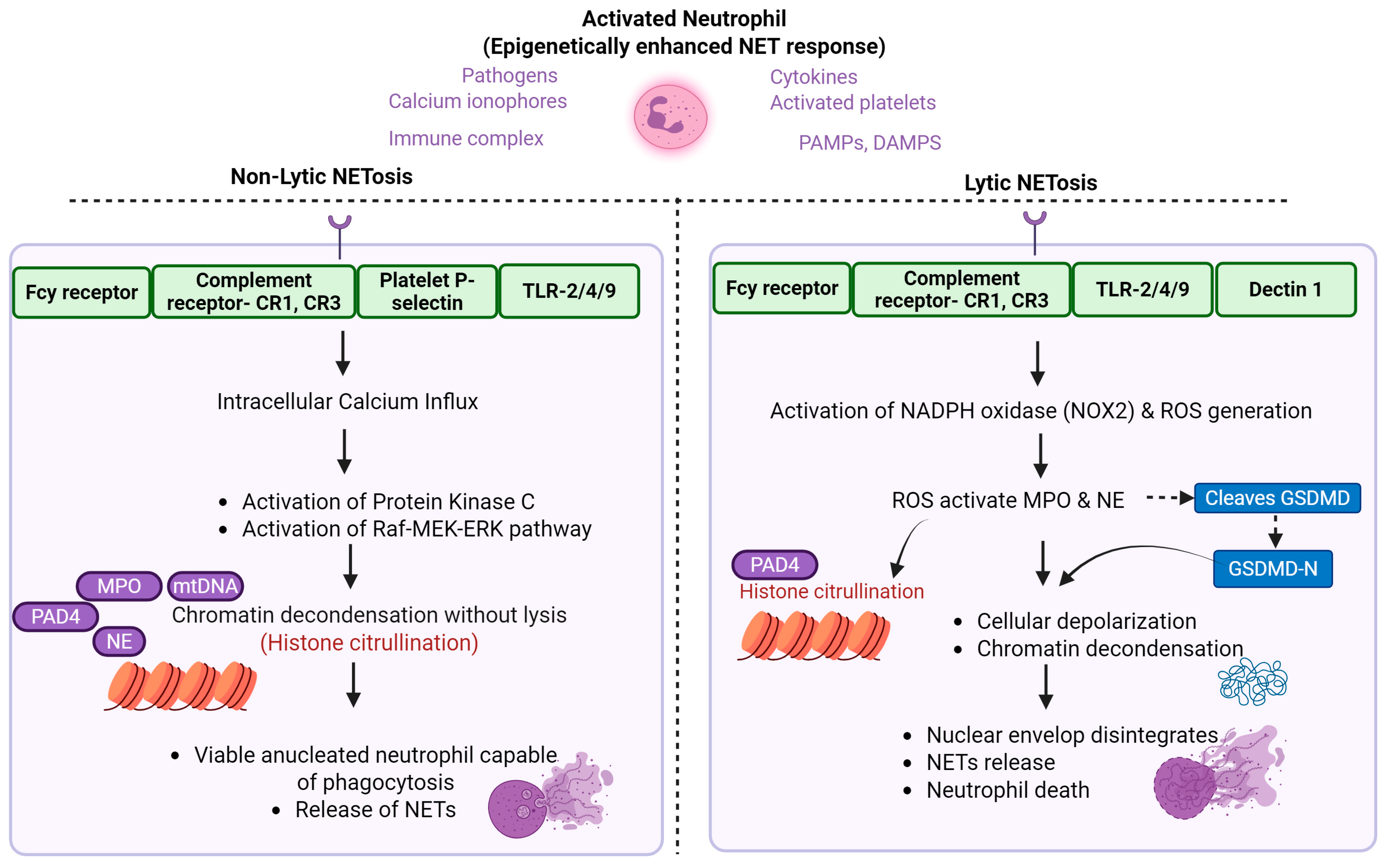
3.1. Pathways of Netosis
3.2. Stimuli and Signaling Pathways Regulating NETosis
3.3. Functional Roles of NETs in Host Defense and Inflammation
3.4. Host Regulation of NETosis
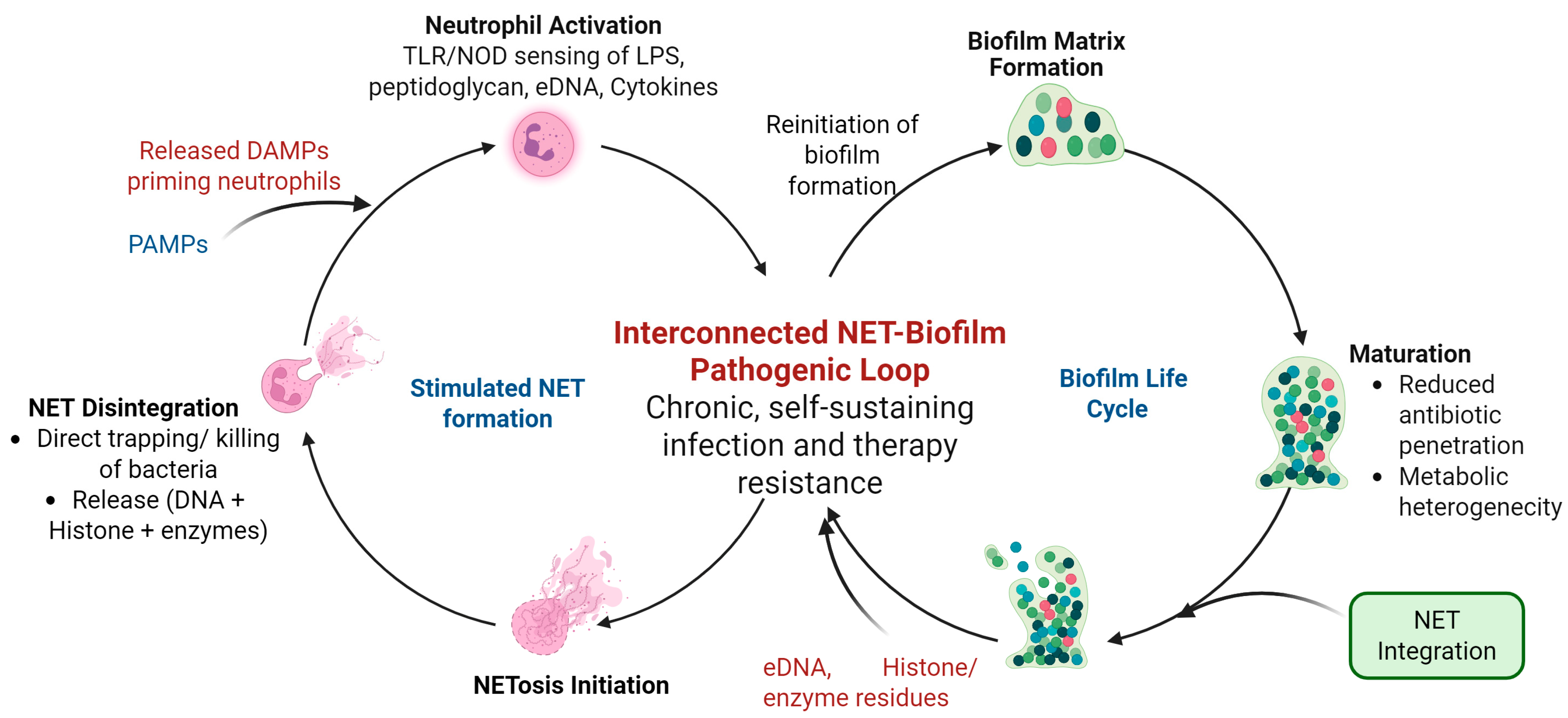
4. Interaction Between NETs and Biofilms
5. Immune Checkpoint Molecules in NET–Biofilm Interactions
6. Quorum Sensing Modulators Impacting NETosis
7. Pathogenic Synergy in Chronic Infections
8. Conclusions
Author Contributions
Funding
Institutional Review Board Statement
Informed Consent Statement
Data Availability Statement
Conflicts of Interest
References
- Cigana, C.; Lorè, N.I.; Riva, C.; De Fino, I.; Spagnuolo, L.; Sipione, B.; Rossi, G.; Nonis, A.; Cabrini, G.; Bragonzi, A. Tracking the Immunopathological Response to Pseudomonas aeruginosa during Respiratory Infections. Sci. Rep. 2016, 6, 21465. [Google Scholar] [CrossRef]
- Uruén, C.; Chopo-Escuin, G.; Tommassen, J.; Mainar-Jaime, R.C.; Arenas, J. Biofilms as Promoters of Bacterial Antibiotic Resistance and Tolerance. Antibiotics 2020, 10, 3. [Google Scholar] [CrossRef] [PubMed]
- Vorobjeva, N.V.; Chernyak, B.V. NETosis: Molecular Mechanisms, Role in Physiology and Pathology. Biochemistry 2020, 85, 1178–1190. [Google Scholar] [CrossRef]
- Thanabalasuriar, A.; Scott, B.N.V.; Peiseler, M.; Willson, M.E.; Zeng, Z.; Warrener, P.; Keller, A.E.; Surewaard, B.G.J.; Dozier, E.A.; Korhonen, J.T.; et al. Neutrophil Extracellular Traps Confine Pseudomonas aeruginosa Ocular Biofilms and Restrict Brain Invasion. Cell Host Microbe 2019, 25, 526–536.e4. [Google Scholar] [CrossRef] [PubMed]
- Zhao, A.; Sun, J.; Liu, Y. Understanding Bacterial Biofilms: From Definition to Treatment Strategies. Front. Cell. Infect. Microbiol. 2023, 13, 1137947. [Google Scholar] [CrossRef]
- Krasowska, A.; Sigler, K. How Microorganisms Use Hydrophobicity and What Does This Mean for Human Needs? Front. Cell. Infect. Microbiol. 2014, 4, 112. [Google Scholar] [CrossRef]
- Renner, L.D.; Weibel, D.B. Physicochemical Regulation of Biofilm Formation. MRS Bull. 2011, 36, 347–355. [Google Scholar] [CrossRef]
- Kaplan, J.B. Biofilm Dispersal: Mechanisms, Clinical Implications, and Potential Therapeutic Uses. J. Dent. Res. 2010, 89, 205–218. [Google Scholar] [CrossRef]
- Liu, H.Y.; Prentice, E.L.; Webber, M.A. Mechanisms of Antimicrobial Resistance in Biofilms. npj Antimicrob. Resist. 2024, 2, 27. [Google Scholar] [CrossRef] [PubMed]
- Singh, R.; Sahore, S.; Kaur, P.; Rani, A.; Ray, P. Penetration Barrier Contributes to Bacterial Biofilm-Associated Resistance against Only Select Antibiotics, and Exhibits Genus-, Strain- and Antibiotic-Specific Differences. Pathog. Dis. 2016, 74, ftw056. [Google Scholar] [CrossRef]
- Tseng, B.S.; Zhang, W.; Harrison, J.J.; Quach, T.P.; Song, J.L.; Penterman, J.; Singh, P.K.; Chopp, D.L.; Packman, A.I.; Parsek, M.R. The Extracellular Matrix Protects Pseudomonas aeruginosa Biofilms by Limiting the Penetration of Tobramycin. Environ. Microbiol. 2013, 15, 2865–2878. [Google Scholar] [CrossRef] [PubMed]
- Singh, S.; Singh, S.K.; Chowdhury, I.; Singh, R. Understanding the Mechanism of Bacterial Biofilms Resistance to Antimicrobial Agents. Open Microbiol. J. 2017, 11, 53–62. [Google Scholar] [CrossRef]
- Mah, T.-F.C.; O’Toole, G.A. Mechanisms of Biofilm Resistance to Antimicrobial Agents. Trends Microbiol. 2001, 9, 34–39. [Google Scholar] [CrossRef]
- Beaudoin, T.; Zhang, L.; Hinz, A.J.; Parr, C.J.; Mah, T.-F. The Biofilm-Specific Antibiotic Resistance Gene ndvB Is Important for Expression of Ethanol Oxidation Genes in Pseudomonas aeruginosa Biofilms. J. Bacteriol. 2012, 194, 3128–3136. [Google Scholar] [CrossRef]
- Kindrachuk, K.N.; Fernández, L.; Bains, M.; Hancock, R.E.W. Involvement of an ATP-Dependent Protease, PA0779/AsrA, in Inducing Heat Shock in Response to Tobramycin in Pseudomonas aeruginosa. Antimicrob. Agents Chemother. 2011, 55, 1874–1882. [Google Scholar] [CrossRef]
- Chua, S.L.; Liu, Y.; Yam, J.K.H.; Chen, Y.; Vejborg, R.M.; Tan, B.G.C.; Kjelleberg, S.; Tolker-Nielsen, T.; Givskov, M.; Yang, L. Dispersed Cells Represent a Distinct Stage in the Transition from Bacterial Biofilm to Planktonic Lifestyles. Nat. Commun. 2014, 5, 4462. [Google Scholar] [CrossRef]
- Rodgers, J.; Phillips, F.; Olliff, C. The Effects of Extracellular Slime from Staphylococcus epidermidis on Phagocytic Ingestion and Killing. FEMS Immunol. Med. Microbiol. 1994, 9, 109–115. [Google Scholar] [CrossRef]
- Li, W.-S.; Chen, Y.-C.; Kuo, S.-F.; Chen, F.-J.; Lee, C.-H. The Impact of Biofilm Formation on the Persistence of Candidemia. Front. Microbiol. 2018, 9, 1196. [Google Scholar] [CrossRef]
- Mandell, J.B.; Orr, S.; Koch, J.; Nourie, B.; Ma, D.; Bonar, D.D.; Shah, N.; Urish, K.L. Large Variations in Clinical Antibiotic Activity against Staphylococcus Aureus Biofilms of Periprosthetic Joint Infection Isolates. J. Orthop. Res. 2019, 37, 1604–1609. [Google Scholar] [CrossRef] [PubMed]
- Pompilio, A.; Crocetta, V.; De Nicola, S.; Verginelli, F.; Fiscarelli, E.; Di Bonaventura, G. Cooperative Pathogenicity in Cystic Fibrosis: Stenotrophomonas Maltophilia Modulates Pseudomonas aeruginosa Virulence in Mixed Biofilm. Front. Microbiol. 2015, 6, 951. [Google Scholar] [CrossRef] [PubMed]
- Agarwal, A.; Jain, A. Association between Drug Resistance & Production of Biofilm in Staphylococci. Indian. J. Med. Res. 2012, 135, 562–564. [Google Scholar] [PubMed]
- Di Domenico, E.; Farulla, I.; Prignano, G.; Gallo, M.; Vespaziani, M.; Cavallo, I.; Sperduti, I.; Pontone, M.; Bordignon, V.; Cilli, L.; et al. Biofilm Is a Major Virulence Determinant in Bacterial Colonization of Chronic Skin Ulcers Independently from the Multidrug Resistant Phenotype. IJMS 2017, 18, 1077. [Google Scholar] [CrossRef] [PubMed]
- Tyagi, A.; Kumar, V.; Joshi, N.; Dhingra, H.K. Exploring the Antibacterial Potential of Bile Salts: Inhibition of Biofilm Formation and Cell Growth in Pseudomonas aeruginosa and Staphylococcus aureus. Microbiol. Res. 2024, 15, 1269–1279. [Google Scholar] [CrossRef]
- Papayannopoulos, V.; Metzler, K.D.; Hakkim, A.; Zychlinsky, A. Neutrophil Elastase and Myeloperoxidase Regulate the Formation of Neutrophil Extracellular Traps. J. Cell Biol. 2010, 191, 677–691. [Google Scholar] [CrossRef]
- Winterbourn, C.C.; Kettle, A.J.; Hampton, M.B. Reactive Oxygen Species and Neutrophil Function. Annu. Rev. Biochem. 2016, 85, 765–792. [Google Scholar] [CrossRef]
- Brinkmann, V.; Reichard, U.; Goosmann, C.; Fauler, B.; Uhlemann, Y.; Weiss, D.S.; Weinrauch, Y.; Zychlinsky, A. Neutrophil Extracellular Traps Kill Bacteria. Science 2004, 303, 1532–1535. [Google Scholar] [CrossRef]
- Remijsen, Q.; Kuijpers, T.W.; Wirawan, E.; Lippens, S.; Vandenabeele, P.; Vanden Berghe, T. Dying for a Cause: NETosis, Mechanisms behind an Antimicrobial Cell Death Modality. Cell Death Differ. 2011, 18, 581–588. [Google Scholar] [CrossRef]
- Urban, C.F.; Ermert, D.; Schmid, M.; Abu-Abed, U.; Goosmann, C.; Nacken, W.; Brinkmann, V.; Jungblut, P.R.; Zychlinsky, A. Neutrophil Extracellular Traps Contain Calprotectin, a Cytosolic Protein Complex Involved in Host Defense against Candida Albicans. PLoS Pathog. 2009, 5, e1000639. [Google Scholar] [CrossRef]
- Fuchs, T.A.; Abed, U.; Goosmann, C.; Hurwitz, R.; Schulze, I.; Wahn, V.; Weinrauch, Y.; Brinkmann, V.; Zychlinsky, A. Novel Cell Death Program Leads to Neutrophil Extracellular Traps. J. Cell Biol. 2007, 176, 231–241. [Google Scholar] [CrossRef]
- Wang, Y.; Li, M.; Stadler, S.; Correll, S.; Li, P.; Wang, D.; Hayama, R.; Leonelli, L.; Han, H.; Grigoryev, S.A.; et al. Histone Hypercitrullination Mediates Chromatin Decondensation and Neutrophil Extracellular Trap Formation. J. Cell Biol. 2009, 184, 205–213. [Google Scholar] [CrossRef]
- Yipp, B.G.; Kubes, P. NETosis: How Vital Is It? Blood 2013, 122, 2784–2794. [Google Scholar] [CrossRef] [PubMed]
- Chatfield, S.M.; Grebe, K.; Whitehead, L.W.; Rogers, K.L.; Nebl, T.; Murphy, J.M.; Wicks, I.P. Monosodium Urate Crystals Generate Nuclease-Resistant Neutrophil Extracellular Traps via a Distinct Molecular Pathway. J. Immunol. 2018, 200, 1802–1816. [Google Scholar] [CrossRef]
- Vorobjeva, N.; Prikhodko, A.; Galkin, I.; Pletjushkina, O.; Zinovkin, R.; Sud’ina, G.; Chernyak, B.; Pinegin, B. Mitochondrial Reactive Oxygen Species Are Involved in Chemoattractant-Induced Oxidative Burst and Degranulation of Human Neutrophils in Vitro. Eur. J. Cell Biol. 2017, 96, 254–265. [Google Scholar] [CrossRef]
- Kuyl, E.-V.; Shu, F.; Sosa, B.R.; Lopez, J.D.; Qin, D.; Pannellini, T.; Ivashkiv, L.B.; Greenblatt, M.B.; Bostrom, M.P.G.; Yang, X. Inhibition of PAD4 Mediated Neutrophil Extracellular Traps Prevents Fibrotic Osseointegration Failure in a Tibial Implant Murine Model: An Animal Study. Bone Jt. J. 2021, 103-B, 135–144. [Google Scholar] [CrossRef]
- Li, P.; Li, M.; Lindberg, M.R.; Kennett, M.J.; Xiong, N.; Wang, Y. PAD4 Is Essential for Antibacterial Innate Immunity Mediated by Neutrophil Extracellular Traps. J. Exp. Med. 2010, 207, 1853–1862. [Google Scholar] [CrossRef]
- Tatsiy, O.; McDonald, P.P. Physiological Stimuli Induce PAD4-Dependent, ROS-Independent NETosis, With Early and Late Events Controlled by Discrete Signaling Pathways. Front. Immunol. 2018, 9, 2036. [Google Scholar] [CrossRef] [PubMed]
- Rochael, N.C.; Guimarães-Costa, A.B.; Nascimento, M.T.C.; DeSouza-Vieira, T.S.; Oliveira, M.P.; Garcia E Souza, L.F.; Oliveira, M.F.; Saraiva, E.M. Classical ROS-Dependent and Early/Rapid ROS-Independent Release of Neutrophil Extracellular Traps Triggered by Leishmania Parasites. Sci. Rep. 2015, 5, 18302. [Google Scholar] [CrossRef] [PubMed]
- Chen, Y.; Tetz, Z.A.; Zeng, X.; Go, S.J.; Ouyang, W.; Lee, K.E.; Dong, T.; Li, Y.; Ma, J. CitH3, a Druggable Biomarker for Human Diseases Associated with Acute NETosis and Chronic Immune Dysfunction. Pharmaceutics 2025, 17, 809. [Google Scholar] [CrossRef] [PubMed]
- Martinod, K.; Fuchs, T.A.; Zitomersky, N.L.; Wong, S.L.; Demers, M.; Gallant, M.; Wang, Y.; Wagner, D.D. PAD4-Deficiency Does Not Affect Bacteremia in Polymicrobial Sepsis and Ameliorates Endotoxemic Shock. Blood 2015, 125, 1948–1956. [Google Scholar] [CrossRef]
- Vitkov, L.; Krunić, J.; Dudek, J.; Bobbili, M.R.; Grillari, J.; Hausegger, B.; Mladenović, I.; Stojanović, N.; Krautgartner, W.D.; Oberthaler, H.; et al. Vesicular Messages from Dental Biofilms for Neutrophils. IJMS 2024, 25, 3314. [Google Scholar] [CrossRef]
- Azzouz, D.; Khan, M.A.; Palaniyar, N. ROS Induces NETosis by Oxidizing DNA and Initiating DNA Repair. Cell Death Discov. 2021, 7, 113. [Google Scholar] [CrossRef]
- Dwyer, M.; Shan, Q.; D’Ortona, S.; Maurer, R.; Mitchell, R.; Olesen, H.; Thiel, S.; Huebner, J.; Gadjeva, M. Cystic Fibrosis Sputum DNA Has NETosis Characteristics and Neutrophil Extracellular Trap Release Is Regulated by Macrophage Migration-Inhibitory Factor. J. Innate Immun. 2014, 6, 765–779. [Google Scholar] [CrossRef] [PubMed]
- Manoj, H.; Gomes, S.M.; Thimmappa, P.Y.; Nagareddy, P.R.; Jamora, C.; Joshi, M.B. Cytokine Signalling in Formation of Neutrophil Extracellular Traps: Implications for Health and Diseases. Cytokine Growth Factor Rev. 2025, 81, 27–39. [Google Scholar] [CrossRef]
- Patel, S.; Nugent, K. Neutrophil Bactericidal Activity and Host Defenses in Cystic Fibrosis: A Narrative Review. J. Thorac. Dis. 2023, 15, 5773–5783. [Google Scholar] [CrossRef]
- Wang, H.; Kim, S.J.; Lei, Y.; Wang, S.; Wang, H.; Huang, H.; Zhang, H.; Tsung, A. Neutrophil Extracellular Traps in Homeostasis and Disease. Sig Transduct. Target. Ther. 2024, 9, 235. [Google Scholar] [CrossRef]
- Chen, J.; Wang, T.; Li, X.; Gao, L.; Wang, K.; Cheng, M.; Zeng, Z.; Chen, L.; Shen, Y.; Wen, F. DNA of Neutrophil Extracellular Traps Promote NF-κB-Dependent Autoimmunity via cGAS/TLR9 in Chronic Obstructive Pulmonary Disease. Sig Transduct. Target. Ther. 2024, 9, 163. [Google Scholar] [CrossRef]
- Demkow, U. Molecular Mechanisms of Neutrophil Extracellular Trap (NETs) Degradation. IJMS 2023, 24, 4896. [Google Scholar] [CrossRef]
- Santocki, M.; Kolaczkowska, E. On Neutrophil Extracellular Trap (NET) Removal: What We Know Thus Far and Why So Little. Cells 2020, 9, 2079. [Google Scholar] [CrossRef] [PubMed]
- Farrera, C.; Fadeel, B. Macrophage Clearance of Neutrophil Extracellular Traps Is a Silent Process. J. Immunol. 2013, 191, 2647–2656. [Google Scholar] [CrossRef]
- Mahajan, A.; Herrmann, M.; Muñoz, L.E. Clearance Deficiency and Cell Death Pathways: A Model for the Pathogenesis of SLE. Front. Immunol. 2016, 7, 35. [Google Scholar] [CrossRef] [PubMed]
- Villanueva, E.; Yalavarthi, S.; Berthier, C.C.; Hodgin, J.B.; Khandpur, R.; Lin, A.M.; Rubin, C.J.; Zhao, W.; Olsen, S.H.; Klinker, M.; et al. Netting Neutrophils Induce Endothelial Damage, Infiltrate Tissues, and Expose Immunostimulatory Molecules in Systemic Lupus Erythematosus. J. Immunol. 2011, 187, 538–552. [Google Scholar] [CrossRef]
- He, W.; Yan, L.; Hu, D.; Hao, J.; Liou, Y.; Luo, G. Neutrophil Heterogeneity and Plasticity: Unveiling the Multifaceted Roles in Health and Disease. MedComm 2025, 6, e70063. [Google Scholar] [CrossRef] [PubMed]
- Magne, A.; Sun, C.; Zargaran, S.; Chadwick, J.W.; Barbour, A.; Glogauer, M. Hyperfunctional Neutrophils in Aged Mice Are Linked to Enhanced Bone Loss in Ligature-Induced Periodontitis. Dent. J. 2025, 13, 244. [Google Scholar] [CrossRef] [PubMed]
- Kim, N.D.; Luster, A.D. The Role of Tissue Resident Cells in Neutrophil Recruitment. Trends Immunol. 2015, 36, 547–555. [Google Scholar] [CrossRef]
- Kang, H.L.; Szász, A.; Valkusz, Z.; Várkonyi, T.; Pósa, A.; Kupai, K. Targeting PAD4: A Promising Strategy to Combat β-Cell Loss in Type 1 Diabetes. Int. J. Mol. Sci. 2025, 26, 6113. [Google Scholar] [CrossRef]
- Yan, Q.; Jia, S.; Li, D.; Yang, J. The Role and Mechanism of Action of Microbiota-Derived Short-Chain Fatty Acids in Neutrophils: From the Activation to Becoming Potential Biomarkers. Biomed. Pharmacother. 2023, 169, 115821. [Google Scholar] [CrossRef]
- Giaglis, S.; Stoikou, M.; Sur Chowdhury, C.; Schaefer, G.; Grimolizzi, F.; Rossi, S.W.; Hoesli, I.M.; Lapaire, O.; Hasler, P.; Hahn, S. Multimodal Regulation of NET Formation in Pregnancy: Progesterone Antagonizes the Pro-NETotic Effect of Estrogen and G-CSF. Front. Immunol. 2016, 7, 565. [Google Scholar] [CrossRef]
- Obeagu, E.I. Stress, Neutrophils, and Immunity: A Dynamic Interplay. Ann. Med. Surg. 2025, 87, 3573–3585. [Google Scholar] [CrossRef] [PubMed]
- Zhang, D.; Guo, J.; Shi, C.; Wang, Y.; Zhang, Y.; Zhang, X.; Gong, Z. MPO-DNA Complexes and Cf-DNA in Patients with Sepsis and Their Clinical Value. Biomedicines 2024, 12, 2190. [Google Scholar] [CrossRef]
- Yang, S.; Gu, Z.; Lu, C.; Zhang, T.; Guo, X.; Xue, G.; Zhang, L. Neutrophil Extracellular Traps Are Markers of Wound Healing Impairment in Patients with Diabetic Foot Ulcers Treated in a Multidisciplinary Setting. Adv. Wound Care 2020, 9, 16–27. [Google Scholar] [CrossRef]
- Guo, L.; Li, T.; Duan, Q.; Duan, Y.; Liu, W.; Ma, N.; Liu, S.; Wang, X.; Zhang, S.; Tian, E.; et al. Higher Levels of Neutrophil Extracellular Traps in Mucoid Middle Ear Effusion Obtained from Otitis Media with Effusion in Children. Ann. Med. 2025, 57, 2587488. [Google Scholar] [CrossRef]
- Tian, Y.; Russo, R.M.; Li, Y.; Karmakar, M.; Liu, B.; Puskarich, M.A.; Jones, A.E.; Stringer, K.A.; Standiford, T.J.; Alam, H.B. Serum Citrullinated Histone H3 Concentrations Differentiate Patients with Septic Verses Non-Septic Shock and Correlate with Disease Severity. Infection 2021, 49, 83–93. [Google Scholar] [CrossRef]
- De Buhr, N.; Von Köckritz-Blickwede, M. How Neutrophil Extracellular Traps Become Visible. J. Immunol. Res. 2016, 2016, 4604713. [Google Scholar] [CrossRef]
- Han, Y.; Jiang, N.; Xu, H.; Yuan, Z.; Xiu, J.; Mao, S.; Liu, X.; Huang, J. Extracellular Matrix Rigidities Regulate the Tricarboxylic Acid Cycle and Antibiotic Resistance of Three-Dimensionally Confined Bacterial Microcolonies. Adv. Sci. 2023, 10, e2206153. [Google Scholar] [CrossRef]
- Liao, S.; Klein, M.I.; Heim, K.P.; Fan, Y.; Bitoun, J.P.; Ahn, S.-J.; Burne, R.A.; Koo, H.; Brady, L.J.; Wen, Z.T. Streptococcus mutans Extracellular DNA Is Upregulated during Growth in Biofilms, Actively Released via Membrane Vesicles, and Influenced by Components of the Protein Secretion Machinery. J. Bacteriol. 2014, 196, 2355–2366. [Google Scholar] [CrossRef] [PubMed]
- Sharma, D.K.; Rajpurohit, Y.S. Multitasking Functions of Bacterial Extracellular DNA in Biofilms. J. Bacteriol. 2024, 206, e0000624. [Google Scholar] [CrossRef] [PubMed]
- Thomas, V.C.; Hiromasa, Y.; Harms, N.; Thurlow, L.; Tomich, J.; Hancock, L.E. A Fratricidal Mechanism Is Responsible for eDNA Release and Contributes to Biofilm Development of Enterococcus Faecalis. Mol. Microbiol. 2009, 72, 1022–1036. [Google Scholar] [CrossRef] [PubMed]
- Yu, W.; Hallinen, K.M.; Wood, K.B. Interplay between Antibiotic Efficacy and Drug-Induced Lysis Underlies Enhanced Biofilm Formation at Subinhibitory Drug Concentrations. Antimicrob. Agents Chemother. 2018, 62, e01603-17. [Google Scholar] [CrossRef]
- Berends, E.T.M.; Horswill, A.R.; Haste, N.M.; Monestier, M.; Nizet, V.; von Köckritz-Blickwede, M. Nuclease Expression by Staphylococcus aureus Facilitates Escape from Neutrophil Extracellular Traps. J. Innate Immun. 2010, 2, 576–586. [Google Scholar] [CrossRef]
- Ferguson, D.L.; Gloag, E.S.; Parsek, M.R.; Wozniak, D.J. Extracellular DNA Enhances Biofilm Integrity and Mechanical Properties of Mucoid Pseudomonas aeruginosa. J. Bacteriol. 2023, 205, e0023823. [Google Scholar] [CrossRef]
- Wilton, M.; Charron-Mazenod, L.; Moore, R.; Lewenza, S. Extracellular DNA Acidifies Biofilms and Induces Aminoglycoside Resistance in Pseudomonas aeruginosa. Antimicrob. Agents Chemother. 2016, 60, 544–553. [Google Scholar] [CrossRef]
- Smolarz, M.; Zawrotniak, M.; Satala, D.; Rapala-Kozik, M. Extracellular Nucleic Acids Present in the Candida Albicans Biofilm Trigger the Release of Neutrophil Extracellular Traps. Front. Cell. Infect. Microbiol. 2021, 11, 681030. [Google Scholar] [CrossRef] [PubMed]
- Domenech, M.; García, E. Autolysin-Independent DNA Release in Streptococcus pneumoniae in Vitro Biofilms. bioRxiv 2018. [Google Scholar]
- Pakkulnan, R.; Anutrakunchai, C.; Kanthawong, S.; Taweechaisupapong, S.; Chareonsudjai, P.; Chareonsudjai, S. Extracellular DNA Facilitates Bacterial Adhesion during Burkholderia pseudomallei Biofilm Formation. PLoS ONE 2019, 14, e0213288. [Google Scholar] [CrossRef] [PubMed]
- Wise, A.D.; TenBarge, E.G.; Mendonça, J.D.C.; Mennen, E.C.; McDaniel, S.R.; Reber, C.P.; Holder, B.E.; Bunch, M.L.; Belevska, E.; Marshall, M.G.; et al. Mitochondria Sense Bacterial Lactate and Drive Release of Neutrophil Extracellular Traps. Cell Host Microbe 2025, 33, 341–357.e9. [Google Scholar] [CrossRef] [PubMed]
- Branzk, N.; Lubojemska, A.; Hardison, S.E.; Wang, Q.; Gutierrez, M.G.; Brown, G.D.; Papayannopoulos, V. Neutrophils Sense Microbe Size and Selectively Release Neutrophil Extracellular Traps in Response to Large Pathogens. Nat. Immunol. 2014, 15, 1017–1025. [Google Scholar] [CrossRef]
- Mohanty, T.; Fisher, J.; Bakochi, A.; Neumann, A.; Cardoso, J.F.P.; Karlsson, C.A.Q.; Pavan, C.; Lundgaard, I.; Nilson, B.; Reinstrup, P.; et al. Neutrophil Extracellular Traps in the Central Nervous System Hinder Bacterial Clearance during Pneumococcal meningitis. Nat. Commun. 2019, 10, 1667. [Google Scholar] [CrossRef]
- Wang, Y.; Guo, J.; Zhang, D.; Shi, C.; Zhang, X.; Gong, Z. IDH1/MDH1 Deacetylation Promotes NETosis by Regulating OPA1 and Autophagy. Int. Immunopharmacol. 2024, 143, 113270. [Google Scholar] [CrossRef]
- Liu, J.; Sun, L.; Liu, W.; Guo, L.; Liu, Z.; Wei, X.; Ling, J. A Nuclease from Streptococcus mutans Facilitates Biofilm Dispersal and Escape from Killing by Neutrophil Extracellular Traps. Front. Cell. Infect. Microbiol. 2017, 7, 97. [Google Scholar] [CrossRef]
- Ji, Y.; Li, J.; Qin, Z.; Li, A.; Gu, Z.; Liu, X.; Lin, L.; Zhou, Y. Contribution of Nuclease to the Pathogenesis of Aeromonas hydrophila. Virulence 2015, 6, 515–522. [Google Scholar] [CrossRef] [PubMed]
- Kumar, A.; Varma, V.P.; Sridhar, K.; Abdullah, M.; Vyas, P.; Ashiq Thalappil, M.; Chang, Y.-F.; Faisal, S.M. Deciphering the Role of Leptospira Surface Protein LigA in Modulating the Host Innate Immune Response. Front. Immunol. 2021, 12, 807775. [Google Scholar] [CrossRef]
- Juneau, R.A.; Stevens, J.S.; Apicella, M.A.; Criss, A.K. A Thermonuclease of Neisseria Gonorrhoeae Enhances Bacterial Escape from Killing by Neutrophil Extracellular Traps. J. Infect. Dis. 2015, 212, 316–324. [Google Scholar] [CrossRef]
- Moon, A.F.; Gaudu, P.; Pedersen, L.C. Structural Characterization of the Virulence Factor Nuclease A from Streptococcus Agalactiae. Acta Crystallogr. D Biol. Crystallogr. 2014, 70 Pt 11, 2937–2949. [Google Scholar] [CrossRef] [PubMed]
- Beiter, K.; Wartha, F.; Albiger, B.; Normark, S.; Zychlinsky, A.; Henriques-Normark, B. An Endonuclease Allows Streptococcus pneumoniae to Escape from Neutrophil Extracellular Traps. Curr. Biol. 2006, 16, 401–407. [Google Scholar] [CrossRef] [PubMed]
- Moon, A.F.; Krahn, J.M.; Lu, X.; Cuneo, M.J.; Pedersen, L.C. Structural Characterization of the Virulence Factor Sda1 Nuclease from Streptococcus pyogenes. Nucleic Acids Res. 2016, 44, 3946–3957. [Google Scholar] [CrossRef]
- Morita, C.; Sumioka, R.; Nakata, M.; Okahashi, N.; Wada, S.; Yamashiro, T.; Hayashi, M.; Hamada, S.; Sumitomo, T.; Kawabata, S. Cell Wall-Anchored Nuclease of Streptococcus sanguinis Contributes to Escape from Neutrophil Extracellular Trap-Mediated Bacteriocidal Activity. PLoS ONE 2014, 9, e103125. [Google Scholar] [CrossRef]
- Seper, A.; Hosseinzadeh, A.; Gorkiewicz, G.; Lichtenegger, S.; Roier, S.; Leitner, D.R.; Röhm, M.; Grutsch, A.; Reidl, J.; Urban, C.F.; et al. Vibrio Cholerae Evades Neutrophil Extracellular Traps by the Activity of Two Extracellular Nucleases. PLoS Pathog. 2013, 9, e1003614. [Google Scholar] [CrossRef] [PubMed]
- Möllerherm, H.; Neumann, A.; Schilcher, K.; Blodkamp, S.; Zeitouni, N.E.; Dersch, P.; Lüthje, P.; Naim, H.Y.; Zinkernagel, A.S.; Von Köckritz-Blickwede, M. Yersinia enterocolitica-Mediated Degradation of Neutrophil Extracellular Traps (NETs). FEMS Microbiol. Lett. 2015, 362, fnv192. [Google Scholar] [CrossRef]
- Jensen, P.Ø.; Bjarnsholt, T.; Phipps, R.; Rasmussen, T.B.; Calum, H.; Christoffersen, L.; Moser, C.; Williams, P.; Pressler, T.; Givskov, M.; et al. Rapid Necrotic Killing of Polymorphonuclear Leukocytes Is Caused by Quorum-Sensing-Controlled Production of Rhamnolipid by Pseudomonas aeruginosa. Microbiology 2007, 153, 1329–1338. [Google Scholar] [CrossRef]
- Wilton, M.; Halverson, T.W.R.; Charron-Mazenod, L.; Parkins, M.D.; Lewenza, S. Secreted Phosphatase and Deoxyribonuclease Are Required by Pseudomonas aeruginosa to Defend against Neutrophil Extracellular Traps. Infect. Immun. 2018, 86, e00403-18. [Google Scholar] [CrossRef]
- Bhattacharya, M.; Berends, E.T.M.; Zheng, X.; Hill, P.J.; Chan, R.; Torres, V.J.; Wozniak, D.J. Leukocidins and the Nuclease Nuc Prevent Neutrophil-Mediated Killing of Staphylococcus aureus Biofilms. Infect. Immun. 2020, 88, e00372-20. [Google Scholar] [CrossRef]
- Hoppenbrouwers, T.; Sultan, A.R.; Abraham, T.E.; Lemmens-den Toom, N.A.; Hansenová Maňásková, S.; Van Cappellen, W.A.; Houtsmuller, A.B.; Van Wamel, W.J.B.; De Maat, M.P.M.; Van Neck, J.W. Staphylococcal Protein A Is a Key Factor in Neutrophil Extracellular Traps Formation. Front. Immunol. 2018, 9, 165. [Google Scholar] [CrossRef]
- Johnson, C.J.; Cabezas-Olcoz, J.; Kernien, J.F.; Wang, S.X.; Beebe, D.J.; Huttenlocher, A.; Ansari, H.; Nett, J.E. The Extracellular Matrix of Candida Albicans Biofilms Impairs Formation of Neutrophil Extracellular Traps. PLoS Pathog. 2016, 12, e1005884. [Google Scholar] [CrossRef]
- Zawrotniak, M.; Satala, D.; Juszczak, M.; Bras, G.; Rapala-Kozik, M. Candida Albicans Aspartyl Protease (Sap6) Inhibits Neutrophil Function via a “Trojan Horse” Mechanism. Sci. Rep. 2025, 15, 6946. [Google Scholar] [CrossRef]
- Muangsombut, V.; Withatanung, P.; Srinon, V.; Chantratita, N.; Stevens, M.P.; Blackwell, J.M.; Korbsrisate, S. Burkholderia pseudomallei Evades Nramp1 (Slc11a1)- and NADPH Oxidase-Mediated Killing in Macrophages and Exhibits Nramp1-Dependent Virulence Gene Expression. Front. Cell. Infect. Microbiol. 2017, 7, 350. [Google Scholar] [CrossRef] [PubMed]
- Čerina, D.; Rousseau, M.; Olaiz, C.H.; Marsman, G.; Zychlinsky, A.; Ingersoll, M.A. The DanRI Regulatory System in Uropathogenic Escherichia coli Subverts Neutrophil Responses. Microbiology 2025. [Google Scholar] [CrossRef]
- Birnberg-Weiss, F.; Castillo, L.A.; Pittaluga, J.R.; Martire-Greco, D.; Gómez, S.A.; Landoni, V.I.; Fernández, G.C. Modulation of Neutrophil Extracellular Traps Release by Klebsiella pneumoniae. J. Leukoc. Biol. 2021, 109, 245–256. [Google Scholar] [CrossRef] [PubMed]
- Cheung, G.Y.C.; Rigby, K.; Wang, R.; Queck, S.Y.; Braughton, K.R.; Whitney, A.R.; Teintze, M.; DeLeo, F.R.; Otto, M. Staphylococcus epidermidis Strategies to Avoid Killing by Human Neutrophils. PLoS Pathog. 2010, 6, e1001133. [Google Scholar] [CrossRef]
- Kamoshida, G.; Kikuchi-Ueda, T.; Nishida, S.; Tansho-Nagakawa, S.; Ubagai, T.; Ono, Y. Pathogenic Bacterium Acinetobacter baumannii Inhibits the Formation of Neutrophil Extracellular Traps by Suppressing Neutrophil Adhesion. Front. Immunol. 2018, 9, 178. [Google Scholar] [CrossRef]
- Walker, T.S.; Tomlin, K.L.; Worthen, G.S.; Poch, K.R.; Lieber, J.G.; Saavedra, M.T.; Fessler, M.B.; Malcolm, K.C.; Vasil, M.L.; Nick, J.A. Enhanced Pseudomonas aeruginosa Biofilm Development Mediated by Human Neutrophils. Infect. Immun. 2005, 73, 3693–3701. [Google Scholar] [CrossRef]
- Baz, A.A.; Hao, H.; Lan, S.; Li, Z.; Liu, S.; Chen, S.; Chu, Y. Neutrophil Extracellular Traps in Bacterial Infections and Evasion Strategies. Front. Immunol. 2024, 15, 1357967. [Google Scholar] [CrossRef]
- Hayles, A.; Nguyen, H.N.; Alemie, M.; Vongsvivut, J.; Ninan, N.; Bright, R.; Dabare, P.R.; Gibson, C.; Truong, V.K.; Vasilev, K. Electrostatic Charge at the Biomaterial-Pathogen Interface Influences Antibiotic Efficacy. Adv. Biotechnol. 2025, 3, 10. [Google Scholar] [CrossRef]
- Parvez, A.; Choudhary, F.; Mudgal, P.; Khan, R.; Qureshi, K.A.; Farooqi, H.; Aspatwar, A. PD-1 and PD-L1: Architects of Immune Symphony and Immunotherapy Breakthroughs in Cancer Treatment. Front. Immunol. 2023, 14, 1296341. [Google Scholar] [CrossRef]
- Zhu, C.; Xie, J.; Zhao, Z.; Li, P.; Liu, Q.; Guo, Y.; Meng, Y.; Wan, X.; Bian, J.; Deng, X.; et al. PD-L1 Maintains Neutrophil Extracellular Traps Release by Inhibiting Neutrophil Autophagy in Endotoxin-Induced Lung Injury. Front. Immunol. 2022, 13, 949217. [Google Scholar] [CrossRef] [PubMed]
- Yu, Y.; Wang, R.-R.; Miao, N.-J.; Tang, J.-J.; Zhang, Y.-W.; Lu, X.-R.; Yan, P.-Y.; Wang, J.; Jia, X.-M. PD-L1 Negatively Regulates Antifungal Immunity by Inhibiting Neutrophil Release from Bone Marrow. Nat. Commun. 2022, 13, 6857. [Google Scholar] [CrossRef]
- Wurster, S.; Albert, N.D.; Bharadwaj, U.; Kasembeli, M.M.; Tarrand, J.J.; Daver, N.; Kontoyiannis, D.P. Blockade of the PD-1/PD-L1 Immune Checkpoint Pathway Improves Infection Outcomes and Enhances Fungicidal Host Defense in a Murine Model of Invasive Pulmonary Mucormycosis. Front. Immunol. 2022, 13, 838344. [Google Scholar] [CrossRef]
- Greenlee-Wacker, M.C.; Rigby, K.M.; Kobayashi, S.D.; Porter, A.R.; DeLeo, F.R.; Nauseef, W.M. Phagocytosis of Staphylococcus aureus by Human Neutrophils Prevents Macrophage Efferocytosis and Induces Programmed Necrosis. J. Immunol. 2014, 192, 4709–4717. [Google Scholar] [CrossRef] [PubMed]
- Mittal, R.; Gonzalez-Gomez, I.; Prasadarao, N.V. Escherichia Coli K1 Promotes the Ligation of CD47 with Thrombospondin-1 To Prevent the Maturation of Dendritic Cells in the Pathogenesis of Neonatal Meningitis. J. Immunol. 2010, 185, 2998–3006. [Google Scholar] [CrossRef] [PubMed]
- Khatua, B.; Bhattacharya, K.; Mandal, C. Sialoglycoproteins Adsorbed by Pseudomonas aeruginosa Facilitate Their Survival by Impeding Neutrophil Extracellular Trap through Siglec-9. J. Leukoc. Biol. 2012, 91, 641–655. [Google Scholar] [CrossRef]
- Carlin, A.F.; Uchiyama, S.; Chang, Y.-C.; Lewis, A.L.; Nizet, V.; Varki, A. Molecular Mimicry of Host Sialylated Glycans Allows a Bacterial Pathogen to Engage Neutrophil Siglec-9 and Dampen the Innate Immune Response. Blood 2009, 113, 3333–3336. [Google Scholar] [CrossRef]
- Zeng, Z.; Li, M.; Wang, M.; Wu, X.; Li, Q.; Ning, Q.; Zhao, J.; Xu, Y.; Xie, J. Increased Expression of Siglec-9 in Chronic Obstructive Pulmonary Disease. Sci. Rep. 2017, 7, 10116. [Google Scholar] [CrossRef]
- Hoffman, L.R.; Kulasekara, H.D.; Emerson, J.; Houston, L.S.; Burns, J.L.; Ramsey, B.W.; Miller, S.I. Pseudomonas aeruginosa lasR Mutants Are Associated with Cystic Fibrosis Lung Disease Progression. J. Cyst. Fibros. 2009, 8, 66–70. [Google Scholar] [CrossRef]
- Wilder, C.N.; Allada, G.; Schuster, M. Instantaneous Within-Patient Diversity of Pseudomonas aeruginosa Quorum-Sensing Populations from Cystic Fibrosis Lung Infections. Infect. Immun. 2009, 77, 5631–5639. [Google Scholar] [CrossRef]
- Zawrotniak, M.; Wojtalik, K.; Rapala-Kozik, M. Farnesol, a Quorum-Sensing Molecule of Candida albicans Triggers the Release of Neutrophil Extracellular Traps. Cells 2019, 8, 1611. [Google Scholar] [CrossRef] [PubMed]
- Schuster, M.; Lostroh, C.P.; Ogi, T.; Greenberg, E.P. Identification, Timing, and Signal Specificity of Pseudomonas aeruginosa Quorum-Controlled Genes: A Transcriptome Analysis. J. Bacteriol. 2003, 185, 2066–2079. [Google Scholar] [CrossRef] [PubMed]
- Skopelja-Gardner, S.; Theprungsirikul, J.; Lewis, K.A.; Hammond, J.H.; Carlson, K.M.; Hazlett, H.F.; Nymon, A.; Nguyen, D.; Berwin, B.L.; Hogan, D.A.; et al. Regulation of Pseudomonas aeruginosa Mediated Neutrophil Extracellular Traps. Front. Immunol. 2019, 10, 1670. [Google Scholar] [CrossRef] [PubMed]
- Hauser, A.R. The Type III Secretion System of Pseudomonas aeruginosa: Infection by Injection. Nat. Rev. Microbiol. 2009, 7, 654–665. [Google Scholar] [CrossRef]
- Hooi, D.S.W.; Bycroft, B.W.; Chhabra, S.R.; Williams, P.; Pritchard, D.I. Differential Immune Modulatory Activity of Pseudomonas aeruginosa Quorum-Sensing Signal Molecules. Infect. Immun. 2004, 72, 6463–6470. [Google Scholar] [CrossRef]
- Kaplan, M.J.; Radic, M. Neutrophil Extracellular Traps: Double-Edged Swords of Innate Immunity. J. Immunol. 2012, 189, 2689–2695. [Google Scholar] [CrossRef]
- Papayannopoulos, V. Neutrophil Extracellular Traps in Immunity and Disease. Nat. Rev. Immunol. 2018, 18, 134–147. [Google Scholar] [CrossRef]
- Feldstein, S.F.; Rahbari, K.M.; Leonardo, T.R.; Alvernaz, S.A.; Federle, M.J. Suppressed Macrophage Response to Quorum-Sensing-Active Streptococcus pyogenes Occurs at the Level of the Nucleus. Immunology 2025. [Google Scholar] [CrossRef]
- Köhler, T.; Perron, G.G.; Buckling, A.; van Delden, C. Quorum sensing inhibition selects for virulence and cooperation in Pseudomonas aeruginosa. PLoS Pathog. 2010, 6, e1000883. [Google Scholar] [CrossRef]
- Xu, H.; Lin, W.; Xia, H.; Xu, S.; Li, Y.; Yao, H.; Bai, F.; Zhang, X.; Bai, Y.; Saris, P.; et al. Influence of ptsP gene on pyocyanin production in Pseudomonas aeruginosa. FEMS Microbiol. Lett. 2005, 253, 103–109. [Google Scholar] [CrossRef]
- Yang, Q.; Aamdal Scheie, A.; Benneche, T.; Defoirdt, T. Specific Quorum Sensing-Disrupting Activity (AQSI) of Thiophenones and Their Therapeutic Potential. Sci. Rep. 2015, 5, 18033. [Google Scholar] [CrossRef]
- Aziz, M.; Ahmed, K.; Ravichandran, V. PqsR-Specific Quorum sensing inhibitors targeting Pseudomonas aeruginosa: Current advances and future directions. J. Chemother. 2025, 1–18. [Google Scholar] [CrossRef] [PubMed]
- Choo, J.H.; Rukayadi, Y.; Hwang, J.-K. Inhibition of bacterial quorum sensing by vanilla extract. Lett. Appl. Microbiol. 2006, 42, 637–641. [Google Scholar] [CrossRef] [PubMed]
- Defoirdt, T.; Benneche, T.; Brackman, G.; Coenye, T.; Sorgeloos, P.; Scheie, A.A. A Quorum sensing disrupting brominated thiophenone with a promising therapeutic potential to treat luminescent vibriosis. PLoS ONE 2012, 7, e41788. [Google Scholar] [CrossRef]
- Swem, L.R.; Swem, D.L.; O’Loughlin, C.T.; Gatmaitan, R.; Zhao, B.; Ulrich, S.M.; Bassler, B.L. A Quorum-sensing antagonist targets both membrane-bound and cytoplasmic receptors and controls bacterial pathogenicity. Mol. Cell 2009, 35, 143–153. [Google Scholar] [CrossRef]
- Bareia, T.; Pollak, S.; Eldar, A. Self-sensing in Bacillus subtilis quorum-sensing systems. Nat. Microbiol. 2017, 3, 83–89. [Google Scholar] [CrossRef] [PubMed]
- Shrout, J.D.; Chopp, D.L.; Just, C.L.; Hentzer, M.; Givskov, M.; Parsek, M.R. The impact of quorum sensing and swarming motility on Pseudomonas aeruginosa biofilm formation is nutritionally conditional. Mol. Microbiol. 2006, 62, 1264–1277. [Google Scholar] [CrossRef]
- Borisova, D.; Paunova-Krasteva, T.; Strateva, T.; Stoitsova, S. Biofilm formation of Pseudomonas aeruginosa in cystic fibrosis: Mechanisms of persistence, adaptation, and pathogenesis. Microorganisms 2025, 13, 1527. [Google Scholar] [CrossRef]
- Martínez-Alemán, S.; Bustamante, A.E.; Jimenez-Valdes, R.J.; González, G.M.; Sánchez-González, A. Pseudomonas aeruginosa isolates from cystic fibrosis patients induce neutrophil extracellular traps with different morphologies that could correlate with their disease severity. Int. J. Med. Microbiol. 2020, 310, 151451. [Google Scholar] [CrossRef] [PubMed]
- Young, R.L.; Malcolm, K.C.; Kret, J.E.; Caceres, S.M.; Poch, K.R.; Nichols, D.P.; Taylor-Cousar, J.L.; Saavedra, M.T.; Randell, S.H.; Vasil, M.L.; et al. Neutrophil Extracellular Trap (NET)-mediated killing of Pseudomonas aeruginosa: Evidence of acquired resistance within the cf airway, independent of CFTR. PLoS ONE 2011, 6, e23637. [Google Scholar] [CrossRef]
- Vestby, L.K.; Grønseth, T.; Simm, R.; Nesse, L.L. Bacterial biofilm and its role in the pathogenesis of disease. Antibiotics 2020, 9, 59. [Google Scholar] [CrossRef]
- Suleman, L. Extracellular Bacterial Proteases in Chronic Wounds: A Potential Therapeutic Target? Adv. Wound Care 2016, 5, 455–463. [Google Scholar] [CrossRef] [PubMed]
- Kumari, N.; Singh, S.; Kumari, V.; Kumar, S.; Kumar, V.; Kumar, A. Ouabain potentiates the antimicrobial activity of aminoglycosides against Staphylococcus aureus. BMC Complement. Altern. Med. 2019, 19, 119. [Google Scholar] [CrossRef]
- Tyagi, A.; Kumar, V. The Gut microbiota-bile acid axis: A crucial regulator of immune function and metabolic health. World J. Microbiol. Biotechnol. 2025, 41, 215. [Google Scholar] [CrossRef] [PubMed]
- Alhede, M.; Bjarnsholt, T.; Jensen, P.O.; Phipps, R.K.; Moser, C.; Christophersen, L.; Christensen, L.D.; Van Gennip, M.; Parsek, M.; Hoiby, N.; et al. Pseudomonas aeruginosa recognizes and responds aggressively to the presence of polymorphonuclear leukocytes. Microbiology 2009, 155, 3500–3508. [Google Scholar] [CrossRef]
- Yamada, K.J.; Kielian, T. Biofilm-Leukocyte Cross-Talk: Impact on immune polarization and immunometabolism. J. Innate Immun. 2019, 11, 280–288. [Google Scholar] [CrossRef]
- Moonen, C.G.J.; Hirschfeld, J.; Cheng, L.; Chapple, I.L.C.; Loos, B.G.; Nicu, E.A. Oral Neutrophils Characterized: Chemotactic, phagocytic, and neutrophil extracellular trap (NET) formation properties. Front. Immunol. 2019, 10, 635. [Google Scholar] [CrossRef]
- Nicu, E.A.; Rijkschroeff, P.; Wartewig, E.; Nazmi, K.; Loos, B.G. Characterization of oral polymorphonuclear neutrophils in periodontitis patients: A case-control study. BMC Oral. Health 2018, 18, 149. [Google Scholar] [CrossRef]
- Slobodianyk-Kolomoiets, M.; Khlebas, S.; Mazur, I.; Rudnieva, K.; Potochilova, V.; Iungin, O.; Kamyshnyi, O.; Kamyshna, I.; Potters, G.; Spiers, A.J.; et al. Extracellular host dna contributes to pathogenic biofilm formation during periodontitis. Front. Cell. Infect. Microbiol. 2024, 14, 1374817. [Google Scholar] [CrossRef]
- Van Dyke, T.E.; Bartold, P.M.; Reynolds, E.C. The nexus between periodontal inflammation and dysbiosis. Front. Immunol. 2020, 11, 511. [Google Scholar] [CrossRef] [PubMed]
- Wang, J.; Zhou, Y.; Ren, B.; Zou, L.; He, B.; Li, M. The Role of Neutrophil Extracellular Traps in periodontitis. Front. Cell. Infect. Microbiol. 2021, 11, 639144. [Google Scholar] [CrossRef]
- Baek, K.; Ji, S.; Choi, Y. Complex intratissue microbiota forms biofilms in periodontal lesions. J. Dent. Res. 2018, 97, 192–200. [Google Scholar] [CrossRef] [PubMed]
- Pei, Q.; Wang, H.; Li, L.; Wang, Z. Triggering receptor expressed on myeloid cells-2 stimulates osteoclast differentiation and bone loss in periodontitis. Oral Dis. 2022, 28, 1652–1661. [Google Scholar] [CrossRef] [PubMed]
- Khalifa, L.; Brosh, Y.; Gelman, D.; Coppenhagen-Glazer, S.; Beyth, S.; Poradosu-Cohen, R.; Que, Y.-A.; Beyth, N.; Hazan, R. Targeting Enterococcus faecalis biofilms with phage therapy. Appl. Env. Microbiol. 2015, 81, 2696–2705. [Google Scholar] [CrossRef]
- Vinoj, G.; Pati, R.; Sonawane, A.; Vaseeharan, B. In Vitro cytotoxic effects of gold nanoparticles coated with functional acyl homoserine lactone lactonase protein from Bacillus licheniformis and their antibiofilm activity against proteus species. Antimicrob. Agents Chemother. 2015, 59, 763–771. [Google Scholar] [CrossRef]
- Goodman, S.D.; Bakaletz, L.O. Bacterial biofilms utilize an underlying extracellular dna matrix structure that can be targeted for biofilm resolution. Microorganisms 2022, 10, 466. [Google Scholar] [CrossRef]
- McDonald, B.; Urrutia, R.; Yipp, B.G.; Jenne, C.N.; Kubes, P. Intravascular Neutrophil Extracellular Traps capture bacteria from the bloodstream during sepsis. Cell Host Microbe 2012, 12, 324–333. [Google Scholar] [CrossRef]



| Pathogen | NET Induction Mechanism | Biofilm Interaction with NETs | Immune Evasion Strategy | Associated Chronic Infections | References |
|---|---|---|---|---|---|
| Pseudomonas aeruginosa | Exopolysacch-arides (e.g., alginate), TLR activation | Uses NET DNA to reinforce EPS, increase resistance | DNases degrade NETs; rhamnolipids cause neutrophil lysis | Cystic fibrosis, chronic wounds, ventilator-associated pneumonia | [70,89,90] |
| Staphylococcus aureus | A-toxin, Protein A, Lipoteichoic acid activates NETosis | Incorporates NET-derived DNA into biofilm matrix | Secretes nuclease Nuc to dismantle NETs; Secretes leukocidins to cause lysis of neutrophils | Device related infections, osteomyelitis, diabetic foot ulcers | [69,91,92] |
| Candida albicans | Farsenol triggers NET formation | NET DNA enhances biofilm thickness, adhesion, antifungal resistance | Secreted aspartyl proteases (SAPs) and extracellular matrix inhibit NET activation | Catheter related candidemia, chronic mucocutaneous candidiasis | [93,94] |
| Streptococcus pneumoniae | Surface adhesins, pneumolysis | NET DNA stabilizes nasopharyngeal biofilms | Produces endonuclease EndA; degrades NETs | Otitis media, chronic sinusitis, pneumococcal pneumonia | [84] |
| Burkholderia pseudomallei | Inflammation-dependent NET induction | Integrates host eDNA into forming biofilms | Uses a Type 3 secretion system and capsular polysaccharide to inhibit NADPH oxidase and reduce NET release | Chronic pulmonary infections, melioidosis | [95] |
| Escherichia coli | TLR4 activation by LPS | NET DNA supports biofilm in urinary tract | Employs DanRI to inhibit neutrophil responses through the reduction in ROS production and NET formation | Chronic UTIs, catheter-associated infections | [96] |
| Klebsiella pneumoniae | LPS and capsular polysaccharides activate neutrophils | Biofilm entraps NETs at periphery | Encapsulated strains inhibit NET release | Lung abscess, chronic wounds | [97] |
| Staphylococcus epidermidis | Cell wall components stimulate NET release | Incorporates NET DNA into slime layer | Degrades NETs with protease | Prosthetic joint infections, catheter infections | [98] |
| Acinetobacter baumannii | Induces ROS-dependent NETs | NETs contribute to EPS in surface biofilms | Inhibits NET formation by restricting neutrophil adhesion | Burn wound infections, ventilator-associated pneumonia | [99] |
Disclaimer/Publisher’s Note: The statements, opinions and data contained in all publications are solely those of the individual author(s) and contributor(s) and not of MDPI and/or the editor(s). MDPI and/or the editor(s) disclaim responsibility for any injury to people or property resulting from any ideas, methods, instructions or products referred to in the content. |
© 2025 by the authors. Licensee MDPI, Basel, Switzerland. This article is an open access article distributed under the terms and conditions of the Creative Commons Attribution (CC BY) license (https://creativecommons.org/licenses/by/4.0/).
Share and Cite
Aziz, W.; Sultana, H.; Kumar, V.; Tyagi, A. The Relationship Between NETosis and Biofilm Formation in Chronic Infections. Biomolecules 2025, 15, 1692. https://doi.org/10.3390/biom15121692
Aziz W, Sultana H, Kumar V, Tyagi A. The Relationship Between NETosis and Biofilm Formation in Chronic Infections. Biomolecules. 2025; 15(12):1692. https://doi.org/10.3390/biom15121692
Chicago/Turabian StyleAziz, Wafa, Hina Sultana, Vinay Kumar, and Anuradha Tyagi. 2025. "The Relationship Between NETosis and Biofilm Formation in Chronic Infections" Biomolecules 15, no. 12: 1692. https://doi.org/10.3390/biom15121692
APA StyleAziz, W., Sultana, H., Kumar, V., & Tyagi, A. (2025). The Relationship Between NETosis and Biofilm Formation in Chronic Infections. Biomolecules, 15(12), 1692. https://doi.org/10.3390/biom15121692