


Therapeutic Role of Pharmacological Chaperones in Lysosomal Storage Disorders: A Review of the Evidence and Informed Approach to Reclassification


 ,
,
Abstract
1. Introduction

| Enzyme Replacement Therapy (ERT) | Substrate Reduction Therapy (SRT) | Pharmacological Chaperone Therapy (PCT) | |
|---|---|---|---|
| Molecular or physiological target | Absent or reduced protein function | Metabolic cascade | Endogenous and/or exogenous protein trafficking/stability |
| Mechanism of action | Substitute or addition of missing or deficient endogenous enzyme with exogenously delivered enzyme | Interferes with the abnormalaccumulation of substrate |
|
| Approved therapy | Agalsidase alfa and beta for Fabry disease; alglucosidase alfa, avalglucosidase alfa and cipaglucosidase * for Pompe disease; and velaglucerase and imiglucerase for Gaucher disease [11] | Eliglustat [29] for Gaucher disease and miglustat [30] for Gaucher disease and NPC disease. |
|
2. Materials and Methods
2.1. Study Selection
2.2. Data Extraction Process and Included Studies
3. Results
3.1. Literature Evidence
3.1.1. Fabry Disease
3.1.2. Gaucher Disease
3.1.3. Pompe Disease
3.1.4. GM1 Gangliosidosis—Morquio B Disease
3.1.5. GM2 Gangliosidosis—Tay–Sachs Disease
3.1.6. Mucopolysaccharidosis I
3.1.7. NPC
3.2. Mechanism of Action and Rationale for Reclassification of Small Molecule Chaperones
4. Discussion
5. Conclusions
Supplementary Materials
Author Contributions
Funding
Institutional Review Board Statement
Informed Consent Statement
Data Availability Statement
Acknowledgments
Conflicts of Interest
References
- Jackson, M.P.; Hewitt, E.W. Cellular proteostasis: Degradation of misfolded proteins by lysosomes. Essays Biochem. 2016, 60, 173–180. [Google Scholar] [CrossRef]
- Miller, J.J.; Kanack, A.J.; Dahms, N.M. Progress in the understanding and treatment of Fabry disease. Biochim. Biophys. Biochim. Biophys. Acta (BBA)-Gen. Subj. 2020, 1864, 129437. [Google Scholar] [CrossRef] [PubMed]
- Consolato, F.; De Fusco, M.; Schaeffer, C.; Pieruzzi, F.; Scolari, F.; Gallieni, M.; Lanzani, C.; Feriozzi, S.; Rampoldi, L. α-Gal A missense variants associated with Fabry disease can lead to ER stress and induction of the unfolded protein response. Mol. Genet. Metab. Rep. 2022, 33, 100926. [Google Scholar] [CrossRef] [PubMed]
- Wang, M.; Li, F.; Zhang, J.; Lu, C.; Kong, W. Global epidemiology of Gaucher disease: An updated systematic review and meta-analysis. J. Pediatr. Hematol. Oncol. 2022, 45, 181. [Google Scholar] [CrossRef] [PubMed]
- Chen, Y.; Sud, N.; Hettinghouse, A.; Liu, C.-J. Molecular regulations and therapeutic targets of Gaucher disease. Cytokine Growth Factor. Rev. 2018, 41, 65–74. [Google Scholar] [CrossRef]
- Motabar, O.; Sidransky, E.; Goldin, E.; Zheng, W. Fabry disease—Current treatment and new drug development. Curr. Chem. Genom. 2010, 4, 50–56. [Google Scholar] [CrossRef]
- Meena, N.K.; Raben, N. Pompe disease: New developments in an old lysosomal storage disorder. Biomolecules 2020, 10, 1339. [Google Scholar] [CrossRef]
- Mengel, E.; Patterson, M.C.; Da Riol, R.M.; Del Toro, M.; Deodato, F.; Gautschi, M.; Grunewald, S.; Grønborg, S.; Harmatz, P.; Héron, B.; et al. Efficacy and safety of arimoclomol in Niemann-Pick disease type C: Results from a double-blind, randomised, placebo-controlled, multinational phase 2/3 trial of a novel treatment. J. Inherit. Metab. Dis. 2021, 44, 1463–1480. [Google Scholar] [CrossRef]
- Garbade, S.F.; Zielonka, M.; Mechler, K.; Kölker, S.; Hoffmann, G.F.; Staufner, C.; Mengel, E.; Ries, M. FDA orphan drug designations for lysosomal storage disorders—A cross-sectional analysis. PLoS ONE 2020, 15, e0230898. [Google Scholar] [CrossRef]
- Desnick, R.J.; Schuchman, E.H. Enzyme replacement therapy for lysosomal diseases: Lessons from 20 years of experience and remaining challenges. Ann. Rev. Genom. Hum. Genet. 2012, 13, 307–335. [Google Scholar] [CrossRef]
- European Medicines Agency (EMA). Available online: https://www.ema.europa.eu/en (accessed on 30 May 2023).
- Lenders, M.; Brand, E. Fabry disease: The Current Treatment Landscape. Drugs 2021, 81, 635–645. [Google Scholar] [CrossRef]
- McEachern, K.A.; Fung, J.; Komarnitsky, S.; Siegel, C.S.; Chuang, W.-L.; Hutto, E.; Shayman, J.A.; Grabowski, G.A.; Aerts, J.M.; Cheng, S.H.; et al. A specific and potent inhibitor of glucosylceramide synthase for substrate inhibition therapy of Gaucher disease. Mol. Genet. Metab. 2007, 91, 259–267. [Google Scholar] [CrossRef]
- Concolino, D.; Deodato, F.; Parini, R. Enzyme replacement therapy: Efficacy and limitations. Italian J. Pediatr. 2018, 44, 120. [Google Scholar] [CrossRef]
- Banugaria, S.G.; Prater, S.N.; Ng, Y.-K.; Kobori, J.A.; Finkel, R.S.; Ladda, R.L.; Chen, Y.-T.; Rosenberg, A.S.; Kishnani, P.S. The impact of antibodies on clinical outcomes in diseases treated with therapeutic protein: Lessons learned from infantile Pompe disease. Genet. Med. 2011, 13, 729–736. [Google Scholar] [CrossRef]
- Parenti, G.; Andria, G.; Valenzano, K.J. Pharmacological chaperone therapy: Preclinical development, clinical translation, and prospects for the treatment of lysosomal storage disorders. Mol. Ther. 2015, 23, 1138–1148. [Google Scholar] [CrossRef] [PubMed]
- Porto, C.; Ferrara, M.C.; Meli, M.; Acampora, E.; Avolio, V.; Rosa, M.; Cobucci-Ponzano, B.; Colombo, G.; Moracci, M.; Andria, G.; et al. Pharmacological enhancement of α-glucosidase by the allosteric chaperone N-acetylcysteine. Mol. Ther. 2012, 20, 2201–2211. [Google Scholar] [CrossRef] [PubMed]
- Valenzano, K.J.; Khanna, R.; Powe, A.C., Jr.; Boyd, R.; Lee, G.; Flanagan, J.J.; Benjamin, E.R. Identification and characterization of pharmacological chaperones to correct enzyme deficiencies in lysosomal storage disorders. Assay Drug Dev. Technol. 2011, 9, 213–235. [Google Scholar] [CrossRef]
- Wang, Y.J.; Di, X.J.; Mu, T.W. Using pharmacological chaperones to restore proteostasis. Pharmacol. Res. 2014, 83, 3–9. [Google Scholar] [CrossRef]
- Parenti, G.; Fecarotta, S.; la Marca, G.; Rossi, B.; Ascione, S.; Donati, M.A.; Morandi, L.O.; Ravaglia, S.; Pichiecchio, A.; Ombrone, D.; et al. A chaperone enhances blood α-glucosidase activity in Pompe disease patients treated with enzyme replacement therapy. Mol. Ther. 2014, 22, 2004–2012. [Google Scholar] [CrossRef] [PubMed]
- Schoser, B.; Roberts, M.; Byrne, B.J.; Sitaraman, S.; Jiang, H.; Laforêt, P.; Toscano, A.; Castelli, J.; Díaz-Manera, J.; Goldman, M.; et al. Safety and efficacy of cipaglucosidase alfa plus miglustat versus alglucosidase alfa plus placebo in late-onset Pompe disease (PROPEL): An international, randomised, double-blind, parallel-group, phase 3 trial. Lancet Neurol. 2021, 20, 1027–1037. [Google Scholar]
- Porto, C.; Cardone, M.; Fontana, F.; Rossi, B.; Tuzzi, M.R.; Tarallo, A.; Barone, M.V.; Andria, G.; Parenti, G. The pharmacological chaperone N-butyldeoxynojirimycin enhances enzyme replacement therapy in Pompe disease fibroblasts. Mol. Ther. 2009, 17, 964–971. [Google Scholar] [CrossRef]
- Selvan, N.; Venkateswaran, S.; Feng, J.; Madrid, M.; Mehta, N.; Graziano, M. Enhancing delivery of acid alpha-glucosidae (GAA) to skeletal muscle in Pompe disease (PD): Key challenges and attributes of AT-GAA. In Proceedings of the Poster presented at the virtual Muscular Dystrophy Association (MDA) Clinical & Scientific Conference, Dallas, TX, USA, 15–18 March 2021. Poster No. 11. [Google Scholar]
- Xu, S.; Lun, Y.; Frascella, M.; Garcia, A.; Soska, R.; Nair, A.; Ponery, A.S.; Schilling, A.; Feng, J.; Tuske, S.; et al. Improved efficacy of a next-generation ERT in murine Pompe disease. JCI Insight 2019, 4, e125358. [Google Scholar] [CrossRef]
- Meena, N.K.; Ralston, E.; Raben, N.; Puertollano, R. Enzyme Replacement Therapy Can Reverse Pathogenic Cascade in Pompe Disease. Mol. Ther. Methods Clin. Dev. 2020, 18, 199–214. [Google Scholar] [CrossRef]
- Blair, H.A. Cipaglucosidase alfa: First approval. Drugs 2023, 83, 739–745. [Google Scholar] [CrossRef]
- Tedesco, B.; Ferrari, V.; Cozzi, M.; Chierichetti, M.; Casarotto, E.; Pramaggiore, P.; Mina, F.; Galbiati, M.; Rusmini, P.; Crippa, V.; et al. The role of small heat shock proteins in protein misfolding associated motoneuron diseases. Int. J. Mol. Sci. 2022, 23, 11759. [Google Scholar] [CrossRef] [PubMed]
- Calamini, B.; Morimoto, R.I. Protein homeostasis as a therapeutic target for diseases of protein conformation. Curr. Top. Med. Chem. 2012, 12, 2623–2640. [Google Scholar] [CrossRef] [PubMed]
- Mistry, P.K.; Lukina, E.; Ben Turkia, H.; Shankar, S.P.; Feldman, H.B.; Ghosn, M.; Mehta, A.; Packman, S.; Lau, H.; Petakov, M.; et al. Clinical outcomes after 4.5 years of eliglustat therapy for Gaucher disease type 1: Phase 3 ENGAGE trial final results. Am. J. Hematol. 2021, 96, 1156–1165. [Google Scholar] [CrossRef] [PubMed]
- Schiffmann, R.; FitzGibbon, E.J.; Harris, C.; DeVile, C.; Davies, E.H.; Abel, L.; Van Schaik, I.N.; Benko, W.S.; Timmons, M.; Ries, M.; et al. Randomized, controlled trial of miglustat in Gaucher’s disease type 3. Ann. Neurol. 2008, 64, 514–522. [Google Scholar] [CrossRef] [PubMed]
- Riccio, E.; Zanfardino, M.; Ferreri, L.; Santoro, C.; Cocozza, S.; Capuano, I.; Imbriaco, M.; Feriozzi, S.; Pisani, A.; AFFIINITY Group. Switch from enzyme replacement therapy to oral chaperone migalastat for treating fabry disease: Real-life data. Eur. J. Hum. Genet. 2020, 28, 1662–1668. [Google Scholar] [CrossRef]
- Müntze, J.; Gensler, D.; Maniuc, O.; Liu, D.; Cairns, T.; Oder, D.; Hu, K.; Lorenz, K.; Frantz, S.; Wanner, C.; et al. Oral Chaperone Therapy Migalastat for Treating Fabry Disease: Enzymatic Response and Serum Biomarker Changes After 1 Year. Clin. Pharmacol. Ther. 2019, 105, 1224–1233. [Google Scholar] [CrossRef]
- Lenders, M.; Nordbeck, P.; Kurschat, C.; Karabul, N.; Kaufeld, J.; Hennermann, J.B.; Patten, M.; Cybulla, M.; Müntze, J.; Üçeyler, N.; et al. Treatment of fabry’s disease with migalastat: Outcome from a prospective observational multicenter study (FAMOUS). Clin. Pharmacol. Ther. 2020, 108, 326–337. [Google Scholar] [CrossRef] [PubMed]
- Lenders, M.; Nordbeck, P.; Kurschat, C.; Eveslage, M.; Karabul, N.; Kaufeld, J.; Hennermann, J.B.; Patten, M.; Cybulla, M.; Müntze, J.; et al. Treatment of fabry disease with migalastat-outcome from a prospective 24 months observational multicenter study (FAMOUS). Eur. Heart J.-Cardiovasc. Pharmacother. 2021, 8, 272–281. [Google Scholar] [CrossRef]
- Lamari, F.; Mauhin, W.; Koraichi, F.; Khrouf, W.; Bordet, C.; London, J.; Lidove, O.; Charron, P. Strong increase of leukocyte apha-galactosidase A activity in two male patients with Fabry disease following oral chaperone therapy. Mol. Genet. Genom. Med. 2019, 7, e894. [Google Scholar] [CrossRef]
- Hughes, D.A.; Nicholls, K.; Shankar, S.P.; Sunder-Plassmann, G.; Koeller, D.; Nedd, K.; Vockley, G.; Hamazaki, T.; Lachmann, R.; Ohashi, T.; et al. Oral pharmacological chaperone migalastat compared with enzyme replacement therapy in Fabry disease: 18-month results from the randomised phase III ATTRACT study. J Med. Genet. 2017, 54, 288–296. [Google Scholar] [CrossRef]
- Giugliani, R.; Waldek, S.; Germain, D.; Nicholls, K.; Bichet, D.; Simosky, J.; Bragat, A.; Castelli, J.; Benjamin, E.; Boudes, P. A Phase 2 study of migalastat hydrochloride in females with Fabry disease: Selection of population, safety and pharmacodynamic effects. Mol. Genet. Metab. 2013, 109, 86–92. [Google Scholar] [CrossRef]
- Germain, D.P.; Nicholls, K.; Giugliani, R.; Bichet, D.G.; Hughes, D.A.; Barisoni, L.M.; Colvin, R.B.; Jennette, J.C.; Skuban, N.; Castelli, J.P.; et al. Efficacy of the pharmacologic chaperone migalastat in a subset of male patients with the classic phenotype of Fabry disease and migalastat-amenable variants: Data from the phase 3 randomized, multicenter, double-blind clinical trial and extension study. Genet. Med. 2019, 21, 1987–1997. [Google Scholar] [CrossRef]
- Germain, D.P.; Hughes, D.A.; Nicholls, K.; Bichet, D.G.; Giugliani, R.; Wilcox, W.R.; Feliciani, C.; Shankar, S.P.; Ezgu, F.; Amartino, H.; et al. Treatment of Fabry’s Disease with the Pharmacologic Chaperone Migalastat. N. Engl. J. Med. 2016, 375, 545–555. [Google Scholar] [CrossRef] [PubMed]
- Bichet, D.G.; Torra, R.; Wallace, E.; Hughes, D.; Giugliani, R.; Skuban, N.; Krusinska, E.; Feldt-Rasmussen, U.; Schiffmann, R.; Nicholls, K. Long-term follow-up of renal function in patients treated with migalastat for Fabry disease. Mol. Genet. Metab. Rep. 2021, 28, 100786. [Google Scholar] [CrossRef]
- Feldt-Rasmussen, U.; Hughes, D.; Sunder-Plassmann, G.; Shankar, S.; Nedd, K.; Olivotto, I.; Ortiz, D.; Ohashi, T.; Hamazaki, T.; Skuban, N.; et al. Long-term efficacy and safety of migalastat treatment in Fabry disease: 30-month results from the open-label extension of the randomized, phase 3 ATTRACT study. Mol. Genet. Metab. 2020, 131, 219–228. [Google Scholar] [CrossRef]
- PRISMA. Preferred Reporting Items for Systematic Reviews and Meta-Analyses (PRISMA). Available online: http://www.prisma-statement.org/ (accessed on 30 June 2023).
- Frustaci, A.; Chimenti, C.; Ricci, R.; Natale, L.; Russo, M.A.; Pieroni, M.; Eng, C.M.; Desnick, R.J. Improvement in cardiac function in the cardiac variant of Fabry’s disease with galactose-infusion therapy. N. Engl. J. Med. 2001, 345, 25–32. [Google Scholar] [CrossRef] [PubMed]
- Müntze, J.; Lau, K.; Cybulla, M.; Brand, E.; Cairns, T.; Lorenz, L.; Üçeyler, N.; Sommer, C.; Wanner, C.; Nordbeck, P. Patient reported quality of life and medication adherence in Fabry disease patients treated with migalastat: A prospective, multicenter study. Mol. Genet. Metab. 2023, 138, 106981. [Google Scholar] [CrossRef] [PubMed]
- Camporeale, A.; Bandera, F.; Pieroni, M.; Pieruzzi, F.; Spada, M.; Bersano, A.; Econimo, L.; Lanzillo, C.; Rubino, M.; Mignani, R.; et al. Effect of Migalastat on cArdiac Involvement in FabRry Disease: MAIORA study. J. Med. Genet. 2023, 42, ehab724.1744. [Google Scholar] [CrossRef]
- Okumiya, T.; Ishii, S.; Takenaka, T.; Kase, R.; Kamei, S.; Sakuraba, H.; Suzuki, Y. Galactose stabilizes various missense mutants of alpha-galactosidase in Fabry disease. Biochem. Biophys. Res. Commun. 1995, 214, 1219–1224. [Google Scholar] [CrossRef]
- Andreotti, G.; Citro, V.; De Crescenzo, A.; Orlando, P.; Cammisa, M.; Correra, A.; Cubellis, M.V. Therapy of Fabry disease with pharmacological chaperones: From in silico predictions to in vitro tests. Orphanet J. Rare Dis. 2011, 6, 66. [Google Scholar] [CrossRef]
- Asano, N.; Ishii, S.; Kizu, H.; Ikeda, K.; Yasuda, K.; Kato, A.; Martin, O.R.; Fan, J.-Q. In vitro inhibition and intracellular enhancement of lysosomal alpha-galactosidase A activity in Fabry lymphoblasts by 1-deoxygalactonojirimycin and its derivatives. Eur. J. Biochem. 2000, 267, 4179–4186. [Google Scholar] [CrossRef] [PubMed]
- Benjamin, E.R.; Flanagan, J.J.; Schilling, A.; Chang, H.H.; Agarwal, L.; Katz, E.; Wu, X.; Pine, C.; Wustman, B.; Desnick, R.J.; et al. The pharmacological chaperone 1-deoxygalactonojirimycin increases alpha-galactosidase A levels in Fabry patient cell lines. J. Inherit. Metab. Dis. 2009, 32, 424–440. [Google Scholar] [CrossRef] [PubMed]
- Fan, J.-Q.; Ishii, S.; Asano, N.; Suzuki, Y. Accelerated transport and maturation of lysosomal alpha-galactosidase A in Fabry lymphoblasts by an enzyme inhibitor. Nat. Med. 1999, 5, 112–115. [Google Scholar] [CrossRef]
- Lukas, J.; Giese, A.K.; Markoff, A.; Grittner, U.; Kolodny, E.; Mascher, H.; Lackner, K.J.; Meyer, W.; Wree, P.; Saviouk, V.; et al. Functional characterisation of alpha-galactosidase a mutations as a basis for a new classification system in fabry disease. PLoS Genet. 2013, 9, e1003632. [Google Scholar] [CrossRef]
- Lukas, J.; Cimmaruta, C.; Liguori, L.; Pantoom, S.; Iwanov, K.; Petters, J.; Hund, C.; Bunschkowski, M.; Hermann, A.; Cubellis, M.V.; et al. Assessment of gene variant amenability for pharmacological chaperone therapy with 1-deoxygalactonojirimycin in Fabry disease. Int. J. Mol. Sci. 2020, 21, 956. [Google Scholar] [CrossRef]
- Seemann, S.; Ernst, M.; Cimmaruta, C.; Struckmann, S.; Cozma, C.; Koczan, D.; Knospe, A.-M.; Haake, L.R.; Citro, V.; Bräuer, A.U.; et al. Proteostasis regulators modulate proteasomal activity and gene expression to attenuate multiple phenotypes in Fabry disease. Biochem. J. 2020, 477, 359–380. [Google Scholar] [CrossRef]
- Sugawara, K.; Ohno, K.; Saito, S.; Sakuraba, H. Structural characterization of mutant alpha-galactosidases causing Fabry disease. J. Hum. Genet. 2008, 53, 812–824. [Google Scholar] [CrossRef] [PubMed]
- Wu, X.; Katz, E.; Della Valle, M.C.; Mascioli, K.; Flanagan, J.J.; Castelli, J.P.; Schiffmann, R.; Boudes, P.; Lockhart, D.J.; Valenzano, K.J.; et al. A pharmacogenetic approach to identify mutant forms of α-galactosidase A that respond to a pharmacological chaperone for Fabry disease. Hum. Mutat. 2011, 32, 965–977. [Google Scholar] [CrossRef] [PubMed]
- Yu, Y.; Mena-Barragán, T.; Higaki, K.; Johnson, J.L.; Drury, J.E.; Lieberman, R.L.; Nakasone, N.; Ninomiya, H.; Tsukimura, T.; Sakuraba, H.; et al. Molecular basis of 1-deoxygalactonojirimycin arylthiourea binding to human α-galactosidase a: Pharmacological chaperoning efficacy on Fabry disease mutants. ACS Chem. Biol. 2014, 9, 1460–1469. [Google Scholar] [CrossRef]
- Porto, C.; Pisani, A.; Rosa, M.; Acampora, E.; Avolio, V.; Tuzzi, M.R.; Visciano, B.; Gagliardo, C.; Materazzi, S.; la Marca, G.; et al. Synergy between the pharmacological chaperone 1-deoxygalactonojirimycin and the human recombinant alpha-galactosidase A in cultured fibroblasts from patients with Fabry disease. J. Inherit. Metab. Dis. 2012, 35, 513–520. [Google Scholar] [CrossRef] [PubMed]
- Narita, A.; Shirai, K.; Itamura, S.; Matsuda, A.; Ishihara, A.; Matsushita, K.; Fukuda, C.; Kubota, N.; Takayama, R.; Shigematsu, H.; et al. Ambroxol chaperone therapy for neuronopathic Gaucher disease: A pilot study. Ann. Clin. Transl. Neurol. 2016, 3, 200–215. [Google Scholar] [CrossRef] [PubMed]
- Zimran, A.; Altarescu, G.; Elstein, D. Pilot study using ambroxol as a pharmacological chaperone in type 1 Gaucher disease. Blood Cells Mol. Dis. 2013, 50, 134–137. [Google Scholar] [CrossRef]
- Aries, C.; Lohmöller, B.; Tiede, S.; Täuber, K.; Hartmann, G.; Rudolph, C.; Muschol, N. Promising Effect of High Dose Ambroxol Treatment on Neurocognition and Motor Development in a Patient With Neuropathic Gaucher Disease 2. Front. Neurol. 2022, 13, 907317. [Google Scholar] [CrossRef]
- Dasgupta, N.; Xu, Y.-H.; Li, R.; Peng, Y.; Pandey, M.K.; Tinch, S.L.; Liou, B.; Inskeep, V.; Zhang, W.; Setchell, K.D.; et al. Neuronopathic Gaucher disease: Dysregulated mRNAs and miRNAs in brain pathogenesis and effects of pharmacologic chaperone treatment in a mouse model. Hum. Mol. Genet. 2015, 24, 7031–7048. [Google Scholar] [CrossRef]
- Khanna, R.; Benjamin, E.R.; Pellegrino, L.; Schilling, A.; Rigat, B.A.; Soska, R.; Nafar, H.; Ranes, B.E.; Feng, J.; Lun, Y.; et al. The pharmacological chaperone isofagomine increases the activity of the Gaucher disease L444P mutant form of beta-glucosidase. FEBS J. 2010, 277, 1618–1638. [Google Scholar] [CrossRef]
- Sun, Y.; Liou, B.; Xu, Y.-H.; Quinn, B.; Zhang, W.; Hamler, R.; Setchell, K.D.R.; Grabowski, G.A. Ex vivo and in vivo effects of isofagomine on acid β-glucosidase variants and substrate levels in Gaucher disease. J. Biol. Chem. 2012, 287, 4275–4287. [Google Scholar] [CrossRef]
- Mena-Barragán, T.; García-Moreno, M.I.; Sevšek, A.; Okazaki, T.; Nanba, E.; Higaki, K.; Martin, N.I.; Pieters, R.J.; Fernández, J.M.G.; Mellet, C.O. Probing the inhibitor versus chaperone properties of sp2-Iminosugars towards human β-glucocerebrosidase: A picomolar chaperone for Gaucher disease. Molecules 2018, 23, 927. [Google Scholar] [CrossRef] [PubMed]
- Fog, C.K.; Zago, P.; Malini, E.; Solanko, L.M.; Peruzzo, P.; Bornaes, C.; Magnoni, R.; Mehmedbasic, A.; Petersen, N.H.; Bembi, B.; et al. The heat shock protein amplifier arimoclomol improves refolding, maturation and lysosomal activity of glucocerebrosidase. EBioMedicine 2018, 38, 142–153. [Google Scholar] [CrossRef] [PubMed]
- Sawkar, A.R.; Cheng, W.-C.; Beutler, E.; Wong, C.-H.; Balch, W.E.; Kelly, J.W. Chemical chaperones increase the cellular activity of N370S beta-glucosidase: A therapeutic strategy for Gaucher disease. Proc. Natl. Acad. Sci. USA 2002, 99, 15428–15433. [Google Scholar] [CrossRef] [PubMed]
- Sawkar, A.R.; Schmitz, M.; Zimmer, K.-P.; Reczek, D.; Edmunds, T.; Balch, W.E.; Kelly, J.W. Chemical chaperones and permissive temperatures alter localization of Gaucher disease associated glucocerebrosidase variants. ACS Chem. Biol. 2006, 1, 235–251. [Google Scholar] [CrossRef]
- Sawkar, A.R.; Adamski-Werner, S.L.; Cheng, W.-C.; Wong, C.-H.; Beutler, E.; Zimmer, K.-P.; Kelly, J.W. Gaucher disease-associated glucocerebrosidases show mutation-dependent chemical chaperoning profiles. Chem. Biol. 2005, 12, 1235–1244. [Google Scholar] [CrossRef]
- Bendikov-Bar, I.; Maor, G.; Filocamo, M.; Horowitz, M. Ambroxol as a pharmacological chaperone for mutant glucocerebrosidase. Blood Cells Mol. Dis. 2013, 50, 141–145. [Google Scholar] [CrossRef]
- Maegawa, G.H.B.; Tropak, M.B.; Buttner, J.D.; Rigat, B.A.; Fuller, M.; Pandit, D.; Tang, L.; Kornhaber, G.J.; Hamuro, Y.; Clarke, J.T.R.; et al. Identification and characterization of ambroxol as an enzyme enhancement agent for Gaucher disease. J. Biol. Chem. 2009, 284, 23502–23516. [Google Scholar] [CrossRef]
- Aflaki, E.; Borger, D.K.; Moaven, N.; Stubblefield, B.K.; Rogers, S.A.; Patnaik, S.; Schoenen, F.J.; Westbroek, W.; Zheng, W.; Sullivan, P.; et al. A new glucocerebrosidase chaperone reduces α-synuclein and glycolipid levels in iPSC-derived dopaminergic neurons from patients with Gaucher disease and Parkinsonism. J. Neurosci. 2016, 36, 7441–7452. [Google Scholar] [CrossRef]
- Okumiya, T.; Kroos, M.A.; Van Vliet, L.; Takeuchi, H.; Van der Ploeg, A.T.; Reuser, A.J. Chemical chaperones improve transport and enhance stability of mutant alpha-glucosidases in glycogen storage disease type II. Mol. Genet. Metab. 2007, 90, 49–57. [Google Scholar] [CrossRef]
- Flanagan, J.J.; Rossi, B.; Tang, K.; Wu, X.; Mascioli, K.; Donaudy, F.; Tuzzi, M.R.; Fontana, F.; Cubellis, M.V.; Porto, C.; et al. The pharmacological chaperone 1-deoxynojirimycin increases the activity and lysosomal trafficking of multiple mutant forms of acid alpha-glucosidase. Hum. Mutat. 2009, 30, 1683–1692. [Google Scholar] [CrossRef]
- Parenti, G.; Zuppaldi, A.; Pittis, M.G.; Tuzzi, M.R.; Annunziata, I.; Meroni, G.; Porto, C.; Donaudy, F.; Rossi, B.; Rossi, M.; et al. Pharmacological enhancement of mutated alpha-glucosidase activity in fibroblasts from patients with Pompe disease. Mol. Ther. 2007, 15, 508–514. [Google Scholar] [CrossRef] [PubMed]
- Matsuda, J.; Suzuki, O.; Oshima, A.; Yamamoto, Y.; Noguchi, A.; Takimoto, K.; Itoh, M.; Matsuzaki, Y.; Yasuda, Y.; Ogawa, S.; et al. Chemical chaperone therapy for brain pathology in G(M1)-gangliosidosis. Proc. Natl. Acad. Sci. 2003, 100, 15912–15917. [Google Scholar] [CrossRef]
- Suzuki, Y.; Ichinomiya, S.; Kurosawa, M.; Ohkubo, M.; Watanabe, H.; Iwasaki, H.; Matsuda, J.; Noguchi, Y.; Takimoto, K.; Itoh, M.; et al. Chemical chaperone therapy: Clinical effect in murine G(M1)-gangliosidosis. Ann. Neurol. 2007, 62, 671–675. [Google Scholar] [CrossRef]
- Clarke, J.T.; Mahuran, D.J.; Sathe, S.; Kolodny, E.H.; Rigat, B.A.; Raiman, J.A.; Tropak, M.B. An open-label Phase I/II clinical trial of pyrimethamine for the treatment of patients affected with chronic GM2 gangliosidosis (Tay-Sachs or Sandhoff variants). Mol. Genet. Metab. 2011, 102, 6–12. [Google Scholar] [CrossRef]
- Osher, E.; Fattal-Valevski, A.; Sagie, L.; Urshanski, N.; Sagiv, N.; Peleg, L.; Lerman-Sagie, T.; Zimran, A.; Elstein, D.; Navon, R.; et al. Effect of cyclic, low dose pyrimethamine treatment in patients with Late Onset Tay Sachs: An open label, extended pilot study. Orphanet J. Rare Dis. 2015, 10, 45. [Google Scholar] [CrossRef]
- Maegawa, G.H.B.; Tropak, M.; Buttner, J.; Stockley, T.; Kok, F.; Clarke, J.T.R.; Mahuran, D.J. Pyrimethamine as a potential pharmacological chaperone for late-onset forms of GM2 gangliosidosis. J. Biol. Chem. 2007, 282, 9150–9161. [Google Scholar] [CrossRef] [PubMed]
- Cheng, W.-C.; Lin, C.-K.; Li, H.-Y.; Chang, Y.-C.; Lu, S.-J.; Chen, Y.-S.; Chang, S.-Y. A combinatorial approach towards the synthesis of non-hydrolysable triazole-iduronic acid hybrid inhibitors of human α-l-iduronidase: Discovery of enzyme stabilizers for the potential treatment of MPSI. Chem. Commun. 2018, 54, 2647–2650. [Google Scholar] [CrossRef] [PubMed]
- Patterson, M.C.; Vecchio, D.; Prady, H.; Abel, L.; Wraith, J.E. Miglustat for treatment of Niemann-Pick C disease: A randomised controlled study. Lancet Neurol. 2007, 6, 765–772. [Google Scholar] [CrossRef]
- Lukas, J.; Pockrandt, A.-M.; Seemann, S.; Sharif, M.; Runge, F.; Pohlers, S.; Zheng, C.; Gläser, A.; Beller, M.; Rolfs, A.; et al. Enzyme enhancers for the treatment of Fabry and Pompe disease. Mol. Ther. 2015, 23, 456–464. [Google Scholar] [CrossRef]
- Pantoom, S.; Hules, L.; Schöll, C.; Petrosyan, A.; Monticelli, M.; Pospech, J.; Cubellis, M.V.; Hermann, A.; Lukas, J. Mechanistic insight into the mode of action of acid β-glucosidase enhancer ambroxol. Int. J. Mol. Sci. 2022, 23, 3536. [Google Scholar] [CrossRef]
- Ciana, G.; Dardis, A.; Pavan, E.; Da Riol, R.M.; Biasizzo, J.; Ferino, D.; Zanatta, M.; Boni, A.; Antonini, L.; Crichiutti, G.; et al. In vitro and in vivo effects of ambroxol chaperone therapy in two Italian patients affected by neuronopathic Gaucher disease and epilepsy. Mol. Genet. Metab. Rep. 2020, 25, 100678. [Google Scholar] [CrossRef]
- Abian, O.; Alfonso, P.; Velazquez-Campoy, A.; Giraldo, P.; Pocovi, M.; Sancho, J. Therapeutic strategies for Gaucher disease: Miglustat (NB-DNJ) as a pharmacological chaperone for glucocerebrosidase and the different thermostability of velaglucerasealfa and imiglucerase. Mol. Pharm. 2011, 8, 2390–2397. [Google Scholar] [CrossRef] [PubMed]
- Liguori, L.; Monticelli, M.; Allocca, M.; Mele, B.H.; Lukas, J.; Cubellis, M.V.; Andreotti, G. Pharmacological chaperones: A therapeutic approach for diseases caused by destabilizing missense mutations. Int. J. Mol. Sci. 2020, 21, 489. [Google Scholar] [CrossRef] [PubMed]
- Cook, D.J.; Mulrow, C.D.; Haynes, R.B. Systematic reviews: Synthesis of best evidence for clinical decisions. Ann. Intern. Med. 1997, 126, 376–380. [Google Scholar] [CrossRef] [PubMed]
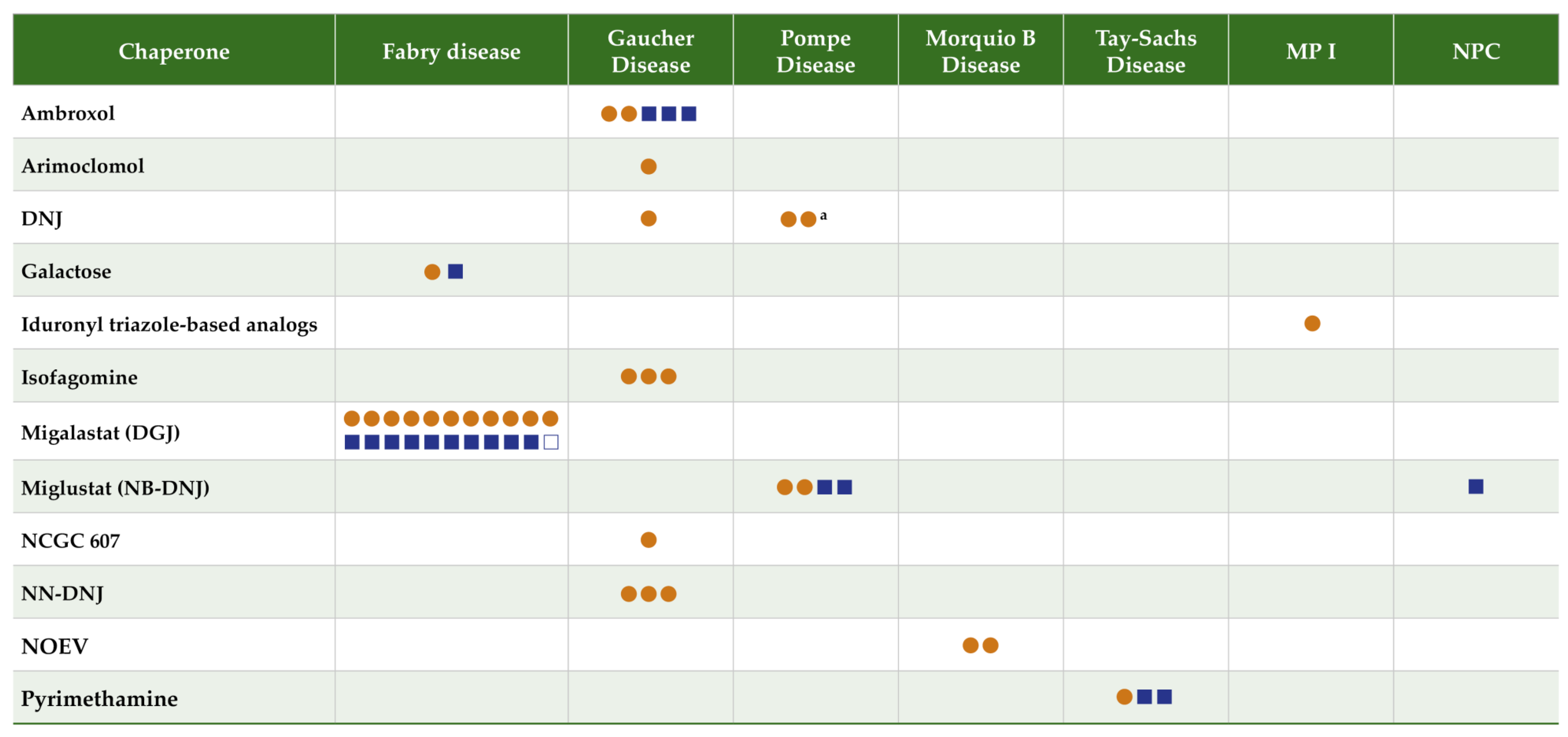
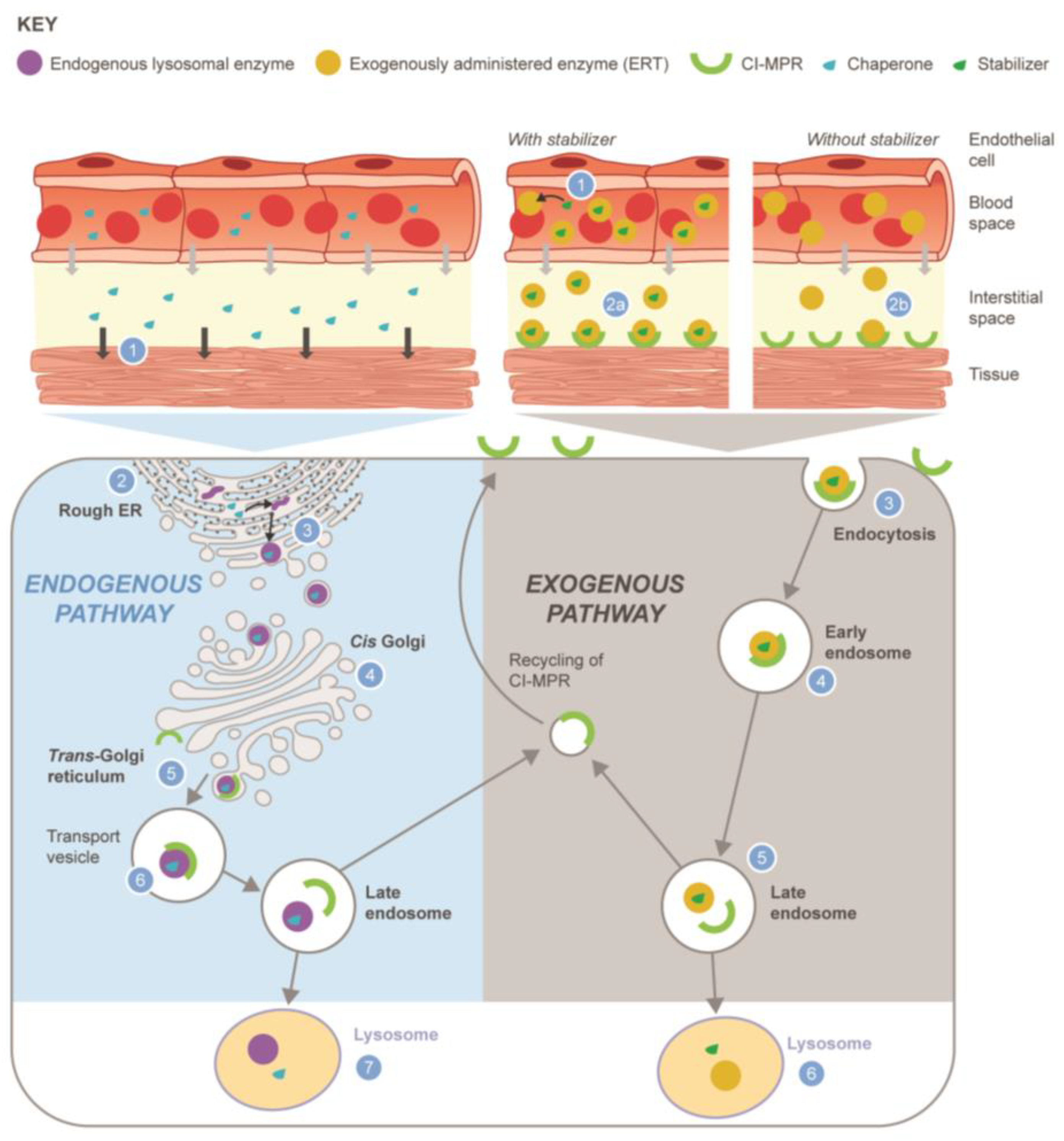
|
Author Year (Reference) | Enzyme |
MoA (as Per Author’s Comments) | Clinical Study Type | Study Objective | Summary Outcome |
|---|---|---|---|---|---|
| Galactose | |||||
| Frustaci 2001 [43] | α-Gal A | Reversible competitive inhibition to enhance the activity and stability of mutant α-Gal A by binding to the active site and promoting folding, dimerization, and processing, thereby preventing proteasomal degradation. | Case study | Cardiac variant of Fabry disease who had residual α-GAL A activity | For individuals with the cardiac variant whose residual α-Gal A activity can be enhanced in vitro, chaperone-mediated therapy with galactose or other inhibitors may prove safe and therapeutically effective. |
| 1-deoxygalactonojirimycin (DGJ)/migalastat | |||||
| Giugliani 2013 [37] | α-Gal A | Migalastat HCl targets α-Gal A mutants that maintain catalytic competence. The chaperone competitively binds to the enzyme, resulting in the trafficking of the abnormal α-Gal A mutants to lysosomes and increasing the activity of the enzyme to process GL-3 (Gb3). | Phase II, open-label, uncontrolled study of 12 weeks with extension to 48 weeks | Effect on safety, tolerability, pharmacodynamics, and pharmacokinetics in females with Fabry disease | Migalastat HCl provides a potential novel genotype-specific treatment for FD. It was generally well tolerated. Participants with amenable mutations seem to demonstrate greater pharmacodynamic response to migalastat HCl compared to those with non-amenable mutations. Treatment resulted in GL-3 (Gb3) substrate decrease in females with amenable α-GAL A mutations. |
| Germain 2016 [39] | α-Gal A | Migalastat, an oral pharmacologic chaperone, stabilizes specific mutant forms of α-Gal A, increasing enzyme trafficking to lysosomes. The stabilization of suitable mutant forms of α-Gal A by migalastat is hypothesized to increase enzyme levels more consistently than enzyme replacement therapy given every 2 weeks. | Phase III, randomized controlled trial comparing migalastat vs. placebo (stage 1) and migalastat open-label (stage 2) (67 participants) | Efficacy and safety in males and females | Participants had a decrease of 50% or more in GL-3 at six months (stage 1), which did not differ significantly between the migalastat group and the placebo group. Participants with suitable mutant α-Gal A who received migalastat for up to 24 months (stage 2) showed reductions in GFR and LVMI. There were no discontinuations due to adverse events related to migalastat; no participants progressed to end-stage renal disease, had strokes, or died from cardiac causes during the study. |
| Hughes 2017 (corrigendum anon 2018) [36] | α-Gal A | Migalastat stabilizes specific mutant (amenable) forms of α-Gal A by reversibly binding to the active site of the enzyme to promote normal lysosomal trafficking. | Phase III, open-label study comparing migalastat with ERT (ATTRACT, AT1001-012) (57 participants) | Effect on renal function, health, disease substrate, and patient-reported outcomes | Treatment with migalastat was associated with a statistically significant decrease in LVMI and a stabilizing effect on renal function. Migalastat is safe and well tolerated and offers promise as a first-in-class oral monotherapy alternative treatment to intravenous ERT for individuals with Fabry disease and amenable mutations. |
| Germain 2019 [38] | α-Gal A | Migalastat binds to and stabilizes amenable mutant forms of α-Gal A (‘‘classic phenotype’’), facilitating lysosomal trafficking and increasing lysosomal enzyme activity. | Phase III, randomized controlled trial (FACETS) comparing migalastat with placebo (subgroup 1:14 participants; and subgroup 2:36 participants) | Efficacy and safety | Migalastat benefited males with the classic phenotype, increasing endogenous α-Gal A activity, stabilizing eGFR, reducing LVMI, improving diarrhea symptoms, and reducing PTC GL-3 inclusions and plasma lyso-Gb3 levels. |
| Lamari 2019 [35] | α-Gal A | The administration of migalastat in people with Fabry disease and amenable mutations improves or stabilizes organ damage, increases α-Gal A activity, and reduces lyso-Gb3 plasma levels. | Retrospective analysis of Fabry males with p.Asn215Ser (N215S, 2 participants) | Effect on α-Gal A activity | The study confirms in vivo the effects of migalastat observed in N215S carriers in vitro. The increase in α-Gal A activity (5.6- and 5.8-fold for the two participants) may be the strongest marker for biochemical efficacy. The normalization of enzyme activity could become the new therapeutic target to achieve. |
| Muntze 2019 [32] | α-Gal A | Migalastat binds to the active site and stabilizes α-Gal A, which improves substrate catabolism. | Prospective, single-center study after 12 months of migalastat (14 participants) | Effect on efficacy and biomarker changes after 12 months of migalastat treatment | Migalastat therapy led to a rapid, persistent 3-fold median increase in α-Gal A activity, a decrease in lyso-Gb3 levels, and a significant reduction in myocardial mass in males and females with FD that carried amenable mutations. |
| Lenders 2020; Lenders 2021 [33,34] | α-Gal A | Migalastat stabilizes endogenous α-Gal A and supports a better protein folding in the ER, leading to increased α-Gal A activity, decreased Gb3 accumulation, and increased stability in the lysosomes of those carrying an amenable mutation. | Prospective, observational study (FAMOUS) (59 participants) | Effect on renal, cardiovascular, patient-reported outcomes, and safety at 12 and 24 months | Therapy of previously ERT-treated and untreated people with FD with migalastat for 24 months under ‘’real-world’’ conditions is generally safe and results in a significant 2.3-fold decrease in LVMI from baseline and a moderated renal decline (eGFR). Notably, LVMI decrease was observed in both ERT-experienced and ERT-naïve individuals, both males and females, particularly in those with left ventricular hypertrophy at baseline. Migalastat offers a good treatment alternative in those with FD and amenable mutations, but the treating physician has to monitor the clinical response on a regular basis. The authors found a significant effect on eGFR for the type of antihypertensive used, so it is important to account for antihypertensive use when making clinical decisions. |
| Bichet 2021 [40] | α-Gal A | As a molecular chaperone, migalastat binds to and stabilizes amenable mutant forms of α-Gal A in the ER, facilitating trafficking of α-Gal A to lysosomes and restoring endogenous enzyme activity. | Post hoc analyses (phase III + OLE) (78 participants) | Effect on long-term renal outcomes | Individuals with Fabry disease and amenable α-GAL A variants had stable renal function during long-term migalastat treatment (≤8.6 years) irrespective of ERT treatment status, sex, or phenotype. Early treatment should be encouraged to stabilize or slow the decline in renal function in people with Fabry disease. |
| Riccio 2020 [31] | α-Gal A | Migalastat reversibly binds to the active site and stabilizes specific mutant forms of α-Gal A, defined “amenable” to migalastat, promoting trafficking to lysosomes, where it allows the enzyme to catabolize accumulated substrates. | Single-center, observational study (7 participants) | Effects of switch from ERT to migalastat on renal, cardiac, and neurologic function, health status, pain, lyso-Gb3 activity, α-Gal A activity, adverse effects | Switching from ERT to migalastat led to statistically significant increases in α-Gal A activity, reduction in lyso-Gb3 levels and LVMI. Renal, cardiac and neurologic function, pain symptoms and health status were unchanged, suggesting participants maintained disease stability. The frequency of AEs under ERT and migalastat were comparable, concluding that migalastat is valid, safe and well tolerated. |
| Muntze 2023 [44] | α-Gal A | Not reported | Prospective, multicenter study (37 participants) | ‘Medication adherence questionnaire (MAQ)’, ‘SF-36′ and ‘Fabry pain questionnaire’ over a follow-up period of 24 months | Over 24 months, significant improvement of pain and life role limitations due to physical activity was reported (pain: change from baseline: 8.57 points, 95%-CI: 1.32–15.82, p = 0.022; role limitations physical: change from baseline: 13.39 points, 95%-CI: 0.61–23.2, p = 0.048). Migalastat therapy adherence in FD participants was high and remained high over a follow-up period of 2 years. Patient-reported quality of life remained mostly stable, while pain and physical limitations improved over time. |
| Camporeale 2023 [45] | α-Gal A | Not reported | Prospective, observational, single-center study (16 participants) | Comprehensive cardiological evaluation before and after 18 months treatment with migalastat in treatment-naïve individuals with genetically confirmed FD and evidence of cardiac involvement | In treatment-naïve individuals with Fabry disease with cardiac involvement, 18-month treatment with migalastat stabilized left ventricular mass and was associated with a trend towards an improvement in exercise tolerance. A tendency to T1 increase was detected by cardiac magnetic resonance. The subset of participants who had significant benefits from the treatment showed an earlier cardiac disease compared to the others. |
|
Author Year (Reference) | Enzyme |
MoA (as Per Author’s Comments) | Clinical Study Type | Study Objective | Summary Outcomes |
|---|---|---|---|---|---|
| Ambroxol | |||||
| Zimran 2013 [59] | β-Glucosidase | Not reported | Pilot study, off-label use of ambroxol (12 participants) | Tolerability and efficacy | No participant experienced clinically relevant deterioration in disease parameters measured. One participant achieved a robust response relative to baseline: +16.2% hemoglobin; +32.9% platelets; −2.8% liver volume; and −14.4% spleen volume. Three participants, including the participant above, elected to continue on ambroxol for a further 6 months: hemoglobin levels and liver volumes were relatively stable, but platelet counts further increased in the above participant (+52.6% from baseline), and spleen volumes decreased further in all three participants (−6.4%, −18.6%, and −23.4% from baseline). |
| Narita 2016 [58] | β-Glucosidase | Not reported | Open-label pilot study (5 participants) | Safety, biochemical efficacy, neurological efficacy | High-dose oral ambroxol had good safety and tolerability, significantly increased lymphocyte glucocerebrosidase activity, permeated the blood–brain barrier, and decreased glucosylsphingosine levels in the cerebrospinal fluid. Myoclonus, seizures, and pupillary light reflex dysfunction markedly improved in all participants. Relief from myoclonus led to impressive recovery of gross motor function in two participants, allowing them to walk again. |
| Aries 2022 [60] | β-Glucosidase | Binds in a mutation-dependent manner to misfolded proteins in the ER and facilitates the shuttle to the lysosome | Prospective; individual case study | Clinical and biochemical outcome of an individual with GD2 treated with high-dose ambroxol from the age of 4 months | Glucosylsphingosine (Lyso-GL1) in cerebrospinal fluid decreased remarkably compared to pre-treatment, whereas Lyso-GL1 and chitotriosidase in blood increased. Ambroxol treatment of participant fibroblasts revealed a significant increase in β-glucocerebrosidase activity in vitro. Combination of high-dose ambroxol with ERT proved to be a successful approach to manage both visceral and neurological manifestations. |
|
Author Year (Reference) | Enzyme |
MoA (as Per Author’s Comments) | Clinical Study Type | Study Objective | Summary Outcome |
|---|---|---|---|---|---|
| NB-DNJ (miglustat) + alglucosidase alfa | |||||
| Parenti 2014 [20] | Alglucosidase alfa | Miglustat in combination with exogenous recombinant alglucosidase alfa increases intracellular activity, facilitates lysosomal trafficking, maturation and stability of alglucosidase alfa in target cells. | Open, intra-patient, interventional study comparing miglustat + alglucosidase alfa vs. alglucosidase alfa (13 participants) | Effect on GAA activity | Combination treatment with miglustat + alglucosidase alfa resulted in enzyme activities greater than 1.85-fold the activities with alglucosidase alfa alone (2.19-fold increase at 12 h and 6.07-fold at 24 h and 3.95-fold at 36 h). Area under the curve was also significantly increased (6.78-fold p = 0.002). Results suggest improved stability of alglucosidase alfa in blood in the presence of the chaperone miglustat. |
| Miglustat + cipaglucosidase alfa | |||||
| Schoser 2021 [21] | Cipaglucosidase alfa | Miglustat in combination with exogenous cipaglucosidase alfa prevents the replacement enzyme from breaking down in the blood, so more of it is expected to get into the lysosomes improving the symptoms of the disease. | PROPEL (NCT03729362)—randomized controlled trial, double-blind, parallel group, phase III (125 participants) | To assess the safety and efficacy of an investigational two-component therapy (cipaglucosidase alfa, a novel recombinant human GAA, plus miglustat, an enzyme stabilizer) vs. alglucosidase alfa plus placebo for LOPD | Week 52, mean change from baseline in 6-minute walk distance was 20.8 m (SE 4.6) in the cipaglucosidase alfa plus miglustat group versus 7.2 m (6.6) in the alglucosidase alfa plus placebo group. Of the 123 participants, 118 (96%) experienced at least one treatment-emergent adverse event during the study; the incidence was similar between the cipaglucosidase alfa plus miglustat group (n = 81 (95%)) and the alglucosidase alfa plus placebo group (n = 37 (97%)). Cipaglucosidase alfa plus miglustat did not achieve statistical superiority to alglucosidase alfa plus placebo for improving 6-minute walk distance in the overall population of patients with LOPD. |
|
Author Year (Reference) | Enzyme | MoA (as Per Author’s Comments) | Clinical Study Type | Study Objective | Summary Outcomes |
|---|---|---|---|---|---|
| Pyrimethamine | |||||
| Clarke 2011 [77] | Acid β-hexosaminidase | Depresses folate metabolism in participants receiving treatment with other folate inhibitors or agents associated with myelosuppression, including cotrimoxazole, trimethoprim, proguanil, zidovudine, or cytostatic agents (e.g., methotrexate). | Open-label phase I/II (11 participants) | Tolerability and efficacy with escalating doses of pyrimethamine | Pyrimethamine enhances leukocyte Hex A activity in people with late-onset GM2 gangliosidosis at doses lower than those associated with unacceptable side effects (e.g., 4-fold enhancement of Hex A activity at doses of 50 mg per day or less was observed). |
| Osher 2015 [78] | Acid β-hexosaminidase | Depresses folate metabolism in participants receiving treatment with other folate inhibitors or agents associated with myelosuppression, including cotrimoxazole, trimethoprim, proguanil, zidovudine, or cytostatic agents (e.g., methotrexate). | Open-label, extended pilot study (4 participants) | Tolerability and efficacy with cyclic, low-dose, long-term pyrimethamine | Hex A activity rose in all subjects, with a mean peak increase of 2.24-fold (SD ±0.52 over baseline activity, range 1.87–3). Mean treatment time required to attain this peak was 15.7 weeks (±4.8; SD). Following increased activity, Hex A gradually declined with the continued use of PMT. A second cycle of PMT treatment was then initiated, resulting again in an increase in Hex A activity. Three of the participants experienced a measurable neuropsychiatric deterioration, whereas one subject remained entirely stable. |
| Author Year (Reference) | Enzyme |
MoA (as Per Author’s Comments) | Clinical Study Type | Study Objective | Summary Outcomes |
|---|---|---|---|---|---|
| Miglustat | |||||
| Patterson 2007 [81] | Sphingomyelinase | Unclear | Randomized controlled trial (MIG vs. standard care) (29 participants aged 12 years and over and 12 participants aged under 12 years) | Efficacy and safety | At 12 months, HSEM velocity had improved in participants treated with miglustat versus those receiving standard care; results were significant when participants taking benzodiazepines were excluded (p = 0.028). Children showed an improvement in HSEM velocity of similar size at 12 months. Improvement in swallowing capacity, stable auditory acuity, and a slower deterioration in ambulatory index were also seen in treated participants older than 12 years. Miglustat 200 mg 3 times daily was well tolerated and consistent with that seen in trials in type 1 Gaucher disease (at half the dose). |
| Classification | Chaperone | Stabilizer |
|---|---|---|
| Use | Monotherapy | Combined/coadministration |
| Type of action | Chaperone | Stabilizer |
| Acts on | Endogenous enzyme | Exogenously administered enzyme (ERT) |
| Site of action (trafficking to/from) | Intracellular (ER→Golgi→endosomes→lysosomes) | Circulation (bloodstream→cell uptake receptor→endosomes→lysosomes) |
| Example | Migalastat | Miglustat plus cipaglucosidase alfa |
Disclaimer/Publisher’s Note: The statements, opinions and data contained in all publications are solely those of the individual author(s) and contributor(s) and not of MDPI and/or the editor(s). MDPI and/or the editor(s) disclaim responsibility for any injury to people or property resulting from any ideas, methods, instructions or products referred to in the content. |
© 2023 by the authors. Licensee MDPI, Basel, Switzerland. This article is an open access article distributed under the terms and conditions of the Creative Commons Attribution (CC BY) license (https://creativecommons.org/licenses/by/4.0/).
Share and Cite
Keyzor, I.; Shohet, S.; Castelli, J.; Sitaraman, S.; Veleva-Rotse, B.; Weimer, J.M.; Fox, B.; Willer, T.; Tuske, S.; Crathorne, L.; et al. Therapeutic Role of Pharmacological Chaperones in Lysosomal Storage Disorders: A Review of the Evidence and Informed Approach to Reclassification. Biomolecules 2023, 13, 1227. https://doi.org/10.3390/biom13081227
Keyzor I, Shohet S, Castelli J, Sitaraman S, Veleva-Rotse B, Weimer JM, Fox B, Willer T, Tuske S, Crathorne L, et al. Therapeutic Role of Pharmacological Chaperones in Lysosomal Storage Disorders: A Review of the Evidence and Informed Approach to Reclassification. Biomolecules. 2023; 13(8):1227. https://doi.org/10.3390/biom13081227
Chicago/Turabian StyleKeyzor, Ian, Simon Shohet, Jeff Castelli, Sheela Sitaraman, Biliana Veleva-Rotse, Jill M. Weimer, Brian Fox, Tobias Willer, Steve Tuske, Louise Crathorne, and et al. 2023. "Therapeutic Role of Pharmacological Chaperones in Lysosomal Storage Disorders: A Review of the Evidence and Informed Approach to Reclassification" Biomolecules 13, no. 8: 1227. https://doi.org/10.3390/biom13081227
APA StyleKeyzor, I., Shohet, S., Castelli, J., Sitaraman, S., Veleva-Rotse, B., Weimer, J. M., Fox, B., Willer, T., Tuske, S., Crathorne, L., & Belzar, K. J. (2023). Therapeutic Role of Pharmacological Chaperones in Lysosomal Storage Disorders: A Review of the Evidence and Informed Approach to Reclassification. Biomolecules, 13(8), 1227. https://doi.org/10.3390/biom13081227

